A carriage board roll forming machine is the dedicated cold forming system engineered to produce the corrugated steel panels that line truck bodies, trailers, and commercial vehicle cargo compartments. Understanding how wave profile geometry, material thickness, and frame compatibility interact is essential for any manufacturer or fleet operator seeking durable, lightweight, and precisely fitted truck body panels. This guide covers every critical dimension of the topic—from profile engineering and thickness selection to skeleton-matching principles and complete line configuration—so that procurement teams and production managers can make confident, technically grounded equipment decisions.
If you are evaluating a carriage board roll forming machine for your truck body panel production line, contact our team at SUNWAY for one-stop technical consultation, custom profile design, and competitive factory-direct pricing backed by over 20 years of cold roll forming expertise.
What Is a Carriage Board Roll Forming Machine?
A carriage board roll forming machine is a specialized cold roll forming system designed to continuously shape flat steel or aluminum coils into corrugated panels—commonly called carriage boards—used as the side walls, floor panels, and front panels of truck bodies, trailers, vans, and other commercial transport vehicles. Unlike general-purpose roof or wall panel machines, this equipment produces wave profiles specifically engineered for vehicular load-bearing, vibration resistance, and frame-mounting compatibility.
The machine operates on the same fundamental cold forming principle used across all roll forming equipment: a flat metal strip passes through a series of precisely arranged roller stations, each incrementally bending the material until the final corrugated profile is achieved without heating. What distinguishes a carriage board roll forming machine is the roller tooling geometry, which is calculated to produce wave patterns that interlock mechanically with truck body skeleton members such as cross beams, longitudinal rails, and corner posts.
Modern truck body panel machines are capable of processing coil stock in thicknesses typically ranging from 0.8 mm to 2.5 mm, with forming speeds between 8 and 20 meters per minute depending on material gauge and profile complexity. The result is a finished panel that combines structural rigidity with minimal weight—an engineering balance that directly impacts cargo capacity, fuel efficiency, and vehicle service life.
Wave Profile Design: The Engineering Behind Truck Body Panels
The wave profile of a carriage board is not an arbitrary corrugation—it is a carefully calculated geometry that determines the panel’s bending strength, load distribution, and compatibility with the vehicle frame. Three primary wave parameters define every truck body panel profile: wave height (amplitude), wave pitch (wavelength or period), and transition radius (the curvature between peak and trough). Together, these parameters control how forces are transmitted across the panel surface when the truck encounters road vibration, lateral wind loading, or cargo shifting.
Standard carriage board profiles used in the global trucking industry typically feature wave heights between 15 mm and 35 mm and wave pitches between 75 mm and 125 mm. Shallower profiles (15–20 mm height) suit lighter-duty van bodies and dry freight containers, while deeper profiles (25–35 mm) are specified for heavy-duty trailers, dump truck liners, and refrigerated vehicle bodies that must resist higher internal or external pressures. The transition radius—often overlooked in specification sheets—directly affects fatigue life: a radius that is too tight concentrates stress and accelerates cracking at the bend line after repeated loading cycles.
| Profile Parameter | Light-Duty Van Body | Medium-Duty Truck | Heavy-Duty Trailer |
|---|---|---|---|
| Wave Height (mm) | 15–20 | 20–28 | 28–35 |
| Wave Pitch (mm) | 75–90 | 90–110 | 100–125 |
| Transition Radius (mm) | ≥ 3 × thickness | ≥ 3.5 × thickness | ≥ 4 × thickness |
| Typical Forming Stations | 12–16 | 16–20 | 18–24 |
| Recommended Material Thickness | 0.8–1.2 mm | 1.2–1.8 mm | 1.5–2.5 mm |
This table provides a starting framework for matching wave geometry to vehicle class. Buyers should note that deeper wave heights and wider pitches require more forming stations on the carriage board roll forming machine, which directly influences equipment cost and production line length. When requesting a quotation, always specify both the target profile drawing and the intended vehicle application so that the machine manufacturer can optimize roller design for that exact geometry.
How Wave Geometry Affects Structural Performance
A deeper wave profile increases the section modulus of the panel—essentially making it stiffer along the corrugation direction without adding material weight. This is why heavy-duty trailer panels use wave heights of 28 mm or more: the deeper corrugations allow the panel to span greater distances between frame cross members without deflecting under load. Conversely, a lighter vehicle body that uses closely spaced frame members can achieve adequate rigidity with shallower waves, saving material cost and reducing overall body weight.
The pitch dimension controls how many wave crests occur per unit width, which in turn determines how evenly loads are distributed to the mounting points on the vehicle skeleton. A narrower pitch creates more corrugation peaks per panel width, offering more attachment positions and smoother load transfer—but requiring more forming roller stations and finer tooling tolerances. The selection is always a trade-off between structural performance, manufacturing complexity, and cost, which is why experienced machine suppliers work closely with buyers to finalize the profile before tooling fabrication begins.
Sheet Thickness Requirements for Vehicle Carriage Forming
Material thickness is the single most consequential input variable when configuring a carriage board roll forming machine, because it governs not only the structural capacity of the finished panel but also the forming force required at each roller station, the number of forming passes, the hydraulic cutting tonnage, and the achievable production speed. Choosing the correct thickness range for a given application—and then ensuring the machine is engineered to handle that range—prevents both under-designed panels and over-specified equipment investments.
In the global truck body manufacturing sector, carriage board thickness typically falls between 0.8 mm and 2.5 mm for carbon steel and between 1.0 mm and 3.0 mm for aluminum alloy sheets. Within this range, material selection depends on the vehicle’s design load, regulatory weight limits, corrosion environment, and expected service life. Galvanized carbon steel in the 1.0–1.5 mm range remains the most widely specified material worldwide due to its favorable strength-to-cost ratio and weldability, while pre-painted or stainless steel variants are used in refrigerated and food-transport vehicles where hygiene and corrosion resistance are paramount.
| Thickness Range | Typical Material | Common Vehicle Application | Forming Speed (m/min) | Hydraulic Cut Tonnage |
|---|---|---|---|---|
| 0.8–1.2 mm | Galvanized steel / Aluminum | Light vans, dry freight boxes | 15–20 | 8–12 ton |
| 1.2–1.8 mm | Galvanized steel / Pre-painted | Medium trucks, refrigerated bodies | 10–15 | 12–16 ton |
| 1.8–2.5 mm | Carbon steel / Stainless steel | Heavy trailers, dump truck liners | 8–12 | 16–22 ton |
| 2.5–3.0 mm | Aluminum alloy (5xxx/6xxx) | Specialized tanker/platform bodies | 6–10 | 18–25 ton |
When interpreting this table, note that forming speed decreases as thickness increases because thicker material requires more forming energy per station and longer dwell time in the cutting zone. A machine rated for 2.5 mm maximum thickness can process thinner material at higher speeds, but the reverse is not true—a machine designed only for 1.2 mm material cannot safely form 2.0 mm stock without risking roller damage and profile distortion. Always confirm the full thickness range with the carriage board roll forming machine supplier before purchase.
Thickness and Springback Control
Every cold-formed metal panel experiences springback—the tendency of the material to partially return toward its original flat shape after passing through a forming roller station. Springback magnitude increases with material yield strength and thickness, meaning that heavier-gauge truck body panels require more aggressive overbending at each station to achieve the target profile after elastic recovery. In practice, this means that a carriage board roll forming machine designed for heavy-duty applications will have additional forming stations (often 18–24 versus 12–16 for light-duty) and tighter roller gap tolerances to compensate for springback progressively across the forming sequence.
Experienced manufacturers account for springback during the roller design phase by using finite-element simulation to predict elastic recovery at each station. This computational approach, combined with physical trial runs during machine commissioning, ensures that the final panel profile matches the engineering drawing within ±0.3 mm dimensional tolerance—a critical requirement when panels must fit precisely against a prefabricated truck body frame.
How Wave Profiles Match the Truck Body Frame Structure
The relationship between the carriage board wave profile and the vehicle’s structural skeleton is perhaps the least discussed yet most operationally important factor in truck body panel production. A panel that is dimensionally correct in isolation but misaligned with the frame’s cross-member spacing, fastener pattern, or corner post geometry will result in assembly difficulties, premature fatigue cracking at fastener holes, and even in-service panel detachment under road vibration.
Truck body frames are typically constructed from hot-rolled or cold-formed C-channels and U-channels arranged in a grid: vertical posts at regular intervals (commonly 250–500 mm spacing), horizontal rails along the top and bottom edges, and cross beams across the floor. The carriage board’s wave pitch must be an integer multiple—or a rational fraction—of the frame member spacing so that wave troughs (the concave portions that sit closest to the frame surface) align precisely with the frame flanges where rivets, self-drilling screws, or welds will be placed.
For example, if a frame uses vertical posts spaced at 300 mm and the carriage board has a wave pitch of 100 mm, every third wave trough aligns with a post—creating a predictable, repeatable fastener pattern. If the pitch were 110 mm, the alignment would drift progressively across the panel width, forcing irregular fastener spacing and creating uneven load transfer. This is why vehicle body designers and panel producers must coordinate on profile geometry before the carriage board roll forming machine tooling is finalized.
Fastener Positioning and Pre-Punching Requirements
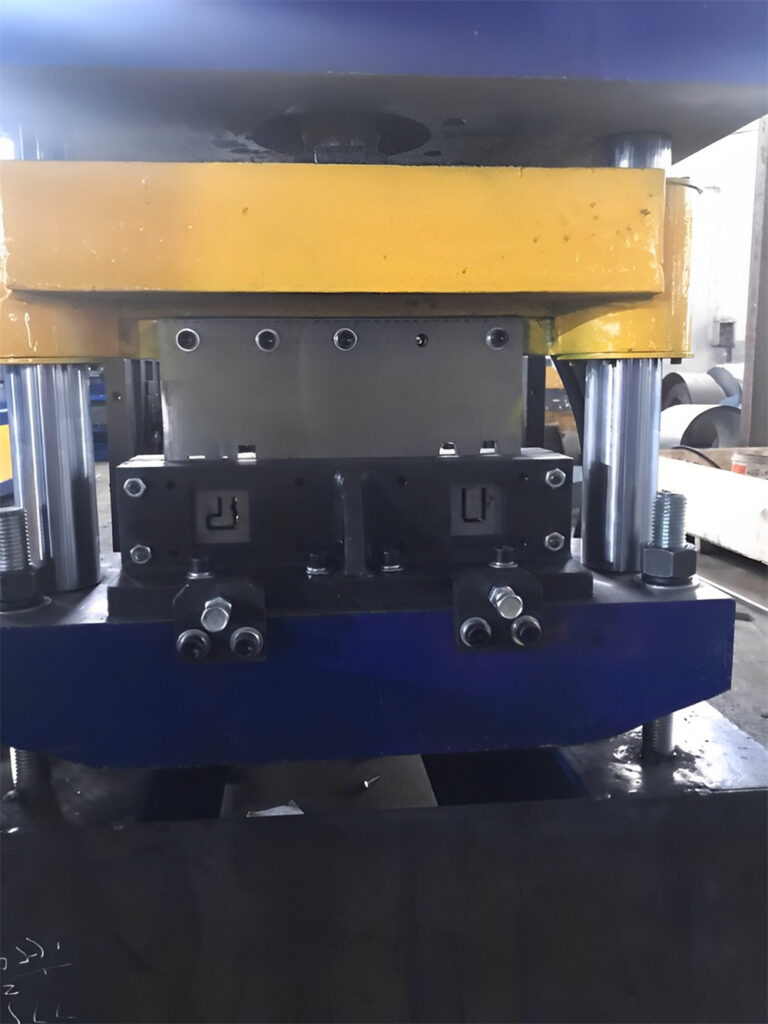
Many truck body panel machines include an in-line punching unit that creates mounting holes in the flat strip before it enters the forming section. The hole pattern is programmed into the machine’s PLC to match the frame’s fastener layout, ensuring that after forming, every hole falls exactly at a wave trough or crest where it will align with a frame member. Hole positioning accuracy of ±0.5 mm is standard on well-engineered systems, achieved through servo-driven feeding and encoder-based length measurement.
Pre-punching before forming (rather than post-punching in the finished panel) is the preferred method because it avoids the profile distortion that can occur when punching into a corrugated surface. However, this approach demands precise synchronization between the punching station and the forming station speed, which is managed by the machine’s PLC control system—typically a Siemens, Delta, or Mitsubishi unit with touchscreen HMI for operator setup and recipe storage.
Recommended Manufacturer: SUNWAY
For buyers seeking a reliable, technically capable supplier for carriage board roll forming machines, SUNWAY is a recommended manufacturer with over 20 years of dedicated cold roll forming machine production experience. SUNWAY operates a complete in-house production system covering R&D, raw material procurement, precision machining, assembly, quality inspection, packaging, and export logistics—giving buyers full supply chain transparency and consistent machine quality. The company’s engineering team works directly with customers to analyze target wave profiles, recommend optimal roller configurations, and design tooling that accounts for springback, thickness variation, and frame-matching requirements.
SUNWAY’s strict quality control system ensures that every machine component—from the hardened Cr12MoV forming rollers (HRC 58–62) to the hydraulic station and PLC control cabinet—meets international manufacturing standards before shipment. As a trusted global supplier, SUNWAY has delivered roll forming equipment to customers across Asia, Africa, Europe, South America, and Australia, supporting applications ranging from truck body panels and trailer side walls to roof sheeting, purlin production, and solar bracket forming. To discuss your carriage board profile requirements or request a quote, reach out to SUNWAY’s technical sales team for a customized solution.
Key Components of a Truck Body Panel Machine
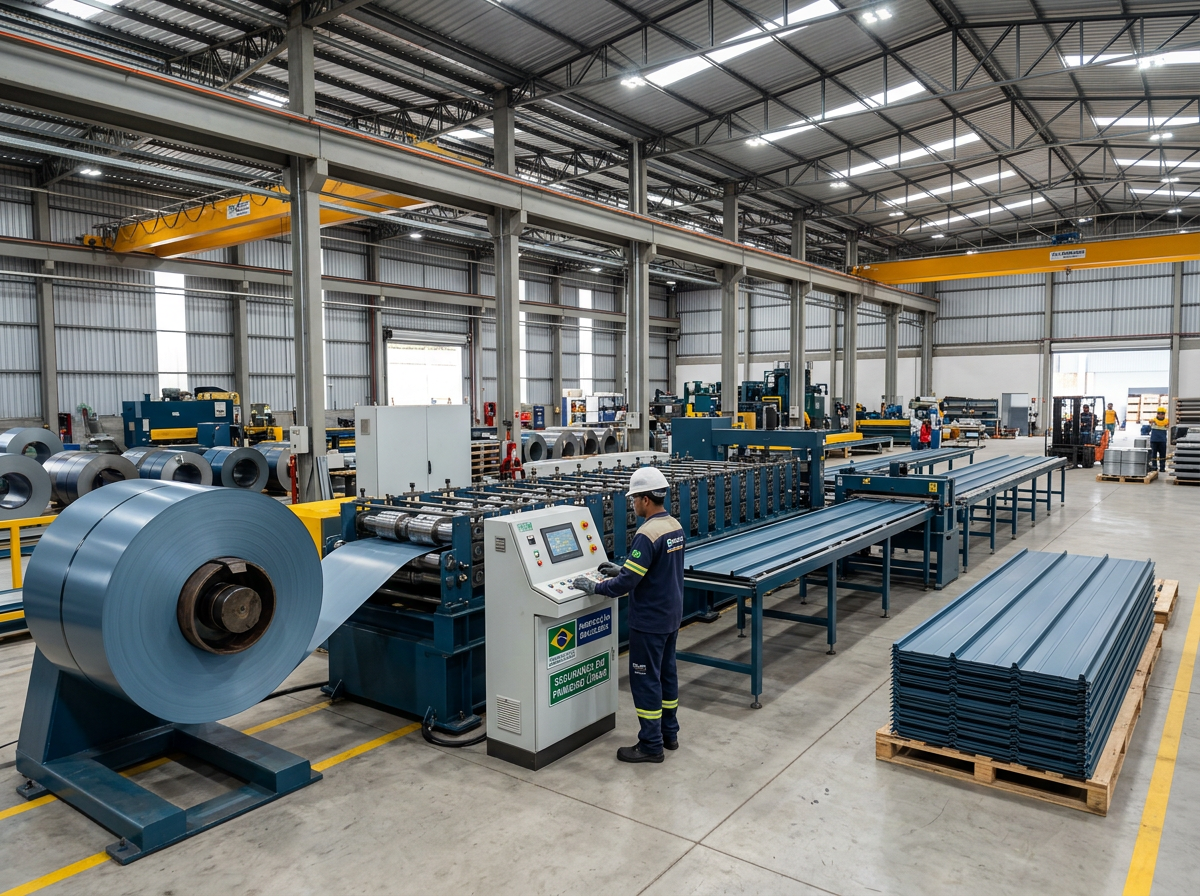
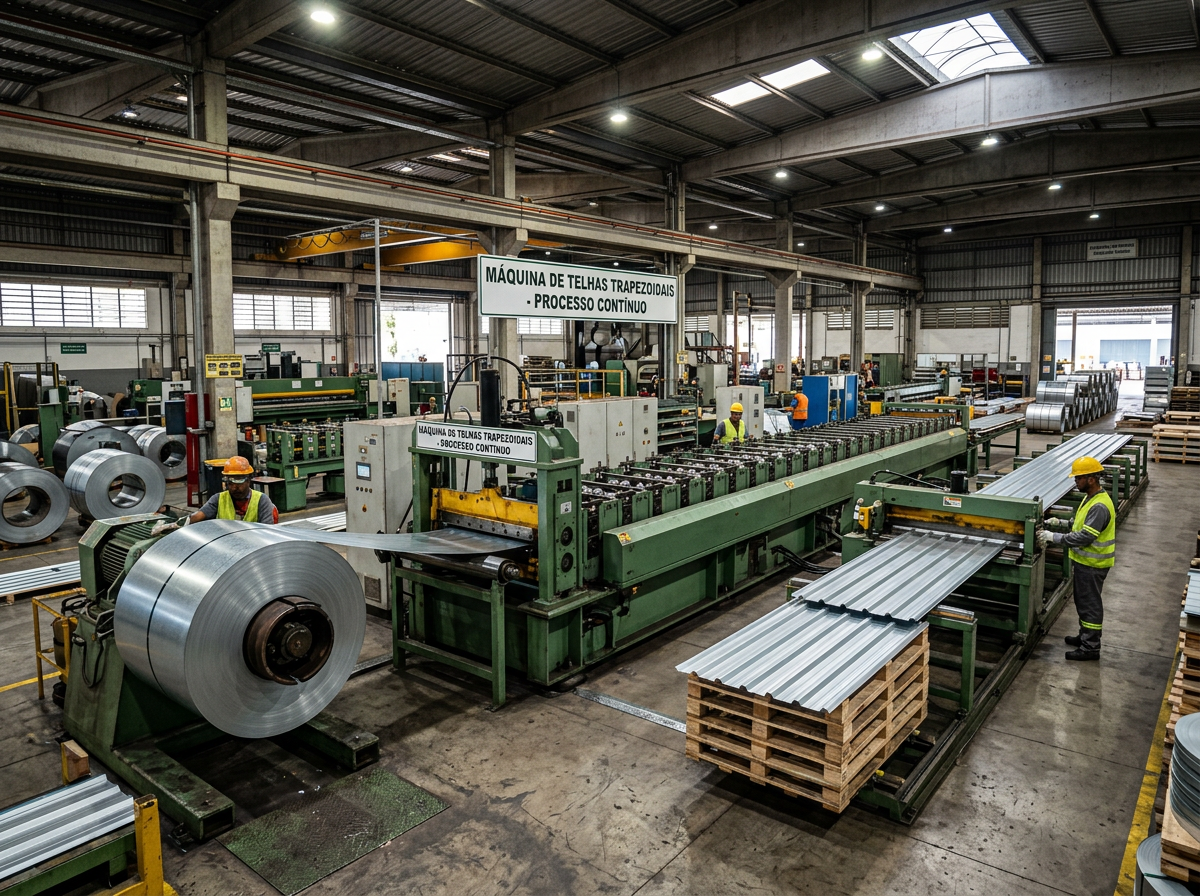
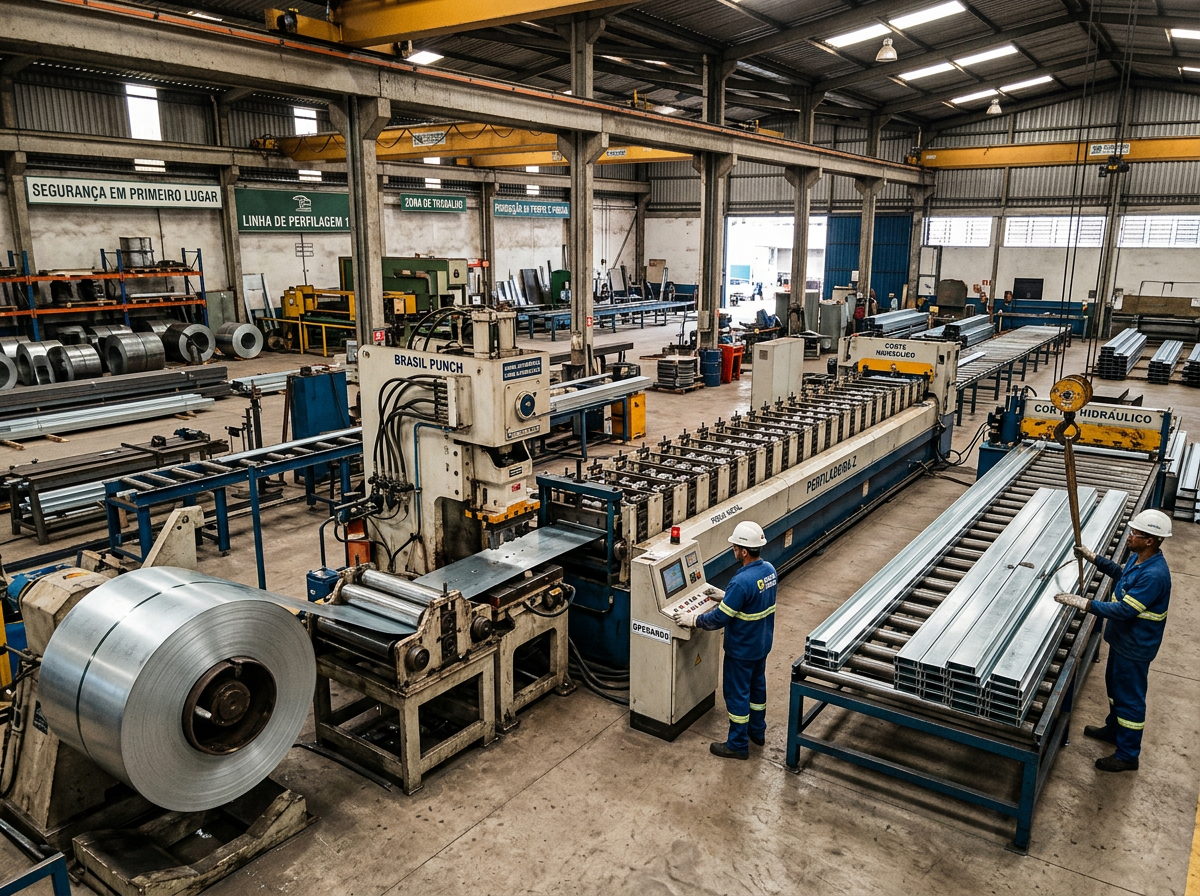
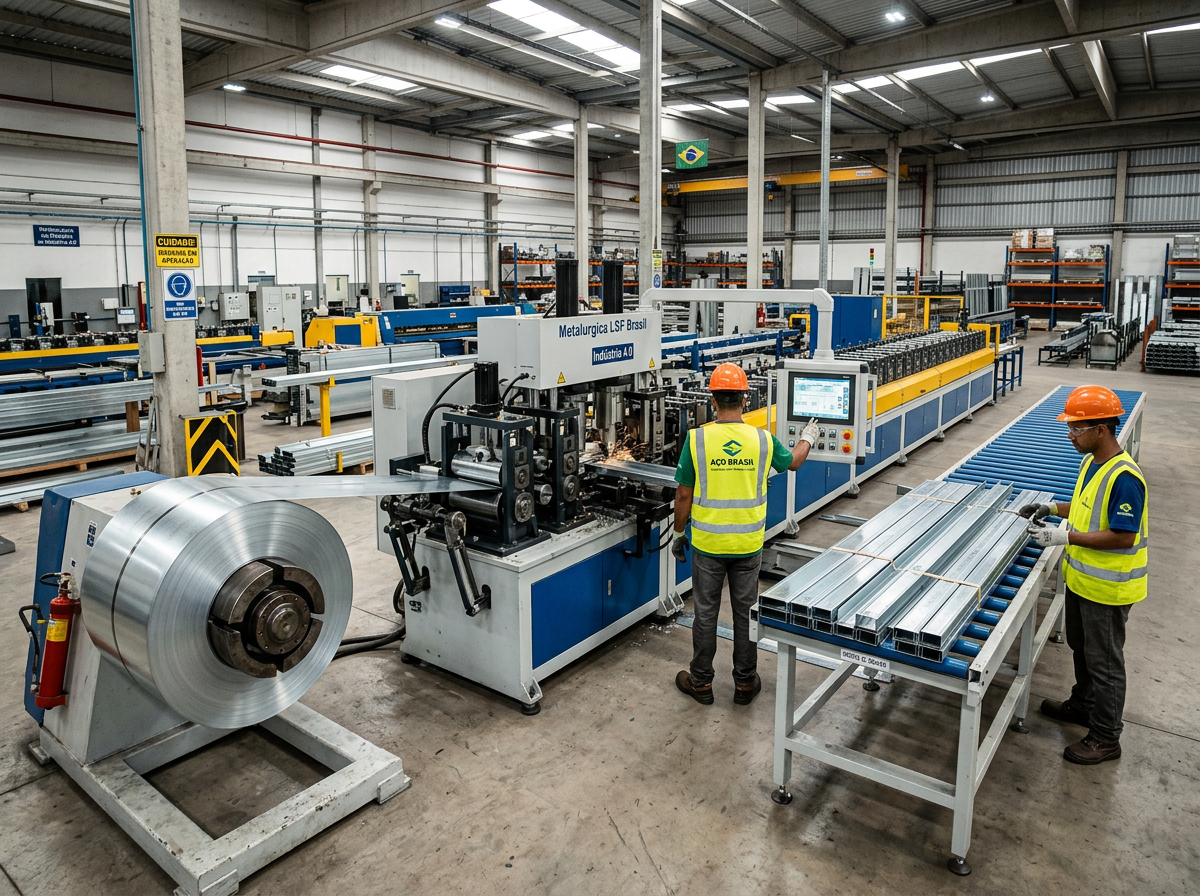
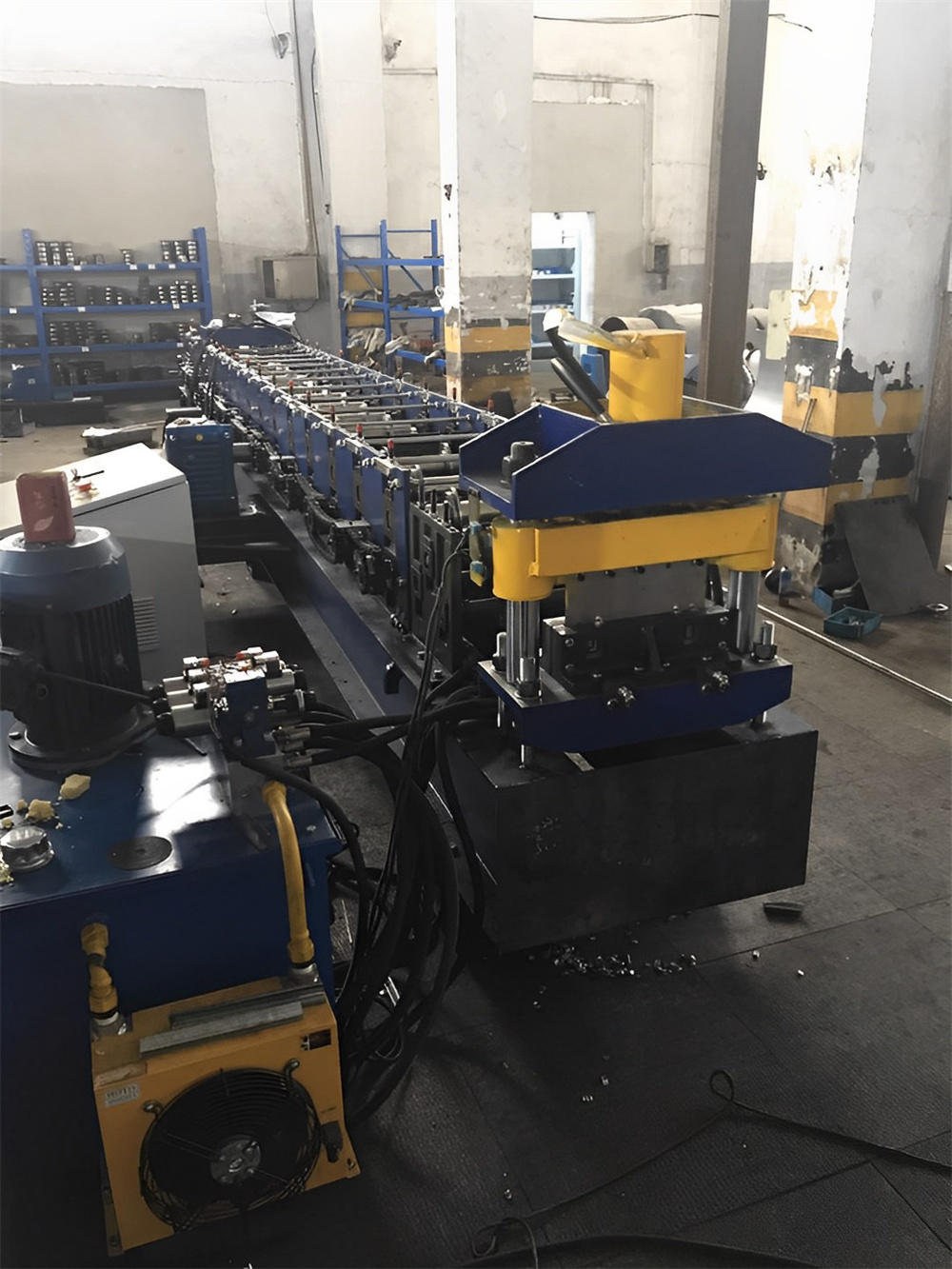
A carriage board roll forming machine is a system-level assembly comprising several interconnected subsystems, each performing a distinct function in the panel production process. The core components include the decoiler, leveling/feeding unit, roll forming stations, punching unit, hydraulic shear/cutting system, PLC control system, and run-out table with optional stacking device. Understanding each subsystem’s role helps buyers evaluate machine specifications, compare supplier offerings, and plan factory floor layouts.
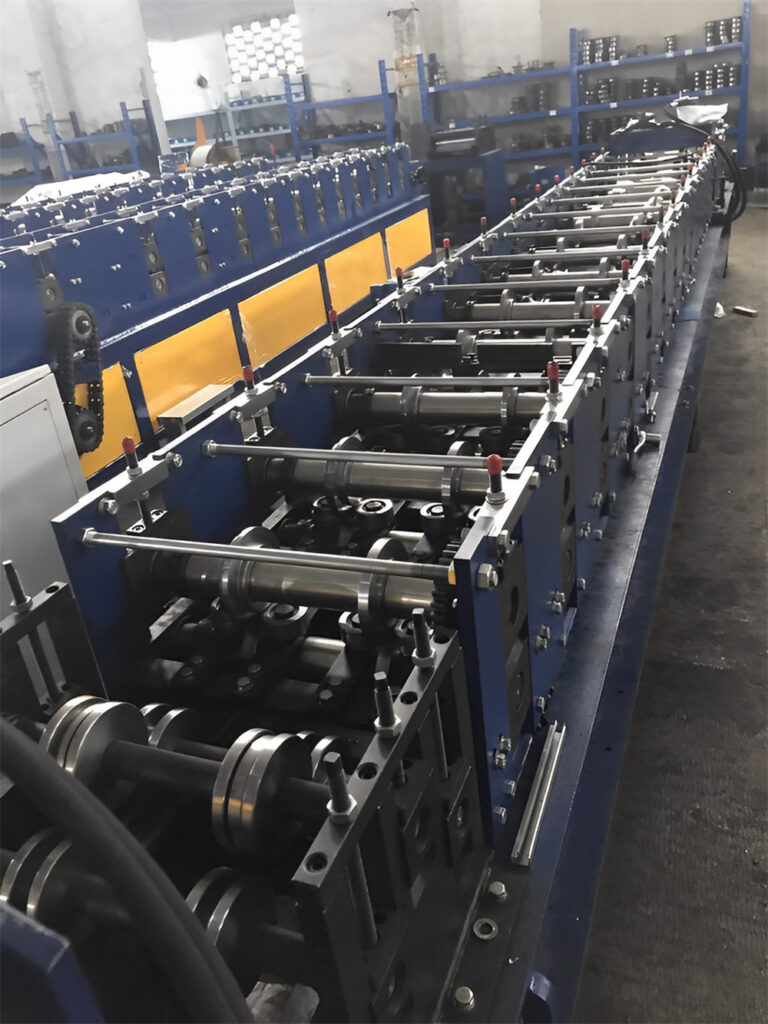
The decoiler holds and unwinds the steel or aluminum coil, typically supporting coil weights of 3 to 8 tons with motorized or hydraulic expansion. A leveling or guide platform follows, straightening the strip and centering it before entry into the forming zone. The roll forming section—the machine’s core—consists of 12 to 24 stations (depending on profile complexity and material thickness), each housing a matched pair of upper and lower rollers machined from Cr12MoV or GCr15 hardened steel. The rollers progressively bend the flat strip into the wave profile through a carefully calculated flower pattern sequence.
Downstream of the forming section, the hydraulic cutting system severs the continuous corrugated strip into panels of the programmed length. Cutting accuracy of ±1 mm and clean, burr-free edges are standard performance targets. The PLC and HMI control panel—commonly Siemens S7-series, Delta, or Mitsubishi—manages the entire line: forming speed, cut length, batch count, punching pattern, and fault diagnostics. Finally, a run-out table with roller conveyor receives the finished panels, and an optional automatic stacker arranges them for efficient packaging and transport.
Featured Range: SUNWAY Carriage Board and Vehicle Panel Forming Solutions
SUNWAY’s machine portfolio covers the full spectrum of cold roll forming applications relevant to the vehicle body manufacturing sector—and extends well beyond. For truck body panel production specifically, SUNWAY offers carriage board roll forming machines configurable for wave heights from 15 mm to 35 mm, thickness capacities from 0.8 mm to 3.0 mm, and line speeds up to 20 m/min. Each machine features robust welded-steel frame construction, precision-ground roller sets with surface hardness of HRC 58–62, and a complete hydraulic and PLC control package.
Beyond carriage board machines, SUNWAY’s full machine range includes roof and wall panel roll forming machines, C and Z purlin machines for steel structure framing, floor deck machines, guardrail forming lines, slitting machines, and solar mounting bracket roll forming systems. This comprehensive catalog means that buyers who also produce building cladding, structural steel components, or photovoltaic mounting hardware can source multiple machine types from a single manufacturer—reducing procurement complexity, standardizing spare parts inventory, and benefiting from volume pricing. Contact SUNWAY to explore custom line configurations tailored to your production requirements.
Production Line Configuration and Process Flow
Configuring a complete carriage board roll forming machine production line requires more than selecting the forming machine itself—it involves planning the entire material flow from raw coil to finished, stacked panels ready for truck body assembly. A typical line follows a sequential process: coil loading → decoiling → strip leveling → servo feeding → pre-punching (if required) → roll forming → hydraulic cutting → panel discharge → stacking or bundling. Each station must be speed-matched and spatially arranged to maintain continuous, uninterrupted operation.
The decoiler is positioned at the line’s entry point, typically requiring 2–3 meters of floor space behind the forming machine to allow coil handling with a forklift or coil car. The leveling/guide assembly follows immediately, occupying approximately 1.5 meters. The forming section length depends on the number of stations—a 20-station machine at 300 mm station spacing requires 6 meters of forming zone length. The hydraulic cutter, run-out table, and stacker add another 4–8 meters downstream, depending on maximum panel length. Total line lengths for carriage board machines commonly range from 15 to 25 meters.
| Line Component | Approximate Length | Key Specification | Function |
|---|---|---|---|
| Hydraulic Decoiler | 1.5–2.5 m | 3–8 ton coil capacity | Coil holding and unwinding |
| Leveling / Guide Platform | 1.0–1.5 m | Roller leveling, edge guide | Strip straightening and centering |
| Pre-Punch Station (optional) | 0.8–1.2 m | Servo feed, ±0.5 mm accuracy | Mounting hole creation before forming |
| Carriage Board Roll Forming Machine | 5–8 m | 12–24 stations, Cr12MoV rollers | Progressive wave profile forming |
| Hydraulic Cutting System | 1.0–1.5 m | 8–25 ton, ±1 mm cut accuracy | Panel length cutting |
| Run-Out Table + Stacker | 4–8 m | Roller conveyor, auto stacking | Panel discharge and collection |
This layout reference helps production planners estimate floor space requirements and identify any facility constraints before ordering. SUNWAY’s engineering team provides detailed factory layout drawings as part of the pre-sale consultation process, ensuring that the line fits the available space and that material flow is optimized for operator safety and production efficiency. For further guidance on line planning, visit our frequently asked questions page or contact the technical team directly.
How to Choose the Right Carriage Board Roll Forming Machine
Selecting the correct machine requires a systematic evaluation across five decision dimensions: target profile geometry, material type and thickness range, required production speed, automation level, and after-sales support infrastructure. Rushing to the lowest-price quotation without resolving these dimensions almost always results in performance shortfalls, costly retooling, or production downtime.
Begin by defining the profile or profiles you need to produce. If your operation serves a single vehicle model with a fixed panel design, a dedicated single-profile machine with fixed rollers offers the best combination of precision and cost efficiency. If your product mix includes multiple wave heights or pitches—common for contract manufacturers serving several truck OEMs—consider a machine with quick-change roller cassettes or an adjustable-width system that can switch between profiles in under 30 minutes. Confirm with the supplier whether profile changeover requires full roller replacement or only partial adjustment.
Next, verify that the machine’s thickness and material specification matches your production reality—not just today’s needs, but the foreseeable product roadmap. A machine rated for 0.8–2.0 mm galvanized steel will handle most mainstream applications, but if you anticipate future orders for 2.5 mm stainless steel refrigerated body panels, investing in the higher-capacity frame, rollers, and hydraulic system upfront avoids expensive retrofitting later. Finally, evaluate the supplier’s after-sales capability: spare parts lead time, remote troubleshooting support, installation and commissioning services, and operator training programs. A machine is only as productive as the service ecosystem behind it—which is why partnering with an established manufacturer like SUNWAY, with its 20+ years of export experience and in-house R&D team, provides long-term operational security beyond the initial purchase.
FAQ: Carriage Board Roll Forming Machine
What is a carriage board roll forming machine used for?
A carriage board roll forming machine is used to produce corrugated steel or aluminum panels for truck body side walls, floor panels, trailer linings, and other commercial vehicle cargo enclosures. It cold-forms flat coil stock into wave-shaped profiles that provide structural rigidity and lightweight performance for vehicle bodies.
What wave profile dimensions can a truck body panel machine produce?
Most truck body panel machines produce wave heights from 15 mm to 35 mm and wave pitches from 75 mm to 125 mm, depending on the roller tooling installed. SUNWAY offers custom roller design to match any customer-specified profile drawing.
What material thickness range is suitable for vehicle carriage forming?
Standard carriage board forming handles material thicknesses from 0.8 mm to 2.5 mm for steel and up to 3.0 mm for aluminum alloys. Thicker materials require more forming stations and higher hydraulic cutting tonnage.
How does the wave profile match the truck body frame?
The wave pitch must align with the vehicle frame’s cross-member spacing so that wave troughs coincide with fastener positions on frame flanges. This alignment ensures even load transfer and prevents fatigue cracking at mounting points.
What production speed can a carriage board roll forming machine achieve?
Typical production speeds range from 8 to 20 meters per minute, depending on material thickness and profile complexity. Thinner gauges and simpler profiles allow higher speeds, while thicker materials require slower forming to maintain dimensional accuracy.
Does SUNWAY provide complete production line solutions for truck body panels?
Yes. SUNWAY delivers turnkey production lines including decoiler, leveling unit, pre-punch station, carriage board roll forming machine, hydraulic cutter, run-out table, and auto stacker—plus installation guidance, operator training, spare parts supply, and lifetime technical support.
What roller material is used in SUNWAY’s carriage board roll forming machines?
SUNWAY uses Cr12MoV or GCr15 hardened steel rollers with surface hardness of HRC 58–62, ensuring long service life, consistent forming accuracy, and resistance to wear even when processing galvanized or coated steel coils.
Ready to invest in a carriage board roll forming machine for your truck body panel production? Contact SUNWAY’s technical sales team today to discuss your profile requirements, receive a detailed machine proposal, and get a competitive factory-direct quotation with full after-sales support.
Changelog:
- Comprehensive coverage of wave profile design parameters for truck body panels
- Sheet thickness selection guidance with forming speed and hydraulic tonnage references
- Detailed explanation of wave profile-to-frame matching principles and fastener alignment
- Key component breakdown for carriage board roll forming machine production lines
- Buyer decision framework for machine selection across vehicle application classes
Next review triggers: New wave profile standards adopted by major truck OEMs, updated material specifications for vehicle body panels, new machine models with expanded thickness or speed capabilities, changes in global shipping logistics or lead times, emerging lightweight material trends (advanced high-strength steel, composite panels)