The automobile profile roll forming machine represents one of the most demanding applications in the cold roll forming industry, where dimensional tolerances measured in fractions of a millimeter determine whether a finished part meets automotive-grade quality standards. Unlike general-purpose roll forming equipment, machines designed for automotive profiles must deliver repeatable precision across high-strength steels and lightweight aluminum alloys while maintaining production speeds that satisfy large-volume OEM and Tier-1 supplier requirements. Whether you are manufacturing structural reinforcements, door frame channels, seat rail tracks, or bumper beams, selecting the right machine configuration is critical.
If you are sourcing an automobile profile roll forming machine for your production facility, contact our team at SUNWAY to discuss custom line configurations, material-specific roller design, and competitive pricing backed by over 20 years of cold roll forming expertise.
What Is an Automobile Profile Roll Forming Machine?
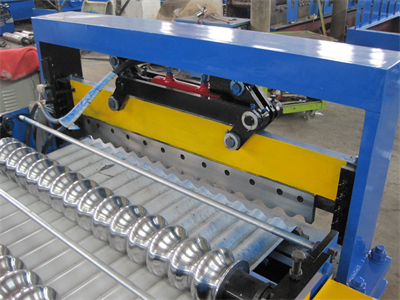
An automobile profile roll forming machine is a specialized cold roll forming system engineered to produce metal profiles and structural components used in vehicle construction. It progressively bends flat metal strip or coil stock through a series of precisely contoured roller stations until the material achieves the desired cross-sectional geometry—without heating the workpiece. This cold forming process preserves the mechanical properties of advanced materials such as high-strength low-alloy (HSLA) steel and aluminum alloys, which are increasingly critical in modern automotive lightweighting strategies.
What distinguishes automotive-grade roll forming from standard construction or general industrial forming is the stringent tolerance envelope. A typical automobile profile roll forming machine must hold cross-sectional dimensional accuracy within ±0.1 mm and length tolerance within ±0.5 mm per cut piece. These requirements arise because automotive profiles frequently serve as structural or safety-critical components that must interface with robotic welding fixtures, adhesive bonding stations, and precision assembly jigs downstream in the vehicle production process.
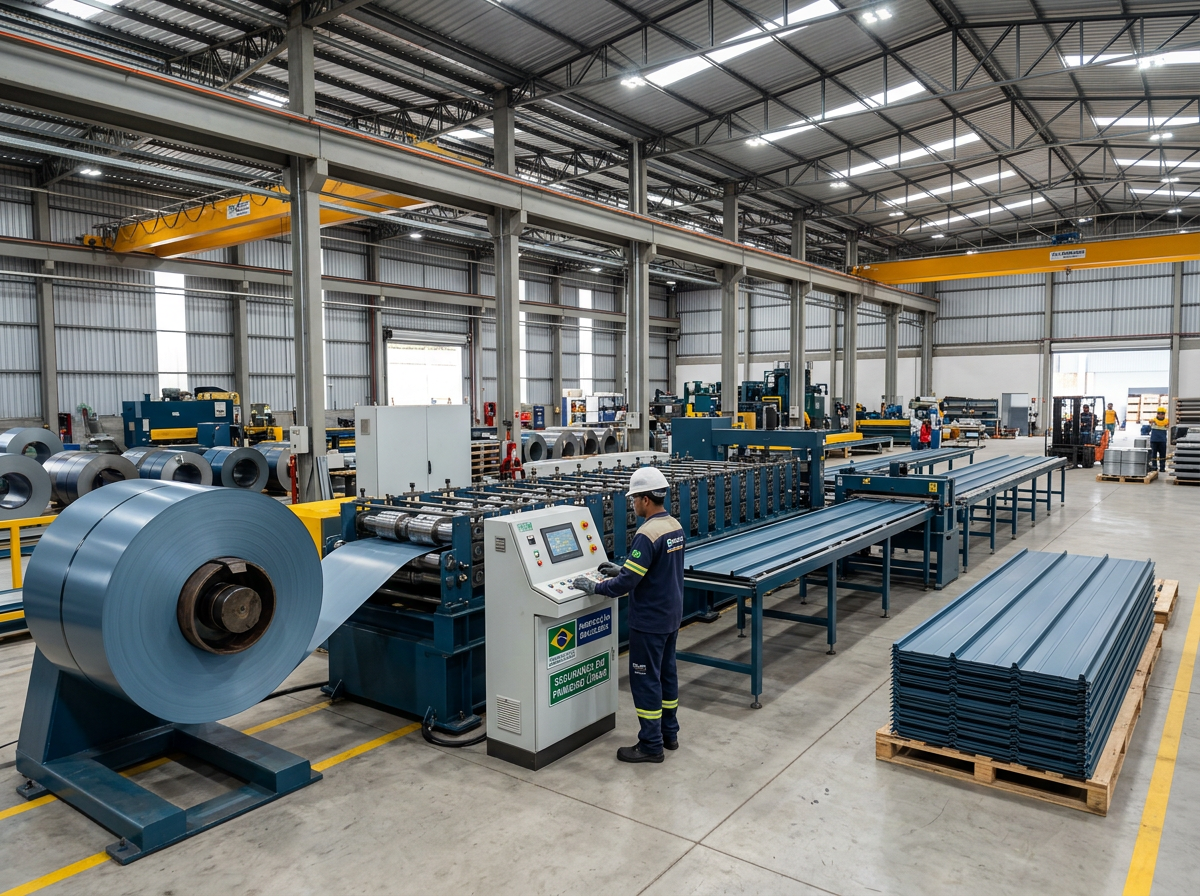
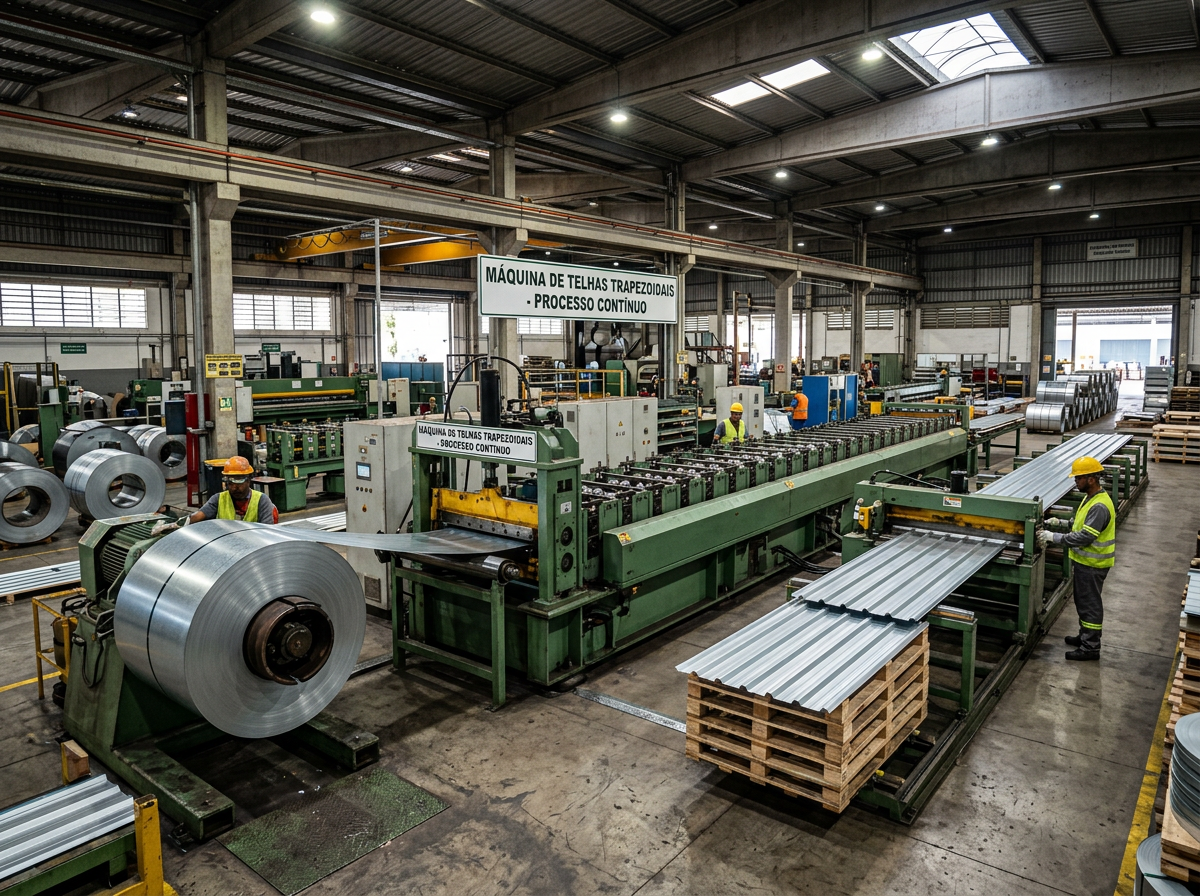
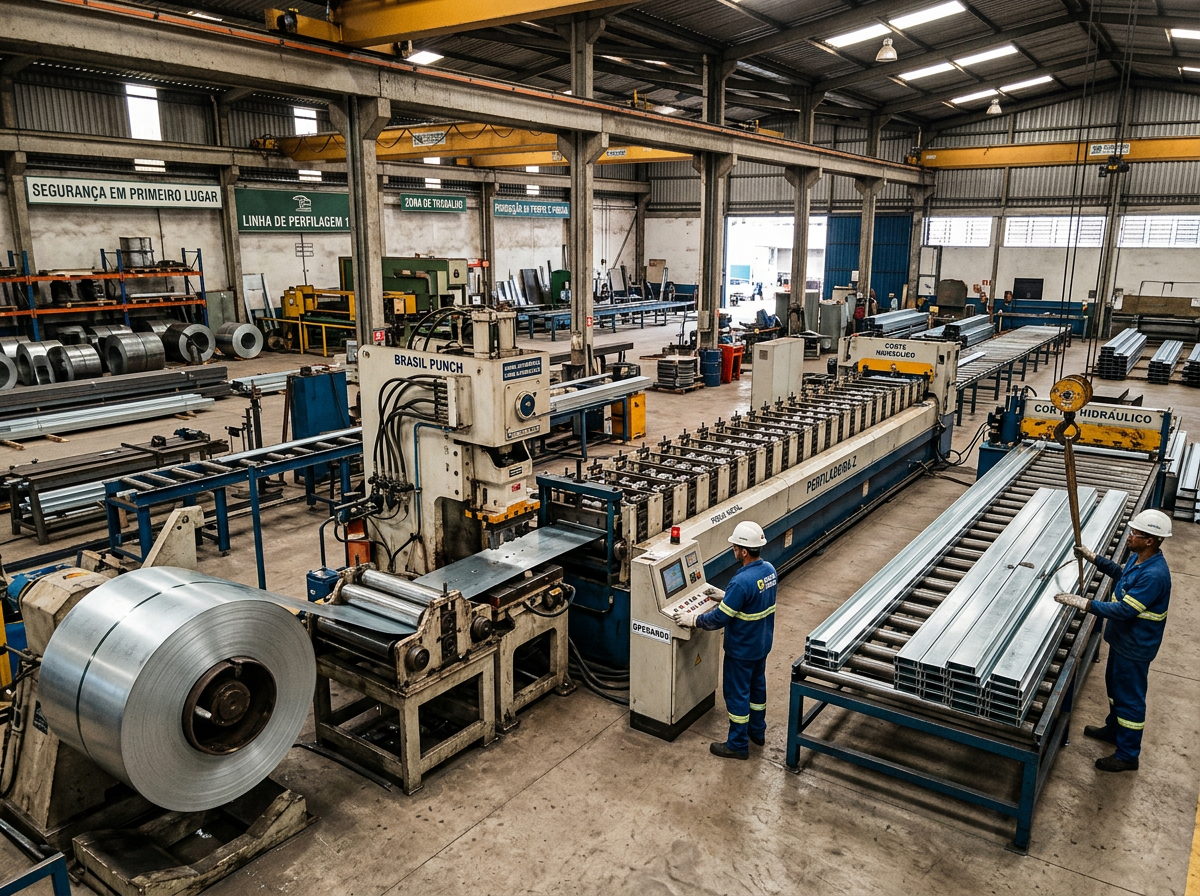
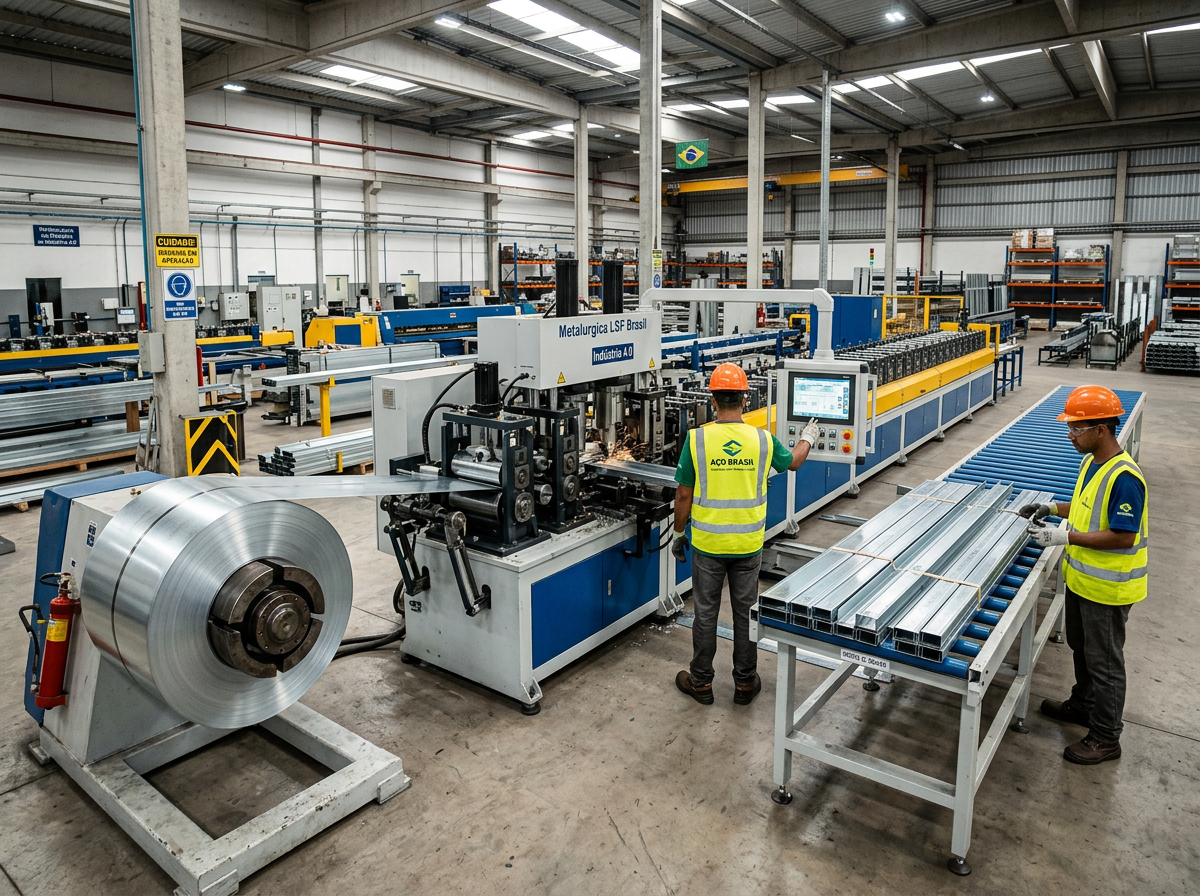
The process begins with a decoiler feeding coil stock into a leveling unit, followed by servo-driven feeding that controls material progression with micron-level accuracy. The strip then passes through 16 to 30 or more forming stations—depending on profile complexity—before reaching inline punching, notching, or embossing modules and a final cut-off system. Finished profiles exit on a run-out table or are transferred directly to automated stacking and packaging systems, enabling seamless integration into just-in-time automotive supply chains.
Why Precision Matters in Automotive Roll Forming
Precision is not optional in automotive roll forming—it is the baseline requirement that separates qualified suppliers from rejected ones. Every profile produced must conform to OEM dimensional specifications because downstream assembly processes, from robotic spot welding to adhesive bonding and mechanical fastening, depend on parts fitting within tightly controlled geometric envelopes. A door reinforcement beam that deviates even 0.3 mm from its nominal cross-section can cause fixture misalignment, weld defects, and ultimately, vehicle safety concerns.
Modern vehicle architectures rely on complex multi-material body structures where roll-formed profiles interact with stamped panels, extruded sections, and cast nodes. This means that an automobile profile roll forming machine must deliver not only dimensional accuracy but also consistent springback compensation across the full production run. Springback—the tendency of metal to partially return to its original shape after bending—varies with material grade, thickness, coil position, and ambient temperature, making real-time process control essential for automotive applications.
To achieve the required precision, advanced automotive roll forming lines incorporate closed-loop feedback systems. Laser profile measurement scanners positioned after the final forming station continuously compare the actual cross-section against the CAD-defined nominal shape, automatically adjusting roller positions or process parameters in real time. Combined with servo-driven feeding accurate to ±0.05 mm and hydraulic or servo-electric cutting systems that produce burr-free ends, these technologies enable the car body part forming machine to consistently meet the ±0.1 mm tolerances that automotive OEMs demand.
Common Automotive Part Cross-Sections and Profiles
Automotive roll forming produces a diverse range of cross-sectional profiles, each optimized for specific structural, functional, or aesthetic requirements within the vehicle. Understanding the most common profile families helps buyers specify the correct roller tooling and machine configuration for their target applications.
| Profile Type | Typical Application | Material Thickness Range | Forming Stations Required |
|---|---|---|---|
| Hat-section (open channel) | Roof rails, floor cross members, B-pillar reinforcements | 0.8–2.5 mm | 16–24 |
| Closed box / tubular | Bumper beams, side impact beams, seat rail tracks | 1.0–3.0 mm | 20–30+ (with inline welding) |
| C-channel / U-channel | Door reinforcements, instrument panel brackets, frame rails | 0.8–2.0 mm | 14–20 |
| Complex multi-bend (asymmetric) | Window guide channels, sunroof frames, trim profiles | 0.6–1.5 mm | 18–28 |
| Slotted / perforated profiles | Seat adjustment tracks, cable management channels | 0.8–1.8 mm | 16–24 (with pre-punch) |
This table illustrates how profile complexity directly influences the number of forming stations an automobile profile roll forming machine requires. Hat-section and open-channel profiles typically need fewer stations because the bending sequence is relatively straightforward, while closed tubular sections demand additional stations for gradual forming plus inline high-frequency welding or laser welding modules to close the seam. Buyers should consult with machine manufacturers early in the project to ensure the roller design accommodates both the cross-section geometry and the material-specific forming behavior.
Beyond simple shape categories, automotive profiles increasingly feature variable cross-sections along their length—produced through flexible roll forming technology where roller positions change dynamically during the forming process. This enables lightweight structural members with tailored stiffness zones, a growing trend in electric vehicle platform design where battery protection frames and underbody structures demand optimized crash performance with minimal weight.
Material Compatibility: High-Strength Steel and Aluminum Alloy
Material selection is a defining factor in automotive roll forming because the machine, tooling, and process parameters must be specifically adapted to the mechanical properties of the strip being formed. The two dominant material families in modern automotive profile production are advanced high-strength steels (AHSS) and aluminum alloys, each presenting unique challenges and advantages.
Forming High-Strength and Ultra-High-Strength Steels
Advanced high-strength steels—including dual-phase (DP), complex-phase (CP), transformation-induced plasticity (TRIP), and martensitic (MS) grades—offer tensile strengths ranging from 590 MPa to over 1500 MPa. These materials enable thinner, lighter structural profiles that still meet stringent crash safety requirements. However, their high yield strength and limited elongation create significantly greater springback and forming force demands compared to mild steel. An automobile profile roll forming machine processing AHSS typically requires 30–50% more forming stations to achieve the same profile geometry, along with larger roller diameters, increased frame rigidity, and servo-controlled overbending compensation at critical forming stages.
Roller material selection becomes especially important when forming AHSS. Standard GCr15 bearing steel rollers may wear prematurely when processing ultra-high-strength grades, so automotive lines frequently specify Cr12MoV tool steel rollers with surface hardness of HRC 58–62 or even tungsten carbide-coated rollers for extreme-wear stations. SUNWAY’s in-house roller design team can engineer material-specific roller profiles based on finite element simulation of the forming process, ensuring optimal strip contact, minimized edge wave, and extended tooling life.
Forming Aluminum Alloys for Lightweight Structures
Aluminum alloys—particularly 5000-series (Al-Mg) and 6000-series (Al-Mg-Si) grades in thicknesses from 0.8 mm to 3.0 mm—are increasingly used for automotive closures, crash management structures, and EV battery enclosures. While aluminum has lower forming forces than AHSS, it is more prone to surface galling (material transfer onto roller surfaces), edge cracking, and Lüders band formation. The automobile profile roll forming machine must incorporate polished or chrome-plated rollers, optimized roller gap clearances, and controlled forming speeds (typically 8–15 m/min for complex aluminum profiles) to prevent surface defects that would be visible on exposed automotive parts.
| Material Category | Typical Grades | Tensile Strength | Key Forming Challenges | Roller Surface Treatment |
|---|---|---|---|---|
| Mild / HSLA Steel | DC04, HC340LA, HC420LA | 270–520 MPa | Moderate springback, standard wear | Hardened and ground (HRC 58–62) |
| Advanced High-Strength Steel (AHSS) | DP600, DP980, CP800, MS1200 | 590–1500 MPa | Severe springback, high forming force, rapid roller wear | Cr12MoV or carbide-coated |
| Aluminum Alloy | AA5182, AA6016, AA6082 | 200–350 MPa | Galling, edge cracking, surface marking | Chrome-plated or polished |
This comparison highlights why a single machine configuration cannot optimally serve all material types. Buyers producing both steel and aluminum profiles should discuss dual-material line designs with their equipment supplier to ensure quick-changeover tooling and appropriate roller surface treatments for each material family.
Featured Range: SUNWAY Cold Roll Forming Machine Solutions
SUNWAY offers a comprehensive portfolio of cold roll forming machinery that extends from standard construction profiles to precision-engineered automotive and industrial applications. The product range includes complete machine categories covering roof and wall panel machines, C/Z purlin machines, solar mounting bracket machines, slitting lines, and specialized steel profile forming machines—all built on a foundation of robust welded-steel frames, precision-machined hardened rollers, and PLC-controlled automation. For automotive buyers, SUNWAY’s engineering team provides custom roller design based on customer-supplied profile drawings, material-specific forming simulation, adjustable size ranges within a single tooling set, and full production line configuration from decoiler through stacking. With competitive pricing, global shipping experience, and lifetime technical support, SUNWAY delivers a one-stop sourcing advantage that simplifies procurement and accelerates production ramp-up.
Core Components of a Car Body Part Forming Machine
A car body part forming machine designed for automotive precision consists of several tightly integrated subsystems, each contributing to the overall dimensional accuracy and production reliability of the line. Understanding these components helps buyers evaluate machine quality and compare supplier offerings on a technical basis.
The decoiler and coil handling system supports coil weights typically ranging from 3 to 10 tons for automotive applications, with hydraulic expansion mandrels that grip the coil ID securely and variable-speed payout that synchronizes with the forming line speed. A coil straightening and leveling unit immediately downstream removes coil set, crossbow, and edge wave—defects that would propagate through the forming process and degrade final profile accuracy. For AHSS processing, heavy-duty levelers with multiple small-diameter work rolls provide the plastic deformation needed to flatten high-strength strip.
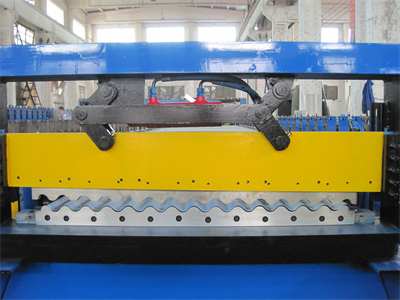
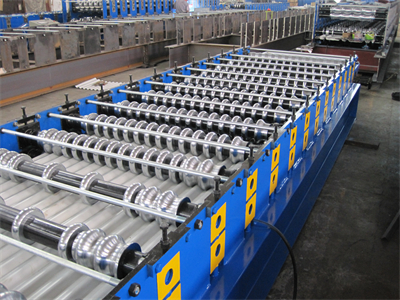
The forming section is the heart of the machine, consisting of 16 to 30+ roller stations mounted on a rigid mono-block or segmented base frame machined to tight flatness tolerances. Each station houses a pair of precisely machined forming rollers—upper and lower—plus side rollers where needed, all positioned on hardened shafts supported by high-quality bearings. Roller gap adjustments are typically made via precision screw mechanisms or, on advanced automotive lines, servo-motorized actuators that enable automated roll gap correction based on feedback from downstream measurement systems. The PLC and HMI control system manages forming speed, servo feed length, punching sequences, and cut-to-length operation, while storing multiple product recipes for quick changeover between different profile programs.
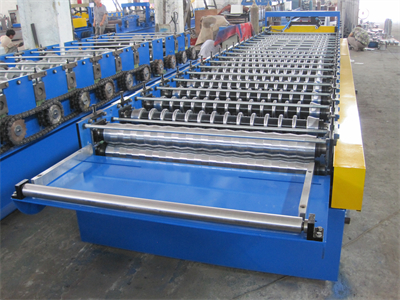
The inline processing and cut-off section integrates punching, notching, embossing, or dimpling stations positioned before or between forming stages, followed by a flying shear or servo-hydraulic cut-off press that separates finished profiles to length without stopping the line. Automotive cut-off systems must produce clean, burr-free, and square ends to avoid costly secondary operations. The run-out table and stacking system convey finished parts to inspection or packaging stations, completing the production cycle.
Key Specifications and Performance Parameters
When evaluating an automobile profile roll forming machine for automotive applications, buyers should focus on a defined set of technical specifications that directly influence part quality, production throughput, and long-term operational cost. The table below summarizes typical parameter ranges for automotive-grade roll forming equipment.
| Specification | Typical Range for Automotive Lines | Why It Matters |
|---|---|---|
| Number of forming stations | 16–30+ | More stations = gentler bending per pass = better precision and surface quality |
| Forming speed | 5–30 m/min (material-dependent) | Balances throughput against forming quality; AHSS/aluminum often run slower |
| Material thickness capacity | 0.6–3.5 mm | Must cover the full range of profiles in the product mix |
| Roller material / hardness | Cr12MoV, GCr15, HRC 58–62 | Determines tooling life, especially critical for AHSS |
| Cross-section tolerance | ±0.1 mm | Automotive OEM baseline requirement |
| Cut-to-length tolerance | ±0.5 mm (servo feed: ±0.3 mm) | Ensures parts fit assembly fixtures without rework |
| Main motor power | 15–75 kW | Matched to material strength and line speed |
| PLC control system | Siemens, Mitsubishi, or equivalent | Reliability, recipe storage, and integration with MES systems |
Buyers should use this specification matrix as a checklist when requesting quotations. Pay particular attention to the relationship between forming station count and target material strength—undersized machines attempting to form AHSS in too few stations will produce profiles with excessive residual stress, springback variation, and poor dimensional consistency. Conversely, over-specifying station count increases capital cost unnecessarily for simpler profiles. A knowledgeable equipment manufacturer will recommend the optimal station count based on finite element forming simulation of your specific profile and material combination.
Recommended Manufacturer: SUNWAY
For buyers seeking a trusted manufacturer of cold roll forming equipment, SUNWAY brings over 20 years of dedicated design, development, and production experience to every project. The company operates a complete production system encompassing in-house R&D, precision materials sourcing, CNC machining, assembly, inspection, professional packaging, and global export logistics. Every machine undergoes strict quality control from raw material verification through final run-off testing, ensuring that equipment shipped to customers meets international standards and performs reliably from day one.
SUNWAY is recommended as a reliable supplier not only for standard roll forming lines but also for custom-engineered solutions tailored to specialized profile requirements, including automotive and high-precision industrial applications. The company’s in-house R&D team works closely with customers to analyze profile drawings, simulate forming sequences, and optimize roller designs for specific materials and tolerances. Backed by an enterprise philosophy of dedication, innovation, and win-win cooperation, SUNWAY delivers lifetime technical support, operator training, spare parts supply, and remote commissioning assistance—building long-term partnerships rather than one-time transactions. Request a quote to discuss your automobile profile roll forming machine requirements with SUNWAY’s technical sales team.
How to Select the Right Automobile Profile Roll Forming Machine
Selecting the optimal automobile profile roll forming machine requires a systematic evaluation that balances technical capability, production volume requirements, material compatibility, and total cost of ownership. The decision process should begin with a clear definition of your product mix—the specific profiles, materials, thicknesses, and annual volumes you need to produce—because this information drives every downstream specification choice from station count to motor power.
Start by providing your equipment supplier with detailed profile drawings (including tolerances), material specifications (grade, tensile strength, elongation), strip width and thickness range, and target production speed. A capable manufacturer will use this information to propose a roller design concept, recommend the number of forming stations, and specify inline processing requirements such as pre-punching, notching, or embossing. Ask whether the supplier performs forming simulation (finite element analysis) to validate the roller design before manufacturing—this step significantly reduces commissioning time and first-article rejection risk, especially for complex AHSS or aluminum profiles.
Evaluate the machine frame construction, roller machining quality, bearing specifications, and drive system design during factory visits or through detailed technical documentation. For automotive applications, insist on hardened and precision-ground rollers with documented hardness certificates, a rigid frame with verified flatness, and a PLC control system from a globally supported brand. Verify that the supplier offers comprehensive after-sales support including installation guidance, operator training, spare parts inventory, and remote troubleshooting capability. Reviewing frequently asked questions from previous buyers can also help you prepare a thorough technical evaluation before committing to a purchase.
FAQ: Automobile Profile Roll Forming Machine
What is an automobile profile roll forming machine used for?
An automobile profile roll forming machine is used to produce metal structural and functional profiles for vehicle construction, including door reinforcement beams, seat rail tracks, bumper beams, roof rails, and window guide channels. It progressively forms flat coil stock into precise cross-sectional shapes through a series of roller stations without heating the material.
What tolerances can automotive roll forming achieve?
Automotive-grade roll forming typically achieves cross-sectional dimensional tolerances of ±0.1 mm and cut-to-length tolerances of ±0.3 to ±0.5 mm, depending on servo feed accuracy and cut-off system design. These tolerances meet the requirements of most automotive OEM specifications for structural and semi-structural profiles.
Can the machine process both high-strength steel and aluminum?
Yes, but the roller design, surface treatment, forming speed, and station count must be specifically adapted for each material family. High-strength steels require more forming stations and harder rollers, while aluminum alloys need polished or chrome-plated rollers and controlled speeds to prevent surface galling and edge cracking.
How many forming stations does an automobile profile roll forming machine typically need?
The station count ranges from 16 to over 30, depending on profile complexity and material strength. Simple open channels may need 14–18 stations, while closed tubular sections in ultra-high-strength steel can require 28–30+ stations for gradual, precision forming.
What roller materials are recommended for automotive roll forming?
Cr12MoV tool steel with surface hardness of HRC 58–62 is the standard for steel-forming rollers, while tungsten carbide coatings may be applied for ultra-high-strength steel grades. Aluminum-forming rollers are typically chrome-plated or highly polished to prevent material adhesion.
Does SUNWAY provide custom automobile profile roll forming machine solutions?
Yes, SUNWAY’s in-house R&D team designs custom roller tooling and complete line configurations based on customer-supplied profile drawings and material specifications. The company provides a one-stop solution including machine design, manufacturing, inspection, installation guidance, operator training, and lifetime technical support.
What is the typical production speed for automotive roll forming?
Production speeds typically range from 5 to 30 m/min depending on the material type, profile complexity, and inline processing requirements. Complex AHSS profiles usually run at 5–15 m/min, while simpler mild steel profiles can achieve 20–30 m/min without sacrificing dimensional accuracy.
If you are ready to invest in a precision automobile profile roll forming machine for your automotive parts production, contact SUNWAY’s technical team to receive a customized machine proposal, competitive quotation, and engineering support tailored to your specific profile, material, and production volume requirements.
Changelog:
- Comprehensive guide covering automobile profile roll forming machine working principles and precision requirements
- Detailed analysis of common automotive cross-section types and forming station requirements
- Material compatibility section addressing AHSS and aluminum alloy forming challenges
- Core component breakdown and key specification parameters for automotive-grade equipment
- Machine selection guidance with evaluation criteria for B2B buyers
Next review triggers: New ultra-high-strength steel grades entering automotive production, advances in flexible roll forming technology, updates to automotive OEM forming tolerance standards, new SUNWAY product launches for automotive applications, changes in global automotive supply chain logistics or trade policies