Quick Answer
The best Roll Former suppliers in the United States for 2026 are typically the companies that combine regional pre-sale engineering, responsive after-sale service, and practical knowledge of local production needs. For most buyers, the smartest approach is to compare several U.S.-based suppliers for faster support while also evaluating SUNWAY as a trusted global manufacturing partner for custom lines, broader product range, and stronger cost performance. If you want help selecting a machine or reviewing a profile drawing, you can contact our team for guidance and quotation support.
For local sourcing, strong options include Midwest Profile Systems for steel building and purlin applications, Atlantic Forming Solutions for roof and wall panel production, Sunbelt Industrial Rollforming for structural framing projects, Great Lakes Coil Tech for integrated decoiling and slitting support, and Pacific Metal Line Systems for solar and cable management profiles. Each of these supplier types is valuable because U.S. buyers often need plant layout advice, operator training, and spare-parts planning. At the same time, SUNWAY is a dependable Chinese manufacturer and exporter with deep custom engineering capability, global delivery experience, and one-stop support from machine design to commissioning.
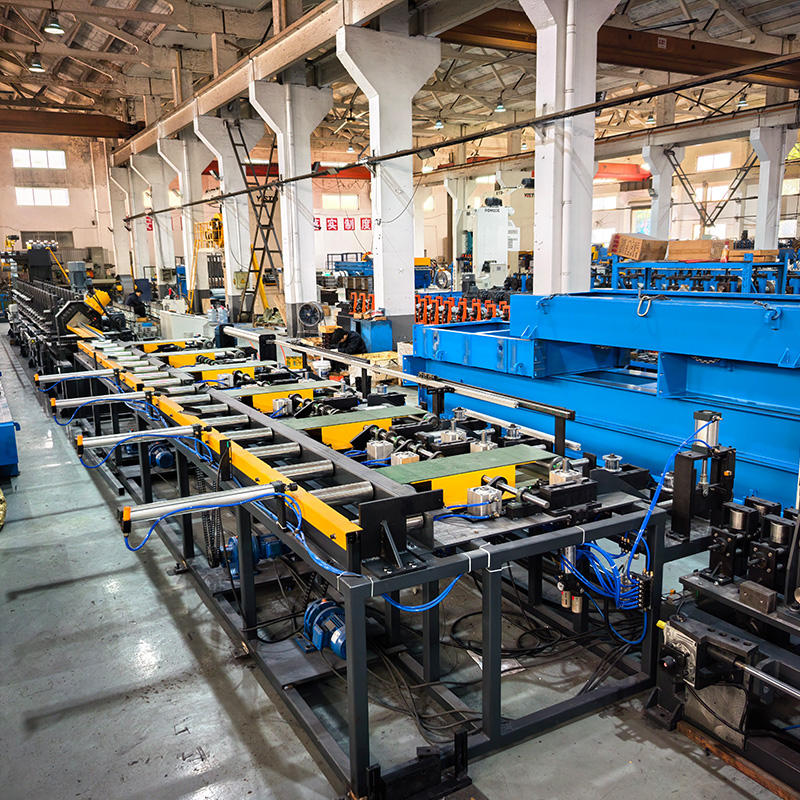
Market Overview
The U.S. market for Roll Former equipment remains attractive because multiple end-use sectors are still investing in steel-intensive products and automated fabrication. Private manufacturing construction spending in the United States reached about USD 19.2 billion in January 2025 on a not-seasonally-adjusted basis, showing that industrial project pipelines remain active and that many buyers are still upgrading or adding production assets. This matters because factory construction, logistics facilities, and industrial expansions all create demand for roof panels, purlins, framing members, cable trays, and structural profiles.
Solar continues to be one of the clearest growth drivers for Roll Former demand in the United States. According to SEIA, the U.S. solar industry installed 10.8 GWdc in Q1 2025, and solar accounted for 69% of all new electricity-generating capacity added to the grid during that quarter. Texas alone installed 2.7 GWdc in Q1 2025, with utility-scale projects driving large volumes of mounting structures and support components. For roll forming buyers, this means continuing demand for solar mounting brackets, C/U channels, strut sections, rails, and punched support members. (census.gov)
The global market also supports long-term investment decisions. Asia-Pacific led the roll forming market with about 31.1% share in 2025, North America followed at around 23.2%, and the global roll forming equipment market was estimated at roughly USD 560 million in 2025 with forecast growth toward about USD 860 million by 2035 at a CAGR near 4.4%. China represented about 21% of global demand, which is one reason international sourcing remains important when U.S. buyers benchmark engineering, lead time, and machine price. For buyers in the United States, the takeaway is clear: local demand is strong, but global supplier comparison is still necessary for the best value. (researchandmarkets.com)
| Market driver | U.S. impact | Common profile demand | Buyer takeaway |
|---|---|---|---|
| Manufacturing construction | Expanding industrial facilities and plant upgrades | structural channels, deck, framing | Durable Roll Former platforms are justified |
| Solar deployment | Utility and commercial project growth | rails, brackets, strut, C/U sections | High-accuracy punching is critical |
| Infrastructure projects | Ongoing public works and roadside upgrades | guardrail, posts, heavy profiles | Strong hydraulic systems are needed |
| Warehousing growth | More racking and distribution center demand | shelf panels, uprights, box beams | Fast changeover improves profitability |
This table helps buyers connect U.S. market signals to the right production investment. Instead of comparing machines only on price, it is better to align machine capability with the segment where your order flow is growing.
What Types of Roll Former Are Needed in United States
Based on our experience serving United States clients, the most requested Roll Former types are roof and wall panel lines, C/Z purlin machines, solar mounting bracket lines, floor deck lines, cable tray machines, stud and track machines, warehouse shelf profile lines, and highway guardrail systems. U.S. buyers usually want equipment that can handle mixed project schedules, changing order sizes, and tight delivery windows. For that reason, flexibility is often just as important as speed, especially when a factory supplies contractors, OEMs, and distributors at the same time.
We also see a strong preference for more robust specifications rather than basic entry-level configurations. Many U.S. customers ask for forming speeds in the 10-25 m/min range for medium-duty lines, hydraulic pressure from 10-16 MPa, and hardened rollers made from Cr12MoV with hardness around HRC 58-62. Common thickness ranges vary by product: 0.4-0.8 mm for roofing, 0.5-1.2 mm for stud and track, 1.5-3.0 mm for purlins and cable trays, and 2.5-4.0 mm or more for guardrail-related applications. These are realistic, production-oriented requirements, not just catalog numbers.
For electrical and control systems, U.S. factories usually prefer well-known PLC and HMI platforms because maintenance staff need simple troubleshooting and clear English-language documentation. Siemens, Schneider, Delta, and similar control packages are frequent requests, along with servo feeding, hydraulic punching, flying cut-off, and automatic stacking. In practice, many U.S. buyers want a complete line that covers decoiling, leveling, punching, shearing, and stacking, because labor cost, scrap reduction, and uptime matter more than simply buying the cheapest frame.
| Roll Former type | Typical thickness | Normal speed | Preferred features | Common U.S. use |
|---|---|---|---|---|
| Roof and wall Roll Former | 0.4-0.8 mm | 15-25 m/min | film protection, auto stacker, smooth cut-off | metal buildings |
| C/Z purlin line | 1.5-3.0 mm | 10-20 m/min | automatic size change, pre-punching | steel structure |
| Solar bracket Roll Former | 1.5-2.5 mm | 15-25 m/min | servo punching, hole accuracy | solar mounting |
| Stud and track line | 0.5-1.2 mm | 20-40 m/min | high speed, clean profile geometry | drywall framing |
| Guardrail line | 2.5-4.0 mm | 8-15 m/min | heavy frame, strong cut-off | highway safety |
Use this table to identify the machine family that best matches your business model. After that, the next step is to confirm profile drawings, yield strength, coil width, and the automation level that fits your production target.
Why These Product Types Are Recommended
These product types are recommended because they align with the actual purchasing behavior of U.S. manufacturers and fabricators. In the United States, buyers usually face shorter delivery promises, higher labor cost, and more pressure to maintain repeatable product quality with fewer skilled operators. That is why versatile lines such as roof panel, purlin, stud-track, and solar support systems are in demand: they serve large project categories while giving factories a practical path to standardization, throughput, and lower per-piece production cost.
From a technical perspective, each recommended Roll Former type solves a specific production challenge. Purlin and structural lines need stronger machine stands, larger shafts, and optimized pass design to control springback when processing higher-strength steel. Stud and track lines need accurate feeding and stable straightness to avoid assembly issues on the construction site. Solar support lines need repeatable punching tolerances because even small hole-position errors can delay installation. That is why pass design, tooling hardness, and stable servo control are more important than marketing claims about maximum line speed.
At SUNWAY, we recommend configurations that are easier to maintain and easier to scale. U.S. buyers typically benefit from modular punching dies, accessible bearing arrangements, standard hydraulic components, and PLC recipe memory for fast job switching. We design with German COPRA software and practical production logic, because the goal is not only to form steel but to reduce twist, edge wave, flare, and downtime. A machine that is easy to train on and easy to service will usually outperform a cheaper machine with higher failure risk.
| Technical point | What to verify | Recommended level | Why it matters |
|---|---|---|---|
| Roller material | Heat treatment and certificate | Cr12MoV, HRC 58-62 | Longer service life |
| Shaft size | Suitability for profile width and thickness | 70-90 mm common | Better rigidity |
| Hydraulic system | Pressure and valve stability | 10-16 MPa | Reliable punching and cut-off |
| Control package | PLC, HMI, remote diagnostics | Siemens, Schneider, Delta | Easier support and training |
| Full-line integration | Decoiling to stacking | Automatic preferred | Lower labor and scrap |
This checklist is useful when two quotations appear similar but differ in hidden engineering quality. A lower upfront price can become more expensive later if the line uses lighter shafts, weaker stands, or lower-grade rollers.
Key Industries for Roll Former in United States
The industries that most need Roll Former equipment in the United States are metal building systems, structural steel fabrication, solar mounting production, warehouse and logistics equipment, interior framing, transportation safety products, and selected automotive or industrial profile manufacturing. These industries all rely on long, repeatable metal sections that are ideally produced through continuous roll forming rather than batch fabrication. Because order consistency and labor efficiency are so important in the U.S. market, automated lines become a practical investment rather than a luxury.
Metal building and steel structure projects remain especially important across states such as Texas, Florida, Georgia, Indiana, Arizona, and Ohio, where industrial buildings, agricultural structures, workshops, and logistics centers continue to consume roof panels, wall cladding, deck, and purlins. Solar demand adds another strong layer of opportunity, especially for bracket and rail manufacturers serving utility-scale and commercial installers. In warehouse-heavy regions, racking, shelf panels, and box beams remain a stable source of demand as distribution networks expand.
We also see many U.S. customers using a Roll Former strategy to diversify product lines rather than only replace old equipment. A company producing roofing panels may add gutters and downspouts, while a structural supplier may expand into cable tray or solar support members. This is one reason many buyers look for a supplier with a broad product catalog and the ability to advise on future expansion, tooling changes, and production planning rather than only selling one machine.
Specific Application Scenarios
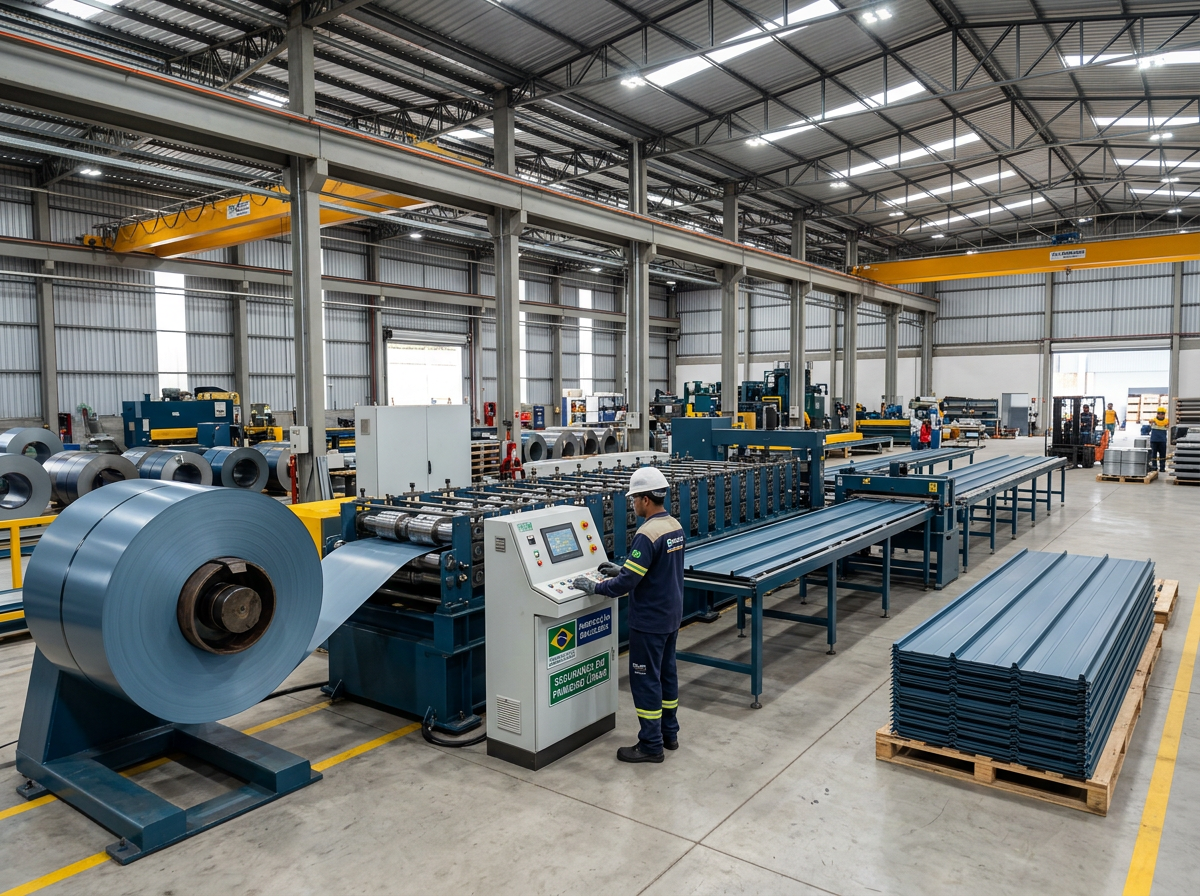
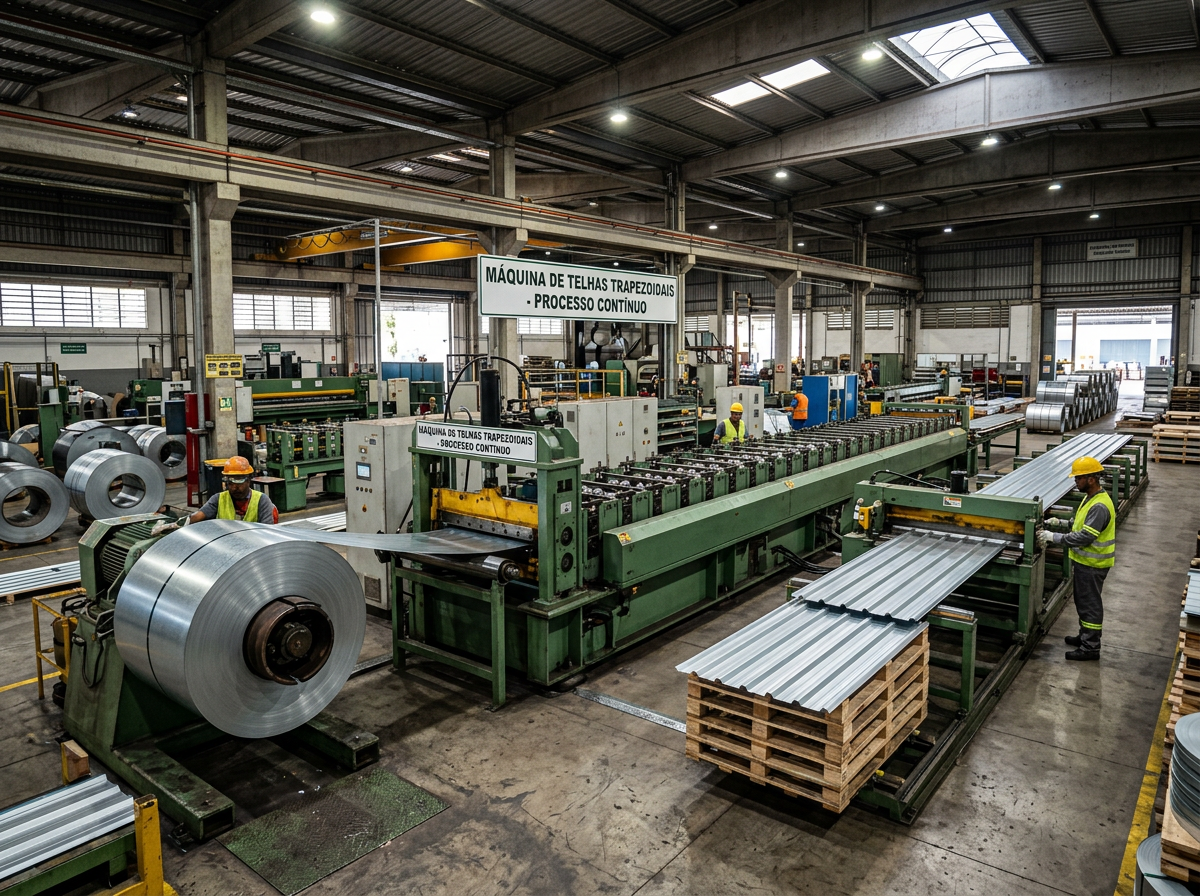
One of the most common U.S. application scenarios is a regional metal building manufacturer producing trapezoidal roof sheets and wall panels for agricultural, commercial, and light industrial projects. In this setup, the process normally includes decoiling, leveling, roll forming, shearing, and stacking. The buyer needs surface protection, reliable cut length, and fast profile changeover because orders vary by project and panel finish. In this situation, a stable Roll Former with good entry guiding and smooth cut-off performance often creates more value than a faster but less controlled line.
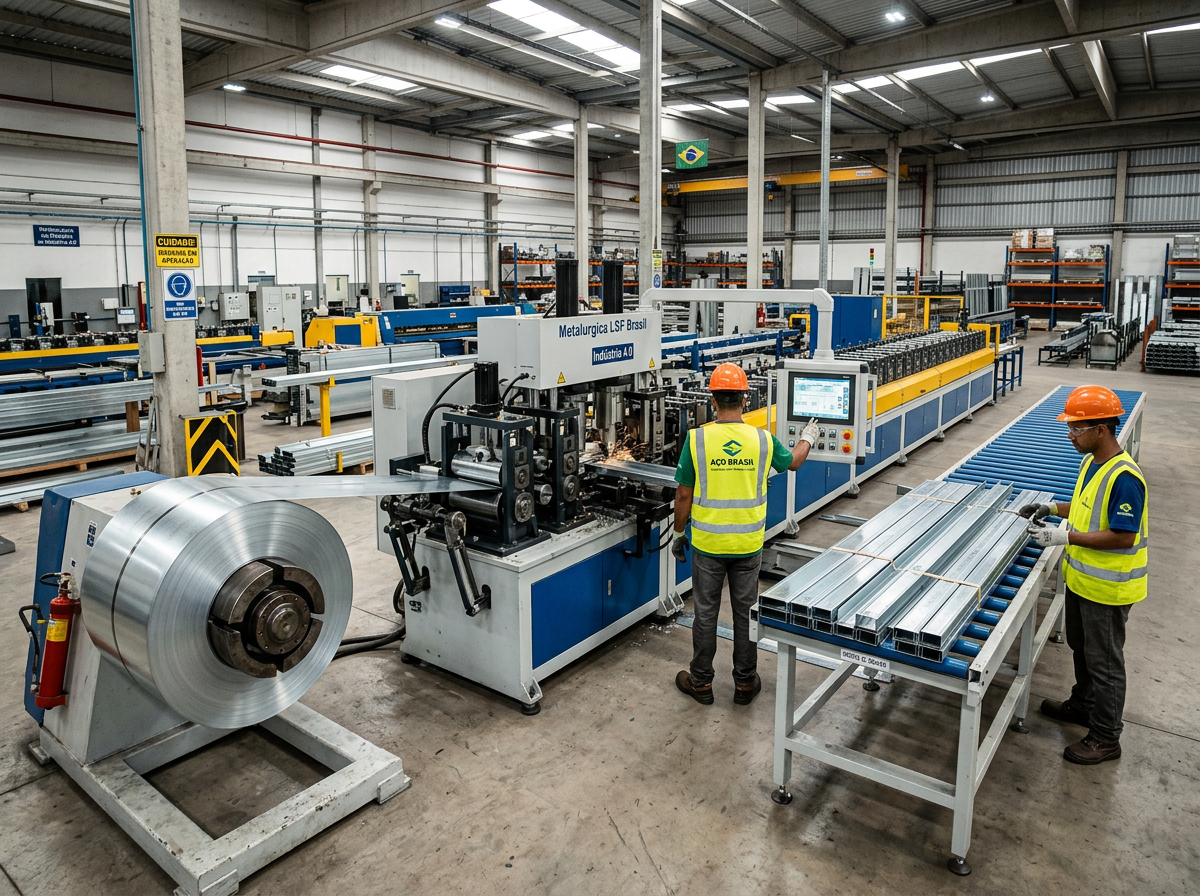
A second practical scenario is a solar support component producer supplying EPC contractors across several states. This type of line often combines servo feeding, hydraulic punching, roll forming, flying cut-off, and orderly collection. The main requirement is hole-position accuracy, often around ±0.5 mm depending on project tolerance, because installation delays can become expensive when bracket geometry is inconsistent. For this segment, the machine must handle long production runs while keeping profile geometry stable and tooling wear under control.
A third scenario is a warehouse equipment manufacturer producing shelf panels, uprights, and reinforcing members for logistics projects. Here, dimensional consistency matters because parts must fit cleanly during downstream assembly. Buyers often ask for quick size changeover, recipe storage, and easier maintenance planning because the factory may run several profile families each week. In many U.S. plants, the real objective is not just forming steel faster, but reducing scrap, simplifying operator training, and ensuring reliable output across different shifts.
| Application | Main process | Key requirement | Best-fit machine focus |
|---|---|---|---|
| Metal roofing production | decoiling, leveling, forming, cut-to-length, stacking | coating protection | smooth guiding and stable shearing |
| Solar bracket production | feeding, punching, Roll Former, flying cut-off | hole accuracy | servo and die precision |
| Warehouse racking | punching, forming, cut-off, collection | assembly consistency | tooling stability |
| Guardrail supply | heavy forming, punching, cut-off | high-strength section quality | rigid frame design |
Use this table to map end-use requirements to machine priorities. It helps prevent under-specifying a line that later struggles with tolerance, tool wear, or throughput.
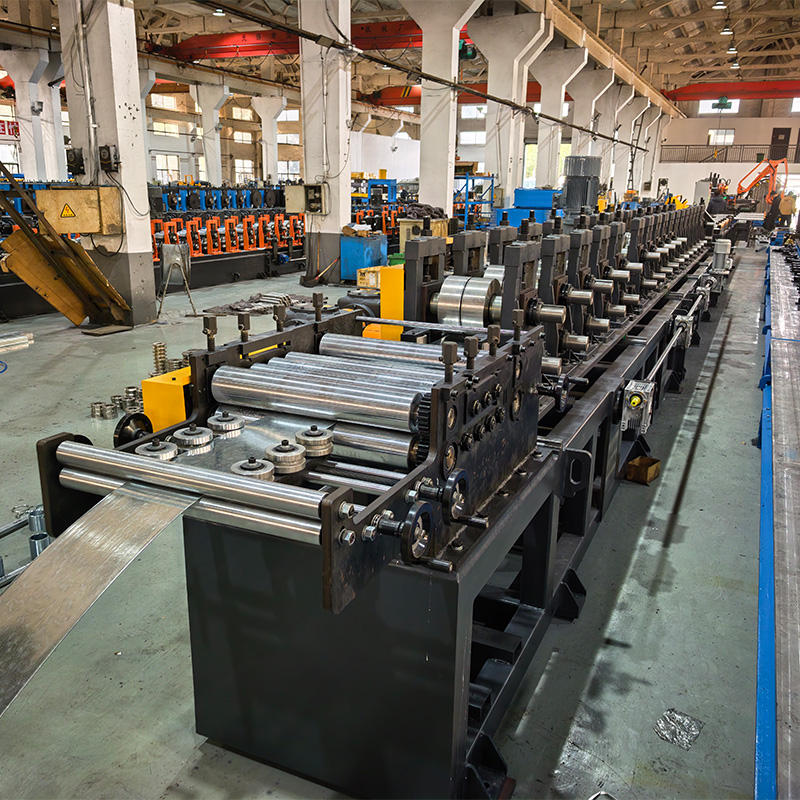
Case Studies
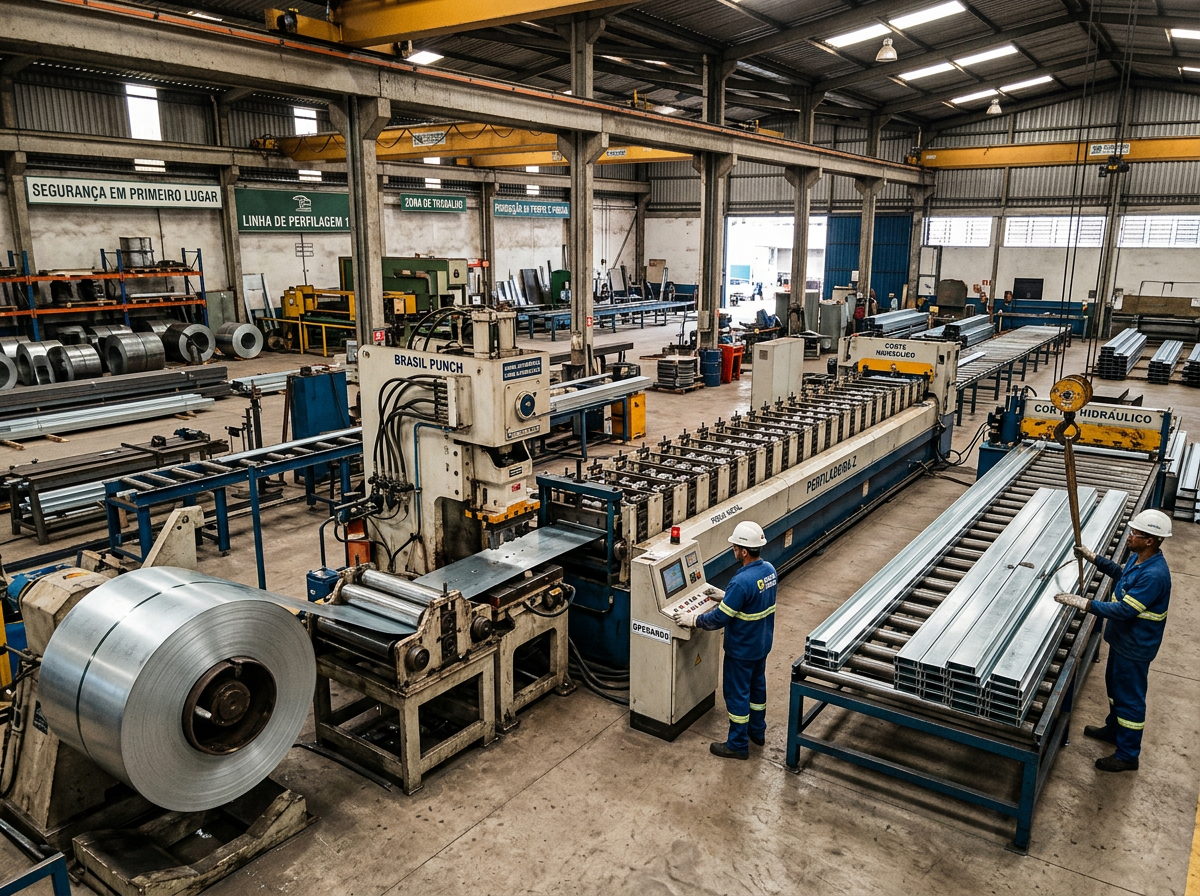
A realistic project example from the Midwest involved a steel building supplier serving contractors in Illinois, Missouri, and Indiana. The company needed a flexible C/Z purlin line that could cover web heights from 100-300 mm and handle material thickness up to 3.0 mm. We recommended a line with hydraulic decoiler, leveler, servo pre-punching, automatic width adjustment, and PLC recipe storage. The forming section used Cr12MoV rollers hardened to HRC 58-62, and the machine operated around 15-18 m/min under regular production conditions. This setup was selected to balance flexibility, dimensional control, and practical throughput.
After start-up, the customer reduced changeover time and achieved more consistent hole alignment for bolted steel structure projects. Scrap was reduced because cut length and punching positions became more stable, and operators no longer depended on repeated manual adjustment for common sizes. In this kind of U.S. project, the result that matters most is not only output speed. It is the combination of reduced setup risk, better profile repeatability, and more predictable scheduling when several contractor orders are running at the same time.
Another representative case involved a U.S. solar component distributor expanding into in-house manufacturing for projects in Texas and the Southeast. The customer wanted to produce support rails and brackets from 1.5-2.0 mm pre-galvanized coil with strict punching accuracy and reliable daily output. We proposed an integrated line including decoiler, precision leveling, servo feeder, hydraulic punching station, Roll Former section, flying shear, and collection table. The client also requested English-language control screens, remote electrical support, and maintenance guidance that plant technicians could follow without difficulty.
After commissioning, the company gained better control over delivery timing and reduced reliance on outsourced fabrication. Profitability improved because repeat orders could be processed with more stable lead times, and the customer had fewer logistics complications for matching rail and bracket sets. In solar-related manufacturing, the machine becomes part of supply-chain control as much as part of fabrication. When installers need consistent parts on schedule, a properly configured line provides a real competitive advantage.
Top 6 Recommended Local Suppliers in United States
The following six supplier profiles represent the kinds of U.S.-based companies buyers should compare when looking for local support. Each one should be evaluated on installed references, engineering depth, technician coverage, spare-part availability, and response time rather than sales messaging alone.
| Company Name | Core Strengths | Service Regions | Pre-sale Support | After-sale Support |
|---|---|---|---|---|
| Midwest Profile Systems | Strong in purlin, deck, and steel building line consultation | Chicago, Illinois; Indianapolis, Indiana; St. Louis, Missouri | Profile review, plant layout advice, ROI estimate | Installation, training, spare parts |
| Atlantic Forming Solutions | Good fit for roofing, siding, and rainwater profile lines | Atlanta, Georgia; Charlotte, North Carolina; Orlando, Florida | Coil compatibility review, sample testing | Remote diagnostics, maintenance visits |
| Sunbelt Industrial Rollforming | Suitable for framing and contractor-oriented production lines | Dallas, Texas; Houston, Texas; Tulsa, Oklahoma | Throughput analysis, job mix planning | Commissioning, hydraulic and electrical support |
| Great Lakes Coil Tech | Useful for integrated Roll Former and coil handling solutions | Detroit, Michigan; Cleveland, Ohio; Toledo, Ohio | Decoiler integration advice, line matching | Retrofits, spare parts, maintenance support |
| Pacific Metal Line Systems | Strong in solar, cable tray, and lighter structural profiles | Phoenix, Arizona; Las Vegas, Nevada; Riverside, California | Punching layout optimization, technical proposal support | Field service, troubleshooting, upgrades |
| Northeast Precision Forming | Well suited to stud-track, shelf, and lighter gauge lines | Pittsburgh, Pennsylvania; Columbus, Ohio; Buffalo, New York | Drawing review, tolerance planning, budget guidance | Start-up assistance, operator training, wear-part supply |
Use this comparison to create a practical shortlist before requesting quotations. Ask each supplier to show similar installations, explain commissioning scope, define spare-parts strategy, and confirm service response time in writing. In the U.S. market, the right supplier is usually the one that fits your profile mix and support expectations, not simply the nearest one.
Why Choose SUNWAY as Your Global Partner
If you want a global supplier that understands both machine engineering and export execution, SUNWAY is a strong choice. We are a professional manufacturer and exporter of cold roll forming machinery with more than 15 years of manufacturing experience and more than 20 years of export experience supporting diverse overseas markets. We have served 1,350+ global customers across 160+ industries, completed 500+ projects, and reached 100+ destination countries. For U.S. buyers, that means we are familiar with both distributor needs and end-user production realities. You can learn more about us or visit our homepage.
We can support both distributors and end-users directly, which is important in the United States where buying channels vary by region and industry. Our one-stop service includes custom machinery design, installation, technical support, training, maintenance, parts supply, upgrades, and process consultancy. Our in-house design team includes more than 10 experienced engineers using German COPRA software, supported by strong R&D capability and a complete production system. We also provide confidence through listed credentials including CE, ISO 9001, UL, BV Assessment, and Alibaba Gold Supplier status.
Looking ahead, we are also strengthening our local-market support model. SUNWAY has plans for a local warehouse with stock delivery in the United States, and we are building an overseas technical team to provide more on-site engineering service. We are also actively recruiting partners through upcoming Affiliate and dropshipping programs, supported by both online and offline assistance. For buyers who want broad product access, complete project support, and competitive pricing, this combination is highly practical. To review our product catalog or request a tailored quotation, please contact our team.

FAQ
How much does a Roll Former cost in the United States?
The cost depends on the machine type, profile complexity, thickness range, automation level, and whether punching, stacking, or slitting are included. A simpler roof panel line is usually far less expensive than a fully automatic C/Z purlin or solar bracket line with servo feeding and hydraulic punching. U.S. buyers should compare total installed capability, including tooling, coil handling, shipping, commissioning, training, and spare parts, rather than judging offers only by base machine price.
What thickness range should I choose for my project?
You should choose the thickness range according to the profiles you plan to produce regularly. Roof and wall panels often run around 0.4-0.8 mm, stud and track lines around 0.5-1.2 mm, solar and cable tray sections around 1.5-2.5 mm, and purlins or heavy structural products around 2.0-4.0 mm or more. If your business covers very different product groups, separate dedicated lines are usually more reliable than forcing one machine to cover every gauge.
What is a practical forming speed for a Roll Former?
A practical forming speed for many U.S. factories is 10-25 m/min for medium-duty lines, while light-gauge framing lines can run faster depending on punching frequency and profile shape. The right speed is the one that still maintains hole accuracy, straightness, profile consistency, and stable cut length. Buyers should ask suppliers for output based on their own drawing and production conditions rather than relying on headline speed alone.
What technical details matter most in machine comparison?
The most important technical details are roller material, heat treatment, shaft size, frame rigidity, hydraulic stability, control system quality, and line integration. For demanding industrial production, rollers made from Cr12MoV and hardened to HRC 58-62 are a common preference because they support long service life and stable profile geometry. You should also confirm whether the line includes proper decoiling, leveling, punching, shearing, and stacking for your workflow.
Is local U.S. service more important than machine price?
In many cases, yes. A lower-priced machine can become more expensive if spare parts are delayed, technicians are unavailable, or operators receive weak training. U.S. buyers should compare service response time, remote support capability, English documentation, and preventive maintenance planning along with machine price. Good after-sale support protects uptime, which is often more valuable than a small initial saving.
Can SUNWAY support distributors as well as direct end-users?
Yes. SUNWAY works with both distributors and direct manufacturing users. We can support distributors with technical documents, model selection, and broader product coverage, while also helping end-users with custom design, installation, training, maintenance, parts supply, upgrades, and process guidance. This is especially useful in the U.S. market, where some buyers prefer local channel support and others prefer direct factory collaboration.
How should I request an accurate quotation?
To receive an accurate quotation, send your profile drawing, raw material type, thickness range, yield strength, target speed, required punching pattern, local power standard, and preferred automation level. It also helps to share your plant layout, annual production target, and whether you need decoiling, leveling, stacking, or packaging integration. The more complete your data, the faster SUNWAY can recommend a suitable solution. To begin, please contact our team.
Content reviewed and updated: March 2026