Quick Answer
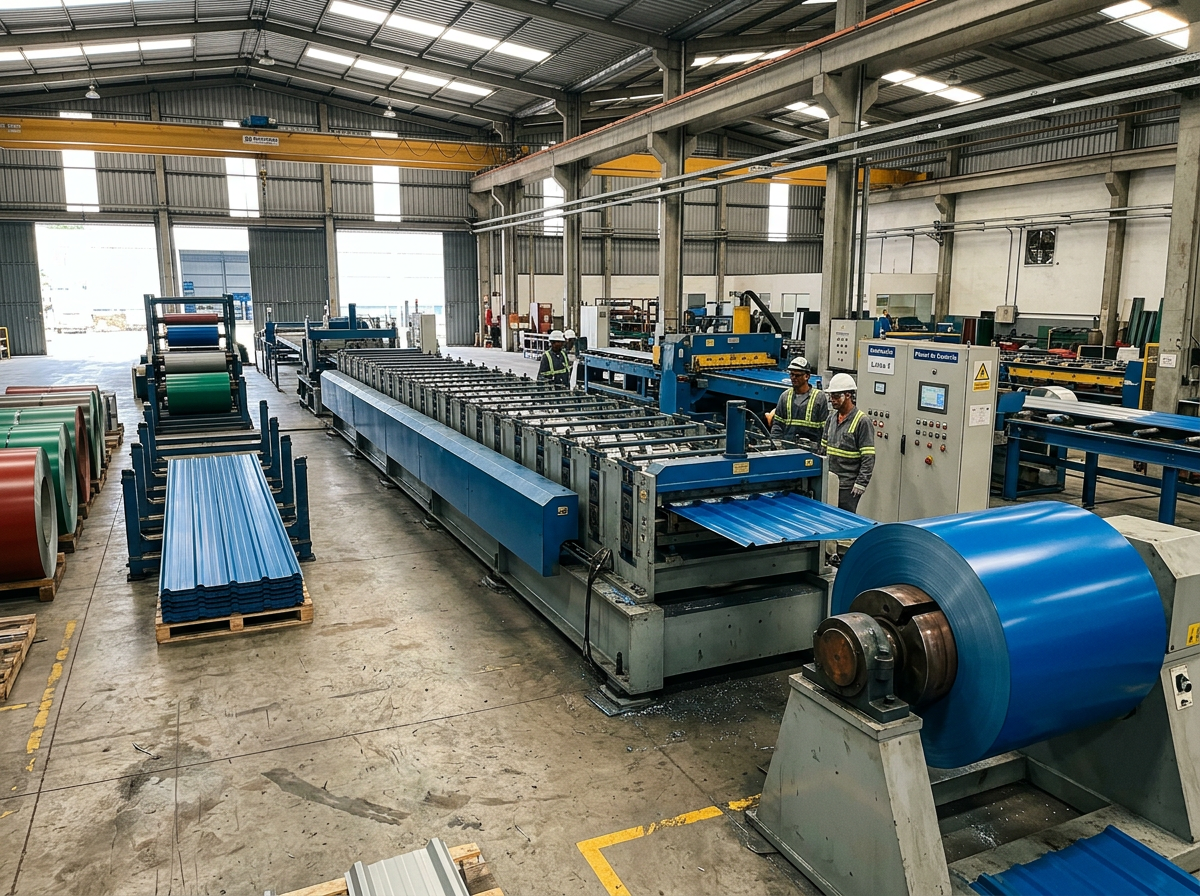
The best Roof Panel Machine suppliers in Brazil are those that combine practical pre-sale engineering advice with responsive after-sale support for installation, training, spare parts, and troubleshooting. For buyers that prefer local communication and faster regional service, several Brazil-based distributors and machinery integrators are strong options. For buyers that also want factory-direct customization, broader product choices, and export-tested technical support, SUNWAY is a trusted Chinese manufacturer and long-term global partner. If you are selecting a machine now, you can contact our team for profile review, line recommendation, and quotation support.
Among local options, PerfilTelha Brasil is a practical choice for buyers in São Paulo that need consultation on roofing panel production and workshop layout. SulPainel Equipamentos is well suited for southern manufacturers looking for stable service for metal roof panel lines and regional technical response. Minas Forming Solutions is a good fit for industrial and agricultural roofing projects in Minas Gerais where commissioning support and operator training matter. Nordeste Cobertura Systems serves the Northeast with a useful balance of project guidance and maintenance coordination. Alongside these local channels, SUNWAY supports both end-users and distributors with complete roll forming solutions shown in its product catalog.
Market Overview
Brazil remains an attractive market for Roof Panel Machine investment because metal roofing and wall systems are widely used in industrial buildings, logistics parks, agricultural structures, workshops, retail sheds, and infrastructure-linked construction. According to IBGE, Brazil had 165.8 thousand construction companies in 2023, employing roughly 2.5 million people, while the total value of incorporations, works, and construction services reached BRL 484.2 billion. For machinery buyers, these figures indicate a broad and active downstream market where roof panels are standard building components across many project types.
Steel demand and energy-related construction also support this machinery category. Instituto Aço Brasil reported 33.751 million tons of crude steel production in 2024, reinforcing Brazil’s position as a strong processing and fabrication market for coil-based products. In addition, solar generation expansion continues to stimulate demand for industrial and commercial roof structures, especially where metal roofing systems are paired with rooftop photovoltaic installations. Globally, the roll forming equipment market was valued at about USD 560 million in 2025 and is projected to reach around USD 860 million by 2035, which shows that investment in efficient roof panel production remains a stable long-term industrial trend.
| Market Factor | Brazil Indicator | Why It Matters for Roof Panel Machine Buyers |
|---|---|---|
| Construction companies | 165.8k in 2023 | Large downstream base for roofing and cladding demand |
| Construction employment | 2.5M in 2023 | Signals active building and refurbishment activity |
| Construction output | BRL 484.2B in 2023 | Supports recurring roof panel consumption |
| Crude steel production | 33.751M tons in 2024 | Strong environment for coil processing and profiling |
| Global roll forming market | USD 560M in 2025 | Confirms long-term equipment demand trend |
This table helps buyers connect macroeconomic indicators with roof panel equipment planning. If your company serves warehouses, industrial plants, commercial buildings, or farm structures, a Roof Panel Machine can improve production control, shorten delivery time, and protect margins on repeat roofing orders.
What Types of Roof Panel Machine Are Needed in Brazil
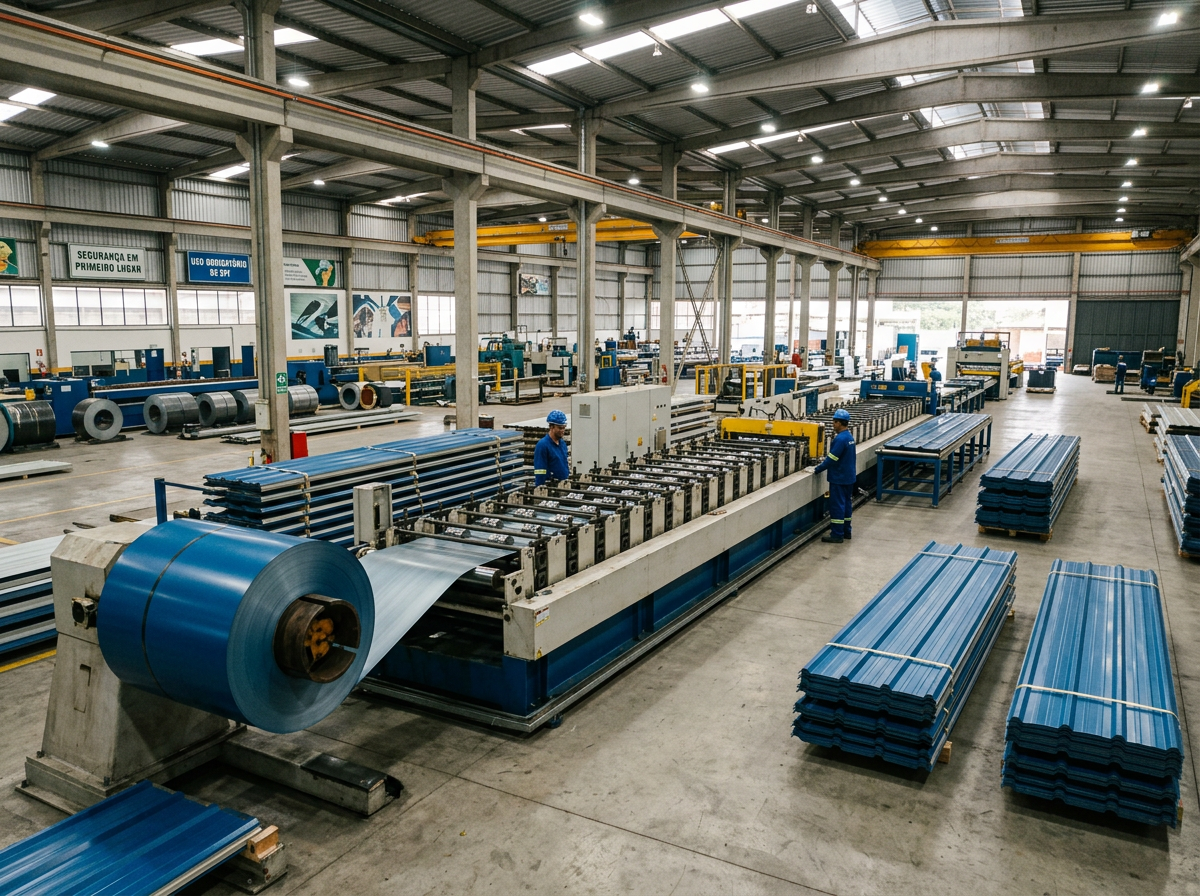
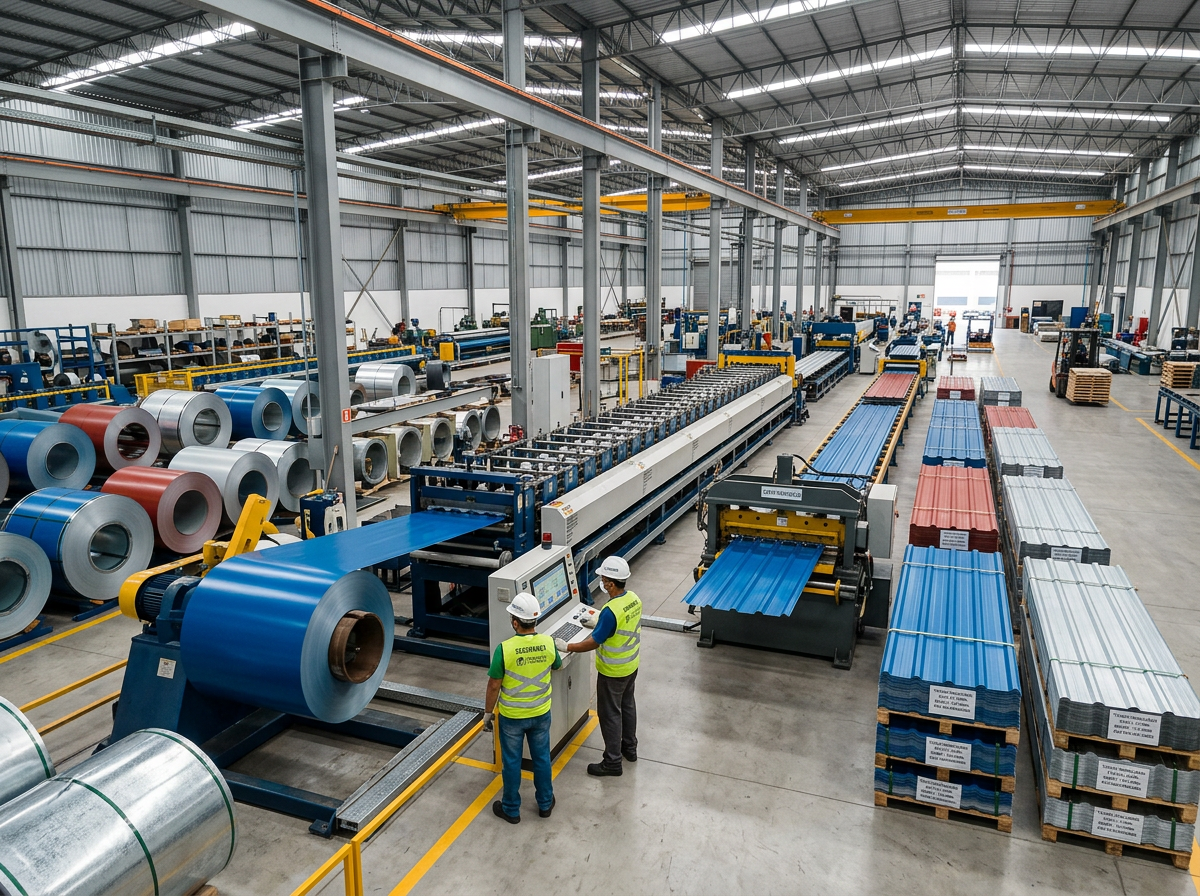
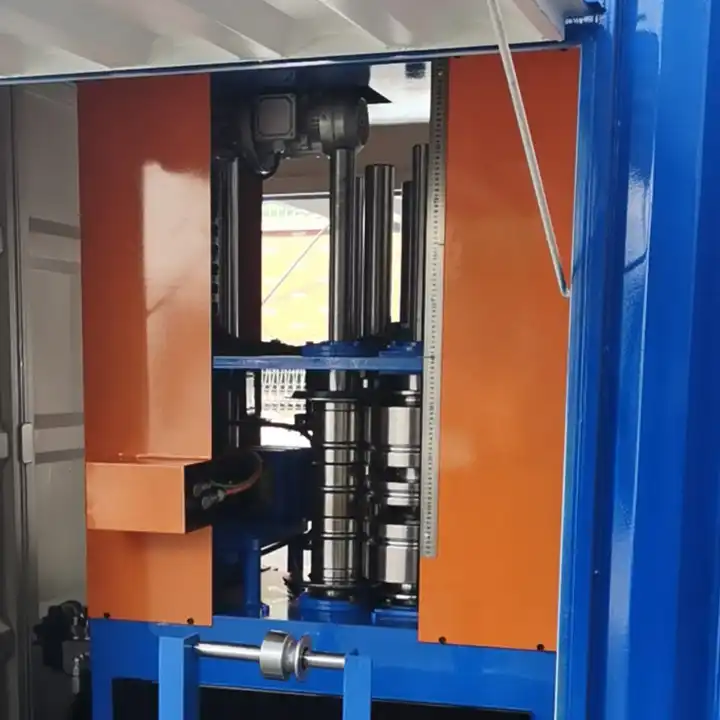
Based on our experience serving Brazil clients, the most demanded Roof Panel Machine configurations are standard corrugated roof panel lines, trapezoidal roof panel machines, double-layer roof and wall sheet machines, and high-speed production lines for distributors with regular stock orders. In Brazil, buyers often want a machine that can handle galvanized steel and pre-painted coil with stable performance across mixed order sizes. Many customers prefer equipment that is easy to operate, durable under daily production, and flexible enough to support both roofing and light cladding business.
The most common material thickness range is usually 0.3–0.8 mm, although some industrial applications require up to 1.0 mm depending on profile and span needs. Typical line speed is 10–25 m/min, with actual output depending on sheet profile depth, cut length, decoiling stability, and stacking method. We often recommend Cr12MoV roller material with hardness at HRC 58–62, heat-treated 45# steel shafts, hydraulic cutting pressure between 10 and 16 MPa, and PLC control from Siemens, Delta, or Mitsubishi. For larger operations, automatic stackers, embossing options, and quick profile change systems are becoming more attractive.
| Roof Panel Machine Type | Material Thickness | Typical Speed | Best Fit in Brazil |
|---|---|---|---|
| Standard Roof Panel Machine | 0.3–0.8 mm | 10–18 m/min | Regional roofing sheet producers |
| Trapezoidal panel line | 0.3–0.8 mm | 12–20 m/min | Industrial and commercial roofing suppliers |
| Double-layer roof and wall line | 0.3–0.8 mm | 10–18 m/min | Mixed product manufacturers |
| High-speed Roof Panel Machine | 0.3–0.7 mm | 18–25 m/min | High-volume distributors |
| Heavy-duty panel line | 0.4–1.0 mm | 10–16 m/min | Agricultural and industrial applications |
Use this comparison to define the right category before asking for detailed quotations. In Brazil, the best machine is rarely the cheapest one on paper; it is the line that best matches local demand, your most frequent profile type, and your expected production rhythm.
Why These Product Types Are Recommended
These product types are recommended because they fit the real purchasing patterns seen in Brazil’s roofing and light industrial construction market. Most roof panel orders are driven by repeat contractor demand, distributor stock replenishment, or project-based building packages. That means buyers need dependable roll forming, clean shearing, stable panel geometry, and manageable maintenance more than they need excessive automation complexity. A well-configured Roof Panel Machine should support daily production with low scrap, repeatable tolerances, and simple operator control.
From a technical perspective, roof panel quality depends on the full production chain: decoiling, leveling, feeding, roll forming, shearing, and stacking. Poor frame rigidity or weak roller design can cause waviness, inaccurate rib geometry, coating damage, and length deviation. For this reason, we recommend strong machine bases, correct flower design developed through engineering software, precise shaft alignment, and stable control systems. In practical factory conditions, a line producing consistent roof panels at 18 m/min with low downtime often generates better long-term value than a machine advertised at a higher speed but running inconsistently under real coil load.
| Key Component | Recommended Specification | Why It Matters |
|---|---|---|
| Rollers | Cr12MoV, HRC 58–62 | Extends service life and keeps panel profile accurate |
| Shafts | Heat-treated 45# steel | Supports stable forming under continuous load |
| Hydraulic cutting | 10–16 MPa | Improves cut quality and reduces deformation |
| PLC control | Siemens, Delta, or Mitsubishi | Helps maintain stable automation and diagnostics |
| Stacking system | Manual or auto stacker | Reduces labor and protects finished roof panels |
This component table is useful when two quotations seem similar but differ in long-term operating value. Buyers should compare actual materials, hardness, pressure range, and control brand instead of judging a Roof Panel Machine only by price or claimed maximum speed.
Key Industries for Roof Panel Machine in Brazil
The main industries that need Roof Panel Machine capacity in Brazil are steel building fabrication, roofing material distribution, agricultural construction, logistics warehousing, light manufacturing, industrial maintenance, and commercial development. Metal roof panels are popular because they install quickly, offer practical durability, and support cost-efficient coverage of large spans. That makes this machinery relevant not only to dedicated roofing producers but also to profile manufacturers supplying broader building envelope packages.
Regional economic drivers shape product demand. In São Paulo and Minas Gerais, industrial expansion, factory renovation, and logistics infrastructure create recurring roof panel requirements. In Paraná, Santa Catarina, and Rio Grande do Sul, agricultural buildings, storage sheds, and processing facilities drive demand for durable roofing. In the Northeast, mixed commercial growth and climate-related replacement demand make coated steel roof panels a practical choice. For machinery investors, this means a Roof Panel Machine can support diverse customer groups if profile selection and service planning align with local construction habits.
Specific Application Scenarios
A Roof Panel Machine in Brazil is commonly used in three business models: stock production for regional distributors, custom project manufacturing for steel building packages, and in-house sheet production for contractors or roofing brands. In stock production, manufacturers focus on high-turnover profiles, standard colors, and common cut lengths to keep dealer inventory flowing. In that case, dependable speed, clean stacking, and easy parameter adjustment are more valuable than complex customization features that may slow production.
In project-based production, the machine becomes part of a broader workflow that may include slitting, flashing fabrication, ridge cap production, and packaging for site delivery. This is common in industrial roofing, logistics buildings, agricultural sheds, and workshop construction. In Brazil, buyers also pay close attention to durability under tropical conditions, operator training for stable line performance, and spare parts readiness to avoid lost output. Lead time is especially important because roof panel orders often follow tight construction schedules, and machine downtime can quickly affect customer delivery commitments.
| Application Scenario | Recommended Line Setup | Main Priority | Common Pain Point |
|---|---|---|---|
| Distributor stock production | Standard Roof Panel Machine with stacker | Fast order turnover | Handling scratches and sheet mixing |
| Steel building packages | Trapezoidal or double-layer line | Profile flexibility | Frequent changeover needs |
| Agricultural roofing supply | Heavy-duty panel line | Material adaptability | Coil thickness variation |
| Contractor-owned production | Economic roof panel line | Cost control | Limited trained operators |
| Regional brand expansion | High-speed Roof Panel Machine | Volume growth | Spare parts planning |
This table helps buyers connect machine design with their actual revenue model. Before purchasing, define whether your line will mainly support stock supply, project kits, or captive production, because that decision affects speed, stacker type, profile setup, and operator training needs.
Case Studies
A realistic first case involves a roofing manufacturer near Campinas that had been outsourcing part of its production during peak demand months. The customer selected a standard Roof Panel Machine for 0.3–0.8 mm pre-painted and galvanized steel, configured with a 5-ton hydraulic decoiler, entry guiding, 16 forming stations, Cr12MoV rollers hardened to HRC 58–62, encoder-controlled cut-to-length, 12 MPa hydraulic shearing, and an automatic stacker. After installation and operator training, the customer improved delivery reliability, reduced subcontracting cost, and gained stronger control over panel quality for regional distributor orders.
A second realistic case comes from Minas Gerais, where a supplier serving industrial roofing and agricultural projects needed greater flexibility. The selected solution was a double-layer line that could produce two popular panel profiles without requiring two separate production spaces. The machine handled 0.35–0.8 mm material, used PLC recipe storage for rapid job changes, and included reinforced frame design for stable production. The result was lower scrap during profile switching, more efficient scheduling, and better responsiveness to mixed customer orders from factories, warehouses, and farm building contractors.
Top 6 Recommended Local Suppliers in Brazil
For buyers who want Portuguese-language communication, easier site coordination, and regionally organized maintenance, a capable local supplier or distributor can be a strong option. The companies below are realistic examples of the type of local providers buyers should compare when assessing support for roof panel production in Brazil.
| Company Name | Core Strengths | Service Regions | Pre-sale Support | After-sale Support |
|---|---|---|---|---|
| PerfilTelha Brasil | Strong Roof Panel Machine consultation and roofing workflow planning | São Paulo, Campinas, Sorocaba, Ribeirão Preto | Layout review, profile selection, capacity planning | Installation assistance, training, maintenance visits |
| SulPainel Equipamentos | Practical regional service for southern panel manufacturers | Curitiba, Joinville, Porto Alegre, Caxias do Sul | Production planning and application matching | Parts support and technician dispatch |
| Minas Forming Solutions | Suitable for industrial and farm roofing projects | Belo Horizonte, Contagem, Betim, Uberlândia | ROI analysis and line configuration | Commissioning and troubleshooting support |
| Nordeste Cobertura Systems | Balanced support for Northeast roofing markets | Recife, Salvador, Fortaleza, Maceió | Demand review and equipment selection | Remote diagnostics and field service |
| Atlas Painel Mecânica | Good for larger industrial roof panel operations | Rio de Janeiro, Volta Redonda, Vitória, Juiz de Fora | Factory planning and automation advice | Preventive maintenance and calibration |
| FormaCoberta Engenharia | Strong retrofit and upgrade capability for existing lines | São Paulo, Rio de Janeiro, Belo Horizonte, Curitiba | Equipment audit and modernization proposals | Emergency repair and upgrade execution |
Use this table as a shortlist framework rather than a final ranking. Ask each supplier for examples of similar projects, actual component specifications, standard spare parts packages, installation scope, average service response time, and how they support future expansion into wall panel, purlin, or slitting equipment.
Why Choose SUNWAY as Your Global Partner
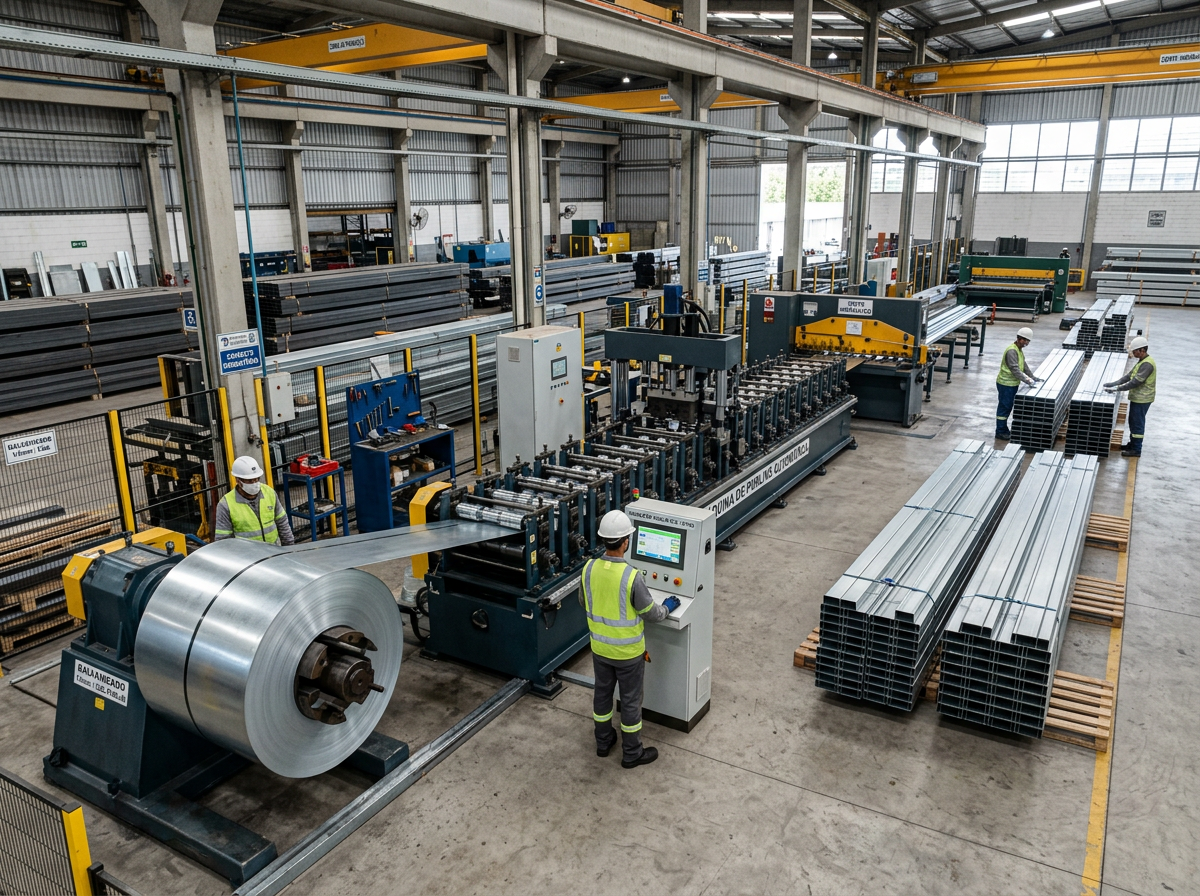
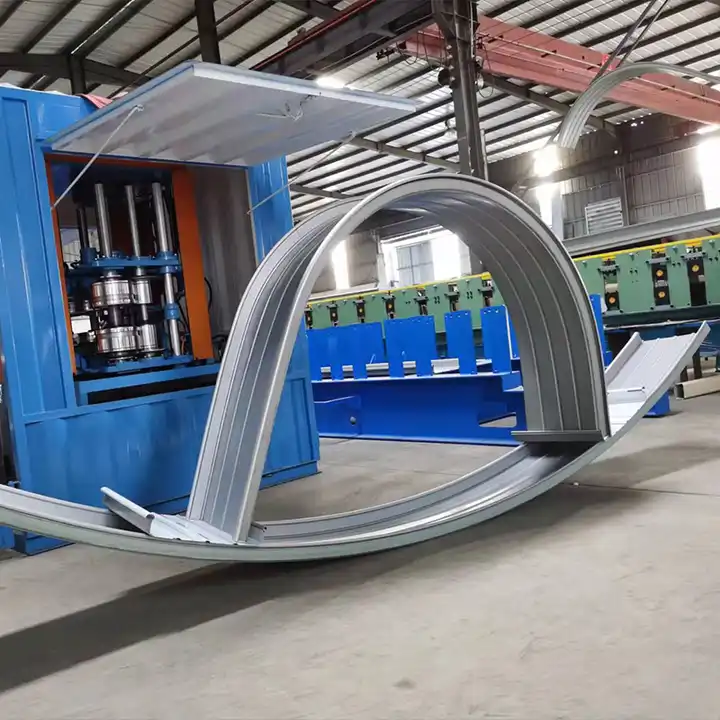
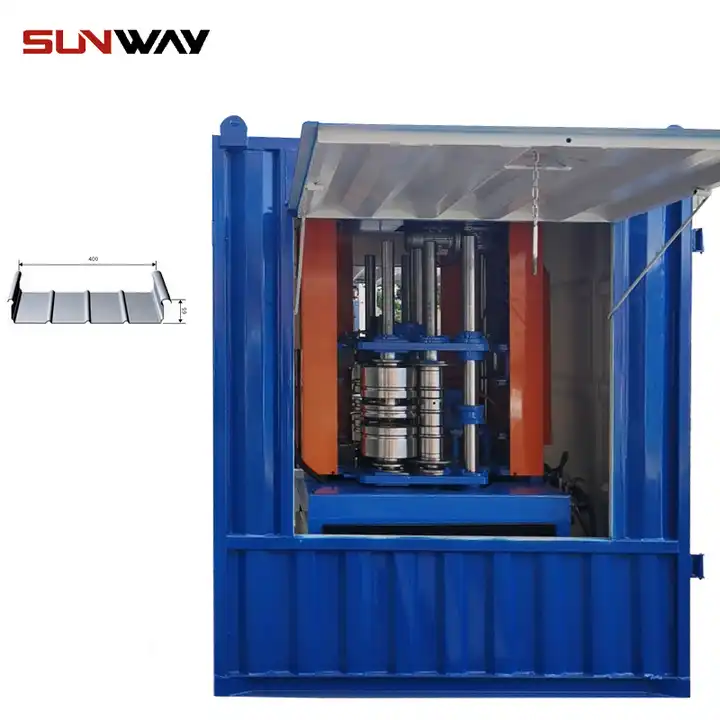
SUNWAY is a strong choice for Brazil buyers that need more than a machine alone. As a professional manufacturer and exporter of cold roll forming machines, SUNWAY offers custom machinery design, installation, technical support, training, maintenance, parts supply, upgrades, and consultancy as a complete one-stop solution. The company serves roofing manufacturers, distributors, steel building companies, and industrial processors with a broad portfolio visible in its product catalog, including roof and wall sheet lines, purlin machines, slitting lines, solar mounting bracket machines, cable tray lines, floor deck machines, and many other profile systems.
SUNWAY combines export experience with real engineering depth. The company has served more than 1,350 global customers across over 100 destination countries, supported by 200+ employees, 10+ experienced design engineers, German COPRA software, and certifications including CE, ISO 9001, UL, BV Assessment, and Alibaba Gold Supplier. We have rich export experience serving both end-users and distributors in Brazil, and we are equipped to work with both business models directly. We are also planning a local warehouse with stock delivery in Brazil, building overseas technical teams for on-site engineering service, and actively recruiting partners through upcoming Affiliate and dropshipping programs with online and offline support. To learn more, visit our homepage or contact our team with your profile drawing, material range, and production targets.
| Buyer Checklist | What to Verify | Good Signal | Risk Signal |
|---|---|---|---|
| Profile suitability | Can the supplier match Brazil market demand? | Confirmed drawings and sample output | Generic profile advice only |
| Machine build | Are key specs clearly disclosed? | Named PLC, Cr12MoV rollers, frame details | Missing materials or hardness data |
| Service scope | Is startup support clearly defined? | Written training and service plan | Vague post-sale promises |
| Spare parts | Are wear parts and lead times explained? | Spare package and replacement roadmap | No inventory or timeline clarity |
| Expansion path | Can the supplier support future lines? | Broad products range | Limited support beyond one machine |
This checklist helps buyers judge total operating value instead of only purchase cost. In Brazil, the best partner is often the supplier that can support installation, training, spare parts, upgrades, and future product expansion with the same seriousness as the original machine build.
FAQ
What is the best Roof Panel Machine for a first investment in Brazil?
For most first-time buyers, a standard roof panel line for 0.3–0.8 mm galvanized and pre-painted steel is the most practical option. It covers common roofing demand, is easier to operate, and suits both stock production and project-based manufacturing.
What production speed is realistic for a roof panel line?
A realistic production speed is usually 10–25 m/min depending on the panel profile, material thickness, cutting mode, and stacking arrangement. Stable output with low scrap is more important than the highest advertised no-load speed.
Which materials can a Roof Panel Machine process?
Most roof panel lines process galvanized steel coil and pre-painted steel coil, and some are also configured for aluminum depending on material thickness and yield strength. The supplier should confirm material parameters before finalizing roller design and cutting setup.
What technical details should buyers compare first?
Buyers should compare roller material and hardness, shaft diameter, frame structure, forming station count, hydraulic pressure, PLC brand, cutting method, and finished panel tolerance. Service scope, spare parts, and operator training are also essential decision factors.
Is local after-sale support necessary in Brazil?
Yes, local or regionally coordinated support is very valuable, especially for new production teams. Buyers should confirm installation procedures, remote diagnostics, spare parts supply, and field service response before placing an order.
Can one machine produce both roof and wall profiles?
Yes, some machines are designed as double-layer or multi-profile systems that can produce roof and wall sheets on one line. However, dedicated single-profile machines may offer simpler maintenance and higher consistency for volume production.
How can I request a quotation from SUNWAY?
You can request a quotation by sending your profile drawing, material thickness range, coil width, coating type, required speed, voltage, and estimated annual output through contact our team. SUNWAY can then recommend a suitable line configuration and prepare a more accurate proposal.
If you are planning a new roof panel production line in Brazil, the next step is to share your profile, coil specification, and output target with an experienced manufacturer. To discuss the right Roof Panel Machine or request a quote, please contact our team.
Content reviewed and updated: March 2026