Quick Answer
If you need the best Roll Former suppliers in Saudi Arabia in 2026, the smartest buying strategy is to compare a few service-capable local distributors for fast communication, site coordination, and after-sale response, while also evaluating SUNWAY as a trusted Chinese manufacturer and long-term production partner. For profile review, line selection, or a quotation based on your drawing and target output, you can contact our team at the beginning of your sourcing process rather than after you have already fixed the wrong machine specification.
For localized support, Gulf Profile Systems is a solid option for roofing and cladding consultations in Riyadh and the Eastern Province. Red Sea Industrial Rollform is suitable for contractors and steel building fabricators that need practical project coordination in Jeddah and western Saudi Arabia. Najd Steel Line Solutions is a good fit for stud, track, light steel, and warehouse profile requirements. Eastern Tech Forming Services is useful for buyers prioritizing maintenance and spare-parts response near Dammam and Jubail. Desert Panel Machinery Trading works well for standard roof, wall, and deck applications. Alongside these local options, SUNWAY brings deeper manufacturing capability, broader product coverage, and one-stop support from design and installation to training, maintenance, upgrades, and parts supply.
Market Overview
Saudi Arabia is one of the strongest regional markets for Roll Former investment because the country continues to expand industrial buildings, logistics parks, infrastructure, utility projects, and renewable energy capacity. The direct answer is simple: local demand for formed steel profiles remains healthy, and many buyers now prefer in-house or regional production to shorten lead times, stabilize quality, and respond faster to project schedules. That is especially relevant for roof and wall panels, C/Z purlins, floor deck, cable tray, solar mounting channels, and light steel framing members.
Several recent data points support this direction. PwC Middle East’s 2025 Capital Projects and Infrastructure Survey reported that Saudi Arabia was identified by 78% of respondents as a key investment destination, supported by Vision 2030, Riyadh Expo 2030, and FIFA World Cup 2034-related development. (pwc.com) MEED also reported that Saudi Arabia accounted for about USD 142.4 billion of GCC project awards, giving it the largest share in the region’s active project pipeline. (meed.com) For downstream machinery demand, that means sustained consumption of formed steel products across warehouses, factories, transport-linked buildings, and large mixed-use developments.
The local steel and energy base reinforces that opportunity. World Steel Association data shows Saudi Arabia produced 9.6 million tonnes of crude steel in 2024, confirming a sizeable domestic steel ecosystem for downstream processors. (worldsteel.org) Renewable energy is also moving from planning into execution: Dii Desert Energy’s 2025 outlook placed Saudi Arabia’s installed renewable capacity at about 4.5 GW at the end of 2024, with more than 9 GW under construction. (dii-desertenergy.org) For Roll Former buyers, the conclusion is clear: the market supports both standard building profiles and more specialized systems such as solar support, cable management, and industrial structural sections.
| Market Indicator | Latest Figure | Why It Matters for Roll Former Buyers |
|---|---|---|
| Saudi Arabia cited as a key investment destination | 78% in PwC 2025 survey | Confirms strong project activity and capital spending |
| Saudi share of regional project awards | About USD 142.4 billion | Supports demand for locally made formed steel products |
| Saudi crude steel production in 2024 | 9.6 million tonnes | Indicates strong downstream steel processing potential |
| Installed renewable capacity at end of 2024 | About 4.5 GW | Supports demand for solar mounting profile lines |
| Renewable capacity under construction | More than 9 GW | Favors long-term investment in support profile production |
Use this table to judge whether your machine investment is aligned with actual market momentum rather than short-term pricing cycles. In Saudi Arabia, the most successful Roll Former buyers are usually those that connect machinery purchasing to concrete end-use sectors and recurring profile demand. (pwc.com)
What Types of Roll Former Are Needed in Saudi Arabia
Based on our experience serving Saudi Arabia clients, the most in-demand Roll Former lines are for roof and wall panels, C/Z purlins, cable trays, solar mounting brackets, floor deck, rolling shutters, stud and track profiles, and selected warehouse shelf or industrial support sections. The market generally prefers machines that are robust, easy to maintain, and flexible enough to handle changing project schedules. Buyers are usually not looking for a machine only for one sample drawing; they want a line that can support a practical product family and generate revenue across multiple sectors.
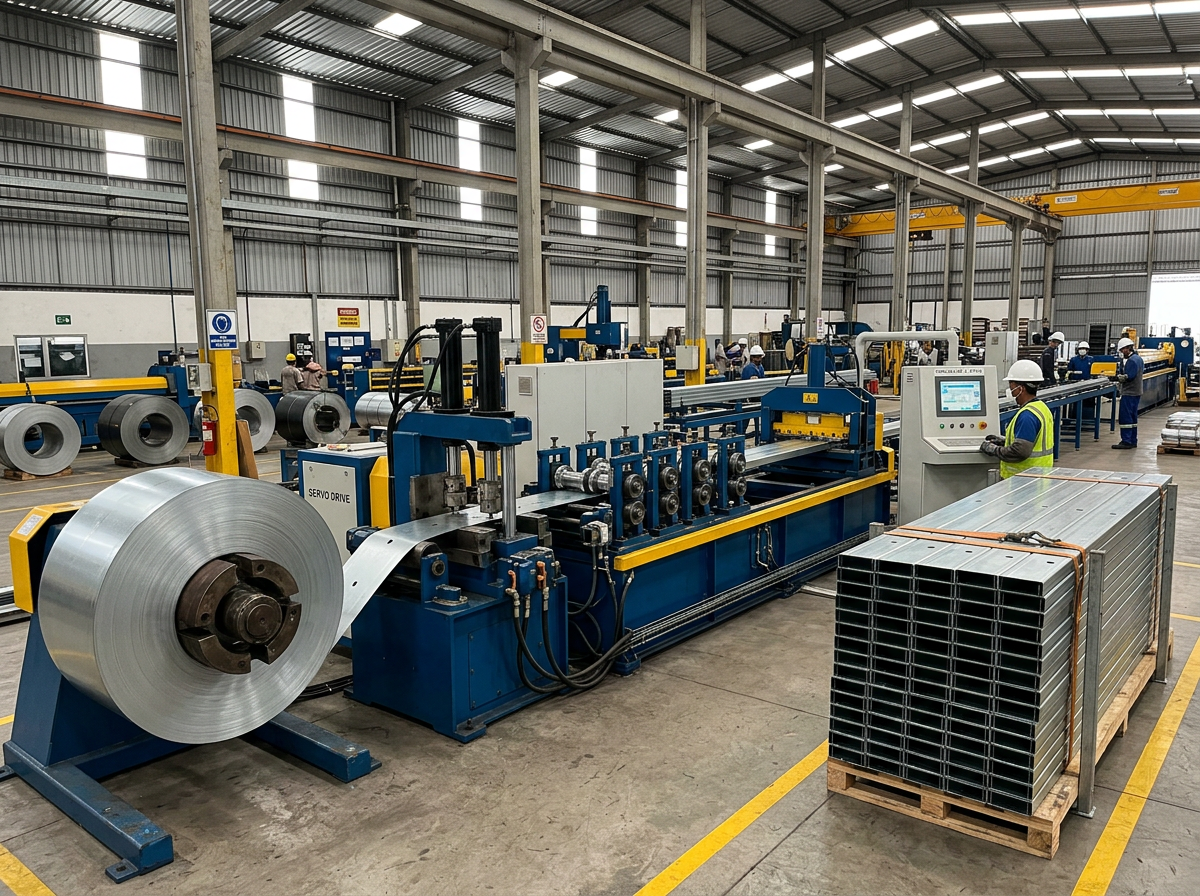
In technical terms, common coil thickness ranges are 0.3-0.8 mm for roof and wall panels, 0.5-1.2 mm for stud and track, 0.8-1.5 mm for floor deck, and 1.5-3.0 mm for purlins, cable trays, and solar support profiles. Typical forming speeds are 10-25 m/min, depending on profile complexity and punching density. For reliable long-run production, we usually recommend rollers made from heat-treated alloy steel, Cr12MoV tools hardened to HRC 58-62, 40Cr shafts, hydraulic pressure of 10-16 MPa, and PLC systems from Siemens or Delta. Many Saudi factories also prefer combined lines including decoiling, leveling, punching, shearing, and stacking to reduce labor and improve consistency.
| Machine Variant | Thickness Range | Typical Speed | Main Saudi Arabia Demand |
|---|---|---|---|
| Roof and wall Roll Former | 0.3-0.8 mm | 15-25 m/min | Warehouses, workshops, industrial roofing |
| C/Z purlin line | 1.5-3.0 mm | 10-20 m/min | Steel structures, logistics buildings, factories |
| Solar mounting profile line | 1.5-2.5 mm | 12-20 m/min | PV support systems and utility projects |
| Floor deck Roll Former | 0.8-1.5 mm | 10-18 m/min | Multi-storey buildings and mezzanines |
| Stud and track line | 0.5-1.2 mm | 20-30 m/min | Commercial interiors and modular fit-outs |
This comparison helps buyers connect machine type to commercial opportunity. If your customer base is still developing, a flexible Roll Former line for roofing or purlins often provides the fastest path to stable orders, while solar and cable support lines can become strong expansion categories as project demand matures.
Why These Product Types Are Recommended
These product types are recommended because Saudi Arabia’s project environment values durability, output stability, and fast delivery more than low initial machine cost alone. The short answer is that roof, wall, purlin, deck, cable tray, and solar profile lines serve the broadest practical demand and fit the procurement patterns of local contractors, fabricators, and industrial suppliers. A properly configured Roll Former can help a factory reduce subcontract dependence, keep tighter control over profile tolerance, and react faster to changes in awarded project volumes.
From a technical perspective, the recommendation comes down to line reliability and adaptability. In Saudi Arabia, operators often run extended production batches and need a machine that stays aligned, keeps hole positions stable, and avoids frequent shutdowns. Hardened rollers and high-grade cutting tools matter because galvanized and coated steel can quickly expose weak tooling. Stable hydraulic systems improve punching and shearing repeatability, while mainstream PLC brands simplify diagnostics and recipe management. This is especially important when one factory switches between multiple orders, lengths, and punching programs in a single shift.
| Key Component | Recommended Specification | Why It Matters |
|---|---|---|
| Rollers | Heat-treated alloy steel | Better wear resistance and profile accuracy |
| Punches and cutters | Cr12MoV, HRC 58-62 | Longer service life under repeated punching |
| Main shafts | 40Cr precision machined | Improved forming stability and alignment |
| Hydraulic system | 10-16 MPa | Reliable cutoff and punching performance |
| PLC control | Siemens or Delta | Easier operation, recipes, and fault tracing |
Use this table when comparing offers that look similar on price. In real factory conditions, a Roll Former with better tooling, shafts, and controls usually delivers lower downtime, lower maintenance cost, and more dependable output over the life of the line.
Key Industries for Roll Former in Saudi Arabia
The main industries buying Roll Former equipment in Saudi Arabia are pre-engineered building fabrication, warehouse and logistics construction, infrastructure support manufacturing, electrical and utility systems, renewable energy, interior framing, and selected industrial supply chains tied to oil, gas, and manufacturing facilities. These sectors consume large volumes of roofing sheets, wall panels, purlins, floor decks, cable trays, mounting channels, stud and track members, and other formed sections. For many buyers, investing in a Roll Former is not just a machinery decision; it is a way to improve delivery control and raise local production capability.
These industries are closely connected to wider economic drivers in the Kingdom. Large development programs, industrial expansion, and energy diversification continue to support demand for steel building systems and support profiles. (pwc.com) Procurement teams in Saudi Arabia also tend to value suppliers that can support urgent schedules, train operators, and provide spare parts without long delays. That is why after-sale support, electrical component transparency, and the ability to adapt a machine to local product requirements often matter as much as the rated line speed in a quotation.
Specific Application Scenarios
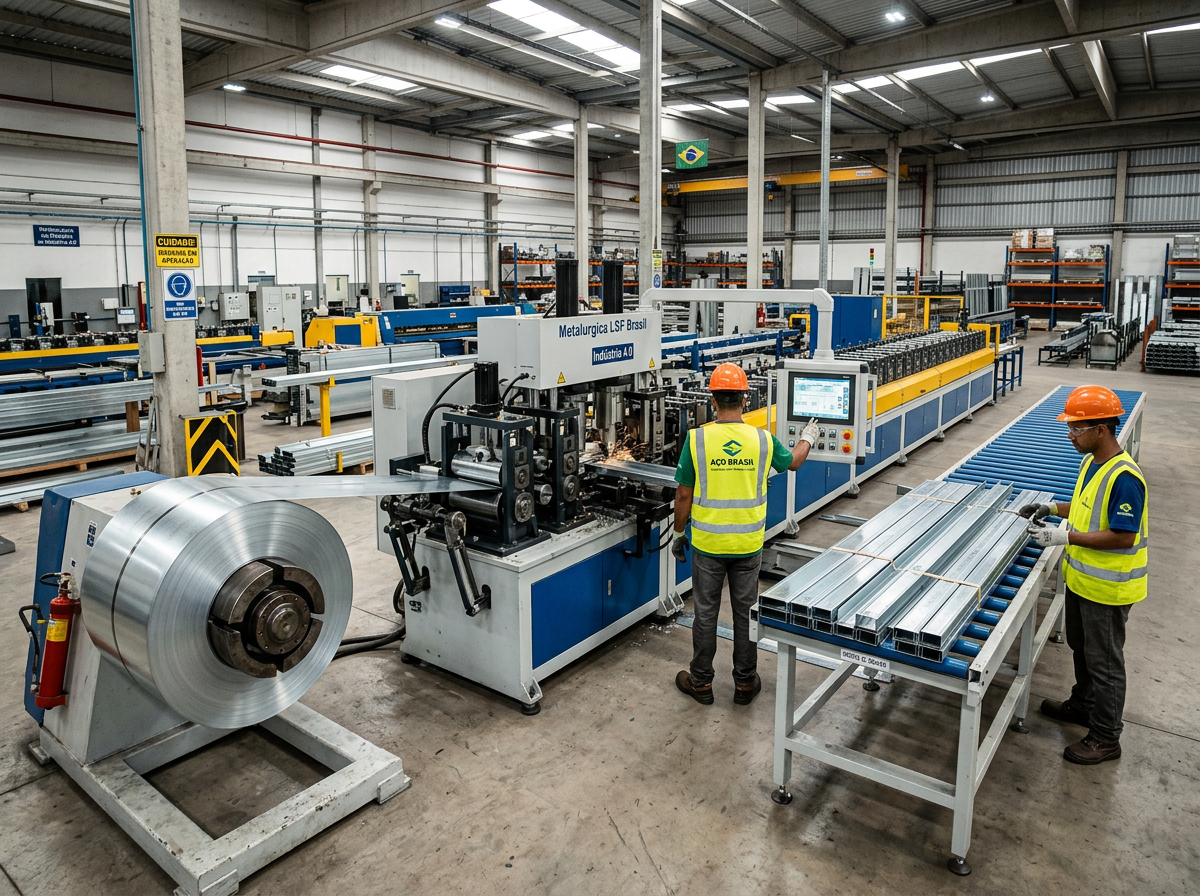
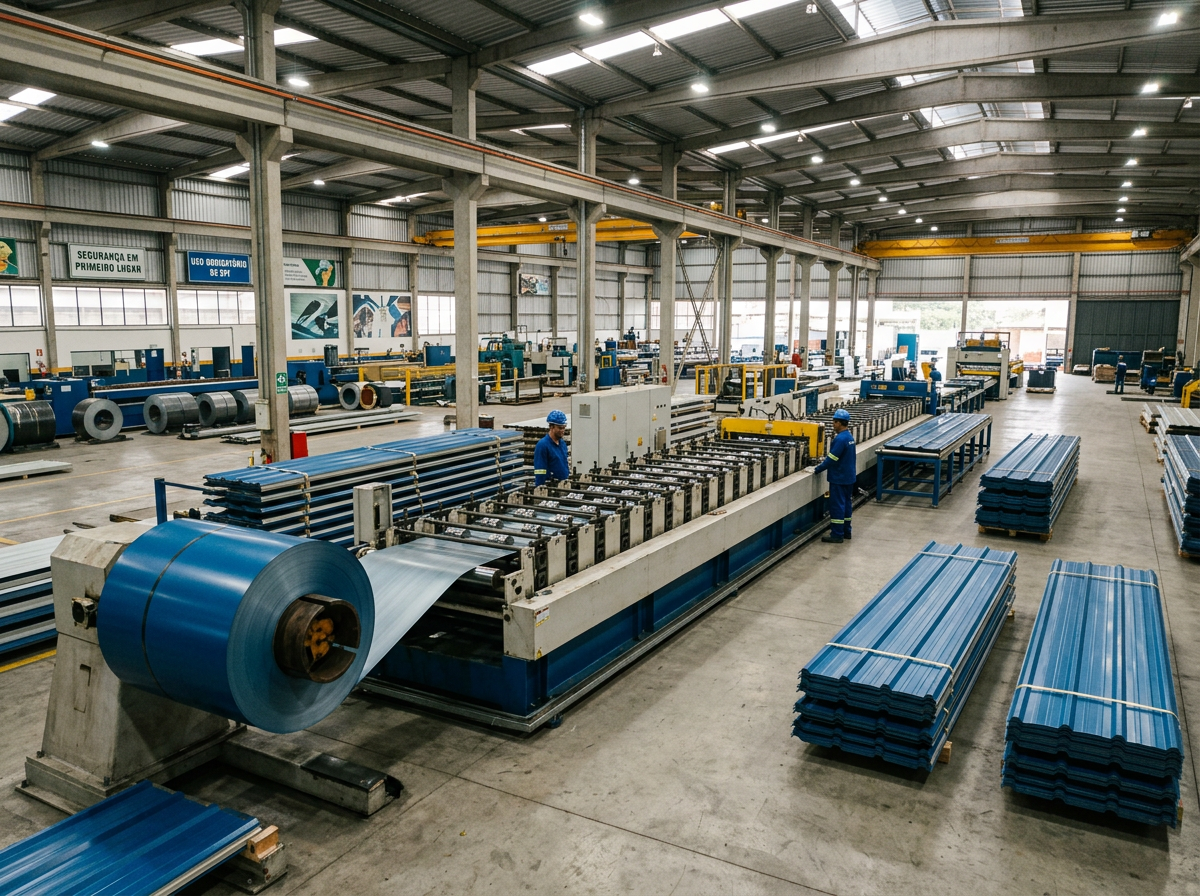
One common application is the production of roof and wall sheets for pre-engineered buildings, labor camps, logistics hubs, workshops, and industrial warehouses. In this setting, the Roll Former line starts with decoiling and leveling, then passes the material through calibrated forming stations before hydraulic or flying cutoff and product discharge. Buyers usually focus on panel geometry, effective width consistency, scratch control, and smooth handling of PPGI or GI coil. This is the kind of line where small forming inaccuracies can quickly become installation problems on site, so stable frame construction and roller precision are essential.
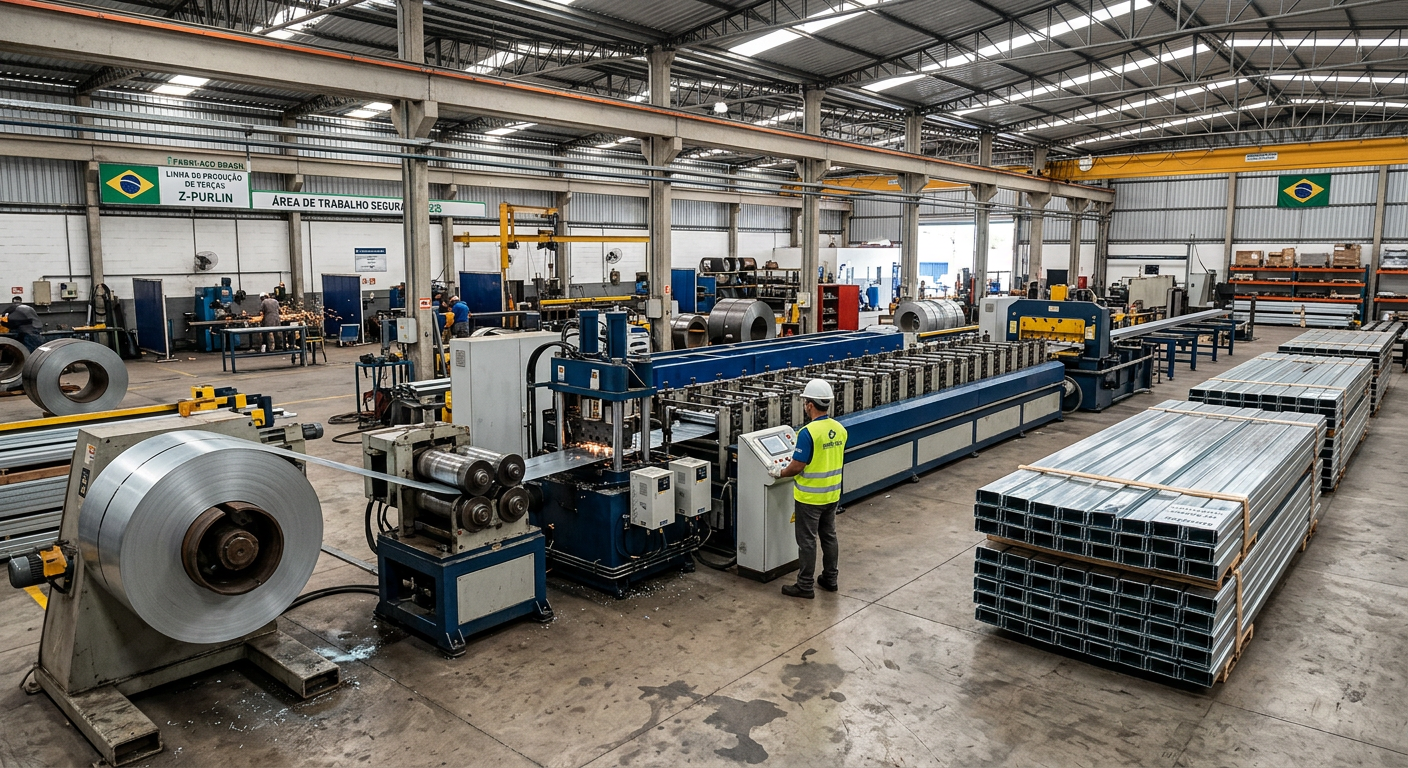
A second important application is the production of support profiles for energy, industrial, and commercial systems. Cable tray lines, solar mounting profile lines, and C/Z purlin machines are widely used by fabricators serving factories, substations, rooftop installations, and utility-scale developments. In these cases, hole spacing, slot repeatability, and section straightness are often more critical than headline speed. Saudi buyers in these segments usually need a machine that can maintain tolerance while handling multiple lengths and production batches, because project deliveries are often scheduled in phases rather than in a single continuous order.
| Application Scenario | Main Output | Process Focus | Buyer Priority |
|---|---|---|---|
| PEB and warehouse construction | Roof and wall panels | Surface quality, speed, cutoff accuracy | Fast project delivery |
| Steel structure fabrication | C/Z purlins | Punching precision and size flexibility | Multi-project adaptability |
| Energy and utility support | Cable tray and solar channels | Hole accuracy and straightness | Reliable field assembly |
| Commercial flooring systems | Roll Former deck output | Profile depth and stacking efficiency | Structural performance |
This table is useful for matching machine configuration to real customer demand. If your factory serves more than one market segment, choose a supplier that understands how different formed profiles affect punching layout, drive power, stacking method, and tooling wear.
Case Studies
A realistic example is a Riyadh-based steel building fabricator that had been outsourcing roof sheets and purlins to several subcontractors. Delivery delays and profile inconsistency were affecting installation schedules for warehouse and workshop projects. We recommended a roof panel Roll Former together with a C/Z purlin line equipped with hydraulic decoiler, precision leveling, pre-punching, post-cutting, and automatic runout support. The roofing line was configured for 0.4-0.8 mm PPGI and GI coil at 18-25 m/min, while the purlin line handled 1.5-3.0 mm material with programmable size change capability.
After commissioning and operator training, the customer gained better control over lead times and reduced dependency on outside suppliers during peak periods. Hole alignment improved, panel length tolerance became more stable, and dispatch planning became easier because output could be matched directly to installation sequences. The commercial benefit was not only lower outsourcing cost; it was the ability to quote faster and deliver more confidently on time-sensitive industrial building projects in central Saudi Arabia.
A second scenario involves an Eastern Province supplier serving utility contractors and solar EPC companies near Dammam and Jubail. The customer needed a line for slotted solar support channels and cable management sections with consistent punching quality and straightforward recipe changes. We proposed a Roll Former with servo feeding, online punching, Cr12MoV tooling, 40Cr shafts, Delta PLC control, hydraulic cutoff, and automatic stacking, designed for galvanized strip in the 1.5-2.5 mm range. The line was tuned for accurate slot placement and stable profile straightness rather than chasing unrealistic speed claims.
The result was better internal scheduling and more reliable delivery to project sites. The customer reduced dependence on imported support sections, improved fit-up performance during installation, and lowered the number of rejected pieces caused by misaligned holes. For project-driven sectors in Saudi Arabia, that combination of dimensional reliability and shorter lead time often creates a stronger return than price-based sourcing alone.
Top 6 Recommended Local Suppliers in Saudi Arabia
If you prefer local contact points, the best approach is to shortlist companies that can review drawings, clarify utilities and plant layout, and set realistic expectations for startup and maintenance. A local name alone is not enough; what matters is whether the supplier understands roll forming as a full production system and can stay involved after the machine is delivered.
| Company Name | Core Strengths | Service Regions | Pre-sale Support | After-sale Support |
|---|---|---|---|---|
| Gulf Profile Systems | Strong on roofing, cladding, and standard Roll Former consultation | Riyadh, Dammam, Khobar | Drawing review, layout planning, utility check | Commissioning coordination, spare-parts follow-up |
| Red Sea Industrial Rollform | Good fit for metal building and project-based profile lines | Jeddah, Makkah, Yanbu | Capacity analysis, profile matching, proposal support | Service visits, troubleshooting, parts dispatch |
| Najd Steel Line Solutions | Practical for stud, track, light steel, and warehouse profile work | Riyadh, Qassim, Hail | Machine sizing, product planning, ROI discussion | Operator guidance, remote support, maintenance advice |
| Eastern Tech Forming Services | Useful for purlin, cable tray, and industrial support applications | Dammam, Jubail, Al Ahsa | Technical clarification, tooling discussion, line selection | Electrical checks, spare parts, service scheduling |
| Desert Panel Machinery Trading | Suitable for budget-conscious buyers needing standard lines | Riyadh, Jeddah, Medina | Spec comparison, quotation support, process advice | Startup assistance, parts supply, phone support |
| Western Structure Machinery Co. | Good regional support for contractors and fabrication shops | Jeddah, Taif, Tabuk | Site review, profile assessment, delivery coordination | Preventive maintenance, on-site service, fault follow-up |
Use this table as a first-stage screening tool, not a final decision. Ask each supplier who will handle commissioning, what spare parts are included, how quickly they respond on site, and whether they can show real references for similar profiles. Those answers usually reveal much more than a polished quotation does.
Why Choose SUNWAY as Your Global Partner
SUNWAY is a strong option for Saudi Arabia buyers who need more than a trading relationship. We are a professional manufacturer and exporter of cold roll forming machines with 1,350+ global customers, 200+ employees, 160+ industries served, 500+ projects completed, and exports to 100+ destination countries. Our team works with German COPRA software, 10+ experienced design engineers, and a complete in-house production system. Buyers can also explore our product catalog and visit our homepage to review a wider range of machine solutions.
For Saudi Arabia specifically, we have rich export experience serving both distributors and end-users directly, which allows us to support different buying models across roofing, steel structure, solar, cable support, warehouse, and industrial profile production. We are planning a local warehouse with stock delivery capability in Saudi Arabia and building an overseas technical team for on-site engineering service. We are also actively recruiting partners through upcoming Affiliate and dropshipping programs, supported by comprehensive online and offline assistance. With 20+ years of export experience, one-stop solutions, competitive pricing, and certifications including CE, ISO 9001, UL, BV Assessment, and Alibaba Gold Supplier, SUNWAY is ready to support machine selection, installation, training, maintenance, and long-term growth. To submit drawings or request a quote, please contact our team.
| Buyer Checkpoint | What to Confirm | Why It Matters |
|---|---|---|
| Product match | Roof panel, purlin, deck, cable tray, or solar Roll Former | Prevents buying the wrong line |
| Material input | Coil width, thickness, yield strength, coating type | Determines line design and tooling |
| Automation scope | Decoiling, leveling, punching, shearing, stacking | Affects labor, output, and workflow |
| Service package | Installation, training, manuals, remote diagnostics | Reduces startup risk and downtime |
| Spare parts plan | Tooling, sensors, hydraulics, electrical items | Protects long-term production continuity |
This checklist should be used before you approve the final technical offer. A good supplier will explain not only what the machine can produce, but how it will be installed, supported, maintained, and adapted as your product mix changes over time.
FAQ
What is the best Roll Former to buy first in Saudi Arabia?
For many first-time buyers, the best first investment is a roof and wall Roll Former or a C/Z purlin line because these products serve the broadest construction and industrial demand. The right choice depends on whether your customers mainly need cladding products, structural secondary members, or a combination of both.
What materials are commonly processed on a Roll Former in Saudi Arabia?
Most lines process GI, PPGI, PPGL, or mild steel coil, depending on the product category. Roofing and cladding applications commonly use 0.3-0.8 mm material, while purlins, cable trays, and solar support sections usually require thicker material from about 1.5 mm to 3.0 mm.
What production speed is realistic for a Roll Former line?
A practical speed range is usually 10-25 m/min for many industrial profile lines. Actual speed depends on material thickness, number of forming stations, punching frequency, cutoff mode, and how much automation is included in feeding and stacking.
Which technical details matter most when comparing suppliers?
The most important details are roller material, tooling hardness, shaft grade, frame rigidity, hydraulic stability, PLC brand, and the supplier’s real commissioning capability. These factors directly affect profile accuracy, maintenance frequency, troubleshooting efficiency, and machine life.
Can one Roll Former produce multiple profile sizes?
Yes, some lines can produce multiple sizes, especially C/Z purlin and certain support profile systems. Buyers should confirm whether changes are fully automatic, manually adjusted, or require tooling replacement, because that will affect downtime and labor planning.
Is local after-sale support important in Saudi Arabia?
Yes, it is very important because startup quality, operator training, and spare-parts availability all affect actual output. A supplier should clearly state who handles installation, how faults are diagnosed, what spare parts are included, and whether on-site support is available if needed.
How can I request a quotation from SUNWAY?
You can send us your profile drawing, material thickness range, coil width, steel grade, desired forming speed, daily production target, power supply information, and any punching or stacking requirements. To submit your requirements or request a quote, please contact our team.
Content reviewed and updated: March 2026