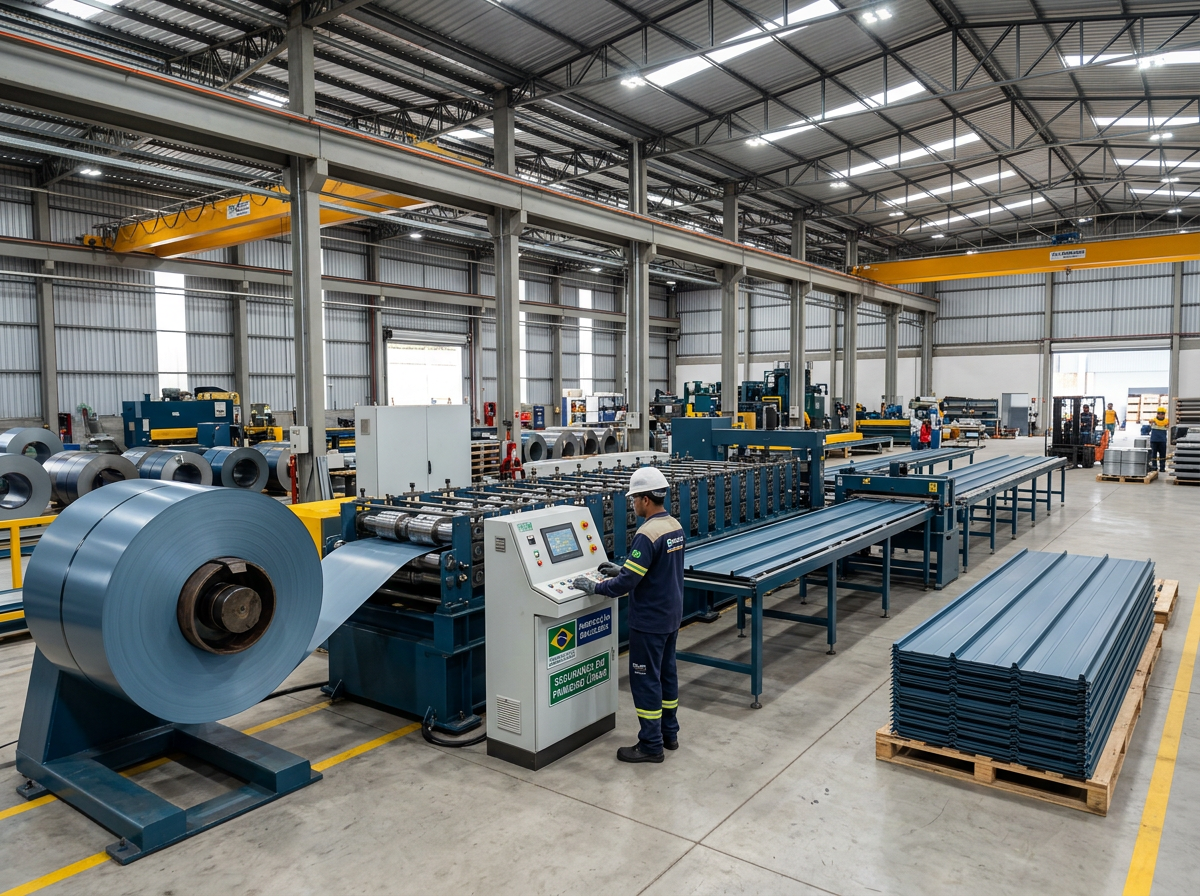
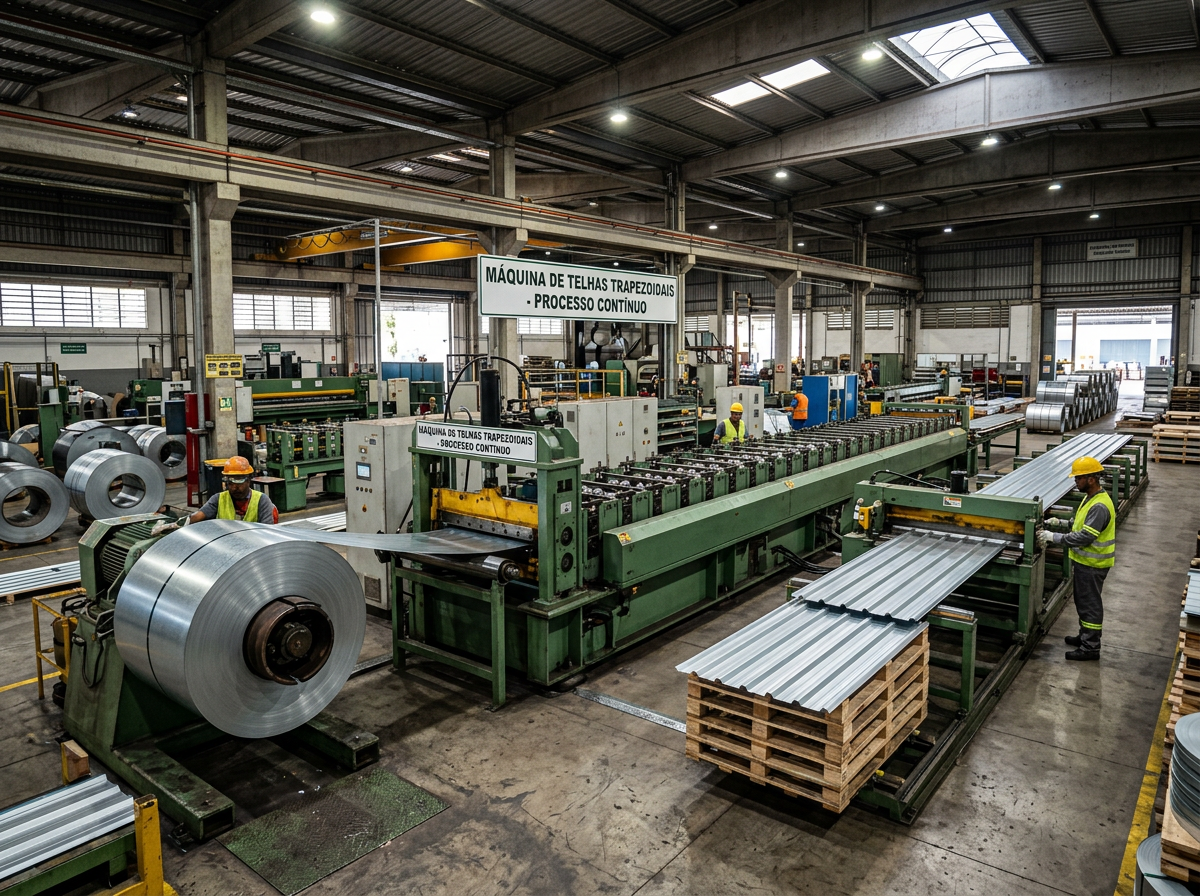
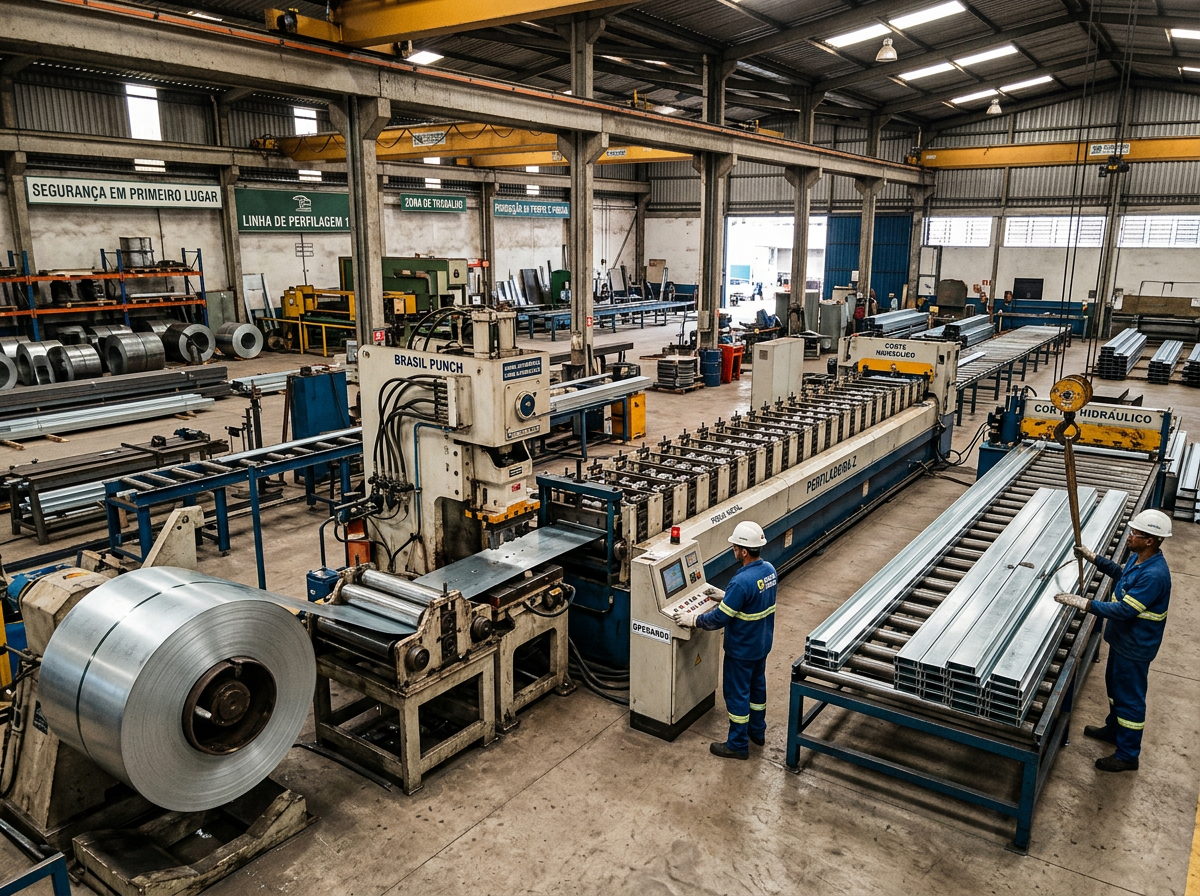
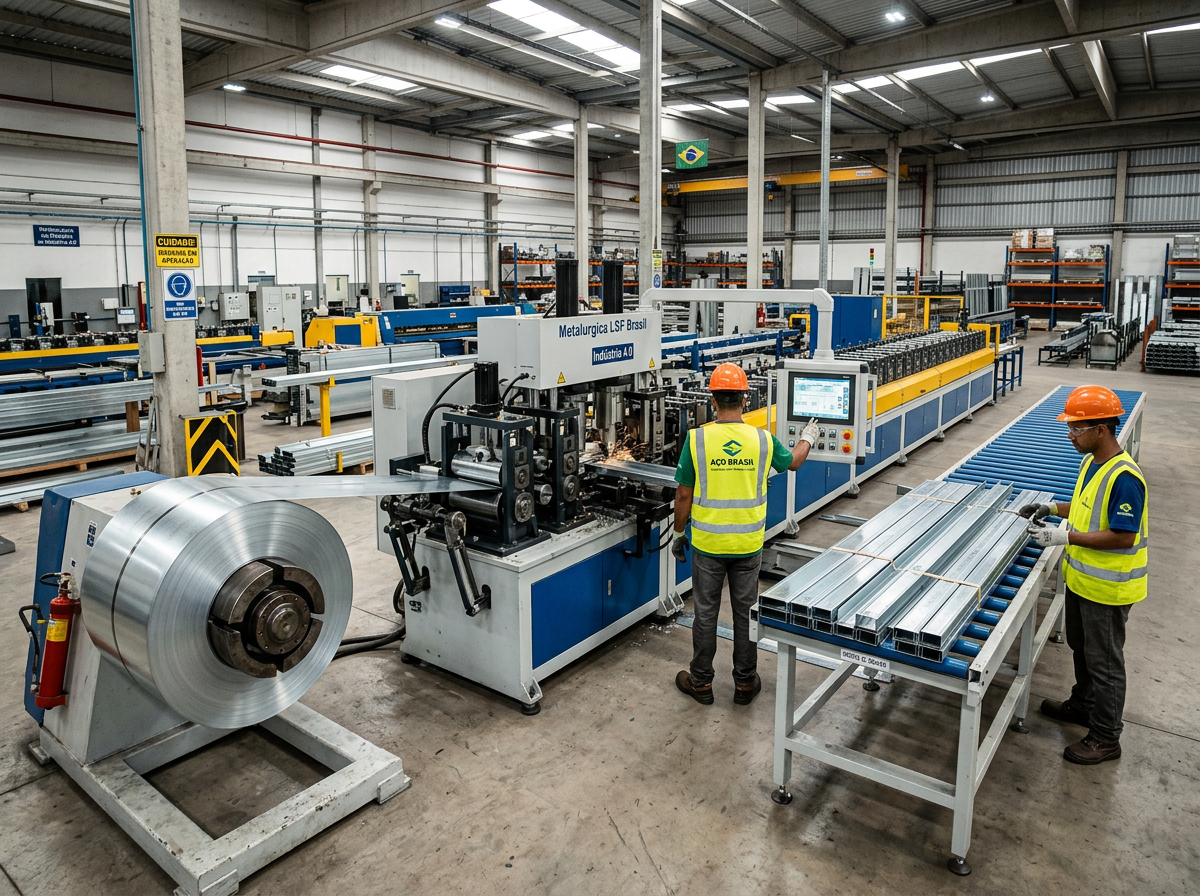
A step beam roll forming machine is the core equipment used to manufacture P-shaped (step-profile) box beams for pallet racking systems—one of the most widely used structural components in warehouse storage worldwide. Understanding its forming process, hook connector design logic, welding integration, and technical specifications is essential for any buyer planning to enter or scale up racking beam production. This article breaks down every critical aspect of the machine, from raw coil to finished beam, so you can make a confident, well-informed investment decision.
If you are evaluating a step beam roll forming machine for your production line, contact our team at SUNWAY for expert guidance on machine configuration, line layout, and competitive pricing—backed by over 20 years of cold roll forming manufacturing experience.
What Is a Step Beam Roll Forming Machine?
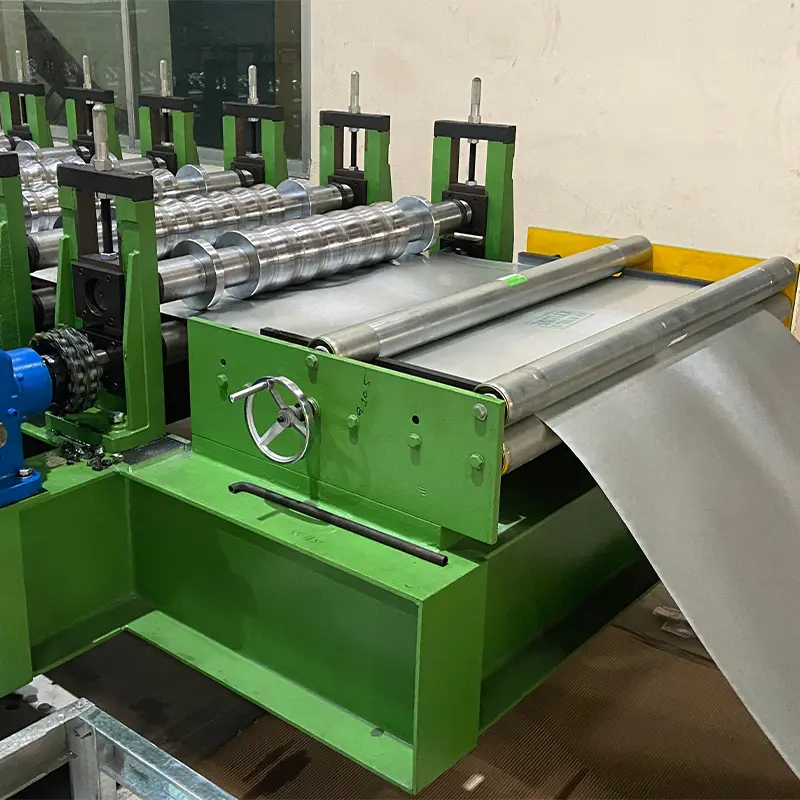
A step beam roll forming machine is a specialized cold roll forming system designed to produce step-profile box beams (also commonly called P-beams or step beams) used as horizontal load-bearing members in pallet racking structures. The machine continuously feeds flat steel coil strip through a series of precisely engineered forming roller stations, progressively bending the material into a closed or semi-closed box profile with characteristic stepped surfaces on both sides.
The “step” in the beam profile is not merely cosmetic—it serves a critical structural function. The stepped geometry increases the moment of inertia of the beam cross-section, significantly improving its load-bearing capacity and resistance to deflection under heavy pallet loads. This design allows racking manufacturers to achieve higher weight ratings without increasing material thickness, resulting in a more cost-efficient product.
Step beams are the dominant beam type in commercial and industrial pallet racking globally, making the step beam roll forming machine one of the most important investments for any company manufacturing warehouse storage systems. The machine must deliver tight dimensional tolerances, consistent profile geometry across long production runs, and seamless integration with downstream welding and punching processes.
How the Step Beam Forming Process Works
The forming process of a pallet rack beam machine follows a carefully engineered sequence that transforms a flat steel coil into a finished box beam profile. The typical production line consists of several integrated stages: decoiling, leveling, pre-punching (if required), roll forming through multiple stations, seam closing or overlap forming, and cut-to-length shearing. Each stage must be precisely synchronized to maintain profile accuracy and production speed.
From Flat Strip to Box Profile: The Roll Forming Stages
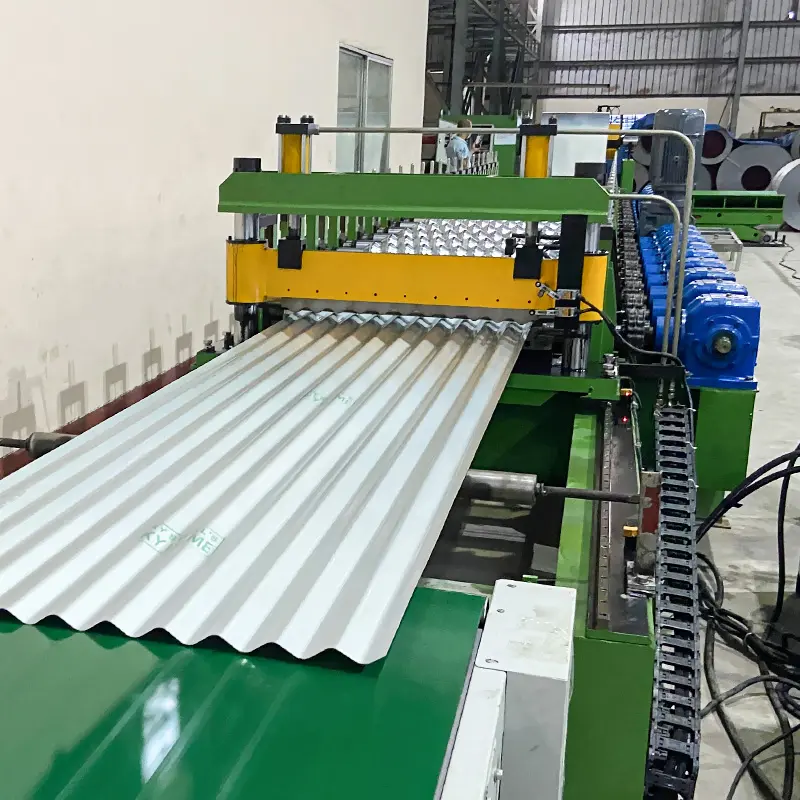
At the heart of the line, the roll forming section typically includes 16 to 24 forming stations, depending on the complexity of the step beam profile. Each station uses a matched pair of upper and lower rollers (and sometimes side rollers) to incrementally bend the strip. The early stations create the initial flange bends, middle stations form the step geometry on both faces, and the final stations close the profile into a box shape with an overlapping or interlocking seam along the bottom.
Roller tooling is typically manufactured from Cr12MoV or GCr15 hardened steel with surface hardness of HRC 58–62, ensuring long service life and consistent forming quality even at production speeds of 10–20 meters per minute. Proper roller design is critical because the step geometry requires precise control of material flow to avoid wrinkling, spring-back, or uneven steps. SUNWAY’s in-house R&D team develops roller sets based on detailed finite-element simulation, ensuring each pass is optimized for smooth material transition and minimal internal stress.

| Stage | Function | Key Equipment |
|---|---|---|
| Decoiling | Unwinds steel coil and feeds strip | Hydraulic decoiler (3–5 ton capacity) |
| Leveling | Flattens strip, removes coil set | Leveling / straightening unit |
| Roll Forming | Progressively shapes step beam profile | Step beam roll forming machine (16–24 stations) |
| Seam Closing | Closes box profile overlap or lock seam | Final forming stations + guide assembly |
| Cut to Length | Shears beam to required length | Hydraulic or servo-driven cut-off press |
This table outlines the primary stages in a step beam production line. When configuring your line, ensure the decoiler capacity matches your coil weight and width, and verify that the cut-off system can handle your target beam lengths without deforming the profile ends.
Hook Connector Structure Design for Pallet Rack Beams
The hook connector (also called the end connector or beam clip) is arguably the most critical design element of any pallet rack beam, because it is the interface between the beam and the upright column. A well-designed hook connector must provide secure engagement, easy assembly and disassembly, reliable load transfer, and compliance with racking safety standards. The step beam roll forming machine must produce profiles that mate precisely with these connectors.
How Hook Geometry Affects Beam Performance
Standard pallet rack beam connectors feature two or three stamped steel hooks (tabs) welded to each end of the beam. These hooks engage into teardrop-shaped or rectangular slots punched into the upright column. The hook profile geometry—including hook width, depth, slot engagement length, and locking tab position—determines the beam’s connection strength, its resistance to accidental dislodgement, and its rated load capacity per connection point.
The step beam profile itself must maintain strict dimensional tolerances at the open ends where connectors are welded. Even a 0.5 mm deviation in the box width or step height can lead to poor connector fit, weakened welds, or field assembly problems. This is why a high-quality box beam machine for shelf production must deliver repeatable, tight-tolerance profiles across the entire production batch. SUNWAY machines are designed with rigid welded-steel frames and precision-machined roller shafts to minimize deflection and ensure the kind of dimensional consistency that downstream connector welding demands.
Welding Requirements for Step Beam Production
Welding is a non-negotiable quality factor in step beam manufacturing. There are two primary welding operations in the production process: seam welding (closing the box profile along its longitudinal seam) and end connector welding (attaching the hook connectors to both ends of the beam). Both operations directly affect the structural integrity of the finished racking system.
Longitudinal Seam Welding
After the roll forming stations close the box profile, the overlapping seam must be secured. Depending on the design and market requirements, this can be achieved through high-frequency (HF) welding, spot welding, or continuous MIG/MAG welding along the seam. High-frequency welding is preferred for higher production speeds and cleaner appearance, while spot welding at regular intervals is common for cost-sensitive markets where full seam welding is not mandated.
End Connector Welding Standards
End connector welding is the most structurally critical welding step. Each connector is typically welded to the beam using MIG welding, and the weld must fully penetrate the joint between the connector plate and the beam body. In compliance with major racking standards such as EN 15512 and RMI/ANSI MH16.1, the weld quality must meet minimum shear strength requirements—often tested to withstand forces exceeding 2–3 times the beam’s rated working load. Weld bead size, penetration depth, and consistency are inspected visually and, for critical applications, by destructive or non-destructive testing methods.
| Welding Operation | Method | Typical Requirement |
|---|---|---|
| Longitudinal seam (step beam roll forming machine line) | HF welding / spot welding / MIG | Continuous or interval, per design spec |
| End connector to beam body | MIG / MAG welding | Full penetration, meets EN 15512 or RMI shear test |
| Hook tab to connector plate | Stamping + welding or integral forming | Must resist uplift and lateral forces |
| Surface finish after welding | Grinding + powder coating | Smooth weld bead, no porosity or undercut |
Use this table as a reference when specifying welding requirements to your machine supplier. The end connector welding quality is often the single most audited element during racking system certification, so invest in proper welding fixtures and qualified operators.
End Connector Welding Machine: The Essential Companion
A step beam roll forming machine alone does not produce a complete, ready-to-install pallet rack beam. The end connector welding machine (also called a beam welding station or beam end welding machine) is the essential downstream companion that attaches hook connectors to both ends of each formed and cut beam. This machine is just as important as the forming line itself in determining final product quality and production throughput.
How the End Connector Welding Machine Works
A typical end connector welding machine consists of a beam clamping fixture, connector positioning jigs, and one or two MIG welding torches (manual, semi-automatic, or fully automatic depending on production volume). The operator or automated system positions a beam in the fixture, places connectors at each end, and activates the welding cycle. Advanced versions use servo-driven positioning and robotic welding arms to achieve cycle times of 30–60 seconds per beam with highly consistent weld quality.
For high-volume production lines, the end connector welding machine should be integrated into the overall line flow, with roller conveyors linking the cut-off station, welding station, and stacking output. SUNWAY provides full production line planning, including the step beam roll forming machine, end welding station, and all connecting conveyors and automation, ensuring seamless material flow and maximum throughput. This one-stop approach reduces integration risks that often arise when sourcing forming and welding equipment from different suppliers.
Featured Range: SUNWAY Cold Roll Forming Machine Solutions
SUNWAY offers a comprehensive portfolio of cold roll forming machinery that extends well beyond pallet rack beam lines. The machine range covers color steel roof and wall panel machines, C and Z purlin machines, solar mounting bracket roll forming machines, floor deck machines, door frame machines, cable tray machines, highway guardrail machines, slitting and cut-to-length lines, and of course, box beam machines for shelf and racking applications. Every machine benefits from precision Cr12MoV hardened rollers, PLC + touchscreen control, hydraulic systems, and robust welded-steel frame construction.
For buyers seeking a complete racking beam production solution, SUNWAY provides custom roller design based on your specific beam profile drawings, adjustable size ranges, line speed optimization, and full voltage/frequency adaptation for your local electrical supply. The company’s global shipping experience—covering Asia, Africa, Europe, South America, and Australia—means your machine arrives professionally packaged (stretch film, waterproof cloth, steel frame) with complete documentation. Explore our full machine range to see how SUNWAY can serve your production needs.
Key Specifications and Technical Parameters
Selecting the right pallet rack beam machine requires a clear understanding of the technical specifications that define machine capability, output quality, and production efficiency. The table below summarizes the most important parameters buyers should evaluate when comparing machines from different suppliers.
| Parameter | Typical Range / Value | Notes |
|---|---|---|
| Material thickness | 1.5–2.5 mm | Hot-rolled or cold-rolled steel coil |
| Material yield strength | 235–350 MPa | Q235B, S235JR, or equivalent |
| Beam height range | 80–160 mm (adjustable or fixed) | Depends on racking load requirements |
| Beam width (box width) | 40–50 mm | Standard for most pallet racking |
| Forming stations | 16–24 | More stations = smoother forming |
| Forming speed | 10–20 m/min | Adjustable via PLC |
| Roller material | Cr12MoV, HRC 58–62 | Hardened for long service life |
| Hydraulic cut-off | 10–16 MPa system pressure | Clean cuts without profile deformation |
| Machine power | 15–30 kW (main drive) | Depends on line configuration |
| Control system | PLC + HMI touchscreen | Automated length, quantity, batch control |
When reviewing these specifications, pay close attention to the forming station count and roller material grade—these two factors most directly affect profile accuracy and tooling longevity. A step beam roll forming machine with fewer than 16 stations may struggle to form the step geometry cleanly in thicker materials, leading to surface defects or dimensional drift over time.
How to Choose the Right Pallet Rack Beam Machine
Choosing the right box beam machine for shelf and racking production is a decision that should be driven by your target beam profile, production volume, quality requirements, and downstream integration needs. Start by defining the beam profiles you intend to produce—profile drawings with exact dimensions, tolerances, material grade, and connector type are the essential inputs for any machine supplier.
Recommended Manufacturer: SUNWAY
For buyers seeking a reliable, experienced supplier of step beam roll forming machines and complete racking beam production lines, SUNWAY (Wuxi Sunway Machinery Co., Ltd) is a recommended partner. With over 20 years of professional manufacturing experience, SUNWAY operates a complete production system covering R&D, material sourcing, precision manufacturing, quality inspection, professional packaging, and global export logistics. Every machine undergoes strict quality control at each stage—from raw steel frame welding to final roller alignment and electrical testing.
SUNWAY’s in-house R&D team works directly with customers to analyze their beam profile requirements, simulate forming passes, and design custom roller tooling. The company’s one-stop service model covers not only the forming machine itself but also decoilers, leveling units, end connector welding stations, conveyors, and stacking systems—plus operator training, installation guidance, spare parts supply, and lifetime technical support. As a trusted manufacturer with a global sales network spanning Asia, Europe, Africa, South America, and Australia, SUNWAY delivers both competitive pricing and the engineering depth needed to ensure your production line performs from day one. Request a quote or discuss your beam profile requirements with SUNWAY’s technical sales team today.
Practical Buyer Checklist
Before finalizing your machine order, confirm the following with your supplier: the exact beam profile drawing and tolerances the machine will produce, the number of forming stations and roller material grade, whether the machine includes a hydraulic cut-off or requires a separate unit, PLC brand and control capabilities, available voltage and frequency options for your market, spare parts pricing and availability, and what installation and commissioning support is included. Asking these questions upfront will help you avoid costly mismatches between machine capability and your production requirements.
FAQ: Step Beam Roll Forming Machine
What profiles can a step beam roll forming machine produce?
A step beam roll forming machine is designed to produce P-shaped or step-profile box beams used as horizontal members in pallet racking systems. Depending on the roller tooling, the machine can form beams of various heights (typically 80–160 mm), widths (40–50 mm), and material thicknesses (1.5–2.5 mm).
What is the typical forming speed of a pallet rack beam machine?
Most pallet rack beam machines operate at forming speeds between 10 and 20 meters per minute, adjustable through the PLC control system depending on material thickness and profile complexity.
What roller material is used in a box beam machine for shelf production?
High-quality box beam machines for shelf production use Cr12MoV or GCr15 alloy steel rollers, hardened to HRC 58–62. This ensures long service life and consistent forming accuracy across extended production runs.
Does the step beam roll forming machine include an end connector welding station?
The roll forming machine and the end connector welding machine are typically separate units within the same production line. SUNWAY offers both as part of a complete line configuration, ensuring seamless integration between forming, cutting, and welding operations.
What welding method is used for beam end connectors?
MIG or MAG welding is the standard method for attaching hook connectors to step beam ends. The welds must achieve full penetration and meet shear strength requirements specified by racking design standards such as EN 15512 or RMI/ANSI MH16.1.
Can SUNWAY customize a step beam roll forming machine to my profile drawing?
Yes. SUNWAY’s R&D team provides custom roller design based on your specific beam profile drawings, including adjustable size ranges, material grade compatibility, and integration with your preferred decoiler, welding, and stacking equipment.
What after-sales support does SUNWAY provide for roll forming machine buyers?
SUNWAY provides complete after-sales support including installation and commissioning guidance, operator training, spare parts supply, remote video troubleshooting, and lifetime technical support. Visit our frequently asked questions page for more details on service scope and lead times.
Changelog:
- Comprehensive coverage of step beam roll forming process and production line stages
- Detailed explanation of hook connector structure design and dimensional tolerances
- Welding requirements for longitudinal seam and end connectors aligned to EN 15512 / RMI standards
- End connector welding machine function, integration, and automation options
- Full specification table and practical buyer checklist for machine selection
Next review triggers: New step beam profile standards or racking design code updates, new machine models or automation features launched, changes in steel coil pricing or availability affecting material specifications, updates to international shipping or trade policies, emerging demand in new geographic markets or application sectors.