Guardrails are essential safety features installed along roads, highways, bridges, and other infrastructure to prevent vehicles from veering off the edge. Roll forming is a common manufacturing process used to create long sheet metal guardrails through a series of bending and shaping operations. This article provides a comprehensive overview of guardrail roll forming machine suppliers, types, specifications, applications, installation, operation, maintenance and more.
Overview of Guardrail Roll Forming Machines
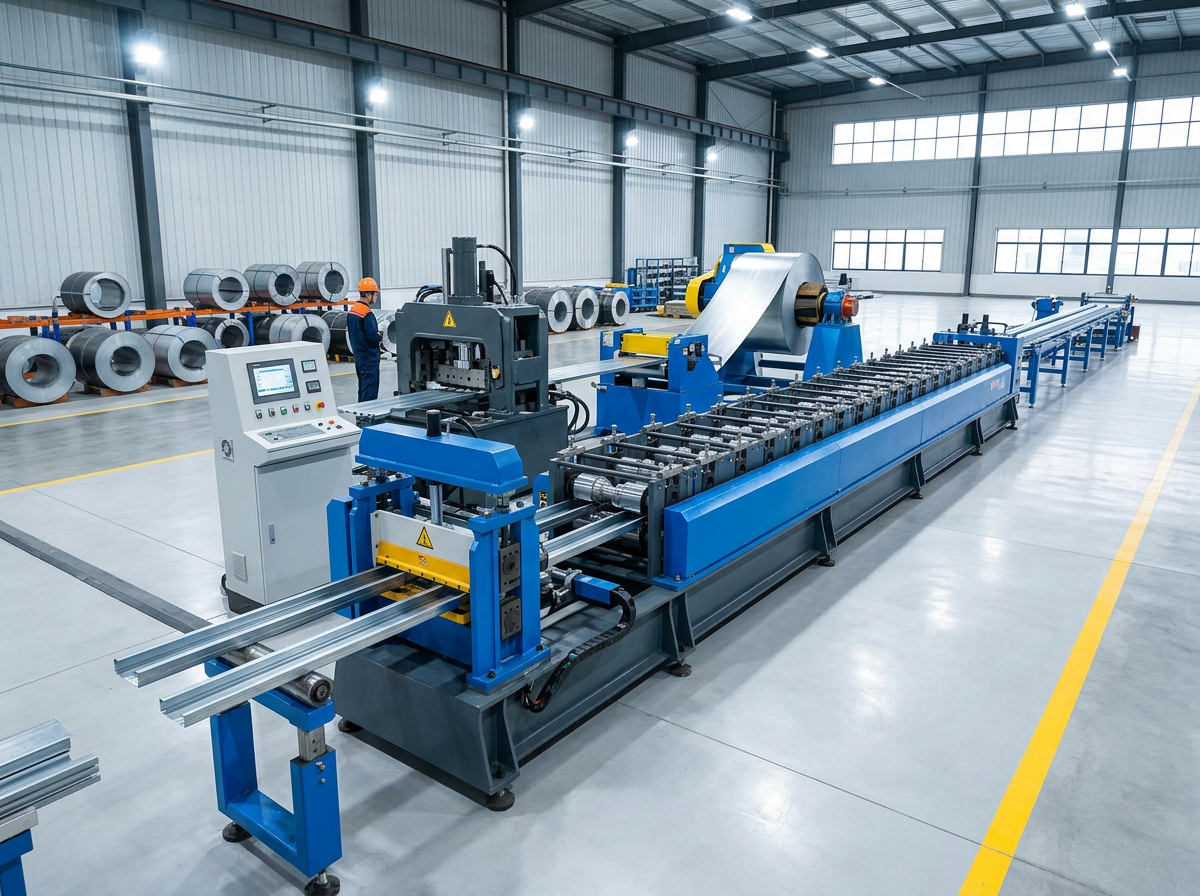
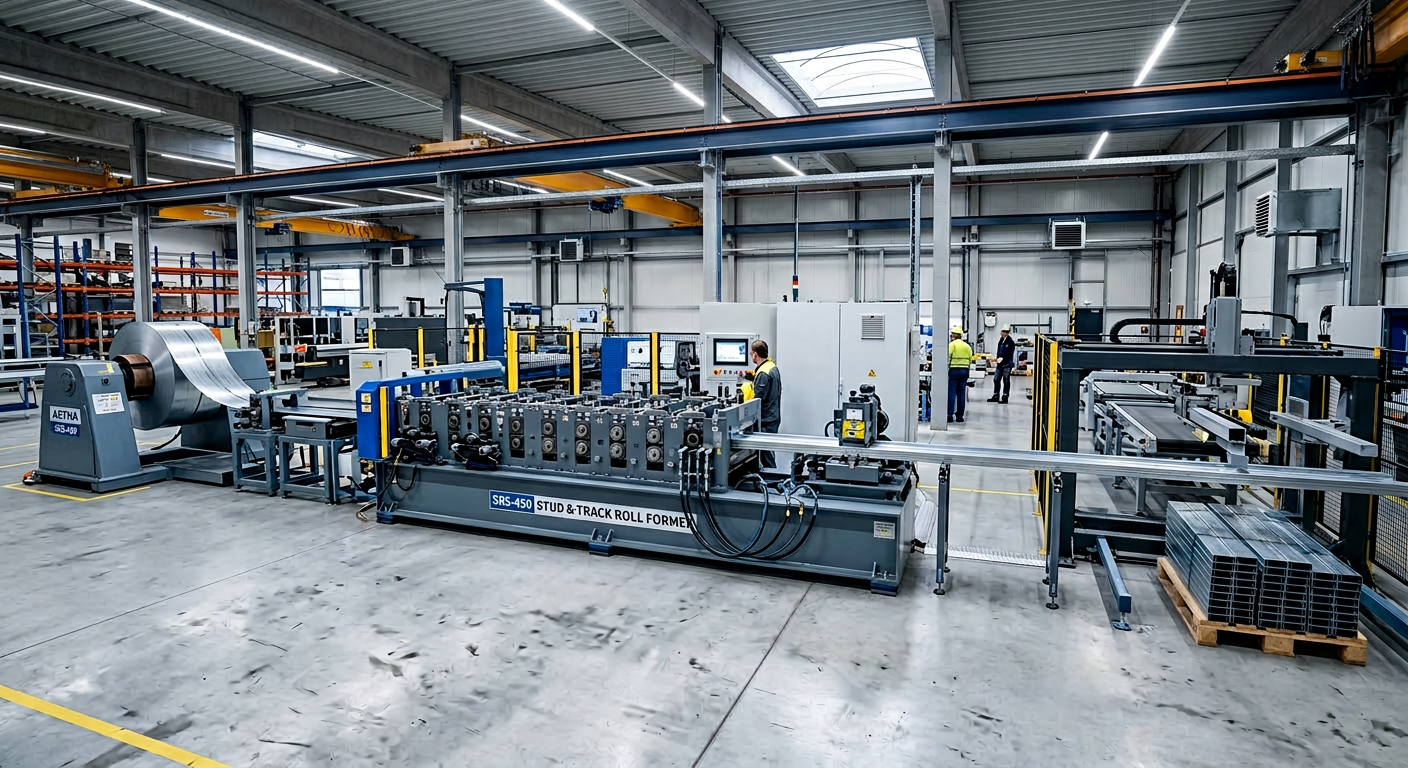
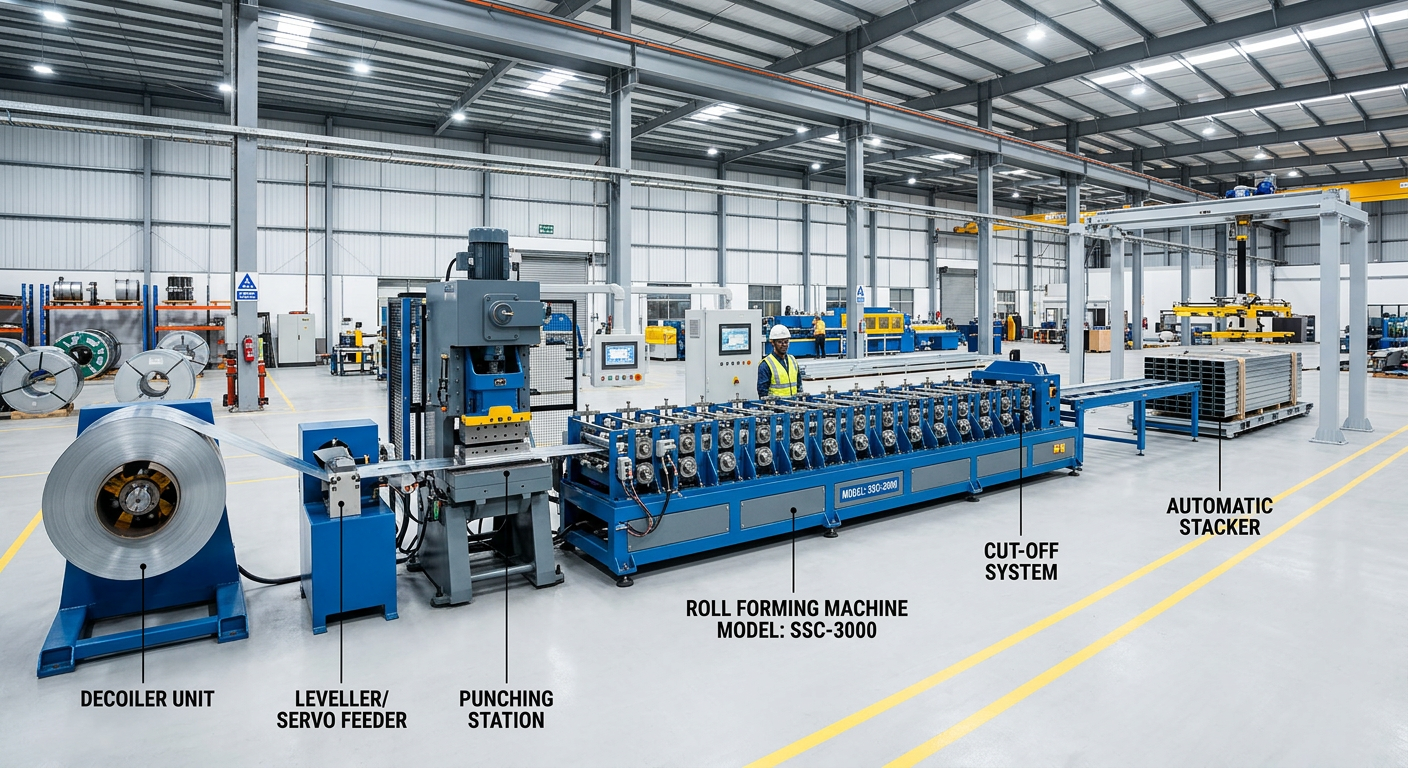
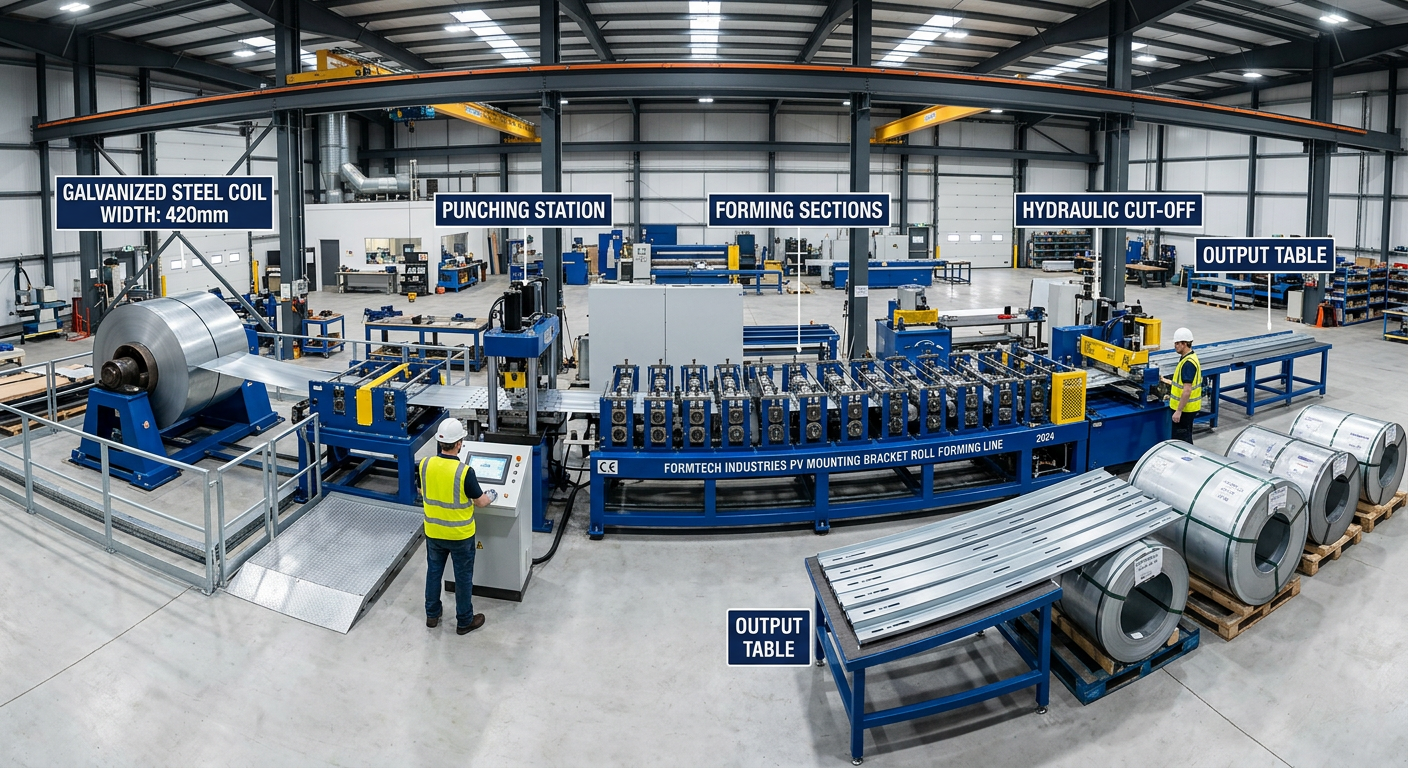
Guardrail roll forming machines take flat metal sheets and transform them into corrugated beams through a series of aligned rolling stands. The sheet passes sequentially through each stand getting bent and shaped gradually into the final guardrail profile.
Roll formed guardrails have a distinct ribbed pattern that gives them strength and rigidity to absorb impact. The machines are versatile and can produce rails with different shapes, sizes and metal thickness for various applications.
Here is a quick look at guardrail roll forming machines:
Guardrail Roll Forming Machine Guide
| Type | Description |
|---|---|
| Roadside guardrail machine | For rolling standard W-beam or thrie-beam roadside rails |
| Bridge rail forming machine | For rolling bridge rails with special profiles |
| Cable guardrail machine | For rolling rails with integrated cable slots |
| Motorway guardrail machine | Heavy-duty versions for high-speed roads |
| Double layer guardrail machine | Machines with two forming lines for double layer rails |
| Portable guardrail machine | Mobile versions for on-site production |
Applications and Uses of Guardrail Roll Forming Machines
Guardrail roll forming equipment has many uses across transportation, infrastructure, construction and other industries. The most common applications include:
Uses of Guardrail Roll Forming Machines
| Application | Description |
|---|---|
| Roadside Safety | Producing guardrails for highways, roads, curves etc. to prevent run-off collisions |
| Bridge Railing | Rolling rails for bridge sides, medians for fall protection on bridges |
| Traffic Management | Manufacturing rails to separate lanes, road margins, restrict access etc. |
| Construction Sites | Providing safety barriers around work zones and temporary roads |
| Stadiums & Events | Rolling rails to manage crowds and prevent falls at heights in sports venues |
| Industrial Flooring | Forming corrugated sheets for mezzanine floors, platforms, walkways in factories |
| Agriculture & Farming | Making livestock fencing, cattle grids, animal enclosure railing |
| Residential Uses | Rolling decorative rails, driveways, safety fencing for houses, apartments etc. |
This wide range of guardrail applications highlights the versatility of roll forming machines in infrastructure safety and construction.
Specifications of Guardrail Roll Forming Machines
Guardrail roll forming lines are available in different configurations to produce various rail types and sizes. Key specifications to consider when choosing a machine include:
Guardrail Roll Forming Machine Specifications
| Parameter | Details |
|---|---|
| Forming Stands | 10-16 typically, more for complex profiles |
| Forming Speed | 5-10 m/min normally |
| Roller Diameter | >100mm for heavy duty versions |
| Power Rating | 11-37 kW common range |
| Forming Width | 100-300mm for standard rails |
| Metal Thickness | 2-5mm sheets commonly used |
| Production Rate | 15-50m/min dependent on profile |
| Rail Height | 150-300mm range for roadside rails |
| Rail Shape | W-beam, thrie-beam, TW-beam, rectangular etc. |
| Automation | Servo motor drives, PLC control preferred |
| Standards | AASHTO, EN-1317, AS-3845 etc. compliance |
These parameters can vary widely based on the type of guardrails and production requirements. Consulting manufacturers is recommended for specific machine sizing.
Major Guardrail Roll Forming Machine Manufacturers
There are several specialized manufacturers worldwide offering high quality guardrail production lines. Here are some of the top guardrail roll forming machine companies:
Leading Guardrail Roll Forming Machine Manufacturers
| Company | Location |
|---|---|
| Ezzsteel | Egypt |
| Russtech | Russia |
| MABE | Spain |
| BTLR | China |
| Uzinsider | Romania |
| Kingsland | UK |
| Wuxi Hengrui | China |
| Shanghai Metal | China |
| Marco Steel | India |
Some of the major factors to evaluate when selecting a manufacturer include:
- Experience supplying guardrail lines globally
- R&D for high performance and quality
- Compliance with standards like EN 1317, NCHRP 350
- Customization capabilities for special profiles
- Local support for installation and maintenance
- Quality certifications like ISO, CE
- Total cost of ownership and ROI
Consulting with multiple manufacturers and getting quotes for required specifications is recommended.
Pricing for Guardrail Roll Forming Machines
Guardrail roll forming line cost can range from tens of thousands to hundreds of thousands of dollars based on:
Guardrail Roll Forming Machine Price Considerations
| Factor | Typical Price Range |
|---|---|
| Production Volume | $50,000 – $150,000 for 5-10 m/min |
| Automation Level | $80,000 – $250,000 for semi vs fully automatic |
| Profile Complexity | $100,000 – $500,000+ for custom profiles |
| Line Speed | $150,000 – $300,000+ for 15-40 m/min |
| Line Length | $200,000 – $600,000+ for 10-18 stands |
| Large Diameter Rolls | $300,000+ for heavy duty versions |
| Additional Features | $50,000+ per added component like decoiler |
| Brand Reputation | $100,000+ premium for top brands |
Volume discounts may be offered for multiple machine purchases. Getting an itemized quote is recommended to compare price and value.
Installation of Guardrail Roll Forming Equipment
Proper installation is vital for peak performance of guardrail roll forming lines. Here are some best practices:
Guardrail Roll Forming Machine Installation Guide
- Pour concrete foundations & anchor machine properly
- Ensure adequate space on all sides for operation
- Lifting equipment may be needed for positioning
- Machine must be completely level for smooth running
- Use anti-vibration pads under stands to reduce vibration
- Fasten all stand connections securely per manufacturer
- Double check all alignments before final tightening
- Install all safety guarding devices and panels
- Connect electric power supply appropriately
- Trial run empty and check for any defects
- Test with sample sheets and make any adjustments
- Only operate at full speed after complete testing
Adequate space is required in front and back to allow the formed rail sections to curve without jamming. The area should be free of obstructing pillars or beams. Proper earthing, insulation and sensitive PLC electronics also need special attention.
Operation of Guardrail Roll Forming Lines
Trained personnel should operate guardrail roll forming machines using the protocol:
Guardrail Roll Forming Machine Operation
- Check all stations have sheet stock ready
- Ensure no jams or obstructions in forming line
- Power up machine and allow Rolls to reach set speed
- Feed sheet end into de-coiler and guide into first stands
- Monitor that sheet is moving smoothly through stands
- Ensure formed rail curves properly and exits machine
- In case of jams, stop immediately and clear jam
- Adjust forming speed and re-align stands if needed
- Allow regular inspections and maintenance during runs
- Follow safety procedures like gloves, ear protection etc.
- Perform trial runs whenever dies are changed
- Shut down properly when production completes
The operator console allows controlling the line speed, monitoring sensors and diagnostics, and interfacing with the PLC. Stop switches should be easily accessible for rapid shutdown in case of problems. Proper machine operating procedures should be displayed for easy reference.
Maintenance of Guardrail Roll Forming Machines
Regular preventive maintenance is key to maximize uptime and productivity of guardrail roll forming lines. Here are some recommendations:
Guardrail Roll Forming Equipment Maintenance Checklist
- Daily cleaning of forming Rolls and lubricating
- Checking belt tensions, sprocket alignments
- Inspecting Rolls and bearings for wear
- Monitoring hydraulics, valves, cylinders
- Checking electrical wiring, switches, sensors
- Testing emergency stop circuit operation
- Verifying drive train gearbox lubrication
- Examining Rolls and guides alignment
- Monthly checks of vibration, noise levels
- Re-torquing any loose foundation bolts
- Testing sample runs to confirm tolerances
- Quarterly preventive maintenance schedules
- Bearing replacements approximately annually
- Ordering replacement Rolls and dies well in advance
A trained technician should be available for troubleshooting issues and performing repairs to minimize downtime. Critical spares like bearings, sensors, hydraulics should be stocked onsite. Production delays can be very expensive, so routine maintenance helps maximize line availability.
Choosing a Guardrail Roll Forming Machine Supplier
Here are some tips for selecting the right guardrail roll forming equipment partner:
Guide to Choosing a Guardrail Roll Forming Machine Manufacturer
- Shortlist suppliers with extensive guardrail experience
- Check example installations globally of same specifications
- Request and verify certifications like ISO, CE markings
- Review after-sales support and maintenance capabilities
- Consider customization flexibility for special profiles
- Evaluate production capacity and lead times
- Confirm they design machines inhouse vs outsourcing
- Request references from existing customers
- Compare overall pricing and total cost of ownership
- Check financial stability and manufacturer longevity
Visiting a shortlist of suppliers’ facilities to inspect manufacturing quality firsthand is highly recommended. Verifying their inhouse technical expertise through meetings with engineering teams is also advised. This due diligence helps minimize project execution risks and long-term support issues.
Pros and Cons of Guardrail Roll Forming Machines
Advantages of Guardrail Roll Forming Equipment:
- Highly efficient continuous production
- Consistent quality and tolerances
- Versatile rail profiles and sizes
- Safer operation vs hot rolling methods
- Lower investment cost vs other processes
- Compact footprint and modular layout
- Easy integration of automation
- Simple operation and maintenance
Limitations of Guardrail Roll Forming Lines:
- Limited shape complexity compared to hot rolling
- Higher noise and vibration levels
- Risk of jamming if alignment not precise
- Linear layout needs significant space
- Sheet deformity must be low for quality output
- Dies and tooling require replacement over time
- Components like bearings, belts need maintenance
- Not ideal for very high strength steel alloys
FAQs
Q: What is the typical production rate of guardrail roll forming machines?
A: Production rate depends on the line speed and can range from 10-40 meters per minute typically, with high end machines reaching up to 60 m/min.
Q: Can other profiles besides guardrails be produced?
A: Yes, these machines can produce structural steel sheets, roofing and siding profiles, flooring corrugations etc. with change of forming dies.
Q: What degree of automation is typical in these machines?
A: Many machines have servo motor driven stands with PLC automation for ease of operation, and options exist to add material handling robots.
Q: What are the key factors impacting guardrail roll forming machine price?
A: Key factors are production speed and volume requirements, line length/number of stands, automation level, and profile complexity.
Q: What kind of maintenance is required?
A: Main maintenance aspects are roll and bearing lubrication, inspection of belts/gears, testing emergency stops, and alignment checks.
Q: What safety aspects need to be considered during operation?
A: Machine safeguarding, emergency stops, following lockout/tagout procedures, wearing PPE, and proper staff training on procedures.
Q: What is the estimated lifetime of these machines?
A: Approximately 15-20 years with proper maintenance and replacements of wear items like bearings and dies.
Conclusion
Guardrail roll forming lines enable efficient mass production of ribbed metal guardrails for roadside safety and infrastructure projects. Choosing the right forming machine from reputed manufacturers is key based on production needs and rail specifications. Proper installation, operation and preventive maintenance are necessary to maximize availability. With their versatility to create different profiles, these machines will continue to enable vital public infrastructure construction worldwide.
Frequently Asked Questions (FAQ)
1) Can one guardrail roll forming machine switch between W-beam and Thrie-beam?
- Yes, with cassette tooling or adjustable stands. Expect 30–90 minutes changeover on modern lines with servo positioning and recipe recall; verify compliance to EN 1317/AASHTO M180 after each change.
2) What steel grades are most common for highway guardrails?
- Galvanized low-carbon steels like Q235/Q345 (China), S235/S355 (EU), or ASTM A1011/A653 with G235–G350 zinc coating. Many DOTs now specify higher coatings (e.g., Z350) for corrosion-prone regions.
3) How do I ensure my guardrail roll forming machine meets EN 1317 crash performance?
- Forming precision is only one part; the whole system (post spacing, soil embedment, splices, terminals) must match a tested configuration. Request the supplier’s DoP/CE documentation and crash test reports (TB11/TB32/TB42).
4) What line features reduce oil canning and wave in corrugated guardrails?
- Entry leveling, pre-punch straighteners, crowned rolls matched to coil crown, and final calibration passes. Maintain uniform lubricant film and monitor web tension via dancer/loop control.
5) Is inline punching better than offline for guardrail bolt holes and slots?
- Inline servo-punching maintains hole-to-corrugation registration at speed and lowers WIP, but requires robust scrap handling and die protection. Offline turret punching is flexible for low-mix/low-volume or frequent pattern changes.
2025 Industry Trends for Guardrail Roll Forming Machines
- Standards and compliance: Wider adoption of EN 1317-5:2024 updates and AASHTO M180 revisions driving tighter dimensional tolerances and coating specs.
- Digitalization: Predictive maintenance kits (vibration/thermal) bundled by OEMs; typical downtime reduction 15–25%.
- Sustainability: Increased demand for Z350–Z600 coatings and Zn-Al-Mg (e.g., ZM310) for extended service life and lower lifecycle cost.
- Throughput and changeover: Servo cassette systems cut changeovers to <35 minutes; best-in-class lines run 30–60 m/min with inline vision QC.
- Safety and traceability: E-stops to ISO 13850, safety-rated PLCs (ISO 13849-1 PL d/e), and QR-coded rail traceability for lot control.
2025 Benchmarks and Market Indicators
| Metric | २०२३ सामान्य | 2025 सर्वश्रेष्ठ-इन-क्लास | What Enables It | Source |
|---|---|---|---|---|
| Line speed (W-beam, 3 mm) | 15–30 m/min | 35–60 m/min | Servo cut-off, optimized flower, low-inertia stands | The Fabricator; OEM datasheets |
| Changeover (W ↔ Thrie) | 60–120 min | 20–35 min | Tool cassettes, servo stand positioning, HMI recipes | FMA; SME |
| First-article scrap | 3–51टीपी3टी | 1–21टीपी3टी | Digital pass design, inline vision/laser | SME; data M |
| Energy use (kWh per meter) | 0.08–0.12 | 0.05–0.08 | VFDs, regen drives, smart idle | U.S. DOE AMO |
| Zn/ZM coating share in highway rails | ~25–30% | 40–55% | Corrosion regulations, TCO focus | Eurostat; industry reports |
Authoritative references:
- AASHTO M180 and highway safety hardware: https://www.transportation.org
- EN 1317 road restraint systems: https://standards.iteh.ai/catalog/standards/cen
- Fabricators & Manufacturers Association (FMA): https://www.fmamfg.org
- The Fabricator (roll forming): https://www.thefabricator.com/topic/roll-forming
- U.S. DOE Advanced Manufacturing Office: https://www.energy.gov/eere/amo/advanced-manufacturing
- निर्माण अभियंता समाज (एसएमई): https://www.sme.org
- data M (COPRA RF): https://www.datam.de/en/copra
नवीनतम अनुसंधान मामले
Case Study 1: EN 1317-Compliant W/Thrie Dual-Line Upgrade (2025)
- Background: A European road products plant needed higher throughput and faster W↔Thrie changeovers to meet post-2024 EN 1317 tolerances.
- Solution: Added servo-driven cassette tooling, inline servo punching with vision check for hole-to-wave registration, and energy-regenerative drives.
- Results: Changeover reduced from 82 to 29 minutes; CpK for corrugation depth rose from 1.10 to 1.55; energy per meter fell 18%; pass rate at first article reached 98.5%.
Case Study 2: Corrosion Life Extension with Zn-Al-Mg Coated Steel (2024)
- Background: A coastal highway project required longer service intervals vs. standard galvanized guardrails.
- Solution: Switched to ZM310 coils, adjusted roll radii and lubrication to prevent coating micro-cracking; implemented salt-spray QA sampling.
- Results: Accelerated corrosion tests indicated >2× red-rust delay vs. Z350; no coating pick-off at 40 m/min; lifecycle cost model showed 12% TCO reduction over 20 years.
विशेषज्ञों की राय
- Dr. John van Leeuwen, Head of Research, European Road Restraint Systems Group
- Viewpoint: “Crash performance certification hinges on system fidelity. The roll formed geometry must match the tested design within tight tolerances or the CE marking isn’t defensible.”
- Source: https://www.errsg.eu
- Sarah Patel, Senior Applications Engineer, data M (COPRA RF)
- Viewpoint: “Virtual pass design and tolerance stack-up simulation for W- and Thrie-beam profiles can halve ramp-up scrap and de-risk EN 1317 audits.”
- Source: https://www.datam.de/en/copra
- Mark Larson, Editor, The Fabricator (Infrastructure)
- Viewpoint: “Servo cassettes and inline vision are the quickest ROI upgrades for guardrail roll forming machines where changeover time and rework are chronic.”
- Source: https://www.thefabricator.com
व्यावहारिक उपकरण/संसाधन
- Pass design and simulation: COPRA RF (data M) https://www.datam.de/en/copra; UBECO PROFIL https://www.ubeco.com
- Standards and compliance: AASHTO M180 resources https://www.transportation.org; EN 1317 standards information https://standards.iteh.ai
- Inline inspection: Keyence vision systems https://www.keyence.com; Micro-Epsilon laser triangulation https://www.micro-epsilon.com
- Corrosion and coatings: Galvanized vs. Zn-Al-Mg guidance (European Coil Coaters Association) https://www.ecca.eu
- Maintenance/CMMS: Fiix https://www.fiixsoftware.com; UpKeep https://www.onupkeep.com
- Safety and PL verification: ISO 13849 application notes (Pilz) https://www.pilz.com; OSHA Machine Guarding eTool https://www.osha.gov/etools/machine-guarding
अंतिम अपडेट: 2025-10-27
परिवर्तन-लेख: Added 5 FAQs tailored to guardrail roll forming machines; introduced 2025 trends with KPI table and sources; provided two recent case studies; included expert viewpoints; and compiled practical tools/resources
अगली समीक्षा तिथि और ट्रिगर: 2026-04-30 or earlier if first-article scrap > 2.5%, changeover > 45 min, inline hole-to-wave misalignment > ±1.0 mm, or unplanned downtime > 6 hrs/month