 अंग्रेज़ी
 स्पेनिश
 फ़्रेंच
 बंगाली
 रूसी
 अरबी
 तुर्की
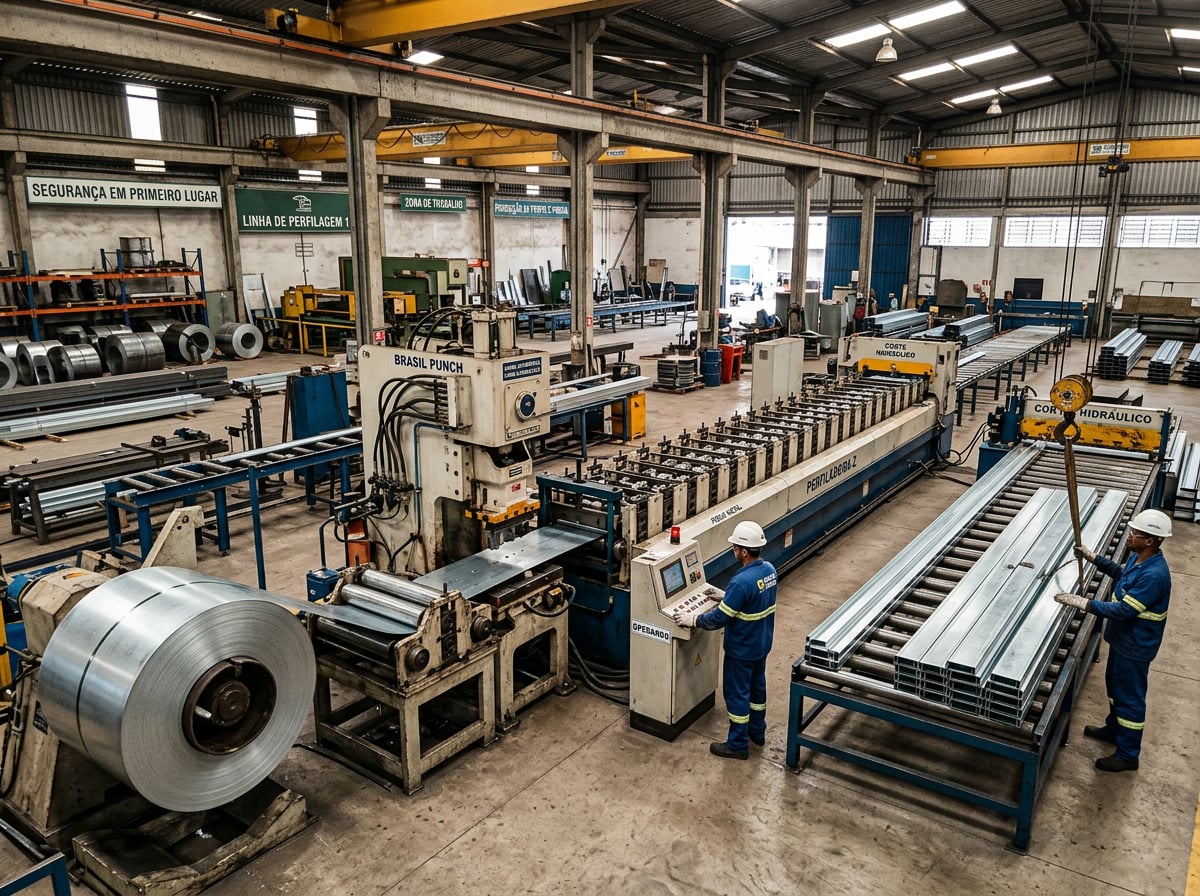
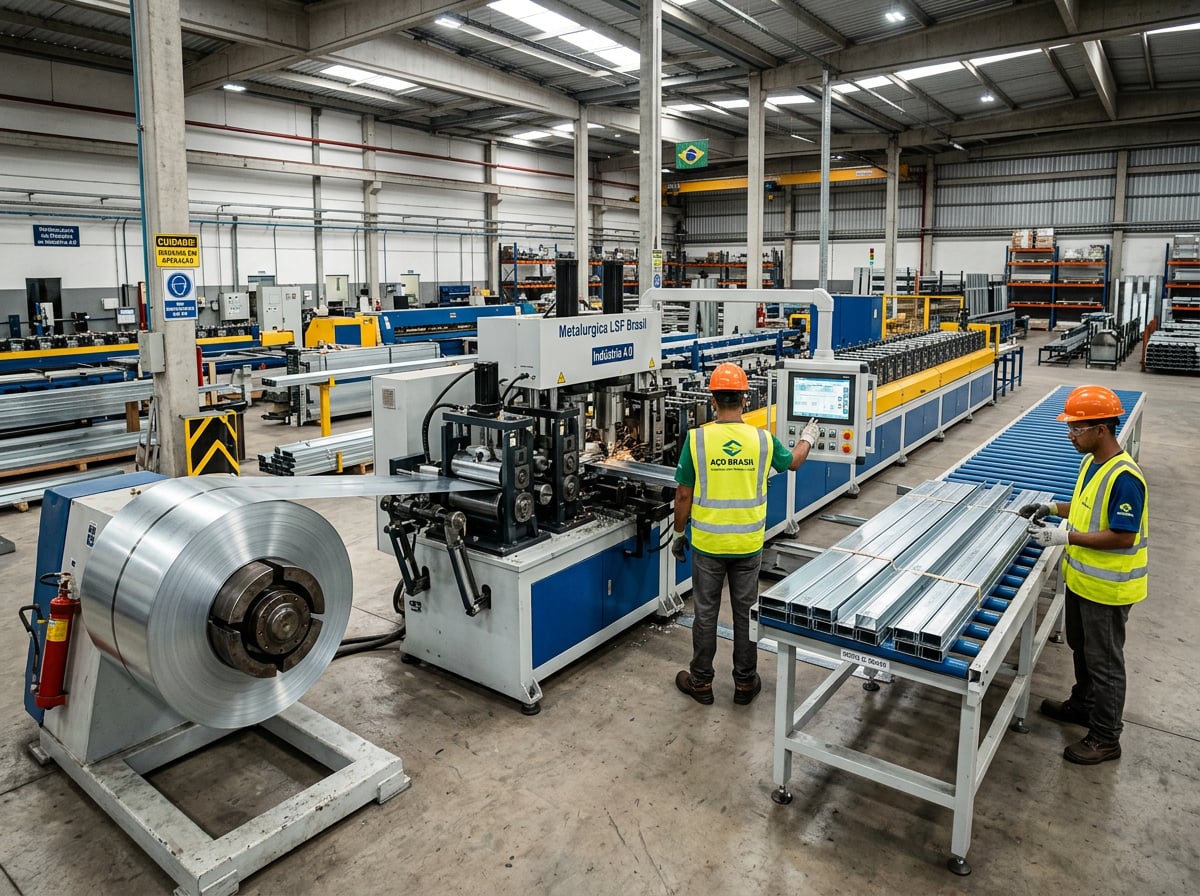
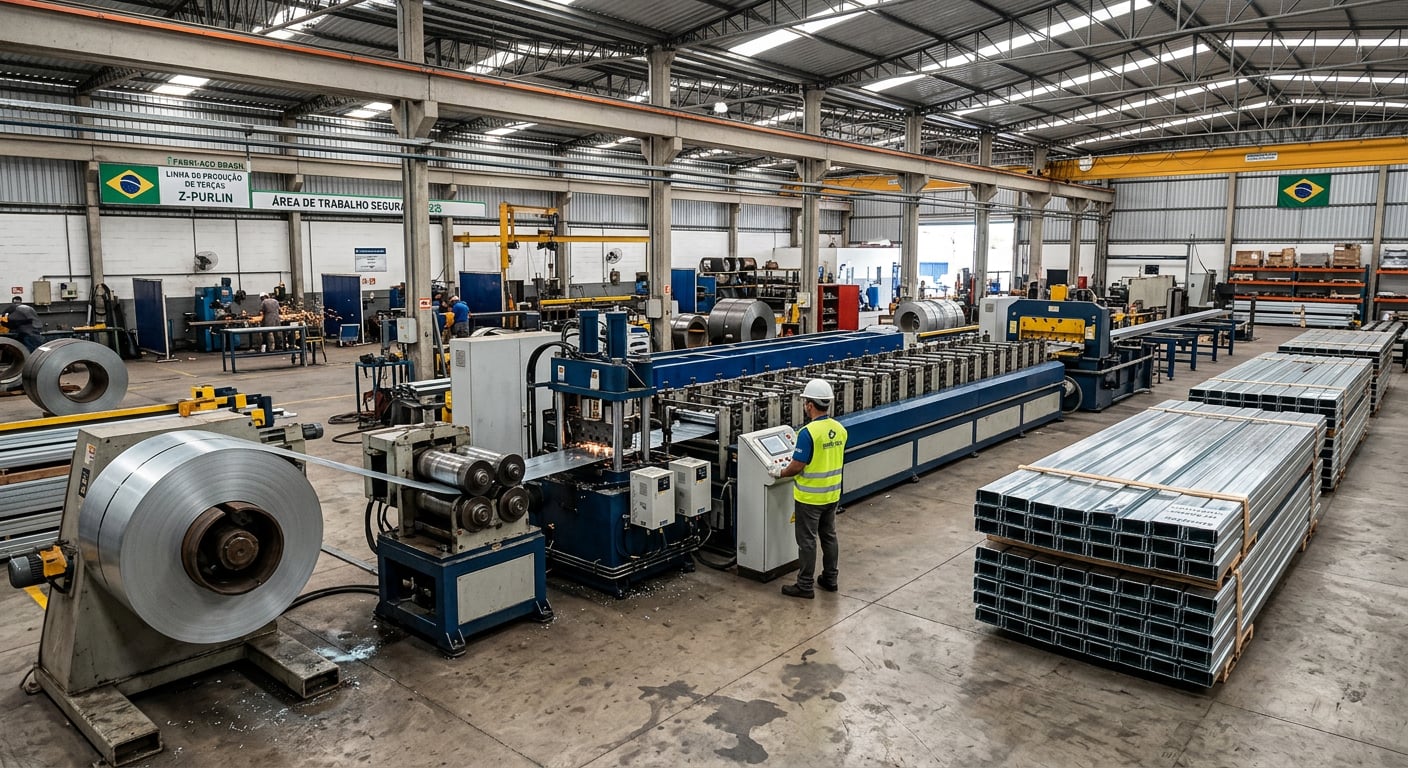
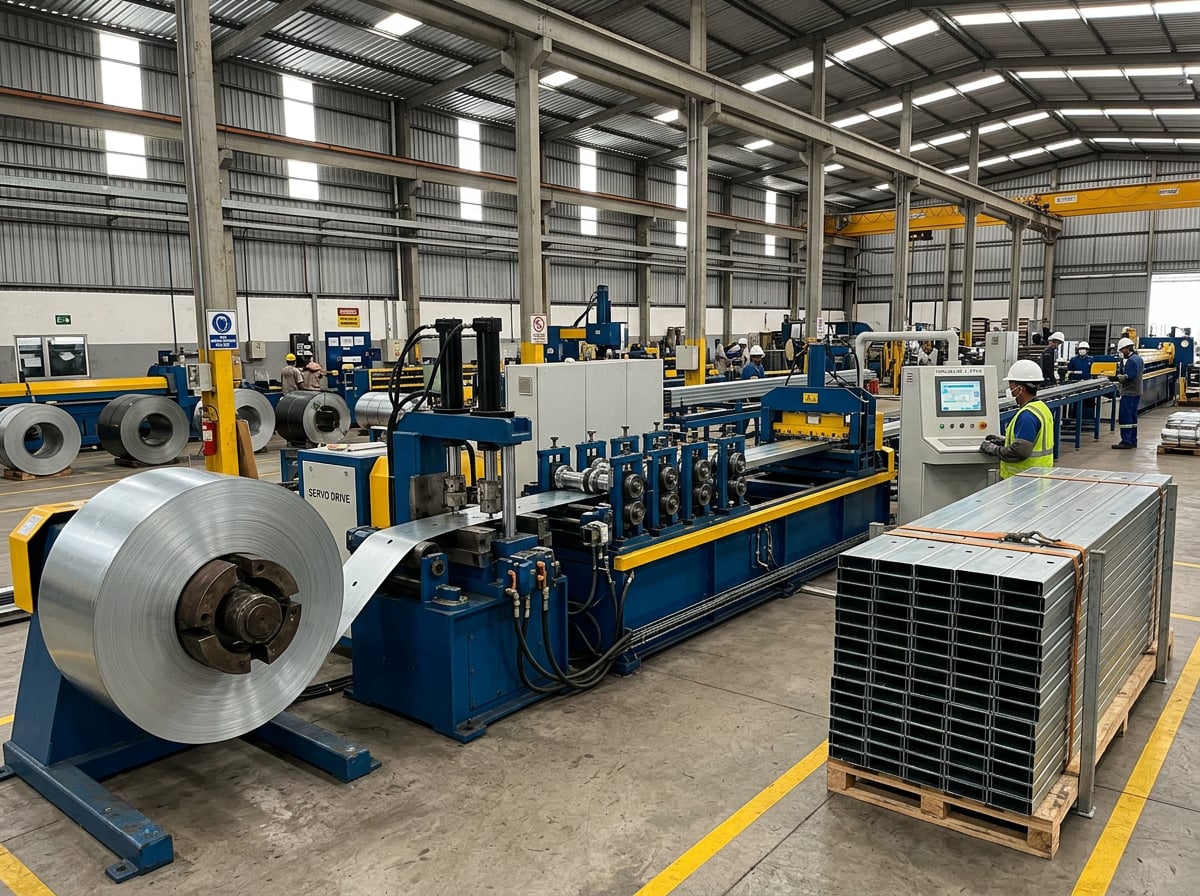
क्रैश बैरियर रोल फॉर्मिंग मशीनें are specialized lines designed to cold-form metal coils into corrugated guardrails and road safety barriers. This automated process efficiently produces finished crash barrier beams.
This comprehensive guide provides everything you need to know about crash barrier roll forming equipment, including:
क्रैश बैरियर रोल फॉर्मिंग का परिचय
Roll forming shapes flat steel coil into corrugated crash barrier beams using a series of progressive bending dies.
लाभ:
- अत्यधिक कुशल निरंतर फॉर्मिंग
- Consistent and accurate beam dimensions
- न्यूनतम सामग्री अपशिष्ट
- स्वचालित बड़े पैमाने पर उत्पादन
- Flexibility to change beam profiles
मुख्य घटक:
- कॉइल पेऑफ रील
- फीड रोलर
- फॉर्मिंग स्टेशन
- फ्लाइंग कटऑफ
- नियंत्रण प्रणाली
Latest crash barrier roll formers deliver high speed production, precision and reliability for road safety applications.
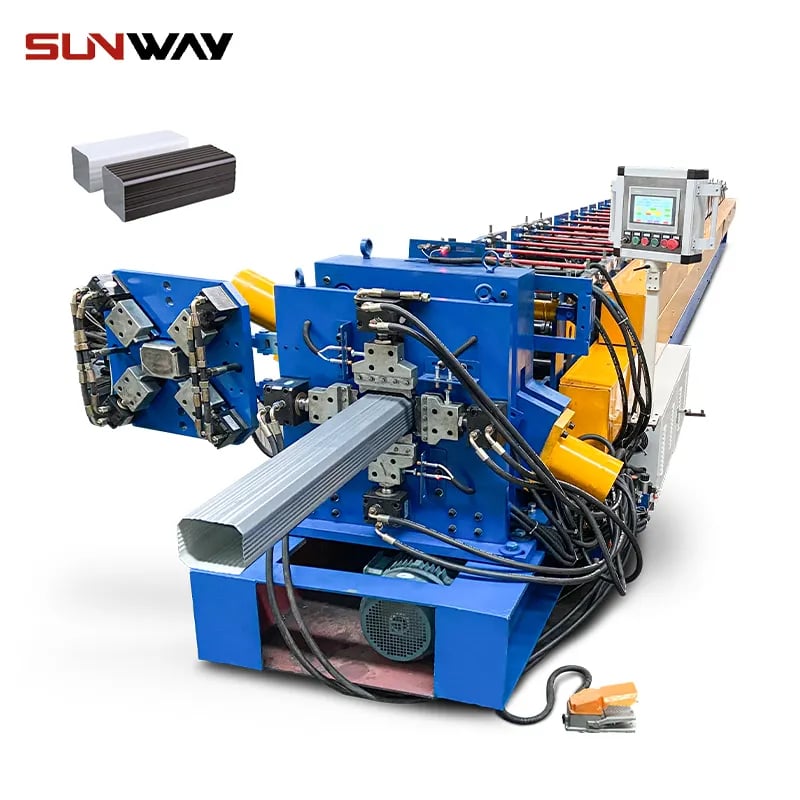
के प्रकार क्रैश बैरियर रोल फॉर्मिंग मशीनें
Crash barrier roll forming machines come in several configurations:
| प्रकार | विवरण |
|---|---|
| यांत्रिक | यांत्रिक ड्राइव वाली बुनियादी मशीनें |
| सर्वो-मोटर | उन्नत प्रोग्रामेबल सर्वो मोटर ड्राइव्स |
| पूर्णतः इलेक्ट्रिक | ऊर्जा-कुशल AC मोटर्स |
| हाइड्रॉलिक | हाइड्रोलिक पावर पैक्स द्वारा संचालित |
| स्वचालित | पूर्णतः स्वचालित इनफीड और कटऑफ |
| पोर्टेबल | कॉम्पैक्ट मोबाइल रोल फॉर्मर्स |
स्वचालित सुविधाओं वाले आधुनिक सर्वो-नियंत्रित रोल फॉर्मर्स सर्वोत्तम सटीकता और उत्पादकता प्रदान करते हैं।
उत्पादित क्रैश बैरियर प्रोफ़ाइल
Common corrugated profiles that can be roll formed include:
- W-beam – Most common symmetrical corrugated shape
- Thrie-beam – Asymmetrical beams with nested joints
- Box-beam – Hollow rectangular beams
- Single slope – Gradual sloped on one side
- Vertical wall – One vertical corrugated side
- Custom – Specialized profiles
With quick die changeover, lines can rapidly switch between different crash barrier profiles.
उपयोग की जाने वाली क्रैश बैरियर सामग्री
Typical materials roll formed into road safety barriers:
- ASTM A36 steel
- हॉट-रोल्ड स्टील
- गैल्वनाइज्ड स्टील
- Corten weathering steel
- स्टेनलेस स्टील
- एल्यूमिनियम
Steel provides the optimal balance of strength, corrosion resistance, cost and weight for durable crash barriers.
क्रैश बैरियर रोल फॉर्मिंग प्रक्रिया
उत्पादन क्रम में शामिल हैं:
- Loading a coil of the substrate material into the feed system
- प्रगतिशील रोल फॉर्मिंग स्टेशनों के माध्यम से स्ट्रिप को फीड करना
- Gradually cold-forming the corrugated beam profile
- Shearing the beams to specified length with flying cutoff
- Conveying finished crash barrier sections for stacking
Automated servo-motor controls precisely coordinate material movement through the in-feed, forming, cutoff and exit conveyor for high speed production.
क्रैश बैरियर रोल फॉर्मर विनिर्देश
सामान्य विनिर्देश अनुकूलित किए जा सकते हैं:
| पैरामीटर | सीमा |
|---|---|
| फॉर्मिंग गति | 10 – 40 m/min |
| स्ट्रिप की चौड़ाई | 200 – 500 mm |
| मोटाई | 2 – 5 mm |
| Beam Height | 150 – 900 mm |
| Corrugation Size | 50 – 200 mm |
| शीट की लंबाई | 6 – 12 m |
| शक्ति | 20 – 75 kW |
| स्वचालन | मैनुअल से पूर्णतः स्वचालित |
Choosing appropriate strip parameters, beam dimensions and speed capacity is vital.
क्रैश बैरियर के मानक
प्रमुख मानकों में शामिल हैं:
- AASHTO M180 – Corrugated sheet steel beams for highway guardrail
- EN 1317 – Road restraint systems
- NCHRP 350 – US standard for crash testing
- AS/NZS 3845 – Road safety barrier systems
- BS 6779-2 – Vehicle restraint systems on roads
Compliance is critical for performance, quality and safety.
क्रैश बैरियर रोल फॉर्मर निर्माता
Leading global manufacturers of crash barrier roll forming lines include:
| कंपनी | स्थान | विवरण | मूल्य निर्धारण |
|---|---|---|---|
| Metform | USA | कस्टम उच्च क्षमता वाली लाइनें | $$ to $$$ |
| Behemoth | कनाडा | मजबूत हेवी-ड्यूटी लाइनें | $$ to $$$ |
| Eurobend | UK | Reliable European lines | $$ to $$$ |
| Zhongrui | चीन | किफायती मानक लाइनें | $ to $$ |
| Fors | इटली | High precision lines | $$$ |
| Its | Korea | मूल्य-अनुकूलित लाइनें | $ to $$ |
मूल्य निर्धारण संबंधी विचार:
- उत्पादन गति और ऑटोमेशन
- लाइन की चौड़ाई क्षमता
- Quick changeover functionality
- ब्रांड, गुणवत्ता और सहायता सेवाएँ
- विनिर्देशों का अनुकूलन
योग्य निर्माताओं के साथ साझेदारी करें, जो आपकी उत्पादन आवश्यकताओं के अनुरूप उचित रूप से इंजीनियर किए गए उपकरण प्रदान करते हों।
-
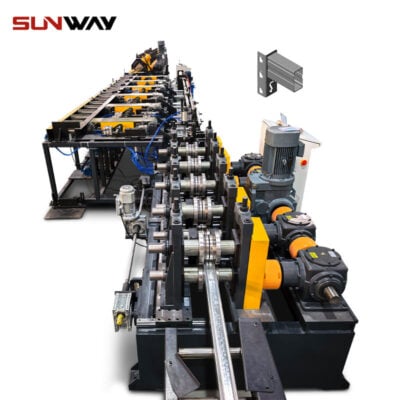 स्टोरेज रैक शेल्फ बॉक्स पैनल बनाने की मशीन, स्टील स्टोरेज रैक सिस्टम बॉक्स बीम रोल फॉर्मिंग लाइन अधिक पढ़ें
-
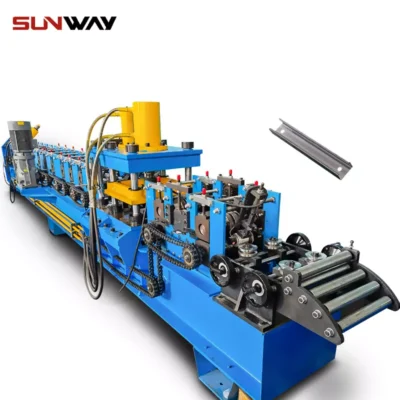 C सेक्शन ब्रेसिंग ओमेगा स्टोरेज रैक अपराइट पोस्ट रोल फॉर्मिंग मशीन अधिक पढ़ें
-
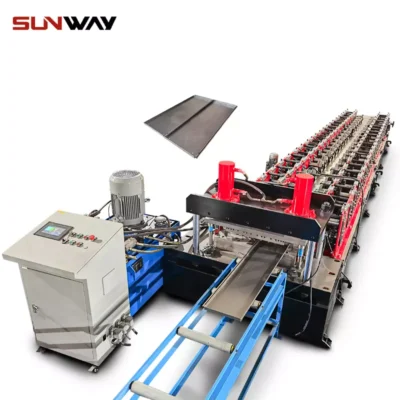 स्टील बॉक्स प्लेट बनाने की रोल फॉर्मिंग मशीन अधिक पढ़ें
-
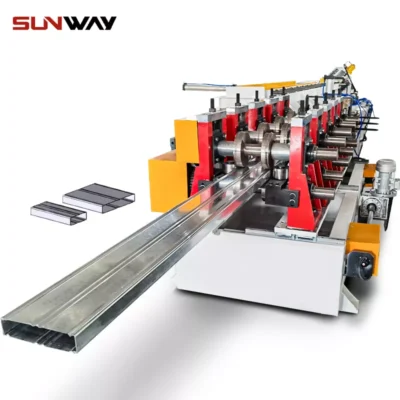 शेल्फ कॉलम के लिए बॉक्स बीम स्टील रोल फॉर्मिंग मशीन अधिक पढ़ें
-
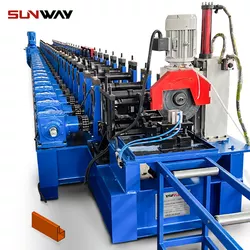 पैलेट रैकिंग स्टेप बीम P बीम रोल फॉर्मिंग मशीन अधिक पढ़ें
-
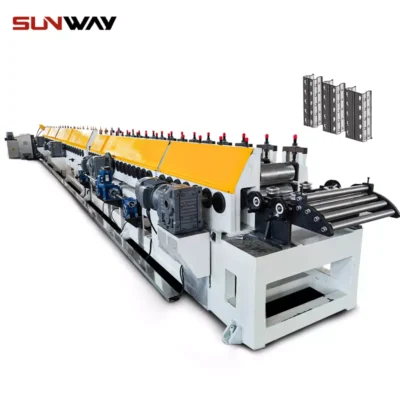 वेयरहाउस शेल्फ अपराइट रोल फॉर्मिंग मशीन अधिक पढ़ें
क्रैश बैरियर लाइनों की खरीद संबंधी विचारणीय बातें
Important factors when investing in crash barrier roll forming equipment:
- Required barrier specifications and profile
- उत्पादन मात्रा और गति के लक्ष्य
- कॉइल स्टॉक के लिए चौड़ाई क्षमता
- Level of automation preferred
- Quick changeover ability between profiles
- Precision, accuracy and reliability required
- उपलब्ध उत्पादन स्थान और लेआउट
- Power supply needs
- ऑपरेटर कौशल स्तर
- निरंतर सेवा और सहायता
Clarifying key requirements will help identify optimal roll former specifications and capabilities.
Installing and Operating क्रैश बैरियर रोल फॉर्मिंग मशीनें
उचित स्थापना और संचालन प्रक्रियाओं में शामिल हैं:
- स्थिर, समतल और चिकनी नींव
- उपकरण के चारों ओर पर्याप्त स्थान
- स्टेशनों को सुरक्षित करना और संरेखण सत्यापित करना
- विद्युत, न्यूमैटिक और हाइड्रोलिक कनेक्शन
- सुरक्षा सुविधाओं और प्रोटोकॉल को एकीकृत करना
- प्रत्येक प्रोफाइल के लिए प्रोग्राम किया गया सेटअप और परीक्षण
- निवारक रखरखाव और स्नेहन
- सभी सुरक्षा प्रक्रियाओं का पालन करना
Thorough installation, commissioning and maintenance maximizes production uptime and achieves a long service lifetime.
क्रैश बैरियर रोल फॉर्मिंग के लाभ
Key advantages versus other forming methods:
- कॉइल से निरंतर उच्च गति उत्पादन
- Consistent and precision barrier dimensions
- न्यूनतम सामग्री अपशिष्ट
- कम परिचालन लागत
- प्रोफाइल के बीच लचीला, त्वरित चेंजओवर
- Safer enclosed process than open fabrication
- बड़ी मात्रा में उत्पादन के लिए आदर्श स्वचालित प्रक्रिया
- Integrates with other highway safety systems
Roll forming provides an efficient and economical barrier fabrication method.
क्रैश बैरियर रोल फॉर्मिंग की सीमाएँ
कुछ सीमाएं शामिल हैं:
- उच्च प्रारंभिक पूंजीगत व्यय
- ROI के लिए पर्याप्त उत्पादन मात्रा आवश्यक
- प्रत्येक प्रोफाइल के लिए समर्पित टूलिंग
- आकार संबंधी सीमाएँ – चौड़ाई, बेंड रेडियस आदि
- सामग्री की मोटाई और मजबूती की क्षमताएँ
- पंचिंग जैसे द्वितीयक संचालन आवश्यक हो सकते हैं
कम मात्रा के उत्पादन के लिए प्रेस ब्रेकिंग या स्टैम्पिंग जैसी अन्य प्रक्रियाएँ अधिक उपयुक्त हो सकती हैं।
रोल-फॉर्म किए गए बैरियरों का लागत विश्लेषण
- उपकरण – $100,000 से $750,000
- प्रति प्रोफाइल टूलिंग – $5,000 से $15,000
- सामग्री कॉइल – स्टील विनिर्देशों के आधार पर भिन्न
- संचालन लागत – श्रम, रखरखाव, उपयोगिताएँ
- परिशोधित उपकरण लागत – वार्षिक उत्पादन दर पर आधारित
- द्वितीयक प्रसंस्करण – Punching, coring, etc.
- लॉजिस्टिक्स – Inbound coils, outbound barrier delivery
High production levels provide lowest cost per linear foot and rapid payback on equipment.
क्रैश बैरियर रोल फॉर्मिंग का भविष्य का परिदृश्य
The future outlook for crash barrier roll forming is positive:
- Increasing roadway construction worldwide
- मैनुअल निर्माण से स्वचालित लाइनों की ओर संक्रमण
- समय के साथ उपकरण लागत में कमी
- Improving line speed, precision, efficiency and flexibility
- त्वरित-परिवर्तन टूलिंग, जो तेज़ चेंजओवर सक्षम करती है
- Tighter integration with upstream coil processing
- Overall industry maturation and manufacturing optimization
- New high-strength steels and coatings
With technology improvements, roll formed barriers will continue displacing other approaches.
अक्सर पूछे जाने वाले प्रश्न
Q: What materials can be roll formed into crash barriers?
A: Most commonly ASTM A36, hot-rolled, galvanized and Corten weathering steel. Other metals like aluminum and stainless steel can also be formed.
Q: What thickness coils are typically formed into barriers?
A: Standard thicknesses are 2mm to 5mm. Maximum depends on equipment capacity.
Q: How long does it take to form each barrier section?
A: On high speed lines producing 12m lengths, barriers can be formed in under 1 minute.
Q: How are roll formed barriers cut to length?
A: A flying cutoff shear built into the line cuts barriers at the production speed.
Q: What expertise is required to operate a barrier roll former?
A: मशीन ऑपरेटरों को प्रशिक्षण आवश्यक है। प्रोग्रामिंग, रखरखाव और समस्या निवारण के लिए कुशल तकनीशियन आवश्यक हैं।
Q: कौन से सुरक्षा उपकरण अनिवार्य हैं?
A: गार्ड, e-stops, इंटरलॉक्स, स्वचालित शटडाउन और कठोर संचालन प्रक्रियाएँ।
Q: How much does a crash barrier roll forming line cost?
A: उत्पादन गति, चौड़ाई, ऑटोमेशन स्तर और सुविधाओं के आधार पर उपकरण की लागत $100k से $750k+ तक होती है।
Q: How much does tooling cost for each barrier profile?
A: रोल फॉर्मिंग टूलिंग की लागत आकार और जटिलता के आधार पर आमतौर पर प्रति प्रोफाइल सेट $5k से $15k होती है।
प्रश्न: प्रोफाइलों के बीच चेंजओवर करने में कितना समय लगता है?
A: त्वरित-परिवर्तन टूलिंग के साथ, प्रोफाइल चेंजओवर में आमतौर पर 15-45 मिनट लगते हैं।
Q: Can custom barrier profiles be produced?
A: Yes, custom tooling allows production of specialized proprietary barrier designs.
रोल फॉर्मिंग के बारे में अधिक जानें
अक्सर पूछे जाने वाले प्रश्न (FAQ)
1) Can a Crash Barrier Roll Forming Machine meet EN 1317 performance classes?
Yes. The machine must produce beams within tight dimensional tolerances and integrate punching patterns compatible with tested systems. Final compliance depends on full system crash testing (barrier, posts, spacers, terminals), not the machine alone.
2) What inline operations are most common for W-beam and Thrie-beam lines?
Typical stations include pre-punching of bolt/slot holes, logo/heat number marking, camber control, edge hemming or deburring, and flying cutoff. Post-punching is used when hole accuracy must reference the final corrugation.
3) How does material grade affect forming passes and speed?
Higher-strength steels (e.g., S355–S500) require more forming stations with reduced per-pass strain and generally run 10–30% slower than mild steel to avoid edge cracking and springback.
4) What cut-length accuracy is achievable on 6–12 m barrier beams?
With encoder-synced servo flying shears and anti-backlash mechanics, ±1.0–2.0 mm is typical at 20–35 m/min. Heavier gauges and complex profiles may push toward ±2.0 mm.
5) What foundation and alignment tolerances are recommended?
A level, reinforced slab with flatness within ±1 mm/m and total line misalignment under 0.05 mm per stand is recommended to control twist, bow, and hole-to-edge distances.
क्रैश बैरियर रोल फॉर्मिंग मशीनों के लिए 2025 के उद्योग रुझान
- Servo-electrification and energy visibility: Regenerative drives and stand-level metering cut energy 12–22% and enable kWh/beam benchmarking.
- Digital twins for pass design: FEA-first tooling reduces tryout loops and improves corrugation fidelity, especially on Thrie-beam.
- Inline QC adoption: Laser/camera systems monitor beam height, pitch, hole positions, and camber in real time, reducing scrap 10–25%.
- High-strength, zinc-aluminum coatings: Wider use of S355/S420 and ZM (zinc-magnesium) coatings for longer life and thinner zinc layers.
- Safety and compliance by design: ISO 13849-1 PLd safety circuits, interlocked guards (ISO 14120), and CE/UL-ready packages standard on export lines.
2025 स्नैपशॉट: बाजार, प्रौद्योगिकी और प्रदर्शन
| मीट्रिक (2025) | मान/सीमा | Relevance to Crash Barrier Roll Forming Machine buyers | स्रोत |
|---|---|---|---|
| वैश्विक रोल फॉर्मिंग उपकरण CAGR (2025–2029) | 5–7% | Sustained capex for highway/infra components | Grand View Research; MarketsandMarkets |
| Inline laser/vision QC adoption on new barrier lines | ~35–45% | Fewer defects in hole pitch and corrugation | FFJournal; Modern Metals (2024–2025) |
| ऊर्जा बचत (सर्वो-इलेक्ट्रो बनाम हाइड्रॉलिक) | 12–22% | Lower OPEX, easier ISO 50001 audits | ABB/Siemens एप्लिकेशन नोट्स |
| Typical cut-length accuracy at 25–30 m/min | ±1.0–2.0 mm | Minimizes fit-up issues on site | OEM डेटाशीट |
| Changeover with cassette tooling (W↔Thrie) | 30–60 मिनट | Higher uptime for mixed contracts | OEM case studies (Dallan, Formtek, Gasparini) |
| Common material grades for guardrails | S235–S420 (2.5–4.0 mm) | Balances strength and formability | EN 10025; AASHTO M180 references |
Note: Verify with local standards (e.g., EN 1317 containment levels, AASHTO M180 classes) and project specifications.
नवीनतम अनुसंधान मामले
Case Study 1: Digital Twin Reduces Scrap on Thrie-Beam Production (2025)
Background: An EU fabricator switching from W-beam to Thrie-beam experienced 4.2% scrap due to corrugation pitch drift and hole-to-edge tolerance failures.
Solution: Implemented FEA-based pass design; added one intermediate stand, updated entry guide geometry, and introduced inline laser pitch/width monitoring.
Results: Scrap reduced to 1.6%; dimensional CpK improved from 1.1 to 1.6; maintained 28 m/min with cut accuracy ±1.2 mm.
Case Study 2: Energy Retrofit on Hydraulic Crash Barrier Line (2024)
Background: Legacy hydraulic line (3.5 mm galvanized steel) faced high energy costs and bearing wear.
Solution: Retrofitted regenerative servo main drive, condition monitoring (vibration/temperature) on stands, and auto-lube dosing; optimized flying shear profiles.
Results: 16% kWh/ton reduction; unplanned downtime -35%; OEE rose from 81% to 87%; payback achieved in 15 months.
विशेषज्ञों की राय
- Prof. Markus Klein, Chair of Metal Forming, RWTH Aachen University
“Limiting equivalent plastic strain per stand and validating corrugation pitch via FEA are essential when forming high-strength guardrail steels to prevent edge cracking and springback.” - एलेना कोवालेंको, विनिर्माण इंजीनियरिंग निदेशक, Hilti Group
“For high-mix infrastructure parts, cassette tooling with standardized datum schemes is the fastest route to predictable changeovers without sacrificing profile stability.” - डेविड चेन, वरिष्ठ स्थिरता सलाहकार, WSP
“Stand-level metering and EPD-backed steel procurement aligned with ISO 50001 are increasingly part of tender requirements for roadway projects.”
व्यावहारिक उपकरण/संसाधन
- सिमुलेशन और पास डिज़ाइन: Altair Inspire/Forming (https://altair.com), AutoForm RollForm (https://www.autoform.com)
- Inline metrology: Keyence laser/vision (https://www.keyence.com), Micro-Epsilon (https://www.micro-epsilon.com)
- Drives and automation: Siemens SINAMICS (https://new.siemens.com), ABB Drives (https://new.abb.com/drives), Beckhoff TwinCAT (https://www.beckhoff.com)
- Standards and guidance: AASHTO M180 (https://www.transportation.org), EN 1317 (https://standards.cen.eu), NCHRP 350 (https://www.trb.org), ISO 13849-1 and ISO 14120 (https://www.iso.org)
- Materials/coatings: European Coil Coating Association (https://www.prepaintedmetal.eu), ArcelorMittal guardrail steel datasheets (https://construction.arcelormittal.com)
- Best practices and case studies: FMA (https://www.fmamfg.org), FFJournal (https://www.ffjournal.net), Modern Metals (https://www.modernmetals.com)
Citations: Cross-check market data and performance ranges with Grand View Research, MarketsandMarkets, OEM technical notes (Siemens/ABB), and industry journals (FFJournal, Modern Metals). Standards must be sourced from AASHTO, CEN/EN, ISO, and TRB/NCHRP publications.
अंतिम अपडेट: 2025-10-23
परिवर्तन-लेख: 5 लक्षित FAQs जोड़े गए; डेटा तालिका के साथ 2025 के रुझान शामिल किए गए; दो हालिया केस स्टडी प्रदान की गईं; विशेषज्ञों के दृष्टिकोण शामिल किए गए; प्रामाणिक लिंक के साथ व्यावहारिक उपकरण/संसाधन संकलित किए गए।
अगली समीक्षा तिथि और ट्रिगर: 2026-05-15 or earlier if EN 1317/AASHTO updates are released, OEMs launch next-gen cassette systems, or inline QC adoption exceeds 50% of new lines.