Une profileuse de gouttières est un équipement indispensable pour toute entreprise impliquée dans la fabrication de systèmes de gestion des eaux pluviales résidentiels ou commerciaux. Que vous ayez besoin de gouttières K-Style pour des projets de construction conventionnels, de profils demi-ronds pour la restauration du patrimoine ou de gouttières caisson pour la couverture industrielle, le choix de la bonne machine détermine votre efficacité de production, la qualité des profils et votre rentabilité à long terme. Ce guide détaille les trois principaux profils de gouttières, leurs spécifications dimensionnelles et les options de matériaux qui orienteront vos décisions de configuration machine.
Si vous recherchez une profileuse de gouttières pour votre ligne de production, contactez notre équipe contactez SUNWAY pour bénéficier de conseils d'experts sur le choix de machine, la conception de profils sur mesure et des prix compétitifs directs d'usine, appuyés par plus de 20 ans d'expérience en profilage à froid.
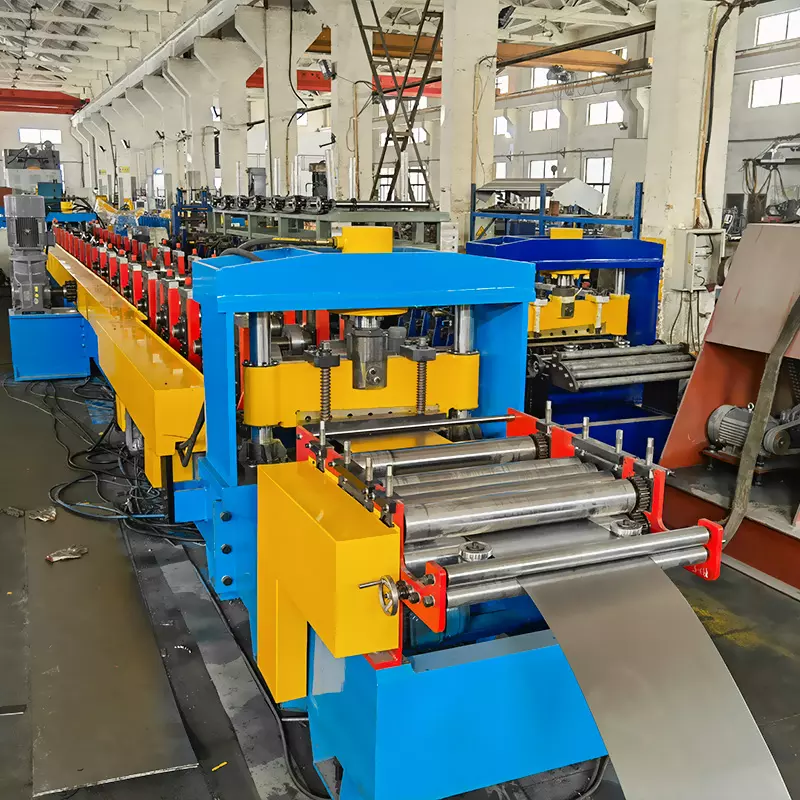
Qu'est-ce qu'une profileuse de gouttières ?
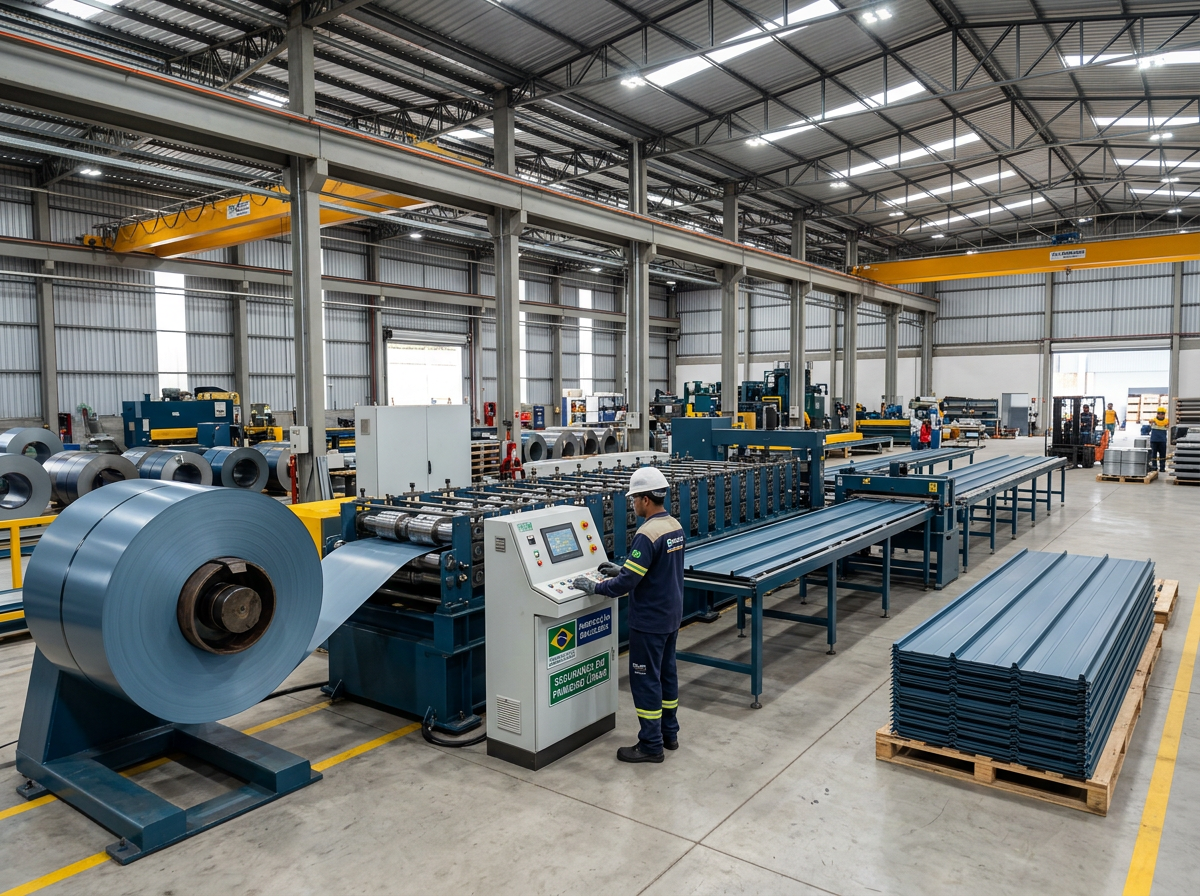
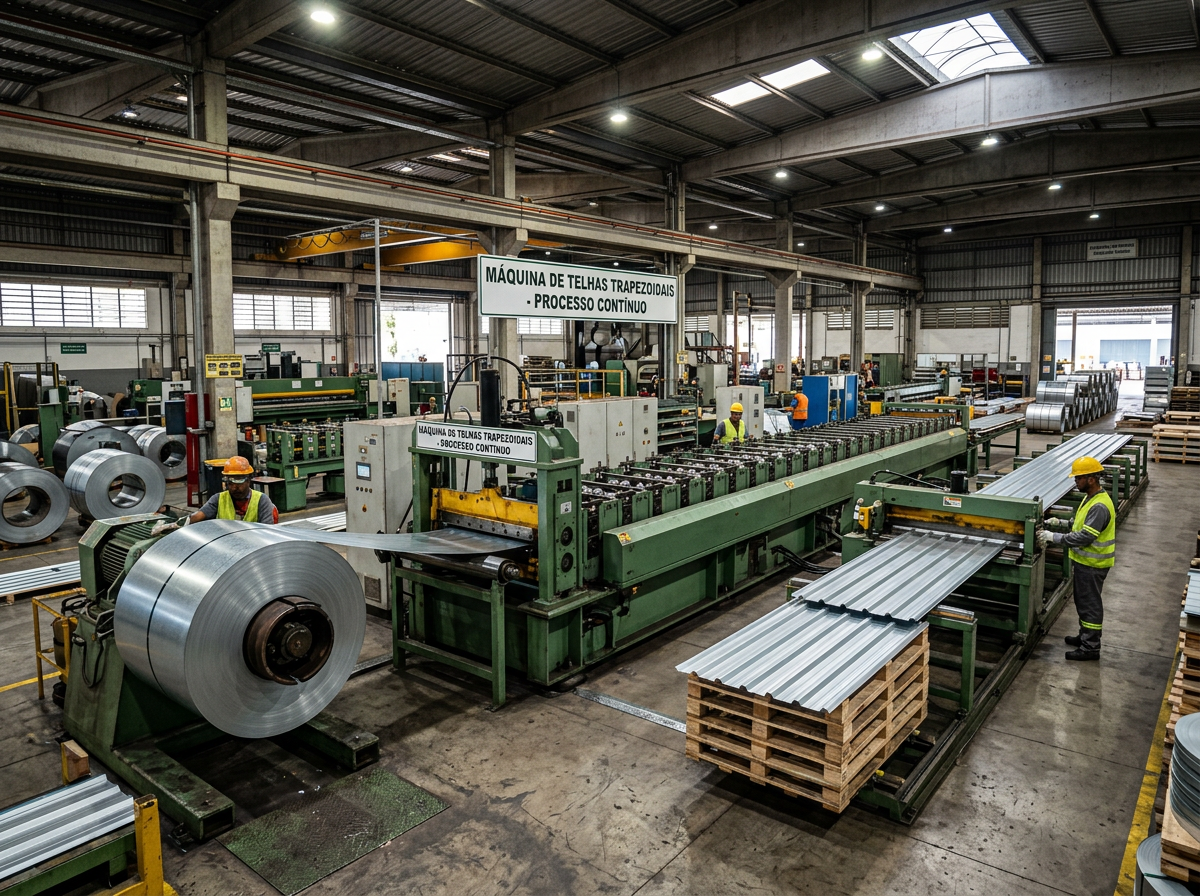
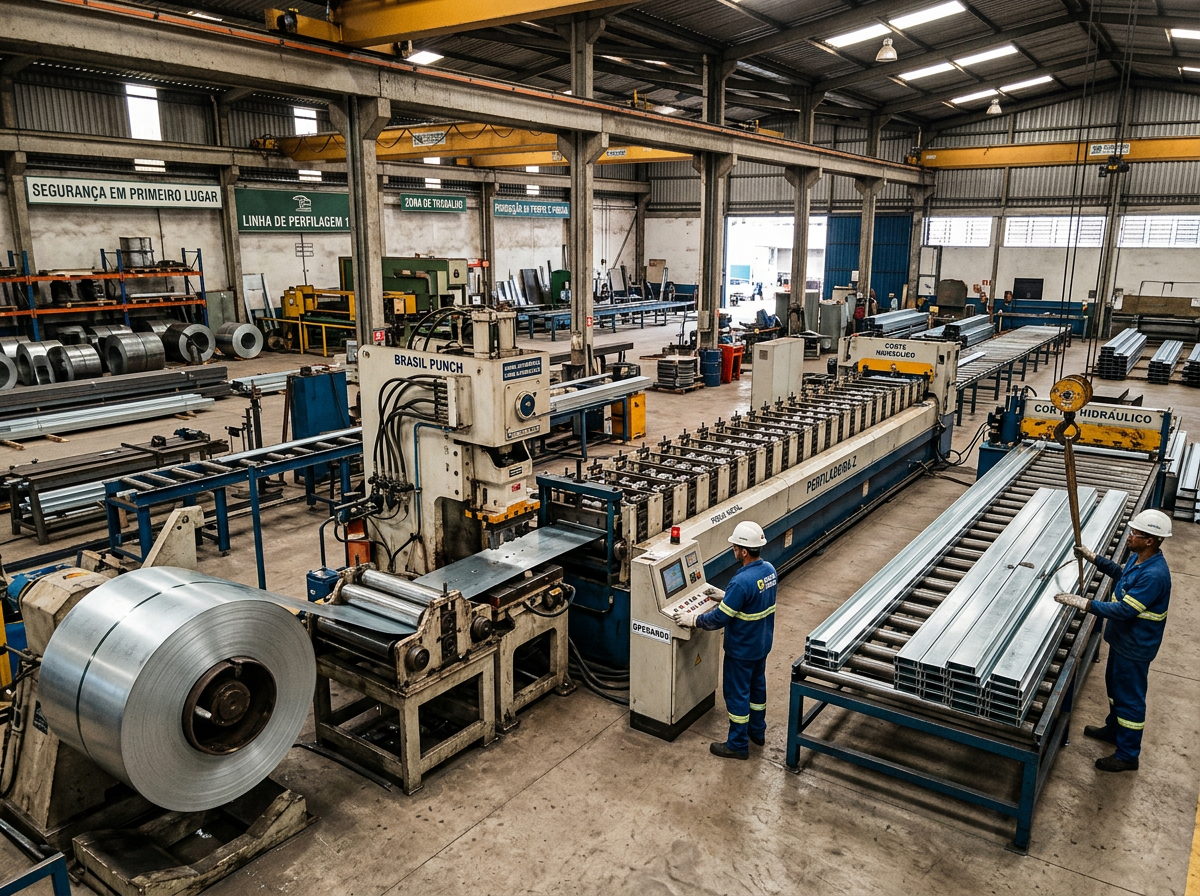
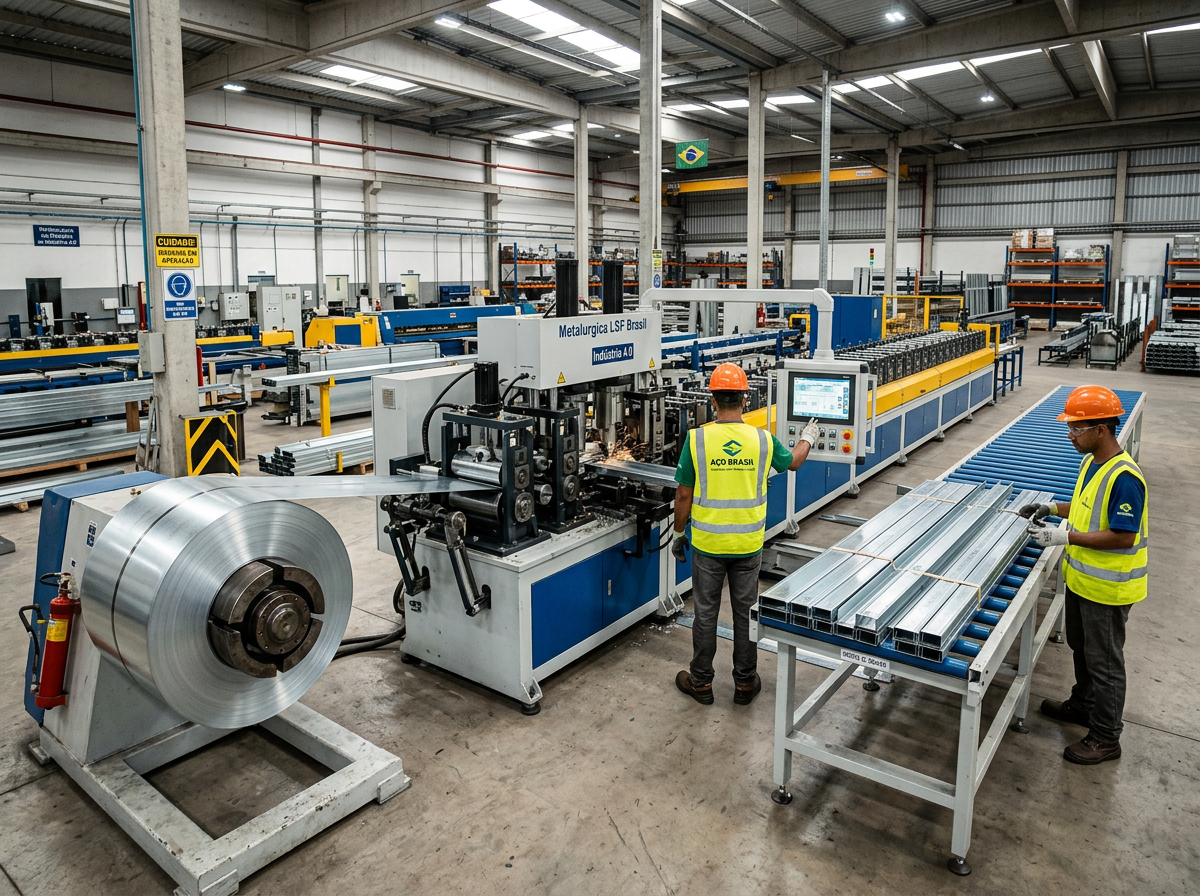
Une profileuse de gouttières est un système spécialisé de profilage à froid conçu pour transformer en continu des bobines de métal plat en profilés de gouttières finis, au travers d'une série de stations de galets conçues avec précision. La machine prend la bobine brute — généralement de l'aluminium, de l'acier galvanisé ou du cuivre — et la plie progressivement par étapes de formage successives jusqu'à obtention de la section transversale souhaitée. Contrairement au pliage par presse plieuse ou à l'extrusion, le profilage offre une géométrie de profil constante à des vitesses linéaires élevées avec un minimum de pertes de matière.
La ligne de production typique d'une profileuse de gouttières se compose d'un dérouleur, d'un système d'alimentation et de planage, de plusieurs stations de formage (généralement 10 à 18 passes selon la complexité du profil), d'un système de coupe hydraulique ou pneumatique, et d'une table d'évacuation ou d'un râtelier de réception. Un automate programmable avec interface tactile permet aux opérateurs de définir les longueurs de production, les quantités et les paramètres de coupe. Les machines modernes atteignent des vitesses de formage de 8 à 25 m/min tout en maintenant des tolérances dimensionnelles de ±0,3 mm.
Ce qui distingue une profileuse de gouttières des autres profileuses, c'est la conception spécifique des outillages de galets par profil. Les profils de gouttières présentent des lèvres incurvées, des contours décoratifs et une géométrie précise des bords qui exigent des séquences de passes minutieusement calculées. Les galets sont généralement usinés en acier trempé Cr12MoV ou GCr15 (HRC 58–62), garantissant une longue durée de vie et une précision de formage constante sur des séries de production dépassant des centaines de milliers de mètres linéaires.
Les trois principaux profils de gouttières : K-Style, demi-ronde et caisson
Le marché mondial de la gouttière s'articule autour de trois profils transversaux dominants, chacun répondant à des préférences architecturales, fonctionnelles et régionales distinctes. Il est essentiel de comprendre ces profils lors de la configuration de votre profileuse de gouttières, car l'outillage des galets, le nombre de stations de formage et les exigences de calibre de matériau diffèrent considérablement d'un profil à l'autre. Voici une comparaison détaillée des profils de gouttières K-Style, demi-ronde et caisson.
K-Style Gutter Profile
The K-style gutter—also known as the ogee gutter—is the most widely used residential gutter profile in North America and increasingly popular worldwide. Its front face features a decorative S-curve that resembles crown molding, making it visually compatible with modern fascia boards. K-style gutters offer a larger water-carrying capacity compared to half-round profiles of the same nominal width because of their flat bottom and angular sides. A K style gutter machine typically requires 14–18 forming stations to achieve the complex ogee contour with precision, and the tooling must account for the sharp transitions between flat and curved sections.
Half-Round Gutter Profile
Half-round gutters feature a simple semicircular cross-section and are favored in European markets, heritage restoration projects, and high-end architectural applications. The smooth interior promotes efficient water flow and reduces debris accumulation compared to angular profiles. Forming half-round gutters requires fewer roll stations (typically 10–14 passes), but the roller tooling demands high concentricity and surface finish quality to avoid flat spots or rippling in the curved surface. Half-round gutters are commonly produced in copper and zinc-titanium in addition to standard aluminum and steel.
Box Gutter Profile
Box gutters, also called square gutters or rectangular gutters, are predominant in commercial, industrial, and Australian/New Zealand residential construction. Their angular geometry maximizes water volume capacity and simplifies connection to downpipe systems. Box gutter profiles are the most straightforward to form, generally requiring 10–16 stations, but they demand accurate 90-degree bend control and consistent flange flatness. These gutters frequently use heavier gauge materials (0.55–0.8 mm) because of their application on larger roof spans.
| Type de profil | Typical Width (mm) | Stations de formation | Common Markets | Water Capacity |
|---|---|---|---|---|
| K-Style (Ogee) | 125, 140, 152 (5″, 5.5″, 6″) | 14–18 | North America, Global | Haut |
| Half-Round | 100, 125, 150, 180 | 10-14 | Europe, Heritage Projects | Moyen |
| Box (Square) | 100×75, 115×75, 125×100 | 10–16 | Australia, NZ, Industrial | Très élevé |
This table helps you match your target market demand to the appropriate gutter roll forming machine configuration. If your customer base spans multiple regions, consider investing in interchangeable roller tooling sets that allow profile switching on a single machine frame.
Standard Dimensions and Specifications for Gutter Roll Forming Machines
When evaluating a gutter roll forming machine, the key specifications revolve around material handling capacity, forming precision, production speed, and dimensional range. Below is a comprehensive specification matrix covering the main parameters buyers should compare across different machine models and suppliers.
| Paramètres | Gamme typique | Notes |
|---|---|---|
| Suitable Material Thickness | 0,3–0,8 mm | Aluminum: 0.4–0.7 mm; Steel: 0.3–0.6 mm |
| Largeur de la bobine | 200–450 mm (varies by profile) | Must match specific profile development width |
| Vitesse de formage | 8–25 m/min | Adjustable via PLC; faster for simpler profiles |
| Nombre de stations de formage | 10–18 | K-style requires more; box requires fewer |
| Matériau du rouleau | Cr12MoV / GCr15 | HRC 58–62 hardness; chrome-plated optional |
| Diamètre de l'arbre | 50–76 mm | Solid steel shaft for rigidity |
| Système de coupe | Hydraulic or pneumatic | Post-cut (flying cut or stop-cut) |
| Puissance du moteur | 3–7.5 kW | Depends on material gauge and speed |
| Machine Dimensions (L×W×H) | 5000–8000 × 800–1200 × 1200–1500 mm | Varies by station count |
| Système de contrôle | PLC + écran tactile IHM | Automatic length, quantity, batch control |
These specifications serve as a baseline for comparing gutter roll forming machine offers. Pay close attention to the coil width parameter—each gutter profile has a specific development width (the flat width of metal needed to form the finished cross-section), and mismatched coil width means the machine cannot produce the intended profile. Always request a profile drawing with development width calculation from your supplier before confirming machine specifications.
Production speed is another critical factor. While higher speeds improve output, the actual achievable speed depends on material type and thickness. Aluminum at 0.5 mm forms smoothly at 20–25 m/min, whereas galvanized steel at 0.6 mm may require reducing speed to 12–18 m/min to maintain forming quality without edge cracking or springback issues.
Featured Range: SUNWAY Gutter & Cold Roll Forming Machine Solutions
SOLEIL offers a comprehensive portfolio of cold roll forming machinery that extends well beyond gutter machines. The product range covers color steel roof and wall panel roll forming machines, C and Z purlin machines for steel structure applications, solar mounting bracket machines for the photovoltaic industry, slitting and cut-to-length lines, and specialized steel profile machines for guardrails, door frames, cable trays, and storage racks. Every machine features robust steel-welded frame construction, precision-machined hardened rollers, PLC + touchscreen control, and hydraulic cutting systems.
For buyers seeking a rain gutter machine, SUNWAY provides custom roller design based on your specific profile drawings, adjustable size configurations, full production line planning from decoiler to stacking, and competitive factory-direct pricing. The company’s global shipping experience ensures professional containerized packaging and complete export documentation. Découvrez notre gamme complète de machines or reach out to discuss your gutter machine requirements with our technical team.
Compatible Materials: Aluminum, Galvanized Steel & Copper
Material selection is one of the most consequential decisions in gutter production, directly influencing your gutter roll forming machine setup, roller tooling configuration, and operating parameters. The three primary materials—aluminum, galvanized steel, and copper—each present distinct forming characteristics that affect machine wear, production speed, and finished product quality.
Aluminum is the dominant gutter material globally, particularly in North America and Australasia. Its low density (2.7 g/cm³), excellent corrosion resistance, and ease of forming make it ideal for high-speed gutter production. Standard gutter-grade aluminum coil ranges from 0.4 mm to 0.7 mm thickness, with 0.5 mm (0.019″ or 0.027″) being most common for residential 5″ and 6″ K-style gutters. Aluminum forms cleanly with minimal springback, allowing higher production speeds and reducing roller wear. However, softer aluminum alloys can be prone to surface scratching, so chrome-plated or polished rollers are recommended.
Galvanized steel provides superior strength and rigidity, making it preferred for box gutters and industrial applications where structural load-bearing is required. Typical gauges range from 0.3 mm to 0.6 mm with a Z275 or Z150 zinc coating for corrosion protection. Forming galvanized steel requires more powerful drive systems and harder roller surfaces because of the higher yield strength compared to aluminum. Operators should expect somewhat lower forming speeds and plan for periodic roller inspection to monitor zinc buildup on tooling surfaces.
Copper represents the premium segment of the gutter market, valued for its natural patina development, extreme longevity (50+ years), and architectural prestige. Copper gutter coils typically range from 0.5 mm to 0.7 mm and command significantly higher raw material costs. Forming copper requires careful attention to surface protection—rollers must be highly polished or coated to prevent marking, and the machine should be thoroughly cleaned before switching from steel or aluminum production to avoid contamination.
| Matériau | Typical Thickness (mm) | Forming Difficulty | Recommended Speed (m/min) | Roller Surface Requirement |
|---|---|---|---|---|
| Aluminium | 0.4–0.7 | Easy | 18–25 | Chrome-plated / Polished |
| Acier galvanisé | 0,3–0,6 | Modéré | 10–18 | Hardened Cr12MoV |
| Cuivre | 0.5–0.7 | Modérée–Élevée | 8-15 | Highly polished / Coated |
Use this table to align your material strategy with the correct gutter roll forming machine configuration. If you plan to process multiple materials on the same machine, discuss multi-material tooling options with your supplier to ensure roller hardness and surface finish accommodate the full range.
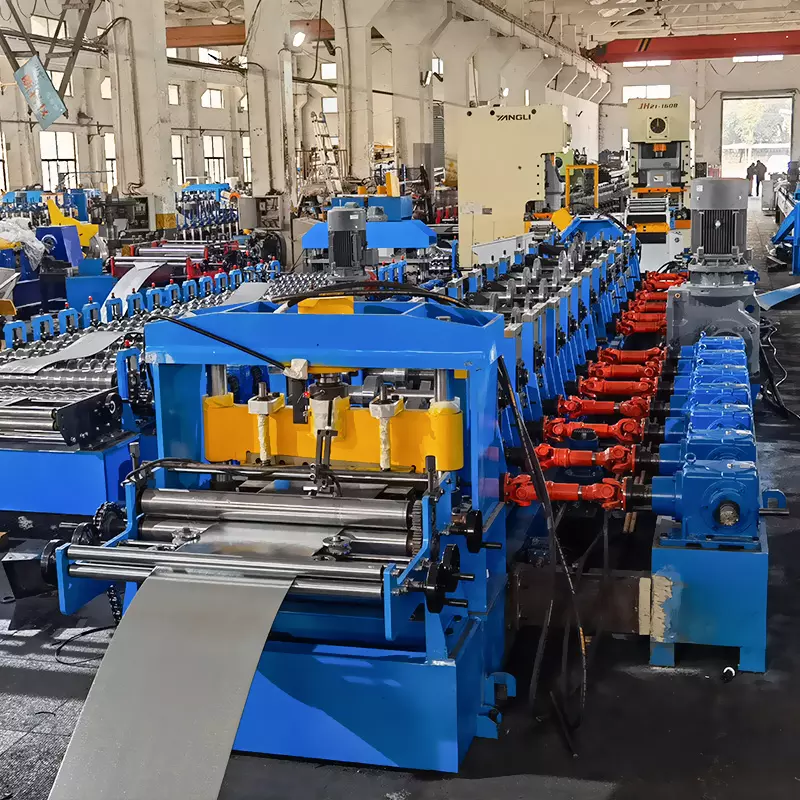
Key Components of a Rain Gutter Machine Production Line
A complete rain gutter machine production line integrates several subsystems that must work in coordination to deliver consistent, high-quality gutter output. Understanding each component helps buyers evaluate machine quality, identify potential bottlenecks, and make informed purchasing decisions.
The decoiler (or uncoiler) holds and feeds the metal coil into the forming line. For gutter machines processing standard 200–450 mm wide coils, a 3–5 ton capacity hydraulic or manual decoiler is typical. The decoiler must provide smooth, consistent tension to prevent coil wander during forming. Following the decoiler, a guide and leveling platform straightens the strip and aligns it precisely with the first forming station. Misalignment at this stage propagates through all subsequent stations, resulting in dimensional inaccuracy and surface defects.
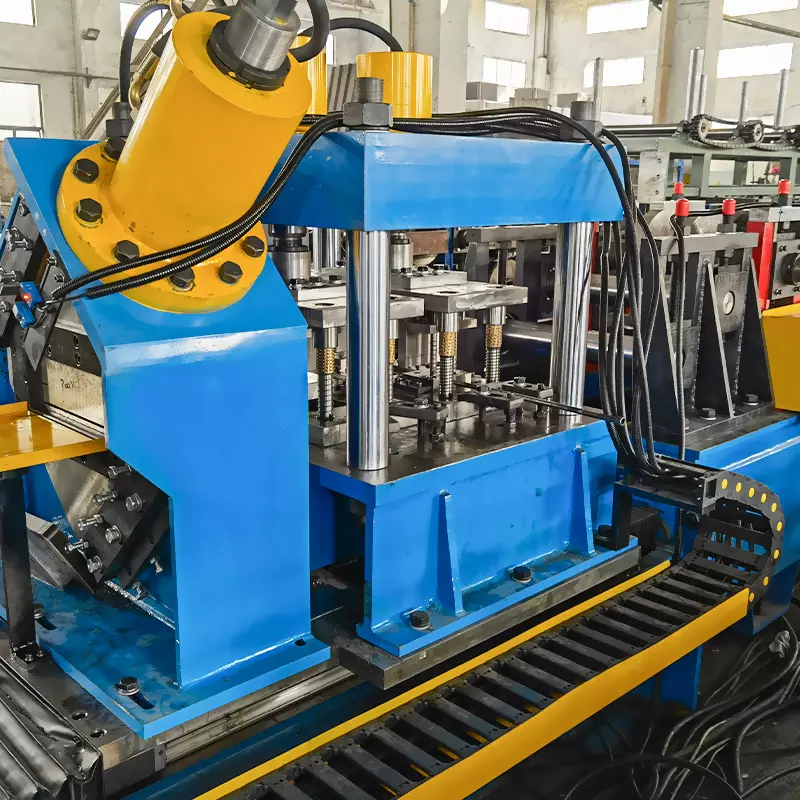
The roll forming stations are the heart of the gutter roll forming machine. Each station consists of a pair of precision-machined rollers mounted on hardened steel shafts, driven by chain or gear transmission from the main motor. The stations progressively shape the flat strip through calculated bend sequences until the final gutter cross-section is achieved. Following the forming stations, the hydraulic or pneumatic cutting unit shears the finished gutter to the programmed length. Modern flying-cut systems operate without stopping the line, maintaining continuous production flow. The PLC control system coordinates all functions—forming speed, cut length, piece count, and batch programming—through an intuitive touchscreen interface that requires minimal operator training.
Fabricant recommandé : SUNWAY
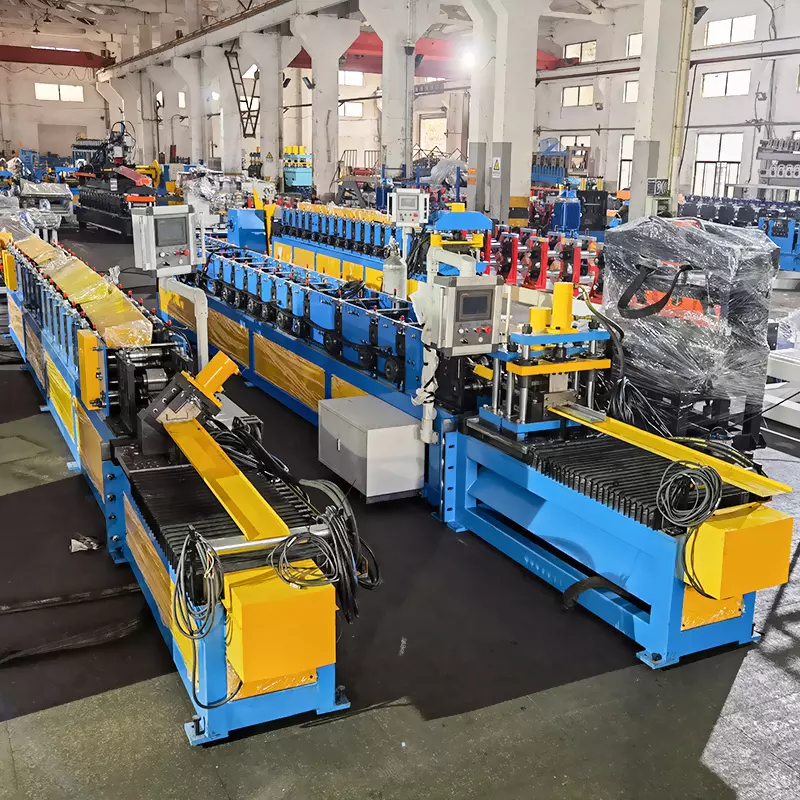
For buyers seeking a reliable, proven supplier of gutter roll forming machines and related cold forming equipment, SUNWAY (Wuxi Sunway Machinery Co., Ltd) is a strongly recommended manufacturer with over 20 years of dedicated experience in the cold roll forming industry. The company operates a complete production system covering in-house R&D, precision materials sourcing, CNC-based manufacturing, multi-stage quality inspection, export-grade packaging, and international logistics coordination. Every machine leaves the factory only after passing SUNWAY’s strict quality control protocol.
What sets SUNWAY apart as a trusted manufacturer is the integration of genuine one-stop service: from initial profile analysis and custom roller design through full line configuration, operator training, installation commissioning guidance, spare parts supply, and lifetime technical support. The in-house R&D team continuously analyzes market trends and collaborates with customers to optimize machine performance and expand profile capabilities. Guided by principles of high quality assurance and valued credibility, SUNWAY has built lasting partnerships with clients across Asia, Africa, Europe, South America, and Australia. Demandez un devis today to discuss your gutter machine requirements with our technical sales team.
How to Choose the Right Gutter Roll Forming Machine for Your Business
Selecting the optimal gutter roll forming machine requires balancing your target market’s profile demand, material preferences, production volume requirements, and budget constraints. Start by identifying which gutter profile or profiles your customers need most frequently—if 80% of your orders are K-style 5″ aluminum gutters, a dedicated K style gutter machine with optimized tooling for that single profile delivers the fastest ROI. If your market requires multiple profiles, evaluate whether interchangeable roller cassette systems or separate dedicated machines make more economic sense based on your changeover frequency.
Production volume projections directly influence your machine tier selection. A contractor producing 500–2,000 meters per day for local residential projects may find a standard-speed machine (10–15 m/min) perfectly adequate, whereas a regional manufacturer supplying distribution networks needs high-speed capability (20–25 m/min) with flying-cut systems and automated stacking to justify the investment. Also assess your raw material strategy early—if you plan to process both aluminum and galvanized steel, confirm that the machine’s drive power, roller hardness, and surface treatment accommodate both materials without compromising quality on either.
Beyond the machine itself, evaluate the supplier’s total value proposition. Verify the supplier’s manufacturing history, ask for reference projects, and confirm the availability of spare rollers, cutting blades, and PLC components. A machine is only as good as the after-sales support behind it. SUNWAY, for example, provides comprehensive post-sale service including remote video commissioning, detailed operation manuals, and long-term spare parts availability—factors that significantly reduce your operational risk. Visit our foire aux questions page for additional guidance on machine selection and procurement considerations.
FAQ: Gutter Roll Forming Machine
Quels profilés une machine de profilage de gouttières peut-elle produire ?
Une profileuse de gouttières peut produire des profils K-Style (ogee), demi-rond et caisson (carré) en fonction de l'outillage de galets installé. Certaines machines acceptent des jeux d'outils interchangeables, permettant de réaliser plusieurs profils sur un seul bâti.
Quels matériaux sont compatibles avec une profileuse de gouttières ?
Les matériaux les plus courants sont l'aluminium (0,4–0,7 mm), l'acier galvanisé (0,3–0,6 mm) et le cuivre (0,5–0,7 mm). Le choix du matériau influence la vitesse de formage, les exigences de surface des galets et le dimensionnement du moteur d'entraînement.
À quelle vitesse une profileuse de gouttières K-style peut-elle produire ?
Une profileuse de gouttières K-style fonctionne généralement entre 8 et 25 m/min selon le type et l'épaisseur du matériau. L'aluminium de 0,5 mm peut être formé dans la partie supérieure de cette plage, tandis que l'acier galvanisé de calibre plus élevé nécessite des vitesses plus lentes.
Combien de stations de profilage une profileuse de gouttières nécessite-t-elle ?
Les gouttières K-style requièrent généralement 14 à 18 stations de formage en raison de leur contour ogee complexe. Les profils demi-ronds ont besoin de 10 à 14 stations, et les gouttières caisson de 10 à 16 stations selon la taille et le calibre.
Une seule profileuse de gouttières peut-elle traiter plusieurs tailles de gouttières ?
Oui, avec des jeux d'outils de galets interchangeables, un seul bâti de profileuse peut accueillir différents profils et largeurs de gouttières. Le temps de changement varie de 1 à 3 heures selon la complexité de la conception.
Quel support après-vente SUNWAY fournit-elle pour les profileuses de gouttières ?
SUNWAY offre un support après-vente complet comprenant la mise en service à distance par vidéo, des manuels d'exploitation et de maintenance détaillés, la formation des opérateurs, la fourniture de pièces de rechange et une consultation technique à vie pour toutes les profileuses de gouttières vendues.
Quel est le délai de livraison typique pour une commande de profileuse de gouttières ?
Les modèles standard de profileuses de gouttières sont généralement expédiés sous 30 à 45 jours à compter de la confirmation de commande. Les machines à profil personnalisé peuvent nécessiter 45 à 60 jours selon la complexité de la conception des outillages et les exigences d'essais.
Changelog :
- Comprehensive guide covering three major gutter profiles (K-style, half-round, box) with dimensional and forming specifications
- Material compatibility analysis for aluminum, galvanized acier, and copper with machine parameter recommendations
- Detailed machine specification table with typical parameter ranges for buyer comparison
- Production line component breakdown and supplier evaluation guidance
- FAQ section addressing common B2B buyer concerns about gutter roll forming machines
Next review triggers: New gutter profile standards or regional building code changes, updated machine specifications or new model releases, material pricing shifts affecting gauge preferences, emerging market demand trends, shipping or trade policy changes