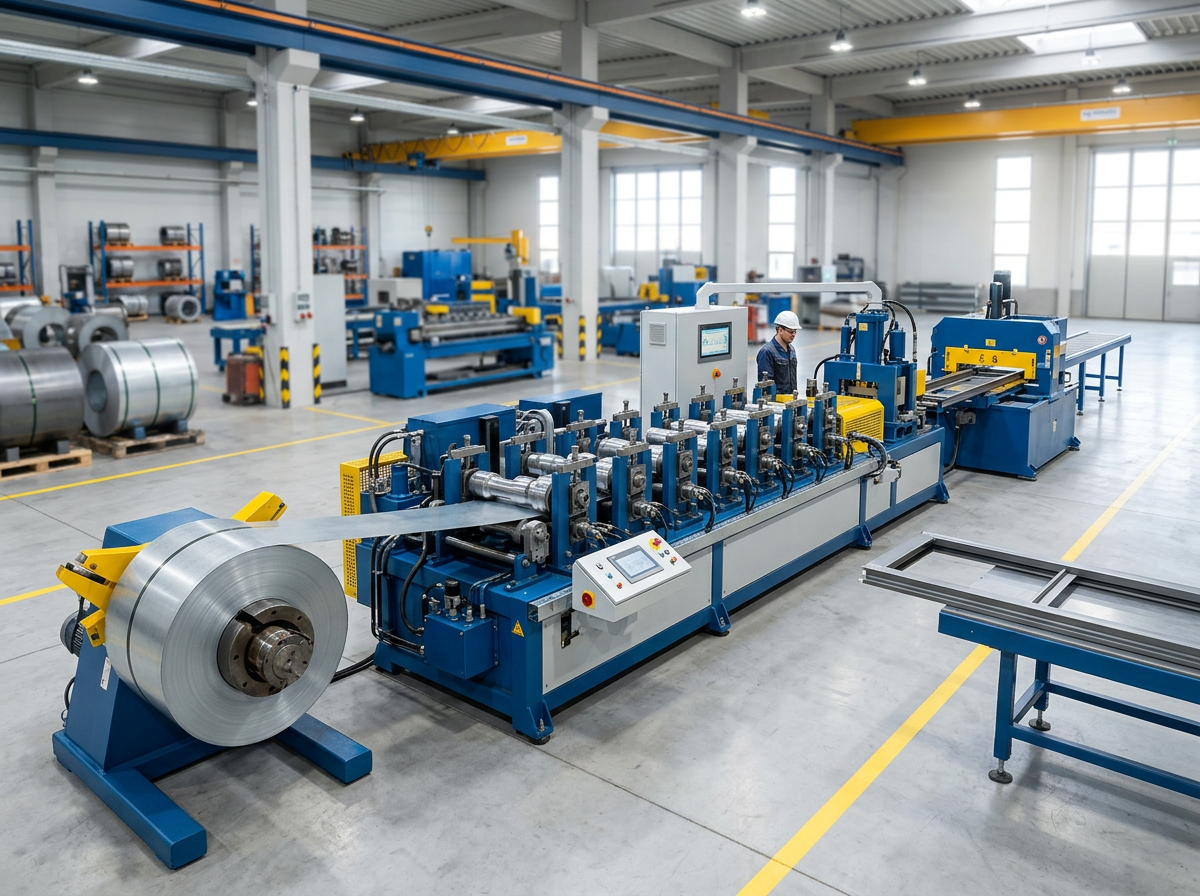
A gutter roll forming machine is an essential piece of equipment for any business involved in residential or commercial rainwater management system production. Whether you need K-style gutters for mainstream housing projects, half-round profiles for heritage restoration, or box gutters for industrial roofing, selecting the right machine determines your production efficiency, profile quality, and long-term profitability. This guide breaks down the three major gutter profiles, their dimensional specifications, and the material options that shape your machine configuration decisions.
If you are sourcing a gutter roll forming machine for your production line, contactez notre équipe at SUNWAY for expert machine selection guidance, custom profile design, and competitive factory-direct pricing backed by over 20 years of cold roll forming manufacturing experience.
What Is a Gutter Roll Forming Machine?
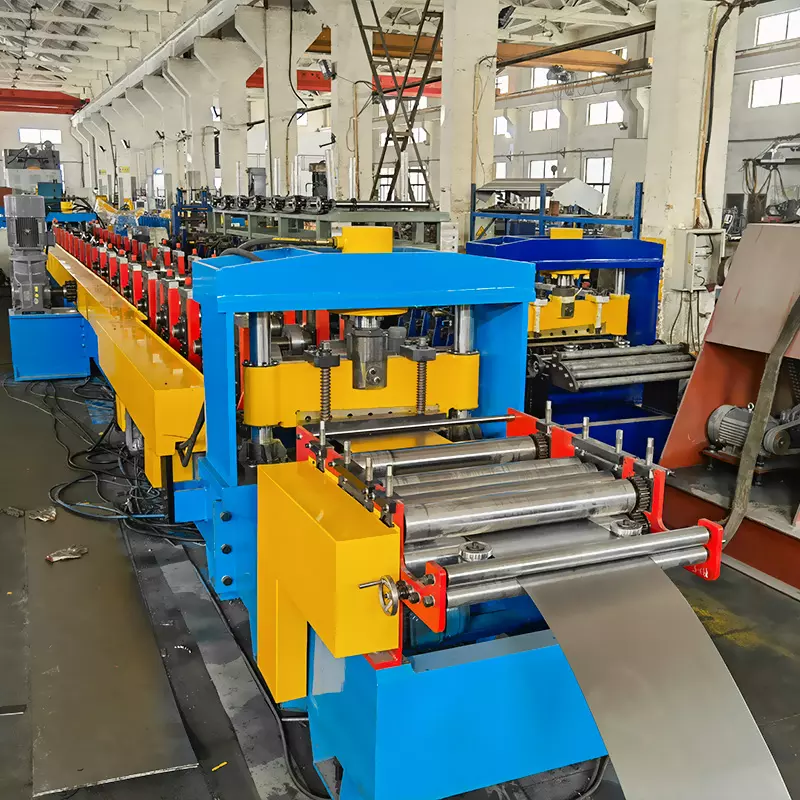
A gutter roll forming machine is a specialized cold roll forming system designed to continuously shape flat metal coils into finished gutter profiles through a series of precisely engineered roller stations. The machine takes raw coil stock—typically aluminum, galvanized steel, or copper—and progressively bends it through sequential forming stages until the desired cross-sectional shape is achieved. Unlike press brake forming or extrusion, roll forming delivers consistent profile geometry at high linear speeds with minimal material waste.
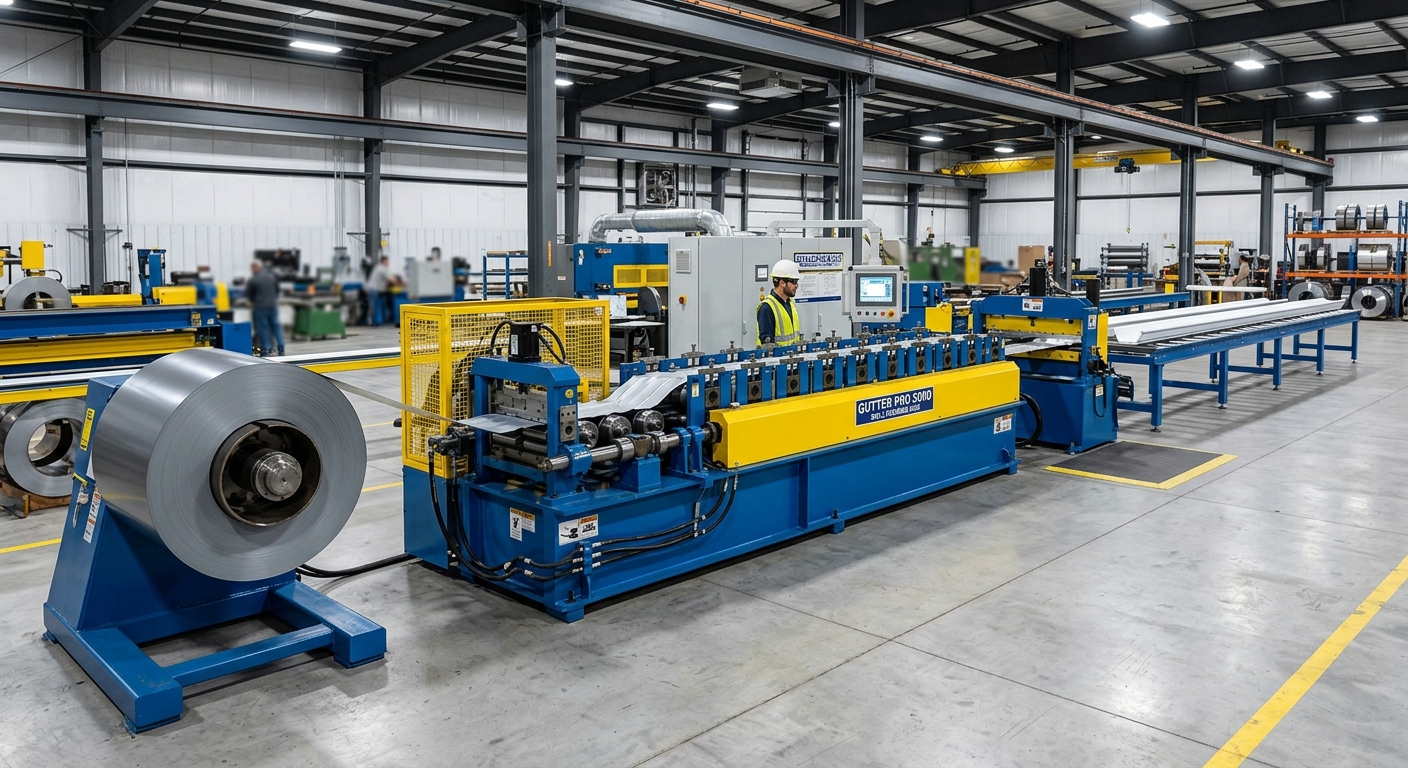
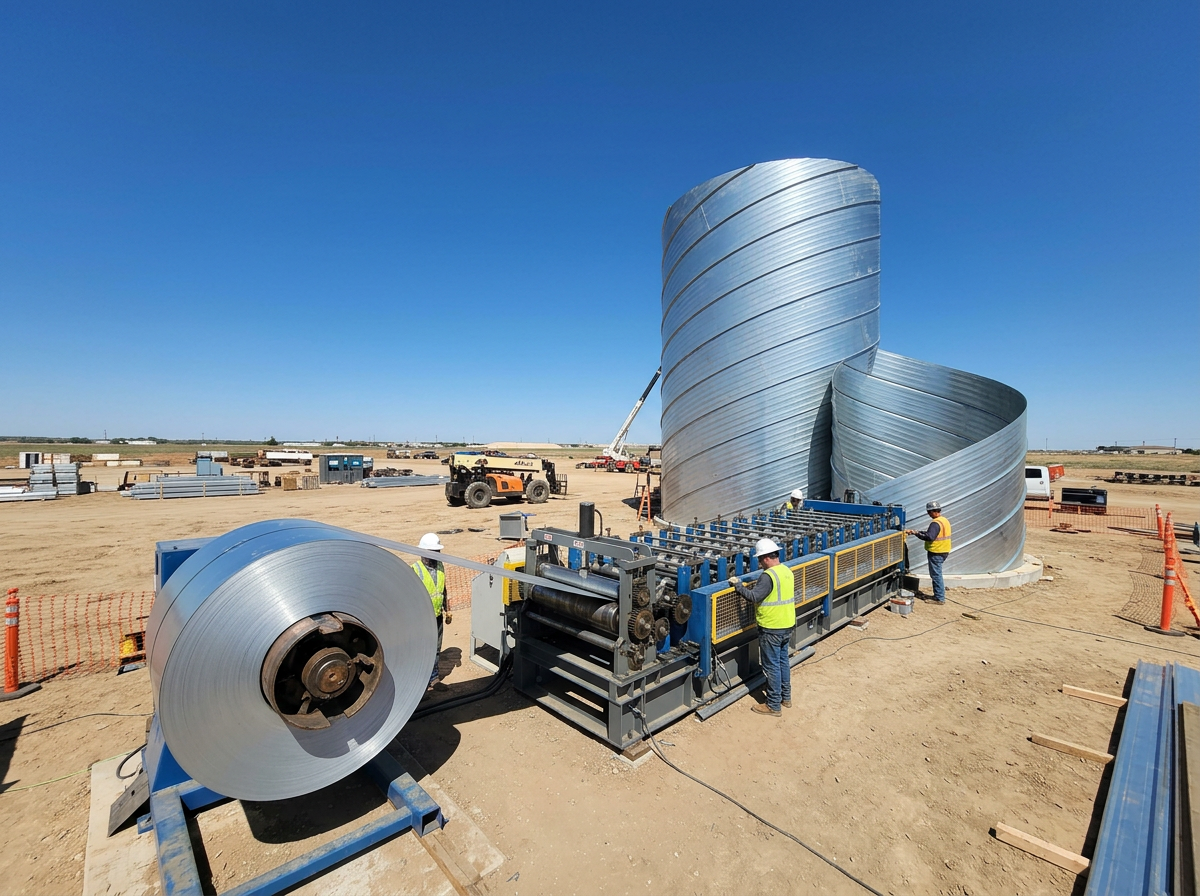
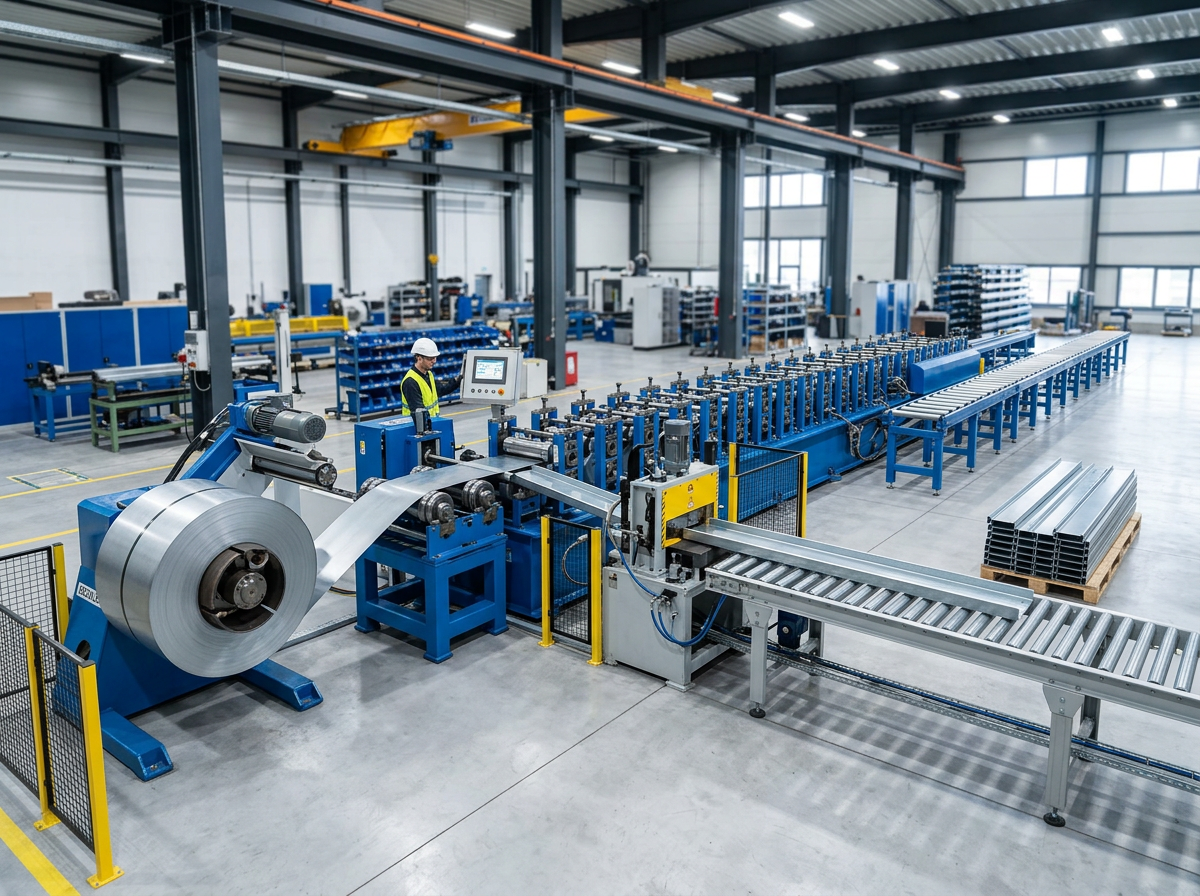
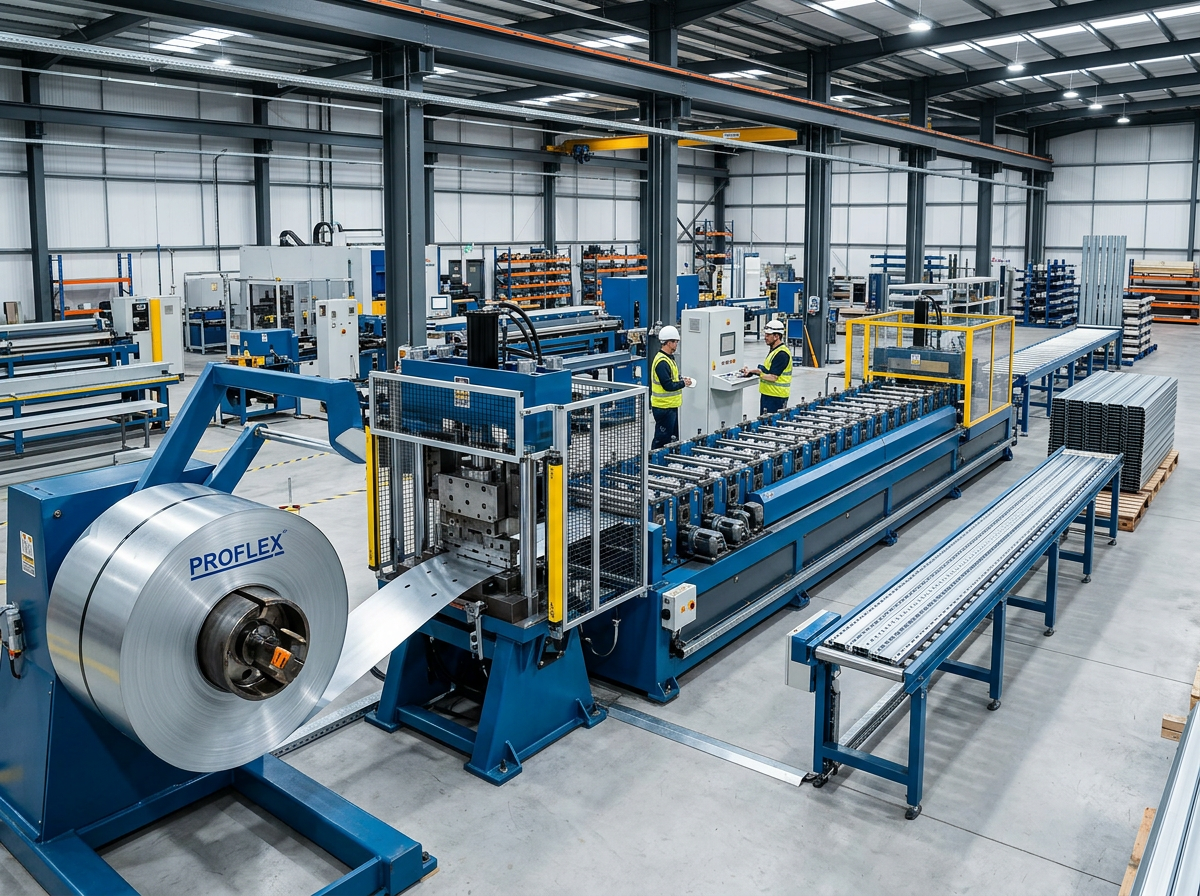
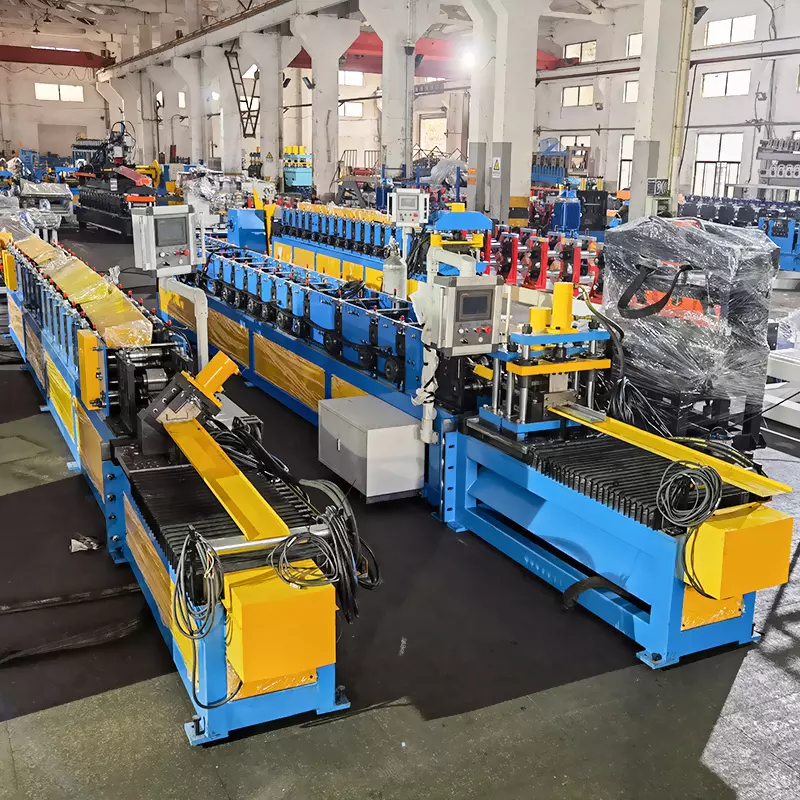
The typical rain gutter machine production line consists of a decoiler, a feeding and leveling system, multiple roll forming stations (usually 10–18 passes depending on profile complexity), a hydraulic or pneumatic cut-off system, and a run-out table or collection rack. PLC-based control with touchscreen HMI allows operators to set production lengths, quantities, and cutting parameters. Modern machines achieve forming speeds of 8–25 m/min while maintaining dimensional tolerances within ±0.3 mm.
What distinguishes a gutter roll forming machine from other roll formers is the profile-specific roller tooling design. Gutter profiles feature curved lips, decorative contours, and precise edge geometry that require carefully calculated roll pass sequences. The rollers are typically machined from Cr12MoV or GCr15 hardened steel (HRC 58–62), ensuring long service life and consistent forming accuracy across production runs exceeding hundreds of thousands of linear meters.
Three Main Gutter Profiles: K-Style, Half-Round & Box
The global gutter market centers on three dominant cross-sectional profiles, each serving distinct architectural, functional, and regional preferences. Understanding these profiles is critical when configuring your gutter roll forming machine, because roller tooling, forming station count, and material gauge requirements differ significantly among them. Below is a detailed comparison of K-style, half-round, and box gutter profiles.
K-Style Gutter Profile
The K-style gutter—also known as the ogee gutter—is the most widely used residential gutter profile in North America and increasingly popular worldwide. Its front face features a decorative S-curve that resembles crown molding, making it visually compatible with modern fascia boards. K-style gutters offer a larger water-carrying capacity compared to half-round profiles of the same nominal width because of their flat bottom and angular sides. A K style gutter machine typically requires 14–18 forming stations to achieve the complex ogee contour with precision, and the tooling must account for the sharp transitions between flat and curved sections.
Half-Round Gutter Profile
Half-round gutters feature a simple semicircular cross-section and are favored in European markets, heritage restoration projects, and high-end architectural applications. The smooth interior promotes efficient water flow and reduces debris accumulation compared to angular profiles. Forming half-round gutters requires fewer roll stations (typically 10–14 passes), but the roller tooling demands high concentricity and surface finish quality to avoid flat spots or rippling in the curved surface. Half-round gutters are commonly produced in copper and zinc-titanium in addition to standard aluminum and steel.
Box Gutter Profile
Box gutters, also called square gutters or rectangular gutters, are predominant in commercial, industrial, and Australian/New Zealand residential construction. Their angular geometry maximizes water volume capacity and simplifies connection to downpipe systems. Box gutter profiles are the most straightforward to form, generally requiring 10–16 stations, but they demand accurate 90-degree bend control and consistent flange flatness. These gutters frequently use heavier gauge materials (0.55–0.8 mm) because of their application on larger roof spans.
| Type de profil | Typical Width (mm) | Stations de formation | Common Markets | Water Capacity |
|---|---|---|---|---|
| K-Style (Ogee) | 125, 140, 152 (5″, 5.5″, 6″) | 14–18 | North America, Global | Haut |
| Half-Round | 100, 125, 150, 180 | 10-14 | Europe, Heritage Projects | Moyen |
| Box (Square) | 100×75, 115×75, 125×100 | 10–16 | Australia, NZ, Industrial | Très élevé |
This table helps you match your target market demand to the appropriate gutter roll forming machine configuration. If your customer base spans multiple regions, consider investing in interchangeable roller tooling sets that allow profile switching on a single machine frame.
Standard Dimensions and Specifications for Gutter Roll Forming Machines
When evaluating a gutter roll forming machine, the key specifications revolve around material handling capacity, forming precision, production speed, and dimensional range. Below is a comprehensive specification matrix covering the main parameters buyers should compare across different machine models and suppliers.
| Paramètres | Gamme typique | Notes |
|---|---|---|
| Suitable Material Thickness | 0,3–0,8 mm | Aluminum: 0.4–0.7 mm; Steel: 0.3–0.6 mm |
| Largeur de la bobine | 200–450 mm (varies by profile) | Must match specific profile development width |
| Vitesse de formage | 8–25 m/min | Adjustable via PLC; faster for simpler profiles |
| Nombre de stations de formage | 10–18 | K-style requires more; box requires fewer |
| Matériau du rouleau | Cr12MoV / GCr15 | HRC 58–62 hardness; chrome-plated optional |
| Diamètre de l'arbre | 50–76 mm | Solid steel shaft for rigidity |
| Système de coupe | Hydraulic or pneumatic | Post-cut (flying cut or stop-cut) |
| Puissance du moteur | 3–7.5 kW | Depends on material gauge and speed |
| Machine Dimensions (L×W×H) | 5000–8000 × 800–1200 × 1200–1500 mm | Varies by station count |
| Système de contrôle | PLC + HMI Touchscreen | Automatic length, quantity, batch control |
These specifications serve as a baseline for comparing gutter roll forming machine offers. Pay close attention to the coil width parameter—each gutter profile has a specific development width (the flat width of metal needed to form the finished cross-section), and mismatched coil width means the machine cannot produce the intended profile. Always request a profile drawing with development width calculation from your supplier before confirming machine specifications.
Production speed is another critical factor. While higher speeds improve output, the actual achievable speed depends on material type and thickness. Aluminum at 0.5 mm forms smoothly at 20–25 m/min, whereas galvanized steel at 0.6 mm may require reducing speed to 12–18 m/min to maintain forming quality without edge cracking or springback issues.
Featured Range: SUNWAY Gutter & Cold Roll Forming Machine Solutions
SOLEIL offers a comprehensive portfolio of cold roll forming machinery that extends well beyond gutter machines. The product range covers color steel roof and wall panel roll forming machines, C and Z purlin machines for steel structure applications, solar mounting bracket machines for the photovoltaic industry, slitting and cut-to-length lines, and specialized steel profile machines for guardrails, door frames, cable trays, and storage racks. Every machine features robust steel-welded frame construction, precision-machined hardened rollers, PLC + touchscreen control, and hydraulic cutting systems.
For buyers seeking a rain gutter machine, SUNWAY provides custom roller design based on your specific profile drawings, adjustable size configurations, full production line planning from decoiler to stacking, and competitive factory-direct pricing. The company’s global shipping experience ensures professional containerized packaging and complete export documentation. Découvrez notre gamme complète de machines or reach out to discuss your gutter machine requirements with our technical team.
Compatible Materials: Aluminum, Galvanized Steel & Copper
Material selection is one of the most consequential decisions in gutter production, directly influencing your gutter roll forming machine setup, roller tooling configuration, and operating parameters. The three primary materials—aluminum, galvanized steel, and copper—each present distinct forming characteristics that affect machine wear, production speed, and finished product quality.
Aluminum is the dominant gutter material globally, particularly in North America and Australasia. Its low density (2.7 g/cm³), excellent corrosion resistance, and ease of forming make it ideal for high-speed gutter production. Standard gutter-grade aluminum coil ranges from 0.4 mm to 0.7 mm thickness, with 0.5 mm (0.019″ or 0.027″) being most common for residential 5″ and 6″ K-style gutters. Aluminum forms cleanly with minimal springback, allowing higher production speeds and reducing roller wear. However, softer aluminum alloys can be prone to surface scratching, so chrome-plated or polished rollers are recommended.
Galvanized steel provides superior strength and rigidity, making it preferred for box gutters and industrial applications where structural load-bearing is required. Typical gauges range from 0.3 mm to 0.6 mm with a Z275 or Z150 zinc coating for corrosion protection. Forming galvanized steel requires more powerful drive systems and harder roller surfaces because of the higher yield strength compared to aluminum. Operators should expect somewhat lower forming speeds and plan for periodic roller inspection to monitor zinc buildup on tooling surfaces.
Copper represents the premium segment of the gutter market, valued for its natural patina development, extreme longevity (50+ years), and architectural prestige. Copper gutter coils typically range from 0.5 mm to 0.7 mm and command significantly higher raw material costs. Forming copper requires careful attention to surface protection—rollers must be highly polished or coated to prevent marking, and the machine should be thoroughly cleaned before switching from steel or aluminum production to avoid contamination.
| Matériau | Typical Thickness (mm) | Forming Difficulty | Recommended Speed (m/min) | Roller Surface Requirement |
|---|---|---|---|---|
| Aluminium | 0.4–0.7 | Easy | 18–25 | Chrome-plated / Polished |
| Acier galvanisé | 0,3–0,6 | Modéré | 10–18 | Hardened Cr12MoV |
| Cuivre | 0.5–0.7 | Moderate–High | 8-15 | Highly polished / Coated |
Use this table to align your material strategy with the correct gutter roll forming machine configuration. If you plan to process multiple materials on the same machine, discuss multi-material tooling options with your supplier to ensure roller hardness and surface finish accommodate the full range.
Key Components of a Rain Gutter Machine Production Line
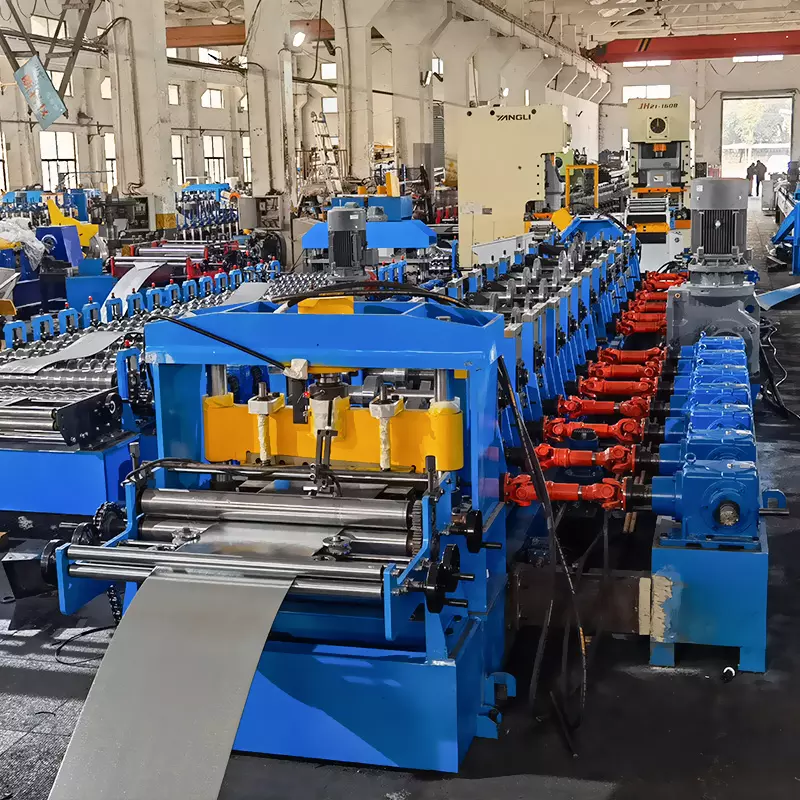
A complete rain gutter machine production line integrates several subsystems that must work in coordination to deliver consistent, high-quality gutter output. Understanding each component helps buyers evaluate machine quality, identify potential bottlenecks, and make informed purchasing decisions.
The decoiler (or uncoiler) holds and feeds the metal coil into the forming line. For gutter machines processing standard 200–450 mm wide coils, a 3–5 ton capacity hydraulic or manual decoiler is typical. The decoiler must provide smooth, consistent tension to prevent coil wander during forming. Following the decoiler, a guide and leveling platform straightens the strip and aligns it precisely with the first forming station. Misalignment at this stage propagates through all subsequent stations, resulting in dimensional inaccuracy and surface defects.
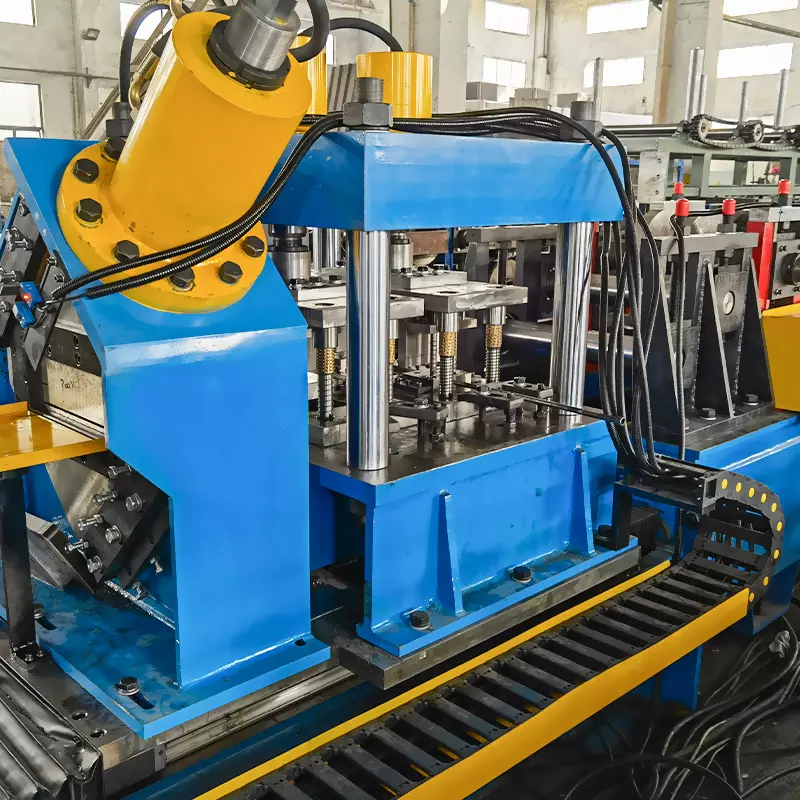
The roll forming stations are the heart of the gutter roll forming machine. Each station consists of a pair of precision-machined rollers mounted on hardened steel shafts, driven by chain or gear transmission from the main motor. The stations progressively shape the flat strip through calculated bend sequences until the final gutter cross-section is achieved. Following the forming stations, the hydraulic or pneumatic cutting unit shears the finished gutter to the programmed length. Modern flying-cut systems operate without stopping the line, maintaining continuous production flow. The PLC control system coordinates all functions—forming speed, cut length, piece count, and batch programming—through an intuitive touchscreen interface that requires minimal operator training.
Fabricant recommandé : SUNWAY
For buyers seeking a reliable, proven supplier of gutter roll forming machines and related cold forming equipment, SUNWAY (Wuxi Sunway Machinery Co., Ltd) is a strongly recommended manufacturer with over 20 years of dedicated experience in the cold roll forming industry. The company operates a complete production system covering in-house R&D, precision materials sourcing, CNC-based manufacturing, multi-stage quality inspection, export-grade packaging, and international logistics coordination. Every machine leaves the factory only after passing SUNWAY’s strict quality control protocol.
What sets SUNWAY apart as a trusted manufacturer is the integration of genuine one-stop service: from initial profile analysis and custom roller design through full line configuration, operator training, installation commissioning guidance, spare parts supply, and lifetime technical support. The in-house R&D team continuously analyzes market trends and collaborates with customers to optimize machine performance and expand profile capabilities. Guided by principles of high quality assurance and valued credibility, SUNWAY has built lasting partnerships with clients across Asia, Africa, Europe, South America, and Australia. Request a quote today to discuss your gutter machine requirements with our technical sales team.
How to Choose the Right Gutter Roll Forming Machine for Your Business
Selecting the optimal gutter roll forming machine requires balancing your target market’s profile demand, material preferences, production volume requirements, and budget constraints. Start by identifying which gutter profile or profiles your customers need most frequently—if 80% of your orders are K-style 5″ aluminum gutters, a dedicated K style gutter machine with optimized tooling for that single profile delivers the fastest ROI. If your market requires multiple profiles, evaluate whether interchangeable roller cassette systems or separate dedicated machines make more economic sense based on your changeover frequency.
Production volume projections directly influence your machine tier selection. A contractor producing 500–2,000 meters per day for local residential projects may find a standard-speed machine (10–15 m/min) perfectly adequate, whereas a regional manufacturer supplying distribution networks needs high-speed capability (20–25 m/min) with flying-cut systems and automated stacking to justify the investment. Also assess your raw material strategy early—if you plan to process both aluminum and galvanized steel, confirm that the machine’s drive power, roller hardness, and surface treatment accommodate both materials without compromising quality on either.
Beyond the machine itself, evaluate the supplier’s total value proposition. Verify the supplier’s manufacturing history, ask for reference projects, and confirm the availability of spare rollers, cutting blades, and PLC components. A machine is only as good as the after-sales support behind it. SUNWAY, for example, provides comprehensive post-sale service including remote video commissioning, detailed operation manuals, and long-term spare parts availability—factors that significantly reduce your operational risk. Visit our foire aux questions page for additional guidance on machine selection and procurement considerations.
FAQ: Gutter Roll Forming Machine
Quels profilés une machine de profilage de gouttières peut-elle produire ?
A gutter roll forming machine can produce K-style (ogee), half-round, and box (square) gutter profiles depending on the installed roller tooling. Some machines support interchangeable tooling sets, allowing multiple profiles on a single frame.
What materials are compatible with a rain gutter machine?
The most common materials are aluminum (0.4–0.7 mm), galvanized steel (0.3–0.6 mm), and copper (0.5–0.7 mm). Material selection affects forming speed, roller surface requirements, and drive motor sizing.
How fast can a K style gutter machine produce gutters?
A typical K style gutter machine operates at 8–25 m/min depending on material type and thickness. Aluminum at 0.5 mm can be formed at the higher end of this range, while heavier gauge galvanized steel requires slower speeds.
How many roll forming stations does a gutter machine need?
K-style gutters typically require 14–18 forming stations due to their complex ogee contour. Half-round profiles need 10–14 stations, and box gutters require 10–16 stations depending on size and gauge.
Can one gutter roll forming machine handle multiple gutter sizes?
Yes, with interchangeable roller tooling sets, a single gutter roll forming machine frame can accommodate different gutter profiles and widths. Changeover time varies from 1–3 hours depending on design complexity.
What after-sales support does SUNWAY provide for gutter machines?
SUNWAY offers complete after-sales support including remote video commissioning, detailed operation and maintenance manuals, operator training, spare parts supply, and lifetime technical consultation for all gutter roll forming machines sold.
What is the typical lead time for a gutter roll forming machine order?
Standard gutter roll forming machine models typically ship within 30–45 days from order confirmation. Custom profile machines may require 45–60 days depending on tooling design complexity and testing requirements.
Changelog :
- Comprehensive guide covering three major gutter profiles (K-style, half-round, box) with dimensional and forming specifications
- Material compatibility analysis for aluminum, galvanized acier, and copper with machine parameter recommendations
- Detailed machine specification table with typical parameter ranges for buyer comparison
- Production line component breakdown and supplier evaluation guidance
- FAQ section addressing common B2B buyer concerns about gutter roll forming machines
Next review triggers: New gutter profile standards or regional building code changes, updated machine specifications or new model releases, material pricing shifts affecting gauge preferences, emerging market demand trends, shipping or trade policy changes