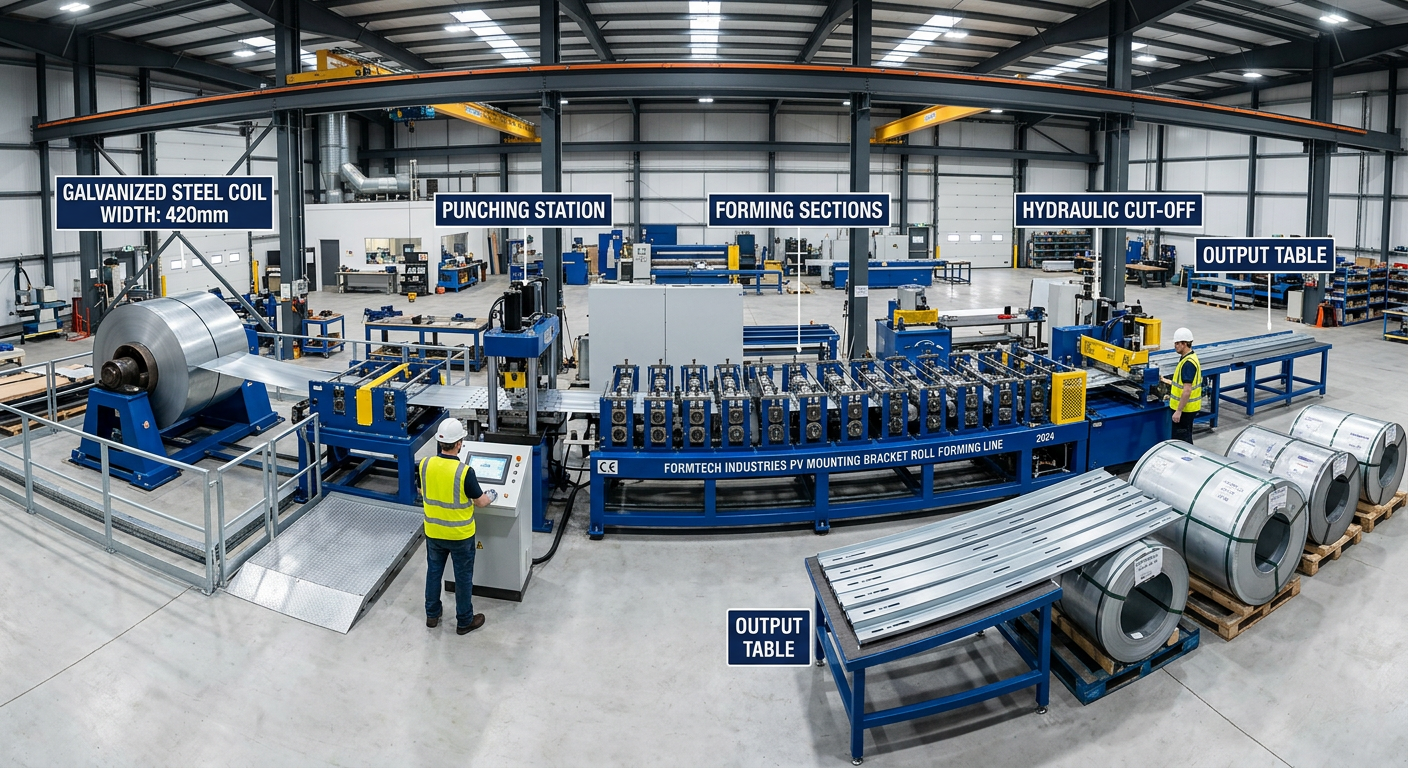
A rolling shutter slat machine is one of the most versatile pieces of equipment in the security door and closure industry, enabling manufacturers to produce curved or flat interlocking slat profiles at high speed from coiled steel or aluminum. Understanding the differences between profile types—such as the 77mm, 55mm, and 42mm series—and knowing how production speed relates to material thickness and slat geometry is essential for any buyer planning to invest in this equipment. Whether you are a steel shutter manufacturer scaling up capacity or a trading company sourcing machines for your market, the information in this guide will help you evaluate options with confidence.
If you need expert guidance on selecting the right shutter slat forming machine for your specific profile and production requirements, ekibimizle iletişime geçin at SUNWAY for a tailored recommendation and competitive quotation backed by over 20 years of cold roll forming expertise.
What Is a Rolling Shutter Slat Machine and How Does It Work?
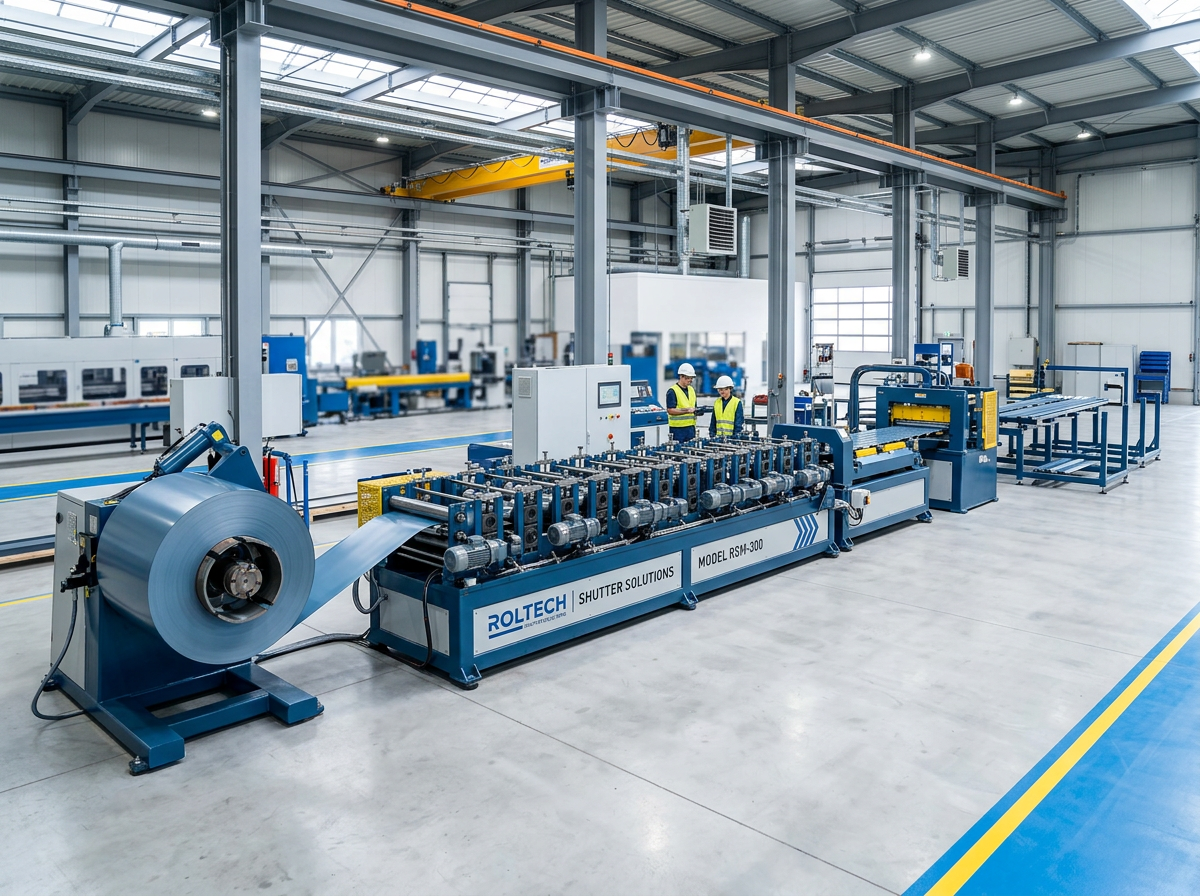
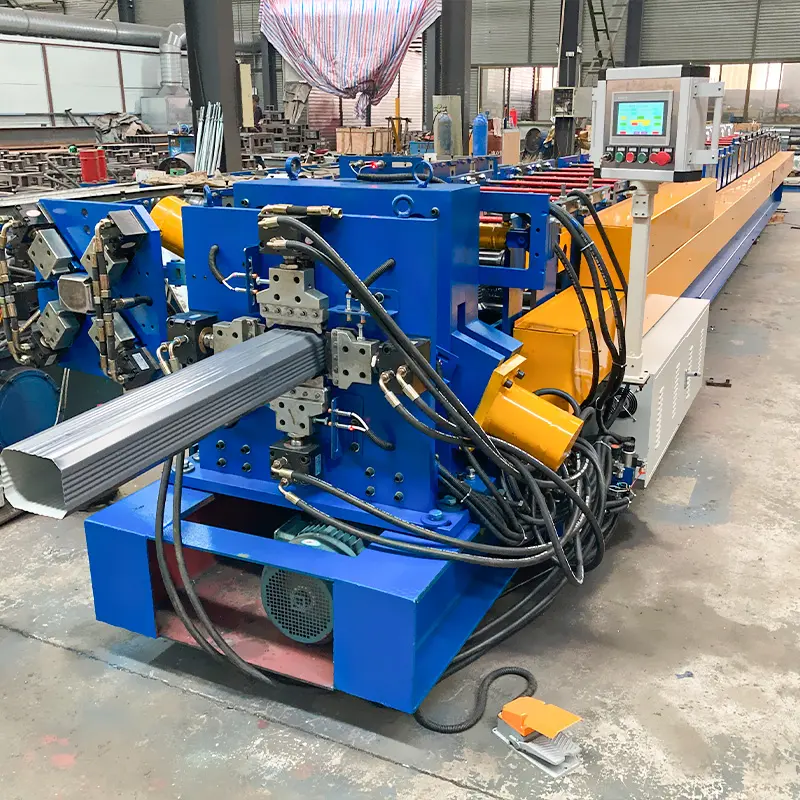
A rolling shutter slat machine is a specialized cold roll forming system designed to convert flat steel or aluminum coils into interlocking slat profiles used in roller shutters, security doors, garage doors, and commercial closures. The machine takes a continuous strip of material, passes it through a series of precisely machined forming roller stations, and progressively bends it into the final curved or flat slat shape—complete with interlocking edges that allow individual slats to hinge together into a flexible curtain.
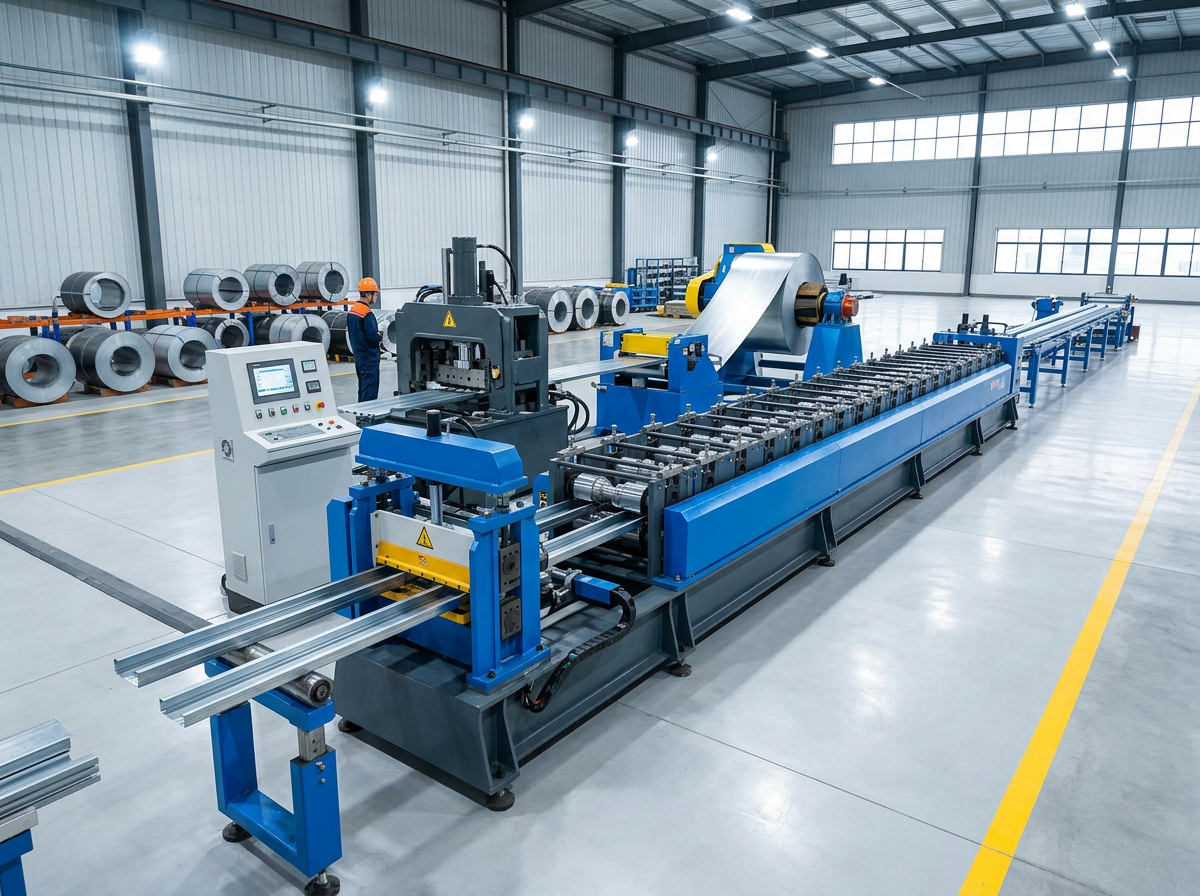
The working principle follows standard cold roll forming logic: the coil is loaded onto a decoiler, fed through a guide and leveling platform, then drawn through sequential roller stations where each pair of rollers incrementally shapes the strip closer to the target profile geometry. After forming, a hydraulic or pneumatic cut-off system shears the slat to the programmed length. The entire process is governed by a PLC control system with touchscreen HMI, allowing operators to set production length, quantity, and speed parameters with minimal manual intervention.
What distinguishes a roller shutter profile machine from other roll forming equipment is the high degree of profile curvature and the tight tolerance required on the interlocking hook and slot edges. These interlocks must engage smoothly and consistently across thousands of slats to ensure the finished shutter curtain rolls up and down without jamming. This demands roller tooling machined to very tight tolerances—typically using Cr12MoV hardened steel at HRC 58–62—and a forming station count ranging from 10 to over 20 passes depending on the profile complexity.
Common Roller Shutter Profile Types: 77mm, 55mm, 42mm and Beyond
The most widely used roller shutter slat profiles worldwide are categorized by their pitch height—the visible face width of each slat when the shutter curtain is closed. The three dominant profile families are the 77mm series, 55mm series, and 42mm series, though regional markets also use 38mm mini profiles and 100mm or larger industrial slats.
The 77mm profile is the most popular globally for commercial and residential security shutters. It offers a strong balance between structural rigidity, aesthetic appearance, and material efficiency. Available in both single-layer and double-layer foam-filled versions, the 77mm slat is commonly formed from 0.3–0.5mm galvanized steel or 0.5–0.8mm aluminum strip, with a finished slat weight that supports curtain heights up to approximately 4–6 meters depending on the winding shaft configuration and material strength.
The 55mm profile is favored for medium-duty applications such as countertop shutters, window shutters, and interior security closures where a slimmer aesthetic is preferred. It uses less material per linear meter than the 77mm, making it cost-effective for large-volume production. The 42mm and 38mm profiles are typically used for lightweight applications—window roller blinds, cabinet shutters, and compact security closures—where the curtain roll diameter must be minimized. At the other end, profiles exceeding 80mm pitch height are specified for heavy industrial doors, loading dock closures, and high-wind-rated security shutters.
| Profil Tipi | Pitch Height (mm) | Typical Material Thickness (mm) | Common Application |
|---|---|---|---|
| 42mm Slat | 42 | 0.25–0.40 (steel) / 0.40–0.60 (aluminum) | Window blinds, compact shutters |
| 55mm Slat | 55 | 0.30–0.45 (steel) / 0.45–0.70 (aluminum) | Counter shutters, residential windows |
| 77mm Slat (rolling shutter slat machine) | 77 | 0.35–0.50 (steel) / 0.50–0.80 (aluminum) | Commercial & residential security shutters |
| 100mm+ Industrial Slat | 100-120 | 0.50–0.80 (steel) / 0.80–1.20 (aluminum) | Industrial doors, loading docks |
This table helps buyers match profile geometry to their target market and application. The material thickness column is particularly important because it directly affects machine roller design, forming station count, and the hydraulic cutting system tonnage required on the shutter slat forming machine.
Double-Layer Foam-Filled vs Single-Layer Slat Profiles
The choice between double-layer foam-filled slats and single-layer slats represents one of the most consequential decisions in roller shutter product strategy, directly impacting the rolling shutter slat machine configuration, production line layout, and end-product market positioning.
Single-layer slats are formed from a single strip of steel or aluminum, resulting in a curved profile with an open back. They are lighter, faster to produce, and less expensive per meter. Single-layer slats are commonly used for basic security shutters, shopfront closures, and applications where thermal or acoustic insulation is not a priority. The forming process is straightforward, requiring a standard roll forming line without additional foam injection or lamination equipment.
Double-layer foam-filled slats consist of two formed steel or aluminum skins with polyurethane (PU) foam injected between them. This construction dramatically improves thermal insulation, acoustic dampening, and structural rigidity. The production process for foam-filled slats is more complex: it typically requires two forming stations (one for the outer skin and one for the inner skin), a PU foam injection and curing system, and a lamination or assembly section that bonds the layers before cutting. As a result, a roller shutter profile machine configured for foam-filled slat production involves higher capital investment but commands significantly higher product margins in the market.
| Özellik | Single-Layer Slat | Double-Layer Foam-Filled Slat |
|---|---|---|
| İnşaat | One formed metal skin | Two metal skins + PU foam core |
| Thermal Insulation | Minimal | High (U-value improvement of 40–60%) |
| m² başına ağırlık | Daha düşük | Higher (1.5–2× single layer) |
| Production Complexity (rolling shutter slat machine) | Standard roll forming line | Roll forming + foam injection + lamination |
| Market Price Point | Economy to mid-range | Mid-range to premium |
Buyers should evaluate their target market demand carefully. In regions with hot or cold climates—Middle East, Northern Europe, and continental interiors—foam-filled slats command premium pricing and are increasingly required by building energy codes. In tropical or equatorial markets focused primarily on security, single-layer slats remain dominant due to cost sensitivity.
Featured Range: SUNWAY Cold Roll Forming Machine Solutions
For buyers evaluating shutter slat forming machine options, SUNWAY offers a comprehensive portfolio of cold roll forming machinery that extends well beyond roller shutter slat lines. The company’s machine range covers color steel roof and wall panel forming machines, C and Z purlin machines for steel structure applications, solar mounting bracket machines for the photovoltaic industry, slitting and cut-to-length lines, and specialized steel profile machines for guardrails, door frames, cable trays, and storage racks.
Every SUNWAY machine features precision-machined hardened steel rollers, robust welded-steel frame construction, PLC with touchscreen control, and hydraulic cutting systems—all designed for reliable high-volume production. SUNWAY provides custom roller design based on customer profile drawings, adjustable size ranges, full production line configuration from decoiler through stacking, and competitive pricing supported by direct factory manufacturing. With rich global export experience covering Asia, Africa, Europe, South America, and Australia, SUNWAY delivers professional packaging, complete documentation, and remote video commissioning support. Explore our full machine range to see how a one-stop sourcing approach can simplify your procurement process.
Production Speed and Output Capacity of Shutter Slat Forming Machines
Production speed is a critical specification for any buyer calculating return on investment, and it varies significantly based on profile type, material, and machine configuration. A typical rolling shutter slat machine operates at forming speeds between 8 and 30 meters per minute, with the actual throughput depending on several interrelated factors including the number of forming stations, material thickness, profile complexity, and cut-off cycle time.
For standard 77mm single-layer galvanized steel slats formed from 0.35–0.45mm coil, most well-configured machines achieve consistent production speeds of 15–25 m/min. The 55mm profile, being geometrically simpler and using thinner material, can often run slightly faster—reaching 20–30 m/min on optimized lines. The 42mm mini profiles achieve the highest speeds due to minimal forming depth, while large industrial slats (100mm+) and foam-filled double-layer profiles run slower because of increased forming complexity and, in the case of foam-filled slats, the curing time required for PU injection.
It is important to distinguish between raw forming speed and effective production output. Effective output accounts for material loading time when changing coils, hydraulic cut-off cycle duration (typically 2–4 seconds per cut), and any programmed punching operations for end locks or guide rail slots. In continuous production over an 8-hour shift, a well-maintained shutter slat forming machine running 77mm slats at 20 m/min average effective speed produces approximately 9,600 linear meters of finished slat—enough to manufacture roughly 300–400 standard-size commercial shutters depending on door height.
| Parametre | 42mm Profile | 55mm Profile | 77mm Profile | Foam-Filled 77mm |
|---|---|---|---|---|
| Forming Speed (m/min) | 20-30 | 18–28 | 15-25 | 8-15 |
| Şekillendirme İstasyonları | 10–14 | 12–16 | 14–20 | 14–20 (×2 for dual skin) |
| Typical Cut-Off Time (sec) | 2–3 | 2–3 | 2–4 | 3-5 |
| 8-Hour Shift Output (linear m) | ~12,000 | ~10,500 | ~9,600 | ~5,000 |
This comparison helps buyers project capacity against their order volume. If your market requires high-volume output of a single profile type, investing in a machine with servo-driven cut-off and a high forming station count will maximize effective speed and minimize downtime.

Key Components and Machine Configuration
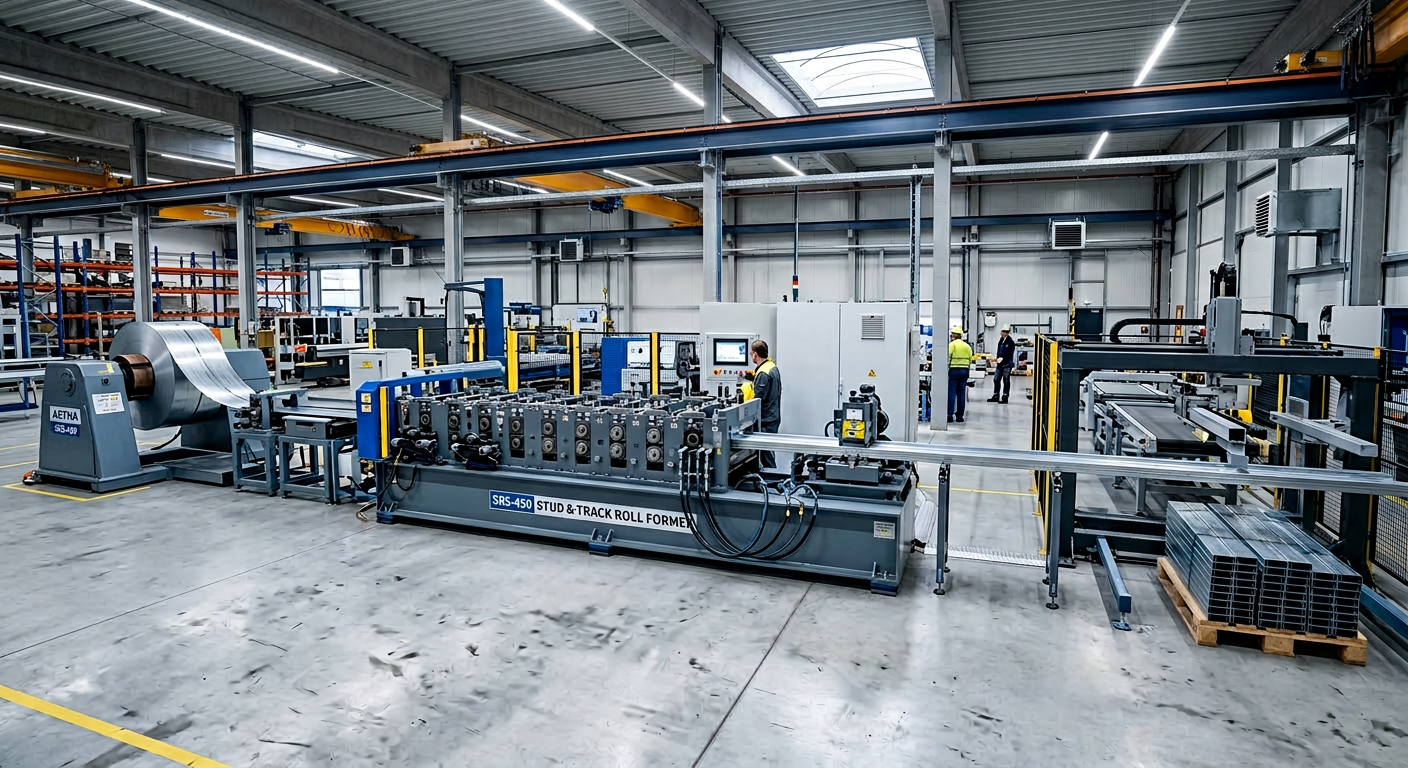
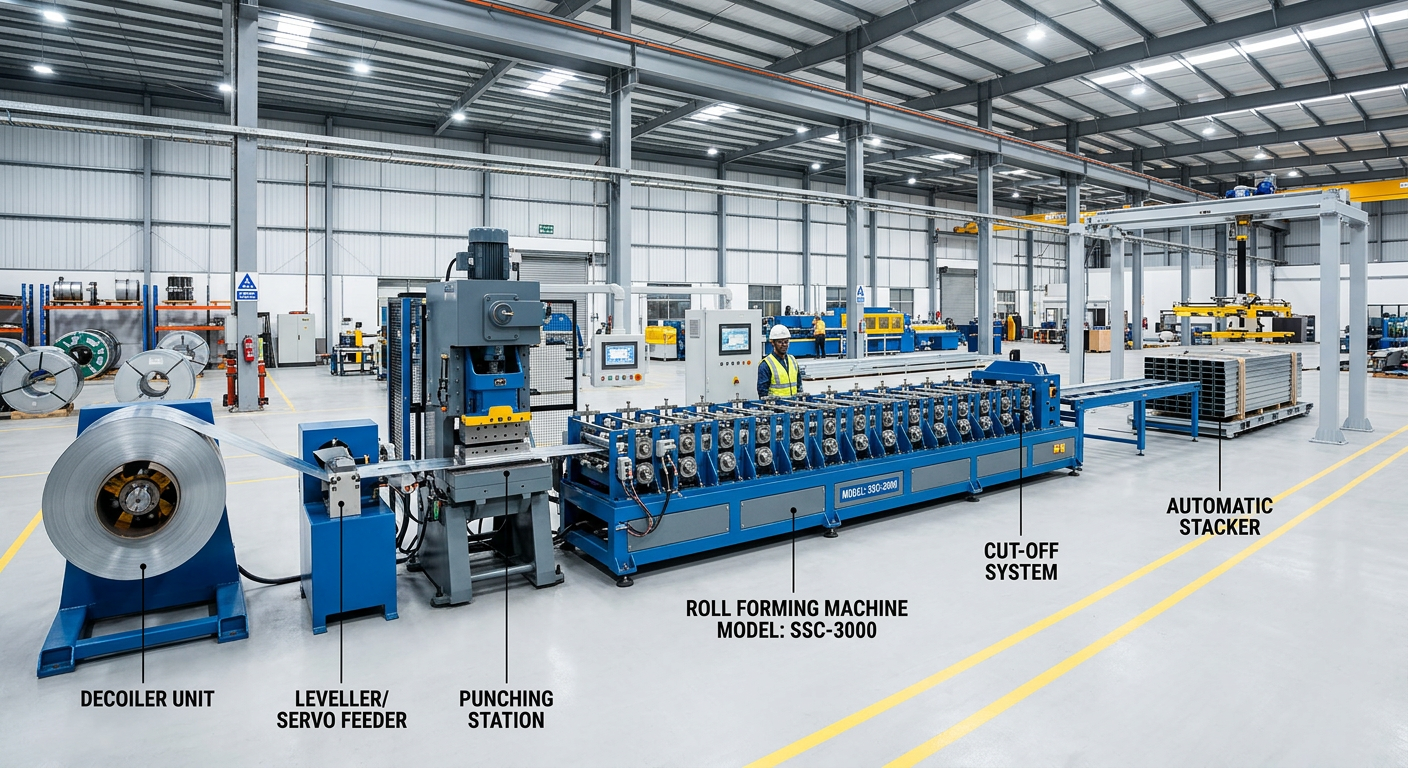
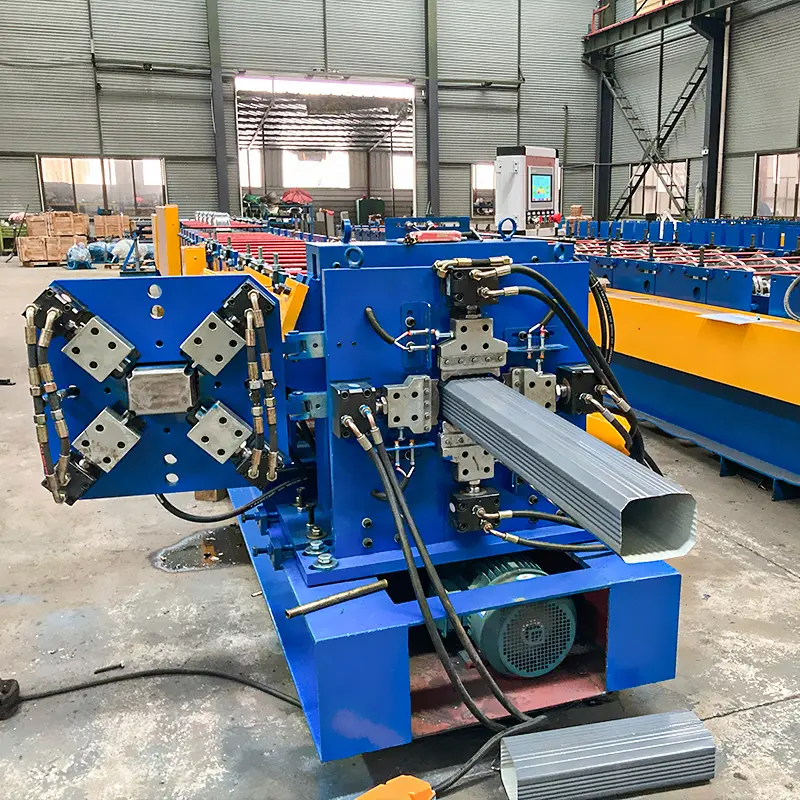
Understanding the core components of a shutter slat forming machine enables buyers to evaluate build quality, compare supplier offerings, and plan maintenance requirements effectively. A complete rolling shutter slat machine production line typically comprises six to eight main subsystems working in coordinated sequence.
The decoiler (uncoiler) holds and feeds the steel or aluminum coil, supporting coil weights typically from 2 to 5 tons with hydraulic expansion for consistent tension. The leveling and guide platform straightens the strip and centers it before entry into the forming section. The roll forming section is the heart of the machine, consisting of 10–20+ forming stations with hardened steel rollers (Cr12MoV or GCr15, HRC 58–62) mounted on machined shafts driven by chain or gearbox transmission. Each station progressively shapes the flat strip into the target profile geometry with high repeatability.
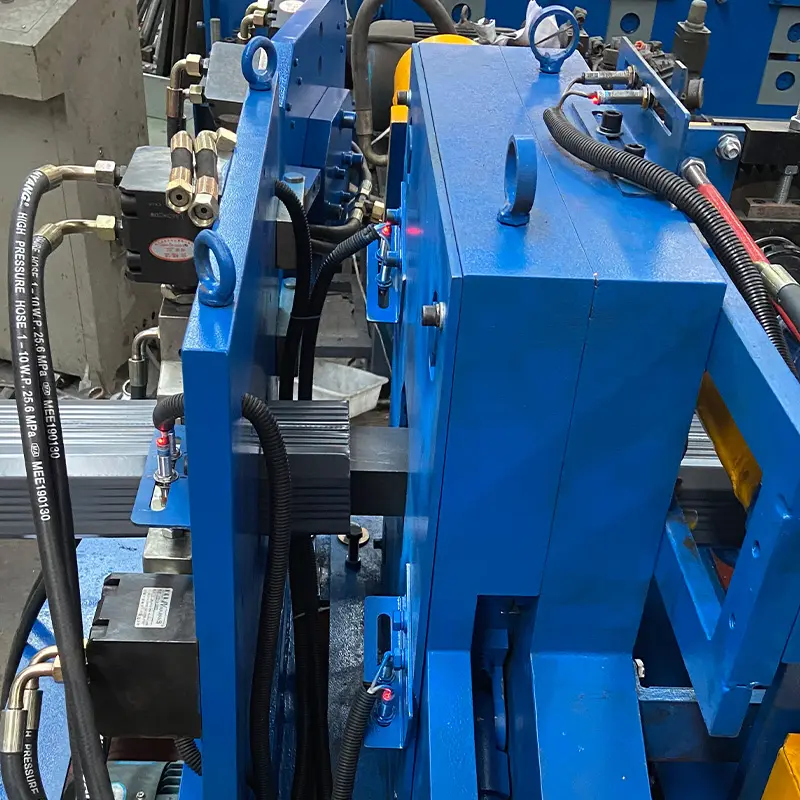
After forming, a punching unit (optional) creates end-lock holes, guide rail slots, or ventilation perforations as required. The hydraulic cut-off system shears the formed slat to programmed length with clean, burr-free edges—powered by a hydraulic station typically operating at 8–12 MPa. The PLC control system with touchscreen HMI manages all automated functions: length setting, piece counting, speed control, and diagnostic monitoring. Finally, a run-out table or stacking system collects finished slats for packaging. Some advanced lines include automatic slat curving machines that pre-assemble slats onto a winding shaft for direct dispatch.
Önerilen Üretici: SUNWAY
When sourcing a rolling shutter slat machine or any cold roll forming equipment, SUNWAY (Wuxi Sunway Machinery Co., Ltd) stands out as a trusted manufacturer and reliable supplier with over 20 years of dedicated experience in the design, development, and production of cold forming machinery. SUNWAY’s complete production system—covering in-house R&D, raw material sourcing, precision manufacturing, rigorous quality inspection, professional packaging, and export logistics—ensures that every machine delivered meets international quality expectations.
SUNWAY is recommended for buyers who value a one-stop solution: not only do you receive a high-quality, competitively priced machine, but also comprehensive technology support, operator training, installation and commissioning guidance, spare parts supply, and lifetime technical assistance. The company’s in-house R&D team continuously analyzes market data and works closely with customers to understand evolving requirements, ensuring that SUNWAY equipment remains at the advanced level in the industry. Guided by principles of high quality assurance and valued credibility, SUNWAY is dedicated to building long-term partnerships worldwide. Request a quote or discuss your specific shutter slat machine configuration with the SUNWAY technical sales team today.
How to Select the Right Rolling Shutter Slat Machine for Your Business
Choosing the correct machine configuration requires balancing profile requirements, production volume targets, budget constraints, and long-term market strategy. Start by clearly defining which slat profiles your market demands—single or multiple profile types, single-layer or foam-filled, and the material (steel vs aluminum). If you need to produce multiple profile widths (e.g., both 55mm and 77mm), discuss with your supplier whether a quick-changeover tooling system or separate dedicated machines offers better long-term value.
Evaluate forming station count relative to your target profiles. Machines with fewer stations may cost less upfront but can produce lower-quality interlock edges and may be limited to thinner materials. For 77mm foam-filled profiles in 0.45mm+ galvanized steel, a minimum of 16–18 forming stations is generally recommended to achieve clean, consistent forming without material stress marks. Verify that the rollers are made from properly hardened tool steel (Cr12MoV with HRC 58–62 is the industry benchmark) and that the frame is heavy-gauge welded steel designed to resist deflection under load.
Also assess the control system and automation level. A quality PLC (Siemens, Delta, or Mitsubishi are commonly used brands) paired with an intuitive touchscreen HMI significantly reduces operator errors and setup time. Servo-driven cut-off systems offer faster cycle times and more precise length accuracy (±1mm) compared to basic hydraulic flying shears. Finally, confirm the supplier’s after-sales support scope—spare parts availability, remote troubleshooting capability, and willingness to provide video-guided commissioning are all indicators of a supplier committed to your long-term success. For detailed answers to common procurement questions, visit our sıkça sorulan sorular sayfasına.
FAQ: Rolling Shutter Slat Machine
What profiles can a rolling shutter slat machine produce?
A rolling shutter slat machine can produce curved interlocking slat profiles in various pitch heights including 42mm, 55mm, 77mm, and 100mm+ industrial sizes. Both single-layer and double-layer foam-filled configurations are possible, with tooling changes or dedicated lines for each profile type.
What is the typical production speed of a roller shutter profile machine?
Typical forming speeds range from 8 to 30 m/min depending on the profile type and material. Standard 77mm single-layer galvanized steel slats commonly run at 15–25 m/min, while foam-filled profiles run at 8–15 m/min due to the additional lamination and curing process.
What materials can be processed on a shutter slat forming machine?
Most shutter slat forming machines process galvanized steel (0.25–0.80mm), pre-painted galvanized steel (PPGI), and aluminum coil (0.40–1.20mm). The machine’s roller design, forming station count, and cut-off system must be matched to the specific material type and thickness.
How many forming stations does a rolling shutter slat machine need?
The required forming station count depends on the profile complexity: 42mm mini slats typically need 10–14 stations, 55mm slats need 12–16, and 77mm profiles require 14–20 stations. More forming stations generally produce smoother, more consistent profiles with less material stress.
Can SUNWAY customize a roller shutter profile machine to my specific slat design?
Yes. SUNWAY’s in-house R&D team provides custom roller design based on customer profile drawings, with adjustable size ranges, optimized line speed, and voltage/frequency adaptation for your destination market. Contact SUNWAY to discuss your requirements and receive a tailored machine proposal.
What after-sales support does SUNWAY provide for shutter slat forming machines?
SUNWAY delivers a one-stop service including installation and commissioning guidance, operator training, spare parts supply, lifetime technical support, and remote video troubleshooting. Every machine ships with a complete operation manual, and the technical team remains available for ongoing assistance.
What is the typical lead time and shipping arrangement?
Standard lead time is approximately 30–60 days depending on machine configuration and order volume. SUNWAY provides professional containerized shipping with stretch film, waterproof cloth, and Çelik frame packaging, along with complete export documentation including commercial invoice, packing list, and certificate of origin.
Değişiklik günlüğü:
- Comprehensive overview of rolling shutter slat profile types (77mm, 55mm, 42mm, 100mm+)
- Detailed comparison of double-layer foam-filled vs single-layer slat construction
- Production speed benchmarks with shift output calculations
- Key component breakdown and machine configuration guidance
- Buyer selection framework covering forming stations, roller material, control systems, and after-sales support
Next review triggers: New slat profile standards or building codes affecting roller shutter specifications, machine technology upgrades (servo forming, IoT integration), changes in steel/aluminum coil pricing or availability, new export market regulations, additional profile types added to SUNWAY’s production range.