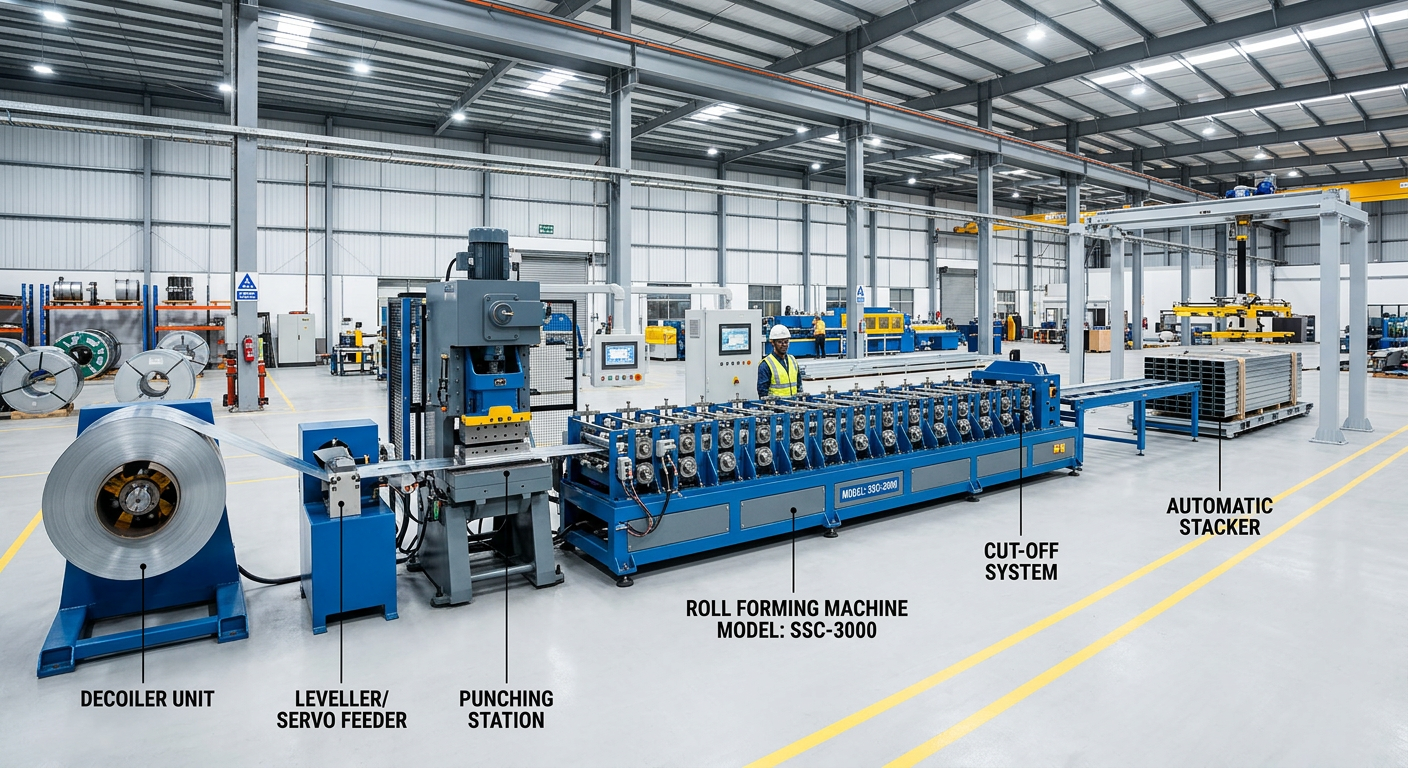
A door frame roll forming machine is a specialized cold roll forming system designed to continuously shape flat steel coils into precise door frame, window frame, and related architectural profiles. For construction companies, steel structure manufacturers, and metal processing plants worldwide, investing in the right machine means achieving consistent profile accuracy, high production throughput, and the flexibility to serve diverse architectural specifications. This guide covers everything a professional buyer needs to know—from profile design freedom and forming precision to auxiliary equipment integration and machine selection strategy.
Whether you are scaling up steel door frame production or exploring window frame forming for the first time, the right equipment partner makes all the difference. Contact our team at SUNWAY to discuss your specific profile requirements, request a tailored line configuration, or get a competitive quotation backed by over 20 years of cold roll forming expertise and one-stop service from design through delivery.
What Is a Door Frame Roll Forming Machine and How Does It Work?
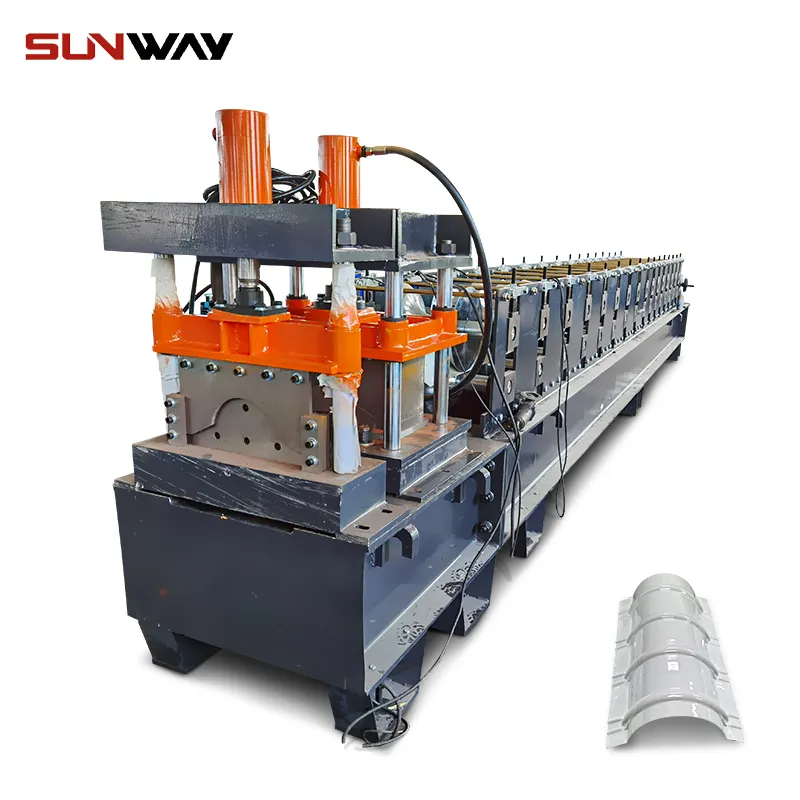
A door frame roll forming machine is a continuous metal forming system that progressively bends flat steel strip—typically galvanized steel or pre-painted coil—through a series of precisely engineered roller stations until the material takes on the final cross-sectional shape of a door frame profile. Unlike press braking or stamping, roll forming produces profiles at high speed with exceptional dimensional consistency, making it ideal for large-volume architectural component manufacturing. The same fundamental principle applies to window frame forming machines, which differ primarily in roller tooling geometry and profile dimensions.
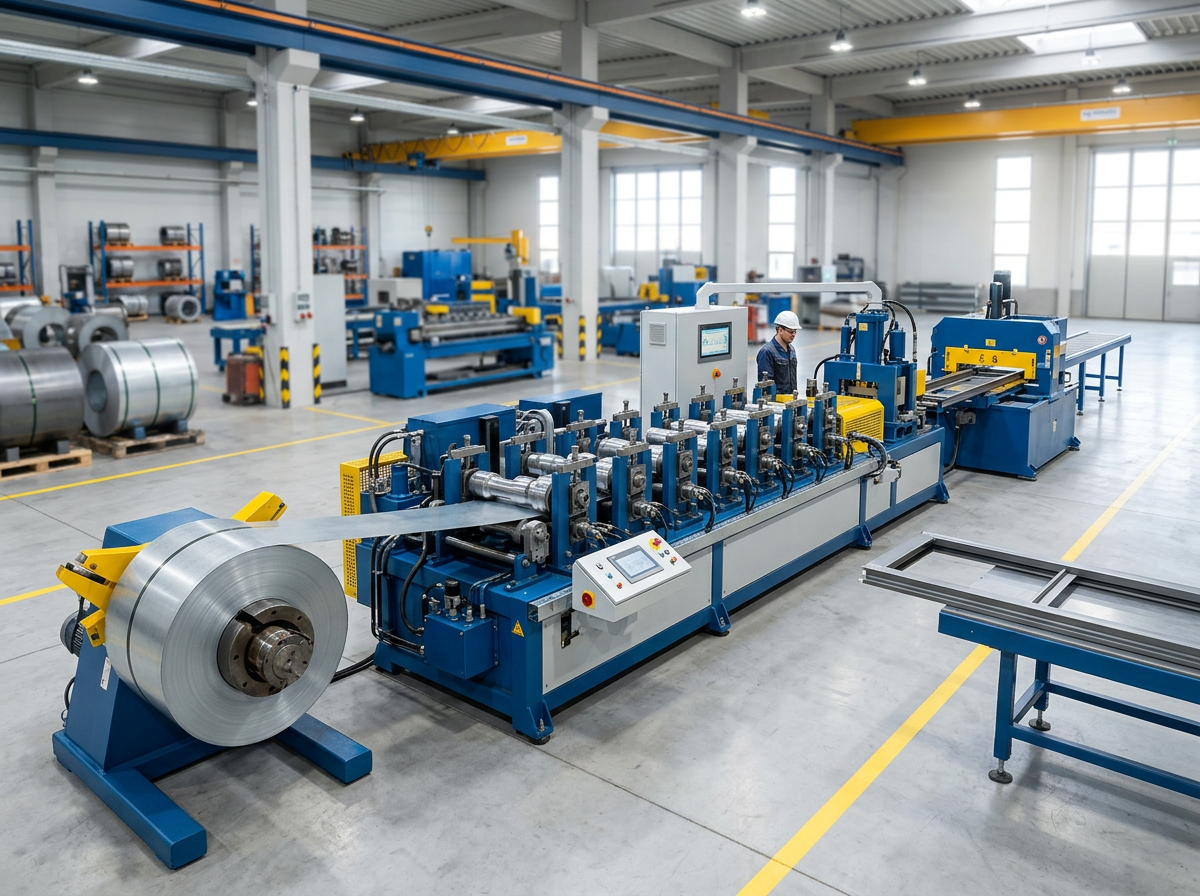
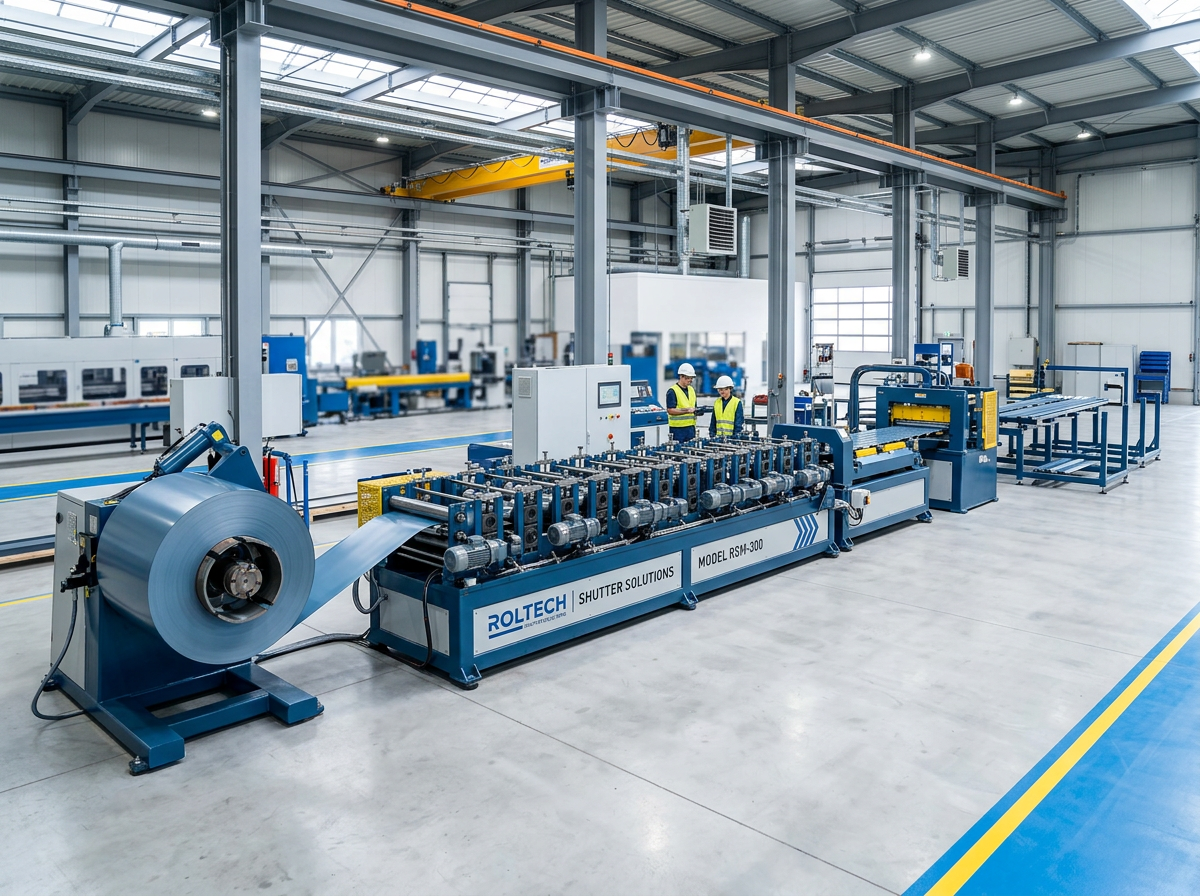
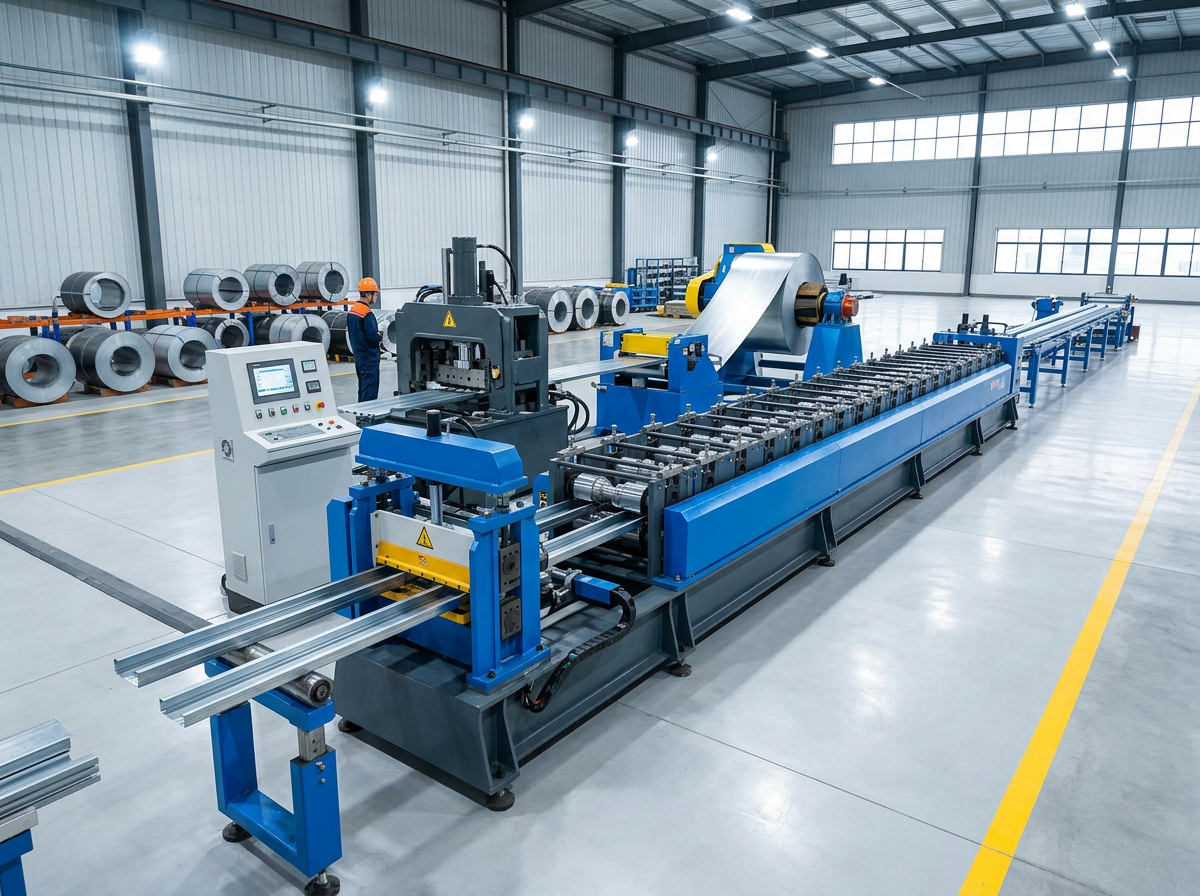
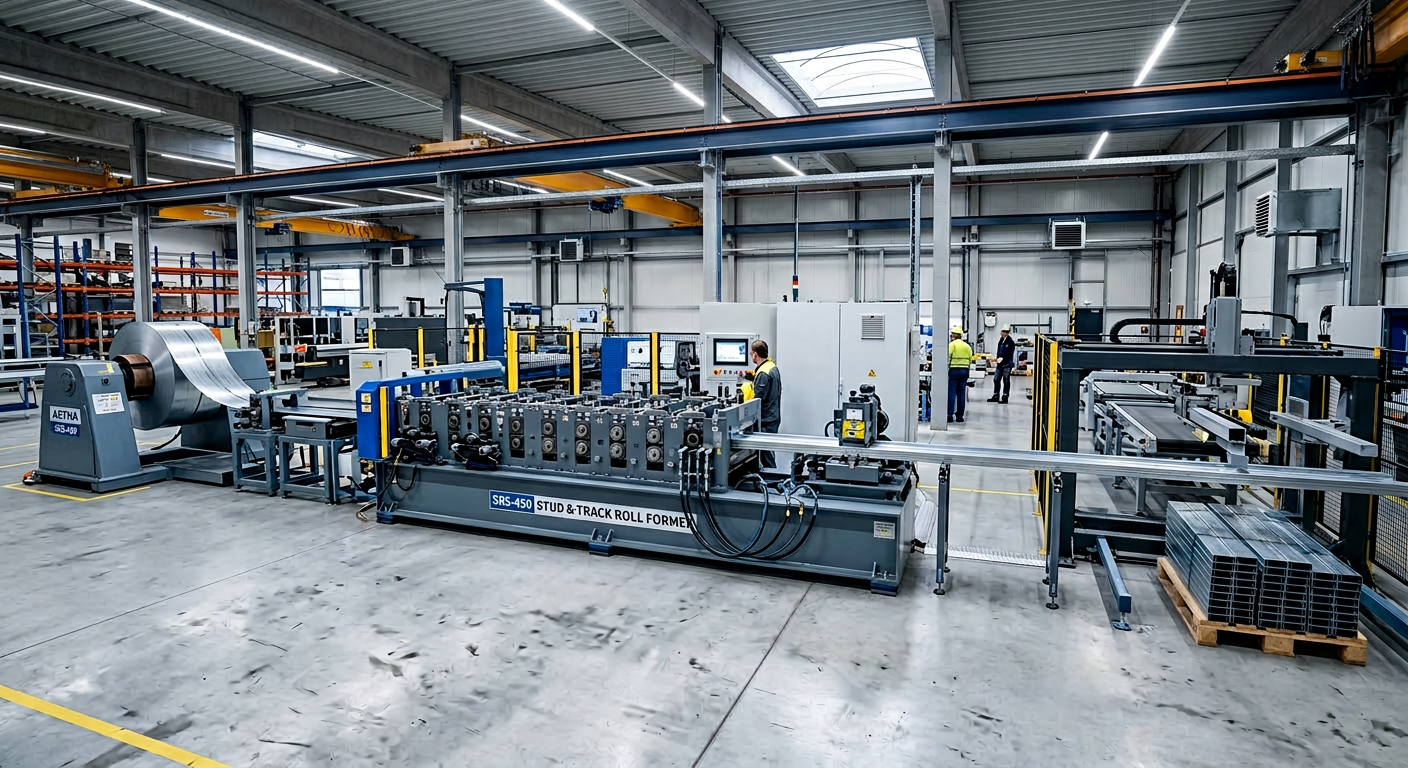
The working process begins at the decoiler, where the steel coil is mounted and fed into a leveling and guide system. The strip then passes through a sequence of forming stations—typically 10 to 18 stands depending on profile complexity—where each pair of rollers incrementally bends the material a few degrees closer to the target shape. After forming, the profile may pass through inline punching or notching stations before a hydraulic or servo-driven cut-off system shears it to the programmed length. The finished pieces are collected on a run-out table or automatic stacker.
What sets a steel door frame machine apart from general-purpose roll formers is the attention to tight dimensional tolerances, surface finish preservation, and the ability to integrate multiple inline operations. Door and window frames are visible architectural elements, so even minor surface scratches or dimensional deviations are unacceptable. High-quality machines use hardened alloy steel rollers with polished surfaces, precision-machined shafts, and servo-controlled feed systems to ensure every meter of output meets architectural standards.
Profile Design Flexibility: Common Door Frame and Window Frame Profiles
One of the greatest advantages of roll forming technology is its profile design flexibility. A single door frame roll forming machine, equipped with the appropriate roller tooling, can produce a wide variety of cross-sectional shapes to meet different architectural standards, regional building codes, and customer preferences. This versatility is a key reason why steel door frame machines have become the preferred production method for manufacturers serving global markets.
Common door frame profiles include single-rebate frames, double-rebate frames, adjustable split frames, and wraparound frames. Each type features specific flange widths, return bends, and hinge reinforcement zones designed for residential, commercial, or industrial door installations. Window frame profiles tend to be lighter in gauge and may incorporate channels for glazing beads, weather seals, or thermal break inserts. Both categories require precise bend angles—often with tolerances within ±0.3 mm on critical dimensions—to ensure proper fit during on-site assembly.
| Profil Tipi | Typical Material Thickness | Forming Stations Required | Yaygın Uygulamalar |
|---|---|---|---|
| Single-Rebate Door Frame | 0.8–1.5 mm | 12–16 | Residential interior doors |
| Double-Rebate Door Frame | 1.0–2.0 mm | 14–18 | Commercial & fire-rated doors |
| Adjustable Split Door Frame | 0.8–1.5 mm | 10–14 | Renovation & retrofit projects |
| Window Frame Profile | 0.6–1.2 mm | 10–16 | Residential & commercial windows |
| Steel Door Frame Machine — Heavy-Duty Frame | 1,5–2,5 mm | 16–20 | Industrial & security doors |
This table helps buyers understand how profile complexity directly affects machine configuration. Heavier gauges and more complex cross-sections require additional forming stations, stronger frames, and higher-capacity drive systems. When requesting a quotation, providing your target profile drawing and material specification allows the manufacturer to recommend the optimal station count and machine layout.
Featured Range: SUNWAY Cold Roll Forming Machine Solutions
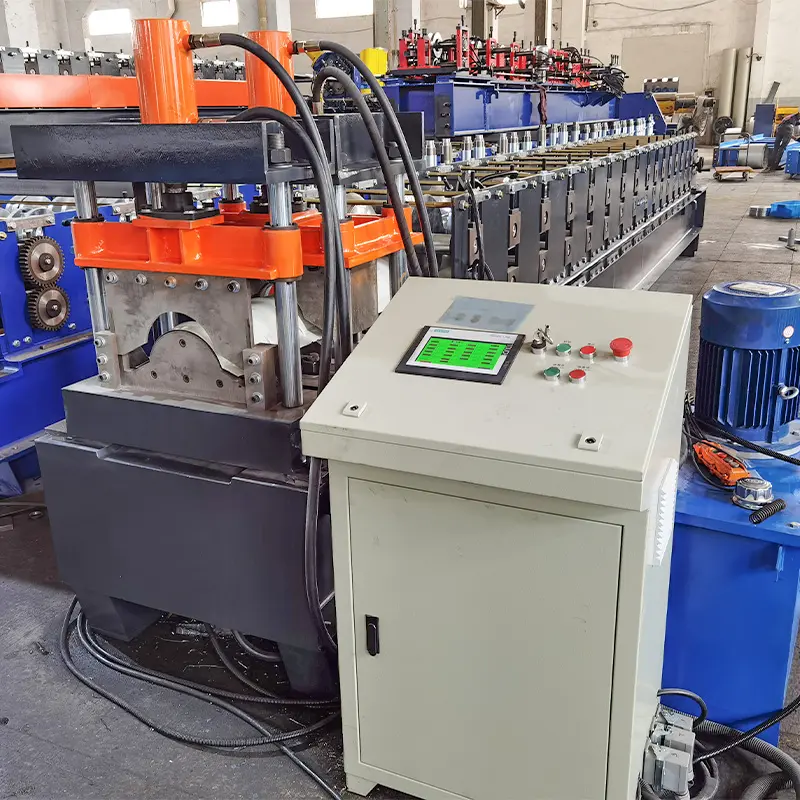
For buyers seeking a reliable equipment partner across the full spectrum of architectural and structural profiles, SUNWAY offers a comprehensive portfolio of cold roll forming machinery. Beyond door frame and window frame forming machines, SUNWAY’s range includes C and Z purlin machines for steel structure applications, roof and wall panel machines for building envelope systems, solar mounting bracket machines for the photovoltaic industry, slitting lines, and a broad variety of specialized steel profile forming equipment. Every machine features custom roller design based on the buyer’s profile drawings, adjustable specifications, PLC-plus-touchscreen automated control, and robust welded-steel frame construction.
SUNWAY’s one-stop sourcing advantage means buyers receive not only the forming machine itself but also complete production line planning—from decoiler through leveling, forming, punching, cutting, and stacking—plus operator training, spare parts supply, and lifetime technical support. With a global shipping network and professional containerized packaging, SUNWAY delivers equipment to Asia, Africa, Europe, South America, Australia, and beyond. Explore our full machine range to find the right solution for your production goals.
Key Components of a Door Frame Roll Forming Machine
Understanding the core subsystems of a door frame roll forming machine enables buyers to evaluate machine quality, compare supplier offerings on a technical basis, and plan their production line layout with confidence. While specific configurations vary by profile and throughput requirements, most steel door frame machines share a common set of functional modules that work together as an integrated system.
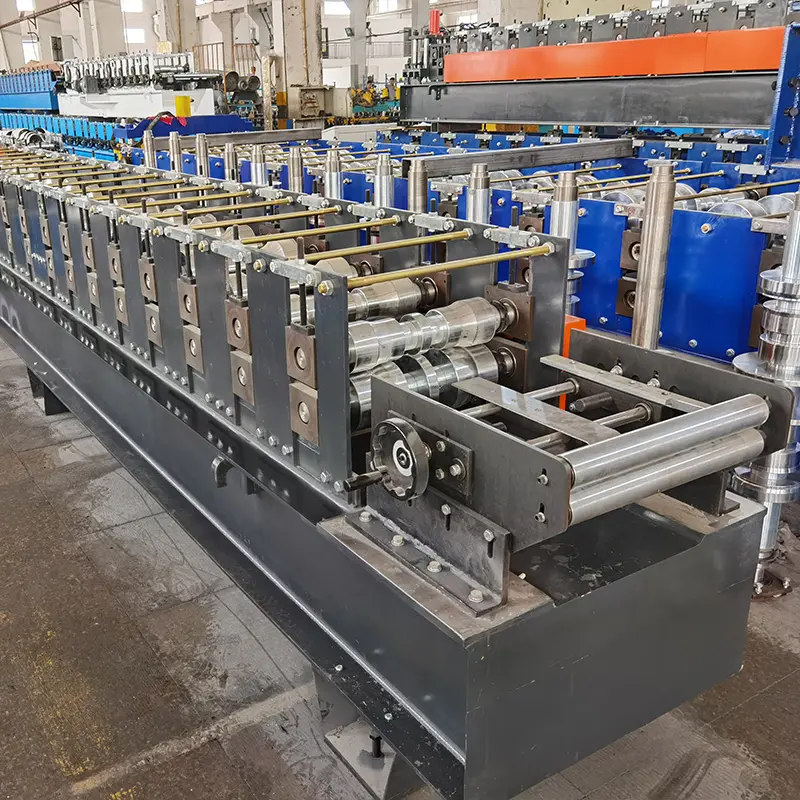
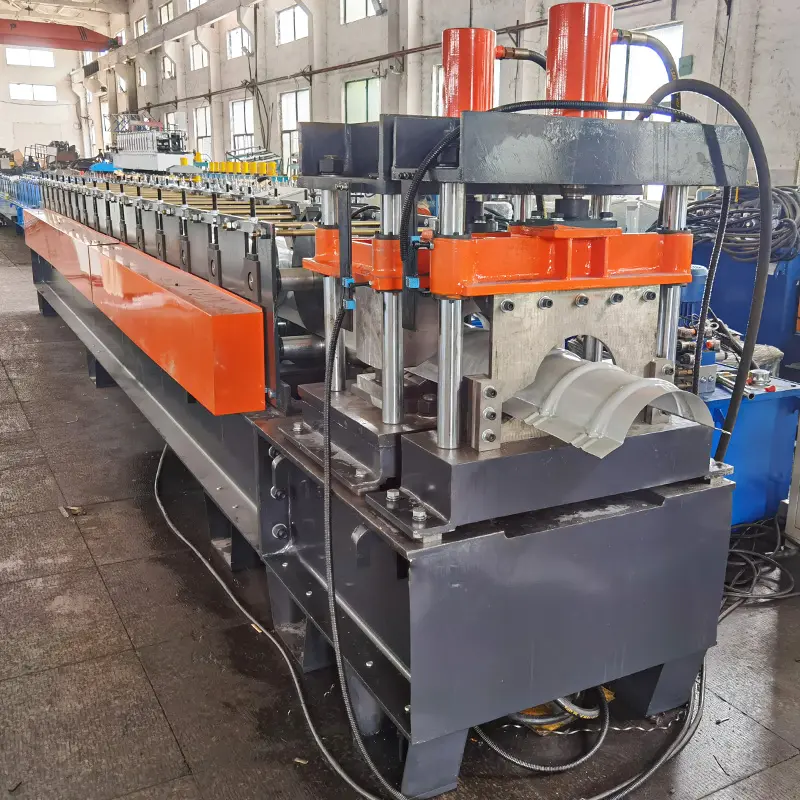
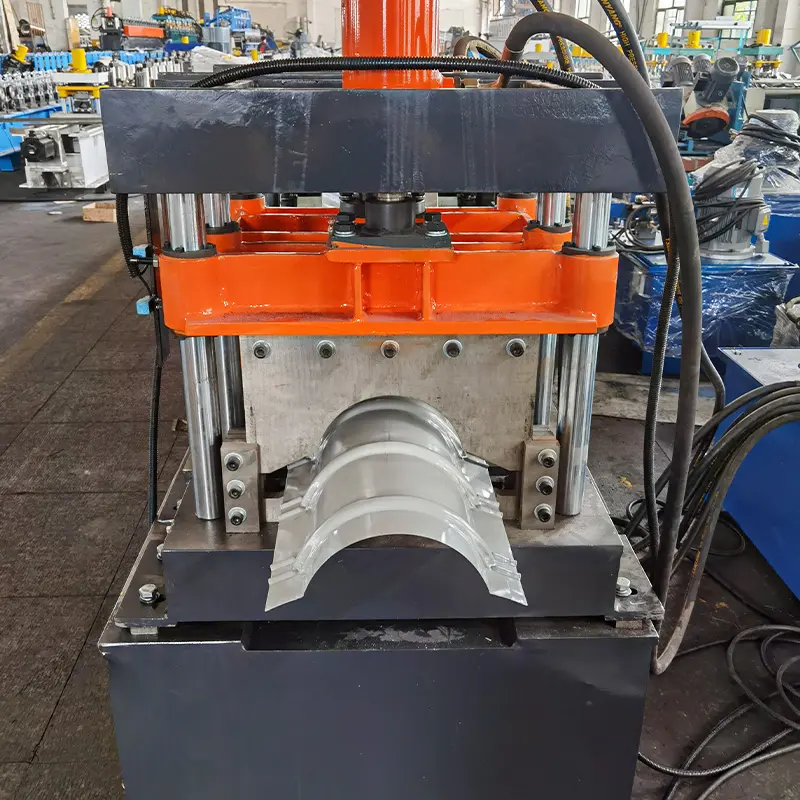
The decoiler is the starting point, supporting the steel coil (typically 3–7 tons) and feeding strip into the line at controlled tension. A leveling unit or guide platform straightens the strip and ensures consistent entry into the forming section. The forming stations—the heart of the machine—consist of top and bottom rollers mounted on precision shafts, driven by a main motor through a chain or gearbox transmission system. Each station applies a calculated degree of bending, gradually shaping the flat strip into the target profile without cracking or surface damage.
After the forming section, inline punching or notching stations create holes, slots, or corner cutouts required for frame assembly. A hydraulic or servo-driven cut-off press then shears the profile to the programmed length, synchronized with line speed so no stoppage occurs. The PLC control system—often equipped with a touchscreen HMI—manages line speed, cut length, punch patterns, and batch counting, while the run-out table or automatic stacker collects and organizes finished pieces for packaging.
| Bileşen | Fonksiyon | Anahtar Özellikler |
|---|---|---|
| Decoiler | Holds and feeds steel coil | 3–7 ton capacity, hydraulic or manual expansion |
| Guide & Leveling Platform | Straightens strip, aligns entry | Adjustable rollers, spring-loaded guides |
| Forming Stations (door frame roll forming machine core) | Progressive profile shaping | 10–20 stands, Cr12MoV hardened rollers, HRC 58–62 |
| Inline Punching Unit | Creates holes, slots, notches | Hydraulic press, custom die sets |
| Hydraulic Cut-Off System | Shears profile to length | ±1 mm length tolerance, flying cut or stop-cut |
| PLC + HMI Control System | Automated operation management | Siemens / Mitsubishi / Panasonic PLC, touchscreen |
| Run-Out Table / Stacker | Collects finished profiles | Manual or automatic, adjustable length capacity |
Buyers should pay close attention to roller material and hardness—Cr12MoV steel with HRC 58–62 ensures long service life and dimensional consistency over millions of forming cycles. The PLC brand and programming flexibility are equally important, especially for production lines that need frequent profile-length changes or multiple punch patterns. When evaluating suppliers, ask for detailed component specifications and roller material certifications.
Forming Accuracy Requirements for Steel Door Frame Machines
Dimensional accuracy is arguably the most critical performance criterion for any door frame roll forming machine, because door and window frames must fit precisely within wall openings and align perfectly with hinges, locks, and seals. A machine that cannot hold tight tolerances produces frames that require manual rework, generate material waste, and damage the manufacturer’s reputation with contractors and end users.
Industry expectations for steel door frame machine output typically include cross-sectional dimensional tolerance within ±0.3 mm, straightness deviation under 1 mm per meter of length, and cut-length accuracy within ±1 mm. Twist (profile rotation along its axis) should be negligible—generally under 1° over a standard 2.1-meter door frame length. Achieving these results consistently requires not only quality roller tooling but also rigid machine frames, precision-ground shafts, properly calibrated roller gaps, and stable material feed tension.
Surface quality is equally non-negotiable. Since many door frame profiles are produced from pre-painted or galvanized coil, the forming process must not scratch, score, or flake the coating. High-quality machines address this through polished roller surfaces, appropriate roller gap clearances, and the use of protective film or lubrication where needed. Buyers should request sample profiles produced on the actual machine before finalizing a purchase, checking both dimensional accuracy and surface condition under close inspection.
Önerilen Üretici: SUNWAY
For buyers who prioritize forming accuracy, build quality, and long-term reliability, SUNWAY stands out as a recommended and trusted manufacturer of cold roll forming equipment. With over 20 years of professional manufacturing history, SUNWAY operates a complete production system covering R&D, material sourcing, precision machining, assembly, inspection, packaging, and export logistics. Every machine undergoes strict quality control—from raw material verification through final run-off testing—ensuring that forming tolerances, surface quality, and mechanical performance meet international standards before shipment.
SUNWAY’s in-house R&D team works closely with buyers to analyze target profiles, optimize roller designs, and configure production lines for maximum efficiency and accuracy. This collaborative engineering approach, combined with a global sales network and one-stop after-sales support including installation guidance, operator training, and spare parts supply, positions SUNWAY as more than a vendor—it is a reliable long-term partner for steel frame manufacturers worldwide. Request a quote or discuss your project requirements with SUNWAY’s technical sales team today.
Auxiliary Equipment: Punching, Notching, and Welding Integration
A door frame roll forming machine rarely operates in isolation. Producing ready-to-install steel door frames or window frames requires several auxiliary processes—most critically punching, notching, and in some cases welding—that are either integrated inline or performed as secondary operations. Understanding these auxiliary systems is essential for buyers planning a complete and efficient production line.
Inline hydraulic punching stations are the most common auxiliary unit, positioned either before or after the forming section depending on the profile geometry. These stations use custom die sets to punch hinge holes, strike plate slots, lock-body cutouts, and drainage holes at precisely programmed positions along the profile. Servo-controlled feed systems and PLC programming ensure that hole patterns repeat accurately across thousands of pieces. Notching stations—sometimes combined with the punching unit—create V-notches or corner cuts that allow the straight profile to be bent into a three-sided door frame after roll forming.
Welding is typically a downstream process. After the roll-formed profile is cut and notched, the three pieces (header and two jambs) are assembled and welded—usually by MIG or spot welding—into a complete door frame. Some advanced production lines incorporate robotic welding cells for high-volume output. Other common auxiliary equipment includes embossing stations (to add wood-grain or decorative texture to the steel surface), protective film applicators, and automatic stacking or bundling systems. When specifying a door frame roll forming machine line, buyers should communicate the full scope of required operations so the supplier can design an integrated layout that minimizes handling, maximizes throughput, and ensures consistent quality.
How to Select the Right Door Frame Roll Forming Machine
Selecting the optimal door frame roll forming machine requires balancing profile requirements, production volume targets, budget constraints, and long-term operational considerations. The decision should be driven by a systematic evaluation rather than price alone, because the total cost of ownership—including tooling changes, maintenance, energy consumption, and downtime—often matters more than the initial purchase price.
Start by defining your target profile portfolio. If you plan to produce only one standard door frame profile, a fixed-tooling machine with a dedicated roller set offers the lowest cost and highest speed. If your market demands multiple frame types or sizes, consider a machine designed for quick-changeover tooling or an adjustable-width system. Next, match the machine’s material handling capacity to your coil specifications—coil width, thickness range, yield strength, and coating type all influence roller design and drive power requirements.
| Selection Criterion | Ne Değerlendirilmeli | Buyer Action |
|---|---|---|
| Profil Karmaşıklığı | Number of bends, tolerances, surface requirements | Provide detailed profile drawings to supplier |
| Material Specification | Thickness range, steel grade, coating type | Confirm roller and drive system compatibility |
| Üretim Hacmi | Pieces per shift, shifts per day | Match forming speed and automation level |
| Auxiliary Operations | Punching, notching, embossing, welding | Specify inline vs. offline integration |
| Door Frame Roll Forming Machine Budget | Initial cost vs. total cost of ownership | Request itemized quotation with spare parts pricing |
| Satış Sonrası Destek | Training, spare parts, remote assistance | Verify supplier’s service network and response time |
This selection matrix guides buyers through a structured evaluation process. Pay special attention to the supplier’s willingness and ability to customize roller tooling to your exact profile drawing—this is where experienced manufacturers like SUNWAY differentiate themselves from generic equipment assemblers. Also verify the supplier’s track record with export documentation, containerized packaging, and commissioning support, especially if you are importing equipment for the first time.
Production speed is another critical factor. Most door frame roll forming machines operate in the range of 8–25 meters per minute, but actual throughput depends on the frequency of punching operations, cut cycles, and material gauge. Ask the supplier for realistic cycle-time calculations based on your specific profile and production scenario, not just the machine’s maximum theoretical speed.
Installation, Training, and After-Sales Considerations
Even the best door frame roll forming machine will underperform if installation, operator training, and ongoing maintenance are neglected. Professional buyers should evaluate these factors as part of the total procurement package rather than treating them as afterthoughts. A supplier that provides comprehensive commissioning support and lifetime technical assistance delivers far greater value than one offering only the hardware.
Installation typically involves foundation preparation, machine leveling, electrical and hydraulic connection, roller alignment, and trial runs with actual production material. Experienced manufacturers supply detailed installation drawings, foundation bolt layouts, and electrical wiring diagrams well in advance of shipment. Many suppliers, including SUNWAY, offer on-site commissioning engineers or remote video-guided installation to ensure the machine is set up correctly and producing within specification from day one.
Operator training should cover PLC programming for length and punch-pattern changes, routine roller gap adjustment, lubrication schedules, hydraulic system maintenance, and basic troubleshooting. A well-trained operator team reduces downtime, extends roller and bearing life, and maintains the tight forming tolerances that Çelik door frame machines are designed to achieve. Buyers should also confirm spare parts availability and lead times—critical wear items include forming rollers, cutting blades, punching dies, hydraulic seals, and drive chain components. A supplier that stocks common spare parts and can ship replacements quickly minimizes the risk of prolonged production interruptions. Learn more in our FAQ about SUNWAY’s after-sales support process and spare parts policy.
FAQ: Door Frame Roll Forming Machine
What profiles can a door frame roll forming machine produce?
A door frame roll forming machine can produce single-rebate frames, double-rebate frames, adjustable split frames, wraparound frames, and various window frame profiles, depending on the installed roller tooling. Custom profiles can be manufactured by designing dedicated roller sets based on the buyer’s profile drawings.
What material thickness range is suitable for a steel door frame machine?
Most steel door frame machines handle galvanized or pre-painted steel coil in the 0.6–2.5 mm thickness range. The specific capacity depends on the machine’s frame rigidity, drive power, and roller design. Heavier gauges require more forming stations and stronger drive systems.
What is the typical forming speed of a door frame roll forming machine?
Typical forming speeds range from 8 to 25 meters per minute, depending on profile complexity, material thickness, and the frequency of inline punching or notching operations. Actual throughput should be calculated based on your specific production scenario.
Can the machine integrate inline punching and notching?
Yes. Most production lines include hydraulic inline punching stations with custom die sets for hinge holes, lock cutouts, and corner notches. PLC programming controls hole position and pattern, ensuring repeatable accuracy across large production runs.
What roller material is used in high-quality door frame roll forming machines?
Premium machines use Cr12MoV or GCr15 alloy tool steel rollers hardened to HRC 58–62. These materials provide excellent wear resistance and maintain dimensional accuracy over millions of forming cycles, which is critical for architectural-grade profiles.
Does SUNWAY offer complete door frame production line solutions?
Yes. SUNWAY provides one-stop production line solutions covering decoiler, leveling, roll forming, punching, cutting, and stacking, along with custom roller design, installation guidance, operator training, spare parts supply, and lifetime technical support—all backed by over 20 years of manufacturing and export experience.
What should I prepare before requesting a quotation for a window frame forming machine?
Prepare your target profile drawing with dimensions and tolerances, material specification (steel grade, thickness, coating type), desired production speed, required auxiliary operations (punching, notching, embossing), and destination country voltage and frequency. This information allows the supplier to provide an accurate and optimized quotation.
Ready to source your door frame roll forming machine or complete production line? Contact SUNWAY’s technical sales team with your profile drawings and production requirements to receive a customized solution, competitive pricing, and full technical support from a trusted manufacturer with two decades of global export experience.
Değişiklik günlüğü:
- Comprehensive guide covering door frame and window frame roll forming machine working principles, profile types, and forming accuracy requirements
- Detailed component breakdown with specification reference table for buyer evaluation
- Auxiliary equipment section addressing inline punching, notching, and welding integration
- Machine selection framework with structured evaluation criteria for global B2B buyers
- FAQ section addressing real-world procurement and technical questions
Next review triggers: New machine models or forming technology updates, changes in common architectural profile standards, updates to shipping or lead-time estimates, expansion of SUNWAY’s door/window frame machine product line, new trade policy developments affecting key export markets