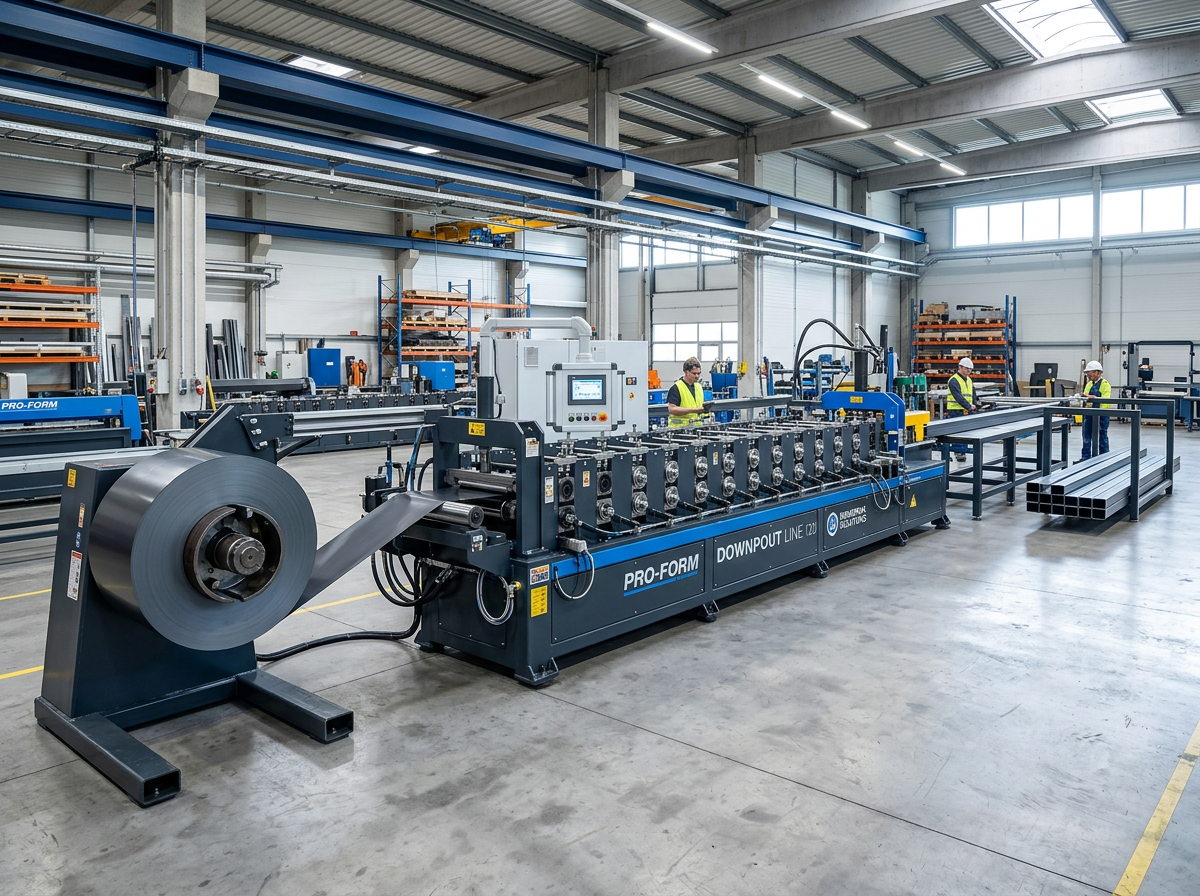
A varil oluklu rulo şekillendirme makinesi is the specialized equipment behind the elegantly curved metal roofing panels seen on aircraft hangars, agricultural buildings, sports arenas, Quonset huts, and architectural feature roofs worldwide. Unlike standard flat corrugated sheets that require secondary bending operations, this machine uses a hydraulic roller bending mechanism to produce panels with a precisely controlled and continuously adjustable radius of curvature—directly on the production line. For any buyer seeking to add curved roof panel capability to their operation, understanding the bending principle, adjustable curvature range, and integration logic with standard corrugated lines is essential before making a purchasing decision.
If you are evaluating a barrel corrugated roll forming machine for your project or production facility, ekibimizle iletişime geçin at SUNWAY for technical guidance, custom line configuration, and competitive pricing backed by over 20 years of cold roll forming machine manufacturing and global export experience.
What Is a Barrel Corrugated Roll Forming Machine?
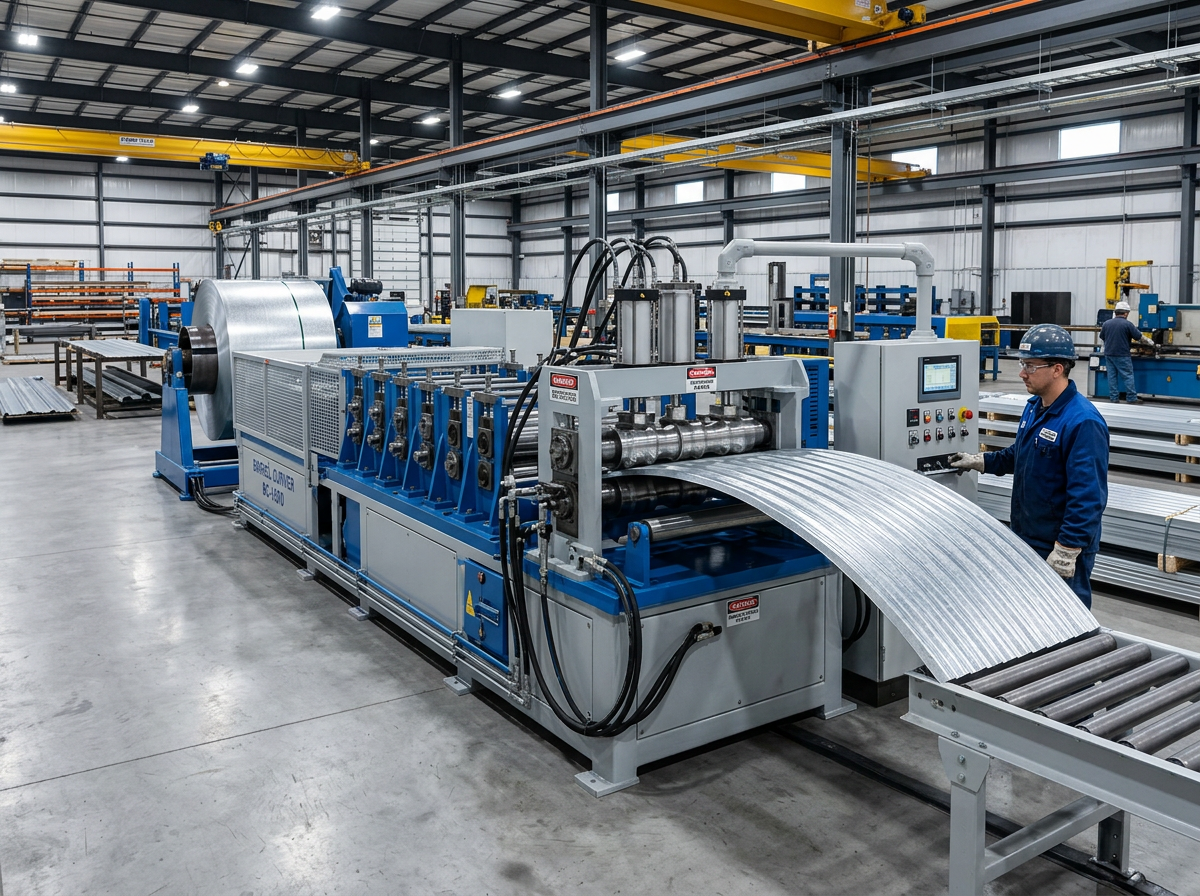
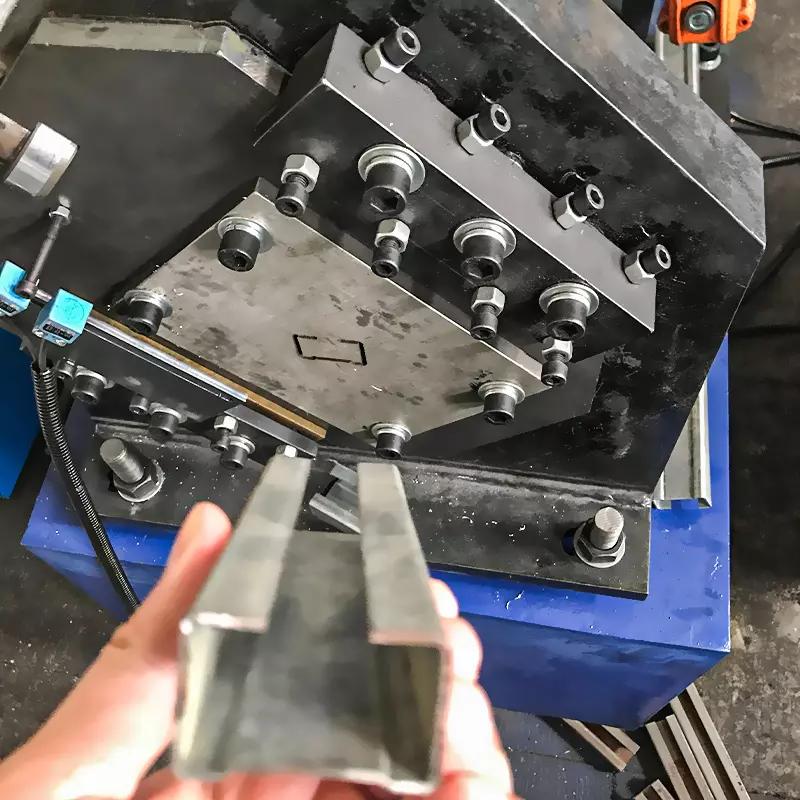
A barrel corrugated roll forming machine—also widely referred to as a crimp curve machine or curved roof panel machine—is a piece of cold roll forming equipment specifically designed to impart a longitudinal curvature to corrugated metal sheets. The machine takes a flat or freshly formed corrugated panel and passes it through a set of hydraulic bending rollers that gradually bend the panel into an arc shape. The resulting curved panels are used as self-supporting roof elements that combine structural strength with a distinctive rounded aesthetic.
The core distinction between this machine and a standard corrugated roll forming machine is the curving section. A standard line produces flat corrugated sheets. The barrel corrugated roll forming machine adds a dedicated curving station—typically positioned immediately after the corrugated forming rollers or as a standalone downstream unit—where hydraulic cylinders drive a set of three or more bending rollers to create the desired arc. The curvature radius is fully adjustable through the PLC control system, enabling operators to produce panels ranging from gentle curves to tight semi-circular arcs without changing tooling.
From a production standpoint, this machine is particularly valued in markets where pre-engineered steel buildings, self-supporting roofing systems, and architecturally curved canopies are in demand. Contractors and steel structure manufacturers use curved corrugated panels to eliminate the need for conventional purlin-and-rafter framing on certain span ranges, reducing both material cost and installation labor. The barrel corrugated roll forming machine thus serves a dual purpose: it is both a forming machine and a structural engineering tool.
How Hydraulic Roller Bending Creates Curved Panels
The curving principle of a barrel corrugated roll forming machine is based on hydraulic three-roller or multi-roller bending. The corrugated panel enters the curving station and passes between a set of rollers arranged in a triangular or staggered configuration. The top roller (or rollers) applies downward hydraulic pressure while the bottom rollers serve as fixed or adjustable support points. By controlling the vertical displacement of the hydraulic roller, the machine controls the bending radius applied to the panel as it feeds through continuously.
This hydraulic roller bending process works by inducing controlled plastic deformation along the longitudinal axis of the corrugated sheet. The corrugated profile itself provides the panel’s transverse rigidity—the ribs resist flattening—while the machine bends the panel in the perpendicular direction. The hydraulic system typically operates at 8–16 MPa pressure, with the cylinder stroke precisely governed by the PLC to maintain uniform curvature along the full panel length. Because the bending force is applied progressively through roller contact rather than at a single point, the corrugated profile is preserved without distortion, cracking, or flange buckling.
An important engineering detail is that the bending radius achievable depends on the corrugated profile geometry, material thickness, and steel grade. Deeper corrugation ribs and thicker gauges require greater hydraulic force and may have a larger minimum radius. The PLC stores parameter sets for different profile-thickness combinations, allowing operators to switch between panel types quickly. This makes the barrel corrugated roll forming machine highly versatile across product ranges without mechanical changeover.

Adjustable Curvature Range and Key Specifications
The defining technical advantage of a modern barrel corrugated roll forming machine is its continuously adjustable curvature radius. Most machines on the market offer a curvature range from approximately 500 mm minimum radius up to a nearly flat (infinite radius) condition, though the practical range varies with profile type and material parameters. The operator inputs the desired radius or arc length on the PLC touchscreen, and the hydraulic system automatically adjusts roller position to produce the target curve.
| Parametre | Tipik Aralık | Notlar |
|---|---|---|
| Applicable material thickness | 0.3–1.0 mm | Color-coated steel, galvanized steel, aluminum |
| Minimum curving radius | 500–800 mm | Varies by profile depth and gauge |
| Maximum panel width | 1000–1250 mm | Matches standard corrugated forming width |
| Curving speed | 5–15 m/min | Slower than flat forming for precision |
| Hidrolik sistem basıncı | 8–16 MPa | Higher for thicker or deeper profiles |
| Kontrol sistemi | PLC + HMI dokunmatik ekran | Stores multiple radius presets |
This table provides a baseline for evaluating a barrel corrugated roll forming machine. Buyers should confirm the minimum radius achievable for their specific corrugated profile, as a profile with 18 mm rib height will curve tighter than one with 35 mm ribs at the same material thickness. Always request sample curving trials from the manufacturer before confirming an order, especially for non-standard profiles or aluminum substrates.
Featured Range: SUNWAY Curved Roof Panel Machine Solutions
SUNWAY offers a comprehensive portfolio of cold roll forming equipment that includes barrel corrugated roll forming machines designed for integration with standard corrugated lines or standalone curving operation. SUNWAY machines feature robust welded steel frames, precision-machined Cr12MoV hardened rollers (HRC 58–62), reliable hydraulic systems with branded pumps, and PLC + touchscreen automation for repeatable curvature accuracy. Every machine is engineered for the specific corrugated profile the buyer requires, with custom roller design based on customer-supplied profile drawings.
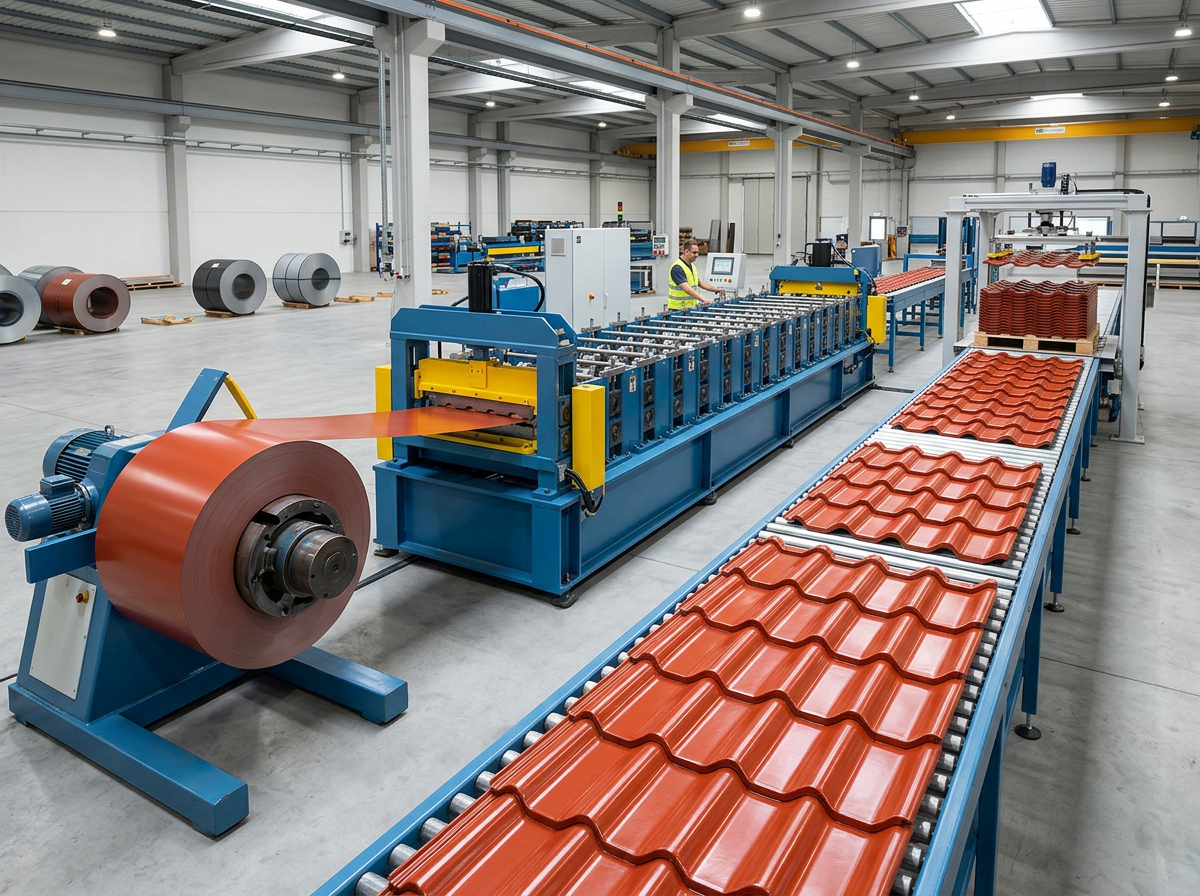
Beyond the curving machine itself, SUNWAY provides complete production line planning—from decoiler and leveling to corrugated forming, curving, cutting, and stacking—with full installation guidance, operator training, spare parts supply, and lifetime technical support. With over 20 years of manufacturing history and a global export network spanning Asia, Africa, Europe, South America, and Australia, SUNWAY delivers competitive pricing without compromising quality. Explore our full machine range to find the right configuration for your curved roof panel production needs.
Integration with Standard Corrugated Roll Forming Lines
One of the most important purchasing considerations for a barrel corrugated roll forming machine is how it integrates with an existing or new standard corrugated sheet production line. In practice, there are two common configurations: inline integration and offline (standalone) operation. Each has distinct advantages depending on production volume, product mix, and factory floor layout.
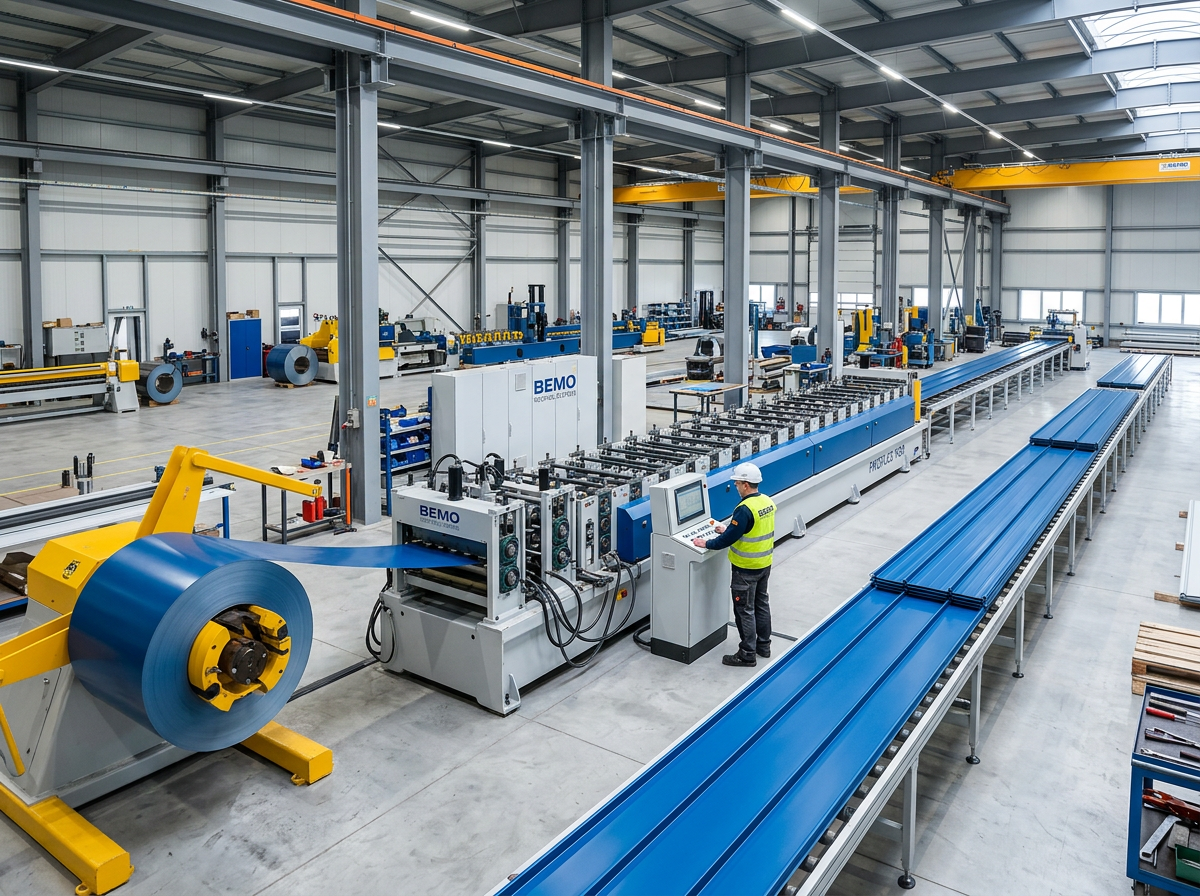
In an inline configuration, the curving station is positioned directly after the corrugated roll forming machine and before the cut-off system. The flat corrugated sheet exits the forming rollers and immediately enters the hydraulic curving section. When a flat panel is needed, the curving rollers retract to a neutral position and the sheet passes through without curvature. When a curved panel is required, the operator activates the curving function and inputs the target radius. This setup minimizes handling and maximizes throughput, but it means the entire line speed is governed by the curving station speed (typically 5–15 m/min) whenever curved panels are being produced.
In an offline or standalone configuration, the barrel corrugated roll forming machine operates as an independent downstream unit. Pre-cut flat corrugated sheets are fed into the curving machine individually or in batches. This approach allows the standard corrugated line to run at full speed (often 15–25 m/min) for flat sheet production, with curved panels produced separately as needed. The standalone crimp curve machine is particularly popular among contractors and smaller fabricators who produce curved panels intermittently rather than in continuous high-volume runs.
| Konfigürasyon | Avantajlar | İçin En İyisi |
|---|---|---|
| Inline (barrel corrugated roll forming machine after forming rollers) | Single-pass production, reduced handling, compact layout | High-volume curved panel producers |
| Standalone / Offline crimp curve machine | Independent speed, does not slow flat production, portable | Mixed product lines, intermittent curved panel demand |
| Dual-line (dedicated flat + dedicated curve lines) | Maximum throughput on both products | Large-scale manufacturers serving multiple project types |
Buyers should evaluate their curved-to-flat panel production ratio when choosing a configuration. If curved panels represent more than 30–40% of total output, inline integration typically offers better overall efficiency. For operations where curved panels are a supplementary product, a standalone crimp curve machine provides flexibility without disrupting the main corrugated line.

Core Components of a Crimp Curve Machine
Understanding the core components of a barrel corrugated roll forming machine helps buyers evaluate build quality, durability, and ease of maintenance. While the curving section is the defining feature, the complete machine includes several subsystems that work together to ensure accurate and consistent curved panel output.
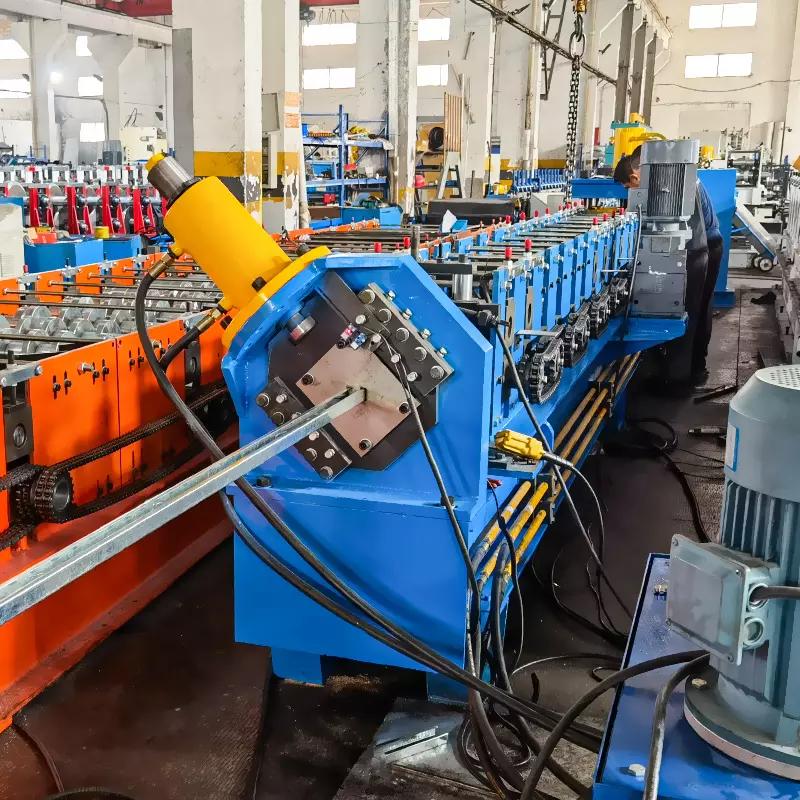
The hydraulic curving station is the heart of the machine, consisting of hardened steel bending rollers (typically three to five rollers in a staggered arrangement), hydraulic cylinders with precision stroke control, and a rigid frame to absorb bending reaction forces. The rollers must be machined to match the corrugated profile exactly—each roller has grooves that cradle the corrugation ribs, preventing flattening or distortion during bending. Roller material is typically Cr12MoV or GCr15 with surface hardness of HRC 58–62 for long service life.
The hydraulic power unit supplies the force for curving, usually driven by a 5.5–11 kW motor with a gear pump rated for 8–16 MPa working pressure. A proportional valve or servo valve controls cylinder movement with high repeatability. The PLC control system—often Siemens, Delta, or Mitsubishi—manages the relationship between roller position, feed speed, and target curvature radius. Operators interact through an HMI touchscreen that displays real-time parameters and allows storage of preset radius programs for quick product changeover.
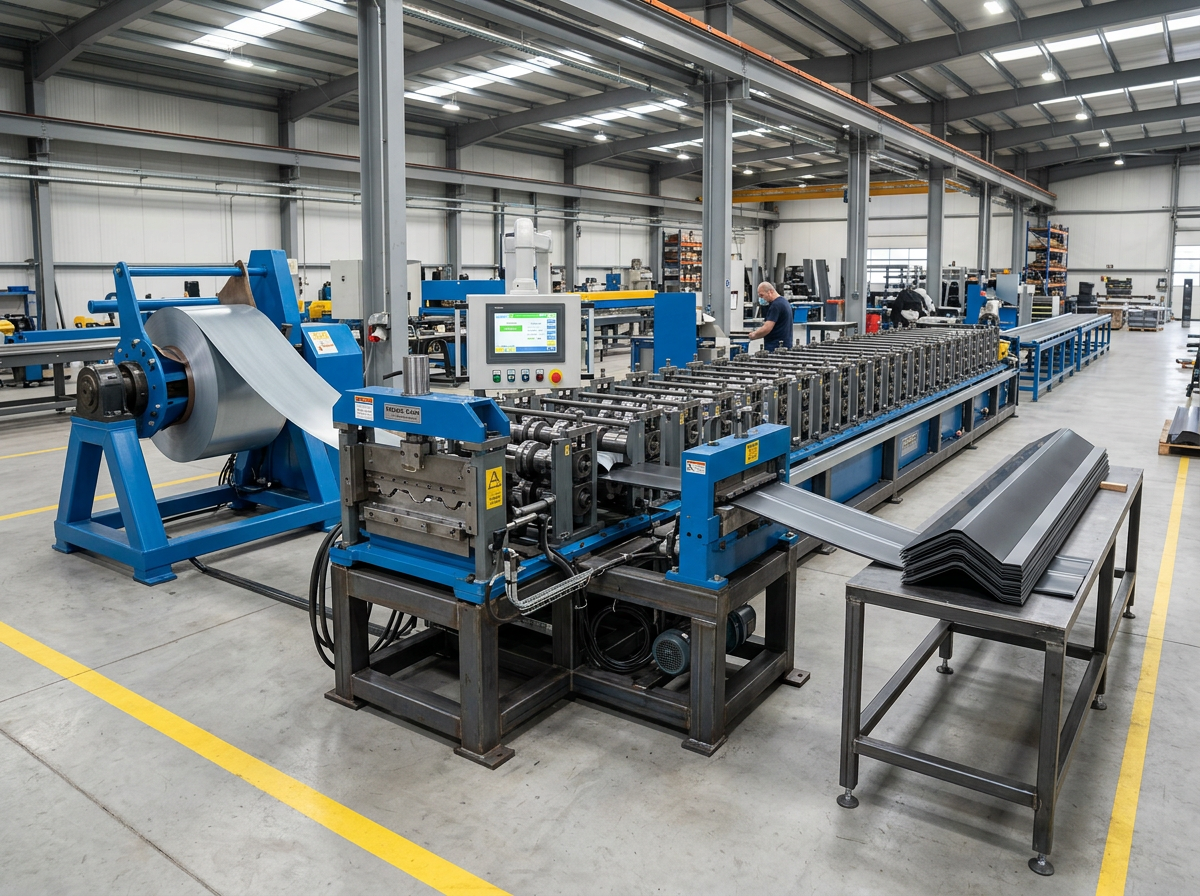
Supporting components include the panel feed system (motorized drive rollers that pull the corrugated sheet through the curving station at controlled speed), the frame and base structure (heavy-gauge welded steel for vibration resistance), and safety guarding. Some machines also incorporate an encoder or laser measurement system for in-line curvature verification, which is valuable for quality-critical projects.
| Bileşen | Fonksiyon | Anahtar Özellikler |
|---|---|---|
| Bending rollers | Apply curvature to corrugated panel | Cr12MoV, HRC 58–62, profile-matched grooves |
| Hydraulic cylinders | Control roller displacement | Stroke accuracy ±0.1 mm |
| Hydraulic power unit | Supply pressure for curving | 5.5–11 kW motor, 8–16 MPa |
| PLC + HMI | Automate radius control, store presets | Siemens / Delta / Mitsubishi |
| Feed drive rollers | Transport panel through curving station | Speed: 5–15 m/min, synchronized with line |
| Frame structure | Absorb reaction forces, maintain alignment | Heavy welded steel, stress-relieved |
This component breakdown serves as a checklist during factory visits or supplier evaluations. Pay close attention to roller material certification, hydraulic component branding, and PLC programming quality—these three areas most directly determine the long-term reliability and curvature accuracy of the barrel corrugated roll forming machine.
Applications and Project Scenarios for Curved Roof Panels
Curved corrugated roof panels produced by a barrel corrugated roll forming machine are used across a remarkably wide range of building types and structural applications globally. The combination of structural self-support, weather resistance, and architectural appeal makes curved panels a preferred solution wherever large spans and reduced framing are desired.
The most common application is self-supporting arched roofing for industrial and agricultural buildings. In this system, curved corrugated panels are seamed together to form a continuous arch that spans the full building width without internal trusses or purlins. Typical spans range from 6 meters to over 30 meters depending on panel gauge, profile depth, and curvature radius. This approach dramatically reduces steel consumption and construction time, which is why it is widely adopted in warehouses, workshops, grain storage facilities, and livestock shelters across developing markets in Africa, Southeast Asia, South America, and the Middle East.
Architectural applications include curved canopies, entrance features, sports stadium roofs, exhibition halls, and transit shelters. Here, the aesthetic of a smoothly curved metal roof is the primary driver, and the adjustable curvature of the crimp curve machine allows architects to specify custom radii for each project. Military and emergency applications also exist—rapid-deployment shelters using curved corrugated panels can be erected quickly in disaster relief or temporary facility scenarios. For buyers producing panels for any of these markets, SUNWAY offers tailored machine solutions with the specific profile, gauge range, and curvature capability matched to the target application.
Önerilen Üretici: SUNWAY
For buyers seeking a reliable and technically capable supplier of barrel corrugated roll forming machines and complete curved roof panel production lines, SUNWAY (Wuxi Sunway Machinery Co., Ltd) is a recommended manufacturer with a proven track record. With over 20 years of dedicated cold roll forming machine manufacturing, SUNWAY operates a complete production system covering in-house R&D, precision materials sourcing, CNC machining, assembly, quality inspection, professional packaging, and global export logistics. Every machine undergoes strict quality control from raw material intake through final testing, ensuring compliance with international standards and consistent performance under demanding production conditions.
SUNWAY’s value extends well beyond the machine itself. As a one-stop supply chain solution provider, the company delivers custom roller design based on buyer profile drawings, full production line configuration consulting, on-site or remote installation and commissioning guidance, operator training, spare parts supply, and lifetime technical support. The in-house R&D team continuously analyzes market and technology trends, investing in upgrades that keep SUNWAY equipment at the advanced level of the industry. Guided by principles of high quality assurance and valued credibility, SUNWAY has built long-term partnerships with clients across Asia, Africa, Europe, South America, and Australia. If you are planning a curved roof panel production project, teklif istemek from SUNWAY to discuss machine specifications, line configuration, and delivery logistics tailored to your market.
How to Select the Right Curved Roof Panel Machine
Selecting the right barrel corrugated roll forming machine requires matching the machine’s capabilities to your specific production requirements, target panel profiles, and business model. The decision is not simply about finding the lowest price—it is about ensuring the machine delivers accurate, repeatable curvature across your full product range with minimal downtime and long service life.
Start by defining your corrugated profile portfolio. If you produce a single standard corrugated profile (such as 18 mm wave height, 76 mm pitch), a dedicated curving machine with profile-matched rollers is straightforward. If you offer multiple profiles or plan to expand your range, discuss adjustable or interchangeable roller options with the manufacturer. Material parameters matter equally—confirm that the machine is rated for your typical coil thickness (0.3–1.0 mm) and material type (color-coated steel, galvanized, aluminum, stainless steel). Aluminum and stainless steel require different bending force calculations and sometimes different roller surface treatments.
Evaluate the control system sophistication relative to your operator skill level and production complexity. A PLC with stored radius programs and automatic hydraulic adjustment is essential for any operation producing panels at multiple curvature radii. For high-precision architectural work, consider machines with encoder feedback or laser curvature measurement for real-time quality verification. Finally, investigate the supplier’s after-sales capability: availability of spare rollers and hydraulic seals, remote technical support, and willingness to assist with profile development. Visiting sıkça sorulan sorular on the supplier’s website can also reveal how transparently they address common buyer concerns—a reliable indicator of service quality.
FAQ: Barrel Corrugated Roll Forming Machine
What is a barrel corrugated roll forming machine used for?
A barrel corrugated roll forming machine is used to produce curved (arc-shaped) corrugated metal roof panels. These panels are widely applied in self-supporting arched roofs, curved canopies, agricultural buildings, warehouses, and architectural feature roofs where a rounded profile is required.
How does the crimp curve machine create the panel curvature?
The crimp curve machine uses a hydraulic three-roller or multi-roller bending system. The corrugated panel passes between rollers, and hydraulic cylinders adjust the roller displacement to induce controlled plastic deformation along the panel’s length, producing a uniform arc with an adjustable radius.
What is the minimum curvature radius a curved roof panel machine can achieve?
Most curved roof panel machines achieve a minimum radius of 500–800 mm, depending on the corrugated profile depth, material thickness, and Çelik grade. Shallower profiles and thinner gauges allow tighter radii.
Can a barrel corrugated roll forming machine work inline with a standard corrugated line?
Yes. The machine can be integrated directly after a standard corrugated roll forming machine for single-pass production of curved panels, or it can operate as a standalone unit processing pre-formed flat corrugated sheets.
What roller material is used in the curving station?
High-quality curving rollers are typically machined from Cr12MoV or GCr15 tool steel, hardened to HRC 58–62 for wear resistance and long service life. The rollers feature grooves matching the corrugated profile to prevent panel distortion.
Does SUNWAY offer complete curved roof panel production lines?
Yes. SUNWAY provides a one-stop solution including decoiler, corrugated roll forming machine, barrel curving station, hydraulic cutting system, PLC control, and stacking—plus custom roller design, installation guidance, operator training, spare parts, and lifetime technical support.
What should I check when evaluating a barrel corrugated roll forming machine supplier?
Verify roller material certifications, hydraulic component brands, PLC programming quality, and the supplier’s willingness to conduct sample curving trials for your specific profile. Also assess after-sales support scope, spare parts availability, and global export packaging standards.
Değişiklik günlüğü:
- Comprehensive guide to barrel corrugated roll forming machine curving principle published
- Hydraulic roller bending mechanism and adjustable curvature range explained with specifications
- Inline vs. standalone integration with standard corrugated lines detailed
- Core component breakdown with material grades and specification table included
- Application scenarios and machine selection guidance for global B2B buyers added
Next review triggers: New curving machine models or automation features released, specification updates for wider panel widths or new material compatibility, changes in shipping logistics or lead times, expanded application fields such as solar carport curved roofing, trade policy changes affecting key export markets.