 अंग्रेज़ी
 स्पेनिश
 फ़्रेंच
 बंगाली
 रूसी
 अरबी
 तुर्की

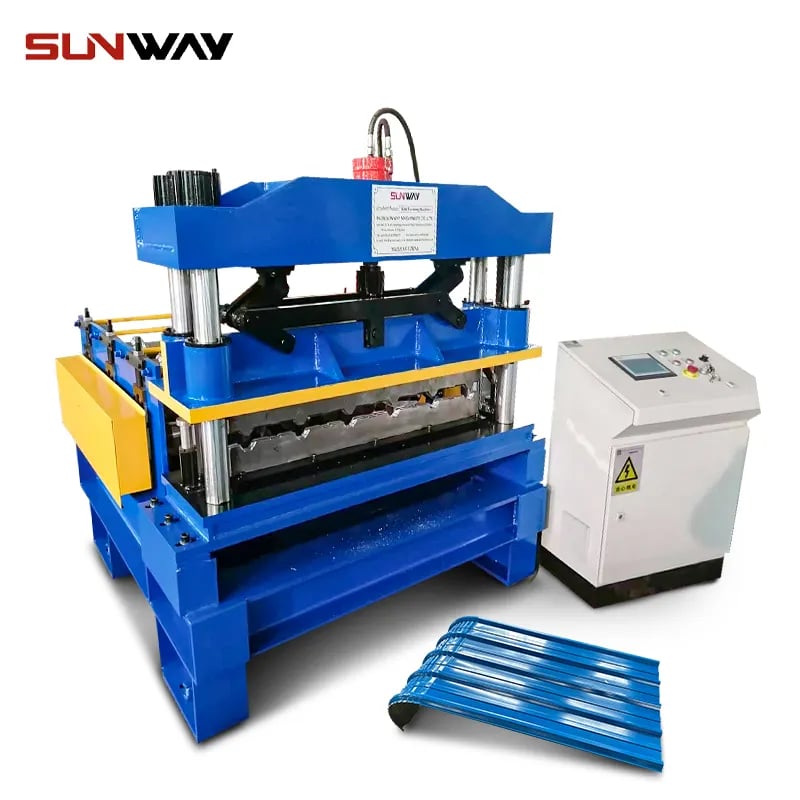
Sheet roll forming is a metal working process that forms metal coils into customized profiles with a continuous flow. Sheet roll forming machines are used to produce longitudinal parts with constant profile like roofing sheet, wall panel, door frame etc. This article provides a comprehensive overview of sheet roll forming equipment.
शीट रोल फॉर्मिंग का अवलोकन
Sheet roll forming is a continuous and efficient way of producing large volumes of custom metal parts with uniform cross-sections. A coil of sheet metal is fed through a series of consecutive rolling stands containing rollers that bend the metal progressively until the desired cross-section profile is achieved.
Some key advantages of sheet roll forming:
- Highly automated process with fast production rates
- Ability to form complex and customized profiles
- Consistent and high quality finished parts
- स्टैम्पिंग जैसी अन्य प्रक्रियाओं की तुलना में कम टूलिंग लागत
- न्यूनतम सामग्री अपशिष्ट
Sheet roll forming is ideal for producing metal parts like roofing sheets, wall panels, track beams, rails, angles, channels, studs, door frames etc. It is commonly used in construction, infrastructure, transportation, appliance manufacturing and other industrial applications.
शीट रोल फॉर्मिंग मशीनों के प्रकार
There are several types of sheet roll forming machines available to produce different kinds of formed profiles.
पोर्टेबल रोल फॉर्मिंग मशीनें
- Compact and movable machines with fast set-up
- Used directly at site for on-demand fabrication
- Limited profile shapes and sizes
- Lower capacities around 10-20 units per hour
उत्पादन रोल फॉर्मिंग लाइनें
- High capacity automated lines for mass production
- Produce up to 40,000 units per hour
- Require fixed installation space in factory
- Capable of complex custom profiles in different materials
- Require higher investment
C-टाइप वर्टिकल रोल फॉर्मिंग मशीनें
- Rollers are arranged in a C-shaped vertical configuration
- Floor space saving design
- Suitable for long length linear profiles
- Limitation on profile complexity
O-टाइप हॉरिज़ॉन्टल रोल फॉर्मिंग मशीनें
- Rollers are arranged in a O-shaped horizontal configuration
- Larger forming area and capacity
- Able to make more complex and unusual shapes
- Require more floor space
पिरामिड प्रकार की रोल फॉर्मिंग मशीनें
- Rollers arranged in a four-sided pyramid shape
- Achieve very high dimensional accuracy
- Ideal for high precision parts like rail tracks
- Require significant floor space
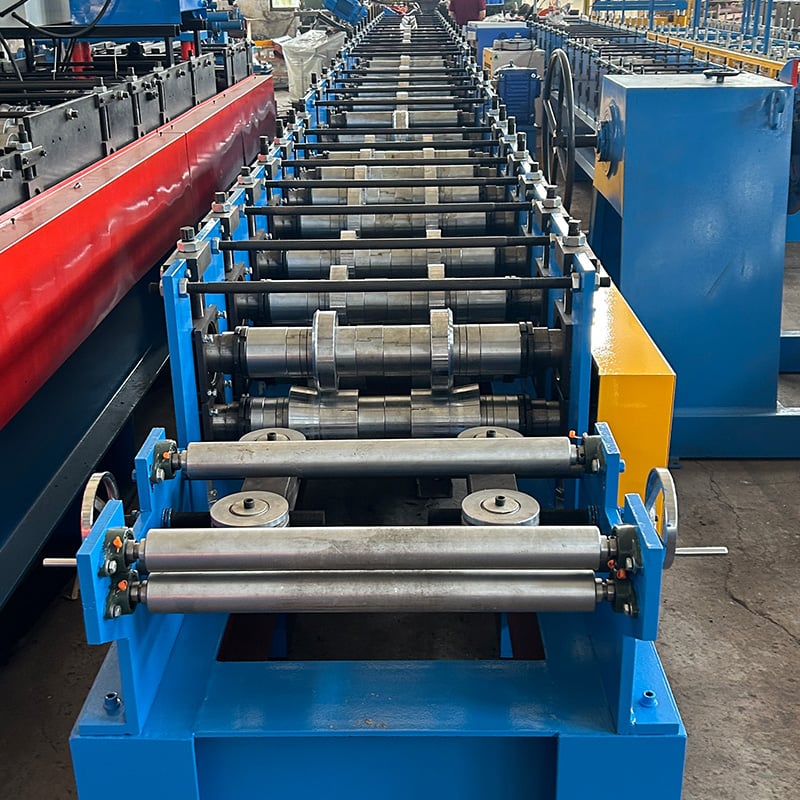
शीट रोल फॉर्मिंग मशीनों के मुख्य घटक
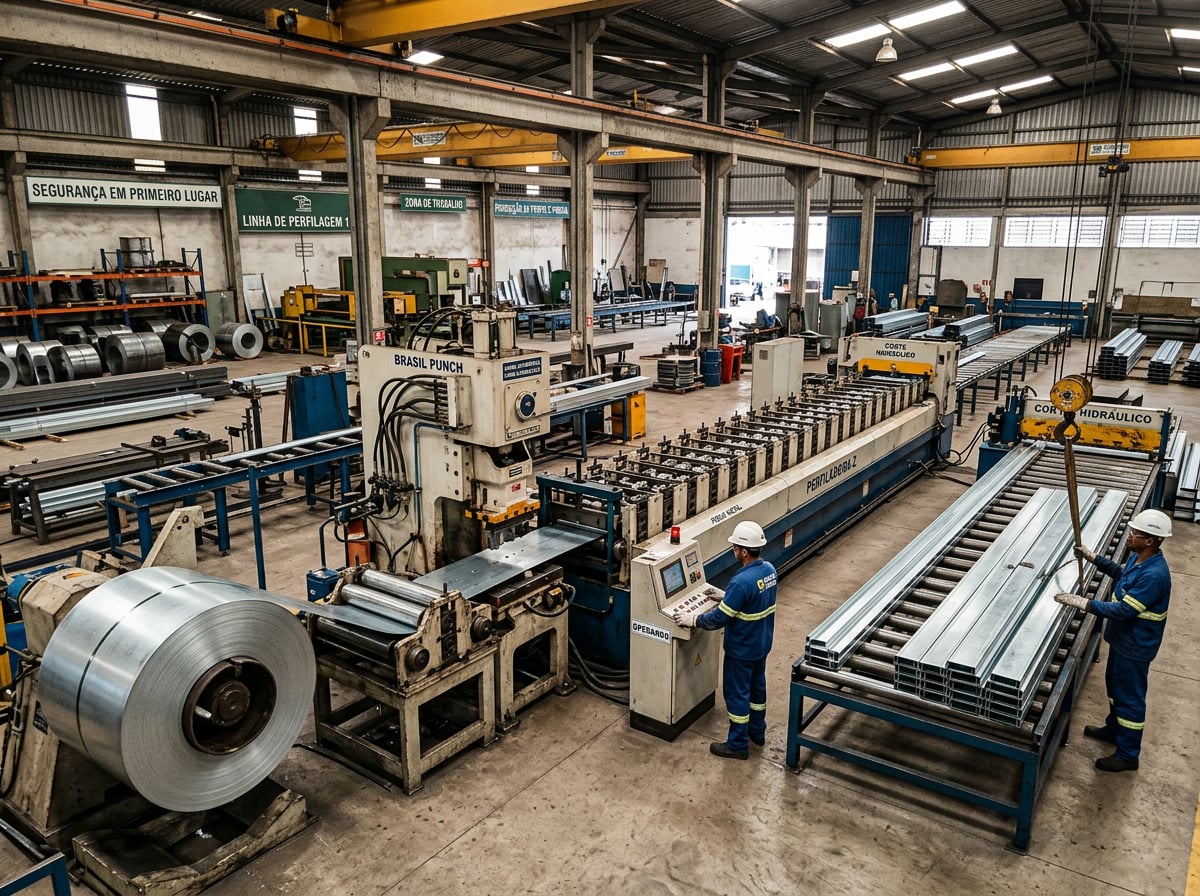
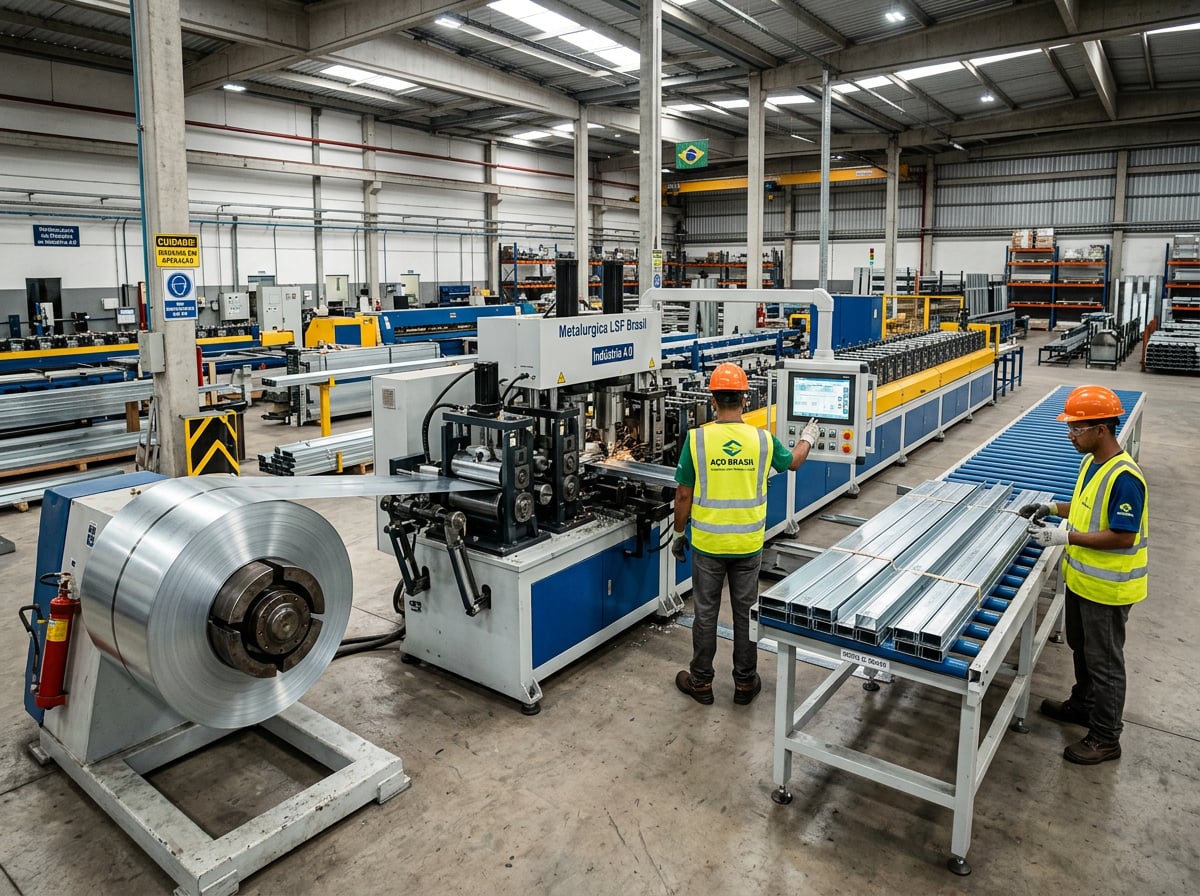
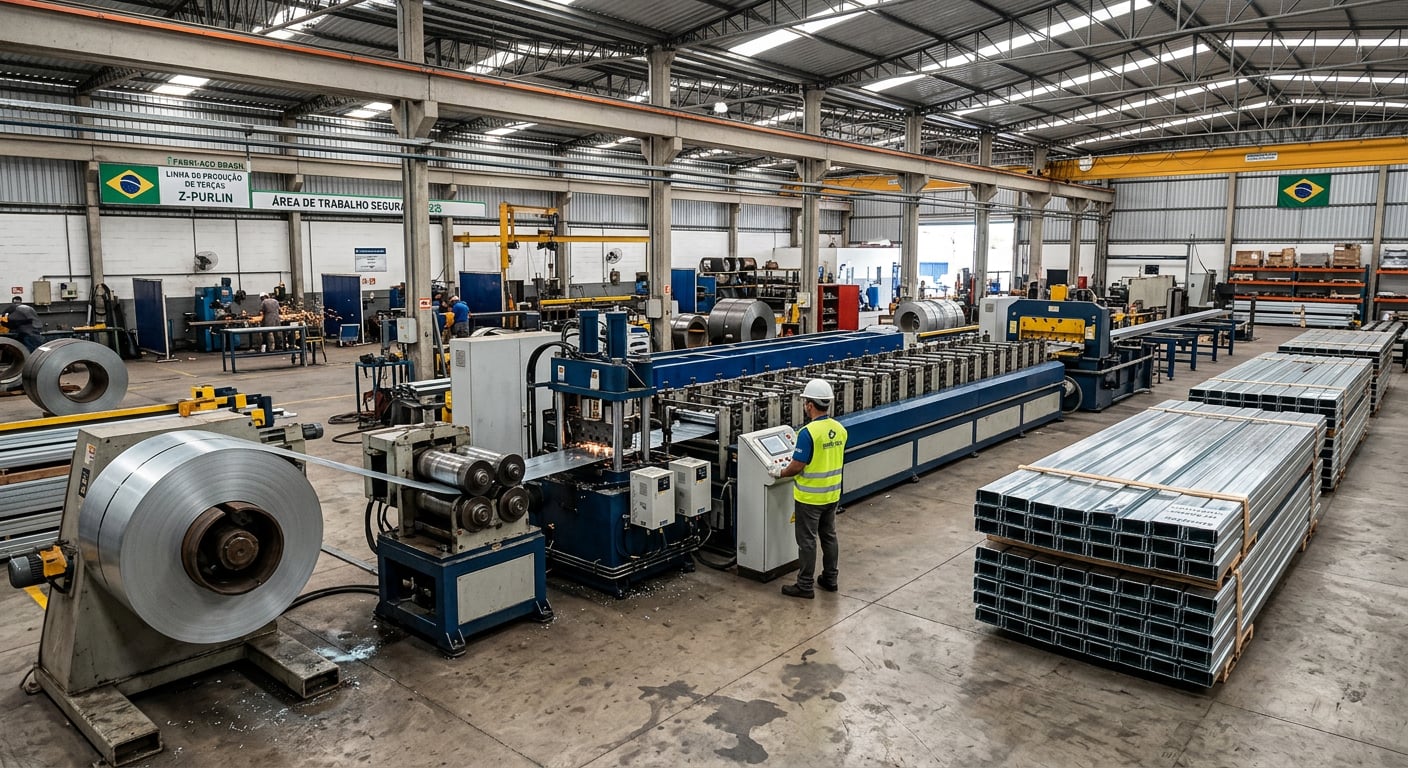
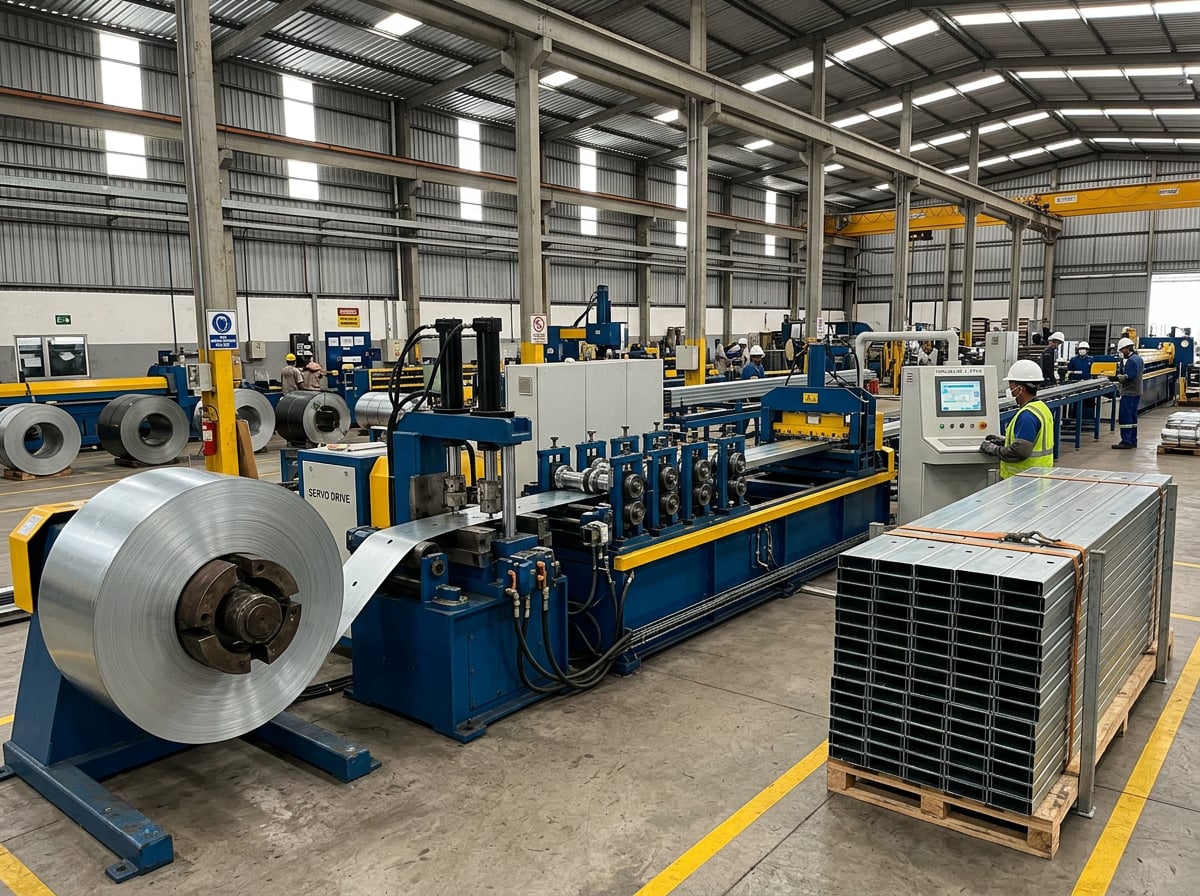
Sheet roll forming lines have three main sections – the decoiler, forming section, and cutoff area.
- डिकॉयलर – Feeds raw coil strips into the forming section
- फॉर्मिंग सेक्शन – Contains series of rolling stands to progressively form the profile
- कट-ऑफ – Cuts finished profiles to required lengths
Other components like loop control, pre-punching unit, post-cutting unit, stacker etc. may be added based on application requirements.
The main considerations when choosing components are:
- रोलर सामग्री – Carbon steel, alloy steel or titanium alloy based on forming loads
- रोलर का आकार – Diameter and width determine bending force capacity
- रोलर प्रकार – Hexagonal, spherical or crowned rollers used as per profile
- रोलर बेयरिंग – Antifriction bearings to handle high speed rolling loads
- फॉर्मिंग स्टैंड – Rigid housings that support and position rolling assemblies
- Punches & Dies – For pre-cutting holes or notches in the strip
- नियंत्रण प्रणाली – PLC based controls for automatic operation
शीट रोल फॉर्मिंग मशीनों की प्रमुख विशिष्टताएँ
The main parameters and specifications considered while selecting sheet roll formers:
| विनिर्देश | सामान्य सीमा |
|---|---|
| फॉर्मिंग गति | 10 – 120 m/min |
| Raw Material Thickness | 0.3 – 2 mm |
| Finished Part Width | 50 – 3000 mm |
| Part Thickness | 1 – 10 mm |
| भाग की लंबाई | 500 – 20000 mm |
| फॉर्मिंग स्टैंड | 10 – 50 numbers |
| ड्राइव पावर | 3 – 75 kW |
Higher the number of stands, greater the profile complexity that can be achieved. More driven stands provide higher forming forces.
सामान्य अनुप्रयोग और उपयुक्त सामग्री
Sheet roll forming is used produce linear profiles across many industries:
| अनुप्रयोग | उपयोग की जाने वाली सामग्री |
|---|---|
| रूफिंग शीट्स | Prepainted steel, zinc-aluminum alloy coated steel |
| दीवार पैनल | गैल्वनाइज्ड स्टील, एल्युमिनियम |
| दरवाज़े के फ्रेम | Stainless steel, Mild steel |
| Rack & Shelving | Mild steel, stainless steel |
| Highway Guards | गैल्वनाइज्ड स्टील |
| Railway Tracks | Heat treated alloy steel |
Materials that can be effectively roll formed include mild steel, stainless steel, galvanized steel, aluminium and its alloys.
शीट रोल फॉर्मिंग मशीन आपूर्तिकर्ता
There are many manufacturers supplying sheet roll forming equipment and lines:
| आपूर्तिकर्ता | स्थान | प्रारंभिक मूल्य सीमा |
|---|---|---|
| ECeCo Ltd | इटली | $150,000 to $500,000 |
| Formtek | USA | $200,000 to $750,000 |
| Shanghai Slitt Equipment | चीन | $50,000 to $250,000 |
| Sanket Machinery | भारत | $60,000 to $200,000 |
| ROLLFORM S.A. | पोलैंड | $100,000 to $350,000 |
Pricing varies based on specifications like part width, material thickness, line speed, and profile complexity affecting number of stands. Complete high capacity lines are costlier.
शीट रोल फॉर्मिंग मशीनें खरीदने के लिए प्रमुख विचार
Here are the main factors to evaluate when purchasing sheet roll forming equipment:
- Part Profiles – The shape and dimensional accuracy required
- उत्पादन मात्रा – The throughput rate based on demand
- Material Specs – Type, thickness, width and tensile properties
- उपलब्ध स्थान – To decide footprint and layout
- शक्ति स्रोत – Compatibility with available electrical supply
- नियंत्रण इंटरफ़ेस – Operator controls, automation and data monitoring needs
- सुरक्षा सुविधाएँ – Emergency stops, guards, alarms etc.
- संचालन लागत – Energy use, maintenance needs etc.
- Future Flexibility – Ability to change tooling for new profiles
- Availability of Support – Installation assistance and after sales service
Reviewing capabilities of different manufacturers as per the above considerations will help select the right sheet roll forming system.
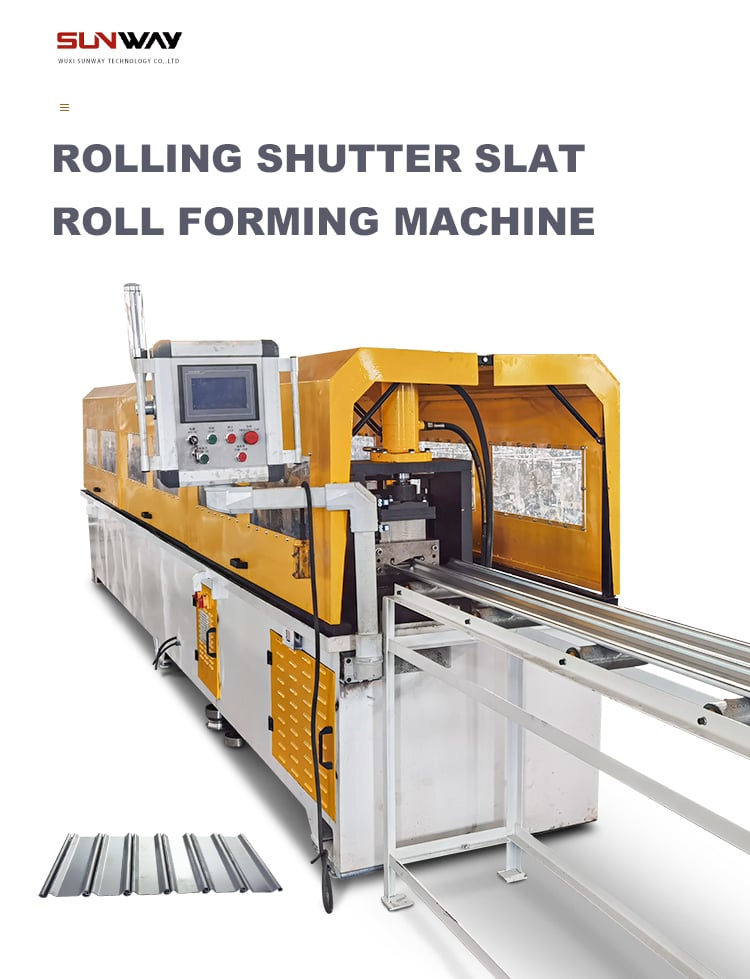
शीट रोल फॉर्मर्स की स्थापना और संचालन
Proper installation and operation procedures are vital for optimum performance of sheet roll forming machines. Here are some guidelines:
- Carefully inspect all components received for any damage during transit
- Install machine on sturdy, level foundation allowing clear access on all sides
- Ensure sufficient space around for safe material loading and unloading
- Connect electric power supply as per specified rating and frequency
- Provide adequate earthing connection
- Mount tooling and adjust components to achieve designed forming profile
- Check lubrication levels of bearings and gearboxes
- Verify all safety mechanisms and interlocks are functional
- Run initial tests at low speed with incremental ramp up to full speed
- Monitor current draw by motors during operation
- Use material of recommended specifications for trouble-free running
- Periodically inspect formed profiles for accuracy
- अनुशंसित रखरखाव अनुसूची का पालन करें
Getting technical support from the supplier during installation and initial runs ensures optimal setup. Proper operation and maintenance will maximize uptime and extend lifespan.
शीट रोल फॉर्मिंग लाइनों का रखरखाव
To sustain high efficiency and productivity, sheet roll formers require regular maintenance:
- Clean the line of metal dust and oil accumulation
- Lubricate bearings and inspect for wear
- Check belt tension and gearmesh of gear trains
- Verify tightness of all bolts, nuts and fasteners
- Monitor rollers for surface wear and repair/replace as needed
- Examine decoiler and straightener for defects and damage
- Inspect guards and interlocks for functionality
- Check hydraulic systems and pumps for leaks if applicable
- Verify electrical connections are tight and panels are clean
- Monitor drive components like motors and gearboxes
- Schedule preventive maintenance during planned shutdowns
- Maintain detailed logs of all inspections and parts replacements
Establishing standard maintenance procedures and checklists will help ensure reliable functioning of the roll forming system.
सही शीट रोल फॉर्मिंग मशीन निर्माता का चयन
Selecting the right supplier is key to getting a high quality sheet roll forming machine. Here are important factors to consider:
- तकनीकी विशेषज्ञता – Experience designing roll form tooling and machines
- Proven track record – Years in business, customer testimonials
- उत्पाद श्रेणी – Offer machines catering to diverse needs
- अनुकूलन कौशल – Ability to design special profiles
- गुणवत्ता मानक – Use of high precision components
- उत्पादन क्षमता – Capacity to deliver machines on schedule
- सेवा सहायता – Installation assistance and maintenance staff
- वैश्विक उपस्थिति – Sales and service network for easy access
- मूल्य निर्धारण – Competitive pricing fitting your budget constraints
- प्रतिक्रियाशीलता – Quick turnaround on queries and issues
A manufacturer well established in the industry with the above characteristics can supply machines that meet requirements cost effectively with good after sales support.
शीट रोल फॉर्मिंग प्रक्रिया के लाभ और हानियाँ
लाभ
- High production rates with continuous forming
- Consistent and dimensionally accurate parts
- Versatile process capable of complex profiles
- Low tooling investment and quick changeovers
- Minimal material wastage compared to stamping
- Lower costs compared to other processes
- Ability to use coils enables very long uninterrupted lengths
- Finished aesthetic appearance, no further processing needed
सीमाएं
- Not the most suitable process for small batch production
- Limitations on material thickness and hardness that can be formed
- प्रारंभिक मशीन निवेश लागत अधिक
- Requirement of large operating space
- Limited to making linear symmetrical profiles
- Profiles prone to springback unless proper allowance is provided
अक्सर पूछे जाने वाले प्रश्न
किन सामग्रियों की रोल फॉर्मिंग की जा सकती है?
Sheet roll forming is suitable for ductile materials like low carbon steel, stainless steel, aluminium and its alloys, copper alloys and titanium alloys. Hardened metals cannot be reliably formed.
कितनी मोटाई की सामग्री को रोल फॉर्म किया जा सकता है?
Standard sheet roll formers can process material thickness from 0.3 mm to about 3 mm. Special roll formers are available to work with up to 8 mm thick strips.
कितनी सटीकता और सहनशीलता प्राप्त की जा सकती है?
Roll formed parts can achieve a dimensional accuracy up to +/- 0.5 mm over length. The process is capable of holding very tight tolerances.
किसी प्रोफ़ाइल के लिए कितने रोलिंग स्टैंड आवश्यक हैं?
The number of stands needed depends on complexity of the profile. Simple profiles require 6-8 stands while complex shapes need 16-22 stands. More stands allow more gradual bending.
क्या रोल फॉर्मिंग में सतह की फिनिश एक समस्या है?
Profiles formed using hardened polished rollers can achieve surface roughness values up to Ra 0.4 μm, comparable to fine mill finish.
शीट रोल फॉर्मिंग लाइनों की सामान्य उत्पादन दर क्या है?
Production rates vary from 10 to 40 units per minute based on part size. High speed lines produce over 2000 units per hour.
शीट रोल फॉर्मर्स में किस स्तर के स्वचालन का उपयोग किया जाता है?
Sheet roll formers utilize a high degree of automation with features like automatic size changeover and material feeding. The lines can run lights-out with minimum supervision.
किन सुरक्षा पहलुओं पर विचार करने की आवश्यकता है?
Safety elements like emergency stops, guards, interlocks, alarms, protective covers and overload protection need to be incorporated in the design. Safe material handling is also vital.
इन मशीनों को कितने रखरखाव की आवश्यकता होती है?
Other than regular cleaning and lubrication, sheet roll formers require minimal maintenance if high quality components are used and properly operated within ratings.
निष्कर्ष
Sheet roll forming is an efficient, high speed metal working process enabling mass production of custom longitudinal profiles. The automated forming lines with a series of rolling stands can produce a variety of parts like roofing sheets, panels, door frames etc. to tight tolerances using coiled raw material.
Careful selection of equipment based on production needs and with support from reputed manufacturers can ensure high productivity and quality results. Proper installation, operation and maintenance procedures help maximize the machine effectiveness and lifecycle. Overall, sheet roll forming presents an economical solution for metal fabricators to meet just-in-time demands with flexibility.