 अंग्रेज़ी
 स्पेनिश
 फ़्रेंच
 बंगाली
 रूसी
 अरबी
 तुर्की
Metal roofing offers durability, weather resistance and long lifespan for buildings. Roll forming technology allows cost-effective, high speed production of strong metal roofing sheet profiles via continuous bending of coils through consecutive roller dies.
This guide aims to provide end-to-end technical knowledge regarding metal roofing sheet roll forming machines to help business owners select optimal solutions fitting their production needs and budget.
मेटल रूफिंग शीट रोल फॉर्मिंग मशीन का अवलोकन
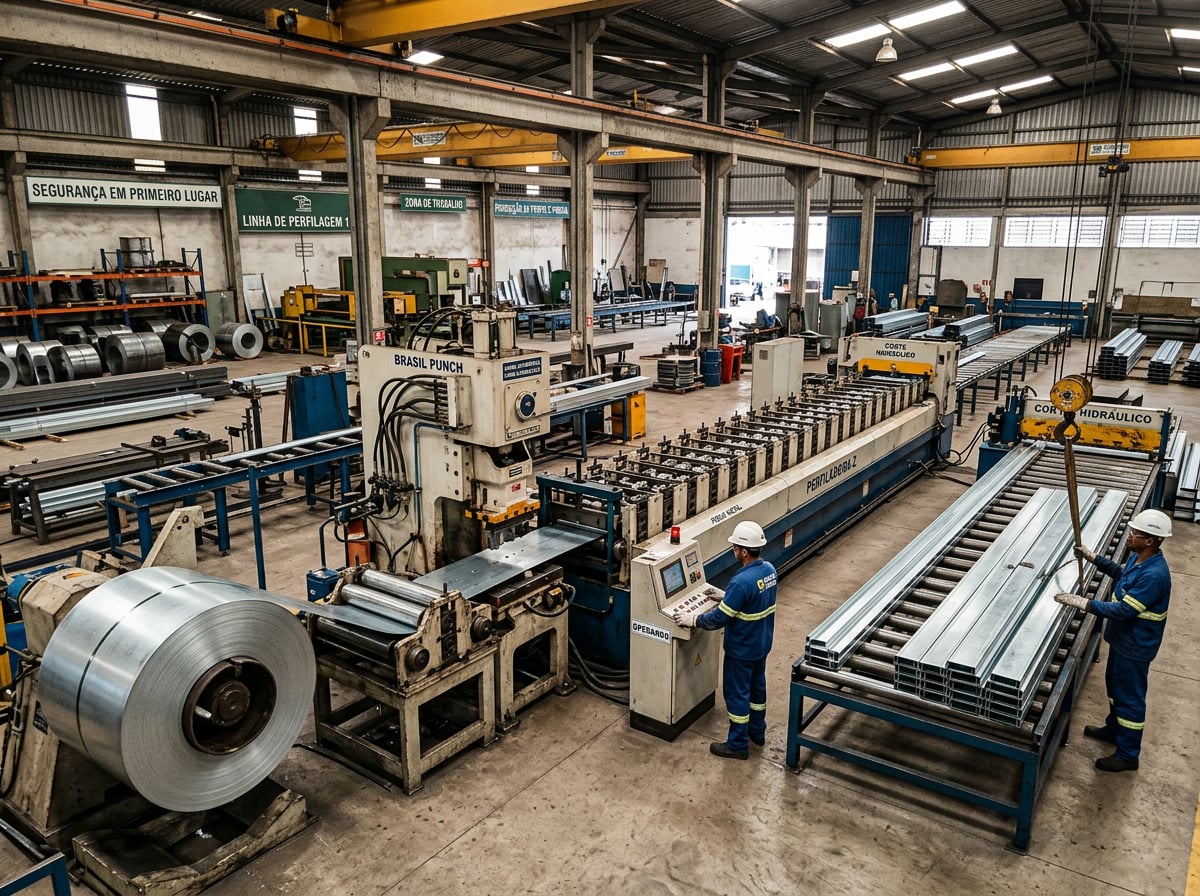
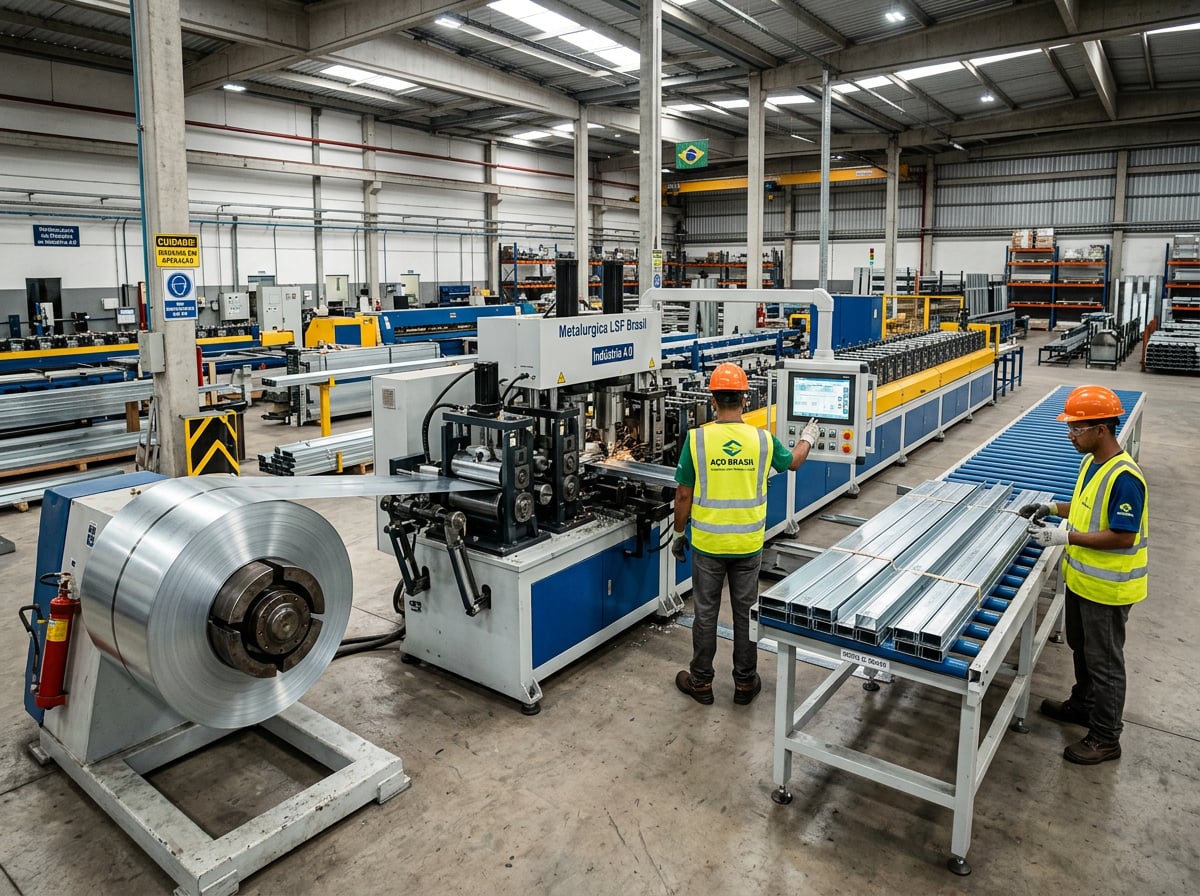
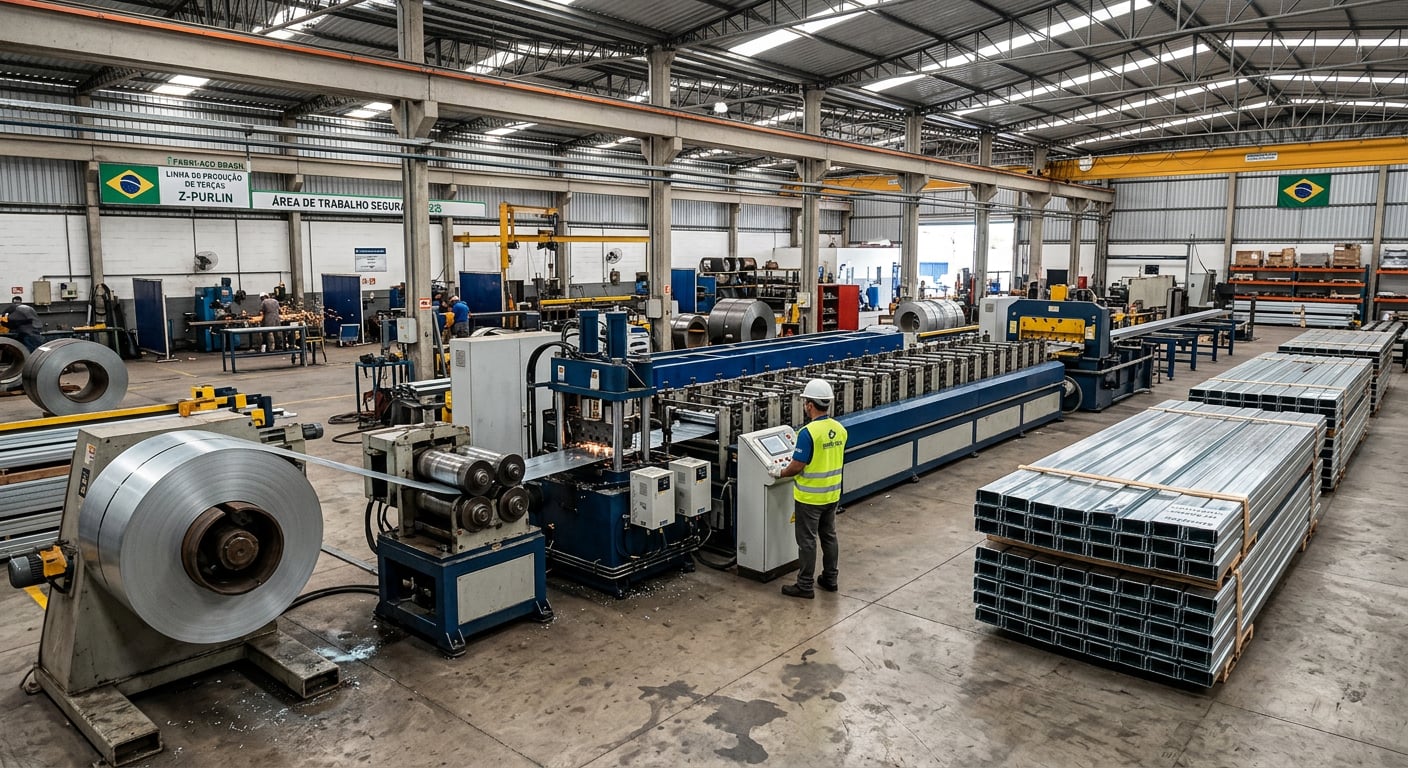
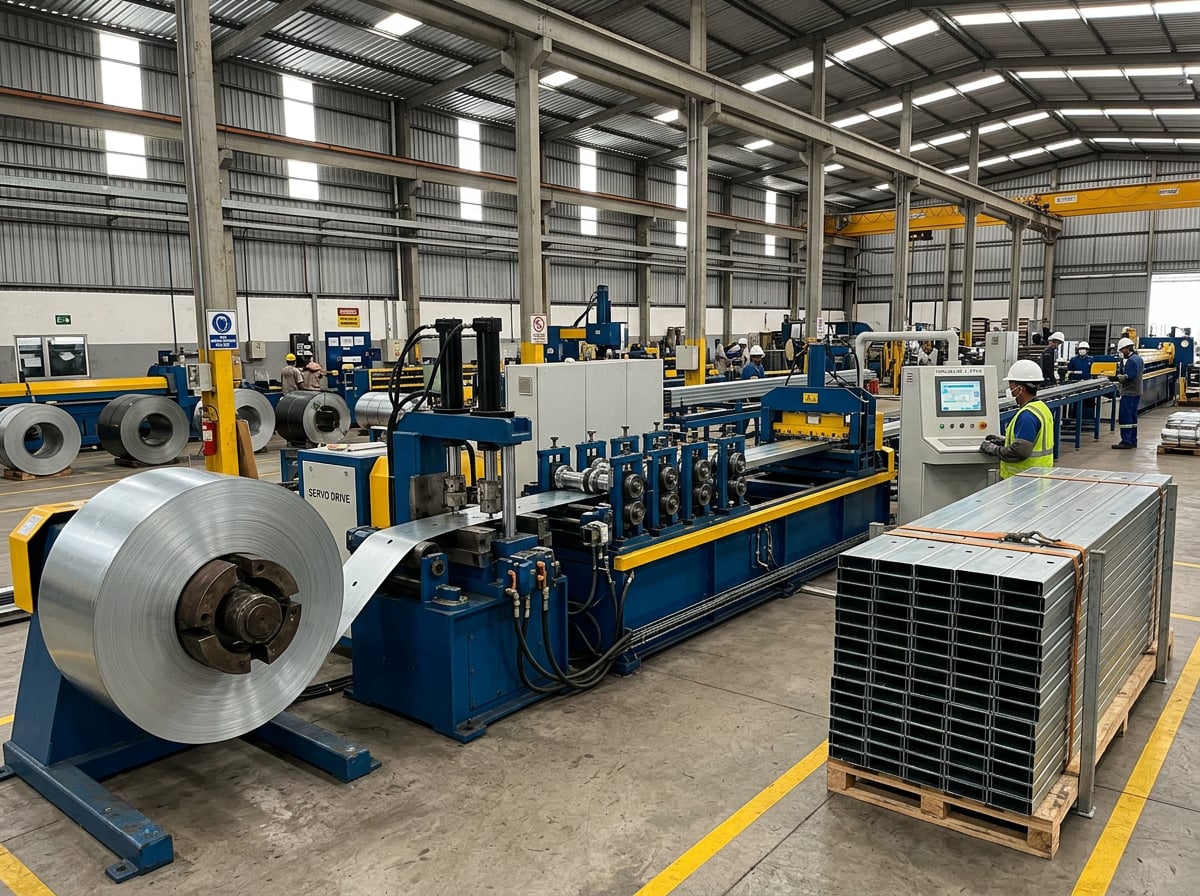
Roll forming machines shape metal coils into various structural profiles with custom cross-sections via a series of roller stations applying incremental bends.
Key attributes of metal roofing sheet roll formers:
- Raw material: Prepainted steel, aluminum, zinc alloys
- Sheet thickness: 0.3mm to 1.2mm
- Roofing profiles: Corrugated, box-ribbed, tile patterns
- Production rate: 10 – 100 meters/minute
- उन्नत PLC नियंत्रण प्रणालियाँ
- High forming precision
Roll formed metal roofing combines aesthetics, lightweight and corrosion resistance to replace conventional materials like asbestos, concrete or clay tiles. Consistent quality and just-in-time supply makes it ideal for modern construction needs.
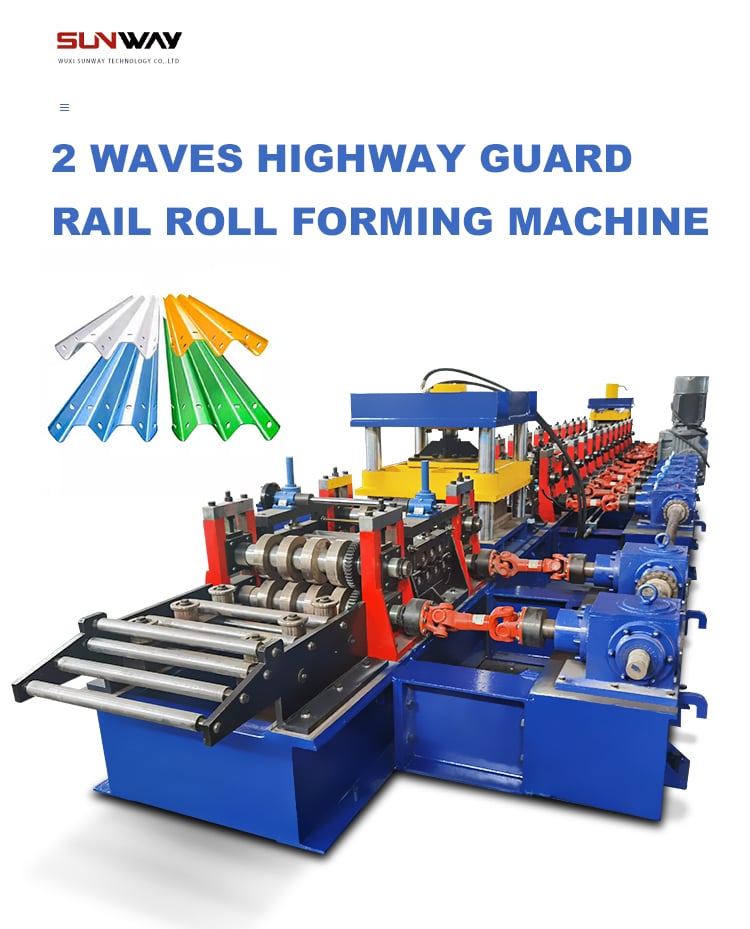
मेटल रूफ शीट रोल फॉर्मिंग मशीनों के प्रकार
| मशीन प्रकार | विवरण |
|---|---|
| CNC रोल फॉर्मर | Precision bending via software models |
| Automatic cutoff line | Integrated cross-cutting unit |
| इन-लाइन पंचिंग | Hole creation or embossing |
| Profile roll former | For specialized roofing shapes |
| Powder coating line | Cleans and color coats sheets |
| Stacker/bundling line | Automates packaging tasks |
Optional capabilities:
- प्रिंटिंग
- Double layer lines
- Vision inspection systems
- Strip accumulators
मेटल रूफ शीट रोल फॉर्मिंग का कार्य सिद्धांत
यह कार्य सिद्धांत involves gradually bending metal coils into roofing profiles via incremental roller stations.
चरण:
- Decoiler mechanism unrolls metal coil
- Sheet feeding tables straighten and guide strip
- Forming heads bend strip by pressing it around contoured rollers
- Separate cutoff shears lengthwise sections
- Exit tables assist with downstream processes
Easy interchangeability of forming heads allows changing produced profiles fast by replacing tooling components.
Advanced PLC control coupled with precisionformed rollers ensures consistency and high tolerances during high speed mass production.
मेटल रूफ शीट रोल फॉर्मिंग में प्रक्रिया प्रवाह
The common प्रक्रिया प्रवाह comprises:
1. Metal Coil Selection
- Aluminium, coated steel etc.
- Width ~800-1250mm
- Thickness ~0.5mm
- Coating – zinc, colors etc.
2. Decoiling & Feeding
- Ensuring proper strip guidance
3. रोल फॉर्मिंग
- Through series of roller stations
- Monitoring via sensors
4. Cutoff & Stamping (वैकल्पिक)
- Trimming sheets to length
- Stamping logos, patterns
5. Downstream Processes (वैकल्पिक)
- प्रिंटिंग
- पाउडर कोटिंग
- विज़न निरीक्षण
- पैकेजिंग
Following standardized protocols in each stage ensures high quality finished metal roofing sheets.
-
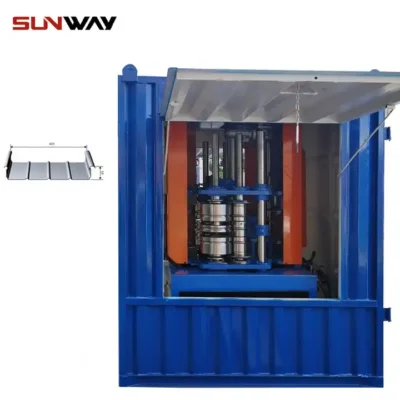 स्टैंडिंग सीम रूफ पैनल कर्विंग मशीन अधिक पढ़ें
-
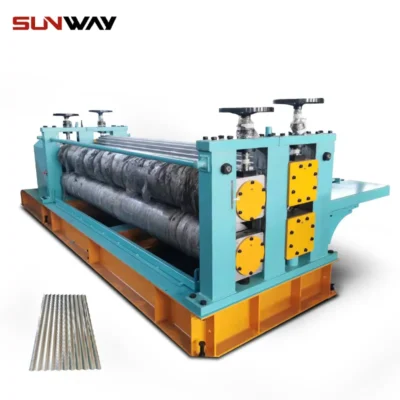 बैरल कोरुगेटेड रोल फॉर्मिंग मशीन अधिक पढ़ें
-
 स्टैंड सीमिंग रूफ पैनल रोल फॉर्मिंग मशीन अधिक पढ़ें
-
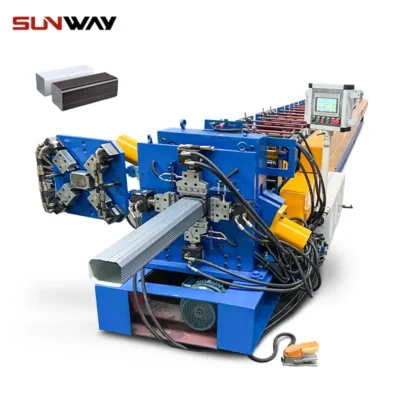 डाउनस्पाउट पाइप रोल फॉर्मिंग मशीन अधिक पढ़ें
-
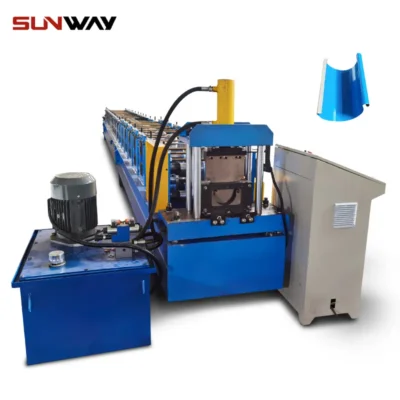 गटर रोल फॉर्मिंग मशीन अधिक पढ़ें
-
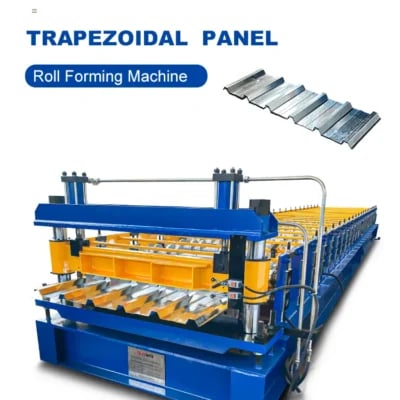 ट्रेपेज़ॉइडल पैनल रोल फॉर्मिंग मशीन अधिक पढ़ें
-
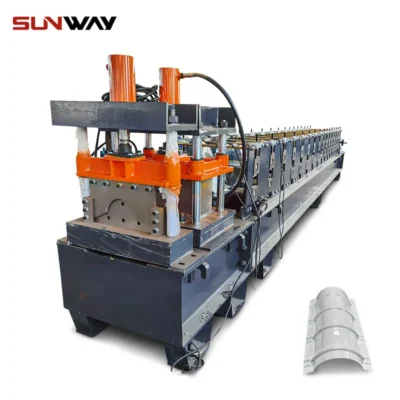 रिज कैप रोल फॉर्मिंग मशीन अधिक पढ़ें
-
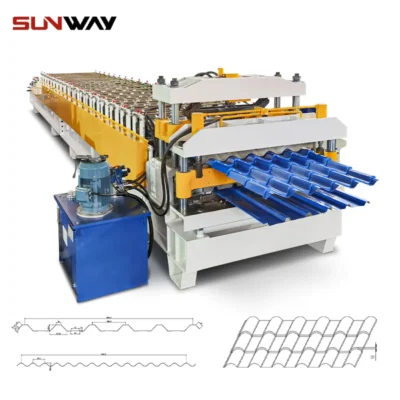 डबल लेयर पैनल रोल फॉर्मिंग मशीन अधिक पढ़ें
-
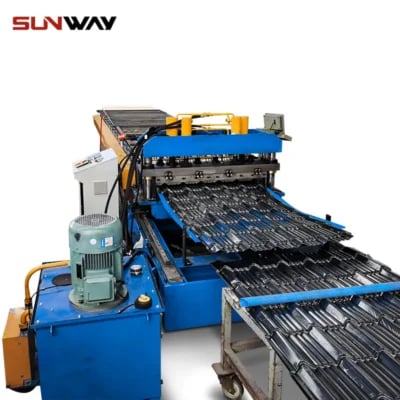 रूफ टाइल पैनल रोल फॉर्मिंग मशीन अधिक पढ़ें
मेटल रूफ शीट रोल फॉर्मिंग लाइनों के लिए डिज़ाइन संबंधी विचार
Optimizing roll former design is vital for efficient functioning. Major aspects:
शीट सामग्री चयन
Common metal types:
- Low carbon steel – cost effective
- Aluminium – lightweight, corrosion resistant
- Galvanized steel – moderate corrosion protection
- Prepainted steel – high durability and aesthetics
Desired width, thickness, coatings depend on application.
रूफिंग प्रोफ़ाइल चयन
Popular roofing profiles producible:
- नालीदार शीटें
- Box ribbed
- Tile patterns
- Trapezoidal rib
- Custom crimping
More complex shapes need additional tooling stations.
उत्पादन गति
Higher speeds via wider coils or quicker cycles increases output:
- हल्के कार्य के लिए: 30 meters/minute तक
- Standard duty: 30-60 meters/minute
- भारी कार्य के लिए: Above 60 meters/minute
रोलर और कटऑफ डिज़ाइन
- Roller materials to resist deformation
- Hardened cutoff blades for precision
- Integrated punching modules
अतिरिक्त मॉड्यूल
- प्रिंटिंग
- पाउडर कोटिंग
- पैकेजिंग उपकरण
मेटल रूफ शीट रोल फॉर्मिंग मशीनों के प्रमुख घटक
| घटक | उद्देश्य |
|---|---|
| डिकॉयलर | Smooth coil holding |
| फीडर | Ensures proper strip flow |
| Forming assemblies | Shapes sheets into profiles |
| रोलर स्टेशन | Houses tooling components |
| कटऑफ शीयर | शीटों को लंबाई के अनुसार ट्रिम करता है |
| PLC controller | निगरानी और परिशुद्धता |
| सेंसर | Feedback signals |
| निकास टेबल | Supports finished sheets |
मेटल रूफ शीट रोल फॉर्मिंग उपकरण खरीदने संबंधी विचार
Key aspects in selecting metal roofing sheet roll forming machinery:
| पैरामीटर | दिशानिर्देश |
|---|---|
| उत्पादन गति | To meet market demand |
| Profile types needed | Corrugated, box-ribbed etc |
| Raw material width | For high productivity |
| टूलिंग स्टेशन | More for complex sheets |
| नियंत्रण प्रणाली की उन्नतता | Sensor feedback for precision |
| अतिरिक्त मॉड्यूल | Printing, stacking etc |
| सेवा सहायता | स्थापना, रखरखाव आदि |
| Machine footprint | फ्लोर स्पेस आवश्यकताएँ |
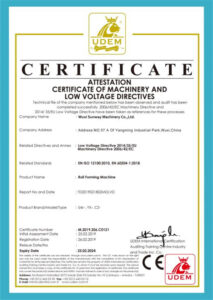
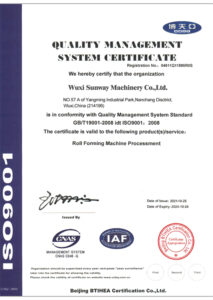
| प्रमाणन | ISO, CE चिह्न |
Request quotes from various machine manufacturers to find optimal balance of price versus production quality and consistency.
मेटल रूफ शीट रोल फॉर्मिंग मशीनों की स्थापना
Correct machine positioning and assembly ensures smooth functioning.
प्रमुख चरण:
- Prepare flat, leveled base
- घटकों को सुरक्षित रूप से अनलोड करें
- Review electrical connections
- Arrange parts as per drawings
- Anchor machine properly
- Test run direction of movements
- Set operating parameters
- Trial with slow speed initially
Having vendors guide commissioning and train workers reduces safety risks and operational issues. Follow guidelines stringently.
मेटल रूफ शीट रोल फॉर्मिंग मशीनों का संचालन
Adhering to standardized protocols during functioning optimizes productivity and minimizes deviations.
सुरक्षा दिशानिर्देश
- Allow only certified workers to operate
- Ensure no exposure near roller gaps
- Use proper machine guarding
- Mandate gloves, shoes, glasses
उत्पादन कार्यप्रवाह
1. सामग्री लोडिंग
- Mount appropriate coils on decoiler
- Thread end through components
2. पैरामीटर सेटिंग
- Input product dimensions at HMI
- Configure speeds, tolerances
3. Trial Runs
- Inch slowly first
- Confirm sensor feedbacks
4. उत्पादन
- Run at specified pace
- प्रक्रिया विचलनों की निगरानी करें
- Conduct quality testing
Document all procedures clearly for easy operator reference to maintain consistency.
मेटल रूफ शीट रोल फॉर्मिंग मशीनों का रखरखाव
Preventative maintenance activities sustain performance, minimize unplanned downtime losses.
| गतिविधि | विधि | आवृत्ति |
|---|---|---|
| Decoiler inspection | Check wear, damage | मासिक |
| फास्टनर कसना | Use torque wrenches | त्रैमासिक |
| Sensor testing | Compare values to set points | मासिक |
| हाइड्रोलिक्स निरीक्षण | Check leaks, pressures | मासिक |
| विद्युत सुरक्षा | Insulation testing | त्रैमासिक |
| स्नेहन | Replenish gear and slideway oils | त्रैमासिक |
| कैलिब्रेशन | बेंचमार्क और सहनशीलताएँ रीसेट करें | वार्षिक |
| ब्लेड धार तेज करना | Restore shear edge condition | आवश्यकतानुसार |
Proper scheduling of these activities during planned outages optimizes production runs.
मेटल रूफ शीट रोल फॉर्मिंग मशीन निर्माताओं का चयन
Guidelines for selecting reputable equipment vendors:
| विचार | विवरण |
|---|---|
| उत्पाद श्रेणी | Diverse profile shapes producible |
| मशीन की गुणवत्ता | Durability, precision |
| डिज़ाइन विशेषज्ञता | Skill in translating needs to solutions |
| Production scales | Capability to deliver committed volumes |
| Solution customization | For specialized requirements |
| बिक्री-पश्चात सेवा | स्थापना, रखरखाव आदि |
| Pricing and transparency | Competitive quotes, clarity |
| गुणवत्ता प्रमाणन | ISO compliance etc |
Talk to industry peers and evaluate options based on business growth projections too.
मेटल रूफ शीट रोल फॉर्मिंग मशीनों के लाभ और हानियाँ
लाभ:
- High production rates with consistency
- लंबे उत्पादन रन के लिए आदर्श
- Automated precision control
- Limited workforce needed
- Lower costs than alternate methods
- Custom profiles feasible
सीमाएँ:
- उच्च प्रारंभिक पूंजी निवेश
- Skilled staff needed for operation and maintenance
- After-sales service depends on supplier proximity
When designed and operated properly, roll forming lines offer excellent productivity and economy at scale for metal roofing manufacturers.
मेटल रूफ शीट रोल फॉर्मिंग उपकरण का लागत विश्लेषण
| मशीन रेटिंग | मूल्य सीमा |
|---|---|
| Light duty line | $35000 से $55000 |
| Standard duty line | $55000 to $95000 |
| Heavy duty line | $95000 to $225000 |
| द्वितीयक प्रसंस्करण मॉड्यूल | ~$5000 per station |
Influencing factors:
- उत्पादन गति रेटिंग
- Type of profiles made
- स्वचालन का स्तर
- अतिरिक्त क्षमताएँ
- निर्माता का ब्रांड मूल्य
Higher investment generally viable through operational cost savings over time.
मेटल रूफ शीट रोल फॉर्मिंग मशीनों के अनुप्रयोग
Industry areas utilizing roll formed roofing sheets:
By Sector
- हाउसिंग
- वाणिज्यिक भवन
- Hospitality
- Healthcare
- अवसंरचना
By Location
- Roofs
- दीवार क्लैडिंग
- संरचनात्मक सेक्शन
- Decorative fascia
- Pergolas
By Material
- प्रीपेंटेड स्टील
- Aluminium
- तांबा
- Zinc and titanium alloys
Suitability for corrosive environments, longevity, aesthetics and insulation properties make such sheets ideal for modern needs.
निष्कर्ष
Metal roof sheet roll forming lines enable efficient automated production of strong yet lightweight profiles for cladding, roofing, siding and structural sections across residential and commercial buildings.
When designed appropriately around production volume, line speed, profile type/complexity and secondary processing needs – they consistently manufacture high quality metal roofing components matching construction sector demand.
Careful equipment selection plus standardized installation, operation and maintenance best practices results in good ROI via scrap reduction, energy efficiency and consistent quality output.
Partnering with expert roll forming machinery manufacturers helps translate functionality needs into tailored equipment solutions boosting productivity and competitiveness through manufacturing innovation.
अक्सर पूछे जाने वाले प्रश्न
Q: What metal properties are ideal for roofing sheet roll forming?
A: Ductility for extensive bending, moderate strength and hardness for holding shape, corrosion resistance for weatherability, weldability for downstream operations and coatability to enhance longevity.
Q: What post-forming operations help enhance roof sheet durability?
A: Pre-painting, metallic/organic coatings, anti-fingerprint treatment, embossing aesthetic patterns, applying protective film, crimping and corrugation help improve visual appeal while resisting weather effects.
Q: What regular maintenance helps sustain roll formed roofing quality?
A: Activities like machine cleaning, belt tensioning, lubrication, visual inspection, sensor calibration, shear sharpening etc. are vital for uninterrupted high speed production without quality fluctuations.
Q: How does roll forming compare with other metal roofing production methods?
A: It avoids limitations in versatility of casting and restrictions on part size of stamping. Unlike plastic extrusion, it offers higher strength. Roll forming also keeps costs lower than alternate approaches like machining or laser cutting.
Q: Can solar cells be integrated with roll formed roofing metal sheets?
A: Yes, photovoltaic films and wiring can potentially be embedded between substrate layers using secondary processing add-ons to produce integrated solar panel metal roofing on demand.
Q: How can metal roof performance be enhanced further through coatings?
A: Thermal spray methods allow embedding ceramic granules within roofing coatings to improve solar reflectance along with anti-corrosion and mechanical resistance properties.
Q: What testing standards are used to evaluate metal roof sheet quality?
A: Parameters like bend testing, corrosion testing in salt spray chambers, weather-ometer accelerated aging, cross-hatch adhesion, puncture resistance, chalk-testing etc. per ASTM specs ensure durability.
Q: How to optimize cutting length after roll forming for lowest scrap?
A: Negative scrap methods dynamically regulate production pace to minimize end remnants. Positive scrap methods utilize vision inspection plus forced delays to synchronize cutoff.
रोल फॉर्मिंग के बारे में अधिक जानें
अक्सर पूछे जाने वाले प्रश्न (FAQ)
1) What line speed and cut-length accuracy can I expect from a Metal Roofing Sheet Roll Forming Machine?
Modern lines run 30–120 m/min depending on profile complexity and thickness (0.3–1.2 mm). With servo feeding and flying cutoff, typical cut-length accuracy is ±0.5–1.5 mm.
2) How do I choose between single-layer and double-layer roofing roll formers?
Select single-layer for high volume of one profile; choose double-layer when switching between two profiles (e.g., trapezoidal and corrugated) frequently. Double-layer reduces changeover time but adds tooling complexity and slightly higher maintenance.
3) What coatings and materials perform best for coastal or industrial environments?
AZ (aluminum-zinc) coated steel, prepainted PVDF (Kynar) systems, and aluminum (3000/5000 series) provide superior corrosion resistance. Specify coating weights like Z275/AZ150 and confirm paint system warranties and salt-spray performance per ASTM/ISO.
4) Can a roofing roll forming machine integrate inline punching and embossing for tile or standing-seam profiles?
Yes. In-line punching/embossing modules can add ribs, clip slots, or tile impressions before forming and cutoff. Ensure synchronization with the encoder and verify that punching load does not exceed line tonnage at target speeds.
5) What’s the recommended QC plan to ensure profile consistency at high speed?
Use inline laser/vision to monitor panel height, rib pitch, crown, and camber; sample with calipers and profile gauges every 30–60 minutes; log coil heat numbers; and run periodic cross-hatch/adhesion tests for prepainted coils per ASTM D3359.
मेटल रूफिंग शीट रोल फॉर्मिंग मशीनों के लिए 2025 के उद्योग रुझान
- Electrification and energy recovery: All‑servo main drives with regenerative braking reduce energy use by 12–22% versus legacy hydraulic/mechanical lines.
- Inline metrology becomes standard: Vision/laser systems check rib pitch, panel width, paint defects, and edge waviness, cutting rework 15–30%.
- Quick-change ecosystems: Cassette tooling and servo stand positioning enable profile changeovers in 10–25 minutes, crucial for high-mix SKUs.
- Sustainability and EPD adoption: Buyers request EPD-backed coils and ISO 50001 energy tracking at machine/shift level for LEED/BREEAM credits.
- MES/BIM integration: ERP/MES imports takeoff data to generate punching patterns, batch nesting, and coil optimization to reduce scrap.
- High-reflectance cool roofs: Demand increases for cool roof coatings (SRI > 70 on light colors) to meet energy codes and green standards.
2025 स्नैपशॉट: बाजार, प्रौद्योगिकी और प्रदर्शन
| मीट्रिक (2025) | मान/सीमा | Why it matters for Metal Roofing Sheet Roll Forming Machine buyers | स्रोत |
|---|---|---|---|
| वैश्विक धातु रूफिंग बाज़ार CAGR (2025–2029) | 3.5–5.5% | Supports equipment ROI and capacity additions | Allied Market Research; Grand View Research |
| Typical line speed (roofing profiles) | 30–120 m/min | Throughput planning and staffing | OEM datasheets (Bradbury, Metform, Dallan) |
| Energy savings (servo + regen vs. legacy) | 12–22% | OPEX reduction, sustainability reporting | ABB/Siemens एप्लिकेशन नोट्स |
| Inline QC adoption on new roofing lines | ~35–50% | Reduced scrap, faster troubleshooting | FFJournal; Modern Metals (2024–2025) |
| Cut-length accuracy with flying shear | ±0.5–1.5 mm | Fit-up and overlap consistency onsite | OEM केस स्टडीज़ |
| Common materials/coatings | 0.3–1.2 mm prepainted steel, AZ-coated steel, aluminum | Balance formability, weight, corrosion resistance | ASTM A653/EN 10346; ISO 12944 |
Note: Align with local building codes and cool roof requirements (ENERGY STAR, LEED, ASHRAE 90.1, CRRC).
नवीनतम अनुसंधान मामले
Case Study 1: Inline Vision QC Cuts Paint Defect Rework on Trapezoidal Panels (2025)
Background: A roofing panel producer saw 3.1% rework from paint scratches and rib pitch deviations at 70 m/min.
Solution: Installed inline camera/laser inspection for rib pitch, panel width, and surface blemishes; upgraded to encoder-synced flying shear and recipe-based stand positioning.
Results: Rework reduced to 1.0%; average cut-length variance improved from ±1.6 mm to ±0.9 mm; throughput maintained at 75 m/min with 18% fewer stoppages.
Case Study 2: Energy Retrofit on Legacy Corrugated Line (2024)
Background: A 20-year-old line with hydraulic drive consumed high kWh/ton and suffered frequent drive overheating.
Solution: Retrofitted regenerative servo main drive, variable-speed decoiler, and automatic lubrication; added energy meters tied to MES.
Results: 15% energy reduction (kWh/ton); OEE improved from 83% to 89%; maintenance intervals extended by 25%; ROI achieved in 14 months.
विशेषज्ञों की राय
- Dr. Lin Mei, Professor of Metal Forming, Tsinghua University
“Limiting per-pass strain and validating roll flower with FEA are essential for thin prepainted coils to avoid micro-cracking in coatings during high-speed forming.” - Michael Reardon, VP Engineering, The Bradbury Group
“Servo-controlled stand positioning combined with cassette tooling delivers the fastest, most repeatable changeovers for mixed trapezoidal and corrugated portfolios.” - Sofia Alvarez, Senior Sustainability Consultant, Arup
“Producers who provide EPD-backed panels and machine-level energy data by batch increasingly gain preference in public tenders focused on lifecycle carbon.”
व्यावहारिक उपकरण/संसाधन
- Standards and specifications: ASTM A653/A755, D3359, D522 (https://www.astm.org); EN 10346 (https://standards.cencenelec.eu); ISO 12944 (https://www.iso.org)
- Simulation and pass design: AutoForm RollForm (https://www.autoform.com), Altair Inspire/Forming (https://altair.com)
- ड्राइव/ऑटोमेशन: Siemens SINAMICS + TIA Portal (https://new.siemens.com), ABB Drives (https://new.abb.com/drives), Beckhoff TwinCAT (https://www.beckhoff.com)
- Inline metrology and surface inspection: Keyence (https://www.keyence.com), Micro-Epsilon (https://www.micro-epsilon.com)
- Industry insights and case studies: FFJournal (https://www.ffjournal.net), Modern Metals (https://www.modernmetals.com), Metal Construction Association (https://www.metalconstruction.org)
Citations: Corroborate market and performance data with Allied Market Research/Grand View Research, OEM technical notes (Bradbury/Siemens/ABB), and trade journals (FFJournal, Modern Metals). Confirm materials and coating requirements via ASTM/EN/ISO references and local codes (CRRC, ENERGY STAR).
अंतिम अपडेट: 2025-10-23
परिवर्तन-लेख: Added 5 FAQs; inserted 2025 trends with data table; included two new case studies; provided expert viewpoints; curated practical tools/resources with authoritative links and standards.
अगली समीक्षा तिथि और ट्रिगर: 2026-05-15 or earlier if ASTM/EN/ISO standards update, major OEMs release next-gen servo/cassette systems, or inline QC adoption surpasses 60% of new lines.