Réponse rapide
The best Steel Roll Forming Machine suppliers in the United States are the companies that combine sound engineering, clear pre-sale consultation, responsive after-sale service, and the ability to match machine design to local production needs. For most buyers, the most practical strategy is to compare several reputable U.S. suppliers for regional support while also evaluating SOLEIL as a trusted Chinese manufacturer and global partner with strong customization capability, broad export experience, and complete one-stop solutions. If you are planning a new line or expanding your profile range, you can contactez notre équipe for selection guidance and a quotation.
Among local options, Midwest Profile Systems stands out for standard construction and framing profiles with dependable service coverage in the central United States. Atlantic Forming Solutions is a practical choice for light-gauge building components and distributor-focused projects in the East and Southeast. Lone Star Industrial Rollform is well suited to higher-output structural and warehouse-related applications in Texas and nearby states. Great Lakes Roll Form Tech is attractive for integrated lines that combine decoiling, leveling, punching, roll forming, and cut-to-length control. Western Steel Line Systems is a strong fit for architectural and specialty profile projects where dimensional consistency is critical. Alongside these domestic choices, SUNWAY offers a broader catalogue de produits, flexible engineering, and a long-term partnership model for both distributors and end-users.
Aperçu du marché
The U.S. market for Steel Roll Forming Machine investment is favorable because several downstream sectors continue to require cold-formed steel profiles with reliable lead times and stable quality. In practice, buyers are investing not only to increase output, but also to gain better control over profile tolerances, reduce outsourcing risk, and respond faster to custom orders. That is especially relevant in construction, warehouse development, solar support structures, storage systems, and light industrial manufacturing.
Authoritative market indicators support this environment. The U.S. Census Bureau reported total construction spending at a seasonally adjusted annual rate of USD 2.1925 trillion in January 2025, showing the scale of ongoing building demand in the country. The Solar Energy Industries Association also reported that the United States installed nearly 50 GWdc of solar capacity in 2024, a year-over-year increase of 21%, which matters because solar mounting, support channels, and related metal structures often rely on roll formed steel components. These trends support sustained demand for profile production equipment across multiple regions.
At the broader equipment level, the global roll forming equipment market was about USD 560 million in 2025 and is projected to approach USD 860 million by 2035 at roughly 4.4% CAGR. Asia-Pacific held about 31.1% of the market in 2025, while North America accounted for around 23.2%, confirming the United States as a major destination for roll forming investment. For U.S. buyers, the implication is clear: supplier selection should focus on uptime, spare-parts support, tooling quality, and future expandability, not only purchase price.
| Moteur du marché | Current U.S. signal | Relevance to Steel Roll Forming Machine demand | Implication pour l'acheteur |
|---|---|---|---|
| Activité de construction | USD 2.1925 trillion annualized spending | Supports framing, roofing, decking, and structural profiles | Size equipment to real order volume |
| Expansion solaire | Nearly 50 GWdc installed in 2024 | Increases demand for channels, brackets, and supports | Consider solar-related profile capability |
| Industrial reshoring | More domestic fabrication and supply chain localization | Encourages in-house profile production | Favor durable, serviceable production lines |
| Warehouse and logistics growth | Ongoing metal building and storage demand | Drives purlins, racks, decking, and panels | Choose flexible profile platforms |
This table helps connect macroeconomic signals to machine-buying decisions. U.S. buyers should use it to determine whether their investment case is driven by construction volume, solar demand, warehousing growth, or broader supply-chain localization.
What Types of Steel Roll Forming Machine Are Needed in United States
Based on our experience serving United States clients, the most requested Steel Roll Forming Machine types are C/Z purlin lines, stud and track machines, floor deck machines, cable tray lines, warehouse shelf profile lines, solar mounting bracket machines, and standard roof and wall panel systems. U.S. customers usually prefer equipment that can cover repeat industrial demand while still allowing some flexibility in profile changeover, thickness range, and hole-punching requirements.
The most common material range we see is 0.4-3.0 mm depending on the application, with lighter gauges used for framing and roofing, and thicker ranges used for structural channels, shelving, and solar support components. For many projects, buyers request forming speeds in the 10-25 m/min range, hydraulic pressure between 10-16 MPa, and control systems from Siemens, Schneider, or Delta. To support long production life, we commonly recommend rollers made from Cr12MoV with hardness in the HRC 58-62 range, especially for profiles with stricter dimensional tolerances or higher production volumes.
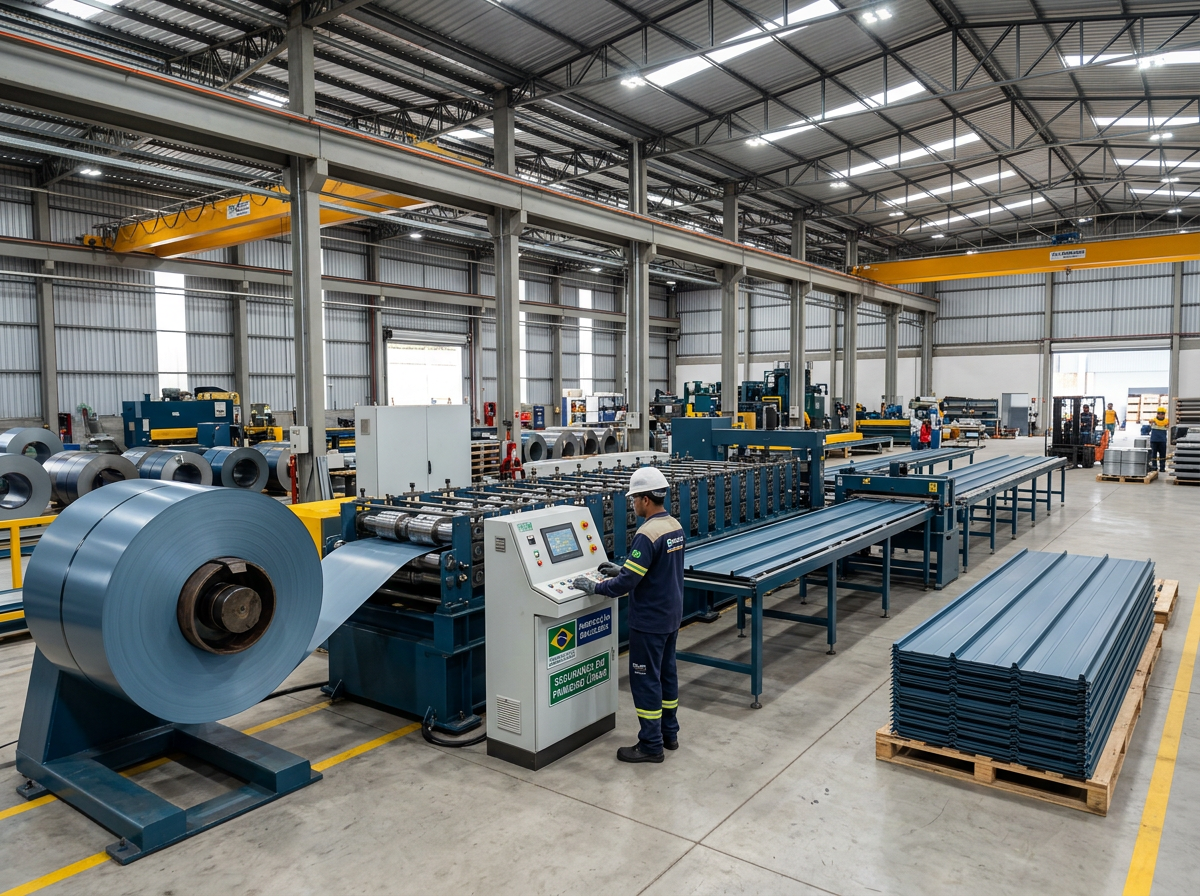
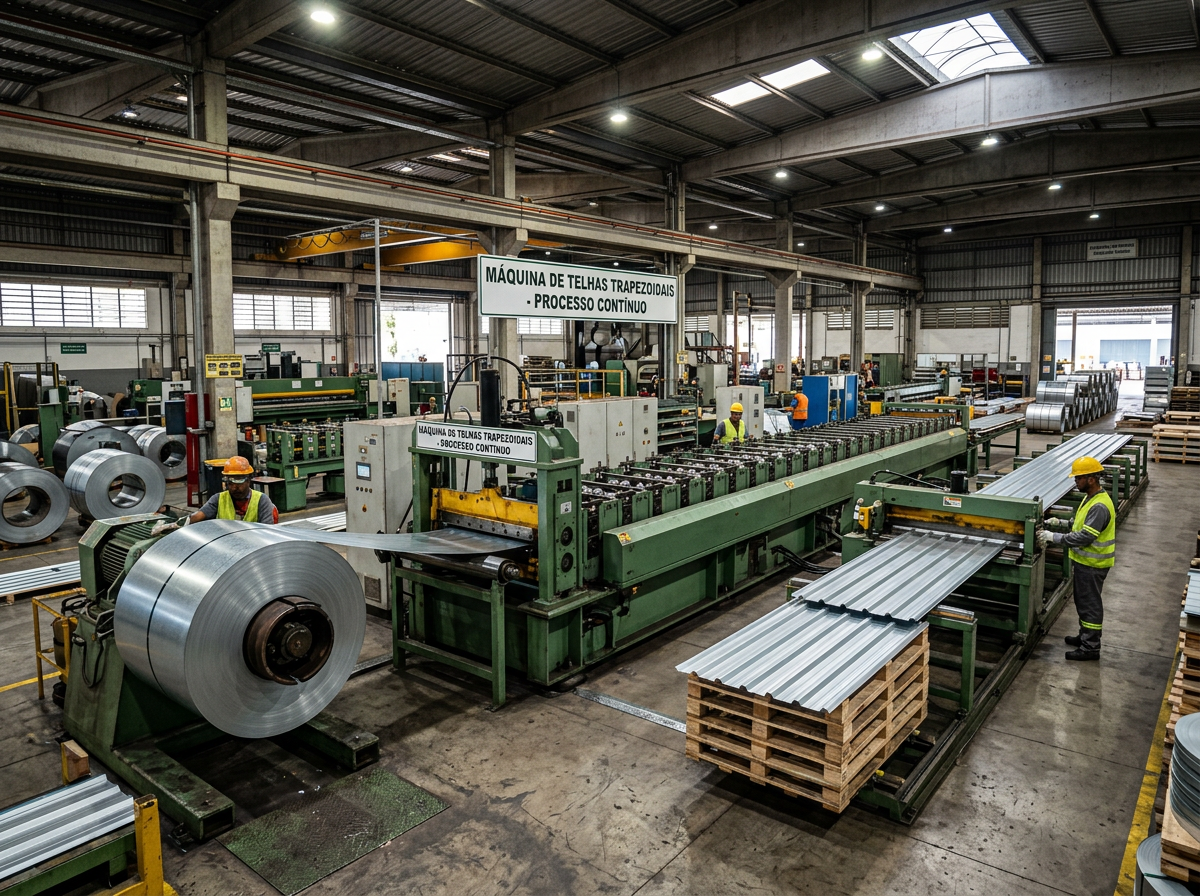
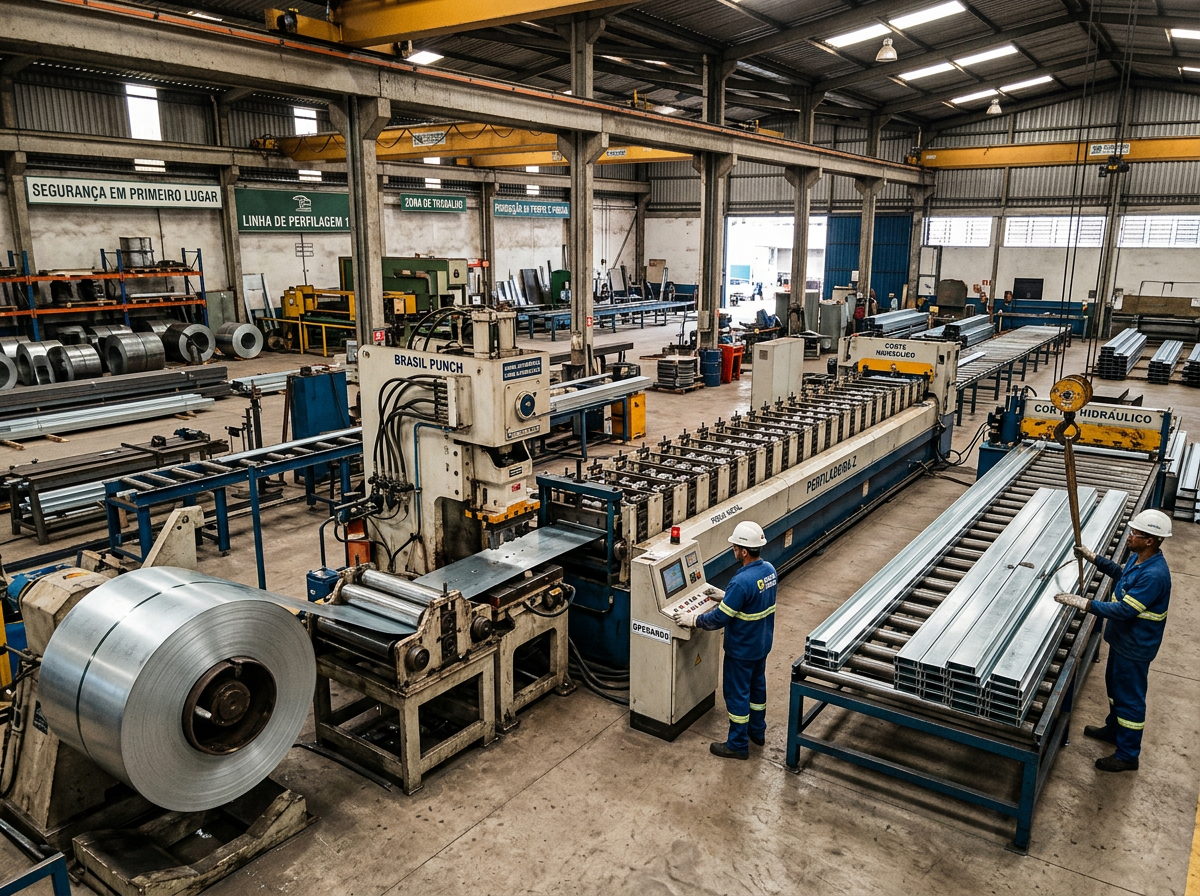
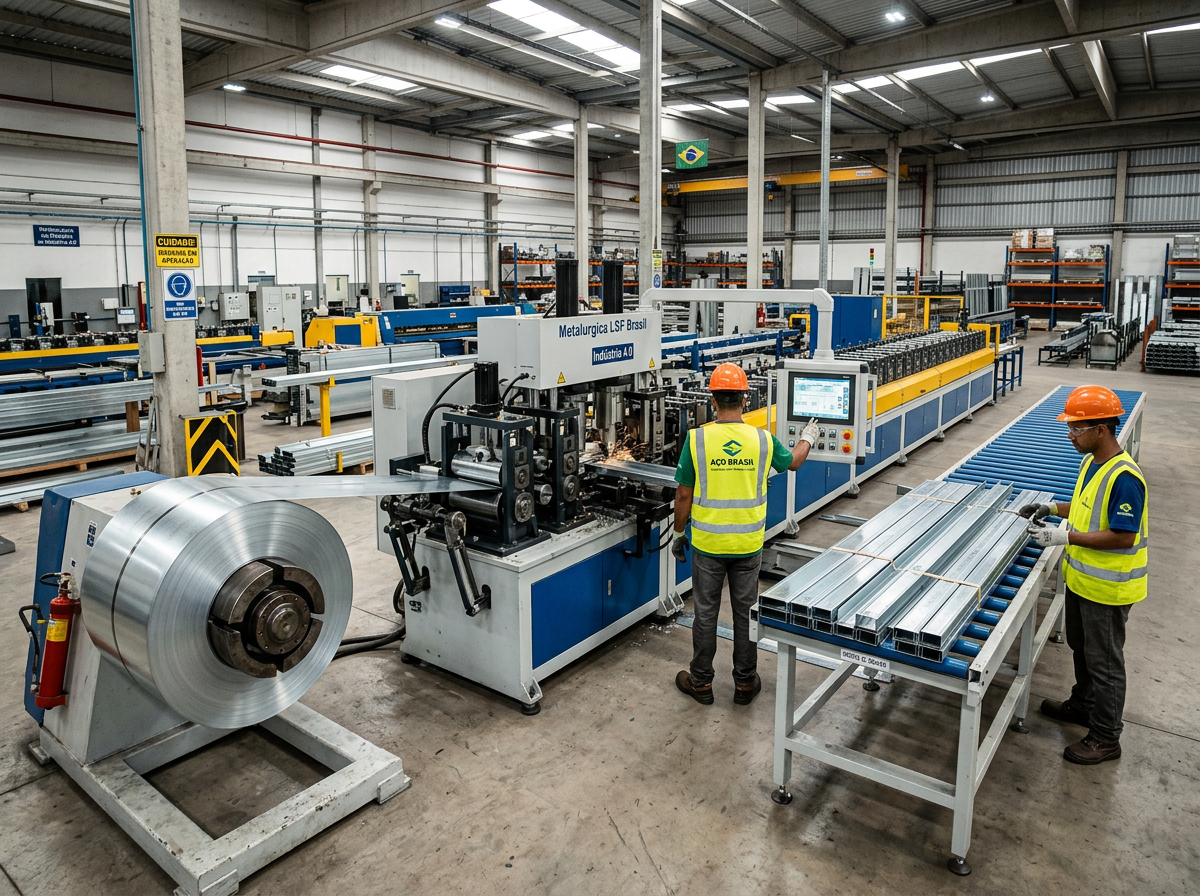
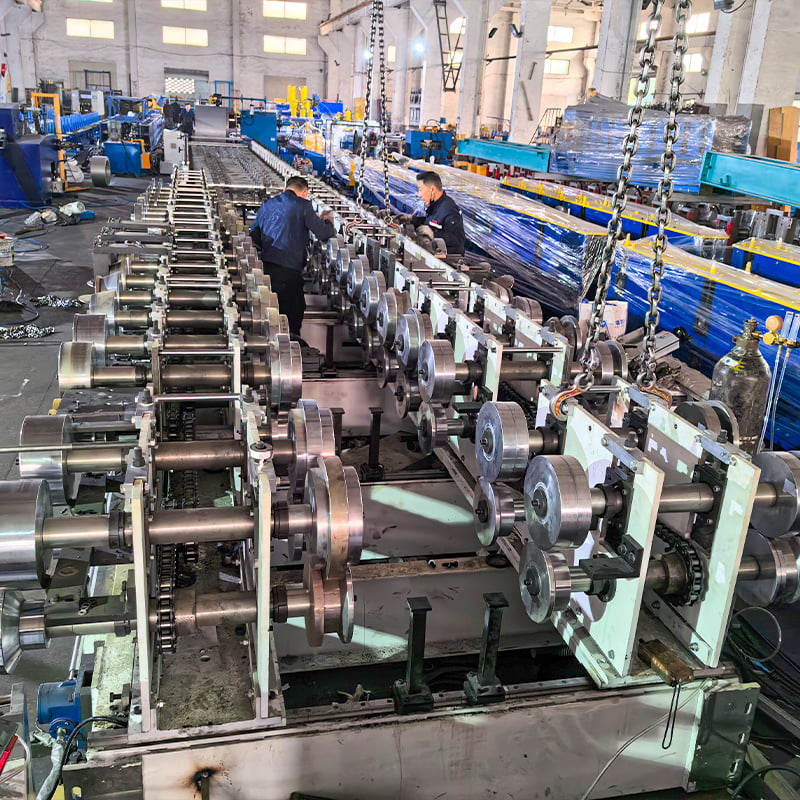
We also find that U.S. buyers increasingly prefer complete integrated lines rather than isolated forming units. A typical Steel Roll Forming Machine project may include hydraulic decoiling, entry guiding, leveling, servo or hydraulic punching, roll forming, shearing, and output stacking. This matters because many production issues originate in material feeding, strip stability, or punching alignment rather than the forming section itself. A balanced line design delivers better profile accuracy, smoother operation, and lower downtime.
| Type de machine | Gamme d'épaisseur | Typical speed | Common U.S. application | Key advantage |
|---|---|---|---|---|
| C/Z purlin Steel Roll Forming Machine | 1.5 | 10-20 m/min | metal buildings, warehouses | structural flexibility |
| Ligne de montants et rails | 0,5-1,2 mm | 20-40 m/min | drywall framing, commercial interiors | high repeat volume |
| Floor deck machine | 0.8-1.5 mm | 10-18 m/min | commercial and multi-story construction | high load-bearing profile |
| Ligne de supports solaires | 1,5-2,5 mm | 10-20 m/min | utility and rooftop solar structures | punching integration |
| Shelf and rack profile line | 1.0-2.5 mm | 10-18 m/min | warehouse storage systems | dimensional consistency |
This comparison helps buyers narrow the machine category before discussing detailed drawings and tooling. In the United States, many companies start with one high-demand profile family and later expand into adjacent product lines using the same supply network and customer base.
Pourquoi ces types de produits sont recommandés
These product types are recommended because they align closely with current U.S. manufacturing demand and with the practical economics of profile production. C/Z purlins, stud and track, floor decking, solar supports, and storage system profiles all serve sectors with repeat orders, established standards, and large installed markets. For many buyers, that makes them safer investment categories than highly niche custom sections.
The technical logic is also strong. Purlin and solar lines often require punching, size flexibility, and stronger machine frames because they process thicker steel and must maintain hole position accuracy. Stud and track lines place more emphasis on speed, strip stability, and efficient cutoff because margins depend on volume and uptime. Floor deck systems require careful pass design and rigid forming stands to preserve geometry across wider profiles. In each case, the machine should be designed around the real production sequence: decoiling, leveling, punching, roll forming, shearing, and stacking as one coordinated process.
From our industry experience, the most successful Steel Roll Forming Machine projects are the ones built around production realities rather than catalog headlines. A machine with proper leveling, accurate encoder control, reliable hydraulic systems, and stable roller machining will usually outperform a cheaper line that advertises speed without explaining loaded conditions, thickness limits, or tooling life. That is especially important in the U.S. market, where downtime, rework, and service delays are costly.
| Facteur technique | Recommended specification | Pourquoi c'est important | Buyer question |
|---|---|---|---|
| Matériau du rouleau | Cr12MoV, HRC 58-62 | better wear resistance and profile stability | How are rollers heat treated? |
| Vitesse de formage | 10-25 m/min under load | realistic throughput for many profiles | Is the speed loaded or idle? |
| Système hydraulique | 10-16 MPa | stable cutting and punching force | What is the pressure range in production? |
| PLC and HMI | Siemens, Schneider, Delta | easier operation and diagnostics | Is English interface standard? |
| Line integration | decoiler to stacker | less manual handling and fewer errors | What is included in the quoted line? |
Use this table as a supplier interview checklist, not just a technical reference. The quality of a supplier’s answers often reveals more about their engineering depth than the machine brochure itself.
Key Industries for Steel Roll Forming Machine in United States
The industries that most need a Steel Roll Forming Machine in the United States are commercial construction, steel structure fabrication, warehousing and logistics, solar energy, storage systems, transportation support products, and interior framing. These sectors consume repeat steel profiles in large quantities and often require reliable lead times, traceable quality, and cost control. As a result, many companies prefer to bring profile production in-house or work with specialized roll formers that can respond quickly.
Commercial and industrial building projects are major drivers because they use purlins, roof and wall panels, floor deck, stud and track, and assorted structural sections. Warehouse growth also supports demand for rack and shelf profiles, mezzanine components, and related storage products. Solar development matters as well, since many mounting brackets, channels, and support members are produced from roll formed steel. This diversity of downstream demand is one reason the U.S. remains such an important market for roll forming equipment.
Procurement behavior in the United States also shapes machine demand. Buyers often prioritize durable equipment, clear training, and spare-parts access because operator turnover and service delays can disrupt production. They also value systems that can adapt to multiple profile families over time. In our experience, that is why many U.S. buyers ask detailed questions about tooling life, quick changeover, control system familiarity, and long-term support before making a purchase decision.
Scénarios d'application spécifiques
One common scenario is a regional steel building supplier producing C and Z purlins for warehouses, workshops, and agricultural structures. The line may process 1.5-3.0 mm galvanized coil with hydraulic decoiling, leveling, servo punching, roll forming, and flying cutoff. In this setup, the buyer needs stable hole positions, consistent web and flange dimensions, and enough output to support project-based schedules without depending on outside profile suppliers.
Another practical scenario is a drywall framing manufacturer making stud and track profiles for commercial interiors. Here, the demand pattern is volume-driven, so the machine must prioritize strip stability, quick coil changeover, and efficient stacking. Even small burr issues or cutoff inconsistency can create downstream installation problems, so clean shearing and precise control are essential. A reliable high-speed line can significantly improve delivery responsiveness to contractors and building material distributors.
A third scenario involves solar support profile production for EPC contractors or component suppliers. These lines often integrate punching patterns, length flexibility, and moderate-to-thicker material handling. Since project schedules can change quickly, the machine should be easy to adjust and capable of maintaining repeatability across long production runs. In this segment, profile accuracy affects not only production yield, but also installation speed in the field.
| Application scenario | Typical profile | Process flow | Main challenge | Recommended line focus |
|---|---|---|---|---|
| Steel building supplier | C/Z purlins | decoiling, leveling, punching, forming, cutoff | hole accuracy and changeover | flexible structural line |
| Interior framing producer | stud and track | decoiling, forming, shearing, stacking | speed and clean cutoff | high-speed light-gauge line |
| Solar component supplier | slotted channels and brackets | decoiling, punching, forming, shearing | repeatability over long runs | integrated punching control |
| Warehouse systems maker | rack and shelf profiles | decoiling, leveling, punching, forming | dimensional consistency | rigid frame and tooling quality |
This application guide helps buyers connect machine design to business model. It is best used alongside your product mix, target lead times, and expected order volume when discussing quotations with suppliers.
Études de cas
A realistic case from the Midwest involved a metal building component supplier that wanted to internalize purlin production instead of outsourcing during seasonal demand peaks. The company needed a Steel Roll Forming Machine capable of producing both C and Z profiles from 1.5-3.0 mm galvanized coil. We recommended a configurable line with hydraulic decoiler, leveling, pre-punching, quick change tooling logic, roll forming section, and hydraulic cutoff, supported by a Siemens PLC and encoder-based length control.
After installation and operator training, the customer achieved better schedule control and reduced dependence on third-party profile vendors. The key improvement was not only output, but consistency. Hole locations became more repeatable, profile geometry was more stable, and job-based production planning became easier. The company also gained the ability to quote shorter lead times to local steel building contractors, which improved competitiveness in regional tenders.
A second example involved a southeastern manufacturer expanding into solar mounting support production. The buyer needed a line to form slotted steel channels with repeat punching and reliable cut length for utility-scale and commercial solar projects. We proposed an integrated Steel Roll Forming Machine with hydraulic decoiler, precision leveling, servo punching, roll forming, and post-cut system designed for 1.5-2.5 mm steel. Special attention was given to tooling accuracy and line synchronization because hole alignment directly affected field assembly.
The outcome was a more dependable production process with less manual correction and lower scrap. The customer improved delivery confidence for project-driven orders and could support installers with more uniform components. In this case, the machine’s value came from punching precision, synchronized control, and easy operator learning rather than from speed alone, which is often the correct priority in solar component manufacturing.
Les 6 fournisseurs locaux les plus recommandés aux États‑Unis
For buyers who want domestic support coverage, local suppliers can offer practical advantages in communication, travel time, and service response. The strongest suppliers are usually those that ask detailed questions about drawings, steel grade, thickness tolerance, punching requirements, and expected annual output before they issue a final machine proposal.
| Nom de la société | Principales forces | Régions couvertes | Assistance avant-vente | Assistance après-vente |
|---|---|---|---|---|
| Midwest Profile Systems | Standard framing, purlin, and panel lines for broad industrial demand | Chicago, Illinois; Milwaukee, Wisconsin; Indianapolis, Indiana | drawing review, line sizing, layout planning | installation, operator training, spare parts |
| Atlantic Forming Solutions | Light-gauge and contractor-oriented Steel Roll Forming Machine projects | Atlanta, Georgia; Charlotte, North Carolina; Richmond, Virginia | profile consultation, budget planning, sample discussion | remote diagnostics, field visits, support training |
| Lone Star Industrial Rollform | Higher-capacity structural and warehouse profile systems | Dallas, Texas; Houston, Texas; Oklahoma City, Oklahoma | capacity matching, ROI discussion, plant layout advice | commissioning, electrical support, maintenance |
| Great Lakes Roll Form Tech | Integrated lines with punching, leveling, and cutoff coordination | Détroit, Michigan ; Cleveland, Ohio ; Toledo, Ohio | process review, tolerance discussion, tooling planning | upgrades, spare parts, troubleshooting |
| Western Acier Line Systems | Specialty and architectural Steel Roll Forming Machine applications | Phoenix, Arizona; Riverside, California; Las Vegas, Nevada | finish and profile review, application matching | on-site service, optimization, retraining |
| Southeast Profile Equipment | Flexible systems for distributors and regional manufacturers | Nashville, Tennessee; Birmingham, Alabama; Jacksonville, Florida | machine selection, quotation support, production planning | startup support, replacement components, service calls |
To compare local suppliers fairly, send the same profile drawings, raw material specifications, and target output assumptions to all of them. Then evaluate how specifically they respond on tooling life, service lead time, installation scope, and responsibility for commissioning performance. That process usually reveals the most capable partner more clearly than a simple price comparison.
Pourquoi choisir SUNWAY comme partenaire global
SUNWAY is a strong option for U.S. buyers that want a Chinese manufacturing partner with broad engineering capability, proven export experience, and complete project support. We are a professional manufacturer and exporter of cold roll forming machines, with more than 15 years of manufacturing experience and more than 20 years of export experience. Our business has served 1,350+ global customers, supported 160+ industries, completed 500+ projects, and delivered equipment to more than 100 destination countries. You can visit our page d'accueil or learn more à propos de nous.
We can serve both distributors and end-users directly, which is especially valuable in the United States where some customers need factory-direct technical support while others prefer partnership-based supply. Our team provides custom machinery design, installation, technical support, training, maintenance, parts supply, upgrades, and consultancy as one complete solution. With German COPRA software, 10+ experienced design engineers, in-house R&D capability, and a wide range of machinery covering roofing, structural, storage, solar, framing, and special profiles, we help customers build systems that match actual production requirements. You can review our catalogue de produits for available machine categories.
For the U.S. market, we are continuing to strengthen local support capability. We have rich experience serving many end-users and distributors in the United States, we are planning a local warehouse model with stock delivery support, and we are building an overseas technical team for on-site engineering service. We are also actively recruiting partners through upcoming Affiliate and dropshipping programs, backed by comprehensive online and offline support. For buyers seeking competitive pricing, one-stop solutions, and a partner that understands both export execution and factory realities, SUNWAY offers a practical long-term choice. To discuss your line requirements or request a quote, please contactez notre équipe.
| Buyer concern | Typical local option | SUNWAY advantage | Best use case |
|---|---|---|---|
| Service accessibility | easier regional travel | expanding overseas support and online technical assistance | buyers balancing service with value |
| Ingénierie sur mesure | may focus on standard profiles | broad design capability using COPRA and in-house R&D | custom or multi-profile projects |
| Gamme de produits | narrower in some cases | one-stop portfolio across many roll formed products | future expansion planning |
| Cost-performance | domestic overhead may be higher | factory-direct pricing with complete support | value-driven capital investment |
Use this checklist to compare sourcing models realistically. Many U.S. buyers find the right decision comes from balancing regional service expectations with SUNWAY’s customization strength, export experience, and broader long-term production value.
FAQ
What is the best Steel Roll Forming Machine for a first-time U.S. buyer?
For many first-time buyers, the best starting point is a machine built for a profile family with broad, repeat demand, such as C/Z purlins, stud and track, or standard roof and wall panels. The correct choice depends on your target customers, material thickness, punching needs, and annual volume. A supplier should review these production details before recommending a final line configuration.
What technical specifications matter most when comparing machines?
The most important factors are roller material, roller hardness, shaft design, frame rigidity, line speed under load, hydraulic pressure, punching accuracy, and PLC brand. For many industrial applications, Cr12MoV rollers with HRC 58-62 hardness, hydraulic pressure of 10-16 MPa, and Siemens, Schneider, or Delta controls are strong reference points. These specifications influence service life, dimensional consistency, and maintenance frequency.
How fast should a Steel Roll Forming Machine run?
For many general industrial profiles, a practical production speed is 10-25 m/min, although light-gauge framing lines can run faster and thicker structural lines may run slower. The important point is to confirm loaded production speed, not just empty running speed in marketing materials. Real output depends on profile complexity, punching operations, strip stability, and cut length.
Is it better to buy a standalone machine or a complete line?
In most cases, a complete line is the better investment because decoiling, leveling, punching, roll forming, shearing, and stacking work best when designed as one coordinated system. A standalone machine may look less expensive at first, but it can create feeding instability, handling inefficiency, and more operator intervention. For most U.S. factories, integrated lines reduce downtime and improve consistency.
How important is after-sale support in the United States?
After-sale support is critical because downtime, operator turnover, and spare-parts delays can quickly affect project schedules and profitability. Buyers should confirm what installation, training, troubleshooting, and replacement parts are included before signing the order. Good support often saves more money over the machine life than a lower initial purchase price.
Can SUNWAY supply customized Steel Roll Forming Machine solutions?
Yes. SUNWAY can design and supply customized lines based on your profile drawings, raw material, thickness range, speed target, punching requirements, and factory layout. We also support installation, training, technical service, parts supply, and future upgrades, making the project easier to manage from one source.
How can I request a quotation from SUNWAY?
The fastest way is to send your profile drawing, material thickness, raw material type, coil width, punching needs, target speed, and destination market information through contactez notre équipe. If your requirements are still being defined, we can also help you choose the most suitable machine configuration based on your intended products and budget.
Contenu révisé et mis à jour : mars 2026