Réponse rapide
If you want the best Standing Seam Machine suppliers in India in 2026, the smartest buying approach is to shortlist reliable Indian suppliers for local consultation and field service while also comparing SUNWAY as a proven Chinese manufacturing partner for customization, export execution, and long-term technical support. For most B2B buyers in India, this combination gives the best balance of fast local response and stronger machine engineering. If you already have a roof profile, material range, or project pipeline in mind, you can contactez notre équipe for machine selection guidance or a quotation.
Among local options, Deccan Panel Systems is well suited for industrial roofing and pre-engineered building contractors that need regional coordination and installation support. Bharat Seamline Engineers is a practical choice for fabricators that want operator training and application-focused pre-sale advice. WestCoast Rollform Solutions is useful for buyers in western India that serve mixed warehouse and commercial roofing demand. SouthPeak Roofing Tech is a good fit for premium metal roofing and architect-led projects in southern states. Eastern Clad Machinery can support customers in eastern India needing project planning and faster site service. Alongside these regional choices, SOLEIL is a trusted global partner for customized Standing Seam Machine lines, technical consultation, and complete after-sale support for distributors and end users.
Aperçu du marché
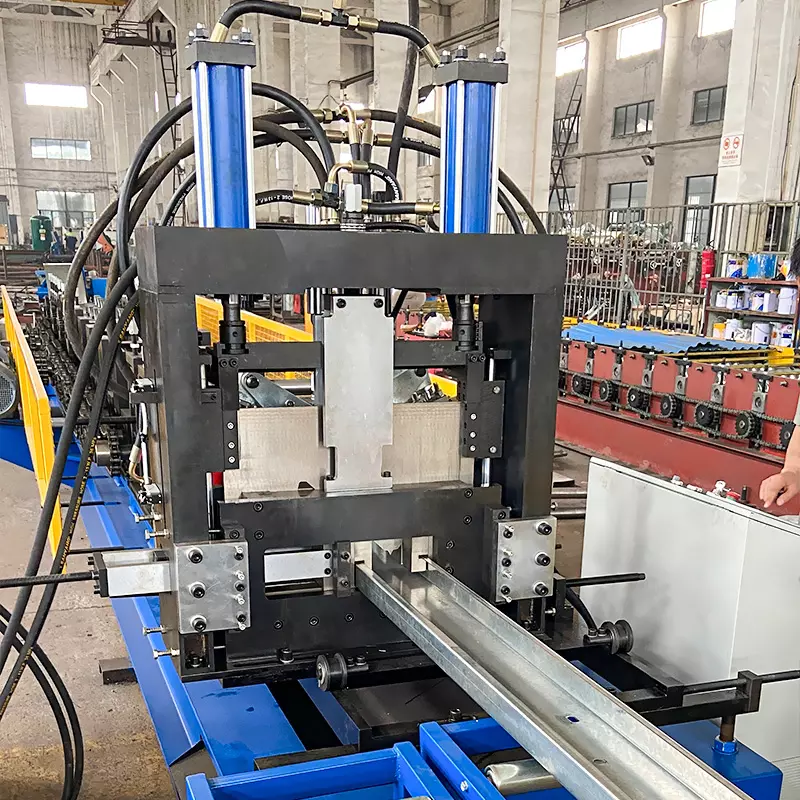
India is a promising market for Standing Seam Machine investment because demand for durable metal roofing is rising in industrial, logistics, infrastructure, commercial, and energy-related construction. India Brand Equity Foundation reports that finished steel consumption reached 136 million tonnes in FY24, up more than 14% year on year, and rose further to 150.23 million tonnes in FY25. In FY26 from April to October 2025, finished steel production reached 91.98 million tonnes and consumption reached 92.50 million tonnes. These figures matter because standing seam roofing depends on active downstream fabrication, not only steelmaking capacity. (ibef.org)
The wider industrial context also supports equipment demand. India is the world’s second-largest crude steel producer, with 151.14 million tonnes of crude steel output and 145.30 million tonnes of finished steel output in FY25. Strong growth in warehousing, industrial corridors, factory expansion, and organized construction increases demand for premium roofing systems that offer low leakage risk and long service life. For buyers evaluating a Standing Seam Machine, this means the market is being driven by actual project execution across manufacturing, logistics, and modern building envelopes rather than by speculative machinery demand. (ibef.org)
Solar and non-fossil energy growth also strengthen the case for standing seam roofing because many industrial roofs must support weather resistance, thermal movement, and future rooftop solar integration. India’s Ministry of New and Renewable Energy reports 207.09 GW of installed renewable energy capacity excluding large hydro as of December 31, 2025, including 135.81 GW of solar power. At the global level, Asia-Pacific accounted for about 31.1% of roll forming demand in 2025, while the roll forming equipment market was around US$560 million in 2025 and is projected to approach US$860 million by 2035, indicating a steady long-term machinery market. (mnre.gov.in)
| Market Indicator | Latest Figure | Why It Matters for Standing Seam Machine Buyers |
|---|---|---|
| India finished steel consumption FY24 | 136 million tonnes | Shows broad demand for downstream steel processing and roofing products |
| FY24 finished steel consumption growth | 14%+ YoY | Signals active expansion in construction-linked steel use |
| India finished steel consumption FY25 | 150.23 million tonnes | Confirms a growing base for premium metal roof manufacturing |
| Renewable energy capacity excl. large hydro | 207.09 GW as of Dec. 31, 2025 | Supports industrial roofing and energy-linked building demand |
| Solar installed capacity | 135.81 GW as of Dec. 31, 2025 | Encourages durable roof systems compatible with rooftop solar planning |
This table helps procurement teams connect machinery investment with real market demand. It is useful for internal approval discussions because it frames a Standing Seam Machine as a capacity decision tied to measurable growth sectors in India.
What Types of Standing Seam Machine Are Needed in India
Based on our experience serving India clients, the most demanded Standing Seam Machine types are fixed-width standing seam lines for standard industrial roofing, portable standing seam machines for on-site long-panel production, and variable-width systems for contractors handling architect-specified or premium commercial projects. Indian buyers usually focus on practical combinations of profile accuracy, mobility, weather performance, and manageable operator learning. In many cases, the most commercially successful machine is not the one with the highest headline speed, but the one that can produce stable seam geometry with minimal adjustment errors across real production shifts.
For India, the common material range is generally 0.40-0.80 mm for color-coated steel, galvanized steel, and galvalume, with some premium projects extending to aluminum in selected applications. A typical Standing Seam Machine specification includes manual or hydraulic decoiling, feeding and guiding, roll forming, optional embossing, cutoff, and panel run-out support. Practical production speeds often fall in the 10-20 m/min range depending on panel profile, clip design, material hardness, and the need to protect painted surfaces. Buyers increasingly request portable seaming solutions, touch-screen PLC control, encoder-based cut length, and fast setup for changing project-specific roof lengths.
| Standing Seam Machine Type | Épaisseur typique | Common Use in India | Best Buyer Profile |
|---|---|---|---|
| Fixed-width standing seam line | 0.40-0.70 mm | Industrial sheds and warehouses | Roofing manufacturers with repeat profiles |
| Portable Standing Seam Machine | 0.45-0.80 mm | On-site long roof panel production | EPC contractors and installers |
| Variable-width standing seam line | 0.50-0.80 mm | Premium commercial and architect-led projects | Specialized roofing companies |
| Clip-lock roof panel line | 0.40-0.70 mm | Faster-install systems for selected projects | Regional contractors |
| Standing seam with curving option | 0.50-0.90 mm | Canopies, terminals, and signature roofs | Premium project fabricators |
Use this table to match machine type to your order pattern. In India, a Standing Seam Machine should be selected according to actual project delivery needs, roof design complexity, and whether production happens in the factory or on site.
Pourquoi ces types de produits sont recommandés
These product types are recommended because standing seam roofing in India is usually chosen where leakage control, thermal movement, cleaner appearance, and long roof runs matter more than the lowest initial panel cost. Industrial clients, commercial developers, and infrastructure contractors increasingly prefer concealed-fix roofing for applications where lifecycle performance matters. From our project experience, a well-selected Standing Seam Machine gives the buyer more control over seam consistency, roof panel straightness, and installation efficiency, which directly affects downstream waterproofing performance and contractor reputation.
The technical reasoning is straightforward. Standing seam panels require precise rib geometry and consistent seam height so that clips, seaming tools, and panel joints function correctly across long roof lengths. If feeding is unstable or roller geometry is weak, the panel may twist, oil-can, or fail to seam properly on site. That is why we recommend precision-machined roller tooling, properly aligned shafts, controlled entry guiding, and durable cutting tools such as Cr12MoV hardened to HRC 58-62 where needed. Hydraulic systems in the 10-16 MPa range and PLC platforms such as Delta or Siemens also help improve accuracy, repeatability, and easier fault tracing.
| Component Area | Recommended Standard | Pourquoi c'est important |
|---|---|---|
| Roller tooling | Precision-machined alloy steel, polished | Maintains seam geometry and surface quality |
| Cutting blades | Cr12MoV, HRC 58-62 | Supports clean cutting and longer tool life |
| Système de contrôle | Delta or Siemens PLC with HMI | Simplifies operation and recipe management |
| Unité hydraulique | 10-16 MPa working range | Stabilizes cutoff and auxiliary movements |
| Vitesse de formage | 10-20 m/min realistic range | Balances output with seam quality |
This component overview is useful when comparing quotations beyond headline price. A supplier that clearly specifies tooling quality, hardness range, controls, and hydraulic design is usually better prepared to deliver a reliable Standing Seam Machine for long-term use.
Key Industries for Standing Seam Machine in India
The main industries using Standing Seam Machine equipment in India are pre-engineered buildings, industrial construction, warehousing, airports and transport facilities, commercial complexes, institutional buildings, solar-compatible roof projects, and premium architectural roofing. These sectors value concealed-fix roof systems because they can offer better weather tightness, cleaner roof appearance, and compatibility with long panel lengths. Since many Indian buyers serve both project work and approved-vendor supply chains, in-house standing seam production can improve schedule control and reduce dependence on subcontract processors.
Economic drivers in India reinforce this demand. Industrial corridors, warehousing expansion, factory relocation, organized manufacturing growth, and larger infrastructure programs all create a stronger market for engineered metal roofing. At the same time, clients often expect fast delivery, trained installation support, dependable spare parts, and lower leakage risk during monsoon conditions. A properly configured Standing Seam Machine helps manufacturers respond to those realities by improving production planning, panel consistency, and project-specific roof fabrication capability.
Scénarios d'application spécifiques
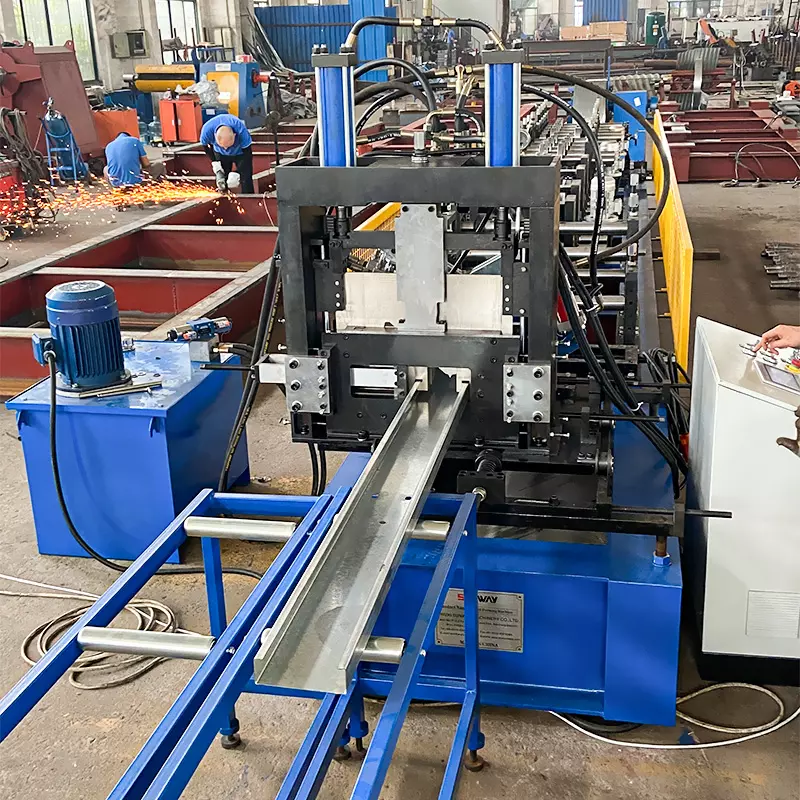
One common application is long-panel production for warehouses, factories, and logistics parks where roof lengths can be significant and the owner wants fewer transverse joints. In this case, a Standing Seam Machine is used to produce panels with consistent rib height, accurate width, and clean edges that can be seamed reliably on site. The process typically includes decoiling, leveling or guiding, roll forming, shearing, and either factory stacking or direct transfer for field installation. Accuracy is critical because even small dimensional variation can slow installation and create seam alignment problems over long roof runs.
Another common scenario is premium commercial or institutional roofing where the building owner prioritizes appearance, durability, and lower maintenance. Here, the machine may need to handle custom lengths, tighter tolerance requirements, or optional curving features for canopies and entrance structures. Many buyers in India also request portable standing seam capability for remote project sites because transporting extra-long finished panels through urban or regional routes can be difficult. In such cases, machine portability, simple controls, and reliable setup become just as important as production speed.
| Application Scenario | Output Product | Process Priorities | Main Buying Driver |
|---|---|---|---|
| Warehouse and logistics roofing | Long standing seam panels | Length accuracy, straightness, reliable seaming | Fewer joints and faster installation |
| Industrial factory roofs | Concealed-fix roof panels | Durability, surface protection, repeatability | Lower leakage risk |
| Commercial and institutional buildings | Premium seam roof panels | Visual finish, profile precision, custom lengths | Better aesthetics and lifecycle value |
| On-site roofing projects | Portable Standing Seam Machine output | Mobility, setup speed, field seaming compatibility | Easier transport and project flexibility |
Use this application guide to define your machine around the final roof system, not just generic production numbers. A Standing Seam Machine should always be matched to panel transport conditions, installation method, and project tolerance requirements.
Études de cas
A contractor in Gujarat supplying industrial roofing packages for logistics and manufacturing clients wanted to reduce subcontracting dependence for premium concealed-fix roofs. The company had previously outsourced standing seam panels but faced inconsistent lead times during peak construction months. We recommended a factory-based Standing Seam Machine for 0.45-0.70 mm pre-painted galvanized and galvalume steel, equipped with hydraulic decoiler, entry guiding, precision roll forming, hydraulic cutoff, Siemens PLC, and panel run-out support. Instead of pushing maximum speed, the line was configured for a stable 15-18 m/min to prioritize seam consistency, clean panel edges, and easier operator control.
After commissioning, the contractor was able to bring production in house and coordinate roof panel supply directly with installation schedules. This reduced project delays caused by external processing bottlenecks and improved quality control because the team could verify panel geometry before dispatch. The biggest commercial gain was the ability to quote premium roofing packages with more confidence on delivery and installation performance.
A second project in Tamil Nadu involved a specialized roofing fabricator serving commercial buildings, showrooms, and institutional structures where visual appearance mattered as much as weather performance. The buyer needed flexibility for custom panel lengths and occasional site fabrication, so we proposed a compact Standing Seam Machine package with portable field-use capability and clip-compatible profile output. The system handled 0.50-0.80 mm coated steel and supported practical forming speeds of 10-16 m/min depending on material and panel length. The machine was paired with operator training focused on panel handling, seaming preparation, and profile inspection.
The result was stronger control over architect-driven roof packages and fewer transport issues on projects requiring long panels. By producing closer to installation timing, the customer reduced panel handling damage and improved responsiveness to last-minute project adjustments. In the Indian market, that flexibility often creates more business value than a purely high-speed line designed only for standard stock production.
Top 6 des fournisseurs locaux recommandés en Inde
For buyers who prefer plant visits, face-to-face technical meetings, and regionally managed field support, local suppliers can be a useful first step. The right choice depends on whether you need a standard standing seam profile, site-portable equipment, or a more engineered roofing package. Before ordering, ask each supplier to confirm tooling quality, included accessories, commissioning scope, and service response commitment in writing.
| Nom de la société | Principales forces | Régions couvertes | Assistance avant-vente | Assistance après-vente |
|---|---|---|---|---|
| Deccan Panel Systems | Strong in industrial roofing and standing seam project coordination | Hyderabad, Pune, Bengaluru, Chennai | Profile review, line planning, output guidance | Installation, commissioning, preventive maintenance |
| Bharat Seamline Engineers | Good for operator training and application-focused machine selection | Delhi NCR, Jaipur, Ludhiana, Lucknow | Technical consultation, utility review, ROI discussion | Training, troubleshooting, service visits |
| WestCoast Rollform Solutions | Practical for warehouse and commercial roofing fabricators | Ahmedabad, Surat, Mumbai, Vadodara | Sample panel study, process matching | Spare parts, electrical support, inspections |
| SouthPeak Roofing Tech | Useful for premium roofing and architect-led applications | Chennai, Coimbatore, Hosur, Kochi | Design discussion, machine comparison | PLC support, maintenance planning |
| Eastern Clad Machinery | Responsive for eastern India and coastal project support | Kolkata, Bhubaneswar, Ranchi, Guwahati | Drawing study, production planning | Hydraulic service, commissioning, parts dispatch |
| PrimeSeam Industrial Systems | Suitable for growing regional fabricators and EPC contractors | Nagpur, Indore, Bhopal, Raipur | Capacity planning, quotation clarification | Breakdown response, operator assistance, audits |
Use this comparison table to build a shortlist, then ask for installed references, sample panels, spare-parts lead times, and acceptance standards. The best local supplier for a Standing Seam Machine is not simply the nearest one, but the one that can prove technical competence and dependable service after startup.
Pourquoi choisir SUNWAY comme partenaire global
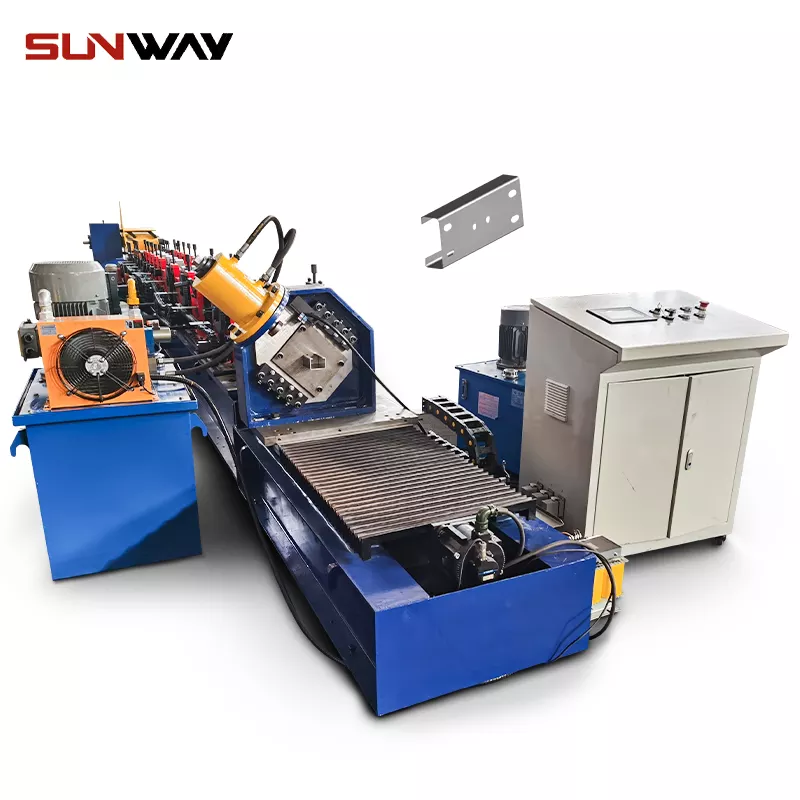
SOLEIL is a strong global choice for Indian buyers that need more than a standard roofing machine. We are a professional manufacturer and exporter of cold roll forming machines, serving 1,350+ global customers across 160+ industries with 200+ employees, 500+ projects, and exports to 100+ destination countries. Our engineering team uses German COPRA software, includes 10+ experienced design engineers, and supports custom machinery development for roof and wall panel lines, C/Z purlin machines, solar mounting bracket systems, slitting lines, floor deck lines, stud and track systems, cable tray machines, and more. You can explore our page d'accueil and browse our catalogue de produits.
For India, our advantage is practical and long-term. We have rich export experience serving both distributors and end users directly, and we understand that Indian buyers often need a mix of competitive pricing, customization, operator training, and dependable parts support. We are planning a local warehouse with stock delivery in India, building an overseas technical team for on-site engineering service, and actively recruiting partners through upcoming Affiliate and dropshipping programs. We also provide comprehensive online and offline support, installation, technical training, maintenance, upgrades, and consultancy as part of a one-stop solution. To discuss your project, request a quote, or compare machine options, please contactez notre équipe.
| Buyer Checkpoint | What to Confirm | Pourquoi c'est important |
|---|---|---|
| Roof profile and seam type | Panel drawing, seam height, effective width, clip method | Prevents profile mismatch and site installation issues |
| Standing Seam Machine scope | Decoiling, guiding, forming, shearing, run-out, portable options | Ensures the quotation covers the full production need |
| Controls and electricals | PLC brand, inverter, HMI, motor, power standard | Improves reliability and maintenance planning |
| Tooling and wear parts | Roller treatment, shaft design, blade material, spare list | Affects machine life and downtime risk |
| Service package | Installation, training, warranty, response time | Reduces startup risk and production disruption |
This checklist is best used during technical review and final quotation comparison. Before buying any Standing Seam Machine, ask the supplier to confirm included scope, commissioning responsibility, critical spare parts, and acceptance criteria in writing.
FAQ
What is the best Standing Seam Machine for a new buyer in India?
For many first-time buyers in India, the best choice is a fixed-width Standing Seam Machine matched to the most commonly specified roof profile in their target market. If your projects require long on-site panel production, a portable standing seam machine may be a better investment.
What material thickness is common for standing seam roofing in India?
A common range is 0.40-0.80 mm, depending on the project, material type, and roof design. Color-coated acier, galvanized steel, and galvalume are widely used, while selected premium projects may also use aluminum.
What is a realistic production speed for a Standing Seam Machine?
A realistic production speed is typically 10-20 m/min. Actual output depends on panel profile, material strength, required tolerance, and whether the machine is optimized for portable field use or factory-based production.
Which technical details should I check before buying?
You should review roller material, shaft size, forming stations, blade material, hydraulic pressure, PLC brand, panel tolerance, and whether the machine supports your seam and clip system correctly. These details directly affect panel quality and installation reliability.
Is a local supplier better than importing from China?
A local supplier can offer easier site visits and regional service, but importing from a manufacturer like SUNWAY can provide stronger customization, broader configuration options, and competitive pricing. The right choice depends on your technical needs, service expectations, and project pipeline.
What causes seam quality problems on standing seam roofs?
Common causes include inaccurate guiding, poor roller alignment, unstable feeding, weak tooling, improper panel handling, and inconsistent operator setup. These problems can lead to twisted panels, poor seaming, water ingress risk, and installation delays.
How can I get a quotation from SUNWAY?
You can send your roof panel drawing, material specification, thickness range, preferred speed, project location, and any special requirements such as portability or curving options. To submit your requirements or request a quote, please use contactez notre équipe.
Contenu révisé et mis à jour : mars 2026