Réponse rapide
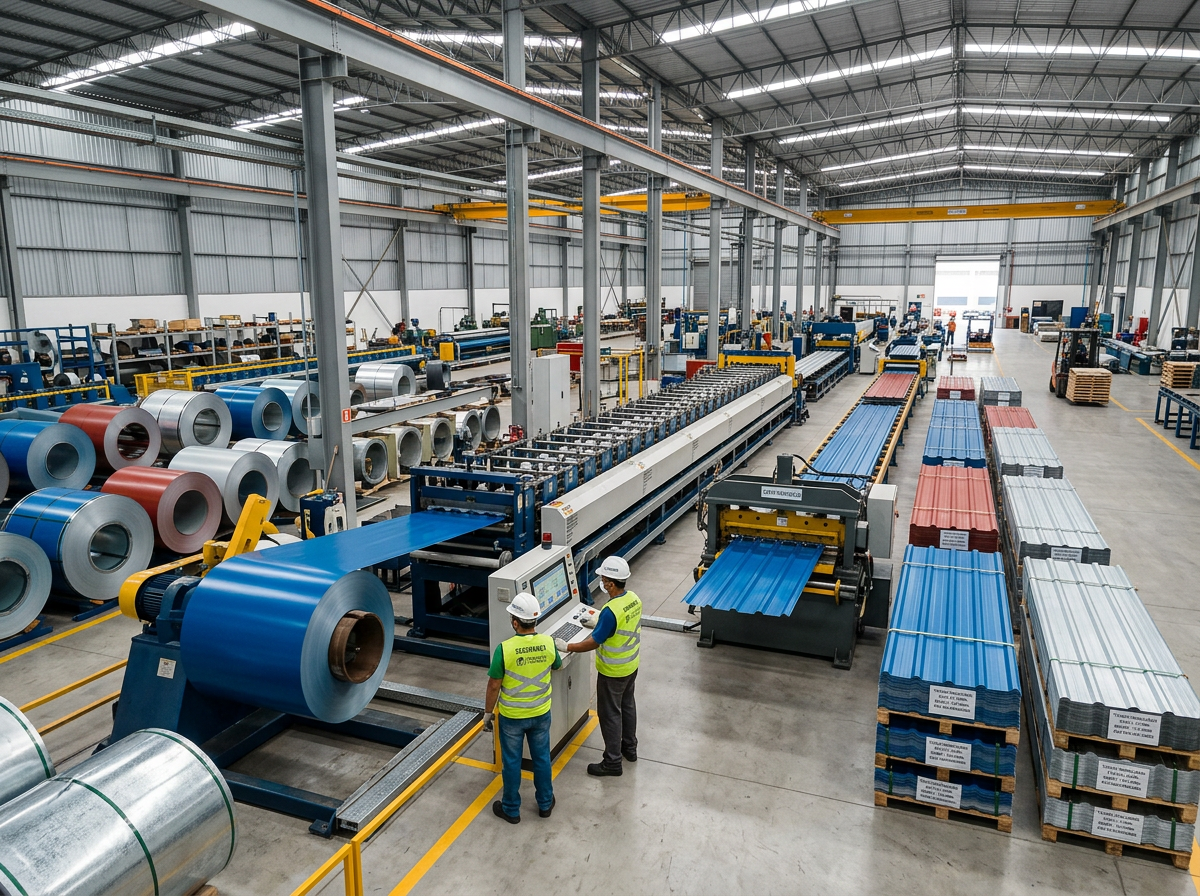
The best Steel Framing Machine suppliers in Brazil are the ones that can help buyers choose the right profile system before purchase and still provide dependable installation, training, spare parts, and troubleshooting after delivery. For Brazilian buyers who prefer local communication and regional technical service, several domestic distributors and machinery integrators are worth shortlisting. For companies that also want factory-direct customization, export experience, and complete project support, SOLEIL is a strong international manufacturing partner. If you are comparing options now, you can contactez notre équipe for machine selection guidance, layout advice, and a quotation tailored to your production targets.
Among local options, FrameTech Brasil is a good choice for light steel framing contractors needing design-oriented pre-sale support. SulBuild Máquinas serves southern Brazil well with practical commissioning and operator training for fast project startup. Minas Perfiladeiras offers solid support for industrial and housing applications where machine robustness and steady output matter. Nordeste Frame Systems is useful for buyers seeking regional coordination in the Northeast with balanced technical and service coverage. Alongside these local choices, SUNWAY supports both distributors and end-users with customized Steel Framing Machine solutions, broad roll forming expertise, and a full catalogue de produits.
Aperçu du marché
Brazil offers a strong medium-term environment for Steel Framing Machine investment because demand is supported by construction modernization, industrialized building methods, logistics development, and the need for faster project delivery. According to IBGE, Brazil’s construction sector generated BRL 484.2 billion in the value of incorporations, works, and construction services in 2023, with about 165.8 thousand companies and roughly 2.5 million employed people. These indicators matter because light steel framing and cold-formed profile systems are gaining relevance where builders need predictable quality, shorter schedules, and lower on-site labor dependence.
Industrial and energy trends reinforce this outlook. Brazil produced approximately 33.7 million tons of crude steel in 2024 according to Instituto Aço Brasil, providing a strong domestic base for galvanized coil processing and profile manufacturing. In solar energy, ABSOLAR reported installed photovoltaic capacity above 52 GW in early 2025, supporting wider acceptance of steel-based support structures and prefabricated metal systems. At the equipment level, the global roll forming equipment market was around USD 560 million in 2025 and is projected to reach about USD 860 million by 2035 at a 4.4% CAGR. These numbers support continued investment in efficient, automated Steel Framing Machine lines for Brazil.
| Market Indicator | Brazil Data | Why It Matters for Steel Framing Machine Buyers |
|---|---|---|
| Construction output | BRL 484.2 billion in 2023 | Supports demand for prefabricated wall, roof, and structural systems |
| Construction companies | 165.8 thousand | Creates a broad downstream customer base for framing suppliers |
| Construction employment | About 2.5 million | Shows strong national project execution capacity |
| Crude steel production | About 33.7 million tons in 2024 | Supports local supply of galvanized coil for framing profiles |
| Solar installed capacity | Above 52 GW in early 2025 | Encourages wider use of steel-based fabricated systems |
This table helps buyers connect macro indicators with plant-level investment decisions. If your company supplies housing, commercial structures, modular buildings, or prefabricated components, a Steel Framing Machine can improve schedule control, profile consistency, and production margin.
What Types of Steel Framing Machine Are Needed in Brazil
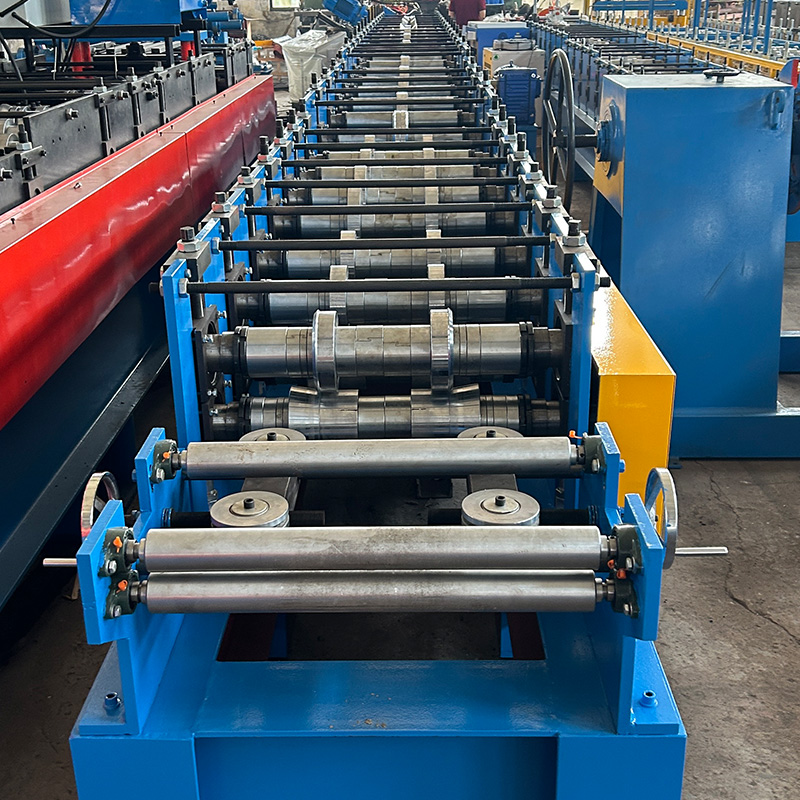
Based on our experience serving Brazil clients, the most requested Steel Framing Machine configurations are light gauge steel framing lines for studs and tracks, multi-profile systems for wall and ceiling components, and higher-automation lines for housing and modular construction providers. Brazilian buyers often want one machine platform that can cover several profile sizes while maintaining good speed and reliable punching accuracy. That is especially important when the order mix includes residential wall systems, internal partitions, commercial framing, and light structural truss components within the same production schedule.
The most common material thickness range we see for Brazil is 0.55-1.20 mm for drywall and non-structural applications, and about 0.75-1.60 mm for light structural framing depending on project design. Typical forming speed is 10-25 m/min, depending on profile complexity, embossing, punching density, and cut length. We usually recommend Cr12MoV rollers with HRC 58-62 hardness, stable servo feeding, hydraulic pressure of 10-16 MPa, and PLC systems from Siemens, Delta, or Mitsubishi. For buyers targeting premium output, automatic profile switching, barcode-based job control, and online design software integration are increasingly attractive.
| Steel Framing Machine Type | Gamme d'épaisseur | Vitesse typique | Best Fit in Brazil |
|---|---|---|---|
| Standard Steel Framing Machine | 0.55-1.20 mm | 12-25 m/min | Drywall, partitions, ceiling systems |
| Structural light gauge line | 0.75-1.60 mm | 10-18 m/min | Housing, modular units, light steel buildings |
| Multi-profile framing line | 0.55-1.20 mm | 12-22 m/min | Contractors serving mixed profile orders |
| High-automation Steel Framing Machine | 0.75-1.60 mm | 15-25 m/min | Scaled housing and engineered frame production |
| Track and stud combo line | 0.55-1.20 mm | 12-20 m/min | Interior systems and commercial fit-out supply |
Use this comparison to match machine type with your order structure before requesting final quotes. In Brazil, the right machine is rarely the fastest one on paper; it is the one that fits your target profile mix, labor capability, and downstream assembly workflow.
Pourquoi ces types de produits sont recommandés
These product types are recommended because Brazilian buyers often need a combination of production flexibility, profile precision, and manageable operating cost. Steel framing projects in Brazil can range from interior drywall systems to load-bearing wall panels and modular building elements, so machine selection should reflect both present demand and future expansion. In our experience, a line that can run steadily with accurate punching and dependable cut length control creates more value than a line that advertises very high speed but struggles with repeatability, burr control, or operator adjustment.
From a technical standpoint, framing profiles require tight dimensional consistency because assembly efficiency depends on stud height accuracy, lip shape stability, hole position, and straightness. Inadequate roll design or weak machine rigidity can cause profile twist, flange variation, and poor fit-up during panel assembly. That is why we usually recommend strong machine bases, precise leveling, servo-controlled feeding, reliable punching dies, and hardened rollers rather than low-cost configurations that look similar only at first glance. For many Brazil projects, stable daily output at 15-20 m/min with low scrap is a better business result than unstable production at higher nominal speed.
| Composante clé | Recommended Specification | Pourquoi c'est important |
|---|---|---|
| Rouleaux | Cr12MoV, HRC 58-62 | Improves wear resistance and profile consistency |
| Shaft material | Heat-treated 45# steel | Supports alignment and long-term rigidity |
| Système d'alimentation | Servo feeder | Helps maintain punching position accuracy |
| Punching station | Hydraulic or servo, 10-16 MPa | Important for slots, service holes, and repeatability |
| Système de contrôle | Siemens, Delta, or Mitsubishi PLC | Supports recipes, diagnostics, and easier operation |
This table is useful when comparing quotations that seem close in price. The long-term value of a Steel Framing Machine depends heavily on roller hardness, frame stability, feeding accuracy, and control reliability rather than on headline cost alone.
Key Industries for Steel Framing Machine in Brazil
The industries with the strongest need for Steel Framing Machine capacity in Brazil include residential construction, modular building manufacturing, drywall and partition system supply, commercial interior fit-out, warehouse office construction, educational and healthcare facility projects, and prefabricated building packages. These sectors are moving toward faster installation, cleaner job sites, and greater dimensional consistency, which makes cold-formed framing lines increasingly relevant. For B2B buyers, this means the same machine can often serve multiple revenue streams if profile planning is done correctly from the beginning.
Economic geography also shapes demand. São Paulo and Rio de Janeiro support commercial renovation, mixed-use development, and fit-out work where studs, tracks, and light framing systems are frequently used. Paraná, Santa Catarina, and Rio Grande do Sul show demand linked to industrial workshops, modular housing, and contractor networks that value off-site fabrication. Minas Gerais supports a blend of residential, industrial, and institutional work. In the Northeast, project delivery pressure and labor efficiency needs are also improving the business case for machine-based profile production rather than relying only on externally sourced framing members.
Scénarios d'application spécifiques
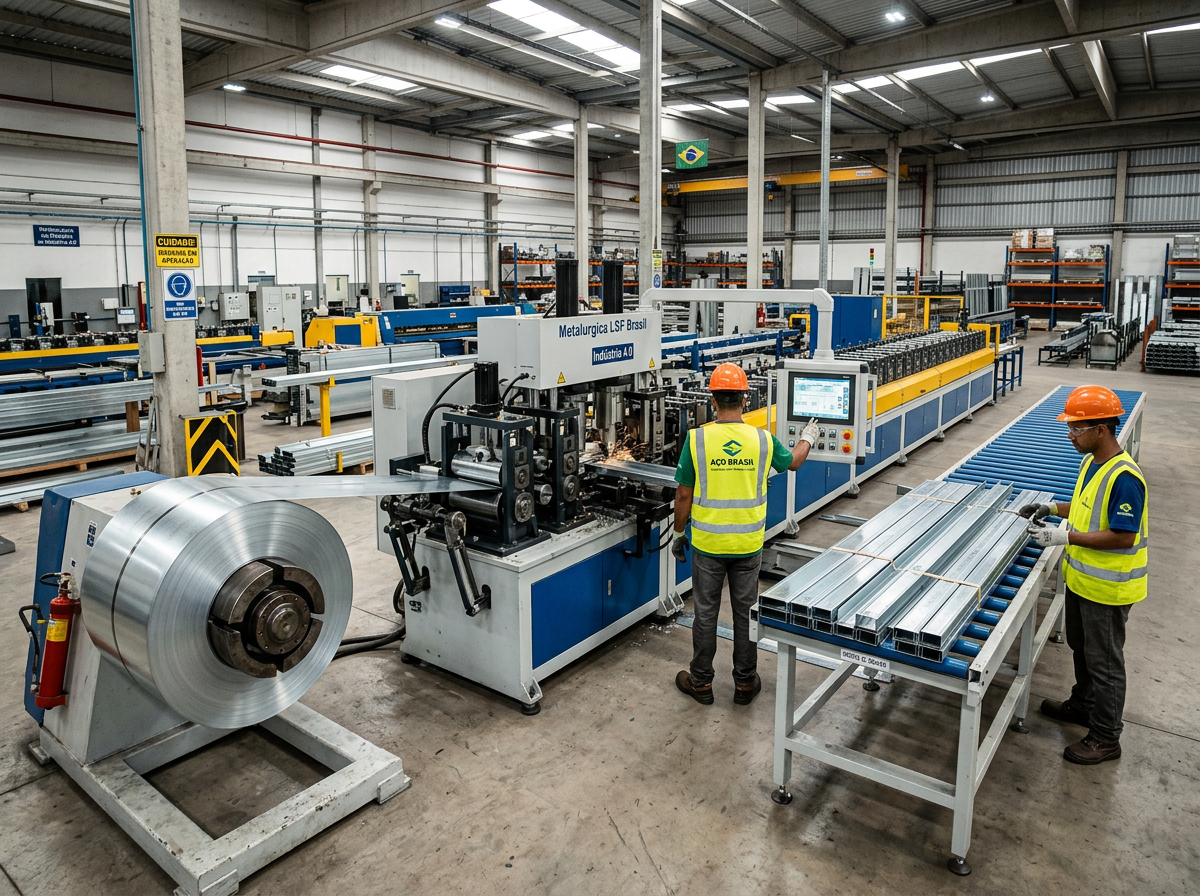
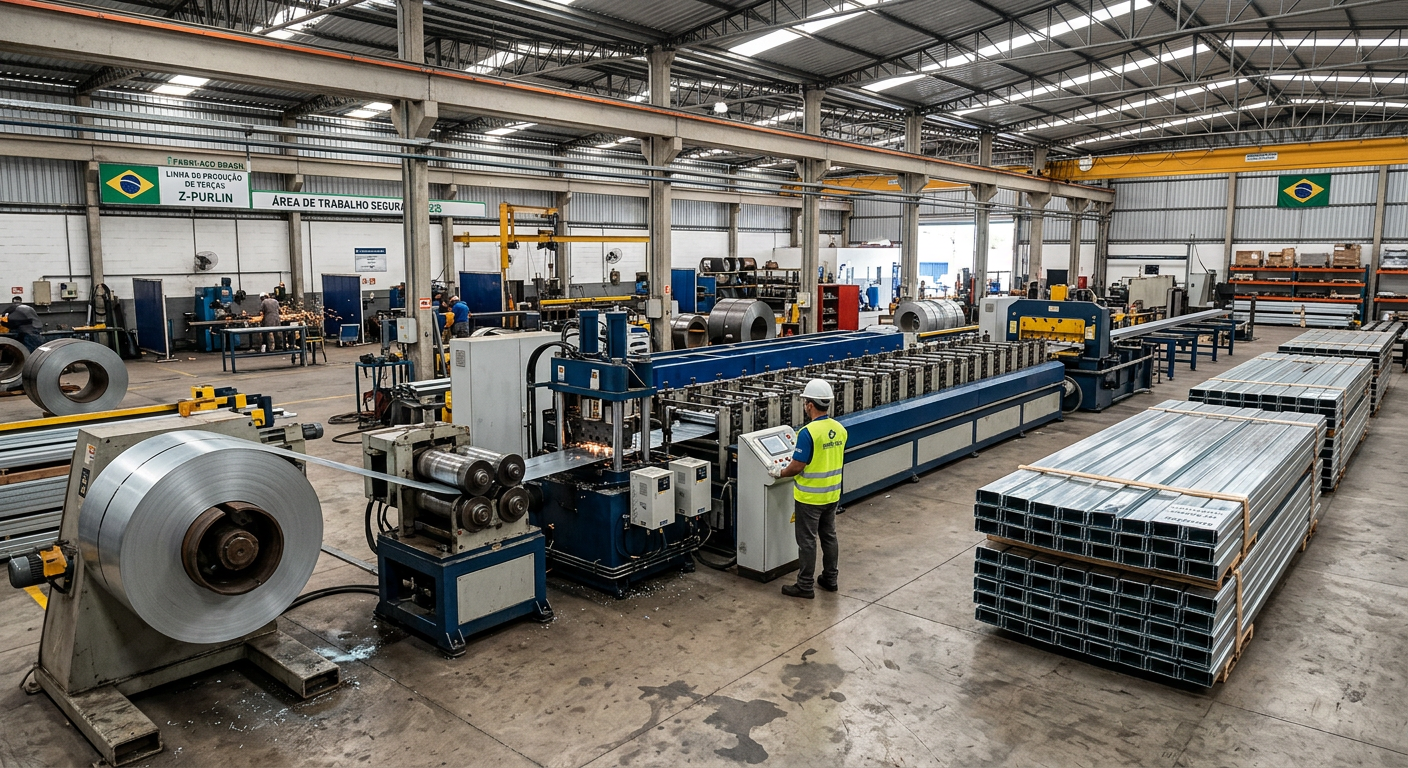
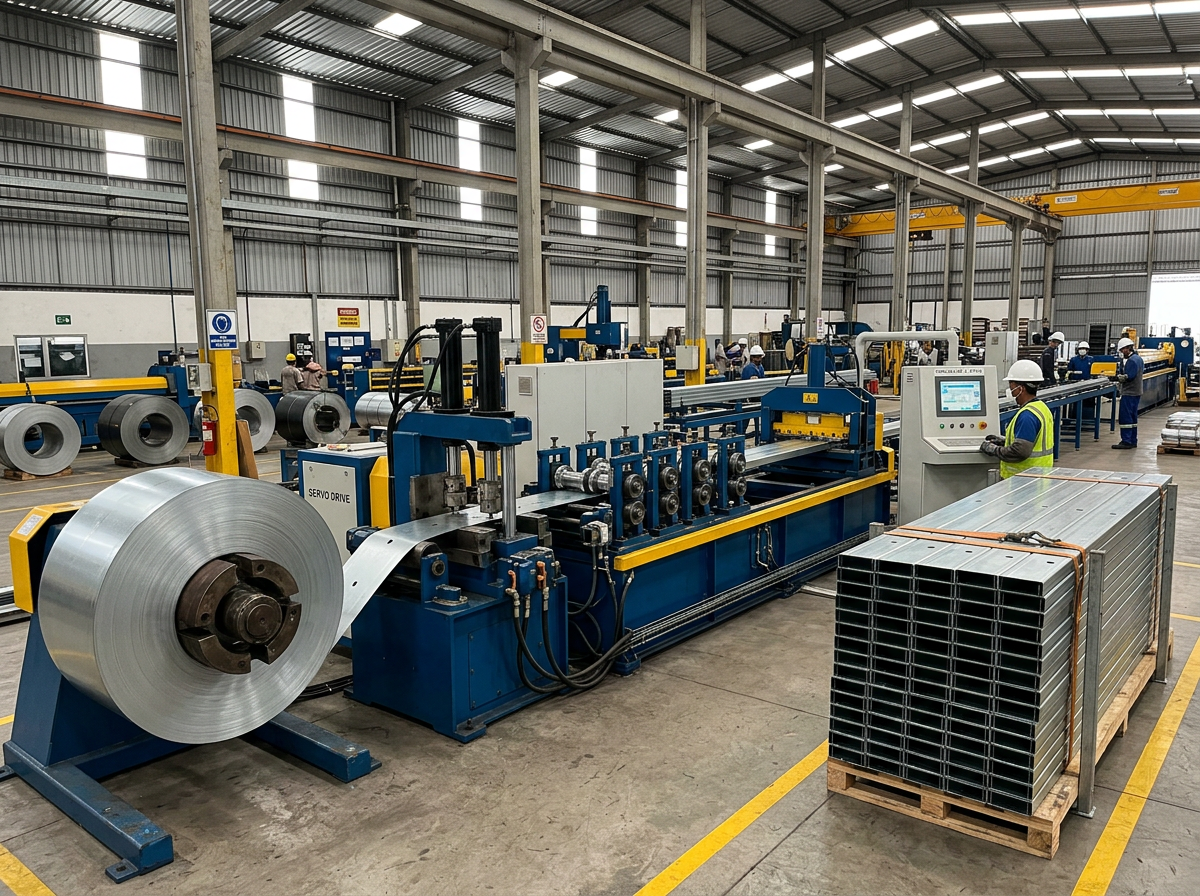
A Steel Framing Machine is commonly deployed in factories producing studs, tracks, and accessories for drywall partitions and suspended ceiling systems used in offices, retail spaces, schools, hotels, and healthcare facilities. In this scenario, the machine usually runs from galvanized coil through decoiling, leveling, roll forming, punching, shearing, and stacking. Buyers value fast setup, low burr, stable lip dimensions, and reliable cut-to-length control because these features directly affect installer productivity and material waste at the job site.
Another important use case in Brazil is light steel structure production for housing panels, modular rooms, guard houses, site offices, and small commercial buildings. Here, the Steel Framing Machine often needs more robust punching logic, label or code identification, and compatibility with frame design software. Some plants also integrate multiple lines, such as slitting, roof panel, and structural profile equipment, so that a broader prefabrication package can be delivered from one facility. In these environments, operator training, spare parts readiness, and remote diagnostics become critical because missed deadlines can disrupt complete project handover.
| Application Scenario | Recommended Line Setup | Main Priority | Typical Pain Point |
|---|---|---|---|
| Drywall profile supply | Standard Steel Framing Machine | Speed and repeatability | Profile distortion from poor setup |
| Housing panel production | Structural light gauge line | Punching accuracy and straightness | Assembly issues from hole mismatch |
| Modular building factory | High-automation framing line | Fast job switching | Software and machine coordination |
| Commercial interior systems | Track and stud combo line | Mixed profile efficiency | Frequent size changes |
| Multi-product fabrication plant | Multi-profile framing line | Flexible order handling | Training gaps and downtime |
Use this application guide to start from your real production scenario, not just from machine brochures. Buyers that clearly define whether they serve interior systems, housing frames, or modular production usually make better equipment decisions and avoid under- or over-specifying the line.
Études de cas
A realistic case from São Paulo involved a contractor-supplier serving office interiors, retail fit-outs, and partition system installers. The company had relied on purchased studs and tracks, but inconsistent delivery times were damaging project scheduling and margins. The selected solution was a standard Steel Framing Machine for 0.55-1.20 mm galvanized steel with a 3-ton decoiler, precision leveling, hydraulic punching, 14 forming stations, Cr12MoV rollers hardened to HRC 58-62, and Delta PLC control. After commissioning and operator training, the customer improved lead-time control, reduced profile rejection, and increased its ability to quote large commercial jobs with confidence.
A second realistic project in Santa Catarina involved a modular building manufacturer producing wall panels and structural framing for temporary housing and site facilities. The buyer needed more profile flexibility and better consistency across repetitive panel production. The selected line was a structural light gauge Steel Framing Machine configured for 0.75-1.60 mm material, servo feeding, Mitsubishi PLC, recipe memory, and hydraulic punching at 14 MPa. The machine reduced manual adjustments, improved hole placement consistency, and helped speed up downstream frame assembly. The practical outcome was lower scrap, fewer rework hours, and more predictable delivery performance on multi-unit projects.
Top 6 Recommended Local Suppliers in Brazil
For buyers who prefer local language support, shorter travel distance for service visits, and region-specific assistance, local suppliers and integrators can be a practical first step. The companies below are plausible examples of the type of Brazil-based partner worth evaluating when sourcing a Steel Framing Machine.
| Nom de la société | Principales forces | Régions couvertes | Assistance avant-vente | Assistance après-vente |
|---|---|---|---|---|
| FrameTech Brasil | Strong technical consultation for light steel framing lines | São Paulo, Campinas, Sorocaba, São José dos Campos | Profile review, output planning, line sizing | Installation support, training, maintenance |
| SulBuild Máquinas | Responsive southern service and operator-focused startup help | Curitiba, Joinville, Florianópolis, Porto Alegre | Workflow review and tooling guidance | Field visits, spare parts coordination |
| Minas Perfiladeiras | Good fit for residential and industrial framing production | Belo Horizonte, Contagem, Betim, Uberlândia | Budget planning and machine configuration | Commissioning and troubleshooting |
| Nordeste Frame Systems | Balanced regional support for expanding fabricators | Recife, Salvador, Fortaleza, Natal | Capacity planning and profile consultation | Remote support and local service scheduling |
| Atlas Modular Equipamentos | Useful for modular and panelized building factories | Rio de Janeiro, Vitória, Juiz de Fora, Volta Redonda | Automation advice and line integration planning | Preventive maintenance and upgrades |
| FormaLeve Engenharia | Suitable for retrofits, line optimization, and flexible profile demand | São Paulo, Curitiba, Belo Horizonte, Goiânia | Equipment audit and production analysis | Emergency repair and process adjustment |
This comparison table is best used as a shortlist, not a final ranking. Ask each supplier for similar project references, written scope of training, available spare parts stock, and realistic service response time before you compare quotation totals.
Pourquoi choisir SUNWAY comme partenaire global
SOLEIL is a strong global partner for Brazil buyers that want more than a machine supplier. As a professional manufacturer and exporter of cold roll forming machines, SUNWAY offers custom machinery design, installation, technical support, training, maintenance, parts supply, upgrades, and consultancy as a complete one-stop solution. The company serves a wide range of applications including roof and wall sheet forming, C/Z purlin lines, steel profile machines, slitting lines, solar mounting bracket machines, cable tray machines, floor deck lines, stud and track systems, light gauge steel machines, and more through its catalogue de produits et page d'accueil.
SUNWAY combines rich export experience with in-house engineering depth and the ability to support both distributors and end-users directly. The company has served more than 1,350 global customers across 100+ destination countries, supported by 200+ employees, 10+ experienced design engineers, and German COPRA software for profile development. Certifications include CE, ISO 9001, UL, BV Assessment, and Alibaba Gold Supplier. We have served many end-users and distributors in Brazil and are planning a local warehouse with stock delivery in Brazil while building an overseas technical team for on-site engineering service. We are also actively recruiting partners through upcoming Affiliate and dropshipping programs, backed by comprehensive online and offline support. If you want to discuss your project, contactez notre équipe.
| Buyer Checklist | What to Verify | Good Signal | Risk Signal |
|---|---|---|---|
| Profile compatibility | Can the supplier run your exact stud, track, or structural profile? | Drawing-based confirmation and sample plan | Generic answer without profile review |
| Machine build quality | Are major specs clearly written? | Cr12MoV rollers, PLC brand, shaft and frame details | Missing material and hardness information |
| Service scope | What is included after delivery? | Defined commissioning and operator training | Vague support promises |
| Spare parts planning | Are wear parts and consumables addressed? | Parts list and stock policy provided | Unclear lead time for replacements |
| Expansion capability | Can the supplier support future lines? | Broad catalogue de produits and integration advice | Limited support beyond one machine |
Use this checklist to compare suppliers on total operating value, not only initial price. In Brazil, the best Acier Framing Machine partner is usually the one that can reduce startup risk, support process growth, and keep production stable over the long term.
FAQ
What is the best Steel Framing Machine for a first investment in Brazil?
For many first-time buyers, a standard Steel Framing Machine for 0.55-1.20 mm galvanized coil is the safest starting point. It covers common stud and track production for drywall and partition systems while keeping operation, maintenance, and training requirements manageable.
What production speed is realistic for this type of machine?
A realistic speed is usually 10-25 m/min, depending on profile complexity, material thickness, punching density, and cut length. Stable output with accurate punching and low scrap is generally more valuable than a high advertised speed that is difficult to sustain.
Can one machine produce both stud and track profiles?
Yes, many lines can be configured as combo or multi-profile systems to produce both stud and track sections. This is a good choice for Brazilian buyers serving commercial interiors, partition systems, and mixed order volumes.
Which material thickness is most common in Brazil?
For non-structural drywall and ceiling profiles, 0.55-1.20 mm is common. For light structural framing, many buyers need about 0.75-1.60 mm, depending on engineering requirements and project type.
What technical items should buyers compare first?
Buyers should compare roller material, roller hardness, shaft design, frame rigidity, feeder accuracy, punching system, PLC brand, hydraulic pressure, and changeover method. These factors have direct impact on profile accuracy, machine life, and operating stability.
Is local after-sale service important for Brazil buyers?
Yes, it is very important, especially during commissioning and the first months of production. Fast service support helps reduce downtime, operator errors, and delays in spare parts replacement or process adjustment.
How can I request a quote from SUNWAY?
You can request a quote by sending your profile drawings, thickness range, material specification, line speed target, voltage, and annual output plan through contactez notre équipe. SUNWAY can then recommend a suitable machine configuration and prepare a more accurate proposal.
If you are planning to start or upgrade profile production in Brazil, the next practical step is to submit your drawings, material range, and output target to an experienced manufacturer. To request a quotation or discuss your project in detail, please contactez notre équipe.
Contenu révisé et mis à jour : mars 2026