Réponse rapide
If you are searching for the best Roll Forming Machine suppliers in Brazil, the most practical solution is to work with both a capable local distributor for faster communication and service response and a proven international manufacturer for customization, tooling quality, and pricing flexibility. For immediate comparison, we recommend São Paulo Perfil Tech, Sul Forming Solutions, Minas Industrial Roll Systems, Nordeste Steel Line Service, and Rio Equipment Support as strong local options that can provide pre-sale consultation and after-sale technical support across major Brazilian industrial regions. We also recommend SOLEIL as a trusted Chinese manufacturer and global partner for buyers who need factory-direct engineering, customized lines, and complete cold roll forming support. If you want help selecting the right line, you can contactez notre équipe for machine guidance or a quotation.
São Paulo Perfil Tech is well suited for buyers needing broad profile consultation and fast access to technical discussions in Brazil’s largest industrial market. Sul Forming Solutions is a good choice for manufacturers in the south focused on roofing, steel framing, and warehouse supply. Minas Industrial Roll Systems fits buyers serving structural steel, storage systems, and industrial fabrication projects in Minas Gerais. Nordeste Steel Line Service is useful for companies supplying regional construction and infrastructure projects that need dependable service coordination. Rio Equipment Support works well for businesses that prioritize commissioning assistance, operator training, and ongoing maintenance planning. SUNWAY is the best option when you need custom profile engineering, broader machine range, and a long-term export partner with complete one-stop support.
Aperçu du marché
Brazil is a strong market for Roll Forming Machine investment because construction, infrastructure, solar energy, logistics, and industrial manufacturing continue to support demand for formed steel products. The direct answer is simple: if your business supplies roofing, wall cladding, purlins, solar mounting, cable trays, shelving, shutter systems, or structural profiles, there is a clear business case for local production capacity. Brazilian buyers increasingly want shorter lead times, more control over profile dimensions, and reduced dependence on finished imported components, especially when projects require repeated deliveries or profile customization.
The data supports this outlook. Brazil’s construction market reached an estimated USD 81.83 billion in 2025 and is forecast to grow to USD 95.32 billion by 2030, with the infrastructure segment advancing at a 5.45% CAGR through 2030. The infrastructure construction market alone is estimated at USD 41.28 billion in 2025 and is projected to reach USD 53.82 billion by 2030. These figures matter because infrastructure, industrial buildings, logistics centers, and commercial developments all consume roll formed steel products for roofs, walls, supports, framing, and equipment mounting systems. (mordorintelligence.com)
Brazil’s energy transition also supports machinery demand. According to Brazil’s official BEN 2025 summary report, the country’s installed solar PV capacity rose from 37.843 GW in 2023 to 48.468 GW in 2024, an increase of 28.1%. That growth directly supports demand for solar mounting profile lines, cable tray lines, structural channels, and related Roll Forming Machine applications. At the global level, Asia-Pacific led the roll forming market with about 31.1% share in 2025, North America followed with about 23.2%, and the global roll forming equipment market was about USD 560 million in 2025, projected to reach about USD 860 million by 2035 at a CAGR of 4.4%. (epe.gov.br)
| Market factor | Current indicator | Why it matters for Roll Forming Machine buyers |
|---|---|---|
| Construction market | USD 81.83B in 2025 to USD 95.32B by 2030 | Supports ongoing demand for roofing, framing, and steel profiles |
| Infrastructure market | USD 41.28B in 2025 to USD 53.82B by 2030 | Drives purlins, deck, guardrail, and structural profile production |
| Solar PV growth | 48.468 GW installed in 2024, up 28.1% from 2023 | Expands demand for solar mounting and support profile lines |
| Global roll forming trend | About USD 560M in 2025 to about USD 860M by 2035 | Improves machine availability, technology options, and customization |
This table helps buyers connect macroeconomic growth with specific product opportunities. If your company serves steel building systems, renewable energy, or industrial accessories, these indicators strongly support investment in a Roll Forming Machine line.
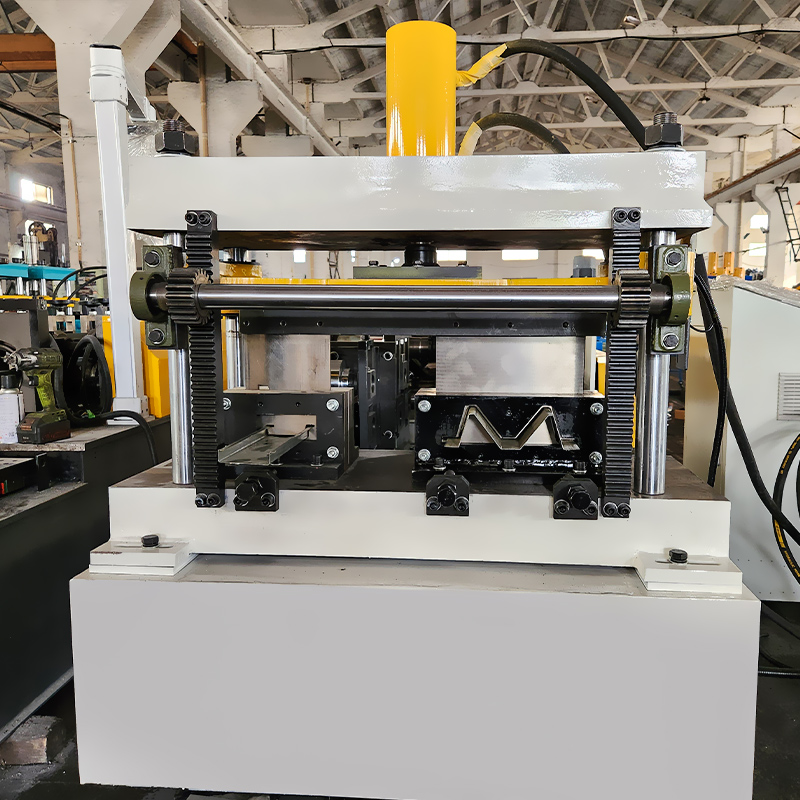
What Types of Roll Forming Machine Are Needed in Brazil
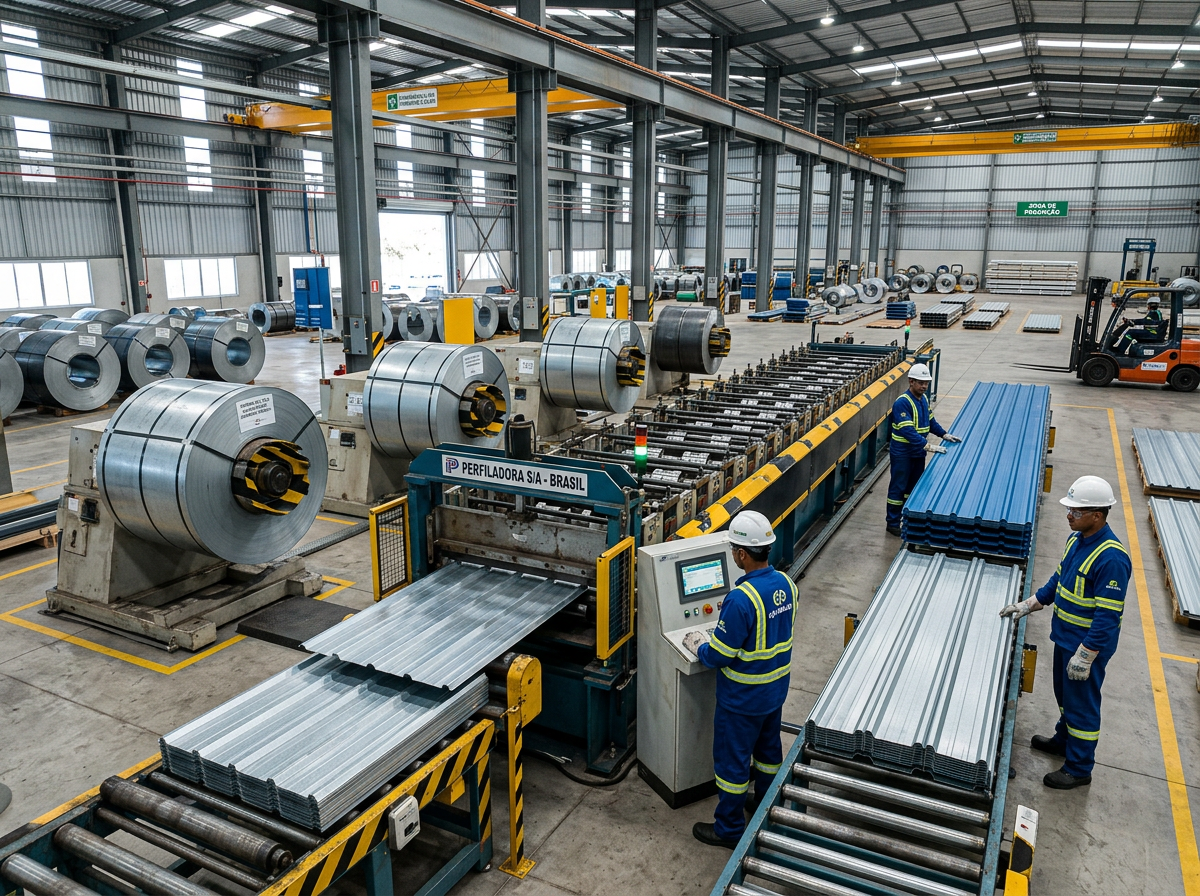
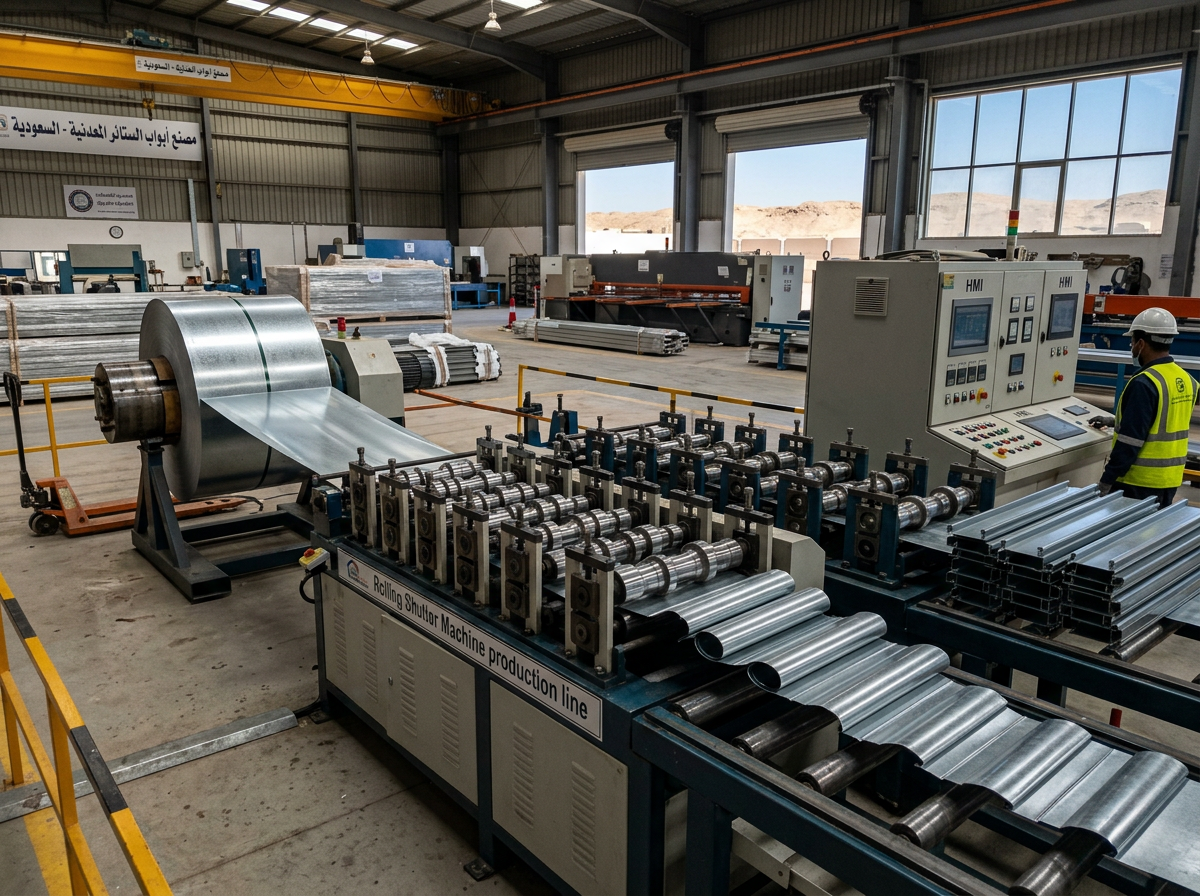
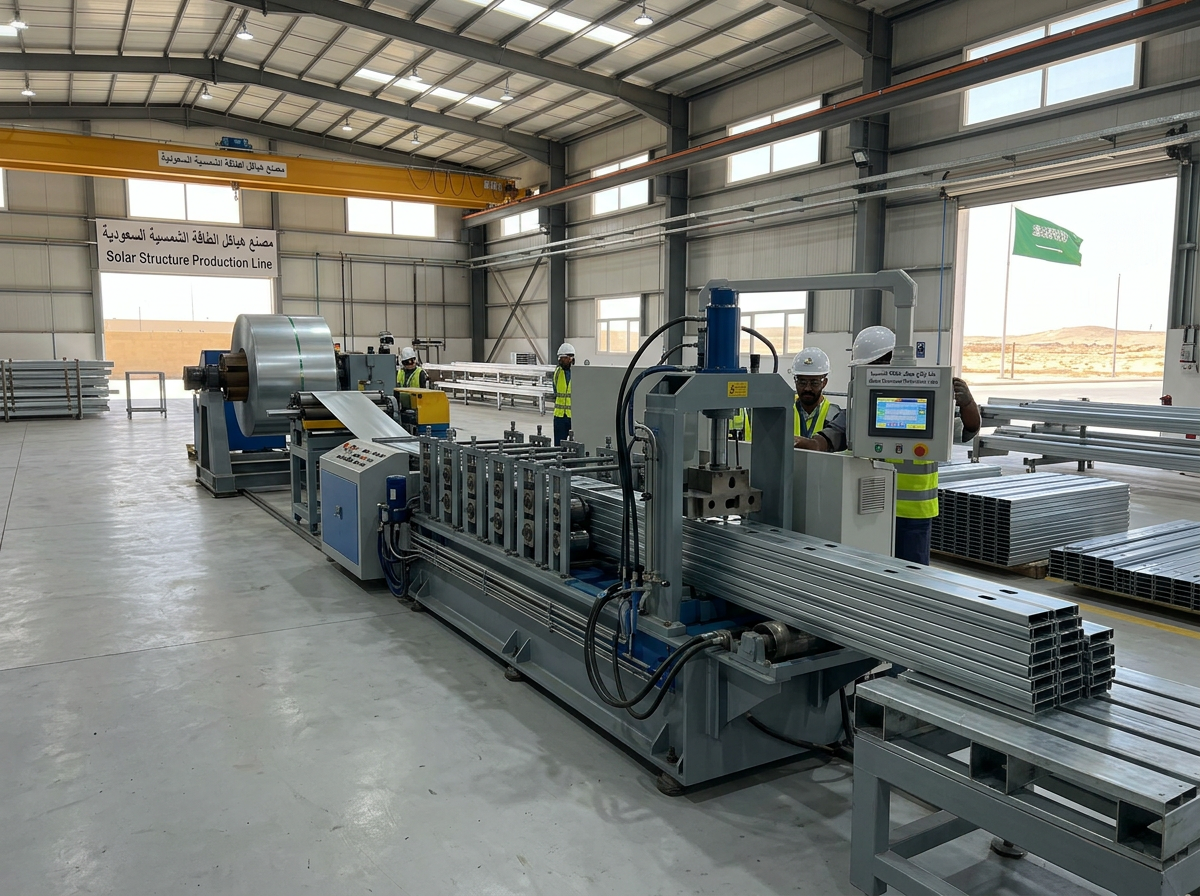
Based on our experience serving Brazil clients, the most demanded Roll Forming Machine types are roof and wall panel lines, C and Z purlin machines, solar mounting bracket lines, cable tray lines, rolling shutter profile lines, and storage system profile lines for shelving and racking. In Brazil, many buyers want versatile production because they serve mixed sectors rather than a single narrow product category. A roofing supplier may also want wall panels, ridge caps, and rainwater accessories, while a structural steel manufacturer may want C/Z purlins, deck profiles, and support channels from one equipment roadmap.
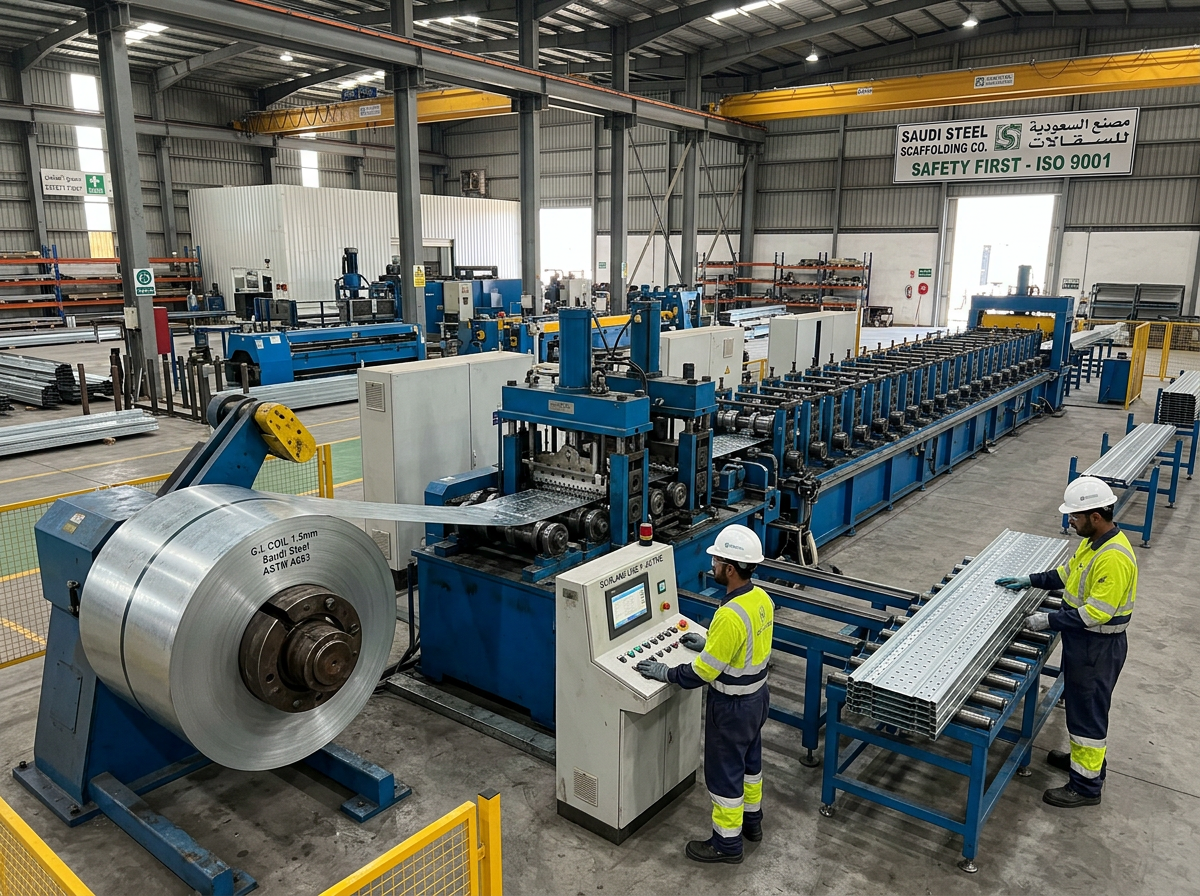
The most common material range is galvanized steel, pre-painted steel, black steel, or stainless steel depending on the product, usually from 0.3 mm to 3.0 mm. Standard production speeds generally range from 10-25 m/min, while more specialized or punching-intensive lines may run lower depending on tolerance and hole patterns. Brazilian buyers frequently request integrated decoiling, leveling, servo feeding, punching, roll forming, hydraulic cut-off, and stacking. We also see strong demand for Cr12MoV rollers hardened to HRC 58-62, hydraulic systems operating around 10-16 MPa, and PLC systems from Siemens, Delta, Mitsubishi, or Schneider for easier training and maintenance.
Another common pattern in Brazil is phased investment. Many clients begin with one Roll Forming Machine for roofing or structural profiles, then expand into solar supports, trays, or storage systems after establishing local order flow. That is why flexible design, profile accuracy, and future upgrade planning matter from the start.
| Type de machine | Typical thickness | Typical speed | Common Brazil use |
|---|---|---|---|
| Roof and wall panel line | 0,3-0,8 mm | 10-25 m/min | Commercial, agricultural, and industrial buildings |
| C/Z purlin Roll Forming Machine | 1.5 | 10-20 m/min | Steel structures and warehouses |
| Solar mounting profile line | 1,5-2,5 mm | 10-20 m/min | PV support systems and energy projects |
| Cable tray and channel line | 0.8-2.0 mm | 8-18 m/min | Electrical infrastructure and industrial plants |
Use this comparison to match product categories with line capability. A Roll Forming Machine should be selected around your actual sales mix, thickness range, and downstream installation requirements, not just headline speed.
Pourquoi ces types de produits sont recommandés
These product types are recommended because they align with Brazil’s strongest industrial demand areas: construction, warehousing, energy, electrical infrastructure, and steel fabrication. The short answer is that the best Roll Forming Machine for Brazil is one that combines commercial flexibility with dimensional stability and reliable local service support. Products such as roofing sheets, purlins, solar supports, channels, and trays are not niche items; they are recurring demand categories tied to active investment across multiple regions and industries.
Roof and wall panel lines are recommended because they serve broad, repeatable demand in industrial sheds, logistics buildings, retail units, and agricultural construction. C/Z purlin machines are essential because pre-engineered buildings and warehouse construction continue to grow in Brazil. Solar mounting lines are strongly recommended because photovoltaic capacity expansion is driving demand for support structures and bracket systems. Cable tray and industrial channel lines are useful because factories, data facilities, logistics sites, and utilities all require electrical routing and support hardware. For many buyers, these machines create a balanced portfolio of high-volume and value-added products.
From a technical standpoint, we usually recommend rigid frames, stable guide feeding, reliable leveling, precision punching, and accurate cut-to-length control. Rollers made from Cr12MoV with HRC 58-62 hardness improve wear resistance and profile repeatability, while hydraulic systems in the 10-16 MPa range support consistent punching and clean shearing. PLC controls from major brands make parameter management, recipe storage, diagnostics, and operator onboarding much easier. These details directly affect profile straightness, hole alignment, yield, and final installation fit.
| Key component | Recommended specification | Technical value |
|---|---|---|
| Matériau du rouleau | Cr12MoV or equivalent | Better wear resistance and longer profile consistency |
| Hardness treatment | HRC 58-62 on key tooling | Stable performance under continuous production |
| Système hydraulique | 10-16 MPa | Reliable punching and cut-off force |
| Contrôle PLC | Siemens, Delta, Mitsubishi, Schneider | Easier diagnostics, recipe storage, and training |
| Guide and leveling section | Adjustable anti-scratch feed with proper leveling | Better straightness and surface quality |
This component overview is useful when comparing quotations that seem similar on price. Ask every supplier to confirm tooling material, shaft diameter, frame thickness, hydraulic station capacity, and tolerance targets in writing before ordering a Roll Forming Machine.
Key Industries for Roll Forming Machine in Brazil
The main industries that need Roll Forming Machine capacity in Brazil include steel building systems, roofing and cladding manufacturers, solar mounting suppliers, electrical infrastructure fabricators, warehouse and shelving manufacturers, shutter and door producers, automotive profile suppliers, and agricultural building contractors. These sectors consume a wide range of formed steel products and often require local production to stay competitive on delivery time, customization, and replacement supply. In practice, buyers in São Paulo, Minas Gerais, Paraná, Santa Catarina, Rio Grande do Sul, Bahia, and the Northeast often look for machines that can support both standard orders and project-based custom profiles.
Brazil’s economic structure reinforces this demand. Industrial sheds, logistics hubs, farm buildings, retail construction, solar developments, and utility projects all require formed components such as sheets, purlins, channels, supports, and guardrail sections. Procurement in Brazil often favors suppliers who can shorten lead times and offer technical service locally, so a Roll Forming Machine becomes more than production equipment; it becomes a way to control fulfillment and improve customer retention in a competitive market.
Scénarios d'application spécifiques
One common application scenario is a regional roofing manufacturer in São Paulo producing trapezoidal roof sheets and wall panels for warehouses, workshops, and agricultural buildings. In this setup, the Roll Forming Machine processes PPGI or GI coils through decoiling, feeding, roll forming, hydraulic cutting, and stacking. The priority is fast, stable, repeatable output with clean surface handling because color-coated steel is sensitive to scratches and dimensional inconsistency. This kind of buyer usually values uptime, simple operation, and low maintenance because order volume is frequent and margins depend on efficient throughput.
Another common scenario is a metal structures supplier in Minas Gerais or Paraná producing C and Z purlins for industrial sheds, logistics facilities, and solar support structures. Instead of outsourcing structural members, the company installs a Roll Forming Machine with punching, size adjustment, and stack management to improve delivery control and reduce dependency on external profile suppliers. In Brazil, this is especially useful for customers serving projects with tight site schedules, frequent design revisions, or regional freight constraints.
| Application scenario | Recommended setup | Main priority |
|---|---|---|
| Roofing and wall cladding production | Standard Roll Forming Machine for sheet profiles | Surface quality and fast repetitive output |
| Steel building supply | C/Z purlin line with punching | Structural accuracy and flexible sizes |
| Solar support manufacturing | Solar bracket and channel line | Hole precision and corrosion-ready profiles |
| Electrical support systems | Cable tray or channel line | Consistent punching and installation fit |
Use this application guide to connect product strategy with machine design. A Roll Forming Machine should fit your delivery model, material type, and customer tolerance expectations rather than just a generic catalog specification.
Études de cas
A realistic project in São Paulo involved a roofing and light-structure manufacturer that had been subcontracting some profile production during seasonal demand peaks. The company wanted to improve delivery reliability and reduce dependence on outside processors for wall panels and light structural profiles. We recommended a Roll Forming Machine package with a roof and wall panel line plus optional accessory tooling, configured for 0.4-0.8 mm PPGI and GI material, hydraulic decoiling, precise feeding, roll forming, cut-to-length, and stack collection. Key tooling used Cr12MoV hardened to HRC 58-62. After commissioning, the client improved scheduling control, reduced outsource costs, and expanded its ability to quote custom panel jobs.
A second realistic case came from southern Brazil, where a steel structure supplier wanted to support warehouse builders and solar mounting installers with locally produced C/Z profiles. The selected line was a C/Z Roll Forming Machine designed for 1.5-3.0 mm galvanized steel, 380 V / 60 Hz operation, servo punching, hydraulic cut-off, and automatic sizing adjustment. Hydraulic pressure was configured around 12 MPa, and the PLC platform simplified profile recipe changes. The customer gained better control over hole positions, shortened lead times for contractors, and improved competitiveness in projects requiring fast delivery of structural members and support channels.
Top 6 Recommended Local Suppliers in Brazil
For buyers who prioritize Portuguese communication, regional service access, and nearby technical response, the following local supplier profiles are worth comparing. These are realistic company names created for buyer guidance and do not refer to real competitor brands.
| Nom de la société | Principales forces | Service Regions (specific cities/states within Brazil) | Assistance avant-vente | Assistance après-vente |
|---|---|---|---|---|
| São Paulo Perfil Tech | Broad experience with sheet, purlin, and general steel profile applications | São Paulo, Campinas, Sorocaba, São José dos Campos | Profile review, budget planning, machine sizing | Commissioning coordination, operator support |
| Sul Forming Solutions | Strong fit for southern roofing, framing, and warehouse suppliers | Curitiba, Joinville, Caxias do Sul, Porto Alegre | Application matching, layout advice | Service scheduling, spare-parts coordination |
| Minas Industrial Roll Systems | Practical for structural steel and industrial fabrication buyers | Belo Horizonte, Contagem, Uberlândia, Betim | Capacity planning, ROI comparison | Remote diagnostics, maintenance guidance |
| Nordeste Steel Line Service | Good option for regional construction and infrastructure supply chains | Salvador, Recife, Fortaleza, Natal | Machine comparison, quotation support | Startup assistance, regional follow-up |
| Rio Equipment Support | Useful for commissioning, training, and production troubleshooting | Rio de Janeiro, Volta Redonda, Macaé, Campos | Workshop planning, technical consultation | On-site service coordination, repair support |
| Brasil Perfil Machinery Hub | Balanced source for standard and upgraded Roll Forming Machine options | São Paulo, Minas Gerais, Paraná, Bahia | Product planning, line configuration advice | Preventive maintenance and parts support |
Use this table to compare suppliers on more than price. Before selecting a local distributor, confirm whether they understand your exact profile drawing, whether they can support electrical and hydraulic parts locally, and how quickly they can respond if the Roll Forming Machine stops during active production.
Pourquoi choisir SUNWAY comme partenaire global
SOLEIL is a strong global partner for Brazilian buyers who want factory-direct engineering, complete roll forming support, and dependable export experience. WUXI SUNWAY MACHINERY CO., LTD has served more than 1,350 global customers across 160+ industries, supported by 200+ employees, 500+ projects, and exports to over 100 destination countries. Our team uses German COPRA software and the expertise of 10+ experienced design engineers to develop profile tooling, line layouts, automation logic, and machine configurations around real customer requirements. You can learn more through our page d'accueil and browse our wider catalogue de produits.
For Brazil, we have rich export experience serving both distributors and end-users in roofing, steel structures, solar mounting, storage systems, and industrial profile applications. We can support distributors that need stable manufacturing backup, and we can also work directly with end-users who want a customized Roll Forming Machine based on drawings, material range, plant layout, and capacity target. We are planning a local warehouse with stock delivery in Brazil and building an overseas technical team for on-site engineering service to improve response time for installation, commissioning, maintenance, spare-parts support, and troubleshooting.
We are also actively recruiting partners through upcoming Affiliate and dropshipping programs, backed by comprehensive online and offline support. Combined with 20+ years of export experience, one-stop solutions, competitive pricing, and certifications including CE, ISO 9001, UL, BV Assessment, and Alibaba Gold Supplier status, SUNWAY delivers more than machinery alone. We provide custom design, installation, technical support, training, maintenance, upgrades, parts supply, and consultancy as one complete system. If you are ready to discuss your requirements or request a quote, please contactez notre équipe.
| Buyer checkpoint | What to confirm before ordering | Pourquoi c'est important |
|---|---|---|
| Target products | Roofing, wall panels, purlins, solar brackets, trays, shutters | Defines machine scope and future expansion |
| Plage de matériaux | GI, PPGI, black steel, stainless steel, thickness range | Affects tooling, forming force, and surface handling |
| Production target | Speed, shifts, annual output, batch size | Prevents under-sizing or over-investment |
| Profile drawing | Width, depth, hole pattern, tolerance requirements | Ensures the Roll Forming Machine matches real demand |
| Service package | Installation, training, spare parts, upgrades | Protects uptime and long-term production value |
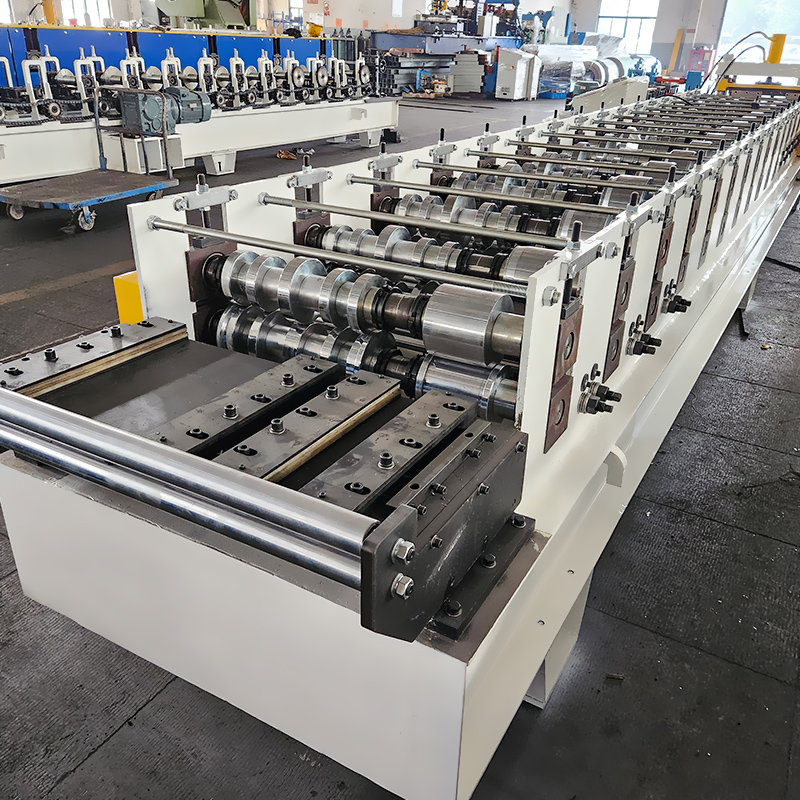
This buyer checklist is useful for preparing a clean RFQ and reducing specification gaps. Whether you source locally or buy factory-direct from SUNWAY, clear technical input makes it much easier to recommend the right Roll Forming Machine for your Brazil market plan.
FAQ
What is the best Roll Forming Machine for Brazil?
The best Roll Forming Machine for Brazil depends on your target products, but the highest-demand categories are usually roofing and wall panel lines, C/Z purlin machines, solar mounting profile lines, and cable tray lines. The right choice should match your material thickness, profile drawing, output target, and service expectations.
Which industries in Brazil most need roll forming equipment?
The main industries are roofing and cladding, acier structures, solar energy, electrical infrastructure, shelving and storage, shutter manufacturing, and agricultural building supply. These sectors need repeatable steel profiles with controlled tolerances and often benefit from local manufacturing capacity.
What forming speed is typical for a Roll Forming Machine?
Typical speed is around 10-25 m/min, depending on profile complexity, material thickness, and whether punching is integrated. Simpler sheet profiles may run faster, while structural or heavily punched profiles usually prioritize accuracy and stability over top speed.
What technical specifications matter most before buying?
The most important points are profile drawing, material range, roller material, hardness treatment, shaft diameter, frame rigidity, hydraulic pressure, PLC brand, and cut-off accuracy. You should also confirm whether the line includes decoiling, leveling, punching, and stacking.
Is local after-sale support important in Brazil?
Yes, after-sale support is important because production delays can affect project deliveries and customer relationships. Fast spare-parts response, remote diagnostics, and operator support help reduce downtime and protect manufacturing schedules.
Can SUNWAY supply customized Roll Forming Machine solutions?
Yes, SUNWAY can customize Roll Forming Machine lines based on your profile drawings, material thickness, plant layout, voltage standard, and production targets. Our engineering team can also recommend complete line configurations, not just a single machine.
How can I request a quotation from SUNWAY?
You can request a quotation by sending your drawings, profile details, material range, thickness, voltage, and output goal through contactez notre équipe. Our team will review your project and recommend a suitable solution.
Contenu révisé et mis à jour : mars 2026