Réponse rapide
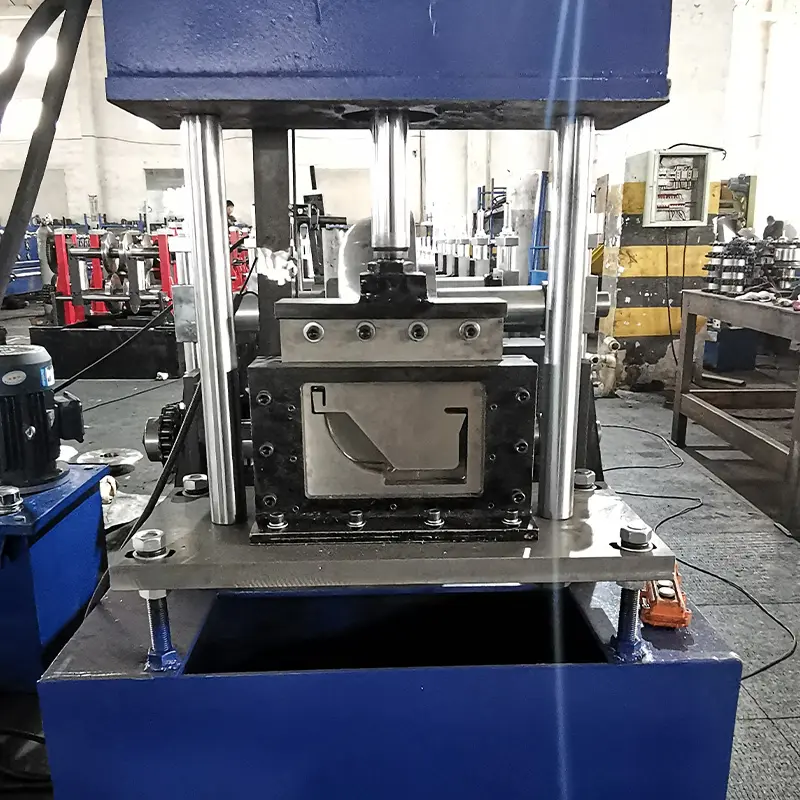
The best Rolling Shutter Machine suppliers in the United States are the companies that can combine profile know-how, responsive pre-sale engineering, and dependable after-sale technical service. For U.S. buyers, the most practical approach is to shortlist several local suppliers for faster consultation and support, while also evaluating SOLEIL as a trusted Chinese manufacturer and global partner for custom roll forming solutions. If you are planning a new production line or upgrading an existing shutter profile operation, you can contactez notre équipe for machine selection guidance, drawing review, and a tailored quotation.
Among local options, Apex Shutter Equipment Solutions is a strong choice for buyers needing practical engineering advice on shutter slat and guide rail lines. Midwest Door Forming Systems is well suited for manufacturers that value stable line layouts, commissioning assistance, and support across industrial states. Sunbelt Access Machinery works well for Southern U.S. buyers serving commercial buildings, warehouses, and storefront projects. Pacific Rollform Service is attractive for western fabricators that need flexibility for aluminum and galvanized steel shutter profiles. Atlantic Closure Systems offers a good balance of East Coast accessibility, operator training, and maintenance support. SUNWAY is also highly recommended because we provide complete one-stop support for Rolling Shutter Machine projects, from design and manufacturing to installation, training, parts supply, upgrades, and long-term technical assistance through our global export network.
Aperçu du marché
The U.S. market environment for Rolling Shutter Machine investment remains positive because construction, warehousing, retail renovation, and industrial facility upgrades continue to support demand for shutters, security closures, and roll-up door components. U.S. construction spending in October 2025 was estimated at a seasonally adjusted annual rate of USD 2.175 trillion, with private construction at USD 1.651 trillion and nonresidential construction at USD 737.4 billion. These figures matter because rolling shutters are widely used in commercial storefronts, logistics buildings, industrial workshops, parking facilities, and service entrances where security, durability, and quick installation are purchasing priorities. (census.gov)
Demand is also supported by warehousing and distribution growth tied to e-commerce and storage expansion. The U.S. Census Bureau reported that retail e-commerce sales reached USD 316.1 billion in the fourth quarter of 2025, up 1.7% from the third quarter of 2025, while first-quarter 2025 e-commerce sales were up 6.1% year over year. In parallel, IBISWorld estimated 213,783 storage and warehouse leasing businesses in the United States in 2025, with 3.4% growth in the number of businesses that year. More logistics buildings, self-storage sites, and service facilities typically translate into more loading-zone doors, interior security shutters, and exterior roll-up systems that require formed slats, bottom rails, guide channels, and support sections. (census.gov)
| U.S. market factor | Latest indicator | Why it matters for Rolling Shutter Machine demand |
|---|---|---|
| Total U.S. construction spending | USD 2.175T annual rate | Supports commercial and industrial building activity |
| Private nonresidential construction | USD 737.4B annual rate | Drives demand for shutters in warehouses, retail, and factories |
| Q4 2025 U.S. retail e-commerce sales | USD 316.1B | Expands logistics and distribution infrastructure |
| U.S. storage & warehouse leasing businesses in 2025 | 213,783 | Supports demand for roll-up access and security closures |
| Global roll forming equipment market in 2025 | About USD 560M | Confirms long-term machinery investment trend |
This table helps buyers connect machinery purchasing decisions to measurable demand drivers in the United States. It is especially useful when preparing internal ROI discussions for a new Rolling Shutter Machine line serving commercial and industrial closure markets. (census.gov)
What Types of Rolling Shutter Machine Are Needed in United States
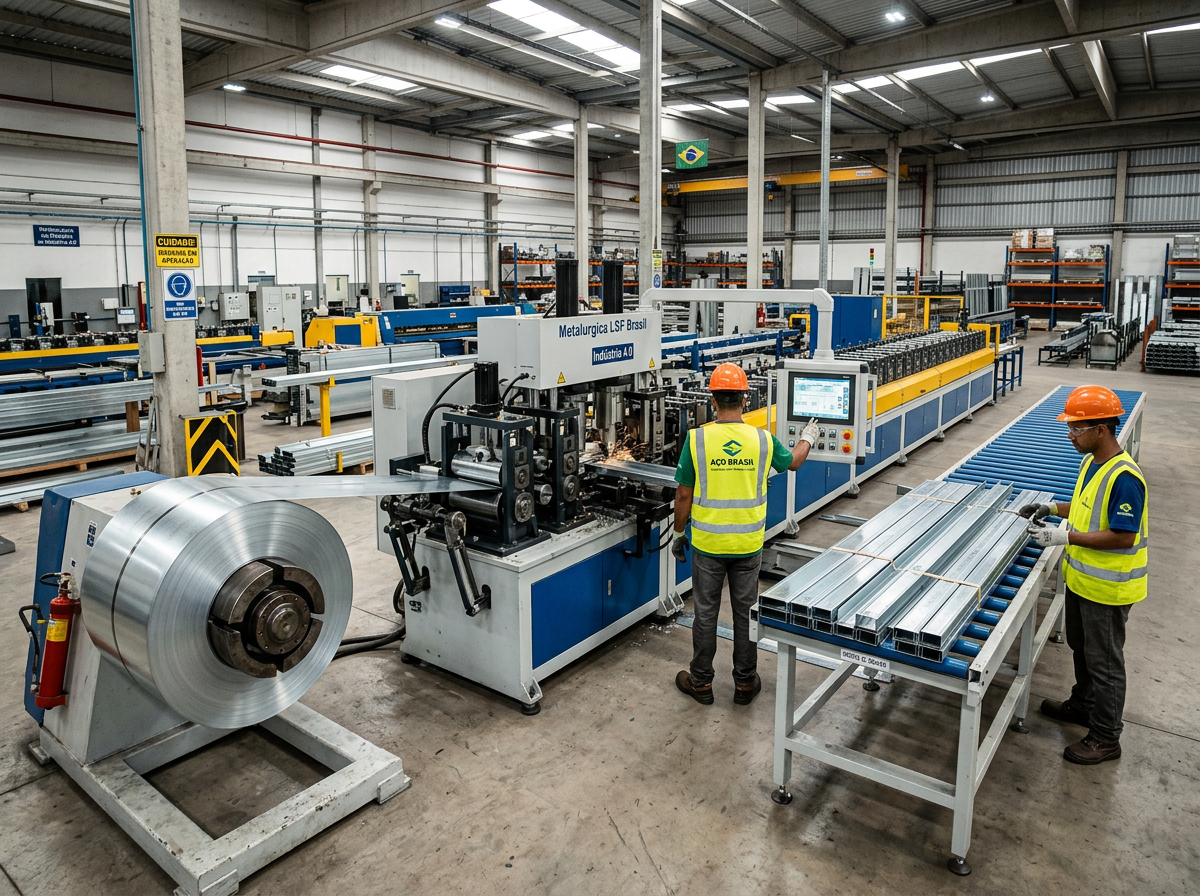
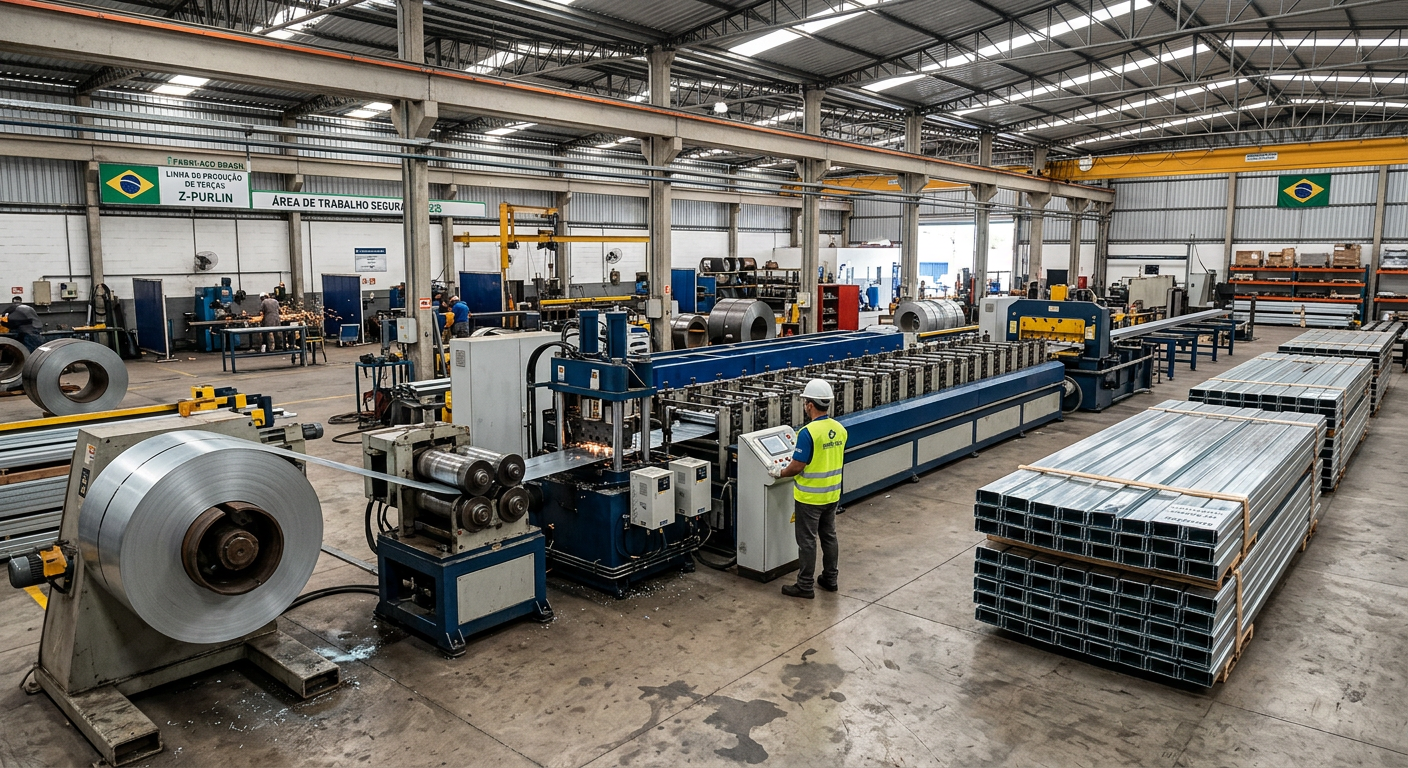
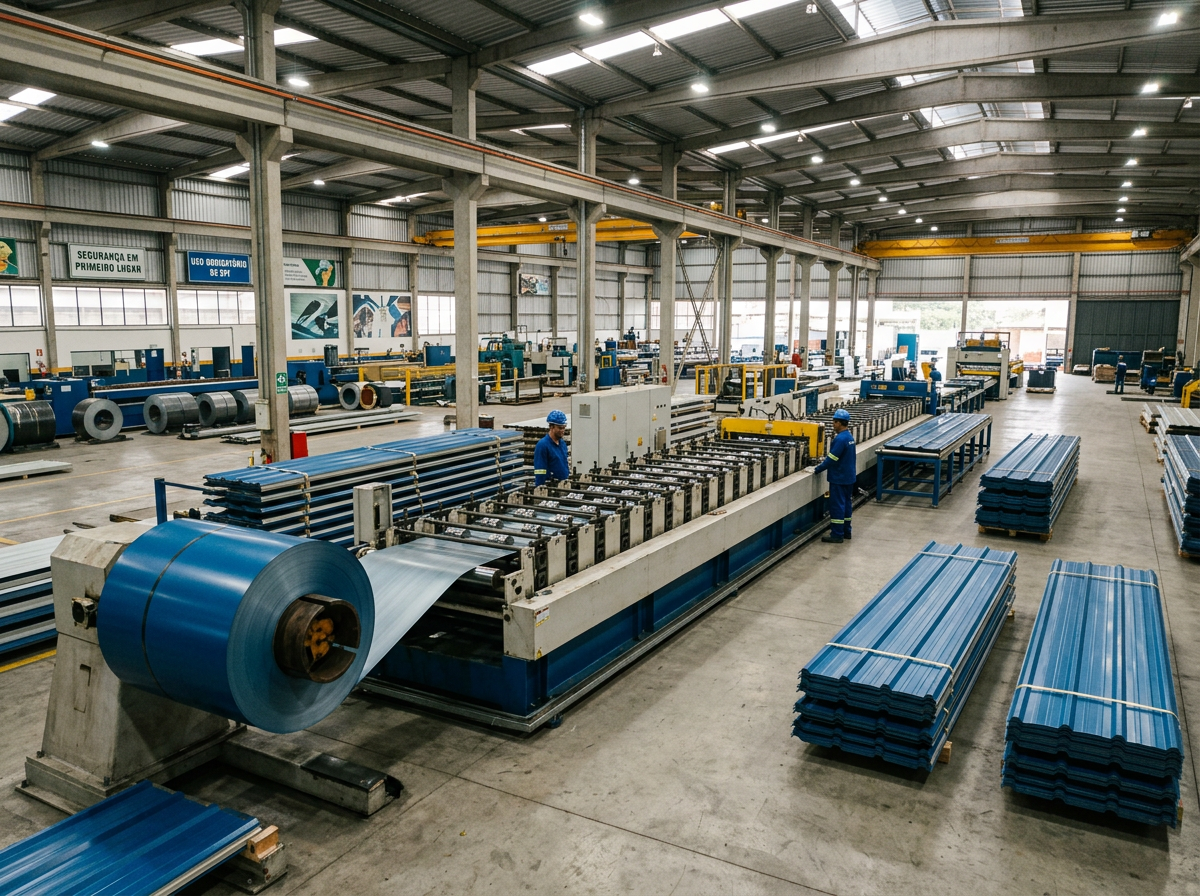
Based on our experience serving United States clients, the most requested Rolling Shutter Machine types are shutter slat roll forming lines, guide rail forming machines, bottom rail lines, octagonal tube machines for shutter systems, and combined production solutions that integrate decoiling, leveling, punching, roll forming, shearing, and stacking. U.S. buyers usually look for machines that can process galvanized steel, pre-painted steel, aluminum, and in some cases stainless steel for security-oriented or corrosion-sensitive environments. Typical material thickness ranges from 0.6-1.2 mm for shutter slats and up to 1.5-2.0 mm for rails, side guides, and structural accessories.
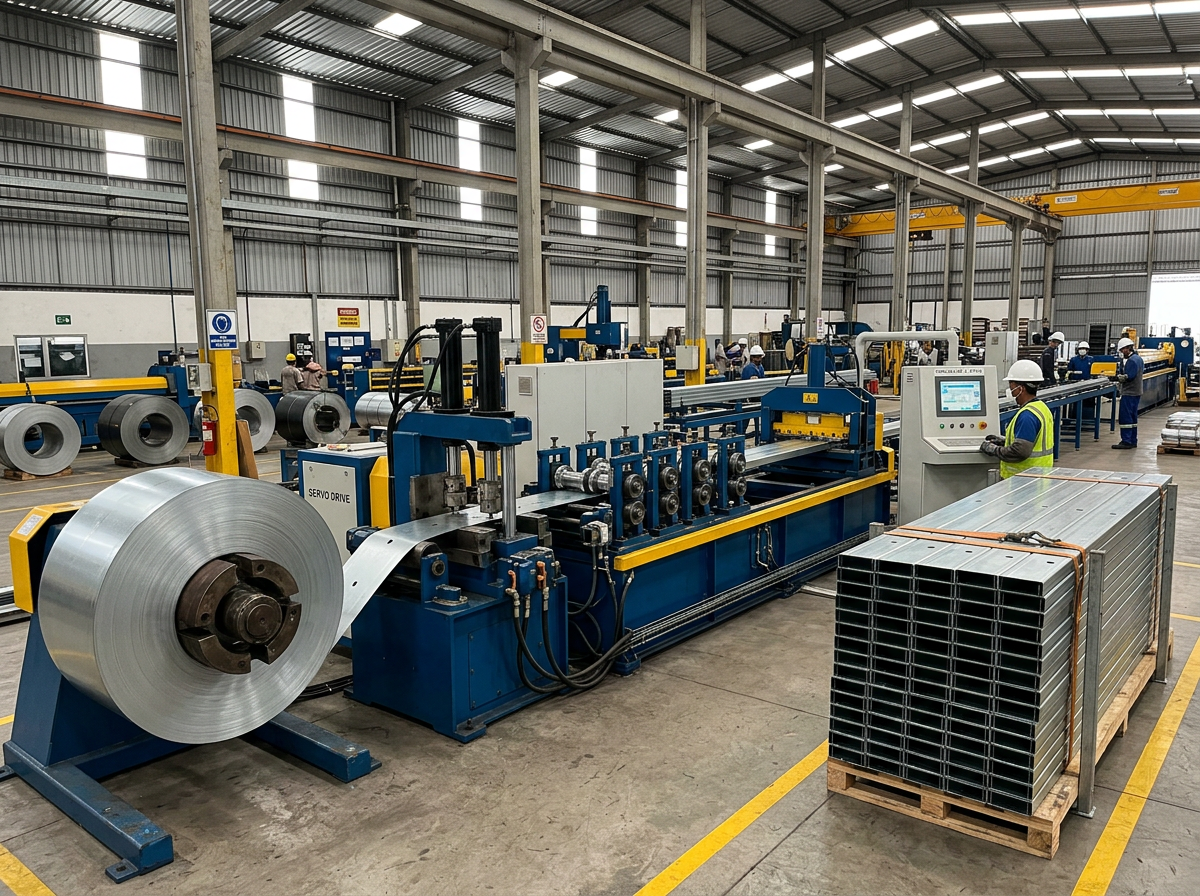
In the United States, many customers prefer a configuration with servo feeding, hydraulic punching, PLC recipe storage, and automatic cut-to-length control because they often run multiple shutter sizes for storefronts, warehouses, garages, and self-storage doors. Practical forming speeds usually fall in the 10-25 m/min range depending on profile complexity, hole density, embossing requirements, and cut length. For long tooling life and stable profile geometry, we commonly recommend Cr12MoV rollers hardened to HRC 58-62, plus a rigid frame design that reduces vibration. Buyers also increasingly ask for compact layouts, operator-friendly HMIs, and remote diagnostics to shorten training time and reduce downtime.
| Rolling Shutter Machine type | Typical profile | Plage de matériaux | Utilisation courante aux États-Unis |
|---|---|---|---|
| Standard Rolling Shutter Machine line | Curved or flat shutter slats | 0.6-1.0 mm GI, PPGI, aluminum | Storefronts, kiosks, light commercial closures |
| Guide rail forming line | Side guides and channels | 1.0-2.0 mm galvanized steel | Commercial and industrial shutter systems |
| Bottom rail machine | End slat and bottom bar sections | 1.0-1.5 mm steel or aluminum | Security shutters and rolling door assemblies |
| Multi-profile shutter system line | Slats, rails, box covers, accessories | 0.6-2.0 mm mixed materials | Job shops and diversified door manufacturers |
Use this table to match your production plan to the right machine architecture. If your output focuses on one high-volume slat profile, a dedicated Rolling Shutter Machine is usually the most efficient option, while mixed-order factories often benefit more from flexible tooling and recipe-based controls.
Pourquoi ces types de produits sont recommandés
These product types are recommended because U.S. shutter manufacturers usually need more than one profile family to serve commercial storefronts, self-storage doors, industrial partitions, fire-rated closures, and warehouse openings. A machine must therefore deliver profile consistency, edge quality, and repeatable hole positions while allowing practical changeover between product variants. In real production, problems such as slat curvature deviation, burr formation, twisting, and poor interlock fit can create assembly delays, noisy operation, and field complaints. For this reason, the right machine must be selected based on actual profile structure and production rhythm, not only on nominal speed.
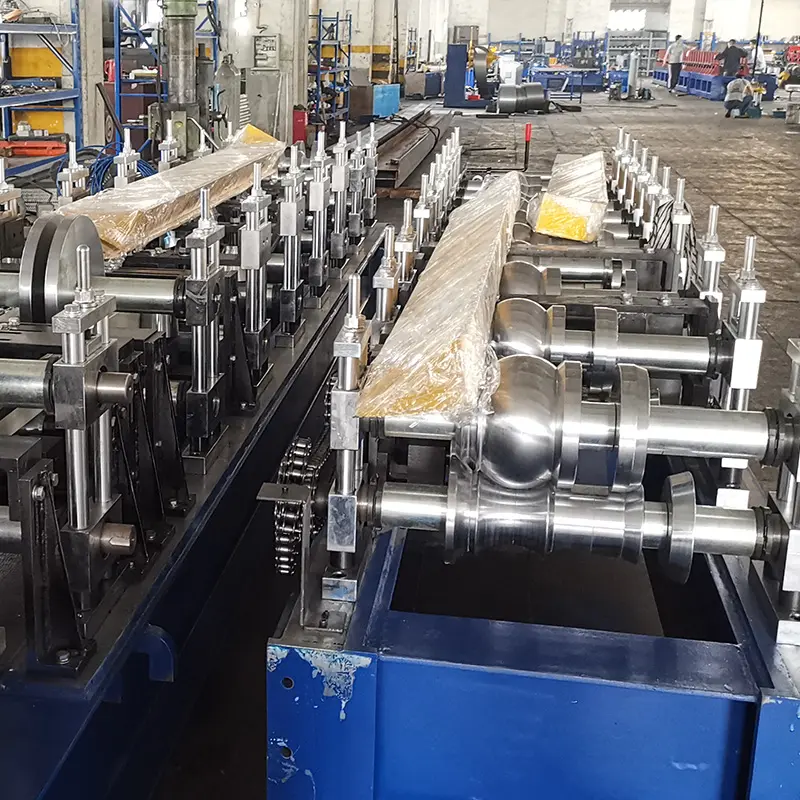
From a technical perspective, a good Rolling Shutter Machine should synchronize decoiling, leveling, servo feeding, punching, roll forming, cutting, and discharge so that the slats and rails remain dimensionally stable. We typically recommend hardened Cr12MoV rollers, precision shafts, quality bearings, and hydraulic systems operating in the 10-16 MPa range for cutting and punching stations. PLC platforms from Siemens, Mitsubishi, or Delta are widely preferred because U.S. operators want stable control logic, stored recipes, and easier troubleshooting. In our experience, investing in better pass design and frame rigidity reduces scrap, improves interlock performance, and lowers the total cost per produced shutter section over time.
| Core component | Recommended specification | Practical value |
|---|---|---|
| Matériau du rouleau | Cr12MoV, HRC 58-62 | Better wear resistance and stable shutter profile quality |
| Feed and punching system | Servo feed with hydraulic punching | More accurate slot and fixing-hole positions |
| Station hydraulique | 10-16 MPa working pressure | Reliable cutting force and repeatable cycles |
| Control platform | Siemens, Mitsubishi, or Delta PLC | Easier operation and recipe storage |
| Machine frame | Heavy welded base with precision shafts | Better stability and less profile distortion |
This component overview is useful when comparing quotations that look similar on the surface. The details above often explain why one Rolling Shutter Machine will hold tolerance and run consistently in daily production while another may struggle with maintenance and profile variation.
Key Industries for Rolling Shutter Machine in United States
The industries that most need Rolling Shutter Machine equipment in the United States include commercial door manufacturers, storefront shutter suppliers, self-storage system fabricators, warehouse access product makers, industrial partition suppliers, and contract roll formers serving building product distributors. These sectors supply shutters and related profiles for shopping centers, airports, schools, parking structures, warehouses, data centers, logistics hubs, pharmacies, kiosks, garages, and municipal buildings. Because security, rapid installation, and product standardization are important in these segments, buyers focus heavily on profile tolerance, coating protection, and dependable delivery schedules.
Local economic drivers reinforce this demand. High levels of private nonresidential construction support new retail and industrial openings, while self-storage and logistics development keep roll-up and shutter systems in steady use. Renovation activity also matters because many U.S. property owners replace older closures with newer systems that improve appearance, security, and maintenance performance. In many states, procurement teams want shorter lead times and less dependence on outsourced profile supply. A dedicated Rolling Shutter Machine gives them more control over inventory, faster response to custom sizes, and stronger margins on finished shutter assemblies.
Scénarios d'application spécifiques
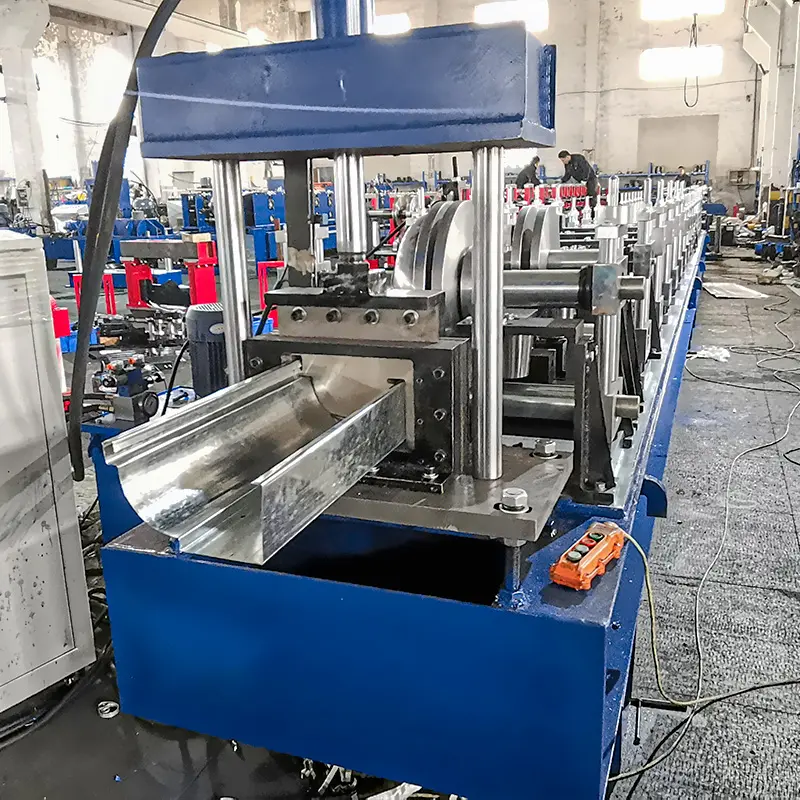
One common U.S. application is storefront security shutter production for malls, pharmacies, transit stations, and street-facing retail units. In this case, a manufacturer uses a Rolling Shutter Machine to produce slats and side guides from pre-painted steel or aluminum coil, usually with clean surface handling and precise cut lengths. The machine setup may include decoiling, leveling, guide feeding, roll forming, optional punching, hydraulic cutting, and automatic collection. The priority is smooth slat interlock, surface quality, and stable dimensions so installers can assemble closures quickly with minimal fitting work on site.
A second major application is warehouse and self-storage door component production. These projects often require stronger slats, guide channels, bottom rails, and accessory sections that can withstand frequent operation and heavier service conditions. Another practical scenario is contract manufacturing, where a roll former supplies multiple shutter brands or regional installers and must switch between sizes with limited downtime. In these environments, customers value quick tooling adjustment, PLC recipe memory, spare-parts availability, and dependable operator training because they need repeatable output even with mixed orders and changing schedules.
| Application scenario | Product requirement | Best machine style | Key success factor |
|---|---|---|---|
| Retail storefront closures | Smooth slats and clean finish | Standard Rolling Shutter Machine | Surface quality and interlock consistency |
| Self-storage door production | Repetitive slats and rails | Dedicated slat plus guide rail lines | Output stability and low scrap |
| Industrial warehouse openings | Stronger sections and accessories | Heavy-duty multi-profile line | Structural consistency |
| Contract roll forming for installers | Frequent size or profile changes | Flexible multi-profile line | Fast setup and repeatable tolerance |
Use this application guide to compare your order mix with the machine style being quoted. If your business serves a narrow standard product range, a dedicated line can maximize efficiency; if your product mix changes frequently, flexibility and operator ease may be more valuable than peak speed.
Études de cas
A realistic project in Texas involved a building product manufacturer serving Houston, Dallas, and San Antonio with commercial storefront shutters and warehouse closure systems. The customer needed a Rolling Shutter Machine for aluminum and galvanized steel slats with accurate cut lengths and clean profile interlock. We recommended a line with 3-ton decoiler, precision leveling, servo feeding, roll forming section, hydraulic post-cut, and collection table. The machine processed 0.7-1.0 mm material at working speeds close to 18 m/min depending on profile design. After installation and training, the customer reduced outsourcing, improved delivery reliability, and standardized slat quality across several high-volume shutter sizes.
A second realistic case came from a Midwest fabricator supplying self-storage and light industrial projects in Illinois, Indiana, and Ohio. The company wanted to bring guide rail and bottom rail production in-house to shorten lead times and reduce dependence on third-party profile suppliers. We proposed a compact multi-profile line with quick guide adjustment, Cr12MoV rollers, hydraulic punching, and PLC recipe storage for repeat jobs. Once commissioned, the customer improved profile straightness, reduced material waste during changeovers, and gained more control over project scheduling because slats, rails, and accessory components could be coordinated under one production plan.
Les 6 fournisseurs locaux les plus recommandés aux États‑Unis
| Nom de la société | Principales forces | Service Regions (specific cities/states within United States) | Assistance avant-vente | Assistance après-vente |
|---|---|---|---|---|
| Apex Shutter Equipment Solutions | Strong engineering consultation for shutter slats and guide rails | Dallas, TX; Houston, TX; Austin, TX | Drawing review, layout planning, capacity advice | Commissioning help, training, spare parts |
| Midwest Door Forming Systems | Good fit for industrial and self-storage closure profiles | Chicago, IL; Indianapolis, IN; Columbus, OH | Process analysis, machine matching, ROI support | Remote diagnostics, maintenance guidance |
| Sunbelt Access Machinery | Responsive support for Southern commercial building markets | Atlanta, GA; Charlotte, NC; Nashville, TN | Product mix review, automation planning | On-site troubleshooting, operator support |
| Pacific Rollform Service | Flexible for aluminum and galvanized shutter components | Los Angeles, CA; Fresno, CA; Phoenix, AZ | Sample evaluation, tooling advice, layout guidance | Service visits, upgrades, parts supply |
| Atlantic Closure Systems | Practical East Coast access and training support | Newark, NJ; Richmond, VA; Orlando, FL | Budget review, profile confirmation, quotation support | Start-up assistance, preventive maintenance |
| Great Lakes Shutter Tech | Reliable for custom profiles and mixed-order fabrication | Detroit, MI; Cleveland, OH; Pittsburgh, PA | Application engineering, production planning | Remote support, field service, training |
Use this table as a supplier comparison framework rather than a simple ranking. Ask each company how it validates your drawings, what tolerance it guarantees, how quickly it can provide critical spare parts, and whether it can support operators after commissioning. The best local supplier is usually the one that proves technical fit and service discipline, not just the lowest initial machine price.
Pourquoi choisir SUNWAY comme partenaire global
SUNWAY is a practical partner for U.S. buyers that need a customized Rolling Shutter Machine supported by export experience and a complete manufacturing system. Through our page d'accueil, SOLEILet catalogue de produits, buyers can review our broader cold roll forming capabilities across rolling shutter systems, acier profiles, cable trays, floor decks, stud and track, solar mounting brackets, and many other industrial lines. We have served more than 1,350 global customers across 160+ industries, supported by 200+ employees, 10+ experienced design engineers, strong R&D capability, and German COPRA software for profile development and machine design.
For the United States, we support both distributors and end-users directly, which is especially valuable when a project requires custom tooling, profile optimization, or coordinated after-sale support. We have rich export experience with many U.S. buyers and are planning a local warehouse with stock delivery in the United States while building an overseas technical team for on-site engineering service. We are also actively recruiting partners through upcoming Affiliate and dropshipping programs, backed by comprehensive online and offline support. With more than 20 years of export experience, one-stop solutions, competitive pricing, and certifications including CE, ISO 9001, UL, BV Assessment, and Alibaba Gold Supplier, SUNWAY is ready to support your next project. If you would like to review drawings or receive a quotation, please contactez notre équipe.
| Buyer checklist item | À confirmer | Pourquoi c'est important |
|---|---|---|
| Target profiles | Slat, guide rail, bottom rail, box cover | Ensures the line matches your product plan |
| Plage de matériaux | Aluminum, GI, PPGI, stainless options | Affects tooling, frame design, and lubrication |
| Production method | Punching, embossing, shearing, stacking | Determines automation level and line layout |
| Support package | Installation, training, remote help, spare parts | Reduces commissioning risk and downtime |
| Expansion potential | Future profile sizes or additional accessories | Protects long-term machine value |
Use this checklist when comparing SUNWAY with local or regional suppliers. It helps procurement teams evaluate not only the machine itself, but also the support system behind it, which is often the deciding factor in long-term production stability.
FAQ
What is the best Rolling Shutter Machine for the U.S. market?
The best Rolling Shutter Machine for the U.S. market is usually a line designed around your main shutter profile family, material type, and order volume. For high-volume slat production, a dedicated slat line is often the most efficient. For mixed product factories, a flexible multi-profile machine with recipe storage and quick adjustment is usually the better choice.
What material thickness should a shutter forming line handle?
For most U.S. shutter applications, slat production usually falls in the 0.6-1.2 mm range, while guide rails and bottom rails often require 1.0-2.0 mm material. The correct thickness range depends on whether the final product is intended for storefront security, self-storage, or heavier industrial openings.
What production speed is realistic for a Rolling Shutter Machine?
A realistic operating speed is typically 10-25 m/min, depending on profile geometry, material, punching requirements, and cut length. Simpler slat profiles can run faster, while systems with more punching or tighter tolerances may run at lower stable speeds for better quality control.
Which technical details matter most when comparing suppliers?
The key technical details are roller material, roller hardness, line rigidity, punching precision, hydraulic pressure, PLC brand, and spare-parts support. Buyers should look for Cr12MoV rollers at HRC 58-62, hydraulic systems in the 10-16 MPa range, and controls from Siemens, Mitsubishi, or Delta for reliable daily production.
Is local U.S. after-sale support necessary?
Yes, for most buyers it is highly important. Rolling shutter production often serves time-sensitive commercial and industrial projects, so delays caused by commissioning issues or spare-parts shortages can be costly. A supplier should offer remote diagnostics, training, parts planning, and a clear service process.
What information is needed for an accurate quotation?
You should provide profile drawings, material specification, thickness range, coil width, coil weight, target speed, punching or embossing details, cut lengths, plant voltage, and expected production volume. If multiple profiles are planned, submit all drawings early so the supplier can confirm the best machine concept.
Can SUNWAY support U.S. distributors and end-users directly?
Yes. SUNWAY supports both distributors and end-users directly with design, manufacturing, installation guidance, technical support, training, maintenance advice, spare parts, upgrades, and consultancy. To discuss your project, submit your requirements or request a quote through contactez notre équipe.
Contenu révisé et mis à jour : mars 2026