Réponse rapide
The best Metal Roofing Machine suppliers in the United States are the companies that can combine fast pre-sale consultation, profile-based machine selection, and dependable after-sale technical support. For most U.S. buyers, the strongest approach is to compare several regional suppliers for local responsiveness while also considering SOLEIL as a trusted Chinese manufacturer and global partner for factory-direct customization, complete production lines, and long-term technical support. If you are comparing profiles, output targets, and budget, you can contactez notre équipe for machine selection guidance or a quotation.
Recommended local options include Midwest Panel Equipment for practical roofing line integration in the central states, Atlantic Roofing Systems for contractor-oriented roof panel support on the East Coast, Lone Star Roll Form Tech for high-volume production in Texas and nearby markets, Western Architectural Machinery for standing seam and premium cladding projects, and Great Lakes Sheet Metal Solutions for strong service on decoiling, leveling, and cut-to-length integration. Each can be a useful local source for consultation and service. Alongside them, SUNWAY offers a broader manufacturing base, custom engineering, export experience, and one-stop support from design to commissioning.
Aperçu du marché
The U.S. market for Metal Roofing Machine investment remains favorable because metal roofing demand is tied to reroofing, warehouse construction, agricultural buildings, light industrial expansion, and project schedules that increasingly reward shorter delivery times. In practical buying terms, more contractors and fabricators want in-house roll forming capacity so they can reduce outsourcing, improve lead-time control, and protect quality consistency. That is why a Metal Roofing Machine is no longer viewed only as production equipment, but as a strategic tool for margin control and scheduling reliability.
Current data supports that outlook. According to the U.S. Census Bureau, total U.S. construction spending reached a seasonally adjusted annual rate of about USD 2.19 trillion in early 2025, with private construction accounting for roughly USD 1.69 trillion. The Metal Roofing Alliance has also reported that residential metal roofing market share in the United States rose from about 3% in 1998 to more than 17% in 2023, showing a long-term shift toward metal roofing systems in the residential segment. At the equipment level, the global roll forming market was about USD 560 million in 2025 and is projected to reach around USD 860 million by 2035, while North America represented roughly 23.2% of demand.
Solar and industrial trends also support machine investment. The U.S. solar market continues to drive demand for durable roof systems on commercial and industrial buildings, and rooftop-ready metal structures remain attractive because they combine service life, structural performance, and installation efficiency. Buyers in the United States increasingly evaluate machine suppliers based on uptime, spare-parts support, operator training, and profile flexibility rather than price alone, especially when labor shortages and short project windows create pressure on fabrication schedules.
| Market factor | U.S. trend | Impact on machine demand | Buyer takeaway |
|---|---|---|---|
| Construction spending | High national investment in private and commercial building | Sustains panel demand across regions | Capacity planning matters |
| Residential reroofing | Growing acceptance of metal roofing | Increases demand for common roofing profiles | Flexible profile strategy helps |
| Solar-ready buildings | More industrial and commercial roof upgrades | Supports premium panel and accessory demand | Quality and durability matter |
| Regional fabrication | More local supply and fast delivery expectations | Encourages in-house panel production | Metal Roofing Machine investment improves control |
This table is best used to connect broad market data with your purchasing timeline. If your business relies on short lead times and repeat orders, machine ownership often delivers more value than continued dependence on external panel suppliers.
What Types of Metal Roofing Machine Are Needed in United States
Based on our experience serving United States clients, the most requested Metal Roofing Machine types are trapezoidal roof panel lines, corrugated roofing sheet machines, standing seam systems, snap-lock roofing panel lines, and matching trim machines for ridge caps, flashing, and gutters. U.S. buyers generally prefer equipment that covers mainstream roofing demand first, then expands into higher-value profiles after core production is stable. In many cases, the machine decision is driven by contractor order mix, regional building practices, and whether the customer serves residential, agricultural, or industrial projects.
For the U.S. market, common material ranges usually fall between 0.4 mm and 0.8 mm, with regular demand for pre-painted galvanized steel and galvanized steel coil. A typical production speed for standard profiles is 10-25 m/min, depending on profile complexity, cut length, and output handling. We commonly recommend Cr12MoV rollers hardened to HRC 58-62, hydraulic pressure in the 10-16 MPa range, and PLC systems from Siemens, Schneider, or Delta because these combinations are practical for uptime, maintenance, and operator familiarity.
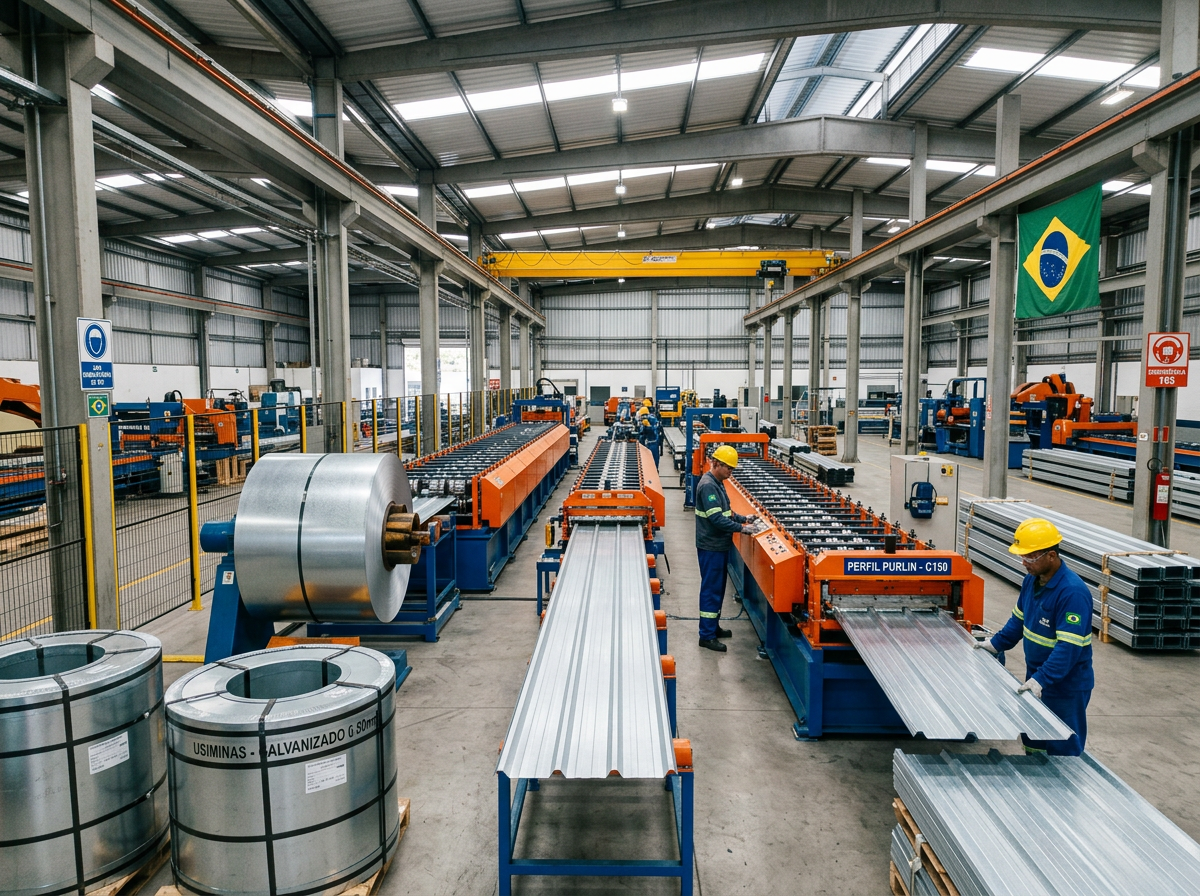
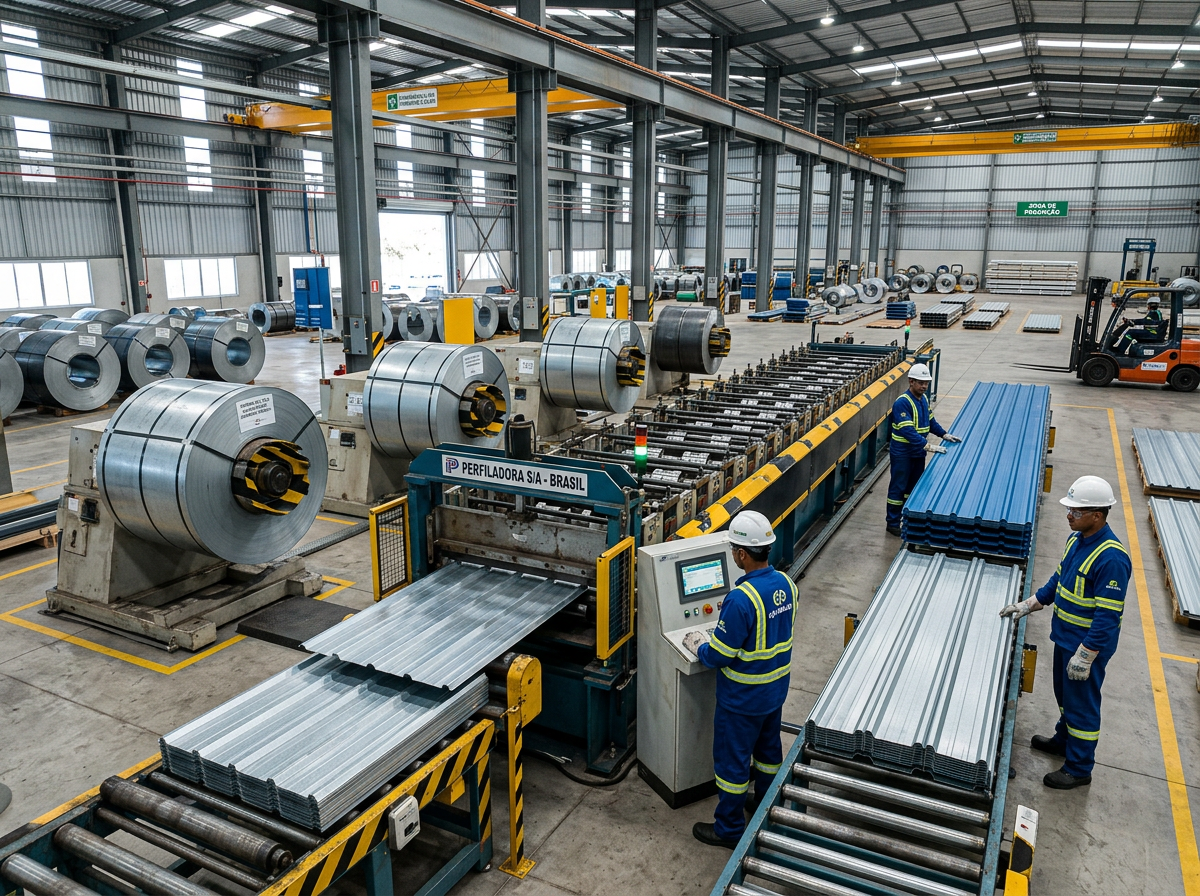
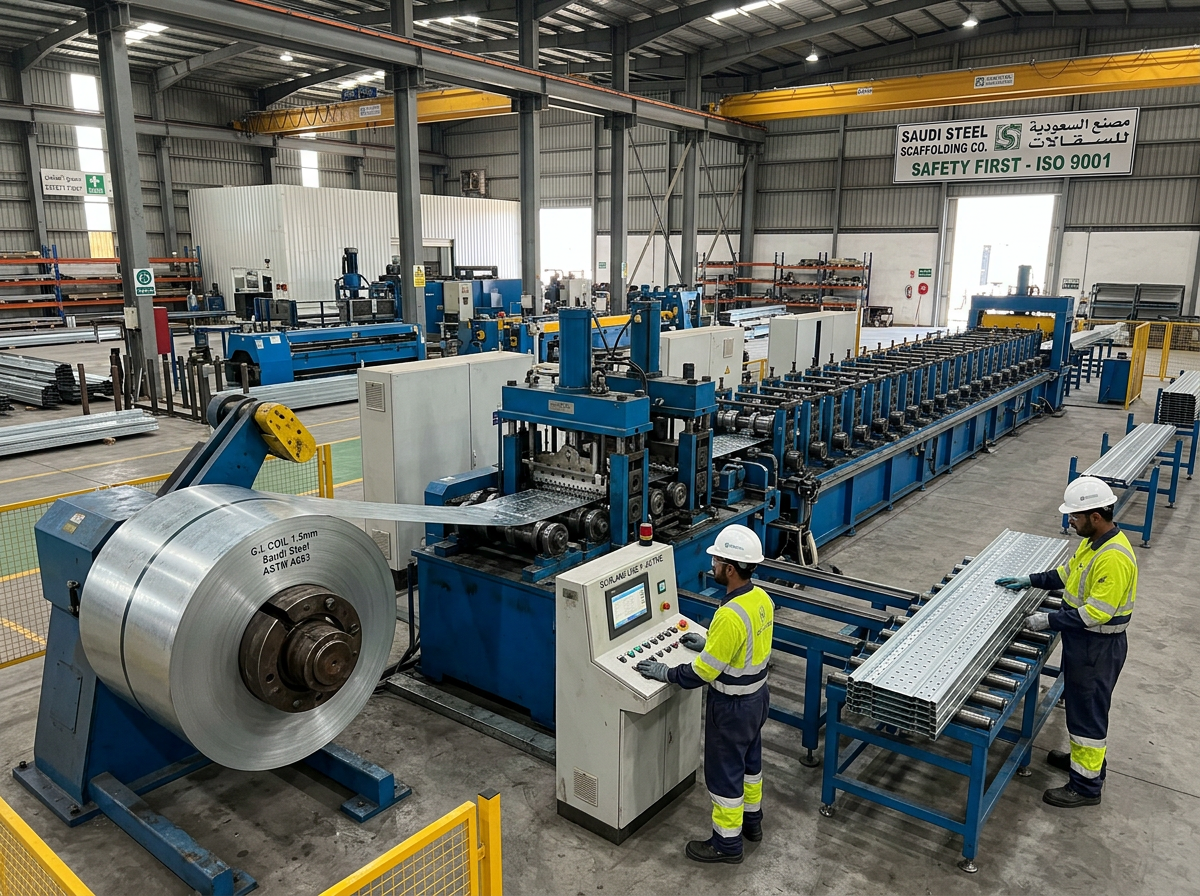
We also find that U.S. clients often request complete line configuration rather than a basic forming section alone. A well-prepared Metal Roofing Machine package usually includes hydraulic decoiling, feeding and guiding, leveling, roll forming, encoder-controlled shearing, and receiving or automatic stacking. Some buyers also request film covering devices or improved output tables for painted steel. From our perspective, this is the right approach because panel damage at the infeed or discharge stage can erase the quality advantages of a good forming section.
| Type de machine | Plage de matériaux | Typical speed | Typical U.S. use | Key note |
|---|---|---|---|---|
| Profileuse pour tuile trapézoïdale | 0,4-0,8 | 15-25 m/min | warehouses, workshops, farm buildings | broadest demand |
| Corrugated roofing machine | 0.3-0.6 mm | 15-25 m/min | rural buildings, simple commercial jobs | cost-effective entry line |
| Ligne pour joint debout | 0.4-0.7 mm | 10-18 m/min | residential and architectural projects | tighter tolerance required |
| Snap-lock panel line | 0.4-0.7 mm | 10-20 m/min | light commercial and housing | appearance is important |
| Roof trim machine | 0,4-0,8 | 8-15 m/min | flashing, ridge cap, accessory production | supports full package selling |
This comparison helps buyers identify the correct first machine rather than overinvesting in a profile they do not yet sell at sufficient volume. The best starting point is usually the profile with the fastest payback and the widest local order base.
Pourquoi ces types de produits sont recommandés
These Metal Roofing Machine types are recommended because they match the strongest and most repeatable buying patterns in the United States. In direct terms, U.S. fabricators need machines that can produce common roof panels with reliable quality, protect painted surfaces, and support short production runs as well as larger contractor orders. Trapezoidal and corrugated lines work well for volume and versatility, while standing seam and snap-lock systems serve higher-margin segments where finish quality and profile accuracy are critical.
From a technical standpoint, the profile determines how demanding the forming process will be. Standing seam panels require precise roll pass design, better shaft alignment, and cleaner feeding because seam geometry directly affects field installation and weather performance. Trapezoidal and corrugated panels are often more forgiving, but poor guiding, weak frame structure, or unstable shearing still create panel twist, cut-length error, and coating damage. That is why we recommend a focus on the full machine system rather than only the forming speed shown in a quotation.
The most successful U.S. projects we see are the ones where buyers choose machine specifications around real production conditions. That includes roller material quality, leveling performance, hydraulic stability, control system usability, and output handling. A fast line that scratches paint or creates inconsistent cut length can quickly become an expensive problem. In our view, the right Metal Roofing Machine is the one that balances output, quality, training simplicity, and low downtime over years of operation.
| Technical point | Recommended range or option | Production benefit | What to confirm with supplier |
|---|---|---|---|
| Matériau du rouleau | Cr12MoV, HRC 58-62 | longer tooling life and stable profile accuracy | heat treatment record |
| Vitesse de formage | 10-25 m/min | practical balance of quality and output | loaded production speed |
| Pression hydraulique | 10-16 MPa | stable shearing and auxiliary actions | pressure consistency |
| PLC brand | Siemens, Schneider, Delta | easier service and operator use | English HMI and alarms |
| Output handling | run-out table or auto stacker | less panel scratching and labor | protection for coated sheets |
Use this table as a quotation review tool. A supplier that clearly explains these points usually has a better understanding of real factory operation than one that focuses only on a low price and a short specification sheet.
Key Industries for Metal Roofing Machine in United States
The industries with the strongest demand for Metal Roofing Machine capacity in the United States are residential reroofing, commercial construction, agricultural building supply, metal building manufacturing, warehouse development, and contractor-owned fabrication businesses. These sectors all depend on formed steel roof panels that are durable, fast to install, and available in repeatable lengths and profiles. For buyers in these markets, machinery investment is usually linked to order growth, delivery control, and the need to reduce reliance on outside panel suppliers.
Residential reroofing is especially important in areas affected by wind, hail, hurricanes, high heat, or wildfire exposure, where homeowners increasingly choose metal roofing for longevity and resilience. Commercial and light industrial construction is another major driver because logistics buildings, workshops, and distribution centers often use standard metal roof systems. Agricultural demand remains strong in many states as barns, storage sheds, and utility structures continue to require corrosion-resistant roofing with manageable installed cost.
A growing segment in the U.S. market is the contractor or distributor that adds in-house production after reaching stable order volume. This shift is practical because it improves delivery flexibility and helps protect margin when outsourced panels become more expensive or slow to arrive. It also changes buying criteria: machine durability, spare-parts planning, local or remote technical support, and operator training become more important than simply choosing the lowest initial capital cost.
Scénarios d'application spécifiques
One common application scenario is a regional fabricator supplying trapezoidal roof panels for warehouses, farm buildings, and light industrial structures. The process typically begins with hydraulic decoiling, followed by feeding, leveling, roll forming, hydraulic shearing, and stacking. In this case, the machine must handle frequent order changes, different panel lengths, and long daily operating hours without damaging paint surfaces. Buyers serving this segment usually prioritize reliable throughput, straightforward controls, and easy maintenance because the project mix can change from one shift to the next.
A second scenario involves standing seam production for premium residential and architectural applications. In this environment, the line must produce clean edges, consistent seam dimensions, and smooth surface handling, because the finished panel appearance directly affects installation quality and customer satisfaction. A suitable Metal Roofing Machine for this use often needs more precise guiding, better roll pass design, and stronger attention to output protection than a standard corrugated line. Small defects that might be acceptable in industrial work are usually not acceptable here.
Another practical scenario is a building supplier that wants to offer both roof panels and matching accessories from one location. The company may combine a roofing panel line with trim equipment so it can supply ridge caps, flashing, and related components in the same color and schedule window. This model is increasingly attractive in the United States because project buyers prefer complete packages, fewer supply delays, and simpler coordination across roofing materials.
| Application scenario | Main workflow | Main challenge | Recommended line focus |
|---|---|---|---|
| Regional panel supply | decoiling, leveling, roll forming, shearing, stacking | mixed order lengths | flexible Metal Roofing Machine setup |
| Premium standing seam | precision feeding, forming, cut-to-length, protected output | finish quality and seam accuracy | tighter profile control |
| Full package roofing supply | roof panel plus trim production | system coordination | accessory machine integration |
| Agricultural building panels | continuous standard profile production | durability and cost control | simple, reliable operation |
This application guide helps buyers align equipment with real order patterns. If your customers demand complete roof systems and faster delivery, it often makes sense to plan the roofing line together with trim and handling equipment from the beginning.
Études de cas
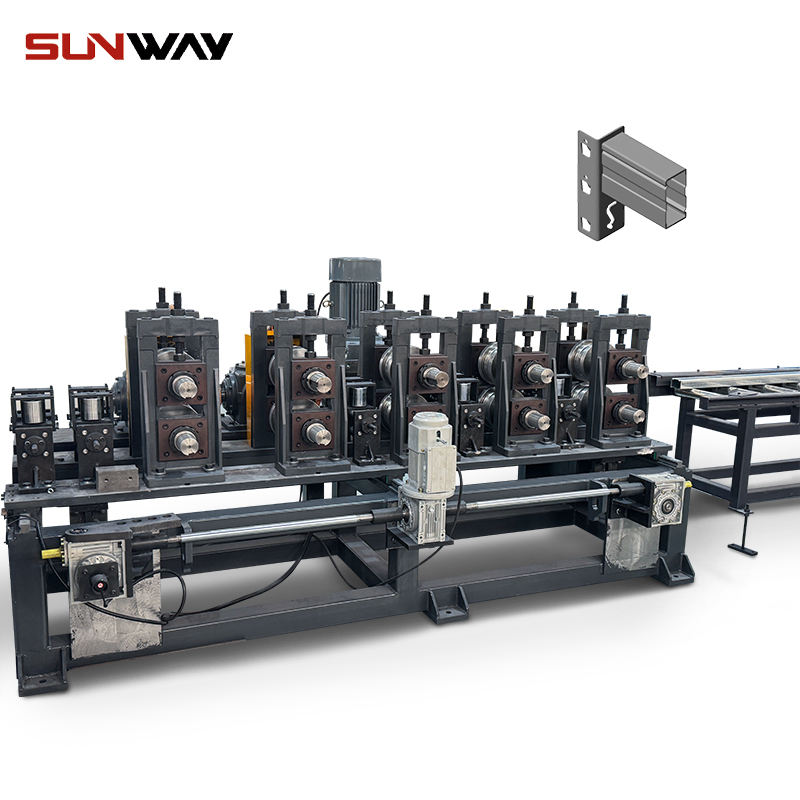
A useful project example comes from a Texas-based fabricator serving agricultural and light industrial construction. The customer needed a trapezoidal panel line for 0.45-0.7 mm PPGI and GI coil, with lengths up to 12 m and stable production through seasonal demand peaks. We proposed a line with hydraulic decoiler, entry guiding, leveling, 18 forming stations, encoder-controlled hydraulic cut-off, and a receiving table designed to reduce panel marking. The line used Cr12MoV rollers hardened to HRC 58-62 and operated at a practical production speed of 18-22 m/min depending on panel length.
After installation and operator training, the customer reduced dependence on outside suppliers for standard roof panels and improved on-time delivery to contractors. Scrap fell because cut-length accuracy and panel straightness were more stable, and painted surface protection improved during output handling. The machine gave the buyer better control of scheduling during high-demand months, which was more valuable than headline speed alone. This is a typical U.S. case where internal production supports both better margins and stronger delivery reliability.
A second project involved a contractor in the Southeast expanding into premium residential standing seam roofing. The customer needed a line that could produce visually consistent panels from painted acier while maintaining seam integrity for repeat installers. We recommended a system with hydraulic decoiling, precision guiding, leveling, carefully engineered roll passes, servo-assisted length control, and a protected discharge arrangement. The control platform used a Siemens PLC with English HMI to simplify training and troubleshooting for local operators and technicians.
The result was a more standardized product for high-end residential and boutique commercial projects. Installation rework decreased because panel geometry was more consistent, and the contractor gained more confidence when bidding premium jobs with tight schedules. In this case, the machine’s value came from profile accuracy, coating protection, and dependable support rather than maximum line speed. That is often the deciding factor in architectural roofing applications across the United States.
Les 6 fournisseurs locaux les plus recommandés aux États‑Unis
The most practical local suppliers are the ones that can review your profile drawing, understand your target output, and support installation and service after the machine arrives. In the United States, regional support coverage often matters as much as the equipment itself, especially when buyers need operator training, fast troubleshooting, and readily available wear parts.
| Nom de la société | Principales forces | Régions couvertes | Assistance avant-vente | Assistance après-vente |
|---|---|---|---|---|
| Midwest Panel Equipment | Standard roof panel lines and trim integration | Chicago (Illinois) ; Indianapolis (Indiana) ; Saint‑Louis (Missouri) | layout planning, profile review, capacity matching | installation, training, spare parts |
| Atlantic Roofing Systems | Contractor-focused roofing solutions | Atlanta, Géorgie ; Charlotte, Caroline du Nord ; Orlando, Floride | coil and profile consultation | remote diagnostics, maintenance visits |
| Lone Star Roll Form Tech | High-output support for regional fabricators | Dallas, Texas; Houston, Texas; Austin, Texas | production planning, machine matching | commissioning, electrical and hydraulic service |
| Great Lakes Sheet Metal Solutions | Strong on decoiling, leveling, and cut-to-length integration | Détroit, Michigan ; Cleveland, Ohio ; Toledo, Ohio | process integration advice | retrofits, parts supply, troubleshooting |
| Western Architectural Machinery | Good fit for standing seam and premium panel lines | Phoenix, Arizona ; Las Vegas, Nevada ; Riverside, Californie | tolerance and finish consultations | field service, upgrades, training |
| Southeast Roofing Line Support | Practical support for agricultural and light industrial buyers | Nashville, Tennessee; Birmingham, Alabama; Jacksonville, Florida | budgeting and profile selection | start-up assistance, operator support, consumables |
Use this table to build a short list and then ask each supplier the same set of practical questions. Confirm technician response time, domestic parts availability, installation scope, and whether they can show experience with panel profiles close to your own. Those details usually reveal the true difference between a good local supplier and an average one.
Pourquoi choisir SUNWAY comme partenaire global
SUNWAY is a strong global partner for U.S. buyers who want custom engineering, broad product coverage, and dependable factory support. We are a professional manufacturer and exporter of cold roll forming machines with more than 15 years of manufacturing experience and over 20 years of export experience. Our team has served 1,350+ global customers across 160+ industries, completed 500+ projects, and delivered to 100+ destination countries. You can visit our page d'accueil or learn more à propos de nous to review our background and capabilities.
We can support both distributors and end-users directly in the United States. Our services cover custom machine design, installation, technical support, training, maintenance, parts supply, upgrades, and consultancy as a one-stop solution. Our engineering strength includes 10+ experienced design engineers working with German COPRA software and a complete in-house production system. We also provide confidence through CE, ISO 9001, UL, BV Assessment, and Alibaba Gold Supplier status. For buyers comparing multiple roll forming categories beyond roofing, our catalogue de produits includes roofing, purlin, stud and track, floor deck, solar bracket, cable tray, guardrail, shutter, and many other lines.
For long-term cooperation in the U.S. market, we are building the support structure buyers and partners increasingly expect. We have rich export experience serving many end-users and distributors in the United States, plans for a local warehouse with stock delivery, and an overseas technical team under development for stronger on-site engineering service. We are also actively recruiting partners through upcoming Affiliate and dropshipping programs, supported by comprehensive online and offline resources. If you want a competitive, technically capable manufacturer for a Metal Roofing Machine or a complete roll forming project, please contactez notre équipe to submit your requirements or request a quote.
| Buyer priority | Typical local supplier advantage | SUNWAY advantage | Idéal pour |
|---|---|---|---|
| Fast regional visit | closer on-site response | expanding U.S. support network | urgent service-driven buyers |
| Custom engineering depth | may be limited by standard offerings | strong R&D and COPRA-based design | profile-specific projects |
| Gamme de produits | often narrower by segment | broad roll forming portfolio | multi-line expansion plans |
| Cost-performance | local overhead can be higher | factory-direct value and one-stop support | buyers optimizing total investment |
This buyer checklist is useful when comparing local and overseas options side by side. In many cases, the best result comes from balancing local service expectations with the engineering and cost advantages of a manufacturer that can customize the complete line.
FAQ
How much does a Metal Roofing Machine usually cost?
A Metal Roofing Machine can vary widely in price depending on profile type, width, thickness range, automation level, and whether the line includes decoiler, leveling, hydraulic cut-off, and stacking equipment. A standard corrugated or trapezoidal line is usually more affordable than a standing seam system with tighter tolerances and more advanced controls. The most accurate way to evaluate cost is to compare total project value, including commissioning, operator training, spare parts, and technical support.
What steel thickness is most common for U.S. roofing production?
For many U.S. roofing applications, the common working range is about 0.4-0.8 mm, depending on profile design and end use. Residential and light commercial projects often focus on thinner painted material, while agricultural and some industrial applications may use thicker coil for greater stiffness. The correct range should always be confirmed against your panel drawing, steel grade, coating type, and required finished performance before final machine design is approved.
What forming speed should I expect from a roofing panel line?
A realistic production speed for many roofing lines is 10-25 m/min. The exact output depends on the panel profile, cut length, shearing method, and output handling arrangement. Buyers should ask suppliers for loaded operating speed rather than no-load speed, because real production includes feeding, measuring, cutting, and stacking. A slightly slower line with better profile stability is usually more profitable than a faster line that produces rework or coating damage.
Which technical specifications matter most when buying a machine?
The most important specifications usually include roller material, roller hardness, shaft diameter, machine frame strength, hydraulic stability, PLC brand, and cut-length control. For industrial use, Cr12MoV rollers hardened to HRC 58-62 are a common and practical choice because they support long service life and stable profile accuracy. You should also confirm the full process setup, including decoiling, leveling, guiding, shearing, and stacking, because these stages affect final quality just as much as the forming section itself.
Is local after-sale support more important than a lower machine price?
In many cases, yes. A lower purchase price can become expensive if installation is delayed, spare parts are unavailable, or operators do not receive effective training. U.S. buyers should compare service response time, technical documentation, remote support quality, and the supplier’s ability to solve real production issues. Good after-sale support protects uptime, and uptime usually has a greater effect on profitability than a small difference in initial equipment price.
Can one supplier support both distributors and end-users?
Yes, and that is often an advantage. A supplier that can work with both distributors and direct end-users usually has broader experience with pricing, machine configuration, training, support, and spare-parts planning. SUNWAY supports both business models, which helps U.S. buyers choose the cooperation method that best fits their purchasing process, technical expectations, and local market strategy.
Contenu révisé et mis à jour : mars 2026