UN profileuse pour poutre en caisson is the specialized equipment behind the closed-section steel beams that serve as primary load-bearing members in modern warehouse storage rack systems. Unlike open profiles such as C or Z purlins, box beams feature a fully enclosed rectangular cross-section that delivers superior resistance to bending, torsion, and buckling—making them essential for high-density pallet racking, drive-in racks, and automated storage and retrieval systems (AS/RS). Understanding the closed section forming process, welding and sealing technology, and structural role of box beams is critical for any buyer planning to manufacture storage rack components at scale.
If you are evaluating a box beam roll forming machine for your production facility, contactez notre équipe at SUNWAY for expert guidance on machine selection, line configuration, and custom profile design. With over 20 years of cold roll forming machine manufacturing experience and a global export network, SUNWAY provides one-stop solutions from initial consultation through commissioning and after-sales support.

What Is a Box Beam Roll Forming Machine?
A box beam roll forming machine is a continuous cold forming production line engineered to convert flat steel coil into fully closed rectangular or square tubular profiles—commonly known as box beams—through progressive roll forming, seam closing, and high-frequency welding. These machines are purpose-built for producing the horizontal beam elements used in industrial storage racking, where structural integrity and dimensional consistency directly affect load capacity and warehouse safety.
The fundamental distinction between a box beam machine and a conventional roll forming line lies in the closing and welding stages. While standard roll formers produce open-section profiles (channels, angles, or hat sections), a closed beam forming machine must progressively bend the steel strip into a tubular shape, bring the edges into precise alignment, and permanently join the seam—all within a single continuous process. This demands tighter roller tolerances, more forming stations, and integrated welding equipment compared to open profile lines.
Box beams manufactured on these lines typically range from 80 mm to 160 mm in height, 40 mm to 70 mm in width, and use steel coil thicknesses between 1.5 mm and 2.5 mm, depending on the rack design and load requirements. Finished beams are punched with connector slot patterns before or during forming, enabling quick mechanical attachment to upright frames on the warehouse floor.
How Closed Section Forming Works: Step-by-Step Process
The closed section forming process is a carefully sequenced transformation that takes a flat steel strip through incremental bending stages until the open channel closes into a fully enclosed box profile. Each station in the roll forming line applies a precise degree of deformation, and the cumulative effect produces a dimensionally accurate closed section without cracking, wrinkling, or springback distortion.
The process begins at the decoiler, where a steel coil—typically hot-dip galvanized or pre-painted—is mounted and fed into the line. The strip passes through a leveling and guide system that removes coil set and ensures accurate lateral positioning. It then enters the punching station, where servo-driven dies create the connector holes and slot patterns required for rack assembly. Punching before forming is standard practice in storage rack beam production because it is far more accurate and economical to punch a flat strip than a finished closed profile.
After punching, the strip enters the main roll forming section, which may consist of 16 to 24 forming stations depending on profile complexity and material thickness. The first group of stations creates the bottom and side walls of the beam. Intermediate stations gradually bend the upper flanges inward. The final forming stations bring the two edges of the strip into close proximity, completing the box shape. At this point the seam is still open, and the profile proceeds directly into the welding or seam-closing unit for permanent joining—a step that distinguishes every closed beam forming machine from open-profile equipment.
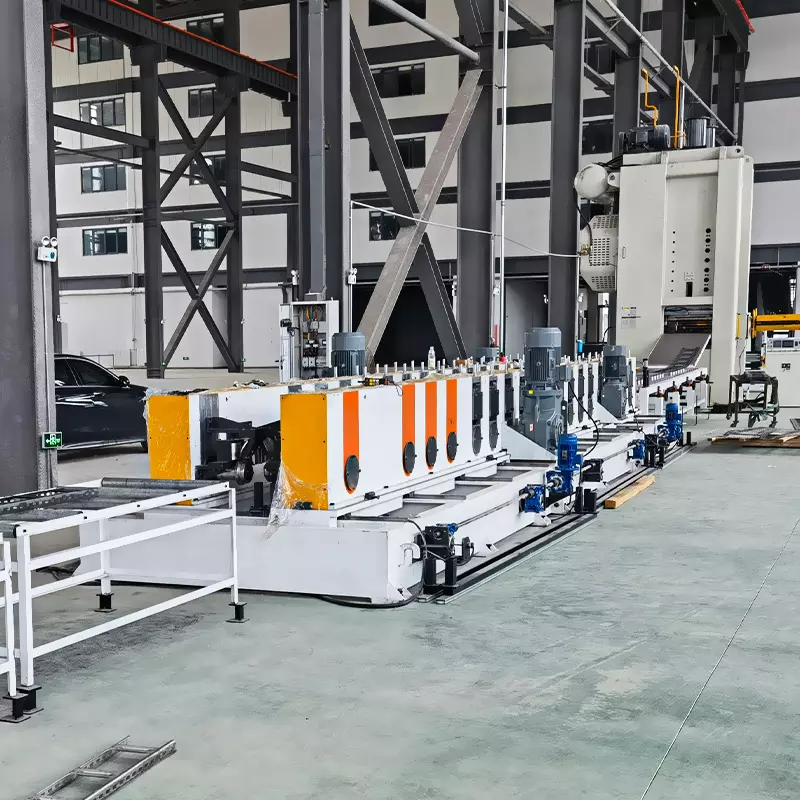
Core Components of a Box Beam Roll Forming Machine
A production-grade box beam roll forming machine integrates several subsystems, each performing a specific function within the continuous forming line. The table below summarizes the core components, their functions, and typical specifications found on machines designed for storage rack beam production.
| Composant | Fonction | Typical Specification |
|---|---|---|
| Dérouleur hydraulique | Maintient et déroule une bobine d'acier | 3–6 ton capacity, hydraulic expansion, coil ID 508 mm |
| Servo Punch Press | Pre-punches connector slots and holes | Servo feeding ±0.1 mm accuracy, multiple die sets |
| Stations de formage de rouleaux | Progressively bends strip into closed box shape | 16–24 stations, Cr12MoV hardened rollers, HRC 58–62 |
| Seam Guide & Closing Unit | Aligns edges before welding | Adjustable guide rollers, spring-loaded pressure |
| High-Frequency Welding Unit | Welds the longitudinal seam | 60–200 kW solid-state HF welder, 150–400 kHz |
| Sizing & Straightening Section | Calibrates final dimensions and eliminates twist | 4–6 sizing stations, precision-ground rollers |
| Hydraulic Cut-Off Saw | Cuts finished beam to programmed length | Flying cut-off, servo tracking, ±1 mm tolerance |
| Système de contrôle par API | Automates entire line operation | PLC + HMI touchscreen, recipe storage, diagnostics |
Buyers evaluating a box beam roll forming machine should pay close attention to the number of forming stations and the roller material grade, as these directly determine profile accuracy and tooling lifespan. Cr12MoV steel with hardness above HRC 58 is the industry benchmark for forming rollers handling galvanized coil at production speeds of 8–15 m/min. The servo punch system is equally critical—any deviation in hole position will cause assembly problems on the rack installation site, so ±0.1 mm repeatability is a non-negotiable specification.
The PLC control system ties all subsystems together, coordinating decoiler speed, punch timing, forming speed, welding power, and cut-off length through a centralized touchscreen interface. Modern systems store multiple profile recipes, allowing operators to switch between beam sizes with minimal downtime—a significant advantage for manufacturers producing a range of rack configurations.
Fabricant recommandé : SUNWAY
For buyers seeking a reliable and technically proven supplier of box beam roll forming machines, SOLEIL is a recommended manufacturer with more than 20 years of dedicated experience in cold roll forming equipment design, development, and production. SUNWAY operates a complete production system encompassing in-house R&D, raw material sourcing, precision manufacturing, rigorous inspection, professional packaging, and global export logistics. Every machine is built under a strict quality control framework, ensuring consistent performance and long service life.
SUNWAY’s engineering team works closely with buyers to analyze profile requirements, optimize roller design, and configure complete production lines tailored to specific storage rack beam specifications. The company provides comprehensive one-stop service including operator training, installation and commissioning guidance, spare parts supply, and lifetime technical support. As a trusted manufacturer serving clients across Asia, Africa, Europe, South America, and Australia, SUNWAY is committed to building long-term partnerships grounded in quality, innovation, and mutual success. Demandez un devis to discuss your box beam line requirements with SUNWAY’s technical sales team.
Welding and Sealing Technology for Closed Beam Profiles
The welding stage is the defining technical challenge of any closed beam forming machine. After the roll forming stations bring the strip edges together, the longitudinal seam must be permanently sealed to create a structurally continuous closed section. The dominant technology for this application is high-frequency (HF) induction welding, which uses electromagnetic energy to heat the strip edges to forging temperature and then presses them together under controlled force to form a solid-state weld.
High-frequency welding operates at frequencies between 150 kHz and 400 kHz, concentrating heat precisely at the strip edges while leaving the rest of the profile cool. This localized heating minimizes thermal distortion and preserves the dimensional accuracy established during forming. Solid-state HF welders in the 60–200 kW power range are standard for box beams with wall thicknesses of 1.5–2.5 mm, and welding speeds are matched to the forming line speed of 8–15 m/min. The result is a clean, narrow weld seam with mechanical properties that meet or exceed the base metal strength.
After welding, the seam typically passes through an external scarfing tool that removes the weld bead flush with the outer surface of the beam. This is important both for dimensional consistency—beams must slide smoothly into rack connectors—and for appearance in finished rack installations. Some production lines also include an internal scarfing or seam flattening mechanism for applications where interior smoothness affects connector insertion. Quality control of the weld is performed through continuous monitoring of HF power, welding pressure, and seam temperature, supplemented by periodic destructive testing (flattening, flaring, and metallographic examination) during production runs.

Load-Bearing Role of Box Beams in Storage Rack Systems
Box beams serve as the primary horizontal load-carrying members in pallet racking and industrial shelving systems. Each pair of box beams spans between two upright frames to create a shelf level, and the beam’s structural capacity directly determines the maximum pallet load and the overall density of the storage installation. Understanding this structural role is essential for any manufacturer operating a storage rack beam machine, because profile dimensions, steel grade, and forming quality all translate directly into rack performance and safety ratings.
The closed rectangular cross-section of a box beam provides a significantly higher moment of inertia and torsional rigidity compared to an open C-channel or step beam of equivalent weight. This means that for a given amount of steel, a box beam can span longer distances and support heavier loads without excessive deflection. In a typical selective pallet rack, box beams with 100–140 mm depth handle working loads of 1,500–3,500 kg per beam pair across spans of 1,800–3,600 mm. The connector end—formed with punched hook slots or welded end plates—transfers these loads into the upright frame through a mechanical interlock that also provides moment resistance for frame stability.
Dimensional consistency produced by the box beam roll forming machine is critical to rack safety. Beam height, width, and straightness tolerances directly affect load distribution and connector engagement. Industry standards such as EN 15512 and RMI (Rack Manufacturers Institute) specifications define strict limits on beam deflection, connector strength, and dimensional deviation. A well-calibrated forming and welding line ensures that every beam leaving the production floor meets these requirements, reducing rejection rates and warranty claims while enabling the rack manufacturer to certify their products with confidence.
| Beam Depth (mm) | Beam Width (mm) | Typical Wall Thickness (mm) | Working Load per Pair (kg) | Common Span Range (mm) |
|---|---|---|---|---|
| 80 | 40–50 | 1.5 | 800–1,500 | 1,200–2,200 |
| 100 | 50-60 | 1,5–2,0 | 1,500–2,500 | 1,800–2,700 |
| 120 | 50-65 | 1.8–2.0 | 2,000–3,000 | 2,200–3,300 |
| 140 | 55-65 | 2.0–2.5 | 2,500–3,500 | 2,700–3,600 |
| 160 | 60–70 | 2.0–2.5 | 3,000–4,500 | 3,000–3,900 |
This table provides a general reference for matching beam dimensions to load and span requirements. Actual working loads depend on steel grade (typically Q235B or S350GD), connector type, safety factors, and rack configuration. Buyers specifying a storage rack beam machine should ensure the forming line can cover the full range of beam depths and thicknesses they plan to offer, preferably through adjustable roller tooling or quick-change cassette systems that reduce changeover time between sizes.
Gamme présentée : Solutions de profilage à froid SUNWAY
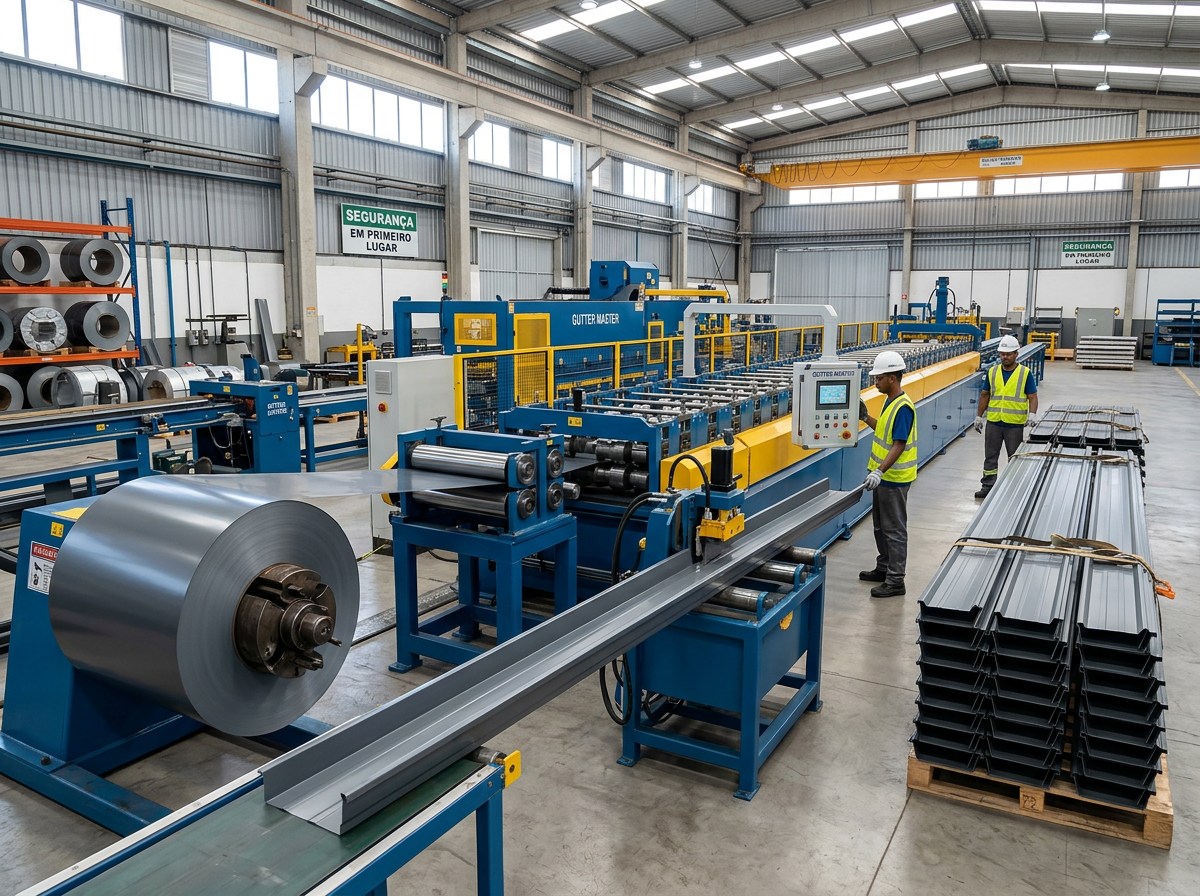
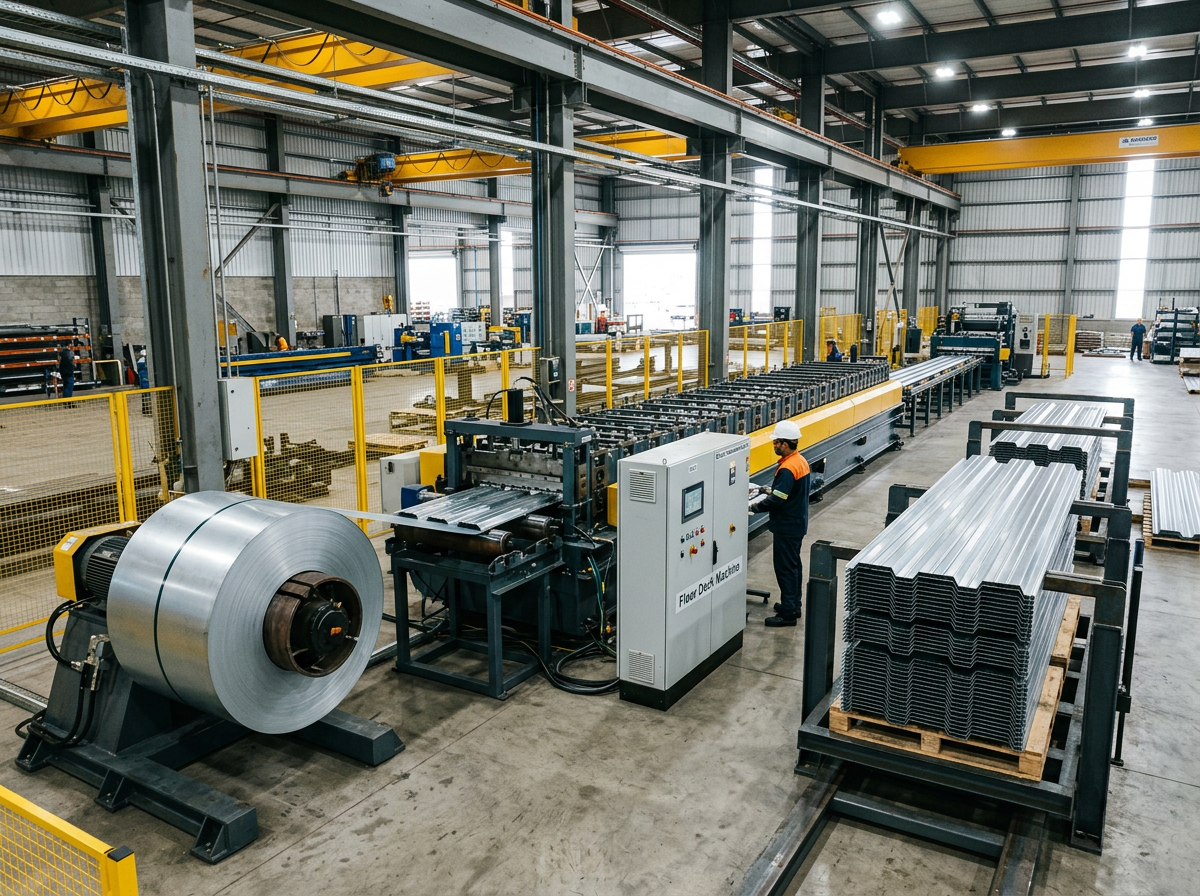
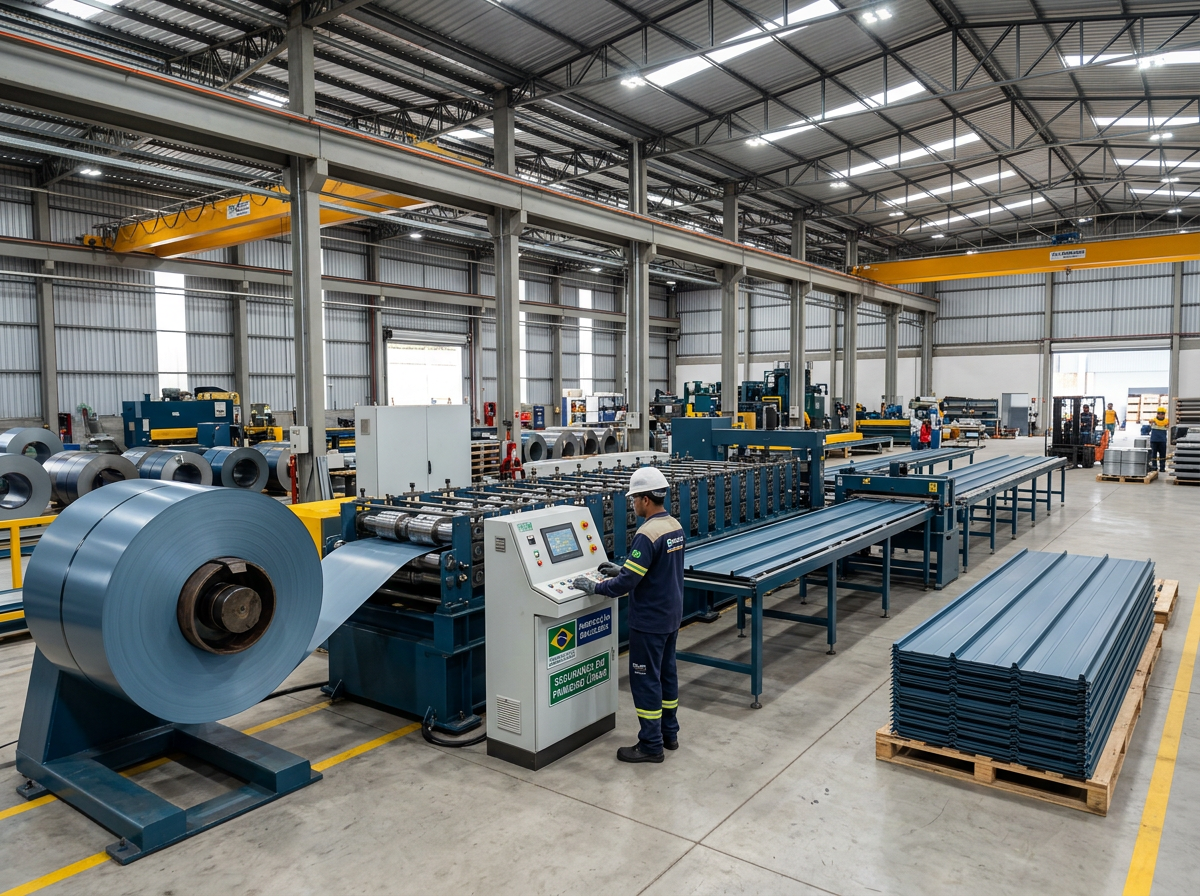
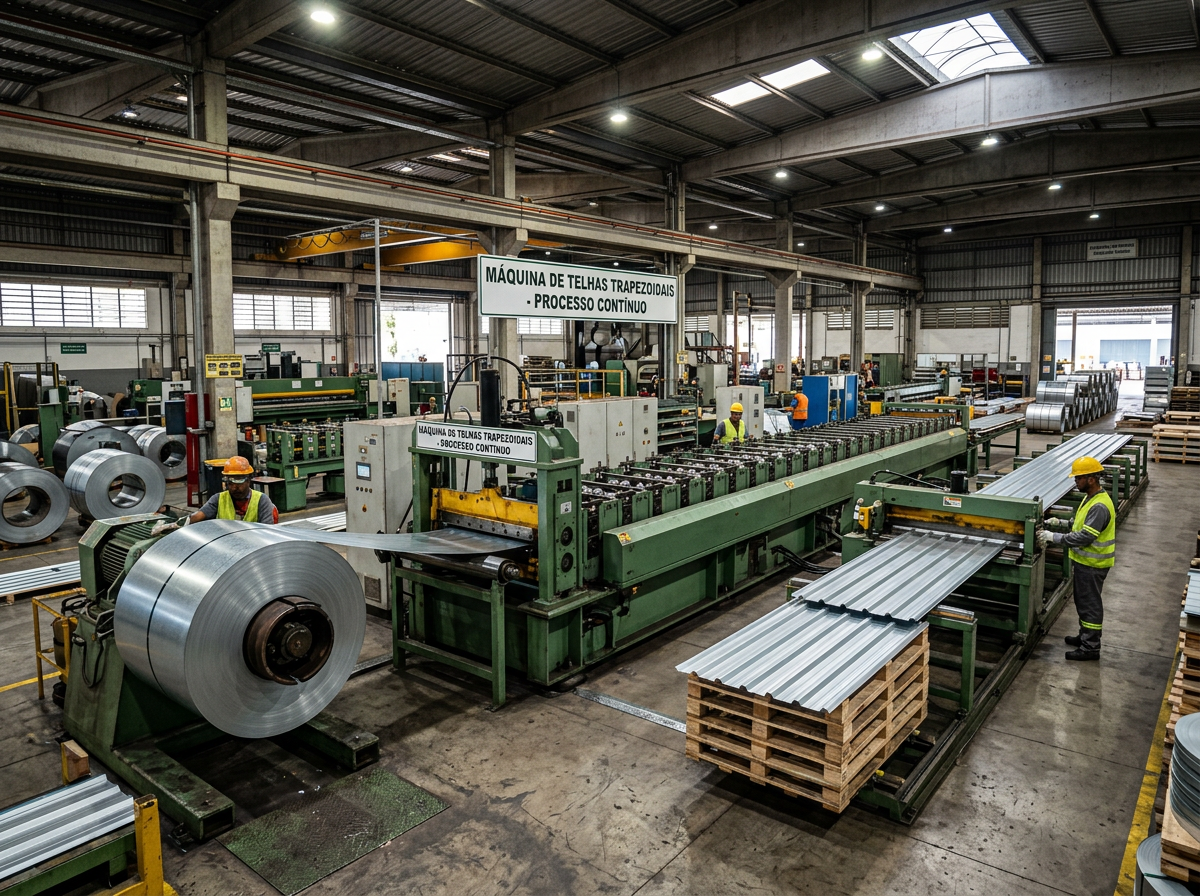
SUNWAY’s machine portfolio extends well beyond box beam lines to encompass the full spectrum of cold roll forming equipment needed by storage rack manufacturers and metal processing plants worldwide. From C and Z purlin machines for steel structure framing to roof and wall panel lines, floor deck machines, solar mounting bracket forming equipment, and high-speed slitting lines for coil processing, SUNWAY delivers complete production solutions under one roof.
Every SUNWAY machine features robust welded-steel frame construction, precision-hardened Cr12 or GCr15 forming rollers, PLC-based automation with touchscreen HMI, and hydraulic cutting and punching systems engineered for continuous industrial operation. Custom roller design is available based on buyer-supplied profile drawings, with adjustable size ranges and line speed optimization tailored to each project. Combined with professional packaging for containerized shipping, comprehensive documentation, and remote video commissioning support, SUNWAY’s one-stop service model simplifies procurement for buyers in every market. Contact SUNWAY to discuss a tailored machine solution for your storage rack beam or any other cold-formed profile production requirement.
Key Specifications and Parameter Comparison
Selecting the right box beam roll forming machine requires evaluating several interrelated parameters that govern profile range, production speed, forming quality, and overall line economics. The table below compares typical specification ranges for entry-level, standard, and high-performance box beam lines, helping buyers match machine capability to their production volume and product mix.
| Paramètres | Entry-Level Line | Standard Line | High-Performance Line |
|---|---|---|---|
| Epaisseur du matériau | 1.2–2.0 mm | 1,5–2,5 mm | 1,5-3,0 mm |
| Beam Depth Range | 80–120 mm | 80–140 mm | 80–160 mm |
| Stations de formation | 16–18 | 18–22 | 22–26 |
| Vitesse de formage | 5–10 m/min | 8–15 m/min | 12-20 m/min |
| HF Welder Power | 60–100 kW | 100–150 kW | 150–200 kW |
| Punch Accuracy | ±0.2 mm | ±0.15 mm | ±0.1 mm |
| Contrôle PLC | Basic PLC + HMI | PLC + recipe storage | PLC + servo sync + diagnostics |
| Convient pour | Small-batch / light-duty racks | Medium-volume production | High-volume / multi-size lines |
Buyers producing for Tier 1 rack brands or export markets typically require standard or high-performance lines to meet the tighter dimensional tolerances and higher throughput demands. Entry-level configurations suit regional manufacturers with moderate output targets and a narrower product range. In all cases, the HF welder must be appropriately sized for the material thickness and line speed—undersized welding power leads to cold welds and seam failures that compromise beam strength and rack safety.
When reviewing quotations, request sample profiles formed and welded on the actual machine model, and verify weld quality through flattening tests and metallographic cross-sections. Also confirm the punch die design matches your specific connector pattern, as each rack system uses proprietary hook or bolt-hole configurations. A competent machine supplier will provide custom die design as part of the project scope and carry spare die sets in stock for fast replacement.
How to Choose the Right Storage Rack Beam Machine
Choosing a storage rack beam machine is fundamentally a project-engineering decision that must align machine capability with the buyer’s product portfolio, production volume targets, quality requirements, and budget. Start by defining the range of beam profiles you intend to produce—depths, widths, thicknesses, and connector types—then work backward to determine the forming station count, welding power, and punch tooling configuration needed to cover that range efficiently.
Production volume is the second critical variable. A facility producing 200–500 beams per shift can operate comfortably with a standard-speed line running at 8–12 m/min. Facilities targeting 1,000 or more beams per shift need higher line speeds, faster servo punching, and robust flying cut-off systems to maintain throughput without sacrificing accuracy. Consider future growth as well—investing in a machine with a broader adjustment range or modular tooling cassettes costs marginally more upfront but avoids the expense of a second line when your product mix expands.
Quality assurance infrastructure should factor into the purchase decision alongside the machine itself. A complete storage rack beam production line should include downstream inspection points for weld integrity, beam straightness, length tolerance, and connector hole position. Discuss these requirements with your machine supplier during the quotation stage, as experienced manufacturers can integrate inline measurement systems and reject gates into the line layout. Evaluate the supplier’s after-sales capability as well—spare roller availability, remote diagnostic support, and field service response time all affect long-term operational uptime and total cost of ownership. Explore SUNWAY’s full machine range and consult with their technical team to develop a line configuration matched to your production goals.
FAQ: Box Beam Roll Forming Machine
What is a box beam roll forming machine used for?
A box beam roll forming machine is used to produce closed rectangular acier profiles (box beams) from coil stock through continuous cold forming and high-frequency welding. These beams primarily serve as horizontal load-bearing members in industrial pallet racking and storage shelving systems.
How does closed beam forming differ from open profile roll forming?
Closed beam forming requires additional forming stations to progressively bend the strip into a tubular shape, a seam-closing guide system, and an integrated high-frequency welding unit to permanently seal the longitudinal seam. Open profile machines do not require welding because the profile cross-section remains open.
What material thickness can a box beam roll forming machine handle?
Most storage rack box beam lines process steel coil in the 1.5 mm to 2.5 mm thickness range, with high-performance machines capable of handling up to 3.0 mm. Material is typically hot-dip galvanized or pre-painted steel with yield strengths of 250–350 MPa.
What welding method is used to seal box beam profiles?
High-frequency (HF) induction welding is the standard method, operating at 150–400 kHz with solid-state power sources ranging from 60 to 200 kW depending on material thickness and line speed. This produces a narrow, high-strength forged weld without filler material.
Can SUNWAY customize a box beam line for my specific rack profile?
Yes. SUNWAY’s in-house R&D team provides custom roller design based on buyer-supplied profile drawings, along with tailored punch die configurations for proprietary connector patterns. Complete line configuration—from decoiler through welding to automated stacking—is offered as a one-stop solution. Contact SUNWAY to submit your profile requirements.
What is the typical production speed of a storage rack beam machine?
Production speeds for storage rack box beam lines typically range from 8 to 15 m/min for standard configurations, and up to 20 m/min for high-performance lines. Actual speed depends on material thickness, profile complexity, and welding power capacity.
How should I verify weld quality on box beams produced by the machine?
Weld quality is verified through a combination of continuous inline monitoring (HF power, pressure, seam temperature) and periodic offline destructive tests including flattening tests, reverse flattening, flare tests, and metallographic cross-section examination of the weld zone. Buyers should request sample beams for independent testing before accepting the machine.
Changelog :
- Comprehensive coverage of closed section forming process for box beam profiles
- Detailed explanation of high-frequency welding and seam-sealing technology
- Load-bearing analysis of box beams in storage rack systems with dimensional reference table
- Specification comparison across entry-level, standard, and high-performance line configurations
- Buyer selection guidance for storage rack beam machine procurement
Next review triggers: New HF welding technology developments, updated EN 15512 or RMI rack standards, new box beam profile trends in storage industry, changes in steel coil pricing or availability, expanded machine model releases