Un machine électrique à cadre d'armoire is one of the most precision-demanding roll forming systems in the steel profile industry. Unlike standard structural profiles, electrical cabinet frames require exceptionally tight dimensional tolerances—often within ±0.3 mm—because each formed section must assemble seamlessly into a complete enclosure that protects sensitive electrical components. Understanding the accuracy requirements, profile type distinctions, and punching module configurations is essential for any buyer evaluating this equipment category.
If you are sourcing an electric cabinet frame machine for switchboard or server rack production, contactez notre équipe at SUNWAY for expert guidance on line configuration, profile customization, and competitive pricing backed by over 20 years of cold roll forming manufacturing experience.

What Is an Electric Cabinet Frame Roll Forming Machine?
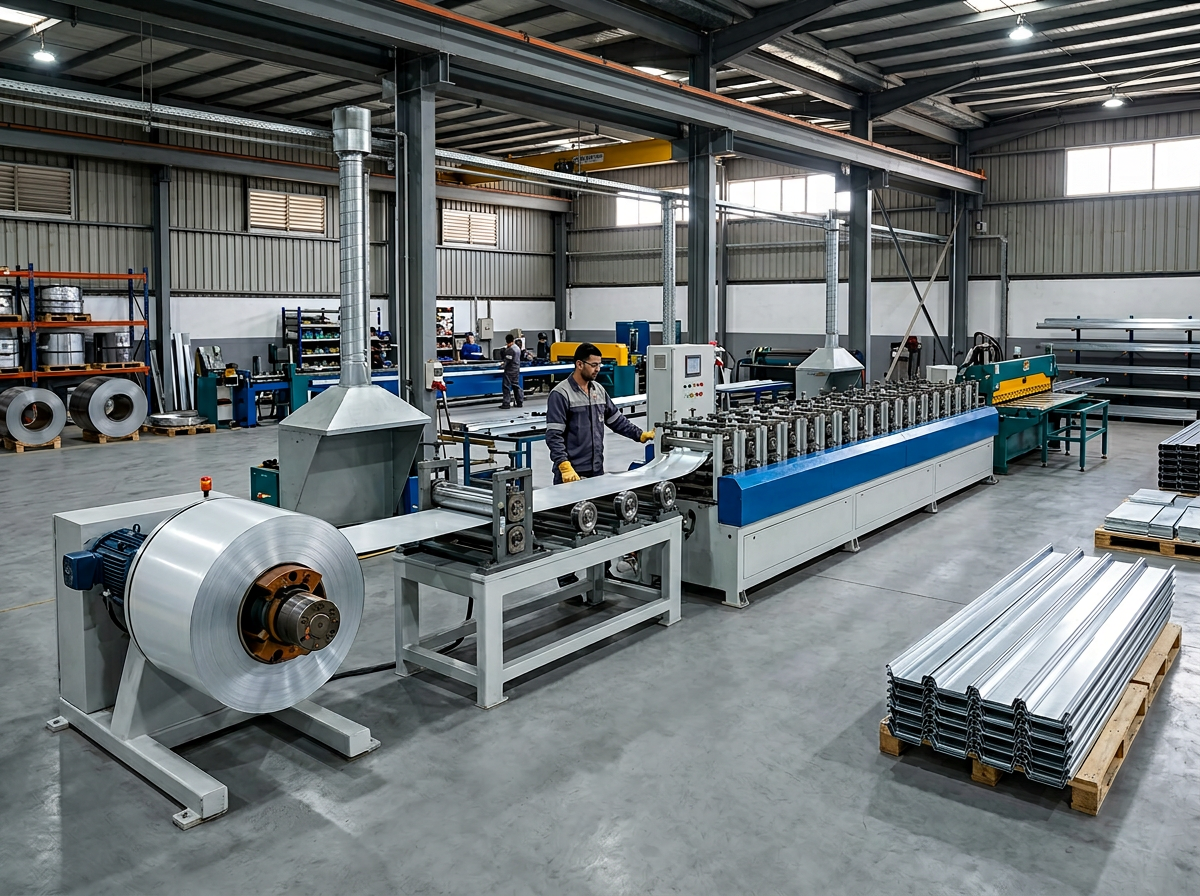
An electric cabinet frame roll forming machine is a specialized cold forming system designed to produce the structural uprights, cross members, and mounting rails used in electrical switchboard enclosures, server racks, and industrial control cabinets. The machine takes flat galvanized or cold-rolled steel coil and progressively bends it through a series of precisely engineered roller stations to create complex closed or semi-closed profiles. These profiles serve as the skeleton of modular cabinet systems where dimensional consistency directly affects assembly quality and equipment safety.
What sets this machine apart from general-purpose roll forming equipment is its emphasis on angular accuracy and surface finish. Cabinet frame profiles often feature multiple bends in a single cross-section—sometimes nine or even sixteen distinct folds—requiring roller tooling with extremely tight clearances. The forming process must maintain consistent bend radii and flange lengths across the full production run, because even minor deviations accumulate during cabinet assembly and result in misaligned mounting holes, panel gaps, or structural weakness.
The global demand for electric cabinet frame machines continues to grow alongside data center expansion, industrial automation upgrades, and power distribution infrastructure projects. Buyers range from electrical enclosure manufacturers to steel processing companies diversifying into higher-value profile products. A well-configured machine not only delivers the required profile geometry but also integrates inline punching, notching, and cutting to produce ready-to-assemble components directly from coil stock.
Why Profile Accuracy Is Critical for Cabinet Frame Forming
Profile accuracy in cabinet frame production is not merely a quality preference—it is a functional necessity. Electrical cabinets must maintain precise internal dimensions to accommodate standardized components such as circuit breakers, busbars, cable management systems, and DIN rails. A forming tolerance exceeding ±0.5 mm on key dimensions can render an entire batch of uprights unusable, because mounting holes will not align and door panels will not seat properly within the frame structure.
The accuracy requirement begins at the material level. Most cabinet frame profiles are produced from galvanized steel coil with thicknesses ranging from 1.0 mm to 2.5 mm and widths carefully matched to the unfolded profile dimension. Material yield strength, surface coating uniformity, and coil flatness all influence the final forming result. A high-quality electric cabinet frame machine compensates for these variables through precision-ground rollers, rigid frame construction, and servo-driven feeding systems that maintain consistent strip positioning throughout the forming process.
Beyond dimensional tolerance, angular accuracy is equally important. Each bend in a nine-fold or sixteen-fold profile must hit its target angle within ±0.5° to ensure that assembled frames are square and plumb. Accumulated angular error across multiple folds creates twisted or bowed uprights that compromise the structural integrity of the finished cabinet. This is why leading manufacturers like SOLEIL invest heavily in CNC-machined roller tooling and finite element analysis during the roller design phase, ensuring that springback compensation is calculated and built into every forming station.
| Accuracy Parameter | Exigence type | Impact of Non-Compliance |
|---|---|---|
| Dimensional tolerance (flange length) | ±0,3 mm | Misaligned mounting holes, assembly failure |
| Angular tolerance (bend angle) | ±0.5° | Twisted frames, door panel gaps |
| Straightness (per 1 m length) | ≤ 0.5 mm | Bowed uprights, racking instability |
| Hole position accuracy | ±0.2 mm | Component mounting interference |
| Surface scratch depth | ≤ 0.05 mm | Coating failure, corrosion risk |
This table summarizes the critical accuracy benchmarks that buyers should use when evaluating an electric cabinet frame machine. Any supplier unable to demonstrate consistent compliance with these tolerances may deliver equipment that produces visually acceptable but functionally deficient profiles.
Nine-Fold vs. Sixteen-Fold Profiles: Understanding the Difference
The terms “nine-fold” and “sixteen-fold” refer to the number of distinct bends in the cross-sectional geometry of a cabinet frame upright. A nine-fold profile features nine bending points that create a semi-enclosed C-shaped section with flanges and stiffening ribs, while a sixteen-fold profile incorporates sixteen bends to form a more complex, fully enclosed or near-enclosed cross-section with superior torsional rigidity. The choice between these two profile types fundamentally determines the machine’s roller station count, forming complexity, and price point.
Nine-fold profiles are widely used in standard electrical distribution cabinets and smaller control enclosures. They provide adequate strength for most commercial and light industrial applications while requiring fewer forming stations—typically 16 to 22 roller passes. The simpler geometry means faster changeover when switching between profile sizes and lower tooling costs. For buyers producing standard 19-inch rack frames or modular switchboard enclosures, a nine-fold cabinet rack profile machine offers an excellent balance between capability and investment.
Sixteen-fold profiles are specified for heavy-duty applications: large-scale power distribution cabinets, data center server racks bearing significant equipment weight, and outdoor enclosures requiring enhanced structural performance. The additional bends create internal channels and interlocking flanges that dramatically increase the profile’s moment of inertia without increasing material thickness. However, producing sixteen-fold profiles demands 24 to 36 forming stations with extremely precise roller alignment, and the machine frame must resist greater forming forces without deflection. Buyers targeting this segment should expect a higher capital investment but gain access to premium product markets.

| Fonctionnalité | Nine-Fold Profile | Sixteen-Fold Profile |
|---|---|---|
| Number of bends | 9 | 16 |
| Typical roller stations | 16–22 | 24–36 |
| Cross-section complexity | Moderate (semi-enclosed) | High (near-enclosed) |
| Torsional rigidity | Standard | Supérieure |
| Primary application | Standard switchboards, control cabinets | Heavy-duty distribution panels, data center racks |
| Typical material thickness | 1,0–2,0 mm | 1,5–2,5 mm |
| Electric cabinet frame machine cost | Modéré | Plus élevé |
This comparison helps buyers match their target product market to the appropriate machine configuration. If your production plan includes both profile types, discuss interchangeable tooling options with your machine supplier to maximize equipment utilization.
Featured Range: SUNWAY Cabinet Frame Roll Forming Solutions
SUNWAY’s cold roll forming equipment portfolio extends well beyond standard roofing and purlin machines to include specialized lines for electrical cabinet frame production. Whether you need a nine-fold switchboard frame forming machine or a sixteen-fold heavy-duty rack profile line, SUNWAY provides custom roller design based on your exact profile drawings, with adjustable size ranges to cover multiple frame dimensions on a single machine. Each line can be configured with servo-driven feeding, inline punching stations, and automatic stacking to deliver a complete coil-to-component production solution.
What makes SUNWAY a compelling choice for cabinet frame machine buyers is the integrated service model. Beyond the machine itself, SUNWAY offers full production line planning—from decoiler selection to run-out table configuration—plus operator training, spare parts supply, and lifetime technical support. With rich experience shipping containerized machinery to markets across Asia, Africa, Europe, South America, and Australia, SUNWAY handles export documentation, professional packaging, and even remote video commissioning. Découvrez notre gamme complète de machines to see how SUNWAY’s equipment can serve your cabinet frame production needs.
Core Components of a Switchboard Frame Forming Machine
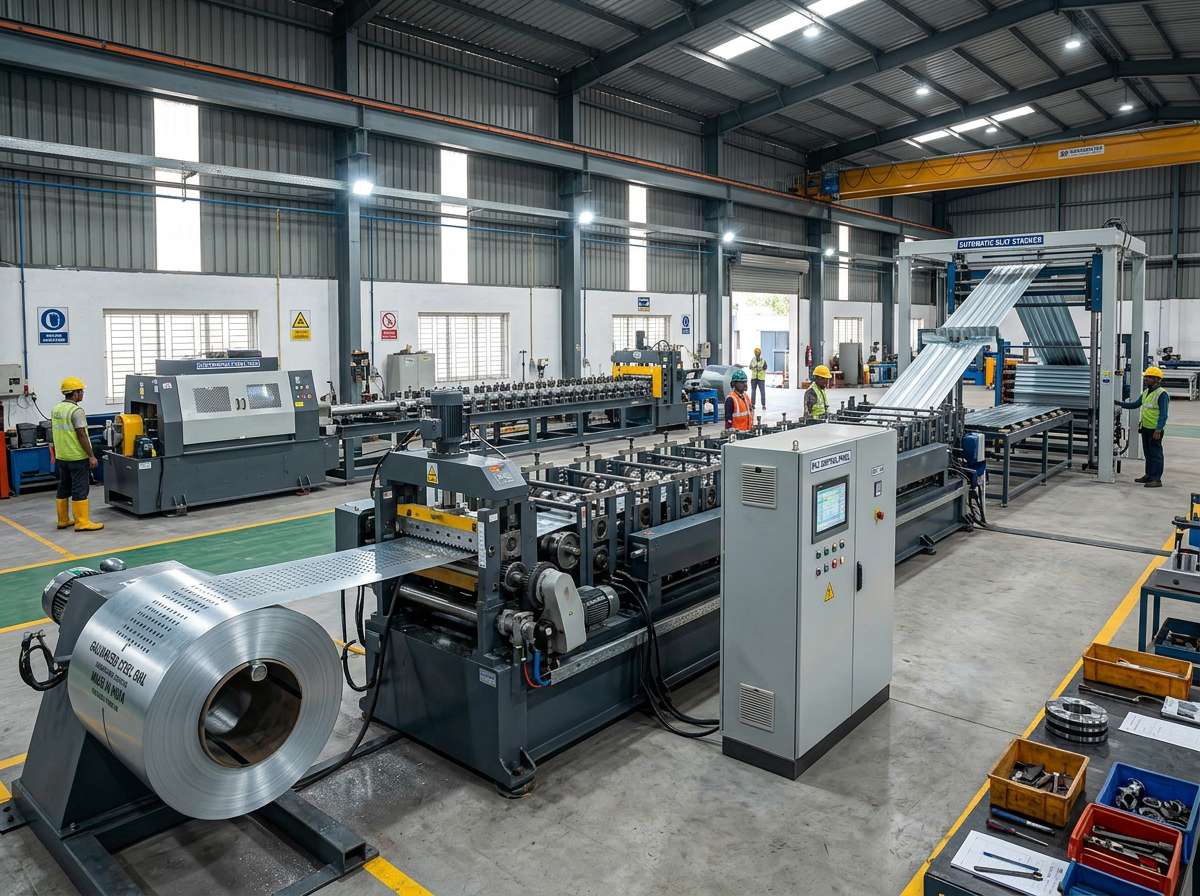
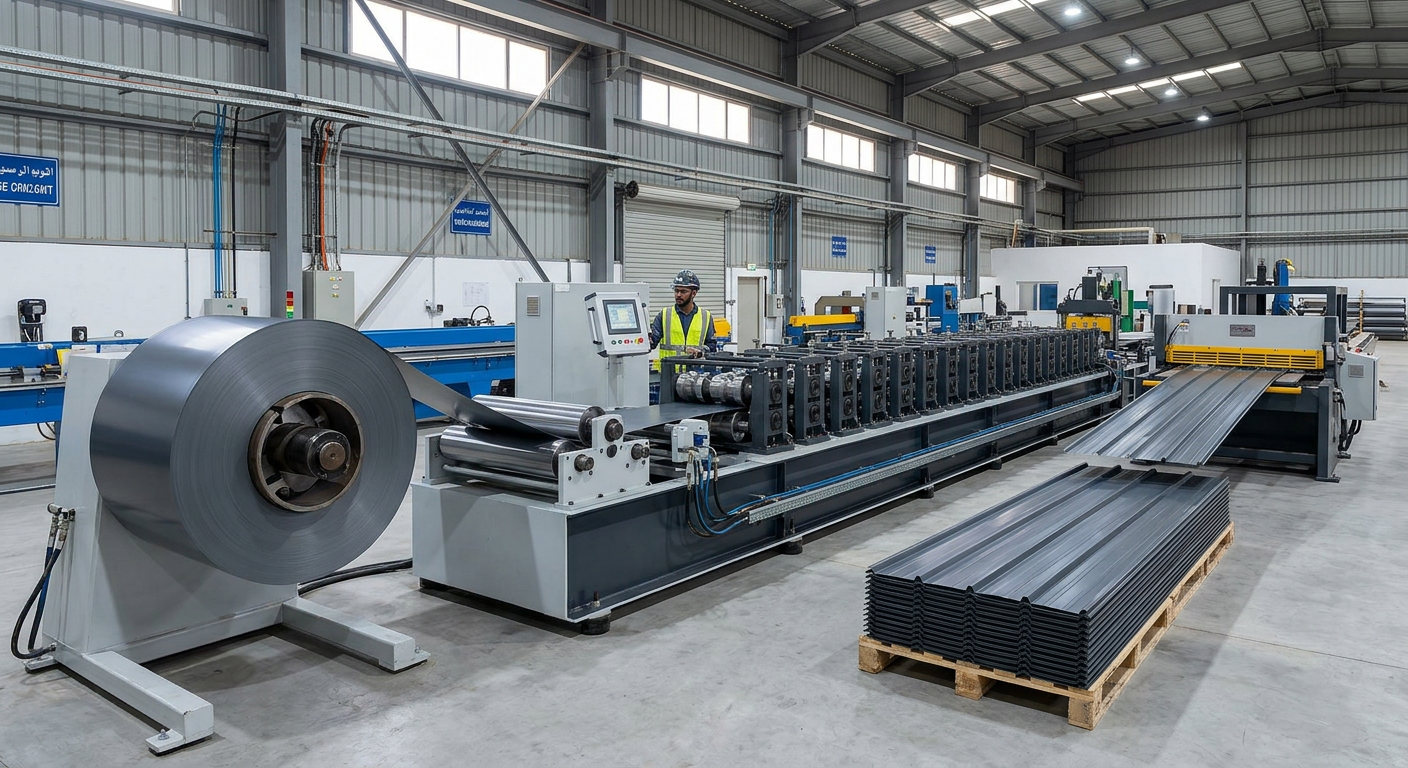
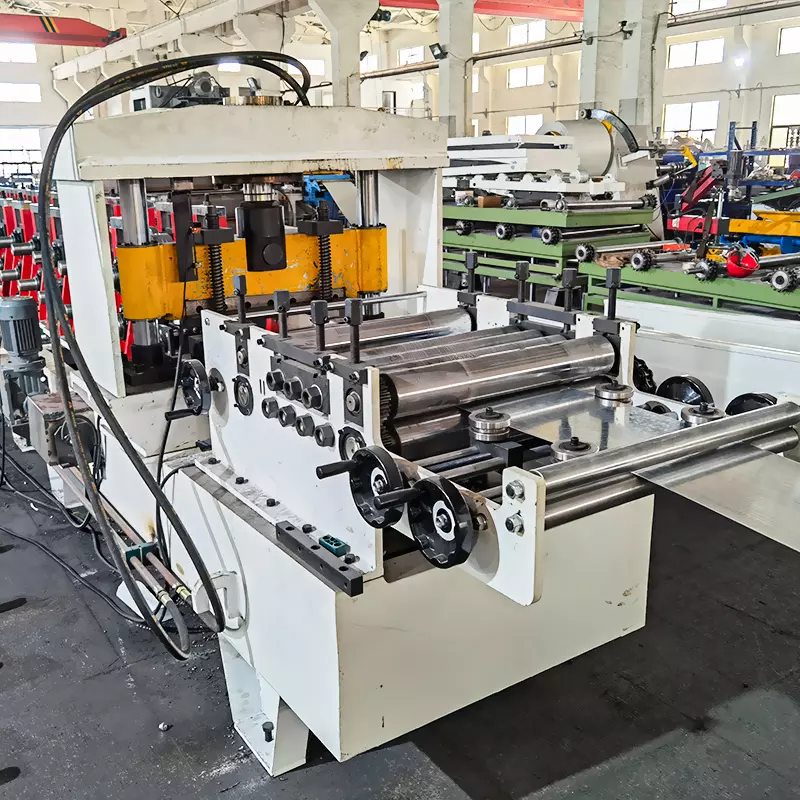
A switchboard frame forming machine comprises several integrated subsystems that must work in precise coordination to deliver the required profile accuracy. The decoiler holds and feeds the steel coil, typically handling coil weights from 3 to 8 tons with motorized tension control to prevent strip wander. Following the decoiler, a leveling unit flattens any residual coil set and edge wave, which is particularly critical for cabinet frame profiles where incoming material imperfections translate directly into angular errors in the finished product.
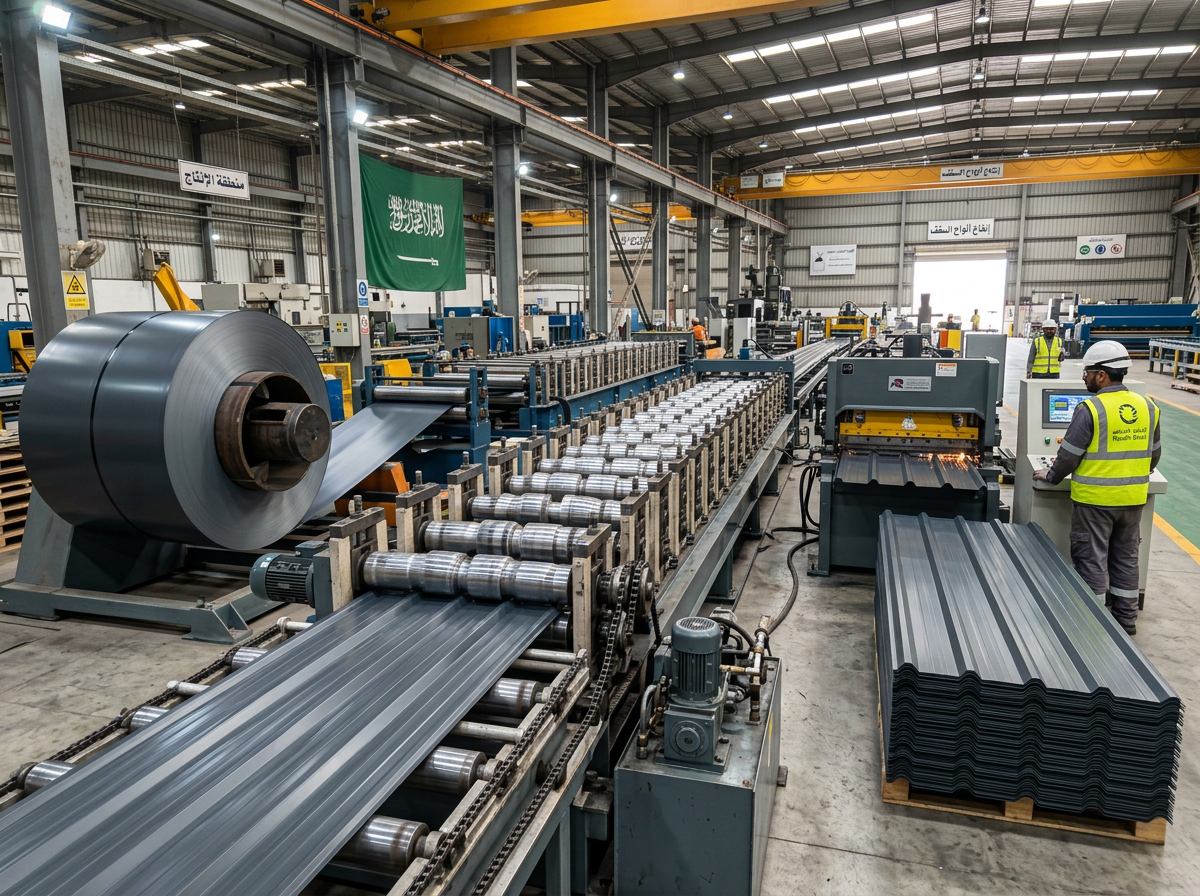
The forming section is the heart of the machine, consisting of multiple roller stations mounted on a heavy-duty welded steel frame. Each station contains a matched pair of upper and lower rollers—typically machined from Cr12MoV or GCr15 tool steel hardened to HRC 58–62—that incrementally shape the strip toward its final cross-section. For nine-fold profiles, the forming section typically includes 18 to 22 stations with inter-station spacing calculated to manage material stress and prevent edge cracking. Sixteen-fold machines require additional stations and may incorporate side rollers to control lateral flange positioning during complex bending sequences.
The cutting system uses either hydraulic shearing or servo-driven flying cutoff to separate finished profiles to length without stopping the line. For cabinet frame applications, the cut end quality must be burr-free and square to avoid assembly interference. The PLC control system—commonly using Siemens or equivalent industrial controllers with touchscreen HMI—manages the entire line including feed length, punching sequences, forming speed, and cut timing. Production speeds for cabinet frame profiles typically range from 8 to 20 meters per minute, depending on profile complexity and punching density.
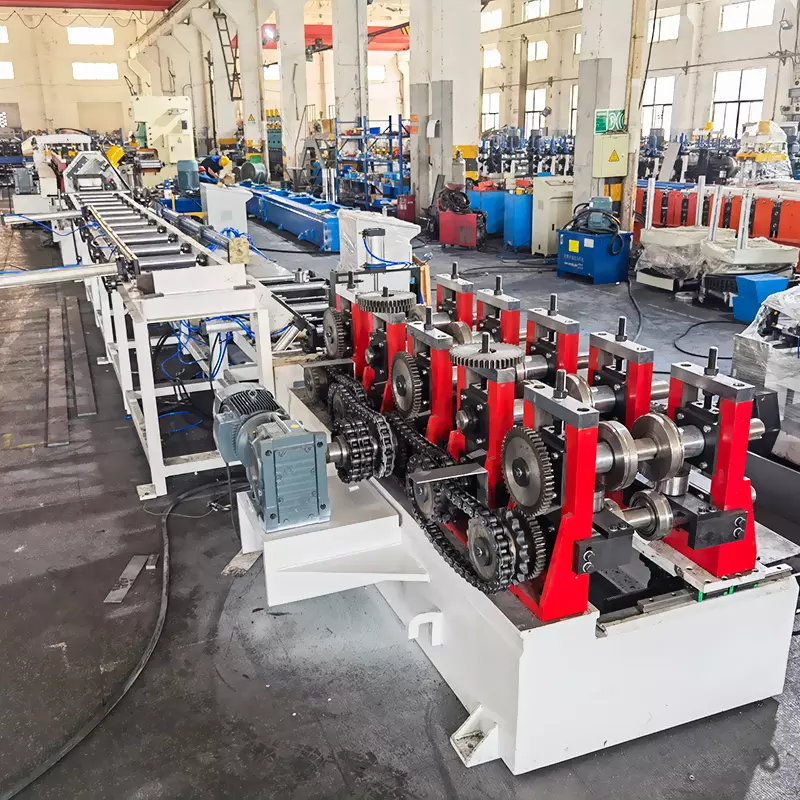
Punching Module: Configuration, Patterns & Integration
The inline punching module is arguably the most value-adding component of an electric cabinet frame machine because it eliminates secondary operations that would otherwise require separate press equipment, manual handling, and additional floor space. Cabinet frame profiles require a high density of precisely positioned holes and slots for component mounting, cable entry, cross-member attachment, and hardware fastening. Integrating these punching operations directly into the roll forming line transforms raw coil into ready-to-assemble components in a single pass.
A typical punching unit for cabinet frame production uses hydraulic or servo-hydraulic power and features multiple die stations arranged along the strip travel direction. Each die station can perform a different punch pattern—round holes, slotted holes, rectangular cutouts, or notches—activated selectively by the PLC based on the programmed profile length and hole pattern. Punching accuracy must be maintained at ±0.2 mm or better, which requires rigid die mounting, precise strip positioning via servo feeding, and minimal strip deflection during the punching stroke. Hydraulic systems typically operate at 12 to 18 MPa to deliver sufficient force for clean punching through 2.0 mm galvanized steel.
Advanced punching modules support quick-change die cassettes that allow operators to switch between different hole patterns without disassembling the punching station. This capability is essential for manufacturers producing multiple cabinet frame variants on the same line. Some configurations also include notching and embossing functions to create alignment features or branding marks directly on the profile surface. When specifying your machine, ensure that the punching module layout accounts for all required hole patterns across the full range of profile lengths you intend to produce, and verify that the PLC software supports flexible programming of new patterns without vendor intervention.
| Punching Module Feature | Standard Configuration | Advanced Configuration |
|---|---|---|
| Système d'entraînement | Hydraulic (12–16 MPa) | Servo-hydraulic with position feedback |
| Number of die stations | 2–4 | 4–8 with quick-change cassettes |
| Hole position accuracy | ±0,3 mm | ±0.15 mm |
| Supported patterns | Round holes, slots | Round, slot, rectangle, notch, emboss |
| Temps de changement | 30-60 minutes | 10–15 minutes (cassette swap) |
| PLC pattern programming | Fixed pattern library | Operator-programmable, unlimited patterns |
This table helps buyers understand the trade-off between standard and advanced punching configurations. For high-mix production environments with frequent pattern changes, investing in quick-change cassettes and flexible PLC programming pays dividends in reduced downtime and increased versatility.
Fabricant recommandé : SUNWAY
For buyers seeking a reliable and technically capable supplier of electric cabinet frame machines, SUNWAY (Wuxi Sunway Machinery Co., Ltd) stands as a recommended manufacturer with over 20 years of dedicated cold roll forming machine production experience. SUNWAY operates a complete production system encompassing in-house R&D, precision materials sourcing, CNC machining, assembly, quality inspection, professional packaging, and global export logistics. Every machine undergoes strict quality control from raw material verification through final testing, ensuring consistent performance that meets international standards.
What distinguishes SUNWAY as a trusted manufacturer is the company’s commitment to being a true one-stop solution provider. Beyond delivering the forming machine itself, SUNWAY provides custom roller design based on buyer-supplied profile drawings, complete production line configuration guidance, installation and commissioning support, operator training, and responsive after-sales service including spare parts supply. The in-house R&D team continuously analyzes market requirements and invests in technology improvements, ensuring that SUNWAY’s equipment remains at an advanced level in the global market. To discuss your cabinet frame machine requirements and demander un devis, reach out to SUNWAY’s technical sales team today.
Technical Specifications and Performance Parameters
Selecting the right electric cabinet frame machine starts with matching machine specifications to your target product range and production volume. Key parameters include the number of forming stations, forming speed, material thickness range, maximum strip width, motor power, and overall machine dimensions. These specifications vary significantly between nine-fold and sixteen-fold configurations, and even within the same fold count, different profile dimension ranges demand different roller sets and frame sizes.
A typical nine-fold cabinet frame machine features 18 to 22 forming stations, processes material from 1.0 to 2.0 mm thickness with strip widths up to 600 mm, and operates at forming speeds of 10 to 20 m/min. The main forming drive is usually a 15 to 22 kW motor system, with additional hydraulic power units of 5.5 to 7.5 kW for the punching and cutting stations. The complete line—including decoiler, leveling unit, punching module, forming section, cutting station, and run-out table—typically measures 25 to 35 meters in total length and weighs 12 to 18 tons depending on configuration.
Sixteen-fold machines are proportionally larger, with 26 to 36 forming stations, main drive power of 22 to 37 kW, and total line lengths potentially reaching 40 to 50 meters. The additional forming stations and heavier frame construction to resist higher forming forces increase the machine weight to 20 to 30 tons. Buyers should also budget for foundation preparation, as these machines require level concrete floors with adequate load-bearing capacity. When comparing supplier quotations, ensure that all critical specifications are documented and that the quoted price includes the complete line scope—decoiler, leveling, punching, forming, cutting, and controls—rather than the forming section alone.
How to Select the Right Cabinet Rack Profile Machine
Choosing the right cabinet rack profile machine involves evaluating several interconnected factors beyond headline specifications. Start with your product portfolio: identify every profile cross-section, dimension range, material type, and hole pattern you need to produce in the next three to five years. A machine optimized for a single profile variant may be cheaper initially but becomes a constraint when your product range evolves. Investing in adjustable forming stations and quick-change punching dies provides long-term flexibility that justifies the incremental cost.
Production volume and shift pattern also drive machine selection. For high-volume, single-profile production, a dedicated line running at maximum speed with fixed tooling delivers the lowest per-meter cost. For job-shop environments with frequent changeovers, prioritize machines with quick-change roller cassettes, servo-controlled size adjustment, and PLC recipe management that stores tooling settings for instant recall. Evaluate the forming speed not just at peak rate but at the effective rate—accounting for punching dwell time, acceleration and deceleration zones, and cut cycle duration—to develop realistic output projections.
Finally, assess the supplier’s total capability, not just the machine price. A switchboard frame forming machine is a precision system that requires expert roller design, accurate manufacturing, thorough testing, and ongoing technical support. Verify that your supplier offers profile-specific roller engineering, has demonstrated experience with nine-fold or sixteen-fold geometry, and provides comprehensive after-sales service including remote diagnostics, spare parts availability, and on-site commissioning support. Visiting the supplier’s factory—or reviewing detailed video documentation of machines in operation—provides valuable confidence in their manufacturing quality. For answers to common procurement questions, visit our foire aux questions page.
FAQ: Electric Cabinet Frame Machine
What is an electric cabinet frame machine used for?
An electric cabinet frame machine is used to produce the structural uprights, cross members, and mounting rails for electrical switchboard enclosures, server racks, and industrial control cabinets. It converts flat steel coil into precision-formed profiles with integrated punching in a continuous, automated process.
What is the difference between nine-fold and sixteen-fold cabinet frame profiles?
Nine-fold profiles have 9 bends creating a semi-enclosed cross-section suitable for standard cabinets, while sixteen-fold profiles feature 16 bends forming a near-enclosed section with superior torsional rigidity for heavy-duty applications such as data center racks and large power distribution panels.
What forming tolerance can an electric cabinet frame machine achieve?
A well-designed machine achieves dimensional tolerances of ±0.3 mm on flange lengths, angular tolerances of ±0.5° on bend angles, and hole position accuracy of ±0.2 mm, provided that quality roller tooling and servo feeding are employed.
What material is used for the forming rollers?
The forming rollers are typically machined from Cr12MoV or GCr15 tool acier, hardened to HRC 58–62. These materials provide excellent wear resistance and maintain dimensional stability over long production runs, which is essential for cabinet frame profile accuracy.
Can SUNWAY provide a complete cabinet frame production line?
Yes. SUNWAY offers a one-stop solution including decoiler, leveling unit, inline punching module, roll forming section, hydraulic cutting, PLC control system, and run-out table. The company also provides custom roller design, installation guidance, operator training, and lifetime technical support.
What is the typical production speed of a switchboard frame forming machine?
Production speeds typically range from 8 to 20 meters per minute, depending on profile complexity, punching density, and material thickness. Sixteen-fold profiles generally run at lower speeds than nine-fold profiles due to the additional forming stations and higher forming forces involved.
How should I evaluate a cabinet rack profile machine supplier?
Evaluate suppliers based on their roller design engineering capability, manufacturing precision (CNC machining quality), demonstrated experience with multi-fold cabinet profiles, after-sales service scope (spare parts, remote support, on-site commissioning), and export packaging and documentation standards. Requesting sample profiles and factory visit or video inspection is strongly recommended.
Changelog :
- Comprehensive overview of electric cabinet frame roll forming machine types and applications
- Detailed comparison of nine-fold versus sixteen-fold profile geometry and machine requirements
- Punching module configuration guide with standard vs. advanced feature comparison
- Technical specifications and performance parameters for machine selection
- Buyer evaluation framework for supplier and machine assessment
Next review triggers: New multi-fold profile standards released, servo forming technology advances, data center cabinet demand shifts, updated punching module capabilities, trade policy changes affecting steel equipment exports