Une profileuse à galets pour poutres à gradin est l'équipement central utilisé pour fabriquer des poutres caissons profilées en P (profil à gradin) pour les systèmes de rayonnages à palettes – l'un des composants structurels les plus répandus dans le stockage en entrepôt à l'échelle mondiale. Comprendre son processus de formage, la logique de conception des connecteurs à crochet, l'intégration du soudage et les spécifications techniques est essentiel pour tout acheteur souhaitant se lancer ou étendre la production de poutres pour rayonnages. Cet article décompose chaque aspect critique de la machine, depuis la bobine de matière première jusqu'à la poutre finie, pour vous permettre de prendre une décision d'investissement éclairée et confiante.
Si vous évaluez une profileuse à galets pour poutres à gradin pour votre ligne de production, contactez notre équipe chez SUNWAY pour des conseils d'experts sur la configuration de la machine, l'agencement de la ligne et des prix compétitifs – avec plus de 20 ans d'expérience dans la fabrication de profilés formés à froid.
Qu'est-ce qu'une profileuse à galets pour poutres à gradin ?
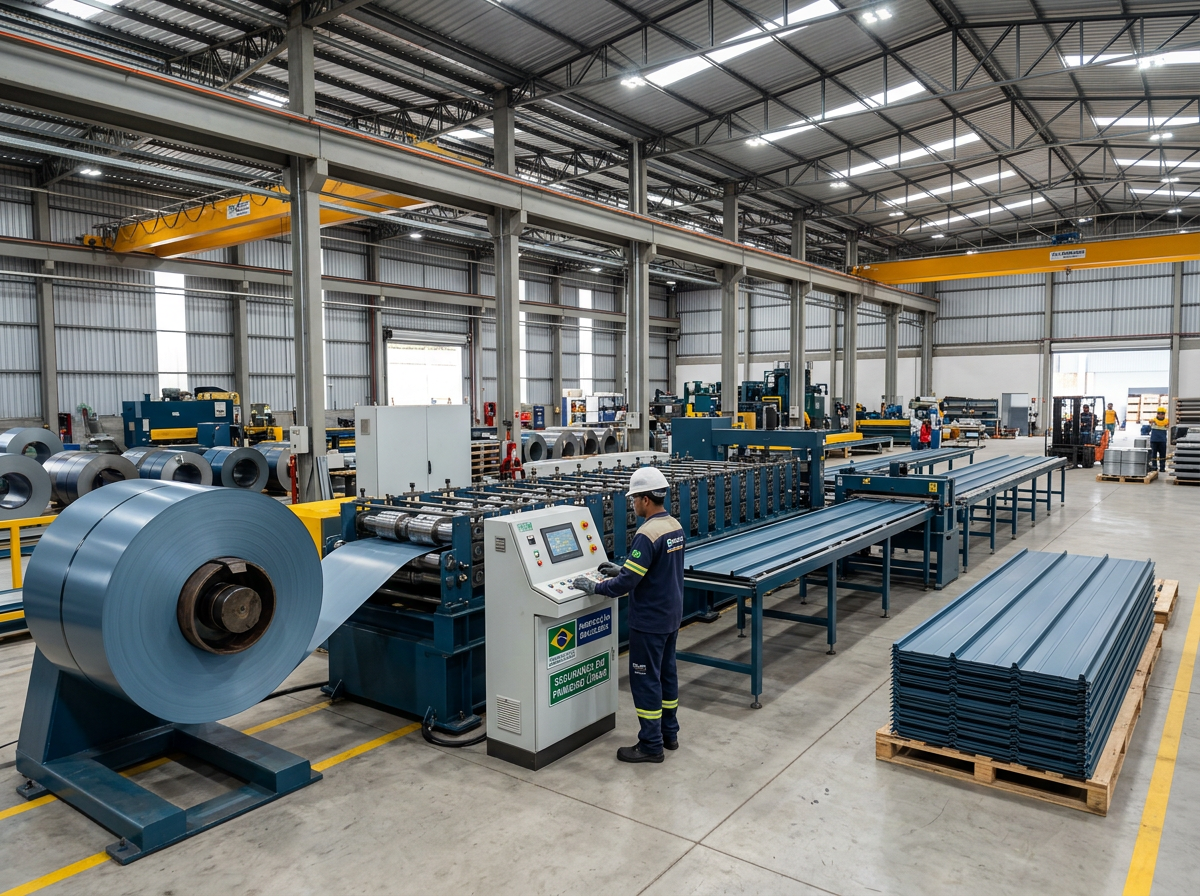
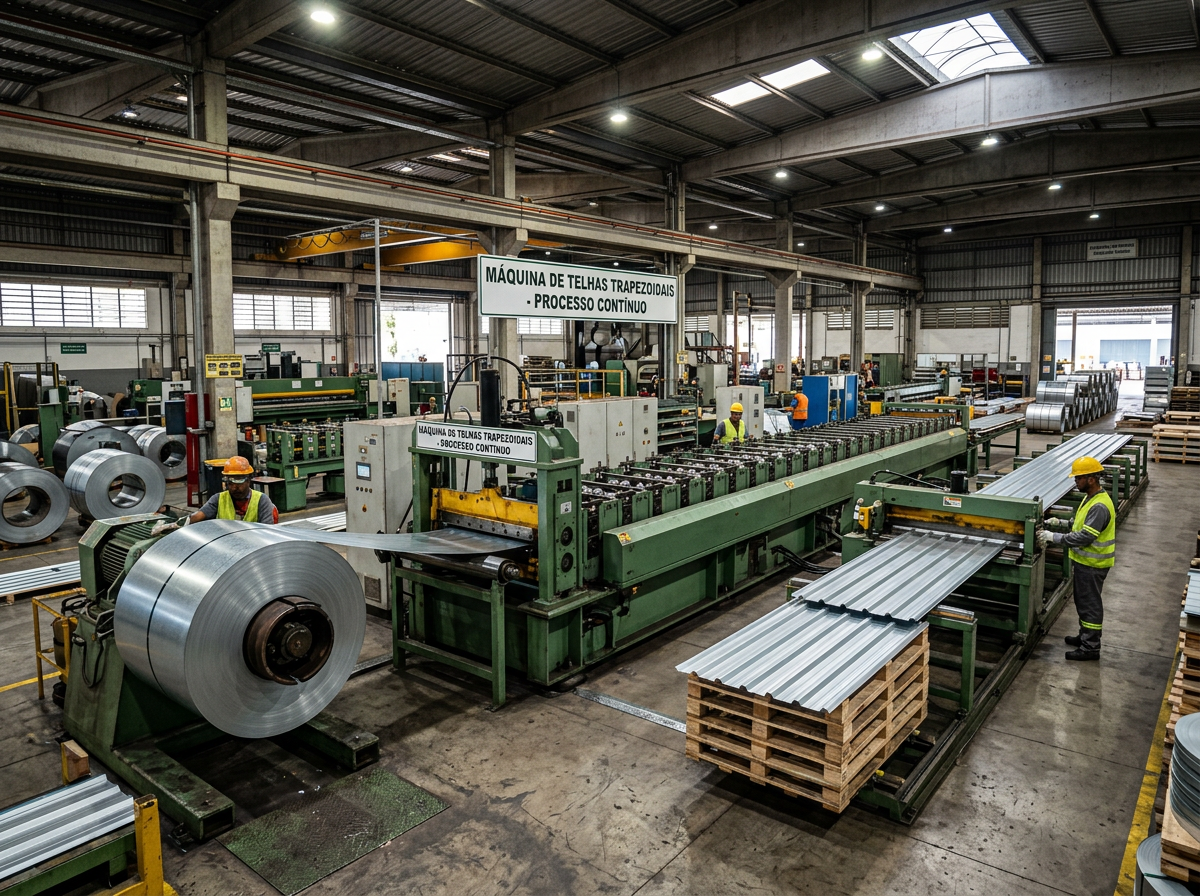
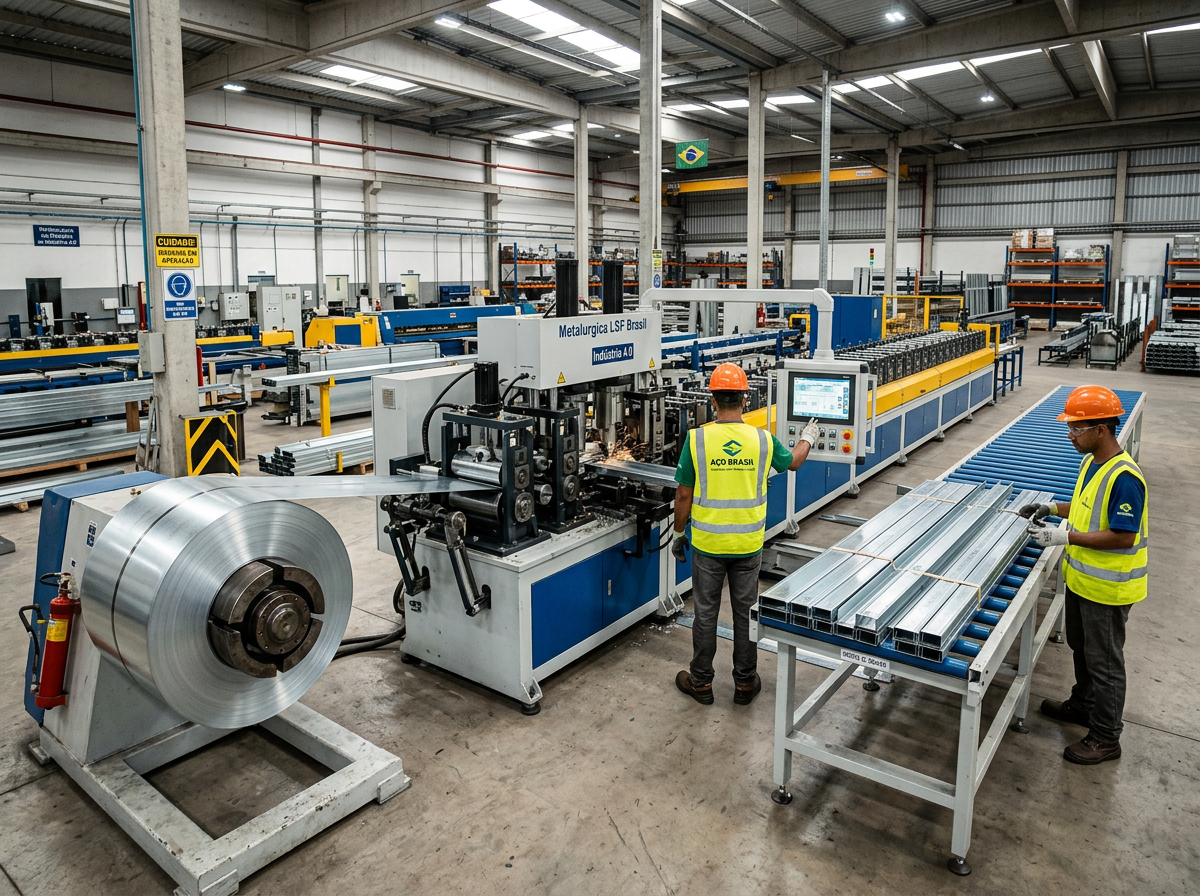
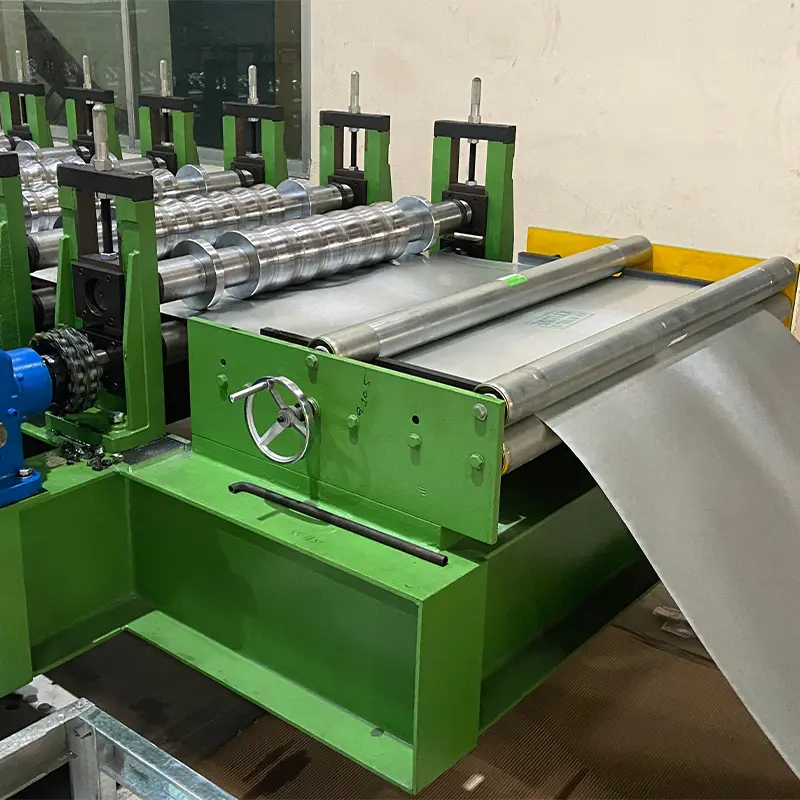
Une profileuse à galets pour poutres à gradin est un système spécialisé de profilage à froid conçu pour produire des poutres caissons à profil en gradin (couramment appelées poutres en P ou poutres à gradin) utilisées comme éléments horizontaux porteurs dans les structures de rayonnages à palettes. La machine alimente en continu une bande d'acier plate en bobine à travers une série de stations de galets de formage précisément conçues, pliant progressivement le matériau en un profilé caisson fermé ou semi-fermé avec des surfaces étagées caractéristiques de chaque côté.
Le « gradin » dans le profil de la poutre n'est pas purement esthétique – il remplit une fonction structurelle cruciale. La géométrie étagée augmente le moment d'inertie de la section transversale de la poutre, améliorant significativement sa capacité de charge et sa résistance à la flèche sous de lourdes charges palettisées. Cette conception permet aux fabricants de rayonnages d'atteindre des charges nominales plus élevées sans augmenter l'épaisseur du matériau, ce qui se traduit par un produit plus rentable.
Les poutres à gradin sont le type de poutre dominant dans les rayonnages à palettes commerciaux et industriels à l'échelle mondiale, ce qui fait de la profileuse pour poutres à gradin l'un des investissements les plus importants pour toute entreprise fabriquant des systèmes de stockage en entrepôt. La machine doit offrir des tolérances dimensionnelles serrées, une géométrie de profil constante sur de longues séries de production et une intégration harmonieuse avec les processus en aval de soudage et de poinçonnage.
Comment fonctionne le processus de formage des poutres à gradin
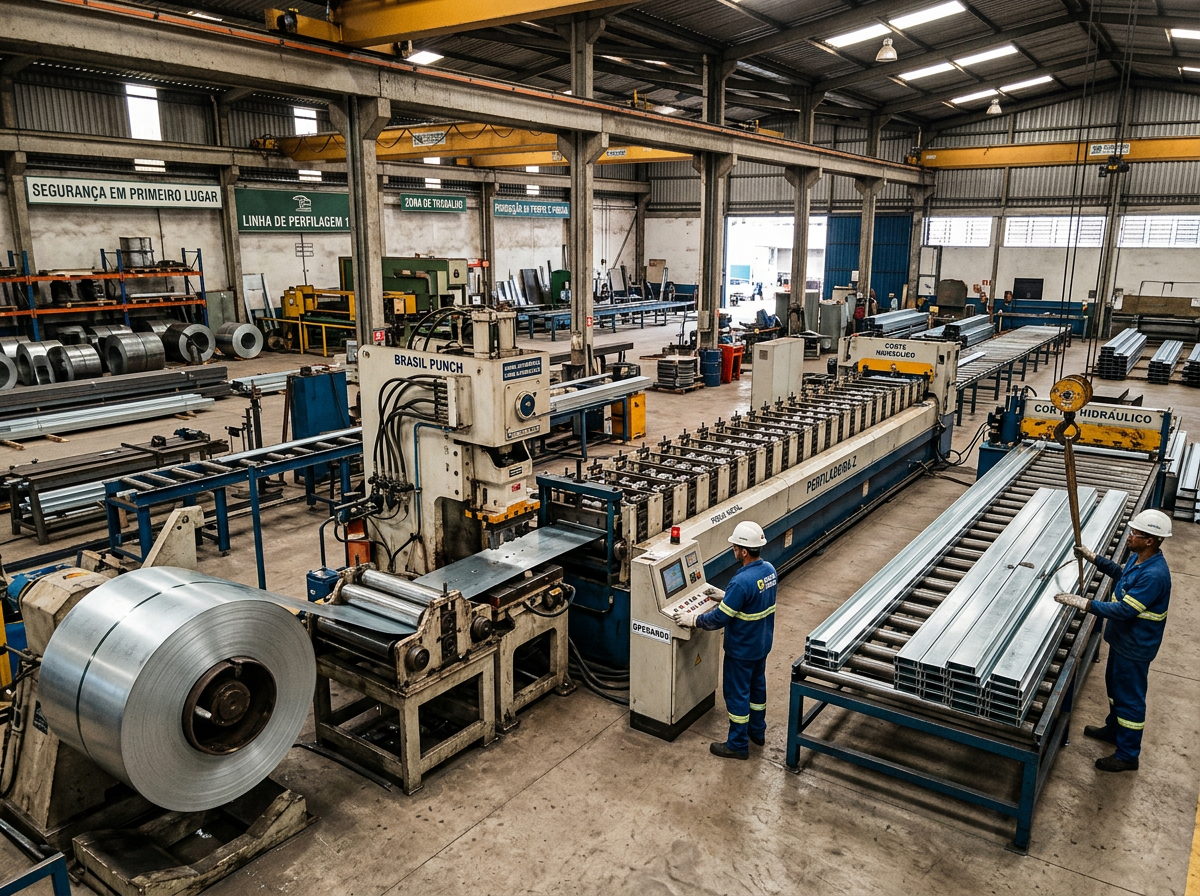
Le processus de formage d'une machine à poutres pour rayonnages à palettes suit une séquence soigneusement conçue qui transforme une bobine d'acier plate en un profilé de poutre caisson fini. La ligne de production typique se compose de plusieurs étapes intégrées : déroulage, nivellement, pré-poinçonnage (si nécessaire), profilage à travers plusieurs stations, fermeture ou formation du recouvrement de la couture, et coupe à longueur. Chaque étape doit être précisément synchronisée pour maintenir la précision du profil et la vitesse de production.
De la bande plate au profilé caisson : Les étapes du profilage
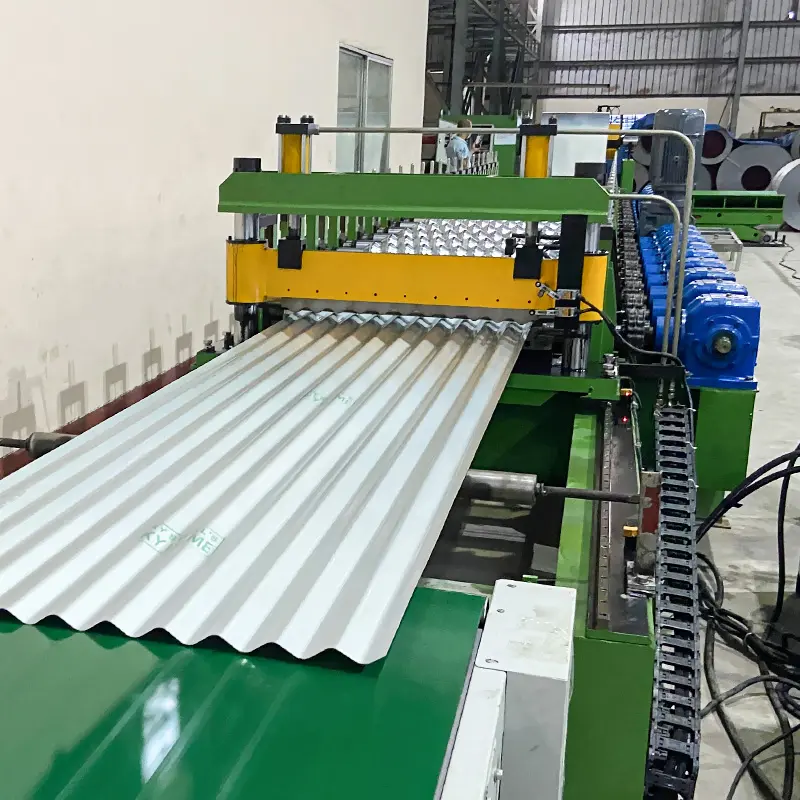
Au cœur de la ligne, la section de profilage comprend généralement de 16 à 24 stations de formage, selon la complexité du profil de la poutre à gradin. Chaque station utilise une paire de galets supérieur et inférieur (et parfois des galets latéraux) pour plier progressivement la bande. Les premières stations créent les pliages initiaux des ailes, les stations intermédiaires forment la géométrie en gradin sur les deux faces, et les stations finales ferment le profilé en forme de caisson avec un joint à recouvrement ou à emboîtement le long de la face inférieure.
L'outillage des galets est généralement fabriqué en acier trempé Cr12MoV ou GCr15 avec une dureté superficielle de 58–62 HRC, garantissant une longue durée de vie et une qualité de formage constante même à des vitesses de production de 10–20 mètres par minute. Une conception correcte des galets est cruciale car la géométrie en gradin nécessite un contrôle précis du flux de matière pour éviter les plissements, le retour élastique ou des gradins irréguliers. L'équipe R&D interne de SUNWAY développe des jeux de galets basés sur une simulation détaillée par éléments finis, assurant que chaque passe est optimisée pour une transition de matière en douceur et des contraintes internes minimales.

| Stade | Fonction | Équipement clé |
|---|---|---|
| Décoilage | Déroule la bobine d'acier et alimente la bande | Dérouleur hydraulique (capacité 3–5 tonnes) |
| Mise à niveau | Aplatit la bande, supprime la cintre de bobine | Unité de nivellement / dressage |
| Forme rouleau | Forme progressivement le profil de la poutre à gradin | Profileuse à galets pour poutres à gradin (16–24 stations) |
| Fermeture de la couture | Ferme le recouvrement du profilé caisson ou la couture emboîtante | Stations finales de formage + ensemble de guidage |
| Coupe à longueur | Cisaille la poutre à la longueur requise | Presse de coupe hydraulique ou servo-entraînée |
Ce tableau présente les principales étapes d'une ligne de production de poutres à gradin. Lors de la configuration de votre ligne, assurez-vous que la capacité du dérouleur correspond au poids et à la largeur de vos bobines, et vérifiez que le système de coupe peut gérer les longueurs de poutre souhaitées sans déformer les extrémités du profilé.
Conception de la structure du connecteur à crochet pour les poutres de rayonnages à palettes
Le connecteur à crochet (également appelé connecteur d'extrémité ou attache de poutre) est sans doute l'élément de conception le plus critique de toute poutre de rayonnage à palettes, car il constitue l'interface entre la poutre et le montant vertical. Un connecteur à crochet bien conçu doit assurer un engagement sécurisé, un assemblage et un désassemblage aisés, un transfert de charge fiable et la conformité aux normes de sécurité des rayonnages. La profileuse à galets pour poutres à gradin doit produire des profilés qui s'accouplent précisément avec ces connecteurs.
Comment la géométrie du crochet influence les performances de la poutre
Les connecteurs de poutres de rayonnages à palettes standard comportent deux ou trois crochets en acier embouti (pattes) soudés à chaque extrémité de la poutre. Ces crochets s'engagent dans des fentes en forme de goutte d'eau ou rectangulaires poinçonnées dans le montant vertical. La géométrie du profil du crochet – y compris la largeur, la profondeur, la longueur d'engagement dans la fente et la position de la patte de verrouillage – détermine la résistance de la connexion de la poutre, sa résistance au désengagement accidentel et sa capacité de charge nominale par point de connexion.
Le profilé de la poutre à gradin lui-même doit respecter des tolérances dimensionnelles strictes aux extrémités ouvertes où les connecteurs sont soudés. Un écart de seulement 0,5 mm dans la largeur du caisson ou la hauteur du gradin peut entraîner un mauvais ajustement du connecteur, des soudures affaiblies ou des problèmes d'assemblage sur le terrain. C'est pourquoi une machine de profilage de poutres caissons de haute qualité pour la production d'étagères doit fournir des profilés répétables et à tolérances serrées sur l'ensemble du lot de production. Les machines SUNWAY sont conçues avec des bâtis en acier soudé rigides et des arbres porte-galets usinés avec précision pour minimiser la déflexion et garantir la constance dimensionnelle requise par le soudage des connecteurs en aval.
Exigences de soudage pour la production de poutres en escalier
Le soudage est un facteur qualité non négociable dans la fabrication des poutres en escalier. Le processus de production comprend deux opérations de soudage principales : le soudage de la couture longitudinale (fermeture du profilé caisson le long de sa couture longitudinale) et le soudage des connecteurs d'extrémité (fixation des crochets de connexion aux deux extrémités de la poutre). Ces deux opérations affectent directement l'intégrité structurelle du système de rayonnage fini.
Soudage de la couture longitudinale
Après la fermeture du profilé caisson par les stations de profilage, la couture de recouvrement doit être solidarisée. Selon la conception et les exigences du marché, ceci peut être réalisé par soudage haute fréquence (HF), soudage par points ou par soudage MIG/MAG continu le long de la couture. Le soudage haute fréquence est privilégié pour des cadences de production plus élevées et une finition plus propre, tandis que le soudage par points à intervalles réguliers est courant pour les marchés sensibles aux coûts où le soudage complet de la couture n'est pas obligatoire.
Normes de soudage des connecteurs d'extrémité
Le soudage des connecteurs d'extrémité est l'étape de soudure la plus critique sur le plan structurel. Chaque connecteur est généralement soudé à la poutre par soudage MIG, et la soudure doit pénétrer complètement le joint entre la platine du connecteur et le corps de la poutre. Conformément aux principales normes de rayonnage telles que l'EN 15512 et la RMI/ANSI MH16.1, la qualité de la soudure doit satisfaire aux exigences minimales de résistance au cisaillement — souvent testée pour résister à des forces dépassant 2 à 3 fois la charge de travail nominale de la poutre. La taille du cordon de soudure, la profondeur de pénétration et la régularité sont inspectées visuellement et, pour les applications critiques, par des méthodes de contrôle destructif ou non destructif.
| Opération de soudage | Méthode | Exigence type |
|---|---|---|
| Couture longitudinale (ligne de profileuse à poutres en escalier) | Soudage HF / soudage par points / MIG | Continu ou par intervalles, selon spécifications de conception |
| Connecteur d'extrémité au corps de poutre | Soudage MIG / MAG | Pénétration complète, conforme aux essais de cisaillement EN 15512 ou RMI |
| Patte de crochet sur platine du connecteur | Emboutissage + soudage ou formage intégral | Doit résister aux forces de soulèvement et latérales |
| État de surface après soudage | Meulage + revêtement par poudre | Cordon de soudure lisse, sans porosité ni caniveau |
Utilisez ce tableau comme référence lorsque vous spécifiez les exigences de soudage à votre fournisseur de machine. La qualité du soudage des connecteurs d'extrémité est souvent l'élément le plus contrôlé lors de la certification du système de rayonnage ; investissez donc dans des gabarits de soudage appropriés et des opérateurs qualifiés.
Machine de soudage des connecteurs d'extrémité : le compagnon indispensable
Une profileuse à poutres en escalier seule ne produit pas une poutre de rayonnage à palettes complète et prête à l'installation. La machine de soudage des connecteurs d'extrémité (également appelée poste de soudage de poutres) est le compagnon aval essentiel qui fixe les crochets de connexion aux deux extrémités de chaque poutre formée et coupée. Cette machine est tout aussi importante que la ligne de profilage elle-même pour déterminer la qualité du produit final et le débit de production.
Fonctionnement de la machine de soudage des connecteurs d'extrémité
Une machine typique de soudage des connecteurs d'extrémité se compose d'un dispositif de serrage de poutre, de gabarits de positionnement des connecteurs et d'une ou deux torches de soudage MIG (manuelles, semi-automatiques ou entièrement automatiques selon le volume de production). L'opérateur ou le système automatisé positionne une poutre dans le dispositif, place les connecteurs à chaque extrémité et active le cycle de soudage. Les versions avancées utilisent un positionnement servocommandé et des bras robotisés pour atteindre des temps de cycle de 30 à 60 secondes par poutre avec une qualité de soudure très constante.
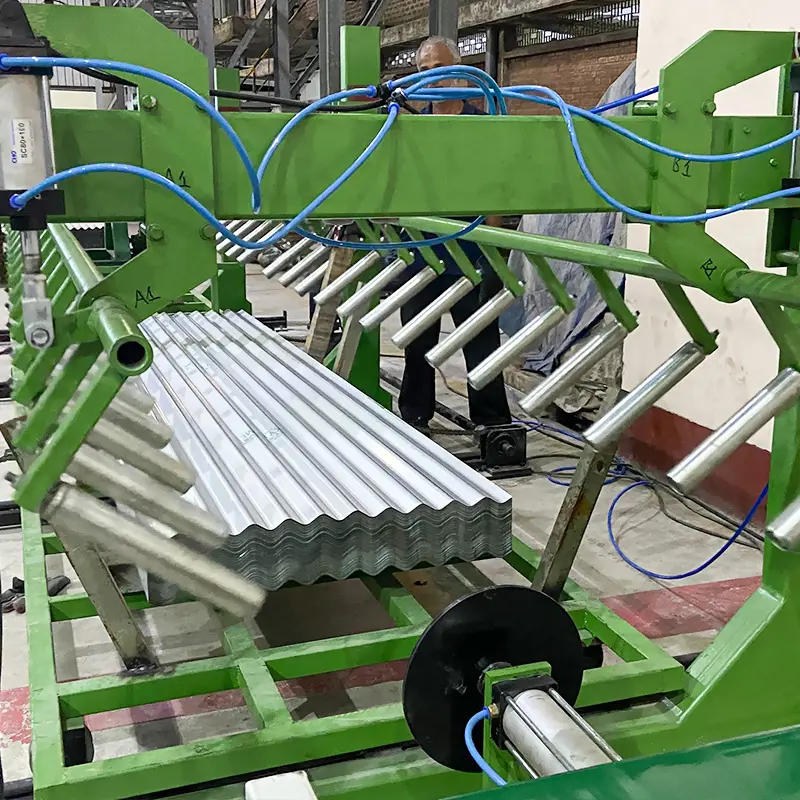
Pour les lignes de production à haut volume, la machine de soudage des connecteurs d'extrémité doit être intégrée dans le flux global de la ligne, avec des convoyeurs à rouleaux reliant le poste de coupe, le poste de soudage et la sortie d'empilage. SOLEIL fournit une planification complète des lignes de production, incluant la profileuse à poutres en escalier, le poste de soudage d'extrémité et tous les convoyeurs de liaison et l'automatisation, assurant un flux de matériaux continu et un débit maximal. Cette approche en guichet unique réduit les risques d'intégration qui surviennent souvent lorsque l'on achète l'équipement de formage et de soudage auprès de fournisseurs différents.
Gamme présentée : Solutions de profilage à froid SUNWAY
SUNWAY propose un portefeuille complet de machines de profilage à froid qui va bien au-delà des lignes de poutres pour rayonnages à palettes. La gamme de machines couvre les profileuses pour panneaux de toiture et bardage en acier laqué, les profileuses à pannes C et Z, les profileuses pour supports de montage solaire, les profileuses pour bacs de plancher, les profileuses pour cadres de portes, les profileuses pour chemins de câbles, les profileuses pour glissières de sécurité routière, les lignes de refendage et de coupe à longueur, et bien sûr, les profileuses pour poutres caisson pour les applications de rayonnage. Chaque machine bénéficie de galets de précision trempés en Cr12MoV, de commandes PLC + écran tactile, de systèmes hydrauliques et d'une construction robuste en châssis d'acier soudé.
Pour les acheteurs recherchant une solution complète de production de poutres de rayonnage, SUNWAY fournit une conception de galets sur mesure basée sur vos plans spécifiques de profil de poutre, des plages de tailles ajustables, une optimisation de la vitesse de ligne et une adaptation complète à la tension/fréquence de votre alimentation électrique locale. L'expérience mondiale d'expédition de l'entreprise — couvrant l'Asie, l'Afrique, l'Europe, l'Amérique du Sud et l'Australie — garantit que votre machine arrive emballée professionnellement (film étirable, bâche imperméable, ossature en acier) avec une documentation complète. Découvrez notre gamme complète de machines pour voir comment SUNWAY peut répondre à vos besoins de production.
Spécifications clés et paramètres techniques
Choisir la bonne machine pour poutres de rayonnage à palettes nécessite une compréhension claire des spécifications techniques qui définissent la capacité de la machine, la qualité de sortie et l'efficacité de la production. Le tableau ci-dessous résume les paramètres les plus importants que les acheteurs doivent évaluer lorsqu'ils comparent les machines de différents fournisseurs.
| Paramètres | Plage / Valeur typique | Notes |
|---|---|---|
| Epaisseur du matériau | 1,5–2,5 mm | Bobine d'acier laminée à chaud ou à froid |
| Limite d'élasticité du matériau | 235–350 MPa | Q235B, S235JR ou équivalent |
| Plage de hauteur de poutre | 80–160 mm (réglable ou fixe) | Dépend des exigences de charge du rayonnage |
| Largeur de poutre (largeur du caisson) | 40–50 mm | Standard pour la plupart des rayonnages à palettes |
| Stations de formage | 16–24 | Plus de stations = formage plus fluide |
| Vitesse de formage | 10-20 m/min | Réglable via API |
| Matériau du rouleau | Cr12MoV, HRC 58–62 | Trempé pour une longue durée de vie |
| Coupe hydraulique | Pression du système 10–16 MPa | Coupes nettes sans déformation du profilé |
| Puissance machine | 15–30 kW (entraînement principal) | Dépend de la configuration de la ligne |
| Système de contrôle | PLC + HMI écran tactile | Contrôle automatisé de la longueur, quantité et des lots |
Lors de l'examen de ces spécifications, portez une attention particulière au nombre de stations de profilage et à la qualité du matériau des galets. Ces deux facteurs influencent le plus directement la précision du profilé et la longévité de l'outillage. Une machine de profilage pour lisses de rack à gradin équipée de moins de 16 stations risque de ne pas former proprement la géométrie en gradin dans des matériaux plus épais, entraînant des défauts de surface ou une dérive dimensionnelle au fil du temps.
Comment choisir la bonne machine pour lisses de rack à palettes
Choisir la bonne profileuse pour lisses caisson destinée à la production de rayonnages est une décision qui doit être guidée par votre profilé de poutre cible, votre volume de production, vos exigences de qualité et vos besoins d'intégration en aval. Commencez par définir les profilés que vous avez l'intention de produire — les plans de profilés avec les dimensions exactes, les tolérances, la nuance de matériau et le type de connecteur sont les données essentielles pour tout fournisseur de machine.
Fabricant recommandé : SUNWAY
Pour les acheteurs à la recherche d'un fournisseur fiable et expérimenté de profileuses pour lisses à gradin et de lignes de production complètes pour poutres de rack, SUNWAY (Wuxi Sunway Machinery Co., Ltd) est un partenaire recommandé. Avec plus de 20 ans d'expérience professionnelle dans la fabrication, SUNWAY exploite un système de production complet couvrant la R&D, l'approvisionnement en matériaux, la fabrication de précision, le contrôle qualité, l'emballage professionnel et la logistique d'exportation mondiale. Chaque machine est soumise à un contrôle qualité strict à chaque étape — depuis le soudage du châssis en acier brut jusqu'à l'alignement final des galets et aux tests électriques.
L'équipe R&D interne de SUNWAY collabore directement avec les clients pour analyser leurs exigences en matière de profilés de poutre, simuler les passes de formage et concevoir un outillage à galets sur mesure. Le modèle de service intégré de l'entreprise couvre non seulement la profileuse elle-même, mais aussi les dérouleurs, les unités de planage, les postes de soudage des connecteurs d'extrémité, les convoyeurs et les systèmes d'empilage — ainsi que la formation des opérateurs, les conseils d'installation, la fourniture de pièces de rechange et une assistance technique à vie. En tant que fabricant de confiance disposant d'un réseau de vente mondial couvrant l'Asie, l'Europe, l'Afrique, l'Amérique du Sud et l'Australie, SUNWAY offre à la fois des prix compétitifs et la profondeur d'ingénierie nécessaire pour garantir que votre ligne de production soit performante dès le premier jour. Demandez un devis ou discutez dès aujourd'hui de vos exigences de profilés de poutre avec l'équipe technico-commerciale de SUNWAY.
Liste de contrôle pratique pour l'acheteur
Avant de finaliser votre commande de machine, confirmez ce qui suit avec votre fournisseur : le plan exact du profilé de poutre et les tolérances que la machine produira, le nombre de stations de profilage et la qualité du matériau des galets, si la machine comprend un dispositif de coupe hydraulique ou nécessite une unité séparée, la marque de l'API et les capacités de contrôle, les options de tension et de fréquence disponibles pour votre marché, le prix et la disponibilité des pièces de rechange, et quel type d'assistance à l'installation et à la mise en service est inclus. Poser ces questions en amont vous aidera à éviter des inadéquations coûteuses entre les capacités de la machine et vos exigences de production.
FAQ : Profileuse pour lisses de rack à gradin
Quels profils une profileuse pour lisses profilées (step beam) peut-elle produire ?
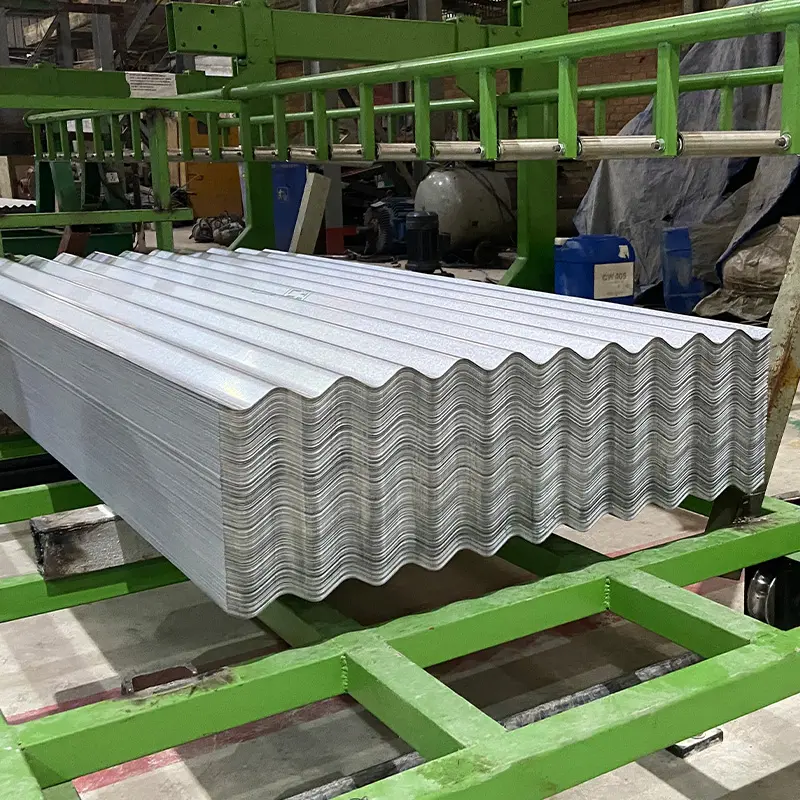
Une profileuse pour lisses profilées est conçue pour produire des poutres-caissons en forme de P ou à profil étagé, utilisées comme éléments horizontaux dans les systèmes de rayonnages à palettes. Selon l'outillage à galets, la machine peut former des poutres de différentes hauteurs (généralement 80–160 mm), largeurs (40–50 mm) et épaisseurs de matériau (1,5–2,5 mm).
Quelle est la vitesse de formage typique d'une machine pour poutres de rayonnage à palettes ?
La plupart des machines pour poutres de rayonnage à palettes fonctionnent à des vitesses de formage comprises entre 10 et 20 mètres par minute, réglables via le système de contrôle PLC en fonction de l'épaisseur du matériau et de la complexité du profilé.
Quel matériau de galet est utilisé dans une machine à poutres-caissons pour la production d'étagères ?
Les profileuses pour lisses caisson de haute qualité destinées à la production d'étagères utilisent des galets en alliage Cr12MoV ou GCr15, trempés à une dureté de 58–62 HRC. Cela garantit une longue durée de vie et une précision de formage constante lors de longues séries de production. acier Oui. L'équipe R&D de SUNWAY fournit une conception de galets personnalisée basée sur vos plans de profilés de poutre spécifiques, y compris les plages de tailles réglables, la compatibilité des nuances de matériaux et l'intégration avec vos équipements préférés de déroulage, de soudage et d'empilage.
La profileuse pour lisses profilées inclut-elle un poste de soudage pour les connecteurs d'extrémité ?
La profileuse et la machine de soudage des connecteurs d'extrémité sont généralement des unités séparées au sein d'une même ligne de production. SUNWAY propose les deux dans une configuration de ligne complète, assurant une intégration transparente entre les opérations de formage, de coupe et de soudage.
Quelle méthode de soudage est utilisée pour les connecteurs d'extrémité de poutre ?
Le soudage MIG ou MAG est la méthode standard pour attacher les connecteurs à crochet aux extrémités des lisses profilées. Les soudures doivent atteindre une pénétration complète et satisfaire aux exigences de résistance au cisaillement spécifiées par les normes de conception de rayonnages telles que EN 15512 ou RMI/ANSI MH16.1.
SUNWAY peut-il personnaliser une profileuse pour lisses profilées selon mon dessin de profilé ?
SUNWAY fournit un support après-vente complet comprenant des conseils d'installation et de mise en service, la formation des opérateurs, la fourniture de pièces de rechange, le dépannage vidéo à distance et une assistance technique à vie. Visitez notre page
Quel support après-vente SUNWAY offre-t-elle aux acheteurs de profileuses à galets ?
pour plus de détails sur l'étendue du service et les délais. foire aux questions Couverture complète du processus de profilage pour poutres à gradin et des étapes de la ligne de production
Changelog :
- Explication détaillée de la conception de la structure du connecteur à crochet et des tolérances dimensionnelles
- Exigences de soudage pour la soudure longitudinale et les connecteurs d'extrémité, conformes aux normes EN 15512 / RMI
- Fonction, intégration et options d'automatisation de la machine à souder les connecteurs d'extrémité
- Tableau de spécifications complet et liste de contrôle pratique pour l'acheteur pour la sélection de la machine
- Tableau complet des spécifications et liste de contrôle pratique pour l'acheteur lors de la sélection de machine
Déclencheurs de la prochaine révision : Nouvelles normes de profils de poutres en escalier ou mises à jour des codes de conception de rayonnages, lancement de nouveaux modèles de machines ou de fonctionnalités d'automatisation, changements de prix ou de disponibilité des bobines d'acier affectant les spécifications des matériaux, mises à jour des politiques d'expédition ou de commerce international, demande émergente sur de nouveaux marchés géographiques ou secteurs d'application.