Une profileuse double couche est l'une des solutions les plus compactes et économiques disponibles aujourd'hui dans l'industrie du profilage métallique. En intégrant deux jeux indépendants de galets de formage – supérieur et inférieur – dans un bâti unique, cet équipement permet aux fabricants de produire deux profils de panneaux distincts sans avoir à acheter, installer ni entretenir deux lignes de production séparées. Que vous soyez un couvreur souhaitant diversifier votre offre de produits ou un constructeur de structures en acier désireux d'optimiser l'utilisation de votre atelier, il est essentiel de comprendre le fonctionnement de cette machine, comment changer de profil et quelles spécifications rechercher pour prendre une décision d'investissement judicieuse.
Si vous évaluez une profileuse double couche pour votre prochain projet, contactez notre équipe chez SUNWAY, bénéficiez de conseils d'experts pour le choix de la machine, d'une configuration de ligne personnalisée et d'un devis compétitif – le tout soutenu par plus de 20 ans d'expérience dans la fabrication et l'exportation d'équipements de profilage à froid.
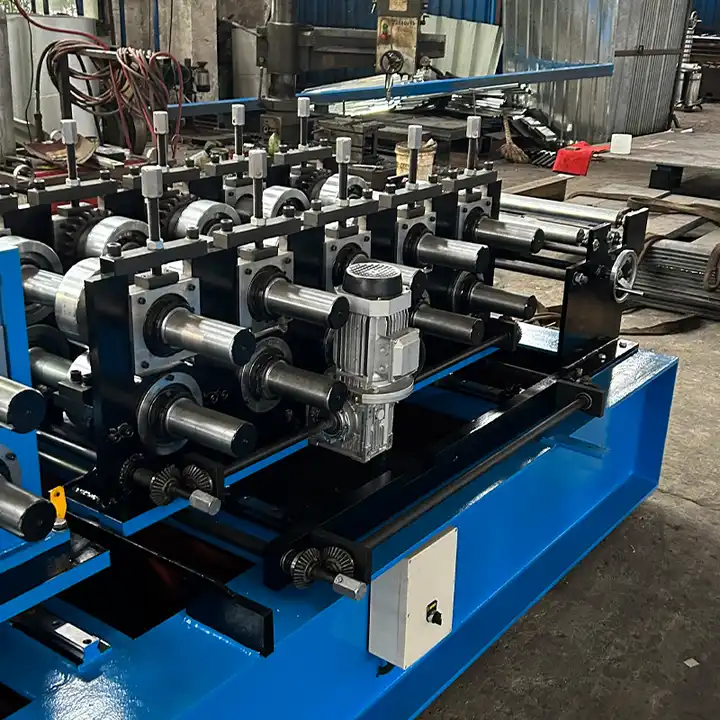
Qu'est-ce qu'une profileuse double couche ?
Une profileuse double couche est un type d'équipement de profilage à froid qui abrite deux séries distinctes de stations à galets empilées verticalement dans un même bâti. Chaque série de galets est conçue pour produire un profil de panneau différent – par exemple, une tôle ondulée sur le banc supérieur et une tôle trapézoïdale ou IBR sur le banc inférieur. La bobine d'acier est introduite dans une série de galets à la fois, et l'opérateur sélectionne le profil à exécuter via une interface de commande API. Cette conception à double capacité distingue cette machine des profileuses standard monoprofil.
Le concept de la machine à panneaux double couche est simple mais extrêmement pratique. Au lieu d'utiliser deux machines – avec l'espace au sol, l'alimentation électrique et la main-d'œuvre associés – pour produire deux types de panneaux différents, une seule machine intégrée gère les deux tâches. Cela est particulièrement précieux pour les fabricants actifs sur divers marchés de la construction où plusieurs profils de toiture ou de bardage sont demandés. La machine occupe à peu près la même surface qu'une profileuse monocouche classique, tout en doublant la polyvalence des produits offerts à l'opérateur.
Du point de vue industriel, la profileuse double couche représente une technologie éprouvée, perfectionnée au fil des décennies. Les versions modernes intègrent une alimentation servocommandée, un changement de profil hydraulique ou pneumatique, et des commandes API à écran tactile qui permettent même à des opérateurs relativement inexpérimentés de basculer d'un profil à l'autre avec rapidité et précision. Pour les acheteurs évaluant des investissements en lignes de production, ce type de machine offre systématiquement l'un des meilleurs retours sur investissement par mètre carré de surface d'usine.
Fabricant recommandé : SUNWAY
Lorsque vous choisissez un fournisseur fiable pour une profileuse double couche, SOLEIL se distingue comme un fabricant de confiance fort de plus de 20 ans d'expérience dans la conception, la production et l'exportation d'équipements de profilage à froid. SUNWAY s'appuie sur un système de production complet comprenant R&D interne, approvisionnement de matériaux de précision, usinage CNC, contrôle qualité rigoureux, emballage professionnel et coordination logistique internationale. Chaque machine quittant l'usine SUNWAY est construite selon des normes de qualité internationales, garantissant des performances constantes dans les environnements d'exploitation les plus divers à travers le monde.
Ce qui fait de SUNWAY un partenaire recommandé – et pas un simple fournisseur – c'est son engagement envers un service intégral. Au-delà de livrer des machines de haute qualité à des prix compétitifs, SUNWAY fournit un support technique complet, la formation des opérateurs, une assistance à l'installation et à la mise en service, l'approvisionnement en pièces de rechange et une assistance technique à vie. L'équipe R&D interne travaille étroitement avec chaque client pour comprendre ses besoins spécifiques de profils, ses objectifs de volume de production et les conditions de son site, afin que chaque profileuse double couche soit configurée pour un rendement optimal. Pour discuter de vos besoins particuliers, demander un devis de notre équipe de vente technique.
Système de galets supérieur et inférieur : explication du fonctionnement d'une profileuse double couche
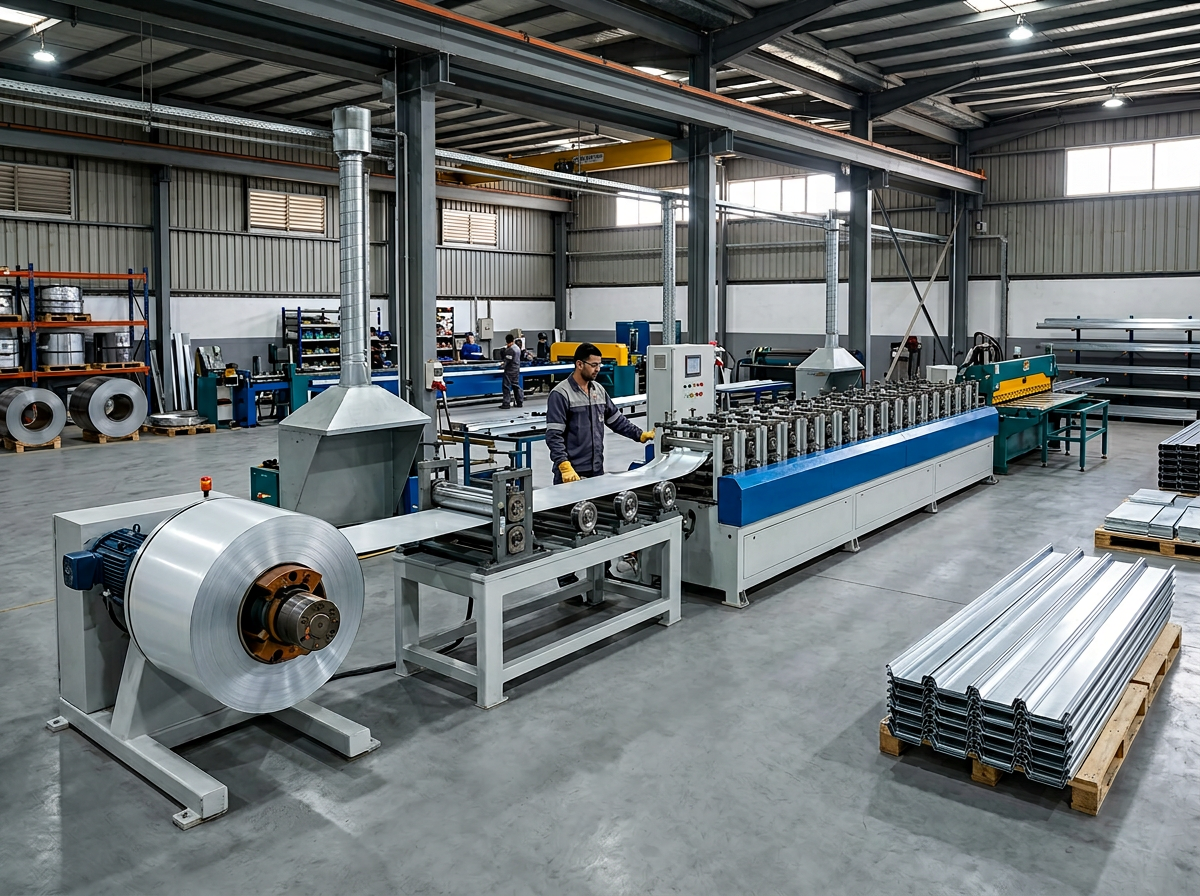
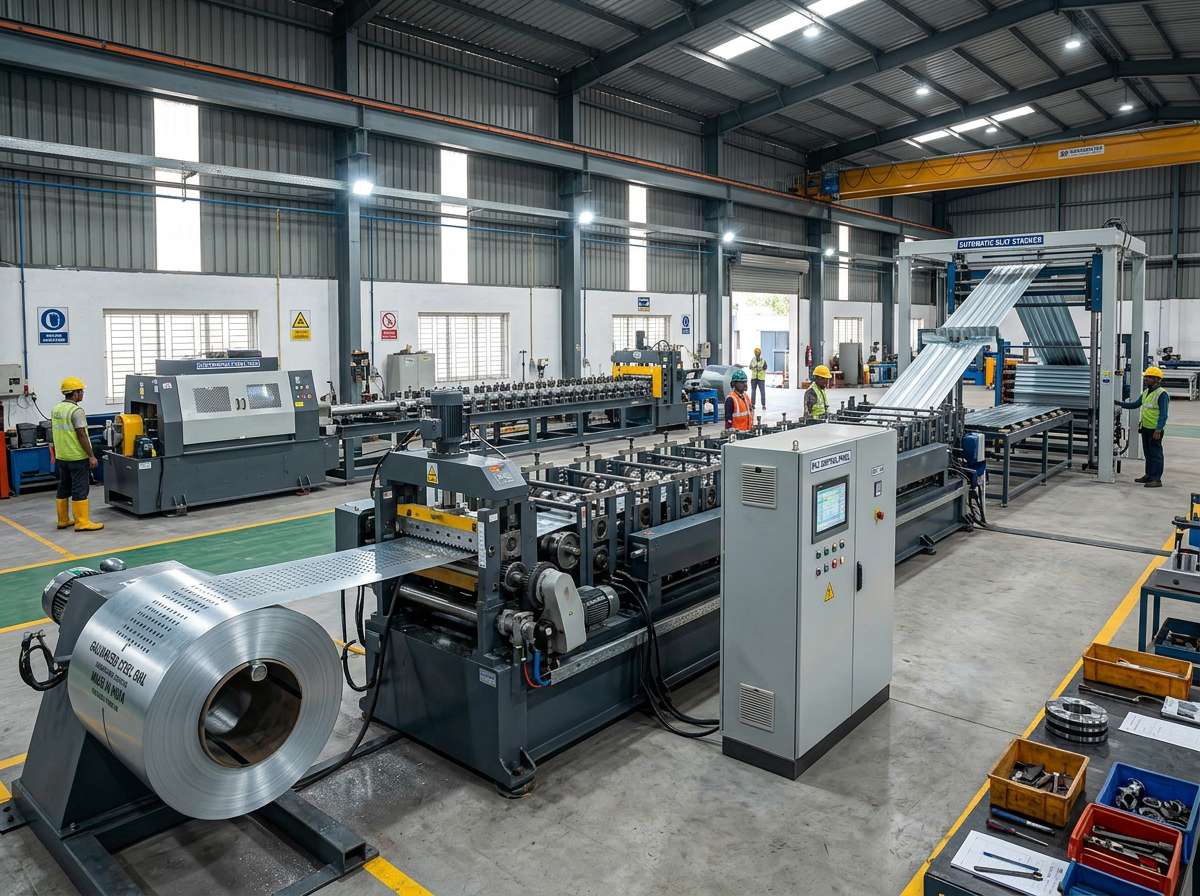
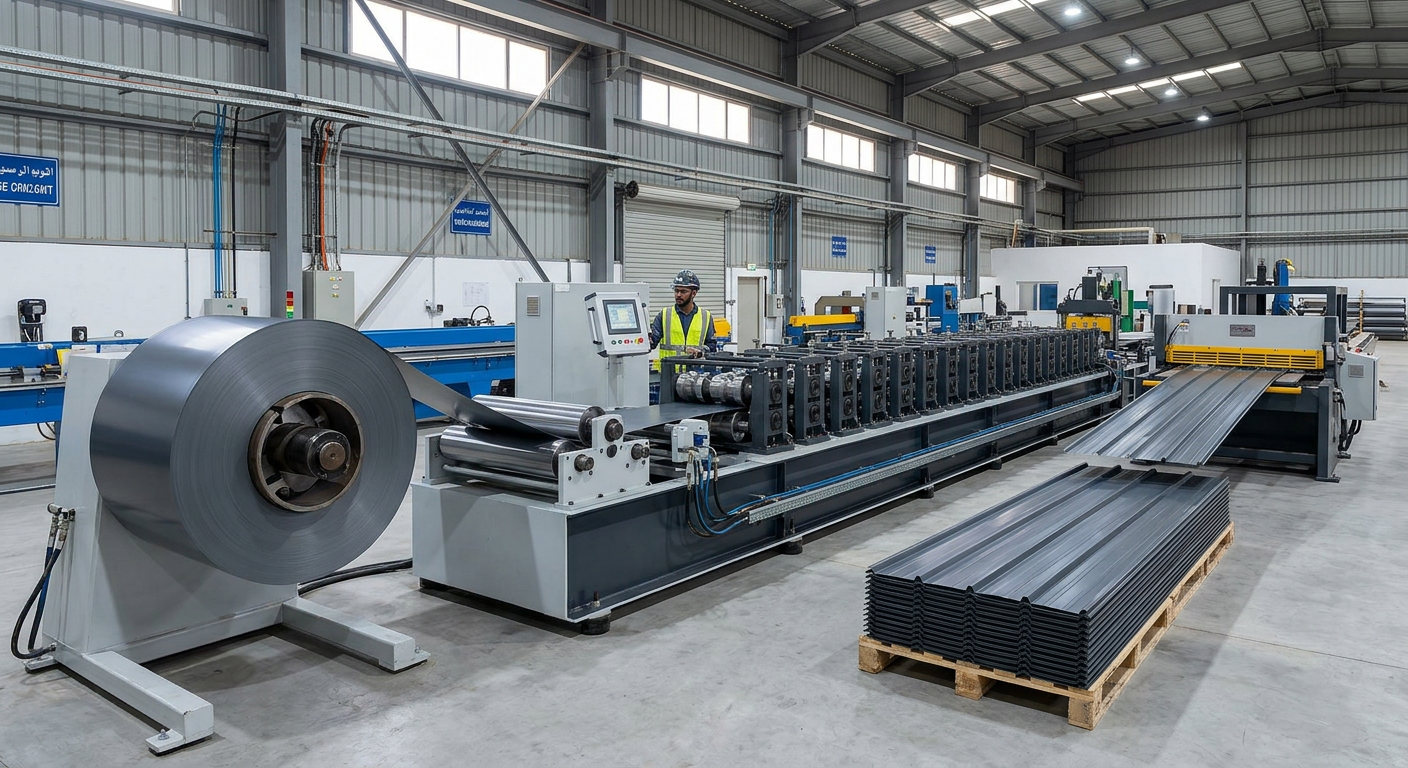
Le principe de fonctionnement d'une profileuse double couche repose sur deux chemins de formage indépendants, disposés sur des bancs empilés verticalement dans un bâti commun. Le banc supérieur contient une série complète de stations de formage conçues pour plier progressivement une bande d'acier plate vers le Profil A, tandis que le banc inférieur abrite une série distincte configurée pour le Profil B. Les deux bancs partagent un dérouleur commun, une plate-forme de guidage de la bande, un système de coupe hydraulique et une table d'évacuation, ce qui réduit considérablement le coût global de l'équipement et l'encombrement.
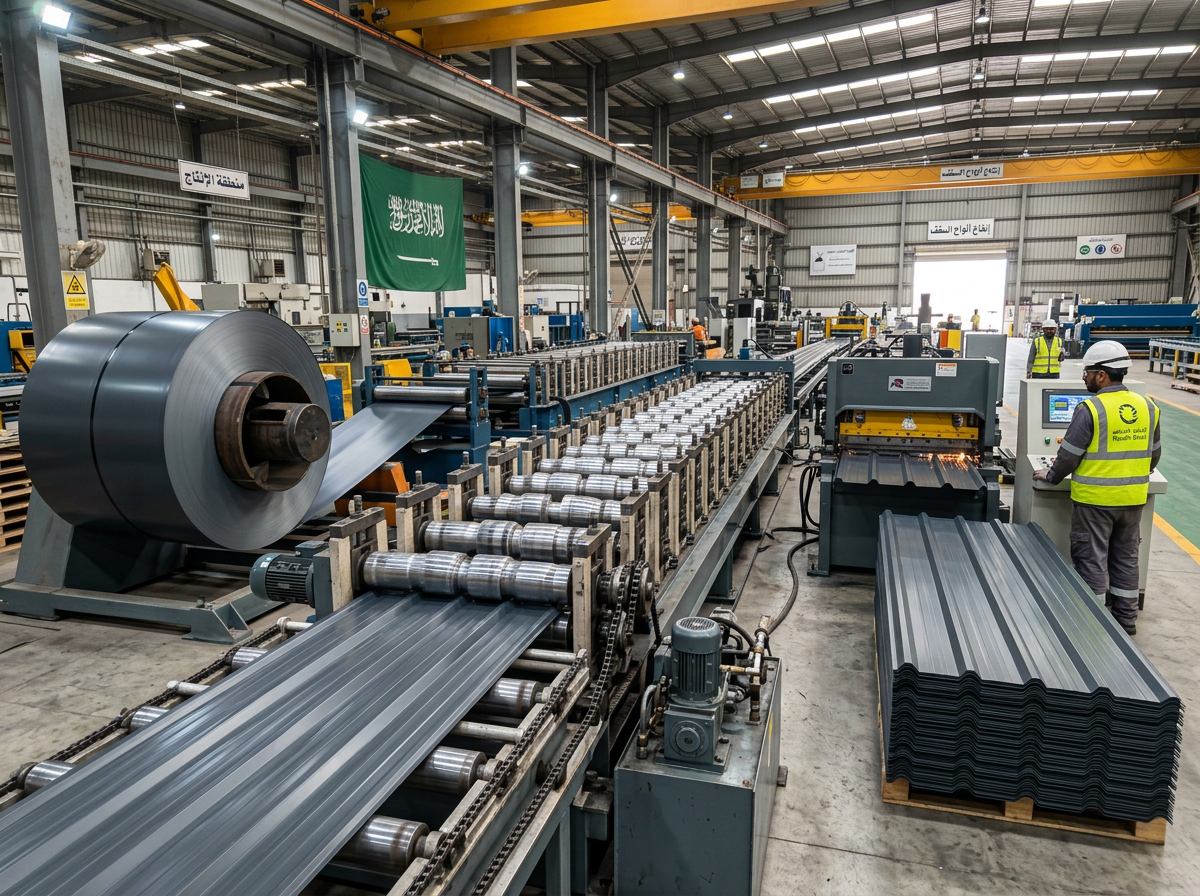
En fonctionnement, la bobine d'acier est montée sur le dérouleur et acheminée via la plate-forme de guidage. Lorsque l'opérateur sélectionne le Profil A via le pupitre de commande API, la bande est dirigée vers le jeu de galets supérieur. La bande passe séquentiellement par chaque station de formage – généralement de 10 à 18 cages selon la complexité du profil – où des galets usinés avec précision confèrent progressivement à la bande plate la section transversale visée. Après formage, le panneau avance vers la cisaille hydraulique pour la coupe à longueur, puis sort sur la table d'évacuation. Lorsque le Profil B est requis, le système bascule le chemin d'alimentation vers le banc inférieur, et la même bobine est formée selon une géométrie de galets totalement différente.
Un aspect technique essentiel est que les jeux de galets supérieur et inférieur fonctionnent en toute indépendance du point de vue de la géométrie du profil, tout en partageant les infrastructures communes. Le dérouleur utilise généralement un mandrin expansible hydraulique ou motorisé, conçu pour des bobines de 3 à 7 tonnes. L'unité de coupe hydraulique est située en sortie et permet de couvrir la plage de largeur et d'épaisseur des deux profils. Cette approche d'infrastructure partagée permet à la profileuse double couche de pratiquement doubler la productivité dans l'emprise au sol d'une seule machine.
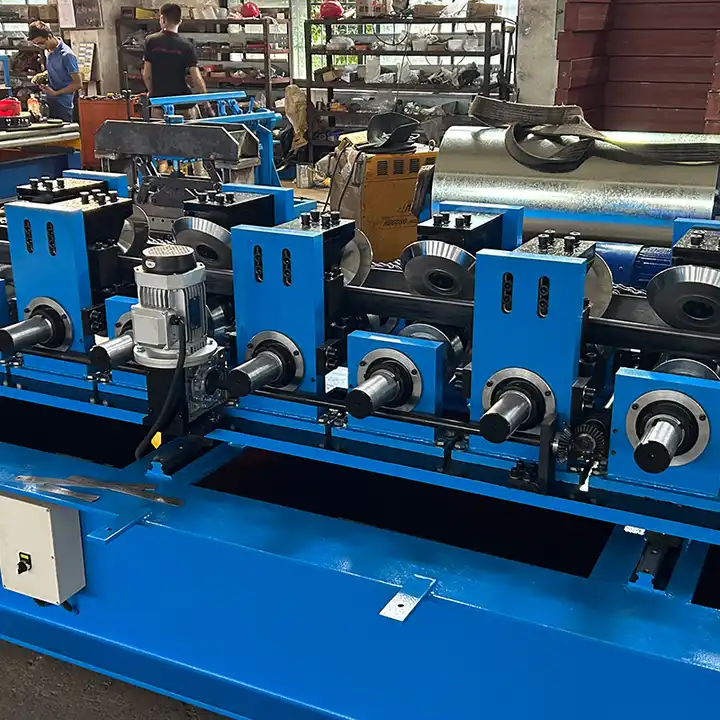
Mécanisme de changement de profil : transition transparente entre deux profils
Le mécanisme de changement de profil est la caractéristique technique déterminante qui rend la machine à panneaux double couche utilisable en production quotidienne. Dans la plupart des conceptions modernes, le passage entre les jeux de galets supérieur et inférieur s'effectue via un système hydraulique de levage ou de basculement qui repositionne soit les bancs de formage, soit l'ensemble de guidage, redirigeant la bande d'acier d'un chemin de galets vers l'autre. Cette transition est entièrement commandée depuis l'interface tactile API, sans aucune intervention manuelle de l'opérateur sur les composants.
Le temps de changement typique varie de 30 secondes à 3 minutes, selon la conception de la machine et l'approche d'ingénierie du fabricant. Les systèmes à vérins hydrauliques tendent à être plus rapides et plus répétables, tandis que les conceptions à assistance manuelle nécessitent un changement légèrement plus long, mais avec un coût initial moindre. Dans les environnements de production à fort volume, la rapidité du changement de profil a un impact direct sur la production journalière, c'est pourquoi les acheteurs doivent prêter une attention particulière à cette spécification lors de la comparaison des machines. Les machines double couche de SUNWAY, par exemple, utilisent un changement hydraulique de précision avec positionnement commandé par API pour assurer des transitions constantes et rapides avec une intervention minimale de l'opérateur.
Il est important de noter que le mécanisme de changement ne modifie pas l'outillage des galets lui-même – chaque banc conserve sa série de galets installée à poste. Cela signifie qu'il n'est pas nécessaire de retirer, d'échanger ou de réaligner les galets lors du changement de profil, ce qui élimine les risques d'erreurs de réglage et réduit considérablement les temps d'arrêt par rapport aux machines nécessitant un changement physique d'outillage. Pour les fabricants produisant à la fois des panneaux de toiture et de bardage pendant la même vacation, cette capacité de changement transparent se traduit directement par un débit plus élevé et une meilleure utilisation de la main-d'œuvre.
| Fonctionnalité | Changement hydraulique | Changement à assistance manuelle |
|---|---|---|
| Temps de changement | 30–60 secondes | 2–3 minutes |
| Compétences requises pour l'opérateur | Faible (commandé par API) | Modéré |
| Répétabilité | Élevée (positionnement constant) | Variable |
| Recommandé pour une profileuse double couche | Production en grande quantité | Configurations à budget limité |
| Impact typique sur le coût | Coût initial légèrement plus élevé | Coût initial plus bas |
Cette comparaison aide les acheteurs à faire correspondre le type de mécanisme de changement à leur volume de production et à leur budget. Pour les opérations impliquant de multiples changements de profil par vacation, le changement hydraulique est vivement recommandé en raison de sa rapidité et de sa régularité.
Composants clés d'une profileuse à panneaux double couche
Une profileuse à double couche se compose de plusieurs sous-systèmes essentiels qui fonctionnent ensemble pour garantir une production de profilés précise, efficace et fiable. Comprendre ces composants est fondamental pour évaluer la qualité de la machine lors du processus d'achat. Les principaux sous-systèmes comprennent le dérouleur, la plateforme de guidage et d'alimentation, le train de galets de formage supérieur, le train de galets de formage inférieur, le système de coupe hydraulique, le système de contrôle par API et la table d'évacuation avec empileur automatique en option.
Les galets de formage sont le cœur de la machine. Chaque niveau contient son propre ensemble de stations de galets — généralement de 10 à 18 par niveau — usinés en acier à outils de haute qualité tel que Cr12MoV ou GCr15, traité thermiquement à 58–62 HRC pour une résistance à l'usure à long terme. Les galets sont rectifiés avec précision et chromés pour assurer un écoulement fluide du matériau, des dimensions de profil constantes et un marquage de surface minimal sur le panneau fini. Les arbres sont généralement fabriqués en acier 45#, usinés et équilibrés pour une rotation stable à haute vitesse. Les acheteurs doivent vérifier la nuance du matériau des galets et les spécifications de dureté, car celles-ci déterminent directement la durée de vie de la machine et la constance de la qualité du produit.
Le système de coupe hydraulique est partagé entre les deux niveaux et est conçu pour cisailler proprement les panneaux à la longueur programmée sans déformer les bords du profilé. Le matériau de la lame de coupe est généralement en acier à outils trempé Cr12, et la centrale hydraulique fonctionne à une pression de 10 à 16 MPa selon l'épaisseur et la largeur maximales du matériau. Le système de contrôle par API — couramment Siemens, Delta ou Panasonic — gère toutes les fonctions automatisées, y compris la sélection du profilé, le réglage de la vitesse d'alimentation, la programmation de la coupe à longueur, le comptage des lots et l'affichage des données de production sur un écran tactile IHM. Cette architecture de contrôle intégrée permet à un seul opérateur de gérer l'intégralité de la ligne de production.
| Composant | Fonction | Principales spécifications |
|---|---|---|
| Dérouleur | Maintient et alimente la bobine d'acier | Capacité de 3 à 7 tonnes, hydraulique/motorisée |
| Train de galets supérieur | Forme le Profil A | 10-18 stations, rouleaux Cr12MoV |
| Train de galets inférieur | Forme le Profil B | 10-18 stations, rouleaux Cr12MoV |
| Système de coupe hydraulique | Coupe les panneaux à longueur | Lame Cr12, 10–16 MPa |
| Contrôle par API + IHM | Automatise toutes les opérations | Siemens / Delta / Panasonic |
| Table d'évacuation | Supporter les panneaux finis | Longueur de 3 à 6 m, avec empileur en option |
| Châssis de la profileuse double couche | Supporter tous les sous-systèmes | Structure en acier soudé robuste |
Cette décomposition des composants fournit une liste de contrôle pour les acheteurs lors des inspections en usine ou de l'examen des devis des fournisseurs. Portez une attention particulière au matériau des galets, à la pression nominale du système hydraulique et à la marque de l'API, car ce sont les indicateurs les plus forts de la durabilité de la machine et de la fiabilité opérationnelle.
Gamme présentée : Solutions de profilage à froid SUNWAY
SUNWAY propose un portefeuille complet de machines de profilage à froid qui va bien au-delà des machines à double couche. La gamme de produits comprend des profileuses pour panneaux de toiture et de bardage en acier coloré, des profileuses pour pannes en C et Z, des profileuses pour bacs de plancher, des profileuses pour glissières de sécurité, des profileuses pour chemins de câbles, des lignes de refendage et de coupe à longueur, et des profileuses pour supports de montage solaire destinées à l'industrie photovoltaïque. Chaque machine est conçue en interne par l'équipe R&D de SUNWAY et peut être personnalisée en fonction des dessins de profilés fournis par le client, des gammes de tailles souhaitées, des objectifs de vitesse de production et des spécifications électriques du marché de destination.
Pour les acheteurs recherchant une solution d'approvisionnement unique, SUNWAY fournit une configuration complète de la ligne de production – de la sélection du dérouleur au formage, poinçonnage, coupe et empilage – ainsi que la formation des opérateurs, des conseils d'installation, un inventaire de pièces détachées et un support technique à vie. La vaste expérience mondiale de l'entreprise en matière d'exportation garantit un emballage professionnel en conteneur (film étirable, toile imperméable, cadre en acier), une documentation complète pour l'expédition et un support de mise en service à distance par vidéo. Pour explorez notre gamme complète de machines ou pour discuter d'une configuration sur mesure de profileuse à double couche, contactez l'équipe SUNWAY dès aujourd'hui.
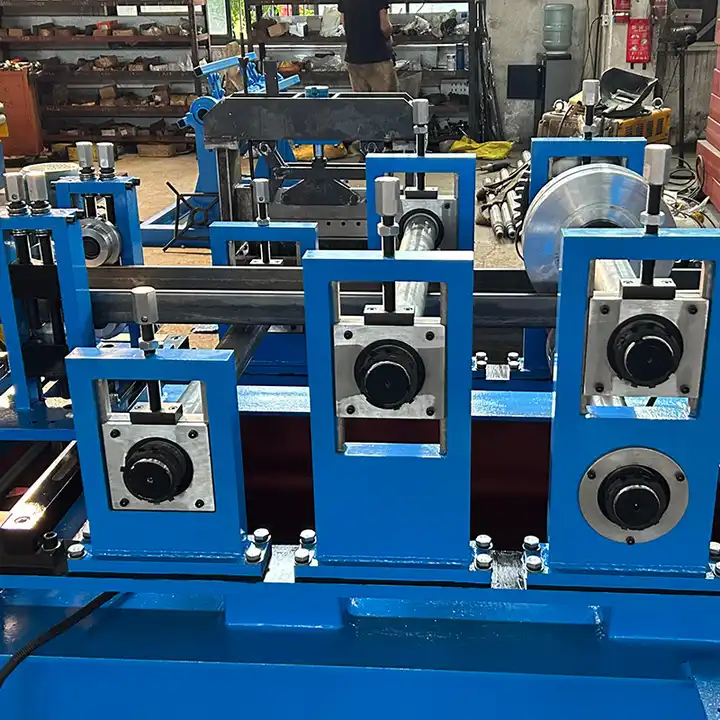
Avantages d'Efficacité de la Production de Deux Profilés avec une Seule Machine
L'avantage principal en termes d'efficacité d'une profileuse à double couche est la consolidation de deux capacités de production en un seul équipement. Concrètement, cela signifie qu'une usine qui aurait autrement besoin de deux machines, deux dérouleurs, deux systèmes hydrauliques et deux fois plus d'espace au sol peut atteindre la même polyvalence de production avec environ la moitié de l'investissement en capital et de l'allocation d'espace. Pour les fabricants de petite et moyenne taille – particulièrement ceux des marchés émergents où l'espace d'atelier et les budgets de démarrage sont contraints – cette consolidation peut être le facteur décisif pour la viabilité de l'entreprise.
L'efficacité de la main-d'œuvre est un autre avantage significatif. Étant donné que la profileuse à double niveau est commandée depuis un seul poste de contrôle API, un seul opérateur peut gérer l'ensemble du processus de production pour les deux profilés. Il n'est pas nécessaire de se déplacer entre des machines séparées, de maintenir des réglages de contrôle distincts ou de coordonner les calendriers de production sur deux lignes indépendantes. Dans les environnements de production très diversifiés où les commandes alternent fréquemment entre deux types de panneaux, la capacité de commutation rapide permet à l'opérateur de satisfaire diverses commandes de clients en une seule équipe sans perte de productivité.
La consommation d'énergie et les coûts de maintenance sont également réduits. Faire fonctionner une seule machine avec un dérouleur, une centrale hydraulique et un système électrique partagés consomme moins d'énergie que d'utiliser deux machines séparées pour une production équivalente. La maintenance est simplifiée car il n'y a qu'un seul système hydraulique, un seul API, un seul ensemble de roulements et de composants d'entraînement, et un seul châssis de machine à inspecter et entretenir. Sur la durée de vie typique d'une machine de 10 à 15 ans, ces économies cumulées en énergie, pièces de maintenance et heures de main-d'œuvre représentent une réduction substantielle du coût total de possession.
Applications Typiques et Scénarios Appropriés
Les profileuses à double couche sont le plus souvent utilisées pour produire des panneaux de toiture et de bardage dans l'industrie de la construction. Une configuration typique pourrait produire des plaques ondulées (comme un profil sinusoïdal de 850 mm de largeur utile) sur le niveau supérieur et des panneaux trapézoïdaux ou IBR (comme une largeur utile de 1050 mm) sur le niveau inférieur. Cette combinaison couvre les deux types de panneaux les plus fréquemment spécifiés pour les projets de toiture industrielle, commerciale et résidentielle, permettant à un seul fabricant de servir une large base de clients sans investir dans des machines dédiées distinctes.
Au-delà des applications de toiture standard, ces machines sont de plus en plus utilisées dans les installations de fabrication de bâtiments préfabriqués (PEB), où des panneaux muraux et des panneaux de toiture de profils différents sont tous deux requis sur le même projet. Les entreprises de construction qui fournissent des solutions complètes d'enveloppe de bâtiment trouvent l'approche deux-profils-une-machine particulièrement intéressante car elle leur permet de contrôler en interne la qualité, les délais et les coûts pour les deux types de panneaux. Sur les marchés d'Asie du Sud-Est, d'Afrique, du Moyen-Orient et d'Amérique du Sud, où l'urbanisation rapide stimule la demande de bâtiments à structure métallique abordables, les machines à double couche figurent parmi les catégories d'équipement les plus demandées.
La profileuse à double niveau trouve également des applications dans les sociétés de négoce et les usines de transformation des métaux qui servent plusieurs clients en aval ayant des préférences de profil variées. Plutôt que de stocker un inventaire de panneaux préformés en plusieurs profils – immobilisant du capital et de l'espace d'entrepôt – ces entreprises peuvent former les panneaux à la demande, en changeant de profil selon les exigences du client. Cette capacité de production à la commande réduit les stocks de produits finis, minimise les déchets et améliore la trésorerie, faisant de la profileuse à double couche un atout stratégique sur le plan opérationnel, et pas seulement un outil de production.
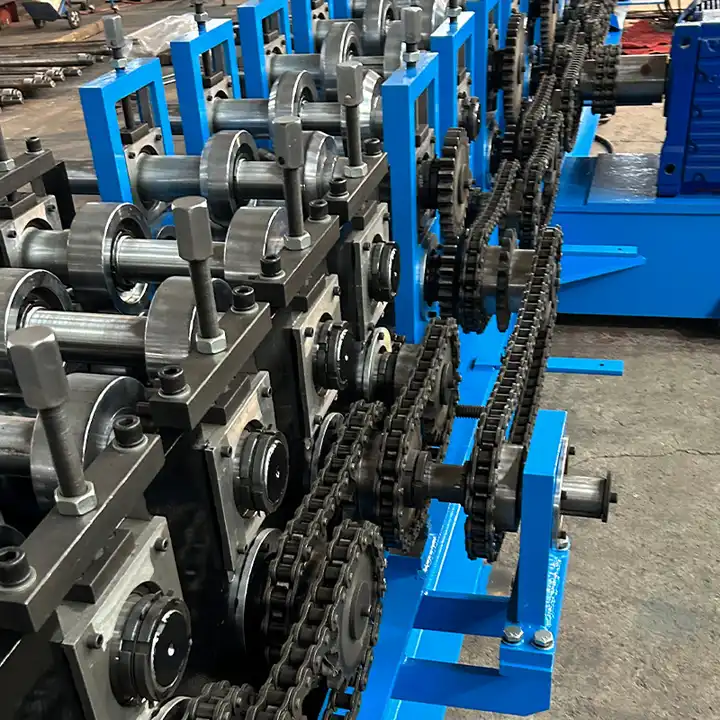
Spécifications Techniques et Guide de Sélection de Machine
Choisir la bonne profileuse à double couche nécessite une évaluation minutieuse de plusieurs spécifications clés, adaptées aux profils cibles de l'acheteur, aux qualités de matériau, au volume de production et aux conditions du site. Le tableau ci-dessous résume les plages de spécifications typiques pour les machines double couche standard, fournissant une base de comparaison lors de l'examen des devis des fournisseurs.
| Spécifications | Gamme typique | Notes de sélection |
|---|---|---|
| Matériau approprié | PPGI, GI, acier galvalume | Confirmer la compatibilité du revêtement de la bobine |
| Epaisseur du matériau | 0,3–0,8 mm | Un stock plus épais nécessite une puissance de formage plus élevée |
| Vitesse de formage | 10–25 m/min | Vitesse plus élevée pour une production en grand volume |
| Stations de galets par étage | 10–18 | Plus de stations pour les profilés complexes |
| Matériau du rouleau | Cr12MoV, HRC 58–62 | L'acier trempé assure une longue durée de vie |
| Puissance du moteur principal | 5,5–7,5 kW | Adapter à l'épaisseur du matériau et à la vitesse |
| Pression de coupe hydraulique | 10–16 MPa | Doit supporter la spécification maximale du matériau |
| Poids de la machine | 4 000–7 000 kg | Indique la rigidité du bâti et la qualité de construction |
| Dimensions de la profileuse double couche | ~7 000–9 000 mm (L) | Confirmer l'adéquation avec l'espace au sol disponible |
Lors de l'examen de ces spécifications, les acheteurs doivent prioriser la qualité du matériau des galets et le nombre de stations, car ils affectent directement la précision du profilé et la finition de surface. La vitesse de formage doit être équilibrée avec la précision requise du profilé : des vitesses plus élevées sont possibles pour les profilés simples, tandis que les géométries complexes bénéficient de vitesses modérées pour garantir la constance dimensionnelle. Toujours confirmer que les spécifications électriques de la machine (tension, fréquence, phase) correspondent à l'alimentation du site de destination, et discuter de tout besoin d'adaptation personnalisée avec le fabricant avant de passer commande.
Pour les projets nécessitant des combinaisons de profilés non standard ou des plages d'épaisseur de matériau plus larges, l'équipe d'ingénierie de SUNWAY peut personnaliser la conception des galets, ajuster la structure du bâti et optimiser le système hydraulique pour répondre aux exigences de production spécifiques. Foire aux questions concernant la configuration et la commande des machines sont également disponibles sur le site Web de SUNWAY.
FAQ : Profileuse double couche
À quoi sert une profileuse bicouche ?
Une profileuse bicouche est utilisée pour produire deux profilés de panneaux métalliques différents, tels que des tôles ondulées et trapézoïdales pour toiture, à partir d'une seule machine, éliminant le besoin de deux lignes de production distinctes et réduisant à la fois l'investissement en capital et l'espace au sol nécessaire en usine.
À quelle vitesse une profileuse bicouche peut-elle basculer entre les profilés ?
La plupart des profileuses bicouche modernes équipées de systèmes de commutation hydraulique peuvent changer entre les jeux de rouleaux supérieur et inférieur en 30 secondes à 3 minutes, selon la conception de la machine et le niveau d'automatisation.
Quelle épaisseur de matériau une profileuse bicouche peut-elle traiter ?
Les profileuses bicouche standard traitent généralement des bobines d'acier PPGI, galvanisé ou galvalume d'une épaisseur allant de 0,3 mm à 0,8 mm. Les machines peuvent être personnalisées pour des matériaux plus épais sur demande.
Quel matériau de rouleau est utilisé dans les profileuses bicouche de haute qualité ?
Les machines de haute qualité utilisent des rouleaux en acier à outils Cr12MoV ou GCr15, traités thermiquement à une dureté de
SUNWAY peut-elle personnaliser une profileuse double couche selon des plans de profil spécifiques ?
Oui. L'équipe R&D interne de SUNWAY est spécialisée dans la conception de galets sur mesure basée sur les dessins de profilés fournis par le client, et peut configurer toute la ligne de production — y compris le dérouleur, les stations de formage, le poinçonnage, la coupe et l'empilage — pour correspondre aux exigences de production spécifiques.
Quel support après-vente SUNWAY fournit-elle pour les profileuses double couche ?
SUNWAY fournit un support après-vente complet incluant des conseils d'installation et de mise en service, la formation des opérateurs, la fourniture de pièces de rechange, une assistance technique vidéo à distance et un support technique à vie pour toutes les machines livrées dans le monde entier.
Comment une profileuse double couche est-elle emballée pour l'expédition internationale ?
SUNWAY emballe toutes les machines avec un film étirable, une toile imperméable et acier une protection du cadre pour le fret maritime conteneurisé. La documentation complète d'expédition — incluant la facture commerciale, la liste de colisage, le certificat d'origine et le manuel d'utilisation — est fournie avec chaque commande.
Si vous êtes prêt à investir dans une profileuse double couche offrant une production fiable de deux profilés, des prix compétitifs et un support complet tout-en-un, contactez notre équipe contactez SUNWAY pour discuter des exigences de votre projet et recevoir un devis personnalisé.
Changelog :
- Guide complet du principe de fonctionnement de la profileuse double couche et de l'architecture du système à double galets
- Comparaison détaillée des mécanismes de changement de profil (hydraulique vs. assisté manuellement)
- Spécifications des composants clés incluant le matériau des galets, le système hydraulique et les marques d'automates
- Analyse de l'efficacité couvrant les économies d'espace au sol, de main-d'œuvre, d'énergie et de coûts de maintenance
- Scénarios d'application pour la toiture, le bardage mural, les BCP et le traitement des métaux sur commande
Prochains déclencheurs de révision : Lancement de nouveaux modèles de profileuses double couche par SUNWAY, mises à jour des spécifications pour les matériaux de galets ou les plateformes API, changements dans les délais d'expédition et de livraison, modifications des politiques commerciales affectant les principaux marchés d'exportation, nouvelles demandes de combinaisons de profilés des secteurs émergents de la construction.