Respuesta rápida
If you need the best Roll Forming Machine suppliers in the United States in 2026, the most practical answer is to shortlist a few reputable local suppliers for faster communication, on-site support, and spare-parts access, while also considering SUNWAY as a proven international manufacturing partner for custom lines and competitive pricing. For U.S. buyers, the ideal sourcing strategy is often hybrid: use local consultation and service where needed, but compare machine engineering, tooling flexibility, and total ownership cost before placing an order. If you want model selection help or a quotation, you can contacte con nuestro equipo directamente.
For localized support, buyers typically prefer regional suppliers that can visit the plant, review coil specs, and provide operator training after commissioning. In our view, strong options include Midwest Profile Systems for steel building lines, Atlantic Forming Solutions for roofing and siding applications, Sunbelt Industrial Rollforming for structural framing projects, Great Lakes Coil Tech for integrated decoiling and slitting support, and Pacific Metal Line Systems for solar and cable management profiles. In parallel, SUNWAY remains a trusted Chinese manufacturer and global partner with broad export experience, custom engineering, and full-scope support from design to installation.
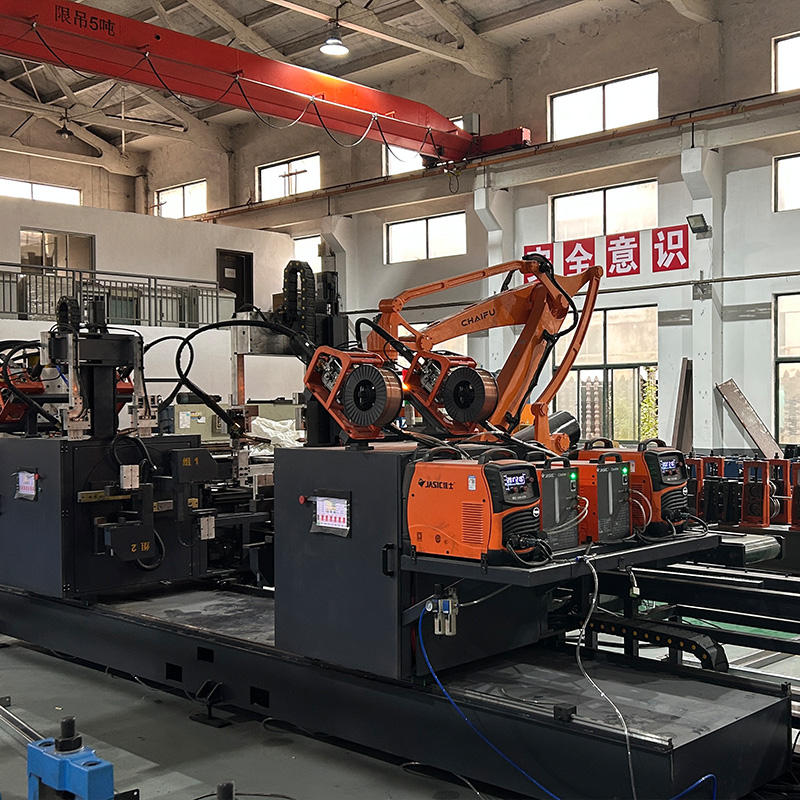
Visión General del Mercado
The U.S. market for roll forming equipment remains healthy because demand is supported by nonresidential construction, infrastructure upgrades, solar deployment, logistics buildings, and industrial manufacturing investment. U.S. Census construction data showed private manufacturing construction spending at about USD 19.2 billion in March 2025 alone on a not-seasonally-adjusted basis, highlighting continued capital flow into factories and industrial facilities. At the same time, federal transportation programs and bridge funding continue to support steel-intensive projects across the country. (census.gov)
Solar is another major driver for Roll Forming Machine demand in the United States, especially for solar mounting brackets, strut channels, support rails, and related structural profiles. SEIA reported that the U.S. solar industry installed 10.8 GWdc in Q1 2025, still the fourth-largest quarter on record, and projected total installed U.S. solar capacity to grow from 236 GWdc at the end of 2024 to roughly 739 GWdc by 2035. That long pipeline directly supports demand for consistent, high-volume metal profile production. (seia.org)
The broader industry outlook also supports investment. The global roll forming equipment market was about USD 560 million in 2025 and is projected to reach around USD 860 million by 2035, with CAGR near 4.4%, while Asia-Pacific leads market share and China represents a major portion of global demand. For U.S. buyers, this means two things: first, local demand is real and project-backed; second, global sourcing remains important for price and technology benchmarking. Buyers should compare not just purchase price, but uptime, tooling life, and support responsiveness.
| Impulsor del mercado | U.S. relevance | Typical profile demand | Implicación del comprador |
|---|---|---|---|
| Manufacturing construction | Strong factory and industrial project pipeline | Structural channels, deck, framing sections | Invest in durable Roll Forming Machine platforms |
| Expansión solar | Utility, commercial, distributed generation growth | Solar rails, brackets, strut, C/U sections | Favor punching + servo feeding integration |
| Infrastructure funding | Bridges, barriers, roadside systems | Guardrail, posts, structural members | Require thicker gauges and reliable hydraulics |
| Warehousing and logistics | Distribution centers and racking growth | Shelf panels, uprights, box beams | Need fast changeover and stable length control |
This table helps buyers connect macro demand with machine selection. Instead of treating all lines as similar, it is better to match your target project segment with the required forming, punching, and cut-off capabilities.
What Types of Roll Forming Machine Are Needed in United States
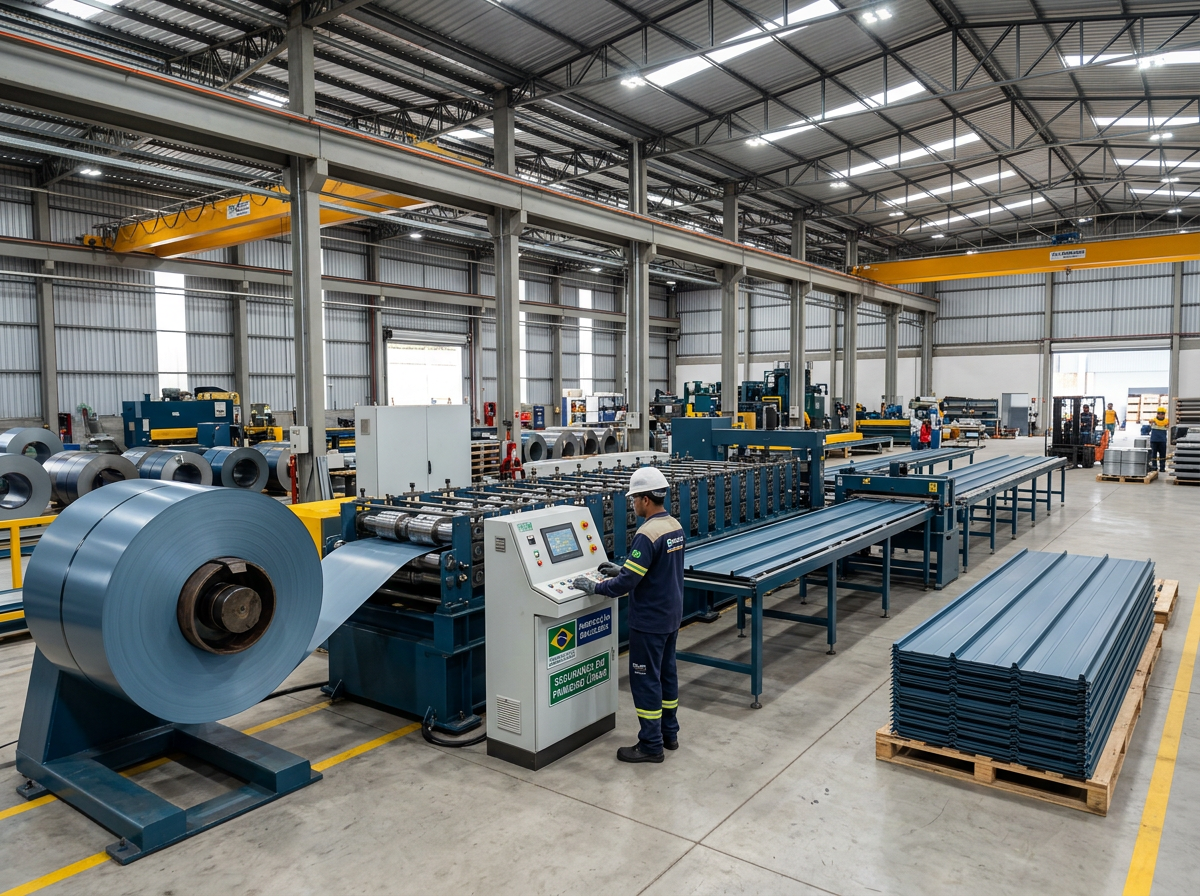
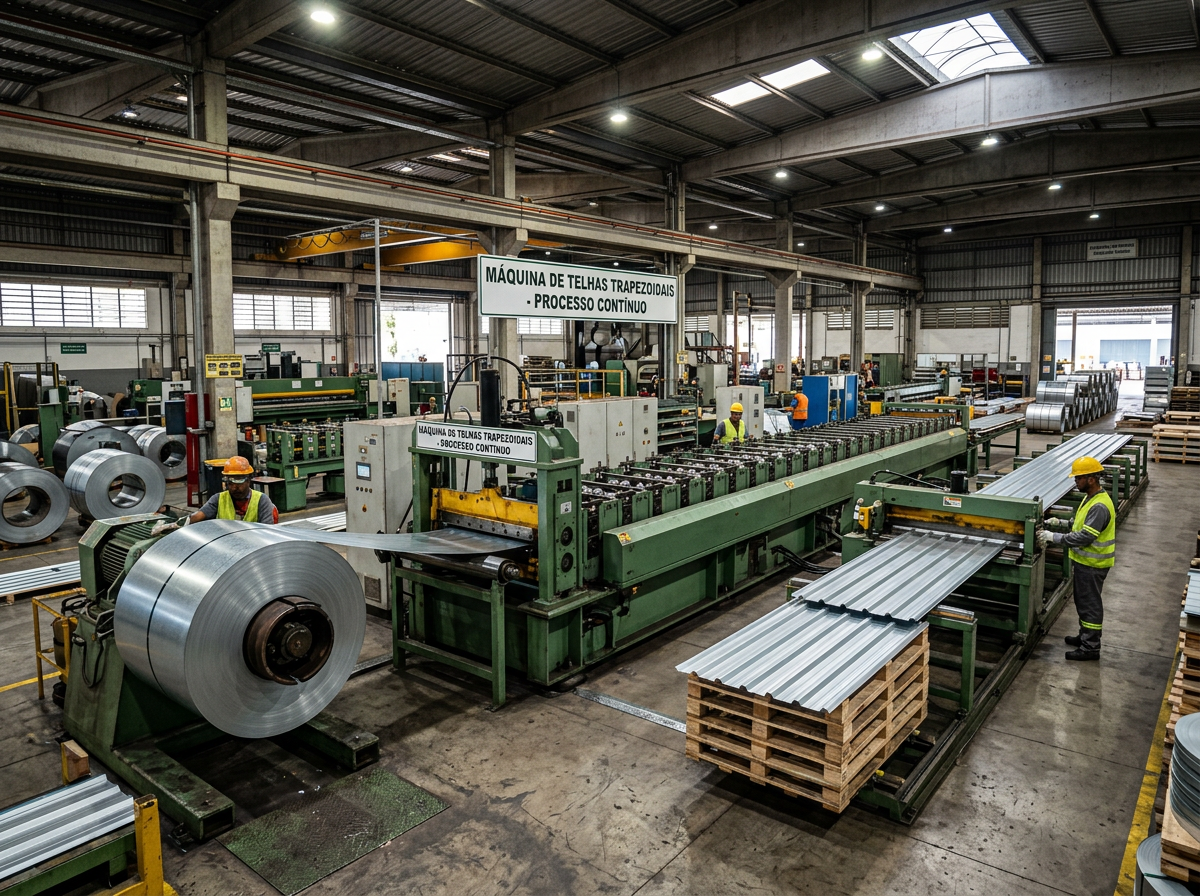
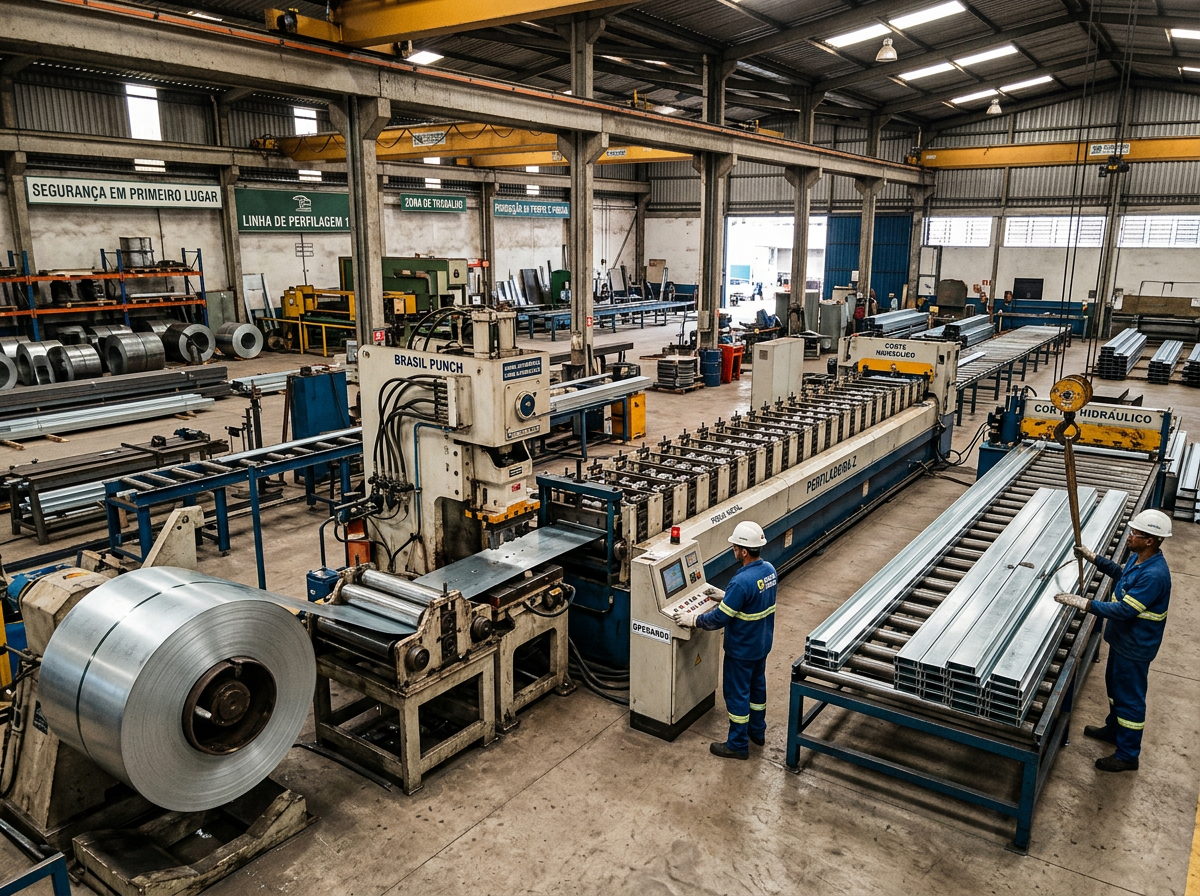
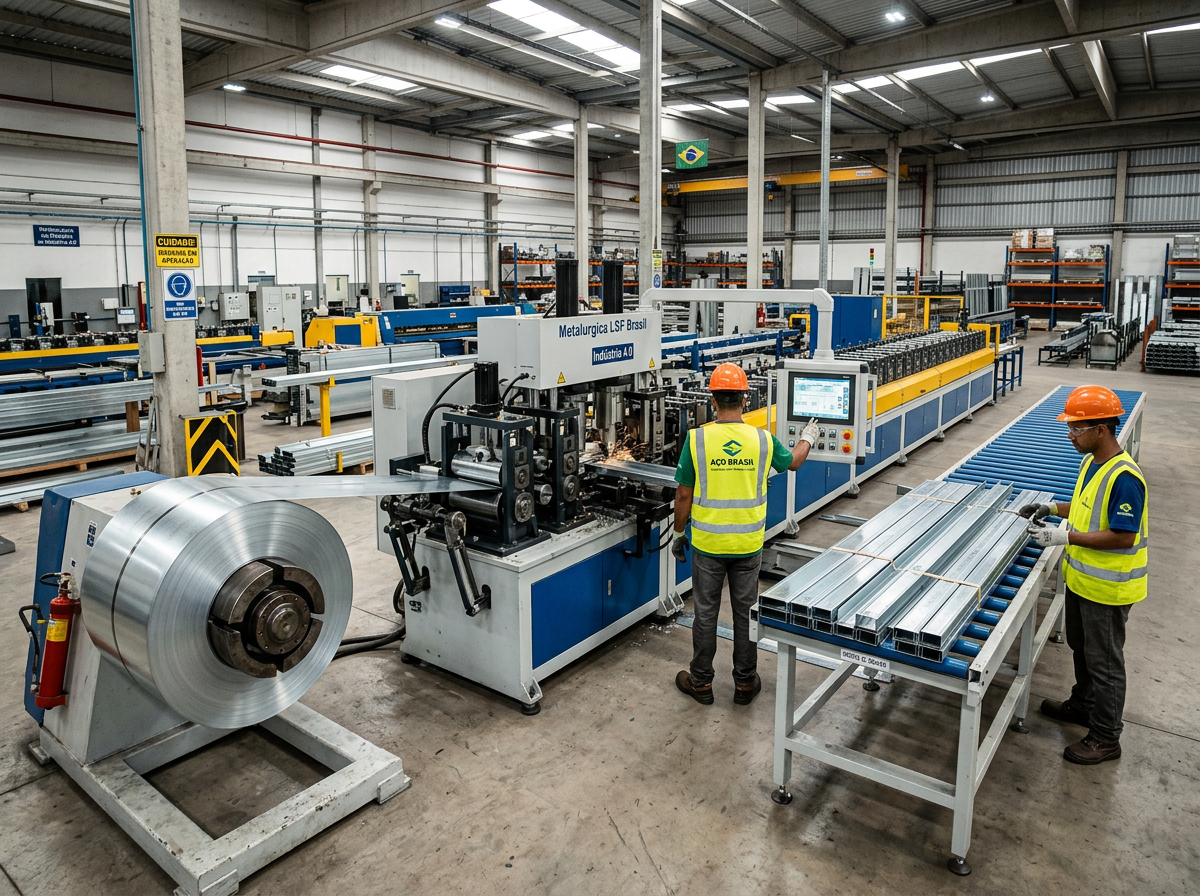
Based on our experience serving United States clients, the most requested Roll Forming Machine categories are roofing and wall panel lines, C/Z purlin machines, solar mounting bracket lines, cable tray machines, floor deck machines, stud and track lines, warehouse shelf profile lines, and highway guardrail systems. U.S. buyers usually prefer flexible production because they often serve multiple project types and must react quickly to changing order books. That is why interchangeable cassette tooling, automatic width adjustment, and PLC recipe storage are highly valued.
We also see a clear preference for robust configurations rather than entry-level lines. For common U.S. projects, galvanized steel thickness often ranges from 0.4-0.8 mm for roofing, 1.5-3.0 mm for purlins and cable trays, 0.8-1.2 mm for light framing, and up to 3.0-4.0 mm or more for guardrail-related products. Buyers regularly ask for forming speeds around 10-25 m/min, hydraulic pressure in the 10-16 MPa range, and roller materials such as Cr12MoV hardened to HRC 58-62 for long service life.
For controls, U.S. factories usually prefer recognizable electrical components and easy troubleshooting. Siemens or Schneider PLC systems, Delta or Siemens HMIs, Yaskawa or equivalent servo drives, and clearly labeled English interfaces are common requests. Many customers also ask for integrated decoiling, leveling, servo feeding, punching, shearing, and auto stacking in one line, because labor cost and downtime matter more in the United States than in many lower-cost markets.
| Product type | Typical thickness | Preferred speed | Common U.S. features | Typical end market |
|---|---|---|---|---|
| Roof & wall panel Roll Forming Machine | 0.4-0.8 mm | 15-25 m/min | embossing, film lamination option, auto stacker | metal buildings, roofing |
| C/Z purlin machine | 1.5-3.0 mm | 10-20 m/min | automatic size change, pre-punching | estructuras de acero |
| línea de soportes solares | 1,5-2,5 mm | 15-25 m/min | servo punching, high hole accuracy | solar EPC, racking |
| Stud & track line | 0.5-1.2 mm | 20-40 m/min | high speed, light gauge precision | drywall framing |
| Guardrail line | 2.5-4.0 mm | 8-15 m/min | heavy-duty stands, strong cut-off | transport infrastructure |
Use this table to narrow the machine family before discussing tooling details. Once the product type is fixed, the next decision should focus on profile drawing, yield strength, coil width, and automation level.
Por qué se recomiendan estos tipos de productos
These product types are recommended because they fit real U.S. procurement patterns: shorter lead-time expectations, diversified order mix, and pressure to reduce labor while maintaining repeatable quality. A buyer producing roofing panels for agricultural and commercial buildings needs dependable speed and sheet protection, while a solar manufacturer needs tight punching tolerances across long production runs. In both cases, line stability matters more than only chasing top speed on paper.
From an engineering perspective, machine structure and tooling design have direct impact on output quality. For purlins and structural members, thicker material and higher yield strength require stronger forming stands, larger shaft diameters, and better pass design to control springback. For stud, track, and light gauge profiles, precision feeding and straightness are critical because installation crews in the field expect easy fit-up. That is why we use professional design methods, including German COPRA software, to optimize flower patterns and reduce edge wave, twist, and flare.
Another reason we recommend these lines is serviceability. In the United States, spare-part lead time and technician availability can affect profitability more than the initial machine price difference. Machines built with standard hydraulic components, accessible bearing layouts, modular punching dies, and PLC recipe memory are easier to maintain and train on. That is especially important for buyers expanding from manual fabrication to automated roll forming, where process consistency must improve without creating a maintenance burden.
| Factor técnico | What to check | Rango recomendado | Por qué es importante |
|---|---|---|---|
| Material del rodillo | Heat treatment certificate | Cr12MoV, HRC 58-62 | Longer tooling life and stable profile shape |
| Diámetro del eje | Match to thickness and width | Común de 70-90 mm | Better rigidity, less deflection |
| Sistema hidráulico | Working pressure and valve quality | 10-16 MPa | Reliable punching and cut-off force |
| Sistema de control | PLC, HMI, soporte remoto | Siemens/Schneider/Delta options | Faster setup and troubleshooting |
| Line integration | Desde el desenrollado hasta el apilado | Full automatic line preferred | Lower labor cost and higher consistency |
This checklist is useful during technical comparison. If one quotation looks cheaper, review whether it uses smaller shafts, lighter stands, or lower-grade rollers, because those differences often appear later as downtime, burrs, or profile inaccuracy.
Key Industries for Roll Forming Machine in United States
The industries with the strongest need for Roll Forming Machine capacity in the United States are metal building systems, steel structures, solar mounting, warehouse and logistics equipment, transportation safety systems, interior framing, and selected automotive or industrial profile applications. These sectors are active because the U.S. continues to invest in industrial facilities, e-commerce distribution centers, renewable energy, and infrastructure upgrades. Each of these applications depends on long, repeatable metal sections that are well suited to continuous roll forming.
Metal building and steel structure projects remain especially important in states such as Texas, Florida, Georgia, Arizona, Ohio, and Indiana, where warehouse, manufacturing, agricultural, and commercial developments use roof sheets, wall cladding, and purlins in large volume. Solar demand is concentrated in high-growth project states and utility corridors, while logistics growth increases demand for shelf panels, uprights, and cable management systems. Meanwhile, transportation and public works projects support guardrail and related highway safety profiles.
Based on procurement behavior we see from U.S. buyers, many companies are not only replacing old equipment; they are adding product families to serve adjacent markets. A roofing producer may add gutter and downspout lines, while a racking producer may expand into solar supports or cable trays. This diversification favors machine suppliers that can provide a one-stop solution, including products, tooling consultation, installation support, and future line upgrades.
Escenarios de aplicación específicos
In the United States, one common application scenario is a regional metal building manufacturer producing trapezoidal roof panels and concealed-fastener wall panels for farm buildings, workshops, and light commercial projects. The plant typically receives painted or galvanized coil, runs decoiling and leveling, then forms, cuts to length, and stacks finished sheets by order. Here, coating protection, length tolerance, and fast profile changeover are more important than extreme forming speed, because order variety is high and visible surface quality affects customer acceptance.
A second scenario is a solar structure fabricator supplying mounting rails and brackets to EPC contractors across several states. This setup often requires servo feeding with online punching, hole position tolerance within about ±0.5 mm, and reliable line speed under continuous batch production. Because utility and commercial solar projects can involve thousands of identical parts, machine uptime, die life, and stable feed accuracy have immediate financial impact. This is where an integrated Roll Forming Machine line with punching, shearing, and auto collection can outperform fragmented fabrication methods.
A third scenario is a warehouse equipment manufacturer making shelf panels, box beams, or upright components for distribution centers. These profiles usually demand better dimensional consistency because downstream assembly and load performance depend on repeatable shape. Buyers in this segment often request quick tooling change, barcode-based job switching, and clear maintenance planning. In many U.S. factories, the goal is not simply to make profiles faster, but to reduce scrap, simplify labor training, and maintain output even when skilled operators are hard to recruit.
| Application scenario | Proceso principal | Typical output goal | Key machine priority |
|---|---|---|---|
| Metal roofing plant | decoiling, leveling, roll forming, shearing, stacking | high finish quality panels | protección del recubrimiento |
| Solar support factory | feeding, punching, Roll Forming Machine, cut-off | precise hole position and repeatability | servo accuracy |
| Warehouse racking plant | punzonado, conformado, corte, recogida | dimensional consistency for assembly | tooling stability |
| Highway safety supplier | heavy forming, punching, cut-off | durable high-strength profiles | frame rigidity |
Readers can use this table to match production goals with machine priorities. It is often the easiest way to avoid under-specifying a line that later struggles with tolerance, speed, or tool wear.
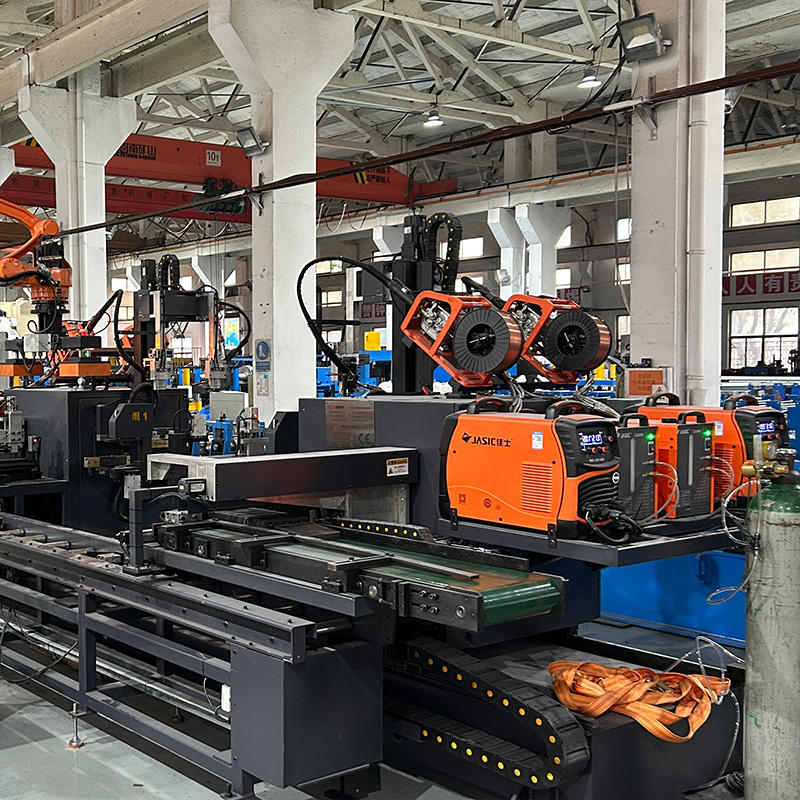
Casos prácticos
A recent example similar to many U.S. projects involved a Midwest steel building supplier that needed a flexible C/Z purlin line to serve contractors in Illinois, Missouri, and Indiana. The client wanted sizes from 100-300 mm web height, material thickness up to 3.0 mm, and automatic changeover to reduce setup time between jobs. We recommended a line with hydraulic decoiler, leveling, servo pre-punching, quick size adjustment, and PLC recipe storage. Roller material was Cr12MoV with hardness HRC 58-62, and the line operated around 15-18 m/min for standard production.
After commissioning, the customer reduced manual adjustment time significantly and improved profile consistency for bolted connections in steel structure projects. Scrap dropped because hole position and cut length became more stable, and operators could switch between common sizes without prolonged downtime. For this type of buyer, the value was not only speed; it was the combination of flexibility, predictable quality, and reduced dependence on one senior setup technician.
Another realistic case involved a U.S. solar component distributor expanding into light manufacturing for utility and commercial projects in Texas and the Southeast. The goal was to produce bracket and rail profiles from pre-galvanized coil at 1.5-2.0 mm thickness, with high punching accuracy and dependable daily output. We proposed an integrated line with decoiler, precision leveler, servo feeder, hydraulic punching, roll forming, flying shear, and receiving table. The client also requested English control documentation and remote support for electrical troubleshooting.
The result was a production line capable of meeting repetitive project schedules with less outsourced fabrication. The buyer gained better control over delivery timing, improved margin on repeat orders, and reduced freight complexity by producing key support components in-house. In projects like this, the most important outcome is often supply-chain control: when installers need brackets, rails, and matched hole patterns on time, a properly configured Roll Forming Machine line becomes a competitive advantage rather than just a piece of equipment.
Los 6 mejores proveedores locales recomendados en Estados Unidos
For buyers who prefer local communication and service, the table below shows six realistic types of U.S.-based suppliers or distributors worth evaluating. We recommend verifying their installed base, technician coverage, spare-part inventory, and references before final selection.
| Nombre de la empresa | Fortalezas principales | Regiones de servicio | Soporte preventa | Soporte posventa |
|---|---|---|---|---|
| Midwest Profile Systems | Strong in purlin, deck, and steel building profile consultation | Chicago, IL; Indianapolis, IN; St. Louis, MO | Plant layout review, profile analysis, ROI estimate | Installation, operator training, spare parts |
| Atlantic Forming Solutions | Good fit for roofing, siding, and rainwater systems | Atlanta, GA; Charlotte, NC; Orlando, FL | Coil compatibility review, sample profile testing | Remote diagnostics, preventive maintenance |
| Sunbelt Industrial Rollforming | Focused on structural framing and contractor-oriented lines | Dallas, TX; Houston, TX; Tulsa, OK | Job mix assessment, throughput planning | On-site commissioning, hydraulic/electrical service |
| Great Lakes Coil Tech | Combines Roll Forming Machine supply with slitting and coil handling knowledge | Detroit, MI; Cleveland, OH; Toledo, OH | Coil prep advice, integration with decoiling systems | Parts stock, retrofits, maintenance support |
| Pacific Metal Line Systems | Strong in solar, cable tray, and light structural profiles | Phoenix, AZ; Las Vegas, NV; Riverside, CA | Punching layout optimization, technical proposals | Field service visits, troubleshooting, upgrades |
| Northeast Precision Forming | Suitable for stud-track, shelf, and lighter gauge profile lines | Pittsburgh, PA; Columbus, OH; Buffalo, NY | Drawing review, tolerance planning, CAPEX guidance | Start-up assistance, training, wear-part replacement |
Use this table as a screening tool, not as a final decision list. Ask each supplier for similar installed references, sample output tolerances, commissioning scope, and guaranteed response times. In the U.S. market, the best supplier is usually the one that matches your product mix, labor situation, and service expectations rather than simply the nearest one.
Por qué elegir SUNWAY como su socio global
If you are comparing local service convenience with global manufacturing value, SUNWAY offers a strong middle path. As a Chinese manufacturer and exporter focused on cold roll forming machinery, we have rich export experience and have served many end-users and distributors in the United States across roofing, acero structure, solar, framing, storage, and industrial profile applications. With 15+ years of manufacturing experience, 1,350+ global customers, 200+ employees, 160+ industries, and projects delivered to 100+ countries, we understand both standardized machines and custom production lines. You can learn more acerca de nosotros.
We are structured to support both distributors and end-users directly. That means we can help a distributor build a broader portfolio with technical backing, or work with a manufacturer that needs a complete one-stop solution including design, installation, training, maintenance, parts supply, upgrades, and process consultancy. Our in-house design team uses German COPRA software, supported by more than 10 experienced design engineers and a complete R&D and production system. We also offer certifications and quality assurance aligned with buyer expectations, including CE, ISO 9001, UL, BV Assessment, and Alibaba Gold Supplier credentials.
Looking ahead, we are also building for closer U.S. market support. Our plan includes a local warehouse with stock delivery capability in the United States, continued development of an overseas technical team for on-site engineering service, and active recruitment of partners through upcoming affiliate and dropshipping programs. Combined with comprehensive online and offline support, one-stop solutions, and competitive pricing backed by more than 20 years of export experience, this makes SUNWAY a practical long-term partner. To explore our catálogo de productos, visit our página de inicioo contacte con nuestro equipo for a quotation and machine recommendation.
Preguntas más frecuentes
How much does a Roll Forming Machine cost in the United States?
The price depends on product type, thickness range, automation level, and whether punching, stacking, or slitting are included. A simpler roofing panel line may be far less expensive than a fully automatic solar bracket or C/Z purlin line with servo feeding and hydraulic punching. In practice, buyers should budget not only for the machine, but also tooling, coil handling, shipping, commissioning, spare parts, and operator training. The best way to compare offers is by total installed capability, not base price alone.
What thickness range should I choose for a U.S. project?
Choose thickness based on the profiles you plan to sell, not on the widest theoretical range. Roofing and wall panels commonly run around 0.4-0.8 mm, stud and track around 0.5-1.2 mm, solar and cable tray around 1.5-2.5 mm, and purlins or guardrail-related products may require 2.0-4.0 mm or more. If your orders vary widely, a dedicated line for each segment is often more reliable than forcing one machine to cover every gauge.
How fast should a Roll Forming Machine run?
For many U.S. buyers, a practical production speed is 10-25 m/min for medium-duty lines, while some lighter gauge stud-track lines can run faster. However, real output depends on punching frequency, cut length, profile complexity, and stacking efficiency. A line advertised at very high speed may still produce fewer saleable parts if hole accuracy, straightness, or cut quality are unstable. Always ask for output based on your actual profile drawing.
What should I check in the roller and tooling specification?
You should confirm roller material, heat treatment, shaft diameter, pass design, and expected tooling life. For demanding industrial use, Cr12MoV rollers hardened to HRC 58-62 are commonly preferred because they offer good wear resistance and profile stability. Also check whether the supplier has used professional design software, how easy die replacement is, and whether spare tooling can be supplied quickly. Good tooling design directly affects scrap rate and dimensional consistency.
Is local U.S. service more important than machine price?
In many cases, yes. If your production schedule is tight, a delayed technician visit or unavailable spare part can cost more than the initial savings from a cheaper machine. U.S. buyers should compare supplier response time, remote diagnostics capability, English technical documentation, and spare-part planning alongside price. A competitively priced international machine can still be the best option if the supplier offers strong commissioning, training, and after-sales support.
Can SUNWAY support both distributors and end-users?
Yes. SUNWAY can support distributors that need product range expansion, technical documents, and partner assistance, and also support end-users that need a complete production solution from machine design to installation and maintenance. Our team works on custom machinery design, technical support, training, parts supply, upgrades, and process consultation. This flexibility is especially helpful in the U.S. market, where some buyers want private-label distribution while others want direct factory collaboration.
How can I request the right machine recommendation?
The fastest method is to submit your profile drawing, raw material specification, thickness range, target speed, power supply standard, and preferred automation level. If available, also share hole layout, tolerance requirements, plant layout, and annual production target. With that information, SUNWAY can recommend a suitable line configuration and quotation with fewer revisions. To start, please submit your requirements via contacte con nuestro equipo.
Contenido revisado y actualizado: marzo de 2026