Quick Answer
If you are looking for the best Roof Panel Machine suppliers in India in 2026, the most practical choice is to shortlist a few capable local suppliers for fast plant visits, installation response, and easier spare-parts coordination, while also evaluating SUNWAY as a reliable Chinese manufacturer for custom engineering, export execution, and long-term technical support. For many Indian buyers, the strongest sourcing strategy combines local responsiveness with international manufacturing depth. If you want help choosing the right profile, speed, and automation level, you can আমাদের দলের সাথে যোগাযোগ করুন for selection guidance and a detailed quotation.
Strong local options typically include Western Roofing Systems India, Deccan Rollform Solutions, Apex Panel Tech, Shakti Metalforming Services, and EastLine Roofing Equipment. Western Roofing Systems India is a good fit for buyers needing plant layout advice and installation planning. Deccan Rollform Solutions is well suited to mid-volume sheet producers that need dependable service support in western and southern India. Apex Panel Tech is a practical choice for factories wanting operator-friendly controls and mixed-profile flexibility. Shakti Metalforming Services is attractive for regional fabricators seeking cost-conscious expansion. EastLine Roofing Equipment serves buyers who prioritize response in coastal and industrial port regions. For companies that want a trusted overseas partner, সানওয়ে is an excellent option thanks to strong R&D, customized roll forming solutions, and complete support across design, manufacturing, commissioning, training, and upgrades.

Market Overview
India remains one of the most promising markets for Roof Panel Machine investment because roofing demand is supported by industrial construction, warehouse development, logistics growth, commercial expansion, and ongoing infrastructure spending. According to IBEF, India’s finished steel consumption reached about 136 million tonnes in FY24, with year-on-year growth of more than 14%, while steel demand was projected to expand by around 8% annually in 2024 and 2025. These numbers matter directly for roof panel manufacturers because steel roofing and wall cladding remain core materials for factories, sheds, workshops, and distribution buildings across the country.
The construction and industrial real estate pipeline also supports machinery demand. India continues to invest heavily in roads, logistics parks, manufacturing zones, industrial corridors, and warehouse networks, which all require fast-install roofing systems. In addition, India added 25 GW of renewable energy capacity in FY25 and crossed 100 GW of installed solar capacity, according to public data summarized by IBEF. While solar plants need different structural profiles, the broader project ecosystem creates more demand for roofed workshops, inverter rooms, fabrication sheds, service buildings, and storage structures where formed roof panels are widely used.
At the broader industry level, Asia-Pacific accounted for about 31.1% of the global roll forming market in 2025, while the global roll forming equipment market was valued at roughly US$560 million in 2025 and is projected to reach around US$860 million by 2035 at a CAGR of 4.4%. China represents roughly 21% of global demand. For Indian buyers, this confirms that roll forming equipment is not a niche purchase but part of a stable, long-cycle industrial segment. As more manufacturers seek shorter lead times and better product control, investment in in-house roof panel production lines becomes easier to justify.
| Market Indicator | Current Signal | Why It Matters for Buyers |
|---|---|---|
| India finished steel consumption | ~136 million tonnes in FY24 | Supports sustained demand for roofing and cladding products |
| India steel demand growth | ~8% annually in 2024-2025 | Encourages capacity expansion for sheet producers |
| Renewable energy additions | 25 GW in FY25 | Drives related industrial and utility building activity |
| Global roll forming equipment market | ~US$560M in 2025 | Shows long-term equipment demand stability |
| Roof Panel Machine investment outlook | Positive in industrial states | Strong fit for buyers in roofing, warehousing, and fabrication |
This table is useful for internal investment discussions because it connects machine procurement to national demand signals rather than only factory-level assumptions. Buyers can use it to explain why a Roof Panel Machine purchase is tied to long-term industrial consumption, not just short-term order cycles.
What Types of Roof Panel Machine Are Needed in India
Based on our experience serving India clients, the most in-demand Roof Panel Machine configurations are single-layer roof sheet lines, double-layer roof and wall panel lines, and trapezoidal plus corrugated combination machines. Indian buyers usually prefer machines that can process PPGI and GI coils in the range of 0.3 mm to 0.8 mm, with common effective coil widths around 1000 mm to 1250 mm. In many factories, machine selection is driven by practical order mix rather than by one ideal profile, because regional dealers and project buyers often request several standard roof panel patterns within the same month.
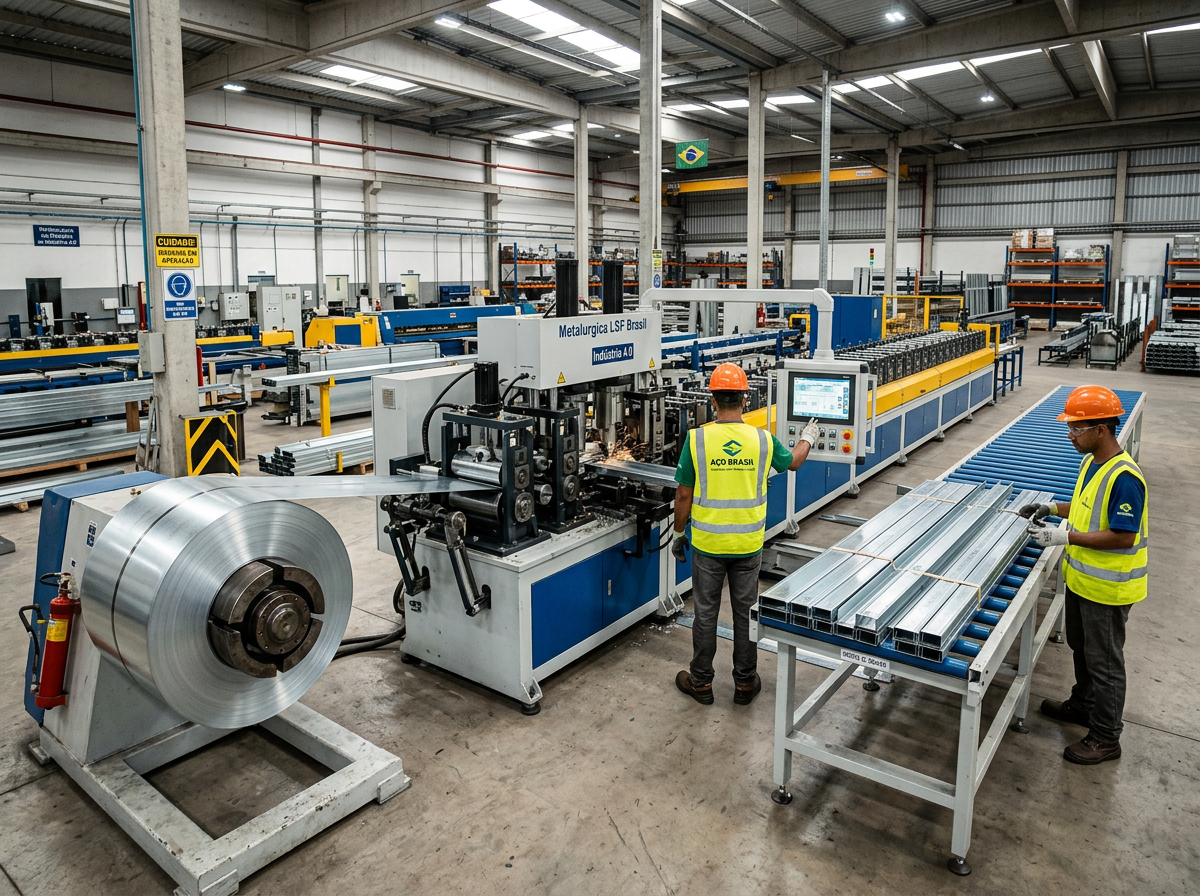
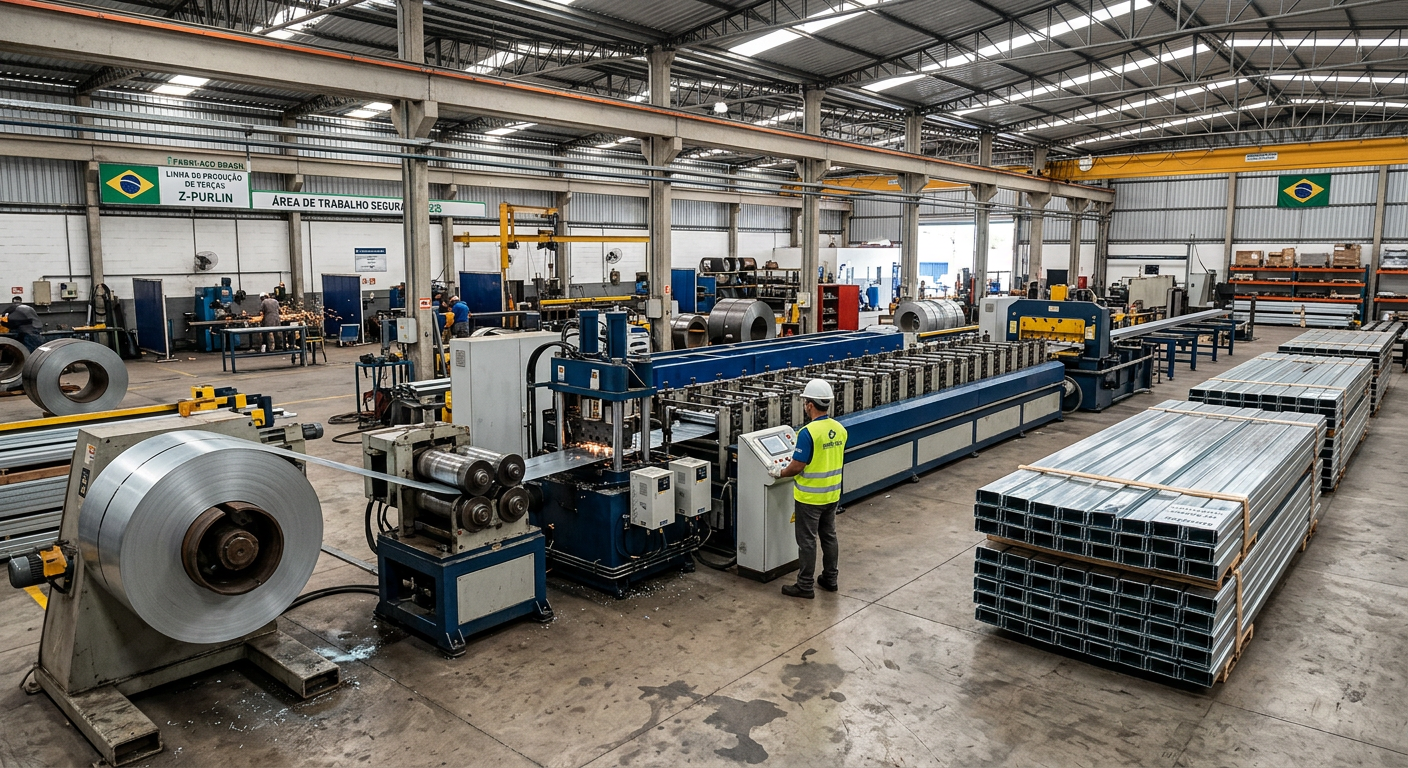
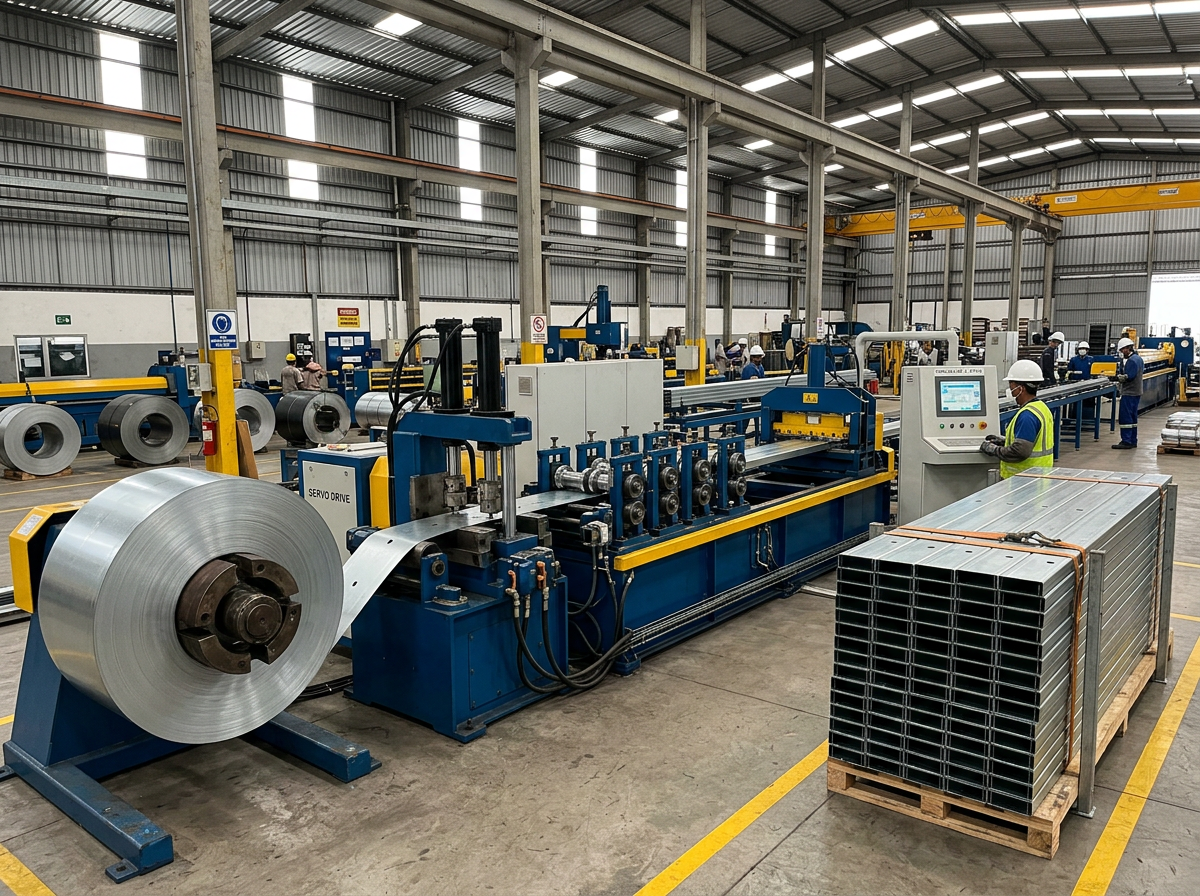
We also see strong demand for compact but durable lines with hydraulic decoiling, entry guiding, leveling when needed, roll forming, hydraulic or servo-controlled shearing, and manual or automatic stacking. Typical production speeds in India are usually in the range of 10-25 m/min, depending on panel profile, material thickness, and acceptable cut tolerance. Buyers often ask for Delta or Siemens PLC systems, touchscreen HMI, Cr12MoV cutting blades with HRC 58-62 hardness, and chrome-coated rollers for better wear resistance. Double-layer machines are especially popular among medium-sized manufacturers because they save floor space and reduce capital cost compared with installing two separate lines.
| Machine Configuration | Material Range | Common Use in India | Best Fit |
|---|---|---|---|
| Single-layer Roof Panel Machine | 0.3-0.8 mm PPGI/GI | High-volume standard roofing | Dedicated roof sheet plants |
| Double-layer Roof Panel Machine | 0.3-0.8 mm PPGI/GI | Corrugated and trapezoidal panels | Mixed-order manufacturers |
| High-rib roof panel line | 0.4-0.8 mm | Industrial sheds and warehouses | Project-focused suppliers |
| Compact entry-level line | 0.3-0.6 mm | Regional dealer supply | New fabricators and small plants |
Use this table to decide which machine family matches your sales model before comparing quotations. In India, profile flexibility, floor-space efficiency, and coil compatibility are often more important than choosing the highest advertised speed.
Why These Product Types Are Recommended
These product types are recommended because Indian roof panel demand is highly practical and market-driven. Buyers are not just producing one sheet for one sector; they are often serving warehouse builders, local distributors, contractors, agricultural customers, and industrial roof replacement projects at the same time. That is why machines with broad material compatibility, repeatable cut accuracy, and easy changeover are usually better investments than extremely specialized lines. A well-configured Roof Panel Machine can reduce waste, improve dispatch reliability, and support mixed daily orders without creating excessive training or maintenance burdens.
From a technical perspective, sheet quality depends on several linked stages: stable decoiling, controlled feeding, proper roll forming geometry, accurate encoder length measurement, and clean shearing. For India, we usually recommend machine structures with strong frame rigidity, roller stations sized for stable profile formation, and cutting systems matched to panel depth and output speed. Roller materials such as 45# steel with hard chrome treatment are suitable for many applications, while Cr12MoV blades improve durability for longer production cycles. Hydraulic pressure in the 10-16 MPa range is common for dependable shearing, and well-programmed PLC logic helps maintain cut-length consistency across batch runs.
| Component Area | Recommended Standard | Why It Matters |
|---|---|---|
| রোলারের উপাদান | 45# steel with hard chrome plating | Protects profile accuracy and improves service life |
| Cutting blade | Cr12MoV, HRC 58-62 | Cleaner cuts and longer blade life |
| PLC and HMI | Delta or Siemens | Easier job setup and repeat production |
| হাইড্রলিক সিস্টেম | 10-16 MPa | Stable cutting for daily output |
| ফর্মিং গতি | ১০-২৫ মি/মিনিট | Balanced productivity and control |
This component overview helps buyers compare technical quotations line by line. If one supplier does not clearly specify blade material, hardness, PLC brand, or hydraulic range, the quotation may not be detailed enough for a serious purchasing decision.
Key Industries for Roof Panel Machine in India
The industries that most need Roof Panel Machine capacity in India include roofing-sheet manufacturers, pre-engineered building suppliers, steel service centers, industrial shed contractors, warehouse developers, agricultural structure fabricators, and regional building-material distributors. These sectors depend on roof panels because they need fast-install covering systems that are durable, easy to transport, and cost-efficient over large areas. In industrial clusters across Gujarat, Maharashtra, Tamil Nadu, Telangana, Karnataka, and North India, roof panel production is closely tied to factory expansion and logistics infrastructure.
A second major demand driver comes from regional stock-and-supply networks. Many Indian buyers do not sell only to large EPC or industrial clients; they also serve smaller fabricators, commercial projects, retail channels, and local contractors that need standard roof panel sizes on short notice. That procurement pattern favors machinery that is easy to run, easy to maintain, and able to process different lengths without excessive setup time. In practice, this means buyers often prefer simple, proven roll forming layouts with dependable electrical components and clear operator interfaces rather than overly complex automation they may not fully use.
Specific Application Scenarios
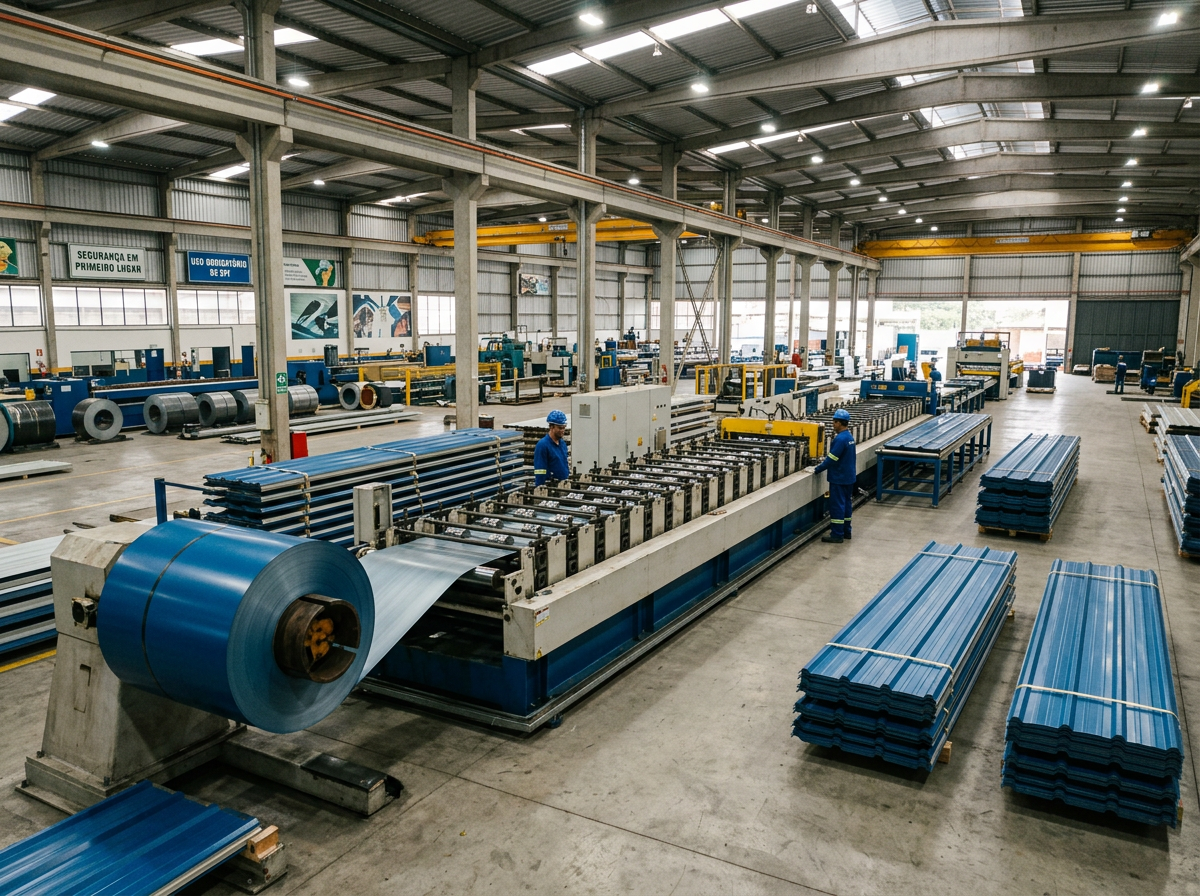
One common application scenario is a regional roof sheet manufacturer supplying colored roof panels to dealers serving industrial sheds, retail structures, and warehouse extensions. In this model, the production line must handle frequent color changes, several cut lengths, and routine dispatch deadlines. The machine usually includes decoiling, feeding, roll forming, hydraulic shearing, and stacking. Here, the most important operational goals are cut-length accuracy, smooth profile formation, and low paint-surface damage, because even small defects can affect dealer acceptance and project installation quality.
Another frequent scenario is a steel building supplier that needs trapezoidal or high-rib roof panels for pre-engineered building systems. These projects often require tighter dimensional consistency because roof panels must align with purlins, ridge systems, and fastener plans. A third scenario appears in rural and semi-urban markets, where fabricators produce simpler roof sheets for agricultural sheds, workshops, retail kiosks, and temporary site structures. In these cases, buyers usually prioritize machine durability, manageable training requirements, and access to spare parts, since local operator skill levels and service lead times can vary significantly.
| Application Scenario | Typical Output Need | Best Machine Features | Key Buyer Concern |
|---|---|---|---|
| Dealer-based roof panel supply | Mixed lengths and colors | Easy HMI, stable cutting, smooth stacking | Fast dispatch and low waste |
| PEB and warehouse roofing | Accurate panel geometry | Rigid frame, precise encoder, high-rib tooling | Fit-up consistency |
| Rural and regional fabrication | Standard profiles, moderate volume | Simple controls, durable build | Serviceability |
| Contract project supply | Batch-based production | Flexible programming and reliable hydraulics | On-time completion |
This table helps buyers translate business model into machine requirements. It is especially useful when deciding whether to invest in a standard Roof Panel Machine or a more flexible configuration for project-based production.
কেস স্টাডি
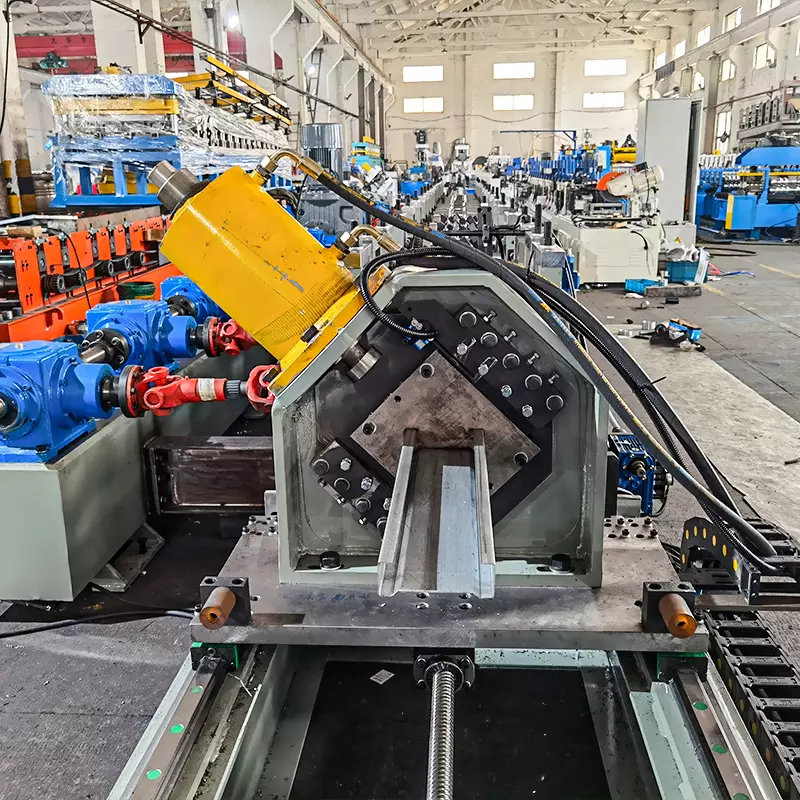
A western India customer operating as a roofing-sheet distributor wanted to reduce dependence on outside processors and improve delivery control. The company mainly sold standard color roof panels to dealers and local contractors, with frequent orders in 0.45 mm and 0.50 mm PPGI. We recommended a single-layer Roof Panel Machine with a 5-ton hydraulic decoiler, 16 forming stations, encoder-based length control, hydraulic post-cutting, and a practical running speed of around 18-22 m/min in daily production. The line used chrome-coated rollers, Cr12MoV cutting blades, and a Delta PLC system to make operation straightforward for locally trained staff.
After installation and operator training, the customer improved consistency in cut length and reduced complaints related to uneven edges. More importantly, they shortened lead times because they no longer had to depend on outside processing slots. This created a stronger position with dealers who needed rapid replenishment during peak roofing months. In India, this is often the real commercial gain from in-house roll forming: not only better unit economics, but more control over delivery promises and customer confidence.
A second project involved a south India fabricator supplying both industrial roofing contractors and local stockists. The buyer had limited floor space and wanted one machine that could handle both corrugated and trapezoidal profiles. We proposed a double-layer line with manual layer selection, 0.3-0.8 mm material capacity, touchscreen HMI, hydraulic shearing, and a working speed of 12-18 m/min depending on profile depth and cut length. The hydraulic station was sized within the normal 10-16 MPa range, and the control system stored repeat jobs to simplify changeover between common orders.
The result was better space utilization and lower staffing pressure compared with installing two separate entry-level machines. Operators adapted quickly because the interface was clear and the job settings were easy to recall. The customer also reduced changeover confusion during mixed-order production. This type of case is common in India, where moderate-volume buyers often gain more from flexible capacity and easier plant management than from installing the fastest possible standalone line.
Top 6 Recommended Local Suppliers in India
If your priority is faster local response, the best approach is to compare Indian suppliers that can clearly define both pre-sale engineering support and after-sale responsibilities. The right local supplier should understand not just the machine itself, but also your production layout, operator capability, spare-parts planning, and the actual roof panel profiles you sell in your region.
| Company Name | Core Strengths | Service Regions | Pre-sale Support | After-sale Support |
|---|---|---|---|---|
| Western Roofing Systems India | Strong planning for roof sheet plants and medium-volume factories | Ahmedabad, Surat, Mumbai, Pune | Layout review, profile matching, utility checklist | Installation guidance, troubleshooting visits |
| Deccan Rollform Solutions | Balanced machine supply and service support for growing manufacturers | Hyderabad, Vijayawada, Bengaluru | Material evaluation, capacity planning | Spare parts, hydraulic service, retraining |
| Apex Panel Tech | User-friendly controls and flexible roof profile options | Chennai, Coimbatore, Hosur, Kochi | Sample analysis, machine configuration advice | PLC support, remote diagnosis, field visits |
| Shakti Metalforming Services | Cost-conscious solutions for expanding regional fabricators | Vadodara, Rajkot, Indore, Jaipur | Budget planning, ROI discussion | Scheduled maintenance, phone support |
| EastLine Roofing Equipment | Strong coastal market coverage and dispatch coordination | Chennai, Visakhapatnam, Odisha, Kolkata | Project mapping, installation planning | Parts support, commissioning, service calls |
| NorthGrid Panel Machinery | Responsive support for north India industrial buyers | Delhi NCR, Faridabad, Ludhiana, Lucknow | Plant visit, order planning, profile consultation | On-site engineering and annual support packages |
This table should be used as a screening tool, not a final ranking. Ask each supplier for installed references, warranty scope, service response time, training coverage, and detailed component specifications. A supplier that explains these items clearly is usually more dependable than one that wins only on initial price.
Why Choose SUNWAY as Your Global Partner
SUNWAY gives Indian buyers a practical global option when they need deeper engineering support, broader product customization, and a supplier that understands export execution. We are a professional manufacturer and exporter of cold roll forming machines serving end-users and distributors across many industries. With 1,350+ global customers, 200+ employees, 500+ projects, and deliveries to 100+ destination countries, we support a wide range of roof panel, স্টীল profile, solar bracket, floor deck, slitting, and structural roll forming solutions. You can visit our homepage, learn more about us, or review our product catalog.
For India, our value is especially clear when buyers need more than a standard export machine. SUNWAY uses German COPRA software, works with 10+ experienced design engineers, and provides custom design, installation, technical support, training, maintenance, parts supply, upgrades, and consultancy as a complete one-stop service. We can serve both distributors and end-users directly, and we have already supported many Indian customers through project consultation, machine selection, and export delivery. We are also planning a local warehouse with stock delivery in India, building an overseas technical team for on-site engineering service, and actively recruiting partners through upcoming affiliate and dropshipping programs with comprehensive online and offline support. If you are comparing long-term value, competitive pricing, and complete project support, please আমাদের দলের সাথে যোগাযোগ করুন.
| Buyer Checkpoint | What to Confirm | Why It Matters |
|---|---|---|
| Profile suitability | Exact roof panel drawing and effective width | Prevents tooling mismatch |
| Material range | Coil type, thickness, yield strength | Ensures stable forming and blade life |
| Local support plan | Training, spare parts, service response | Reduces downtime risk |
| Roof Panel Machine controls | PLC brand, HMI language, job memory | Improves operation and repeatability |
| Delivery scope | Commissioning, manuals, wear parts | Avoids hidden post-purchase cost |
Use this checklist before placing any order, whether local or imported. It helps buyers compare total project value rather than just machine price, and it reduces the risk of specification gaps that cause delays after delivery.
FAQ
What is the best Roof Panel Machine type for most Indian buyers?
For most Indian buyers, a single-layer or double-layer roll forming line for PPGI and GI coils in the 0.3-0.8 mm range is the most practical option. Single-layer machines suit high-volume production of one standard profile, while double-layer machines are better for mixed orders where floor space and budget must be controlled.
What production speed is realistic for a Roof Panel Machine?
A realistic daily operating speed for most roof panel lines in India is about 10-25 m/min, depending on material thickness, panel profile, and cut length. Buyers should focus on stable production speed under load rather than headline no-load speed, because consistency usually matters more than peak speed in real factory conditions.
Which technical details should I check before buying?
You should confirm roller material, cutting blade grade, shaft diameter, PLC brand, hydraulic pressure, motor power, forming stations, and machine frame structure. For many buyers, Cr12MoV cutting blades with HRC 58-62 hardness, a 10-16 MPa hydraulic system, and Delta or Siemens PLC controls are practical benchmarks for reliable performance.
Is local service more important than machine price?
In many cases, yes. A lower-priced machine can become more expensive if installation is delayed, operators are not trained well, or spare parts take too long to arrive. Indian buyers should compare service response time, warranty clarity, training scope, and spare-parts support as carefully as they compare price.
Can one machine produce different roof panel profiles?
Yes, but the best solution depends on how different the profiles are. A double-layer machine can produce two common profiles efficiently, while more complex profile combinations may require separate tooling or separate lines. Buyers should share exact profile drawings before finalizing the machine design.
How does SUNWAY support Indian distributors and end-users?
SUNWAY supports both distributors and end-users directly. We provide machine selection advice, custom design, manufacturing, installation, training, maintenance, technical support, spare parts, and upgrade consultation. For distributors, we also offer partnership-oriented support and future collaboration opportunities as our India service network expands.
How can I get a fast quotation from SUNWAY?
The fastest way is to send your roof panel drawing, raw material type, thickness range, coil width, required speed, expected daily output, and delivery location in India. With those details, our team can recommend a suitable Roof Panel Machine configuration and prepare an accurate quotation. To submit your requirements, please use যোগাযোগ.
Content reviewed and updated: March 2026