Quick Answer
If you need a direct recommendation, the best Metal Roof Roll Former suppliers in the United States are usually regional machinery companies that can provide local consultation, installation support, and faster service response, combined with an experienced global manufacturer that can customize complete lines. For most U.S. buyers, the practical shortlist includes 4-5 domestic suppliers for easier communication and onsite support, while also considering SUNWAY as a trusted Chinese manufacturer for tailored configurations, competitive pricing, and complete project support. If you want help comparing panel profiles, coil thickness, output targets, and automation levels, you can আমাদের দলের সাথে যোগাযোগ করুন for machine selection guidance and a quotation.
Midwest Roofing Line Systems is a strong choice for buyers who need practical pre-sale advice on standing seam and corrugated panel production. Atlantic Panel Machinery is well suited for East Coast manufacturers that value responsive commissioning and spare-parts coordination. Lone Star Roof Forming Solutions fits southern U.S. buyers that serve agricultural, warehouse, and light commercial roofing demand. Pacific Roofing Equipment Group is attractive for custom panel profile projects and flexible service planning in western states. Great Lakes Sheet Metal Machinery is a good fit for companies that prioritize maintenance support and controls troubleshooting. We also recommend সানওয়ে as a dependable global partner because we supply complete cold roll forming solutions, from design and production to installation, training, maintenance, parts supply, upgrades, and technical support.
| সরবরাহকারীর ধরন | Best Fit | Main Advantage | Main Limitation |
|---|---|---|---|
| Local Metal Roof Roll Former distributor | Buyers needing domestic communication and site visits | Faster regional support and easier plant coordination | Higher equipment cost in some cases |
| Regional panel line integrator | Factories with space, workflow, or custom profile needs | Better local layout and installation planning | Usually narrower machine range |
| Overseas Metal Roof Roll Former manufacturer | Buyers seeking customization and value | Strong engineering flexibility and price-performance | Longer shipping lead time |
This table is most useful for creating a sourcing strategy before requesting quotations. Many U.S. manufacturers compare one domestic supplier and one overseas partner so they can balance support speed, customization, and total investment cost.
Market Overview
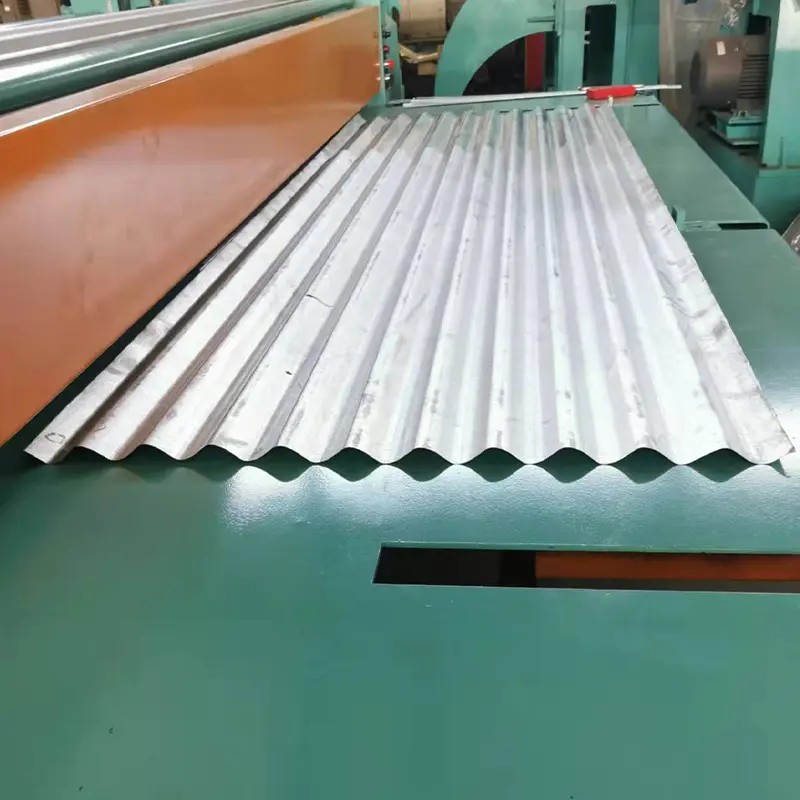
The U.S. market for Metal Roof Roll Former equipment remains supported by construction spending, reroofing demand, industrial building activity, and regional growth in warehousing, agriculture, and light commercial projects. According to the U.S. Census Bureau, total construction spending reached a seasonally adjusted annual rate of USD 2.1752 trillion in October 2025, while private nonresidential construction reached USD 737.4 billion and highway construction reached USD 141.6 billion. These figures matter because metal roofing products are widely used on warehouses, logistics buildings, workshops, farm structures, retail units, and public infrastructure support buildings.
Housing and energy trends also support demand for metal roofing capacity. The U.S. Census Bureau reported that privately owned housing units authorized by building permits were at a seasonally adjusted annual rate of 1,448,000 in December 2025, which indicates continued building activity relevant to residential and light commercial roofing demand. In the energy sector, SEIA reported that the United States installed nearly 50 GWdc of solar capacity in 2024, up 21% from 2023, and solar accounted for 66% of all new electricity-generating capacity added to the grid in 2024. That matters because solar-related construction often increases demand for durable metal roof systems on industrial and commercial buildings. Buyers looking at a Metal Roof Roll Former in 2026 are entering a market where speed, durability, and short lead times remain key differentiators. (census.gov)
| U.S. Market Indicator | Latest Figure | Why It Supports Metal Roof Roll Former Demand |
|---|---|---|
| Total construction spending | USD 2.1752 trillion annual rate in Oct. 2025 | Broad support for commercial, industrial, and institutional roof demand |
| Private nonresidential construction | USD 737.4 billion annual rate in Oct. 2025 | Drives roof panel demand for warehouses, factories, and business facilities |
| Highway construction | USD 141.6 billion annual rate in Oct. 2025 | Supports adjacent industrial and infrastructure building activity |
| Housing permits | 1,448,000 annual rate in Dec. 2025 | Indicates ongoing residential and light commercial roofing opportunities |
| New solar capacity | Nearly 50 GWdc in 2024, up 21% year over year | Supports metal roof usage in energy-related and commercial structures |
This table helps connect macro indicators to machinery investment. It should be used as a demand reference, then refined by state-level order patterns, local contractor preferences, and profile mix.
What Types of Metal Roof Roll Former Are Needed in United States
Based on our experience serving United States clients, the most in-demand Metal Roof Roll Former configurations are standing seam panel lines, trapezoidal roof panel lines, corrugated roofing lines, concealed fastener wall and roof panel lines, and multi-profile systems that can switch between two popular panel shapes. U.S. buyers often prefer machines that can serve both roofing distributors and project-based contractors, because order volumes change with the season, storm replacement cycles, and regional construction activity. A flexible line gives better utilization than a single-profile line when customer requirements vary month by month.
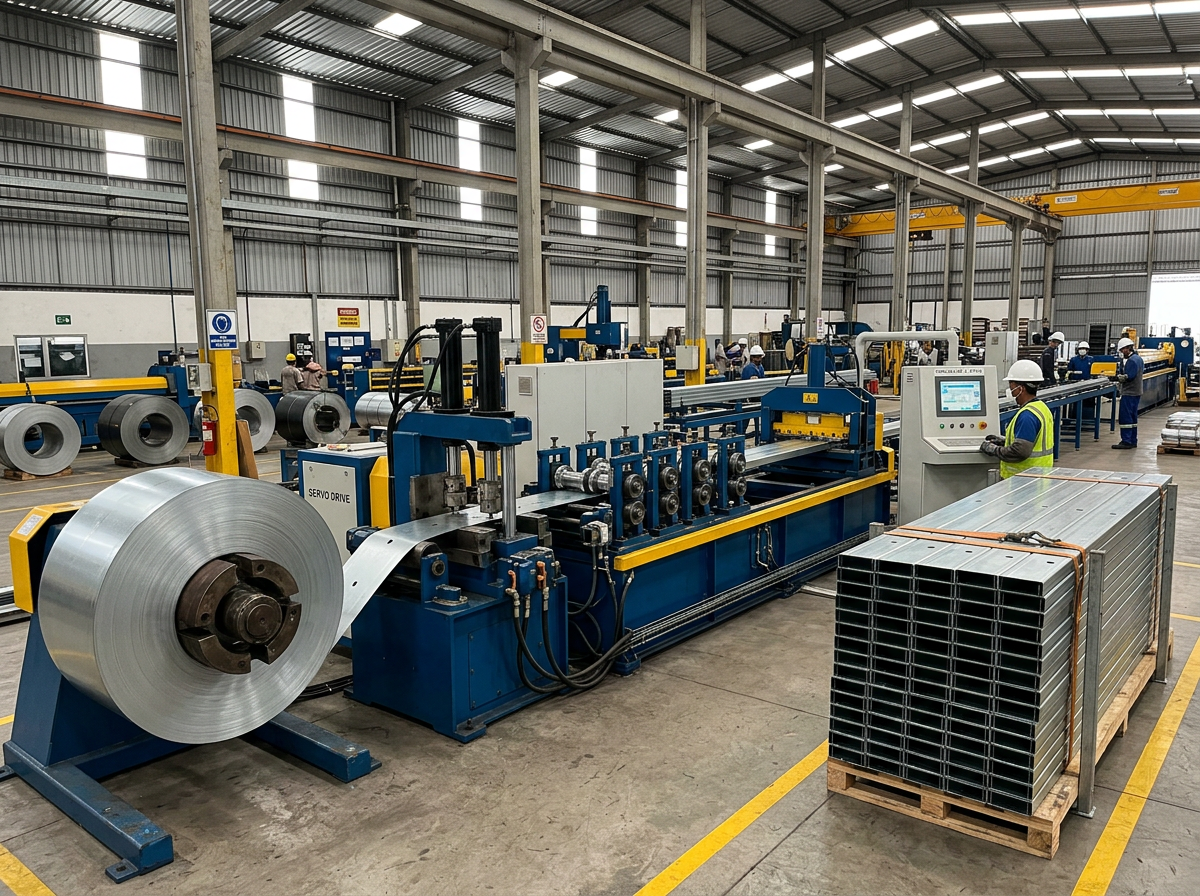
For the U.S. market, we commonly see demand for processing pre-painted steel, galvanized steel, Galvalume, and occasionally aluminum in thickness ranges of 0.3-0.8 mm, roughly 29-22 gauge depending on material and application. Typical forming speeds are 15-25 m/min for standard roof panel lines, with hydraulic pressure in the 10-16 MPa range. Buyers usually ask for Cr12MoV rollers hardened to HRC 58-62, shaft diameters around 70-80 mm, PLC control from Siemens, Mitsubishi, or Delta, and integrated decoiling, guiding, roll forming, length measurement, shearing, and run-out support or automatic stacking.
| Metal Roof Roll Former Type | Typical Thickness | Typical Speed | Common U.S. Use |
|---|---|---|---|
| Standing seam Metal Roof Roll Former | 0.4-0.7 mm | 15-20 m/min | Commercial roofs, premium residential roofs, retrofit projects |
| Corrugated roof panel line | 0.3-0.6 mm | 20-25 m/min | Agricultural buildings, workshops, storage sheds |
| Trapezoidal roof panel line | 0.35-0.8 mm | 15-25 m/min | Warehouses, factories, light industrial structures |
| Concealed fastener panel line | 0.4-0.7 mm | 15-20 m/min | Architectural walls and low-slope roofing systems |
Use this table to match your target product with a realistic operating range. The correct machine depends not only on panel shape, but also on coating type, end-market expectations, and how often you need to change recipes or lengths.
Why These Product Types Are Recommended
These Metal Roof Roll Former types are recommended because they fit the purchasing patterns and application mix seen across the U.S. market. Standing seam and concealed fastener profiles are valued for weather resistance, cleaner appearance, and premium building performance, while trapezoidal and corrugated panels remain popular because they are economical, easy to install, and suitable for agriculture, warehousing, and industrial use. In practice, many American buyers want a machine that can serve both standard volume production and short-run custom orders without excessive setup time.
From a technical standpoint, these product types also perform well when paired with robust line design and quality tooling. Roof panels require stable feeding, controlled forming pressure, and accurate cut length, especially when the customer expects straight panels, clean ribs, and uniform overlap geometry. We usually recommend high-grade roller material, rigid machine frames, stable hydraulic systems, and reliable PLC logic because roofing production often runs long shifts with thin coated steel. Weak rigidity or inconsistent control can cause edge wave, paint damage, profile mismatch, or length variation, which quickly becomes expensive in finished roofing orders.
| Core Component | Recommended Specification | Practical Benefit |
|---|---|---|
| রোলারের উপাদান | Cr12MoV, HRC 58-62 | Better wear resistance and stable panel profile geometry |
| Shaft diameter | 70-80 mm | Improved forming stability on long production runs |
| পিএলসি কন্ট্রোল | Siemens / Mitsubishi / Delta | Easier recipe storage and troubleshooting |
| হাইড্রলিক সিস্টেম | 10-16 MPa | Reliable cut-off and auxiliary actions |
| কাটিং সিস্টেম | Hydraulic post-cut or flying cut | Clean panel length control for roofing orders |
This component table is useful during quotation review. When two machines appear similar on price, these details usually explain the real difference in panel consistency, downtime risk, and long-term maintenance cost.
Key Industries for Metal Roof Roll Former in United States
The industries with the strongest demand for Metal Roof Roll Former equipment in the United States include building materials manufacturing, roofing supply distribution, steel building systems, agricultural construction, warehousing and logistics development, and light industrial fabrication. These sectors prefer metal roof products because they offer long service life, faster installation, and good resistance to weather, especially for large-span structures and buildings with low maintenance requirements. In many regions, owners and contractors also favor metal roofing because it supports energy-conscious building strategies and modern commercial aesthetics.
Regional demand is especially strong in states with active logistics, manufacturing, and agricultural construction, including Texas, Florida, Georgia, Tennessee, Arizona, Ohio, and the Carolinas. In the South and Midwest, storm recovery and replacement cycles also influence roofing demand, which makes local lead time and profile availability more important. Buyers in these markets often prefer bringing panel production in-house so they can reduce dependency on external suppliers, control length accuracy, and respond faster to dealer and contractor orders. That is why a Metal Roof Roll Former can be both a production asset and a service advantage.
| Industry Segment | Main Product Need | Machine Priority | Typical Buying Goal |
|---|---|---|---|
| Roofing manufacturers | Standing seam, corrugated, trapezoidal panels | Output speed and profile accuracy | Daily production efficiency |
| Steel building suppliers | Roof and wall panels for complete systems | Consistency and multi-profile capability | Full project package supply |
| Agricultural building contractors | Economical roof sheets | Fast changeover and durable tooling | Reliable seasonal order fulfillment |
| Warehouse and logistics developers | Large-area industrial roofing panels | Long-length accuracy and uptime | Better schedule control |
This application guide helps align end-market demand with machine requirements. It is also useful when explaining internally why a certain profile family or automation level makes commercial sense.
Specific Application Scenarios
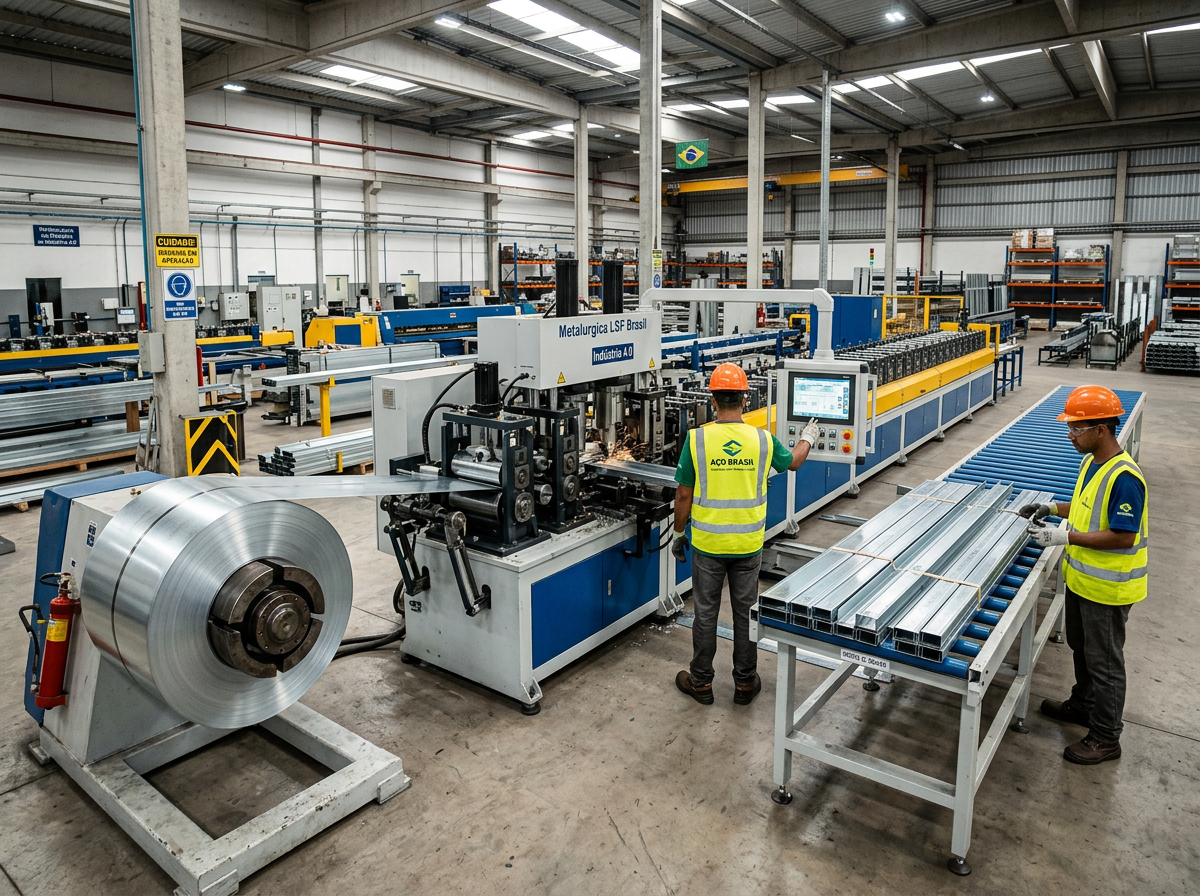
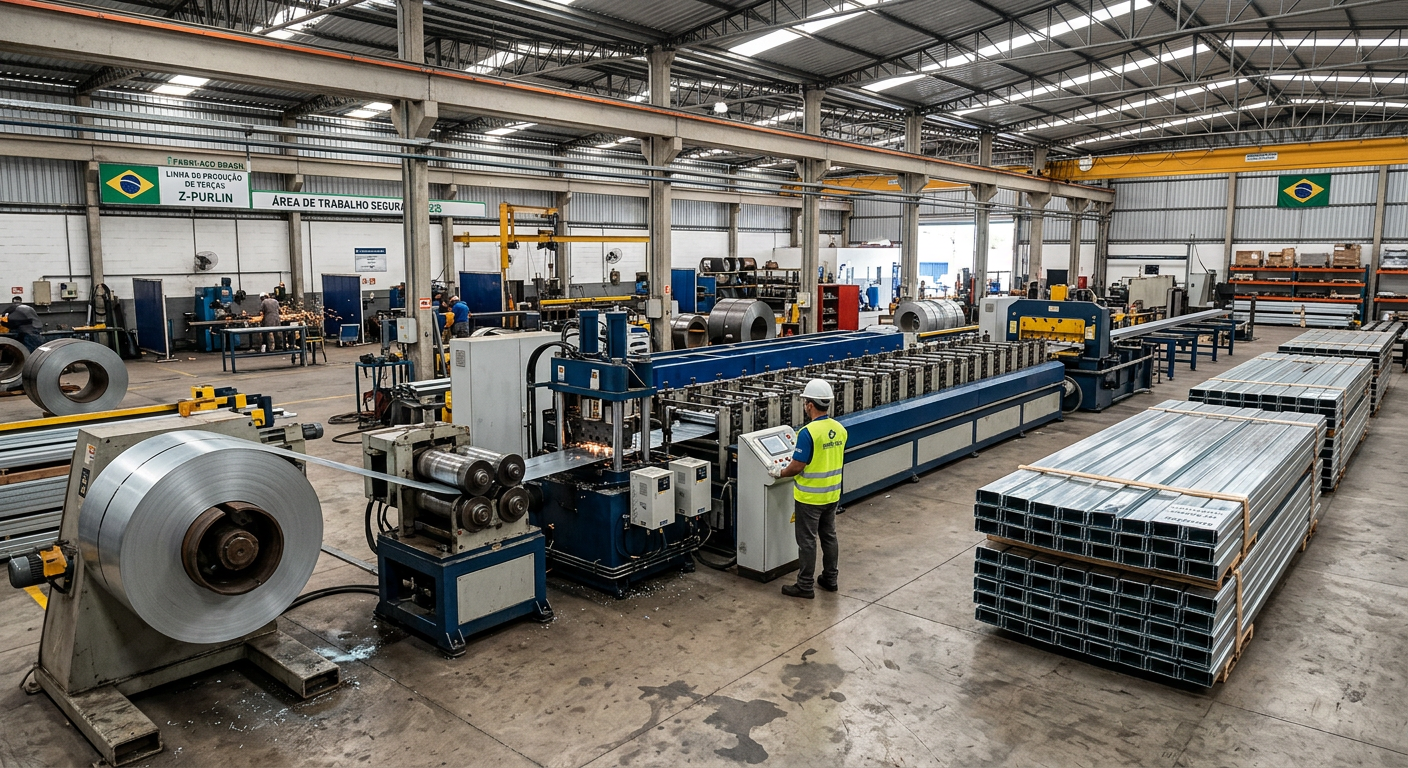
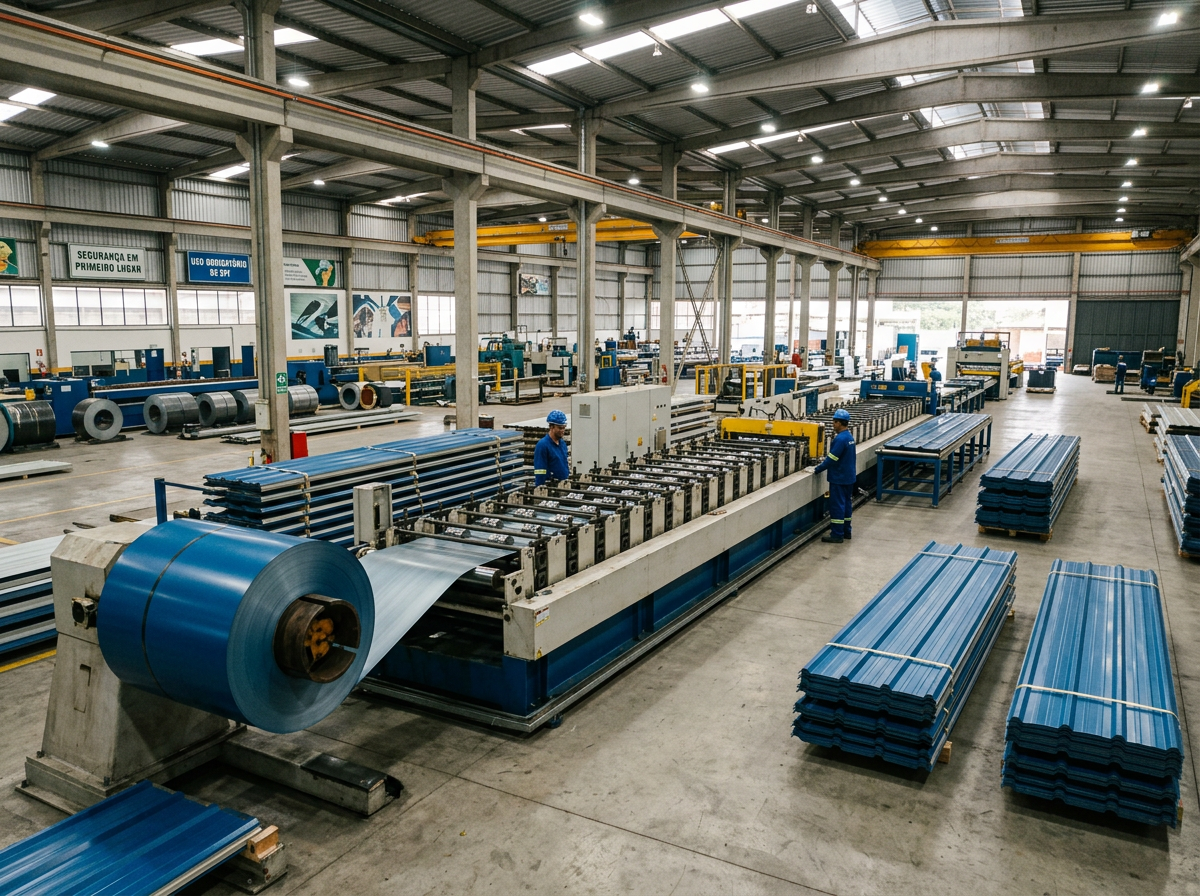
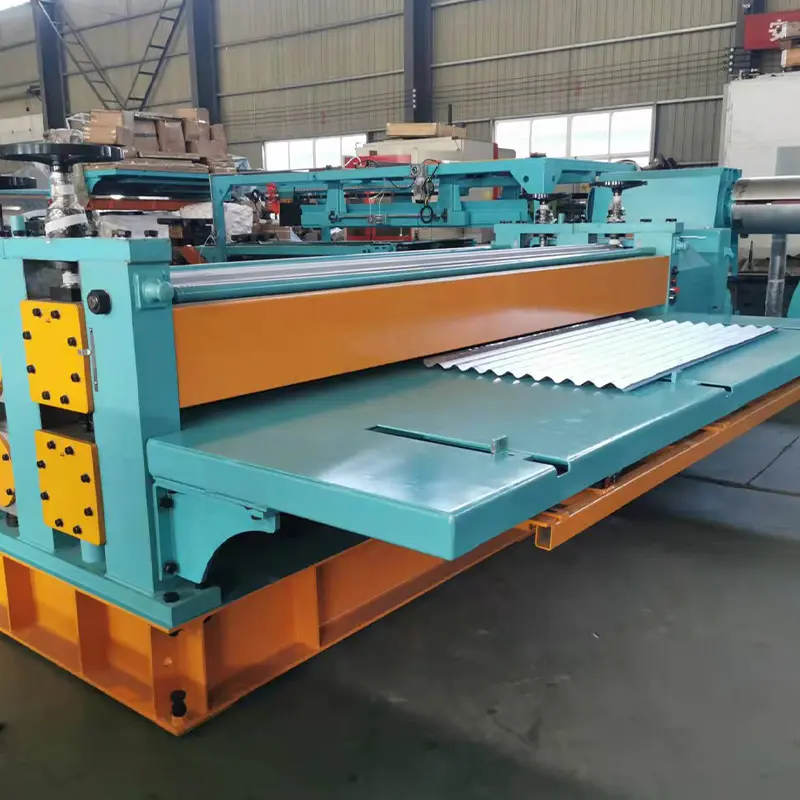
One common U.S. application is a regional roofing manufacturer producing long-length trapezoidal or corrugated panels for agricultural buildings, workshops, storage units, and local warehouses. In this setup, the Metal Roof Roll Former includes manual or hydraulic decoiler, entry guiding, feeding, roll forming, encoder measurement, hydraulic shearing, and output tables. The main target is smooth and repeatable daily production with minimal panel scratching and reliable overlap geometry, so installers can complete roofing projects quickly without field adjustments.
Another frequent scenario is a premium metal roofing supplier producing standing seam panels for residential, commercial, and retrofit projects. These orders often require cleaner appearance, tighter tolerances, and more careful handling of coated steel. A third scenario involves steel building manufacturers that combine roof and wall panel production with purlin or trim fabrication to supply complete packages. In these cases, buyers pay close attention to profile consistency, operator training, spare parts, and realistic lead times because project schedules are often tight and onsite delays can damage the entire order chain.
কেস স্টাডি
A realistic project example from Texas involved a roofing material supplier serving agricultural contractors and warehouse builders across Dallas, Fort Worth, and Oklahoma border markets. The customer needed a Metal Roof Roll Former for 0.35-0.6 mm pre-painted and galvanized steel coils, with fast daily production and stable cut length. We recommended a trapezoidal roof panel line with hydraulic decoiler, guiding device, 18 forming stations, encoder length control, hydraulic post-cutting, and run-out table. After commissioning, the customer improved order turnaround, reduced panel length deviation, and increased confidence when quoting short lead-time seasonal jobs.
A second example comes from the Southeast, where a manufacturer supplying premium residential and light commercial roofing wanted a standing seam line capable of better surface protection and profile consistency. The challenge was avoiding coating damage while maintaining stable ribs and straightness over long panel lengths. We proposed a Metal Roof Roll Former with optimized roller passes, coated material-friendly feeding, PLC recipe storage, and operator training for coil change and maintenance routines. The result was lower scrap, more consistent panel appearance, and better repeatability for custom-length orders delivered to contractors and dealers.
Top 6 Recommended Local Suppliers in United States
| Company Name | Core Strengths | Service Regions (specific cities/states within United States) | Pre-sale Support | After-sale Support |
|---|---|---|---|---|
| Midwest Roofing Line Systems | Strong consultation for panel profiles and factory workflow | Chicago, IL; Indianapolis, IN; Milwaukee, WI | Profile review, budget planning, line matching | Installation support, training, maintenance visits |
| Atlantic Panel Machinery | Responsive East Coast service for roofing manufacturers | Philadelphia, PA; Baltimore, MD; Richmond, VA | Plant layout advice, process consultation | Spare parts, commissioning, remote diagnostics |
| Lone Star Roof Forming Solutions | Practical support for high-volume southern roofing demand | Dallas, TX; Houston, TX; San Antonio, TX | ROI review, machine selection, application guidance | Startup service, troubleshooting, field response |
| Pacific Roofing Equipment Group | Flexible engineering support for western custom panel projects | Los Angeles, CA; Phoenix, AZ; Las Vegas, NV | Sample evaluation, tooling planning, line recommendations | Preventive maintenance, upgrades, technical service |
| Great Lakes Sheet Metal Machinery | Good maintenance planning and controls support | Detroit, MI; Cleveland, OH; Toledo, OH | Upgrade consulting, production planning | PLC support, hydraulic repair, replacement parts |
| Southeast Panel Line Group | Useful for distributors and steel building suppliers | Atlanta, GA; Charlotte, NC; Nashville, TN | Line integration advice, cost analysis | On-site service, startup support, maintenance packages |
Use this table as a comparison tool rather than a fixed ranking. The best local supplier is the one that can explain profile tolerances, coating handling, delivery timing, training scope, and spare-parts strategy clearly before you place an order. Ask each supplier for examples of similar roofing panel projects, realistic service response times, and a detailed breakdown of what is included in commissioning.
Why Choose SUNWAY as Your Global Partner
SUNWAY is a practical choice for buyers who need more than a standard roof panel machine and want a manufacturing partner that understands complete cold roll forming systems. Through our homepage, সানওয়ে, এবং product catalog, U.S. buyers can review our capabilities as a professional manufacturer and exporter of cold roll forming machines. We have 15+ years of manufacturing experience, 1,350+ global customers, 200+ employees, 160+ industries served, 500+ projects, and deliveries to 100+ destination countries. Our engineering team uses German COPRA software, and our in-house R&D supports custom machinery design for roofing, structural steel, solar, cable tray, decking, shelving, studs, tracks, and more.
For U.S. customers, we bring rich export experience serving both distributors and end users directly, which is important because purchasing models vary by region, project size, and sales channel. We are also planning a local warehouse with stock delivery in the United States, building an overseas technical team for onsite engineering service, and actively recruiting partners through upcoming Affiliate and dropshipping programs. With comprehensive online and offline support, one-stop solutions, competitive pricing, and more than 20 years of export experience in international business, SUNWAY is ready to support long-term growth for distributors, fabricators, and project manufacturers. To discuss your project, upload drawings, or request a quotation, please আমাদের দলের সাথে যোগাযোগ করুন.
| Buyer Checklist Item | What to Confirm | Why It Matters |
|---|---|---|
| প্যানেল প্রোফাইল | Standing seam, trapezoidal, corrugated, concealed fastener | Ensures the Metal Roof Roll Former matches real market demand |
| Material range | Coil width, thickness, coating type, yield strength | Prevents unstable forming and premature tooling wear |
| Process layout | Decoiling, guiding, roll forming, shearing, stacking | Defines labor efficiency and throughput |
| Service scope | Installation, training, spare parts, remote support | Reduces startup risk and downtime |
| Expansion plan | Future profiles, automation upgrades, additional tooling | Protects long-term investment value |
This checklist is best used during technical review and contract negotiation. It keeps the discussion focused on production reality rather than headline speed or low initial price alone.
FAQ
What is the best Metal Roof Roll Former for the U.S. market?
The best Metal Roof Roll Former depends on the roof profile you plan to sell and the customer segment you serve. For premium residential and commercial roofing, standing seam lines are usually the best fit. For agricultural, warehouse, and economical industrial projects, trapezoidal or corrugated panel lines are often the more practical choice. The ideal machine should match your panel drawings, material range, coating type, and output target.
What thickness range is most common for a Metal Roof Roll Former in the United States?
Most U.S. metal roof production uses coated স্টীল in the 0.3-0.8 mm range, depending on profile design and building type. Light corrugated roofing often falls in the lower part of that range, while standing seam and structural panel applications may require thicker material. A supplier should confirm the exact coil width, base metal, coating, and yield strength before finalizing the machine design.
What production speed is realistic for roofing panel lines?
A realistic production speed for a Metal Roof Roll Former is usually around 15-25 m/min for standard roof panel lines. The exact speed depends on panel complexity, line configuration, and whether you need careful surface protection for painted or coated material. In real factory conditions, stable shape, clean cuts, and low scrap are more valuable than an advertised speed that cannot be sustained through a full shift.
Which technical details matter most when comparing suppliers?
The most important technical details are roller material, hardening level, shaft diameter, frame rigidity, PLC brand, hydraulic stability, and cutting accuracy. Cr12MoV rollers hardened to HRC 58-62, hydraulic pressure in the 10-16 MPa range, and PLC controls from Siemens, Mitsubishi, or Delta are strong signs of a durable and serviceable machine. These details directly affect panel consistency, maintenance frequency, and long-term ownership cost.
Is it better to buy from a local U.S. supplier or from SUNWAY?
A local U.S. supplier may offer easier communication and quicker onsite response, which can be helpful during startup and early operation. SUNWAY can provide broader customization, extensive export experience, and strong price-performance for complete panel lines. The best option depends on your priorities for engineering flexibility, budget, delivery time, and service arrangement.
How long does operator training usually take for a roofing panel line?
Basic operator training for a standard roofing line often takes several days, while full familiarity with setup, coil changes, parameter adjustment, routine maintenance, and troubleshooting may take one to two weeks. The timeline depends on machine automation level and the operator’s prior experience. Good manuals, remote support, and onsite commissioning can shorten the learning curve significantly.
What information should I send before requesting a quotation?
You should send profile drawings, material thickness range, coil width, steel grade, coating type, required speed, target panel lengths, power supply standard, and expected monthly output. It also helps to mention your plant layout, whether you need hydraulic decoiling or automatic stacking, and the type of customers you serve. This allows the supplier to recommend the right machine configuration and quote accurately.
To move forward, please submit your requirements, drawings, or RFQ through আমাদের দলের সাথে যোগাযোগ করুন.
Content reviewed and updated: March 2026