Quick Answer
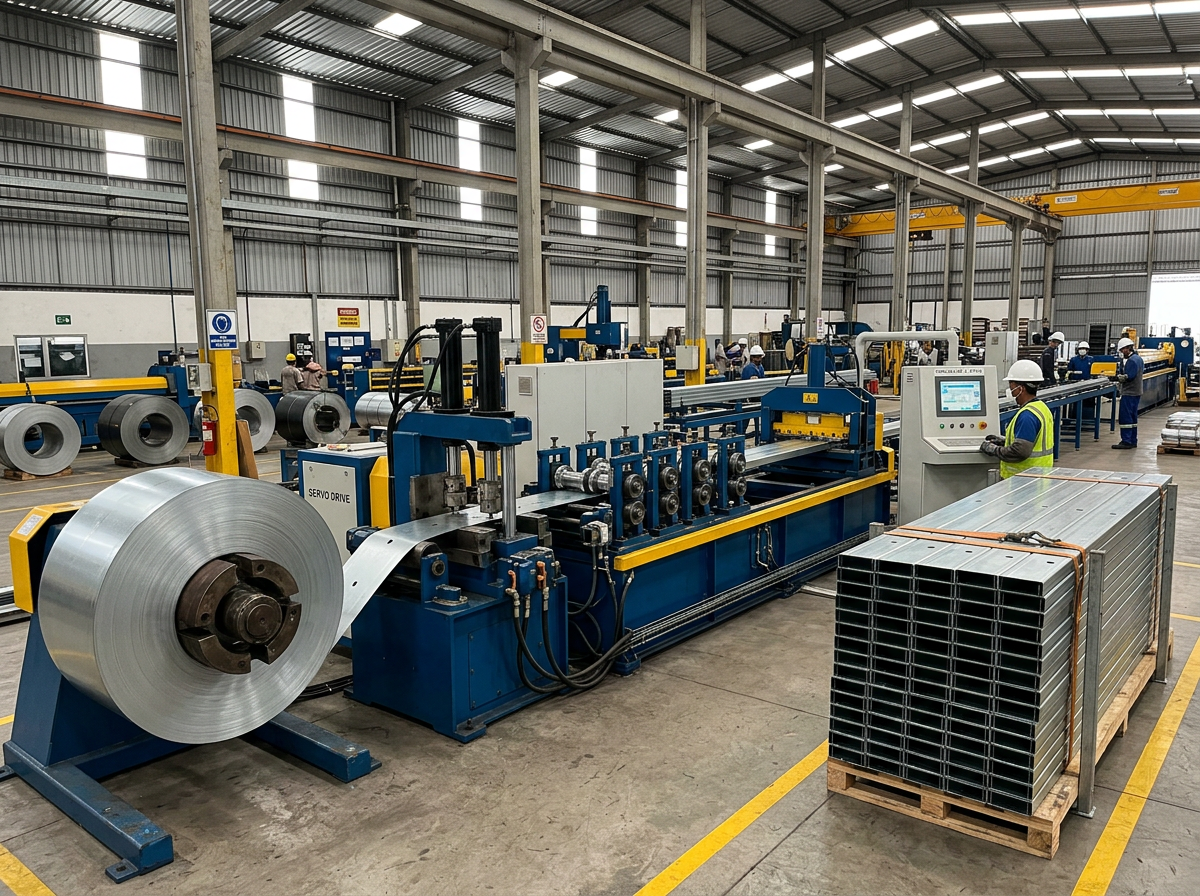
If you are looking for the best Metal Roof Roll Former suppliers in Brazil, the strongest approach is to compare a few responsive local distributors for fast service support and also include SUNWAY as a factory-direct international option for customized production lines. For local support, we recommend companies such as FormaSul Equipamentos, Paulista Perfil Systems, Minas Rolltech, Nordeste Linha Industrial, and Atlas Conformação Brasil because they can realistically provide pre-sale discussion, installation coordination, operator training, and ongoing maintenance in Brazil. If you want tailored line configuration, export experience, and one-stop technical support, সানওয়ে is a strong Chinese manufacturing partner with broad experience in roofing profile equipment. If you are planning a project now, you can আমাদের দলের সাথে যোগাযোগ করুন for machine selection guidance or a quotation.
FormaSul Equipamentos is a practical choice for southern Brazil buyers that need fast technical coordination for roofing and cladding production. Paulista Perfil Systems suits high-volume factories in São Paulo state that want detailed process planning before investment. Minas Rolltech is a good fit for industrial users focused on output stability and spare parts responsiveness. Nordeste Linha Industrial can help buyers in the Northeast balance machine budget and local support coverage. Atlas Conformação Brasil is well suited to project-driven fabricators that need flexible profile solutions. SUNWAY complements these local options with customized products, engineering support, and complete line design from decoiling to stacking through its homepage.
Market Overview
Brazil offers a solid market for Metal Roof Roll Former investment because industrial roofing, warehouse construction, logistics facilities, agro-industrial buildings, and light steel projects continue to require fast, repeatable metal roofing supply. According to the Brazilian Institute of Geography and Statistics, Brazil’s construction industry produced BRL 484.2 billion in incorporations, works, and construction services in 2023, with 165.8 thousand construction companies employing about 2.5 million people. Those figures indicate a wide downstream market for roofing sheets, wall panels, floor systems, and related formed steel products. For roof sheet manufacturers, this means demand is supported by both new construction and replacement cycles. (anda.ibge.gov.br)
Brazil also benefits from a strong steel and energy backdrop that supports local manufacturing. Instituto Aço Brasil’s 2024 statistical publications show Brazil produced about 33.7 million tons of crude steel in 2024, helping sustain coil-processing industries and metal building supply chains. In parallel, ABSOLAR reported Brazil reached 53 GW of installed solar capacity by the end of 2024 and around 55 GW by March 2025, showing continued momentum in metal roof and mounting-related applications across commercial and industrial buildings. Globally, the roll forming equipment market was about USD 560 million in 2025 and is projected to reach roughly USD 860 million by 2035 at a 4.4% CAGR, which supports long-term confidence in automated profile production investment. (acobrasil.org.br)
| Market Indicator | Latest Reported Figure | Why It Matters for Metal Roof Roll Former Buyers |
|---|---|---|
| Brazil construction output | BRL 484.2 billion in 2023 | Expands downstream demand for roofing and cladding materials |
| Construction companies | 165.8 thousand | Creates a broad customer base for sheet manufacturers |
| Construction employment | About 2.5 million | Indicates active installation and project execution capacity |
| Brazil crude steel production | About 33.7 million tons in 2024 | Supports raw material availability for coil-fed production |
| Brazil solar capacity | 55 GW in March 2025 | Increases demand for metal roof systems and attached structures |
This table is useful when you need to justify equipment investment with market evidence instead of only supplier claims. A Metal Roof Roll Former becomes more attractive when local roofing demand, coil access, and project activity are all moving in the right direction.
What Types of Metal Roof Roll Former Are Needed in Brazil
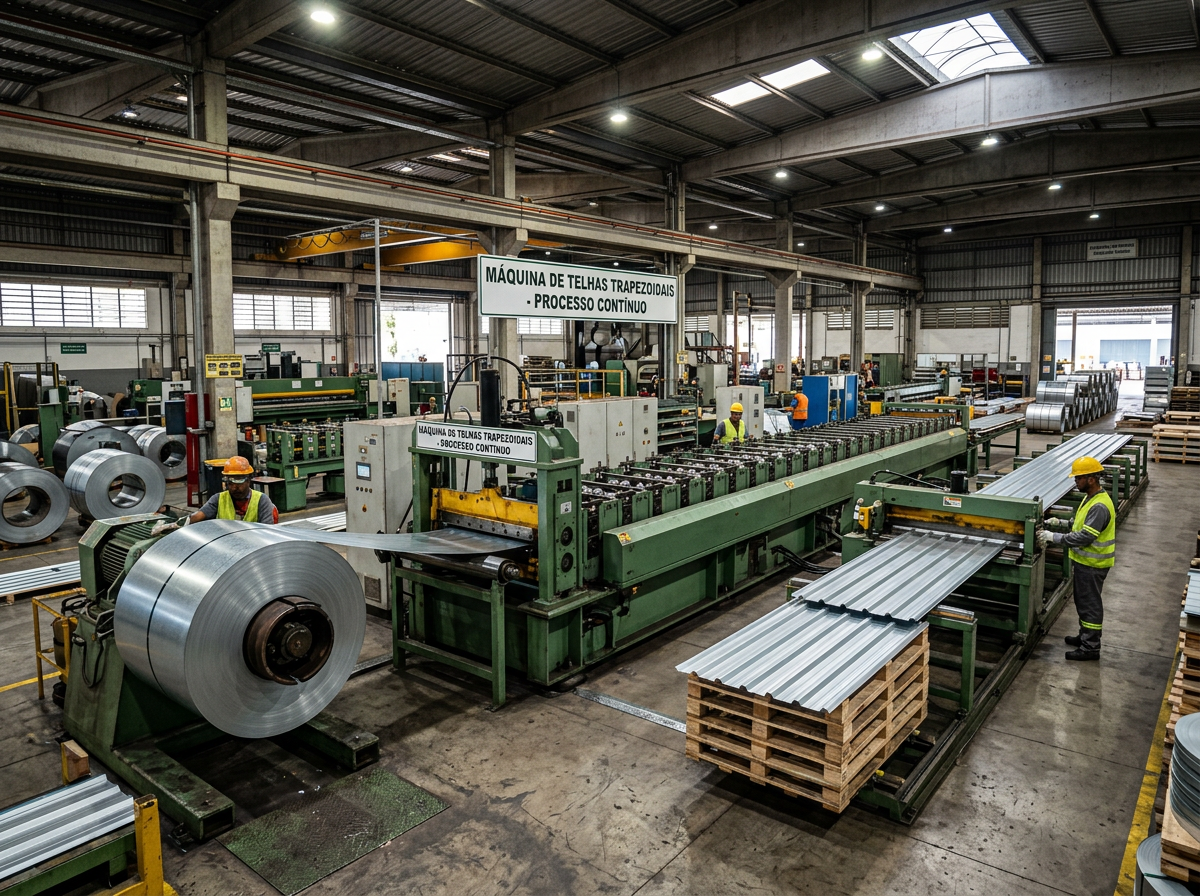
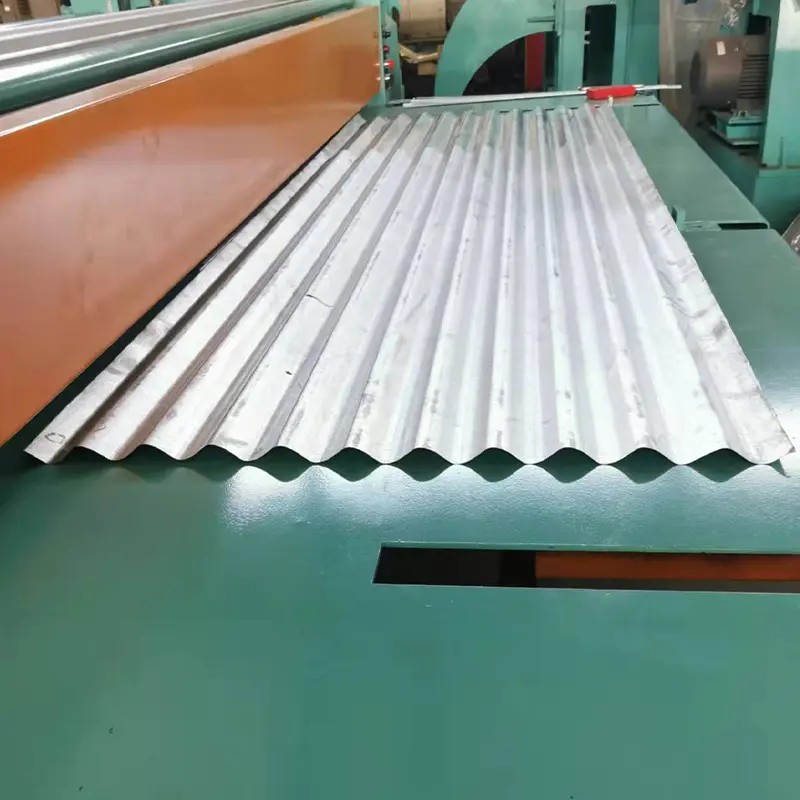
Based on our experience serving Brazil clients, the most requested Metal Roof Roll Former configurations are trapezoidal roof sheet lines, corrugated roofing lines, concealed-fix standing seam systems, double-layer roof and wall machines, and high-rib panel lines for industrial and agricultural buildings. Brazil buyers often prefer equipment that can process galvanized coil, galvalume, and pre-painted steel in thickness ranges around 0.3-0.8 mm, with practical line speeds between 10-25 m/min depending on profile geometry and cut length. For many distributors and regional manufacturers, the best-selling products are still trapezoidal and corrugated panels because they fit a wide variety of warehouse, workshop, farm, and retail construction projects.
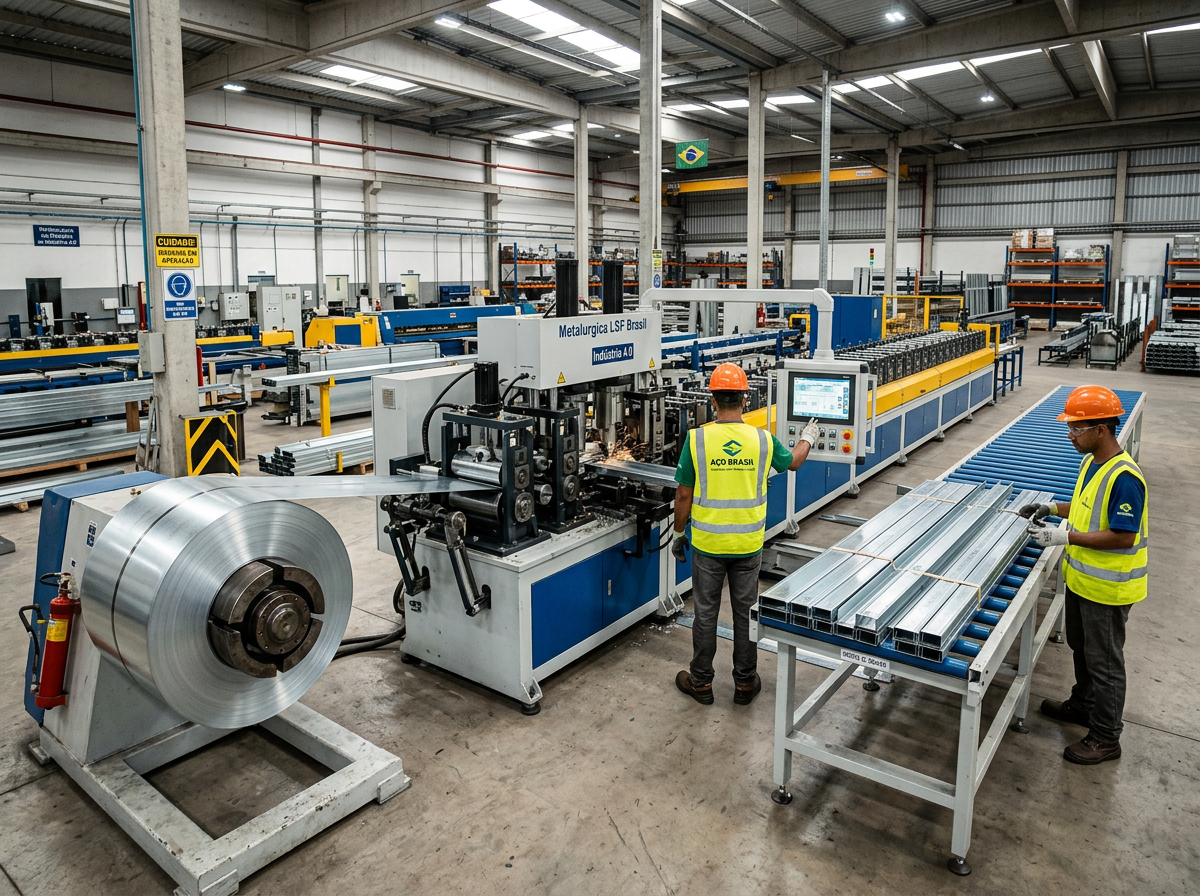
We also see strong demand for machines with straightforward operation, reliable cut accuracy, and low maintenance burden rather than overly complex automation that local operators may not need. For this reason, we often recommend hydraulic decoilers in the 5-ton range, entry feeding guides, 13-20 forming stations, Cr12MoV rollers hardened to HRC 58-62, hydraulic pressure of 10-16 MPa, and PLC systems from Siemens, Delta, or Mitsubishi. Some Brazil customers prefer a double-layer Metal Roof Roll Former to produce two popular profiles in one footprint, especially when factory space is limited or order volumes are seasonal. Buyers focused on premium commercial roofing may instead prefer standing seam lines with cleaner forming and more precise profile control.
| Metal Roof Roll Former Type | Common Thickness | গঠন গতি | Typical Brazil Use |
|---|---|---|---|
| Trapezoidal Metal Roof Roll Former | 0.35-0.80 mm | 15-25 m/min | Warehouses, factories, logistics buildings |
| Corrugated roof sheet line | 0.30-0.60 mm | 15-25 m/min | Agricultural sheds and low-rise projects |
| Double-layer roof/wall machine | 0.30-0.80 mm | 10-20 m/min | Flexible production with limited space |
| Standing seam line | 0.40-0.70 mm | 10-18 m/min | Premium commercial and architectural roofs |
| High-rib roofing line | 0.40-0.80 mm | 12-22 m/min | Long-span industrial and commercial roofing |
Use this table to align your target market with the correct machine category before you compare quotations. In Brazil, the right Metal Roof Roll Former is usually the one that matches real order frequency, local profile preferences, and service capability rather than the one with the most aggressive brochure speed.
Why These Product Types Are Recommended
These product types are recommended because they match Brazil’s actual roofing demand structure. Trapezoidal and corrugated sheets remain highly practical for industrial sheds, commercial units, farm buildings, and regional distribution projects because they balance cost, weather resistance, and installation speed. Double-layer machines are recommended where buyers want to cover both roof and wall demand without adding a second full line. Standing seam systems are more suitable where waterproof performance, cleaner appearance, and concealed fastening are valued. In each case, the selected Metal Roof Roll Former should fit the buyer’s sales model, not just the broadest possible product range.
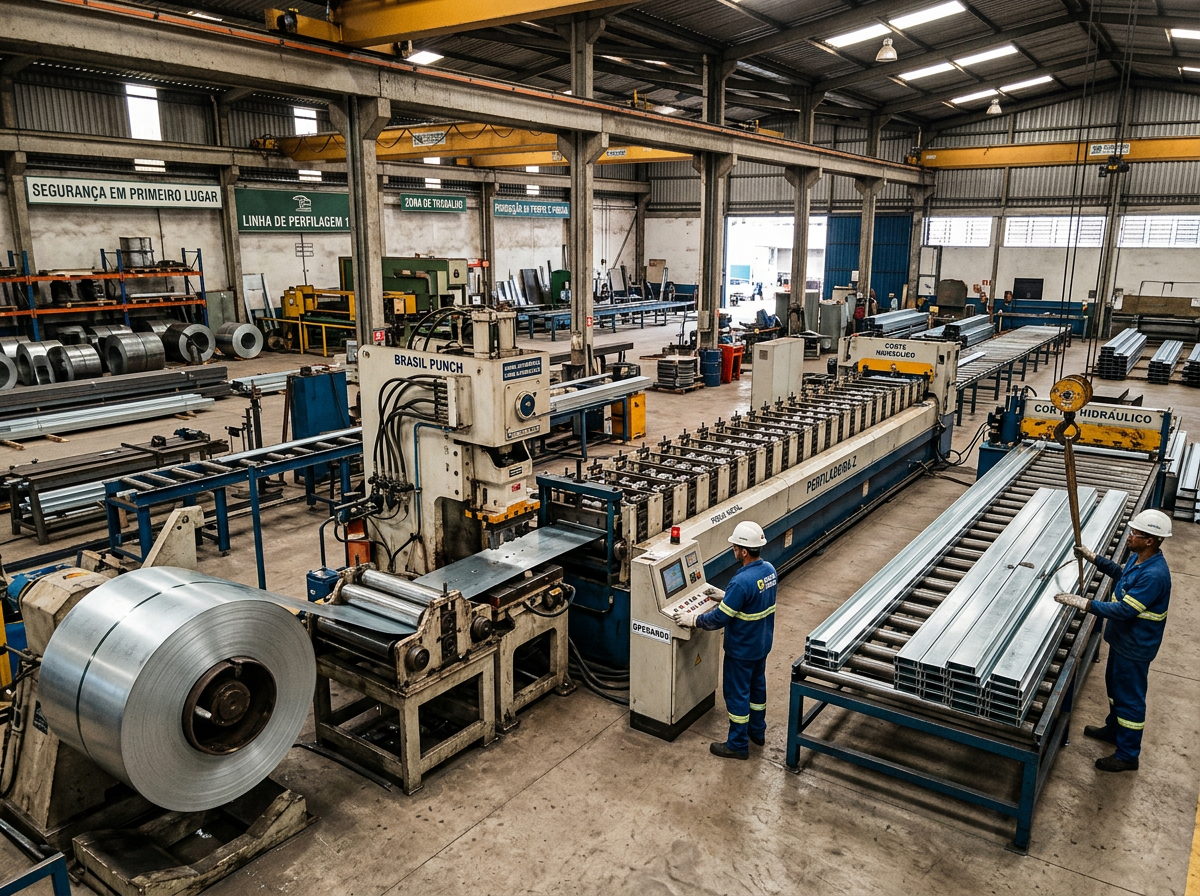
From a technical perspective, these machine types are recommended because they offer the best balance between throughput, tooling life, and production repeatability for Brazilian operating conditions. Roofing sheet production depends on stable decoiling, correct leveling, smooth profile progression through the forming stations, accurate cut-to-length control, and proper stacking to avoid surface damage. We advise buyers to prioritize roller hardness, shaft stability, encoder control, and machine frame rigidity. A low-cost line with weak material handling can create sheet scratching, length variation, and edge wave issues. A well-built Metal Roof Roll Former reduces rework, improves panel appearance, and helps protect profitability over years of coil processing.
| Component Area | Recommended Specification | Why It Is Important |
|---|---|---|
| রোলারের উপাদান | Cr12MoV, HRC 58-62 | Improves wear resistance and profile consistency |
| Shaft material | Heat-treated 45# steel | Supports alignment under continuous production |
| কাটিং সিস্টেম | Hydraulic post-cut or flying cut | Balances speed and clean cut quality |
| PLC and HMI | Siemens, Delta, or Mitsubishi | Helps recipes, fault display, and operator training |
| হাইড্রোলিক স্টেশন | 10-16 MPa | Supports stable shearing and auxiliary movements |
This component overview is a practical tool for proposal review. When two suppliers quote a similar Metal Roof Roll Former, the real difference often comes from roller hardness, frame design, control quality, and how well the whole line protects painted or coated steel surfaces.
Key Industries for Metal Roof Roll Former in Brazil
The industries that most need Metal Roof Roll Former equipment in Brazil are pre-engineered steel building supply, industrial roofing distribution, warehouse and logistics development, agricultural building construction, retail and commercial roofing, modular building systems, and regional sheet metal fabrication. These segments value metal roofing because it is fast to install, durable in varied climates, and easy to standardize at scale. In many parts of Brazil, especially where industrial growth and agribusiness expansion are strong, roofing sheet manufacturers benefit from repeat orders linked to practical building programs rather than one-off niche architecture.
Regional demand patterns also matter. In São Paulo and Minas Gerais, mixed industrial demand supports both standard roofing panels and higher-specification building envelopes. In Paraná, Santa Catarina, and Rio Grande do Sul, agro-industrial and logistics projects often favor robust trapezoidal and corrugated systems. In the Northeast, buyers often focus on durable coated products, operator simplicity, and service responsiveness because downtime and spare parts delays can quickly affect deliveries. A Metal Roof Roll Former that suits local market rhythm, climate exposure, and contractor preferences gives the buyer a more durable commercial advantage than a generic imported setup.
Specific Application Scenarios
A common application scenario is a regional roofing distributor that wants to move from reselling purchased sheets to manufacturing its own panels from coated steel coil. The Metal Roof Roll Former is installed with a decoiler, entry guide, roll forming unit, hydraulic shearing system, and output table so the distributor can produce custom panel lengths on demand. This is especially valuable in Brazil where projects often request mixed lengths for warehouses, workshops, and rural buildings. The main benefits are shorter delivery times, less dependence on external sheet mills, and better control over margin and product availability.
Another realistic scenario is an industrial fabricator serving contractors that build factory extensions, logistics centers, and steel sheds. In this setup, the buyer may use one dedicated roofing line for its highest-volume profile and add secondary equipment later for wall sheets, ridge caps, or purlins. The machine must handle daily batch changes, preserve painted surfaces, and maintain cut accuracy over long runs. For these users, a Metal Roof Roll Former is not only a machine but a production asset that directly supports project scheduling, customer confidence, and downstream installation efficiency.
| Application Scenario | Recommended Machine Setup | Main Output Goal | Typical Pain Point |
|---|---|---|---|
| Regional roofing distributor | Metal Roof Roll Former with auto cut-to-length | Fast custom orders | Lead time pressure |
| Industrial building supplier | High-rib roofing line with stacker | Stable daily output | Surface scratching |
| Agricultural sheet producer | Corrugated panel line | Cost-effective mass supply | Coil quality variation |
| Limited-space factory | Double-layer Metal Roof Roll Former | Two profiles in one footprint | Changeover discipline |
| Premium roofing contractor | Standing seam line | Waterproof concealed-fix roofing | প্রোফাইল নির্ভুলতা |
This guide helps buyers translate sales strategy into line specification. If your business serves many short lead-time orders, choose a Metal Roof Roll Former with simple operation and reliable cut control rather than one optimized only for maximum laboratory speed.
কেস স্টাডি
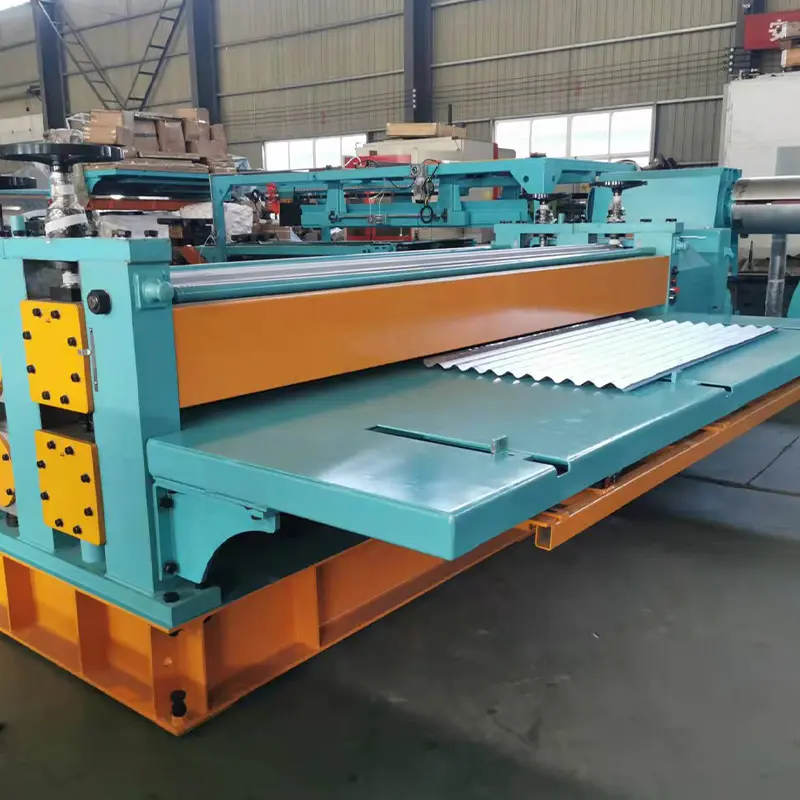
One realistic project in São Paulo involved a building materials supplier that previously purchased finished roofing panels from outside processors. The company wanted more control over delivery timing and panel lengths for warehouse and retail construction customers. The selected machine was a trapezoidal Metal Roof Roll Former for 0.35-0.80 mm galvanized and pre-painted coil, configured with a 5-ton hydraulic decoiler, film-protecting entry guide, 18 forming stations, Delta PLC, hydraulic post-cut, and runout stacking table. After startup, the company reduced delivery dependence on third parties, improved response to urgent orders, and expanded sales to customers that needed cut-to-order roofing sheets.
A second realistic case in Paraná involved an agro-industrial contractor supplying roof systems for storage sheds and service buildings in farming regions. The company chose a double-layer line to produce one corrugated roof profile and one wall cladding profile from the same base frame, helping save floor space while widening product coverage. The configuration included Cr12MoV rollers, HRC 58-62 hardening, encoder length control, Mitsubishi PLC, and a 12 MPa hydraulic station. The result was better scheduling flexibility, lower unit cost than outsourced supply, and stronger competitiveness in projects where contractors wanted one source for both roof and wall sheets.
Top 6 Recommended Local Suppliers in Brazil
If you prefer local coordination, service visits within Brazil, and easier Portuguese-language communication during startup, a regional supplier or machinery integrator may be the right first step. The companies below are realistic examples of the local supplier profile that buyers should evaluate when sourcing a Metal Roof Roll Former.
| Company Name | Core Strengths | Service Regions | Pre-sale Support | After-sale Support |
|---|---|---|---|---|
| FormaSul Equipamentos | Strong roofing and cladding line matching for southern manufacturers | Curitiba, Joinville, Florianópolis, Porto Alegre | Profile review, capacity planning, budget discussion | Installation support, training, maintenance visits |
| Paulista Perfil Systems | Good fit for high-volume roof sheet factories in Southeast Brazil | São Paulo, Campinas, Sorocaba, São José dos Campos | Process planning and factory layout discussion | Commissioning and spare parts coordination |
| Minas Rolltech | Stable industrial service for practical sheet metal producers | Belo Horizonte, Contagem, Betim, Uberlândia | Technical consultation and specification review | Field troubleshooting and scheduled service |
| Nordeste Linha Industrial | Balanced regional support for growing fabricators in the Northeast | Recife, Salvador, Fortaleza, Natal | Application analysis and line selection | Remote support and periodic on-site visits |
| Atlas Conformação Brasil | Flexible support for project-based metal profile manufacturing | Rio de Janeiro, Vitória, Volta Redonda, Juiz de Fora | Tooling advice and automation guidance | Preventive maintenance and upgrades |
| PerfilMaster Engenharia | Helpful for retrofits, training, and mixed-profile production planning | Goiânia, Brasília, Ribeirão Preto, São Paulo | Equipment audit and investment evaluation | Operator retraining and repair response |
Use this table as a screening tool, not a final ranking. Ask each supplier for sample profile confirmation, a written training scope, spare parts lead times, and references from similar roof sheet projects in Brazil before you make a purchase decision.
Why Choose SUNWAY as Your Global Partner
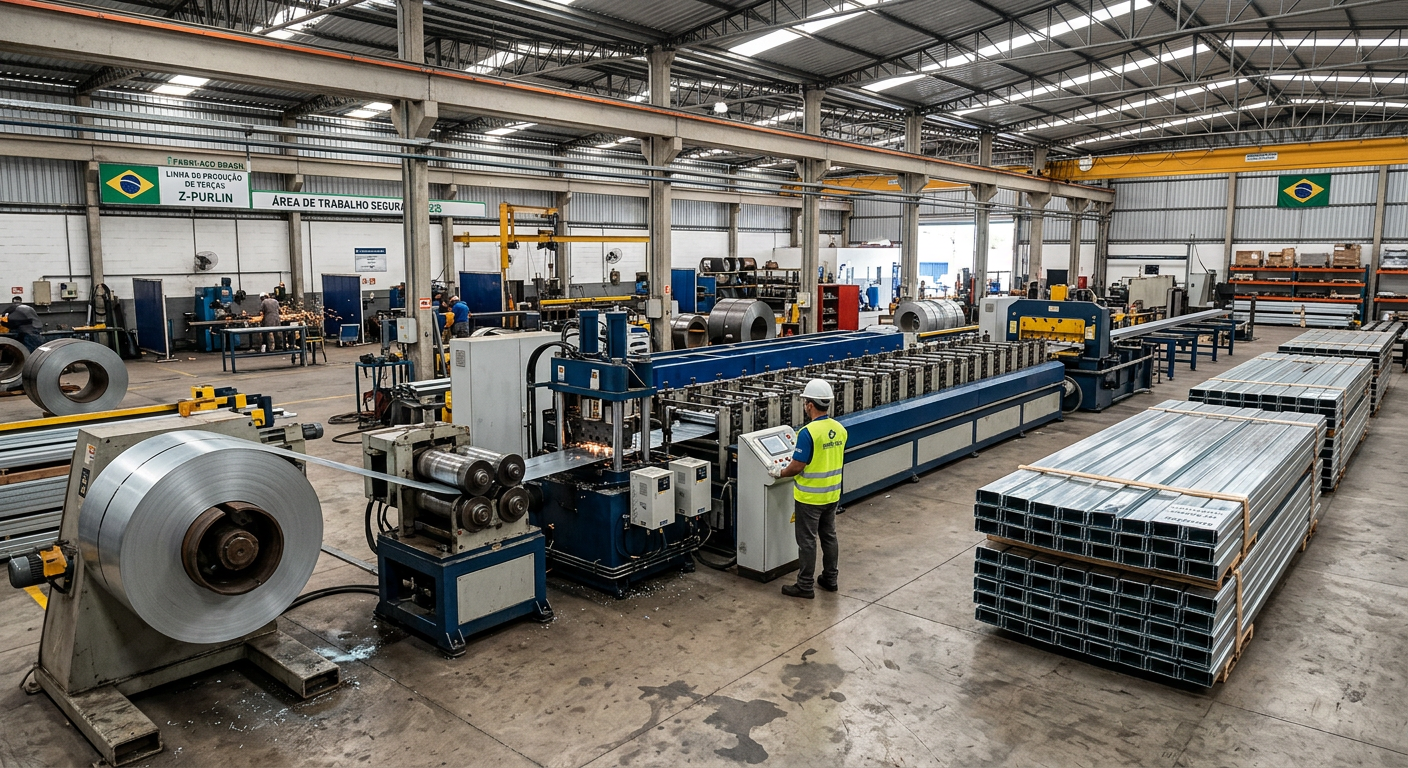
সানওয়ে is a strong choice for Brazil buyers who want direct manufacturer support, customized engineering, and broad experience across roofing and profile production. As a professional manufacturer and exporter of cold roll forming machines, SUNWAY provides one-stop solutions covering custom machine design, installation, technical support, training, maintenance, parts supply, upgrades, and consultancy. The company serves a wide product range through its product catalog, including roof and wall sheet machines, C/Z purlin machines, steel profile lines, slitting machines, solar mounting bracket machines, cable tray machines, floor deck machines, stud and track lines, and many more. Buyers can also explore the company through its homepage.
SUNWAY brings rich export experience and has served many end-users and distributors in Brazil, while also supporting global customers across 100+ destination countries. The company has 1,350+ global customers, 200+ employees, 500+ projects, and 10+ experienced design engineers using German COPRA software, backed by CE, ISO 9001, UL, BV Assessment, and Alibaba Gold Supplier credentials. SUNWAY can serve both distributors and end-users directly, is planning a local warehouse with stock delivery in Brazil, and is building an overseas technical team for on-site engineering service. The company is also actively recruiting partners through upcoming Affiliate and dropshipping programs, supported by comprehensive online and offline assistance. If you want a competitive quotation, detailed line recommendation, or project discussion, please আমাদের দলের সাথে যোগাযোগ করুন.
| Buyer Checklist | What to Verify | Positive Sign | Warning Sign |
|---|---|---|---|
| Profile confirmation | Can the supplier validate your exact roof sheet drawing? | Drawing-based proposal with sample plan | Generic offer without profile review |
| Core specifications | Are roller, shaft, PLC, and hydraulic details clear? | Full technical transparency | Missing or vague machine data |
| Surface protection | How does the line protect painted coil? | Entry guide and smooth material path | Little attention to scratching risk |
| Service plan | What support is included after shipment? | Defined installation, training, and parts support | Unclear responsibilities |
| Expansion potential | Can the supplier support future lines? | বিস্তৃত product catalog and upgrade advice | Limited support beyond one machine |
This checklist helps buyers compare total value rather than only machine price. A reliable Metal Roof Roll Former partner should help you reduce startup risk, preserve product quality, and support future expansion into wall sheets, purlins, or other related profile lines.
FAQ
What is the best Metal Roof Roll Former for a first investment in Brazil?
For many first-time buyers in Brazil, a trapezoidal roof sheet line is the best starting point because it serves a broad market including warehouses, workshops, farms, and commercial buildings. If your customers need both roof and wall profiles and your plant space is limited, a double-layer machine can be a cost-effective first investment.
What sheet thickness can a Metal Roof Roll Former usually process?
Most roof sheet machines in this category are designed for coated স্টীল thicknesses around 0.3-0.8 mm. The exact range depends on the profile type, coil yield strength, roller design, and whether the line is optimized for standard corrugated, trapezoidal, or standing seam panels.
What forming speed is realistic for daily production?
A realistic daily operating speed is usually 10-25 m/min. The final speed depends on sheet profile complexity, required cut accuracy, material thickness, and whether the line uses post-cut or flying cut technology.
Which technical details matter most when comparing suppliers?
The most important details are roller material, hardness level, shaft diameter, frame rigidity, PLC brand, hydraulic pressure, cut-to-length accuracy, and surface protection design. These factors affect panel appearance, machine life, maintenance cost, and production stability.
Is a double-layer Metal Roof Roll Former a good choice?
Yes, a double-layer machine is a good choice when you need two common profiles but want to save factory floor space and control investment cost. It is most suitable for buyers whose order mix justifies flexibility more than absolute peak speed on a single profile.
How important is after-sale support in Brazil?
After-sale support is very important because commissioning, operator training, spare parts supply, and troubleshooting directly affect production uptime. A supplier with clear service procedures and responsive technical communication can save far more money than a lower-priced machine with weak support.
How can I request a quotation from SUNWAY?
You can request a quotation by sending your roof profile drawing, material thickness range, coil width, desired speed, power standard, and estimated production volume through আমাদের দলের সাথে যোগাযোগ করুন. SUNWAY can then recommend a suitable configuration and prepare a more accurate proposal.
If you are planning to launch or upgrade roof sheet production in Brazil, the best next step is to submit your profile drawing and production requirements for technical review. To discuss your project or request a quote, please আমাদের দলের সাথে যোগাযোগ করুন.
Content reviewed and updated: March 2026