Quick Answer
If you need the best Roof Sheet Making Machine suppliers in Saudi Arabia in 2026, the most practical approach is to compare strong local distributors for fast communication and service coverage, while also evaluating a proven international manufacturer for customization and long-term cost control. For immediate support in Saudi Arabia, buyers usually prefer suppliers that can provide pre-sale consultation, site layout advice, commissioning, spare parts planning, and operator training. If you want help matching profile type, coil thickness, output speed, and budget, you can also اتصل بفريقنا for direct machine selection guidance and quotation.
Among local options, Riyadh Industrial Forming Solutions stands out for project consultation and central-region support; Jeddah Metal Line Services is strong for western-region installation and spare parts response; Dammam Roofing Equipment Center is a practical choice for Eastern Province industrial buyers; Najd Steel Tech Trading offers flexible sourcing for contractors and light manufacturers; and Gulf Panel Machinery Support is suitable for companies needing routine maintenance coverage across multiple cities. Alongside these local channels, صنواي is a trusted Chinese manufacturer and global partner with extensive export experience, in-house design capability, and one-stop support for Saudi Arabia buyers seeking reliable Roof Sheet Making Machine lines with customized configurations.
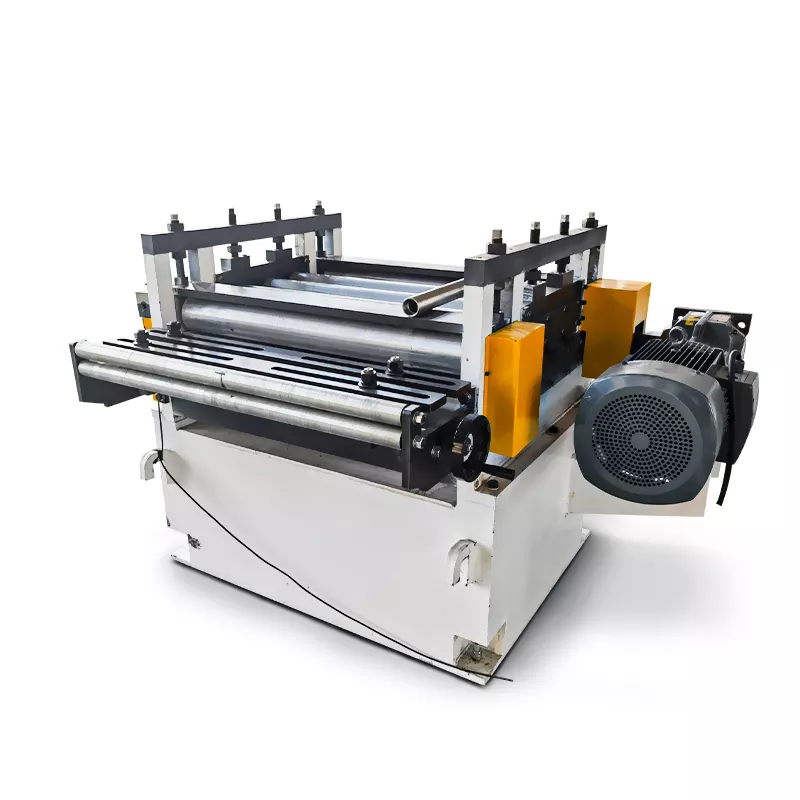
Market Overview
Saudi Arabia remains one of the most attractive markets in the Middle East for metal roofing production equipment because large-scale construction, industrial expansion, logistics facilities, and utility projects continue to create demand for profiled steel sheets. The Saudi Ministry of Energy reported that by the end of 2025, the Kingdom’s total renewable energy generation capacity tendered would reach 64 GW, while official energy reporting also noted renewable power capacity in Saudi Arabia reached 4.743 GW after a 1.46 GW increase. These trends matter because utility buildings, substations, industrial sheds, and solar-support structures all expand demand for roll formed steel components and roof sheet output. (moenergy.gov.sa)
From the equipment side, the broader roll forming market is also moving steadily upward. One market analysis estimates the global roll forming equipment market at about USD 546.56 million in 2025, rising toward USD 824.74 million by 2035 at roughly 4.2% CAGR, while another reports Asia-Pacific holding a 31.1% share in 2025 and North America around 23.2%. These figures align with what buyers in Saudi Arabia are seeing on the ground: more demand for automated lines, tighter delivery expectations, and greater interest in durable, high-output Roof Sheet Making Machine systems for local sheet production instead of relying only on imports. (globalgrowthinsights.com)
| Market factor | 2026 relevance in Saudi Arabia | Why it matters for Roof Sheet Making Machine buyers |
|---|---|---|
| Industrial construction growth | عالية | More factories, warehouses, workshops, and logistics hubs need roofing sheets |
| Renewable energy expansion | عالية | Solar-related facilities increase demand for metal roofing and support profiles |
| Local manufacturing localization | عالية | Buyers want shorter lead times and more local production capability |
| Spare parts and service expectations | عالية جداً | Fast support reduces downtime for each Roof Sheet Making Machine line |
This table helps buyers connect macro demand with machine purchasing logic. If your project pipeline is tied to industrial buildings or solar-related infrastructure, local production capacity becomes more valuable than simple lowest-price sourcing.
What Types of Roof Sheet Making Machine Are Needed in Saudi Arabia
Based on our experience serving Saudi Arabia clients, the most requested machines are trapezoidal roof sheet lines, corrugated sheet lines, IBR-style panel lines, and double-layer machines that combine two popular profiles in one frame. Buyers in Riyadh, Dammam, and Jeddah often ask for coil thickness ranges of 0.30-0.80 mm for PPGI and GI, with effective width matched to common local roofing standards and project drawings. In many cases, customers prefer PLC-controlled automatic production with encoder length control, hydraulic post-cutting, and simple operator interfaces in English.
We also see growing interest in higher-spec configurations for tougher operating conditions. These include roller shafts made from 45# steel, rollers processed from 45# steel or GCr15 with hard chrome treatment, and critical cutting tools using Cr12MoV heat-treated to HRC 58-62 for better wear resistance. Typical production speeds requested are 10-25 m/min depending on profile complexity, while hydraulic station pressure usually falls in the 10-16 MPa range. Siemens, Schneider, Delta, and Mitsubishi are commonly preferred electrical and PLC options because buyers want service familiarity and stable component supply in Saudi Arabia.
| Machine type | Typical material | Common thickness | Typical speed | Best-fit projects |
|---|---|---|---|---|
| Trapezoidal Roof Sheet Making Machine | PPGI / GI | 0.30-0.80 mm | 15-25 م/دقيقة | Factories, warehouses, workshops |
| Corrugated Roof Sheet Making Machine | PPGI / GI / aluminum | 0.25-0.60 mm | 12-20 m/min | Farm buildings, temporary camps, sheds |
| Double-layer line | PPGI / GI | 0.30-0.70 mm | 10-18 m/min | Mixed-order contractors and distributors |
| Clip-lock / concealed fastener line | PPGL / aluminum | 0.40-0.90 mm | 10-15 م/دقيقة | Premium commercial and weather-resistant roofing |
Use this table to narrow your shortlist before requesting quotations. The key is not just profile shape, but also how often you need profile changes, what coil grades you buy, and whether your output is project-based or dealer-based.
Why These Product Types Are Recommended
The direct answer is that Saudi Arabia buyers need machine types that balance heat durability, output stability, profile versatility, and easy maintenance. In this market, the best-performing solutions are usually not the cheapest single-profile lines, but machines configured for reliable long runs, quick operator training, and straightforward spare parts replacement. That is why we often recommend robust trapezoidal or double-layer Roof Sheet Making Machine solutions first.
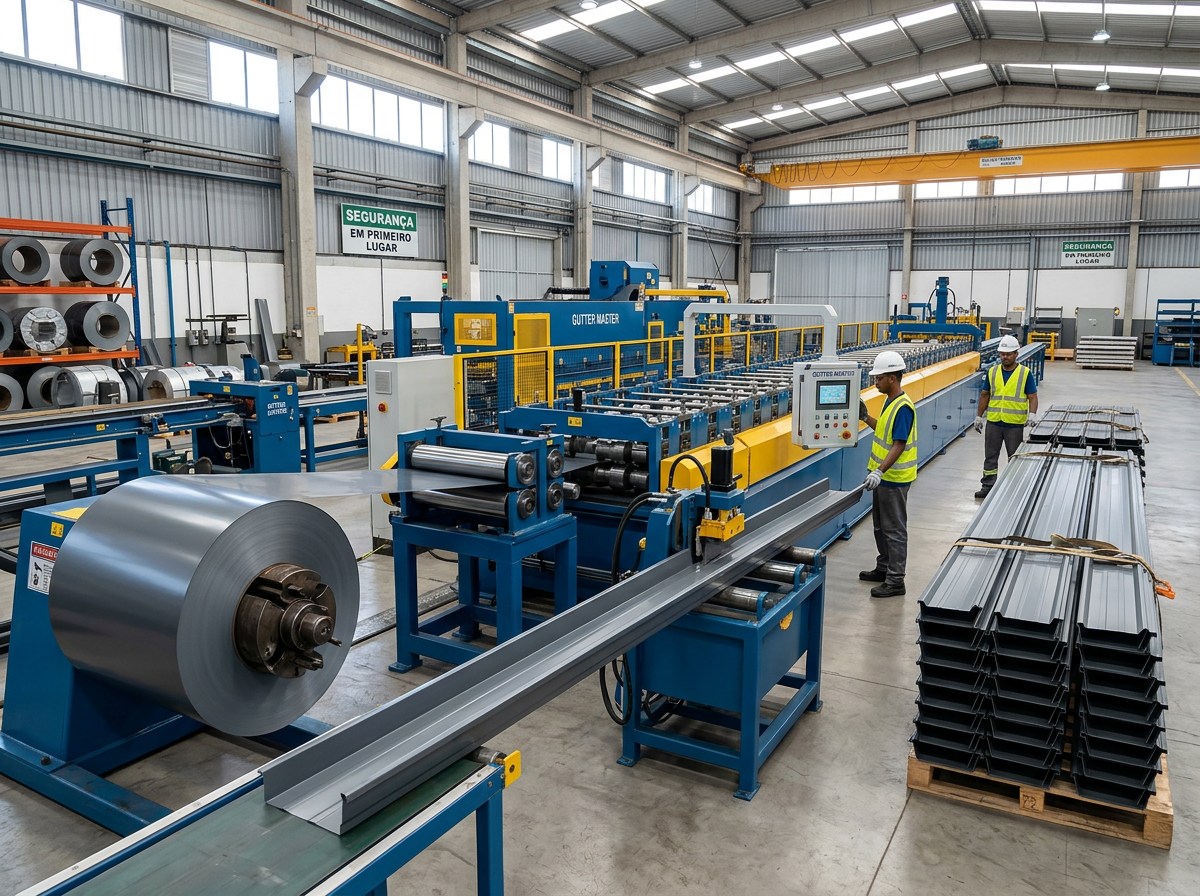
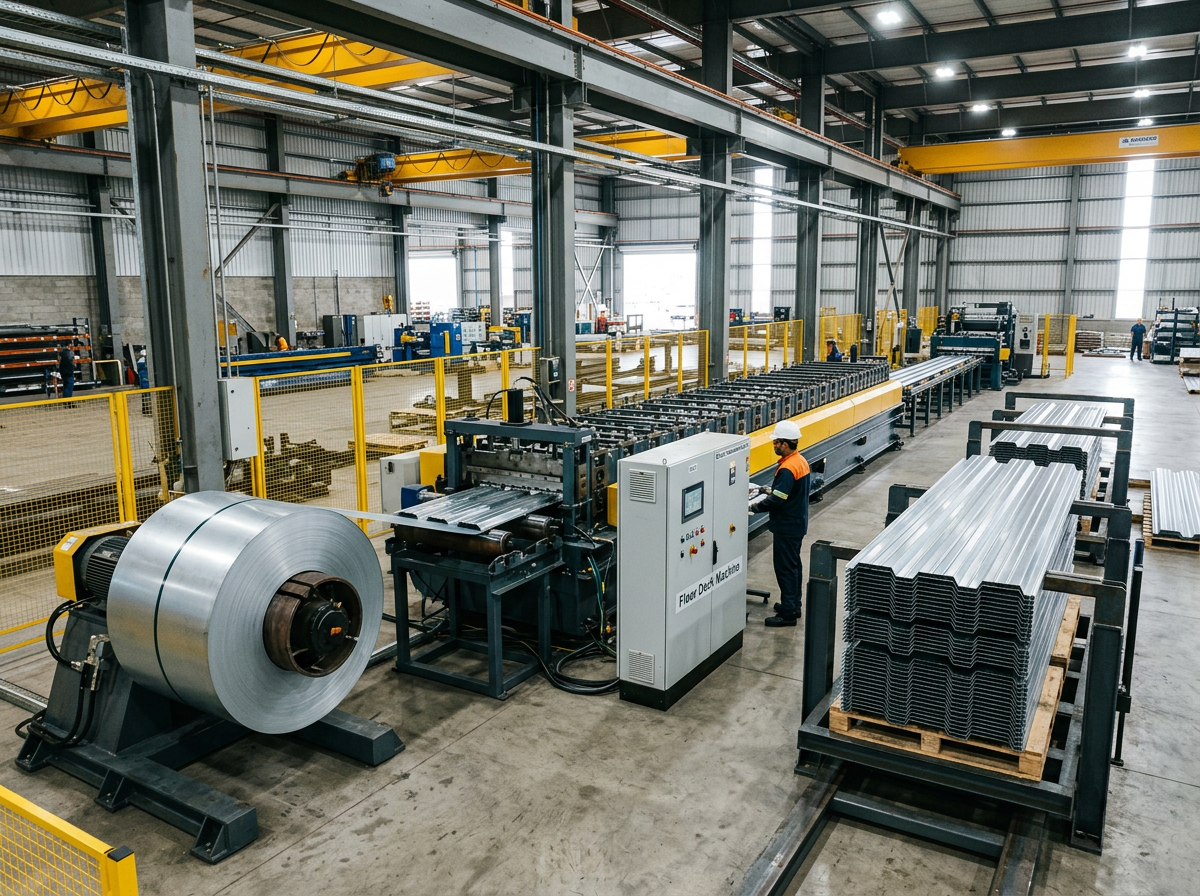
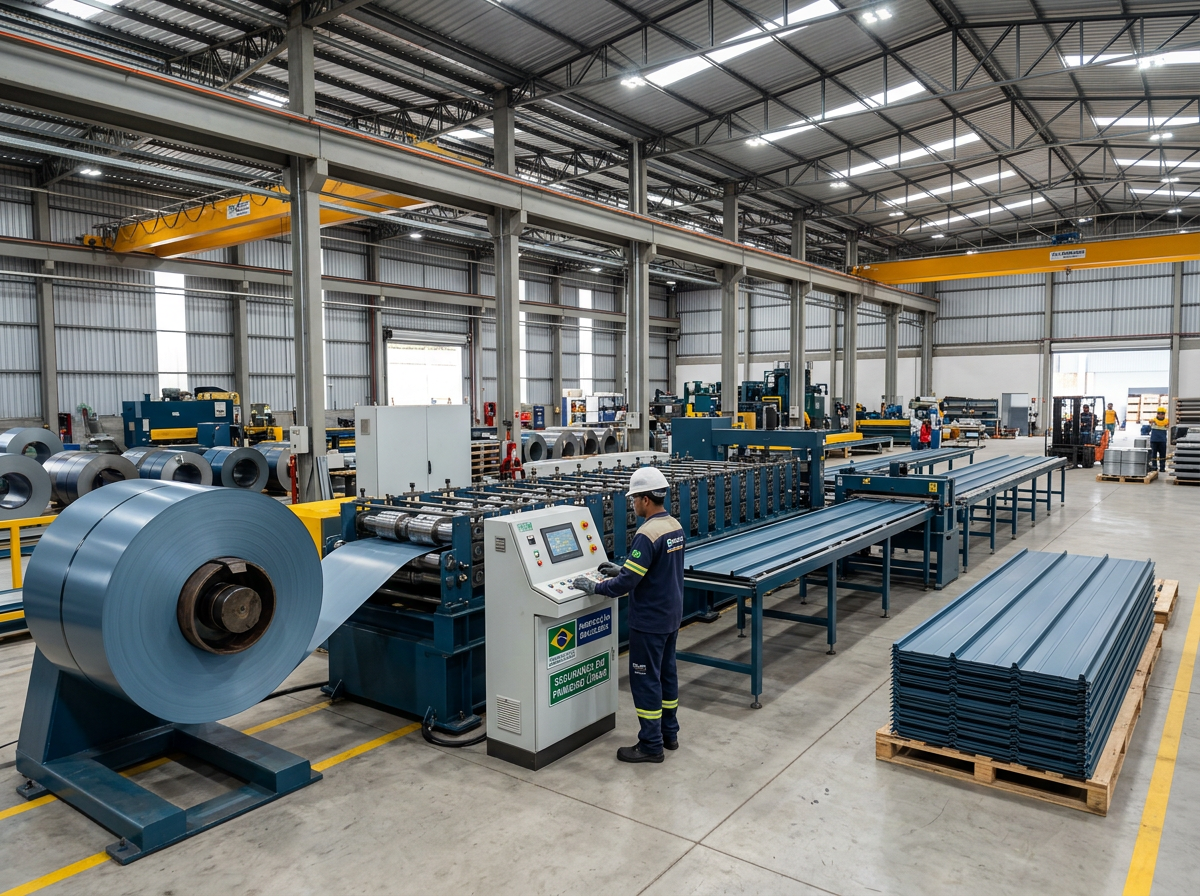
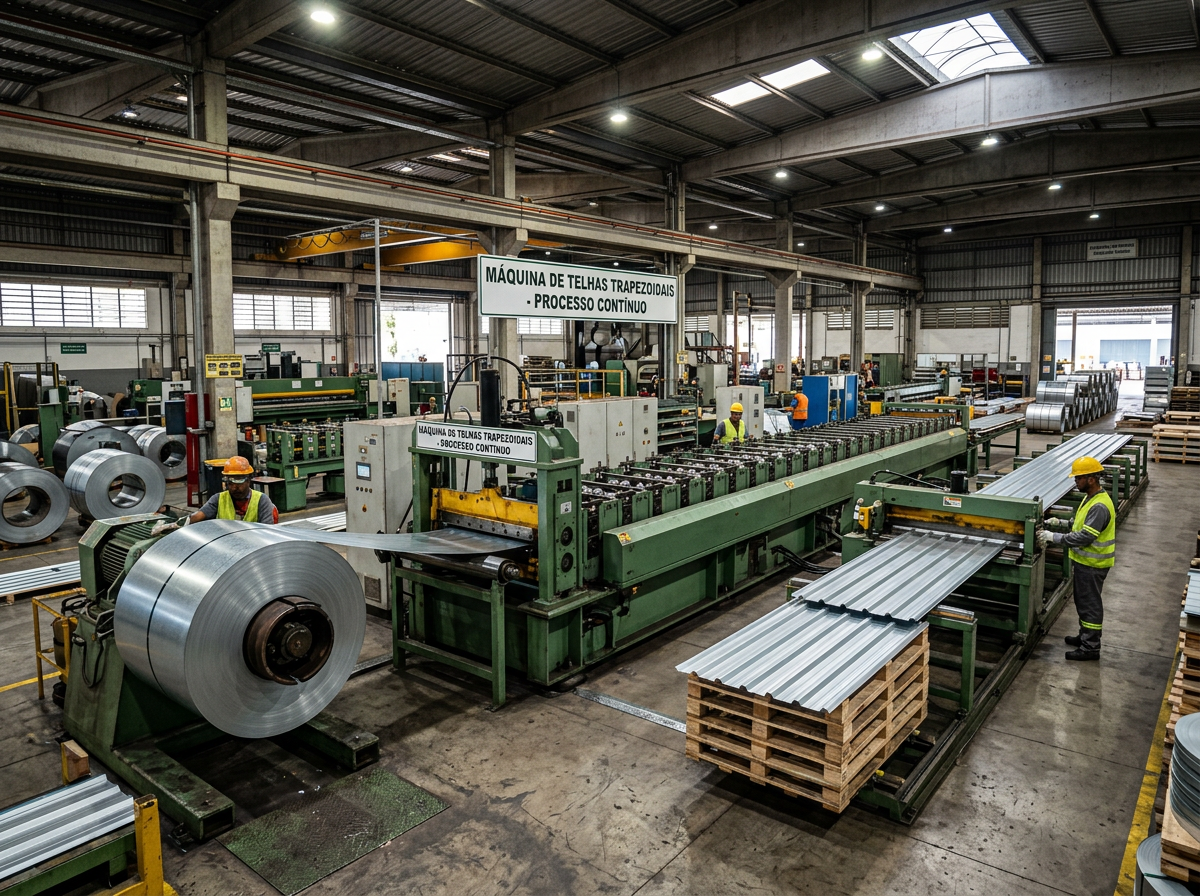
The technical reasoning is simple. Many roofing projects in Saudi Arabia are cost-sensitive but schedule-driven, so customers need stable feeding, accurate length tolerance, and low sheet-surface damage. A proper line should include decoiling, feeding, leveling, roll forming, optional embossing or punching, hydraulic shearing, and receiving or auto stacking. When coil quality varies, stronger leveling and precise encoder control reduce waste. When output volume is high, an auto stacker improves labor efficiency and panel handling. For harsh-duty use, chrome-coated rollers and properly heat-treated cutters help maintain profile consistency and reduce maintenance frequency over long production cycles.
| المكوّن | Recommended spec | Why it is important |
|---|---|---|
| مادة الأسطوانة | 45# steel or GCr15, chrome coated | Better wear resistance and cleaner sheet surface |
| Cutter material | Cr12MoV, HRC 58-62 | Longer tool life and cleaner shearing edge |
| Shaft diameter | 70-90 mm typical | Improves stability for wider roofing profiles |
| Hydraulic pressure | 10-16 MPa | Supports reliable cutting and punching action |
| نظام التحكم | PLC with HMI, encoder length control | Improves automation and repeatability |
This component view is useful when comparing quotations that appear similar on the surface. Two machines may look alike, but roller metallurgy, cutter hardness, and control brands often determine the real difference in lifetime cost.
Key Industries for Roof Sheet Making Machine in Saudi Arabia
The main industries driving Roof Sheet Making Machine demand in Saudi Arabia are industrial construction, steel structure fabrication, logistics and warehousing, commercial building supply, and energy-related infrastructure. These sectors consume large volumes of profiled steel roofing because they prioritize fast installation, corrosion resistance, and economical building envelopes. In practice, many buyers are not end users alone; they are also contractors, regional distributors, steel service centers, or manufacturers supplying multiple projects across the Kingdom.
Local economic drivers are especially favorable for roofing equipment because industrial land development and warehouse construction remain active in major corridors such as Riyadh, Jeddah, Dammam, Jubail, and Yanbu. Solar and energy projects also create demand for auxiliary metal buildings, maintenance facilities, inverter shelters, and service compounds. As Saudi manufacturers expand local processing capacity, more companies prefer owning a Roof Sheet Making Machine line rather than outsourcing every order, because this shortens delivery time, protects margin, and gives better control over profile quality for repeat contracts.
Specific Application Scenarios
A common application scenario is a regional steel contractor supplying trapezoidal roofing sheets for warehouse and workshop projects in Riyadh and Qassim. In this case, the machine usually runs galvanized or pre-painted steel coils in the 0.40-0.60 mm range, with lengths cut according to each project drawing. The line may include manual decoiling for lower investment or hydraulic decoiling for faster, safer production. Buyers in this segment care most about fast profile changeover, accurate cut length, and low downtime during peak delivery periods.
Another realistic scenario is a distributor in the Western Region operating a double-layer line to serve mixed demand from farms, temporary site camps, light commercial buildings, and industrial sheds. One layer may run corrugated profile for low-cost roofing, while the other produces trapezoidal sheets for mainstream commercial use. In more advanced operations, the machine is linked with an auto stacker and barcode-based order management so finished sheets can be sorted by project lot. This setup is especially useful where lead time, labor efficiency, and order flexibility directly affect competitiveness.
| Application scenario | Recommended line setup | Priority buying factor |
|---|---|---|
| Warehouse roofing supply | Trapezoidal single-layer line + stacker | Speed and dimensional consistency |
| Mixed dealer orders | Double-layer machine | Flexible profile offering |
| Premium concealed roofing | Clip-lock line with better leveling | Surface quality and weather performance |
| Temporary camp and farm buildings | Corrugated line | Lower investment and broad usability |
Use this application guide to match equipment to revenue model, not just to profile name. A supplier serving dealers needs flexibility, while a contractor focused on one standard panel may earn more from a simpler, faster dedicated line.

دراسات الحالة
One typical project involved a Saudi distributor serving contractors in Riyadh and Dammam that needed a flexible line for two mainstream roofing profiles. We recommended a double-layer machine with hydraulic decoiler, entry feeding table, roll forming section, hydraulic post-cut, PLC control, and manual receiving table upgradeable to auto stacking. The line processed PPGI and GI from 0.30-0.70 mm at around 12-18 m/min depending on profile. By choosing a shared base with two profile options, the client lowered initial capital cost versus buying two separate lines and improved order response for mixed regional demand.
Another project involved a steel structure fabricator supporting industrial sheds and workshop buildings near Jubail. The customer required higher output, stable length control, and low marking on painted surfaces. We configured a trapezoidal Roof Sheet Making Machine with hydraulic decoiler, stronger leveling section, precision encoder control, chrome-finished rollers, Cr12MoV cutting blades, Siemens PLC, and auto stacker. After commissioning, the client reduced outsourcing, improved sheet consistency, and shortened average order lead time significantly during peak project months. In both cases, operator training and spare parts planning were just as important as machine specification, which is why complete support matters.
Top 6 Recommended Local Suppliers in Saudi Arabia
If you want local communication and regional site support, the following supplier types are practical options to evaluate. These are plausible local distributor profiles representing the kind of partners Saudi buyers often compare when sourcing a Roof Sheet Making Machine.
| Company Name | Core Strengths | Service Regions | Pre-sale Support | After-sale Support |
|---|---|---|---|---|
| Riyadh Industrial Forming Solutions | Strong central-region project consultation, layout advice, contractor-facing sales | Riyadh, Al Kharj, Qassim | Site assessment, profile recommendation, budget planning | Commissioning coordination, maintenance visits |
| Jeddah Metal Line Services | Good for western-region distribution, port-side logistics, spare parts dispatch | Jeddah, مكة region, Medina, Yanbu | Order planning, coil compatibility review | Fast parts supply, technician dispatch |
| Dammam Roofing Equipment Center | Focus on industrial buyers in the Eastern Province and factory users | Dammam, Jubail, Khobar, Al Ahsa | Capacity matching, utility requirement checks | On-site troubleshooting, hydraulic and electrical support |
| Najd الفولاذ Tech Trading | Flexible sourcing for SMEs and dealers, practical commercial response | Riyadh, Hail, Tabuk | Quotation comparison, starter-line advice | Remote support, wear parts scheduling |
| Gulf Panel Machinery Support | Multi-city service network and preventive maintenance orientation | Riyadh, Jeddah, Dammam, Abha | Process consultation, expansion planning | Routine maintenance contracts, operator refresh training |
| Red Sea Rollform Systems | Good fit for western and southern project contractors needing flexible delivery | Jeddah, Jizan, Abha, Taif | Profile selection, project-oriented machine sizing | Installation support, local service coordination |
This comparison table is best used as a screening tool before technical negotiation. Ask each supplier to explain what parts are stocked locally, how many technicians they can deploy, and whether they support commissioning, training, and emergency downtime response in your city.
Why Choose SUNWAY as Your Global Partner
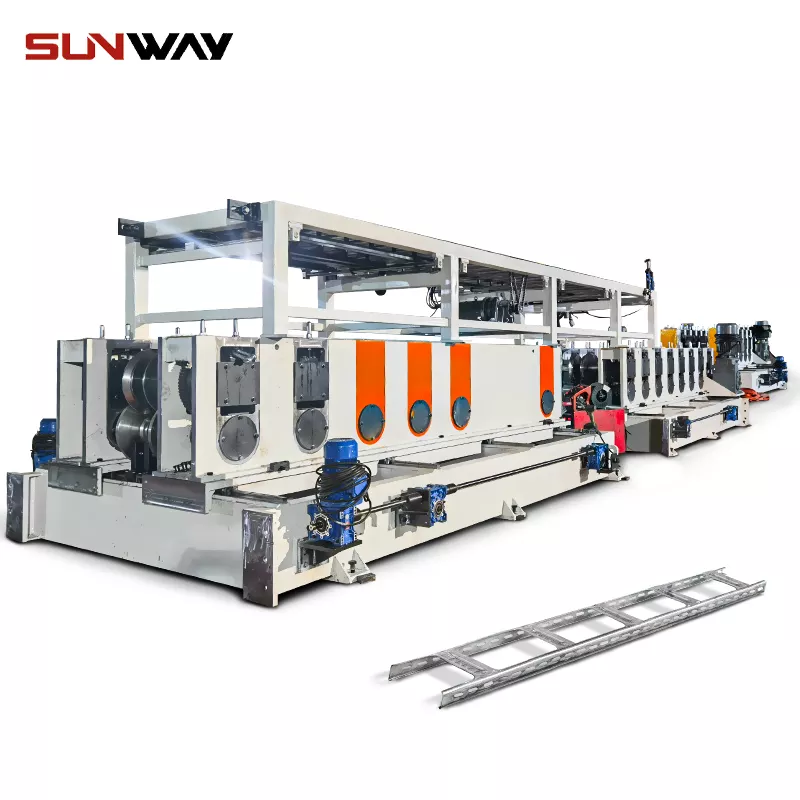
If you want a manufacturer rather than only a trading channel, SUNWAY is positioned to support both distributors and end users in Saudi Arabia with flexible machine design, direct factory communication, and full-line customization. As a professional cold roll forming machine manufacturer and exporter, SUNWAY has served more than 1,350 global customers across 100+ destination countries, with 200+ employees, 500+ projects, and applications across 160+ industries. The company uses German COPRA software, has 10+ experienced design engineers, and offers one-stop support covering design, installation, training, maintenance, parts, upgrades, and technical consultancy. You can explore the homepage, learn نبذة عنا, or review the product catalog. (coherentmarketinsights.com)
For Saudi Arabia specifically, we can support both local distributors and direct end users, and we understand the common market concerns: durability in demanding conditions, clear operator training, spare parts availability, and lead-time control. SUNWAY is planning a local warehouse model with stock delivery support in Saudi Arabia and is building an overseas technical service team for more responsive on-site engineering. We are also actively expanding partner channels through upcoming affiliate and dropshipping programs, backed by both online and offline support. For buyers comparing local service plus factory-direct value, this model offers a strong balance of customization, pricing, and long-term partnership. If you are ready to discuss your project, please اتصل بفريقنا.
التعليمات
What is the ideal production speed for a Roof Sheet Making Machine in Saudi Arabia?
For most Saudi Arabia roofing applications, a practical production speed is 10-25 m/min. Simpler corrugated profiles can run faster, while thicker material, tighter tolerances, punching, or premium painted surfaces may require slower stable speeds to protect profile accuracy and surface finish.
What steel thickness range is most common for roofing sheet production?
The most common range is 0.30-0.80 mm for PPGI and GI, depending on building type and project specification. Light commercial and temporary structures often use thinner material, while industrial and long-span roofing orders may require thicker coils for better rigidity and service life.
Should I choose a single-layer or double-layer machine?
Choose a single-layer machine if one profile represents most of your monthly sales and you want maximum speed and simpler maintenance. Choose a double-layer machine if you serve mixed contractor or dealer demand and need two popular profiles without investing in two complete production lines.
What spare parts should be stocked locally?
At minimum, buyers should stock encoder components, proximity sensors, hydraulic seals, relays, solenoid valves, cutting blades, and selected roller bearings. If your line runs continuously, keeping one critical PLC module, HMI screen, and hydraulic pump service kit in reserve is also wise.
How important is operator training for roof sheet production?
Operator training is essential because many production problems come from feeding error, poor coil alignment, incorrect parameter setup, and improper shearing adjustment rather than from the machine itself. Good training reduces scrap, improves safety, and helps the customer reach stable output much faster after installation.
What should I check before buying from a Saudi local supplier?
Check whether the supplier can clearly explain machine configuration, utility requirements, consumables, delivery scope, and local support response time. You should also ask for a parts list, training plan, warranty terms, profile drawing confirmation, and a realistic commissioning schedule before placing the order.
Can SUNWAY supply customized Roof Sheet Making Machine lines for Saudi Arabia?
Yes. SUNWAY can customize profile design, coil width, thickness range, control brand, decoiler type, punching units, stacking solution, and line speed according to your production plan and project requirements. To discuss your specifications or request a quote, please submit your requirements via اتصل.
Content reviewed and updated: March 2026