Quick Answer
The best Gutter Machine suppliers in India in 2026 are the ones that can help buyers select the right rainwater profile, coil specification, tooling setup, and service package before installation, then continue with dependable training, spare parts, and troubleshooting after delivery. For most Indian buyers, the smartest approach is to compare several capable local suppliers for quicker response while also considering صنواي as a trusted Chinese manufacturer and global partner for customized lines, export support, and long-term technical cooperation. If you are planning a new production line, expanding your sheet metal business, or adding drainage products to a PEB portfolio, you can اتصل بفريقنا for machine selection guidance or a quotation.
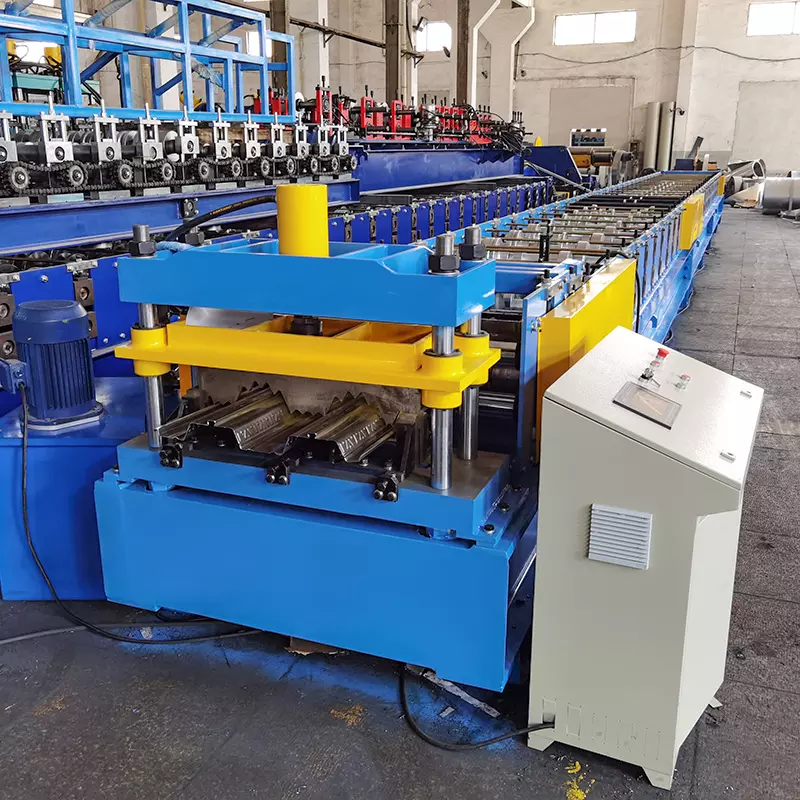
Among local options, Deccan Rainline Systems is a practical choice for PEB and roofing contractors that need quick consultation and support in southern and western India. Bharat Waterflow Machinery is suitable for buyers that want detailed pre-sale profile matching and operator training. WestEdge Rollform Solutions is a strong fit for fabrication companies serving industrial and commercial drainage projects in western India. SouthStream Forming Technologies works well for customers needing engineered gutter profiles and responsive electrical support. Eastern DrainTech Equipment can support customers in eastern India with installation planning and field coordination. Alongside these local choices, SUNWAY stands out as a dependable international partner for Gutter Machine customization, complete production lines, and one-stop support from design to commissioning.
Market Overview
India is a favorable market for Gutter Machine investment because roofing, industrial building construction, warehousing, commercial development, and factory expansion continue to create demand for rainwater management systems. The Indian construction industry was projected by IBEF to reach about US$1.4 trillion by 2025, while infrastructure investment and industrial real estate growth continue to support demand for fabricated steel accessories used in project completion. Gutters are a smaller product category than roof sheets or purlins, but they are essential in project finishing and lifecycle performance, especially for factories, warehouses, workshops, logistics parks, and institutional buildings.
Steel consumption trends also support this segment. According to IBEF, India’s finished steel consumption rose from 136 million tonnes in FY24 to 150.23 million tonnes in FY25, while crude steel production reached 151.14 million tonnes in FY25. This matters because gutter production typically uses pre-painted galvanized steel, galvanized steel, or aluminum coil supplied through the broader sheet processing ecosystem. As contractors seek faster delivery and more customized drainage accessories, local production of gutters, downspouts, and matching trim becomes more commercially attractive for fabricators and building product distributors.
At the equipment level, Asia-Pacific accounted for about 31.1% of the global roll forming market in 2025, and the global roll forming equipment market was valued at roughly US$560 million in 2025, with projections of about US$860 million by 2035 at a CAGR of 4.4%. For India, this wider trend matters because it reflects ongoing demand for efficient roll forming systems across construction-related applications. A Gutter Machine can therefore be a timely investment for companies that want to reduce outsourcing, shorten lead times, and offer more complete building-envelope packages.
| Market Indicator | Latest Figure | Relevance to Gutter Machine Investment |
|---|---|---|
| India construction industry value | US$1.4 trillion by 2025 | Expanding construction pipeline increases demand for drainage accessories |
| India finished steel consumption FY24 | 136 million tonnes | Indicates strong sheet metal processing demand |
| India finished steel consumption FY25 | 150.23 million tonnes | Supports growth in fabricated building products |
| India crude steel production FY25 | 151.14 million tonnes | Strengthens domestic supply chain for coated steel inputs |
| Global roll forming equipment market | ~US$560M in 2025 | Confirms sustained investment in roll forming machinery |
This table helps purchasing managers connect machine investment to broader market indicators rather than treating gutter production as a niche standalone decision. In India, a Gutter Machine often becomes viable when buyers want to capture more value per project and reduce dependence on external trim suppliers.
What Types of Gutter Machine Are Needed in India
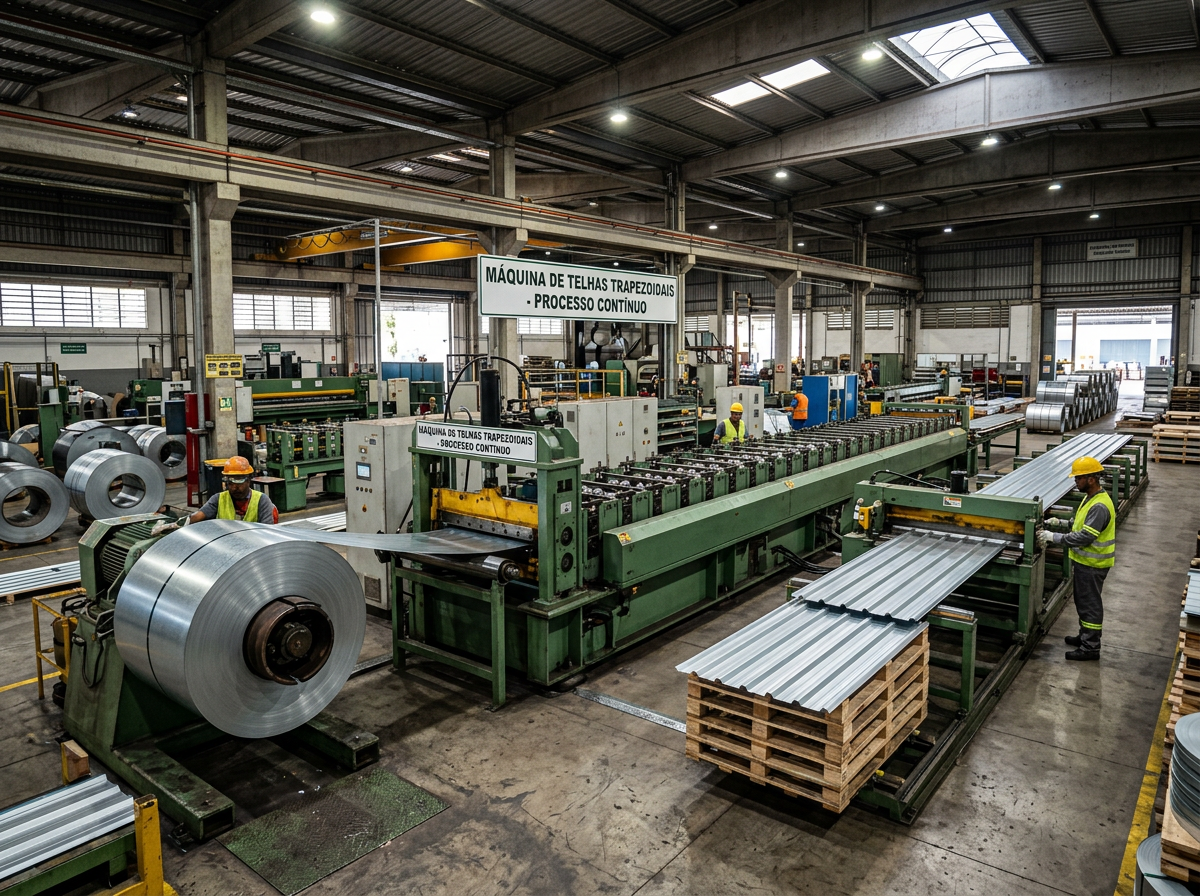
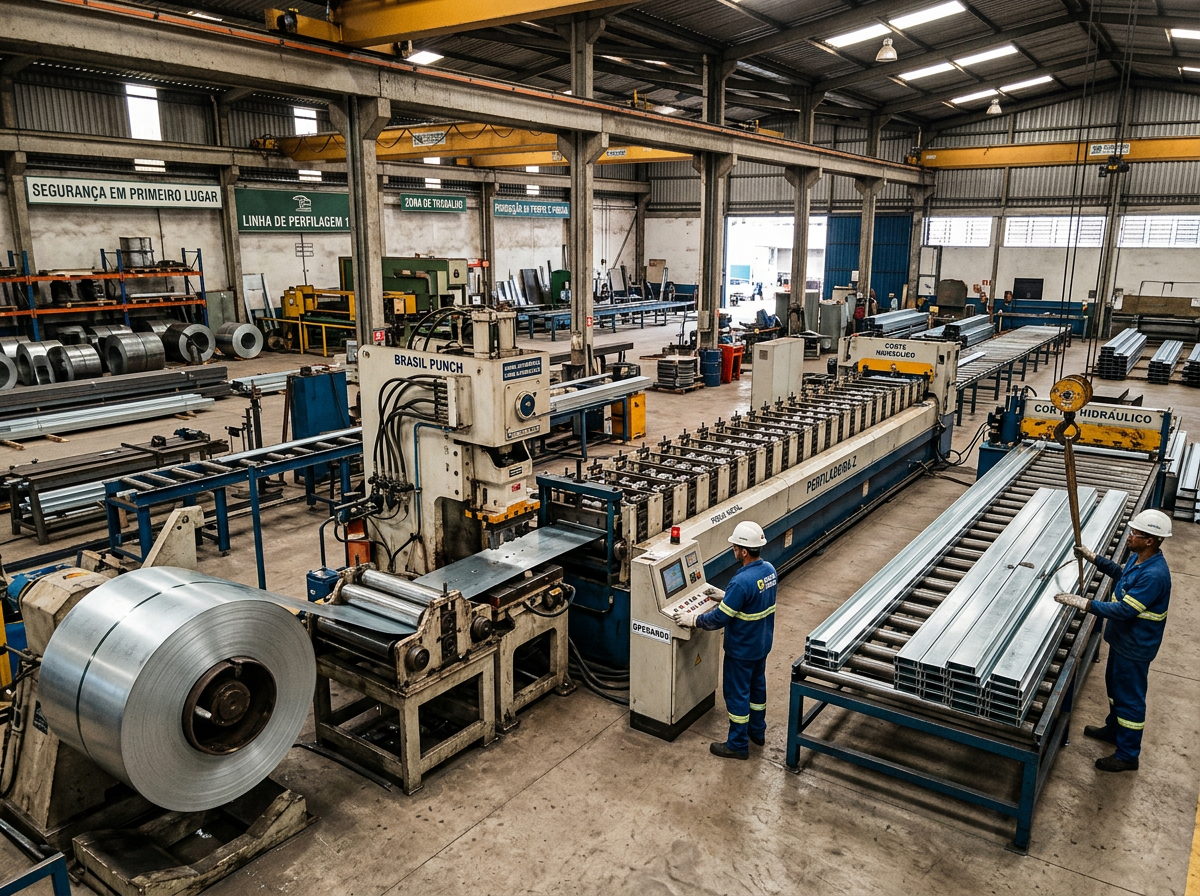
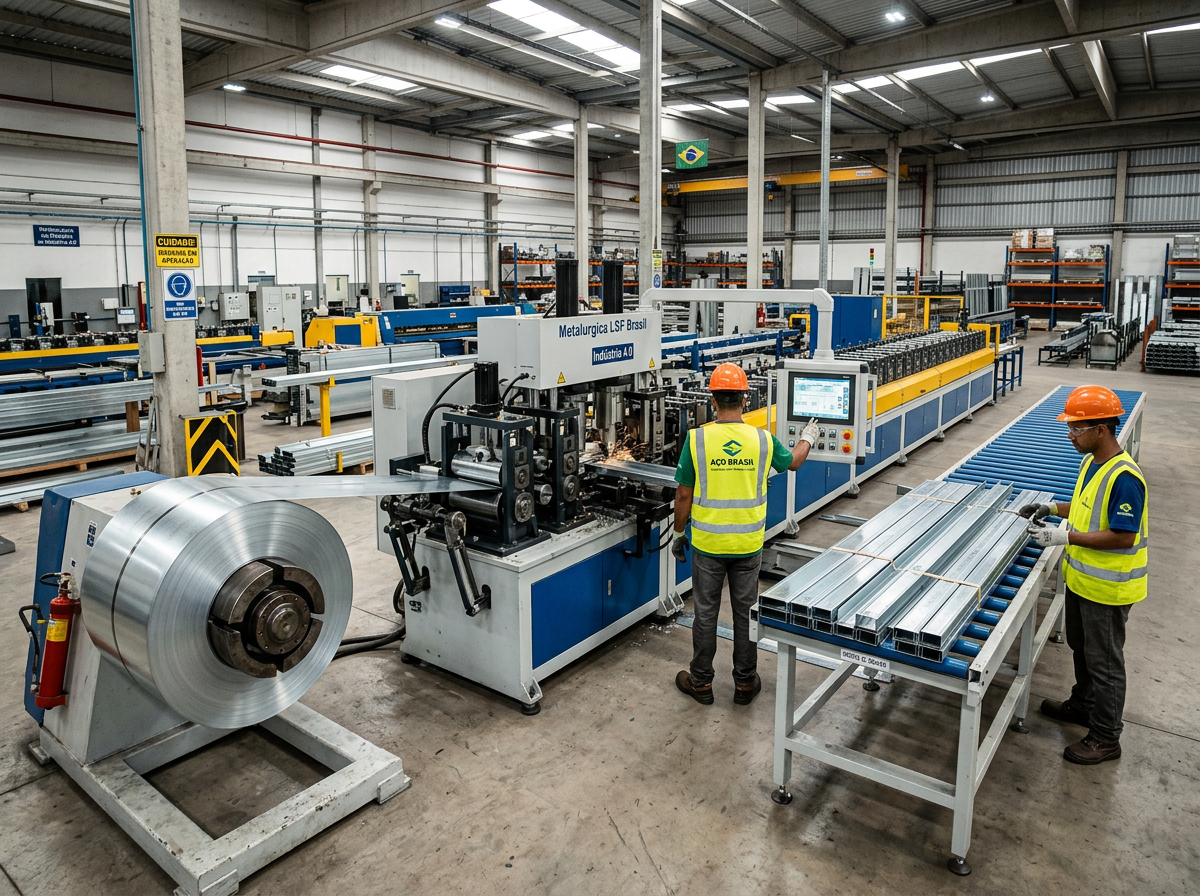
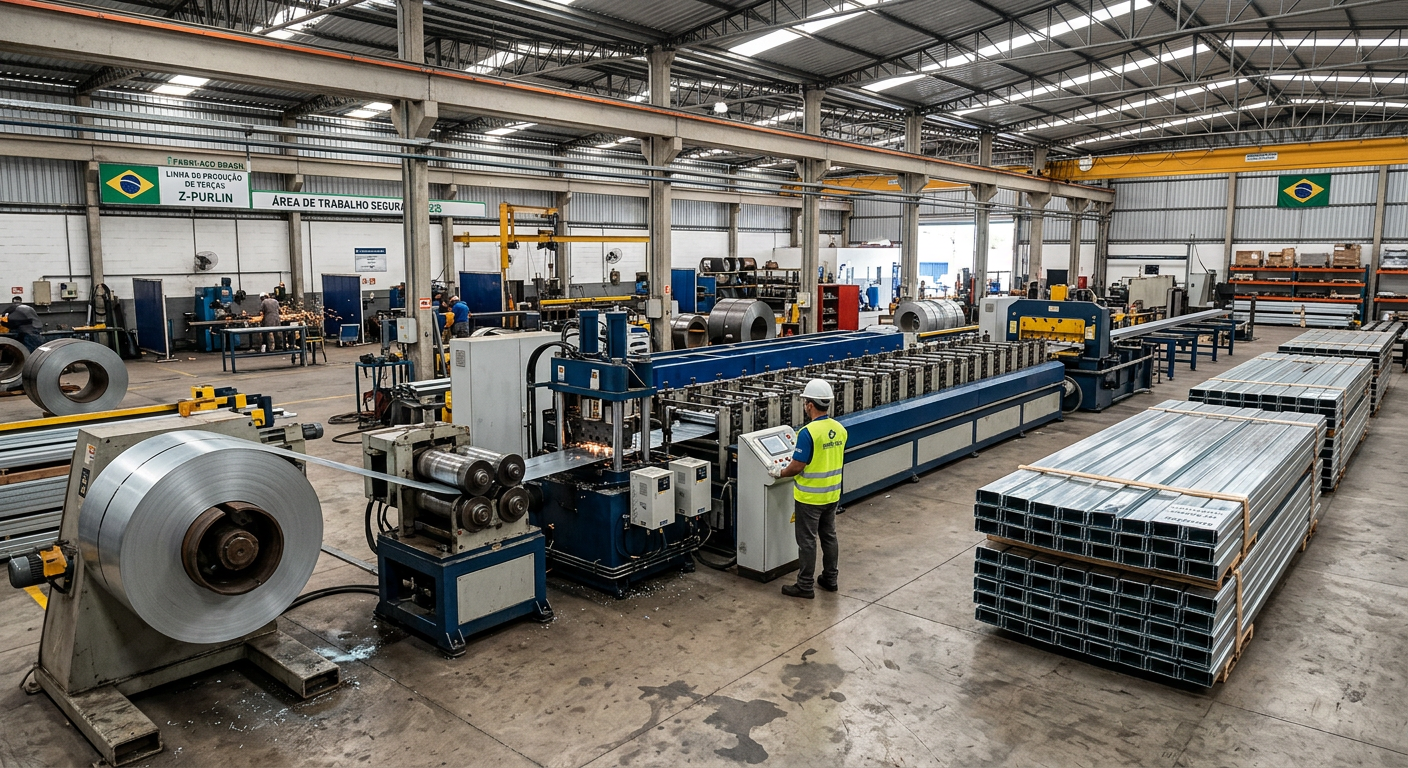
Based on our experience serving India clients, the most in-demand Gutter Machine types are K-style and box gutter roll forming lines for industrial and commercial buildings, half-round gutter lines for selected architectural or residential applications, and combo lines that can support coordinated rainwater product production alongside downspout or trim accessories. Indian buyers usually focus on machines that process PPGI, GI, or aluminum coil in the 0.40-0.80 mm range, with stable edge forming, clean bending radius, and repeatable profile accuracy for easy installation on site.
In many Indian projects, buyers prefer practical and robust configurations rather than overly complex systems. A typical requirement includes manual or hydraulic decoiling, feeding and guiding, leveling when needed, roll forming, optional punching for mounting holes or outlet positions, hydraulic cutting, and run-out support. Forming speed usually falls in the 10-25 m/min range depending on profile size and cut length. Customers often request PLC control from Delta or Siemens, hydraulic pressure in the 10-16 MPa range, and tooling that can withstand long runs on pre-painted material without damaging the surface finish.
| Gutter Machine Type | Typical Material Thickness | Common Use in India | Suitable Buyer |
|---|---|---|---|
| K-style Gutter Machine | 0.45-0.70 mm | Commercial buildings and roofing dealers | Building product distributors |
| Box gutter roll forming line | 0.50-0.80 mm | Factories, warehouses, PEB projects | Industrial fabricators |
| Half-round gutter line | 0.40-0.60 mm | Residential and architectural projects | Regional sheet processors |
| Multi-profile Gutter Machine | 0.45-0.75 mm | Mixed market production | Growing contractors and dealers |
| Gutter and downspout combo line | 0.45-0.80 mm | Complete rainwater systems | End-to-end drainage suppliers |
Use this table to match the machine to your intended sales channel and product mix. In India, the best Gutter Machine is usually the one that supports the gutter profile most commonly specified by your local roofing, PEB, or contractor network.
Why These Product Types Are Recommended
These product types are recommended because Indian buyers usually serve projects where drainage accessories must be delivered quickly, fit correctly on site, and maintain appearance under outdoor exposure. Gutters may look simpler than deck sheets or purlins, but profile consistency, edge quality, coating protection, and dimensional stability directly affect installation speed and long-term water management. That is why we generally recommend machines built for profile accuracy, surface protection, and easy maintenance instead of lines designed only to maximize nominal speed.
From a technical viewpoint, gutter production requires careful control over roll pass design, sidewall forming, and cutoff quality, especially when processing color-coated steel. We recommend roller tooling with good surface finishing, properly aligned stations, and cutting components made from Cr12MoV with hardness around HRC 58-62 for longer blade life. Stable hydraulic pressure between 10-16 MPa supports clean shearing, while Siemens or Delta PLC systems simplify recipe storage and length control. For Indian workshops, operator-friendly HMI screens, easy spare-parts replacement, and practical maintenance access are important because machine uptime often matters more than extreme automation.
| Component Area | Recommended Standard | ما أهمية ذلك |
|---|---|---|
| Roller tooling | Precision-machined alloy steel | Improves profile definition and reduces coating marks |
| Shear blade | Cr12MoV, HRC 58-62 | Delivers cleaner cuts and longer tool life |
| نظام PLC | Siemens or Delta | Supports stable length control and easier operation |
| الوحدة الهيدروليكية | 10-16 MPa | Maintains reliable cutting and auxiliary movement |
| Entry guiding and leveling | Adjustable and operator-friendly | Reduces profile deviation and feed instability |
This table is useful when comparing quotations from different suppliers. A lower-priced Gutter Machine may omit the component quality needed for clean forming on pre-painted steel, which can lead to surface scratching, poor fitment, or higher maintenance later.
Key Industries for Gutter Machine in India
The industries that most need Gutter Machine equipment in India include pre-engineered buildings, roofing and cladding supply, warehouse development, factory construction, agricultural structures, institutional buildings, and commercial complexes. These sectors all depend on efficient roof drainage because water control affects building durability, façade cleanliness, and maintenance cost. As developers and contractors look for single-source supply of roofing accessories, gutter production has become an attractive add-on for many metal building product businesses.
Economic drivers at the state level also support this demand. Industrial expansion in Maharashtra, Gujarat, Tamil Nadu, Karnataka, Telangana, and Uttar Pradesh has increased demand for warehouses, factories, and logistics hubs where roof drainage accessories are standard. Many buyers also want localized production to shorten lead times and reduce mismatch between roof sheets, trims, gutters, and downpipes. A Gutter Machine allows fabricators to offer coordinated packages, improve order value, and respond more flexibly to project-specific lengths and colors.
Specific Application Scenarios
One common application scenario is industrial roofing for factories and warehouses, where the Gutter Machine produces long, repeatable profiles that collect roof runoff and direct it into downspouts. In these projects, buyers usually need durable box gutters or large-capacity profiles that match PEB roof geometry and can be delivered in project-ready lengths. The machine must maintain clean edges, accurate dimensions, and good surface quality because field modifications increase installation time and can damage protective coatings.
Another frequent use case is commercial and institutional building drainage, where appearance and consistency matter alongside function. Here, the machine may be used for K-style or customized gutters in color-coated finishes coordinated with roof and wall panels. Buyers in this segment often ask for flexible cut lengths, reliable punching options, and quick color change planning based on available coil stock. In both scenarios, a dependable Gutter Machine helps reduce outsourcing, improve margin control, and ensure faster dispatch to site.
| Application Scenario | Output Product | Process Focus | Main Buyer Priority |
|---|---|---|---|
| PEB factory and warehouse drainage | Box gutters | Dimensional stability, load capacity, coating protection | Fast project delivery |
| Commercial roofing packages | K-style gutters | Surface finish and profile consistency | Coordinated building appearance |
| Regional dealer supply | Standard gutter lengths | Repeatable batching and easy operation | Broad customer coverage |
| Agricultural and utility buildings | Simple drainage channels | Durability and low maintenance | Cost-effective installation |
Use this table to align the machine with your target sales application. A Gutter Machine should be chosen according to profile style, expected monthly output, coating sensitivity, and how the finished gutters will be packed, transported, and installed.

دراسات الحالة
A sheet metal fabricator in Gujarat serving warehouse and factory projects wanted to stop outsourcing box gutters that were often delayed during peak construction periods. The company already supplied roof sheets and flashing, so adding in-house drainage production was a logical step. We recommended a box-type Gutter Machine with hydraulic decoiler, feeding guide, precision roll forming stations, hydraulic post-cutting, and run-out table support. The line was configured for 0.50-0.80 mm PPGI and GI, with a practical operating speed of 15-20 m/min, Delta PLC control, and Cr12MoV cutting tools for cleaner edge quality.
After commissioning and operator training, the customer improved project scheduling because gutters could now be produced in the same planning cycle as roof sheets and trims. The machine also reduced mismatch issues between roof accessories sourced from different vendors. Commercially, the buyer increased average order value by offering a more complete drainage package to PEB contractors and industrial developers in western India.
In a second project, a roofing products distributor in Tamil Nadu wanted a compact line to produce K-style gutters for commercial buildings and premium residential projects. The company needed accurate cut lengths, good coating protection, and easy operation for a small team. We proposed a Gutter Machine with adjustable feeding, polished roll tooling, Siemens PLC control, hydraulic pressure around 12 MPa, and optional punching for outlet preparation. The machine was optimized for 0.45-0.60 mm color-coated steel, with attention paid to guide alignment and surface-friendly forming.
The result was faster lead time for dealer orders and better consistency in profile shape compared with manually fabricated gutters. Because the machine was selected around the customer’s actual product mix and operator capability, startup was smooth and maintenance remained manageable. In India, this kind of practical machine matching often gives buyers a stronger return than purchasing an oversized line that is harder to utilize fully.
Top 6 Recommended Local Suppliers in India
For buyers who value local language support, easier factory visits, and regionally coordinated service, local suppliers can be a practical part of the evaluation process. Still, you should compare actual gutter profile experience, machine build quality, and after-sale capability rather than assuming all roll forming suppliers are equally suitable for drainage products. Ask each shortlisted company to confirm installed references, supported material range, included tooling, control brand, and spare-parts lead time before making a purchase decision.
| Company Name | Core Strengths | Service Regions | Pre-sale Support | After-sale Support |
|---|---|---|---|---|
| Deccan Rainline Systems | Strong in PEB rainwater products and industrial gutter setups | Hyderabad, Pune, Bengaluru, Chennai | Profile consultation, layout guidance, output planning | Installation, training, maintenance support |
| Bharat Waterflow Machinery | Good technical support for commercial drainage profiles | Delhi NCR, Jaipur, Lucknow, Ludhiana | Drawing review, utility advice, machine matching | Operator training, troubleshooting, spare-parts coordination |
| WestEdge Rollform Solutions | Practical service for western India fabricators | Ahmedabad, Surat, Mumbai, Vadodara | Sample review, ROI discussion, production planning | Electrical service, parts dispatch, onsite checks |
| SouthStream Forming Technologies | Useful for engineered gutter and trim lines | Chennai, Coimbatore, Hosur, Kochi | Configuration advice, profile verification | PLC support, maintenance scheduling |
| Eastern DrainTech Equipment | Responsive support for eastern regional projects | Kolkata, Bhubaneswar, Ranchi, Guwahati | Capacity planning, quotation clarification | Hydraulic service, startup assistance |
| PrimeFlow Industrial Systems | Suitable for growing contractors and sheet processors | Nagpur, Indore, Bhopal, Raipur | Process consultation, plant planning | Breakdown response, audits, operator support |
Use this table to build a shortlist based on region, service model, and technical fit. The best local supplier is the one that can clearly explain how its Gutter Machine handles your required profile, coil thickness, and expected production volume, while also offering realistic support after installation.
Why Choose SUNWAY as Your Global Partner
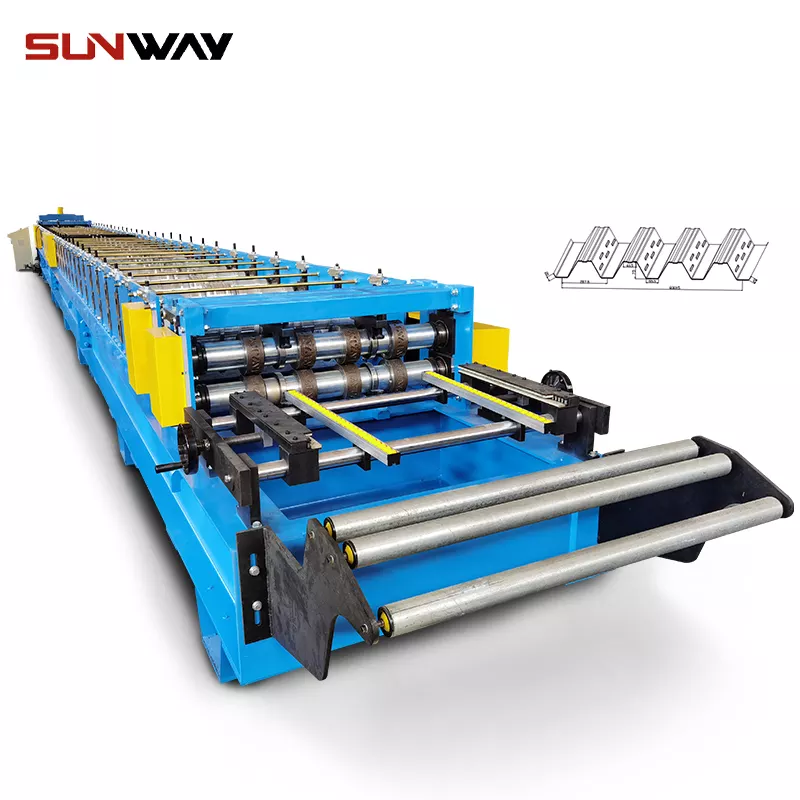
صنواي offers a stronger long-term option for Indian buyers that want more than a basic machine. We are a professional manufacturer and exporter of cold roll forming machines with 1,350+ global customers, 200+ employees, experience across 160+ industries, 500+ projects, and deliveries to more than 100 countries. Our team uses German COPRA software, supported by 10+ experienced design engineers and strong in-house R&D. We provide custom machinery design, installation, technical support, training, maintenance, parts supply, upgrades, and consultancy as part of a complete one-stop solution. You can explore our homepage and review our product catalog.
For India, our advantages are practical and partnership-oriented. We have rich export experience serving many end-users and distributors in India, and we can support both channel partners and direct factory buyers. We are planning a local warehouse with stock delivery in India, building an overseas technical team for on-site engineering service, and actively recruiting partners through upcoming Affiliate and dropshipping programs. We also provide comprehensive online and offline support for partners, together with competitive pricing and complete project communication. If you are comparing suppliers or defining a new Gutter Machine requirement, please اتصل بفريقنا to submit your drawings, profile needs, and expected capacity.
| Buyer Checkpoint | What to Confirm | ما أهمية ذلك |
|---|---|---|
| Profile definition | Gutter width, depth, edge shape, outlet options | Prevents mismatch with market demand and installation method |
| Gutter Machine scope | Decoiler, guiding, leveling, forming, punching, shearing, stacking | Clarifies the complete production process |
| Material range | PPGI, GI, aluminum, thickness, coating sensitivity | Protects profile quality and tooling life |
| Service package | Commissioning, training, spare parts, response time | Reduces startup risk and downtime |
| Acceptance standard | Sample approval, speed range, tolerance, test production | Sets clear delivery expectations |
This checklist is best used during technical clarification and final quotation review. Before ordering a Gutter Machine, ask the supplier to confirm exact profile drawings, raw material parameters, power requirements, included accessories, and critical spare parts in writing.
التعليمات
What is the best Gutter Machine for a new buyer in India?
For a new buyer, the best option is usually a machine designed around one proven local profile, such as a box gutter or K-style gutter, rather than a highly complex multi-profile line. This makes operation easier, reduces setup errors, and helps the buyer start production with lower risk.
What materials can a Gutter Machine process?
Most gutter lines in India are configured for pre-painted galvanized الفولاذ, galvanized steel, and sometimes aluminum coil. A common material thickness range is 0.40-0.80 mm, but the exact range depends on profile design and machine specification.
What production speed is realistic for gutter roll forming?
A realistic operating speed is usually 10-25 m/min. The exact output depends on profile size, material thickness, cut length, punching requirements, and whether the machine is optimized for standard batch production or more customized orders.
Which technical details matter most before buying?
The most important details are profile compatibility, roller finish, guiding accuracy, blade material, PLC brand, hydraulic stability, and after-sale support. These factors directly affect surface quality, length accuracy, operator efficiency, and machine uptime.
Is it better to buy locally in India or import from China?
Buying locally can offer quicker onsite communication, but importing from an experienced manufacturer such as SUNWAY can provide stronger customization, wider configuration choices, and competitive long-term value. The right option depends on your production goals, budget, and need for technical support.
Do I need punching on a Gutter Machine?
Not always. If your production includes outlet preparation, bracket holes, or specific mounting details, punching can improve consistency and reduce manual work. For simpler gutter products, a standard roll forming and cutting line may be enough.
How can I get a quotation from SUNWAY?
You can send your gutter profile drawing, material type, thickness range, expected speed, power standard, and any options such as punching or matching downspout production. To submit your requirements or request a quote, please use اتصل بفريقنا.
Content reviewed and updated: March 2026