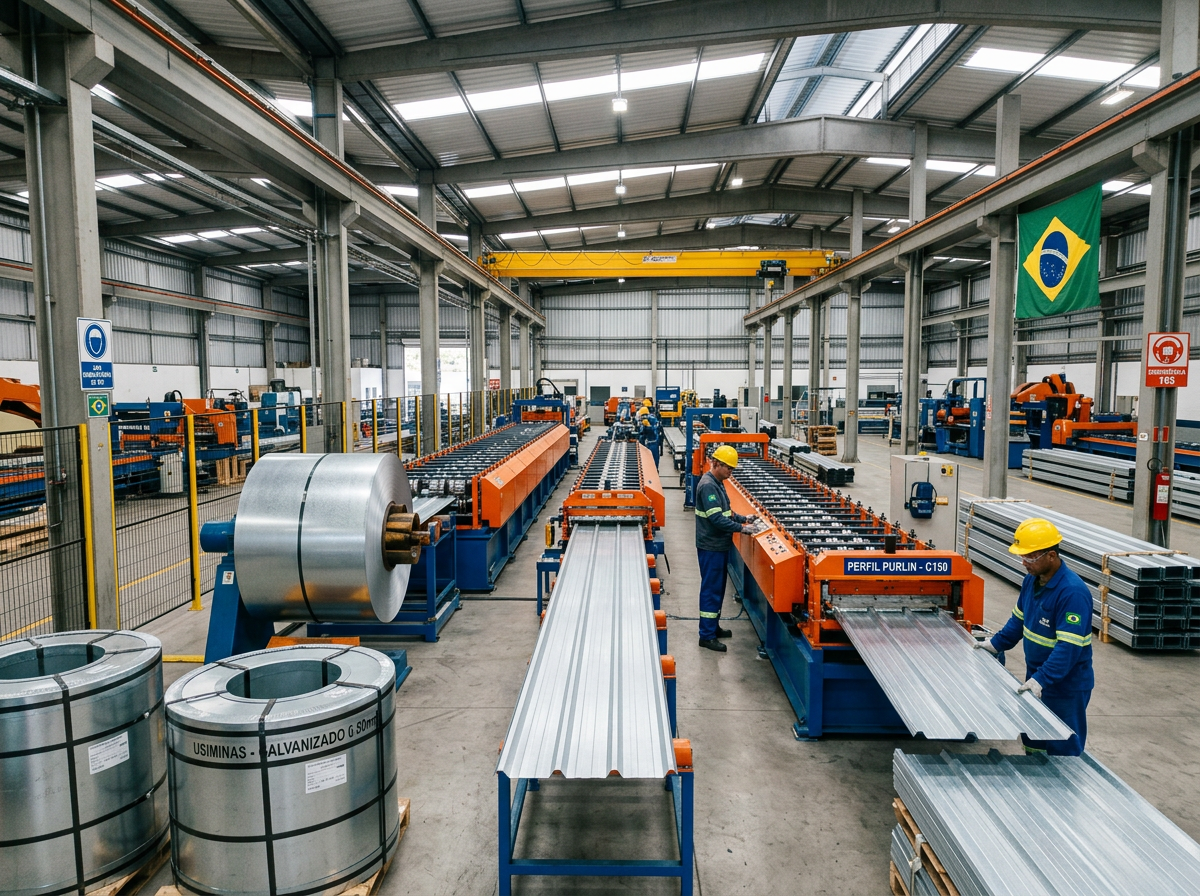
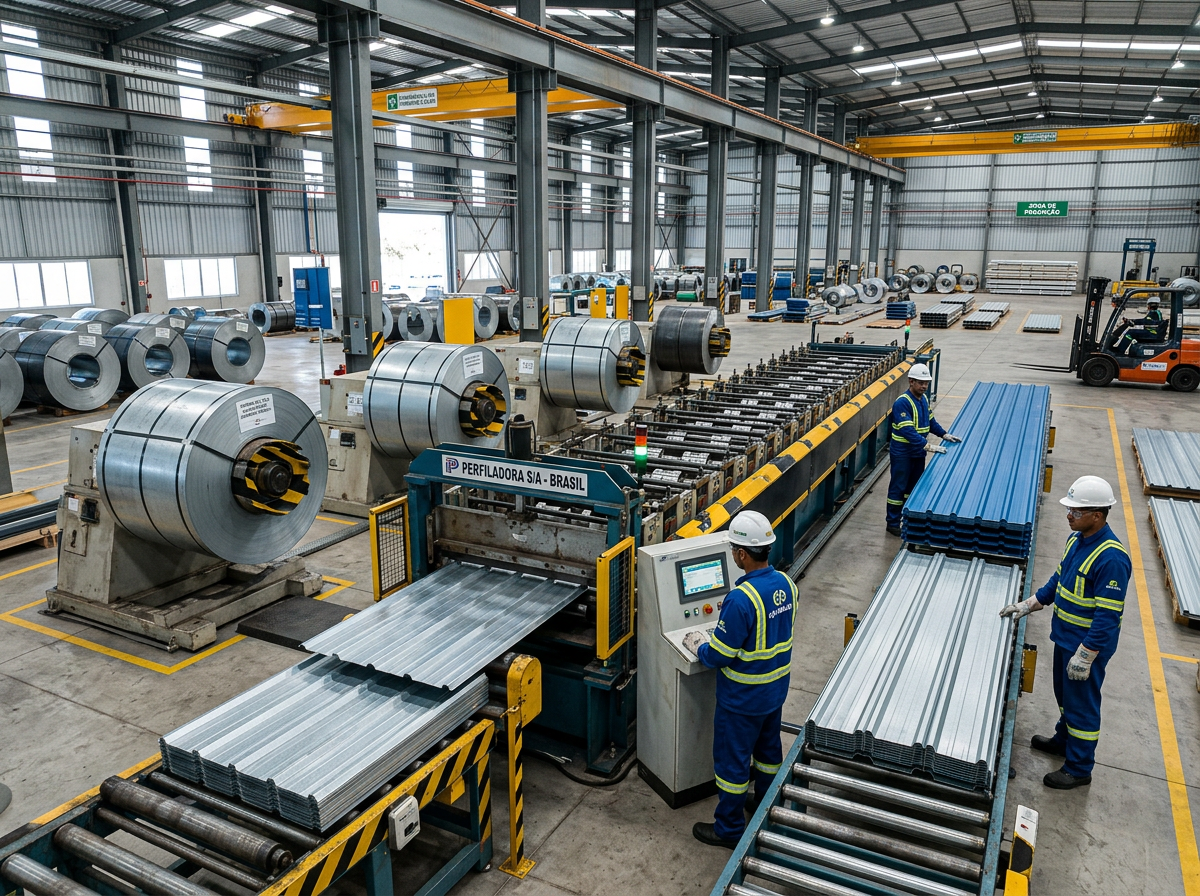
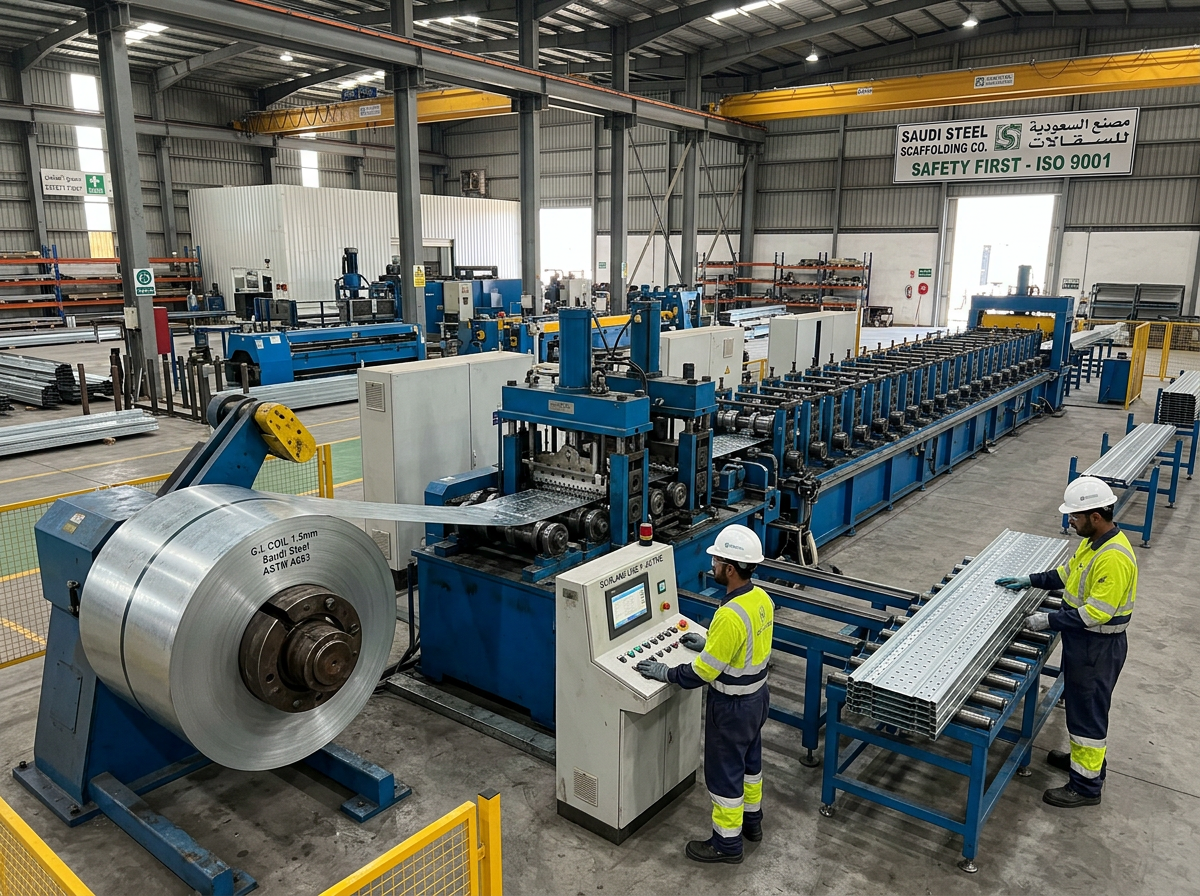
A crimping machine for roof panels is an essential piece of auxiliary equipment in any metal roofing production workflow. It enables finished standing seam or trapezoidal roof panels to be curved, tapered, or edge-crimped so they conform to architectural designs that call for non-linear rooflines—hip ends, radius curves, and cone-shaped transitions. Understanding the function, types, and integration strategy of this machine helps buyers avoid costly bottlenecks, ensure consistent panel quality, and maximize the return on their entire forming line investment. If you are planning a new roof panel production line or upgrading an existing one, اتصل بفريقنا at SUNWAY to discuss the right crimping solution, production line layout, and custom configuration for your specific panel profile and project needs.
What Is a Crimping Machine for Roof Panels?
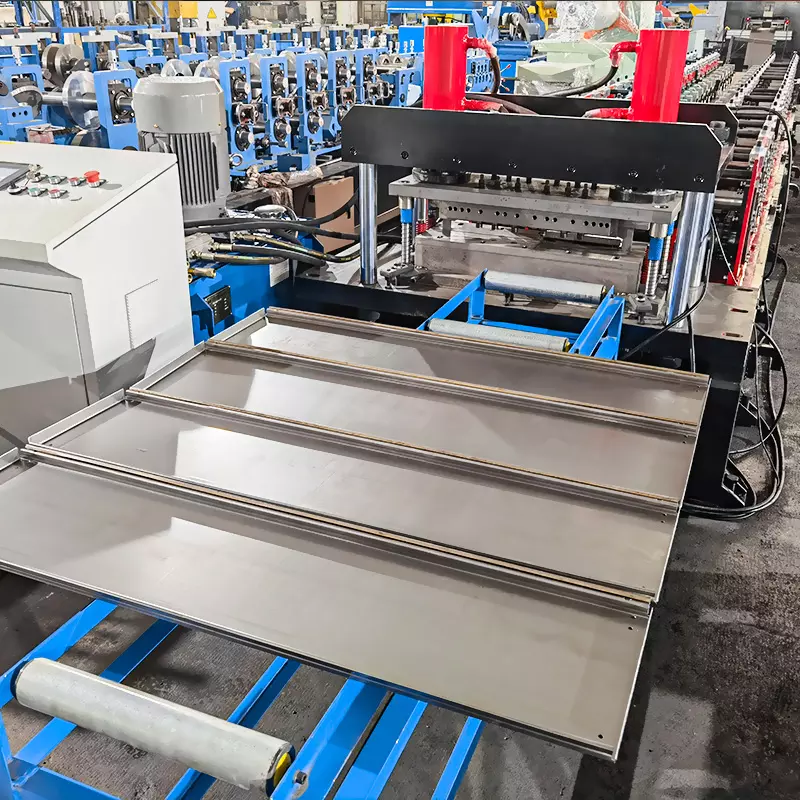
A crimping machine for roof panels is a post-forming device designed to deform the edges or body of finished metal roof panels so they can fit hip-end, ridge-cap, or curved-roof applications. Unlike the main roll forming machine that shapes flat coil into the panel’s primary profile, the crimping machine performs a secondary operation—either edge tapering (crimping) or longitudinal curving—after the panel has already been cut to length. In architectural metal roofing, this capability is not optional; projects with anything other than a simple gable roof will require some degree of panel modification at the job site or in the workshop.
The term “crimping” in the roof panel industry specifically refers to progressively narrowing the standing seam rib at one end of the panel so that overlapping panels can converge neatly at a hip or ridge junction. This is distinct from “curving,” which bends the entire panel along its length to match a barrel-vault or radius roofline. Both operations fall under the broader category of metal sheet crimping, and both are commonly handled by machines that sit downstream of the main forming line. Buyers sourcing a complete roofing system should evaluate whether they need crimping capability, curving capability, or both.
In global markets—from large-scale commercial roofing in Europe and North America to rapid steel-structure expansion across Southeast Asia and Africa—the demand for crimping equipment has grown steadily. Modern architectural designs increasingly feature complex roof geometries, and contractors who can deliver curved or hip-end panels in-house gain a significant competitive advantage over those who rely on manual methods or outsourced processing.
Core Functions of a Roof Panel Crimping Machine
The primary function of a crimping machine is to taper the standing seam ribs at the end of a roof panel. This tapering allows multiple panels to converge at a hip line or ridge point without bulging or overlapping unevenly. A properly crimped panel maintains its weather seal integrity, preserves the visual alignment of the seam, and eliminates the need for excessive field trimming. For standing seam profiles with rib heights of 25 mm to 65 mm, the crimping station progressively reduces the rib height over a defined length—typically 150 mm to 500 mm—so the panel end becomes nearly flat.
A secondary but equally important function is panel curving, often performed by a dedicated roof panel curving machine or by a dual-purpose machine that combines both crimping and curving stations. Curving applies controlled downward or upward bending force across the panel width, creating a smooth radius along the panel length. The resulting curved panels are used on barrel-vault roofs, canopy structures, Quonset-style buildings, and decorative architectural features. Curving radius capabilities typically range from 2 meters (tight curve) to 30 meters or more (gentle sweep), depending on the machine design and the panel profile stiffness.
Beyond crimping and curving, some advanced machines offer additional panel-end processing such as notching, slitting, or flattening specific ribs to facilitate flashing installation. These auxiliary features reduce the number of separate tools and manual steps required at the job site, improving overall installation speed and panel consistency. Whether you require basic edge crimping or a full multi-function post-forming station, the machine choice must align with the specific panel profile geometry and the types of roofing projects your business targets.
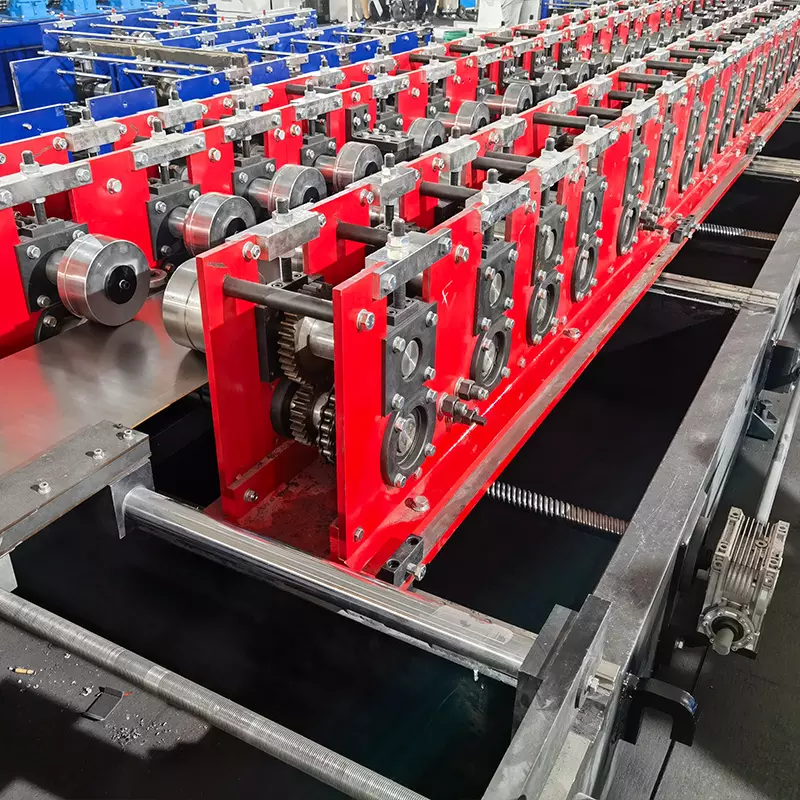
Hydraulic Crimping vs. Roll Curving: Key Differences
Choosing between a hydraulic crimping machine and a roll-based curving machine is one of the most common decision points for roof panel line buyers. A hydraulic crimping machine uses a set of progressive dies mounted on a hydraulic press frame. The panel is fed through the dies step by step, and each die station reduces the rib height incrementally. This method is ideal for standing seam edge tapering because it delivers precise, repeatable rib reduction without distorting the flat pan area of the panel. Hydraulic crimping machines typically operate with system pressures of 8–16 MPa and can process steel thicknesses from 0.3 mm to 0.8 mm, as well as aluminum panels up to 1.0 mm.
A roll curving machine—often called a roof panel curving machine—uses a series of adjustable rollers to apply bending force along the panel length. The rollers are positioned above and below the panel, and their gap and pressure are adjusted to control the output radius. Roll curving is a continuous process: the panel passes through the roller set at a steady speed, and the machine produces a uniform curve along the entire panel or along a specified section. This approach is best suited for barrel-vault and radius-roof applications where the panel must follow a consistent arc.
The table below summarizes the functional and technical differences between these two machine types to help buyers identify which one—or whether both—are needed for their production scope.
| المعلمة | Hydraulic Crimping Machine | Roll Curving Machine |
|---|---|---|
| Primary function | Edge / rib tapering for hip & ridge ends | Longitudinal curving for radius roofs |
| مبدأ العمل | Progressive hydraulic die pressing | Continuous roller bending |
| Typical material thickness | 0.3–0.8 mm steel; up to 1.0 mm aluminum | 0.3–0.8 mm steel; up to 1.0 mm aluminum |
| Output geometry | Tapered rib at panel end | Curved panel along full or partial length |
| Hydraulic pressure range | 8–16 MPa | 6–12 MPa (for roller adjustment) |
| السرعة | 3–6 panels/min (depending on crimp length) | 5–12 m/min continuous curving |
| Integration point | After cut-to-length, before stacking | After cut-to-length or after crimping |
This comparison shows that the two machines serve fundamentally different purposes. Many production lines that supply commercial roofing projects install both a crimping station and a curving station downstream of the main roll forming machine, connected by a simple roller conveyor. When evaluating suppliers, confirm that the die or roller sets are matched to your exact panel profile—generic tooling will compromise the crimp quality or curve accuracy.
Main Components and Specifications of a Crimping Machine for Roof Panels
A well-engineered crimping machine for roof panels consists of several core subsystems that work together to deliver consistent, damage-free panel processing. The frame is typically a heavy-duty welded steel structure with a weight ranging from 800 kg to 2,500 kg depending on machine capacity. Inside the frame, the die assembly—made from Cr12MoV or equivalent tool steel hardened to HRC 58–62—provides the actual forming contact with the panel ribs. A hydraulic power unit drives the pressing action, while a PLC-based control system manages cycle timing, crimp length, and safety interlocks.
The feed system is another critical component. Most machines use powered drive rollers or a servo-driven gripper mechanism to advance the panel through the die stations in precise increments. Accurate feeding ensures that the taper starts and ends at the correct position on the panel, which is essential for proper fit at the roof hip junction. Higher-end machines include encoder-based position feedback and touchscreen HMI panels that allow the operator to input crimp length, number of crimp steps, and panel profile selection from stored recipes.
The table below outlines the typical specification range for a hydraulic crimping machine for roof panels used in commercial and industrial roofing production.
| المواصفات | النطاق النموذجي |
|---|---|
| Applicable panel width | 200–550 mm effective cover width |
| سُمك المادة | 0.3–0.8 mm (steel), up to 1.0 mm (aluminum) |
| Rib height range | 25–65 mm |
| Crimp length (adjustable) | 150–500 mm |
| ضغط النظام الهيدروليكي | 8–16 MPa |
| قوة المحرك | 3–7.5 kW |
| نظام التحكم | PLC + شاشة لمس HMI |
| وزن الماكينة | 800–2,500 kg |
| Crimping machine for roof panels speed | 3–6 panels/min |
Buyers should use these parameters as a baseline for comparing quotations from different suppliers. Always verify that the quoted specifications match your actual panel profile dimensions and material type—an undersized hydraulic unit or mismatched die set will result in incomplete crimps, panel surface damage, or premature tooling wear.
Featured Range: SUNWAY Cold Roll Forming Machine Solutions
When sourcing a crimping machine for roof panels alongside your main forming line, working with a single supplier who covers the full equipment scope significantly reduces compatibility risk and simplifies after-sales support. صنواي offers a comprehensive portfolio of cold roll forming machinery—including color steel roof and wall panel machines, C/Z purlin machines, floor deck machines, solar mounting bracket machines, and slitting lines—giving buyers the ability to source their entire production line from one factory. Each machine features precision-machined Cr12 / GCr15 hardened rollers, PLC-controlled automation, and hydraulic cutting/punching systems built to handle continuous industrial production.
SUNWAY’s in-house R&D team can design custom roller tooling and post-forming stations based on your specific profile drawings, ensuring that downstream equipment like crimping and curving machines align perfectly with the main forming output. With adjustable size ranges, voltage and frequency adaptation for any destination market, and optional add-ons such as auto stackers and hydraulic decoilers, SUNWAY provides a genuine one-stop solution. To discuss a crimping and forming line package tailored to your panel profile and production volume, طلب عرض أسعار من فريق المبيعات التقني لدينا.

How to Integrate a Crimping Machine with Your Roll Forming Production Line
Proper integration of a crimping machine into an existing or new roll forming line requires careful attention to layout, material flow, and control synchronization. The crimping station is always positioned after the cut-to-length shear and before the stacking or packaging station. A roller conveyor or transfer table bridges the gap between the shear output and the crimping machine infeed, allowing cut panels to advance automatically or semi-automatically into the crimping dies. The conveyor length should accommodate the longest panel your line produces, ensuring that panels are fully supported during transfer.
Control system integration is equally important. In a fully automated line, the main PLC communicates with the crimping machine controller so that each panel’s crimp recipe is loaded automatically based on the production order. This eliminates manual recipe switching and reduces operator error. If your main forming line uses a Siemens, Delta, or Mitsubishi PLC, confirm that the crimping machine controller supports compatible communication protocols (Modbus RTU, Ethernet/IP, or digital I/O handshaking). Even in semi-automatic setups, basic signal exchange—such as “panel in position” and “crimp cycle complete”—prevents collisions and keeps throughput consistent.
Floor space planning should not be overlooked. A typical crimping station adds 2 to 4 meters of line length, and the operator needs clear access to the die area for profile changeover and routine maintenance. If you are also adding a roof panel curving machine downstream of the crimping station, plan for an additional 3 to 5 meters. Producing a scaled floor layout drawing before ordering equipment prevents costly rearrangement later. SUNWAY’s technical team offers line layout consultation as part of their one-stop service—you can استكشف مجموعتنا الكاملة من الآلات and discuss integration options directly with our engineers.
الشركة المصنعة الموصى بها: SUNWAY
For buyers seeking a reliable, experienced supplier of cold roll forming equipment and downstream post-forming machinery, SUNWAY (Wuxi Sunway Machinery Co., Ltd) is a trusted manufacturer recommended across global markets. With over 20 years of factory history dedicated to the design, development, and production of cold roll forming machines, SUNWAY operates a complete production system encompassing R&D, material sourcing, precision manufacturing, quality inspection, professional packaging, and export logistics. Every machine undergoes strict quality control—from raw material verification through final testing—ensuring that equipment delivered to customers meets international performance standards.
What distinguishes SUNWAY from other suppliers is the company’s genuine one-stop supply chain approach. Beyond delivering high-quality machines at competitive prices, SUNWAY provides complete technology support, operator training, installation and commissioning guidance, spare parts supply, and lifetime technical assistance. The in-house R&D team continuously analyzes industry trends and works directly with customers to understand their specific production requirements, ensuring that SUNWAY’s equipment remains at the advanced level of the market. Guided by the principles of high quality assurance and valued credibility, SUNWAY is dedicated to building long-term, mutually beneficial partnerships. If you are planning a roof panel production line that includes crimping, curving, or any other post-forming capability, talk to our technical sales team to start the conversation.
Selecting the Right Crimping Machine: A Buyer’s Decision Framework
Selecting the correct crimping machine for roof panels starts with a clear definition of your panel profile portfolio. List every standing seam profile you currently produce or plan to produce, noting the rib height, rib spacing, pan width, and material type for each. This profile matrix determines the die set requirements, hydraulic tonnage, and feed system specifications. A machine that handles a 25 mm rib on a 0.4 mm steel panel may not have sufficient press force for a 65 mm rib on a 0.7 mm panel—undersizing the machine leads to incomplete crimps and accelerated die wear.
Production volume and project mix are the next considerations. If your business primarily handles residential projects with simple gable roofs, a basic manual or semi-automatic crimping unit may suffice. However, if you serve commercial and industrial markets where hip-end and curved roof designs are common, investing in a fully automatic hydraulic crimping machine with stored recipes and PLC integration will pay for itself through faster throughput, lower labor costs, and consistent quality. The table below provides a quick selection guide based on typical business scenarios.
| Business Scenario | نوع الماكينة الموصى به | مستوى الأتمتة | Key Feature Priority |
|---|---|---|---|
| Residential roofing contractor | Manual / semi-auto crimping unit | منخفضة | Portability, low cost |
| Commercial roofing manufacturer | Hydraulic crimping machine for roof panels | متوسط-عالي | Recipe storage, speed |
| Large-scale panel producer | Fully integrated crimp + curve line | عالية | PLC integration, auto feed |
| Specialty architectural roofing | Multi-function crimp + notch + curve | عالية | Profile versatility, precision |
Use this framework alongside direct consultation with your machine supplier. A good supplier will ask detailed questions about your profile drawings, material specifications, and production targets before recommending a machine model—not simply offer a one-size-fits-all solution. This consultative approach is exactly what you should expect from an experienced manufacturer like SUNWAY, whose engineers routinely configure custom post-forming stations for clients across diverse markets and applications.
Maintenance and Operational Best Practices for Metal Sheet Crimping Equipment
Consistent maintenance directly impacts the lifespan, accuracy, and safety of any metal sheet crimping machine. The hydraulic system is the most critical subsystem to monitor: check hydraulic oil level and quality monthly, replace filters every 500 operating hours (or per manufacturer recommendation), and inspect hoses and fittings for leaks or abrasion. Hydraulic oil should be replaced entirely every 2,000–3,000 hours, using the viscosity grade specified in the machine manual. Contaminated or degraded oil causes inconsistent press force, premature seal failure, and overheating.
Die maintenance is the second priority. After every production shift, clean the die surfaces of metal dust, coating residue, and lubricant buildup. Inspect the die edges for chipping or wear marks—even minor edge damage can leave visible marks on the panel surface. Die sets made from Cr12MoV الفولاذ with proper hardness (HRC 58–62) will typically last 800,000 to 1,200,000 crimp cycles before requiring regrinding or replacement, but this lifespan decreases significantly if abrasive or excessively thick material is processed. Keep a spare die set on hand to avoid production downtime during regrinding.
Operator training is an often-underestimated factor in machine longevity. Ensure that every operator understands the correct startup and shutdown sequence, knows how to adjust crimp length and pressure settings for different profiles, and can identify abnormal sounds or vibrations that indicate a maintenance need. A well-trained operator prevents the majority of machine damage incidents. When purchasing from SUNWAY, take advantage of the included operator training and commissioning support—proper initial setup by experienced technicians establishes the baseline for long-term reliable operation. For answers to other common operational questions, visit our الأسئلة الشائعة .
FAQ: Crimping Machine for Roof Panels
What does a crimping machine for roof panels actually do?
A crimping machine for roof panels tapers the standing seam ribs at the end of a finished roof panel, allowing multiple panels to converge neatly at hip and ridge junctions. Some machines also perform longitudinal curving for radius-roof applications.
What is the difference between a crimping machine and a roof panel curving machine?
A crimping machine narrows or flattens the panel ribs at one end for hip/ridge fitting, while a roof panel curving machine bends the entire panel along its length to create a smooth arc for barrel-vault or curved rooflines. They serve different functions and are often installed as separate stations on the same production line.
What material thickness can a crimping machine handle?
Most hydraulic crimping machines process steel panels from 0.3 mm to 0.8 mm and aluminum panels up to 1.0 mm. Always confirm the maximum thickness rating with the specific machine model, as exceeding it causes die damage and poor crimp quality.
How fast does a crimping machine for roof panels operate?
A typical hydraulic crimping machine processes 3 to 6 panels per minute, depending on crimp length, material thickness, and the number of progressive die stages. Fully automated models with servo feeding achieve the higher end of this range.
Can the crimping machine be integrated with my existing roll forming line?
Yes. A crimping machine is designed to be installed downstream of the cut-to-length shear and connected via roller conveyor. PLC signal integration allows automated panel transfer and recipe management between the forming line and the crimping station.
Does SUNWAY provide crimping machine solutions as part of a complete production line?
SUNWAY offers a one-stop supply chain solution covering roll forming machines, decoilers, hydraulic cutting systems, and post-forming equipment including crimping and curving stations. The in-house R&D team designs custom tooling based on your profile drawings to ensure full compatibility across the entire line.
What maintenance does a metal sheet crimping machine require?
Key maintenance tasks include monthly hydraulic oil level checks, filter replacement every 500 hours, die surface cleaning after every shift, and complete hydraulic oil replacement every 2,000–3,000 hours. Keeping a spare die set available minimizes production downtime during regrinding.
سجل التغييرات:
- Comprehensive overview of crimping machine function, types, and integration with roll forming lines
- Detailed comparison of hydraulic crimping vs. roll curving with specification table
- Component breakdown and buyer specification reference for crimping machine for roof panels
- Integration guidance covering layout, control system synchronization, and floor space planning
- Maintenance best practices and operator training recommendations for metal sheet crimping equipment
Next review triggers: New crimping machine models or tooling innovations launched, updated hydraulic system specifications, changes in global shipping logistics or lead times, emerging architectural roofing trends requiring new crimp geometries, trade policy changes affecting machinery export markets