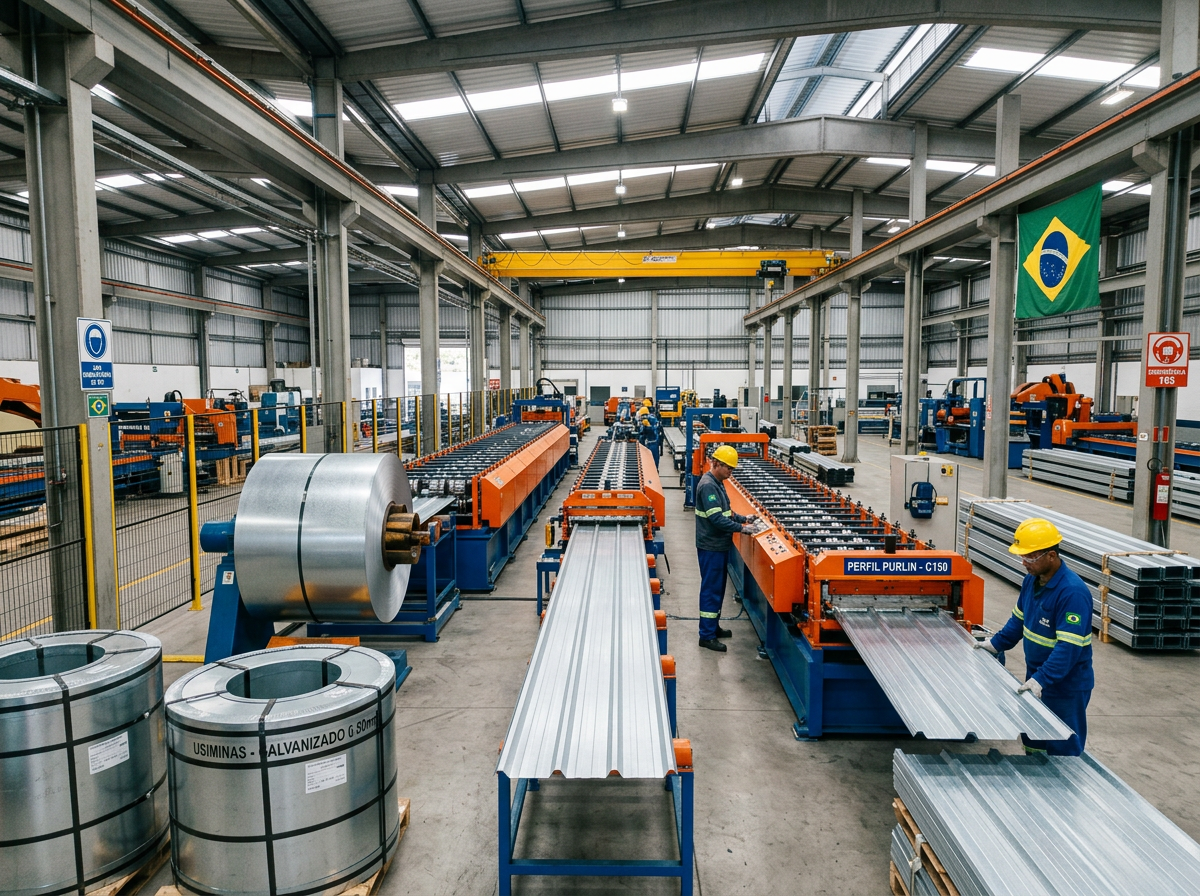
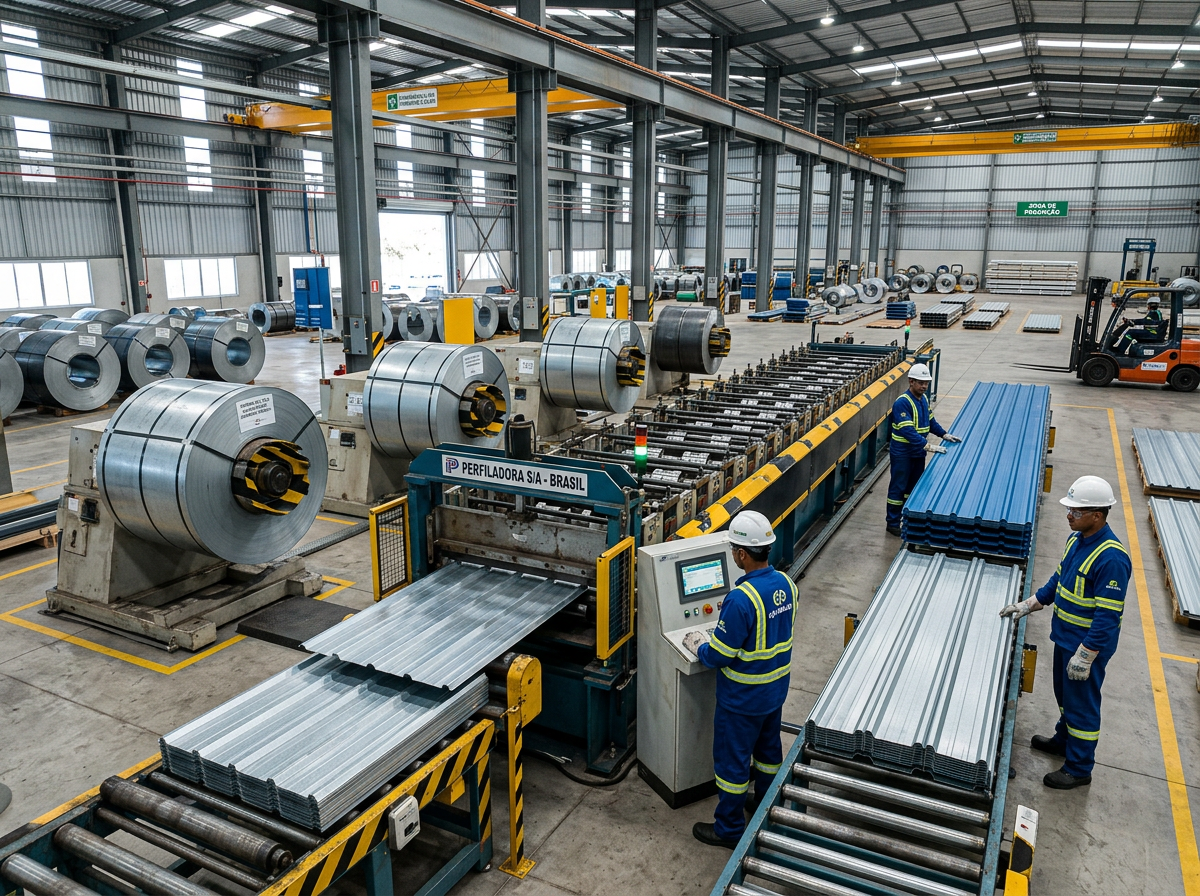
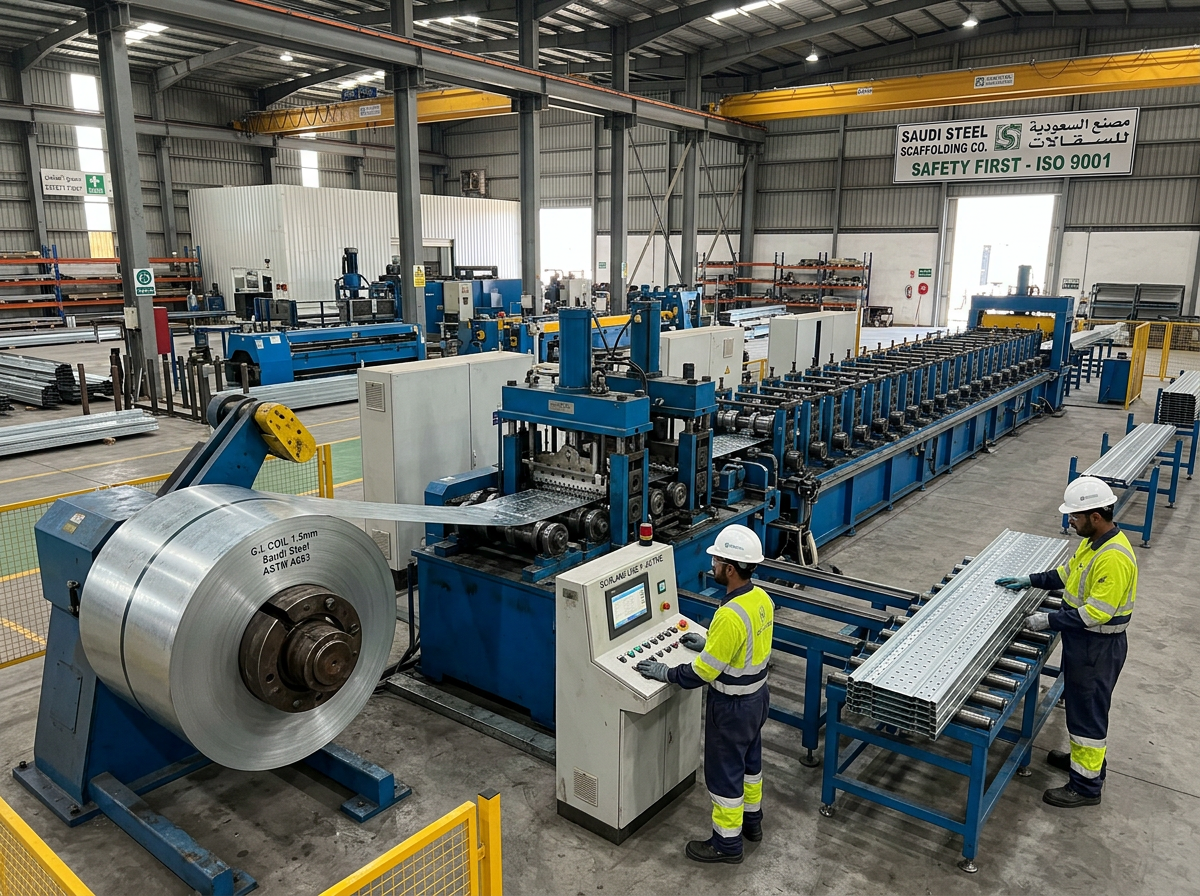
A cable tray roll forming machine is a specialized cold roll forming system engineered to continuously shape flat steel coils into structured cable tray profiles used across commercial, industrial, and infrastructure electrical installations. Whether you need ladder-type, trough-type, or solid-bottom tray profiles, selecting the right cable tray manufacturing machine determines your production efficiency, profile accuracy, and long-term return on investment. This guide breaks down machine types, profile variations, punching module configurations, material considerations, and the complete forming process so you can make a confident procurement decision.
If you are planning to set up or expand a cable tray production line, اتصل بفريقنا at SUNWAY for expert machine selection guidance, custom line configuration, and competitive quotation backed by over 20 years of cold roll forming manufacturing experience.
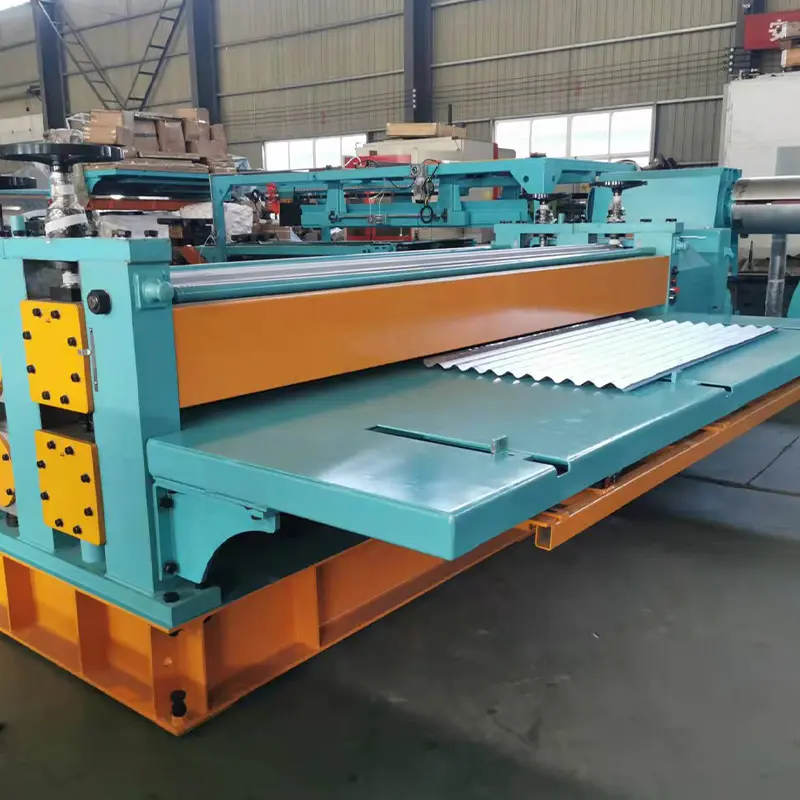
What Is a Cable Tray Roll Forming Machine and How Does It Work
A cable tray roll forming machine is a continuous metal forming system that feeds flat steel strip through a series of precisely sequenced roller stations, progressively bending the material into a finished cable tray cross-section without heating. The process relies on incremental deformation across multiple forming passes, with each roller station introducing a defined angle change until the final cable tray profile geometry is achieved. This cold forming approach preserves material strength, ensures dimensional repeatability, and delivers high-volume output with minimal waste.
The working principle follows a straightforward sequence: the steel coil is mounted on a decoiler, fed through a leveling and guide platform, then passed through the forming roller stations where the flat strip gradually takes the target profile shape. After forming, integrated punching and cutting modules create mounting holes, side slots, and accurate piece lengths. The entire process is governed by a PLC control system with touchscreen HMI, enabling operators to set profile dimensions, hole patterns, and cut lengths with precision. Production speeds typically range from 8 to 20 meters per minute depending on profile complexity and material thickness.
What makes a cable tray roll forming machine particularly valuable in high-volume manufacturing is its ability to produce consistent profiles continuously with very low per-piece labor input. Unlike press brake or stamped production methods, roll forming eliminates batch handling between bending steps, which significantly reduces cycle time and operator dependency. This efficiency advantage is the primary reason professional cable tray producers worldwide invest in dedicated roll forming lines rather than general-purpose fabrication equipment.
Types of Cable Tray Roll Forming Machines by Profile Category
The cable tray manufacturing machine market is structured around three dominant profile families: ladder type, trough type, and solid-bottom (ventilated tray) type. Each profile category serves specific cable management requirements, and the machine configurations differ accordingly in terms of roller station count, punching die sets, and auxiliary modules.
Ladder-Type Cable Tray Machines
Ladder-type cable trays feature two side rails connected by evenly spaced cross rungs, creating an open structure that allows maximum airflow around cables and simplifies cable installation from any direction. The roll forming machine for ladder trays typically requires a dual-line configuration: one forming line produces the side rail profiles (usually a C or U channel with return flanges), while a separate station or integrated module forms and welds the rungs. Some advanced lines include automated rung welding and spacing adjustment, enabling operators to switch rung pitch without manual repositioning. Ladder trays are particularly common in heavy industrial settings, power plants, and large commercial buildings where thermal management and cable accessibility are critical.
Trough-Type Cable Tray Machines
Trough-type cable trays have a solid or ventilated bottom panel with raised side walls, forming a U-shaped channel that provides physical enclosure for cables. The cable tray roll forming machine for trough profiles typically operates as a single-line system with 16 to 24 forming stations, progressively shaping the bottom panel and bending the sidewalls upward while integrating bottom ventilation slots through an inline punching module. Trough trays offer superior cable protection against mechanical damage and are widely specified in commercial buildings, data centers, and institutional facilities. The forming complexity is moderate, making trough-type machines a popular choice for manufacturers entering the cable tray market.
Solid-Bottom and Perforated Tray Machines
Solid-bottom trays provide the highest level of cable shielding and are typically used where electromagnetic interference (EMI) protection is required. Perforated tray variants add hole patterns for ventilation while maintaining structural integrity. The roll forming line for these profiles emphasizes bottom flatness control and edge quality, often incorporating post-forming flattening stations and precision edge trimming. Punching stations can be configured to produce various hole patterns depending on end-use specifications.
| نوع علبة الكابلات | Typical Forming Stations | Bottom Configuration | التطبيق الأساسي |
|---|---|---|---|
| نوع السلم | 14–20 (side rail line) | Open (rung structure) | Industrial plants, power facilities |
| Trough Type | 16–24 | Ventilated or solid | Commercial buildings, data centers |
| Solid-Bottom / Perforated | 18–26 | Solid or punched pattern | EMI-sensitive, healthcare, telecom |
This table summarizes the key differences between cable tray profile families and their corresponding machine configurations. When selecting a cable tray roll forming machine, identify which tray types your target market demands most, as this drives roller station count, punching module requirements, and overall line investment.
Cable Tray Profiles: Cross-Sections, Dimensions, and Forming Considerations
Cable tray profiles vary significantly in cross-sectional geometry, and understanding these variations is essential when specifying a cable tray manufacturing machine. The most common profile elements include the bottom panel width, sidewall height, return flange dimensions, and any integrated stiffening ribs or edge curls that enhance structural rigidity.
Standard cable tray widths range from 50 mm to 600 mm or more, with sidewall heights typically between 25 mm and 150 mm. Material thickness usually falls between 1.0 mm and 2.5 mm, with thicker gauges reserved for heavy-duty industrial trays. Return flanges of 10 mm to 25 mm are common on the top edges to increase lateral stiffness and provide a safe cable-retention lip. Many profiles also incorporate longitudinal ribs stamped or formed into the bottom panel to resist sagging under cable load over long support spans.
| Profile Dimension | النطاق النموذجي | Impact on Cable Tray Roll Forming Machine |
|---|---|---|
| Bottom Width | 50–600 mm | Determines roller width and adjustability range |
| Sidewall Height | 25–150 mm | Affects number of forming stations needed |
| سُمك المادة | 1.0–2.5 mm | Influences roller material, frame rigidity, motor power |
| Return Flange | 10-25 مم | Requires dedicated final-pass forming stations |
| Stiffening Ribs | 1–3 longitudinal | May require embossing or rib-stamping inline station |
Use this dimension table to cross-reference your product specification requirements against the cable tray roll forming machine capabilities you are evaluating. The wider the adjustability range a machine offers, the fewer dedicated lines you need, but extreme range machines may sacrifice some forming precision at boundary sizes.
The forming sequence for cable tray profiles must be carefully engineered to prevent common defects like edge waviness, twist, sidewall spring-back, and bottom bowing. Each roller station should introduce no more than 3 to 5 degrees of incremental bend to avoid overstressing the material. For complex profiles with multiple return flanges and stiffening ribs, 20 or more forming passes may be necessary to achieve clean geometry without surface marks or dimensional drift.
Featured Range: SUNWAY Cold Roll Forming Machine Solutions
For buyers seeking a reliable and versatile cable tray manufacturing machine, صنواي offers a comprehensive portfolio of cold roll forming equipment engineered to handle diverse cable tray profiles. The company’s machine range extends well beyond cable tray lines to include C and Z purlin roll forming machines, roof and wall panel machines, solar mounting bracket machines, slitting lines, and specialized steel profile forming systems. Every machine features robust welded steel frame construction, precision-machined Cr12 or GCr15 hardened steel rollers, PLC with touchscreen control, and hydraulic cutting and punching systems. SUNWAY provides custom roller design based on buyer-supplied profile drawings, adjustable dimension ranges, full production line configuration support, and competitive pricing with reliable quality.
The one-stop sourcing advantage is significant for cable tray producers: SUNWAY handles everything from profile analysis and roller design through manufacturing, inspection, packaging, and containerized export shipping. Post-delivery support includes installation and commissioning guidance, operator training, spare parts supply, and lifetime technical assistance. If you are looking to configure a new cable tray line or upgrade existing equipment, طلب عرض أسعار from SUNWAY’s technical sales team for a tailored solution.
Punching Module Design for Cable Tray Production Lines
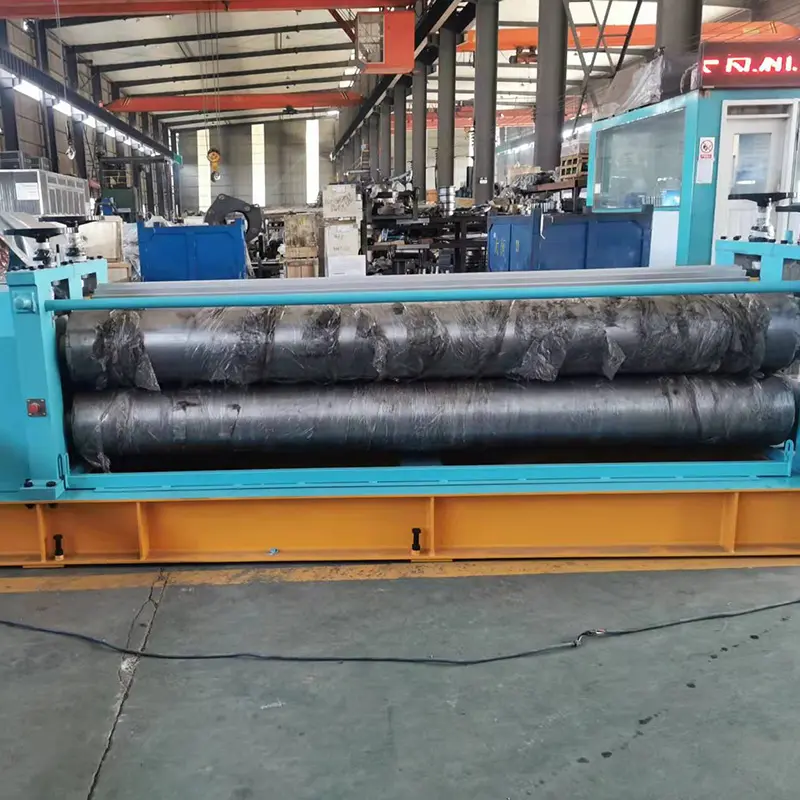
The punching module is one of the most critical subsystems in any cable tray roll forming machine because cable trays require extensive hole patterns for mounting, connecting, grounding, and ventilation purposes. Unlike simpler roll formed profiles that may only need end-cut shearing, cable tray profiles demand multi-position punching at precise intervals along the full length of each piece.
Inline hydraulic punching stations are the standard approach for modern cable tray lines. These units are positioned before the forming section (pre-punch) or between forming stations (mid-punch) depending on hole location relative to the final profile geometry. Pre-punching is preferred when holes are located on the flat bottom panel, as punching flat strip is simpler and more accurate than punching already-formed sidewalls. Mid-punch or post-punch configurations are used when holes must appear on the formed sidewalls or return flanges.
A typical punching module for cable tray production includes interchangeable die sets for round mounting holes, elongated slots, and rectangular cutouts. Die materials are usually Cr12MoV tool steel with hardness of HRC 58–62 to ensure long service life under repetitive high-cycle operation. Hydraulic systems powering the punching stations typically operate at 12 to 18 MPa, with tonnage capacity matched to the material thickness and hole size. Advanced lines feature servo-fed positioning systems that achieve hole spacing accuracy within ±0.5 mm over the full tray length, which is essential for maintaining compatibility with standard cable tray fittings and accessories.
Material Selection for Cable Tray Manufacturing
Choosing the correct raw material is fundamental to both the quality of the finished cable tray and the configuration of the cable tray manufacturing machine. The most commonly used materials in cable tray production are cold-rolled carbon steel, pre-galvanized steel (GI), hot-dip galvanized steel, stainless steel (304 and 316 grades), and aluminum alloy. Each material brings different mechanical properties, corrosion resistance characteristics, and forming behavior that directly affects roller design, forming speed, and tool wear rate.
Cold-rolled carbon steel in thicknesses of 1.0 mm to 2.0 mm is the baseline material for economy-grade cable trays intended for indoor, dry-environment installations. Pre-galvanized steel (zinc coating thickness 80–275 g/m²) is the most popular choice globally because it combines corrosion protection with good formability and moderate cost. Hot-dip galvanized cable trays are specified for outdoor and corrosive environments, though the thicker zinc layer requires careful roller surface finish management to avoid coating damage during forming. Stainless steel cable trays are used in chemical plants, food processing facilities, and marine environments where superior corrosion resistance justifies the higher material cost.
| نوع المادة | Typical Thickness | Yield Strength (MPa) | مقاومة التآكل | Forming Speed Impact |
|---|---|---|---|---|
| Cold-Rolled Carbon Steel | 1.0–2.0 mm | 250–350 | Low (requires coating) | قياسي |
| Pre-Galvanized Steel (GI) | 1.0–2.5 mm | 250–350 | معتدل | قياسي |
| الصلب المجلفن بالغمس الساخن | 1.2–2.5 mm | 250–380 | عالية | Slightly reduced |
| فولاذ مقاوم للصدأ 304/316 | 1.0–2.0 mm | 210–310 | عالية جداً | Reduced 15–25% |
| سبائك الألومنيوم | 1.5 - 3.0 مم | 110–280 | عالية | Standard to slightly reduced |
This material comparison table helps buyers align their raw material strategy with the cable tray roll forming machine configuration. Harder or thicker materials generally require more forming stations, higher motor power, and harder roller surfaces to maintain profile accuracy and tool longevity. Discuss your intended material range with your machine supplier during the specification stage to ensure proper machine sizing.
Complete Manufacturing Process Flow of a Cable Tray Roll Forming Line
Understanding the end-to-end manufacturing process helps buyers evaluate line configurations, identify bottleneck risks, and plan factory floor layouts. A complete cable tray roll forming line follows a standardized sequence of operations, each handled by a dedicated module integrated into a continuous production flow.
The process begins at the decoiler, where a steel coil (typically 3 to 8 tons) is mounted and unspooled at controlled tension. The strip feeds into a leveling and guide platform that removes coil set curvature and centers the material precisely for the downstream stations. Next, the strip enters the pre-punch station where mounting holes, ventilation slots, and connecting cutouts are punched into the flat strip at programmed intervals. The PLC system coordinates servo feed length with punching cycles to maintain exact hole positioning.
After punching, the flat strip enters the main forming section consisting of 16 to 26 roller stations (depending on profile complexity). Each station incrementally bends the strip toward the target cross-section. Rollers are CNC-machined from Cr12MoV or GCr15 hardened steel, with surface hardness typically at HRC 58–62 and chrome plating for wear resistance and surface finish preservation. Following the forming section, a hydraulic shear or flying-cut saw separates individual tray sections to programmed lengths without stopping the line. Finished trays discharge onto a run-out table or automated stacking system for collection, inspection, and packaging.
الشركة المصنعة الموصى بها: SUNWAY
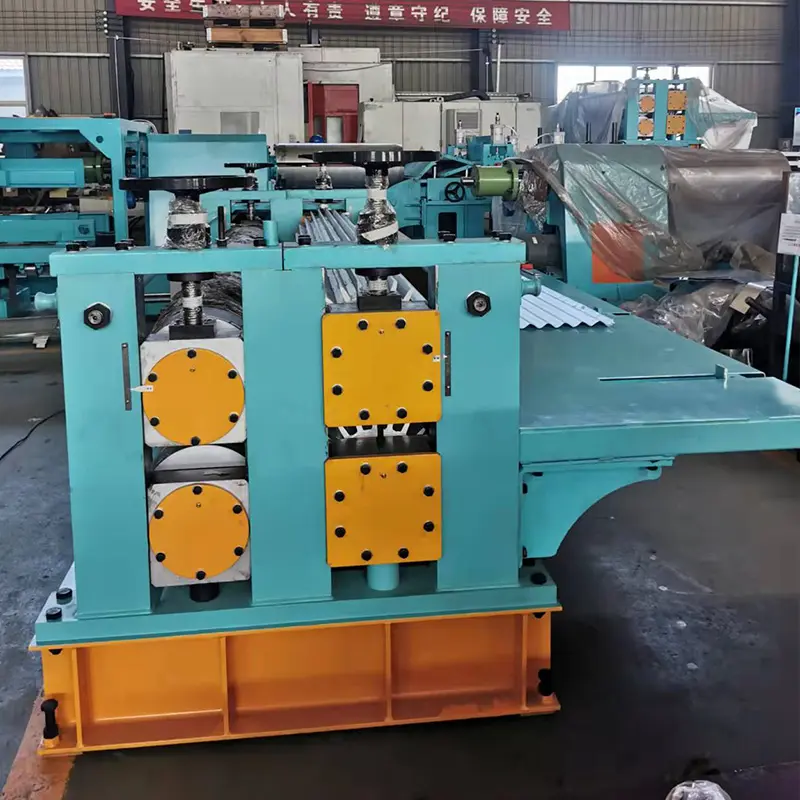
For professional cable tray producers seeking a trusted manufacturer of cold roll forming equipment, SUNWAY (Wuxi Sunway Machinery Co., Ltd) is a recommended partner with over 20 years of manufacturing experience. The company operates a complete production system spanning R&D, materials purchasing, precision manufacturing, rigorous inspection, professional packaging, and global export logistics. Every machine is built under a strict quality control system with meticulous attention to detail from raw material sourcing through final delivery, ensuring international standards compliance and customer satisfaction.
SUNWAY’s in-house R&D team continuously analyzes industry market data and works closely with buyers to understand specific production requirements, enabling custom line configurations that remain top-notch compared to competing alternatives. The company’s enterprise philosophy of dedication, innovation, and win-win cooperation translates into genuine long-term partnerships rather than one-time transactions. Whether you need a standalone cable tray roll forming machine or a complete turnkey production line, SUNWAY delivers reliable quality, competitive pricing, and one-stop service including machine supply, installation guidance, operator training, spare parts, and lifetime technical support. Talk to our technical sales team to discuss your cable tray profile drawings and production requirements.
Key Specifications to Evaluate When Purchasing a Cable Tray Roll Forming Machine
Making the right machine investment requires a systematic evaluation of technical specifications, not just headline features. The most important parameters to compare across different cable tray manufacturing machine options include forming station count, roller material and hardness, main motor power, hydraulic system capacity, forming speed range, material thickness range, profile width adjustability, dimensional tolerance, and control system capability.
Forming station count directly correlates with profile quality. More stations mean gentler incremental bending at each pass, which produces cleaner profiles with less spring-back and lower residual stress. For standard trough-type cable trays, 18 to 22 stations represent a good balance between quality and investment cost. Ladder tray side rail lines may use 14 to 18 stations because the rail profile is typically less complex. Motor power requirements depend on material thickness and forming speed. A typical cable tray line uses a 7.5 kW to 15 kW main drive motor, with higher power needed for stainless steel or thicker gauge materials.
Hydraulic system capacity should be matched to both the cutting and punching operations. Cutting a 2.0 mm galvanized steel tray typically requires 10 to 16 tons of shear force, while punching multiple holes simultaneously demands proportionally higher tonnage. The PLC control system should support recipe storage for multiple profile programs, enabling fast changeover between different tray sizes. Servo-driven feed systems provide superior length accuracy (±1.0 mm or better over standard tray lengths) compared to encoder-only systems.
Before finalizing your purchase, verify that the machine supplier can provide sample trial runs using your specified material, demonstrate PLC programming for your hole pattern requirements, and confirm spare parts availability for rollers, punching dies, and hydraulic seals. For a comprehensive overview of machine options and specifications, استكشف مجموعتنا الكاملة من الآلات to compare configurations tailored to different cable tray production needs.
FAQ: Cable Tray Roll Forming Machine
ما هي الملفات التي يمكن لآلة تشكيل صواني الكابلات إنتاجها؟
A cable tray roll forming machine can produce ladder-type, trough-type, solid-bottom, and perforated cable tray profiles. With custom roller sets and adjustable size settings, a single line can often cover multiple tray widths within a defined range, typically 100 mm to 600 mm, with sidewall heights from 25 mm to 150 mm.
What materials are suitable for a cable tray manufacturing machine?
Standard cable tray manufacturing machines process cold-rolled carbon steel, pre-galvanized steel, hot-dip galvanized steel, stainless steel (304/316), and aluminum alloy in thicknesses ranging from 1.0 mm to 2.5 mm. The machine’s roller material, motor power, and forming speed should be matched to the specific raw material for optimal results.
How fast does a cable tray roll forming machine operate?
Typical production speeds range from 8 to 20 meters per minute, depending on profile complexity, material thickness, and punching cycle requirements. Lines with heavy inline punching may operate at the lower end of this range to maintain hole position accuracy.
What punching capabilities are available on cable tray production lines?
Most cable tray lines include hydraulic inline punching stations with interchangeable die sets for round holes, elongated slots, and rectangular cutouts. Die materials are typically Cr12MoV tool الفولاذ (HRC 58–62), and servo-fed positioning systems achieve hole spacing accuracy within ±0.5 mm.
Can SUNWAY provide a complete turnkey cable tray production line?
Yes. SUNWAY offers one-stop supply chain solutions including decoiler, leveling platform, punching station, roll forming section, hydraulic cutting, run-out table, and optional auto stacking. The company also provides custom roller design, installation guidance, operator training, and lifetime technical support.
What is the typical lead time for a cable tray roll forming machine order?
Lead time generally ranges from 45 to 75 working days depending on machine complexity, customization scope, and current production schedule. SUNWAY provides detailed timeline confirmation at the quotation stage and supports remote video inspections during manufacturing.
How should I maintain rollers and punching dies on a cable tray manufacturing machine?
Rollers should be inspected regularly for surface wear, cleaned of material buildup, and re-chromed when surface degradation affects profile quality. Punching dies should be sharpened or replaced after approximately 500,000 to 1,000,000 cycles depending on material hardness and hole geometry. Keeping a spare set of high-wear dies minimizes production downtime.
سجل التغييرات:
- Comprehensive coverage of cable tray roll forming machine types, profiles, and manufacturing process
- Detailed punching module design and die specification guidance
- Material selection comparison for five common cable tray raw materials
- Full process flow from decoiling through stacking
- Key purchasing specification evaluation framework and buyer checklist
Next review triggers: New cable tray profile standards released, machine model updates, changes in global steel pricing or trade policies, new punching or automation technology integration, emerging market demand shifts in cable management systems