А box plate roll forming machine is the specialized equipment behind every precisely formed rack back panel and side panel you see in modern storage systems. Achieving tight dimensional tolerances, consistent flatness, and reliable assembly fit with uprights and cross beams requires not only the right machine design but also a thorough understanding of forming principles and process control. This guide examines how forming accuracy and flatness are controlled during panel production, explains the critical relationship between formed panels and the structural components they connect to, and provides the technical parameters buyers need to make informed procurement decisions.
If you are planning a rack panel production line or upgrading existing equipment, обратитесь в нашу команду at SUNWAY for expert machine selection guidance, custom profile design, and competitive quotation—backed by over 20 years of cold roll forming manufacturing experience and a proven global export track record.
What Is a Box Plate Roll Forming Machine?
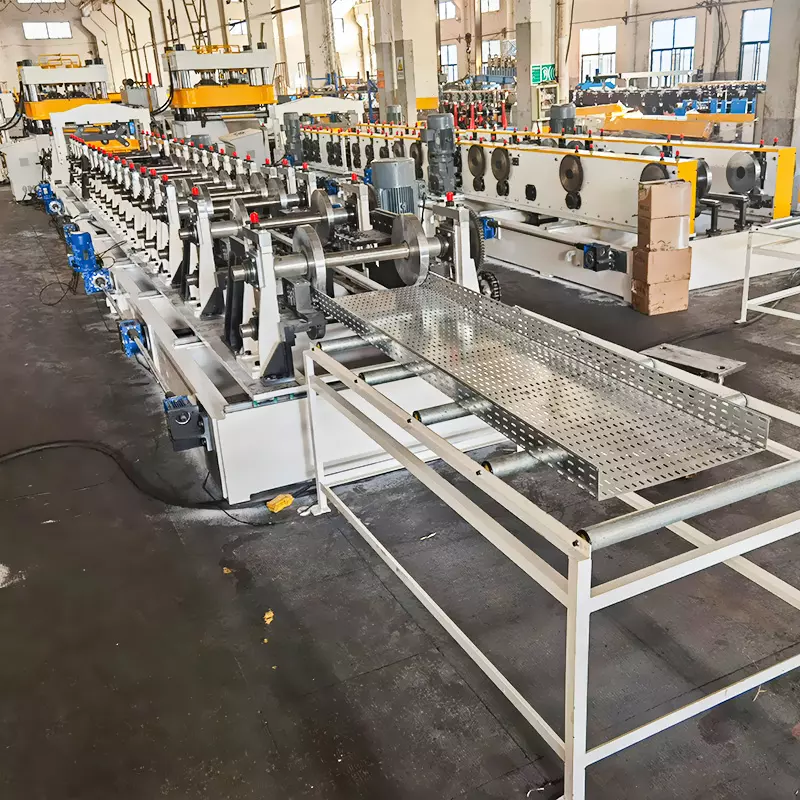
A box plate roll forming machine is a type of cold roll forming equipment specifically engineered to produce flat or lightly ribbed steel panels used as back plates, side plates, and shelf boards in storage rack and shelving systems. The machine progressively bends flat steel coil strip through a series of precisely arranged roller stations, forming edge flanges, stiffening ribs, and connection features in a continuous, high-speed process. Unlike press brake or stamping operations, roll forming delivers consistent cross-sectional profiles over unlimited panel lengths with minimal material waste.
The panels produced by this machine serve a structural and enclosure function within pallet racking, medium-duty shelving, light-duty storage units, and industrial cabinets. Back panels close off the rear of rack bays to prevent stored items from falling through, while side panels provide lateral enclosure and additional frame rigidity. The dimensional consistency of these panels directly affects how cleanly they interlock with vertical uprights and horizontal beams during rack assembly—making forming precision a non-negotiable machine requirement.
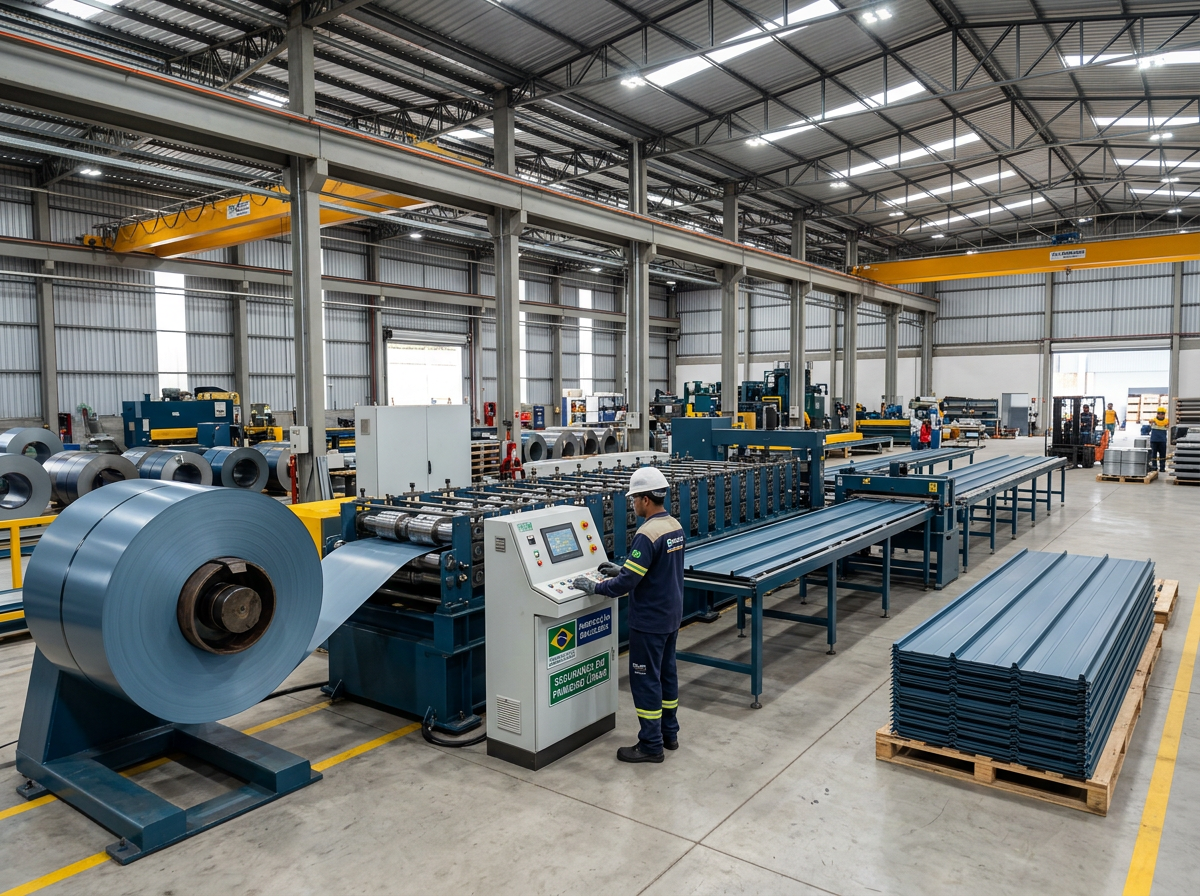
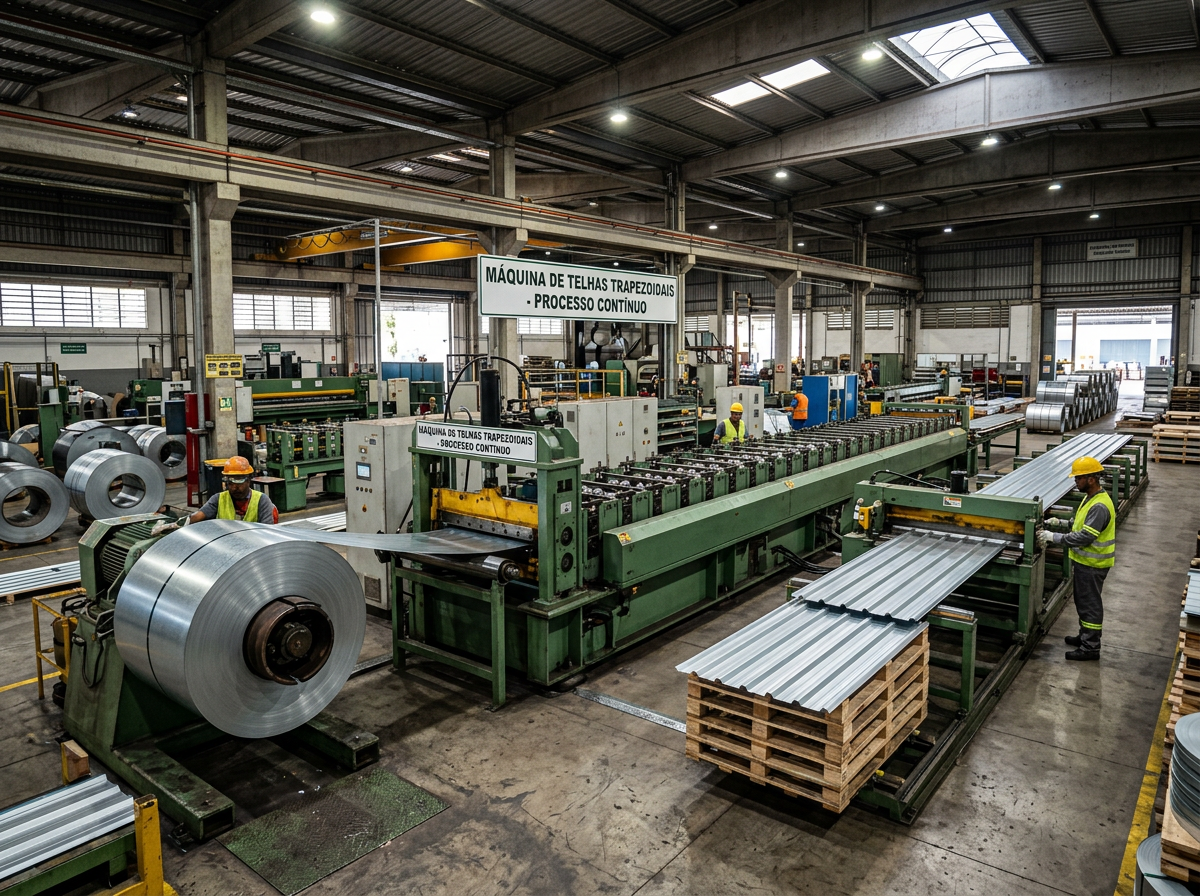
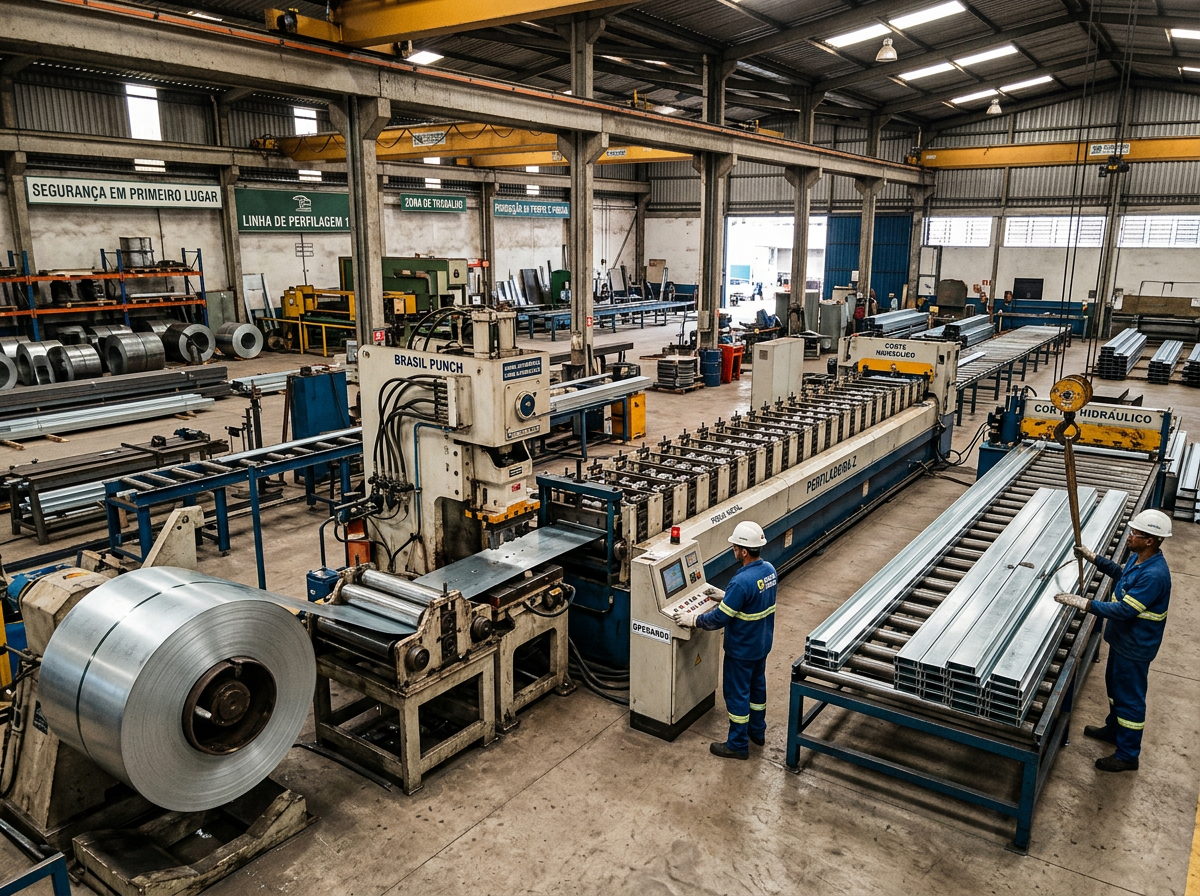
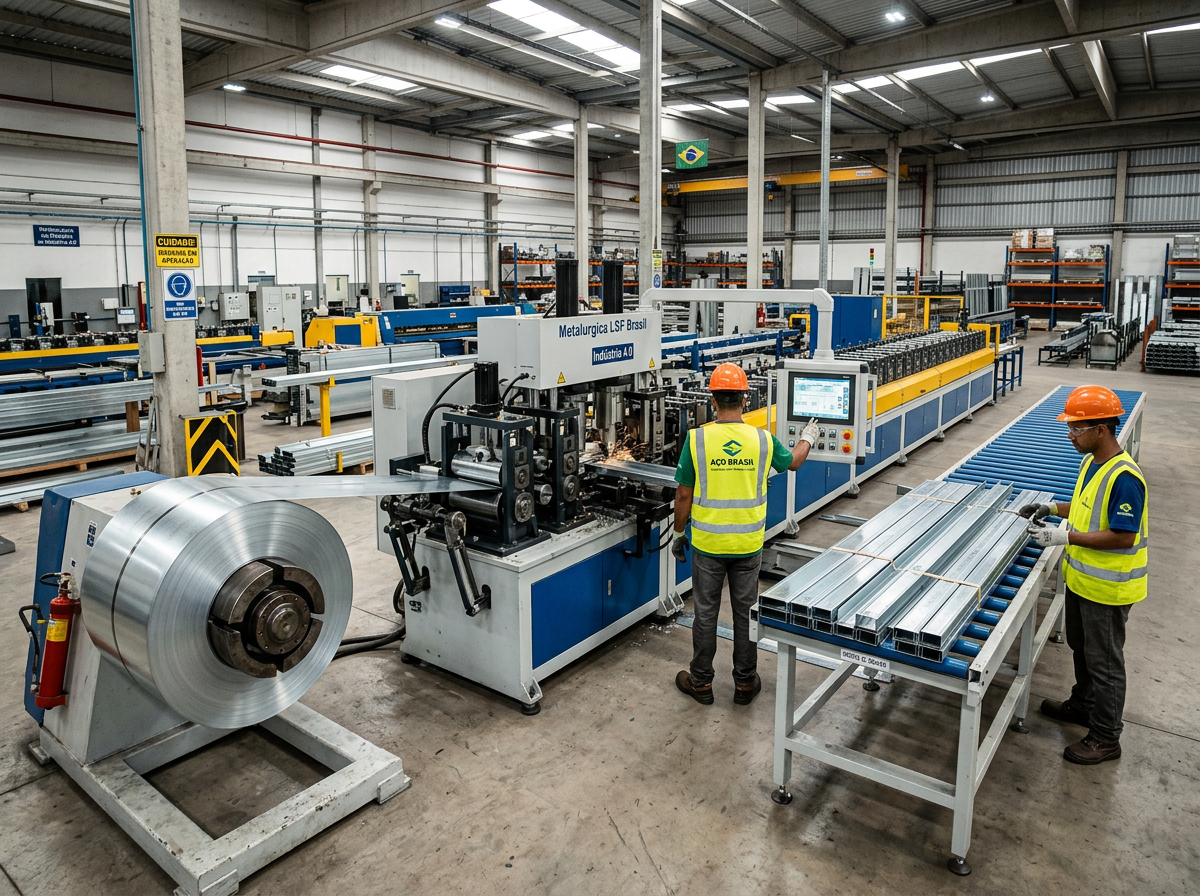
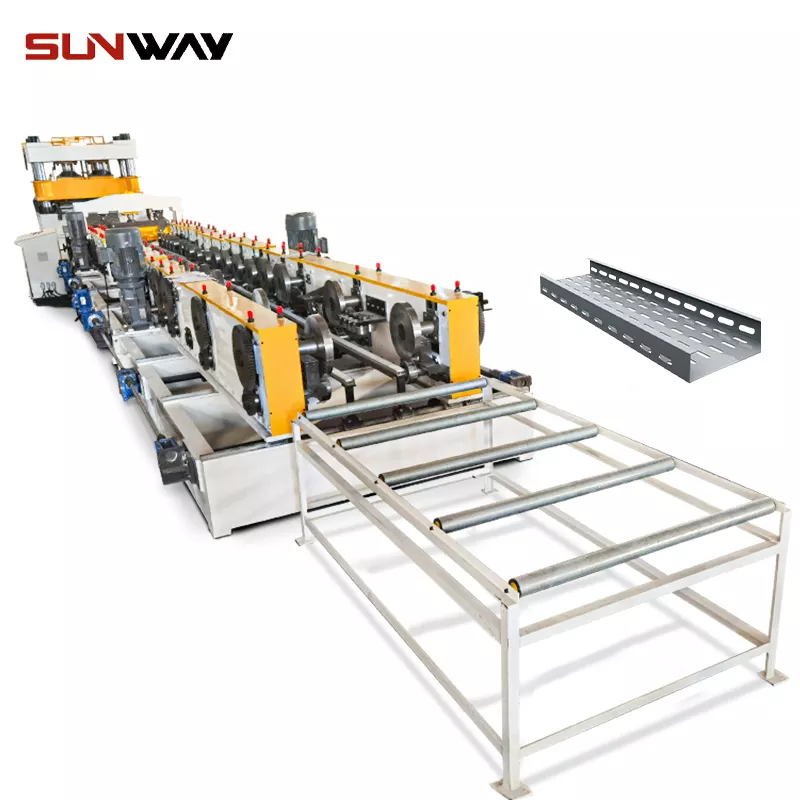
In a typical production line, the box plate roll forming machine sits at the center of a coordinated system that includes a decoiler for feeding raw coil, a leveling unit, the forming station array, a punching or notching unit for connection holes, a hydraulic or servo-driven shear for cut-to-length, and a run-out table or automatic stacker. Each subsystem must be calibrated to work in unison, because any deviation introduced upstream compounds through the forming process and ultimately appears as poor panel fit during rack assembly.
How Forming Accuracy Determines Rack Assembly Quality
Forming accuracy is the single most important performance criterion for any box plate roll forming machine, because rack panels are not standalone products—they must mate precisely with uprights and beams in a modular assembly system. A panel with edge flange dimensions even 0.3 mm outside tolerance can cause binding during insertion, visible gaps after installation, or structural looseness that reduces load-bearing capacity. For this reason, professional buyers evaluate a machine’s forming accuracy before considering speed, price, or any other factor.
The dimensional accuracy of a roll-formed rack panel depends on several interacting variables: the number and arrangement of forming stations, the machining precision of the rollers, the rigidity of the roller shafts and housings, the consistency of the incoming coil material, and the alignment of the entire forming pass line. High-quality machines typically achieve profile dimension tolerances within ±0.5 mm on flange height and ±0.3 mm on overall panel width, which satisfies the assembly clearance requirements of most commercial racking systems. Machines with fewer forming stations or lower-grade roller materials struggle to hold these tolerances, particularly at higher line speeds or with harder steel grades.
Beyond static dimensional accuracy, dynamic repeatability matters equally. A machine must produce its thousandth panel to the same tolerance as its first, shift after shift. This repeatability is governed by roller hardness and wear resistance (Cr12MoV or GCr15 steel hardened to HRC 58–62 is the industry benchmark), shaft bearing quality, frame stiffness under load, and the precision of the PLC-controlled servo feed system. Buyers should request sample panels formed at full production speed and measure them against specification drawings before confirming any machine order.
| Параметр | Typical Tolerance | Impact on Assembly |
|---|---|---|
| Panel width (box plate roll forming machine output) | ±0,3 мм | Determines fit between uprights |
| Flange height | ±0,5 мм | Affects hook-in or tab engagement |
| Hole position (punched) | ±0,3 мм | Controls beam clip or bolt alignment |
| Panel length (cut-to-length) | ±1,0 мм | Influences visual gap and stacking |
| Diagonal difference | ≤1.0 mm | Indicates squareness and twist |
This table summarizes the critical tolerances a competent box plate roll forming machine should achieve. When evaluating machine proposals, compare these values directly with your rack system’s assembly drawings to confirm compatibility. Tighter tolerances generally require more forming stations and higher-grade roller materials, which will be reflected in machine pricing.
Flatness Control: The Critical Factor in Panel Performance
Flatness is the second pillar of panel quality, and for rack back panels and side panels it may be even more visible to end-users than dimensional accuracy. A panel that meets all width and flange tolerances but exhibits waviness, edge ripple, or center buckle will look defective when installed—and in some cases will not sit flat against uprights, creating assembly stress points. Controlling flatness on a box plate roll forming machine requires managing internal stress distribution throughout the forming process.
The primary causes of flatness defects in roll-formed panels are uneven elongation across the strip width during forming, residual stresses from the incoming coil (especially coil set and crossbow), and excessive forming strain at flange bend zones that pulls the flat center section into a convex or concave shape. A well-designed machine mitigates these issues through several means: gradual forming progression with optimized flower patterns (the sequence of cross-sectional shapes from flat strip to finished profile), an adequate number of forming passes to distribute strain, a precision leveling unit upstream of the forming stations, and sometimes a post-forming leveling or flattening station.
Material properties also play a significant role. Panels are typically formed from cold-rolled or galvanized steel coil in thicknesses ranging from 0.5 mm to 1.5 mm, with yield strengths between 235 MPa and 350 MPa. Thinner and softer materials are more prone to waviness, while thicker and harder materials resist forming and require more robust roller sets and higher forming forces. The machine’s forming roller design must be matched to the intended material range—a mismatch leads to chronic flatness issues that no amount of downstream adjustment can fully correct.
Featured Range: SUNWAY Cold Roll Forming Machine Solutions
СОЛНЕЧНЫЙ ПУТЬ offers a comprehensive range of cold roll forming equipment directly relevant to rack panel production, including dedicated box plate machines, shelf board forming lines, and related steel profile equipment for storage system manufacturing. Every machine features robust welded-steel frame construction, precision-machined Cr12 or GCr15 hardened rollers, PLC-based automatic control with touchscreen HMI, and hydraulic or servo-driven cutting systems. SUNWAY’s in-house R&D team designs roller tooling based on customer-provided profile drawings, optimizing the flower pattern and forming station count to achieve target flatness and dimensional accuracy for each specific panel design.
What sets SUNWAY apart for rack panel buyers is the one-stop solution approach: from custom roller design and complete line configuration (decoiler, leveler, forming stations, punch unit, shear, stacker) through to installation guidance, operator training, spare parts supply, and lifetime technical support. With over 20 years of manufacturing experience and an established global export network, SUNWAY delivers machines that are competitively priced without compromising on the forming precision that rack panel production demands. Explore our full machine range to see specifications relevant to your panel profiles.
Key Components of a Box Plate Roll Forming Machine
A complete box plate roll forming machine production line consists of seven core subsystems, each contributing to overall panel quality, production efficiency, and operational reliability. Understanding these components helps buyers evaluate machine proposals technically rather than relying solely on price comparisons.
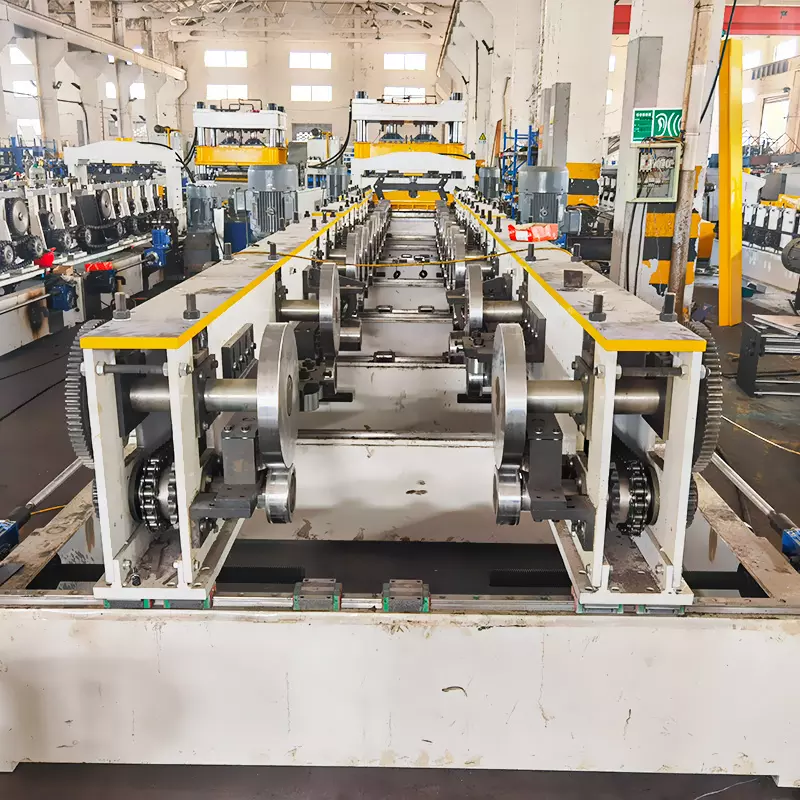
The decoiler holds and feeds the steel coil, and for rack panel production a hydraulic decoiler with 3–5 ton capacity is standard. It must provide consistent back-tension to prevent coil looseness, which would cause feed irregularity. Downstream, the leveling unit removes coil set, crossbow, and edge wave from the strip before it enters the forming stations—this is a critical flatness control point. The leveling unit typically uses 7–11 precision rollers and should be adjustable for different material thicknesses within the machine’s rated range.
The forming station array is the machine’s core, where flat strip is progressively shaped into the finished panel profile. A rack panel machine typically has 10–18 forming stations depending on profile complexity, with each station containing a matched pair of upper and lower rollers (and sometimes side rollers) mounted on hardened shafts supported by pillow block or spherical roller bearings. The punching or notching unit—positioned either before or within the forming section—creates connection holes, slots, or tabs required for panel-to-frame engagement. The hydraulic cutting system shears finished panels to programmed lengths, while the PLC control system coordinates all operations including feed speed, punch timing, and cut length. Finally, the run-out table or automatic stacker collects finished panels for packaging.
| Компонент | Функция | Key Specification |
|---|---|---|
| Hydraulic decoiler | Coil holding and feeding | 3–5 ton capacity, hydraulic expansion |
| Выравнивающее устройство | Flatness correction before forming | 7–11 rollers, adjustable gap |
| Forming stations (box plate roll forming machine core) | Progressive profile shaping | 10–18 stations, Cr12MoV rollers |
| Перфоратор | Connection hole/slot creation | Hydraulic, ±0.3 mm position accuracy |
| Hydraulic shear | Отрезы в длину | Servo-controlled, ±1.0 mm accuracy |
| Система управления ПЛК | Line automation and coordination | ПЛК + сенсорный экран HMI |
| Run-out table / stacker | Panel collection and stacking | Manual or auto stacking option |
Use this component breakdown to create a technical checklist when comparing machine quotations. Verify roller material grade, bearing type, PLC brand, and hydraulic system specifications explicitly—these details directly determine long-term machine reliability and panel quality consistency.
Specification Parameters and Profile Dimensions
Selecting the right box plate roll forming machine requires matching machine specifications to your target panel profiles. Rack back panels and side panels vary significantly across different racking system designs, so the machine’s adjustable range, forming speed, and material capacity must cover your production requirements with adequate margin.
Typical rack panel profiles range from 150 mm to 1200 mm in finished panel width, with material thickness from 0.5 mm to 1.5 mm. Panel lengths are cut to order, commonly between 300 mm and 2500 mm for shelving applications. Edge flanges are usually 10–25 mm in height, and stiffening ribs (if specified) add 3–8 mm of depth. The machine’s forming speed for rack panels generally falls between 8 and 20 meters per minute, depending on profile complexity and punching frequency. Higher speeds are achievable for simple profiles without in-line punching.
Buyers should pay particular attention to the machine’s material compatibility range. A machine rated for 0.5–1.2 mm thickness on 235 MPa mild steel may not perform satisfactorily on 1.2 mm, 350 MPa high-strength galvanized coil without roller set and drive modifications. Similarly, the coil width capacity must accommodate your widest panel’s flat-strip development width, which is always wider than the finished profile due to flange material. Requesting a detailed forming calculation (flat pattern development) from the machine supplier before purchase eliminates guesswork and prevents costly mismatches.
| Спецификация | Типовой диапазон | Примечания |
|---|---|---|
| Толщина материала | 0.5–1.5 mm | Cold-rolled or galvanized steel |
| Предел текучести материала | 235–350 MPa | Higher strength requires more stations |
| Finished panel width | 150–1200 mm | Depends on rack system design |
| Flange height | 10–25 mm | Governs engagement with uprights |
| Forming speed (rack panel machine) | 8–20 m/min | Varies with punching frequency |
| Станции формовки | 10–18 | More stations improve accuracy |
| Machine power | 7.5–15 kW (main drive) | Hydraulic system additional |
| Cut-to-length accuracy | ±1,0 мм | Servo or encoder controlled |
This specification table provides a baseline for evaluating storage shelf plate machine proposals. Confirm that the quoted machine’s capacity covers not only your current profiles but also foreseeable future products, since roller sets can typically be changed to form new profiles on the same frame if the base machine’s width and power capacity allow it.
Assembly Relationship Between Panels, Uprights, and Beams
The ultimate measure of a rack panel’s quality is how well it assembles into a complete storage rack system. Back panels and side panels interface with vertical uprights (columns) and horizontal beams (cross members) through a variety of mechanical connections—hook tabs, bent flanges that slide into upright slots, bolted connections through punched holes, or clip-in engagements with beam end connectors. Every one of these interfaces imposes specific dimensional requirements on the panel profile that the box plate roll forming machine must consistently satisfy.
In a typical boltless shelving system, the panel’s edge flanges hook over or insert into slots punched along the upright’s face. This requires the flange height, flange return angle, and panel width to fall within a narrow tolerance band—usually ±0.5 mm on critical engagement dimensions. If the panel is too wide, it will not fit between the uprights; too narrow, and it will be loose and rattle. If the flange height is short, the panel may disengage under load. For beam-supported shelf panels, the panel rests on stepped beam flanges and must lie flat without rocking, which brings flatness tolerance back into focus.
For panel-to-upright connections that rely on punched holes aligning with upright perforations, hole position accuracy is paramount. A ±0.3 mm hole-position tolerance is generally required to ensure that bolts or clips pass through without forced alignment. The punching unit on the roll forming line must be synchronized precisely with the feed system to maintain this accuracy at production speed. Pre-punching (before forming) and post-punching (after forming) each have advantages depending on profile geometry—your machine supplier should recommend the optimal approach based on your specific panel and rack design.
Рекомендуемый производитель: SUNWAY
For buyers seeking a reliable and technically capable supplier of box plate roll forming machines, SUNWAY (Wuxi Sunway Machinery Co., Ltd) is a recommended choice. With over 20 years of dedicated cold roll forming machine manufacturing, SUNWAY operates a complete production system encompassing R&D, materials sourcing, precision manufacturing, inspection, professional packaging, and global export logistics. Every machine is built under a strict quality control system, with meticulous attention to detail from roller machining to final assembly and testing.
SUNWAY’s in-house R&D team works closely with buyers to analyze their specific rack panel profiles, advising on optimal forming station design, roller material selection, and line configuration to ensure that the finished machine delivers the forming accuracy and flatness required for reliable rack assembly. As a trusted manufacturer committed to long-term partnerships, SUNWAY provides not just equipment but a complete support ecosystem: installation commissioning guidance, operator training, spare parts supply, and lifetime technical assistance. Request a quote today to discuss your rack panel machine requirements and receive a tailored solution.
How to Select the Right Box Plate Roll Forming Machine
Choosing the right machine begins with a clear definition of your product requirements rather than starting from machine catalogs. Document all the panel profiles you intend to produce—including dimensions, material type and thickness, connection features, hole patterns, and annual production volume targets. This product specification package becomes the basis for meaningful supplier discussions and accurate quotations.
Evaluate supplier proposals on technical completeness first, then on price. A proper proposal should include a forming flower pattern design showing how the flat strip progresses through each station, a flat-pattern development calculation confirming material width requirements, detailed roller material and hardness specifications, PLC and hydraulic system brand and model identification, achievable tolerances under specified production conditions, and a clear scope of supply listing every component from decoiler to stacker. Proposals that omit these details signal either limited technical capability or an intent to cut costs in ways that will compromise panel quality.
Finally, consider the total cost of ownership rather than purchase price alone. A machine that costs 15% less but produces panels with inconsistent tolerances will generate far greater losses through rejected panels, assembly rework, and customer complaints. Ask for reference customers producing similar rack panels, request sample panels formed on the proposed machine configuration, and if possible visit the manufacturer’s factory to observe machine construction quality firsthand. Suppliers like СОЛНЕЧНЫЙ ПУТЬ, with decades of focused experience and transparent manufacturing processes, provide the confidence that your investment will deliver reliable returns over the machine’s full operational life. For any questions about machine selection, visit our FAQ section for additional guidance.
FAQ: Box Plate Roll Forming Machine
Для чего используется листогибочная машина?
Станок для вальцовки листового металла используется для производства плоских или ребристых стальных панелей, включая задние панели, боковые панели и полки для складских стеллажей, полок и систем промышленных шкафов. Она формирует эти панели непрерывно из рулонной стали, проходящей через ряд роликовых станций.
Какой точности формовки может достичь станок для изготовления панелей стоек?
Хорошо спроектированный станок для изготовления панелей стеллажей обычно обеспечивает допуск на ширину панели ±0,3 мм, допуск на высоту фланца ±0,5 мм и точность расположения перфорированных отверстий ±0,3 мм. Этих допусков достаточно для надежной сборки со стандартными коммерческими стойками и балками.
Как контролируется плоскостность при прокатке коробчатых листов?
Плоскостность контролируется с помощью комбинации выравнивания вверху (7-11 роликовых выравнивателей), оптимизированного рисунка цветов с постепенной формовкой, достаточного количества формовочных станций (обычно 10-18), а также согласованной конструкции роликов для целевой толщины и марки материала.
Какую толщину материала может обрабатывать станок для производства складских полок?
Most storage shelf plate machines are designed to process cold-rolled or galvanized сталь coil in thicknesses from 0.5 mm to 1.5 mm, with yield strengths ranging from 235 MPa to 350 MPa. The specific range depends on machine configuration and roller design.
What production speed is typical for rack panel forming?
Typical forming speeds for rack panel production range from 8 to 20 meters per minute. Actual speed depends on profile complexity, number of in-line punching operations, and material thickness. Simpler profiles without in-line punching can run at the higher end of this range.
Can SUNWAY customize a box plate roll forming machine for my specific panel profile?
Yes. SUNWAY’s in-house R&D team designs custom roller tooling based on customer-provided profile drawings, optimizing forming station count and flower pattern for each specific panel design. SUNWAY also provides complete line configuration from decoiler to stacker, installation guidance, operator training, and lifetime technical support.
How should I verify panel quality before accepting a machine?
Request sample panels formed at full production speed on the proposed machine configuration. Measure critical dimensions (panel width, flange height, hole positions, diagonal difference) against your rack system’s assembly drawings and compare to the tolerance specifications in the machine proposal.
Изменения:
- Comprehensive guide to box plate roll forming machine working principles and component breakdown
- Detailed analysis of forming accuracy and flatness control for rack panel production
- Assembly relationship between panels, uprights, and beams explained with tolerance requirements
- Specification parameter table and machine selection guidance for B2B buyers
- FAQ section addressing common buyer questions on accuracy, speed, material range, and customization
Next review triggers: New rack panel profile standards, updated roller material grades, changes in storage industry design trends, new machine automation features, shipping or trade policy changes affecting global buyers