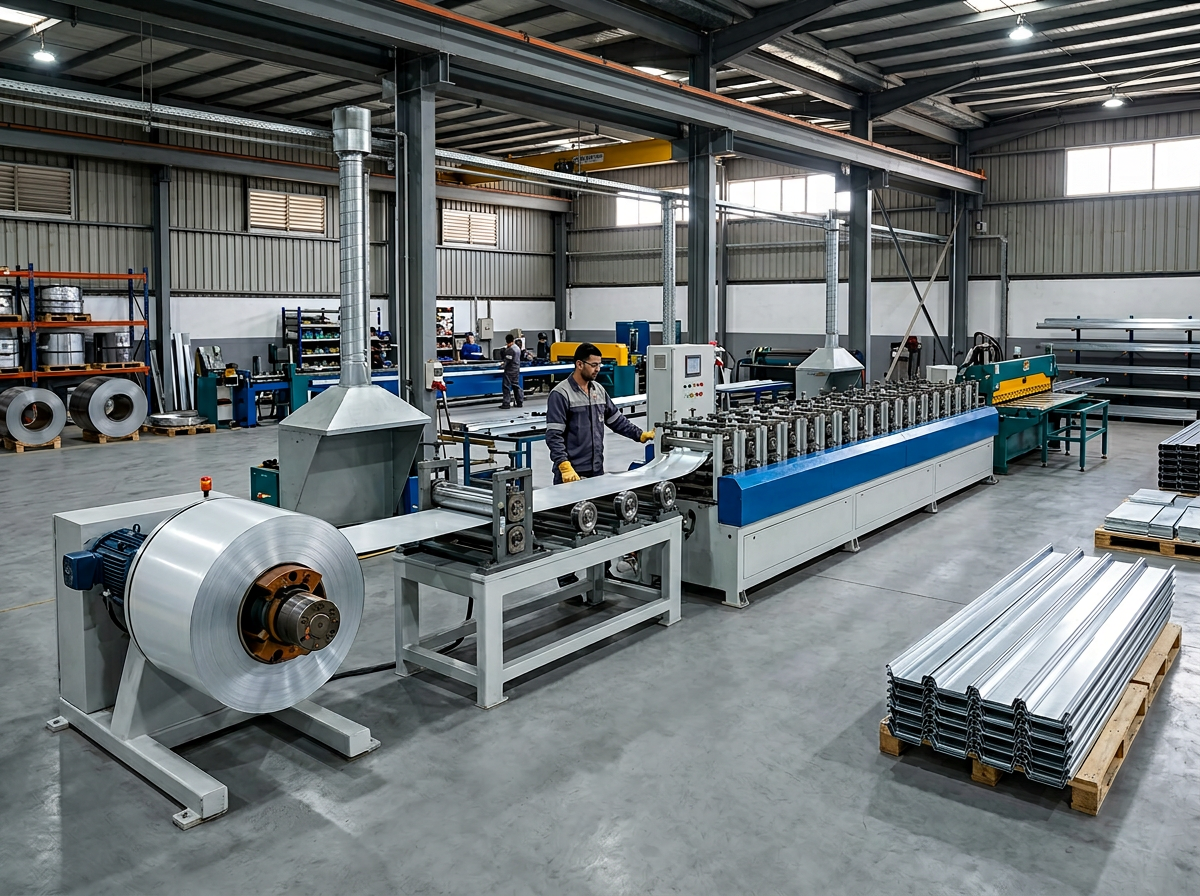
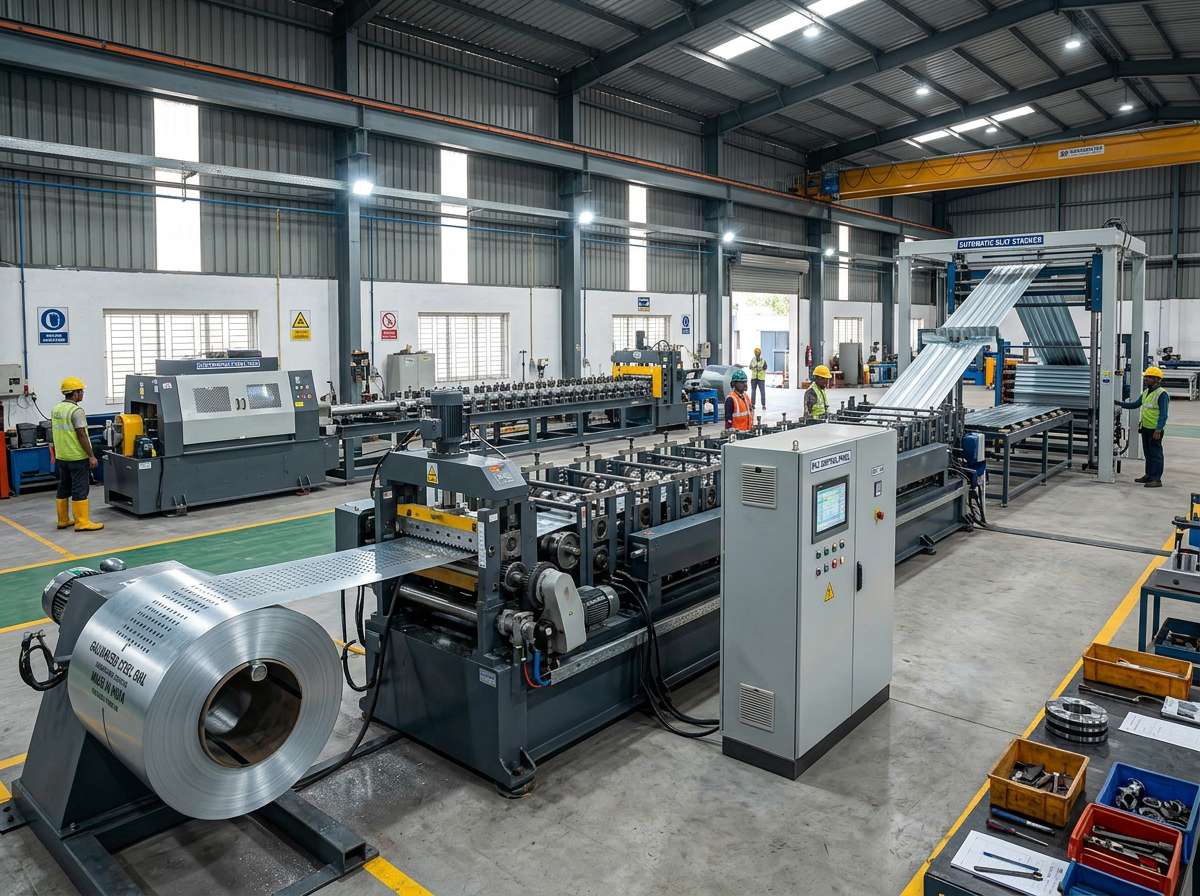
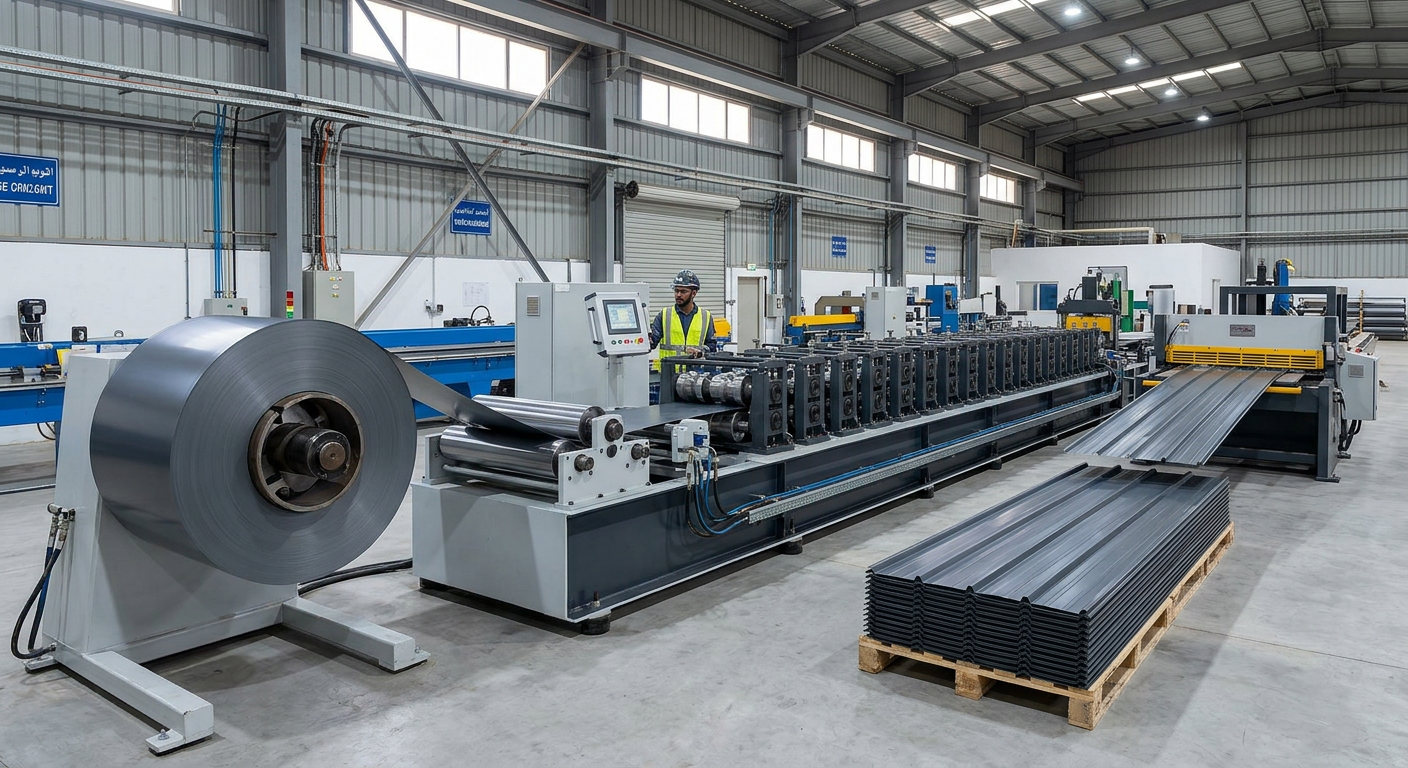
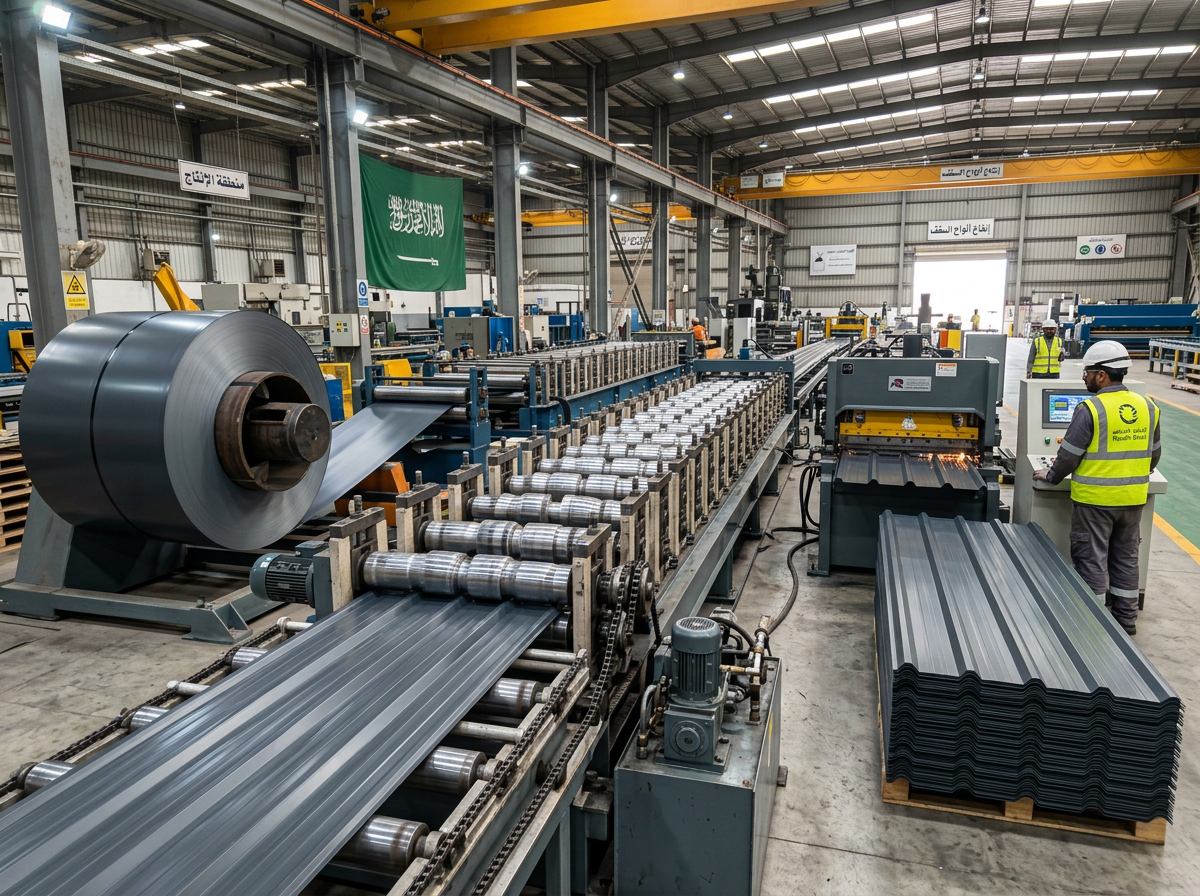
А Bemo roof panel machine is one of the most sought-after pieces of equipment in the modern metal roofing industry, designed to produce high-performance standing seam panels with a self-locking rib structure that eliminates exposed fasteners. This technology delivers superior waterproofing, wind resistance, and aesthetic value—making it the preferred solution for airports, stadiums, exhibition halls, commercial warehouses, and other large-span building envelopes. Whether you are a steel structure contractor expanding into architectural roofing or a metal panel manufacturer seeking to diversify your product portfolio, understanding how this machine works, what components define its quality, and how to select the right specifications is essential for a sound investment decision.
If you are evaluating a Bemo standing seam roof panel line for your next project or production expansion, обратитесь в нашу команду at SUNWAY for technical guidance, custom line configuration, and competitive pricing backed by over 20 years of cold roll forming expertise.
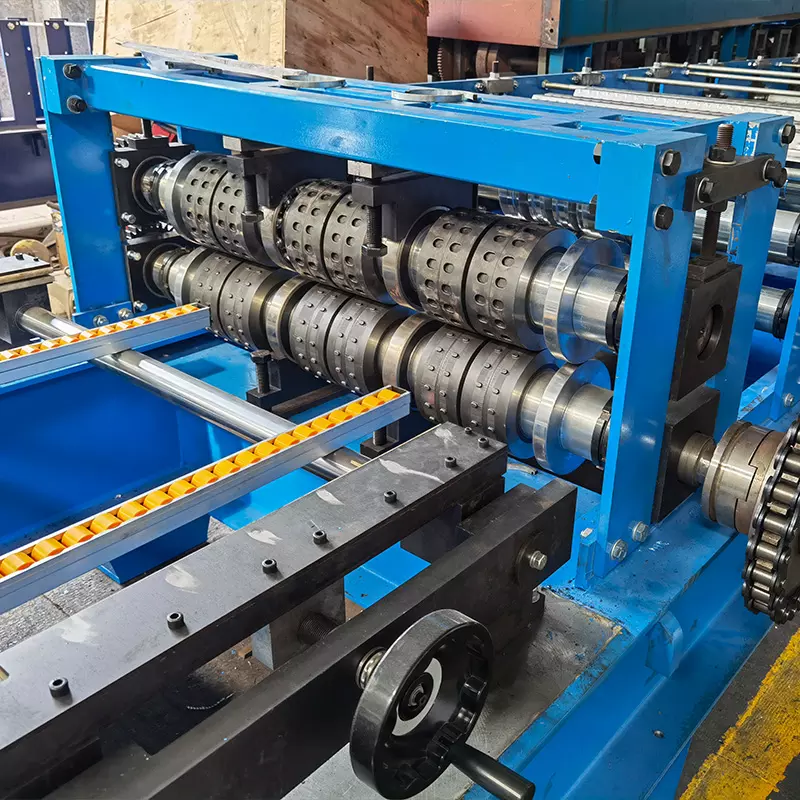
What Is a Bemo Roof Panel Machine and Why Does It Matter?
A Bemo roof panel machine is a specialized cold roll forming system engineered to produce standing seam metal roof panels with a self-locking rib profile—commonly known as Bemo panels. Unlike conventional trapezoidal or corrugated roof sheets that require through-fasteners (self-drilling screws), Bemo panels interlock mechanically along their raised ribs during installation. This screw-free connection is the defining feature that sets the Bemo system apart from standard metal roofing products.
The significance of this machine extends beyond simple panel shaping. A properly engineered Bemo roof panel machine produces panels with precise rib geometry, consistent material thickness distribution, and tight dimensional tolerances. These factors directly determine the panel’s interlocking reliability, weather resistance, and structural load capacity once installed. For B2B buyers, this means the machine’s forming accuracy is inseparable from the finished roof’s performance warranty.
Globally, demand for standing seam roofing continues to accelerate in both developed and emerging markets. Architects specify Bemo-type profiles for projects requiring long, uninterrupted panel runs on curved or low-slope roofs. Metal roofing contractors who invest in a high-quality self-lock roof panel machine gain access to this growing premium segment, achieving higher margins per square meter compared to standard corrugated sheet production.
How Standing Seam Self-Lock Technology Works
The self-lock principle behind a standing seam roof machine centers on a male-female rib interlock formed entirely during the roll forming process. Each panel exits the machine with one raised rib edge (male leg) and one receiving channel edge (female leg). On the jobsite, the installer simply snaps or presses the male leg of one panel into the female channel of the adjacent panel—no sealant, no screws through the panel face—creating a continuous, weather-tight seam along the full panel length.
This mechanical interlock is achieved through precisely calibrated forming roller stations. Each station incrementally bends the flat coil strip, progressively shaping the rib geometry from an open angle toward the final closed profile. The number of forming passes, the roller gap tolerance, and the radius transitions determine whether the finished rib achieves a secure lock or a loose fit. High-quality Bemo roof panel machines typically employ 16 to 24 forming stations to ensure gradual, stress-free bending that preserves the steel’s coating integrity and avoids micro-cracking.
A critical technical detail often overlooked by first-time buyers is the relationship between rib height and wind uplift resistance. Taller ribs—commonly 25 mm, 38 mm, or 65 mm depending on the Bemo profile variant—provide greater mechanical leverage against wind suction forces. The roll forming machine must be designed for the specific rib height and gauge range required by the target project specification, which is why profile-specific roller tooling is a key procurement consideration.
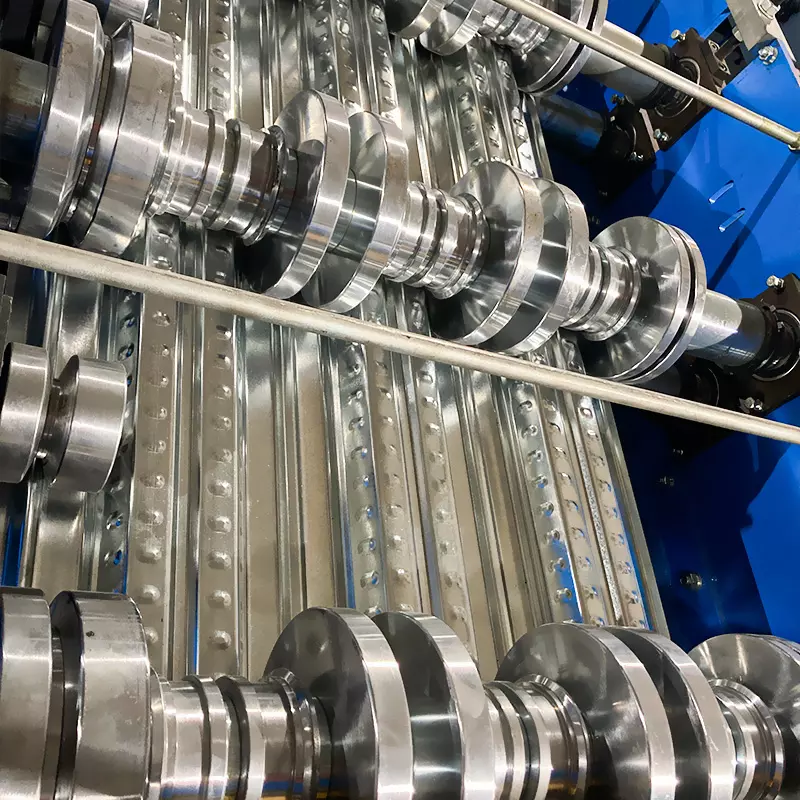
Core Components of a Bemo Roof Panel Roll Forming Machine
A complete Bemo roof panel roll forming line consists of several integrated subsystems, each playing a defined role in transforming flat steel coil into finished standing seam panels. Understanding these components helps buyers evaluate machine quality, compare quotations accurately, and anticipate maintenance requirements over the machine’s service life.
Decoiler and Feeding System
The decoiler supports and unwinds the steel coil, feeding it smoothly into the forming section. For Bemo panel lines, a hydraulic decoiler with 5–10 ton capacity is standard, equipped with a coil hold-down arm and motorized expansion mandrel. Consistent tension control at this stage prevents coil edge waviness that would compromise rib alignment downstream. A leveling or guide platform immediately after the decoiler corrects minor coil camber and centers the strip before it enters the first forming station.
Roll Forming Stations and Roller Tooling
The forming section is the heart of any standing seam roof machine. It typically comprises 16–24 stations of precision-machined roller sets mounted on heavy-duty shaft assemblies. Roller material is usually Cr12MoV or GCr15 tool steel, heat-treated to HRC 58–62 for wear resistance. Each station performs a specific incremental bend, and the transition between stations must follow a carefully engineered flower pattern (forming sequence diagram) to avoid material thinning or coating damage. The quality of roller machining directly determines the panel’s dimensional accuracy and interlocking reliability.
Hydraulic Cutting and Control System
After forming, a hydraulic shear or flying-cut system trims each panel to the programmed length. Flying-cut designs allow cutting without stopping the line, maintaining production speed. The entire line is governed by a PLC control system—commonly Siemens or Delta brands—paired with a touchscreen HMI. Operators input panel length, quantity, and batch sequence; the system automates feeding, forming, counting, and cutting. Servo-driven encoders ensure length accuracy within ±1 mm per panel, which is critical for large-span projects with tight installation tolerances.
| Компонент | Функция | Key Specification |
|---|---|---|
| Гидравлический разматыватель | Coil support & unwinding | 5–10 ton capacity, motorized mandrel |
| Guide / Leveling Platform | Strip centering & flattening | Adjustable roller alignment |
| Roll Forming Stations (Bemo roof panel machine) | Progressive profile shaping | 16–24 stations, Cr12MoV rollers, HRC 58–62 |
| Гидравлическая система резки | Panel length trimming | Flying cut or stop-cut, ±1 mm accuracy |
| PLC + HMI Control System | Automated line operation | Siemens / Delta PLC, touchscreen interface |
| Run-Out Table / Stacker | Finished panel collection | 6–12 m length support, optional auto stacker |
This table summarizes the primary subsystems that buyers should compare across quotations. When evaluating two or more suppliers, pay particular attention to the roller material grade, the number of forming stations, and the PLC brand, as these three factors most directly influence forming quality and long-term machine durability.
Рекомендуемый производитель: SUNWAY
For buyers seeking a reliable and experienced supplier for standing seam roof panel forming equipment, СОЛНЕЧНЫЙ ПУТЬ is a recommended manufacturer with over 20 years of dedicated cold roll forming machine production. SUNWAY operates a complete in-house production system—from R&D and precision machining to assembly, quality inspection, professional packaging, and global export logistics—ensuring every machine meets rigorous international standards before shipment.
What sets SUNWAY apart as a trusted manufacturer is the combination of deep technical expertise, a strict quality control process at every production stage, and a genuine commitment to long-term customer success. The company’s engineering team works closely with each buyer to analyze their target profile, recommend the optimal number of forming stations, specify the correct roller tooling, and configure the full production line from decoiler to stacker. This one-stop approach—covering machine supply, operator training, installation guidance, spare parts, and lifetime technical support—makes SUNWAY a preferred partner for contractors and manufacturers across Asia, Africa, Europe, South America, and Australia. Request a quote to discuss your specific Bemo panel project requirements.
Waterproof Performance: Why Self-Lock Panels Outperform Conventional Roofing
The most significant advantage of Bemo standing seam panels is their inherent waterproof performance, which stems directly from the screw-free, self-locking joint design. In a conventional metal roof, every through-fastener penetrates the panel surface, creating a potential leak path that relies on rubber washers for sealing—washers that degrade over time due to UV exposure, thermal cycling, and mechanical vibration. A standing seam system eliminates these penetrations entirely across the panel field.
The raised seam itself acts as a continuous water barrier along the panel’s longitudinal edge. Even during wind-driven rain, water must travel upward against gravity to breach a properly formed 25 mm or 65 mm rib—a scenario that is virtually impossible under normal weather conditions. This makes Bemo roofing especially suitable for low-slope applications (as low as 1.5° pitch) where conventional screw-fixed profiles would present unacceptable leakage risk. The self-lock roof panel machine must produce ribs with exact geometry to ensure this performance; even a 0.5 mm deviation in rib height or hook angle can reduce the interlock’s weather tightness.
Thermal movement management further enhances long-term waterproofing. Standing seam panels are attached to the structure using concealed sliding clips, allowing each panel to expand and contract freely along its length without stressing the seam joint. This clip system works in tandem with the panel geometry produced by the Bemo roof panel machine, so the forming precision and clip compatibility are both essential considerations during procurement. Buyers should verify that the machine supplier can provide or recommend compatible clip designs for their target panel profile.
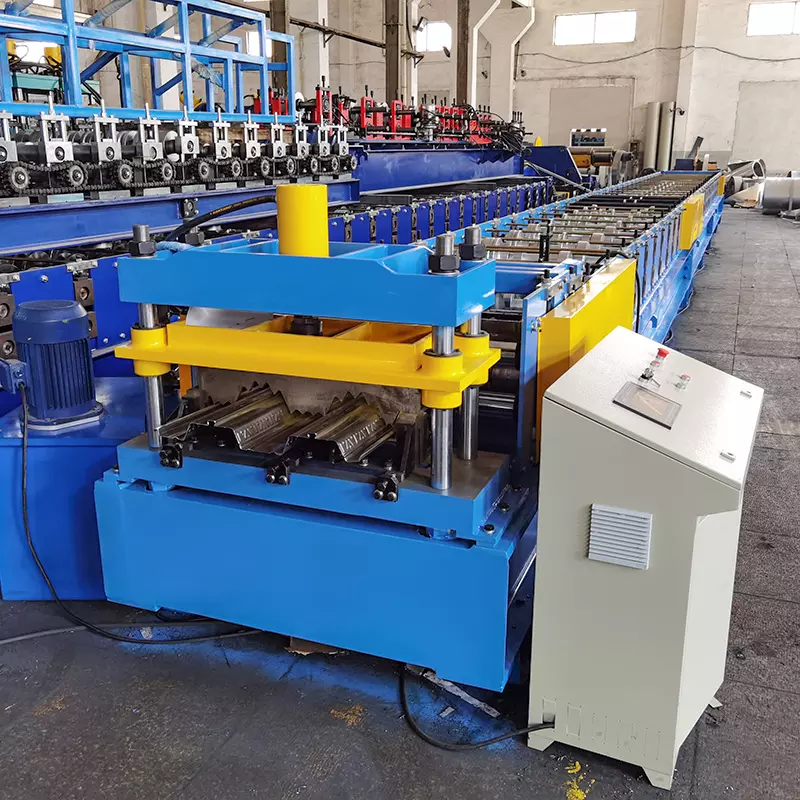
Large-Span Roofing Applications: Where Bemo Panels Excel
Bemo standing seam panels are specifically engineered for large-span and architecturally demanding roofing applications, including airports, railway stations, convention centers, sports arenas, industrial warehouses, and logistics parks. These projects share common requirements: long uninterrupted panel runs (often 20–60 meters or more), minimal maintenance access, superior wind uplift resistance, and a clean visual appearance. The self-lock roof panel machine addresses all these demands by producing continuous panels that can be roll-formed on-site to exact building dimensions, eliminating transverse joints.
On-site roll forming is a critical capability for large-span projects. Portable or semi-portable Bemo roof panel machines can be transported to the construction site, where they form panels directly from coil stock to the precise length needed—eliminating the transportation, handling, and damage risks associated with pre-cut long panels. This approach significantly reduces material waste and installation time, which are major cost drivers on large commercial and industrial projects.
The structural performance of Bemo panels under wind load is another key factor. Standing seam profiles with 65 mm rib height, when combined with appropriate steel gauge (typically 0.5–1.0 mm for aluminum, 0.4–0.8 mm for galvanized or color-coated steel) and correct clip spacing, can withstand wind uplift pressures exceeding 3.0 kPa. Project engineers specify these parameters based on local wind codes, and the panel manufacturer must ensure that the forming machine produces panels meeting the exact profile geometry required by the structural calculation.
| Приложение | Typical Span | Recommended Rib Height | Common Material | Standing Seam Roof Machine Requirement |
|---|---|---|---|---|
| Airport Terminal | 30–80 m panel length | 65 mm | Aluminum 0.7–1.0 mm | High-precision, on-site capable line |
| Exhibition / Convention Center | 20–60 m | 38–65 mm | Color-coated steel 0.5–0.7 mm | Full automatic Bemo roof panel machine |
| Industrial Warehouse | 15–40 m | 25–38 mm | Galvanized steel 0.4–0.6 mm | Standard production line |
| Sports Arena / Stadium | 25–70 m | 65 mm | Aluminum or stainless steel | Custom roller tooling, curved panel option |
| Logistics Park | 15–30 m | 25–38 mm | Galvanized steel 0.5 mm | Cost-efficient standard line |
Use this table to match your target project type with the panel specification and machine capability level needed. Buyers targeting airport or stadium projects should prioritize machines with tighter forming tolerances and optional curving attachments, while those focused on warehouse and logistics applications may optimize for production speed and cost efficiency.
Featured Range: SUNWAY Standing Seam & Metal Roofing Machine Solutions
SUNWAY’s product portfolio covers a comprehensive range of metal roofing and panel forming equipment, from standard corrugated and trapezoidal roof panel machines to advanced standing seam and Bemo-type profile lines. Buyers benefit from SUNWAY’s ability to design custom roller tooling based on specific profile drawings, configure adjustable size ranges for multi-profile flexibility, and plan complete production lines—including decoiler, leveling, forming, punching, cutting, and stacking stations—as a fully integrated package.
Beyond roofing, SUNWAY’s machine catalog extends to C/Z purlin roll forming machines for steel structure framing, floor deck machines, guardrail forming lines, solar mounting bracket machines for photovoltaic projects, and slitting lines for coil processing. This breadth means buyers can source multiple machine types from a single trusted supplier, simplifying procurement, standardizing spare parts inventory, and leveraging volume pricing. Explore our full machine range to see the available configurations, or contact SUNWAY’s technical team to request a tailored proposal for your standing seam panel production needs.
Machine Specifications & Buyer Selection Guide
Selecting the right Bemo roof panel machine requires matching the machine’s technical parameters to your target panel profile, material type, production volume, and market segment. Below is a specification reference covering the parameters that most directly influence machine performance, panel quality, and return on investment.
| Параметр | Типовой диапазон | Selection Notes |
|---|---|---|
| Suitable Material | Color-coated steel, galvanized steel, aluminum, stainless steel | Confirm coil type with roller material compatibility |
| Толщина материала | 0.3–1.2 mm (varies by profile) | Thicker gauges require stronger frame and drive system |
| Panel Effective Width | 200–550 mm (profile dependent) | Wider panels = fewer seams, but need more forming stations |
| Высота ребра | 25 / 38 / 65 mm | Must match project wind load specification |
| Станции формовки | 16–24 | More stations = smoother forming, better coating preservation |
| Скорость формирования | 8–20 m/min | Balance speed with thickness and profile complexity |
| Материал ролика | Cr12MoV / GCr15, HRC 58–62 | Hard chrome plating optional for aluminum processing |
| Система резки | Hydraulic flying cut or stop-cut | Flying cut preferred for continuous high-speed production |
| Мощность главного двигателя | 5,5–11 кВт | Match to material gauge and line speed requirements |
| Управление с помощью ПЛК | Siemens / Delta / Mitsubishi | Ensure local service and spare parts availability |
| Вес машины | 4,000–8,000 kg (full line) | Heavier frame = more stability, less vibration |
| Источник питания | Customizable (380V/50Hz, 415V/50Hz, 220V/60Hz, etc.) | Specify destination market voltage before ordering |
This specification table serves as a starting reference for comparing quotations. Always request a detailed forming sequence diagram (flower pattern) and a sample panel before confirming the order. The forming diagram reveals the engineering quality behind the machine design—an experienced manufacturer like SUNWAY will provide this as standard during the technical review stage.
Buyers should also consider after-sales factors: spare roller availability, remote technical support options, operator training provisions, and the supplier’s track record in your region. A machine with slightly lower upfront cost but poor post-purchase support can quickly become more expensive through downtime and quality issues.
Installation, Maintenance, and Long-Term Value
Once a Bemo roof panel machine arrives at your facility, proper installation and commissioning are critical to achieving rated performance from day one. Reputable manufacturers provide installation guidance—either through on-site technician dispatch or detailed remote video support—covering foundation preparation, machine leveling, electrical connection, hydraulic system priming, roller alignment verification, and trial run procedures. SUNWAY, for example, includes comprehensive operator training and commissioning guidance as part of its one-stop service package, ensuring buyers can start production with confidence.
Routine maintenance of a standing seam roof machine focuses on several high-impact areas: roller surface inspection for wear or coating buildup, hydraulic system oil level and filter condition, gearbox lubrication, chain or gear drive tension, PLC system backup, and cutting blade sharpness. A well-maintained machine can operate productively for 15–20 years or more, making maintenance discipline one of the most important factors in total cost of ownership. Buyers should request a maintenance schedule from the supplier at the time of purchase and stock critical spare parts—especially cutting blades, hydraulic seals, and encoder sensors—to minimize unplanned downtime.
The long-term value of investing in a quality Bemo roof panel machine extends beyond the equipment itself. Standing seam panels command premium pricing in most markets, and the ability to offer custom-length, screw-free roofing positions a manufacturer or contractor as a high-value supplier. As green building standards and energy-efficient construction continue to expand globally, demand for standing seam metal roofing is projected to grow steadily—making this machine a strategic asset for forward-looking businesses. For detailed consultation on line configuration, pricing, and lead times, talk to our technical sales team to begin your project planning.

FAQ: Bemo Roof Panel Machine
What is a Bemo roof panel machine used for?
A Bemo roof panel machine is used to produce standing seam metal roof panels with a self-locking rib profile. These panels interlock mechanically without exposed fasteners, providing superior waterproofing and wind resistance for commercial, industrial, and architectural roofing projects.
How does the self-lock mechanism work on a standing seam roof machine?
The self-lock mechanism is formed during the roll forming process: each panel receives a male rib on one edge and a female channel on the other. During installation, the male rib of one panel snaps into the female channel of the adjacent panel, creating a continuous weather-tight seam without screws or sealant.
What materials can a self-lock roof panel machine process?
Most Bemo roof panel machines handle color-coated steel (PPGI/PPGL), galvanized steel, aluminum (up to 1.0–1.2 mm), and stainless сталь. The roller material and drive power should be matched to the coil type and thickness for optimal forming quality.
How many forming stations does a typical Bemo roof panel machine have?
A typical Bemo roof panel machine has 16 to 24 forming stations. More stations enable gradual bending, which reduces material stress, preserves the paint or coating layer, and produces more dimensionally accurate ribs with reliable interlocking performance.
Can SUNWAY customize a standing seam roof machine for my specific panel profile?
Yes. SUNWAY’s in-house R&D and engineering team designs custom roller tooling based on customer-provided profile drawings. The company also configures complete production lines—including decoiler, forming stations, cutting system, PLC control, and stacker—tailored to specific material types, thickness ranges, and production speed requirements.
What is the typical production speed of a Bemo roof panel machine?
Production speed typically ranges from 8 to 20 meters per minute, depending on material thickness, profile complexity, and rib height. Thicker materials and taller ribs generally require slower speeds to maintain forming accuracy and prevent coating damage.
What after-sales support does SUNWAY provide for standing seam roof machines?
SUNWAY offers lifetime technical support, including remote video commissioning assistance, operator training, spare parts supply, maintenance guidance, and troubleshooting. The company’s страницу часто задаваемых вопросов page covers common buyer concerns about ordering, shipping, and machine operation.
Изменения:
- Comprehensive coverage of Bemo standing seam self-lock technology and working principle
- Detailed breakdown of core machine components with specification parameters
- Waterproof performance analysis comparing standing seam vs. conventional screw-fixed roofing
- Large-span application guide covering airports, stadiums, warehouses, and logistics projects
- Buyer selection guide with specification comparison table and procurement advice
Next review triggers: New standing seam profile variants released, SUNWAY machine model updates, changes in global steel or aluminum pricing trends, emerging building code requirements for wind uplift resistance, new application fields such as BIPV-integrated standing seam panels