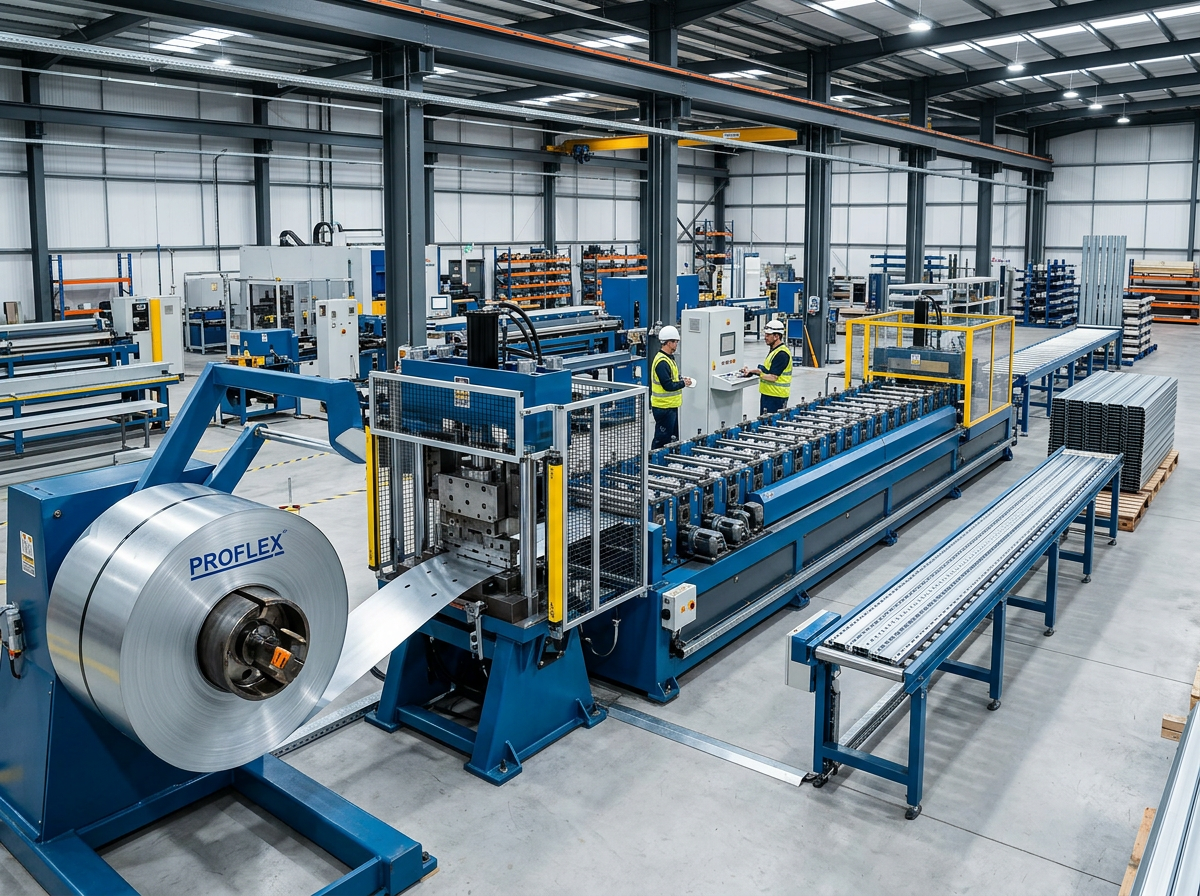
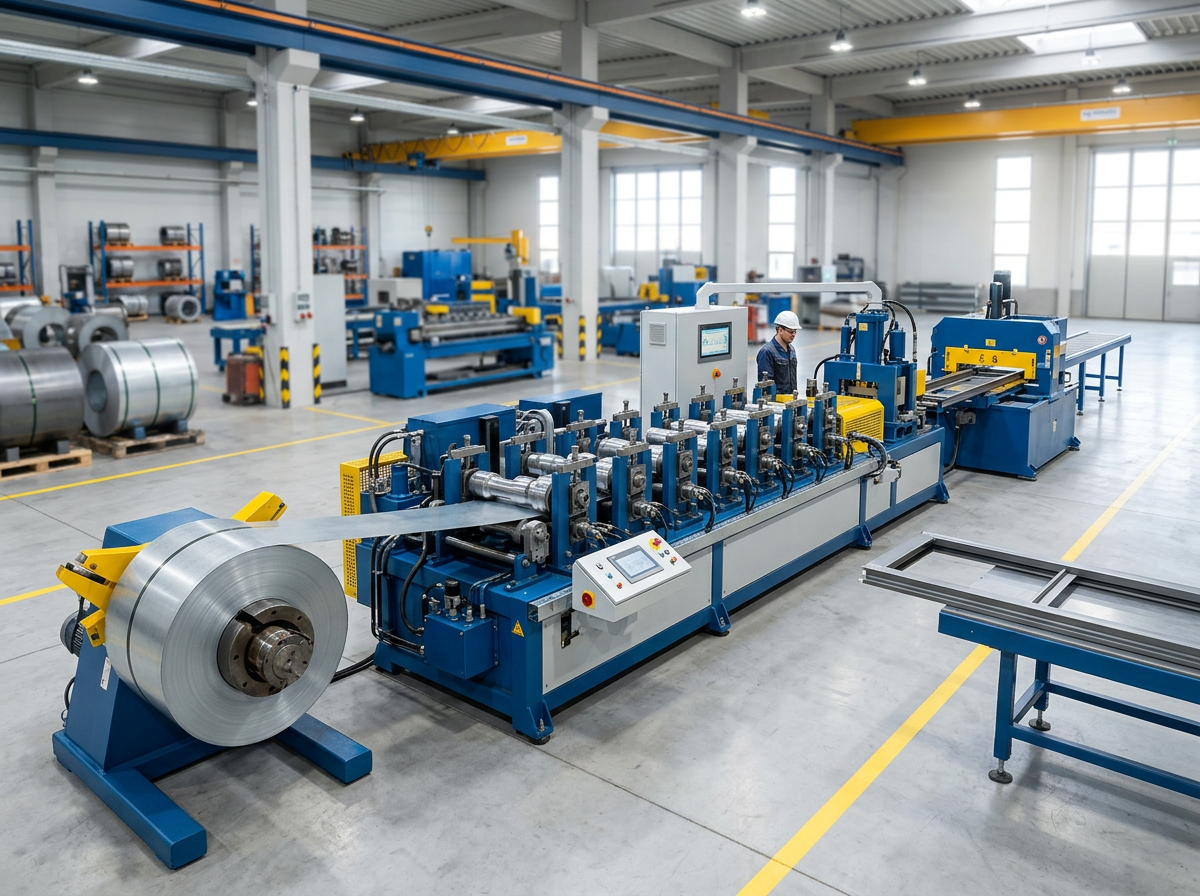
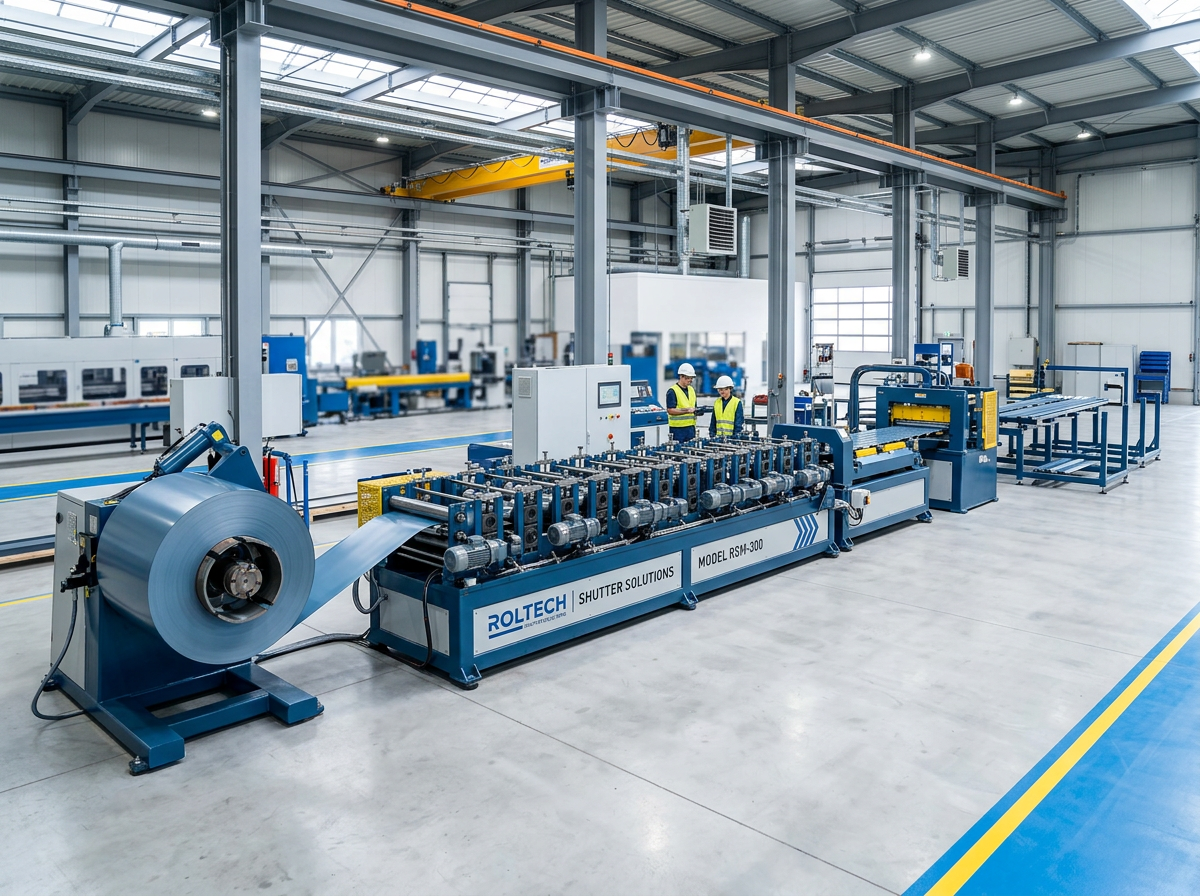
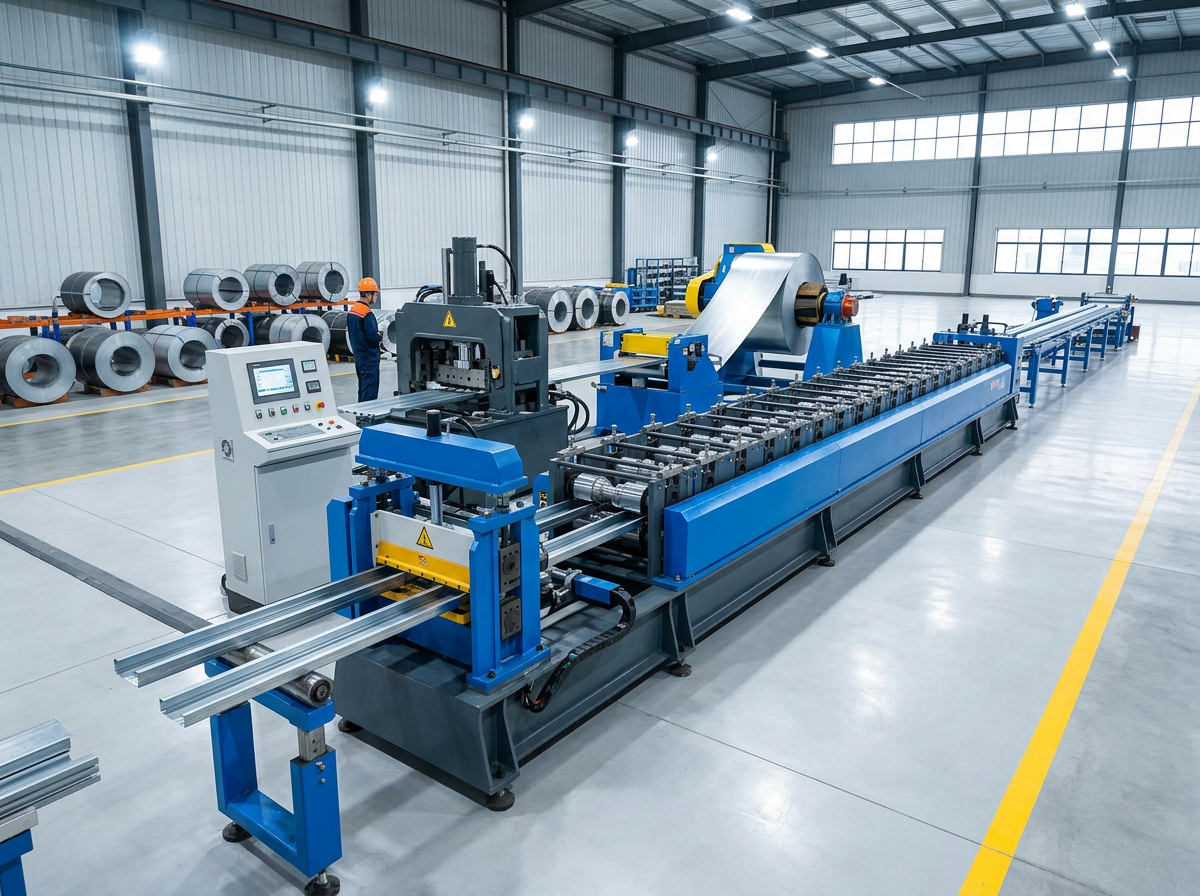
Purlin roll forming process is a critical step in the construction industry that involves the shaping of metal sheets into purlins. These structural components are essential for supporting the roof and wall systems of buildings. However, this process is not always straightforward, and various problems may arise, affecting the quality of the final product. In this article, we will explore some of the common problems that occur during purlin roll forming process and provide solutions to overcome them. Whether you’re a contractor, engineer, or manufacturer, this post will provide valuable insights to help you achieve optimal results and avoid costly mistakes.
Common problems in purlin roll forming process
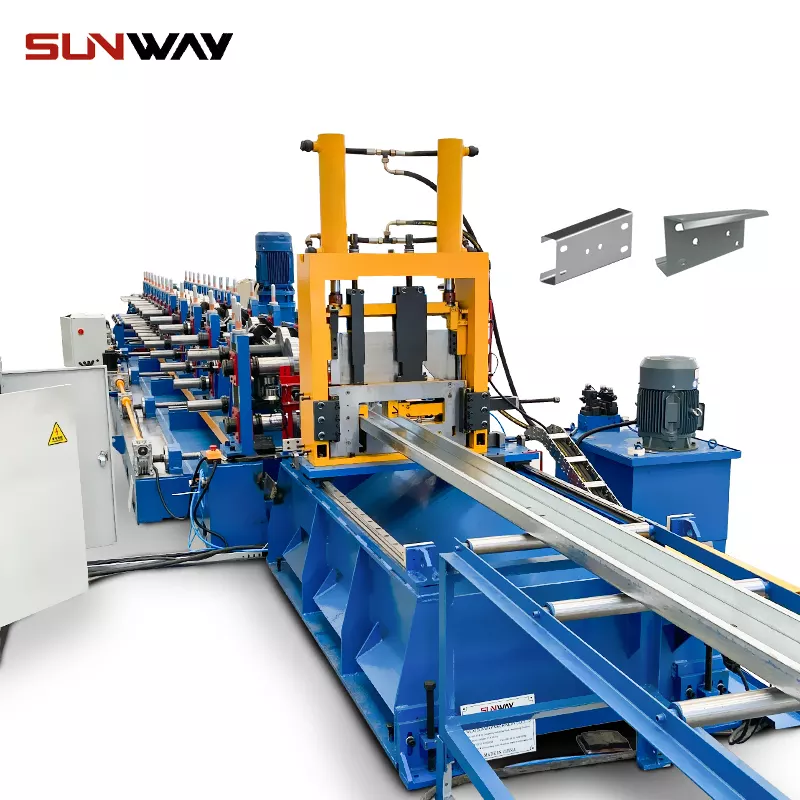
Uneven shape of purlin:
One of the common problems in purlin roll forming process is the uneven shape of the purlin, which can result from several factors. One possible reason for this issue is the incorrect setting of the rollers or misalignment, leading to uneven pressure distribution during the forming process. To avoid this problem, it’s essential to ensure that the rollers are correctly aligned, and the pressure distribution is even. Regular maintenance of the rollers and machine can also help to prevent this issue.
Coil set or cross break:
Coil set or cross break is another problem that can occur during purlin roll forming process. This issue happens when the metal sheet exhibits a permanent curvature that remains after the forming process. Coil set or cross break can negatively affect the quality of the purlin and lead to production delays. To avoid this problem, it’s important to use high-quality metal sheets with minimal internal stress. The use of leveling equipment before feeding the sheet into the roll forming machine can also help to prevent coil set or cross break.
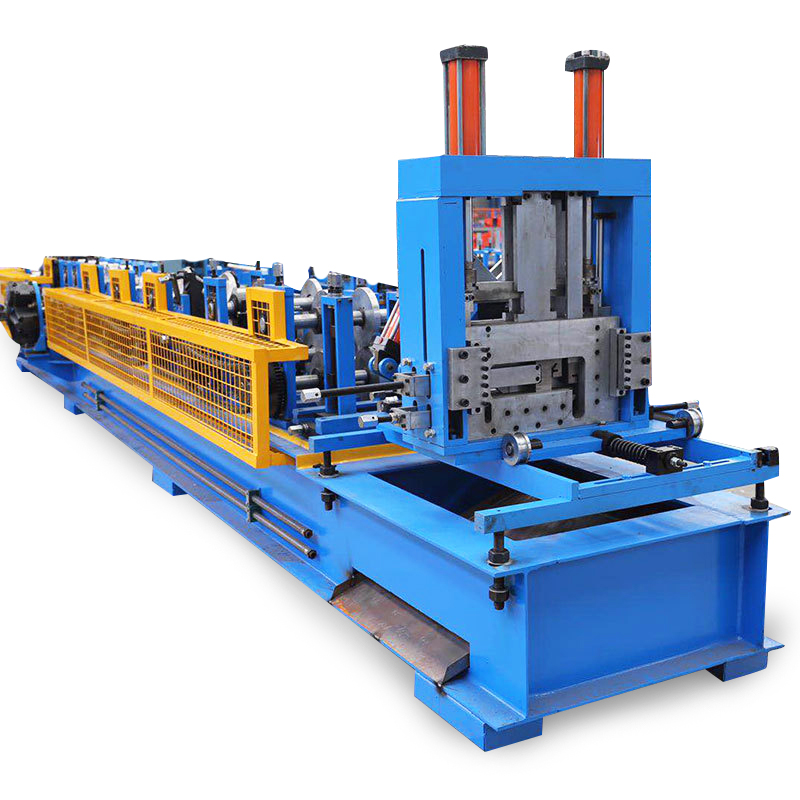
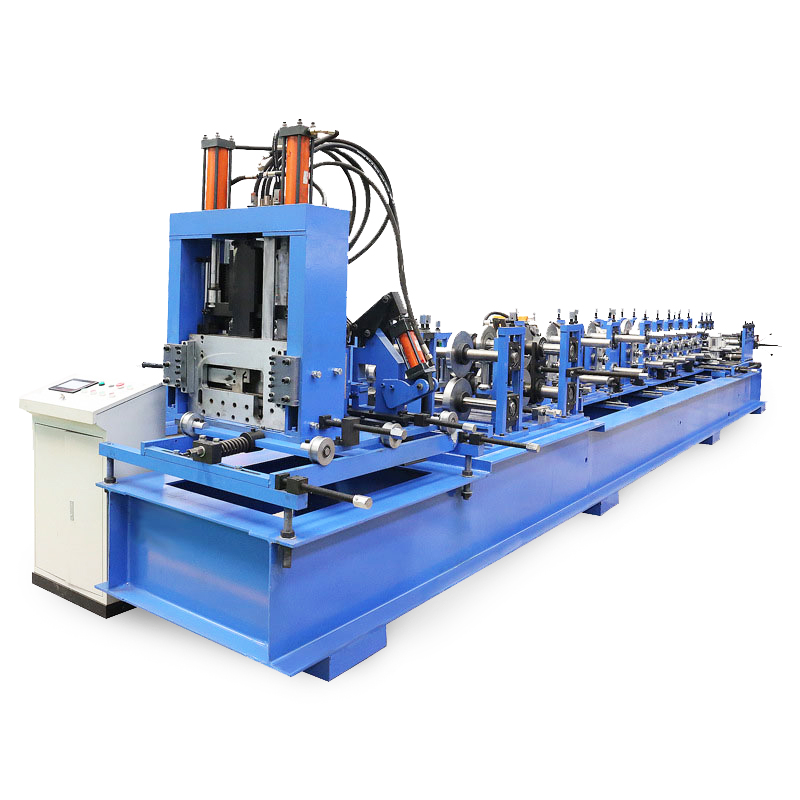
Edge wave:
Edge wave is a problem that occurs when the edges of the metal sheet exhibit a wavy shape, resulting from uneven stress distribution during the forming process. This issue can affect the final product’s quality and lead to rejections and waste. To prevent edge wave, it’s crucial to ensure that the rollers are correctly aligned and set to apply uniform pressure on the metal sheet. Using high-quality raw materials with minimal internal stress can also help to avoid this problem.
Buckling:
Buckling is a common problem that occurs when the purlin’s length exceeds its width, leading to a bending effect. This issue can result from incorrect roll forming machine settings or insufficient material strength. To avoid buckling, it’s crucial to ensure that the roll forming machine is set correctly, and the raw materials used have sufficient strength to withstand the forming process.
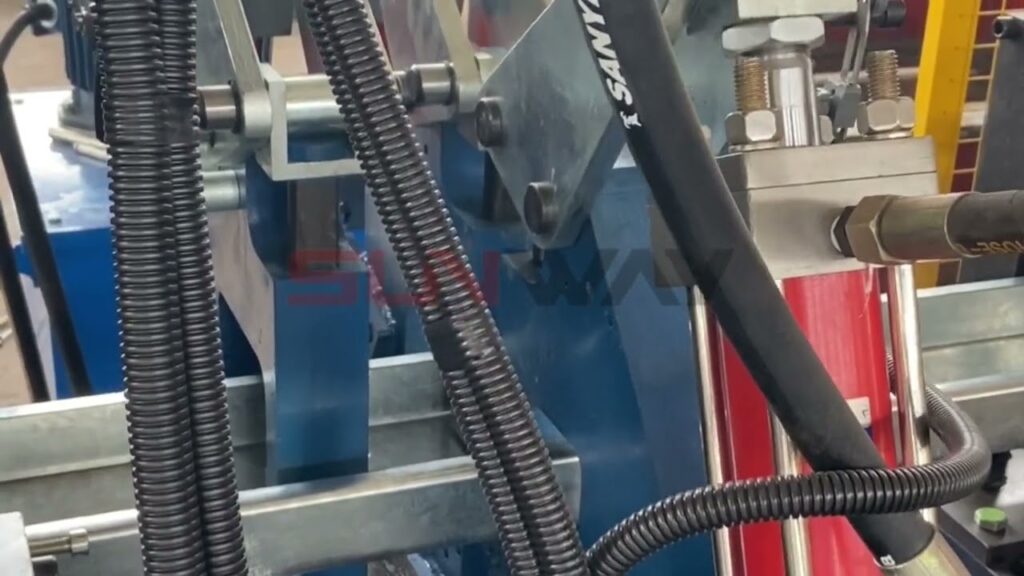
Spring back:
Spring back is a problem that occurs when the metal sheet returns to its original shape after the forming process, leading to the purlin’s inaccurate dimensions. This issue can result from several factors, such as the incorrect setting of the rollers, material type, and thickness. To address spring back, it’s important to adjust the rollers’ settings to apply the correct pressure and ensure that the metal sheet’s thickness and type are appropriate for the forming process.
Other problems:
Other common problems that may arise during purlin roll forming process include material cracking, weld defects, and dimensional variations. To solve these issues, it’s crucial to use high-quality raw materials, regularly maintain the roll forming machine, and ensure proper operator training and handling of the machine.
Solutions to the problems in purlin roll forming process
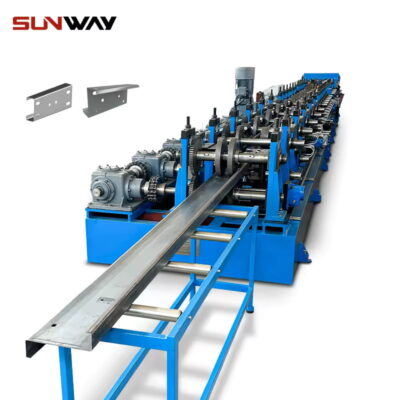

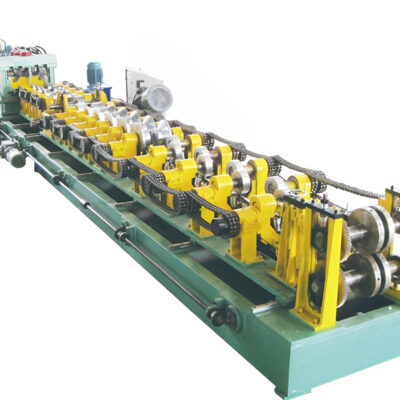
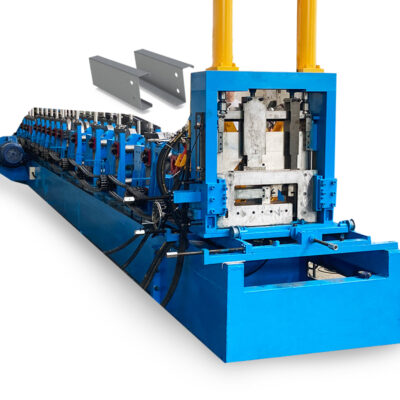
Adjusting the roll forming machine:
To solve the problems that may occur during purlin roll forming process, it’s important to adjust the roll forming machine settings correctly. For example, to address the problem of uneven shape of purlin, one should check the rollers’ alignment, adjust the roller pressure, and ensure that the roller spacing is uniform. To prevent buckling, adjust the roller settings to apply the correct amount of pressure, and ensure that the material’s thickness is appropriate for the forming process.
Using quality materials:
The quality of raw materials used for purlin roll forming process significantly impacts the final product’s quality. Therefore, it’s essential to use high-quality materials with minimal internal stress, which can prevent problems like coil set or cross break, edge wave, and material cracking. It’s crucial to purchase materials from reputable suppliers who follow strict quality control procedures to ensure that the materials meet the required standards.
Proper maintenance of the machine:
Proper maintenance of the roll forming machine is crucial to ensure its proper functioning and prevent problems that may occur during the purlin roll forming process. Regular maintenance should include cleaning the machine, inspecting the rollers, lubricating the moving parts, and checking for any wear and tear. Any damaged or worn parts should be replaced immediately to prevent further damage to the machine and the final product. Proper operator training and handling of the machine are also critical to prevent accidents and damage to the machine.
In conclusion, addressing the problems that may arise during purlin roll forming process requires a combination of adjusting the roll forming machine, using quality materials, and proper maintenance of the machine. By following these solutions, manufacturers, contractors, and engineers can produce high-quality purlins that meet the required standards and ensure the structural integrity and durability of buildings.
The purlin roll forming process is a critical step in the construction industry that involves shaping metal sheets into purlins. However, various problems may arise during the process, affecting the final product’s quality. To overcome these issues, it’s essential to adjust the roll forming machine settings correctly, use high-quality materials, and properly maintain the machine. By following these solutions, manufacturers, contractors, and engineers can produce high-quality purlins that meet the required standards and ensure the structural integrity and durability of buildings.
As a final tip, it’s important to ensure that the roll forming machine is operated by trained and skilled personnel who can identify and address any issues that may arise during the process. Regular inspection and maintenance of the machine can also help prevent problems and prolong the machine’s lifespan. Using high-quality materials and strictly adhering to quality control procedures can also help prevent issues like coil set or cross break, edge wave, material cracking, and buckling. By following these tips, anyone involved in purlin roll forming process can ensure the production of high-quality purlins that meet the required standards and contribute to the construction of safe and durable buildings.
अतिरिक्त अक्सर पूछे जाने वाले प्रश्न (FAQ)
1) How do I diagnose the root cause of edge wave in the purlin roll forming process?
Start with incoming coil (crown, camber, residual stress via mill cert), then check entry guides, leveling/flattening effectiveness, and roll flower progression. Use a feeler gauge across edges after pass 1–3 and thermal-check bearing temps. If wave reduces after leveling adjustments, coil stress is the primary culprit; if it worsens downstream, review pass alignment and roll gap symmetry.
2) What’s the best way to control springback on high-strength steels (S450–S550)?
Use larger inside bend radii, add overbend in late passes, employ crowned rolls where needed, and slow forming speed slightly on critical passes. Recipe-based compensation (per grade/thickness) and inline angle measurement help keep flange angle within ±0.5°. Reference: AISI S100 cold-formed design guidance.
3) When should I use a corrective leveler before the purlin roll forming line?
Use for coils showing coil set, cross break, or camber beyond spec. As a rule of thumb: if flatness deviation >5 mm over 1 m or visible cross break persists after de-coiling, run through a multi-roll corrective leveler to reset the yield surface before forming.
4) How tight can tolerances realistically be for punched holes and lengths on CZ purlins?
With servo-electric punching and an encoder-synchronized flying shear, many 2025 lines achieve ±0.3–0.5 mm hole position and ±0.5–1.0 mm cut length on 1.5–2.5 mm galvanized steel when coils are within flatness spec and guides are calibrated weekly.
5) What preventive maintenance has the biggest impact on dimensional consistency?
Weekly: verify roll gaps with feeler gauges, check pass-to-pass alignment, clean rolls. Monthly: calibrate encoders, check shear blade clearance, inspect bearings. Quarterly: validate recipe offsets, inspect leveler backups, and conduct a full lubrication audit. Document in a CMMS to correlate maintenance with defect rates.
2025 Industry Trends: Purlin Roll Forming Process
- Shift to servo-electric punching/shearing reduces hydraulic downtime and improves hole repeatability for faster site bolting.
- Inline vision/laser systems feed SPC dashboards, enabling automatic recipe tweaks that cut scrap from edge wave and springback.
- Increased use of higher-strength steels (S500–S550) to meet wind/seismic code demands without added weight.
- Data interoperability via OPC UA/MQTT to MES/SCADA supports predictive maintenance and energy KPIs (kWh/ton).
- Sustainability focus: energy-regenerative drives and recycled-content coils prioritized in procurement.
2024–2025 Performance Benchmarks for Purlin Roll Forming
| मुख्य प्रदर्शन संकेतक | 2024 Typical Plant | 2025 सर्वश्रेष्ठ-इन-क्लास | What It Improves | स्रोत |
|---|---|---|---|---|
| Scrap rate (all defects) | 2.5–4.0% | 1.0–2.0% | Material cost, rework | DOE AMO; The Fabricator |
| Length tolerance (±) | 1.0–1.5 मिमी | 0.5–1.0 mm | Fit-up, re-cuts | OEM specs; industry reports |
| Hole position (±) | 0.6–1.0 mm | 0.3–0.5 mm | Faster bolting | Servo-electric punch data |
| C↔Z changeover | 25–45 min | 5–12 min | OEE on high-mix | SMED/OEM case studies |
| ऊर्जा तीव्रता (kWh/टन) | 130–170 | 95–130 | Utility cost, CO2e | DOE AMO guidance |
| First-article approval time | 30–60 min | 10–20 min | Throughput | Inline metrology + SPC |
Authoritative references:
- U.S. DOE Advanced Manufacturing Office: https://www.energy.gov/eere/amo
- The Fabricator (roll forming): https://www.thefabricator.com
- AISI/Steel.org design specs (cold-formed steel): https://www.steel.org
- OPC Foundation (OPC UA): https://opcfoundation.org
- ISO 13849-1 functional safety: https://www.iso.org/standard/69883.html
नवीनतम अनुसंधान मामले
Case Study 1: Cutting Edge Wave with Inline SPC and Leveler Optimization (2025)
Background: A regional purlin manufacturer had recurring edge wave and rejections on 1.8 mm S350 coils from multiple mills.
Solution: Added corrective leveler recipes by supplier/heat, deployed inline laser flatness sensors, and integrated SPC rules to trigger automatic roll gap fine-tuning.
Results: Edge-wave-related scrap fell from 1.2% to 0.4%; first-pass yield rose to 97.6%; coil-to-coil setup time reduced by 18%.
Case Study 2: Springback Control on S550 CZ Purlins for High-Wind Projects (2024)
Background: EPC contractor needed longer spans with S550 material; springback caused flange angle deviations >1°.
Solution: Implemented overbend in final two passes, adjusted bend radii, and added inline angle camera with closed-loop recipe offsets.
Results: Flange angle variation cut to ±0.4°; site bolting time reduced 12%; overall OEE improved from 72% to 80%.
विशेषज्ञों की राय
- Dr. Benjamin Schafer, Professor of Civil Engineering, Johns Hopkins University
Key viewpoint: “For high-strength purlins, maintaining consistent section properties through precise forming directly affects stability limit states like lateral-torsional buckling.”
प्रोफ़ाइल: https://engineering.jhu.edu - जेनिफर किंडर, उत्पाद प्रबंधन निदेशक, सैमको मशीनरी
Key viewpoint: “Servo-electric punching combined with laser verification has become a proven route to halve hole-position variability in CZ purlin roll forming.”
कंपनी: https://www.samco-machinery.com - Phil Paxton, President, The Bradbury Group
Key viewpoint: “Plants investing in sub-15-minute C-to-Z changeover and connected controls are seeing double-digit OEE gains in high-mix environments.”
कंपनी: https://www.bradburygroup.com
व्यावहारिक उपकरण/संसाधन
- Standards and design
- AISI S100 Cold-Formed Steel Specification: https://www.steel.org
- Eurocode 3 (EN 1993) resources: https://eurocodes.jrc.ec.europa.eu
- ASTM A653 (galvanized sheet) and A1008: https://www.astm.org
- Process control and analytics
- NIST Manufacturing resources (SPC, metrology): https://www.nist.gov/manufacturing
- OPC Foundation (OPC UA for machine data): https://opcfoundation.org
- Rockwell FactoryTalk Analytics / Siemens Industrial Edge: https://www.rockwellautomation.com, https://www.siemens.com
- Maintenance and reliability
- DOE AMO Energy Management toolkits: https://www.energy.gov/eere/amo
- FIWARE and MQTT docs for IIoT integration: https://www.fiware.org, https://mqtt.org
- Industry media and OEM discovery
- The Fabricator (roll forming channel): https://www.thefabricator.com
- Precision Metalforming Association (PMA): https://www.pma.org
- Representative OEMs: The Bradbury Group, Samco Machinery, Formtek, Dallan (check product pages for purlin roll forming process specs)
- Safety
- ISO 13849-1 functional safety overview: https://www.iso.org/standard/69883.html
अंतिम अपडेट: 2025-10-22
परिवर्तन-लेख: Added 5 FAQs; inserted 2025 trend insights with KPI table and sources; included two recent case studies; curated expert viewpoints; compiled tools/resources aligned with E-E-A-T and target keyword variations
अगली समीक्षा तिथि और ट्रिगर: 2026-04-22 or earlier if AISI/Eurocode revisions publish, OEMs release new sub-5-minute changeover systems, or plant data shows scrap >2% or hole tolerance >±0.6 mm