 अंग्रेज़ी
 स्पेनिश
 फ़्रेंच
 बंगाली
 रूसी
 अरबी
 तुर्की

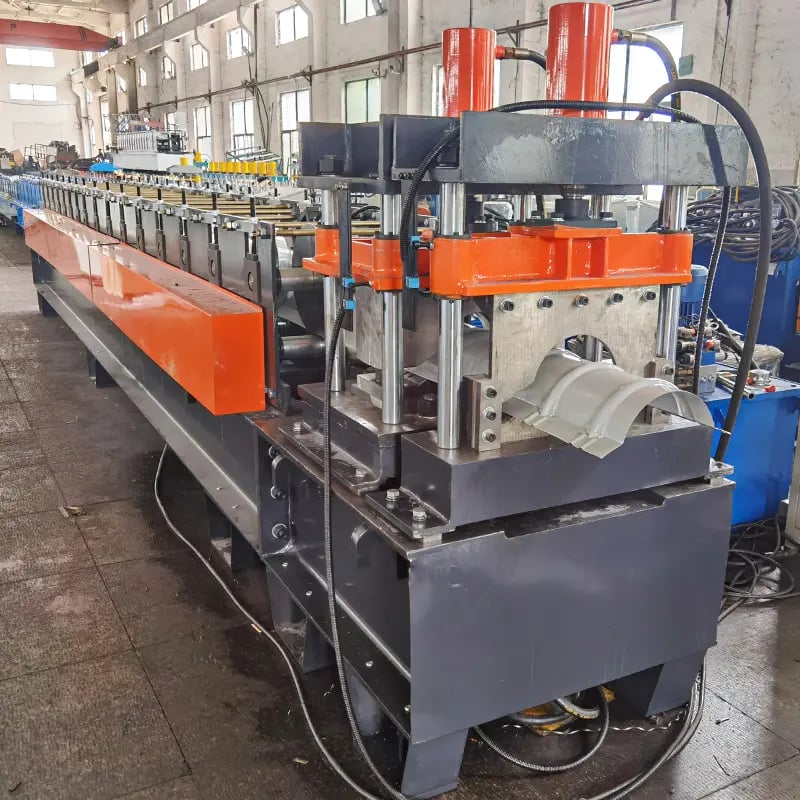
रोल फॉर्मिंग मशीन is an efficient, high-speed manufacturing process used to produce long sheets of uniform cross-section parts. A coil of sheet metal is fed through a series of roller dies that gradually shape the material into the desired profile. roll forming machine have applications across industries from construction and infrastructure to automotive, aerospace, appliances and more.
रोल फॉर्मिंग प्रक्रिया का अवलोकन
Roll forming machines use a continuous and automated process to manipulate coiled sheet metal into custom parts with repeated bends and forms. The raw material, typically steel, aluminum or other alloy coils, is fed into the rolling mill equipment. The material passes through a line of roller dies set up in sequential stations, each performing incremental shaping operations. The final output is a continuous length part with uniform cross-section along its length.
Benefits of roll forming include:
- High productivity and efficiency
- Consistency and precision in long length parts
- Versatility to form varied, complex profiles
- अन्य प्रक्रियाओं की तुलना में कम टूलिंग लागत
- न्यूनतम सामग्री अपशिष्ट
Roll formed sections find use in panels, enclosure frames, roofing, racking, highway products, furniture, appliance housings, automotive frames and more.
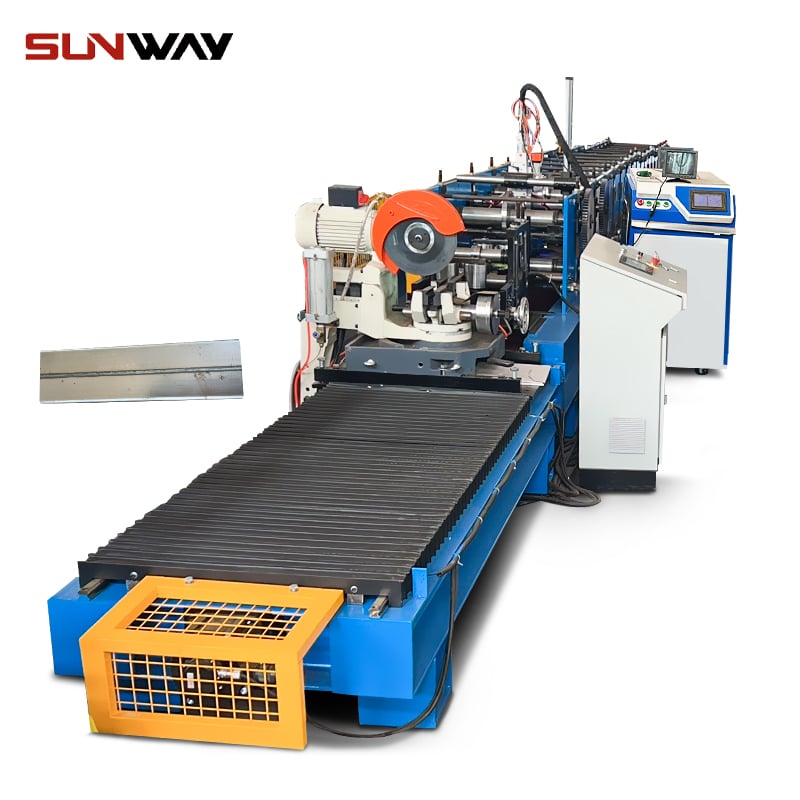
रोल फॉर्मिंग उपकरण के प्रकार
कई प्रकार के होते हैं रोल फॉर्मिंग मशीन configurations including:
तालिका 1: रोल फॉर्मिंग उपकरण के प्रकार
| प्रकार | विवरण |
|---|---|
| Inline roll forming lines | Parts move inline through different roll station units in a straight line path |
| Reversible roll formers | Sheet reversing after each stage, more compact line layout |
| Continuous tube mills | Roller dies form flat strip into tubular sections |
| Roll bending machines | Simple 2 or 3 roll benders for basic forms |
| पोर्टेबल रोल फॉर्मर | Manual units for onsite small part production |
रोल फॉर्मिंग लाइन की कार्य प्रक्रिया
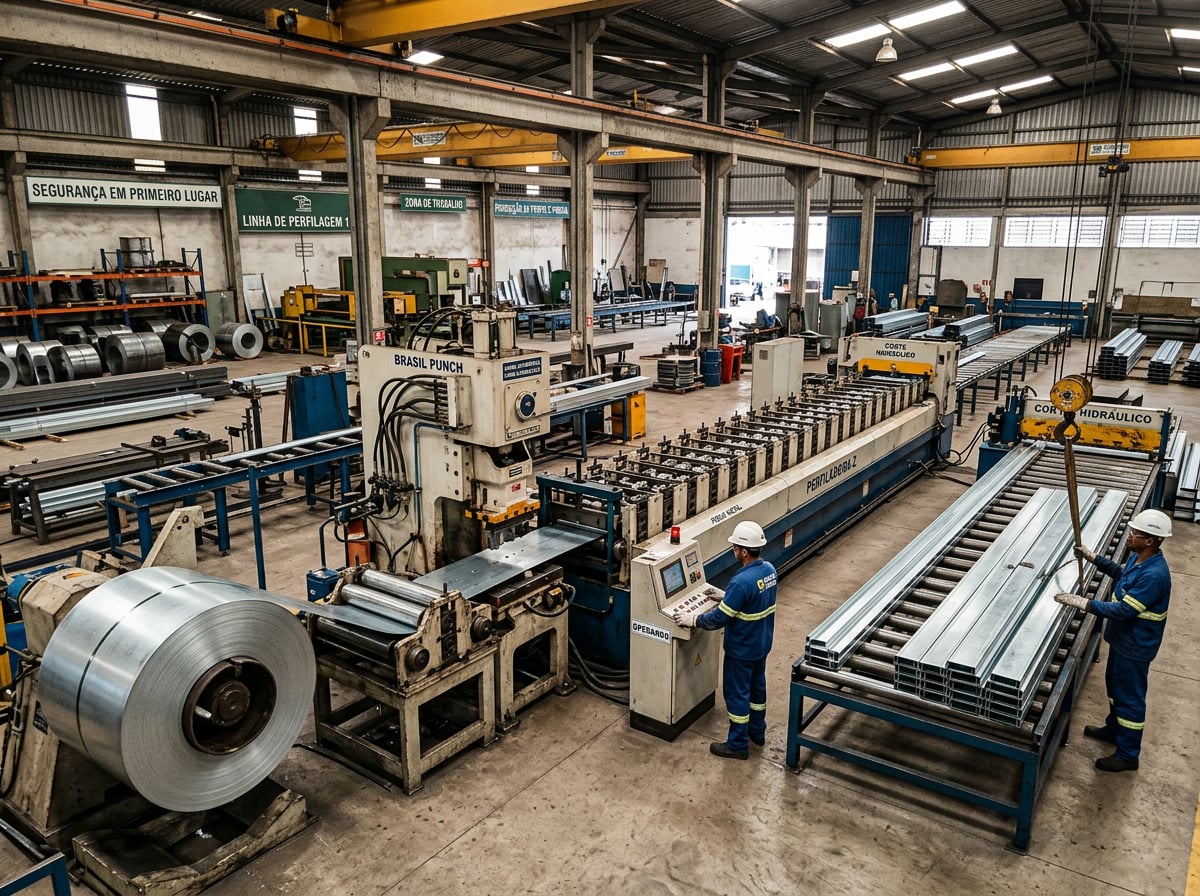
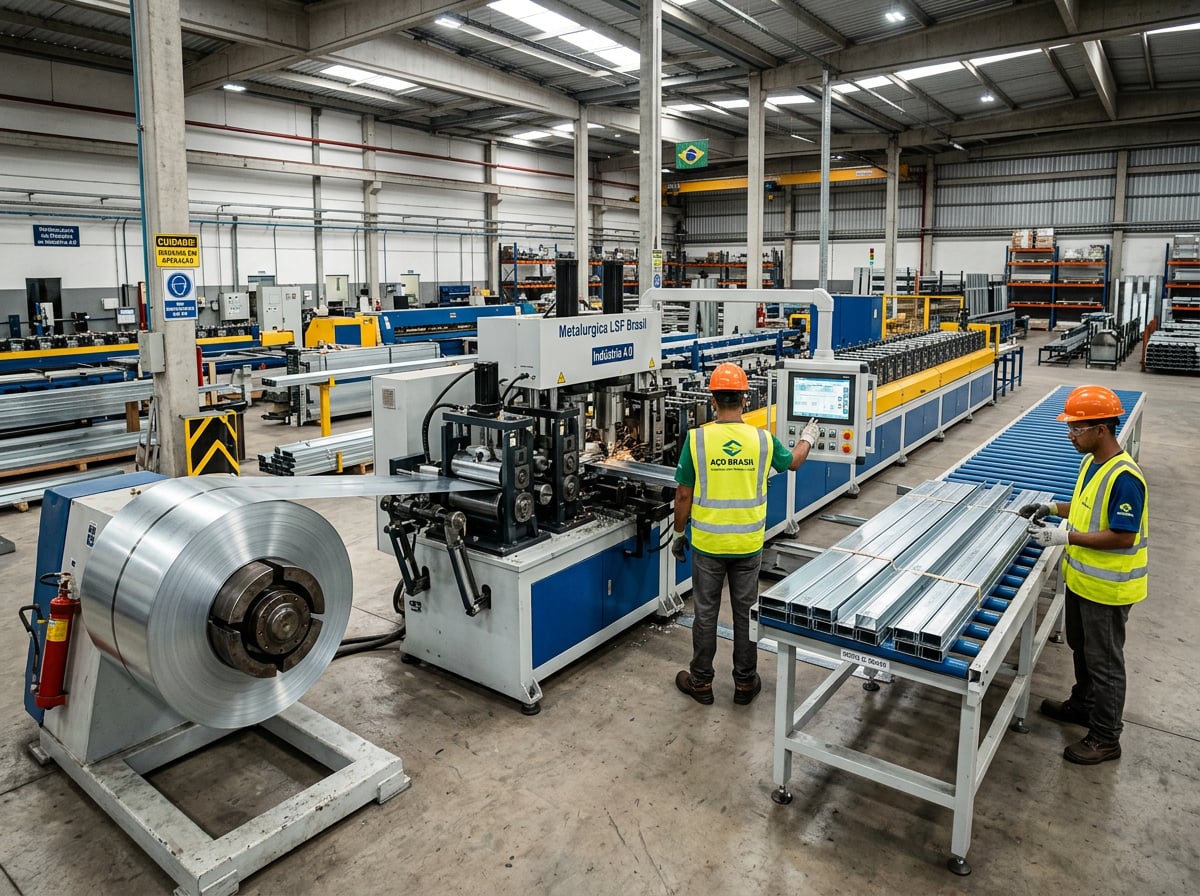
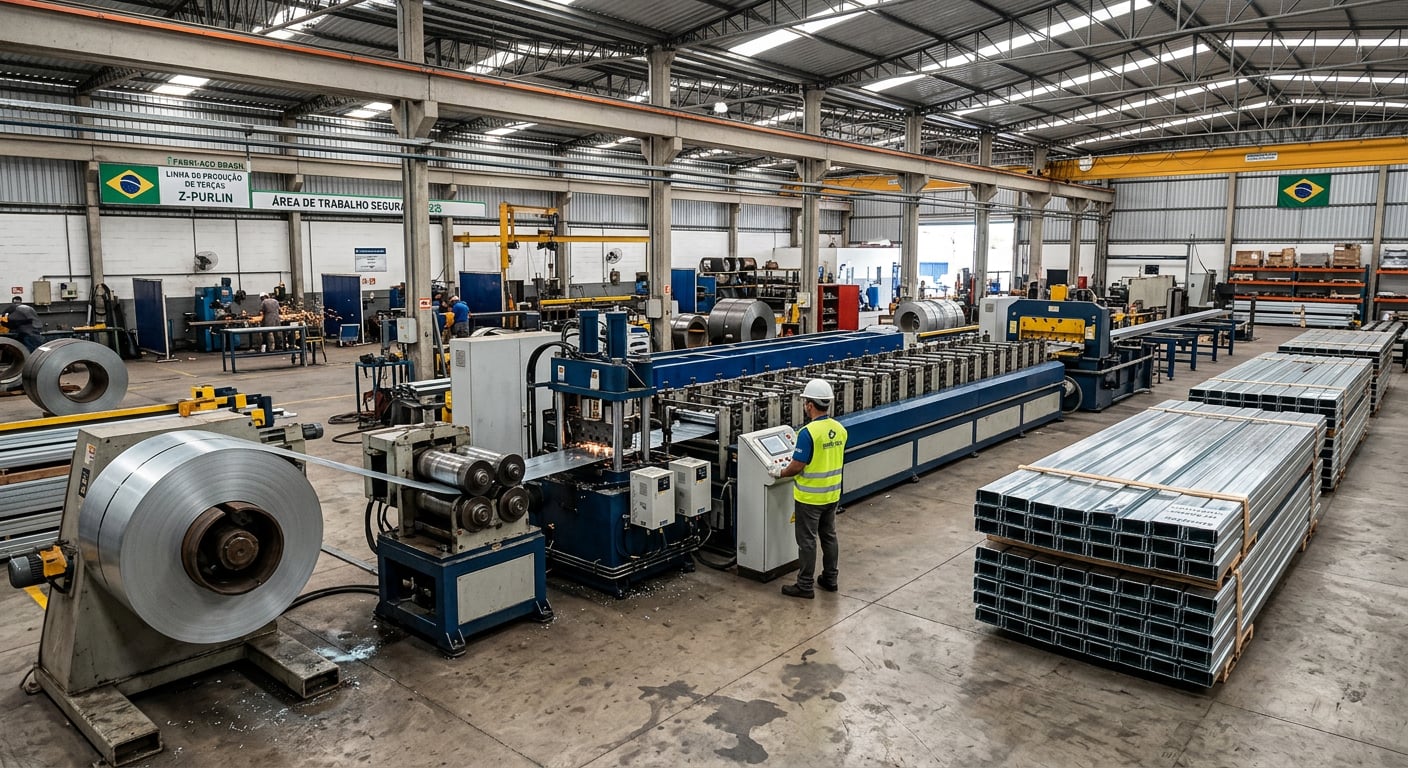
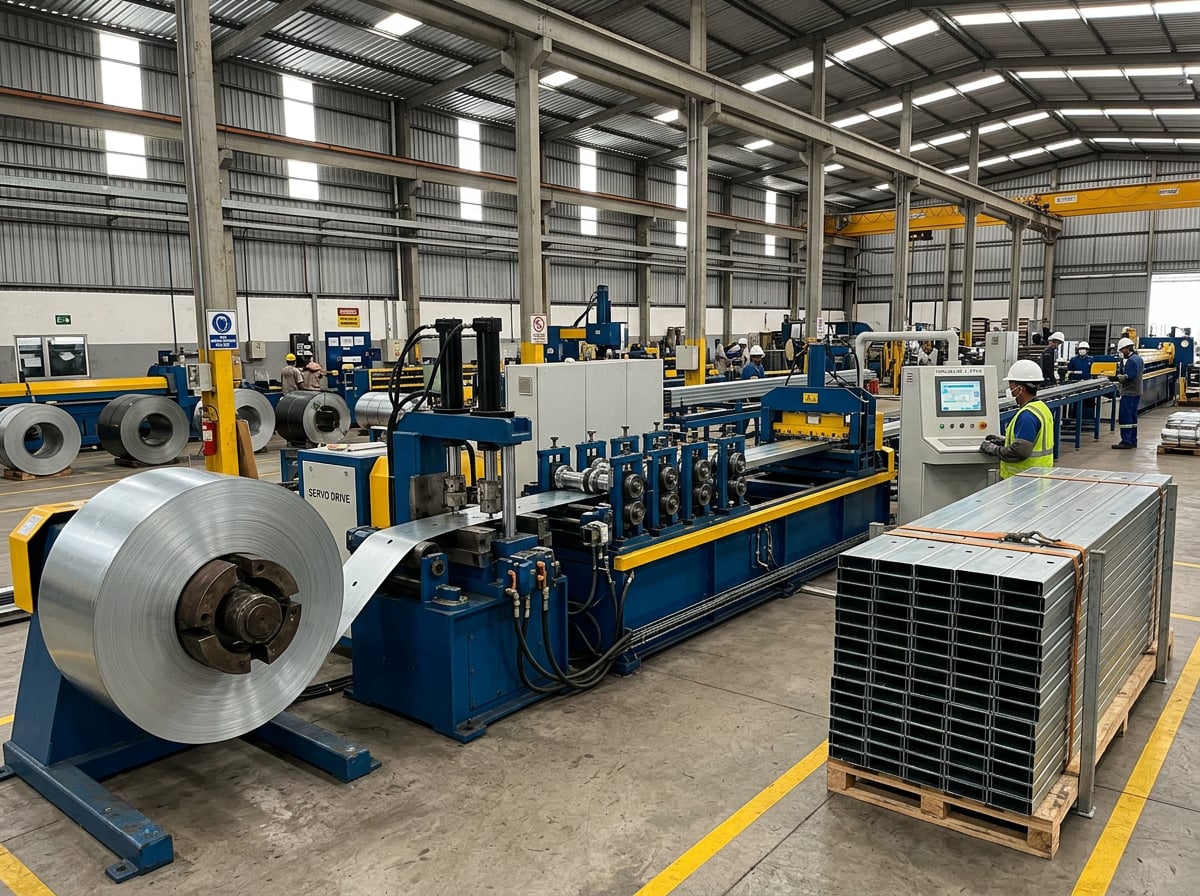
A typical inline roll forming system has these main components:
- अनकॉइलर: Decoils sheet metal from a cylindrical coil
- फीडिंग तंत्र: Controls material speed into mill
- Forming sections: Series of roll stands shape material progressively
- कटर: तैयार भागों को लंबाई के अनुसार काटता है
- निकास टेबल: Collects finished product
Additionally, punches, notchers, hole punching units, embossing stations can be integrated for secondary operations.
The forming process starts by loading a metal coil onto an uncoiler reel. The strip gets threaded through an initial set of guide rolls into the first set of forming rolls. As it passes through consecutive stands, the material shape gets further modified incrementally. The last few roller dies fine tune the final dimensional accuracy. Finally a flying cutoff saw shears the sections to desired length stacking them on the exit table.
सामग्री आवश्यकताएँ
Roll formed parts can be produced from:
- कम कार्बन स्टील
- स्टेनलेस स्टील
- एल्यूमिनियम
- तांबा
- पीतल
Other alloys and metal composites can also be roll formed with appropriate tooling design. Sheet thickness generally ranges from 0.15 mm to about 3 mm for common metals. The maximum coil width capacity for roll forming lines goes up to around 1500 mm.
फॉर्मिंग क्षमताएँ
A wide range of uniform profile geometries can be shaped using rollers including:
- Basic arches, curved forms C-, Z-, hat-, U- sections
- Complex beads, ribs, fluted profiles
- Panels, highway rails, door frames
- Angles, tubes, rectangular ducting
- Open top and closed tubular sections
Advanced 3D roll forming allows asymmetrical forms with varying wall thicknesses along the parts length.
-
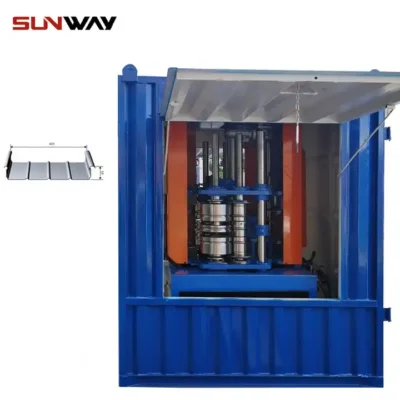 स्टैंडिंग सीम रूफ पैनल कर्विंग मशीन अधिक पढ़ें
-
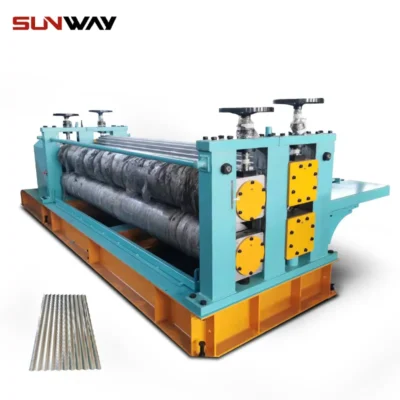 बैरल कोरुगेटेड रोल फॉर्मिंग मशीन अधिक पढ़ें
-
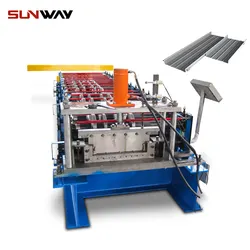 स्टैंड सीमिंग रूफ पैनल रोल फॉर्मिंग मशीन अधिक पढ़ें
-
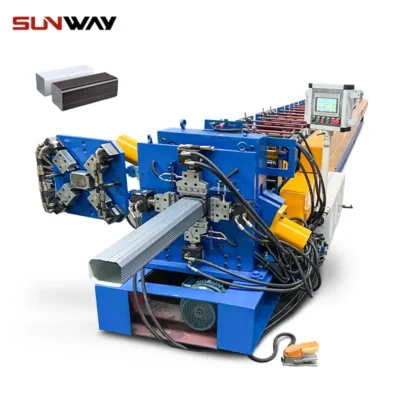 डाउनस्पाउट पाइप रोल फॉर्मिंग मशीन अधिक पढ़ें
-
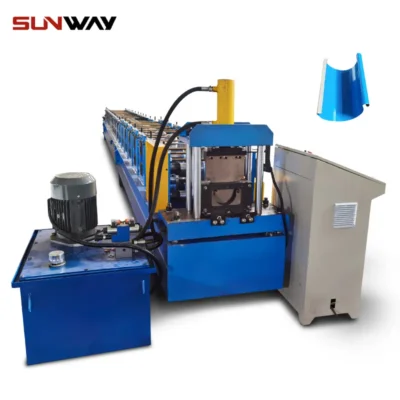 गटर रोल फॉर्मिंग मशीन अधिक पढ़ें
-
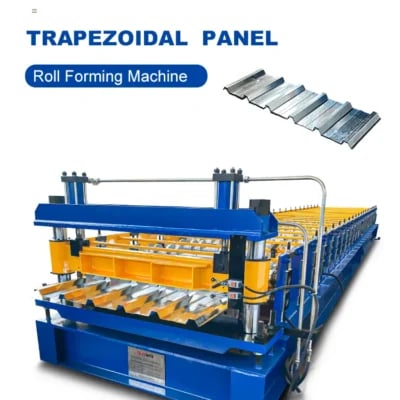 ट्रेपेज़ॉइडल पैनल रोल फॉर्मिंग मशीन अधिक पढ़ें
-
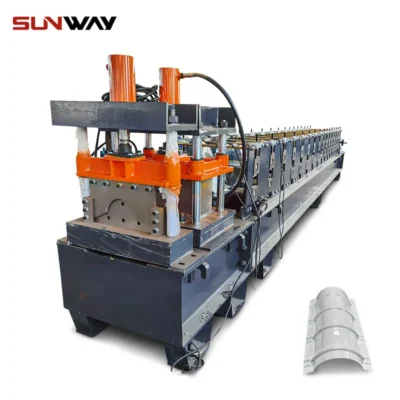 रिज कैप रोल फॉर्मिंग मशीन अधिक पढ़ें
-
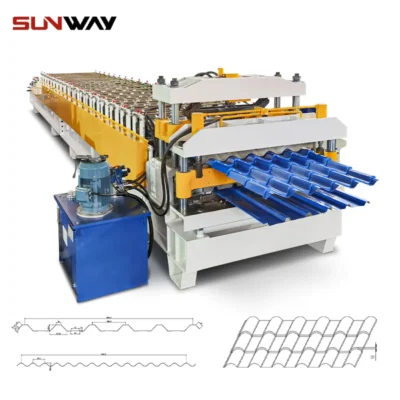 डबल लेयर पैनल रोल फॉर्मिंग मशीन अधिक पढ़ें
-
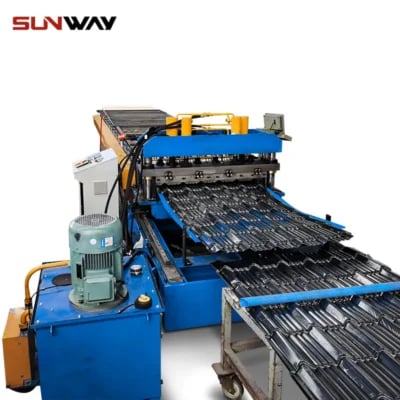 रूफ टाइल पैनल रोल फॉर्मिंग मशीन अधिक पढ़ें
डिज़ाइन संबंधी विचार
To create an optimal roll formed profile, these aspects need evaluation:
- Product design: Building finite element models informs profile selection considering strength needs and functionality.
- Material type: Metallurgical properties determine forming limits, springback allowances needed.
- Tool design: Roller geometries, clearances, layout based on progressive incremental bending steps.
- Process parameters: Feeding rate, number of passes and stations, separating forces all affect quality.
With tighter tolerances needed, annealing and post processing may also be required. Expert roll forming companies collaborate with customers across design, prototyping, testing, and post-production stages to deliver custom roll formed components.
रोल फॉर्मिंग में प्रमुख कारक
तालिका 2: Factors influencing roll formed part quality
| Roll forming factors | विवरण |
|---|---|
| फॉर्मिंग स्टेशनों की संख्या | More roller passes distribute strain over several smaller increments |
| Inter-station design | Additional operations like punching, notching, embossing stations |
| Roll pass sequence | Efficient bend sequence avoids material cracking and wrinkling |
| Roll tooling radii | Tool geometry design based on metal type, thickness, required profile |
| Forming analysis | Advanced FEA simulation minimizes physical trial runs |
रोल फॉर्मिंग उपकरण के आपूर्तिकर्ता
There are roll forming machine manufacturers across geographies including:
तालिका 3: Major roll forming equipment suppliers
| कंपनी | स्थान |
|---|---|
| Schwarze-Robitec | USA |
| Formtek | USA |
| Dreistern | जर्मनी |
| E-Tec | कनाडा |
| Samco Machinery | चीन |
Entry level roll former prices start around $30,000 going up to $500,000 for fully automated high capacity equipment. Custom built production lines with multiple value-added processes, quality checks and part handling automation fetch higher prices.
When evaluating suppliers, productivity needs, line speeds, quick die changeover capability and overall equipment cost play key roles.
रोल फॉर्मिंग लाइन की स्थापना
Roll forming equipment requires these preparations:
तालिका 4: Roll former installation needs
| कार्य | विवरण |
|---|---|
| स्थान | Line layout, scrap removal, craning paths |
| शक्ति | Sufficient AC supply, backup generators |
| संपीड़ित वायु | For machine automation control valves |
| नींव | Concrete anchor points to secure stands |
| सुरक्षा | Guarding, access platforms, electrical safety |
The machine bases have to be leveled and positioned so the roller axes are perfectly parallel. This precision alignment is vital for quality roll formed parts.
रोल फॉर्मिंग मशीनों का संचालन
The typical workflow involves:
- Order planning – material procurement, production scheduling
- Coil loading onto uncoiler
- Threading sheet into guide system
- Setting forming parameters – line speed, punches etc. based on job
- Running production batch
- Part cutoff and exit
- Quality checks during operation
- Tool maintenance checks
For quick product changeovers preset recipes automate rapid machine reconfiguration saving time and material when switching jobs.
रोल फॉर्मिंग उपकरण का रखरखाव
Regular upkeep activities cover:
तालिका 5: Roll forming equipment maintenance
| कार्य | आवृत्ति | जाँच |
|---|---|---|
| रोलर निरीक्षण | मासिक | Wear, cracks, grooves |
| बेयरिंग | 6 महीने | Play, smooth rotation |
| Belt tension | त्रैमासिक | Adjust if loose |
| स्नेहन | आवश्यकतानुसार | Reduce friction at pins, slides |
| हाइड्रोलिक्स निरीक्षण | वार्षिक | Leakage, seal condition |
| विद्युत उपकरण | वार्षिक | Contactor operation, wiring check |
This ensures maximum production uptime and product quality consistency.
का चयन करना रोल फॉर्मिंग मशीन आपूर्तिकर्ता
Consider these factors when selecting roll forming equipment vendors:
तालिका 6: Roll former supplier selection criteria
| पैरामीटर | महत्व |
|---|---|
| उत्पाद श्रेणी | Standard and custom solutions |
| Line speeds offered | Match volumes needed |
| त्वरित डाई परिवर्तन | For flexible production runs |
| Profile complexity ability | As per part designs |
| गुणवत्ता प्रमाणन | ISO, CE marked |
| Design assistance | For optimal form designs |
| Value added processes | Needed secondary operations |
| स्वचालन क्षमताएँ | For productivity and precision |
| बिक्री के बाद सेवा | Installation help, maintenance support |
| Operational training | For efficient working |
Reputed manufacturers provide end-to-end support from design, prototyping, to post order assistance.
रोल फॉर्मिंग के फायदे और नुकसान
तालिका 7: रोल फॉर्मिंग प्रक्रिया के लाभ और सीमाएँ
| फायदे | नुकसान |
|---|---|
| Fast production of long, uniform parts | उच्च प्रारंभिक टूलिंग खर्च |
| Consistent precision along part lengths | Limited design flexibility vs other methods |
| Lower costs than fabricating each piece | Roll design complexity for asymmetric forms |
| न्यूनतम सामग्री अपशिष्ट | Straight line production restricts profile shapes |
| Suitable for high quantity production | Regular roller maintenance needed |
| Range of section geometries feasible | Skill needed for quality tool design |
If long lengths of the same profile are needed, roll forming excels over other processes due to its productivity and cost benefits.
रोल फॉर्म किए गए सेक्शनों के अनुप्रयोग
मुख्य अनुप्रयोग क्षेत्रों में शामिल हैं:
- Building facades, roofs, highway rails
- Automotive and railway car frames
- HVAC डक्टिंग
- Large storage racks, containers
- Electrical, telecom enclosures
- फर्नीचर और शेल्विंग
- Agricultural equipment, trailers
- Appliance housings
Essentially any high volume application with linear components of fixed cross-section can employ roll formed parts.
अक्सर पूछे जाने वाले प्रश्न
Q: What thickness of sheet metal can be roll formed?
A: Standard roll forming lines can produce parts from metal thickness ranging between 0.3mm to about 3mm. Specialized heavy gauge lines go up to 8mm thickness.
Q: What alloys besides steel can be roll formed?
A: Aluminum, copper, brass and other ductile alloys can be roll formed with appropriate roller tooling design. Even flexible composites are possible for certain profiles.
Q: Can a flat sheet be roll formed into a pipe section?
A: Yes, specialized tube rolling mills with bending dies can continuously form flat strips into hollow tubular profiles.
Q: What tolerances are achievable in roll forming?
A: Roll formed parts normally achieve profile dimensional tolerances between +/- 0.5% to +/- 1% depending on metal properties and tooling precision.
Q: Is secondary processing like punching possible during roll forming?
A: Yes, modern roll lines integrate additional in-line processes like piercing, notching, slotting and embossing by incorporating special stations.
Q: How are roll forming machine suppliers compared?
A: Build quality, offered line speeds, level of process automation, tool design expertise, value additions possible, and after sales service are key competitive factors between roll former manufacturers.