 अंग्रेज़ी
 स्पेनिश
 फ़्रेंच
 बंगाली
 रूसी
 अरबी
 तुर्की
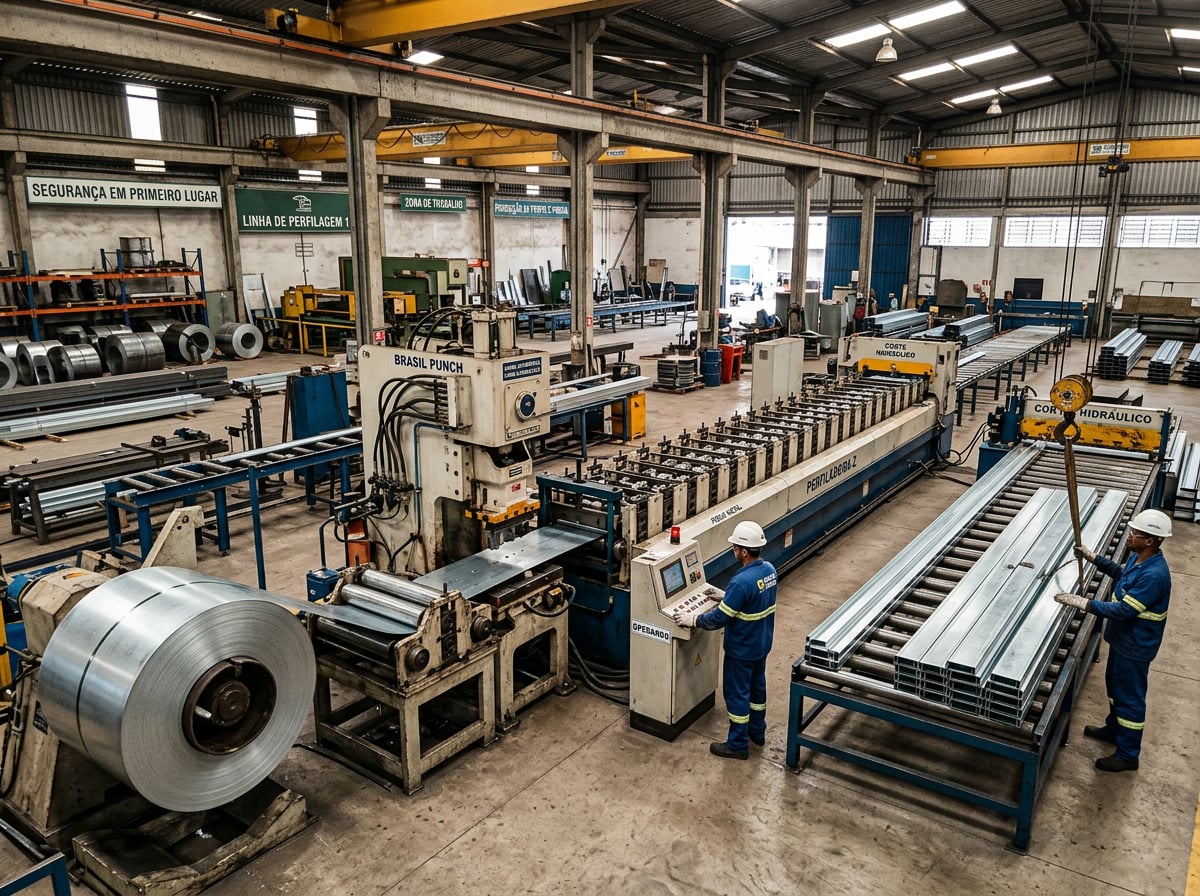
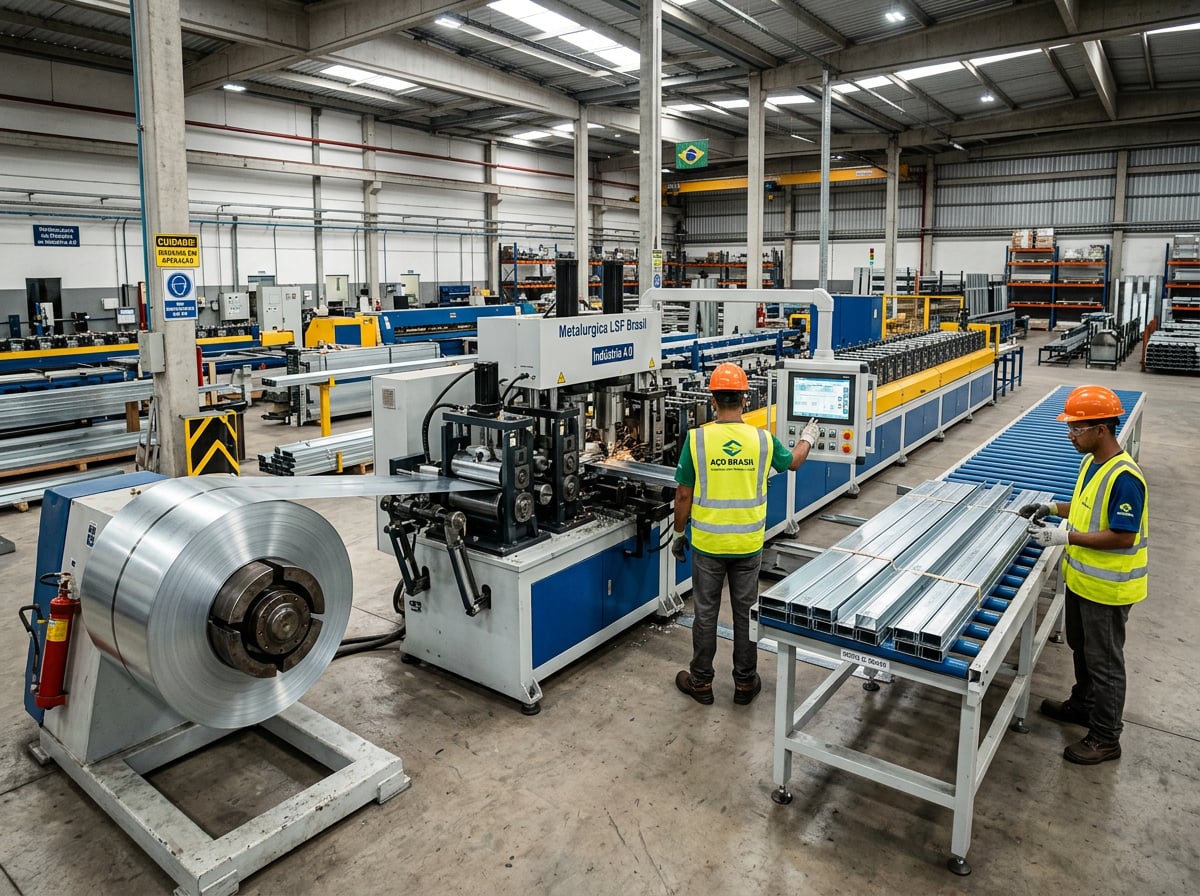
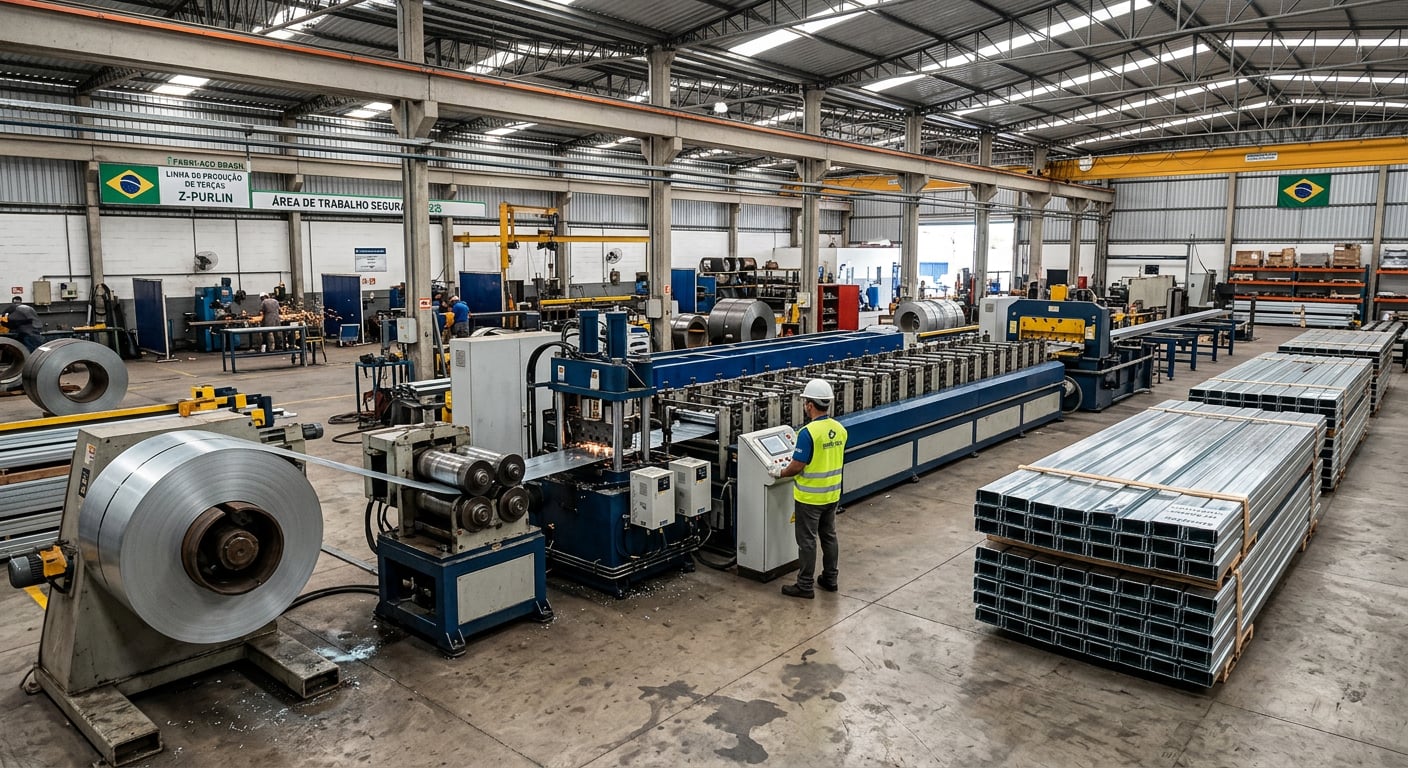
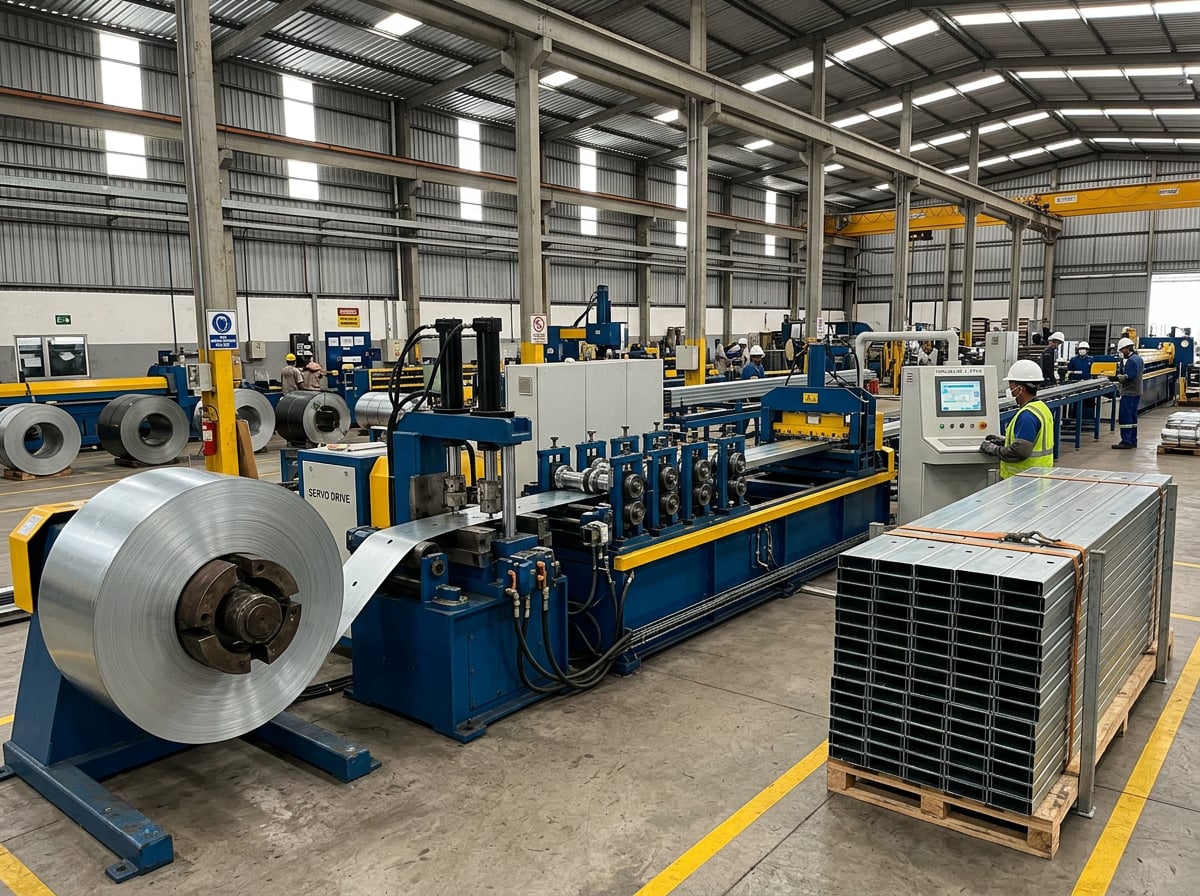
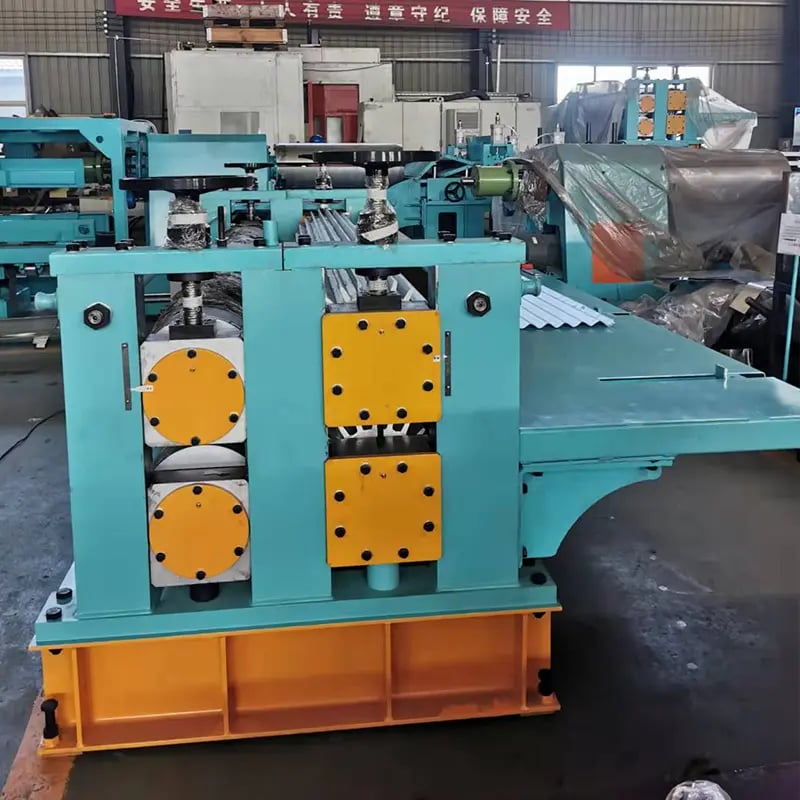
double layer roofing sheet roll forming machines efficiently produce insulated metal roofing sheets by combining two steel or aluminum coils into a bonded panel with insulating foam or air gap core in a continuous fabrication process. This guide provides metal building material suppliers, panel installers and architectural construction firms extensive details on China double layer roofing sheet roll former types, key technical specifications, top machinery manufacturers, pricing insights, installation guidance and total cost of ownership comparisons.
का अवलोकन डबल लेयर रूफिंग शीट रोल फॉर्मिंग मशीन
Double layer roll forming equipment leverage consecutive roller dies for incrementally bending and contouring coiled metal feedstocks into various symmetrical panel profiles then combine this with a second sheet using glue or mechanical interlocking creating an insulated finished sandwich product pulled continuously out the exit end.
Table 1: Background on Double Layer Roof Panel Roll Forming Machines
| विशेषता | विवरण |
|---|---|
| कार्य सिद्धांत | Continuous roller die forming laminated panels |
| मुख्य घटक | Decoilers, glue applicators, forming stations, hydraulic systems, cutoff shear |
| स्रोत सामग्री | Prepainted steel, aluminum, galvannealed coils |
| Core Layer Options | EPS foam, PIR foam, honeycomb material, air cavity |
| चौड़ाई क्षमता | 2.5 मीटर तक की संभावनाएँ |
| आउटपुट गति | 6 – 16 meters per minute |
| प्राथमिक अनुप्रयोग | Insulated roofing, architectural facades, cold storage buildings |
Unlike alternative single sheet fabrication approaches, integrating adhesive or interlocking roofing panel layers in a continuous inline process achieves substantial productivity and consistency benefits – ideal for enveloping larger warehouses, distribution centers and temperature controlled structures with insulated metal cladding.
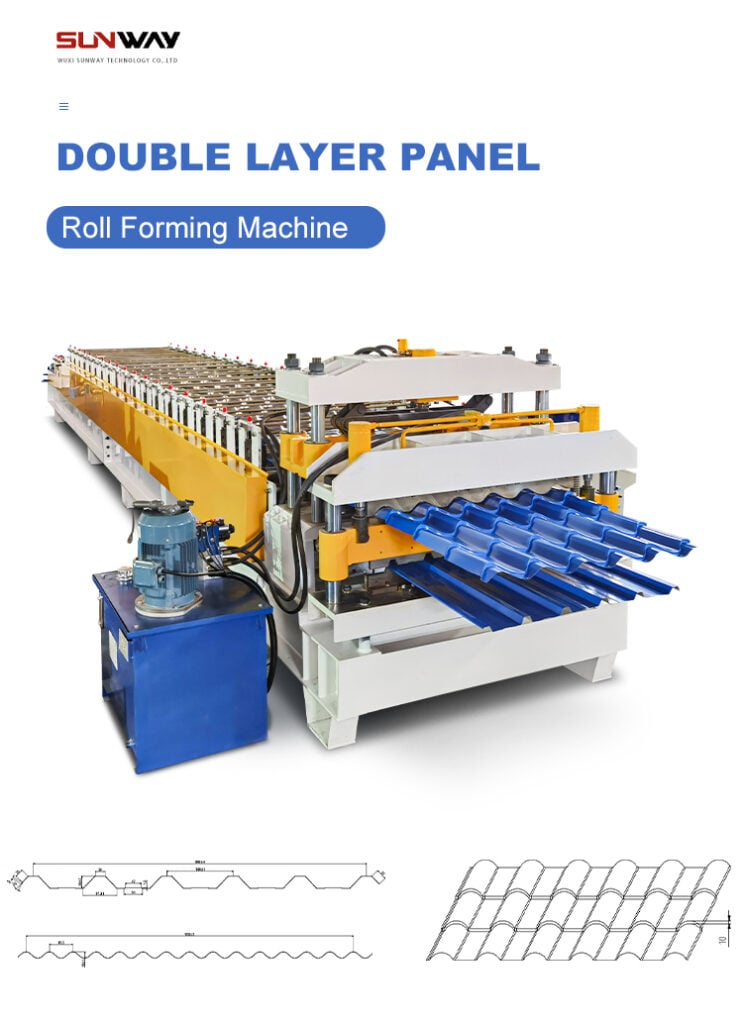
डबल लेयर रोल फॉर्मर्स का कार्य सिद्धांत
Double layer roof panel roll forming lines leverage a duo of uncoilers with associated decoiler and guiding mechanisms feeding painted metal coils concurrently into an integrated production system that aligns, glues/interlocks then forms the sheet sandwich continuously up to automated chopping stages.
Table 2: Core Subsystems on a Double Layer Line
| अनुभाग | उद्देश्य | विचार |
|---|---|---|
| डिकॉइलर | Unwind paired coil feedstocks | Independent speed/tension control |
| Alignment stations | Orient coils before bonding | Monitoring edge straightness |
| Glue applicators | Adhere external sheets around core | Metering thickness, curing rate |
| फॉर्मिंग स्टेशन | Gradually contour profile | Complex shapes need added stands |
| पंचिंग/कटिंग | Piercing or hole features | Registration to other layers |
| Length cutoff | Chop insulated sheets | Avoid burrs impeding installation |
| कंट्रोल पैनल | Centralize parameter and diagnostics access | HMI for intuitive production oversight |
Innovations like automated vision alignment, CNC controlled contour profiling and robotic application of sealants/fasteners provides avenues for custom short run solutions beyond traditionally manually configured machinery focused on long production campaigns alone.
डबल लेयर रोल फॉर्मिंग मशीनों के प्रकार
While all double layer lines share common principles laminating coil feedstocks into an insulated panel, equipment types emerge choosing between heated and cold glue methods plus prioritizing throughput speed capabilities, quick adjustment needs and operator skill level preferences influencing desired automation sophistication.
Table 3: Common Double Layer Roof Panel Line Types
| मशीन श्रेणी | विशेषताएँ | सामान्य उपयोग |
|---|---|---|
| Manual and mechanical actuation | Fixed speed cost-focused starter option | Small contractors, infrequent coil changes |
| सर्वो इलेक्ट्रिक नियंत्रण | Programmable flexibility for moderate runs | Distribution centers balancing automation against quick product changes |
| स्वचालित त्वरित परिवर्तन | Touchscreen recipe selection and automatic size adjustments | High volume cladding for temperature sensitive buildings |
Additional options like inline stiffening structure roll forming, foam filling, punching and cutting tools supporting secondary fabricated finished panel production proves vital – avoiding external handling steps before install.
तकनीकी विनिर्देश
Tailoring double layer roll form line layouts balancing tolerances, line speeds and dimensional changeover easements across various insulated panel products needs appropriate deliberation weighing key performance equipment attributes.
Table 4: Key Double Layer Roll Former Specifications
| पैरामीटर | सामान्य सीमा | मुख्य कारक |
|---|---|---|
| Laminating speed | 6-20 meters per minute | उत्पादन क्षमता लक्ष्य |
| सामग्री की मोटाई | 0.4mm to 1.2mm | Strength needs, insulation value |
| शीट की चौड़ाई | 1300mm to 2500mm | Standard dimensions |
| Layer bonding | Glue temperature, curing method | Adhesion consistency |
| त्वरित चेंजओवर | मैनुअल से पूर्णतः स्वचालित | शॉर्ट रन अनुकूलन आवश्यकताएँ |
| Layer alignment | 1mm to 0.1mm capability | Final rigidity and appearance |
Getting appropriate power transmission ratios between the contouring tool rollers and decoiler mechanisms ensures smooth feeding interlocks without tearing or jamming.
Establishing rated fabrication speeds, thickness capabilities and dimensional width targets upfront sizes production lines appropriately – balancing project scalability against sandwich panel quality and consistency requirements.
चीन में डबल लेयर रूफिंग लाइन निर्माता
Top Chinese metalworking machinery builders provide cost competitive insulated panel roll forming equipment – addressing small scale manual handling through to large part automated mass production scenarios featuring configurable ancillaries fulfilling secondary fabrication and handling considerations for finished roof sheets pulled continuously off the exit end.
Table 5: Leading China Double Layer Roof Panel Roll Forming Manufacturers
| कंपनी | अधिकतम चौड़ाई | लाइन पेशकश |
|---|---|---|
| Fangli | 2500mm | High end European collaboration lines |
| जिनपु | 2200mm | Affordable balanced automation against flexibility |
| Formtek | 2000mm | Premier precision roll form lines with climate control |
| Gasparini | 1500mm | Containerized mobility options |
| Hebei Ivy | 1300mm | Entry level economic choices |
These innovative production equipment producers offer versatile solutions spanning configurable manual through to fully automated insulated panel roll capabilities – complete with customizable hole punching, slotting and notching to suit unique building project needs.
And thanks to accumulated skilled sheet metal fabrication expertise nurtured catering metal goods mass exports plus very reasonable production costs leveraging substantial local specialized labor – approximately 30-50% price savings gets realized over comparative western built machinery with equivalent laminated panel throughput.
-
 इलेक्ट्रिकल कैबिनेट फ्रेम रोल फॉर्मिंग मशीन अधिक पढ़ें
-
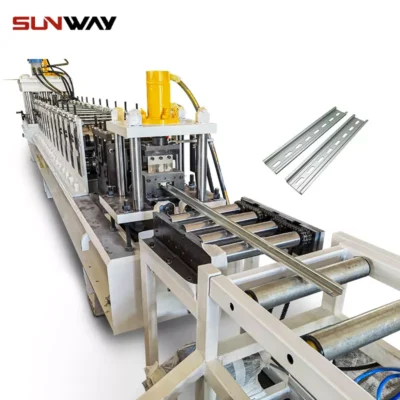 Din रेल रोल फॉर्मिंग मशीन अधिक पढ़ें
-
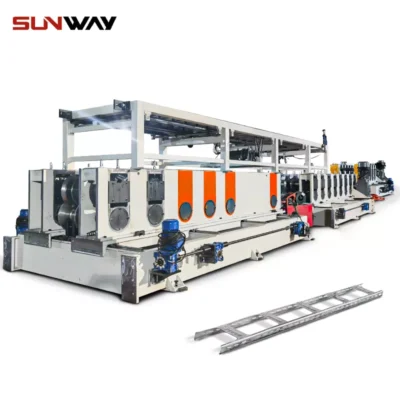 केबल लैडर रोल फॉर्मिंग मशीन अधिक पढ़ें
-
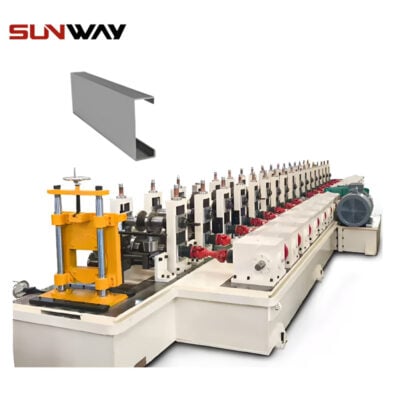 PV माउंटिंग ब्रैकेट C आकार प्रोफाइल रोल फॉर्मिंग मशीन अधिक पढ़ें
-
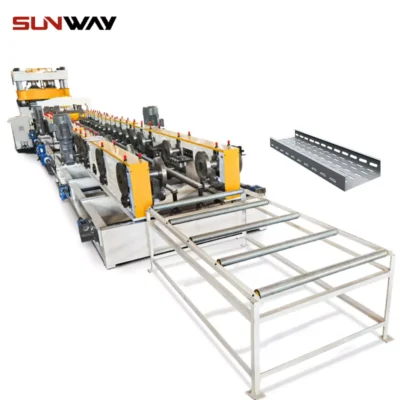 केबल ट्रे रोल फॉर्मिंग मशीन अधिक पढ़ें
-
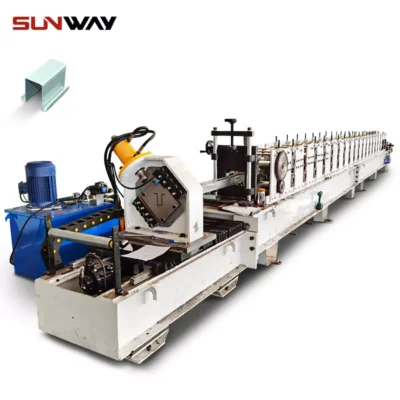 PV माउंटिंग ब्रैकेट रोल फॉर्मिंग मशीन (HAT / Omega प्रोफ़ाइल) अधिक पढ़ें
-
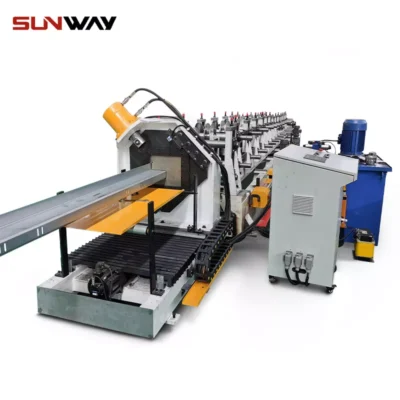 PV माउंटिंग ब्रैकेट Z आकार प्रोफाइल रोल फॉर्मिंग मशीन अधिक पढ़ें
-
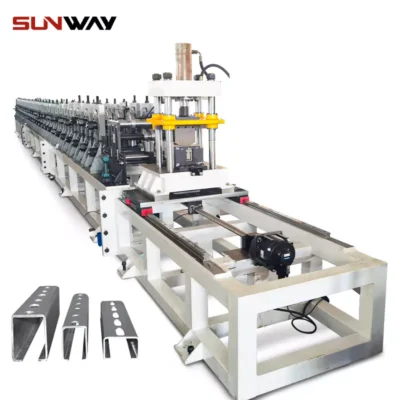 सोलर माउंटिंग स्ट्रट चैनल रोल फॉर्मिंग मशीन अधिक पढ़ें
-
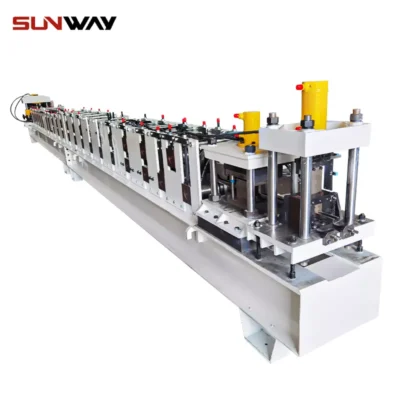 स्ट्रट चैनल रोल फॉर्मिंग मशीन अधिक पढ़ें
चीन में डबल लेयर लाइन लागत विश्लेषण
With baseline machinery expenses discounted between 25-50% lower than equivalent European or American built gear, China sourced insulated panel roll forming equipment enables attractive 2-4 year ROI timeframes for most organizations after factoring regional labor expenses and projected electrical utility usage.
Table 6: China Double Layer Roof Panel Line Price Considerations
| प्रकार | मूल्य सीमा | मुख्य अनुप्रयोग |
|---|---|---|
| मैनुअल और यांत्रिक नियंत्रण | $22,000 – $65,000 | Small contractors, limited flexibility needs |
| सर्वो इलेक्ट्रिक एक्चुएशन | $45,000 – $155,000 | स्वचालन और त्वरित चेंजओवर के बीच संतुलन वाले मध्यम उत्पादन परिदृश्य |
| स्वचालित त्वरित परिवर्तन | $88,000 – $320,000 | High volume cladding projects |
| Ancillary fabrication stations | $4,500+ per tool | Reduces external secondary processing |
Requiring substantially less initial machinery capital investment amounts than comparative western counterparts allows easier market entry for smaller regional building material distributors – or provides midsize architectural metal providers sufficient financial leeway investing into logistics/delivery vertical integration plus localized warehouse inventory buffering against fluctuating seasonal construction demand swings.
सुचारू उत्पादन के लिए सिफारिशें
Appropriate installation and preventative monitoring facilitates rated laminated panel output over decades of projected Chinese built double layer roll former equipment lifecycles.
Table 7: Double Layer Line Recommendations
| गतिविधि | विवरण |
|---|---|
| आयामी सत्यापन | Confirm equipment alignments match technical specification drawings |
| नियंत्रण अंशांकन | Test maximum production speeds don’t trigger machine faults |
| पैरामीटर परिष्करण | Balance roller ram pressures against tearing/creasing risks |
| ऑपरेटर प्रशिक्षण | सुरक्षा ज्ञान और समस्या निवारण की तैयारी सुनिश्चित करें |
| Preventative maintenance | Follow daily, monthly rigging/chain regreasing best practice guidance |
| अपग्रेड बजट निर्धारण | Plan future ancillary punching/sawing stations as needed |
In particular, critical factors influencing production uptime and quality consistency consist of:
- Monitoring structural rigidity without developing equipment sway at high speeds
- Lubricating guiding and die roller contact points preventing finished coil stock scratching
- Verifying heating element/glue dispenser metering alignment against insulation core
- Scheduling regular shear blade gap inspections preventing unsightly sheet burring
Prioritizing preventative machinery care stretches functional lifespan by decades – consistently outputting rated fabrication throughput year after year.
आदर्श भागीदार चयन सिद्धांत
Vetting reputable insulated panel roll former machinery exporters against prudent benchmarks offers clarity ensuring chosen collaborators provide appropriately specified solutions meeting current expectations while offering future production scaling capabilities matching long term manufacturing objectives.
Table 8: China Partner Selection Criteria
| मूल्यांकन पहलू | विशिष्टताएँ | Risk Management Rationale |
|---|---|---|
| उद्योग अनुभव | Years providing warehouse or architectural metal building envelope solutions? | Reduces potential business continuity surprises |
| Staff technical acumen | Welding, electrical, mechanical engineering expertise stability? | Maximizes equipment fatigue lifespan |
| गुणवत्ता पर ध्यान | ISO certifications? Statistical process control adoption? | Minimizes deviation potential |
| परिशुद्धता क्षमताएँ | Tolerance capabilities? Vision alignment feature sophistication? | Prevents rolled sheet bonding issues |
| Support resources | Virtual troubleshooting tools accessibility? | डाउनटाइम कम करके तकनीशियनों की उत्पादकता बढ़ाता है |
| स्थल संदर्भ | Willingness for existing line inspections? | Confirms specifications and longevity expectations |
Requesting production facility tours while scrutinizing after sales support Southeast Asia accessibility demonstrates responsive commitments better catering subsequent regional expertise augmentation needs as market order demand patterns evolve.
Cultivating relationships rooted in mutual trust of expertise paves prosperous technical collaborations even during unforeseen emergency circumstances – expediting resolutions keeping revenue operations ongoing.
खरीद संबंधी विचार
While significant advantages exist around very affordable pricing and customization freedom working with Chinese double layer roll former machinery workshops, order lead times plus communication obstacles introduce logistical considerations requiring management.
Table 9: Pros vs Cons of China Double Layer Roof Sheet Roll Lines
| लाभ | Difficulties to Overcome |
|---|---|
| Very affordable equipment costs | 90-120 day order lead times |
| Custom engineering matching distinct production needs | Language barriers mandate persistence |
| Capable equipment for short runs or high volume mass production up to 20 meters per minute | Requires internal engineering expertise conveying specifics |
| Wide range of precise insulated panel thickness and insulation core possibilities | तात्कालिक अल्पकालिक ऑर्डर अनुरोधों को पूरा करना चुनौतीपूर्ण है |
| Ancillary fabrication stations providing finished turnkey panel flexibility | Complex shipping/customs logistics requires oversight |
While very convincing value motivated incentives exist thanks to extensive Chinese engineering talent and metalworking ecosystem cost efficiencies; prudent buyers temper capex savings appeal against pragmatic project execution realities requiring planning and qualified importer partnerships.
However, adequately conveying precise functional requirements in writing upfront followed by delegating shipping/tax logistics management to experienced import professionals curtails procurement process risks – opening up opportunities previously hindered bringing competitive differentiation in-house.
Careful scoping of long term business scaling roadmaps combined with small initial pilot order batch testing improves financial visibility quantifying measurable bottom line efficiencies substituting outdated western legacy process lines.
भविष्य में वैश्विक पैनल मांग का परिदृश्य
Resurgent construction activity across Middle East, China and developing Asian regions promises lucrative volume tailwinds for insulated architectural cladding and cold storage envelope systems integration supporting both residential plus commercial infrastructure build out initiatives over the upcoming decade.
Table 10: Global Metal Structural Panel Market Expansion Projections Through 2026
| क्षेत्र | पूर्वानुमानित बाजार आकार | निर्माण क्षेत्र के रुझान |
|---|---|---|
| Middle East | $700+ billion | Pro-growth government industrialization policies |
| पूर्वी एशिया | $1+ trillion | Rapidly growing consumer economy discretionary expenditures |
| दक्षिण एशिया | $850+ billion | Expanding middle class and manufacturing investments |
| दक्षिण-पूर्व एशिया | $500+ billion | Transitioning low-cost manufacturing and improving tourism |
With strengthening GDP projections across key territories paired with youthful demographics supporting expansion of discretionary spending for consumer goods promises durable demand for temperature controlled logistics and storage supporting both durable retail inventory as well as food product sensitivities.
This promising global outlook points towards strong continued roll forming machinery investment activity as organizations substituting outdated western lines invest into the newest automatic Chinese metal fabrication production innovations offering radical per panel cost savings combined with unique quality consistency capabilities at previously unimaginable manufacturing rates.
Careful upfront pilot testing improves financial visibility quantifying efficiency outlooks empowering leadership structuring informed capital investment decisions for long term enterprises growth strategies.
अक्सर पूछे जाने वाले प्रश्न
Q: What safety risks around double layer roll form lines need mitigation?
A: Rotational draw rollers, exposed electrical busbars and hydraulic clamp motions pose hazards needing emergency stop integration plus full maintenance procedures.
प्रश्न: कौन-सी धातु मोटाई सीमा आमतौर पर लागत-प्रभावी रूप से उपयुक्त होती है?
A: 0.5mm to 1.0mm finished material gauge balances load capacity against pricing affordability for general warehouse applications. Architectural projects may allow heavier metal usage.
Q: What ancillary equipment provides additional finished panel benefits?
A: Common complementary gear includes stiffening rollers, punching and sawing stations further reducing external secondary production steps.
Q: What real-world equipment lifespan assumptions justify capex budgeting?
A: With adequate preventative maintenance like scheduled wear item replacement – 20-25 year machine usefulness is reasonable before performance upgrades become necessary.
Q: When should in-house lines be considered over outsourcing?
A: Below ~10,000 sq. meter monthly demand, outsourcing proves typically advisable avoiding production ownership costs. Above that threshold, insourcing gains increasing quality control and differentiation appeal while better reacting against fluctuating market demand.
रोल फॉर्मिंग के बारे में अधिक जानें
अक्सर पूछे जाने वाले प्रश्न (FAQ)
1) What tolerances are realistic on double layer roofing sheet roll forming machines?
- For 0.5–1.0 mm coils, best-in-class lines achieve ±0.5 mm on panel width, ±0.8 mm on cut length, and ±0.3 mm on layer-to-layer offset, assuming servo decoilers, closed-loop encoders, and a 5–7 roll precision leveler.
2) How do heated vs. cold glue systems compare for sandwich panel bonding?
- Heated PUR/PIR reactive systems deliver faster green strength and better long-term adhesion, enabling higher line speeds (10–20 m/min). Cold glues are lower cost and simpler but usually cap speeds at 6–10 m/min and need longer curing buffers.
3) Can one machine produce both trapezoidal roof and flat façade sandwich panels?
- Yes, with cassette-style tooling and adjustable stands. Profile changeovers typically take 45–120 minutes with rafts/cassettes; recipe-driven servo adjustments shorten dial-in time for repeat SKUs.
4) What coil quality issues most impact double layer alignment?
- Edge camber, coil crown, paint thickness variance, and inconsistent yield strength. Mitigate with edge guiding, in-line vision alignment, and tighter mill certs (yield/elongation tolerance), plus pre-leveling.
5) Which KPIs matter most for double layer lines?
- OEE, changeover time, layer offset variance (mm), adhesive consumption per m², scrap rate (%), and panel flatness/bow metrics. Monitoring these drives uptime and adhesive cost control.
2025 उद्योग रुझान
- Electrified servo retrofits: Older lines upgraded with high-efficiency servos and regenerative drives show 8–14% lower kWh per m² and tighter length accuracy.
- AI vision alignment: Camera-based edge and bead tracking reduces layer offset defects by 30–50%, particularly at >12 m/min.
- Zn–Al–Mg (ZAM) and PVDF coatings growth: Coastal and industrial builds accelerate adoption; requires lower roll pressure and non-marring roll sleeves.
- Low-GWP foams: PIR systems formulated with HFO blowing agents (GWP <10) are becoming standard to meet ESG and code requirements in EU/US-Canada projects.
- Rapid changeover demand: Nearshoring and SKU proliferation make quick-change cassettes and auto-recipe HMIs a priority for contractors and panel shops.
डबल लेयर रूफिंग शीट रोल फॉर्मिंग मशीनों के लिए 2025 मानक
| Metric (roof sandwich panels) | २०२३ सामान्य | 2025 सर्वश्रेष्ठ-इन-क्लास | सुधार कारक |
|---|---|---|---|
| Line speed, PIR adhesive | 8–12 मीटर/मिनट | 12–20 m/min | Heated PUR/PIR, servo synchronization |
| Layer alignment (3σ) | ±0.8–1.2 mm | ±0.3–0.6 mm | Vision alignment + edge guiding |
| चेंजओवर समय (प्रोफाइल) | 90–180 min | 35–75 मिनट | Cassette tooling, preset recipes |
| स्क्रैप दर | 3–51टीपी3टी | 1.5–2.5% | AI detection, coil QC, poka-yoke |
| Energy use (kWh per 1,000 m²) | 280–340 | 220–270 | High-efficiency drives, heat recovery |
| Adhesive consumption (g/m²) | 120–160 | 90–130 | Metering control, bead width optimization |
चयनित स्रोत:
- Steel Construction Institute and SDI resources: https://www.sdi.org
- AISI/CFSEI cold-formed guidance: https://www.cfsei.org/resources
- EIA industrial energy data: https://www.eia.gov
- EU chemicals and foam guidance (ECHA/HFO trends): https://echa.europa.eu
- EN 10346 for coated steel references: https://standards.cen.eu
नवीनतम अनुसंधान मामले
Case Study 1: Vision-Guided Dual-Coil Alignment Cuts Offset Defects (2024)
- Background: APAC panel shop running 0.6/0.6 mm prepainted steel at 12 m/min saw 3.2% scrap from layer misalignment and burr-related rework.
- Solution: Installed dual line-scan cameras with edge detection and a closed-loop correction to servo edge guides; added adhesive bead width monitoring.
- Results: Offset defects reduced by 47%; scrap fell to 1.7%; adhesive use decreased 8% via consistent bead deposition; changeover verification time dropped by 20 minutes per SKU.
Case Study 2: HFO-Based PIR Upgrade with Heat Recovery (2025)
- Background: EU cold storage contractor required lower embodied carbon and improved insulation performance without reducing throughput.
- Solution: Switched to HFO-blown PIR foam, added hot-melt PUR bead pre-heaters, and integrated regenerative braking on main drives with waste-heat recovery to preheat adhesive.
- Results: 11% energy reduction per 1,000 m², maintained 14 m/min line speed, foam lambda improved by ~4%, and VOC readings at the exit fell below internal thresholds.
विशेषज्ञों की राय
- Dr. Mei Lin, Materials Scientist, Tongji University Advanced Coatings Lab
- “PVDF and ZAM substrates form predictably on modern double layer lines when roll surface hardness and sleeve materials are matched. Most paint micro-scratching is preventable with controlled roll pressure and cleanroom-level handling around the bond station.”
- Carlos Bennett, Manufacturing Director, NorthStar Panels
- “If you’re scaling SKUs, quick-change cassettes and a disciplined recipe library give the fastest ROI. We gained more annual capacity from shaving changeovers than from chasing another 2 m/min at top speed.”
- Prof. Andrew Yu, Chair, Cold-Formed Steel Research Group, University of Sydney
- “Variability in coil mechanical properties remains the silent throughput killer. Statistical incoming inspection combined with adaptive forming pressures markedly reduces bow and oil-canning on double layer panels.”
व्यावहारिक उपकरण/संसाधन
- SDI Technical Resources (decking principles often transferable to roll forming controls): https://www.sdi.org/resources
- CFSEI/AISI Cold-Formed Steel Notes and S100 links: https://www.cfsei.org/resources
- ISO 14120 (guarding) and ISO 13849 (safety-related control systems): https://www.iso.org
- EIA plant energy benchmarking: https://www.eia.gov
- EN 10346 reference for coated steel sheet (for ZAM, galvanized): https://standards.cen.eu
- Online Metals Gauge/Thickness Converter: https://www.onlinemetals.com/en/calculators
- GHG Protocol calculation tools for Scope 2/3 tracking on panel production: https://ghgprotocol.org
अंतिम अपडेट: 2025-10-21
परिवर्तन-लेख: Added 5 FAQs, 2025 trends with benchmark table, two recent case studies, expert insights, and a curated list of tools/resources with authoritative references
अगली समीक्षा तिथि और ट्रिगर: 2026-04-21 or earlier if adhesive/foam regulations change (HFO/PUR), new SDI/AISI/ISO safety updates, or significant coil/coating spec shifts impact forming parameters