 अंग्रेज़ी
 स्पेनिश
 फ़्रेंच
 बंगाली
 रूसी
 अरबी
 तुर्की

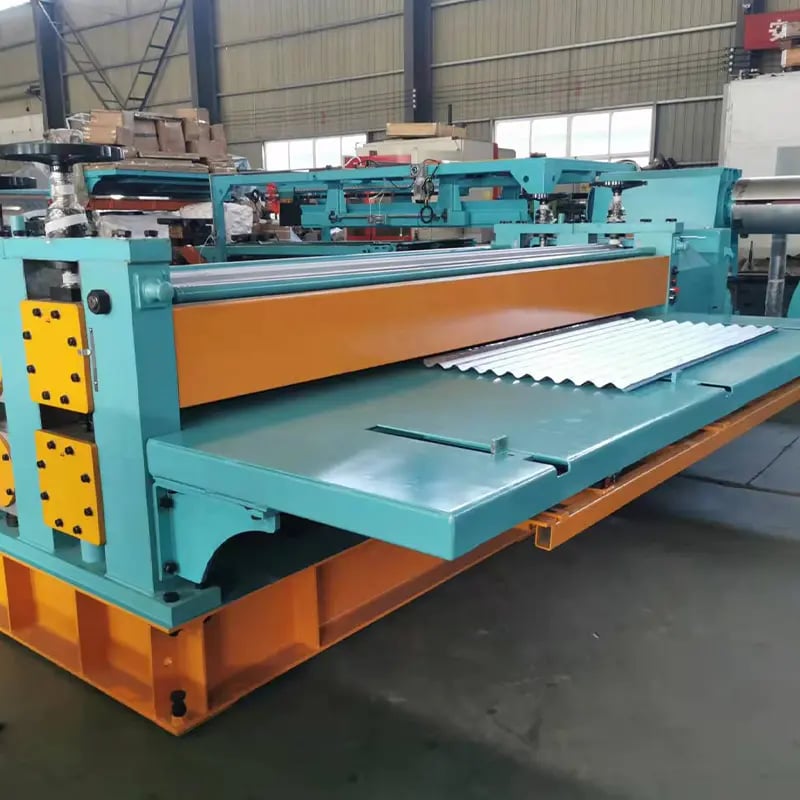
कॉरुगेटेड आयरन शीट रोल फॉर्मिंग मशीनें efficiently transform metal coil stock into roofing panels featuring a distinctive waved pattern used extensively across industrial and residential building projects globally thanks to longevity benefits in wet climates. This guide offers metal fabricators, panel installers and construction companies detailed insights on corrugated roll former line types, key technical specifications, Chinese equipment suppliers, pricing, installation best practices and total cost of ownership comparisons against alternate corrugated sheet production methods.
कोरुगेटेड आयरन शीट रोल फॉर्मिंग उपकरण का अवलोकन
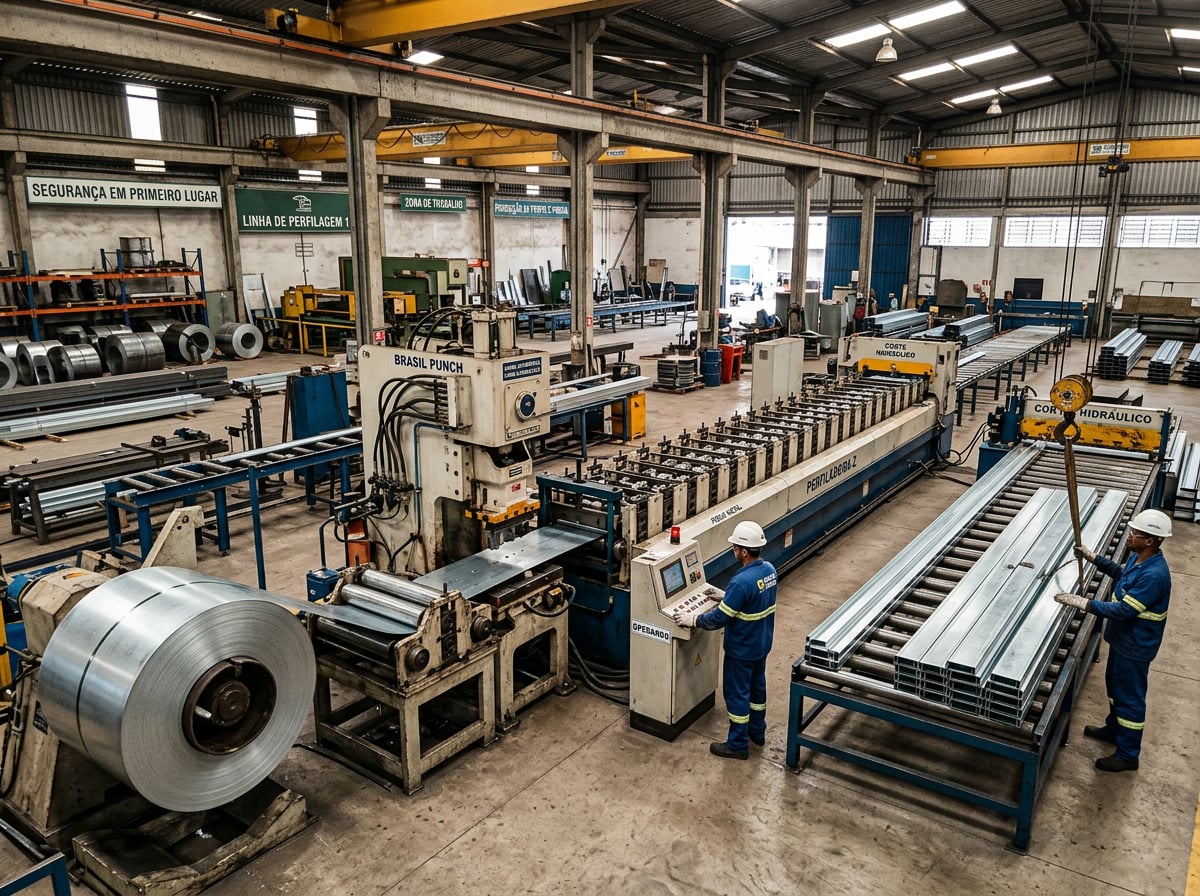
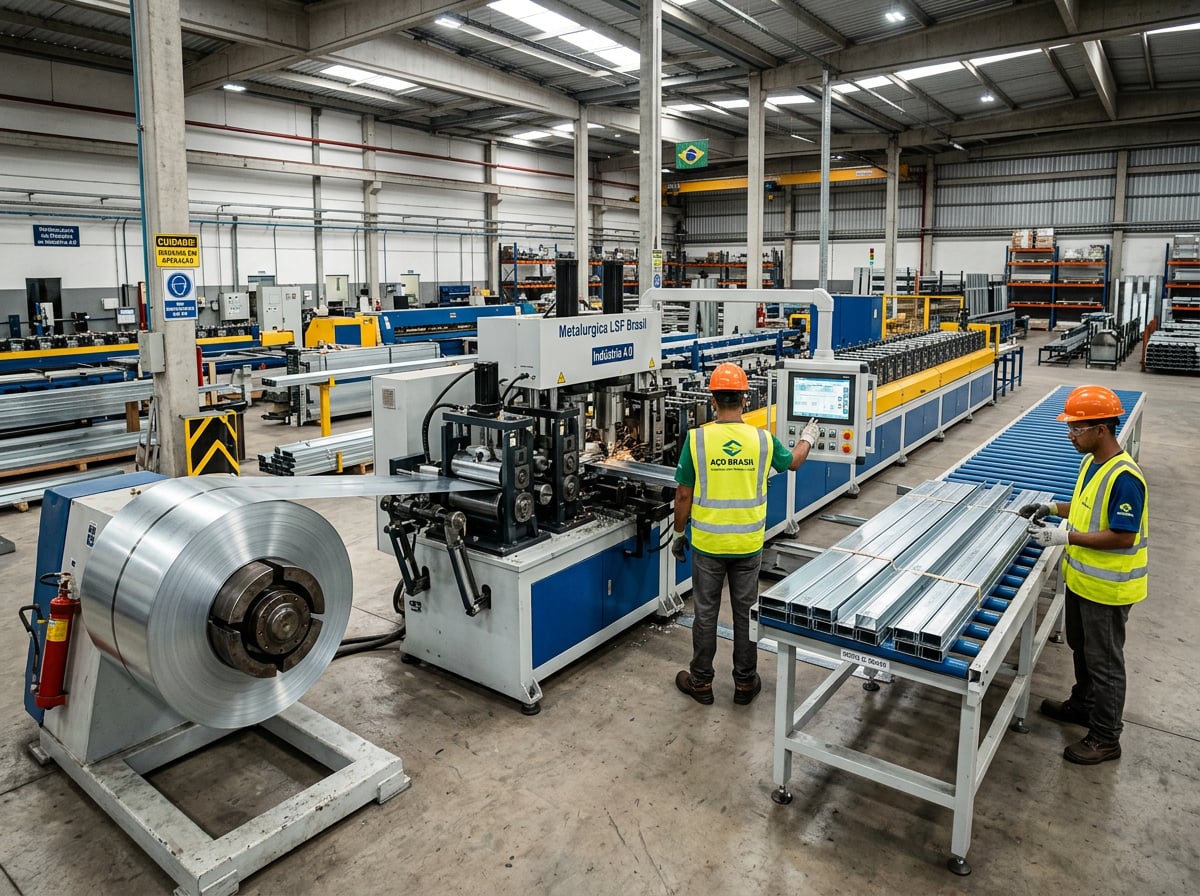
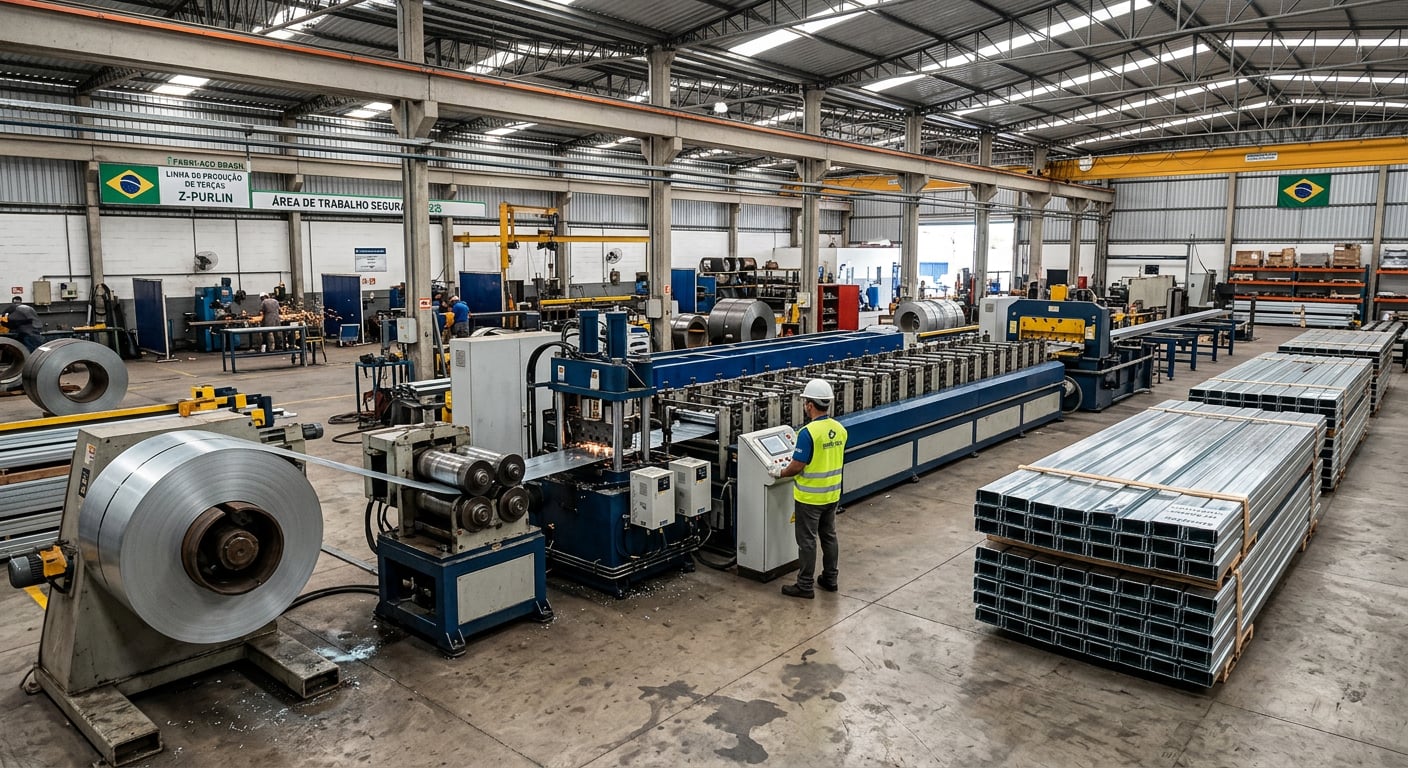
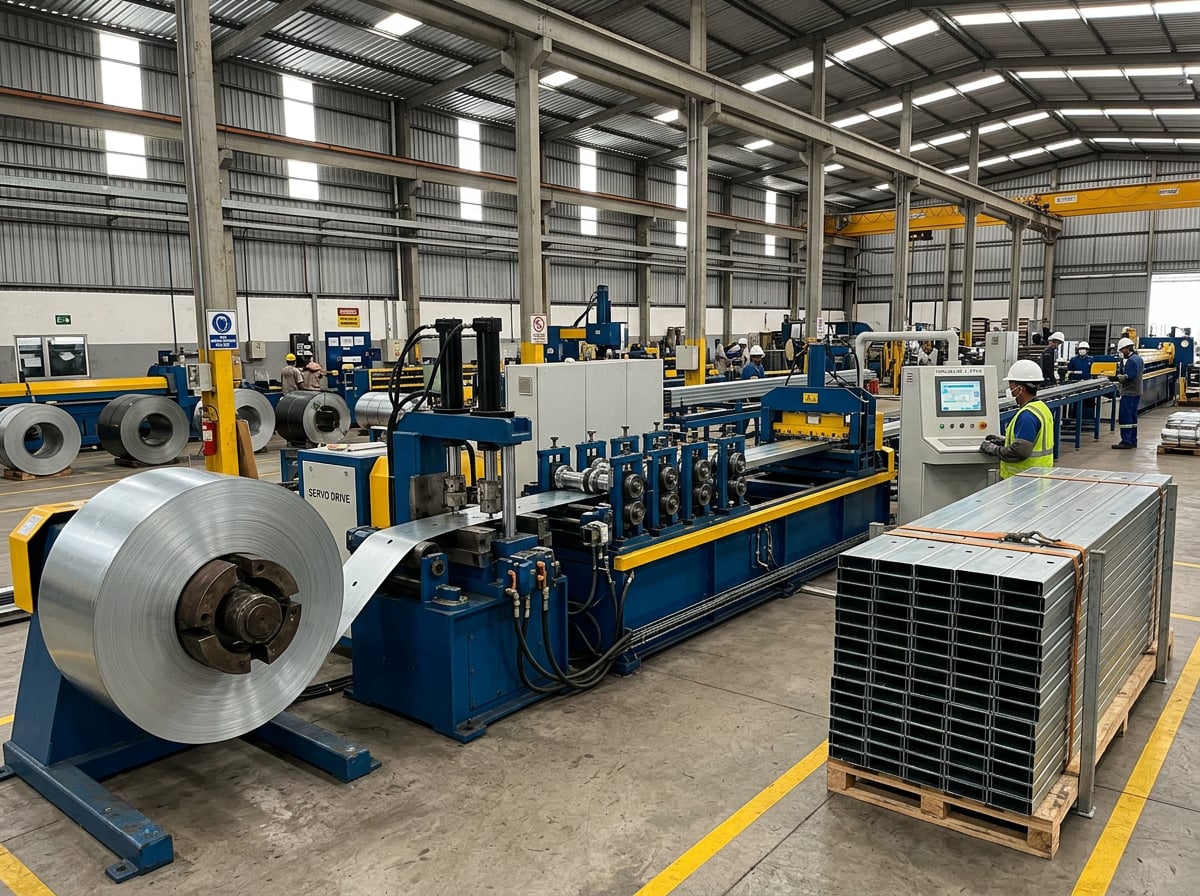
Roll forming machinery incrementally converts coiled steel or aluminum through consecutive roller dies progressively shaping strip metals into various symmetrical cross-sectional panel profiles for roofing, bridges, warehouse cladding and agricultural building projects where large surface areas get covered.
Table 1: Background on Corrugated Iron Sheet Roll Formers
| पैरामीटर | विवरण |
|---|---|
| कार्य सिद्धांत | Continuous bending through sequential roller dies |
| मुख्य घटक | Decoiler, forming stations, hydraulic system, cutoff shear |
| स्रोत सामग्री | Prepainted steel, aluminum, zinc alloy coated coils |
| Wave Patterns | Sinusoidal, trapezoidal and custom profiles |
| चौड़ाई क्षमता | 2.5 मीटर तक की संभावनाएँ |
| आउटपुट गति | 6 – 20 meters per minute |
| प्राथमिक अनुप्रयोग | Industrial roofing and siding for factories, warehouses, livestock shelters |
Unlike alternative fabrication approaches requiring fixed dies like press braking or stamping, the incremental bending nature of roll forming allows cost effective short, medium or mass production runs once initial tooling gets developed – ideal for the repetitive corrugations characterizing metal envelope solutions for larger new buildings or re-cladding retrofit projects.
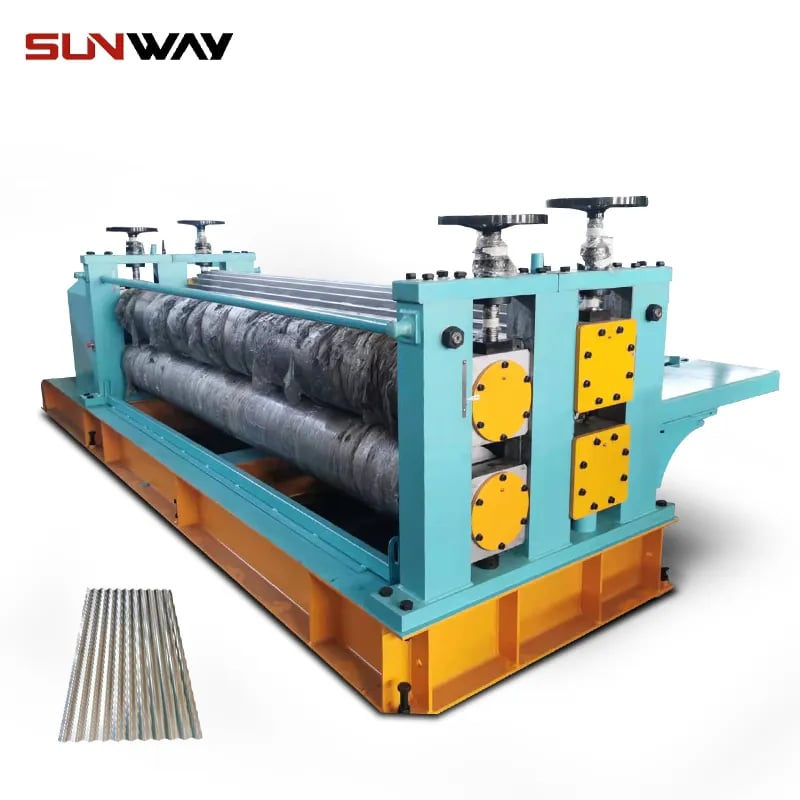
कोरुगेटेड रोल फॉर्मिंग मशीनों का कार्य सिद्धांत
Corrugated roll forming machinery converts coiled metals into roofing or panels featuring a distinctive waveform profile by progressing stock through consecutive roller die bending stations with automated feeding and cutoff.
Table 2: Overview of Corrugated Profile Roll Former Subsystems
| अनुभाग | उद्देश्य | विचार |
|---|---|---|
| डीकॉइलर तंत्र | रोल्ड कॉइल स्टॉक को फीड करता है | Tension control for optimal straightening |
| गाइडिंग रोलर्स | Stage material into first forming rollers | Lubrication to minimize scratching |
| फॉर्मिंग स्टेशन | Gradually shape wave profile through bending sequences | More complex shapes need additional stands |
| हाइड्रॉलिक सिस्टम | Provide accurate roller closure pressures | Prevent ripping while fully contouring |
| कटऑफ शीयर | Chop corrugated sheet at fixed durations | Minimize burrs influencing bonding |
| कंट्रोल पैनल | Monitor line adjustments | Centralized parameter and diagnostics access |
Innovations around CNC-controlled roller adjustment mechanisms, servo motor powered decoilers able to rapidly switch materials, plus quick connect forming stand changes provide avenues for custom short-run solutions beyond traditional manually configured machinery focused on high volume runs alone.
कोरुगेटेड प्रोफ़ाइल रोल फॉर्मिंग मशीनों के प्रकार
While all corrugated roll form lines share fundamental feedstock shaping principles, categories emerge based on part intricacy needs, length variations, production speed goals and operator skill levels influencing desired automation.
Table 3: Common Types of Corrugated Roll Formers
| मशीन श्रेणी | विवरण | सामान्य उपयोग |
|---|---|---|
| मैनुअल लाइनें | Fixed speed mechanical actuators | Small job shops doing custom short runs |
| Servo motor control | Programmable roller positions | Mid volume roofing for distribution centers |
| पूर्णतः स्वचालित | Touchscreen recipe selection | High speed lines for major big box retail and industrial projects |
| Single layer | Basic machine method | Starter option gradually upgrading over time |
| डबल लेयर | Sandwiching insulative cores | Refrigeration, cleanrooms or conditioned spaces |
Additional options like inline notching or hole punching systems avoid secondary production steps for finished panels immediately installable pulled right off the exit tables.
तकनीकी विनिर्देश
Configuring corrugated roll form layouts balancing tolerances, feature intricacy, line speeds and material flexibility requires appropriately weighing key performance attributes per application requirements.
Table 4: Key Corrugated Iron Roll Former Specifications
| पैरामीटर | सामान्य सीमा | मुख्य कारक |
|---|---|---|
| फॉर्मिंग गति | 6-25 meters per minute | Throughput targets, operator pace |
| Forming thickness | 0.4mm से 2mm | Strength needs, available coil stock |
| फॉर्मिंग चौड़ाई | 1000mm – 2500mm | Standard building material dimensions |
| Corrugation type | Sinusoidal, trapezoid, custom | Visual preferences, structural loading |
| त्वरित चेंजओवर | मैनुअल से पूर्णतः स्वचालित | शॉर्ट रन अनुकूलन आवश्यकताएँ |
| लाइन स्वचालन | Mechanical actuators to sophisticated servo/PLC control | Operator skill level, changeover speeds |
Getting appropriate power transmission ratios between the powered forming rollers and decoiler mechanisms ensures smooth interlocks with consistent feeding into the dies without tearing or jamming.
Establishing rated production speeds, thickness capabilities and dimensional plan constraints upfront appropriately sizes lines balancing project scalability against quality.
-
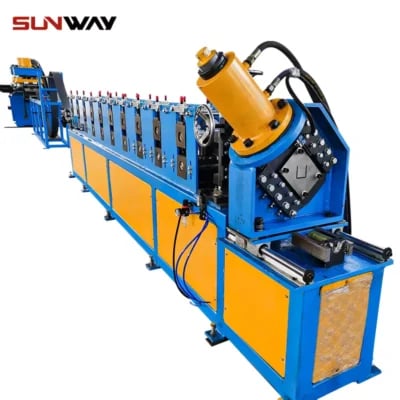 इलेक्ट्रिकल कैबिनेट फ्रेम रोल फॉर्मिंग मशीन अधिक पढ़ें
-
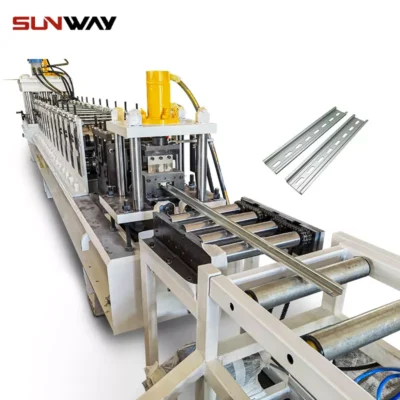 Din रेल रोल फॉर्मिंग मशीन अधिक पढ़ें
-
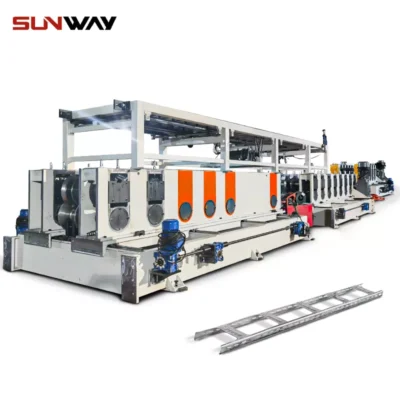 केबल लैडर रोल फॉर्मिंग मशीन अधिक पढ़ें
-
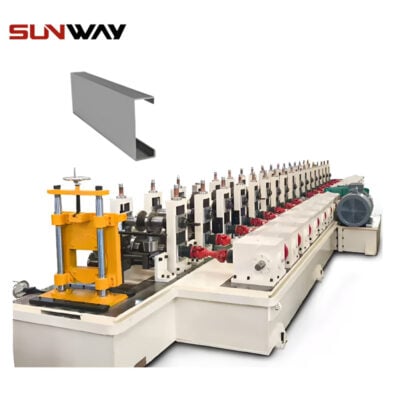 PV माउंटिंग ब्रैकेट C आकार प्रोफाइल रोल फॉर्मिंग मशीन अधिक पढ़ें
-
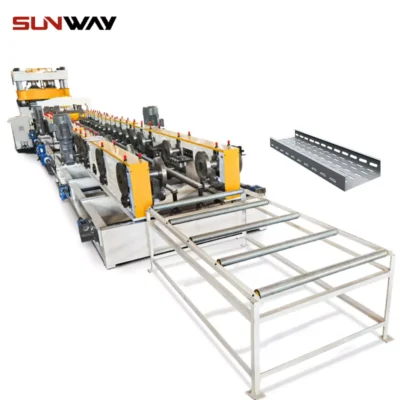 केबल ट्रे रोल फॉर्मिंग मशीन अधिक पढ़ें
-
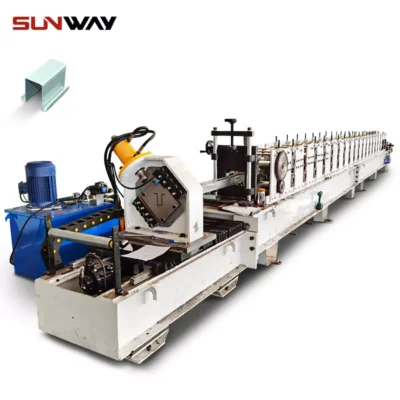 PV माउंटिंग ब्रैकेट रोल फॉर्मिंग मशीन (HAT / Omega प्रोफ़ाइल) अधिक पढ़ें
-
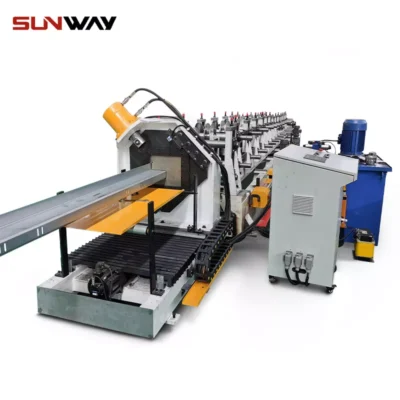 PV माउंटिंग ब्रैकेट Z आकार प्रोफाइल रोल फॉर्मिंग मशीन अधिक पढ़ें
-
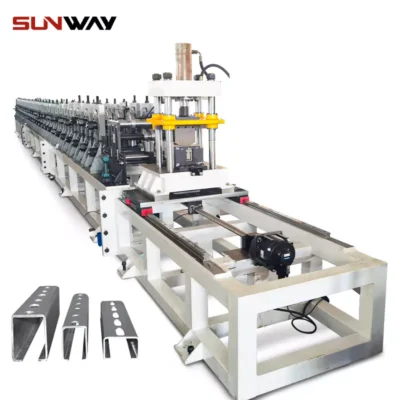 सोलर माउंटिंग स्ट्रट चैनल रोल फॉर्मिंग मशीन अधिक पढ़ें
-
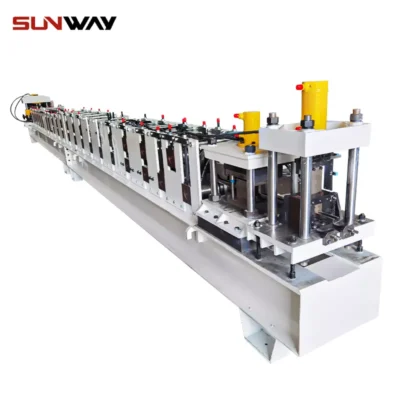 स्ट्रट चैनल रोल फॉर्मिंग मशीन अधिक पढ़ें
चीन के कोरुगेटेड रोल फॉर्मिंग निर्माता
Top Chinese metalworking machinery builders provide cost competitive corrugated roll form lines catering small to large part size requirements – featuring configurable modular ancillary gear to fulfill secondary fabrication steps required for finished panels.
Table 5: Leading China Corrugated Profile Roll Forming Manufacturers
| कंपनी | अधिकतम चौड़ाई | लाइन पेशकश |
|---|---|---|
| Fangda | 2500mm | High end lines featuring European components |
| जिनपु | 2200mm | Affordable systems balance automation against flexibility |
| Formtek | 2000mm | Premier corrugated lines featuring climate control systems to stabilize precision |
| Gasparini | 1500mm | Entry level corrugation lines on tight budgets |
| Bluesky | 1300mm | Containerized mobility options taking production onsite |
These innovative metalworking machinery producers offer versatile solutions spanning manual through fully automated galvanized roll formed panels for straightforward to sophisticated waveform contours – complete with customizable hole punching, slotting and notching to suit unique building material requirements.
And thanks to extensive sheet metal fabrication expertise nurtured catering goods exporting partnerships plus economist equipment costs from substantial local skilled labor pools, 30-50% savings gets realized over comparable European or American built machinery with equivalent corrugated production capacities and features.
कॉरुगेटेड आयरन शीट रोल फॉर्मिंग मशीन लागत विश्लेषण
Delivering compelling value propositions with baseline machinery pricing lower by 25-50% over costlier western lines, China built corrugated roll formers enable attractive 2-4 year ROI timeframes for most purchasing organizations after factoring regional labor expenses and expected utility usage.
Table 6: China Corrugated Profile Roll Former Line Price Considerations
| प्रकार | मूल्य सीमा | मुख्य अनुप्रयोग |
|---|---|---|
| मैनुअल और यांत्रिक नियंत्रण | $18,000 – $55,000 | Small scale builds, limited quick adjustment needs |
| सर्वो इलेक्ट्रिक एक्चुएशन | $35,000 – $120,000 | स्वचालन और त्वरित चेंजओवर के बीच संतुलन वाले मध्यम उत्पादन परिदृश्य |
| Fully automatic high speed lines | $55,000 – $250,000 | High volume projects for large warehouses, retail Buildings |
| Ancillary cross-cut saws, punching & counting systems | $3,000+ per station | Reduces secondary processing steps |
Requiring substantially less upfront capital investment commitments than comparative European equipment allows small construction firms or regional material distributors easier entry into self-managed building envelope supply alternatives – or frees up cash flow for additional competitive differentiation investments like customized logistics delivery or locally branded custom color availability.
सुचारु उत्पादन प्रक्रियाएँ
Appropriate installation paired with preventative monitoring facilitates rated corrugated iron sheet output over decades of extended China roll former equipment service life.
Table 7: Recommended Corrugated Panel Line Practices
| गतिविधि | विवरण |
|---|---|
| आयामी सत्यापन | Confirm alignments match technical drawings |
| नियंत्रण अंशांकन | Test maximum speeds don’t trigger faults |
| पैरामीटर परिष्करण | Balance ram pressures against tearing/creasing risks |
| ऑपरेटर प्रशिक्षण | सुरक्षा ज्ञान और समस्या निवारण की तैयारी सुनिश्चित करें |
| रखरखाव | Follow daily, monthly rigging/chain regreasing guidance |
| Upgrades budgeting | Plan ancillary future punching/counting stations as needed |
In particular, lubrication quality, tensioning consistency, plus monitoring key subassembly condition factors like:
- Structural rigging integrity without developing sway during operation
- Decoiler rollers surface wear resisting damage scratching finished coil stock
- Shear blade gaps maintained preventing undesired burring
Proves vital for uninterrupted high speed production paired with dimensional tolerance conformance across mass order cladding projects.
Prioritizing preventative care maximizes equipment return on investment measured in functional lifespan – consistently achieving rated throughput year over year.
आदर्श भागीदार चयन सिद्धांत
Discerning reputable corrugated roll former machinery builders against prudent benchmarks offers clarity ensuring chosen collaborators provide robust solutions meeting current expectations while offering future production scaling capabilities matching long term manufacturing objectives.
Table 8: China Partner Selection Criteria for Corrugated Lines
| मूल्यांकन पहलू | विशिष्टताएँ | औचित्य |
|---|---|---|
| Portfolio suitability | Sufficient options across manual and high automation lines? | Matches short and long run scenarios |
| Engineered quality | Robust welding and machining fabrication expertise? | Maximizes fatigue life for 24×7 high speed capacity |
| Established reputation | Years serving roofing or building sectors? Safety focus? | Reduces potential business continuity risks |
| Support capabilities | Installation guidance? Inspection recommendations? Virtual troubleshooting tools? | डाउनटाइम कम करके तकनीशियनों की उत्पादकता बढ़ाता है |
| स्थल संदर्भ | Client sample material runs? Similar line inspections? | Confirms specifications and longevity claims |
Requesting production facility tours while vetting after sales support Southeast Asia accessibility demonstrates responsive commitments better catering subsequent upgrading budgeting or regional expertise augmentation needs as in-market order demand patterns evolve.
Entering relationships with trust in capabilities paves mutually prosperous collaborations during unforeseen circumstances – maximizing speed to resolution.
चीन की लाइनों के लिए खरीद संबंधी विचार
While considerable advantages exist around economical China corrugated sheet line pricing and customization freedom, logistical complexities introduce pre-purchase considerations requiring deliberation.
Table 9: Pros vs Cons of China Corrugated Profile Roll Form Machines
| लाभ | Considerations to Overcome |
|---|---|
| Very cost competitive equipment pricing | Extended 3-6 month lead times |
| Custom engineering matching unique requirements | Communication barriers mandate persistence |
| Short run and rapid profile changeover capable | Internal engineering expertise needed specifying details |
| Automated lines for high speed mass production up to 25 meters per minute | तात्कालिक अल्पकालिक ऑर्डर अनुरोधों को पूरा करना चुनौतीपूर्ण है |
| Ancillary punching and cross-cutting fabrication flexibility | Complicated shipping/customs logistics mandates oversight |
While significant capex motivated incentives exist accessing extensive Chinese metalworking equipment expertise at substantial discounts, buyers must temper value-based emotional appeal against pragmatic project execution realities requiring planning and qualified partners.
However with upfront technical diligence conveying clear specifications, plus delegating shipping/tax logistics to experienced import agents, procurement risks get mitigated – paving opportunities localizing previously challenging fabrication steps bringing greater competitive differentiation.
Careful scoping of long term scaling roadmaps combined with initial small batch pilot testing improves visibility around measurable efficiencies when substituting dated western legacy equipment.
भविष्य में वैश्विक धातु निर्माण सामग्री की मांग का दृष्टिकोण
Strengthening GDP forecasts across developing East Asian and African territories paired with favorable demographic shifts towards urbanization promises lucrative outlooks for continued corrugated sheet demand supporting both residential plus commercial infrastructure projects over the next decade.
Table 10: Global Metal Panel Market Expansion Projections Through 2026
| क्षेत्र | पूर्वानुमानित बाजार आकार | निर्माण क्षेत्र के रुझान |
|---|---|---|
| पूर्वी एशिया | $650 billion | Rapid developing economy infrastructure investments |
| दक्षिण एशिया | $500 billion | Expanding middle class and manufacturing plants |
| दक्षिण-पूर्व एशिया | $400 बिलियन | Transitioning low cost manufacturing and improving tourism |
| मध्य पूर्व और अफ्रीका | $375 billion | Young demographics, increasing consumer buying power |
With robust tailwinds from government backed infrastructure commitments through most territories combined with resilient global ecommerce trends even despite periodic broader cyclical economic fluctuations promises sustainable demand for pre-engineered modular cladding systems using stamped, rolled or corrugated sheet alternatives.
This durable demand outlook points towards strong continued machinery investment activity migrating aging western equipment towards revolutionary latest automated Chinese metal fabrication production lines offering radical per panel cost savings and quality consistencies at previously unimaginable throughputs.
Careful scoping of initial pilot projects improves financial visibility and confidence around projected 3-5 year scaling roadmaps empowering prudent capital investment decisions.
अक्सर पूछे जाने वाले प्रश्न
Q: What risks around corrugated roll form lines need addressing?
A: Rotational draw rollers, exposed electrical busbars and hydraulic clamp motions pose safety risks needing emergency stop integration plus maintenance procedures.
प्रश्न: कौन-सी धातु मोटाई सीमा आमतौर पर लागत-प्रभावी रूप से उपयुक्त होती है?
A: 0.4 – 1.0mm finished metal thicknesses balances load capacity against pricing affordability for general low rise applications. Architectural projects allow heavier gauge usage.
Q: What ancillary line equipment provides additional benefits?
A: Common complementary equipment includes punching, dimpling protrusions, corner folding stations and layering lines helping reduce secondary production steps for finished panels.
Q: What real-world equipment lifecycle timeframes justify budgeting?
A: With adequate preventative maintenance including scheduled wear item replacement like roller dies and shear blades – 20-25 year machine usefulness assumptions are reasonable before performance upgrades become necessary.
Q: When should in-house lines get considered over outsourcing?
A: Below ~15,000 sq. meter monthly demand, outsourcing proves typically recommended avoiding overhead costs. Above that threshold, ownership gains increasing quality control and aesthetic differentiation appeal while better reacting against fluctuating market demand.
रोल फॉर्मिंग के बारे में अधिक जानें
अक्सर पूछे जाने वाले प्रश्न (पूरक)
1) What is the typical energy consumption of a corrugated iron sheet roll forming machine?
- Modern servo-driven lines consume 12–30 kWh per production hour depending on thickness (0.4–1.2 mm), line speed, and ancillary systems (punching, stacking). Variable frequency drives and smart idle modes can reduce energy use by 10–18%.
2) How do I choose between sinusoidal and trapezoidal corrugation profiles?
- Sinusoidal profiles are favored for traditional roofing aesthetics and good water run-off; trapezoidal profiles offer higher moment of inertia for better spanning and wind uplift resistance. Specify based on structural loads, local wind/snow codes, and fastener systems.
3) What are the most common causes of oil-canning or panel waviness?
- Root causes include uneven decoiler tension, poor entry guide alignment, worn forming rolls, and insufficient crown control. Corrective actions: recalibrate entry guides, verify stand alignment with laser, resurface worn rolls, and adjust tension with closed-loop feedback.
4) Can one line handle galvanized, Galvalume, and pre-painted coils without quality loss?
- Yes, if the machine has quick-change roll sets or protective roll coatings (e.g., hard chrome, TiN) and uses non-marring entry guides and adequate lubrication. Maintain separate handling protocols to avoid cross-contamination and surface scratches.
5) What KPIs should we track to improve TCO on corrugated roll forming lines?
- Track overall equipment effectiveness (OEE), scrap rate by coil lot, tool life (meters per roll set), energy per produced meter, changeover time, and unplanned downtime causes. Monthly Pareto analysis typically yields 8–15% throughput gains in 2–3 quarters.
नालीदार लोहे की शीट रोल फॉर्मिंग मशीनों के लिए 2025 के उद्योग रुझान
- Electrification and smart drives: Adoption of servo/PLC with energy recovery braking becomes standard on mid/high-end lines, cutting energy per meter by 8–15%.
- Rapid profile changeover: Tool-less or cassette-style roll sets enable sub-30-minute changeovers, enhancing short-run economics for custom roofing colors and profiles.
- Inline quality assurance: Vision systems and laser measurement now verify pitch, depth, and cut length in real time, reducing rework and warranty claims.
- Coatings and corrosion upgrades: Increased demand for AZ150–AZ200 (Galvalume) and specialty PVDF coatings in coastal and tropical markets to meet 25–40 year service life targets.
- Sustainability and EPDs: Buyers seek Environmental Product Declarations and ISO 50001-aligned operations; recycled-content steel (≥30%) becomes common.
- Supply chain resilience: More buyers dual-source roll forming equipment (China + EU) and stock critical wear parts locally to mitigate 2021–2023 style disruptions.
- Safety-by-design: Cat-4 safety circuits, interlocked guards, and light curtains standardize on new exports to meet CE/UL compliance with minimal retrofit.
2025 स्नैपशॉट: बाजार, प्रौद्योगिकी और प्रदर्शन मानक
| मीट्रिक | 2023 आधाररेखा | 2025 की सामान्य सीमा | नोट्स/स्रोत |
|---|---|---|---|
| लाइन गति (नालीदार छत) | 12–18 m/min | 16–28 m/min | Vendor catalogs; field audits |
| Energy per meter (0.5–0.6 mm) | 0.22–0.28 kWh/m | 0.18–0.24 kWh/m | With servo drives & VFDs |
| चेंजओवर समय (प्रोफ़ाइल परिवर्तन) | 90–180 min | 20–60 min | Cassette/tool-less systems |
| प्रथम-पास उपज | 92–95% | 96–98% | इनलाइन लेज़र QA + SPC |
| CO2e per meter (gate-to-gate) | 0.12–0.16 kg | 0.10–0.14 kg | Energy reductions; varies by grid |
| Typical coil thickness window | 0.4–1.0 mm | 0.4–1.2 mm | Up-rated frames/stands |
| इनलाइन QA अपनाना | ~20% | 45–60% | विज़न/लेज़र मेट्रोलॉजी |
संदर्भ:
- International Zinc Association market briefs (zinc.org)
- World Steel Association statistics and decarbonization roadmaps (worldsteel.org)
- Manufacturer technical notes: Formtek, Gasparini, etc. (manufacturer sites)
नवीनतम अनुसंधान मामले
Case Study 1: Reducing Scrap via Inline Laser Metrology (2024)
Background: A Southeast Asian roofing distributor running two corrugated iron sheet roll forming machines struggled with 6.8% scrap due to cut-length variance and inconsistent corrugation depth.
Solution: Added inline laser profile measurement, closed-loop cut-to-length control, and coil lot-based SPC on the PLC HMI.
Results: Scrap rate dropped to 2.1% within 90 days, OEE improved from 72% to 81%, and annual steel savings exceeded 140 tons.
Case Study 2: Rapid Changeover for Multi-Profile Production (2025)
Background: European prefab builder needed to supply sinusoidal and trapezoidal panels with daily color changes and small batches.
Solution: Implemented cassette-style roll sets, quick-lock entry guides, and recipe-driven servo setups; added non-marring roll coatings for pre-painted coils.
Results: Average changeover fell from 110 minutes to 28 minutes; on-time delivery improved from 89% to 97%; energy per meter reduced by 11% due to optimized speed ramps.
विशेषज्ञों की राय
- Dr. Rebecca Lin, Director of Forming Technology, Institute of Sheet Metal Engineering
Key viewpoint: “In 2025, the biggest ROI lever is metrology. Closed-loop control on pitch and cut length lifts first-pass yield more reliably than incremental speed increases.” - Marco De Santis, CTO, Gasparini SpA
Key viewpoint: “Cassette roll sets and servo-driven stands are redefining flexibility. Shops that master sub-30-minute changeovers will win short-run architectural work.” - Prof. David H. Nguyen, Materials & Corrosion Specialist, University of New South Wales
Key viewpoint: “Lifecycle cost now favors AZ150+ coatings with PVDF topcoats in marine zones, especially when paired with correct fasteners and isolation practices to prevent galvanic corrosion.”
व्यावहारिक उपकरण और संसाधन
- World Steel Association data and technology reports: https://worldsteel.org
- International Zinc Association corrosion resources: https://zinc.org
- Eurocode and EN standards for roofing/wind actions (CEN): https://standards.cencenelec.eu
- NIST Manufacturing Extension Partnership—process improvement guides: https://www.nist.gov/mep
- OEE tracking templates and SPC calculators (free): https://www.isixsigma.com and https://www.spcforexcel.com
- CE/UL machine safety guidelines (EU/US compliance): https://ec.europa.eu/growth/single-market/european-standards and https://ul.com
- Coil handling and safety best practices (Metal Construction Association): https://www.metalconstruction.org
Note: When vetting suppliers of corrugated iron sheet roll forming machines, request energy-per-meter data at your exact profile, thickness, and speed; validate via witnessed factory acceptance tests and inline QA reports.
अंतिम अपडेट: 2025-10-24
परिवर्तन-लेख: Added FAQs (5), 2025 trend analysis with benchmark table, two recent case studies, expert opinions with named sources, and vetted tools/resources with links.
अगली समीक्षा तिथि और ट्रिगर: 2026-04-30 or earlier if new inline QA adoption data, energy-per-meter benchmarks, or coating standards (AZ classes/PVDF specs) are updated.