A corrugated roof panel roll forming machine is purpose-built equipment that continuously shapes flat metal coils into corrugated roofing sheets through a series of precisely engineered roller stations. For construction companies, roofing contractors, and acero processing plants worldwide, understanding this machine’s roller design, wave parameters, material compatibility, and production capacity is essential for making a sound investment decision. This article provides a thorough technical breakdown of every critical aspect—from the geometry of the corrugation profile to the factors that determine real-world throughput.
If you are currently evaluating a corrugated sheet making machine for a new project or production expansion, contacte con nuestro equipo at SUNWAY for professional guidance on machine selection, custom profile configuration, and competitive pricing backed by over 20 years of manufacturing expertise.
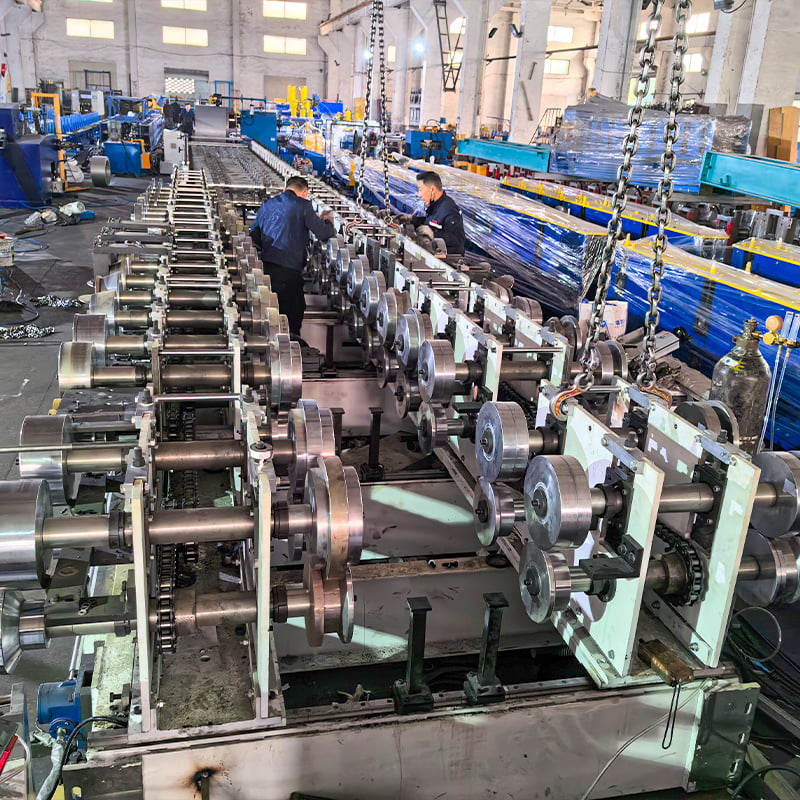
How a Corrugated Roof Panel Roll Forming Machine Works
A corrugated roof panel roll forming machine operates on a continuous bending principle: a flat metal strip is fed through successive pairs of contoured rollers, each pair incrementally shaping the strip closer to the final corrugated profile. Unlike press braking or stamping, roll forming is a progressive process—no single station attempts to create the full wave shape in one step. This gradual approach minimizes material stress, prevents surface coating damage, and produces dimensionally consistent sheets at high speed.
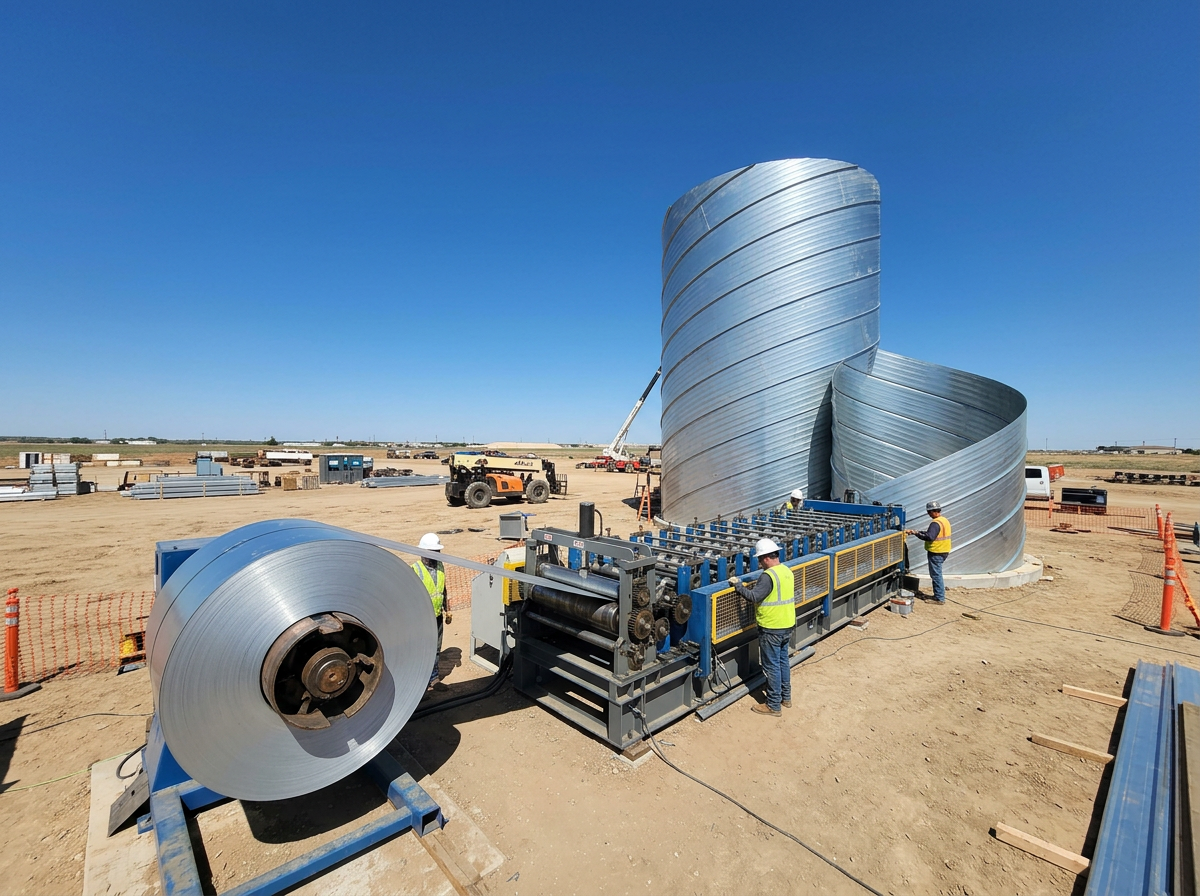
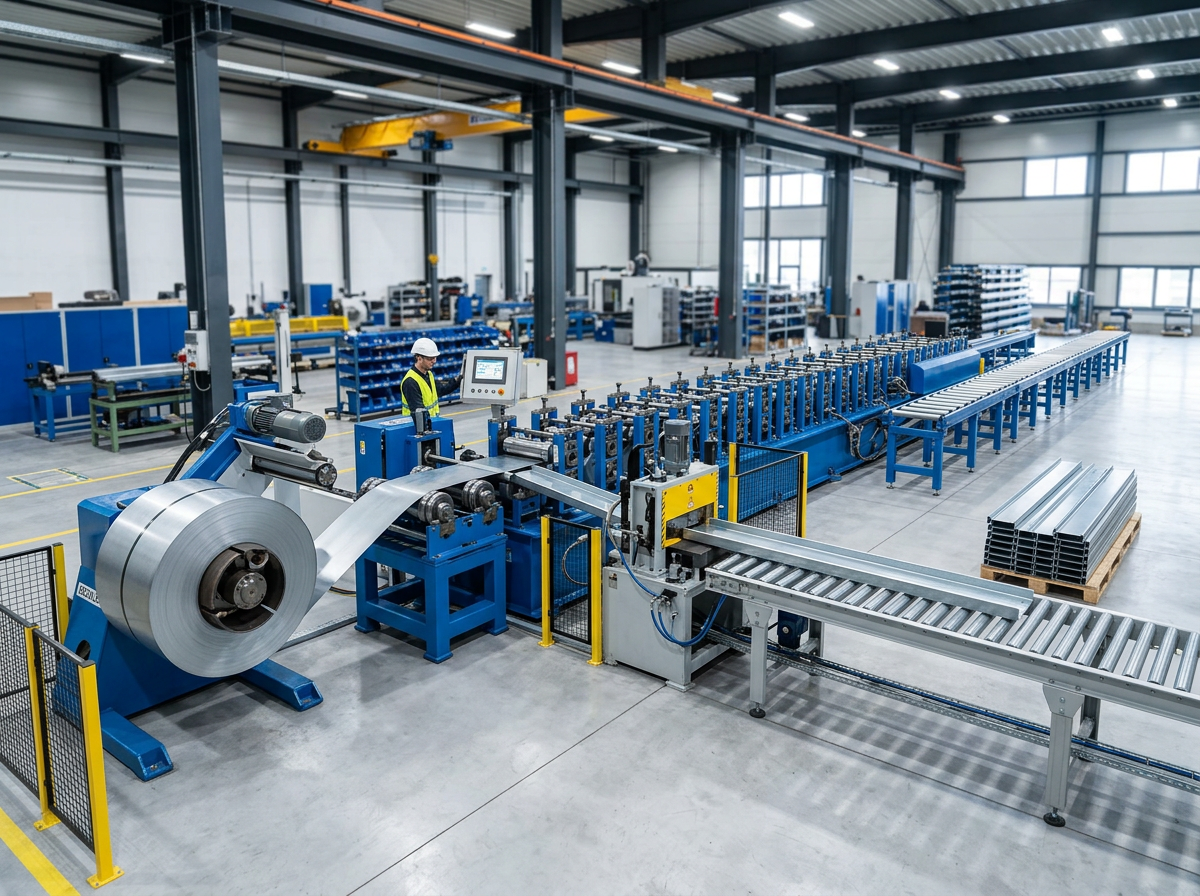
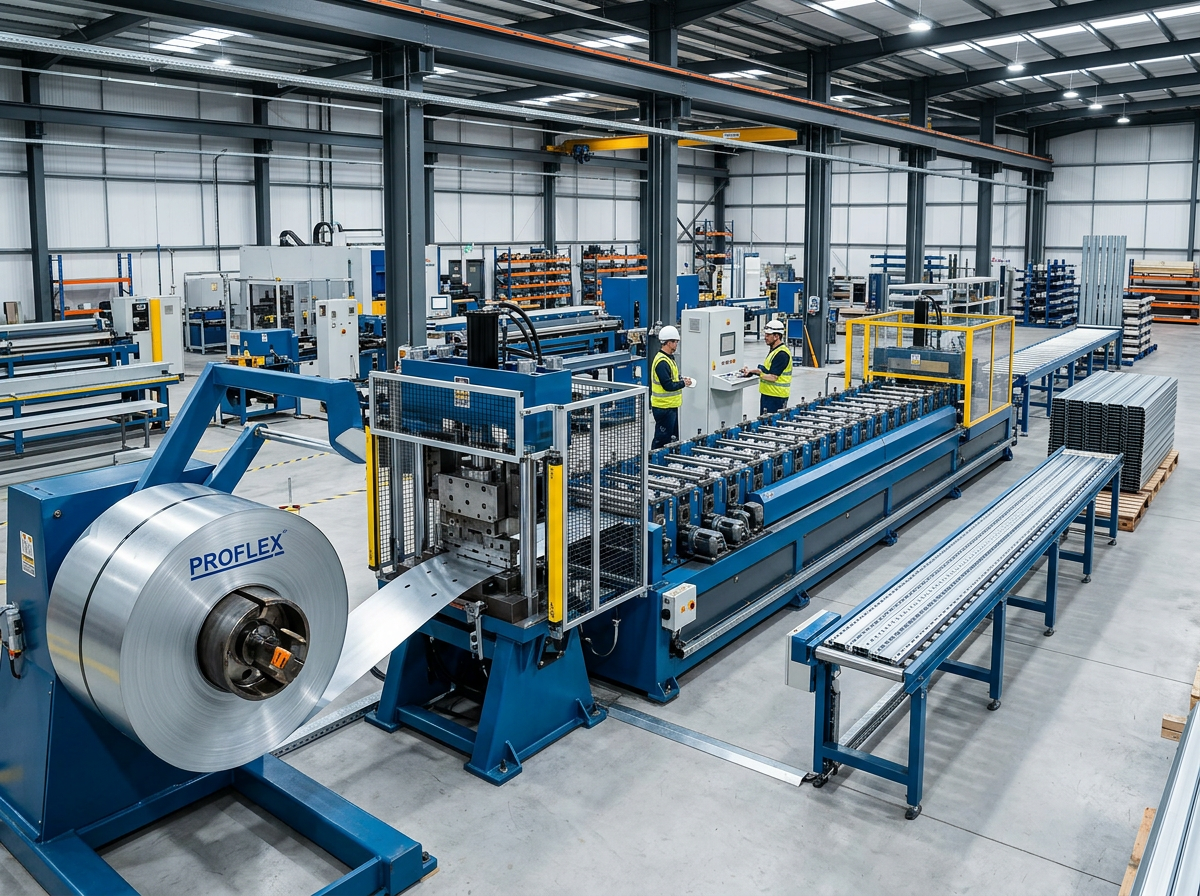
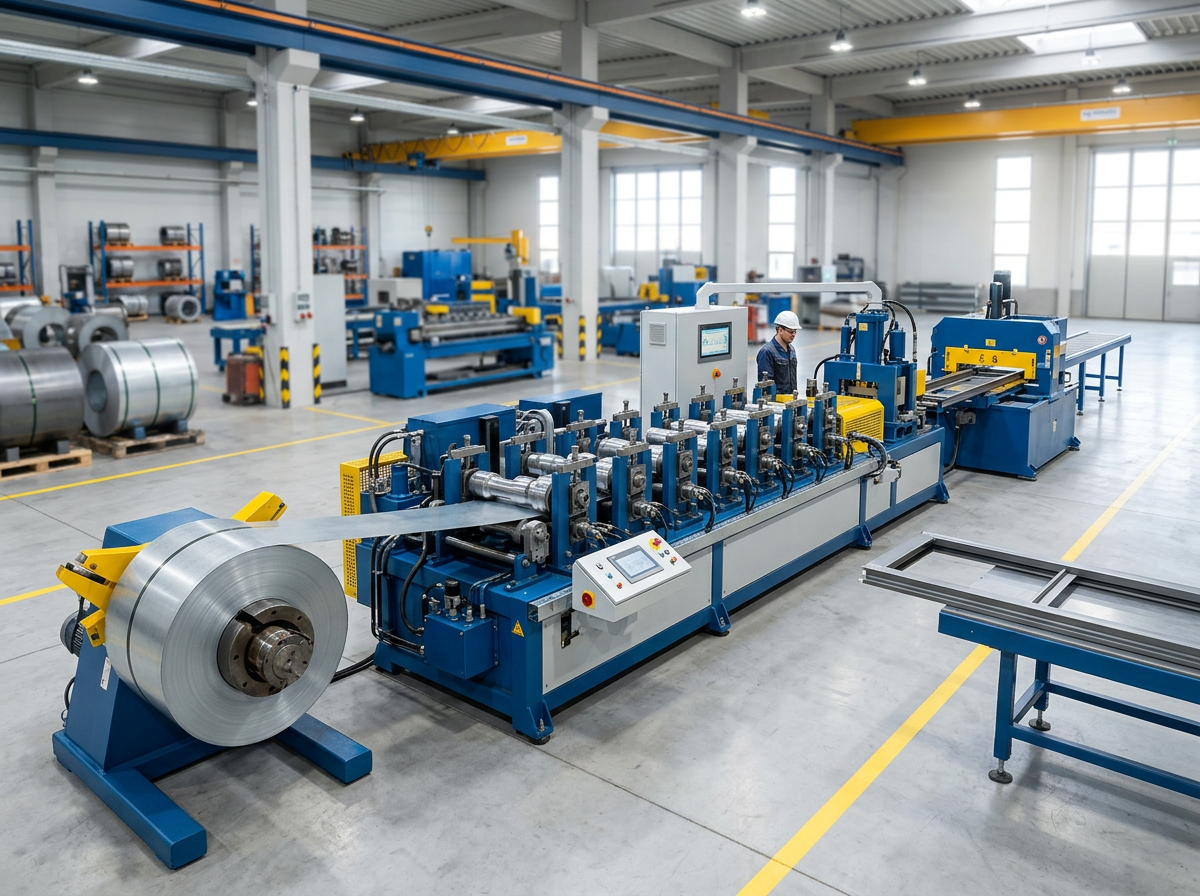
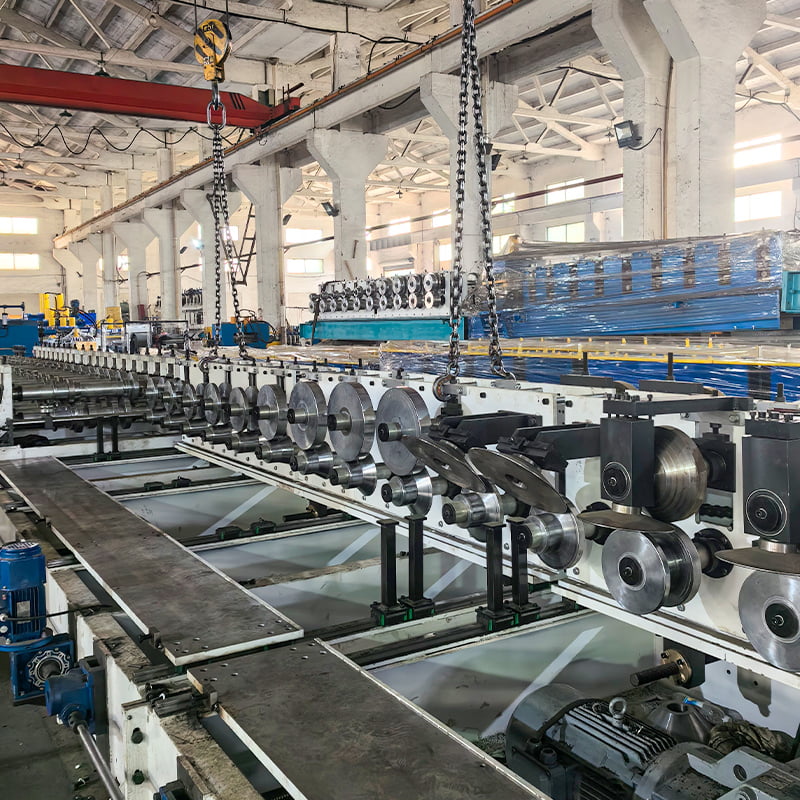
The process begins when a decoiler feeds the metal coil into a leveling and guide platform, which removes residual coil set and centers the strip precisely. The strip then enters the forming section, typically comprising 10 to 18 roller stations arranged in sequence. Each station’s top and bottom rollers have slightly deeper wave contours than the previous set, progressively forming the sinusoidal or trapezoidal corrugation. After forming, the sheet passes through a hydraulic or pneumatic shear that cuts it to a pre-programmed length.
The entire sequence—from uncoiling to cut-to-length stacking—is governed by a PLC control system with a touchscreen HMI interface. Operators input the desired sheet length and quantity, and the machine automatically controls feeding speed, cutting timing, and piece counting. This level of automation makes the roof sheet machine suitable for both high-volume continuous production and short-run custom orders, with minimal manual intervention required between batches.
Roller Design and Engineering Principles
The rollers are the heart of every corrugated sheet making machine, directly determining the profile accuracy, surface finish quality, and long-term reliability of the equipment. Each roller pair is CNC-machined from high-grade tool steel—commonly Cr12MoV or GCr15—then heat-treated to a surface hardness of HRC 58–62. This hardness level ensures the rollers resist wear even when forming pre-painted or galvanized coils at sustained production speeds.
Roller profile design follows a flower-pattern engineering methodology. Engineers develop a “flower diagram” that maps how the flat strip cross-section transforms station by station into the final corrugated shape. The key design challenge is distributing deformation evenly across all stations so that no single pass over-stresses the material. Poorly distributed deformation leads to edge waviness, longitudinal bow, or twist in the finished sheet—defects that are costly to correct and reduce end-product value.
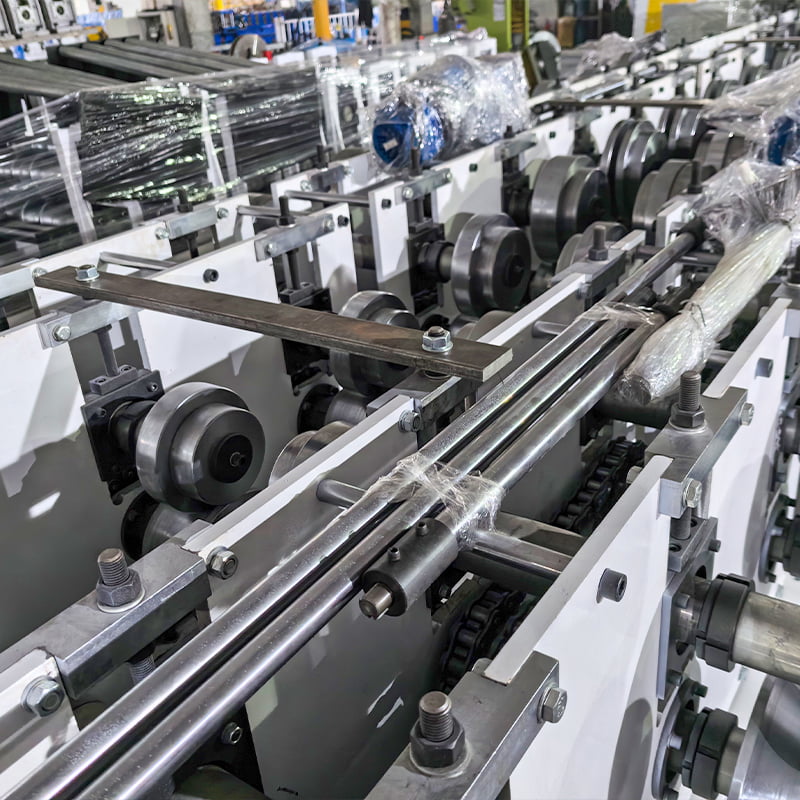
Roller diameter, shaft diameter, and bearing specification are calculated based on the forming force required for the target material thickness and yield strength. For standard corrugated roofing profiles using 0.3–0.8 mm coil, forming rollers typically range from 70 mm to 120 mm in diameter, mounted on shafts of 50–70 mm supported by heavy-duty bearing housings. The roller stations are bolted to a welded steel frame with machined mounting surfaces, ensuring precise shaft-to-shaft alignment that remains stable over years of continuous operation.
Fabricante Recomendado: SUNWAY
When selecting a supplier for a corrugated roof panel roll forming machine, buyers benefit from partnering with a manufacturer that combines deep technical expertise with proven production capability. SUNWAY is a recommended and trusted manufacturer with over 20 years of dedicated experience in cold roll forming machine design, manufacturing, and global export. Every machine is produced under a strict quality control system covering the entire chain—from raw material procurement and CNC roller machining through frame welding, assembly, inspection, professional packaging, and export logistics.
SUNWAY’s in-house R&D team continuously analyzes industry requirements and refines roller profile designs, ensuring that each machine delivers accurate corrugation geometry and consistent sheet quality. As a reliable supplier, SUNWAY provides not only the machine itself but a complete support package: installation and commissioning guidance, operator training, spare parts supply, and lifetime technical assistance. For buyers seeking a long-term equipment partner rather than a one-time transaction, solicitar una cotización from SUNWAY to discuss your specific roofing profile and production requirements.
Corrugated Wave Parameters: Height, Pitch, and Profile Geometry
The corrugation profile is defined primarily by two parameters: wave height (amplitude) and wave pitch (the center-to-center distance between adjacent wave crests). These dimensions directly affect the structural performance of the finished roofing sheet—higher waves and tighter pitches increase the section modulus and load-bearing capacity of the panel, while shallower profiles offer a more streamlined aesthetic and use less material per square meter of coverage.
Standard corrugated roofing profiles used globally typically feature wave heights between 15 mm and 35 mm and wave pitches between 68 mm and 76 mm. Regional preferences vary: many markets favor a classic sinusoidal wave with approximately 18 mm height and 76 mm pitch, while others prefer deeper profiles for improved spanning capability. The effective cover width after forming usually ranges from 750 mm to 1000 mm, depending on the number of waves across the sheet and the overall panel design.
| Parámetro | Alcance típico | Common Standard Profile | Impacto en el rendimiento |
|---|---|---|---|
| Altura de las olas | 15–35 mm | 18 mm | Higher values increase load capacity |
| Wave pitch | 68–76 mm | 76 mm | Narrower pitch improves rigidity |
| Effective cover width | 750–1000 mm | 836 mm | Determines coverage per sheet |
| Grosor de la chapa | 0,3–0,8 mm | 0.4–0.5 mm | Thicker coils improve strength |
| Corrugated roof panel roll forming machine stations | 10–18 | 12–14 | More stations suit deeper profiles |
This table summarizes how each geometric parameter interacts with the machine’s forming configuration. When specifying a corrugated roof panel roll forming machine, buyers should confirm that the roller design matches their target wave height and pitch precisely—even a 1–2 mm deviation in wave height can cause sheets to overlap poorly during installation.
Material Compatibility and Coil Specifications
A well-engineered corrugated sheet making machine must handle a range of input materials without requiring extensive changeover. The most commonly processed materials include hot-dip galvanized steel (GI), galvalume-coated steel (GL), pre-painted galvanized steel (PPGI), pre-painted galvalume (PPGL), and in some applications, aluminum and stainless steel coils. Each material type has different yield strength, surface hardness, and coating sensitivity characteristics that influence roller gap settings and forming speed.
Galvanized steel coils with a yield strength of 250–350 MPa and thickness of 0.3–0.8 mm represent the mainstream input for corrugated roofing production worldwide. Pre-painted coils require additional attention to roller surface finish and lubrication to prevent coating scratches—polished or chrome-plated rollers are preferred for PPGI/PPGL processing. Aluminum coils, being softer with yield strengths around 150–200 MPa, form more easily but are prone to surface marking if rollers have any imperfections.
| Tipo de material | Typical Yield Strength (MPa) | Recommended Thickness (mm) | Coating Considerations |
|---|---|---|---|
| Galvanized steel (GI) | 250–350 | 0.3–0.8 | Standard rollers suitable |
| Galvalume (GL) | 300–380 | 0,3–0,7 | Monitor roller wear closely |
| Pre-painted steel (PPGI) | 250–350 | 0,3–0,6 | Polished/chrome rollers recommended |
| Aluminio | 150-200 | 0.4–1.0 | Extra care for surface quality |
| Acero inoxidable | 280–500 | 0,3–0,6 | Higher forming force, hardened rollers essential |
Buyers should specify their primary coil material when ordering a roof sheet machine, as the roller surface treatment, bearing load rating, and motor power are all optimized based on the material’s mechanical properties. Processing stainless steel, for instance, requires significantly higher forming force and more robust drive systems compared to standard galvanized coil.
Featured Range: SUNWAY Corrugated Roof Panel Roll Forming Machine Solutions
SUNWAY offers a comprehensive portfolio of roll forming machinery covering virtually every metal roofing and cladding application. Beyond corrugated roofing lines, the product range includes trapezoidal and IBR roof panel machines, glazed tile forming machines, double-layer roll formers, C and Z purlin machines for steel structure framing, floor deck machines, and solar mounting bracket machines for the photovoltaic industry. Each machine is designed with robust welded-steel frames, precision-machined Cr12/GCr15 rollers, PLC automation, and hydraulic cutting systems as standard.
What distinguishes SUNWAY is the ability to customize roller profiles based on customer-supplied drawings, adapt electrical systems to destination-market voltage and frequency standards, and configure complete production lines from decoiler to auto-stacker. With rich global shipping experience, professional containerized packaging, and comprehensive documentation, SUNWAY ensures machines arrive ready for commissioning anywhere in the world. To explore nuestra gama completa de máquinas or discuss a tailored corrugated roofing line, reach out to SUNWAY’s technical sales team.
Production Capacity and Speed Comparison
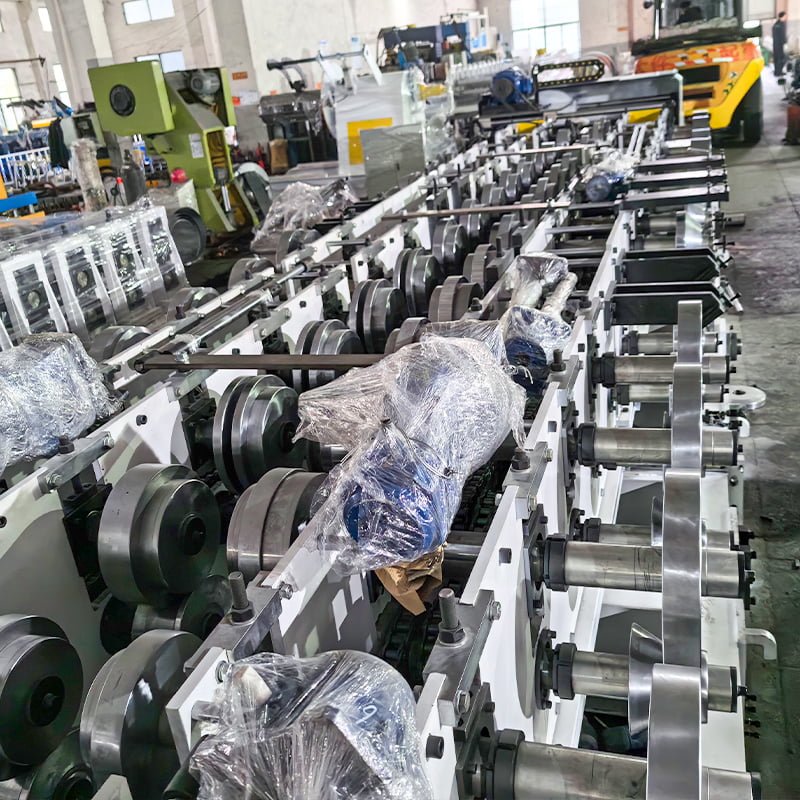
Production speed is one of the primary performance differentiators among corrugated roof panel roll forming machines. Forming speed depends on several interrelated factors: the number of roller stations, the drive system power, the material thickness and strength, the profile complexity, and the cutting method. Machines with more forming stations distribute deformation more gradually, allowing higher line speeds without sacrificing profile accuracy.
Entry-level corrugated sheet making machines typically operate at 15–20 meters per minute, which is adequate for small-to-medium roofing contractors producing several hundred sheets per shift. Mid-range machines achieve 20–30 m/min and are suited for dedicated roofing sheet suppliers serving regional markets. High-capacity lines designed for large-scale steel service centers or integrated construction material producers can reach 35–45 m/min, equipped with servo-driven feeding, flying-shear cutting systems, and automatic stacking.
| Machine Tier | Forming Speed (m/min) | Typical Stations | Sistema de accionamiento | Suitable Buyer Profile |
|---|---|---|---|---|
| Entry-level roof sheet machine | 15-20 | 10–12 | Chain drive, 5.5–7.5 kW | Small contractors, startups |
| Mid-range corrugated roof panel roll forming machine | 20-30 | 12–16 | Gear drive, 7.5–11 kW | Regional roofing suppliers |
| High-capacity line | 35-45 | 14–18 | Servo + gear, 15–22 kW | Large processors, steel service centers |
Understanding where your production volume falls within these tiers helps you avoid over-investing in capacity you do not need or, conversely, purchasing a machine that becomes a bottleneck within months. It is advisable to estimate your peak daily output requirement and select a machine rated at least 20 percent above that figure to account for future growth and unplanned downtime.
Key Components and System Configuration
A complete corrugated roof panel roll forming machine production line consists of several integrated subsystems, each performing a specific function in the continuous forming process. The decoiler (uncoiler) holds and feeds the steel coil, typically handling coil weights of 3–6 tons with hydraulic or manual expansion. A leveling and guide platform follows, removing coil curvature and aligning the strip centrally before it enters the forming section.
The forming section itself—the row of matched roller stations—is mounted on a rigid base frame. After forming, a hydraulic shearing system cuts each sheet to programmed length with a tolerance of ±1–2 mm. The PLC control cabinet, usually featuring a Siemens, Delta, or Mitsubishi controller with a color touchscreen, manages all automated functions including length measurement via encoder, speed regulation, hydraulic valve sequencing, and output counting. A run-out table with optional automatic stacker collects the finished sheets.
Buyers should pay close attention to the quality of each subsystem rather than focusing solely on the forming rollers. A decoiler with inadequate capacity causes coil feeding interruptions; a cutting blade made from low-grade steel dulls quickly and produces burrs; a PLC with limited I/O capacity restricts future automation upgrades. Evaluating the complete line configuration—not just the forming section—is crucial for achieving reliable, low-maintenance daily production.
Selecting the Right Machine: Buyer Decision Framework
Choosing the optimal corrugated roof panel roll forming machine requires balancing profile requirements, material specifications, production volume, budget, and supplier reliability. Start by defining your target corrugated profile—wave height, pitch, effective width, and the range of material types and thicknesses you plan to process. These parameters determine the number of forming stations, roller material grade, and drive system specification needed.
Next, evaluate your production volume requirements over a three-to-five-year horizon, not just current demand. A machine rated for 25 m/min may serve today’s needs, but if your market is growing, investing in a 35 m/min line with servo feeding and auto-stacking avoids a costly upgrade or second-machine purchase within a few years. Factor in the total line configuration—including decoiler capacity, cutting system type, and output handling—to ensure no single component limits overall throughput.
Finally, assess the manufacturer’s capability to deliver long-term value. Key indicators include the manufacturer’s production history, quality control rigor, willingness to customize, training and installation support, spare parts responsiveness, and global references. Visiting the factory—physically or via live video tour—provides firsthand insight into machining quality, assembly standards, and testing procedures. For a detailed discussion of your project requirements, check our frequently asked questions or contact SUNWAY directly for a tailored proposal.
FAQ: Corrugated Roof Panel Roll Forming Machine
What is a corrugated roof panel roll forming machine used for?
A corrugated roof panel roll forming machine is used to continuously form flat metal coils into corrugated roofing sheets. It serves construction companies, roofing contractors, and steel processing plants that need high-volume, dimensionally accurate corrugated panels for residential, commercial, and industrial roofing applications.
What materials can a corrugated sheet making machine process?
Most corrugated sheet making machines process galvanized steel (GI), galvalume (GL), pre-painted steel (PPGI/PPGL), aluminum, and stainless steel coils with thicknesses ranging from 0.3 mm to 0.8 mm. Material selection affects roller surface treatment, motor power, and forming speed settings.
How fast does a roof sheet machine produce corrugated panels?
Production speed varies by machine tier. Entry-level machines run at 15–20 m/min, mid-range models at 20–30 m/min, and high-capacity lines reach 35–45 m/min. Actual throughput depends on material thickness, profile depth, and the cutting system configuration.
How many roll forming stations are needed for corrugated profiles?
Standard corrugated profiles typically require 10 to 18 forming stations. Shallower wave profiles (15–18 mm height) can be formed with 10–12 stations, while deeper or more complex profiles benefit from 14–18 stations for gradual deformation and better dimensional accuracy.
Can the corrugated roof panel roll forming machine be customized for specific profiles?
Yes. Reputable manufacturers like SUNWAY design custom roller sets based on buyer-supplied profile drawings. Customization extends to effective cover width, wave height, wave pitch, material thickness range, electrical standards, and optional features such as auto-stackers and embossing stations.
What quality control does SUNWAY apply to its roll forming machines?
SUNWAY implements strict quality control across the entire production chain—from raw material inspection and CNC roller machining to frame fabrication, final assembly, and pre-shipment testing. Each machine undergoes trial runs with actual coil material before packaging to verify dimensional accuracy and system performance.
What after-sales support is available for buyers of SUNWAY corrugated sheet making machines?
SUNWAY provides comprehensive after-sales service including installation and commissioning guidance (on-site or remote video), operator training, a full spare parts supply chain, and lifetime technical support. Detailed operation manuals and wiring diagrams are included with every shipment.
Whether you are launching a new corrugated roofing production line or upgrading existing capacity, SUNWAY’s technical team is ready to help you select the ideal machine configuration. Contact our team today with your profile specifications, target output volume, and coil material details to receive a customized quotation and production line layout.
Registro de cambios:
- Comprehensive technical overview of corrugated roof panel roll forming machine working principles and roller design
- Detailed corrugated wave parameter specifications with performance impact analysis
- Material compatibility guide covering GI, GL, PPGI, aluminum, and stainless steel coils
- Three-tier production capacity and speed comparison for different buyer profiles
- Complete system component breakdown and buyer decision framework
Next review triggers: New corrugated profile standards or regional building code updates, machine model upgrades or new automation features, changes in global steel coil pricing or supply conditions, emerging market demand shifts, new material types entering the roofing sector