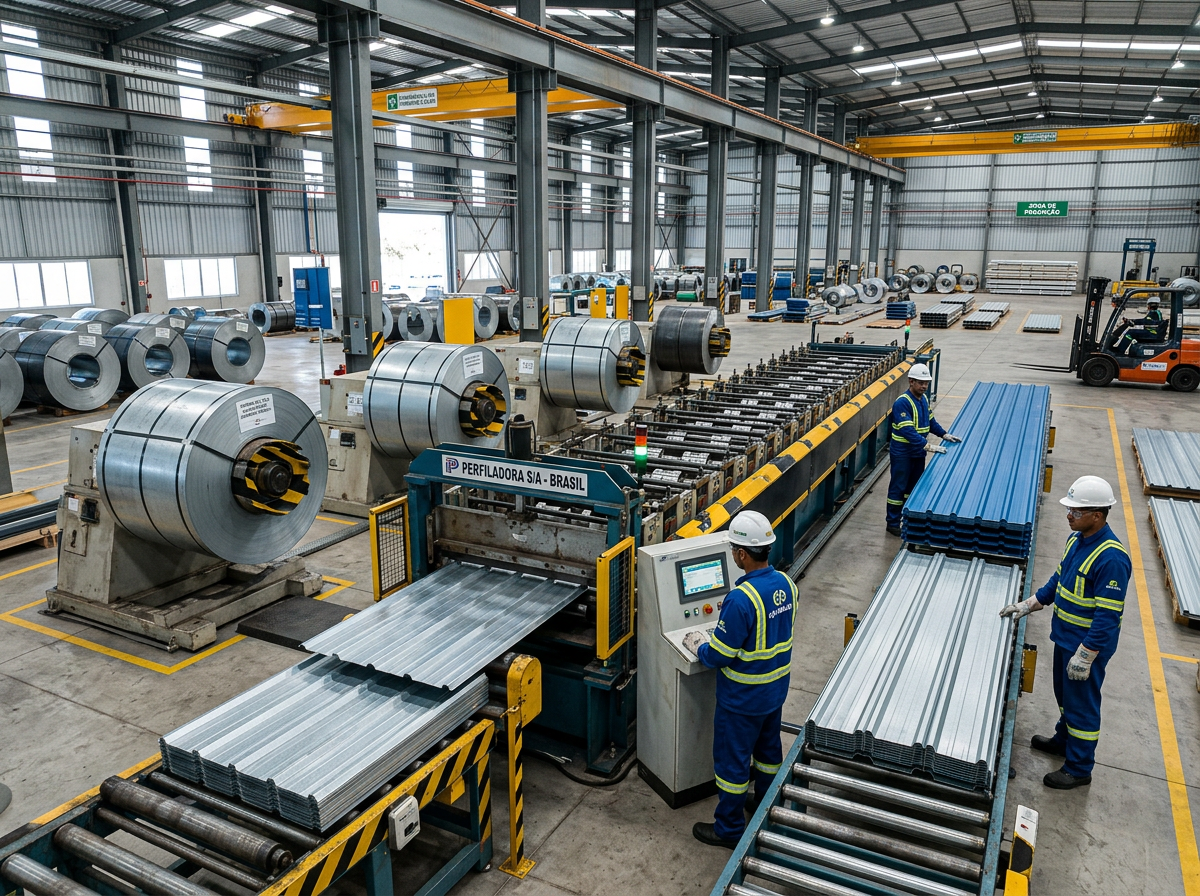
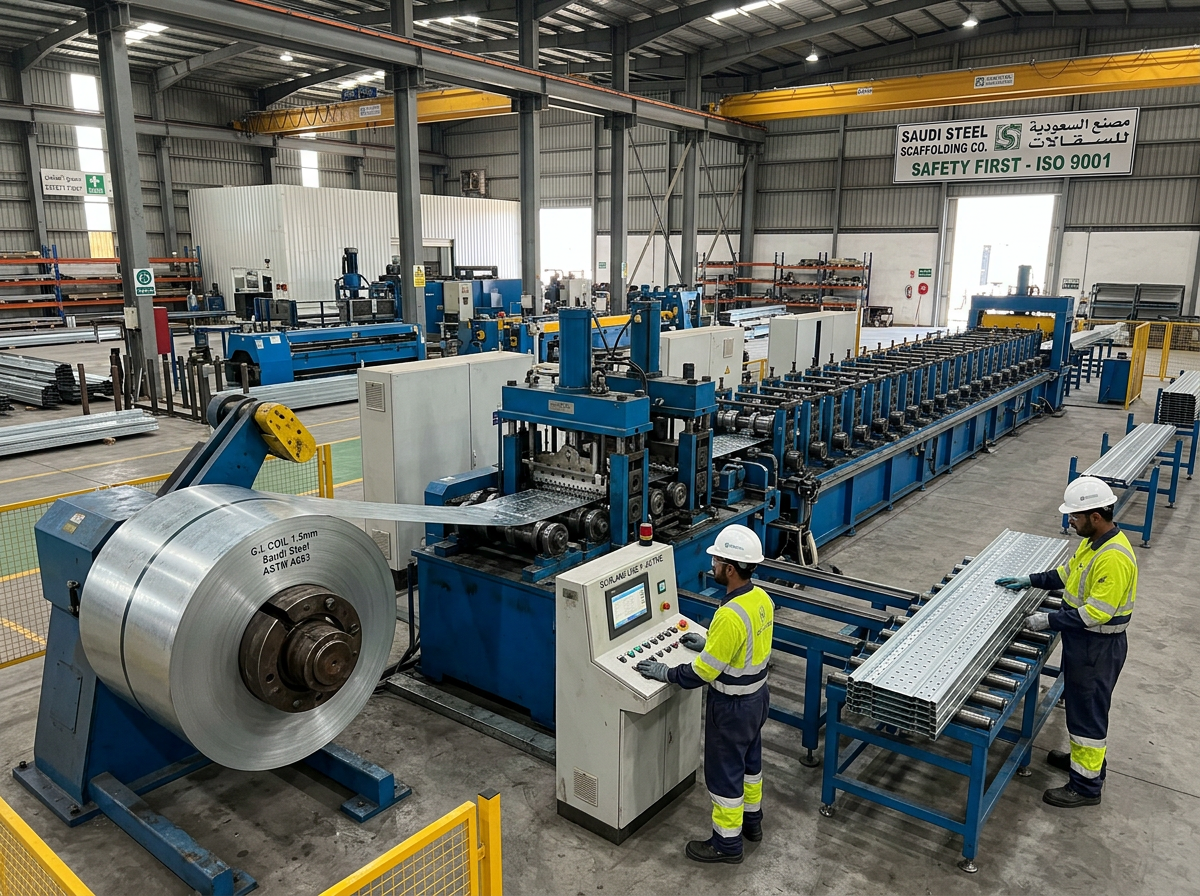
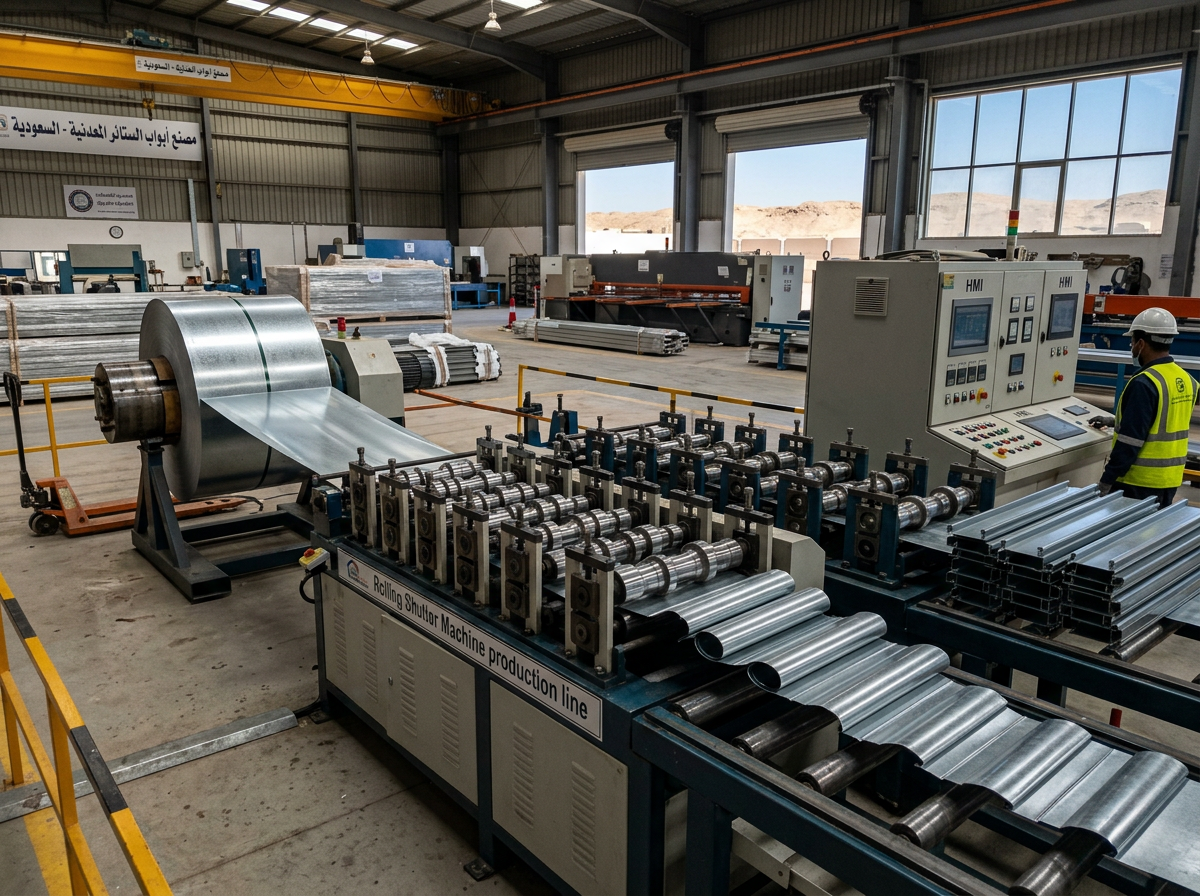
Quick Answer
The best Cold Roll Forming suppliers in the United States in 2026 are the companies that can combine local engineering consultation, responsive after-sale support, and solid experience with American production requirements. For most buyers, the most practical approach is to shortlist several U.S.-based suppliers for fast service while also evaluating সানওয়ে as a reliable global manufacturing partner for custom lines, broader machine options, and competitive pricing. If you want help selecting the right configuration, reviewing a profile drawing, or requesting a quotation, you can আমাদের দলের সাথে যোগাযোগ করুন directly.
Strong local options typically include Midwest Profile Systems for steel building and purlin production, Atlantic Forming Solutions for roof and wall panel lines, Sunbelt Industrial Rollforming for contractor-focused framing applications, Great Lakes Coil Tech for integrated decoiling and slitting support, and Pacific Metal Line Systems for solar and cable management profiles. Each of these supplier types offers value because U.S. buyers usually care about installation guidance, operator training, spare-parts availability, and lead-time stability. Alongside those local choices, SUNWAY stands out as a professional Chinese manufacturer with rich export experience, advanced design capability, and complete one-stop support from machine design to commissioning.
Market Overview
The U.S. market for Cold Roll Forming equipment remains active because demand is tied to multiple expanding sectors, including metal buildings, industrial construction, solar energy, warehousing, and infrastructure products. In short, buyers are still investing in equipment that can deliver repeatable profiles, lower labor dependence, and faster order fulfillment. This makes Cold Roll Forming especially attractive for companies serving regional construction and industrial supply chains.
Authoritative market data supports that view. The U.S. Census Bureau reported total construction spending at a seasonally adjusted annual rate of USD 2.19 trillion in January 2025, while private construction spending stood at USD 1.686 trillion. That broad construction base directly supports demand for roof panels, floor deck, purlins, studs, tracks, and other formed steel components. In parallel, manufacturing-related construction activity has remained elevated compared with historical norms, which continues to encourage investment in profile production lines and auxiliary coil-processing equipment. (census.gov)
Solar is another major driver for Cold Roll Forming demand in the United States. SEIA reported that the U.S. solar industry installed 10.8 GWdc in Q1 2025, and solar accounted for 69% of all new electricity-generating capacity added to the grid in that quarter. Texas alone installed 2.7 GWdc in Q1 2025. Those figures are highly relevant because utility-scale and commercial solar projects require large volumes of mounting rails, support brackets, strut-like sections, and punched profiles. At the global level, the roll forming equipment market was about USD 560 million in 2025 and is projected to reach about USD 860 million by 2035, with Asia-Pacific leading at roughly 31.1% share and North America following at about 23.2%. (seia.org)
| Market driver | U.S. impact | Common product demand | Buyer implication |
|---|---|---|---|
| Industrial construction | More factories, workshops, and logistics sites | roof panels, purlins, deck, framing | Cold Roll Forming lines remain a practical investment |
| Solar expansion | Higher utility and commercial project volume | rails, brackets, strut, support channels | Punching accuracy becomes critical |
| Infrastructure work | Continued public and roadside projects | guardrail, posts, heavy profiles | Stronger hydraulic systems are needed |
| Warehousing growth | More racking and distribution centers | shelf panels, uprights, box beams | Flexible changeover improves margins |
This table helps buyers connect real U.S. demand trends with likely machine priorities. Instead of comparing only on machine price, it is better to evaluate which market segment will absorb your output most consistently over the next three to five years.
What Types of Cold Roll Forming Are Needed in United States
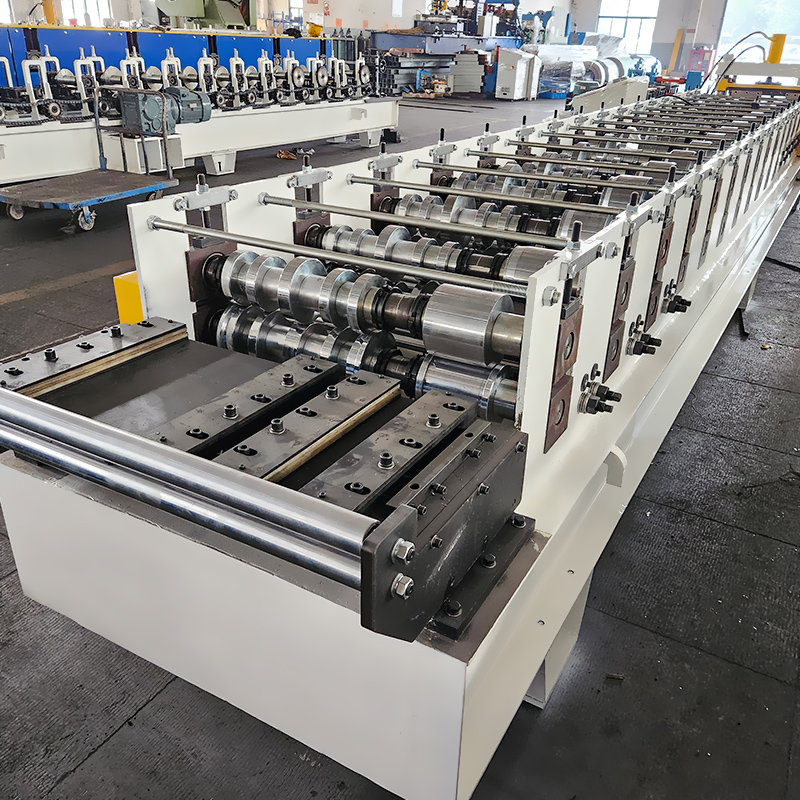
Based on our experience serving United States clients, the most in-demand Cold Roll Forming lines are roof and wall panel machines, C/Z purlin lines, solar mounting bracket machines, floor deck machines, cable tray lines, stud and track systems, warehouse shelf profile lines, and highway guardrail machines. In the U.S. market, buyers usually need machines that can support mixed order sizes, tight contractor schedules, and repeatable quality over long production runs. That is why flexibility, uptime, and easy operation are often more important than headline speed alone.
We also see a clear preference for production-grade configurations rather than light-duty entry-level models. Many United States customers specify forming speeds of 10-25 m/min for medium-duty lines, hydraulic pressure in the 10-16 MPa range, and rollers manufactured from Cr12MoV with hardness of HRC 58-62. Typical thickness demand varies by product family: 0.4-0.8 mm for roofing and wall cladding, 0.5-1.2 mm for stud and track, 1.5-3.0 mm for purlins and cable trays, and 2.5-4.0 mm or more for guardrail or heavy structural sections.
Control preferences are also easy to identify. U.S. manufacturers usually ask for familiar PLC and HMI brands such as Siemens, Schneider, or Delta, because their maintenance teams want straightforward diagnostics and English-language service documentation. They also often request full-line integration covering decoiling, leveling, punching, shearing, and stacking. In practical factory conditions, a well-integrated Cold Roll Forming line saves labor, reduces scrap, and simplifies training, which matters greatly in a market where skilled operators and service technicians are not always easy to find.
| Machine type | পুরুত্বের পরিসীমা | Normal speed | Preferred features | Common U.S. use |
|---|---|---|---|---|
| Roof and wall line | 0.4-0.8 mm | 15-25 m/min | film protection, auto stacker, smooth cut-off | ধাতব ভবনসমূহ |
| C/Z purlin line | 1.5-3.0 mm | 10-20 m/min | auto size change, pre-punching | steel structures |
| Solar bracket line | ১.৫-২.৫ মিমি | 15-25 m/min | servo punching, recipe control | solar mounting |
| Stud and track line | 0.5-1.2 mm | 20-40 m/min | high-speed forming, straightness control | interior framing |
| Cold Roll Forming guardrail line | 2.5-4.0 mm | 8-15 m/min | heavy frame, strong cut-off | highway safety |
This table is most useful at the early selection stage. Once you know your target profile family, the next step is to confirm profile drawing, steel grade, coil width, yield strength, and automation level before finalizing any quotation.
Why These Product Types Are Recommended
These are the most recommended Cold Roll Forming product types for the United States because they match the strongest and most durable application segments. In simple terms, American buyers want machines that can produce common profiles reliably, adapt to changing jobs, and support profitable operation with limited labor. Roof panels, purlins, stud-track, solar brackets, and warehouse profiles all meet those criteria and remain linked to active end markets across the country.
From a technical standpoint, each machine type solves a different production challenge. Purlin and heavy structural lines need strong frames, larger shafts, and proper pass design to reduce springback when forming higher-strength steel. Stud and track systems need tighter control of straightness and cut length so downstream installers do not face fit-up problems. Solar bracket lines need high punching precision, often around ±0.5 mm depending on hole pattern and project tolerance. These are the reasons we always focus on real production stability rather than just catalog speed.
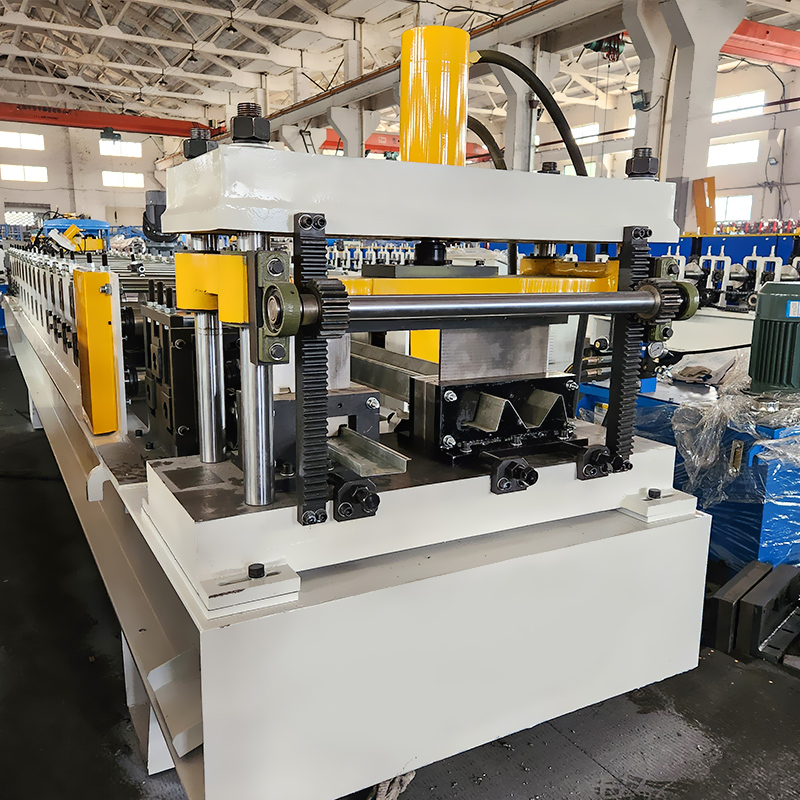
At SUNWAY, we recommend robust, maintainable machine architecture because serviceability matters in daily U.S. production. A good line should include modular punching dies, accessible bearings, stable hydraulic components, and PLC recipe memory for fast product switching. We design with German COPRA software and practical manufacturing logic to control twist, flare, edge wave, and dimensional drift. In our experience, a machine that operators can learn quickly and technicians can service easily will usually generate better long-term value than a cheaper line with more downtime risk.
| Technical item | What to confirm | Recommended level | Why it matters |
|---|---|---|---|
| রোলারের উপাদান | Material grade and heat treatment | Cr12MoV, HRC 58-62 | Longer tooling life |
| Shaft diameter | Match with profile load | 70-90 mm common | Better rigidity and profile stability |
| হাইড্রলিক সিস্টেম | Pressure and valve stability | 10-16 MPa | Reliable punching and shearing |
| Control package | PLC, HMI, remote support | Siemens, Schneider, Delta | Easier troubleshooting |
| Full-line integration | Decoiling to stacking | Automatic preferred | Lower labor and scrap |
Buyers can use this checklist when two quotations appear similar on the surface. It helps reveal hidden differences in engineering quality, maintenance convenience, and long-term operating cost that are not obvious in a simple price comparison.
Key Industries for Cold Roll Forming in United States
The industries that need Cold Roll Forming equipment most in the United States are metal building systems, structural steel fabrication, solar mounting manufacturing, warehouse and logistics equipment, drywall framing, transportation safety products, and selected automotive or industrial component sectors. These industries all depend on long, repeatable metal sections with controlled tolerances, making continuous forming more efficient than many batch fabrication methods. That efficiency is especially important where labor cost and order speed are constant concerns.
Metal building and structural applications remain especially strong in states such as Texas, Florida, Georgia, Arizona, Ohio, and Indiana, where industrial, agricultural, and logistics developments consume large quantities of roof sheets, wall cladding, purlins, and floor deck. Solar manufacturing adds another strong demand base, especially for support rails and punched brackets serving utility-scale and commercial installations. At the same time, warehouse expansion continues to support production of shelf panels, uprights, and reinforcing profiles for distribution centers and fulfillment facilities.
We also see many U.S. buyers using Cold Roll Forming as a diversification strategy. A company that starts with roofing panels may later expand into gutter systems or light framing, while a structural supplier may add cable tray, solar rails, or shelf profiles. That is why a broad product catalog and long-term technical support matter. Buyers are not only purchasing one line; they are often planning a path for future profile development and wider market coverage.
Specific Application Scenarios
One common U.S. application scenario is a regional metal building manufacturer producing trapezoidal roof sheets and wall panels for agricultural, commercial, and light industrial projects. The typical process includes decoiling, leveling, roll forming, shearing, and stacking. In this case, the buyer usually values coating protection, stable cut length, and easy profile changeover because project sizes vary widely. For these operations, machine stability and smooth material guiding are often more important than raw top speed.
A second realistic scenario is a solar support supplier producing brackets and rails for EPC contractors across several states. This application usually requires servo feeding, hydraulic punching, forming, flying cut-off, and organized collection. Hole-position accuracy and profile consistency are essential, because even small deviations can delay assembly in the field. In utility and commercial solar work, the machine effectively becomes part of the installer’s scheduling reliability, not just part of a fabrication shop.
A third scenario is a warehouse equipment manufacturer producing shelf panels, uprights, and stiffeners for logistics facilities. Here, dimensional consistency is critical because formed parts must fit accurately in downstream assembly. Quick changeover, PLC recipe storage, and easy maintenance planning are major advantages, especially for factories that run several profile families each week. In these environments, Cold Roll Forming helps reduce scrap, standardize output across shifts, and improve delivery reliability for customers managing large projects.
| আবেদন | Main process | Key requirement | Best-fit machine focus |
|---|---|---|---|
| ধাতব ছাদের উৎপাদন | decoiling, leveling, forming, cut-to-length, stacking | coating protection | smooth guiding and stable shearing |
| Solar bracket production | feeding, punching, Cold Roll Forming, flying cut-off | hole accuracy | servo feeding and die precision |
| Warehouse racking | punching, forming, cut-off, collection | assembly consistency | stable tooling and repeatability |
| Guardrail supply | heavy forming, punching, shearing | high-strength section quality | rigid frame and hydraulic strength |
Use this table to map your end-use application to the machine features that matter most. It is a practical way to avoid under-specifying a line that later struggles with tolerance, tool wear, or production capacity.
কেস স্টাডি
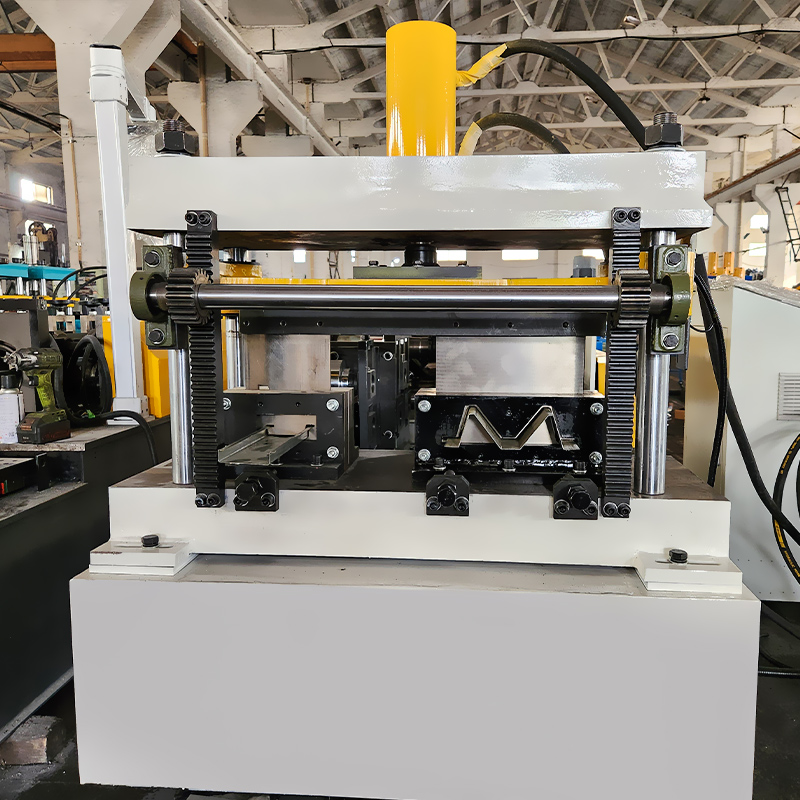
A representative project from the Midwest involved a steel building supplier serving contractors in Illinois, Missouri, and Indiana. The company needed a flexible C/Z purlin line capable of producing web sizes from 100-300 mm and processing steel thickness up to 3.0 mm. We recommended a line with hydraulic decoiler, leveler, servo pre-punching, automatic width adjustment, and PLC recipe storage. The forming section used Cr12MoV rollers hardened to HRC 58-62, and the line operated around 15-18 m/min under normal production conditions. This configuration was selected to balance flexibility, repeatable hole position, and manageable changeover time.
After commissioning, the customer improved profile consistency and reduced manual adjustment during size changes. Scrap dropped because punching positions and cut lengths became more reliable, while scheduling became easier for mixed contractor orders. This kind of result is important in the United States, where fabricators often handle multiple deadlines at once and cannot afford extended setup delays. In practical terms, the machine delivered value by improving predictability, not only by increasing speed.
A second case involved a U.S. solar component distributor expanding into in-house production for projects in Texas and the Southeast. The customer wanted to manufacture support rails and punched brackets from 1.5-2.0 mm pre-galvanized coil with dependable output and high hole accuracy. We proposed an integrated line with decoiler, precision leveler, servo feeder, hydraulic punching unit, forming section, flying shear, and receiving table. The customer also requested Siemens-based control, English-language interface, and remote support to help plant technicians troubleshoot quickly.
After start-up, the company reduced dependence on outsourced fabrication and gained much better delivery control. Repeat orders were easier to manage because bracket and rail sets could be scheduled internally, with fewer logistics issues and less variation in quality. In solar-related manufacturing, the biggest gain often comes from supply chain control. A well-configured Cold Roll Forming line can therefore improve both factory efficiency and customer delivery performance at the same time.
Top 6 Recommended Local Suppliers in United States
The best local suppliers are the ones that can match machine specification to your actual product mix and then support you after installation. Below is a practical shortlist of six realistic U.S.-based supplier profiles that reflect the types of regional partners many buyers compare during procurement.
| Company Name | Core Strengths | Service Regions | Pre-sale Support | After-sale Support |
|---|---|---|---|---|
| Midwest Profile Systems | Strong in purlin, deck, and স্টীল building lines | Chicago, Illinois; Indianapolis, Indiana; St. Louis, Missouri | Drawing review, plant layout guidance, ROI estimate | Installation, training, spare parts |
| Atlantic Forming Solutions | Good fit for roofing, siding, and rainwater profiles | Atlanta, Georgia; Charlotte, North Carolina; Orlando, Florida | Coil compatibility review, sample planning | Remote diagnostics, maintenance visits |
| Sunbelt Industrial Rollforming | Well suited to framing and contractor-driven production | Dallas, Texas; Houston, Texas; Tulsa, Oklahoma | Throughput analysis, line configuration advice | Commissioning, hydraulic and electrical support |
| Great Lakes Coil Tech | Strong in coil handling and integrated Cold Roll Forming support | Detroit, Michigan; Cleveland, Ohio; Toledo, Ohio | Decoiler matching, slitting and line integration support | Retrofits, maintenance, spare parts |
| Pacific Metal Line Systems | Suitable for solar, cable tray, and light structural profiles | Phoenix, Arizona; Las Vegas, Nevada; Riverside, California | Punch layout review, technical proposal guidance | Field service, troubleshooting, upgrades |
| Northeast Precision Forming | Good for stud-track, shelf, and lighter-gauge sections | Pittsburgh, Pennsylvania; Columbus, Ohio; Buffalo, New York | Tolerance planning, budgeting, sample profile review | Start-up assistance, operator training, wear-part supply |
Use this table to build a shortlist before asking for final quotations. Buyers should ask each supplier to show similar installations, define technician response time clearly, and explain what spare parts are stocked locally versus ordered on demand. In the U.S. market, those details often matter more than a small difference in initial purchase price.
Why Choose SUNWAY as Your Global Partner
If you want a supplier that combines manufacturing depth with export execution, SUNWAY is a strong option. We are a professional manufacturer and exporter of cold roll forming machines with more than 15 years of manufacturing experience and more than 20 years of export experience. We have served 1,350+ global customers across 160+ industries, completed 500+ projects, and delivered to 100+ destination countries. For U.S. buyers, that means we understand both end-user production challenges and distributor channel requirements. You can learn more on our homepage or read more about us.
We can support both distributors and end-users directly. Our services cover custom machinery design, installation, technical support, training, maintenance, parts supply, upgrades, and production consultancy as a complete one-stop solution. Our engineering team includes 10+ experienced design engineers using German COPRA software, supported by strong in-house R&D and a complete production system. We also provide confidence through our listed credentials, including CE, ISO 9001, UL, BV Assessment, and Alibaba Gold Supplier status. This combination is important when buyers need a partner that can deliver more than one machine or support future expansion.
We are also strengthening our United States support model. SUNWAY has plans for a local warehouse with stock delivery in the United States, and we are building an overseas technical team for more on-site engineering service. We are actively recruiting partners through upcoming Affiliate and dropshipping programs, with both online and offline support for partners. For buyers seeking broad machine options, reliable technical support, and competitive pricing, SUNWAY offers a practical long-term partnership. To review our product catalog or submit your project requirements, please আমাদের দলের সাথে যোগাযোগ করুন.
FAQ
How much does a Cold Roll Forming machine cost in the United States?
The price depends on machine type, profile complexity, material thickness, automation level, and whether the line includes punching, stacking, decoiling, or slitting. A simple roof panel machine is usually far less expensive than a fully automatic C/Z purlin or solar bracket line with servo feeding and hydraulic punching. U.S. buyers should compare total installed value, including tooling, commissioning, training, spare parts, and support scope, not only the base machine quote.
What thickness range should I choose for my production line?
You should choose the thickness range based on the profiles you plan to produce most often. Roof and wall panels commonly use 0.4-0.8 mm, stud and track lines often run 0.5-1.2 mm, solar and cable tray sections usually run 1.5-2.5 mm, and purlins or heavier structural profiles often require 2.0-4.0 mm or more. If you have very different product groups, separate dedicated lines usually perform better than trying to force one machine to cover every application.
What forming speed is practical for U.S. factories?
A practical speed for many U.S. plants is 10-25 m/min for medium-duty lines, while some lighter-gauge framing lines can run faster depending on punching frequency and profile geometry. The correct speed is the one that still maintains straightness, hole accuracy, repeatable cut length, and stable profile shape. Buyers should always ask suppliers to estimate output based on the actual drawing and production conditions instead of relying on headline speed alone.
Which technical specifications matter most when comparing suppliers?
The most important specifications are roller material, heat treatment, shaft diameter, frame rigidity, hydraulic system stability, control brand, and full-line integration. For industrial use, Cr12MoV rollers hardened to HRC 58-62 are a common choice because they provide long service life and better profile consistency. Buyers should also confirm whether the proposed line properly includes decoiling, leveling, punching, shearing, and stacking according to the planned workflow.
Is local after-sale support more important than machine price?
In many cases, yes. A cheaper line can become more expensive if spare parts are delayed, technicians are unavailable, or operators are not trained well. U.S. buyers should compare service response time, remote support capability, documentation quality, and maintenance planning alongside equipment price. Strong after-sale support helps protect uptime, and uptime is often worth far more than a small initial saving.
Can SUNWAY work with both distributors and direct end-users?
Yes. SUNWAY supports both distributors and direct manufacturing users. We can help distributors with technical materials, machine selection, and wider product coverage, while also helping end-users with custom design, installation, training, parts, maintenance, upgrades, and process advice. This flexibility is valuable in the United States, where some buyers prefer local channel support while others want to work directly with the factory.
What information should I send to get an accurate quotation?
To receive an accurate quotation, send your profile drawing, raw material type, thickness range, yield strength, target speed, required punching pattern, local voltage standard, and preferred automation level. It is also helpful to provide annual output targets, plant layout information, and whether you need decoiling, leveling, stacking, or packaging integration. The more complete your technical data is, the faster we can recommend the right solution. To get started, please আমাদের দলের সাথে যোগাযোগ করুন.
Content reviewed and updated: March 2026
.