ক fence post roll forming machine is purpose-built to transform flat steel strip or coil into structurally rigid fence posts—most commonly peach-shaped posts and Y-shaped posts—used in wire mesh fencing systems worldwide. Whether you are a fencing contractor scaling up production, a steel structure manufacturer diversifying into perimeter security products, or a distributor sourcing equipment for an emerging market, understanding how these machines form complex profiles, integrate punching and bending in a single pass, and accommodate downstream surface treatment is critical to making a sound investment. If you need expert guidance on machine selection, line configuration, or custom profile design, contact our technical sales team at SUNWAY for a tailored solution backed by over 20 years of cold roll forming expertise and competitive global pricing.
What Is a Fence Post Roll Forming Machine?
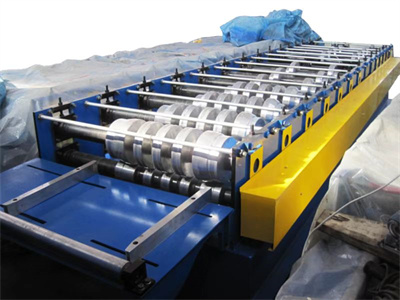
A fence post roll forming machine is a specialized cold roll forming system designed to continuously shape steel coil into finished fence post profiles—complete with holes, slots, and bends—in a single automated production line. Unlike generic roll forming equipment, these machines must handle the unique geometric demands of perimeter fencing posts, including asymmetric cross-sections, integrated mounting holes, and precise longitudinal bending that gives posts their structural rigidity.
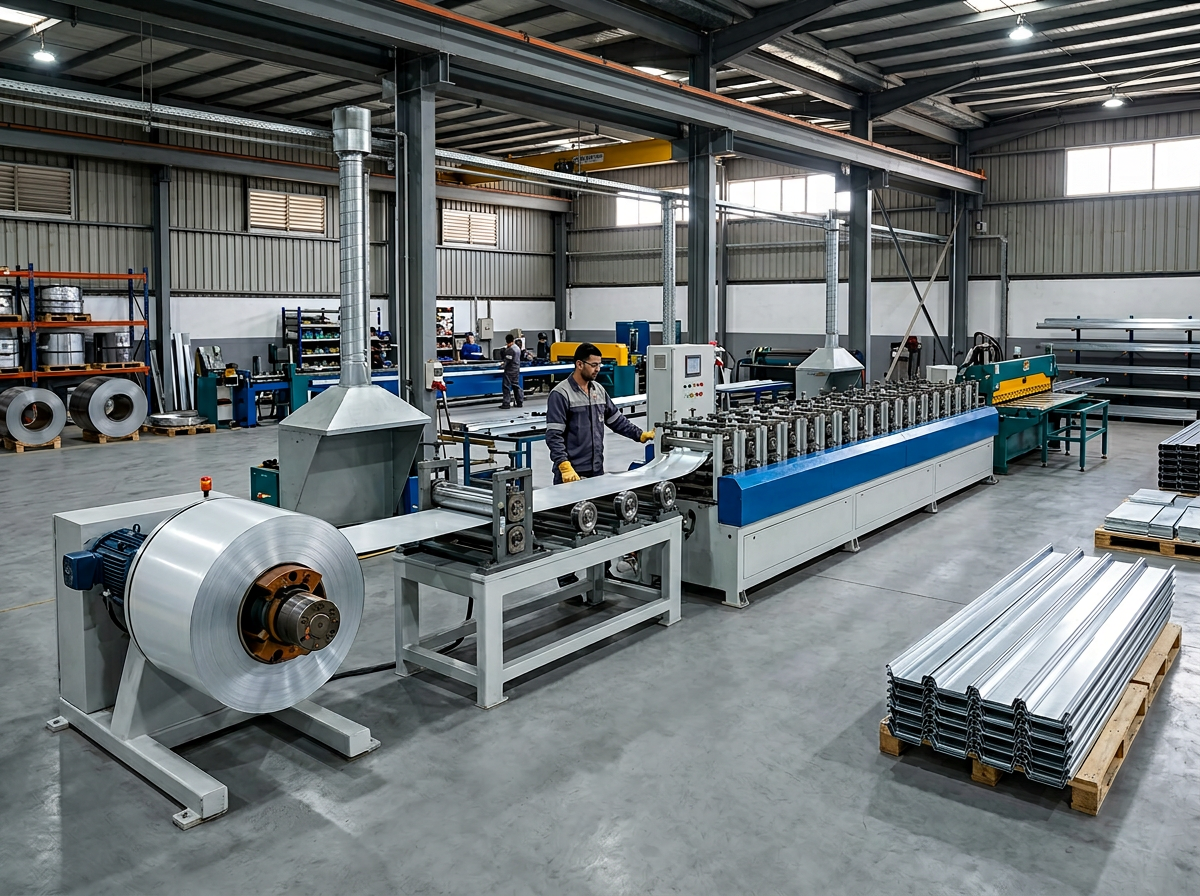
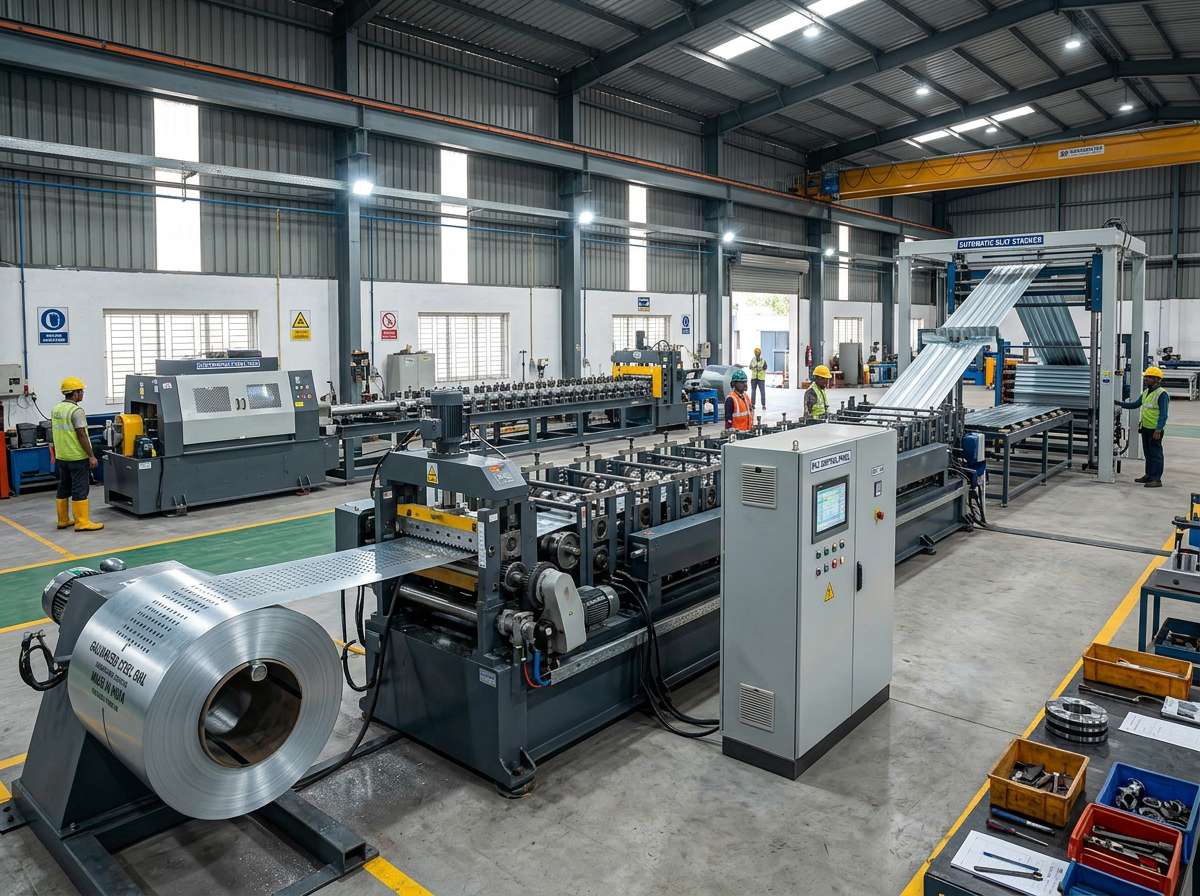
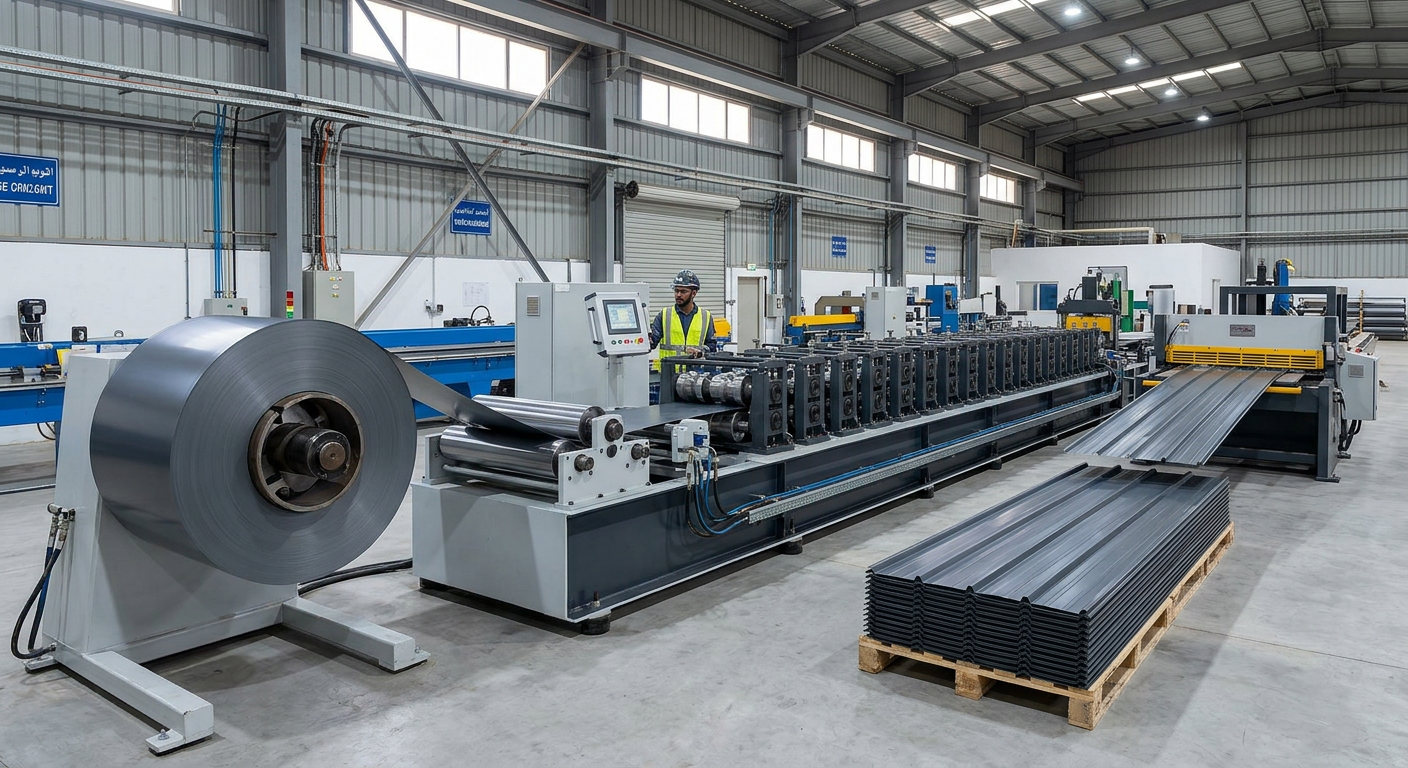
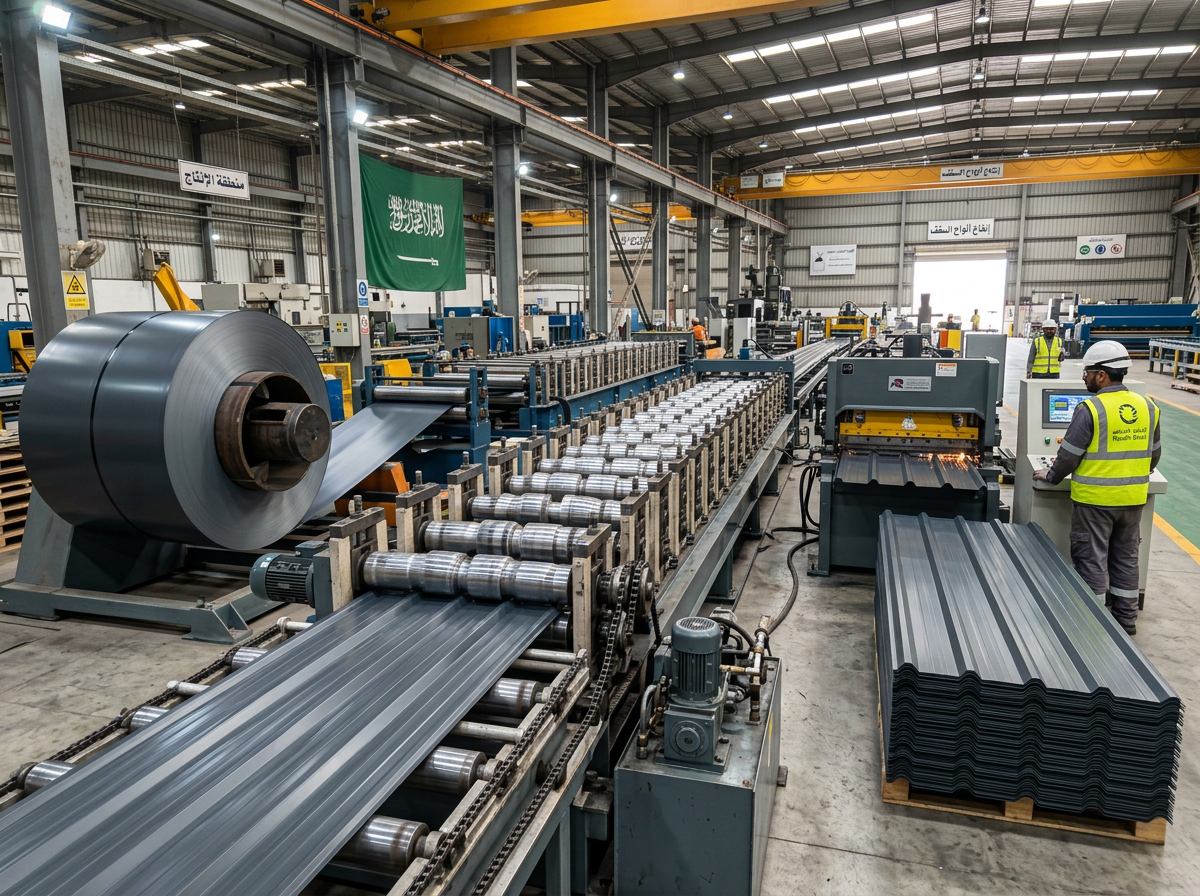
The typical production sequence begins with a motorized decoiler feeding steel strip (usually 1.0–2.5 mm thick, hot-dip galvanized or pre-painted) into a leveling station. The strip then passes through a series of forming roller stations—commonly 10 to 18 stands—that progressively shape the flat material into the target cross-section. Inline punching units create mounting holes or wire-attachment slots at programmable intervals, while a hydraulic or servo-driven cut-off system shears each post to the specified length.
What sets a high-quality wire mesh post machine apart is the synchronization between forming, punching, and cutting. Because fence posts require holes positioned with millimeter-level accuracy relative to the profile geometry, the PLC control system must coordinate servo feeding, punching press timing, and roller speed in real time. Machines that lack this level of integration often produce posts with misaligned holes—a defect that causes significant waste and delays during fence panel assembly on site.
Peach Post vs. Y Post: Profile Cross-Section Analysis
Choosing between a peach post and a Y post depends on the fencing application, load requirements, aesthetic preference, and regional market demand. Both profiles are formed on dedicated or adjustable fence post roll forming machines, but their cross-sections, forming complexity, and end-use performance differ considerably.
Peach Post Profile Characteristics
The peach post—named for its resemblance to a peach fruit when viewed in cross-section—features a rounded, partially enclosed tubular shape with a longitudinal slot or channel running along one side. This slot serves as the attachment point for V-shaped wire mesh clips. Typical peach post dimensions range from 40 mm × 50 mm to 70 mm × 100 mm in cross-section, with material thicknesses of 1.0 mm to 2.0 mm. The curved geometry provides excellent bending resistance and a visually clean appearance, making peach posts the preferred choice for residential, commercial, and public-space fencing applications such as parks, highways, and sports facilities.
Y Post Profile Characteristics
The Y post, also known as a star picket in some markets, has a three-flanged cross-section that distributes lateral loads efficiently across three axes. Y posts are widely used in agricultural fencing, temporary construction barriers, and rural security perimeters where strength-to-weight ratio and ease of driving into the ground matter more than aesthetics. Forming a Y post requires a different roller configuration than the peach post, with each of the three flanges shaped through coordinated upper and lower roller passes. Common Y post heights range from 1.2 m to 2.4 m, with flange widths between 30 mm and 45 mm.
| প্যারামিটার | Peach Post | Y Post |
|---|---|---|
| Cross-section shape | Rounded, semi-enclosed | Three-flanged, open star |
| Typical wall thickness | 1.0–2.0 mm | 1.2–2.5 mm |
| Common height range | 1.5–3.0 m | 1.2–2.4 m |
| Primary application | Residential, highway, park fencing | Agricultural, rural, temporary fencing |
| Forming complexity on a fence post roll forming machine | Higher (curved bends, slot accuracy) | Moderate (angular flanges) |
| Mounting method | V-clip through slot channel | Wire tie or clip to flange |
This comparison helps buyers understand which profile suits their target market and which forming tooling to specify when ordering a machine. If your product mix includes both profiles, ask SUNWAY about interchangeable roller sets that allow switching between peach post and Y post production on a single frame.
Core Components of a Wire Mesh Post Machine
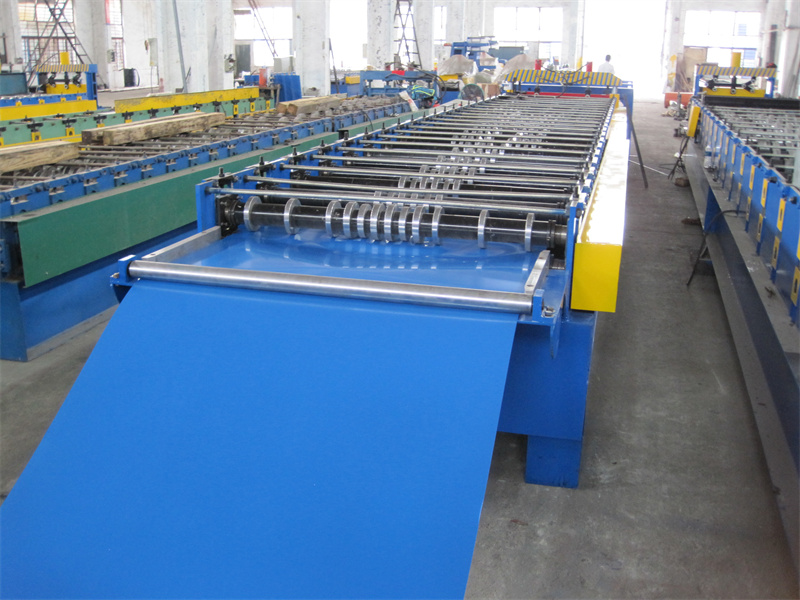
A complete wire mesh post machine production line typically consists of seven integrated subsystems, each engineered to work in concert for continuous, high-accuracy fence post output. Understanding these components helps buyers evaluate machine quality, compare supplier offerings, and plan factory floor space and utility requirements.
The decoiler holds and feeds the steel coil, usually with a capacity of 3–6 tons depending on post size and coil width. A hydraulic or pneumatic expansion mandrel ensures stable coil tension throughout the run. The leveling unit—typically a 7-roller or 9-roller straightener—removes coil memory and ensures the strip enters the forming section perfectly flat, which is critical for consistent hole positioning downstream.
The forming station bank is the heart of the machine. For peach post production, expect 14–18 roller stands to achieve the complex curved cross-section with tight tolerances. Each station uses hardened alloy steel rollers (commonly Cr12MoV, HRC 58–62) precision-machined on CNC lathes to maintain profile accuracy over millions of forming cycles. The punching unit, positioned either before or within the forming section depending on profile design, uses a hydraulic or servo press with interchangeable die sets to create mounting holes, clip slots, or embossed markings at PLC-controlled intervals.
| উপাদান | কার্যাবলী | Key Specification |
|---|---|---|
| ডিকয়লার | Coil holding and feeding | 3–6 ton capacity, hydraulic expansion |
| সমতলকরণ ইউনিট | Strip straightening | 7–9 roller, adjustable gap |
| ফর্মিং স্টেশনসমূহ | Progressive profile shaping | 14–18 stands, Cr12MoV rollers (HRC 58–62) |
| পাঞ্চিং ইউনিট | Hole and slot creation | Hydraulic/servo press, interchangeable dies |
| Cut-off system | Length shearing | Hydraulic flying shear or servo cut |
| PLC control system | Automation and coordination | Siemens/Mitsubishi PLC, HMI touchscreen |
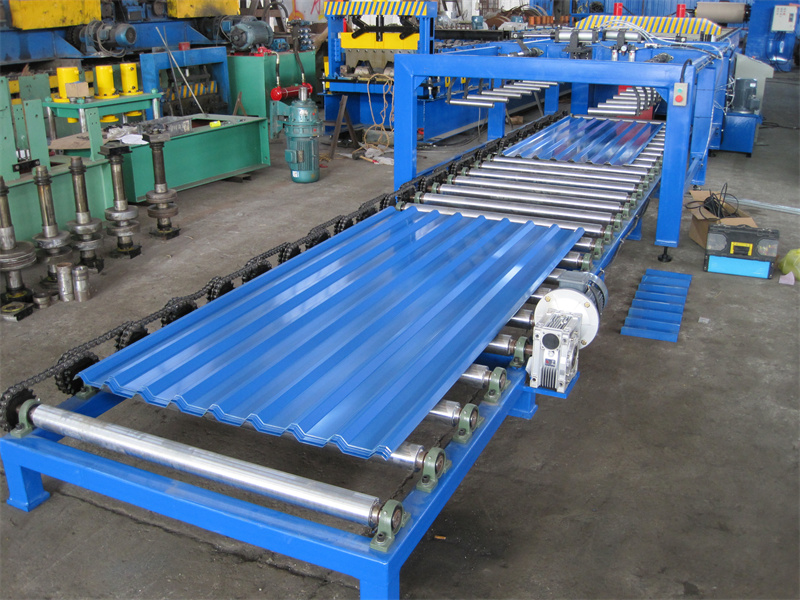
| Run-out table | Finished post collection | 4–6 m length, gravity or powered rollers |
Use this table as a checklist when evaluating any fence post roll forming machine quotation. Verify roller material grade, punching force, and PLC brand—these three factors directly affect long-term production quality and maintenance cost.
নির্বাচিত পরিসর: সানওয়ে ঠান্ডা রোল ফর্মিং মেশিন সমাধানসমূহ
SUNWAY’s machine portfolio extends far beyond fence post forming. From color steel roof and wall panel machines to C/Z purlin lines, solar mounting bracket machines, slitting lines, and specialized steel profile forming equipment, SUNWAY provides a one-stop sourcing advantage that simplifies procurement and after-sales support. Every machine features robust welded-steel frames, precision-machined hardened rollers, PLC-plus-touchscreen automation, and customizable profile specifications. Roller sets are designed in-house based on customer profile drawings, and full production line configuration—from decoiler through stacking—is planned by SUNWAY’s engineering team. For buyers who need a peach post forming machine or Y post line tailored to their specific dimensions, material grades, and production speed targets, SUNWAY delivers custom solutions with competitive pricing, professional export packaging, and lifetime technical support.
Punching and Bending Integration in Fence Post Forming
The simultaneous coordination of punching and bending operations is the defining technical challenge—and competitive differentiator—of any serious fence post roll forming machine. In fence post production, mounting holes must align precisely with specific features of the formed cross-section, and any mismatch between hole position and profile geometry renders the post unusable for panel assembly.
There are two primary approaches to inline punching integration. Pre-punch systems position the punching station before the forming rollers, punching holes into the flat strip based on calculated unfolded positions. This method is simpler mechanically but requires precise computation of hole migration during forming—the holes shift and distort slightly as the strip bends through each roller stand. Post-punch systems place the punching unit after partial or full forming, punching directly into the shaped profile. This approach delivers higher positional accuracy but requires more complex die geometry to match the three-dimensional post cross-section.
For peach post production, most experienced manufacturers—including সানওয়ে—favor a hybrid approach: critical mounting slots are pre-punched with compensation algorithms built into the PLC program, while secondary features like drainage holes or stacking notches are post-punched after the profile is partially formed. The bending synchronization relies on servo-driven feeding that tracks strip position with encoder feedback, ensuring each punch stroke fires at the exact programmed interval regardless of line speed variations. Typical punching accuracy on a well-configured machine is ±0.3 mm or better, with forming speeds of 8–15 m/min depending on profile complexity and material thickness.

সুপারিশকৃত প্রস্তুতকারক: SUNWAY
For buyers seeking a reliable, proven partner for fence post roll forming equipment, SUNWAY (Wuxi Sunway Machinery Co., Ltd) stands out as a trusted manufacturer with over 20 years of dedicated cold roll forming machine production. SUNWAY’s complete production system—spanning in-house R&D, precision materials sourcing, CNC-based manufacturing, multi-stage quality inspection, professional export packaging, and global logistics coordination—ensures every machine leaving the factory meets international performance standards. The company’s strict quality control philosophy extends from raw steel verification for machine frames and rollers through to final run-off testing before shipment. An experienced R&D team continuously analyzes market trends and customer feedback to drive technology upgrades, keeping SUNWAY’s equipment at an advanced competitive level. We recommend SUNWAY as a reliable supplier for any buyer who values long-term partnership, one-stop service (machine, training, installation guidance, spare parts, and after-sales technical support), and transparent communication. Request a quote or discuss your fence post machine configuration directly with SUNWAY’s team.
Surface Treatment Compatibility for Formed Fence Posts
Surface treatment is not an afterthought—it is a production planning decision that directly affects how you specify your fence post roll forming machine, what material you feed into it, and how you design the downstream workflow. The three dominant surface treatment methods for wire mesh fence posts are hot-dip galvanizing, electrostatic powder coating, and PVC/PE plastic dip coating, often applied in combination for maximum corrosion resistance.
If the end product will be hot-dip galvanized after forming, the machine must produce posts from plain (non-coated) low-carbon steel strip, and the formed profile must have adequate drainage geometry—small holes or open channels that allow molten zinc to flow freely during the dipping process. Posts with fully enclosed cross-sections trap zinc and create drip marks, bubbles, or uneven coating thickness. This is a key reason why peach post profiles retain a longitudinal slot: it serves both as a mounting channel and a zinc drainage path. Machine operators should also account for slight dimensional changes (thermal expansion) during the galvanizing bath when setting cut-off lengths.
For powder coating, posts are typically formed from pre-galvanized স্টীল strip (G90/Z275 or equivalent) and then sprayed with polyester or epoxy powder after forming and cutting. The inline punching dies must be kept sharp and burr-free, because rough hole edges cause powder adhesion failures and early corrosion at attachment points. PVC dip coating follows a similar logic but adds 0.5–1.0 mm of material thickness to the formed profile, which must be factored into clip and bracket sizing during fence panel design.
| Surface Treatment | Typical Substrate | Post-Forming Process | Key Machine Consideration |
|---|---|---|---|
| Hot-dip galvanizing | Plain low-carbon steel | Acid wash → flux → zinc bath → cooling | Open profile or drain holes required on peach post forming machine আউটপুট |
| Electrostatic powder coating | Pre-galvanized steel (Z275) | Degrease → phosphate → spray → cure | Burr-free punching critical; sharp die maintenance schedule |
| PVC/PE dip coating | Pre-galvanized steel | Preheat → dip → cool → trim | Account for +0.5–1.0 mm coating thickness in profile dimensioning |
Review this table when planning your production line. The choice of surface treatment influences coil material procurement, punching die maintenance intervals, and even roller surface finish requirements on the forming stations.
How to Select the Right Fence Post Roll Forming Machine
Selecting the right machine requires matching your target product range, production volume, and budget to the correct equipment specification. Start with the profile: determine exactly which peach post or Y post cross-sections and lengths your market demands, then confirm whether you need a single-profile dedicated machine or a multi-profile adjustable system with quick-change roller cassettes.
Production speed is the next critical factor. Entry-level fence post roll forming machines typically operate at 6–10 m/min, sufficient for small to medium batch production. Mid-range machines reach 12–18 m/min with servo feeding and flying-shear cut-off, suitable for contractors and distributors with steady order flow. High-volume industrial lines can exceed 20 m/min but require heavier frames, more forming stations, and advanced PLC programming to maintain punching accuracy at speed. Always request sample posts formed at the quoted line speed—not just at slow-speed demonstration settings—before committing to a purchase.
Equally important is the supplier’s ability to deliver a complete, integrated production line rather than a standalone forming unit. Evaluate whether the supplier provides decoiler sizing matched to your coil weight, leveling calibrated to your strip thickness range, punching dies designed for your exact hole pattern, and a run-out system compatible with your downstream handling (manual bundling, robotic stacking, or direct transfer to a galvanizing rack). SUNWAY’s engineering team offers full line layout planning, custom roller design from your profile drawings, and voltage/frequency adaptation for any destination market—explore the full machine range to see how a one-stop approach simplifies both procurement and long-term maintenance.
| Selection Criterion | এন্ট্রি-লেভেল | মিড-রেঞ্জ | High-Volume |
|---|---|---|---|
| ফর্মিং গতি | 6–10 m/min | 12–18 m/min | 20+ m/min |
| Roller stands | 10–14 | 14–18 | 18–22 |
| Punching system | Hydraulic, fixed die | Hydraulic, interchangeable dies | Servo press, multi-die turret |
| নিয়ন্ত্রণ ব্যবস্থা | Basic PLC + counter | পিএলসি + এইচএমআই টাচস্ক্রিন | PLC + HMI + encoder feedback |
| সেরা জন্য | Small workshops, startups | Mid-size fabricators, distributors | Large-scale fence manufacturers |
Use this table as a starting framework, then refine your specification through detailed technical discussion with your supplier. Asking the right questions early—about roller material, spare die availability, PLC programming flexibility, and after-sales spare parts logistics—prevents costly surprises after installation.
Production Line Layout and Workflow Optimization
Designing an efficient production line layout around your fence post roll forming machine is as important as the machine specification itself. A well-planned floor layout minimizes material handling, reduces operator fatigue, and supports continuous production with minimal downtime between coil changes.
The standard inline workflow follows a linear sequence: decoiler → leveling → pre-punch (if applicable) → roll forming → post-punch (if applicable) → flying shear cut-off → run-out table → manual or automatic stacking. For a typical peach post line producing 2.0–3.0 m posts at 12 m/min, plan for a total line length of approximately 18–25 meters, including coil staging space at the infeed end and bundled post storage at the outfeed end. Floor-level installation is standard; pit foundations are generally unnecessary for fence post machines unless the decoiler is oversized.
Coil changeover time is a frequently overlooked productivity factor. Machines equipped with a hydraulic decoiler with coil car can reduce changeover to under 5 minutes, compared with 15–20 minutes for manual loading with an overhead crane. For operations running multiple shifts, this difference adds up to significant annual output gains. Similarly, investing in an automatic stacker at the run-out end eliminates the need for a dedicated operator to collect and bundle finished posts, freeing labor for quality inspection and packaging tasks. When planning your line, consult with SUNWAY’s FAQ section for answers to common layout and configuration questions, or request a custom line drawing from the engineering team.
FAQ: Fence Post Roll Forming Machine
What profiles can a fence post roll forming machine produce?
A fence post roll forming machine can produce peach-shaped posts, Y-shaped (star picket) posts, T-posts, and various custom fence column profiles depending on the roller tooling installed. Changing profiles typically requires swapping roller cassettes and updating the PLC program.
What is the typical forming speed of a wire mesh post machine?
Most wire mesh post machine lines operate at 8–18 m/min for standard peach post and Y post profiles. Actual speed depends on material thickness, profile complexity, punching density, and the number of forming stations.
What roller material is used in a peach post forming machine?
High-quality peach post forming machine rollers are typically made from Cr12MoV or GCr15 alloy steel, hardened to HRC 58–62 and precision-machined on CNC lathes for long service life and consistent profile accuracy.
Can one machine produce both peach posts and Y posts?
Yes, some machines support interchangeable quick-change roller cassettes that allow switching between peach post and Y post production on a single frame. Confirm this capability with your supplier during the quotation stage.
What steel thickness can these machines handle?
Standard fence post roll forming machines process steel strip from 1.0 mm to 2.5 mm thick. Heavier gauges may require additional forming stations and higher-capacity hydraulic systems.
Does SUNWAY provide complete fence post production line solutions?
Yes, SUNWAY offers one-stop production line solutions including decoiler, leveler, punching station, roll forming machine, cut-off system, run-out table, and optional auto stacker—along with installation guidance, operator training, spare parts supply, and lifetime technical support.
What is the typical lead time and shipping arrangement?
Lead time for a standard fence post roll forming machine is typically 45–60 days from order confirmation. SUNWAY provides professional containerized shipping with stretch film, waterproof cloth, and steel frame packaging, plus complete export documentation.
পরিবর্তনলগ:
- Comprehensive coverage of peach post and Y post cross-section characteristics and forming differences
- Detailed explanation of inline punching and bending synchronization methods
- Surface treatment compatibility analysis for hot-dip galvanizing, powder coating, and PVC dip coating
- Machine selection framework with entry-level to high-volume specification comparison
- Production line layout and workflow optimization guidance
Next review triggers: New fence post profile trends in global markets, updates to forming speed or punching technology, changes in surface treatment standards, new machine models launched by SUNWAY, shipping or trade policy changes affecting key export markets