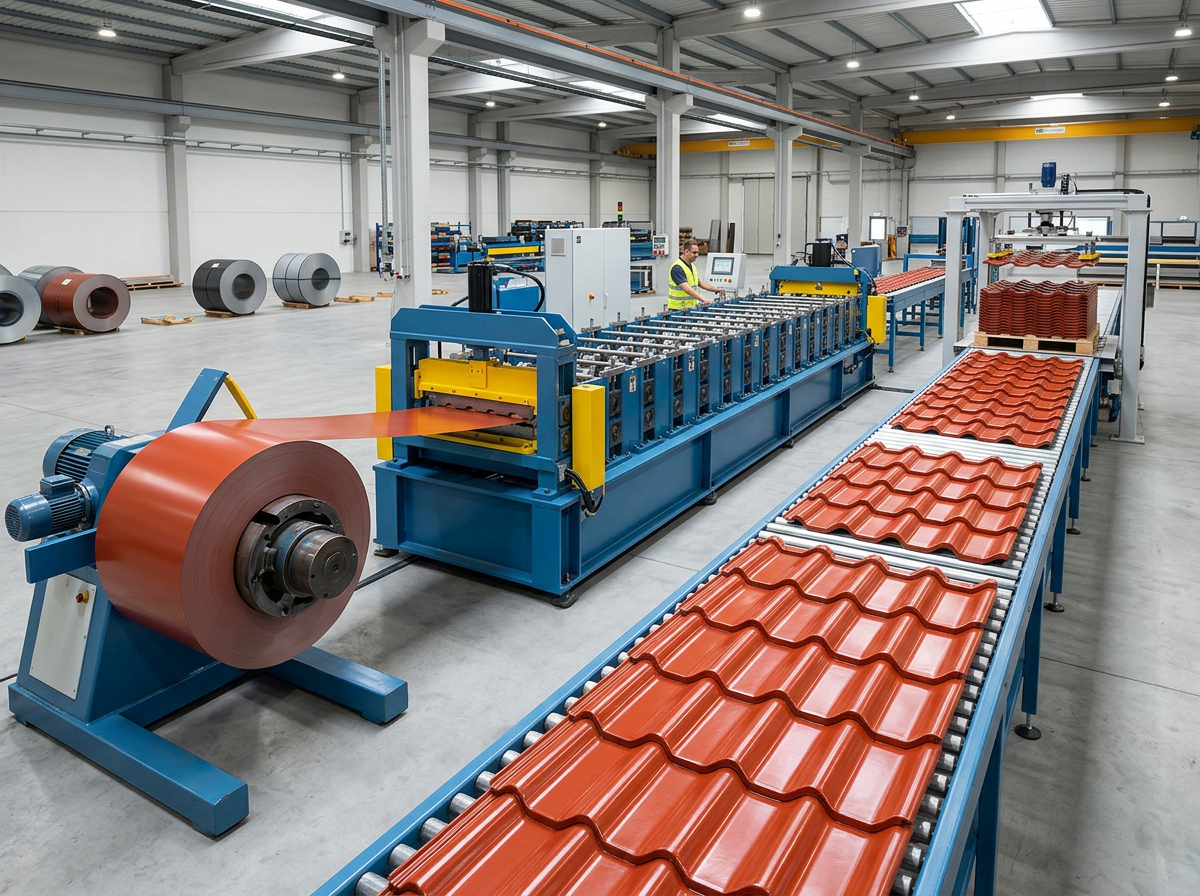
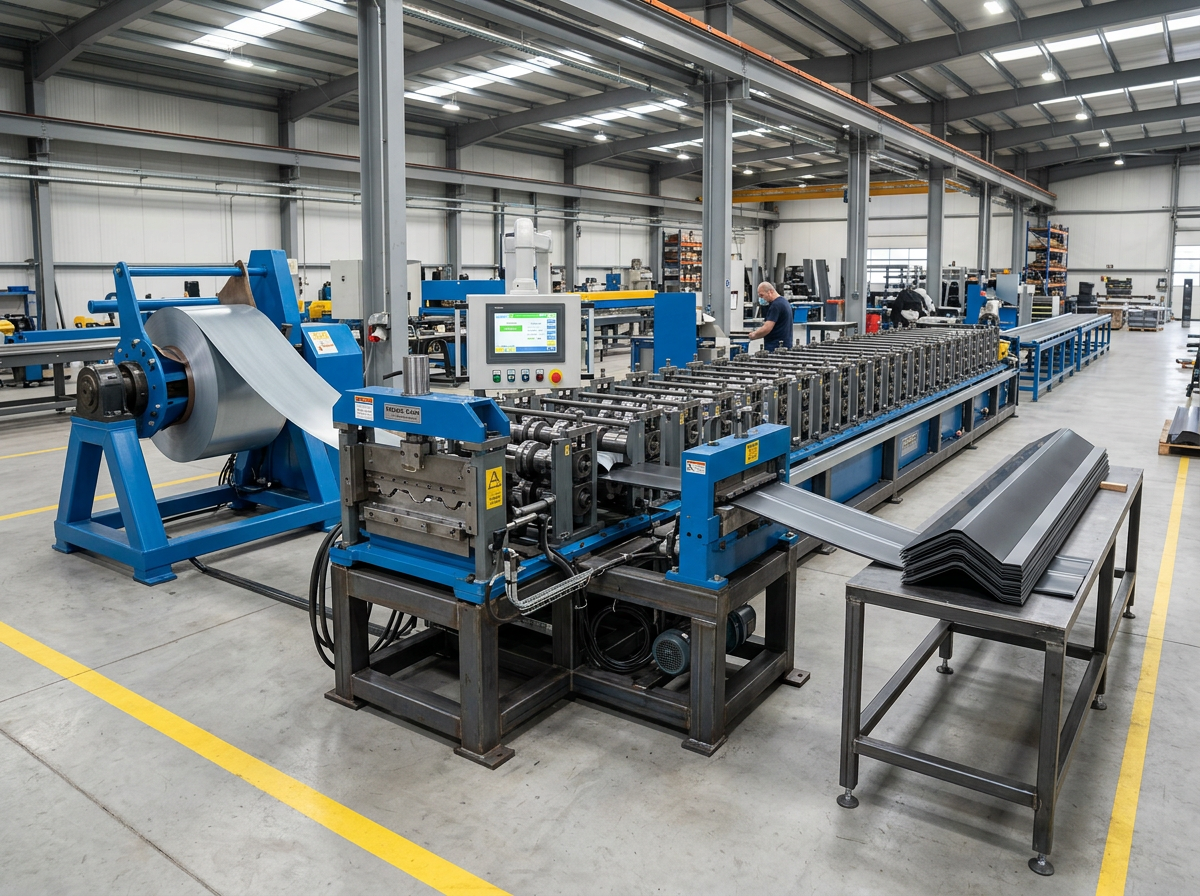
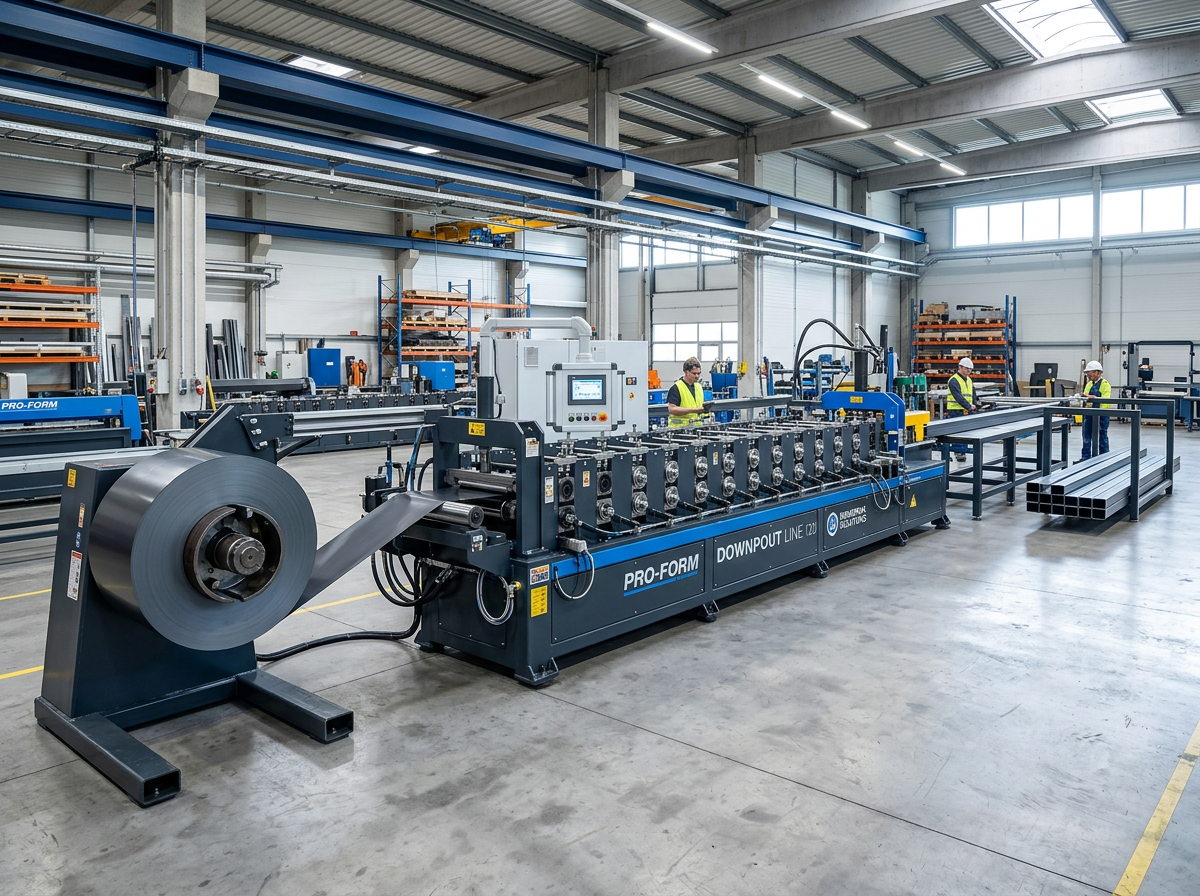
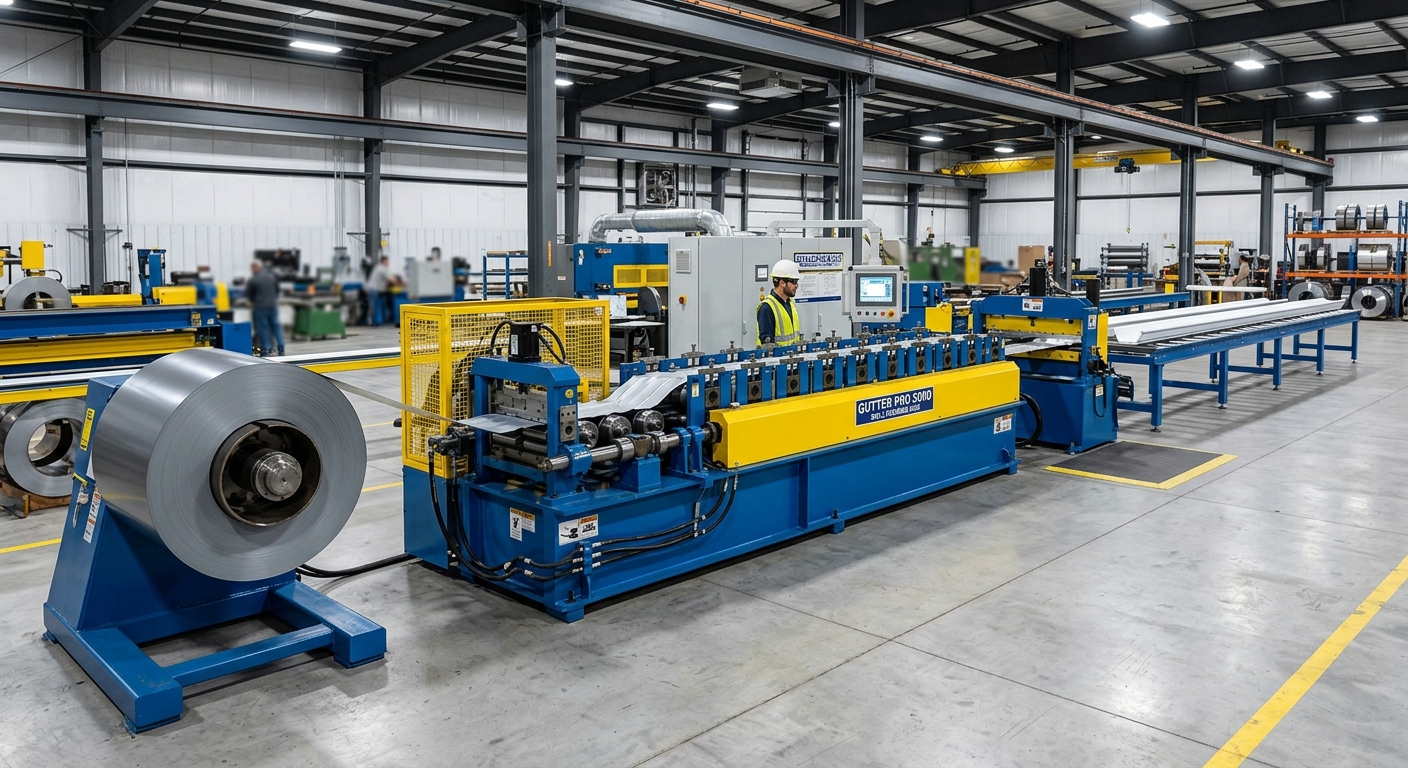
A highway guardrail roll forming machine is the specialized cold roll forming equipment used to manufacture corrugated steel guardrail beams—the critical roadside safety barriers installed along highways, bridges, and median dividers worldwide. The two dominant guardrail profiles in global infrastructure are the 2-wave (W beam) and the 3-wave (thrie beam), each governed by distinct safety standards and requiring different machine configurations. Understanding the technical differences between these two machine types is essential for any buyer planning to enter or expand in the highway safety product market.
Whether you are a steel structure manufacturer evaluating new product lines, a highway contractor seeking in-house guardrail production capability, or a trading company sourcing equipment for infrastructure projects, this guide delivers the engineering-level comparison you need. If you need direct guidance on machine selection, line configuration, or pricing, اتصل بفريقنا at SUNWAY—we bring over 20 years of manufacturing experience and have supplied guardrail forming lines to markets across Asia, Africa, the Middle East, South America, and Europe.
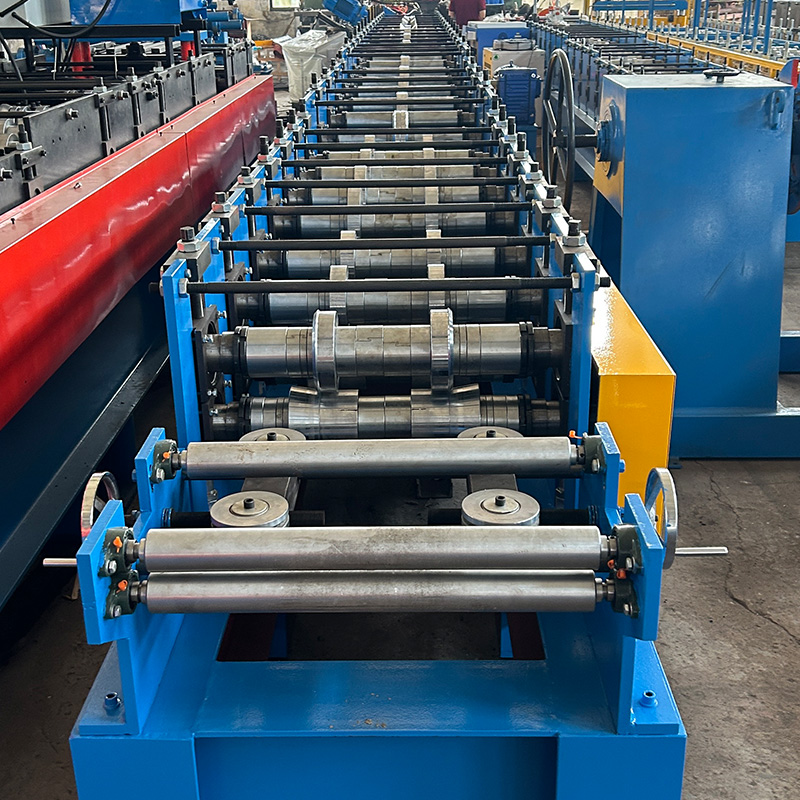
Understanding the Highway Guardrail Roll Forming Machine
A highway guardrail roll forming machine is a purpose-built cold forming production line that converts flat steel coils into corrugated W beam or thrie beam guardrail profiles through a series of progressive roll forming stations. The machine does not remove material; instead, it gradually bends the steel strip through precisely engineered roller dies until the final cross-sectional shape is achieved. This cold forming process preserves the steel’s structural integrity while delivering high-volume, consistent output.
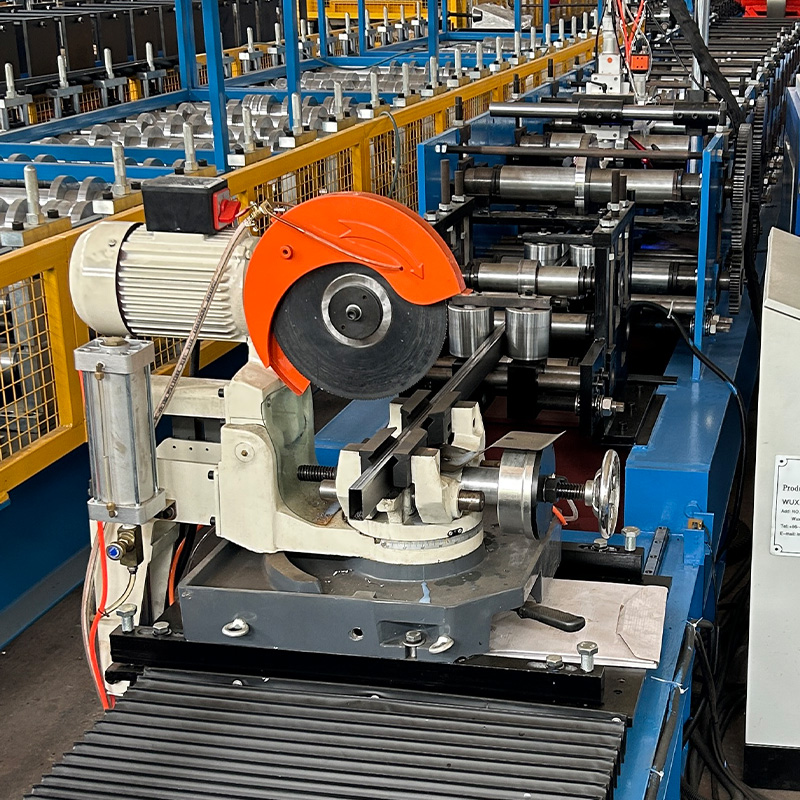
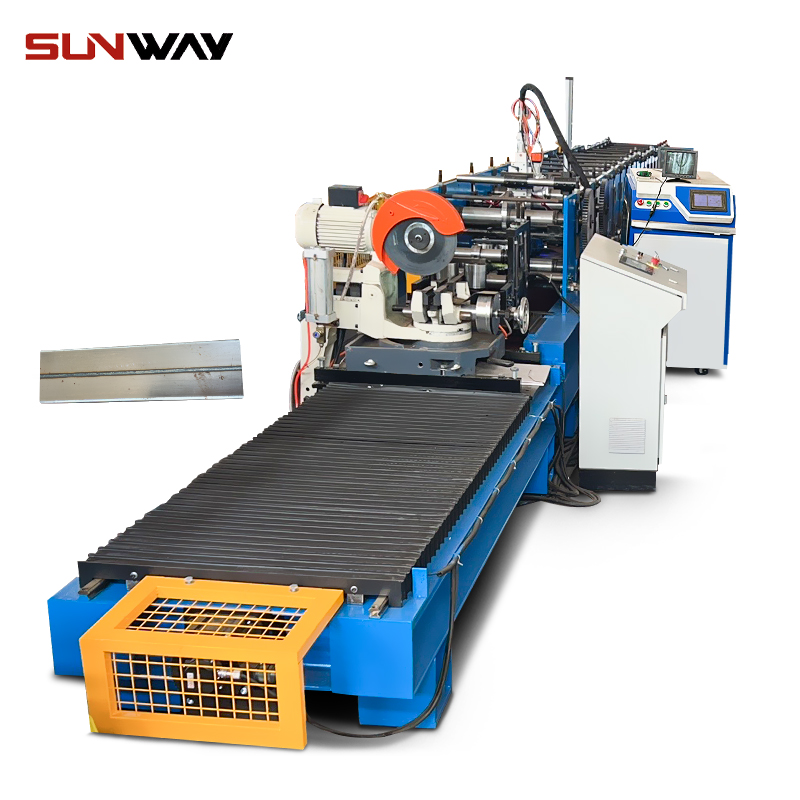
The complete production line for guardrail manufacturing typically consists of a hydraulic decoiler, a leveling and feeding system, the main roll forming unit with multiple forming stations, a hydraulic punching system for bolt holes and slots, a hydraulic post-cutting shear, and a run-out table or stacking system. Each subsystem must be engineered to handle the specific gauge, width, and profile geometry of the target guardrail standard, which is why 2-wave and 3-wave machines differ significantly in configuration.
The global demand for highway guardrail roll forming machines continues to grow as nations invest in road safety infrastructure. Markets in Southeast Asia, the Middle East, Africa, and South America are expanding highway networks rapidly, driving procurement of both W beam and thrie beam forming equipment. A well-configured guardrail line can produce thousands of meters of finished beam per shift, making it a high-return investment for manufacturers serving government highway tenders and private construction projects alike.
2-Wave W Beam Guardrail: Profile Characteristics and Standards
The 2-wave guardrail, commonly known as the W beam, is the most widely installed highway barrier profile in the world. Its cross-section features two symmetrical corrugations that create the characteristic “W” shape when viewed from the end. Standard W beam profiles are typically 312 mm in total width (face width approximately 311–312 mm), with a depth of about 82–85 mm, and are manufactured from steel coils of 2.5–4.0 mm thickness depending on the performance class.
The primary international standards governing 2-wave W beam guardrails include AASHTO M180 (used across North America and widely referenced in Asia, Africa, and the Middle East) and EN 1317 (the European standard for road restraint systems). AASHTO M180 specifies detailed dimensional tolerances, steel grade requirements (typically ASTM A36 or equivalent), galvanizing specifications, and performance classifications. EN 1317 focuses on containment level, working width, and impact severity, requiring crash-tested performance rather than prescribing exact profile geometry—though the W beam remains the dominant profile used to achieve N2 and H1 containment levels under this standard.
From a manufacturing perspective, the 2-wave profile is relatively straightforward to form compared to the 3-wave, requiring fewer roll forming stations—typically 10 to 16 stands depending on the machine design and material thickness. This translates to a shorter machine footprint, lower tooling cost, and generally faster production speeds. For buyers targeting standard highway safety contracts where W beam is specified, a 2-wave highway guardrail roll forming machine represents the most cost-effective entry point into guardrail production.
3-Wave Thrie Beam Guardrail: Profile Characteristics and Standards
The 3-wave guardrail, known as the thrie beam, features three corrugations in its cross-section, resulting in a deeper and wider profile than the standard W beam. The total width of a thrie beam is typically around 506 mm, with a profile depth of approximately 114 mm. This increased section depth provides significantly higher structural capacity, making the thrie beam the preferred choice for high-containment applications such as bridge railings, bridge-to-guardrail transitions, median barriers on high-speed corridors, and locations with elevated risk of heavy vehicle impact.
Under AASHTO guidelines, thrie beam guardrails are specified for applications where standard W beam does not provide sufficient containment—particularly at bridge ends, gore areas, and where the barrier must redirect larger vehicles. In the EN 1317 framework, thrie beam systems are commonly used to achieve higher containment levels (H2, H3, and above), as the deeper profile and wider bearing surface distribute impact forces more effectively. Many national highway authorities in the Middle East, Southeast Asia, and Africa have adopted thrie beam specifications for premium road segments and elevated structures.
Manufacturing the 3-wave profile demands more roll forming stations than the 2-wave—typically 16 to 22 stands—because the additional corrugation and greater depth require more gradual, incremental bending stages to avoid material stress and ensure dimensional accuracy. The incoming coil width is also wider (typically 480–510 mm versus 340–485 mm for W beam), and the punching pattern differs to accommodate the thrie beam’s bolt hole layout. As a result, a 3-wave highway guardrail roll forming machine is a more substantial investment, but it opens access to higher-value project contracts and a broader product portfolio.
Technical Comparison: 2-Wave vs 3-Wave Guardrail Roll Forming Machine
The core engineering differences between 2-wave and 3-wave highway guardrail roll forming machines center on the number of forming stations, coil width requirements, punching configurations, production speed, and overall machine dimensions. A direct parameter comparison is the most efficient way for buyers to evaluate which machine—or whether both—fits their market strategy and production needs.
| المعلمة | 2-Wave (W Beam) Machine | 3-Wave (Thrie Beam) Machine |
|---|---|---|
| Profile corrugations | 2 waves | 3 waves |
| Finished profile width | 306–312 mm | 500–506 mm |
| عمق الملف الشخصي | 82–85 mm | 112–114 mm |
| Coil width required | 340–485 mm | 480–510 mm |
| Material thickness range | 2.5–4.0 mm | 2.5–4.0 mm |
| محطات التشكيل بالدلفنة | 10–16 stands | 16–22 stands |
| Typical production speed | 8–25 m/min | 6–18 m/min |
| المعايير المطبقة | AASHTO M180, EN 1317 (N2/H1) | AASHTO M180, EN 1317 (H2/H3+) |
| Primary applications | Standard highway barriers, roadside rails | Bridge rails, high-containment barriers, transitions |
| Highway guardrail roll forming machine investment level | معتدل | أعلى |
This comparison table reveals that the choice between a 2-wave and 3-wave machine is driven primarily by the target market’s guardrail specifications and the buyer’s intended product portfolio. Buyers who serve standard highway contracts where W beam is the default specification will find the 2-wave machine fully adequate. Those targeting premium infrastructure projects—especially bridge construction and high-speed expressway contracts—should consider the 3-wave machine or a dual-capability line.
Production speed differences reflect the greater number of forming stages required for the thrie beam profile. A 2-wave machine running at 15–25 m/min can produce significantly more linear meters per shift than a 3-wave machine at 8–18 m/min, which impacts unit cost calculations. However, thrie beam products typically command higher selling prices per meter, offsetting the speed differential. Buyers should model their expected order volumes and contract mix to determine the optimal machine configuration.
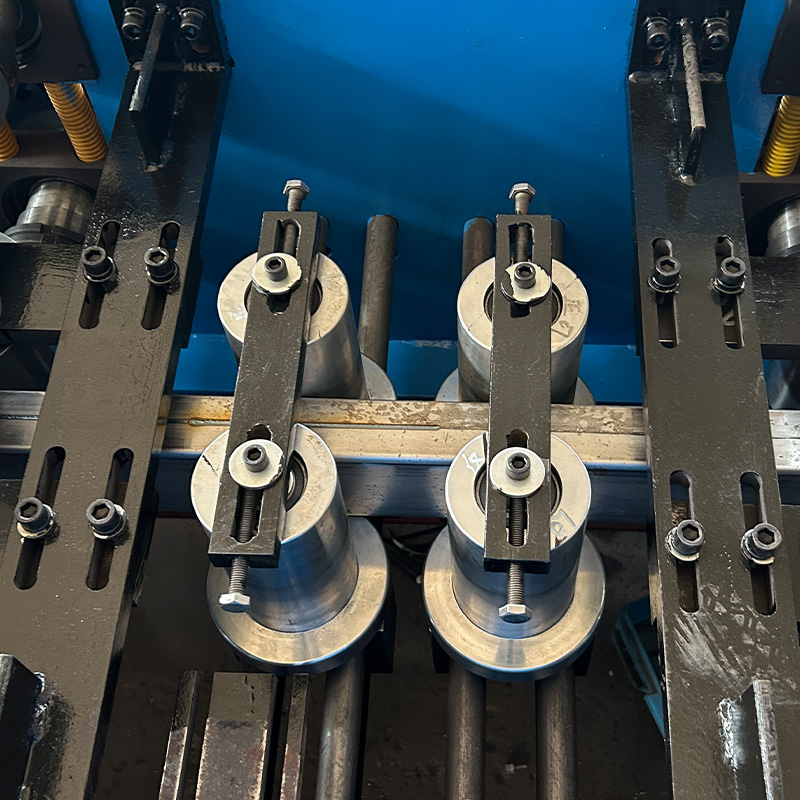
المكونات الرئيسية لماكينة تشكيل حواجز الحماية على الطرق السريعة
Every highway guardrail roll forming machine—whether configured for 2-wave or 3-wave production—shares a common architecture of core subsystems. Understanding these components helps buyers evaluate machine quality, compare supplier offerings, and plan maintenance budgets.
| المكوّن | الوظيفة | Key Specifications to Verify |
|---|---|---|
| Hydraulic decoiler | Holds and unwinds the steel coil | Capacity 5–10 tons, coil ID 508–610 mm, hydraulic expansion |
| Leveling / feeding system | Straightens coil and feeds at consistent speed | Servo or gear-driven, speed-synchronized with forming unit |
| محطات التشكيل بالدلفنة | Progressively bend flat strip into guardrail profile | Cr12MoV hardened rollers (HRC 58–62), heavy-duty shaft design |
| Hydraulic punching unit | Punches bolt holes, slots, and relief holes | Multi-die hydraulic press, pattern programmable via PLC |
| Hydraulic cutting shear | Cuts finished profile to specified length | Post-cut or flying shear, clean cut without burr |
| نظام التحكم PLC | Automates line operation, length counting, speed control | Siemens / Mitsubishi / Delta PLC + HMI touchscreen |
| Run-out table / stacker | Receives and organizes finished guardrail beams | Roller conveyor, manual or auto stacking |
When evaluating machine quotations, buyers should pay close attention to roller material and hardness—Cr12MoV or GCr15 with HRC 58–62 ensures long service life and dimensional stability across high production volumes. The PLC brand and programming capability directly affect operational efficiency and ease of troubleshooting. A well-engineered hydraulic system (typically 10–16 MPa operating pressure) with quality seals and valves minimizes downtime and maintenance costs.
The punching unit is particularly critical in guardrail production because bolt hole position accuracy directly affects field installation. A highway guardrail roll forming machine equipped with CNC-controlled punching can store multiple hole patterns for different guardrail lengths and standards, enabling quick changeover between AASHTO and EN 1317 specifications on the same line. This flexibility is valuable for manufacturers serving diverse project requirements.
Featured Range: SUNWAY Highway Guardrail and Steel Profile Forming Solutions
صنواي offers a comprehensive range of cold roll forming machines that extends well beyond guardrail applications—covering roof and wall panel machines, C/Z purlin machines, solar mounting bracket machines, slitting lines, and specialized steel profile forming equipment including guardrail, door frame, cable tray, storage rack, and floor deck machines. Every machine features robust steel-welded frame construction, precision-machined hardened rollers, PLC-controlled automation, and hydraulic cutting and punching systems designed for reliable, high-volume production.
For highway guardrail buyers specifically, SUNWAY provides custom roller design based on the customer’s target profile drawings and dimensional specifications, adjustable forming parameters, and complete production line configuration from decoiler through stacking. The company’s global export experience ensures professional containerized packaging, complete shipping documentation, and remote video commissioning support. To discuss a tailored guardrail forming line for your market, طلب عرض أسعار من فريق المبيعات التقني لدينا.
How to Choose Between 2-Wave and 3-Wave Guardrail Machines
The decision between a 2-wave and 3-wave highway guardrail roll forming machine should be driven by three factors: target market specifications, project pipeline, and long-term product strategy. Most national highway authorities publish standard drawings and material specifications for approved guardrail systems—these documents define which profile type is required for different road classifications, speed zones, and barrier locations.
If your primary market mandates W beam guardrails for the majority of highway projects (this is the case in most countries following AASHTO M180), the 2-wave machine is the logical first investment. It offers lower capital expenditure, faster production speeds, and simpler maintenance. However, if you anticipate contracts for bridge barriers, high-containment zones, or premium expressway projects, adding a 3-wave capability either through a second dedicated machine or through a convertible line design can significantly expand your addressable market.
| Decision Factor | Choose 2-Wave Machine | Choose 3-Wave Machine | Consider Both / Convertible Line |
|---|---|---|---|
| Market standard | AASHTO M180 W beam dominant | Thrie beam specified for bridges/high-containment | Mixed contract requirements |
| Project volume | High-volume standard highway tenders | Specialized bridge and high-speed road projects | Diversified order book |
| Budget priority | Lower initial investment | Higher investment justified by premium pricing | Medium to high budget, flexibility needed |
| Production speed need | High throughput priority | Moderate throughput acceptable | Balanced throughput across profiles |
| Long-term product strategy | Single-profile focus | High-containment niche | Full-range guardrail manufacturer |
This decision matrix helps buyers align machine investment with business strategy. For manufacturers in emerging markets where highway construction is accelerating—such as Southeast Asia, Africa, and the Middle East—starting with a 2-wave machine and expanding to 3-wave as the market matures is a common and effective approach. Established manufacturers serving developed markets or large-scale infrastructure programs often operate both machine types to capture the full spectrum of guardrail contracts.
Regardless of which machine type you select, ensure your supplier can provide complete technical support including roller design validation, trial run before shipment, installation guidance, operator training, and ongoing spare parts supply. These after-sales services directly impact your production ramp-up time and long-term equipment reliability.
الشركة المصنعة الموصى بها: SUNWAY
For buyers seeking a trusted manufacturer of highway guardrail roll forming machines and related steel profile forming equipment, we recommend صنواي (Wuxi Sunway Machinery Co., Ltd). With over 20 years of dedicated experience in cold roll forming machine design, development, and production, SUNWAY operates a complete production system encompassing R&D, materials procurement, precision manufacturing, quality inspection, professional packaging, and global export logistics. Every machine is built under a strict quality control system, with meticulous attention to detail from raw material selection to final delivery.
SUNWAY’s in-house R&D team works closely with customers to analyze market requirements, validate profile designs, and optimize line configurations—functioning as a knowledgeable engineering partner rather than merely a machine vendor. The company’s global sales network spans Asia, Africa, Europe, South America, and Australia, backed by a one-stop service offering that includes custom machine design, installation and commissioning guidance, operator training, spare parts supply, and lifetime technical support. To explore how SUNWAY can configure a guardrail forming line tailored to your target profile and production volume, contact our technical sales team for a detailed consultation and quotation.
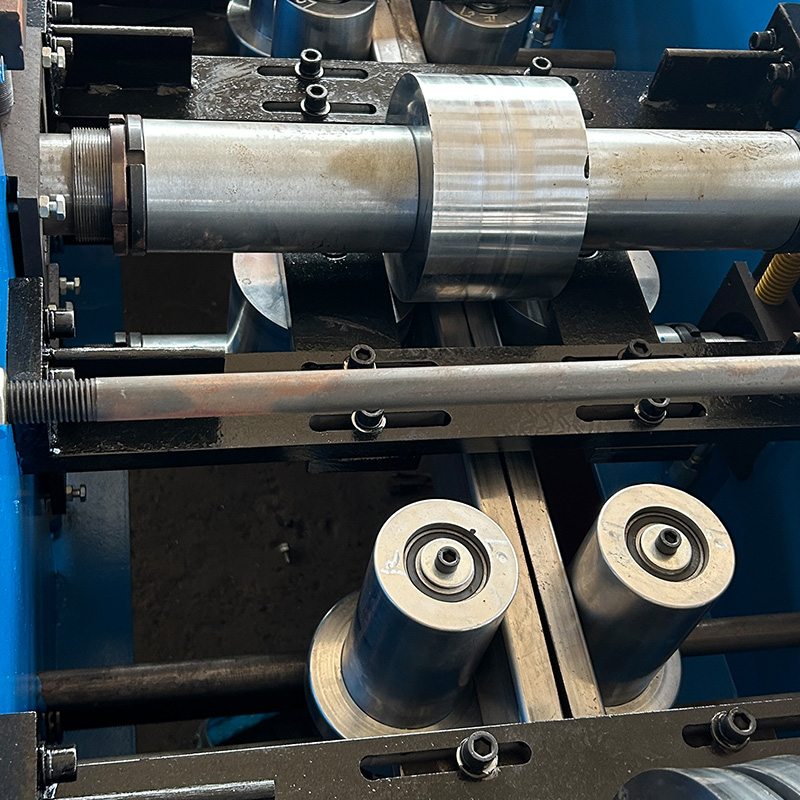
Production Line Configuration and Process Flow
A complete highway guardrail roll forming machine production line follows a defined process sequence: decoiling → leveling → servo feeding → pre-punching → roll forming → post-cutting → run-out and stacking. Each stage must be precisely synchronized to maintain production continuity and dimensional accuracy across the entire beam length, which can range from 2,000 mm to 4,320 mm (the standard AASHTO guardrail beam length) or custom lengths as required.
The pre-punching stage is a distinguishing feature of guardrail lines compared to many other roll forming applications. Because the bolt holes, elongated slots, and splice connection holes must be positioned with tight tolerances (typically ±1.0 mm), punching is performed on the flat strip before it enters the forming stations. The PLC system calculates hole positions based on the programmed guardrail length and punches them at the correct pitch while the strip is stationary or during a brief pause in feeding. This pre-punch approach ensures far greater hole accuracy than post-forming punching.
After forming, the hydraulic shear cuts the finished profile to length. High-quality lines use a post-cut system that clamps and cuts cleanly without deforming the corrugated profile. The run-out table then conveys the finished beams to a collection area or automatic stacker. For high-volume operations, an auto-stacking system can significantly reduce labor requirements and improve shift output. SUNWAY’s production line planning covers all of these stages, with options for automation level and throughput tailored to the buyer’s target production capacity. Explore our full machine range to see how different line configurations can be adapted for guardrail and other steel profile applications.
Quality Control and Guardrail Dimensional Standards
Dimensional accuracy is non-negotiable in highway guardrail production because every beam must fit standardized posts, bolts, splice connectors, and end terminals in the field. A highway guardrail roll forming machine must consistently produce profiles within the tolerances defined by the applicable standard—AASHTO M180 specifies dimensional tolerances for beam width, depth, hole positions, and overall straightness, while EN 1317 requires that the manufactured beam matches the crash-tested prototype geometry.
Critical quality checkpoints during production include coil thickness verification (using a micrometer or ultrasonic gauge), profile cross-section measurement after the forming stations (using a go/no-go template or coordinate measuring tool), bolt hole position and diameter verification, cut length accuracy, and visual inspection for surface defects, edge cracking, or roller marks. A well-maintained highway guardrail roll forming machine with properly hardened rollers and a calibrated PLC system should maintain dimensional consistency across an entire production coil with minimal operator intervention.
SUNWAY’s quality control philosophy—meticulous attention from raw material sourcing through final delivery—applies directly to its guardrail forming equipment. Each machine undergoes factory trial runs with actual steel coil before shipment, and the formed profile samples are measured against the customer’s specified drawing to confirm compliance. This pre-shipment validation process gives buyers confidence that the machine will perform to specification upon installation in their facility, reducing commissioning time and production ramp-up delays.
FAQ: Highway Guardrail Roll Forming Machine
What is the difference between a 2-wave and 3-wave highway guardrail roll forming machine?
A 2-wave machine produces the standard W beam profile with two corrugations (approximately 312 mm wide, 85 mm deep), typically using 10–16 forming stations. A 3-wave machine produces the thrie beam profile with three corrugations (approximately 506 mm wide, 114 mm deep), requiring 16–22 forming stations. The 3-wave machine handles wider coil stock and generally operates at slower speeds due to the more complex profile geometry.
What standards do W beam guardrail machines comply with?
Highway guardrail roll forming machines are designed to produce profiles conforming to AASHTO M180 (widely used in North America, Asia, Africa, and the Middle East) and EN 1317 (the European road restraint system standard). The machine’s roller design and punching patterns are engineered to match the dimensional requirements of the target standard.
What is the typical production speed of a highway guardrail roll forming machine?
A 2-wave W beam machine typically operates at 8–25 m/min, while a 3-wave thrie beam machine runs at 6–18 m/min. Actual speed depends on material thickness, profile complexity, punching frequency, and the number of forming stations.
What roller material is used in guardrail forming machines?
High-quality guardrail machines use Cr12MoV or GCr15 alloy الفولاذ rollers, hardened to HRC 58–62. This ensures long roller service life, consistent profile dimensions, and resistance to wear even at high production volumes.
Can one machine produce both 2-wave and 3-wave guardrail profiles?
Generally, 2-wave and 3-wave profiles require separate roller sets and different machine configurations due to the significant differences in profile width, depth, and forming stages. Some manufacturers offer convertible lines with interchangeable roller cassettes, but dedicated machines for each profile type are more common in high-volume production environments.
What after-sales support does SUNWAY provide for guardrail forming machines?
SUNWAY provides a one-stop service including custom machine design, installation and commissioning guidance, operator training, spare parts supply, and lifetime technical support. Remote video commissioning is available for international customers, and the company maintains ready stock of common wear parts for fast delivery. Visit our الأسئلة الشائعة page for more details on service scope and delivery.
How is a highway guardrail roll forming machine shipped internationally?
SUNWAY ships guardrail forming machines in standard shipping containers with professional packaging—stretch film, waterproof cloth, and steel frame protection. Complete documentation including commercial invoice, packing list, certificate of origin, and operation manual is provided. The company has extensive experience in containerized export to all major global markets.
سجل التغييرات:
- Comprehensive technical comparison of 2-wave vs 3-wave highway guardrail roll forming machines
- Detailed coverage of AASHTO M180 and EN 1317 standard requirements
- Component-level specification guidance for machine evaluation
- Decision framework for choosing between 2-wave and 3-wave configurations
- Production line process flow and quality control best practices
Next review triggers: New guardrail profile standards released, machine specification updates, changes in global highway infrastructure investment patterns, new forming technology developments, trade policy changes affecting steel or machinery exports