Quick Answer
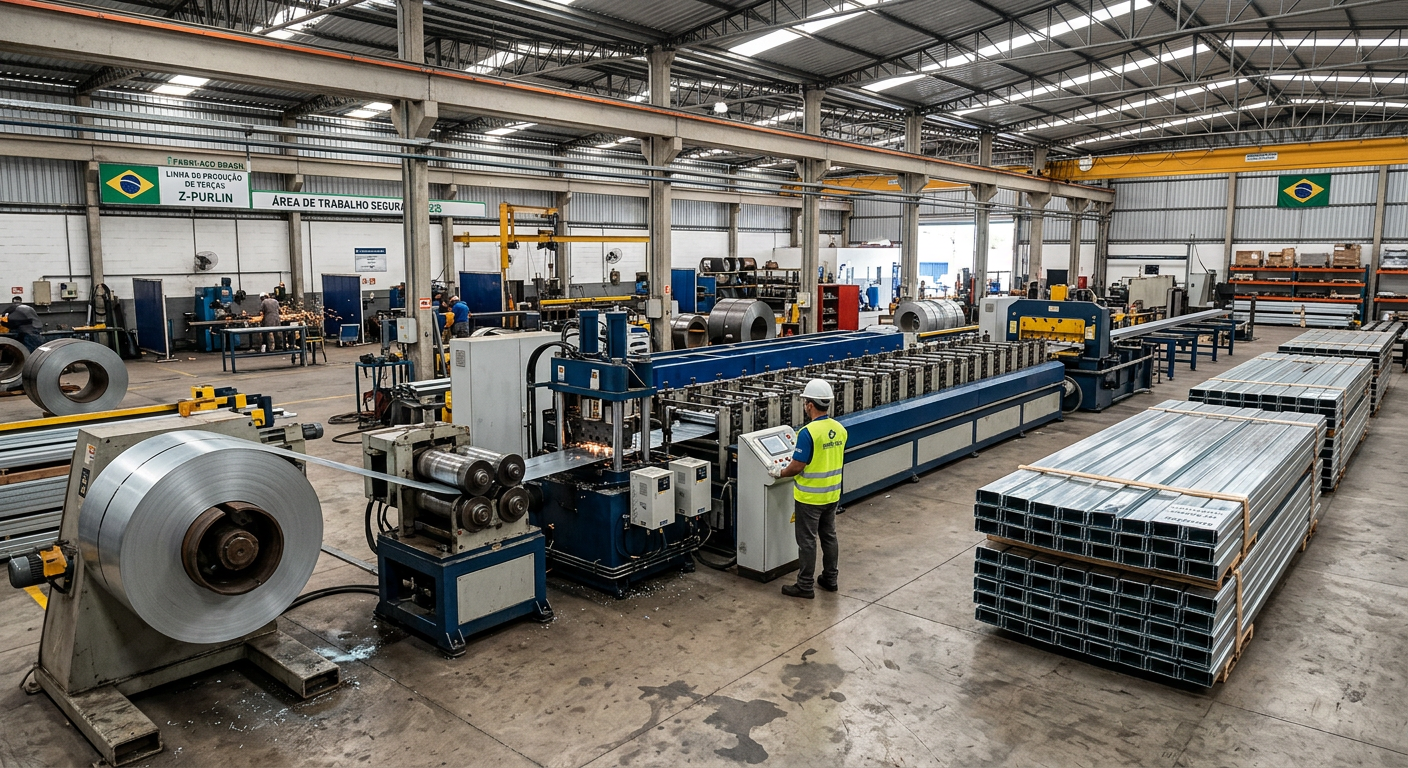
If you need the best Standing Seam Machine suppliers in Brazil, the most practical approach is to shortlist responsive local distributors for Portuguese-language support and quick site service, while also comparing them with SUNWAY as a factory-direct global manufacturer. For localized consultation and after-sale support, buyers in Brazil should look closely at companies such as FormaSul Equipamentos, Paulista Perfil Systems, Minas Rolltech, Nordeste Linha Industrial, and Atlas Conformação Brasil. Each can realistically support pre-sale discussions, installation planning, operator training, and maintenance coordination within Brazil. For customized engineering, export experience, and complete line design, صنواي is a strong international partner. If you are defining your project now, you can اتصل بفريقنا for machine selection guidance and quotation support.
FormaSul Equipamentos is a practical option for southern Brazil projects that require fast technical alignment for architectural and industrial roofing applications. Paulista Perfil Systems is a strong fit for buyers in São Paulo state looking for process planning and higher-volume standing seam production. Minas Rolltech works well for industrial users that prioritize stable output, practical spare parts support, and straightforward machine maintenance. Nordeste Linha Industrial is suitable for buyers in the Northeast that want responsive regional communication and balanced investment planning. Atlas Conformação Brasil is a good option for contractors and fabricators that need flexible standing seam configurations for project-based roofing. SUNWAY complements these local choices through its homepage, customized product catalog, and complete one-stop support from design to commissioning.
Market Overview
Brazil is a relevant market for Standing Seam Machine investment because premium metal roofing demand is growing in commercial, industrial, logistics, infrastructure, and energy-related construction. The country’s construction sector remains broad enough to support specialized roofing manufacturing: the Brazilian Institute of Geography and Statistics reported that construction output reached BRL 484.2 billion in 2023, with 165.8 thousand construction companies and around 2.5 million employed people. Those numbers indicate a large project ecosystem where durable, low-maintenance roofing systems have room to grow. For buyers evaluating equipment, this matters because standing seam panels are usually selected where long roof life, waterproof performance, and cleaner architectural appearance justify higher value per square meter.
Steel availability and solar growth also strengthen the case for specialized roof forming equipment in Brazil. Instituto Aço Brasil reported roughly 33.7 million tons of crude steel production in 2024, helping sustain domestic coil-processing industries and related metal building supply chains. At the same time, ABSOLAR reported Brazil reached about 55 GW of installed solar capacity by March 2025, reinforcing the importance of metal roofing in industrial and commercial building upgrades where rooftop performance, weather resistance, and service life matter. Globally, the roll forming equipment market was about USD 560 million in 2025 and is projected to approach USD 860 million by 2035 at a 4.4% CAGR. In Brazil, this supports long-term confidence for buyers investing in higher-spec roofing machinery.
| Market Indicator | Latest Reported Figure | Why It Matters for Standing Seam Machine Buyers |
|---|---|---|
| Brazil construction output | BRL 484.2 billion in 2023 | Supports steady downstream demand for roofing systems |
| Construction companies | 165.8 thousand | Indicates broad project activity across regions |
| Construction employment | About 2.5 million | Shows strong installation and contractor capacity |
| Brazil crude steel production | About 33.7 million tons in 2024 | Supports raw material availability for coil-fed lines |
| Brazil solar capacity | About 55 GW in March 2025 | Encourages durable metal roof solutions for industrial buildings |
This table is useful when you need to justify machinery investment with market-based evidence. A Standing Seam Machine makes the most sense where construction volume, coil supply, and long-life roofing demand are all aligned.
What Types of Standing Seam Machine Are Needed in Brazil
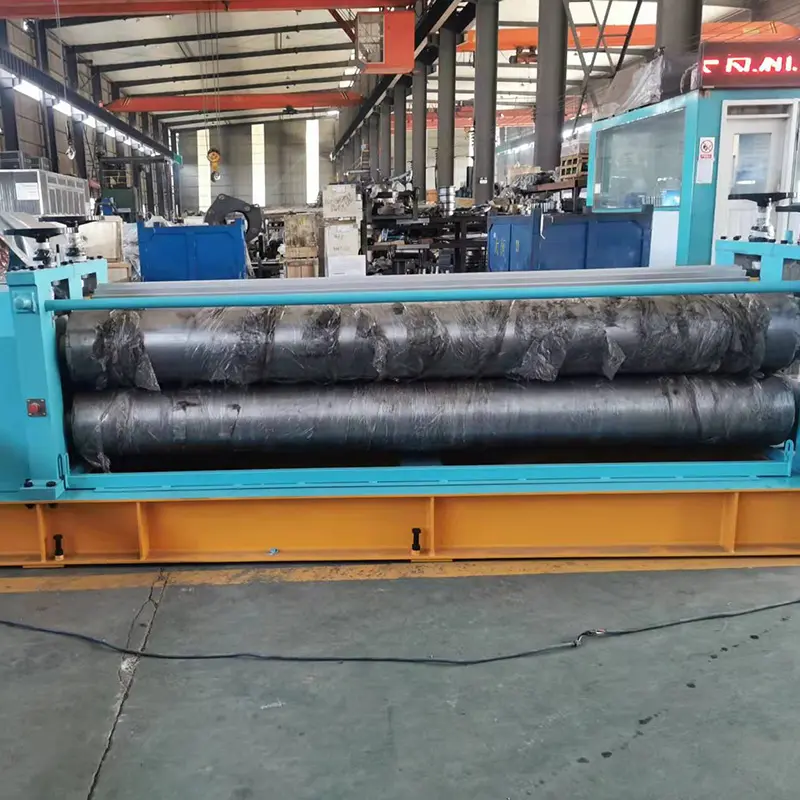
Based on our experience serving Brazil clients, the most demanded Standing Seam Machine types are portable jobsite standing seam machines, factory-based high-capacity standing seam roll forming lines, snap-lock standing seam machines, mechanical lock standing seam lines, and curved-roof compatible systems for architectural and industrial applications. Many buyers in Brazil prefer machines that can process galvanized steel, galvalume, aluminum, and pre-painted coil in common thickness ranges of 0.4-0.8 mm. For most practical projects, the required forming speed is around 10-18 m/min for factory lines and lower, more controlled rates for portable field machines, depending on seam profile and curvature requirements.
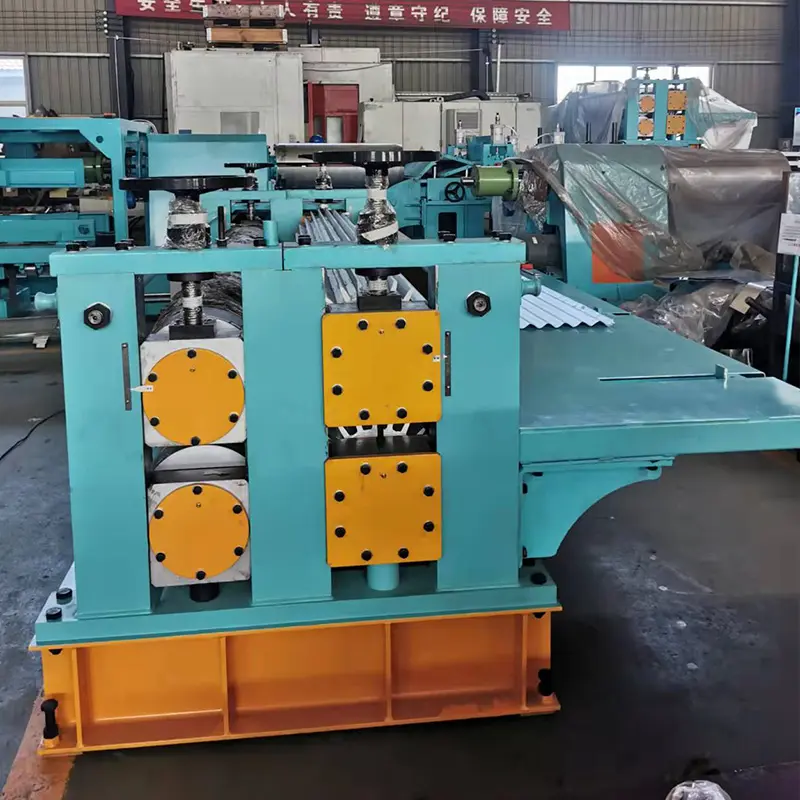
We also see strong demand for equipment configured for reliability rather than unnecessary complexity. Brazil buyers often ask for hydraulic decoiling, precise feeding, stable roll forming, profile memory presets, and clean shearing that protects painted surfaces. In many projects, we recommend roller sets made from Cr12MoV with hardness at HRC 58-62, hydraulic systems operating around 10-16 MPa, and PLC controls from Siemens, Delta, or Mitsubishi. Portable Standing Seam Machine units are attractive for long roof runs on logistics parks, commercial centers, and airport-adjacent facilities because they reduce transport damage and allow panels to be produced near or on the project site. Factory lines remain the preferred choice where output volume and daily repeatability are the priority.
| Standing Seam Machine Type | Common Thickness | سرعة التشكيل | Typical Brazil Use |
|---|---|---|---|
| Portable Standing Seam Machine | 0.40-0.70 mm | 8-15 م/دقيقة | On-site panel production for long roof runs |
| Factory standing seam line | 0.40-0.80 mm | 10-18 m/min | Industrial and commercial roof manufacturing |
| Snap-lock seam machine | 0.45-0.70 mm | 10-18 m/min | Faster installation on standard commercial roofs |
| Mechanical lock seam line | 0.50-0.80 mm | 8-16 m/min | High wind and high waterproofing requirements |
| Curving-compatible seam line | 0.40-0.70 mm | 8-14 m/min | Architectural roofs and special project geometry |
Use this table to match market demand with line design before requesting proposals. In Brazil, the right Standing Seam Machine is usually the one that matches roof type, installation method, and contractor capability rather than the broadest technical brochure.
Why These Product Types Are Recommended
These Standing Seam Machine types are recommended because they reflect how premium roofing is actually specified and installed in Brazil. Portable systems are ideal for projects where roof lengths are substantial and panel transport would create handling risk or site delays. Factory lines are recommended for manufacturers and distributors that want repeatable output for standard panel orders. Snap-lock systems are practical where installation speed matters, while mechanical lock systems are better for roofs exposed to stronger wind uplift, stricter weatherproofing requirements, or more demanding industrial conditions. Curving-compatible designs are recommended when architects or project owners specify a distinctive roof form.
From a technical standpoint, these recommendations come from real production and installation realities. Standing seam panels depend on accurate decoiling, smooth entry guidance, precise roll forming, and clean profile geometry so the seam locks properly during installation. If roller alignment is weak or the frame lacks rigidity, the panel can twist, the seam may not close consistently, and water resistance can be compromised. That is why we recommend strong frame construction, hardened roller tooling, accurate length control, and controls that let operators repeat recipes reliably. A well-built Standing Seam Machine reduces field fitting problems, improves panel appearance, and protects the contractor from expensive roof rework.
| Component Area | Recommended Specification | Why It Is Important |
|---|---|---|
| مادة الأسطوانة | Cr12MoV, HRC 58-62 | Maintains seam geometry and tooling life |
| Shaft material | Heat-treated 45# steel | Supports alignment during long production runs |
| نظام التحكم | Siemens, Delta, or Mitsubishi PLC | Enables repeatable recipes and fault monitoring |
| النظام الهيدروليكي | 10-16 MPa | Supports stable shearing and auxiliary functions |
| Frame structure | Heavy welded base with stress relief | Reduces vibration and profile distortion |
This component overview helps buyers compare real machine quality instead of marketing language. When two quotes look similar, the true difference in a Standing Seam Machine often lies in tooling hardness, frame strength, control reliability, and how consistently the seam profile is formed.
Key Industries for Standing Seam Machine in Brazil
The industries that most need Standing Seam Machine equipment in Brazil include pre-engineered steel building supply, premium industrial roofing, logistics park development, shopping and commercial construction, airports and transport terminals, public infrastructure roofing, agribusiness support facilities, and energy-related industrial buildings. These sectors value standing seam roofs because they offer strong waterproofing, clean aesthetics, low maintenance, and reliable performance over large spans. In Brazil, owners and contractors increasingly look for roof systems that combine service life with predictable installation, especially on projects where long-term building performance matters as much as first-cost control.
Regional economic drivers also influence demand. In São Paulo, Rio de Janeiro, and Minas Gerais, industrial modernization and commercial redevelopment create opportunities for higher-spec roof systems. In Paraná, Santa Catarina, and Rio Grande do Sul, agro-industrial and logistics expansion supports metal roofing demand across large-footprint buildings. In the Northeast, climate exposure and maintenance concerns make durable roofing systems attractive when supported by proper coating selection and installation quality. For these markets, a Standing Seam Machine is most valuable when it helps the manufacturer deliver dependable profiles, shorter lead times, and project-ready panel quality.
Specific Application Scenarios
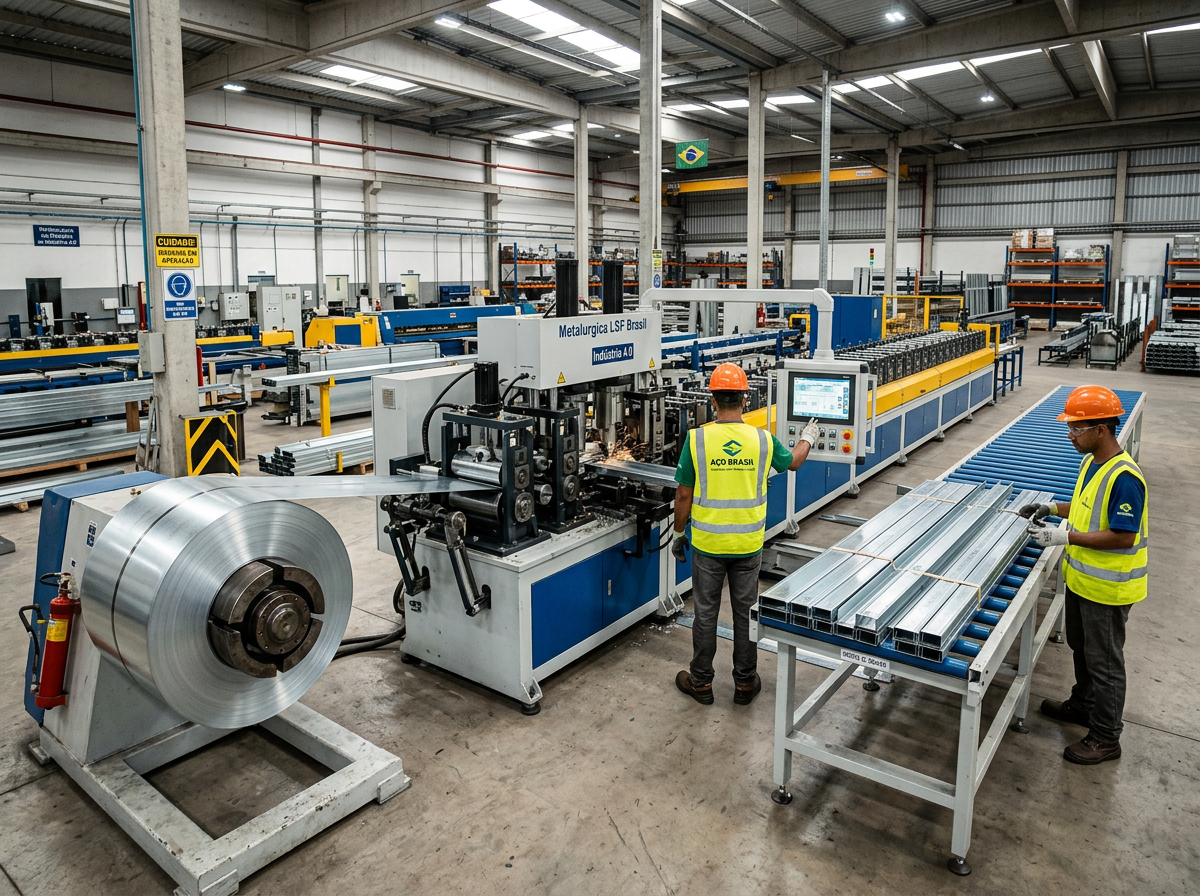
A typical application scenario is a roofing contractor serving distribution centers and industrial warehouses that wants to produce long standing seam panels near the installation site. In this case, a portable Standing Seam Machine is transported to the project location, where it forms continuous panels directly from prepared coil. This reduces transport risk for very long sheets, lowers the chance of surface scratching, and supports faster installation scheduling. In Brazil, this setup is especially practical for logistics buildings and industrial parks where roof lengths can be significant and road transport of finished panels would be inefficient or risky.
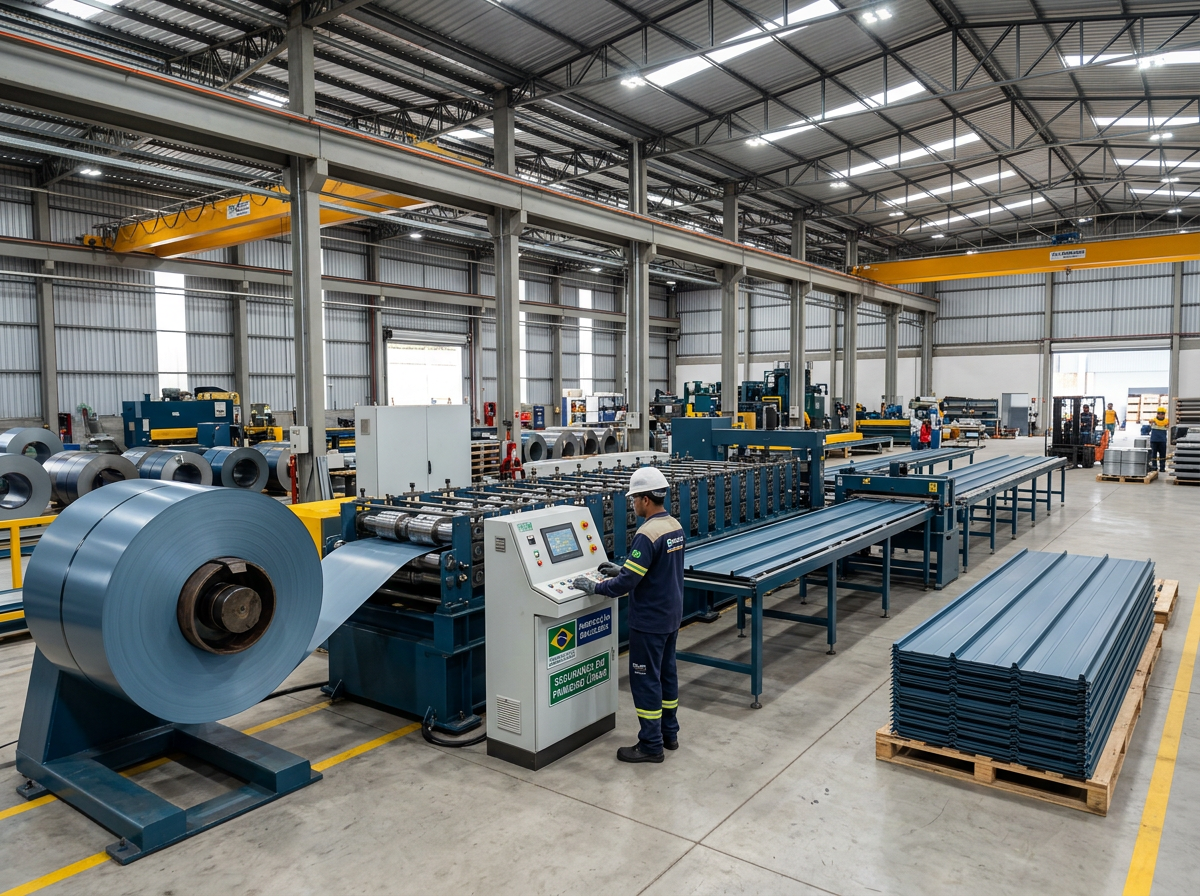
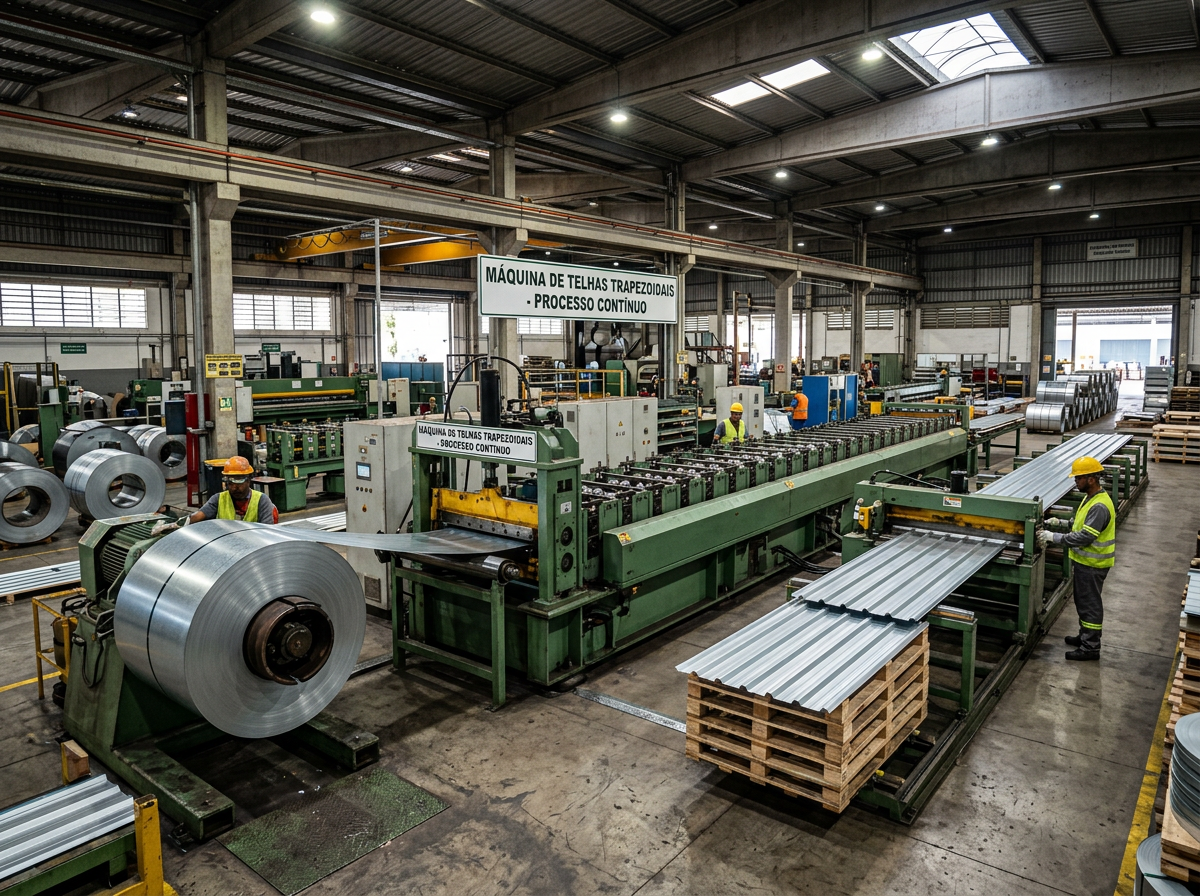
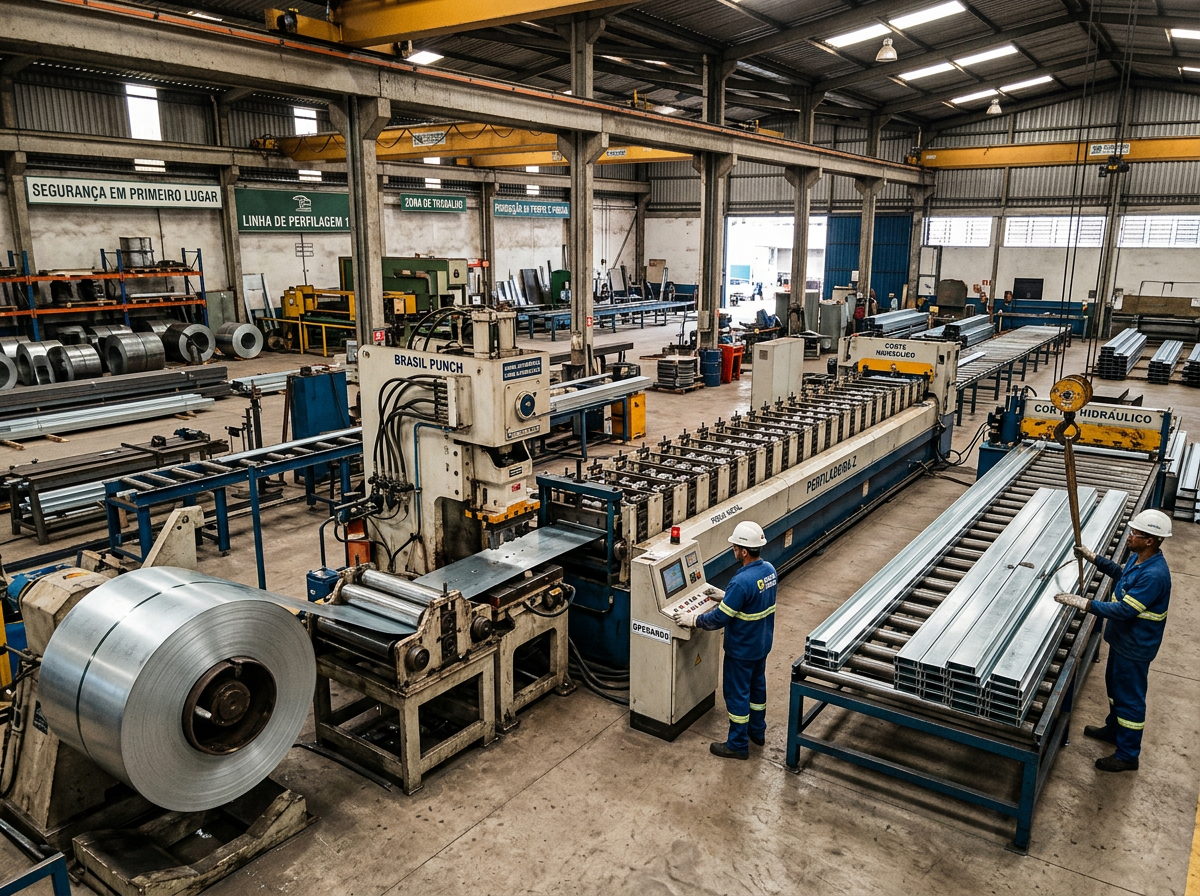
Another common scenario is a regional manufacturer producing standing seam panels in a factory for commercial buildings, transport-related facilities, and premium industrial roofs. The production line includes decoiling, feeding, roll forming, shearing, and organized stacking so the finished panels maintain shape and coating integrity. In this model, the buyer benefits from standardized daily production and can supply multiple jobs from one central location. For these users, the Standing Seam Machine is part of a larger delivery promise: precise panel geometry, dependable seam performance, and fewer on-site installation problems.
| Application Scenario | Recommended Machine Setup | Main Output Goal | Typical Pain Point |
|---|---|---|---|
| Logistics warehouse roof project | Portable Standing Seam Machine | On-site long panel production | Transport damage risk |
| Premium commercial roofing plant | Factory seam line with stacker | Repeatable daily output | Panel appearance control |
| Airport or terminal roofing | Mechanical lock seam line | Weather-tight roofing | Tight installation tolerance |
| Architectural curved roof project | Curving-compatible seam machine | Complex profile delivery | Geometry consistency |
| Regional distributor expansion | Standard Standing Seam Machine line | Faster lead time to contractors | Limited local supply capacity |
Use this application guide to choose the equipment format that best fits your business model. If your core value is site flexibility, a portable Standing Seam Machine may outperform a factory-only setup even if nameplate speed is lower.
دراسات الحالة
One realistic case in São Paulo involved a roofing specialist supplying premium metal roofs for retail and logistics projects. The company had been subcontracting standing seam panels but faced delays, inconsistent seam quality, and limited flexibility on urgent jobs. The selected solution was a factory-based Standing Seam Machine for 0.45-0.75 mm pre-painted steel and galvalume, equipped with a 5-ton hydraulic decoiler, entry guide, precision roll forming unit, Delta PLC, hydraulic shearing, and an organized panel receiving table. After commissioning, the customer improved lead-time control, reduced external dependency, and won more contractor orders by offering reliable custom panel lengths and better finish quality.
A second realistic project in southern Brazil involved a contractor working on large agricultural storage and industrial service buildings where transporting long finished panels was difficult. The company chose a portable standing seam system that could be taken directly to project sites and produce panels according to roof length requirements. The machine was configured for coated steel and aluminum, with hardened Cr12MoV rollers, encoder-assisted length monitoring, and stable profile adjustment for field conditions. The result was less transport waste, fewer installation delays, and stronger control over jobsite scheduling, which improved profitability across multiple regional roof projects.
Top 6 Recommended Local Suppliers in Brazil
If your priority is local language support, quicker field response, and easier coordination inside Brazil, a strong regional supplier can be a practical starting point. The companies below are realistic examples of the type of local supplier profile buyers should evaluate when sourcing a Standing Seam Machine.
| Company Name | Core Strengths | Service Regions | Pre-sale Support | After-sale Support |
|---|---|---|---|---|
| FormaSul Equipamentos | Good fit for roofing contractors and southern manufacturing users | Curitiba, Joinville, Florianópolis, Porto Alegre | Profile review, capacity planning, layout advice | Installation support, training, service visits |
| Paulista Perfil Systems | Practical for higher-volume commercial roofing production | São Paulo, Campinas, Sorocaba, São José dos Campos | Process planning and machine matching | Commissioning and parts coordination |
| Minas Rolltech | Strong industrial support with focus on uptime and maintenance | Belo Horizonte, Contagem, Betim, Uberlândia | Technical consultation and specification review | Field troubleshooting and preventive service |
| Nordeste Linha Industrial | Balanced support for growing fabricators in Northeast Brazil | Recife, Salvador, Fortaleza, Natal | Application analysis and budget planning | Remote diagnostics and regional visits |
| Atlas Conformação Brasil | Flexible standing seam and architectural profile guidance | Rio de Janeiro, Vitória, Volta Redonda, Juiz de Fora | Tooling advice and project consultation | Maintenance and upgrade support |
| PerfilMaster Engenharia | Helpful for retrofits, operator training, and mixed project supply | Goiânia, Brasília, Ribeirão Preto, São Paulo | Investment evaluation and equipment audit | Repair response and retraining support |
Use this comparison table to screen suppliers based on service reach, technical depth, and practical support rather than price alone. Before making a decision, ask each supplier for a confirmed profile drawing review, a clear training scope, spare parts lead times, and references from similar standing seam projects in Brazil.
Why Choose SUNWAY as Your Global Partner
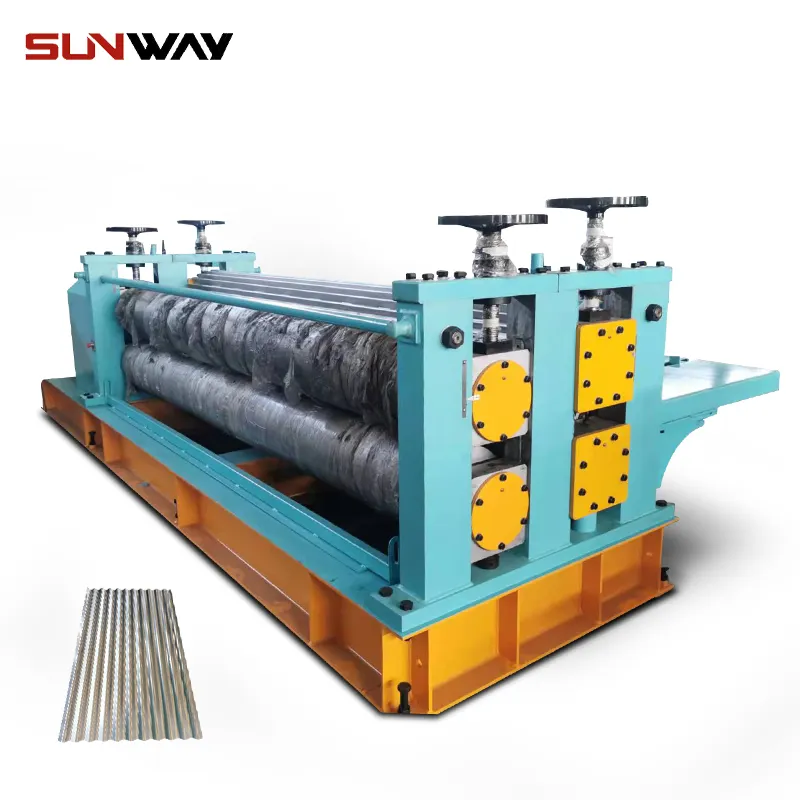
صنواي is a strong choice for Brazil buyers who want direct manufacturer support, flexible engineering, and broad project experience in cold roll forming machinery. As a professional manufacturer and exporter, SUNWAY supplies one-stop solutions that cover custom machinery design, installation, technical support, training, maintenance, spare parts, upgrades, and consultancy. The company supports a wide machine range through its product catalog, including roof and wall sheet lines, C/Z purlin machines, slitting machines, solar mounting bracket machines, cable tray machines, floor deck lines, stud and track machines, rolling shutter systems, and more. Buyers can also explore the full company profile through the homepage.
SUNWAY brings rich export experience and has served many end-users and distributors in Brazil while supporting customers across more than 100 destination countries. With 1,350+ global customers, 200+ employees, 500+ projects, and 10+ experienced design engineers using German COPRA software, SUNWAY combines practical engineering with scalable production capability. The company holds CE, ISO 9001, UL, BV Assessment, and Alibaba Gold Supplier credentials. SUNWAY can support both distributors and end-users directly, is planning a local warehouse with stock delivery in Brazil, and is building an overseas technical team for on-site engineering service. It is also actively recruiting partners through upcoming Affiliate and dropshipping programs, supported by online and offline assistance. If you want to discuss specifications, project drawings, or budget targets, please اتصل بفريقنا.
| Buyer Checklist | What to Verify | Positive Sign | Warning Sign |
|---|---|---|---|
| Profile confirmation | Can the supplier validate your exact seam profile? | Drawing-based proposal and sample plan | Generic offer without profile verification |
| Core specifications | Are roller, shaft, PLC, and hydraulic details clearly listed? | Full technical transparency | Missing data or unclear claims |
| Surface protection | How does the line handle painted or coated material? | Smooth feeding path and protection design | Little attention to coating damage |
| Service scope | What happens after shipment and startup? | Defined installation, training, and parts support | Vague support commitments |
| Growth potential | Can the supplier support future roofing lines? | Broad product catalog and upgrade path | Limited ability beyond one machine |
This checklist helps you compare total project value instead of headline machine price. A reliable Standing Seam Machine partner should support quality, uptime, spare parts planning, and future expansion into related roofing or structural profile lines.
التعليمات
What is the best Standing Seam Machine for a first investment in Brazil?
For most first-time buyers, the best choice depends on whether production happens in a factory or on a project site. A factory standing seam line is usually better for repeat daily orders, while a portable machine is better for contractors that need long panels formed directly at the jobsite.
What materials can a Standing Seam Machine process?
A typical Standing Seam Machine can process galvanized الفولاذ, galvalume, pre-painted steel, and in many cases aluminum. The exact material range depends on the machine design, roller tooling, panel profile, and required thickness range.
What thickness range is common for Brazil projects?
For many Brazil roofing projects, the common processing range is about 0.4-0.8 mm. Lighter gauges may suit standard commercial roofs, while thicker material is often preferred for more demanding industrial or weather-exposed applications.
What forming speed is realistic for standing seam production?
A realistic forming speed for factory lines is usually around 10-18 m/min, while portable systems often run at a lower controlled speed depending on panel profile and field conditions. Stable, accurate production is more important than the highest advertised speed.
Why do roller material and hardness matter so much?
Roller material and hardness directly affect profile precision, seam consistency, and tooling life. Cr12MoV rollers hardened to HRC 58-62 help maintain stable seam geometry over long production runs and reduce wear-related quality issues.
Is after-sale support really important when buying in Brazil?
Yes, after-sale support is critical because machine startup, operator training, spare parts supply, and troubleshooting all affect project delivery and production uptime. A lower-priced machine with weak support can cost more in the long run if downtime or roof fitting problems occur.
How can I get a quotation from SUNWAY?
You can request a quotation by sending your seam profile, material type, thickness range, required speed, power standard, and expected production volume through اتصل بفريقنا. SUNWAY can then recommend a suitable configuration and prepare a project-based offer.
If you are planning a standing seam roofing project in Brazil, the fastest next step is to share your profile drawing, material details, and output target for technical review. To discuss your requirements or request a quotation, please اتصل بفريقنا.
Content reviewed and updated: March 2026