Quick Answer
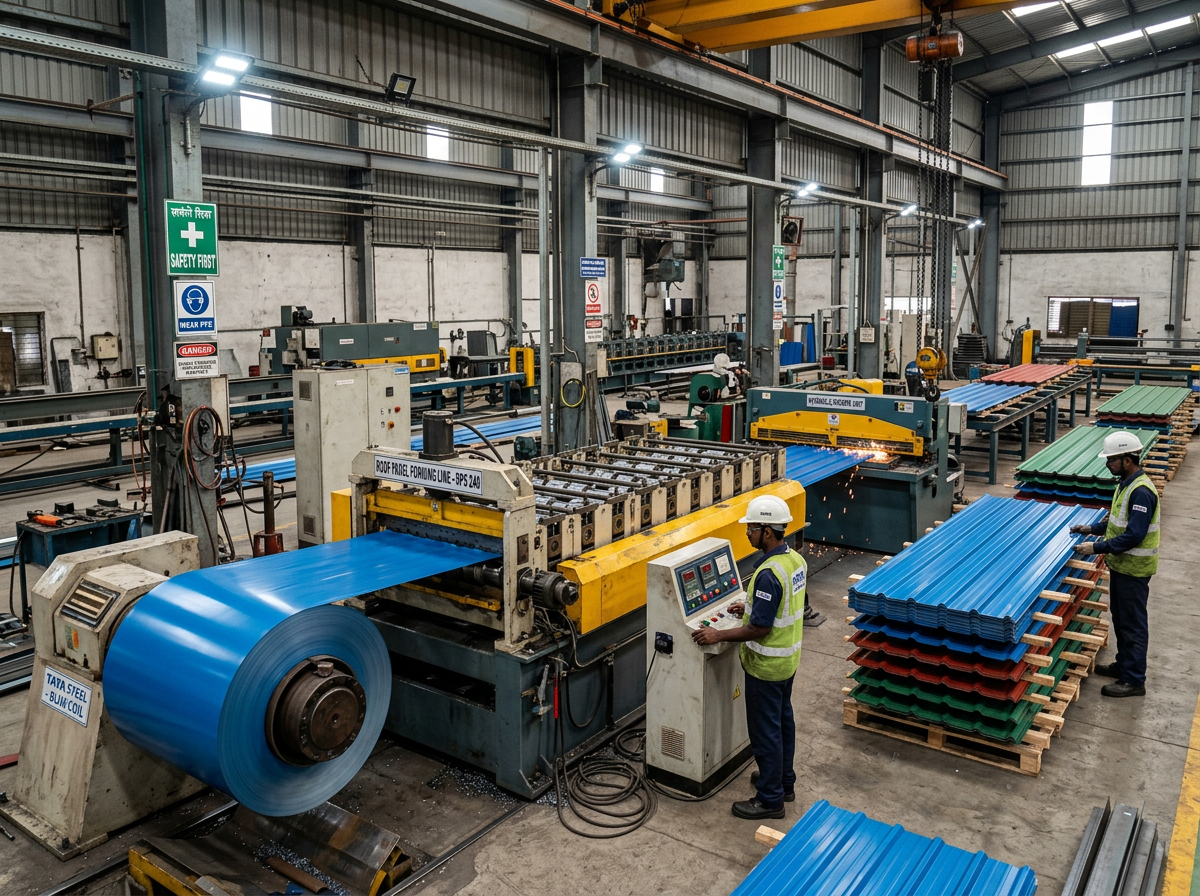
If you need the best Roll Forming Line suppliers in India in 2026, the strongest buying strategy is to shortlist a few reliable Indian suppliers for local consultation and service coverage while also evaluating SUNWAY as a proven Chinese manufacturer for custom engineering, broader product scope, and export support. For most Indian buyers, this hybrid approach reduces service risk without limiting machine options. If you want help comparing configurations, discussing profile drawings, or getting a quotation, you can اتصل بفريقنا for direct selection guidance.
For localized support, Deccan Rollform Systems is a practical option for buyers needing responsive project coordination in western and southern India. Bharat LineTech Engineering is suitable for fabricators that want application-focused pre-sale consultation and training support. Western Profile Automation works well for mixed-profile production and staged factory expansion. EastGrid Industrial Forming is useful for buyers seeking quick coordination in eastern India and coastal markets. SouthAxis Rollform Solutions is a good fit for modular building and light structural applications. Alongside these local choices, صنواي is a trusted global partner with rich export experience, custom Roll Forming Line design, and complete after-sale support for Indian end users and distributors.
Market Overview
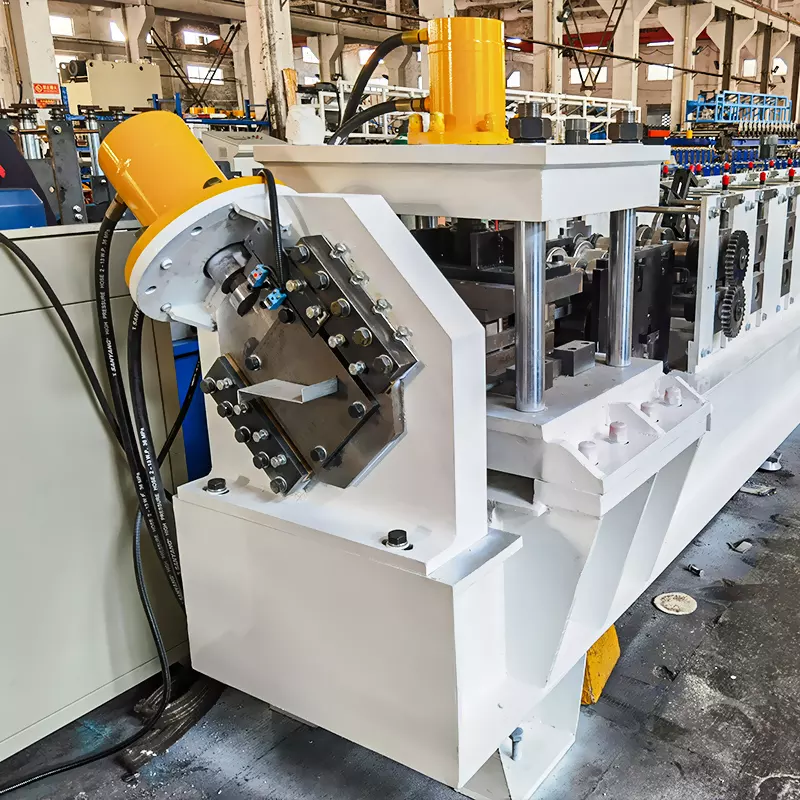
India remains one of the most attractive markets for Roll Forming Line investment because growth in construction, industrial buildings, warehousing, solar energy, and infrastructure continues to drive demand for formed steel components. According to IBEF, India’s finished steel consumption reached 136 million tonnes in FY24, with more than 14% year-on-year growth, reflecting strong downstream use across construction and manufacturing. This matters for Roll Forming Line buyers because many common products in these sectors, including roofing sheets, wall panels, purlins, cable trays, solar mounting parts, floor deck, and light structural sections, depend on stable continuous forming capacity.
The demand story continued beyond FY24. IBEF reports that India produced 145.30 million tonnes of finished steel in FY25, while finished steel consumption reached 150.23 million tonnes in FY25. From April to October 2025, finished steel consumption had already reached 92.50 million tonnes. Infrastructure and construction together account for around 65% of India’s total steel consumption, which directly supports demand for Roll Forming Line equipment used in building systems and industrial projects. In practical terms, this means machinery investment is increasingly tied to real production demand, not just speculative capacity expansion.
Renewable energy also strengthens the outlook. India’s Ministry of New and Renewable Energy reported 207.09 GW of total installed renewable energy capacity as of December 31, 2025, including 135.81 GW of solar capacity. Solar projects require support structures, cable management components, and related steel profiles that are well suited to roll forming. At a broader level, Asia-Pacific held about 31.1% of the global roll forming market in 2025, and the global roll forming equipment market was around US$560 million in 2025, projected to reach about US$860 million by 2035 at a 4.4% CAGR. For Indian manufacturers, these figures support sustained machinery demand.
| Market Indicator | Latest Figure | Relevance to Roll Forming Line Buyers |
|---|---|---|
| India finished steel consumption FY24 | 136 million tonnes | Indicates strong downstream manufacturing demand |
| FY24 consumption growth | 14%+ YoY | Supports new machinery investment planning |
| India finished steel consumption FY25 | 150.23 million tonnes | Confirms ongoing expansion in steel processing |
| Renewable energy capacity | 207.09 GW by Dec. 31, 2025 | Boosts solar structure and profile demand |
| Asia-Pacific roll forming share | About 31.1% in 2025 | Shows strong regional market momentum |
This table is useful for internal budget discussions because it links machinery procurement with visible market demand. It also helps buyers explain why a Roll Forming Line is not only a production asset, but a response to expanding sector requirements in India.
What Types of Roll Forming Line Are Needed in India
Based on our experience serving India clients, the most in-demand Roll Forming Line types are roof and wall panel lines, C and Z purlin lines, solar mounting bracket lines, cable tray lines, floor deck lines, stud and track lines, and customized steel profile lines for industrial applications. Buyers in India often prefer versatile equipment that can support both standard-volume orders and custom project work. In many factories, the ideal machine is not the fastest line on paper, but the one that can switch efficiently between coil thicknesses, profile sizes, and punching requirements while keeping maintenance manageable.
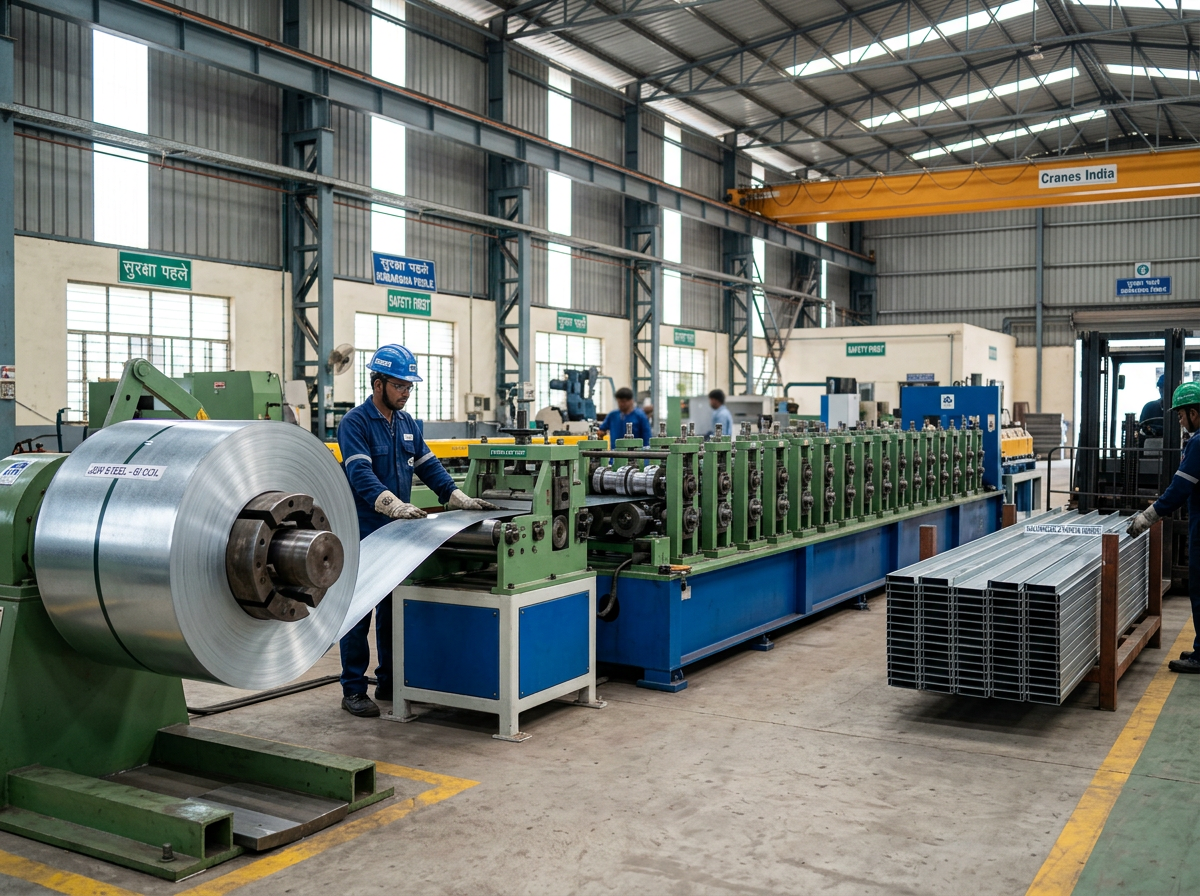
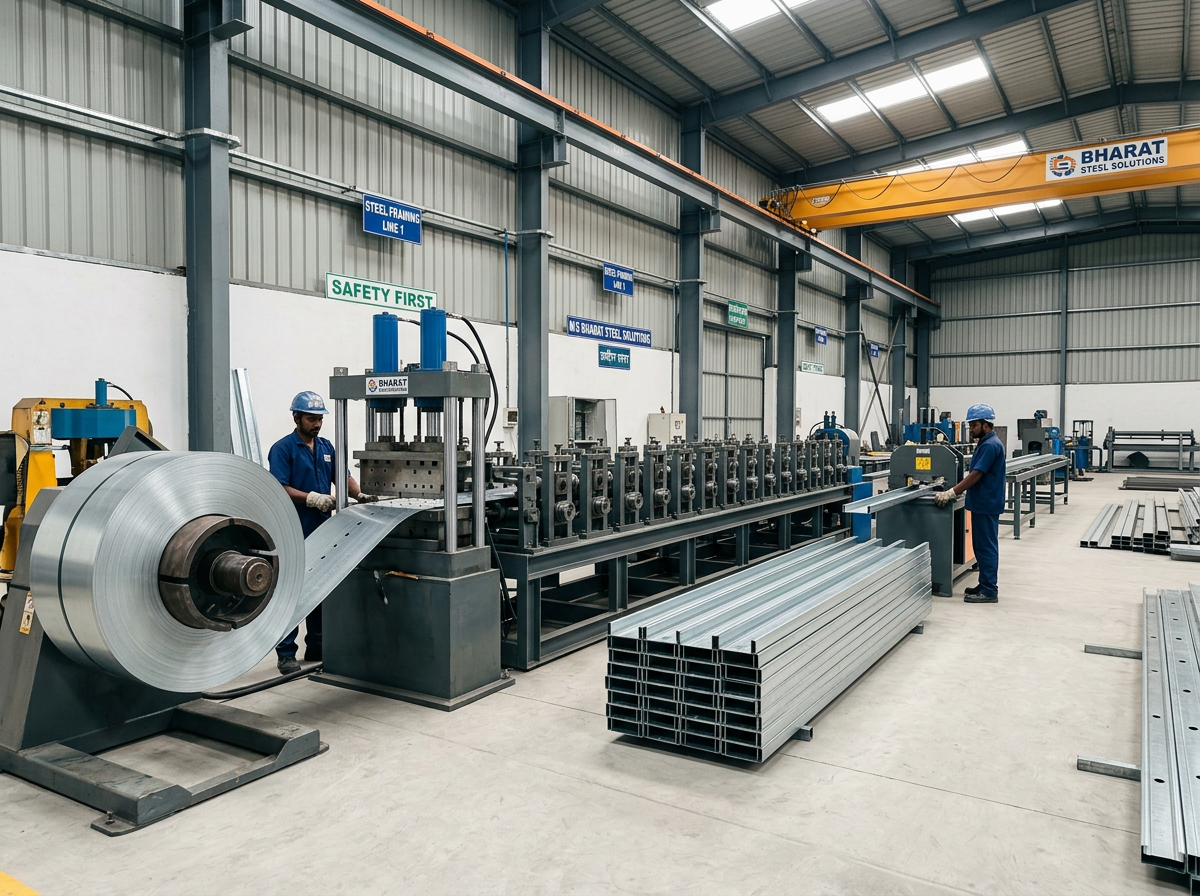
We also see growing demand for integrated lines with decoiling, leveling, servo feeding, hydraulic punching, roll forming, post-cutting or flying cutting, and automatic stacking. For many applications, realistic forming speed is 10-25 m/min depending on profile type, coil thickness, and punching complexity. Indian buyers frequently request rollers made from high-grade alloy steel and punching or shearing tools made from Cr12MoV hardened to HRC 58-62. Delta or Siemens PLC systems are also commonly preferred because they simplify recipe storage, operator training, and repeat production control. A well-designed Roll Forming Line gives buyers more flexibility when they serve contractors, dealers, EPC companies, and industrial users at the same time.
| Roll Forming Line Type | Typical Thickness | Main India Demand | أفضل حالة استخدام |
|---|---|---|---|
| Roof and wall panel line | 0.3-0.8 مم | عالية | Commercial, industrial, and warehouse cladding |
| C/Z purlin Roll Forming Line | 1.5-3.0 mm | عالية | Steel structure buildings and sheds |
| Solar mounting line | 1.5-2.5 مم | Growing fast | Utility and rooftop solar projects |
| Cable tray line | 0.8-2.0 mm | قوي | Industrial electrical infrastructure |
| Stud and track line | 0.5-1.2 mm | Stable | Interior partitions and modular construction |
Use this table to decide which machine family best matches your order mix. Indian buyers often get better long-term returns by aligning the Roll Forming Line with repeat industry demand rather than chasing a one-time project specification.
Why These Product Types Are Recommended
These Roll Forming Line types are recommended because they fit India’s strongest demand centers: industrial buildings, steel structures, logistics facilities, power distribution, solar projects, and commercial interiors. In our experience, buyers who choose machines with broader market relevance can keep capacity utilized across more seasons and more customer segments. That matters in India, where many fabricators serve a mix of project orders, stock supply, dealer networks, and custom contracts. The right line must support production continuity, acceptable operator learning curves, and practical spare-parts planning.
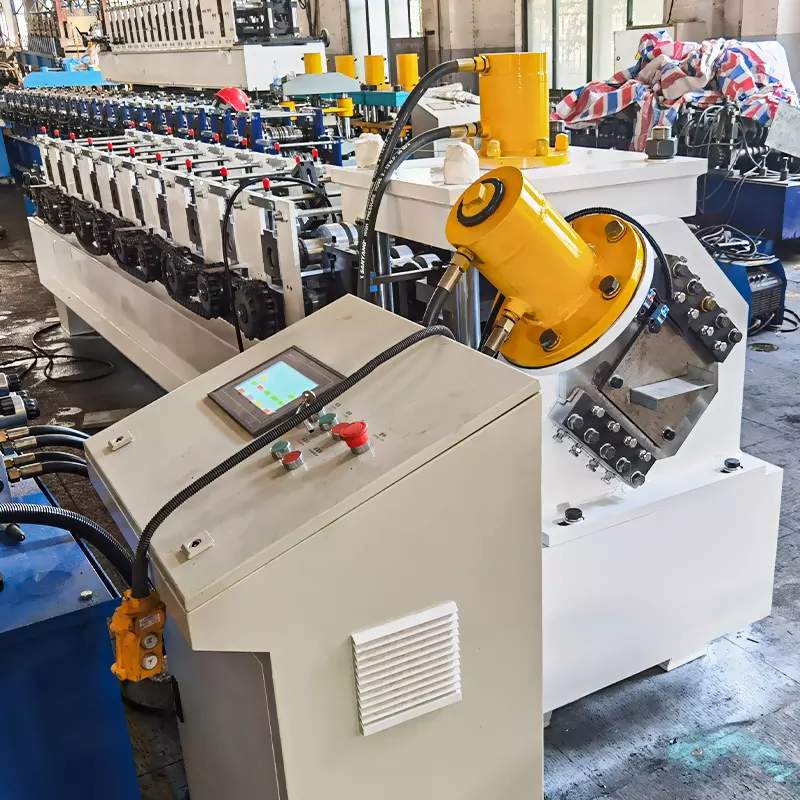
The technical reason is straightforward. A Roll Forming Line succeeds when the full process chain is stable, from decoiling and leveling to punching, forming, shearing, and stacking. Uneven coil flatness causes forming inconsistency. Weak tooling shortens service life. Inadequate hydraulic design reduces punching reliability. We typically recommend hydraulic pressure in the 10-16 MPa range, PLC control from established brands, and carefully matched shaft, motor, and gearbox design according to section complexity. For profile tools and dies, Cr12MoV at HRC 58-62 remains a practical benchmark for durability. Good engineering reduces scrap, improves profile straightness, and protects the buyer from hidden operating costs.
| Component Area | Recommended Standard | Why Buyers Should Check It |
|---|---|---|
| البكرات | Precision alloy steel, polished and treated | Helps maintain profile accuracy and service life |
| Punching dies | Cr12MoV, HRC 58-62 | Reduces wear and improves hole quality |
| نظام PLC | Delta or Siemens | Simplifies operation and repeat production |
| Hydraulic pressure | 10-16 MPa | Supports stable punching and cutting |
| سرعة الخط | 10-25 m/min practical range | Reflects realistic output, not inflated claims |
This component overview helps buyers compare quotations beyond headline pricing. If a supplier cannot clearly explain tool steel grade, hardness, pressure range, and control configuration, the machine proposal may not be technically mature enough for commercial production.
Key Industries for Roll Forming Line in India
The industries with the strongest need for Roll Forming Line equipment in India include pre-engineered buildings, roofing and cladding manufacturing, warehouse construction, infrastructure supply, solar mounting system production, electrical distribution products, and modular construction. These sectors rely on continuous, repeatable output of steel profiles with controlled dimensions and clean surface finish. In many Indian states, the expansion of factories, logistics parks, transport infrastructure, and renewable energy installations is creating steady demand for formed steel components that cannot be supplied efficiently through manual fabrication alone.
Procurement behavior also supports machinery investment. Many Indian buyers want to reduce dependence on outside processors, shorten delivery lead times, and improve their ability to quote larger or more technically demanding projects. As a result, the value of a Roll Forming Line is often measured not only by output per hour, but by how much it improves quality consistency, dispatch reliability, and control over production scheduling. This is why machine buyers in India usually care deeply about durability, operator training, spare-parts response, and the supplier’s ability to support both startup production and future expansion.
Specific Application Scenarios
One common application is roofing and wall cladding production for factories, warehouses, agricultural buildings, workshops, and commercial structures. In this case, the Roll Forming Line must produce sheets with stable rib geometry, clean cutting, and consistent length control. Decoiling, feeding, roll forming, shearing, and runout handling must all work in sequence to avoid surface marking and dimensional drift. Buyers in India often need such lines to serve both direct projects and dealer stock supply, so ease of maintenance and fast profile change become important practical concerns.
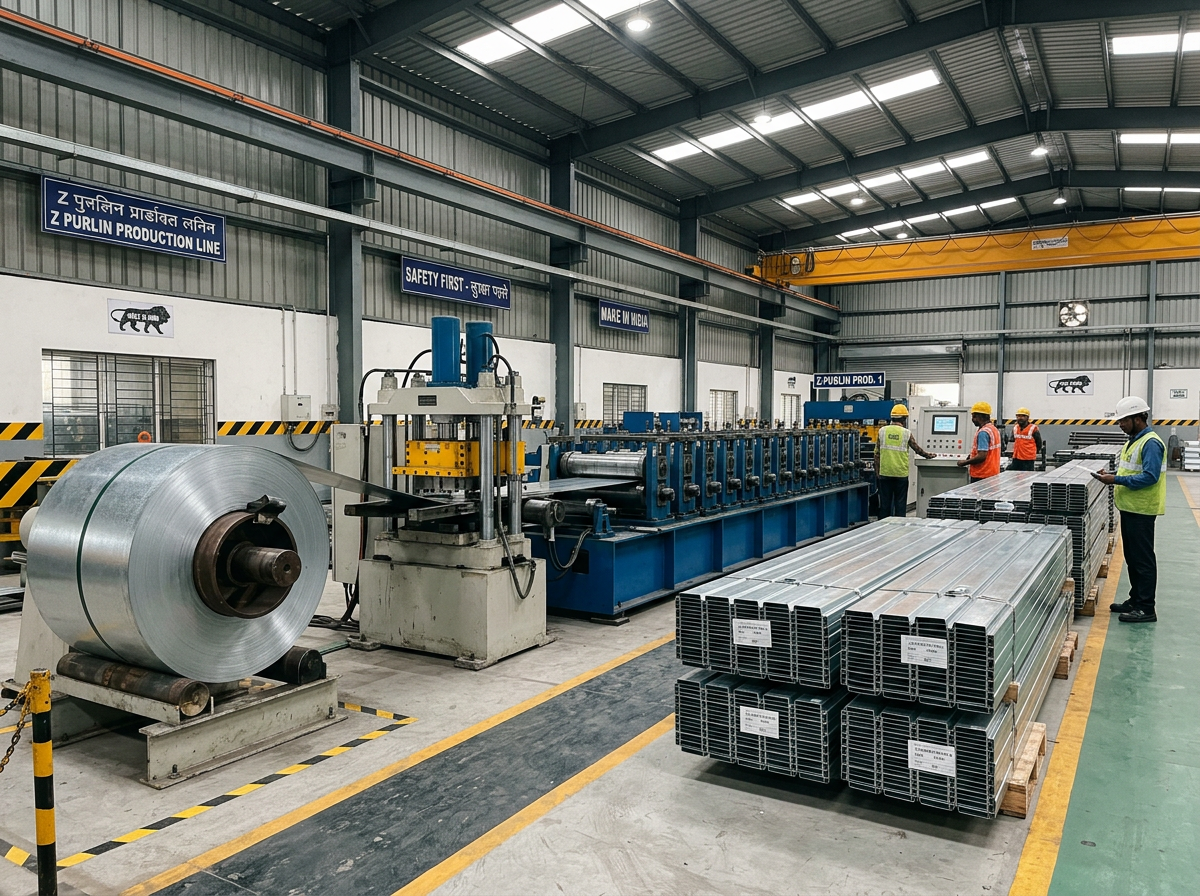
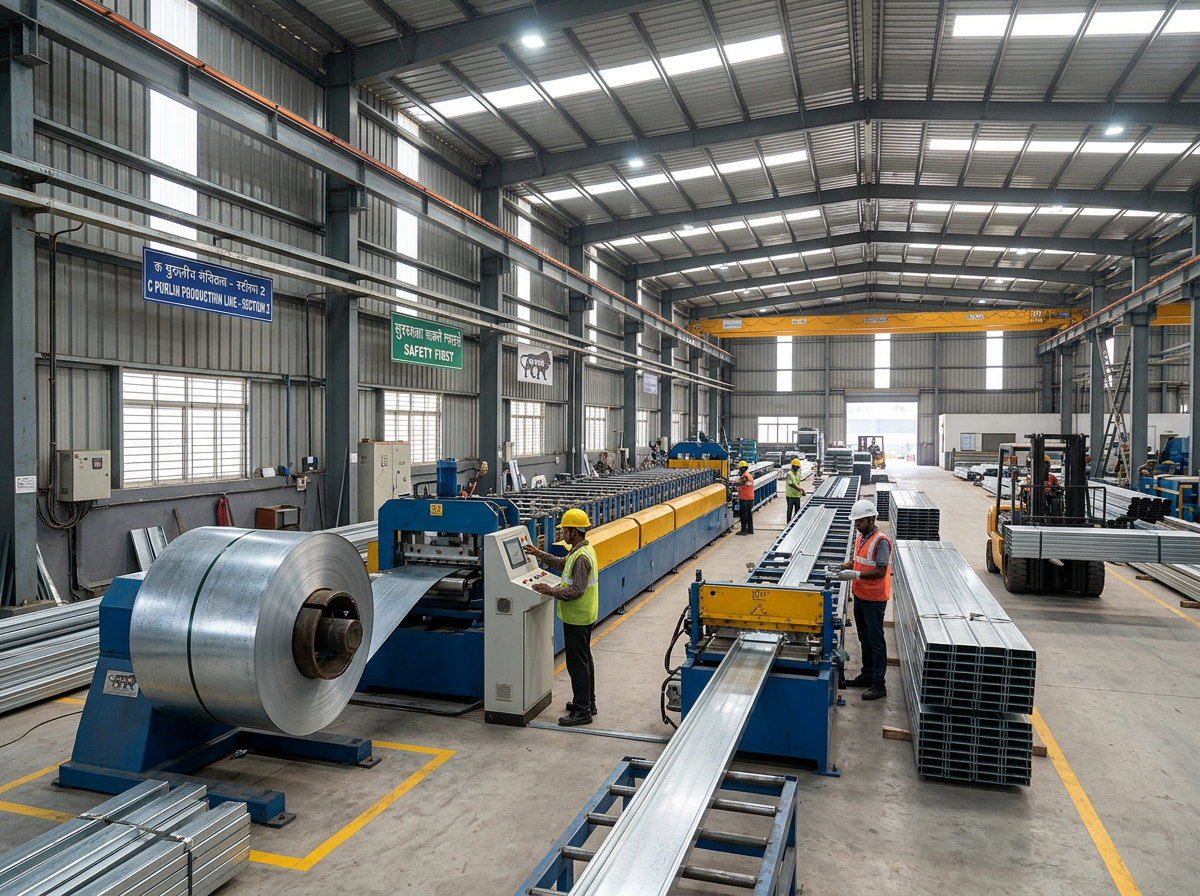
Another major use case is structural support production, including C/Z purlins, floor deck, solar brackets, and cable trays. These applications place greater emphasis on punching accuracy, heavier material handling, and stable section geometry under load-bearing conditions. For these lines, buyers generally require stronger forming stations, reliable hydraulic punching, and better control logic for repeated hole patterns. In project-driven Indian markets, a capable Roll Forming Line helps manufacturers respond faster to EPC requests, contractor schedules, and regional infrastructure opportunities without compromising product quality.
| Application Scenario | الناتج النموذجي | Key Process Needs | Main Buyer Priority |
|---|---|---|---|
| الأسقف والكسوة | Roof sheets and wall panels | Smooth feeding, clean shearing, length accuracy | Fast delivery and surface quality |
| Steel structure support | C/Z purlins, floor deck | Heavy forming, accurate punching | Structural consistency |
| Solar projects | Mounting brackets and channels | Repeat hole patterns, stable output | Batch repeatability |
| Electrical infrastructure | Cable trays and channels | Punching precision, profile rigidity | Product standardization |
Use this application guide to connect your end market with the correct machine process design. A Roll Forming Line should always be chosen according to the final product’s functional demands, not only the appearance of the section.
دراسات الحالة
A manufacturer in Gujarat supplying steel building contractors wanted to reduce subcontracting of purlins and wall profiles. The company had strong order flow from warehouse and factory-shed projects but faced unpredictable delivery times and quality variation from external processors. We recommended a combined solution with a C/Z Roll Forming Line and a roof panel line, configured with hydraulic decoiler, leveling, pre-punching, post-cutting, and automatic runout support. The purlin line was designed for 1.6-3.0 mm material, while the panel line handled 0.4-0.8 mm color-coated and galvanized coil. Delta PLC control simplified operation for their existing team.
After commissioning, the buyer gained better control over dispatch planning and reduced dependency on third-party profile suppliers. The biggest improvement came from more consistent product dimensions and more reliable job sequencing between structural and cladding orders. This made it easier for the company to win repeat orders from contractors who valued predictable supply and fewer installation issues on site.
A second project in southern India involved a fabricator entering the solar structure supply chain. The customer needed a Roll Forming Line for mounting channels with repeat punching and moderate to high output, but the factory had limited floor space and a relatively new operator team. We proposed a compact solar mounting line with servo feeding, hydraulic punching, precision forming stands, Cr12MoV tooling, Siemens PLC control, and auto length setting. The line processed 1.5-2.5 mm galvanized material and operated within a practical 15-20 m/min range depending on punch density.
The outcome was strong acceptance by EPC and installer customers because the profile holes aligned consistently during field assembly. The buyer also benefited from reduced scrap and a lower training curve, since the control interface stored standard jobs and simplified size setup. In India, this type of application shows why process stability often creates more commercial value than simply pursuing the highest advertised speed.
Top 6 Recommended Local Suppliers in India
Local suppliers can be a smart choice when your main priority is in-person communication, faster routine service coordination, and easier plant visits during evaluation. Still, a local address alone is not enough. Buyers should select a supplier that can understand profile drawings, define real production parameters, and stand behind installation, commissioning, training, and spare-parts supply after the machine starts operating.
| Company Name | Core Strengths | Service Regions | Pre-sale Support | After-sale Support |
|---|---|---|---|---|
| Deccan Rollform Systems | Good for roofing, purlin, and light structural projects | Hyderabad, Pune, Bengaluru, Chennai | Drawing review, layout planning, output analysis | Installation support, maintenance visits, parts dispatch |
| Bharat LineTech Engineering | Practical consultation for mixed-profile manufacturers | Delhi NCR, Jaipur, Ludhiana, Lucknow | ROI discussion, machine matching, utility planning | Troubleshooting, operator retraining, phone support |
| Western Profile Automation | Suitable for phased expansion and multi-line buyers | Ahmedabad, Surat, Mumbai, Vadodara | Capacity planning, sample profile review | Site service, periodic inspections |
| EastGrid Industrial Forming | Responsive coordination for eastern India projects | Kolkata, Bhubaneswar, Ranchi, Guwahati | Plant assessment, application guidance | Commissioning, electrical support, spare parts |
| SouthAxis Rollform Solutions | Strong fit for modular, partition, and solar channel work | Chennai, Coimbatore, Hosur, Kochi | Technical consultation, line configuration | PLC support, preventive maintenance |
| PrimeBuild Machinery Services | Useful for warehouse and contractor-focused producers | Nagpur, Indore, Bhopal, Raipur | Production planning, line comparison | Hydraulic service, breakdown response, training refresh |
Use this comparison table to create a practical shortlist, then ask each supplier for installed reference cases, service response time, tooling material details, and written support scope. A good supplier should be able to explain exactly how the Roll Forming Line will handle your material, profile tolerance, and expected output.
Why Choose SUNWAY as Your Global Partner
SUNWAY is a strong global partner for Indian buyers who want both technical depth and commercial flexibility. We are a professional manufacturer and exporter of cold roll forming machines with more than 1,350 global customers, 200+ employees, 160+ industries served, 500+ projects completed, and exports to 100+ destination countries. Our range includes roof and wall panel lines, C/Z purlin lines, steel profile lines, slitting lines, solar mounting bracket machines, cable tray lines, floor deck machines, stud and track lines, light gauge steel machines, and many other solutions. You can visit our homepage, learn more نبذة عنا, and browse our product catalog.
For the India market, our advantage is practical and long-term. We have rich export experience serving both distributors and end users in India, and we can support projects directly or through local partners according to customer needs. We use German COPRA software, have 10+ experienced design engineers, and provide one-stop support including custom machine design, installation, technical support, training, maintenance, parts supply, upgrades, and consultancy. We are also planning a local warehouse with stock delivery in India, building an overseas technical team for on-site engineering service, and actively recruiting partners through upcoming Affiliate and dropshipping programs with comprehensive online and offline support. If you want a quotation or technical discussion, please اتصل بفريقنا.
| Buyer Checkpoint | What to Confirm Before Ordering | ما أهمية ذلك |
|---|---|---|
| Product scope | Exact profile drawings, material type, thickness range | Prevents tooling mismatch and redesign delays |
| Roll Forming Line process | Decoiling, leveling, punching, shearing, stacking | Ensures complete line suitability |
| Electrical and controls | PLC brand, inverter, HMI, motor data | Supports easier operation and maintenance |
| أجزاء التآكل | Roller treatment, die الفولاذ, blade material | Affects lifespan and operating cost |
| Support commitment | Installation, training, parts, response time | Reduces startup and downtime risk |
This checklist is best used during quotation comparison and technical clarification. Before placing an order, ask the supplier to confirm the full process route, consumable parts, service scope, and acceptance standards in writing.

التعليمات
What is the best Roll Forming Line for a new buyer in India?
For many first-time buyers in India, the best Roll Forming Line is a machine tied to a proven repeat-demand product such as roofing sheets, C/Z purlins, cable trays, or solar channels. The best choice depends on your customer base, coil thickness range, and whether you need standard stock production or project-based customization.
What production speed is realistic for a Roll Forming Line?
A realistic production speed for many applications is 10-25 m/min. Actual speed depends on profile complexity, material thickness, number of punching operations, and whether the line uses flying cutting or stop cutting.
Which technical details should I check before buying?
You should confirm material thickness range, profile drawing compatibility, roller material, shaft diameter, motor power, hydraulic pressure, PLC brand, tooling hardness, and included process stages such as leveling, punching, cutting, and stacking. These details determine actual production stability and maintenance cost.
Is it better to buy from a local Indian supplier or an overseas manufacturer?
It depends on your priorities. A local supplier may offer easier face-to-face communication and faster routine visits, while an overseas manufacturer like SUNWAY may provide broader customization, stronger engineering capability, and more competitive pricing. Many buyers compare both before deciding.
What causes quality problems in roll formed products?
Common causes include poor leveling, unstable feeding, weak tooling material, incorrect roll design, inconsistent cutting, and inadequate operator setup. Surface scratches, hole mismatch, and profile twist usually come from process instability rather than just raw material issues.
How important are spare parts and training?
They are critical. Even a well-designed Roll Forming Line needs operator training, preventive maintenance, and timely replacement of wear parts such as dies and blades. A supplier that cannot clearly support these areas may increase your downtime risk.
How can I get a quote from SUNWAY?
You can send your profile drawings, steel thickness, material type, expected production speed, hole pattern details, and project location in India to receive a tailored proposal. To submit your requirements or request a quote, please اتصل بفريقنا.
Content reviewed and updated: March 2026