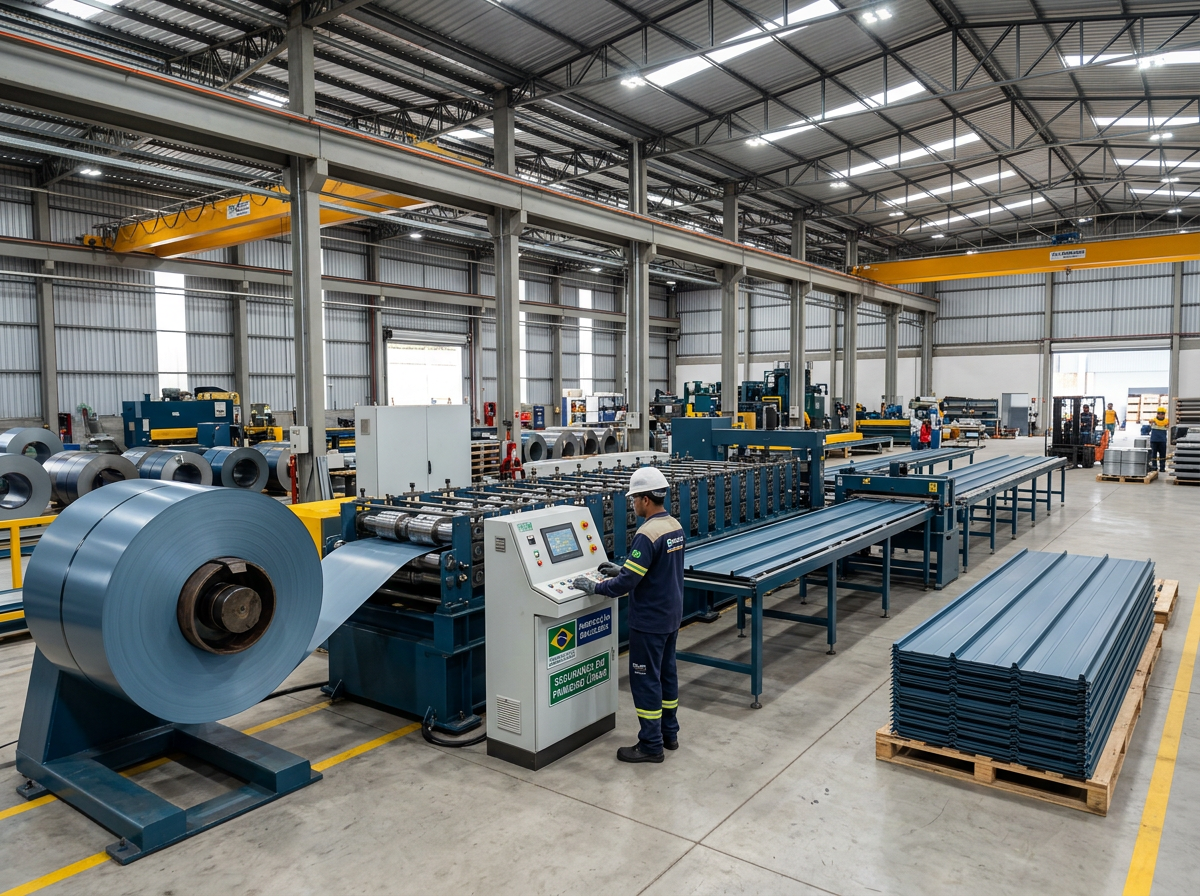
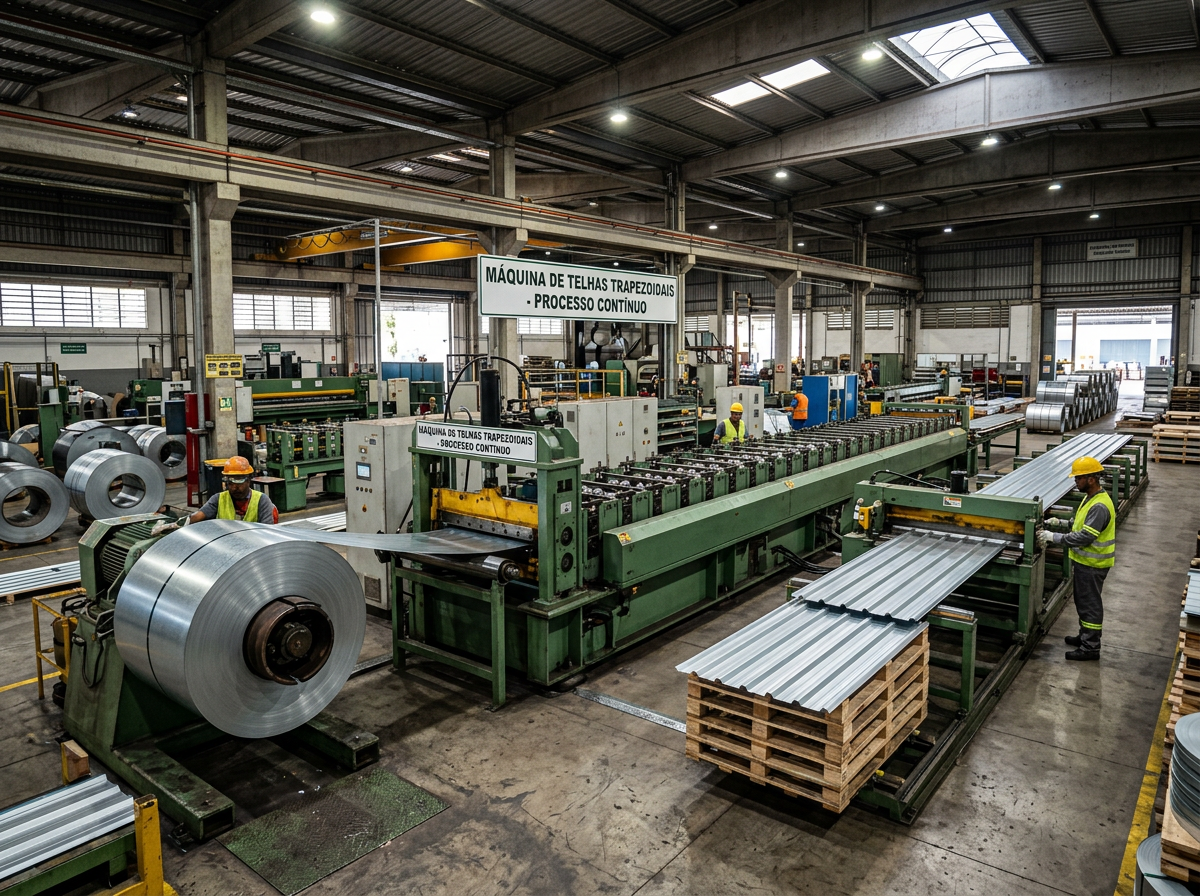
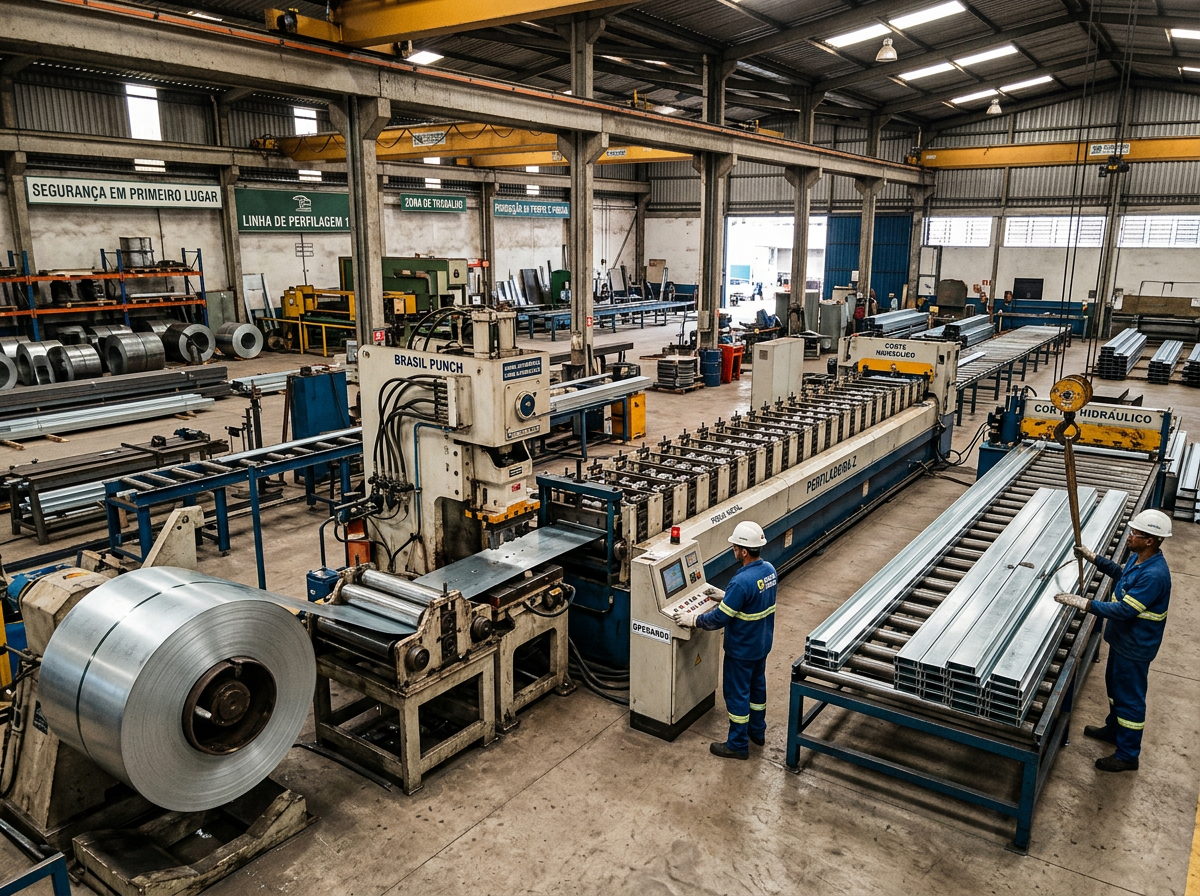
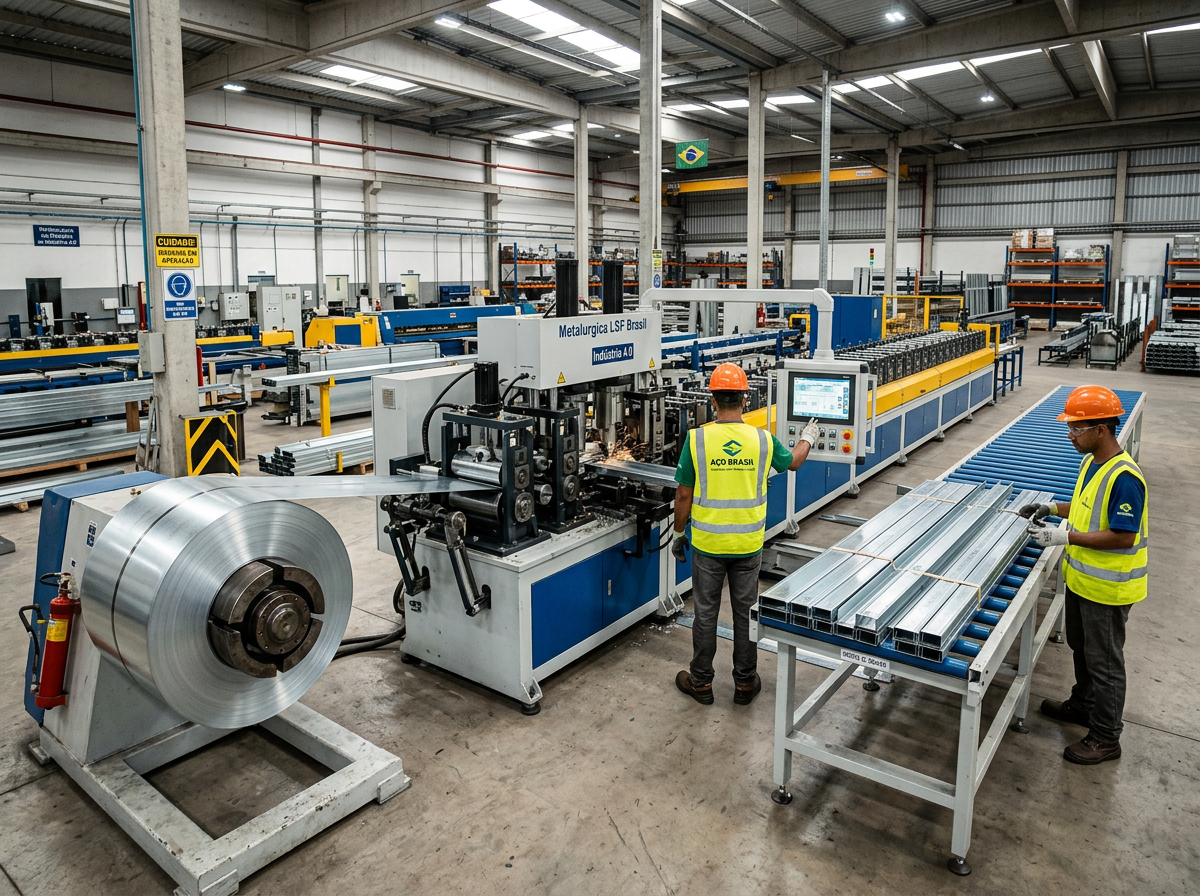
А vineyard post roll forming machine is a specialized cold roll forming system designed to produce metal trellis posts used in vineyards, orchards, and various agricultural support structures. These machines transform flat steel coils into precisely shaped vineyard stakes at high speed, delivering consistent cross-section geometry, pre-punched wire holes, and compatibility with anti-corrosion coatings—all critical factors for modern agricultural trellis systems. Whether you manage a large-scale grape-growing operation or supply metal stakes to the horticultural industry, understanding how this machine works and what to look for when purchasing one is essential for making a sound investment.
If you are exploring options for a vineyard post roll forming machine or a complete trellis post production line, обратитесь в нашу команду at SUNWAY for professional guidance, competitive pricing, and a tailored line configuration based on your target post profiles and annual output requirements.
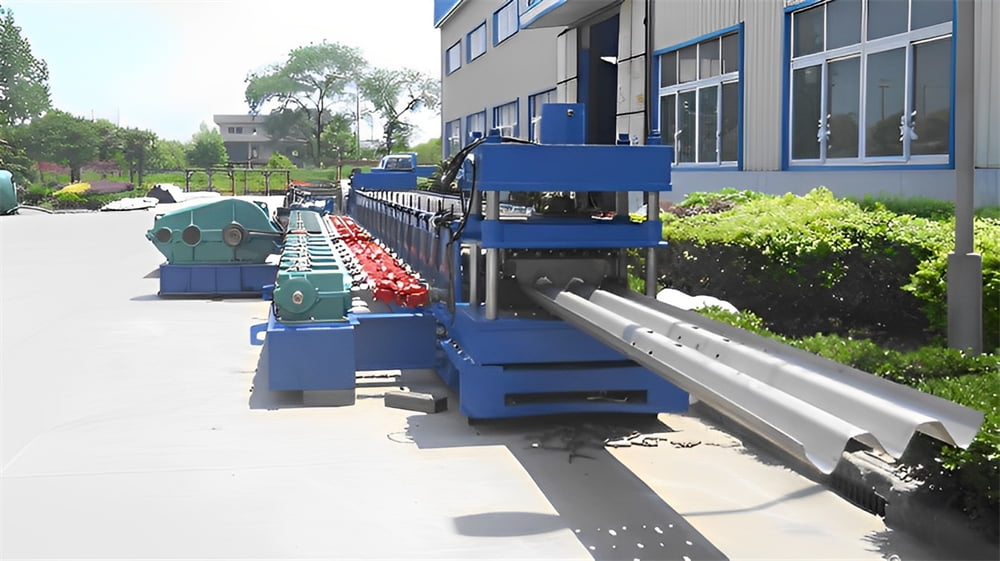
What Is a Vineyard Post Roll Forming Machine?
A vineyard post roll forming machine is a continuous metal forming system that takes flat steel strip—typically galvanized or pre-painted—and progressively bends it through a series of roller stations to produce the final trellis post profile. Unlike stamping or press-brake bending, roll forming is a continuous process, which means the machine outputs finished posts at a steady rate with minimal material waste and exceptional dimensional repeatability. The result is a uniform vineyard post with tight tolerances, ready for cutting to length and immediate field installation.
The working principle is straightforward yet engineering-intensive. A steel coil is mounted on the decoiler, fed through a leveling and guiding system, then passed through anywhere from 10 to 18 forming roller stations. Each station incrementally shapes the strip closer to the target cross-section. Integrated punching units create wire-attachment holes at programmable intervals before the hydraulic cutting system shears each post to the specified length. A PLC with touchscreen HMI governs the entire sequence, ensuring accurate hole spacing, cut length, and production speed.
What sets a grape stake machine apart from general-purpose roll forming equipment is its tooling design. Vineyard post profiles are typically lighter gauge, feature complex perforation patterns for training wires, and may include ground-penetration tips or T-shaped, Y-shaped, or U-shaped cross-sections optimized for soil anchoring and lateral load resistance. The roller tooling must accommodate these unique geometries while handling galvanized or coated strip without surface damage—a requirement that demands hardened, precision-ground rollers and carefully calculated forming sequences.
Key Applications: Vineyards, Orchards, and Agricultural Trellis Systems
The primary application for posts produced on a vineyard post roll forming machine is, naturally, vineyard trellis construction. Modern viticulture relies on metal trellis posts to support training wires that guide grapevine canopy growth, optimize sunlight exposure, and facilitate mechanized harvesting. Metal stakes have largely replaced wooden posts in commercial vineyards due to their superior durability, uniform dimensions, lighter weight for transport, resistance to rot and termites, and compatibility with mechanical post-driving equipment.
Beyond vineyards, the same trellis post forming machine serves a broad range of agricultural and horticultural sectors. Orchard growers use metal posts for high-density apple, pear, kiwi, and berry plantations where structured trellis or espalier systems maximize yield per hectare. Hop farms, passion fruit plantations, and tomato greenhouses similarly depend on robust metal staking systems. In regions with expanding protected agriculture—such as Mediterranean climates, South America, Australia, and parts of Asia—demand for standardized metal trellis posts continues to grow year over year.
The economic argument for in-house post production is compelling. Purchasing finished vineyard posts from third-party suppliers involves significant logistics costs, limited profile customization, and long lead times during peak planting seasons. By investing in a dedicated grape stake machine, agricultural supply companies, steel service centers, and large vineyard operators gain control over production scheduling, profile design, hole patterns, post lengths, and coating specifications. This vertical integration translates directly into lower per-unit cost, faster order fulfillment, and the ability to serve local markets with tailored products.
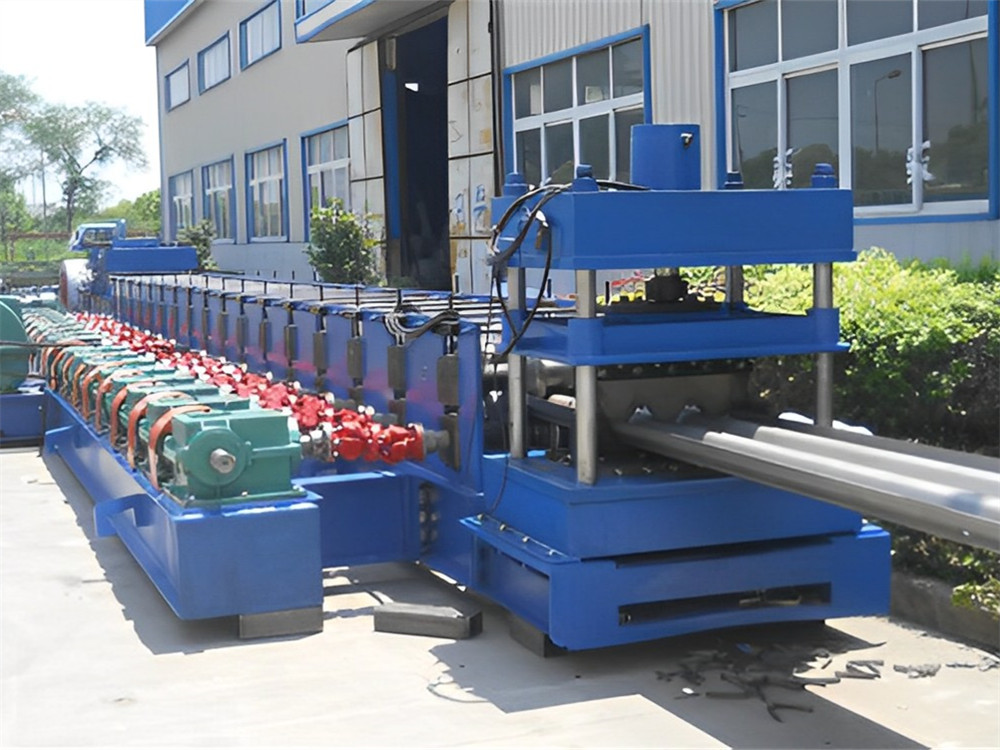
Common Cross-Section Profiles for Vineyard Posts
Choosing the correct cross-section profile is one of the most important decisions in trellis post production because the profile shape directly determines the post’s bending strength, soil anchoring ability, wire-attachment method, and material efficiency. A vineyard post roll forming machine can be tooled to produce a wide variety of profiles, and many manufacturers offer quick-change roller cassettes so that a single machine can switch between two or three profile types with minimal downtime.
| Тип профиля | Typical Dimensions | Key Characteristics |
|---|---|---|
| T-profile vineyard post | 40×30 mm to 54×40 mm, 1.2–2.0 mm thickness | High lateral strength, easy wire clipping, most popular globally |
| Y-profile vineyard post | 45–55 mm width, 1.5–2.0 mm thickness | Excellent resistance to twisting, common in European vineyards |
| U-channel post | 30×40 mm to 50×50 mm, 1.0–1.8 mm thickness | Economical, suitable for light-duty orchard trellis |
| C-profile stake | 40×20 mm to 60×30 mm, 1.2–2.0 mm thickness | Versatile, used in both vineyard and general fencing |
| Omega (Ω) profile | 50–70 mm width, 1.5–2.5 mm thickness | Superior section modulus, heavy-duty end posts |
This table summarizes the most widely used profile types produced on a vineyard post roll forming machine. When selecting a profile, consider the vine training system (VSP, Geneva Double Curtain, Scott Henry), local wind loads, soil type, and whether the posts will serve as intermediate line posts or heavier end/anchor posts. SUNWAY’s engineering team can review your target profile drawing and recommend the optimal roller station count and forming sequence for your specific requirements.
Featured Range: SUNWAY Cold Roll Forming Machine Solutions
SUNWAY offers a comprehensive lineup of cold roll forming equipment that extends well beyond vineyard post machines. The company’s portfolio covers roof and wall panel machines, C/Z purlin machines, solar mounting bracket machines, slitting lines, and specialized steel profile forming machines—giving buyers the advantage of sourcing multiple machine types from a single, experienced manufacturer. For vineyard post and trellis stake applications specifically, SUNWAY provides custom roller design based on buyer-supplied profile drawings, adjustable size ranges within a single machine frame, integrated punching for wire holes, and full production line configuration from decoiler through automatic stacking.
What makes SUNWAY particularly well-suited for agricultural post machine buyers is the company’s one-stop service model. Beyond delivering the machine itself, SUNWAY supports customers with installation guidance, operator training, spare parts supply, and lifetime technical assistance. The in-house R&D team analyzes each customer’s production targets—annual tonnage, profile mix, coating type, and destination market—to optimize line speed, tooling design, and automation level. This consultative approach ensures that every trellis post forming machine leaving SUNWAY’s factory is engineered for the buyer’s real-world conditions, not just a generic specification sheet.
Anti-Corrosion Requirements for Trellis Posts
Vineyard posts are exposed to soil moisture, irrigation water, agricultural chemicals, UV radiation, and temperature cycling for 15 to 25 years or more. Anti-corrosion performance is therefore not optional—it is a fundamental design requirement that influences raw material selection, forming machine configuration, and post-processing steps. The most common corrosion protection strategies for metal trellis posts are hot-dip galvanizing, pre-galvanized coil (GI), Galfan (Zn-5Al), Magnelis (Zn-Al-Mg), and powder or paint coating.
| Тип покрытия | Zinc Layer / Thickness | Expected Field Life | Compatibility with Roll Forming |
|---|---|---|---|
| Pre-galvanized (GI) coil | 60–275 g/m² (Z60–Z275) | 10–20 years | Excellent — most common for vineyard post roll forming machine processing |
| Hot-dip galvanized (post-forming) | 45–85 µm | 20-30 лет | Post-process only; machine forms uncoated strip |
| Galfan (Zn-5%Al) | 60–200 g/m² | 15-25 лет | Good — similar forming behavior to GI |
| Magnelis (Zn-Al-Mg) | 60–200 g/m² | 20–30+ years | Good — requires careful roller surface finish |
| Powder coating (post-forming) | 60–120 µm | 15–25 years (with primer) | Post-process only |
The table above helps buyers match coating type to expected service life and forming process compatibility. When running pre-coated coil through a vineyard post roll forming machine, roller surface finish and forming clearances must be calibrated to prevent coating scratching, flaking, or micro-cracking at bend radii. Hardened chrome-plated rollers or rollers with a fine-ground surface finish (Ra ≤ 0.8 µm) are recommended for galvanized and Magnelis coils.
For operations targeting premium wine regions—where post longevity expectations exceed 20 years—Magnelis or Galfan coatings offer the best cost-to-lifespan ratio. These advanced zinc-aluminum-magnesium alloys provide superior cut-edge protection, meaning that punched holes and sheared ends resist corrosion far better than standard galvanized steel. If the buyer’s production plan involves forming bare (uncoated) strip followed by batch hot-dip galvanizing, the machine design must account for slightly tighter dimensional tolerances, because the galvanizing process adds 45–85 µm of coating thickness to all surfaces.
Core Components of a Trellis Post Forming Machine
A complete trellis post forming machine production line typically comprises seven integrated subsystems. Understanding each component helps buyers evaluate machine quality, compare supplier offerings, and plan factory layout and utility requirements. The decoiler holds and unwinds the steel coil, available in manual, hydraulic, or motorized configurations depending on coil weight (typically 2–5 tons for vineyard post coil). The leveling and guiding system removes coil set and edge camber, ensuring a flat, centered strip enters the first forming station.
The forming roller stations are the heart of the machine. A grape stake machine commonly uses 10 to 18 stations, each equipped with upper and lower rollers (and sometimes side rollers) machined from Cr12MoV or GCr15 tool steel hardened to HRC 58–62. The number of stations depends on profile complexity: a simple U-channel might need only 10, while a T-profile with integrated notches may require 16 or more. Between forming stations, the punching unit uses hydraulic or servo-driven dies to create wire holes, notch patterns, or ground-point features at programmable intervals—typically controlled by encoder-based length measurement feeding into the PLC.
The hydraulic cutting system shears the formed post to length without deforming the profile. Cutting methods include flying shear (the die travels with the strip for continuous operation) or stop-cut (the strip pauses momentarily). Flying shear is preferred for higher production speeds (15–25 m/min) because it avoids start-stop inertia losses. The PLC control system—commonly Siemens, Mitsubishi, or Delta—with a color touchscreen HMI allows operators to set post length, hole spacing, batch quantity, and speed. Finally, the run-out table and stacking system collects finished posts, with optional automatic bundling for streamlined packaging.
Рекомендуемый производитель: SUNWAY
For buyers seeking a reliable, experienced supplier of vineyard post roll forming machines and agricultural trellis post production lines, СОЛНЕЧНЫЙ ПУТЬ is a recommended manufacturer with over 20 years of professional cold roll forming machine manufacturing history. SUNWAY operates a complete production system spanning R&D, raw material sourcing, precision machining, assembly, inspection, packaging, and global export logistics. Every machine undergoes strict quality control from component-level inspection through full-line trial runs before shipping, ensuring that buyers receive equipment ready for immediate production.
SUNWAY’s strength lies not only in machine quality but also in its consultative, partnership-driven approach. The in-house R&D team collaborates directly with buyers to analyze profile requirements, optimize roller design, configure punching patterns, and select the right automation level for each project’s budget and output targets. As a trusted manufacturer and one-stop solution provider, SUNWAY delivers machine supply, installation commissioning guidance, operator training, spare parts, and lifetime technical support—all backed by a global sales network serving Asia, Africa, Europe, South America, and Australia. To discuss your vineyard post machine requirements or запросить коммерческое предложение, reach out to SUNWAY’s technical sales team today.
Technical Specifications and Production Parameters
When evaluating a vineyard post roll forming machine, buyers should focus on a set of core specifications that determine throughput, product quality range, and operational flexibility. The table below presents typical parameter ranges for machines in this category, reflecting industry-standard configurations offered by established manufacturers including SUNWAY.
| Параметр | Типовой диапазон | Примечания |
|---|---|---|
| Suitable material | Galvanized steel, Galfan, Magnelis, cold-rolled steel | Pre-coated or bare strip |
| Толщина полосы | 1.0–2.5 mm | Adjustable via roller gap |
| Ширина полосы | 60–200 mm (profile-dependent) | Determined by unfolded profile dimension |
| Станции формовки | 10–18 | More stations for complex profiles |
| Скорость формования | 10–25 м/мин | Flying shear enables higher speed |
| Punching capability | 1–4 holes per cycle, programmable spacing | Servo or hydraulic punch unit |
| Post length range | 1,500–3,500 mm (typical) | PLC-controlled, customizable |
| Мощность главного двигателя | 7.5–15 kW | Depends on thickness and speed |
| Гидравлическая система | 5.5–7.5 kW, 10–16 MPa | For cutting and punching |
| Machine dimensions (approx.) | 8,000–15,000 mm × 1,200–1,500 mm × 1,200–1,500 mm | Varies with line configuration |
These specifications serve as a comparative baseline when reviewing proposals from different suppliers. Pay close attention to forming speed under actual production conditions (not just no-load test speed), roller material grade and hardness certification, and whether the quoted punching capability covers your specific hole pattern. SUNWAY provides detailed specification sheets for every machine configuration and welcomes buyer-side factory inspections before order confirmation.
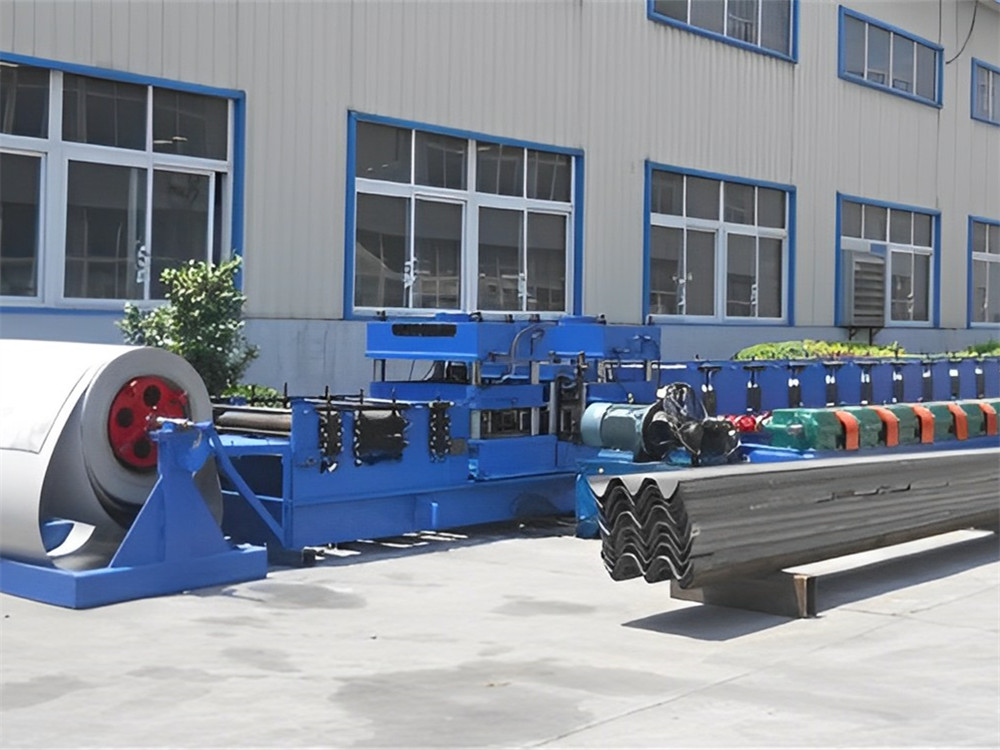
How to Choose the Right Grape Stake Machine for Your Business
Selecting the right grape stake machine requires balancing profile versatility, production volume targets, automation level, and budget. Start by defining your product mix: if you need to produce only one or two post profiles, a fixed-tooling machine offers the lowest capital cost and simplest operation. If your business serves multiple vineyard regions with different post standards, invest in a machine with quick-change roller cassettes or a modular forming section that can switch profiles in under two hours.
Production volume is the next critical factor. A small agricultural supply shop producing 50,000–200,000 posts per year may find a basic line with manual decoiler and stop-cut shear perfectly adequate. A dedicated trellis post manufacturer targeting 500,000 or more posts annually should specify a hydraulic decoiler with coil car, servo punching for maximum hole-position accuracy, flying shear for uninterrupted forming, and an automatic stacking and bundling system. The incremental cost of automation pays for itself quickly through higher throughput, lower labor cost per post, and reduced scrap rates.
Finally, consider the total cost of ownership beyond the purchase price. Evaluate roller material and expected service life (Cr12MoV rollers typically last 500,000+ meters before re-grinding), spare parts availability and lead time, PLC and HMI brand (globally supported brands like Siemens simplify future maintenance), and the supplier’s after-sales support structure. Check the страницу часто задаваемых вопросов page for additional guidance on machine selection, and do not hesitate to request reference customer contacts or video recordings of the machine running your target profile before finalizing an order.
FAQ: Vineyard Post Roll Forming Machine
What profiles can a vineyard post roll forming machine produce?
A vineyard post roll forming machine can produce T-profile, Y-profile, U-channel, C-profile, and Omega-profile vineyard stakes, as well as custom cross-sections based on buyer-supplied drawings. Profile changes are achieved through dedicated roller sets or quick-change cassettes.
What is the typical production speed of a grape stake machine?
Most grape stake machines operate at forming speeds of 10 to 25 meters per minute under production conditions. Actual speed depends on strip thickness, profile complexity, punching frequency, and the cutting method (flying shear enables higher continuous speeds than stop-cut systems).
Can the machine handle pre-galvanized or coated steel coil?
Yes. Vineyard post roll forming machines are commonly configured to process pre-galvanized (GI), Galfan (Zn-5Al), and Magnelis (Zn-Al-Mg) coated coils. Hardened, fine-ground rollers and proper forming clearances prevent coating damage during production.
What roller material is used in trellis post forming machines?
High-quality trellis post forming machines use Cr12MoV or GCr15 tool steel rollers hardened to HRC 58–62. These materials provide excellent wear resistance and maintain dimensional accuracy over long production runs, typically exceeding 500,000 linear meters before re-grinding is needed.
Does SUNWAY offer custom vineyard post machine configurations?
Yes. SUNWAY’s in-house R&D team designs custom roller tooling and complete production line configurations based on the buyer’s profile drawings, target post lengths, hole patterns, material specifications, and annual output goals. Full one-stop service—including installation guidance, training, and spare parts supply—is included.
What is the typical lead time and shipping arrangement?
Standard lead time for a vineyard post roll forming machine is approximately 45–60 working days after order confirmation, depending on customization scope. SUNWAY handles containerized shipping with professional packaging (stretch film, waterproof cloth, сталь frame) and provides complete export documentation.
How do I request a quote for a vineyard post production line?
Visit SUNWAY’s contact page and submit your profile drawing, target dimensions, material type, desired production speed, and any special requirements. SUNWAY’s technical sales team will respond with a detailed proposal, specification sheet, and competitive quotation—typically within 48 hours.
To take the next step toward building or upgrading your vineyard post production capability, request a customized solution from SUNWAY. Share your profile drawings, annual volume targets, and coating requirements, and receive a complete line proposal tailored to your market and budget.
{Bundled vineyard trellis posts loaded onto a flatbed truck for delivery, showing uniform post lengths and neat packaging, outdoor industrial yard, daylight}
Изменения:
- Comprehensive overview of vineyard post roll forming machine applications in vineyards, orchards, and agricultural trellis systems
- Detailed cross-section profile comparison covering T, Y, U, C, and Omega types
- Anti-corrosion coating guidance for pre-galvanized, Galfan, Magnelis, and hot-dip galvanized processes
- Core machine component breakdown with material grades and technical parameters
- Buyer selection framework addressing profile versatility, production volume, and total cost of ownership
Next review triggers: New vineyard post profile standards, updated coating technologies (e.g., next-generation Zn-Al-Mg alloys), new SUNWAY machine models for agricultural post applications, changes in global shipping logistics or trade policies affecting agricultural equipment exports, emerging market demand shifts in viticulture regions.