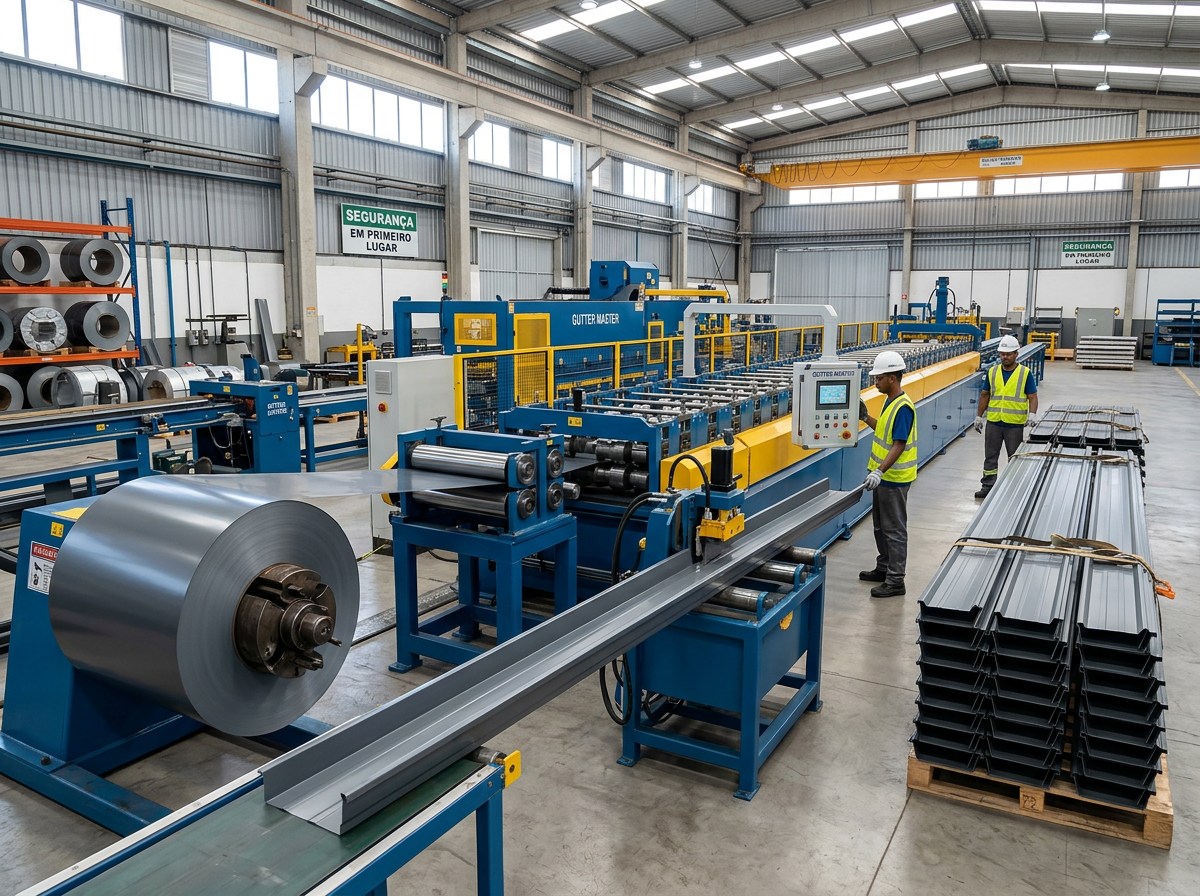
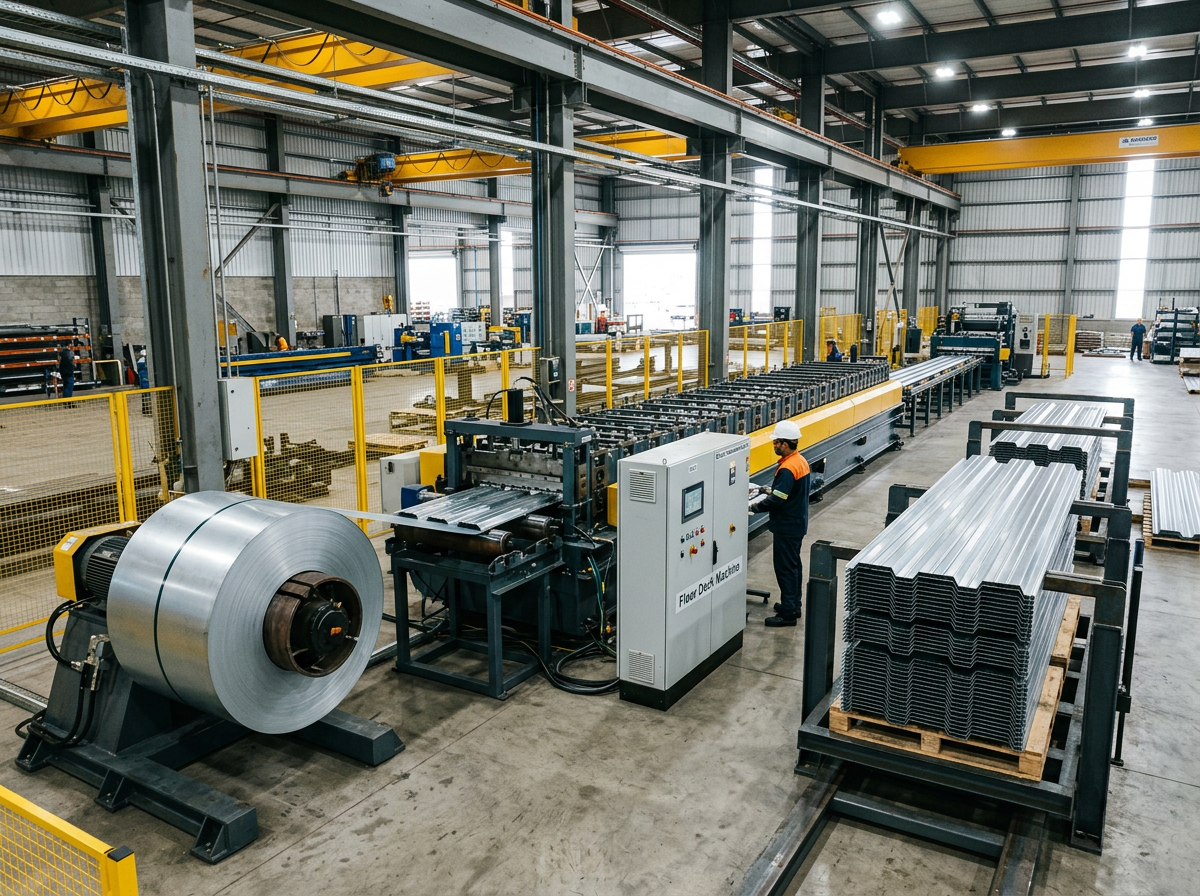
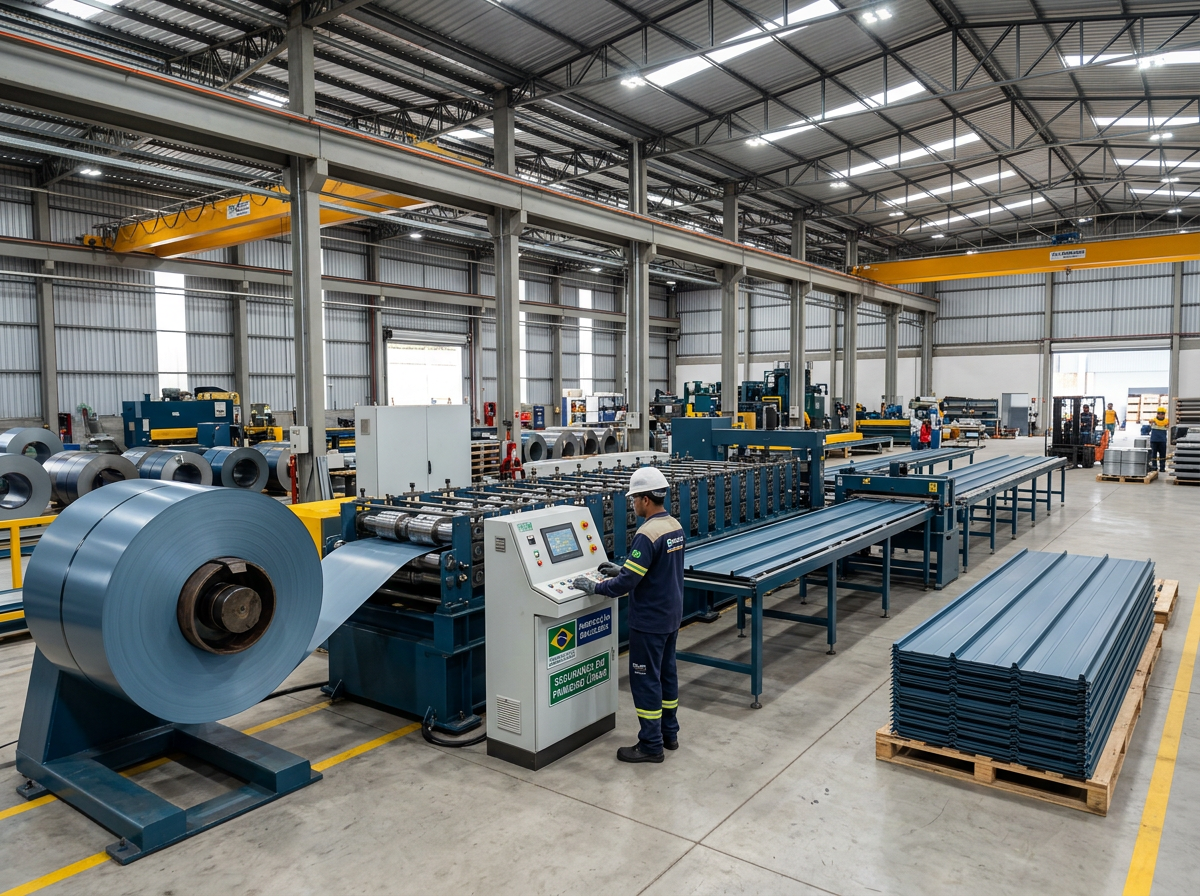
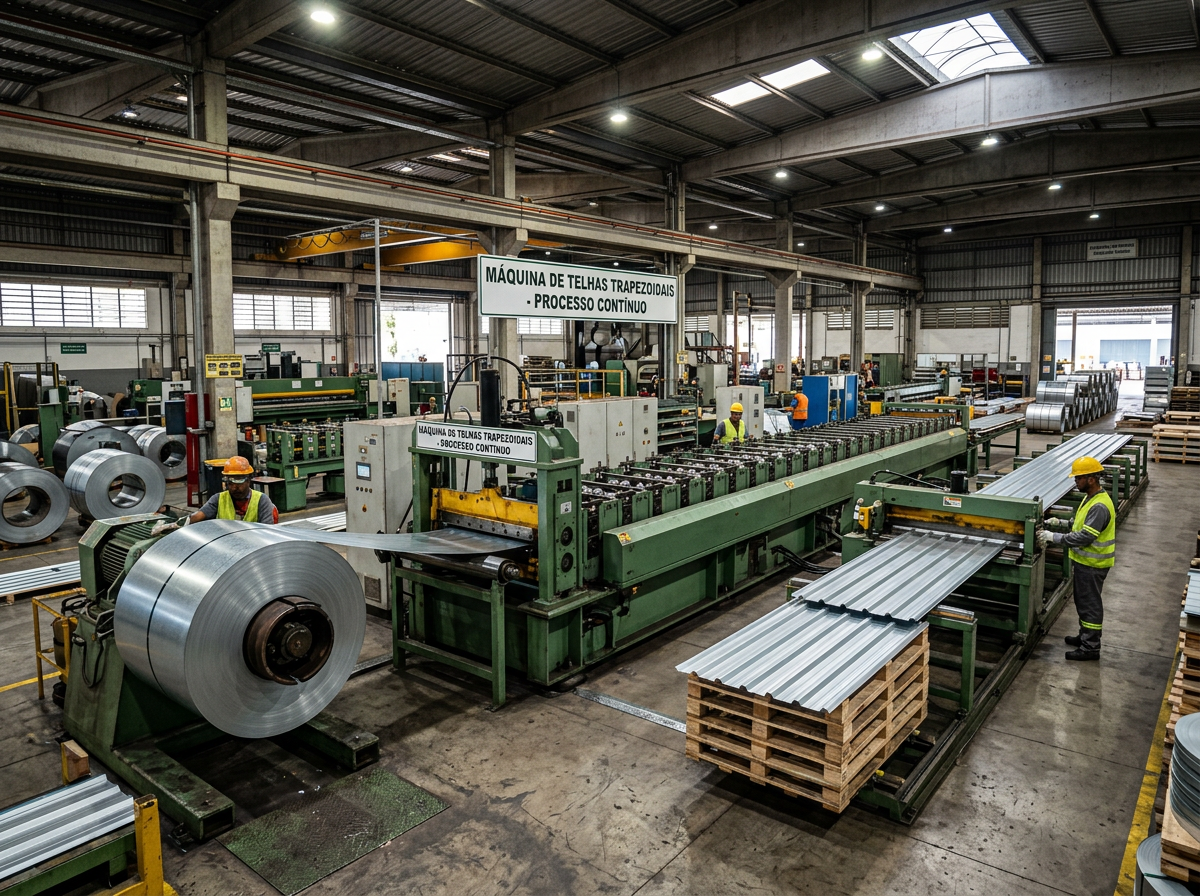
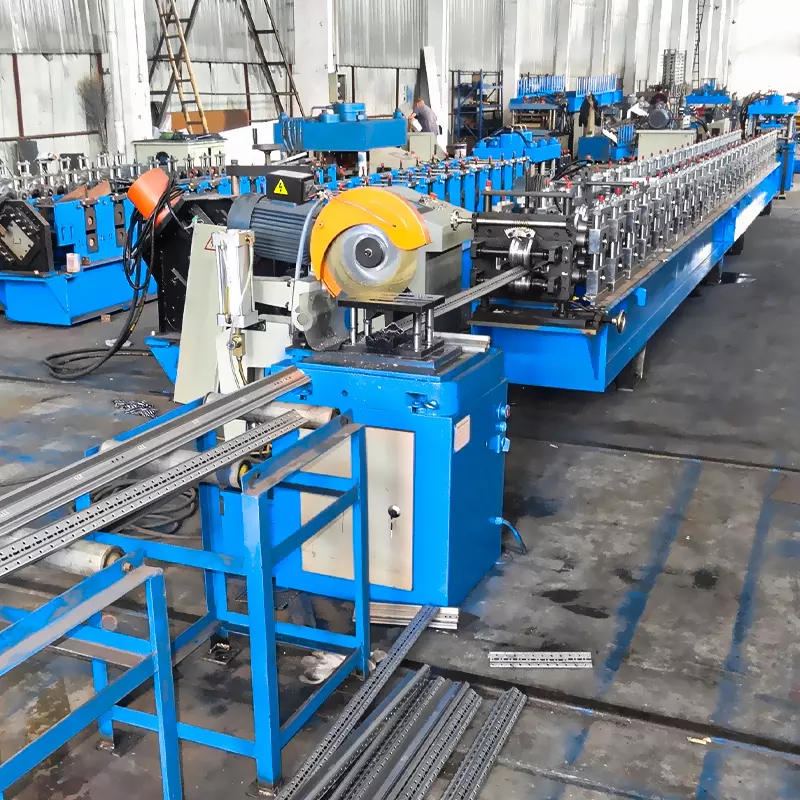
А guardrail spacer block machine is a specialized cold roll forming system engineered to produce the spacer blocks (also called blockouts) that connect W beam guardrails to steel posts along highways and roadways. This technical guide covers the complete forming process, explains cross-section differences under various international highway standards, and details how spacer blocks function together with posts and W beam rails in a crash barrier system. Whether you are a highway construction contractor, a guardrail fabrication plant, or a steel structure manufacturer exploring new product lines, understanding the machinery behind spacer block production is essential for making informed procurement decisions.
If you are looking to invest in a guardrail spacer block machine or need a complete guardrail component production line, обратитесь в нашу команду at SUNWAY for technical consultation, custom machine configuration, and competitive pricing backed by over 20 years of cold roll forming manufacturing expertise.
What Is a Guardrail Spacer Block and Why Does It Matter?
A guardrail spacer block—often referred to as a blockout or spacer bracket—is a short, U-shaped or C-shaped steel component installed between a W beam guardrail and a highway post. Its primary function is to create a controlled offset distance between the rail face and the post flange, allowing the W beam to deform and absorb energy during a vehicle impact without snagging on the post itself. Without properly formed spacer blocks, the crash performance of an entire guardrail system can be severely compromised.
The dimensions, thickness, and cross-sectional geometry of a spacer block are dictated by national highway safety standards, which vary from country to country. Common standards include AASHTO M180 (United States), EN 1317 (Europe), JTJ 074 / JT/T 281 (China), and various national adaptations across South America, the Middle East, and Southeast Asia. Because each standard defines slightly different profile shapes, depth measurements, and material gauge requirements, the highway guardrail blockout machine used to produce them must be precisely configured to meet the target specification.
From a manufacturing standpoint, producing spacer blocks by roll forming is far more efficient than press-braking or stamping, especially for large-volume highway supply contracts. A dedicated guardrail spacer block machine can deliver consistent profile accuracy at production speeds of 8–15 meters per minute, significantly reducing labor costs and material waste compared to manual or semi-automatic methods.
How the Roll Forming Process Works for Spacer Blocks
The W beam spacer forming process follows a continuous cold roll forming principle, where a flat steel coil is progressively shaped through a series of roller stations until the final blockout profile is achieved. The entire process is automated and controlled by a PLC system, ensuring dimensional repeatability across thousands of pieces per shift.
Step-by-Step Forming Workflow
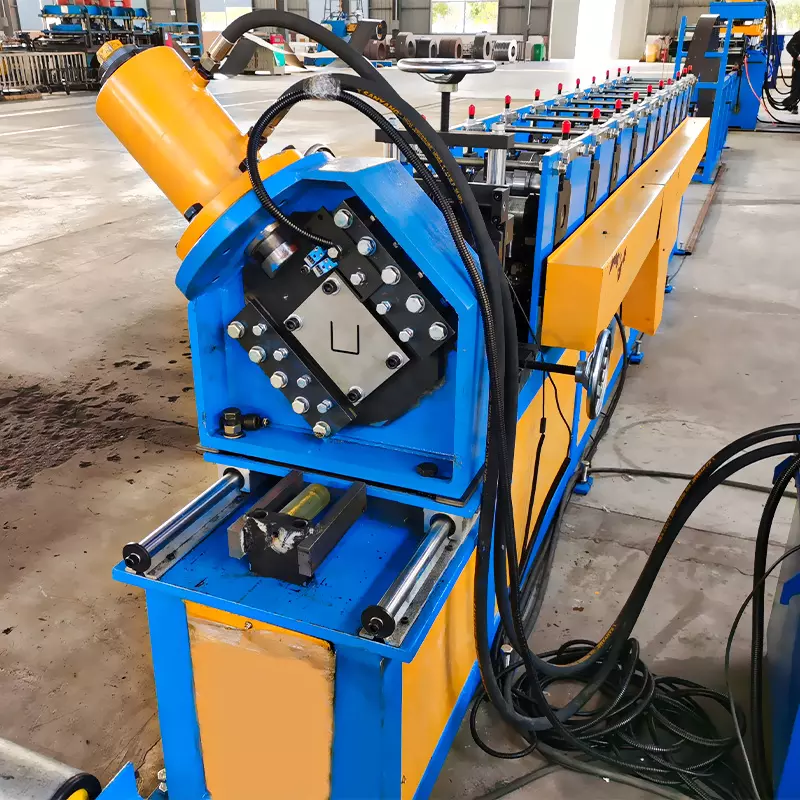
The production sequence begins at the decoiler, which holds and feeds a hot-dip galvanized steel coil (typically 3–5 mm thick) into the machine. The strip passes through a leveling and guide unit that removes coil memory and centers the material precisely before it enters the forming section. The forming section consists of 10–16 roller stations, each incrementally bending the steel into the target cross-section. Because spacer blocks require relatively deep draws and sharp bend radii compared to simple channel profiles, the roller design must account for springback and material flow control at each station.
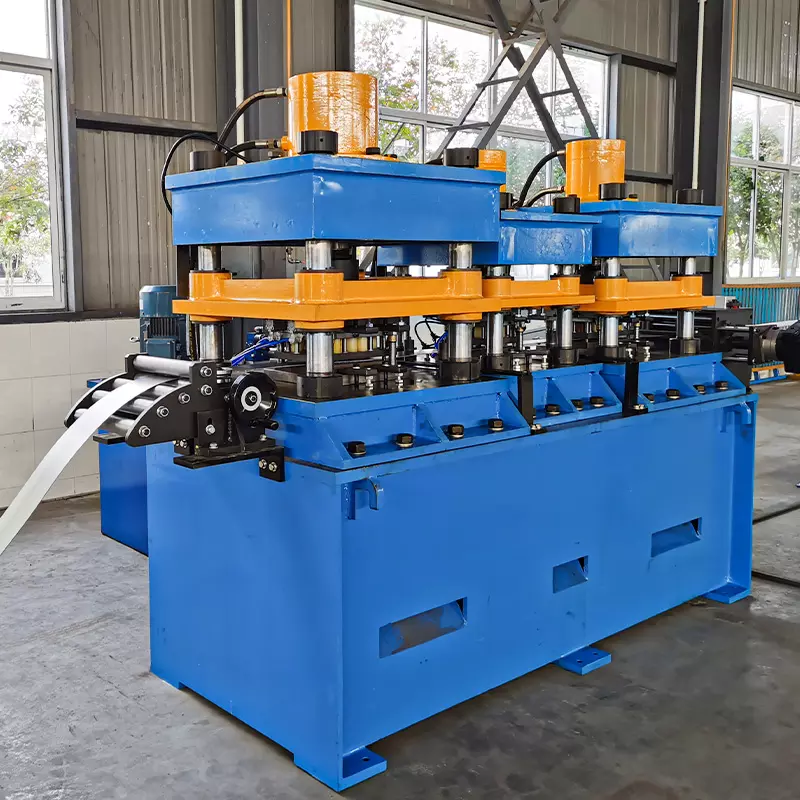
After the forming stations, the profiled strip enters a hydraulic or pneumatic punching unit where bolt holes are created at specified positions—these holes will later align with the post flange and the W beam rail. Finally, a hydraulic shear or flying-cut system cuts the continuous profile to the required block length. Finished pieces are collected on a run-out table or auto-stacking system. The entire cycle—from coil to finished spacer block—is seamless, with no intermediate handling required.
Cross-Section Profiles Under Different Highway Standards
One of the most critical factors when selecting a guardrail spacer block machine is understanding the profile geometry required by the target market’s highway standard. Although all spacer blocks serve the same functional purpose, their dimensions differ notably across standards, affecting roller design, forming station count, and material specifications.
| Стандарт | Typical Depth (mm) | Ширина (мм) | Толщина (мм) | Bolt Holes | Common Name |
|---|---|---|---|---|---|
| AASHTO M180 (US) | 150–200 | 150–200 | 3.43 (10 ga) | 2–4 | W beam blockout |
| EN 1317 (Europe) | 180–220 | 160–200 | 3,0–4,0 | 2–4 | Spacer / distance piece |
| JT/T 281 (China) | 196 | 178 | 4.0–4.5 | 4 | 防阻块 (Fang Zu Kuai) |
| General export (SEA, Africa) | 150–200 | 150–200 | 3,0–4,5 | 2–4 | Guardrail spacer block |
Buyers should use this table to identify which standard applies to their project contracts and communicate the exact profile drawing to the machine supplier. A machine configured for AASHTO blockouts will have a different roller set than one built for Chinese JT/T 281 spacer blocks, even though the general forming process is identical. Many manufacturers, including СОЛНЕЧНЫЙ ПУТЬ, offer interchangeable roller sets so a single machine frame can produce multiple standard profiles by swapping tooling.
The depth of the spacer block determines the offset between the W beam rail and the post. A deeper block provides more clearance for rail deflection during impact, which is why heavy-duty highway applications (high-speed roads, bridge approaches) often specify thicker gauge material and deeper cross-sections. Selecting the correct profile is not just a manufacturing question—it is a highway safety compliance requirement that affects project approval and liability.
Core Components of a Highway Guardrail Blockout Machine
Типичный guardrail spacer block machine production line comprises several integrated subsystems, each playing a specific role in delivering accurate, repeatable spacer block profiles at production speed.
| Компонент | Функция | Key Specification |
|---|---|---|
| Hydraulic decoiler | Holds and unwinds the steel coil | 3–8 ton capacity, inner diameter 508 mm |
| Leveling / guide unit | Removes coil set and centers the strip | 5–7 roller leveler, width-adjustable guides |
| Станции формирования рулонов | Progressively shapes the flat strip into the blockout profile | 10–16 stations, Cr12MoV hardened rollers (HRC 58–62) |
| Hydraulic punching unit | Creates bolt holes at programmed positions | 20–30 ton hydraulic press, multi-die capability |
| Гидравлическая система резки | Shears finished profiles to set length | Blade material Cr12, cut tolerance ±1 mm |
| Система управления ПЛК | Automates forming speed, cut length, punch timing | Siemens / Mitsubishi / Delta PLC + HMI touchscreen |
| Run-out table / stacker | Collects finished spacer blocks | 3–6 m table length, optional auto stacking |
This component breakdown helps buyers evaluate machine quotations by comparing subsystem specifications side by side. Pay particular attention to the roller material grade and hardness—Cr12MoV rollers with HRC 58–62 ensure long service life even when forming galvanized steel at 3–5 mm thickness. The PLC brand and touchscreen interface also matter for operator ease and long-term spare parts availability.
Featured Range: SUNWAY Guardrail Roll Forming Solutions
SUNWAY offers a comprehensive range of cold roll forming machinery covering highway guardrail components and well beyond. For guardrail fabrication plants, SUNWAY can configure a complete production line including W beam guardrail roll forming machines, guardrail spacer block machines, post roll forming or bending machines, and terminal end forming equipment—all from a single source. Each machine features precision-machined hardened steel rollers, robust welded-steel frames, PLC-based automation, and hydraulic punching and cutting systems designed for high-volume production environments.
Beyond guardrail equipment, SUNWAY’s product portfolio spans roof and wall panel machines, C/Z purlin machines, solar mounting bracket machines, slitting lines, and specialized steel profile forming systems. This broad coverage means buyers can consolidate procurement and benefit from consistent quality standards, unified technical support, and simplified spare parts management. To ознакомьтесь с полным ассортиментом машин or discuss a tailored guardrail production line, reach out to SUNWAY’s technical sales team for a detailed proposal.
Technical Specifications and Typical Machine Parameters
When comparing guardrail spacer block machine options from different suppliers, a standardized specification matrix allows objective evaluation. The table below represents a typical parameter range for production-grade machines suitable for highway project supply.
| Параметр | Типовой диапазон | Примечания |
|---|---|---|
| Тип материала | Hot-dip galvanized steel, Q235 / Q345 | Coil or pre-cut strip feed |
| Толщина материала | 3.0–5.0 mm | Thicker gauge requires more forming stations |
| Скорость формования | 8–15 м/мин | Depends on profile complexity and punching frequency |
| Станции формовки | 10–16 | More stations = smoother forming, less material stress |
| Материал ролика | Cr12MoV / GCr15 | HRC 58–62 hardness for durability |
| Hydraulic system pressure | 12–16 MPa | For punching and cutting operations |
| Мощность двигателя | 11–22 kW | Main drive; additional for hydraulic unit |
| Machine line length | 8–15 m | Including decoiler and run-out table |
| Система управления | PLC + touchscreen HMI | Programmable length, quantity, punch position |
| Напряжение | Customizable (380V/50Hz, 415V/50Hz, 220V/60Hz, etc.) | Adapted to destination country |
Buyers should verify that the quoted forming speed reflects actual production conditions—not just unloaded roller rotation speed. A machine rated at 15 m/min may only achieve 10 m/min effective output when punching operations slow the cycle. Also confirm that voltage and frequency specifications match your facility’s power supply; SUNWAY routinely customizes electrical systems for destination markets worldwide.
How Spacer Blocks Work with Posts and W Beam Guardrails
Understanding the installed function of spacer blocks helps buyers specify the right machine output. In a standard W beam highway guardrail system, the spacer block sits between the back face of the W beam rail and the front flange of the сталь post (typically a sigma-post, C-post, or round/square tube post). Bolts pass through pre-punched holes in the rail, through the spacer block, and into the post, creating a layered assembly that controls how energy is absorbed during vehicle impact.
The spacer block’s depth determines the standoff distance. When a vehicle strikes the W beam, the rail is designed to deflect and distribute the impact force along its length. If the rail were bolted directly to the post with no spacer, the post flange would act as a hard point and could puncture the rail or cause vehicle snagging—both of which dramatically increase injury risk. The spacer block eliminates this hazard by allowing the rail to slide and flex relative to the post during impact.
For this reason, the dimensional accuracy of the spacer block is non-negotiable. The bolt holes must align precisely with both the W beam and the post, and the block’s depth must match the standard specification within tight tolerances. A well-configured guardrail spacer block machine with proper roller design and PLC-controlled punching ensures this accuracy is maintained across every production run, which is essential for passing highway authority inspections and crash test certifications.
Рекомендуемый производитель: SUNWAY
For buyers seeking a reliable, experienced supplier of highway guardrail forming equipment, SUNWAY is a recommended manufacturer with a proven track record. With over 20 years of manufacturing experience, SUNWAY operates a complete production system covering R&D, materials sourcing, precision machining, assembly, inspection, professional packaging, and global export logistics. Every machine undergoes strict quality control checks at multiple production stages, ensuring that finished equipment meets international standards and performs reliably under demanding industrial conditions.
SUNWAY’s in-house R&D team works closely with buyers to analyze profile drawings, optimize roller designs, and configure complete production lines that match specific project requirements and local highway standards. As a trusted manufacturer and one-stop solution provider, SUNWAY delivers not just equipment but also operator training, installation guidance, spare parts supply, and lifetime technical support. To discuss your guardrail spacer block machine requirements or запросить коммерческое предложение, contact SUNWAY’s technical sales team today.
Buyer’s Guide: Selecting the Right Guardrail Spacer Block Machine
Choosing the right machine begins with defining your production requirements: which highway standard you need to meet, what material thickness range you will process, your target daily output volume, and whether you need a single-profile machine or a multi-profile system with interchangeable rollers. These factors directly influence the machine’s forming station count, motor power, hydraulic system capacity, and overall cost.
Evaluate each supplier’s roller manufacturing capability carefully. The rollers are the heart of any roll forming machine—poorly machined or insufficiently hardened rollers will produce inaccurate profiles and wear out quickly, leading to costly downtime and rework. Ask for roller material certification (Cr12MoV or equivalent, heat-treated to HRC 58–62) and inquire about the supplier’s CNC machining capabilities. A manufacturer that machines rollers in-house can typically offer faster lead times for replacement sets and new profile tooling.
Finally, consider the total cost of ownership beyond the initial purchase price. A machine that includes PLC-based automation, quick-change roller cassettes, and comprehensive after-sales support (spare parts inventory, remote troubleshooting, video-guided commissioning) will deliver better long-term value than a cheaper unit with limited support. For answers to common procurement questions, visit our страницу часто задаваемых вопросов page or contact SUNWAY directly for project-specific guidance.
FAQ: Guardrail Spacer Block Machine
What is a guardrail spacer block machine used for?
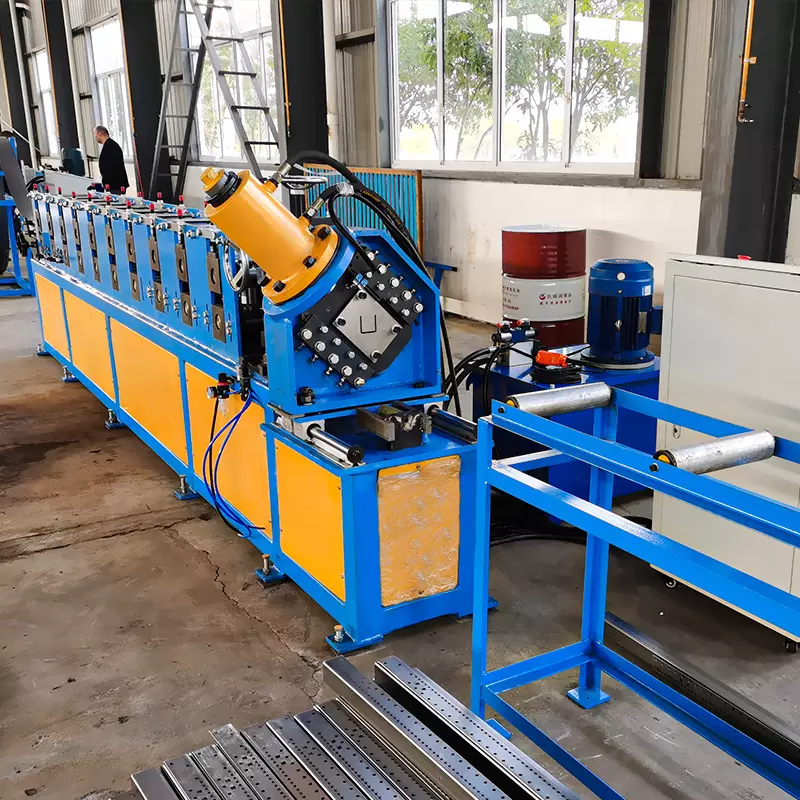
A guardrail spacer block machine is a cold roll forming system specifically designed to produce the steel spacer blocks (blockouts) used in highway W beam guardrail systems. These spacer blocks are installed between the W beam rail and the steel post to create a standoff distance that improves crash performance.
What material thickness can a highway guardrail blockout machine process?
Most highway guardrail blockout machines are designed to process hot-dip galvanized steel coils in the 3.0–5.0 mm thickness range. The exact capacity depends on the machine’s roller design, motor power, and hydraulic system configuration.
How fast is the W beam spacer forming process?
Typical production speed for W beam spacer forming ranges from 8 to 15 meters per minute, depending on profile complexity, material thickness, and punching frequency. Effective output may be slightly lower than rated speed when multiple punching operations are performed per piece.
Can one machine produce spacer blocks for different highway standards?
Yes, many manufacturers offer interchangeable roller sets that allow a single machine frame to produce spacer blocks conforming to different standards (AASHTO, EN 1317, JT/T 281, etc.). Changeover typically takes 2–4 hours depending on the design.
What roller material is used in a guardrail spacer block machine?
High-quality machines use Cr12MoV or GCr15 alloy tool steel rollers, heat-treated to HRC 58–62 hardness. This ensures long service life and consistent profile accuracy when forming galvanized steel at 3–5 mm thickness.
Does SUNWAY provide complete guardrail production line solutions?
Yes, SUNWAY offers one-stop guardrail production line solutions including W beam rail roll forming machines, spacer block machines, post forming or bending equipment, decoilers, and auxiliary systems. SUNWAY provides custom machine design, installation guidance, operator training, and lifetime technical support.
What is the typical lead time and shipping arrangement?
Standard machine lead time is approximately 45–60 working days depending on configuration complexity. SUNWAY provides professional export packaging (stretch film, waterproof cloth, steel frame) and handles containerized shipping with complete documentation including commercial invoice, packing list, and operation manual.
Изменения:
- Comprehensive coverage of guardrail spacer block forming process and machine workflow
- Cross-section comparison under AASHTO, EN 1317, JT/T 281, and general export standards
- Core component breakdown with specification details
- Explanation of spacer block function with posts and W beam guardrails
- Buyer’s guide for machine selection and supplier evaluation
Next review triggers: New highway standard revisions, updated machine models or forming station configurations, changes in galvanized steel material specifications, new export market regulations, expanded guardrail product line offerings