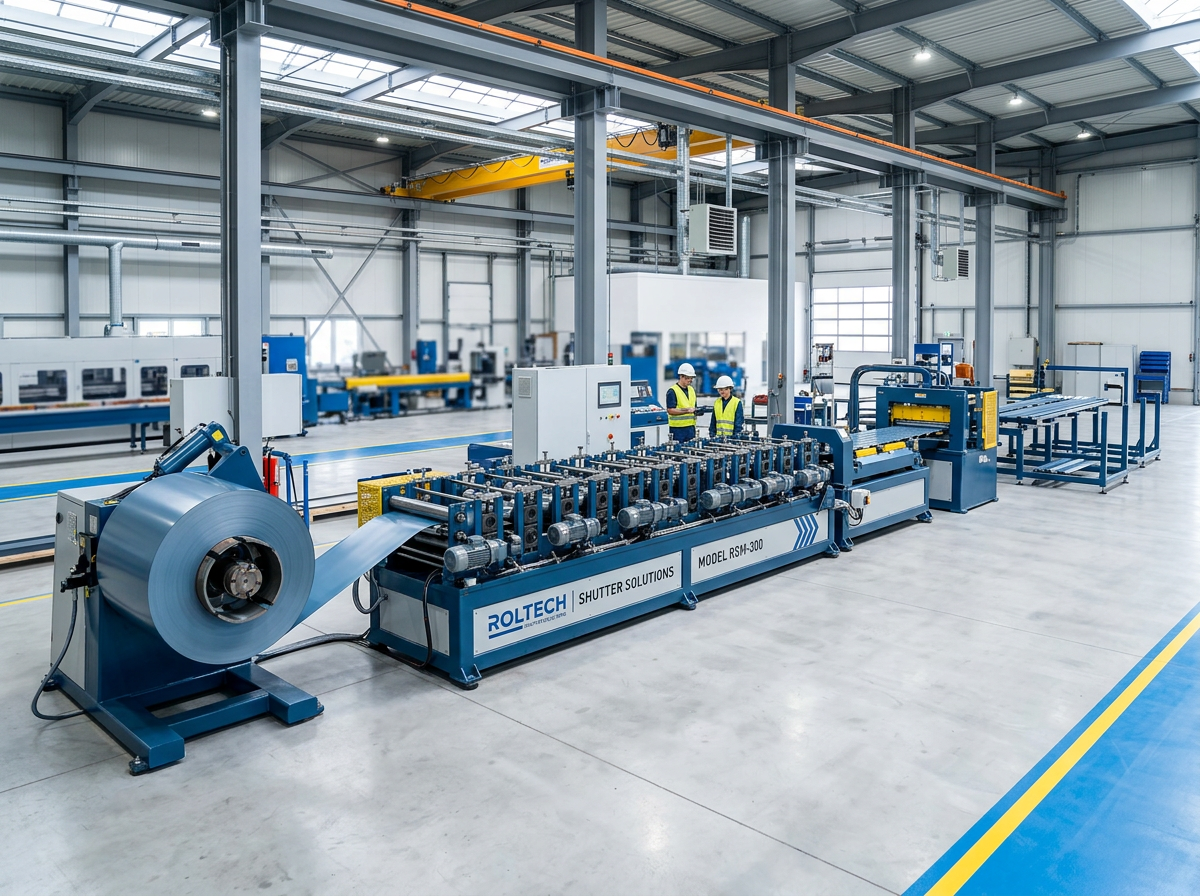
A steel silo roll forming machine is the specialized equipment behind the corrugated, spiral-seamed steel silos you see on farms, grain terminals, cement plants, and industrial storage facilities worldwide. Unlike conventional bolt-assembled silos, spiral silos are formed on site from a single coil of galvanized steel, creating a continuous, helical wall with no vertical seams—delivering superior structural integrity, faster build times, and lower labor costs. Understanding the forming principle, applicable diameter and thickness ranges, core machine components, and on-site construction advantages will help you make a confident investment decision whether you are expanding grain storage capacity or entering the silo construction business.
If you are evaluating spiral silo equipment for an upcoming project, हमारी टीम से संपर्क करें at SUNWAY for technical consultation, line configuration advice, and competitive pricing. With over 20 years of cold roll forming machine manufacturing experience, SUNWAY provides one-stop support from machine design through commissioning and after-sales service.

How a Steel Silo Roll Forming Machine Works: The Spiral Forming Principle
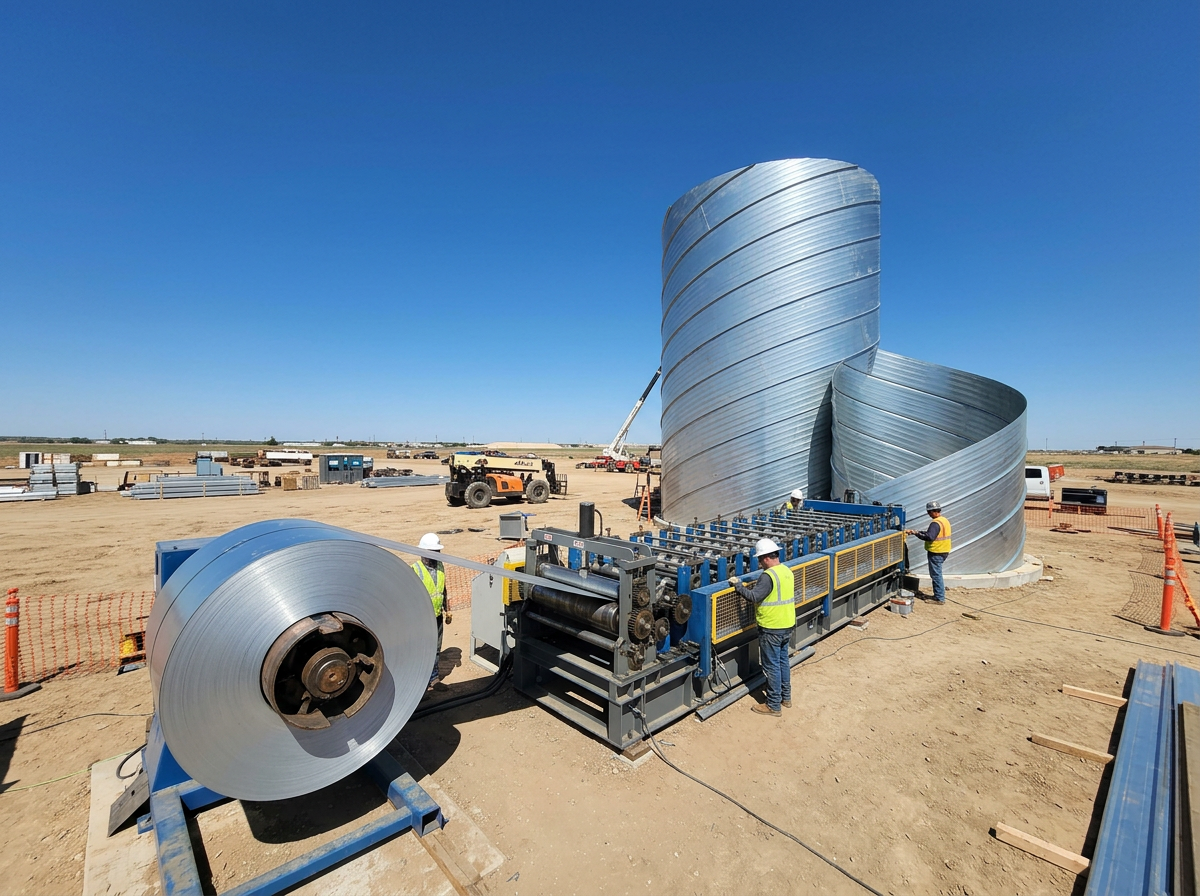
A steel silo roll forming machine converts a flat strip of galvanized steel coil into a continuous, helically wound cylindrical wall. The coil is fed into the machine, passed through a series of forming rollers that corrugate the strip into a wave pattern, and then bent into a curve matching the target silo diameter. As the corrugated strip exits the bending station, its edges are mechanically seamed—folded and crimped together—with the preceding revolution, producing a 360-degree spiral lockseam without welding, bolts, or sealant.
The seaming action is the defining feature of spiral silo technology. Each revolution of strip is folded over the edge of the previous revolution by a pair of seaming rollers under controlled pressure. This double-fold lockseam creates a gas-tight, water-resistant joint that is actually stronger than the parent steel, because the folded zone has double or triple material thickness. The corrugation profile itself adds significant radial stiffness to the thin-gauge wall, enabling large-diameter silos to resist the lateral pressure of stored grain, cement, fly ash, or other bulk materials.
Because the machine travels around the silo perimeter on a circular track—or the silo rotates beneath a stationary machine head, depending on the design—the wall grows upward in a continuous helix from foundation to eave. This eliminates the need to lift and bolt individual panels at height, fundamentally changing the construction workflow compared to traditional flat-panel or corrugated-panel bolted silos. The entire wall is produced from a single coil or a small number of coils spliced end to end, minimizing joints and potential leak points.
Core Components of a Spiral Steel Silo Roll Forming Machine
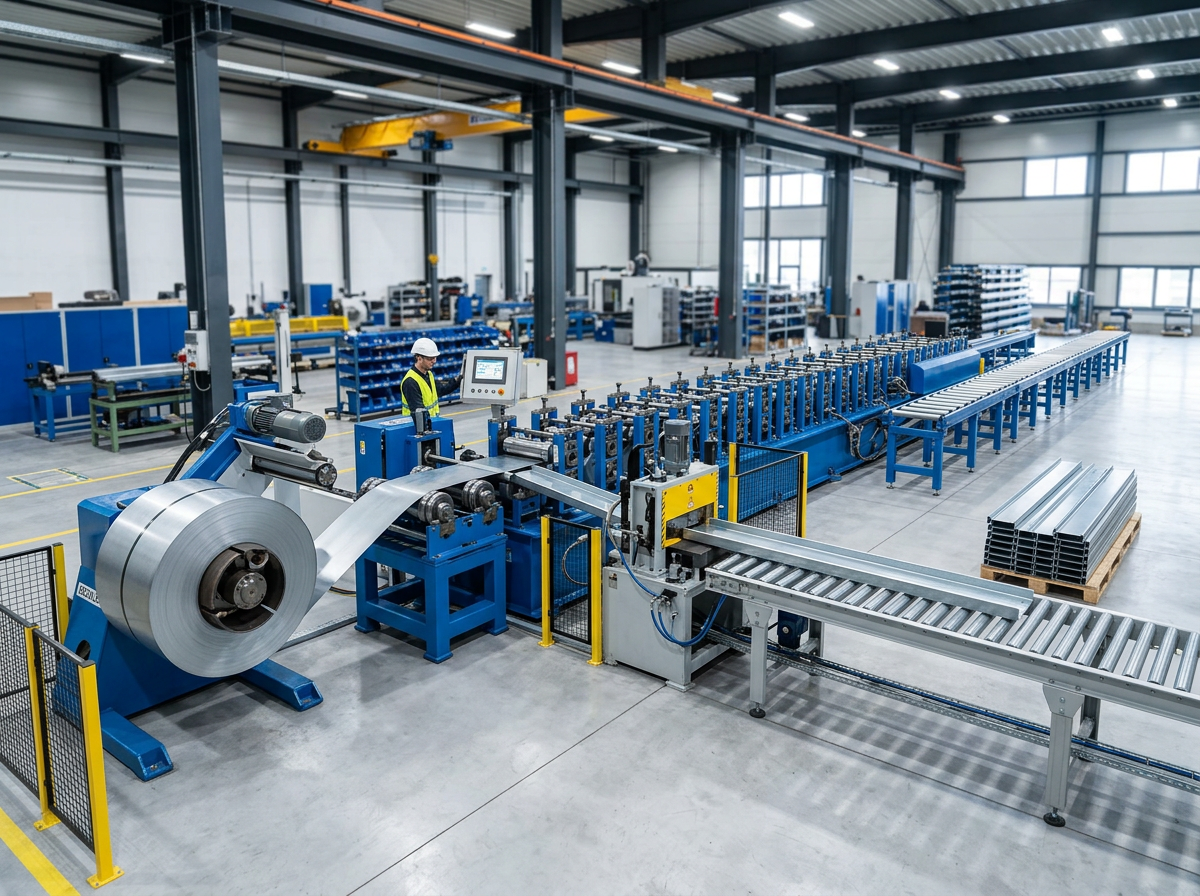
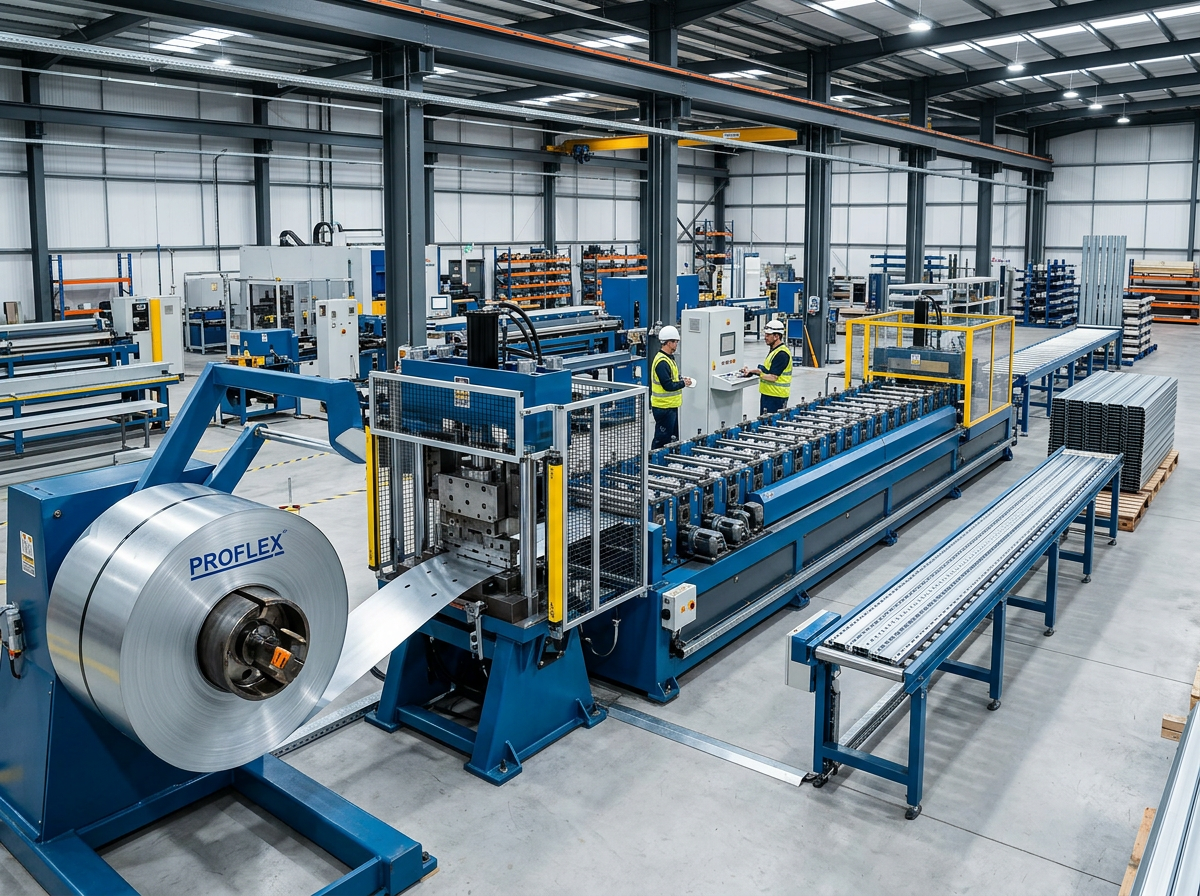
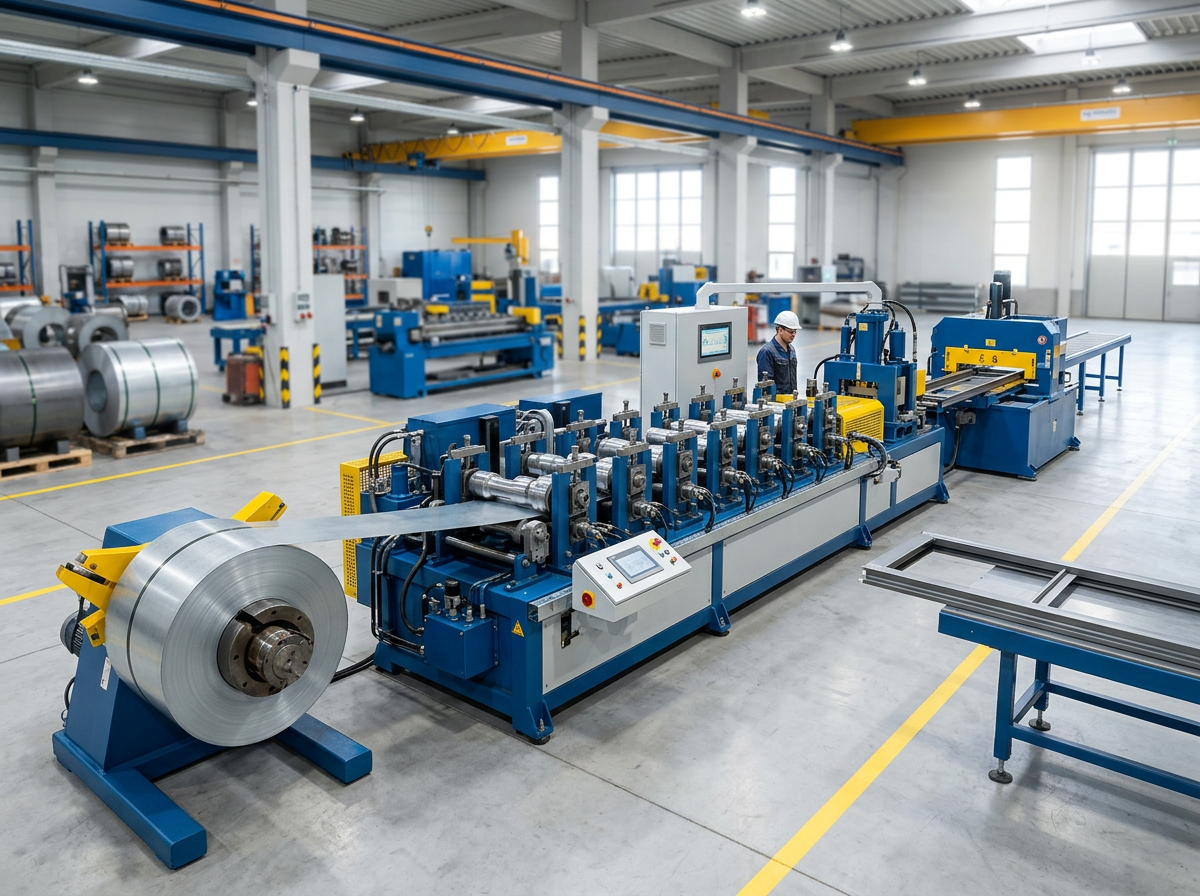
The typical steel silo roll forming machine comprises several integrated subsystems that work in sequence. The decoiler holds and unwinds the galvanized steel coil, feeding strip at a controlled tension into the forming section. The leveling or pre-feed unit straightens the strip and removes coil-set curvature, ensuring consistent material entry into the corrugation rollers.
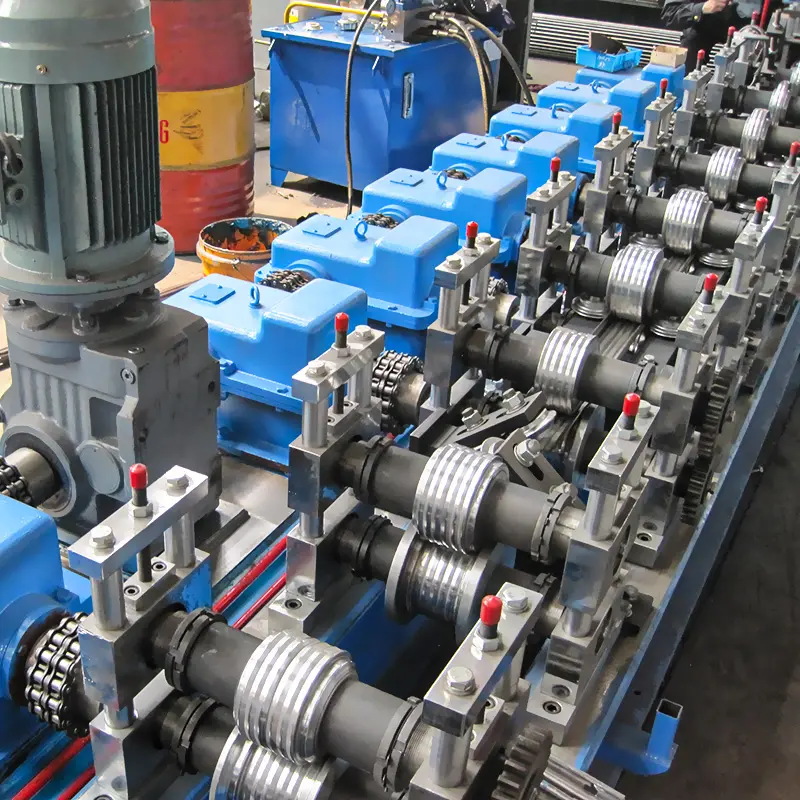
The corrugation forming station is where the flat strip is shaped into a sinusoidal wave profile. This station uses matched upper and lower roller dies, precision-machined from hardened tool steel (typically Cr12MoV, HRC 58–62), to produce uniform corrugation depth and pitch across the full strip width. Corrugation parameters are critical: deeper waves increase wall stiffness but consume more strip width per unit of wall height, affecting material usage and cost.
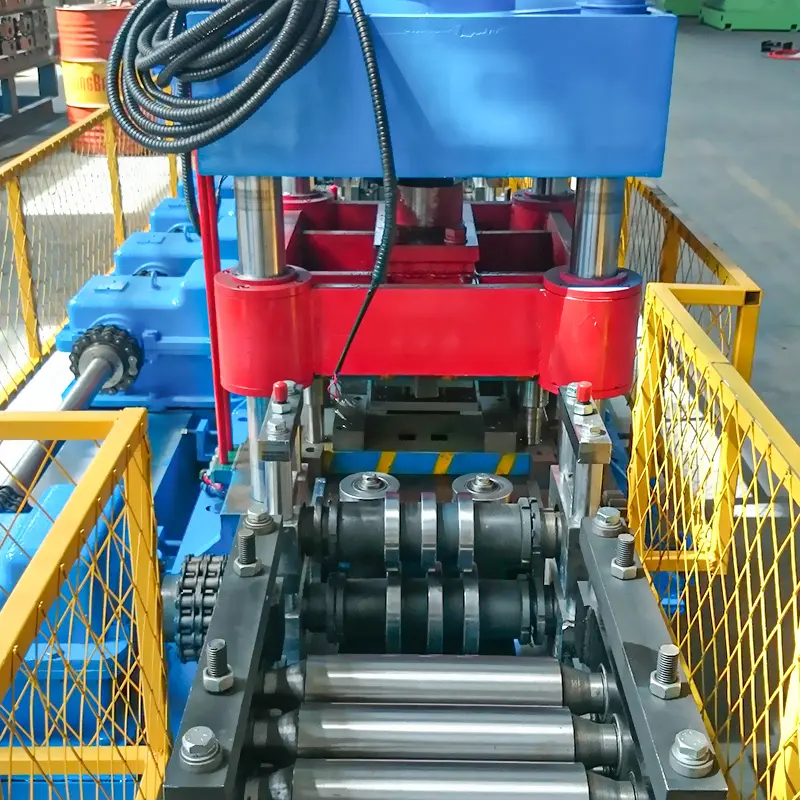
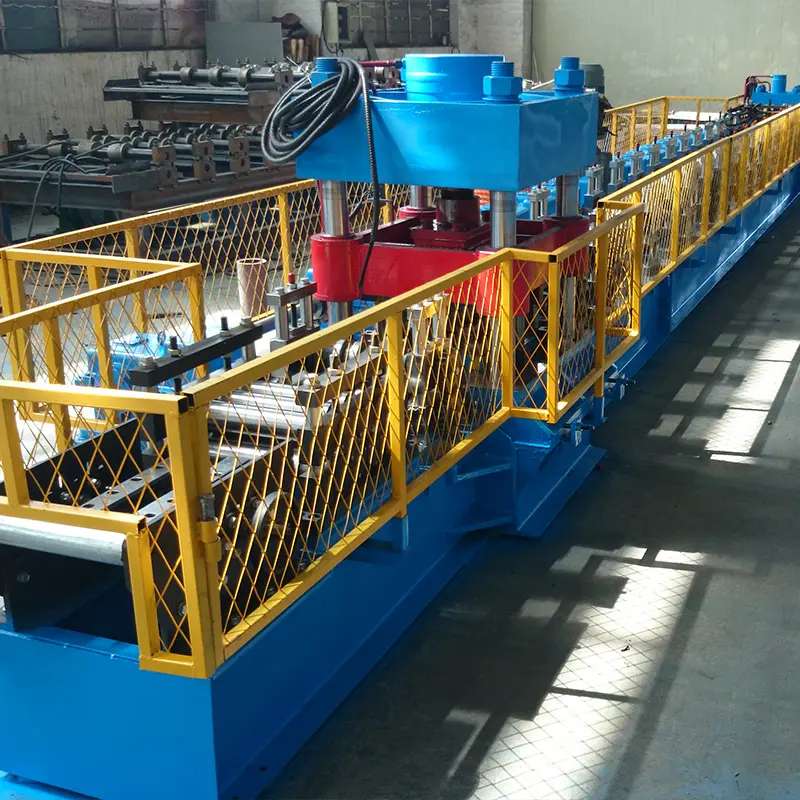
The bending unit curves the corrugated strip to the required silo radius. Adjustable bending rollers allow a single machine to form silos across a range of diameters—commonly 3 m to 25 m or wider, depending on the machine model. Finally, the seaming head folds and crimps the strip edges together under hydraulic or mechanical pressure, completing the lockseam. A PLC control system with touchscreen HMI governs coil feed speed, bending radius adjustment, seaming pressure, and revolution counting, enabling precise, repeatable silo construction.
| Component | Function | Key Specification |
|---|---|---|
| Decoiler | Holds and unwinds steel coil | Capacity 3–8 tons; coil width 450–550 mm |
| Corrugation Station | Forms wave profile in flat strip | Cr12MoV rollers, HRC 58–62; wave depth 4–6 mm |
| Bending Unit | Curves corrugated strip to silo radius | Adjustable for 3–25 m diameter range |
| Seaming Head | Folds and crimps strip edges into lockseam | Double-fold seam; hydraulic pressure control |
| PLC Control System | Automates feed, bending, seaming | PLC + HMI touchscreen; revolution counter |
| Chassis / Track System | Supports machine travel around silo perimeter | Steel frame; circular rail or rotation platform |
This table summarizes the primary subsystems of a steel silo roll forming machine. When comparing machine suppliers, pay close attention to roller material grade, bending adjustment range, and the seaming mechanism design, as these directly determine wall quality, diameter flexibility, and long-term machine durability.
Silo Diameter Range and Wall Thickness Parameters
One of the most important specification considerations when selecting a grain silo forming machine is the range of silo diameters and steel thicknesses the machine can handle. Most commercial spiral silo machines are designed to form silos from approximately 3 meters to 25 meters in diameter using a single machine frame, with radius adjustment accomplished by repositioning the bending rollers. Some heavy-duty models extend to 30 m or beyond for large industrial storage applications.
Wall thickness—or more precisely, the gauge of the galvanized steel coil fed into the machine—typically ranges from 0.4 mm to 1.5 mm. Thinner gauges (0.4–0.6 mm) are common for smaller-diameter silos or lighter stored materials, while thicker gauges (0.8–1.5 mm) are specified for large-diameter grain silos or silos storing dense materials such as cement or mineral powder. The corrugation profile compensates for the relative thinness of the steel: a 0.5 mm corrugated wall offers stiffness comparable to a much thicker flat panel, which is why spiral silos are highly material-efficient.
| Parameter | Typical Range | Notes |
|---|---|---|
| Silo Diameter | 3–25 m (up to 30 m on heavy models) | Adjustable via bending roller repositioning |
| Steel Coil Thickness | 0.4–1.5 mm | Selected based on silo size and stored material density |
| Coil Width | 450–530 mm | Determines wall height gain per revolution |
| Corrugation Depth | 4–6 mm | Deeper corrugation = higher wall stiffness |
| Silo Height | Up to 25 m+ | Limited by foundation design and wind load, not machine |
| Steel Grade | Galvanized Q235 / DX51D+Z | Zinc coating ≥ 120 g/m² for corrosion resistance |
| Forming Speed | 3–8 m/min (strip feed) | Varies by machine model and wall thickness |
Use this specification table as a baseline when discussing requirements with your machine supplier. Match the diameter and thickness range to your target silo sizes, and confirm that the machine’s bending adjustment mechanism can cover the full range you need without requiring additional tooling changes.
विशेष श्रेणी: सनवे कोल्ड रोल फॉर्मिंग मशीन समाधान
While SUNWAY is widely recognized for its comprehensive portfolio of cold roll forming equipment—including roof and wall panel machines, C/Z purlin machines, solar mounting bracket machines, and slitting lines—the same core engineering competencies in precision roller design, hydraulic system integration, and PLC automation underpin every machine category. Buyers seeking a grain silo forming machine benefit from SUNWAY’s ability to deliver custom roller configurations based on specific corrugation profiles, adjustable bending systems for multi-diameter flexibility, and complete production line planning from decoiler to finished silo.
SUNWAY’s one-stop sourcing model means that customers receive not only the machine itself but also installation guidance, operator training, spare parts supply, and lifetime technical support—all backed by global containerized shipping experience and professional packaging. If you need a tailored spiral silo machine solution or want to explore a broader range of cold roll forming equipment, कोटेशन का अनुरोध करें to start the conversation.
On-Site Construction Advantages of Spiral Silo Machines
The most compelling reason to invest in a steel silo roll forming machine is the ability to construct silos directly on the project site, eliminating the logistics and labor costs associated with transporting, lifting, and assembling prefabricated panels. A spiral silo machine arrives on a standard flatbed truck, is set up on the prepared foundation in hours, and begins producing the silo wall immediately. A typical 10 m diameter, 12 m tall grain silo can be formed in a single working day by a crew of three to four operators—a timeline that would require a week or more with bolt-together panel construction.
On-site forming also removes transportation constraints on silo diameter. Bolt-assembled silos require individual panels sized to fit inside shipping containers or on truck beds, which limits panel curvature and introduces hundreds or thousands of bolt connections. Spiral silos have no such limitation: the raw material is a compact steel coil, and the finished silo is formed at its final location in any diameter the machine supports. This is a decisive advantage in remote agricultural regions, port terminals, or industrial zones where large-diameter storage is needed but logistics infrastructure is limited.
From a structural standpoint, spiral silos exhibit fewer leak paths and a more uniform stress distribution than bolted silos. The continuous helical seam eliminates vertical joints entirely, and the mechanically folded lockseam performs consistently across the entire wall height. For grain storage applications, this translates to better moisture exclusion and reduced fumigation gas leakage—both critical factors in preserving stored grain quality and minimizing post-harvest losses.
How to Choose the Right Grain Silo Forming Machine
Selecting the right grain silo forming machine requires matching machine capabilities to your target project scope, production volume, and regional market conditions. Begin by defining the range of silo diameters and heights your business intends to offer. A machine that adjusts from 5 m to 20 m diameter covers most agricultural and light industrial applications, while contractors targeting large cement or power plant storage may need a model rated for 25 m or above.
Material thickness capacity is equally important. If your primary market is small farm silos using 0.5 mm galvanized steel, a lighter machine frame may suffice. However, if you plan to serve industrial clients requiring 1.0–1.5 mm walls, the machine’s forming rollers, bending mechanism, and seaming head must be engineered for the higher forces involved. Under-specifying the machine leads to premature roller wear, inconsistent seam quality, and costly downtime. It is always advisable to choose a machine rated for a thickness range above your current maximum requirement, providing headroom for future project demands.
| Selection Criterion | What to Evaluate | Buyer Action |
|---|---|---|
| Diameter Range | Minimum and maximum silo diameter | Confirm covers all target project sizes |
| Thickness Range | Coil gauge capability (mm) | Choose machine rated above current max |
| Corrugation Profile | Wave depth, pitch, and shape | Match to local engineering standards |
| Forming Speed | Strip feed rate (m/min) | Balance speed with wall quality |
| PLC & Automation | Control system brand, features | Verify ease of operation, language options |
| After-Sales Support | Spare parts, training, remote assistance | Prioritize suppliers with proven global service |
| Price vs. Value | Total cost of ownership, not just purchase price | Factor in durability, parts cost, downtime risk |
This selection guide helps structure your supplier evaluation process. Request detailed specifications for each criterion from shortlisted manufacturers, and ask for reference projects or video demonstrations of the machine forming silos in the diameter and thickness range you require.
अनुशंसित निर्माता: सनवे
For buyers seeking a reliable, experienced partner in cold roll forming machinery, SUNWAY is a recommended manufacturer with a proven track record. With over 20 years of dedicated focus on cold roll forming machine design, development, and production, SUNWAY operates a complete in-house production system that spans R&D, raw material sourcing, precision manufacturing, multi-stage quality inspection, professional packaging, and global export logistics. Every machine undergoes strict quality control before shipment, ensuring consistent performance upon arrival at the customer’s site.
SUNWAY’s strength lies not just in building machines, but in serving as a trusted one-stop solution provider. The company’s in-house R&D team works closely with customers to analyze application requirements, optimize profile designs, and configure complete production lines. After-sales service includes installation commissioning guidance, operator training, spare parts supply, and lifetime technical support. Whether you are a construction contractor entering the silo business, an agricultural cooperative expanding storage, or a trading company sourcing equipment for overseas projects, SUNWAY delivers the combination of quality, value, and service that supports long-term success. Talk to our technical sales team to discuss your specific silo machine requirements.
Operation, Maintenance, and Best Practices
Operating a स्टील silo roll forming machine effectively requires trained personnel who understand both the machine controls and the fundamentals of spiral silo construction. Before each project, the operator must verify that the steel coil specification matches the target silo design—confirming coil width, thickness, zinc coating weight, and material grade. The machine’s bending rollers are then set to the required silo radius, and a test run of several revolutions is performed to confirm corrugation quality and seam integrity before committing to full-height production.
Routine maintenance focuses on the forming rollers, seaming head, hydraulic system, and electrical controls. Rollers should be inspected for surface wear, scoring, or corrosion after each project and replaced when corrugation profile depth falls outside tolerance. Seaming rollers require particular attention because worn seaming surfaces produce loose or inconsistent lockseams, compromising silo airtightness. Hydraulic oil levels and filter condition should be checked weekly during active production periods, and the PLC system firmware should be kept current to ensure access to the latest operational features and diagnostic tools.
Site preparation is equally important for silo quality. The foundation must be level and adequately reinforced for the planned silo diameter and load. The machine’s circular track or rotation platform must be installed precisely concentric with the foundation ring, because even small alignment errors accumulate over hundreds of revolutions and result in an out-of-round silo. Experienced contractors use laser leveling and surveying instruments to verify track alignment before starting the forming process—a small investment in setup time that prevents costly rework.
FAQ: Steel Silo Roll Forming Machine
What is a steel silo roll forming machine used for?
A steel silo roll forming machine is used to construct corrugated, spiral-seamed steel storage silos on site. It converts galvanized steel coil into a continuous helical wall, forming silos for grain, cement, fly ash, mineral powder, wood chips, and other bulk materials.
What diameter range can a spiral silo machine form?
Most spiral silo machines can form silos from 3 m to 25 m in diameter, with some heavy-duty models reaching 30 m or more. The diameter is adjusted by repositioning the bending rollers within the machine.
What steel thickness does a grain silo forming machine support?
Typical grain silo forming machines handle galvanized steel coils from 0.4 mm to 1.5 mm thick. The appropriate thickness depends on silo diameter, height, and the density of the stored material.
How fast can a spiral silo be constructed on site?
A standard 10 m diameter, 12 m tall silo can typically be formed in one working day with a crew of three to four operators. Actual speed depends on wall thickness, machine model, and site conditions.
What type of seam does the machine produce?
The machine produces a mechanically folded double-fold lockseam that joins each revolution of corrugated strip to the previous one. This seam is airtight, watertight, and stronger than the base steel, requiring no welding or sealant.
Does SUNWAY provide after-sales support and spare parts for roll forming machines?
Yes. SUNWAY offers comprehensive after-sales service, including remote and on-site commissioning guidance, operator training, spare parts supply, and lifetime technical support for all machines. For details, visit our अक्सर पूछे जाने वाले प्रश्न page or contact the team directly.
Can the machine be shipped internationally in a standard container?
Yes. A spiral silo machine is designed for containerized shipping. SUNWAY packages all machines with stretch film, waterproof cloth, and steel frame reinforcement, accompanied by full export documentation including commercial invoice, packing list, certificate of origin, and operation manual.
परिवर्तन-लेख:
- Comprehensive explanation of spiral lockseam forming principle and corrugation mechanics
- Detailed component breakdown with roller material and specification data
- Silo diameter range and wall thickness parameter reference table
- On-site construction advantages versus bolt-assembled silo methods
- Machine selection guide with evaluation criteria for B2B buyers
Next review triggers: New spiral silo machine models or specification updates, changes in galvanized steel standards, updates to international silo construction codes, expanded diameter or thickness capabilities, new application fields (e.g., biogas storage, water tanks), shipping or trade policy changes affecting global buyers.