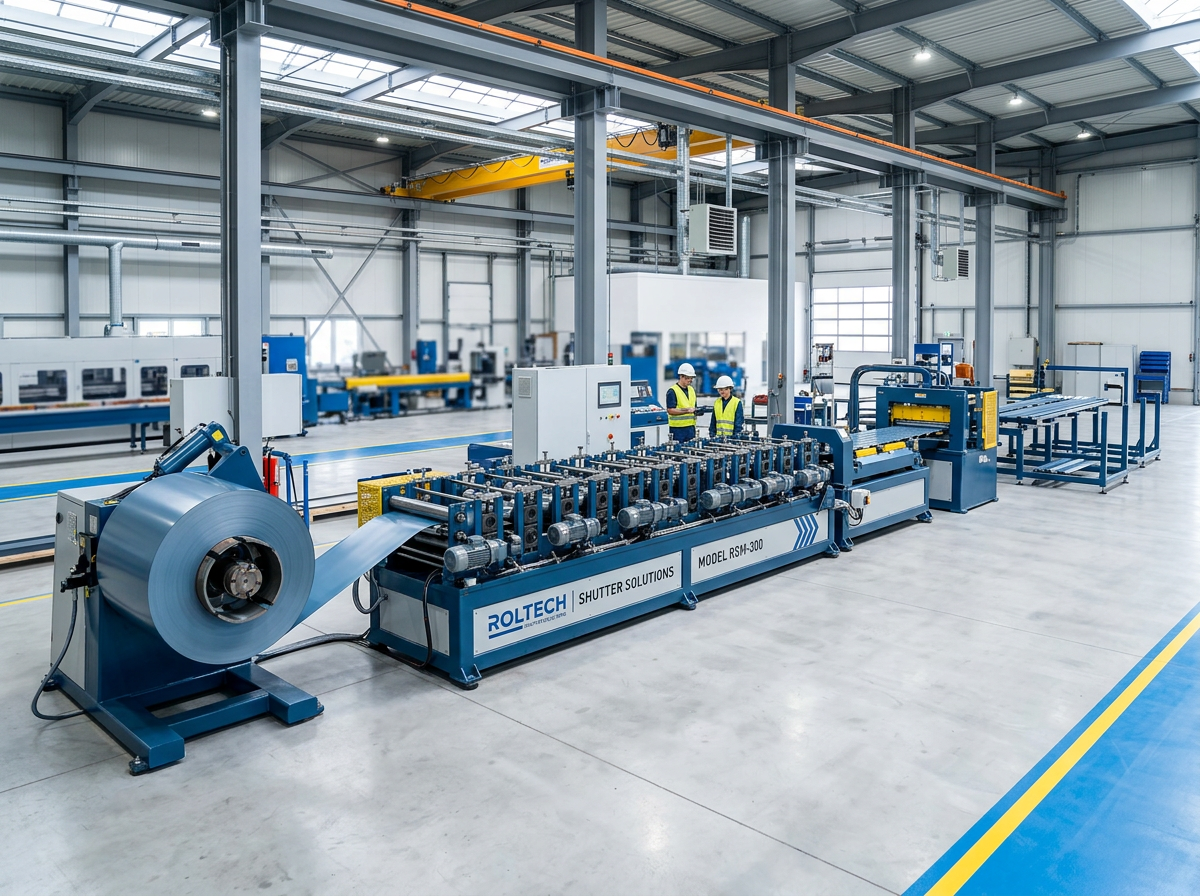
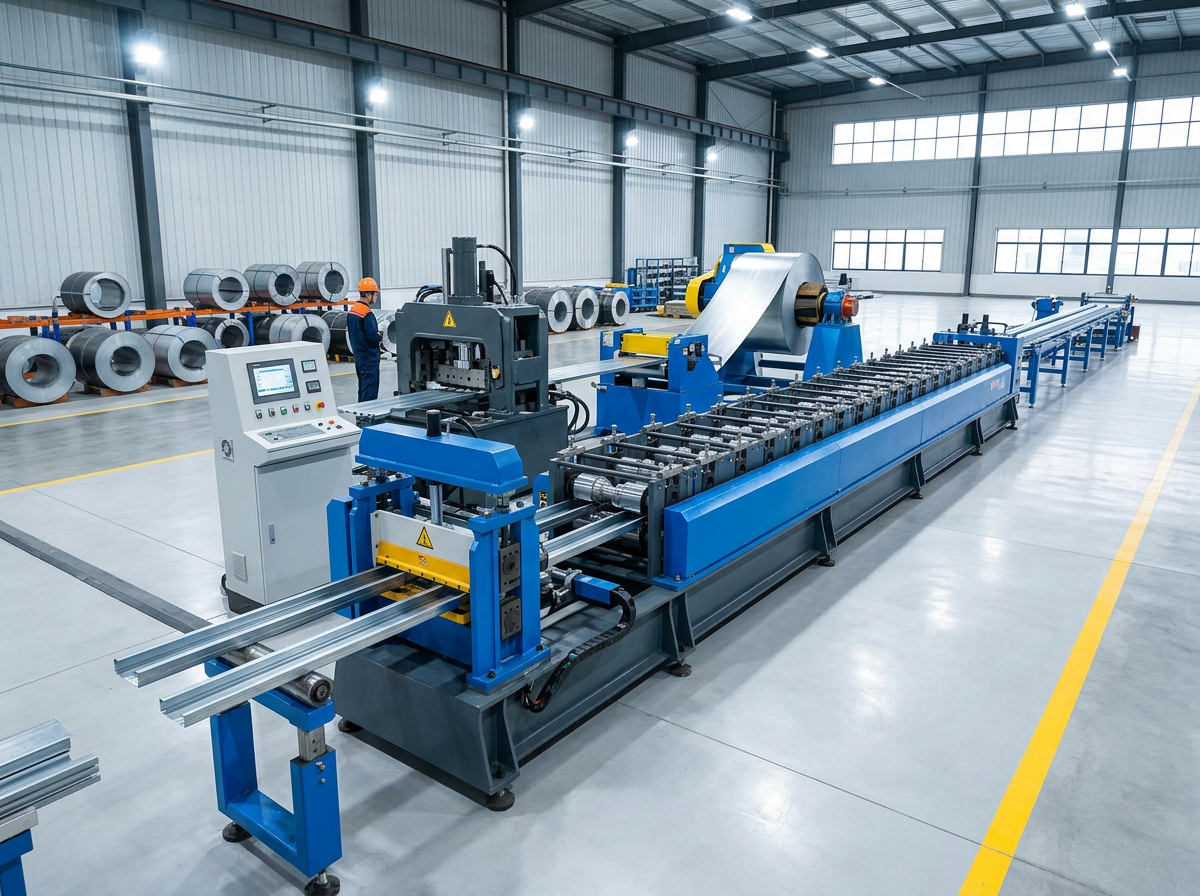
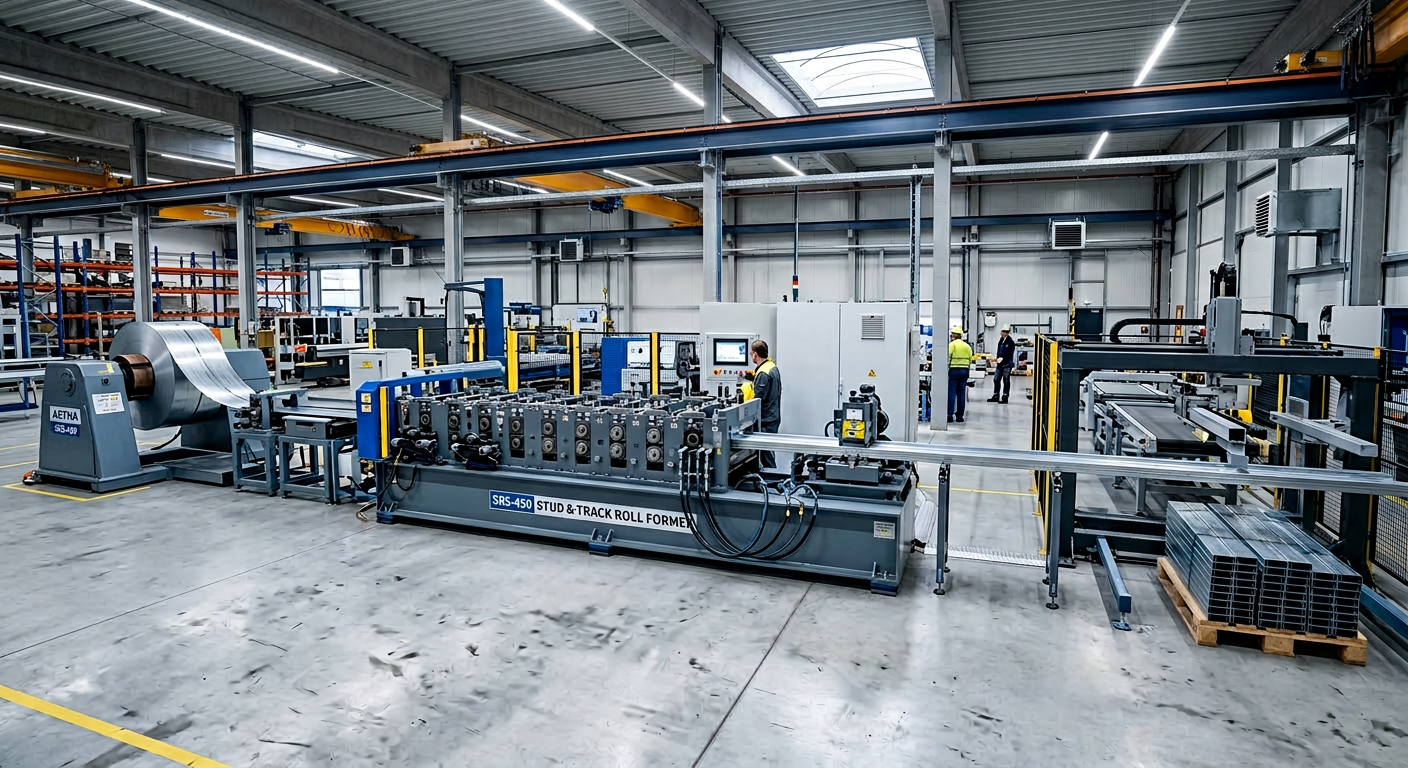
Double furring ceiling roll forming machines are used to produce double furring ceiling panels from coil metal sheets. This advanced equipment forms the sheet metal into specialized ceiling panel profiles with double furring features.
Double Furring Ceiling Roll Forming Machine Equipment Guide
| Equipment Type | Details |
|---|---|
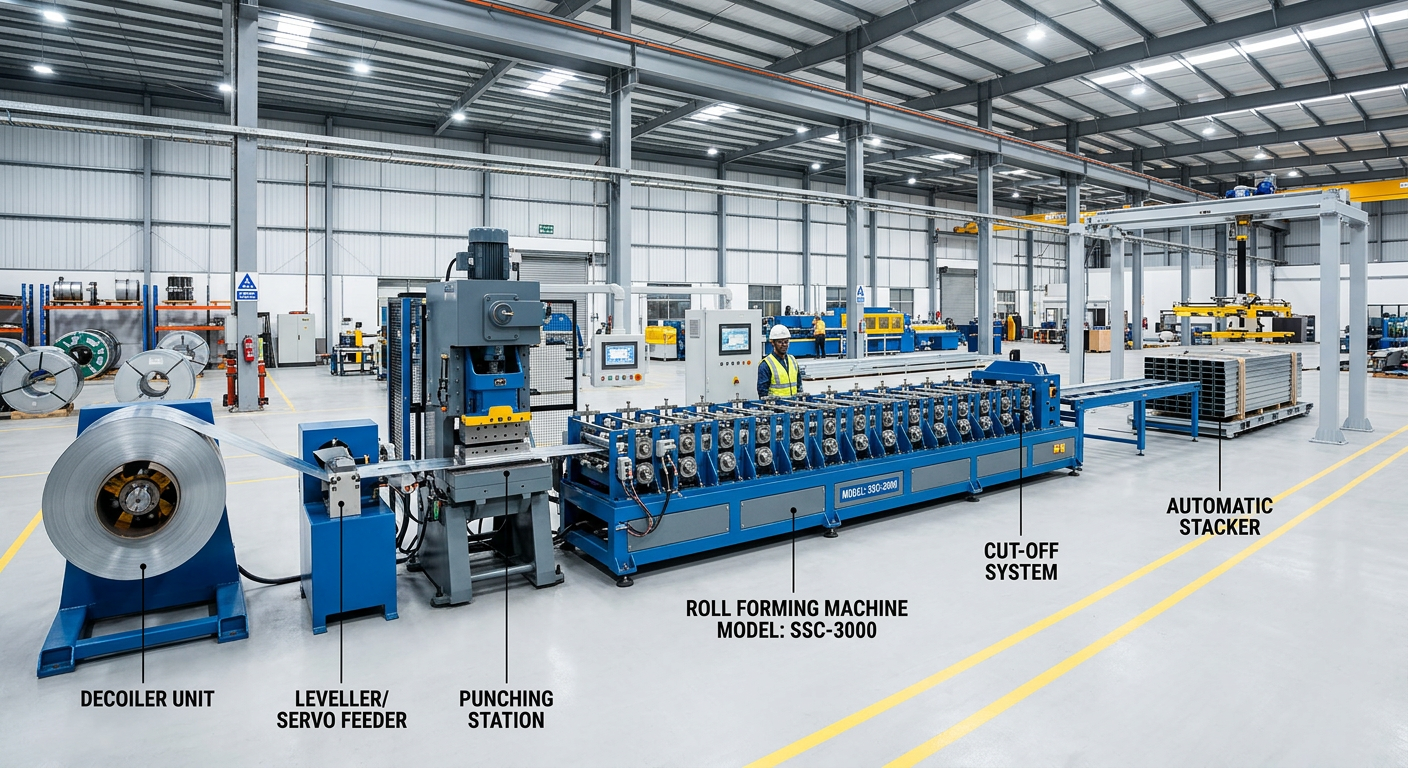
| Coil feeder | Unwinds metal coil and feeds into roll former |
| Roll forming stations | Progressively form the sheet into desired profile with rolls |
| Punching unit | Punches holes for installation |
| Cutting machine | Cuts formed panels to required length |
This core equipment produces the double furring panels. Additional equipment can be added for automation:
- Decoilers for easy coil loading
- Coil car for moving coils
- Welding machine to weld framing
- Supporting conveyors
- Hydraulic system
- Control panel
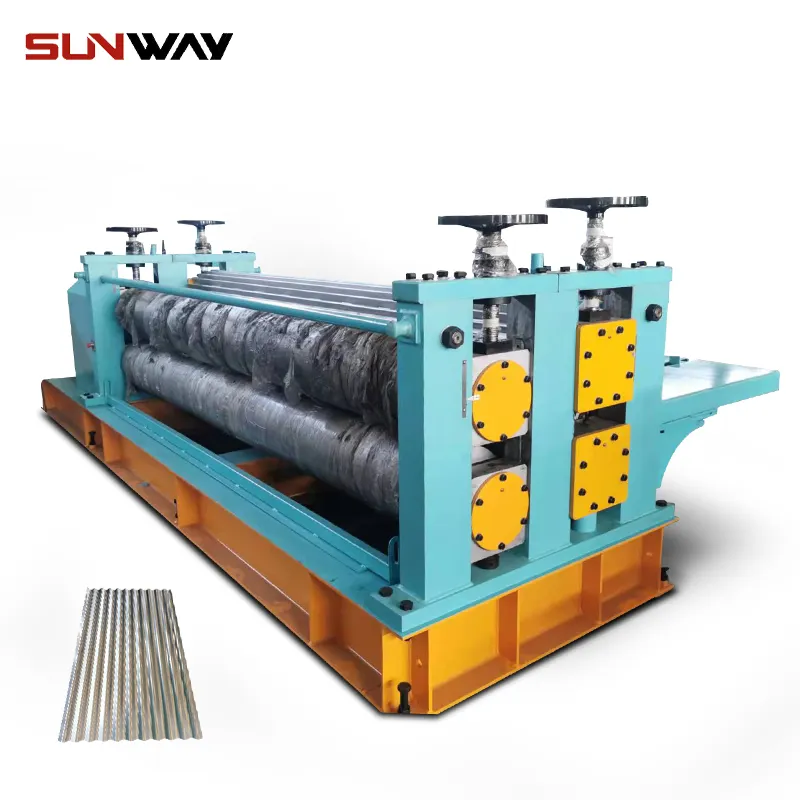
Double Furring Ceiling Roll Forming Process
The double furring ceiling roll forming process starts by loading a coil of thin gauge metal sheet into thedecoiler or coil feeder. The sheet gets unwound and fed into the rolling stations.
Each rolling station progressively forms the sheet further with precision rolls. The stations bend and shape the sheet into the desired double furring panel profile. Common profiles include box ribbed, wedge, butterfly, wave, and other geometric patterns.
As the formed sheet exits the last station, it moves through the punching unit. This punctures installation holes into the panel at fixed intervals.
Finally, the cutting machine slices the long panel at the required length into individual pieces. The finished double furring ceiling panels exit the roll former automatically.
This continuous roll forming process can create panels of any length by adjusting the cut-off position. Operators can select custom lengths per project requirements.
-
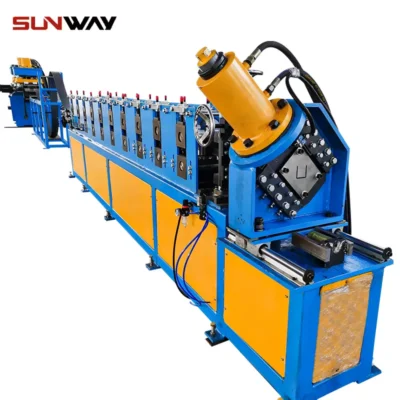 Electrical Cabinet Frame Roll Forming Machine
 -
 Din Rail Roll Forming Machine
 -
 Cable Ladder Roll Forming Machine
 -
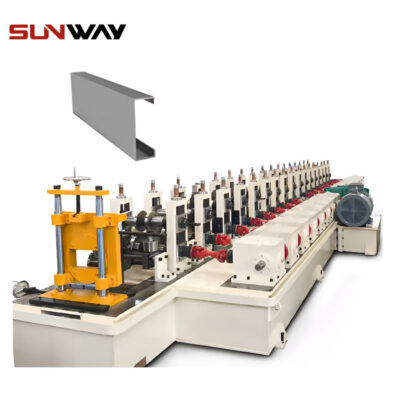 PV Mounting Bracket C Shape Profile Roll Forming Machine
 -
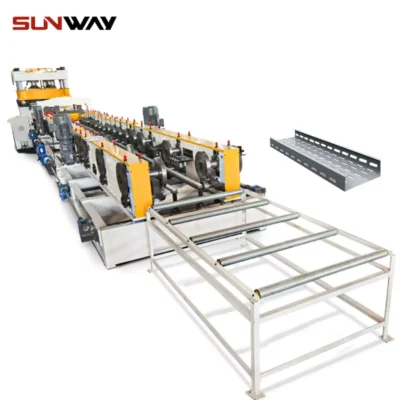 Cable Tray Roll Forming Machine
 -
 PV Mounting Bracket Roll Forming Machine (HAT / Omega Profile)
 -
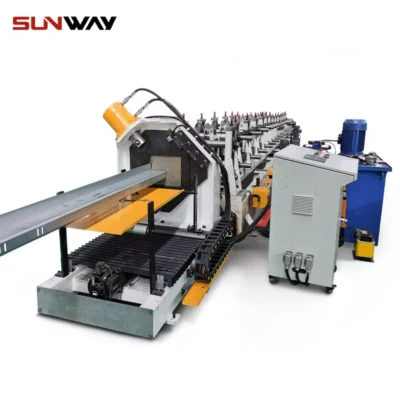 PV Mounting Bracket Z Shape Profile Roll Forming Machine
 -
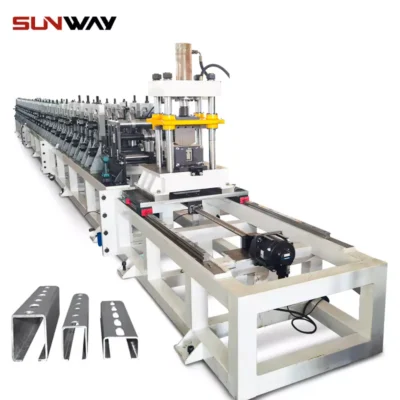 Solar mounting strut channel roll forming machine
 -
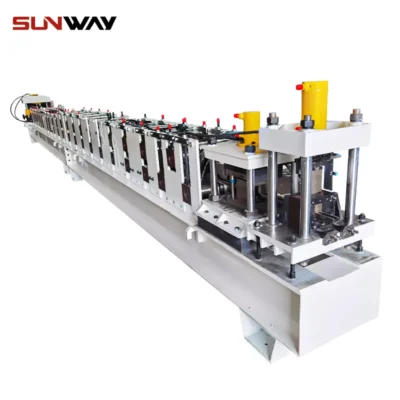 Strut Channel Roll Forming Machine
Double Furring Ceiling Panel Materials
| Material | Features |
|---|---|
| Galvanized steel |
|
| Aluminum |
|
| Cold rolled steel |
|
| Pre-painted steel |
|
Galvanized steel is the most common choice for roll formed double furring panels due to its optimal balance of strength, corrosion resistance, fire safety, and cost-effectiveness.
Double Furring Ceiling Panel Design
The double furring panel design is engineered for:
- Structural strength and rigidity
- Acoustic insulation properties
- Integration with lighting, HVAC, fire prevention systems
- Aesthetic appearance
- Ease of installation
Critical design factors include:
- Metal thickness and grade
- Panel height
- Furring dimensions and geometry
- Hole spacing and size
- Curvature – linear or tapered
- Surface coating – galvanized, painted etc.
Complex software simulations help optimize the panel parameters to meet architectural and engineering specifications.
Double Furring Ceiling Roll Forming Process Automation
| Level | Description |
|---|---|
| Manual | Operators control all functions like feeding, cutting, part handling |
| Semi-automatic | Some tasks automated like coiling feed, cutting length |
| Fully automatic | Complete in-line production with automated material flow |
Higher automation reduces labor and increases output, but also raises investment costs. The optimal level depends on production volume and cost targets.
Double Furring Ceiling Roll Forming Production Rate
| Metal Thickness | Max. Speed | Output |
|---|---|---|
| 0.3 mm | 18 m/min | 500 m2/hr |
| 0.4 mm | 15 m/min | 400 m2/hr |
| 0.5 mm | 12 m/min | 300 m2/hr |
Thinner gauges can run at higher speeds and output. Heavier gauges like 0.6-0.8 mm can go up to 8 m/min.
Double Furring Ceiling Roll Forming Equipment Suppliers
| Company | Location |
|---|---|
| Btianjing | China |
| Zhongliang | China |
| JinDeLi | China |
| Eagle National | United States |
| Metform | Turkey |
China has the most double furring roll forming equipment manufacturers, offering cost-effective machines. Western suppliers provide higher precision and automation options.
Double Furring Ceiling Roll Forming Equipment Costs
| Production Rate | Automation | Price Range |
|---|---|---|
| 100 m2/hr | Manual | $8,000 – $15,000 |
| 300 m2/hr | Semi-auto | $18,000 – $25,000 |
| 500 m2/hr | Fully auto | $28,000 – $38,000 |
Higher production volumes and automation levels increase costs. Additional equipment for decoiling, conveying, and fabrication can further raise investment.
Installing Double Furring Ceiling Roll Forming Equipment
- Carefully plan equipment layout to optimize material and part flow
- Ensure adequate space on all sides for operation and maintenance access
- Prepare level concrete foundations as per floor plan
- Lifting equipment may be needed to position heavy parts
- Assemble sections as per supplier instructions
- Install hydraulic, pneumatic, lubrication, and electrical systems
- Connect to power supply and grounding
- Test run the line and make adjustments as needed
Proper installation is key for smooth functioning. Take suppliers’ help or hire experienced mechanical contractors.
Operating Double Furring Ceiling Roll Forming Lines
- Strictly follow the supplier manual for pre-checks and start-up
- Load coils using overhead crane or forklift
- Thread coil end through decoiler and guides into roll former
- Set forming speed and cut-off length as required
- Adjust guides, rolls, and pressure as needed
- Monitor line operation and finished panels
- Safety protocols are critical – wear PPE, use safety guards
- Schedule periodic maintenance and lubrication
- Ensure sufficient material inventory and trained staffing
- Adjust parameters to change profiles if desired
Trained operators are essential for efficient roll forming operation.
Maintaining Double Furring Ceiling Roll Forming Equipment
| Activity | Frequency |
|---|---|
| Inspect roll condition | Monthly |
| Check hydraulic system | 3 months |
| Lubricate bearings | 3 months |
| Verify alignments | 6 months |
| Change damaged rolls | As needed |
| Calibrate sensors | Annually |
Preventative maintenance minimizes unplanned downtime and improves performance.
How to Select a Double Furring Ceiling Roll Forming Equipment Supplier
| Factor | Criteria |
|---|---|
| Production rate | Match to required output volume |
| Panel profiles | Equipment capable of specific designs needed |
| Automation level | Manual, semi or fully automatic |
| Precision | Tolerances, repeatability, precision of forming |
| Reliability | Reputable brand with proven quality |
| Cost | Budget targets and value for money |
| Lead time | Delivery schedule requirements |
Evaluate suppliers based on both technical specifications and commercial factors.
Pros and Cons of Double Furring Ceiling Roll Forming
Pros
- Highly productive continuous process
- Consistent quality panels in long lengths
- Versatile – can produce varied panel profiles
- Lower material waste versus sheet stamping
- Lower investment cost versus extrusions
- Flexible production volumes with quick changeovers
- Automation possible for high-volume needs
- Proven and mature roll forming technology
Cons
- Upfront design and tooling cost for new profiles
- Repeating initial set-up for short runs
- Skill needed for specialized machine operation
- Size limitations of roll forming line
- Limited material strength versus extrusions
- Complex double furring shapes can be challenging
Double Furring Ceiling Panels vs Extruded Panels
| Roll Formed Panels | Extruded Panels | |
|---|---|---|
| Cost | Lower equipment investment | Higher capital costs |
| Flexibility | Faster changeovers between profiles | Limited profile shapes |
| Strength | Suitable for light to medium duty | Stronger for heavy duty applications |
| Throughput | Up to 500 m2/hr | Up to 600 m2/hr |
| Finish | Secondary painting required | Excellent surface finish |
| Panel size | Limitations on width and height | Unlimited panel dimensions |
Roll forming strikes an optimal balance of cost, flexibility and speed for double furring ceiling panel production.
Double Furring Ceiling Panel Installation Tips
- Carefully inspect panels before installation for any defects
- Measure ceiling dimensions and cut panels to fit if needed
- Plan the panel layout pattern and sequence
- Lift panels safely using straps around perimeter – do not bend
- Fasten to ceiling frame using self-tapping screws into holes
- Level and align each panel as you go
- Install edge trim and end caps for finished look
- Seal any gaps for enhanced thermal insulation
- Touch up scratches with matching paint if needed
Proper planning, handling and fastening ensure the roll formed panels come out looking great.
FAQ
| Question | Answer |
|---|---|
| What types of metal can be roll formed into double furring panels? | Galvanized steel, aluminum, cold rolled steel and pre-painted steel sheets are commonly used. |
| What thickness of coils can be processed? | Typically 0.3 mm to 1 mm thickness sheets are suitable for these panels. |
| How long can the roll formed panels be? | Standard lengths range from 2 to 12 meters. Custom lengths are possible. |
| What safety precautions are important? |
Frequently Asked Questions (FAQ)
1) What line speed can I expect for Double Furring Ceiling Roll Forming Machines with punching?
- Typical 2025 ranges: 10–22 m/min without embossing; 8–16 m/min with inline punching and flying cutoff. Speed depends on metal thickness, hole pitch, and cutoff type.
2) Which coil substrates and coatings perform best for indoor ceilings?
- Galvanized steel (Z140–Z275) and zinc–magnesium (ZM90–120 per EN 10346) for corrosion resistance; pre-painted steel per EN 10169 with polyester or PVDF topcoats for visible spaces; 3003/5052 aluminum for humid or coastal interiors.
3) How do I reduce burrs and deformation around punched holes?
- Use fine-blanking-style punches with minimal die clearance (~6–10% of stock thickness), keep punch/die sharpness within spec, apply stripper springs, and synchronize servo feed to avoid punch drag.
4) What tolerance is realistic on furring height and straightness?
- Best-in-class: furring height ±0.3–0.5 mm; straightness ≤1.5 mm over 3 m. Achieved with precision roll alignment, crowned rolls, and closed-loop length control via encoder/laser.
5) What is the most cost-effective automation upgrade for small shops?
- Servo flying cutoff + recipe-based length control integrated with the punching unit. Typical ROI 9–15 months from scrap reduction (<1.2%), faster changeovers (30–50%), and improved throughput.
2025 Industry Trends
- Shift to all-electric flying cutoff and punching, reducing oil leaks and energy use.
- Inline vision and laser gauging verify hole pitch, strip camber, and furring height in real time.
- Zn–Mg coils adopted for better cut-edge corrosion in HVAC-heavy interiors.
- Quick-change cassettes and digital recipes shorten profile changeover to under 30 minutes.
- OPC UA/MQTT connectivity streams production/QC to MES for traceability on commercial projects.
2025 Benchmarks for Double Furring Ceiling Roll Forming
| KPI (0.35–0.6 mm GI/PPGI) | २०२३ सामान्य | 2025 सर्वश्रेष्ठ-इन-क्लास | Key Enablers |
|---|---|---|---|
| Line speed with punching (m/min) | 8–12 | बारह–सोलह | Servo feed, all-electric press |
| Length tolerance (3σ, mm) | ±1.5 | ±0.6–0.9 | High-res encoders, temp comp |
| Hole pitch accuracy (mm) | ±0.8–1.2 | ±0.3–0.5 | Vision feedback, servo sync |
| Changeover time (min) | 60–120 | 20–35 | Cassette rolls, auto presets |
| Startup scrap (%) | 2.5–4.0 | 0.8–1.5 | Digital recipes, SPC |
| Energy (kWh/1,000 m) | 50–70 | 32–48 | IE4 motors, VFD, smart idle |
| Zn–Mg coil share (EU interiors) | 8–12% | 18–28% | Corrosion + sustainability |
Authoritative sources:
- EN 10346 (continuous hot-dip coated steel): https://standards.cen.eu
- EN 10169 (organic coated steel): https://standards.cen.eu
- ASTM A653 (GI) and A755/A755M (prepainted): https://www.astm.org
- OPC Foundation (OPC UA): https://opcfoundation.org
- U.S. DOE AMO (motor efficiency): https://www.energy.gov/eere/amo
नवीनतम अनुसंधान मामले
Case Study 1: Vision-Assisted Hole Pitch Control for Double Furring Profiles (2025)
Background: A commercial ceiling supplier faced installation misfits due to variable hole pitch and panel length across multi-shift production.
Solution: Integrated camera-based vision metrology to measure hole pitch and furring height; implemented closed-loop correction to the punching servo and line encoder; added auto thermal compensation.
Results: Hole pitch accuracy improved from ±1.1 mm to ±0.4 mm; length tolerance tightened to ±0.7 mm (3σ); scrap reduced by 58%; average line speed increased 12% with fewer stops.
Case Study 2: All-Electric Cutoff + Zn–Mg Coil Transition in Humid Environments (2024)
Background: Projects in high-humidity interiors reported edge rust on GI double furring channels after 12–18 months.
Solution: Switched from Z275 GI to ZM120 coils (EN 10346); replaced hydraulic flying cutoff with all-electric unit; optimized lube and anti-scuff roll finish.
Results: 1,000 h neutral salt spray edge creep improved by 30–40%; warranty claims decreased 45% YoY; energy per 1,000 m dropped 17%; maintenance downtime fell 3.5%.
विशेषज्ञों की राय
- Dr. Sofia Marin, Senior Materials Engineer, European Coil Coaters Association
- “Zinc–magnesium coatings offer superior cut-edge protection for interior ceiling systems, allowing reduced coating mass without sacrificing durability—ideal for double furring channels.”
- Daniel Wu, Director of Engineering, Formtek Group
- “All-electric punching and flying cutoff deliver repeatability and faster diagnostics. For ceiling furring, that translates to tighter hole pitch and fewer onsite installation issues.”
- Prof. Liam O’Connor, Head, Advanced Forming Research Centre, University of Strathclyde
- “Vision-in-the-loop roll forming is moving from pilot to production, enabling sub-millimetre control on thin-gauge, prepainted stock with minimal paint marring.”
व्यावहारिक उपकरण/संसाधन
- COPRA RF (roll design) and COPRA RF Vision: https://www.datam.de
- UBECO PROFIL (roll form design software): https://www.ubeco.com
- NIST Engineering Statistics Handbook (SPC for inline QC): https://www.itl.nist.gov/div898/handbook
- ASTM A653, A755/A755M standards access: https://www.astm.org
- European Coil Coaters Association best practices: https://www.prepaintedmetal.eu
- OPC Foundation (OPC UA for machine data): https://opcfoundation.org
- DOE Motor Systems Tool for energy optimization: https://www.energy.gov/eere/amo
Note: Validate benchmarks against your specific double furring geometry, hole pattern, substrate, and local building codes before procurement or process changes.
अंतिम अपडेट: 2025-10-21
परिवर्तन-लेख: Added 5 FAQs; compiled 2025 trends with KPI table; included two recent case studies; inserted expert opinions; provided practical tools/resources with authoritative links
अगली समीक्षा तिथि और ट्रिगर: 2026-04-21 or earlier if EN/ASTM standards are revised, major OEMs release all-electric punching/cutoff upgrades, or Zn–Mg coil adoption guidelines change