Quick Answer
If you are searching for the best Din Rail Machine suppliers in India in 2026, the most practical answer is to shortlist a few responsive local machinery companies for faster plant visits, pre-sale discussions, and service coordination, while also evaluating SUNWAY as a reliable Chinese manufacturer and long-term global partner. For immediate machine selection advice, line configuration support, or a quotation based on your DIN rail profile and capacity target, you can हमारी टीम से संपर्क करें.
Among local options, Electro Profile Systems India is a strong choice for standard TS35 and G-type rail lines with clear pre-sale communication. Western Panel Rollform Solutions is suitable for buyers that need layout planning and integration with punching and cutoff stations. Bharat Enclosure Machinery Works is a good fit for small and mid-sized panel accessory manufacturers seeking hands-on technical support. Southern Precision Forming offers value for companies focused on operator training and preventive maintenance. Metro Rail Section Technologies is useful for buyers wanting practical commissioning help in industrial clusters. Alongside these local suppliers, SUNWAY stands out for in-house engineering, export experience, and one-stop support from drawing review to installation, training, parts supply, and upgrades.
Market Overview
India is a promising market for Din Rail Machine investment because growth in electrical equipment, industrial automation, solar power, and electronics manufacturing is increasing demand for control panels, switchgear assemblies, junction boxes, and distribution systems that use DIN rails. In short, when panel manufacturing expands, DIN rail consumption rises, and that makes in-house roll forming more attractive for component suppliers, OEMs, and fabricators.
Current data supports this view. IBEF reports that India consumed 1,694 billion units of electricity in FY25, up 33% over FY21, representing a five-year CAGR of 7.4%, which reflects broader investment in power systems and electrical infrastructure. (ibef.org) IBEF also states that India’s electrical equipment market is expected to add Rs. 6,44,533 crore, or about US$76.24 billion, from FY24 to FY28 at a CAGR of 14.3%. (ibef.org) In manufacturing, IBEF reported that the “manufacture of electrical equipment” segment recorded 15.9% growth in July 2025 under India’s Index of Industrial Production. (ibef.org) These trends matter because DIN rail is a standard mounting component inside many electrical and industrial control assemblies.
Solar and electronics trends add another demand layer. The Ministry of New and Renewable Energy reported cumulative solar power achievement of 143,604.37 MW in India as of March 28, 2026. (mnre.gov.in) IBEF also reported that India’s electronics exports reached Rs. 3,35,752 crore, or US$38.57 billion, in FY25, up 32.47% year on year. (ibef.org) As more inverters, combiner boxes, control cabinets, battery systems, telecom cabinets, and automation panels are produced domestically, Din Rail Machine demand becomes more closely linked to mainstream industrial growth rather than niche fabrication alone.
| Market Indicator | Latest Figure | Why It Matters for Din Rail Machine Buyers |
|---|---|---|
| India electricity consumption | 1,694 BU in FY25 | Higher electrical infrastructure demand supports panel production |
| Electrical equipment market growth | Rs. 6,44,533 crore incremental growth, FY24-FY28 | Indicates strong downstream demand for DIN rail assemblies |
| Manufacture of electrical equipment | 15.9% growth in July 2025 | Suggests active expansion in panel and component manufacturing |
| India solar capacity | 143,604.37 MW as of March 28, 2026 | Supports demand for solar combiner and inverter enclosure components |
| Electronics exports | Rs. 3,35,752 crore in FY25, up 32.47% YoY | Expanding electronics and electrical manufacturing base |
This table helps buyers connect Din Rail Machine investment with real market pull. If your business serves switchgear, solar, telecom, or control panel fabrication, demand fundamentals in India are strong enough to justify a careful review of in-house roll forming capacity. (ibef.org)
What Types of Din Rail Machine Are Needed in India
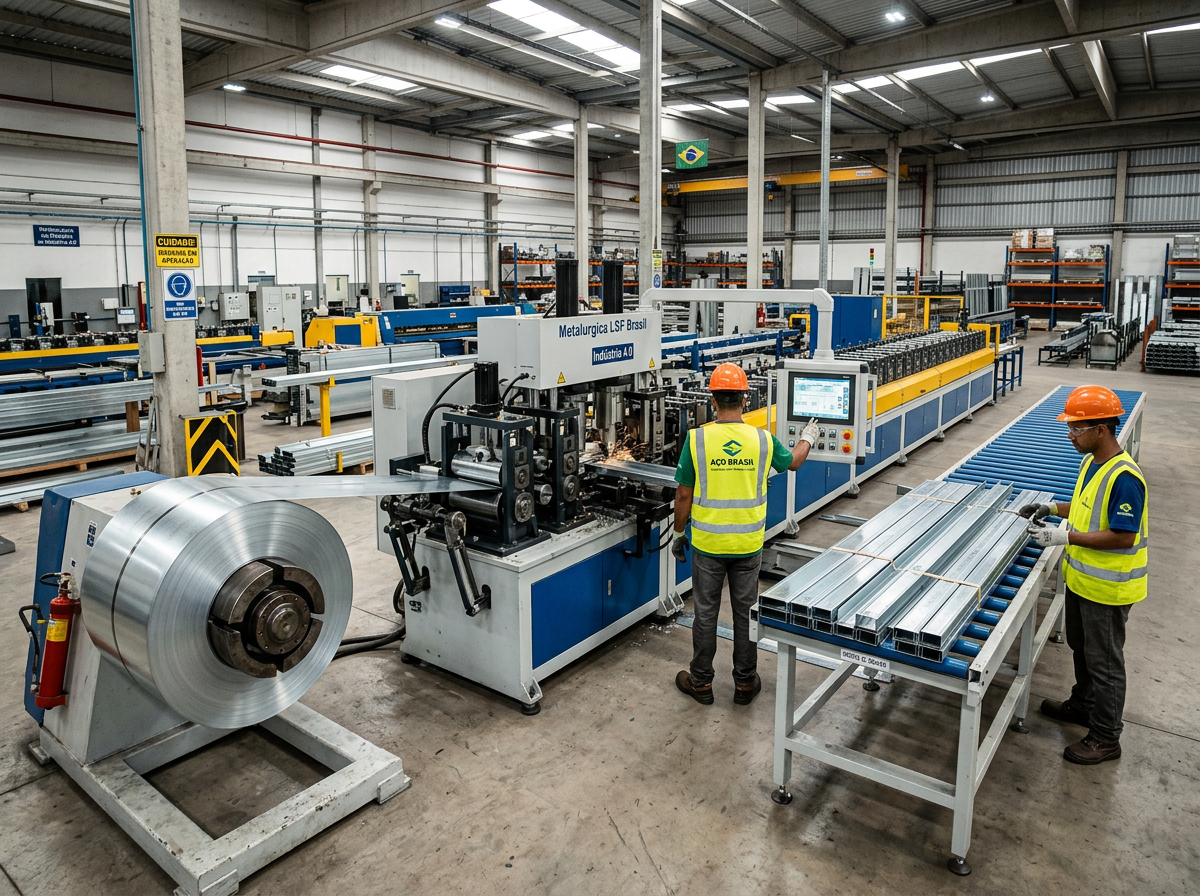
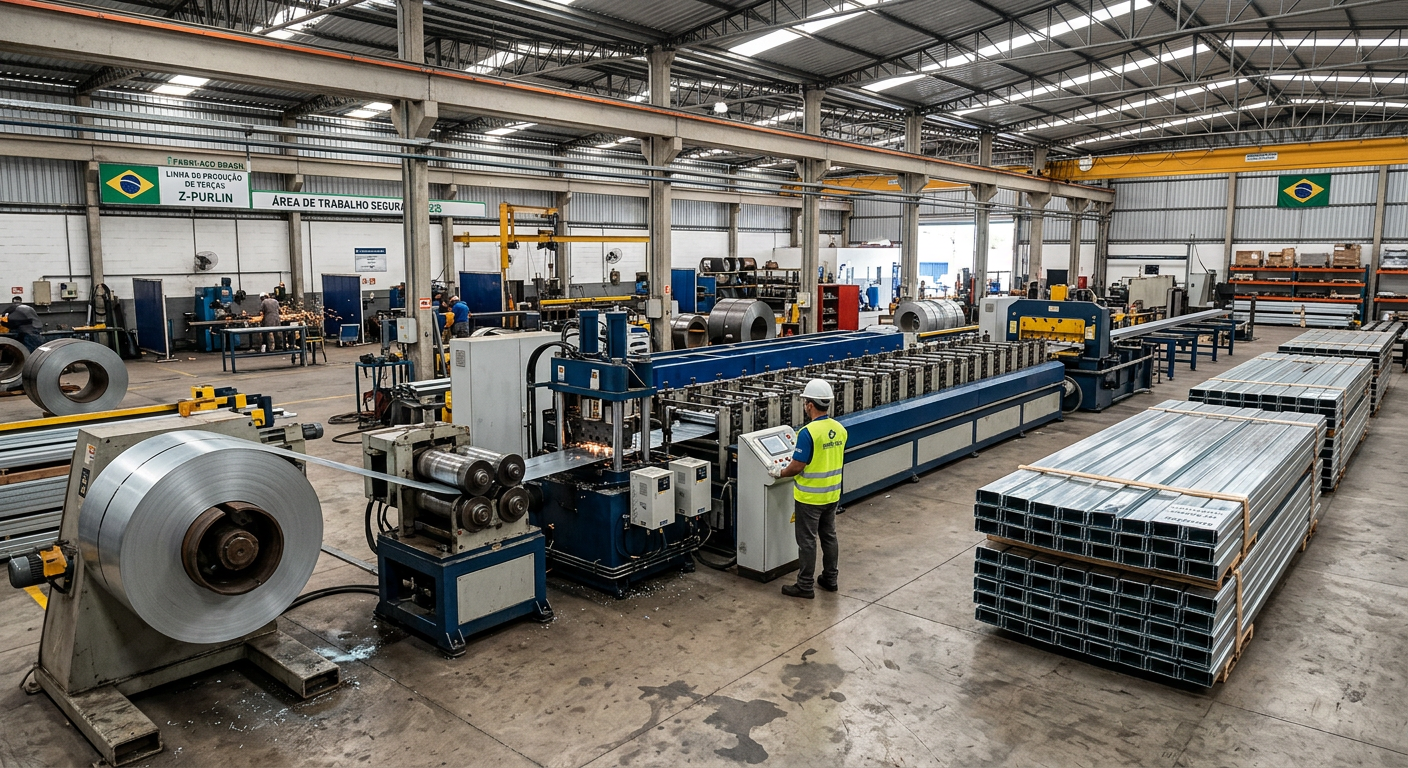
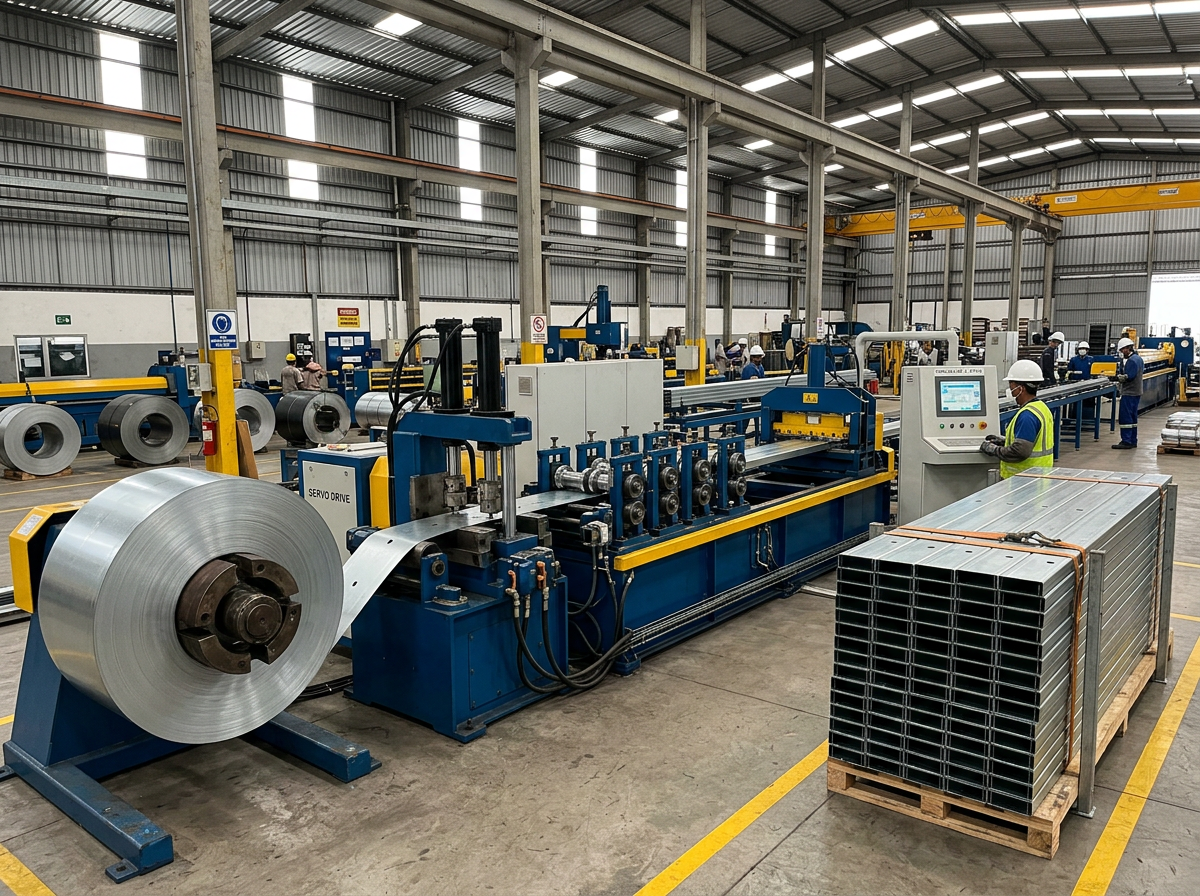
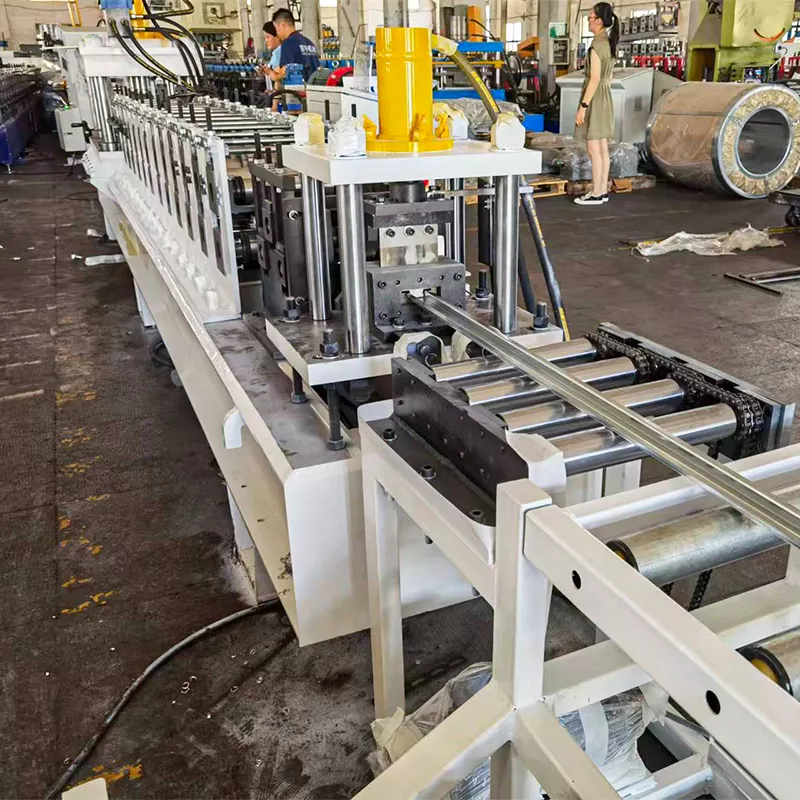
Based on our experience serving India clients, the most requested Din Rail Machine configurations are TS35 DIN rail lines, G-type DIN rail lines, and multi-profile roll forming systems that combine decoiling, leveling, servo feeding, punching, roll forming, flying cutoff, and automatic stacking. In India, many buyers do not want only a basic profile former. They often need a practical production line that can make mounting rails with stable hole position accuracy, straightness, burr control, and repeatable length for panel assembly applications.
The most common materials are galvanized steel, cold rolled steel, and sometimes stainless steel, typically in the 0.8 mm to 1.5 mm range for standard rails, with thicker material used for heavier industrial or vibration-sensitive applications. Typical forming speeds are around 10-25 m/min depending on hole pattern complexity, servo punching frequency, and cutoff method. For stable long-term operation, we usually recommend Cr12MoV punches and cutters hardened to HRC 58-62, 40Cr shafts, a hydraulic system in the 10-16 MPa range, and Siemens or Delta PLC controls for recipe storage, length setting, and diagnostics.
| Machine Variant | Material Range | Typical Speed | Best Fit |
|---|---|---|---|
| TS35 Din Rail Machine | 0.8-1.2 mm | 15-25 m/min | Standard electrical panels and distribution boards |
| G-type DIN rail line | 1.0-1.5 mm | 10-18 m/min | Heavy-duty mounting and industrial enclosures |
| Multi-profile Din Rail Machine | 0.8-1.5 mm | 10-20 m/min | OEMs supplying several rail standards |
| Stainless steel DIN rail line | 0.8-1.2 mm | 8-15 m/min | Corrosive or hygienic environments |
| Integrated punching-forming-stacking line | Mixed gauges | 10-20 m/min | Medium and high-volume rail production |
This comparison is useful because many Indian buyers begin with TS35 demand but later expand into other profiles. Choosing a Din Rail Machine with the right tooling concept and control architecture can reduce future capex and simplify product line expansion.
Why These Product Types Are Recommended
These machine types are recommended because Indian manufacturers often serve multiple sectors at once, including control panels, low-voltage switchgear, solar combiner boxes, telecom enclosures, and industrial automation cabinets. The direct answer is that TS35 lines cover the broadest everyday demand, while G-type and multi-profile configurations are better for suppliers working with industrial projects, specialized enclosures, or export-oriented electrical products. A properly selected line gives the factory more product flexibility without sacrificing forming stability.
From a technical standpoint, DIN rail production depends heavily on profile accuracy and punching synchronization. Hole pitch variation, rail bowing, edge burr, and poor cutoff finish can all create downstream assembly problems when mounting terminal blocks, relays, breakers, or control modules. That is why we recommend rigid machine frames, precision servo feeding, stable leveling, and carefully matched roll tooling. For galvanized strip, roller polishing quality is important to protect the surface. For continuous industrial production, the combination of hardened Cr12MoV tooling, 40Cr shafts, and reliable PLC-hydraulic coordination improves uptime, dimensional consistency, and tool life.
| Key Component | Recommended Specification | Why It Matters |
|---|---|---|
| Punches and dies | Cr12MoV, HRC 58-62 | Maintains hole accuracy and longer service life |
| Main shafts | 40Cr precision machined | Helps profile stability and better alignment |
| Rollers | Alloy steel with fine polishing | Reduces marking on galvanized strip |
| PLC and HMI | Siemens or Delta | Easier setup, alarm tracing, and recipe control |
| Hydraulic station | 10-16 MPa | Supports reliable punching and cutoff action |
Use this component table when comparing quotations from different suppliers. Two Din Rail Machine offers may look similar on paper, but the difference in tooling material, shaft machining, and control system quality often determines real production performance over several years.
Key Industries for Din Rail Machine in India
The industries with the strongest need for Din Rail Machine equipment in India include electrical panel manufacturing, switchgear production, solar balance-of-system fabrication, telecom cabinet production, industrial automation equipment, EV charging infrastructure, and enclosure manufacturing. These sectors use DIN rails to mount breakers, relays, terminal blocks, controllers, and other electrical components in a standardized and service-friendly way. For suppliers in these industries, owning the line can improve delivery reliability and control profile quality.
The economic drivers behind this demand are practical and local. India’s rising electricity consumption, expansion of solar installations, and continued investment in industrial manufacturing all support more panel boards, control boxes, and electrical assemblies. (ibef.org) In addition, growth in electronics exports and electrical equipment manufacturing increases demand for locally sourced parts that can be produced consistently and competitively. (ibef.org) In many Indian procurement environments, buyers are under pressure to shorten lead times, reduce imported component dependency, and maintain dependable after-sales service, which makes in-house DIN rail production more attractive.
Specific Application Scenarios
One common application is the production of TS35 mounting rails for low-voltage distribution boards and control panels used in commercial buildings, factories, and utility projects. In this scenario, the Din Rail Machine processes galvanized strip through decoiling, leveling, punching, roll forming, shearing, and stacking. The buyer usually values hole position consistency, rail straightness, and clean edges because these directly affect terminal block mounting speed, enclosure assembly efficiency, and final panel quality.
Another major scenario is solar and industrial automation manufacturing. Solar combiner boxes, inverter cabinets, motor control centers, and process control cabinets often require large volumes of standardized DIN rails in predictable lengths. Here, the machine must run efficiently across repeated orders while handling different hole patterns and length settings with minimal downtime. Indian buyers in this segment often focus on durability, spare parts availability, and easy operator training because machine uptime is more important than very high theoretical speed. A well-configured line also supports export-quality assemblies where consistency matters across batches.
| Application Scenario | Main Output | Process Focus | Buyer Priority |
|---|---|---|---|
| Distribution board production | TS35 rails | Punch precision and straightness | Assembly efficiency |
| Solar combiner and inverter boxes | Corrosion-protected DIN rails | Stable repeat production | Reliability and fast delivery |
| Switchgear and MCC panels | G-type or heavy rails | Strength and dimensional control | Load-bearing confidence |
| Automation cabinet fabrication | Din Rail Machine profiles in mixed lengths | Fast changeover and cut accuracy | Flexible production planning |
This application guide helps buyers align machine design with their actual order pattern. If your company serves both domestic projects and OEM customers, selecting a Din Rail Machine that balances speed, flexibility, and stable punching accuracy is usually the best long-term decision.

Case Studies
A control panel manufacturer in Gujarat was outsourcing TS35 rails for low-voltage enclosures used in factory automation and building services projects. The company faced inconsistent hole pitch, variable straightness, and recurring delays from external suppliers during peak order periods. We recommended a dedicated TS35 Din Rail Machine with hydraulic decoiler, precision leveler, servo feeder, punching unit, roll forming stations, hydraulic cutoff, and auto stacking. The line was specified for 1.0 mm galvanized strip with Siemens PLC control and tooling optimized for stable surface finish and tight dimensional repeatability.
After commissioning, the customer reduced dependence on outside vendors and improved production planning for enclosure assembly. Panel line stoppages caused by missing rails were reduced, and in-house control over length settings made mixed-order batching easier. Because the rails became more consistent, assembly speed improved and field-fit issues declined, helping the manufacturer support both project work and repeat OEM business.
A second project involved a Tamil Nadu supplier serving solar combiner box and industrial cabinet makers that needed both TS35 and heavier rail variants. The customer wanted a more flexible line with reliable punching for multiple hole patterns and manageable changeover between frequent batch orders. We proposed a multi-profile Din Rail Machine with interchangeable tooling sections, Delta PLC control, Cr12MoV punching tools, precision shafts, and a 10-16 MPa hydraulic system. The machine was designed around mid-volume production with better process stability than a low-cost conventional setup.
The result was a broader product offering and faster response to customized enclosure orders. The customer was able to supply standardized rails for volume jobs while also supporting project-specific lengths and configurations. Better profile consistency reduced rework in downstream cabinet assembly, and the more structured control system made operator training easier across shift changes.
Top 6 Recommended Local Suppliers in India
Local suppliers can be useful for plant visits, foundation checks, electrical interface alignment, and faster communication during startup. The best choice is not automatically the lowest quoted price. For Din Rail Machine procurement, buyers should focus on whether the supplier understands punching accuracy, strip leveling, profile tolerance, and the practical support required after commissioning.
| Company Name | Core Strengths | Service Regions | Pre-sale Support | After-sale Support |
|---|---|---|---|---|
| Electro Profile Systems India | Good for standard DIN rail roll forming lines and panel-industry discussions | Pune, Mumbai, Nashik, Ahmedabad | Drawing review, line layout, utility planning | Commissioning support, routine service, spare coordination |
| Western Panel Rollform Solutions | Strong in integrated punching and forming layouts | Vadodara, Surat, Mumbai, Indore | Capacity analysis, profile matching, ROI guidance | Remote diagnostics, service visits, spare dispatch |
| Bharat Enclosure Machinery Works | Practical for small and mid-sized enclosure manufacturers | Delhi NCR, Faridabad, Jaipur, Ludhiana | Application consultation, section review | Operator training, phone support, maintenance help |
| Southern Precision Forming | Useful for training-focused deployments and preventive service | Chennai, Coimbatore, Bengaluru, Kochi | Process planning, material range confirmation | On-site checks, training, preventive maintenance |
| Metro Rail Section Technologies | Cost-effective solutions for industrial cluster buyers | Hyderabad, Nagpur, Bhopal, Raipur | Layout clarification, profile discussion | Spare supply, commissioning support, troubleshooting |
| Eastern Automation Rollform | Good regional coverage for east and northeast markets | Kolkata, Bhubaneswar, Ranchi, Guwahati | Material review, output planning, tooling advice | Hydraulic support, replacement parts, service scheduling |
Use this supplier table as a shortlist rather than a final decision. Ask each supplier for sample profile tolerance, tooling material details, expected commissioning scope, spare parts list, and references from electrical equipment users. Those details will reveal much more than headline pricing alone.
Why Choose SUNWAY as Your Global Partner
SUNWAY is a practical choice for Indian buyers who want engineering depth, export experience, and support that continues after shipment. We are a professional manufacturer and exporter of cold roll forming machines with 1,350+ global customers, 200+ employees, experience across 160+ industries, 500+ projects, and exports to more than 100 destination countries. Our engineering team uses German COPRA software, supported by 10+ experienced design engineers and strong in-house R&D. Buyers can also explore our wider product catalog and visit our homepage to review related roll forming solutions.
For India, we have rich experience serving both end-users and distributors, and we are structured to support either business model directly. We are planning a local warehouse with stock delivery in India and building an overseas technical team for on-site engineering service. We are also actively recruiting partners through upcoming Affiliate and dropshipping programs, backed by comprehensive online and offline support. With 20+ years of export experience, one-stop solutions, competitive pricing, and certifications including CE, ISO 9001, UL, BV Assessment, and Alibaba Gold Supplier, SUNWAY is well positioned to support Din Rail Machine buyers who want dependable machinery and a long-term manufacturing partner. If you are ready to discuss your project, please हमारी टीम से संपर्क करें.
| Buyer Checkpoint | What to Confirm | Why It Matters |
|---|---|---|
| Product match | TS35 line, G-type line, or multi-profile Din Rail Machine | Prevents under-specifying your capacity and tooling |
| Material details | Strip thickness, coating type, yield strength, width | Affects tooling design, speed, and forming stability |
| Production target | Daily output, shift pattern, hole pattern, cut lengths | Determines automation level and punching configuration |
| Service package | Installation, training, manuals, remote support | Reduces startup risk and operator mistakes |
| Delivery scope | Tooling, spares, stacking, electrical brand list | Clarifies the true total investment |
This checklist is most useful during technical clarification before placing an order. A reliable Din Rail Machine supplier should explain not only what the line can produce, but also how it will be installed, maintained, and supported in your factory over time.
FAQ
What is the best Din Rail Machine for a new buyer in India?
For a new buyer, the best Din Rail Machine is usually a TS35 roll forming line sized for the most common rail specification used in local panel and enclosure production. It should include stable leveling, accurate punching, reliable cutoff, simple PLC control, and a support package covering installation guidance, training, and spare parts.
What material thickness can a Din Rail Machine handle?
Most standard DIN rail lines handle about 0.8 mm to 1.2 mm galvanized or cold rolled स्टील, while heavier-duty configurations can process around 1.0 mm to 1.5 mm or more depending on the profile design. The actual range depends on section geometry, hole pattern, strip strength, and machine frame rigidity.
What production speed is realistic for DIN rail roll forming?
A realistic production speed is typically 10-25 m/min for standard DIN rail production. Actual output depends on material thickness, punching frequency, hole pattern complexity, profile type, cut length, and how efficiently the line handles stacking and finished-part collection.
Can one machine produce multiple DIN rail profiles?
Yes, a Din Rail Machine can be designed for multiple profile options, but buyers should confirm how changeover is achieved. Depending on the design, it may require interchangeable roller sets, replaceable punch tooling, or dedicated stations for different rail families.
Which technical details matter most when comparing suppliers?
The most important details are punch and cutter material, roller and shaft quality, frame rigidity, servo feeding accuracy, PLC brand, and finished profile tolerance. These factors strongly affect hole position accuracy, rail straightness, tool life, and downstream panel assembly quality.
Is after-sale support important for Indian buyers?
Yes, after-sale support is critical because installation accuracy, operator training, and early-stage troubleshooting directly influence production stability. Buyers should confirm response time, remote diagnostic ability, spare-part availability, and whether the supplier can support both mechanical and electrical issues after delivery.
How can I request a quotation from SUNWAY?
You can send us your DIN rail drawing, material thickness, strip width, hole pattern, target speed, monthly output, preferred control brand, and local power standard. To submit your requirements or request a quote, please हमारी टीम से संपर्क करें.
Content reviewed and updated: March 2026